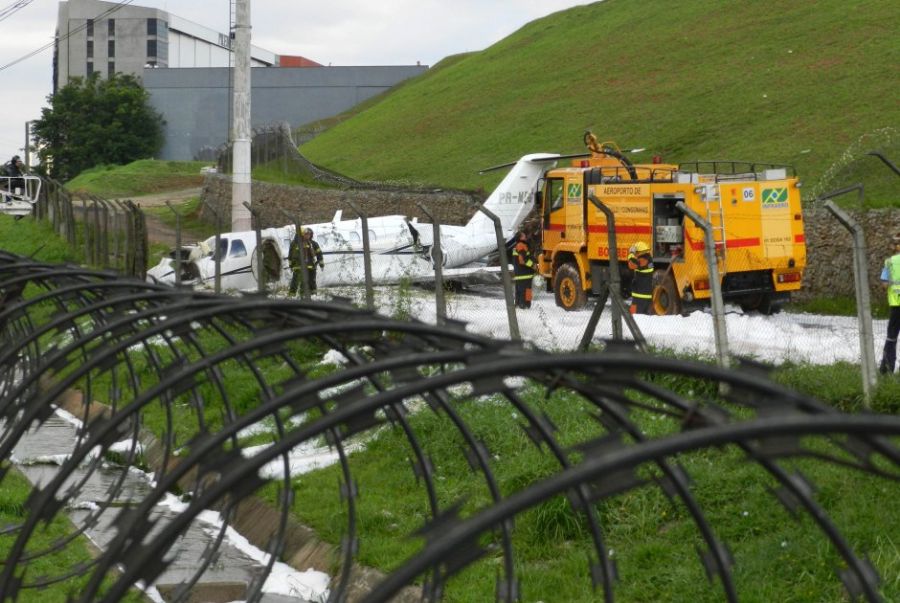
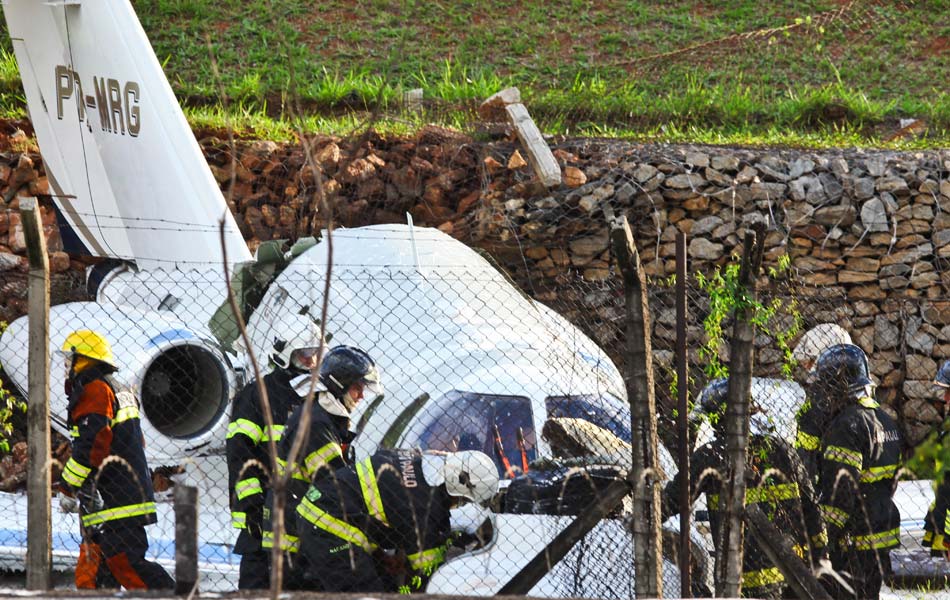
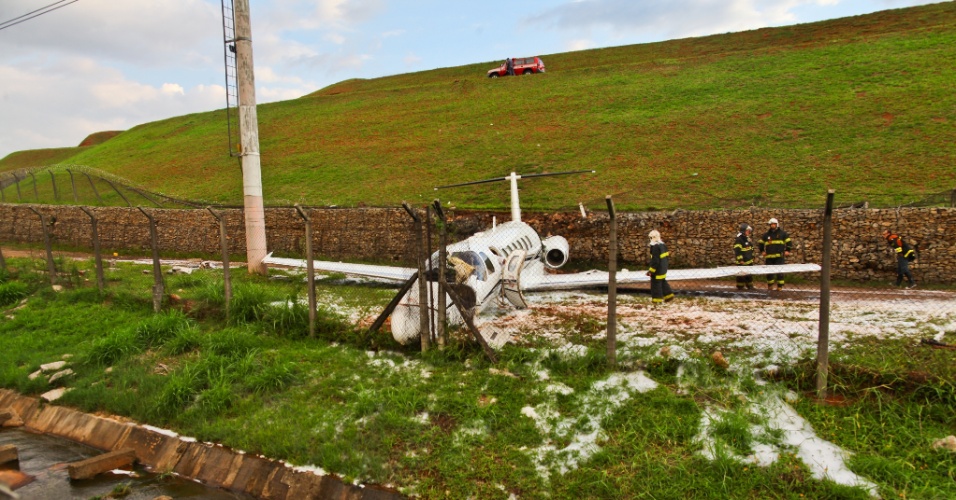
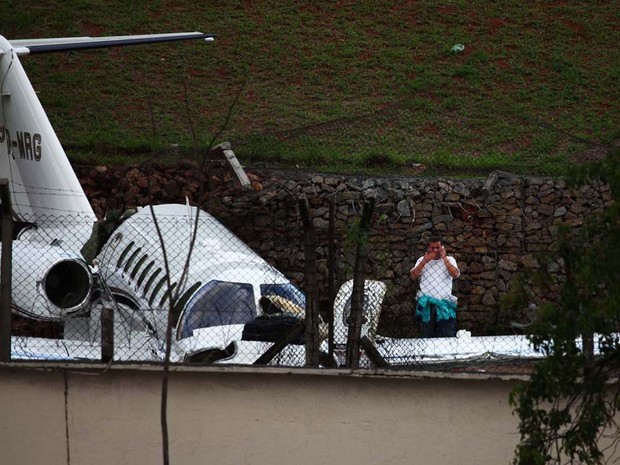
Crash of a Cessna 525B Citation CJ3 in São Paulo

Date & Time: Nov 11, 2012 at 1721 LT
Operator:

Registration:
PR-MRG
Survivors:
Yes
Schedule:
Florianópolis – São Paulo
MSN:
525B-0187
YOM:
2008
Country:
Crew on board:
2
Crew fatalities:
Pax on board:
1
Pax fatalities:
Other fatalities:
Total fatalities:
0
Captain / Total flying hours:
4048
Captain / Total hours on type:
521.00
Copilot / Total flying hours:
648
Copilot / Total hours on type:
189
Circumstances:
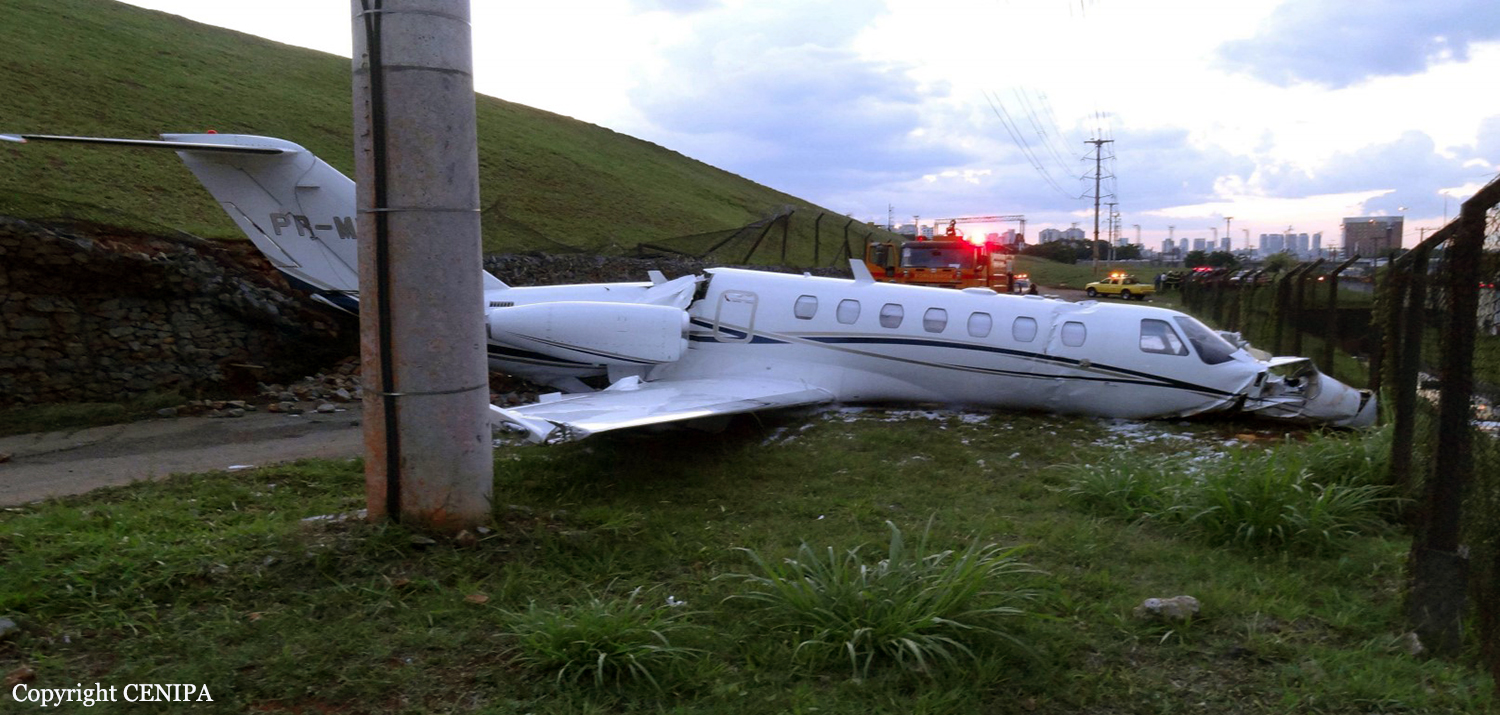
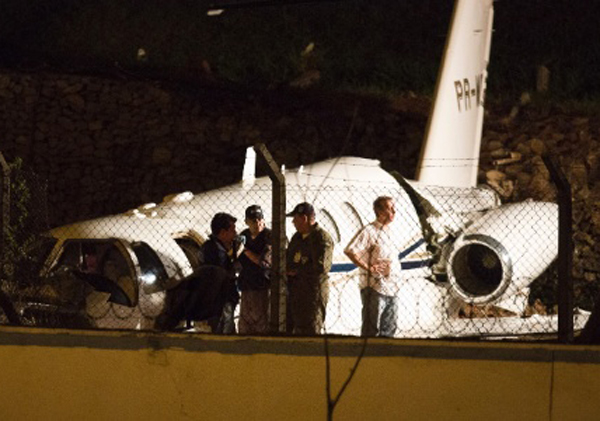
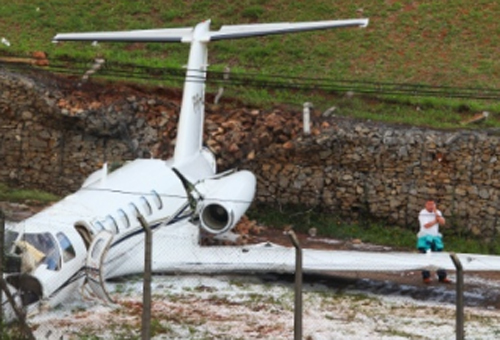
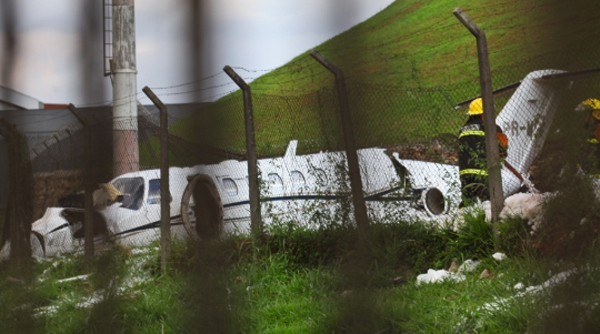
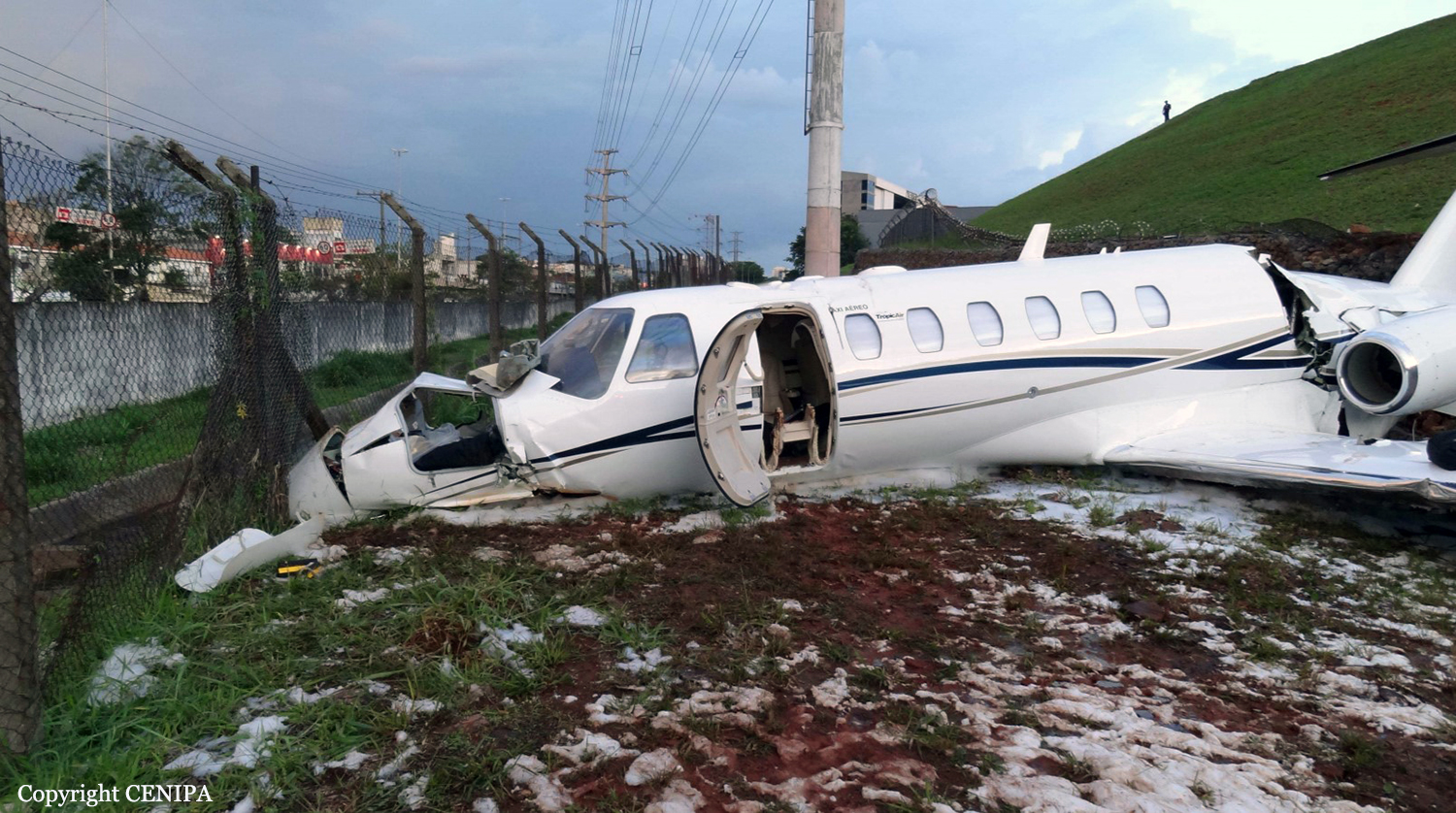
Following an uneventful flight from Florianópolis, the crew started the approach to São Paulo-Congonhas Airport Runway 35R. After touchdown, the airplane was unable to stop within the remaining distance. It overran, went down an embankment and came to rest against a fence, broken in two. The passenger and the copilot were slightly injured and captain was seriously injured. The aircraft was destroyed.
Probable cause:
The following findings were identified:
- The commander was overconfident in himself and the aircraft which led him to lose the critical capacity to discern the risks involved in the procedure that was adopting. Corroborating was the fact that the pilot judged he had much knowledge in this operation and knew exactly how the aircraft responded. It can be inferred there was complacency by the copilot on the actions of the commander, during the approach at high speed, because even feeling uncomfortable, he did not make an incisive interference because he believed in the idea that the commander had done this kind of approach, with high speed, and so knowing what he was doing.
- The pilot failed to identify the location of touch down during landing and not knowing how much runway was remaining, he decided he should not rush, thus demonstrating low situational awareness and lack of awareness, impacting the proper reaction time for the situation (Rush), which was not performed , leading the occurrence in question.
- The crew failed to properly assess the information available like speed and the runway length for the realization of a safe landing, which led to a poor judgment of the situation at hand, making the decision not to adopt the missed approach procedure.
- The distance between the crew, caused unconsciously by the commander's position with excess knowledge in the operation and the aircraft, and the insecurity of the copilot in considering new and inexperienced, resulted in a lack of assertiveness of the copilot to inform, with little emphasis, the commander of his perception of excessive airspeed.
- The crew did not adopt good crew resource management, failing to communicate with assertiveness and share critical information in time prior to landing, allowing the speeding remained present until the touchdown.
- Despite having adequate experience and training, the commander did not use the resources available, such as speed brakes to reduce the aircraft approach speed.
- The variable wind direction and predominantly tail intensity equal to or greater than 10 knots, allowed excessive speed during landing.
- The crew did not adopt good crew resource management, allowing the high speed to remain present until the touchdown.
- The commander thought he would be able to perform the approach and landing with the speed above the expected.
Final Report:

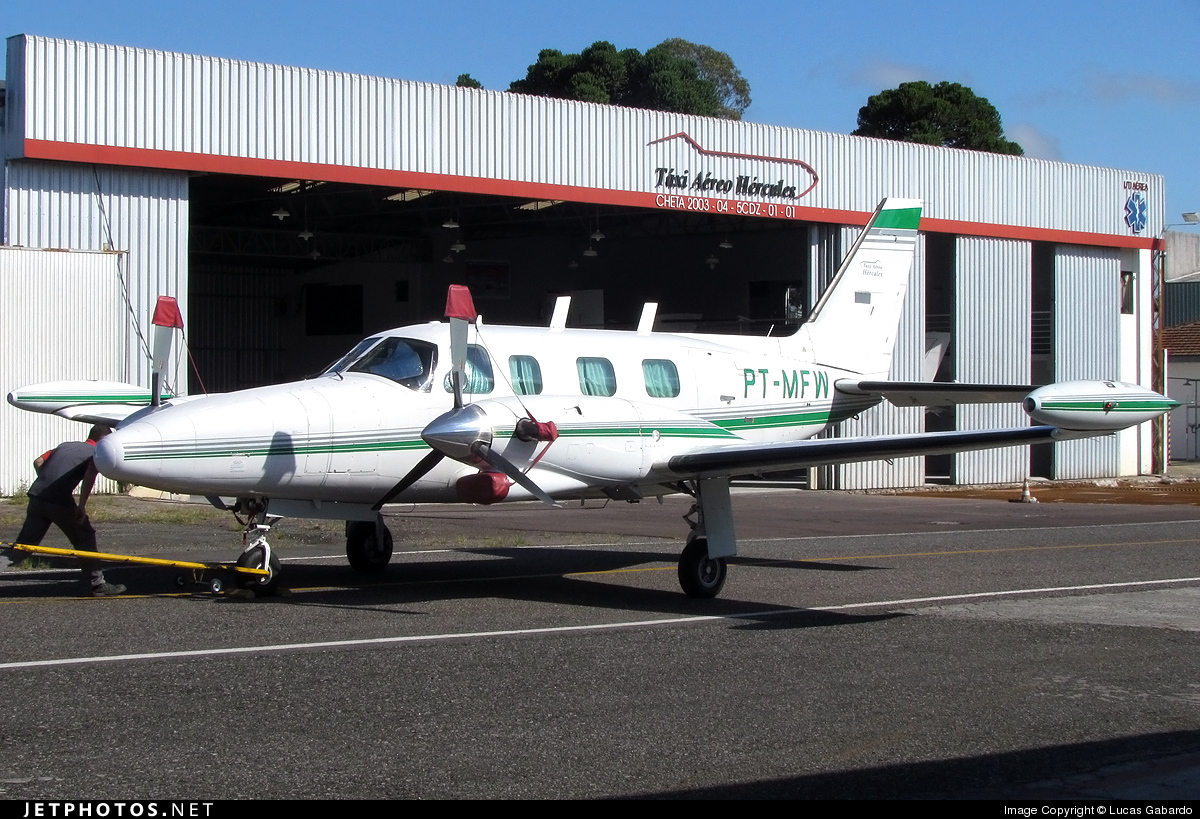
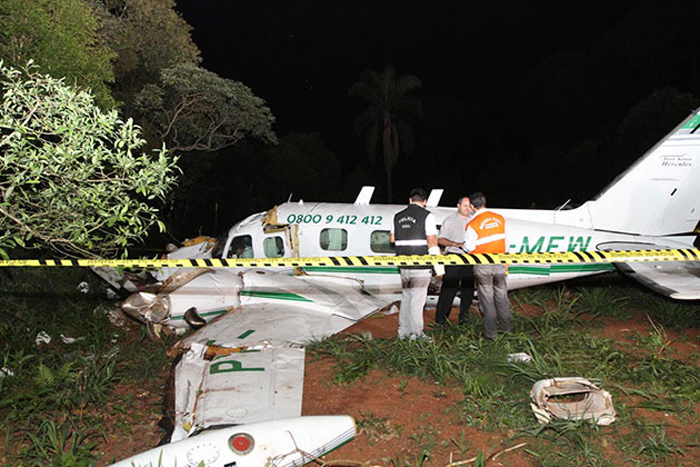
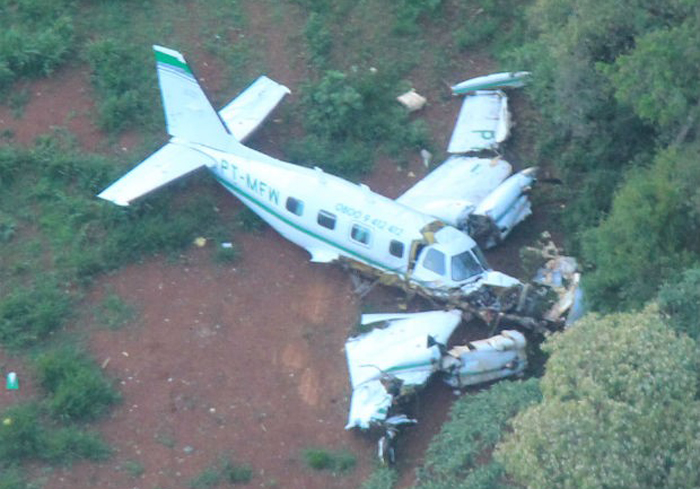
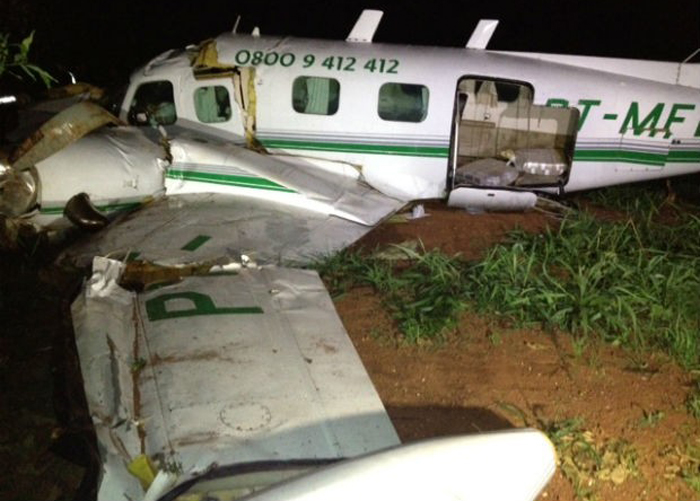
Crash of a Piper PA-31T2 Cheyenne II XL in Curitiba: 4 killed

Date & Time: Nov 6, 2012 at 1725 LT
Type of aircraft:
Operator:
Registration:
PT-MFW
Survivors:
No
Schedule:
Dourados – Curitiba
MSN:
31-8166067
YOM:
1981
Country:
Crew on board:
2
Crew fatalities:
Pax on board:
2
Pax fatalities:
Other fatalities:
Total fatalities:
4
Captain / Total flying hours:
11088
Captain / Total hours on type:
618.00
Copilot / Total flying hours:
771
Copilot / Total hours on type:
16
Circumstances:
The twin engine aircraft departed Dourados-Francisco de Matos Pereira Airport on an on-demand flight to Curitiba, carrying two passengers, two pilots and a load consisting of valuables. On final approach to Curitiba-Bacacheri Airport, both engines failed simultaneously. The crew attempted an emergency landing when the aircraft crashed in a field and came to rest near trees. A passenger was seriously injured while three other occupants were killed. The following day, the only survivor died from his injuries.
Probable cause:
The following findings were identified:
- Fatigue is likely to have occurred, since there are reports of high workload, capable of affecting the perception, judgment, and decision making of the crew.
- In view of the fact that the captain displayed an attitude of gratefulness toward the company which hired him, working for consecutive hours and many times more than was prescribed for his daily routine, it is possible that such high motivation may have been present in the accident flight, harming his capacity to evaluate the conditions required for a safe flight.
- The crew neither gathered nor properly evaluated the available pieces of information for the correct refueling of the aircraft, something that led to their decision of not refueling the aircraft in SBDO.
- The company crews did not usually keep fuel records, and made approximate calculations based on the fuel remaining from previous flights, whose control parameters were not dependable. Such attitudes reflected a work-group culture that became apparent in this accident.
- The pilots were presumably undergoing a condition of stress on account of the company flight routine, in which they flew every day, with little time dedicated to rest or even holidays. Under such condition, the pilots may have had their cognitive processes affected, weakening their performance in flight.
- The flights had the objective of transporting valuables, causing concern in relation to security issues involving the aircraft on the ground. Thus, it is suspected that decisions made by the pilots may have been affected by this complexity, such as, for example, deciding not to refuel the aircraft on certain locations.
- The way the work was structured in the company was giving rise to overload due to the routine of many flights and few periods of rest or holidays. This situation may have affected the crew’s performance, interfering in the analysis of the conditions necessary for a safe flight.
- The company did not monitor the performance of its pilots for the identification of contingent deviations from standard procedures, such as non-compliance with the MGO.
- Failures in the application of operational norms, as well as in the communication between the crew members, may have occurred on account of inadequate management of tasks by each individual, such as, for example, the use of the checklist and the filling out of control forms relative to fuel consumption contained in the company MGO.
- The crew judged that the amount of fuel existing in the aircraft was sufficient for the flight in question.
- The fact that the fuel gauges were not indicating the correct quantity of fuel had direct influence on the flight outcome, since the planning factors and the pilots’ situational awareness were affected.
- The crew did not analyze appropriately the amount of fuel necessary for the flight leg between SBDO and SBBI. The Mission Order did not establish the minimum amount of fuel necessary for the flight legs, and the crew had to take responsibility for the decision.
- The company was not rigorous with the filling out of aircraft logbooks and cargo manifestos, resulting that it did not have control over the operational procedures performed by the crews, and this may have contributed to the aircraft taking off with an amount of fuel that was insufficient for the flight. Although the MGO had parameters established for calculating the endurance necessary for VFR/IFR flights, the company did not define the fuel necessary in the Mission Orders, transferring the responsibility for the decision to the aircraft captain.
Final Report:
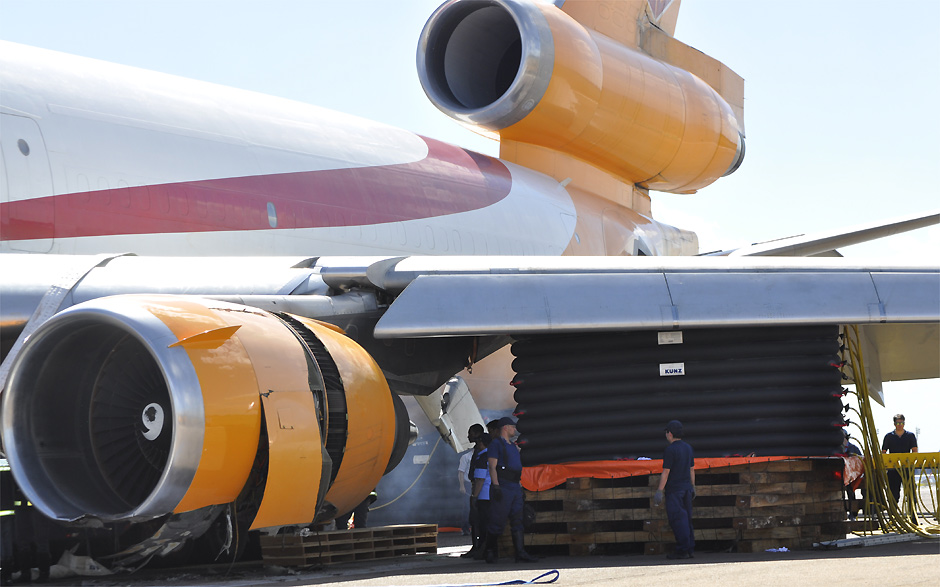
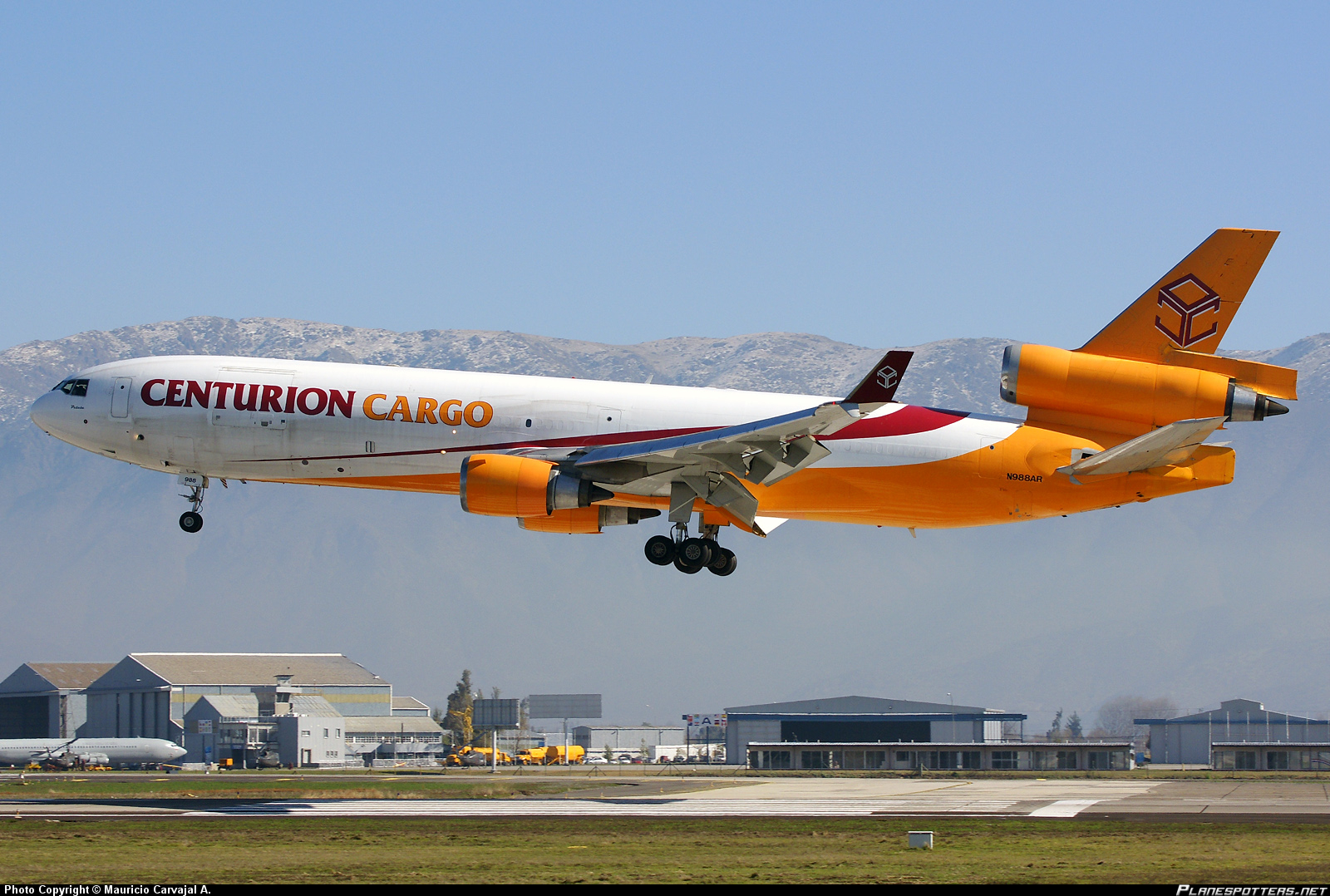
Crash of a McDonnell Douglas MD-11F in Campinas

Date & Time: Oct 13, 2012 at 1852 LT
Type of aircraft:
Operator:
Registration:
N988AR
Flight Type:
Survivors:
Yes
Schedule:
Miami - Campinas
MSN:
48434/476
YOM:
1991
Flight number:
CWC425
Country:
Crew on board:
3
Crew fatalities:
Pax on board:
0
Pax fatalities:
Other fatalities:
Total fatalities:
0
Captain / Total flying hours:
12900
Copilot / Total flying hours:
5198
Copilot / Total hours on type:
1368
Circumstances:
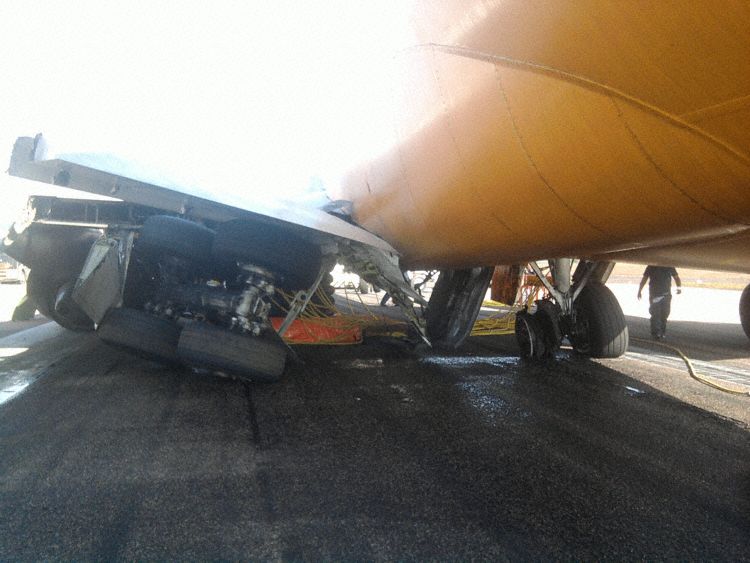
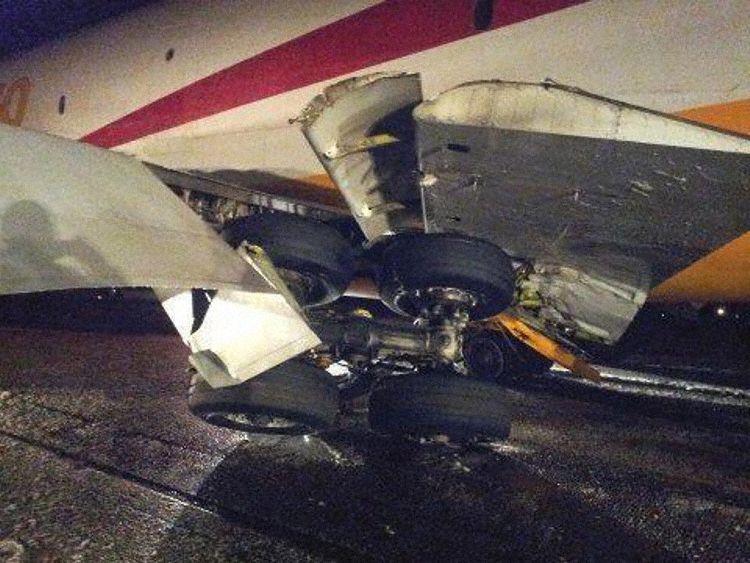
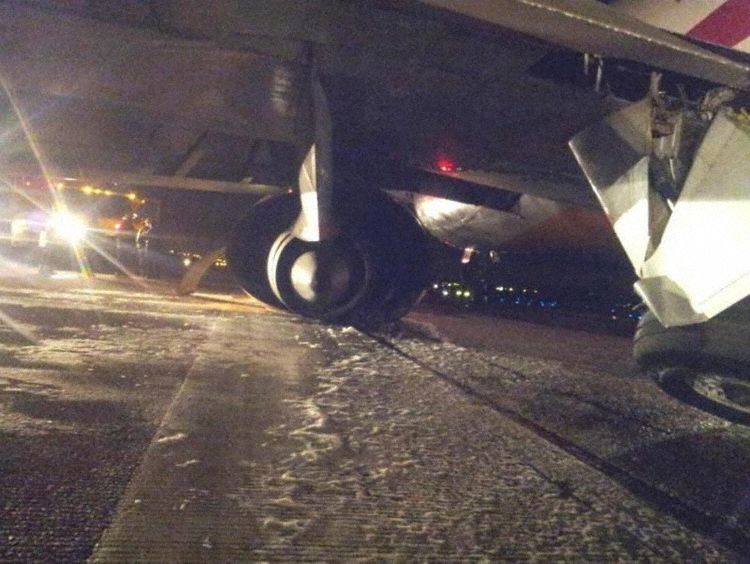
The airplane took off from Miami International Airport (KMIA), destined for Viracopos Airport (SBKP), with two pilots and a mechanic on board, on a non-regular cargo transport flight. The flight was uneventful up to the moment its landing in SBKP. On the approach for landing on runway 15, the crew performed the IFR ILS Z procedure. The weather conditions were VMC, with the wind coming from 140º at 19kt. When the aircraft was granted clearance to land, the wind strength was 20kt, gusting up to 29kt. The copilot was the Pilot Flying (PF), and the captain was the Pilot Monitoring (PM) at the moment of landing. When the aircraft touched down on the runway after the flare, the left main landing gear collapsed, causing the aircraft to skid on the runway for approximately 800 meters before stopping. There was substantial damage to the left main gear assembly, to the left wing, and left engine. The aircraft stopped within the runway limits. All three crew members were uninjured.
Probable cause:
It was determined that the “the landing gear failed due to overload in the cylinder structure”. The fracture started in the rear section of the cylinder in a connection hole which served as a tension concentration point, and ended in the front part of the cylinder with its breakage into two parts. Following a failure of the right main gear upon landing in Montevideo on 20 October 2009, the right main landing gear was replaced by VARIG Engineering & Maintenance (VEM), but the organization responsible for the research of damage, the specification of the services necessary for the restoration of airworthiness, and the provision of the services that enabled the restoration of the aircraft to an airworthy condition was not identified. The same aircraft parts were subjected to metallurgical analysis at the Boeing Long Beach Materials, Processing and Physics [MP&P] Laboratories, in Huntington Beach, California, USA; and the technical report issued by Boeing highlighted that in one of the points of origin of the failure, the analysis had identified characteristics similar to a pre-crack point, which would have begun earlier, probably due to overload. In the tasks that led to the restoration of the aircraft airworthiness after the accident in Uruguay in 2009 (Hard-Landing), and also in subsequent periodic inspections, the existence of pre-crack traces resulting from a previous overload condition may not have been identified, something that could have resulted in a point of stress concentration.
Final Report:

Crash of a Piper PA-46R-350T Matrix off Jacarepaguá: 2 killed

Date & Time: Aug 21, 2012 at 1935 LT
Registration:
PT-FEM
Flight Phase:
Flight Type:
Survivors:
No
Schedule:
Jacarepaguá – Campo de Marte
MSN:
46-92158
YOM:
2010
Country:
Crew on board:
2
Crew fatalities:
Pax on board:
0
Pax fatalities:
Other fatalities:
Total fatalities:
2
Circumstances:
Shortly after a night takeoff from Jacarepaguá Airport, the single engine aircraft entered an uncontrolled descent and crashed in the sea. Few debris were found several days later. The pilot's body was found on September 4 on a beach in Barra de Tijuca. The wreckage and the copilot's body were never found. It was reported that the crew did not activate the transponder after takeoff and did not contact ATC for unknown reasons.

Crash of a Beechcraft B200 Super King Air in Juiz de Fora: 8 killed

Date & Time: Jul 28, 2012 at 0745 LT
Operator:
Registration:
PR-DOC
Survivors:
No
Schedule:
Belo Horizonte - Juiz de Fora
MSN:
BY-51
YOM:
2009
Country:
Crew on board:
2
Crew fatalities:
Pax on board:
6
Pax fatalities:
Other fatalities:
Total fatalities:
8
Captain / Total flying hours:
14170
Captain / Total hours on type:
2170.00
Copilot / Total flying hours:
730
Copilot / Total hours on type:
415
Aircraft flight hours:
385
Aircraft flight cycles:
305
Circumstances:
The twin engine aircraft departed Belo Horizonte-Pampulha Airport at 0700LT on a flight to Juiz de Fora, carrying six passengers and two pilots. In contact with Juiz de Fora Radio, the crew learned that the weather conditions at the aerodrome were below the IFR minima due to mist, and decided to maintain the route towards the destination and perform a non-precision RNAV (GNSS) IFR approach for landing on runway 03. During the final approach, the aircraft collided first with obstacles and then with the ground, at a distance of 245 meters from the runway 03 threshold, and exploded on impact. The aircraft was totally destroyed and all 8 occupants were killed, among them both President and Vice-President of the Vilmas Alimentos Group.
Probable cause:
The following factors were identified:
- The pilot may have displayed a complacent attitude, both in relation to the operation of the aircraft in general and to the need to accommodate his employers’ demands for arriving in SBJF. It is also possible to infer a posture of excessive self-confidence and confidence in the aircraft, in spite of the elements which signaled the risks inherent to the situation.
- It is possible that the different levels of experience of the two pilots, as well as the copilot’s personal features (besides being timid, he showed an excessive respect for the captain), may have resulted in a failure of communication between the crewmembers.
- It is possible that the captain’s leadership style and the copilot’s personal features resulted in lack of assertive attitudes on the part of the crew, hindering the exchange of adequate information, generating a faulty perception in relation to all the important elements of the environment, even with the aircraft alerts functioning in a perfect manner.
- The meteorological conditions in SBJF were below the minima for IFR operations on account of mist, with a ceiling at 100ft.
- The crew did not inform Juiz de Fora Radio about their passage of the MDA and, even without visual contact with the runway, deliberately continued in their descent, not complying with the prescriptions of the items 10.4 and 15.4 of the ICA 100-12 (Rules of the Air and Air Traffic Services).
- The crew judged that it would be possible to continue descending after the MDA, even without having the runway in sight.
Final Report:

Crash of a Piper PA-31-310 Navajo C off Jacarepaguá

Date & Time: Jul 24, 2012 at 1610 LT
Type of aircraft:
Operator:
Registration:
PT-WOT
Survivors:
Yes
Schedule:
Jacarepaguá - Jacarepaguá
MSN:
31-7912021
YOM:
1979
Country:
Crew on board:
1
Crew fatalities:
Pax on board:
2
Pax fatalities:
Other fatalities:
Total fatalities:
0
Circumstances:
The twin engine aircraft was engaged in a survey flight off the State of Rio de Janeiro and departed Jacarepaguá-Roberto Marinho Airport in the afternoon. While returning to his base, the pilot encountered problems and decided to ditch the aircraft. The airplane came to rest few hundred metres offshore. All three occupants were rescued and the aircraft sank.

Crash of an Embraer EMB-121A1 Xingu II off Angra dos Reis: 3 killed

Date & Time: Jul 12, 2012 at 1715 LT
Type of aircraft:
Registration:
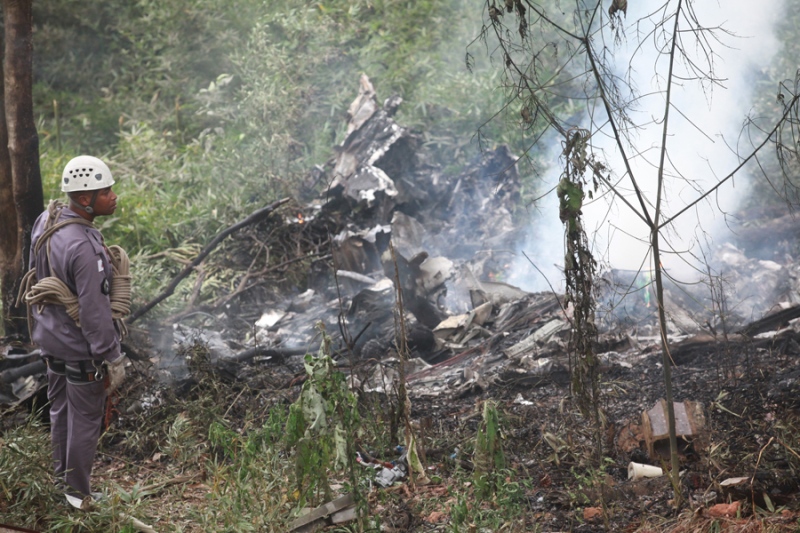
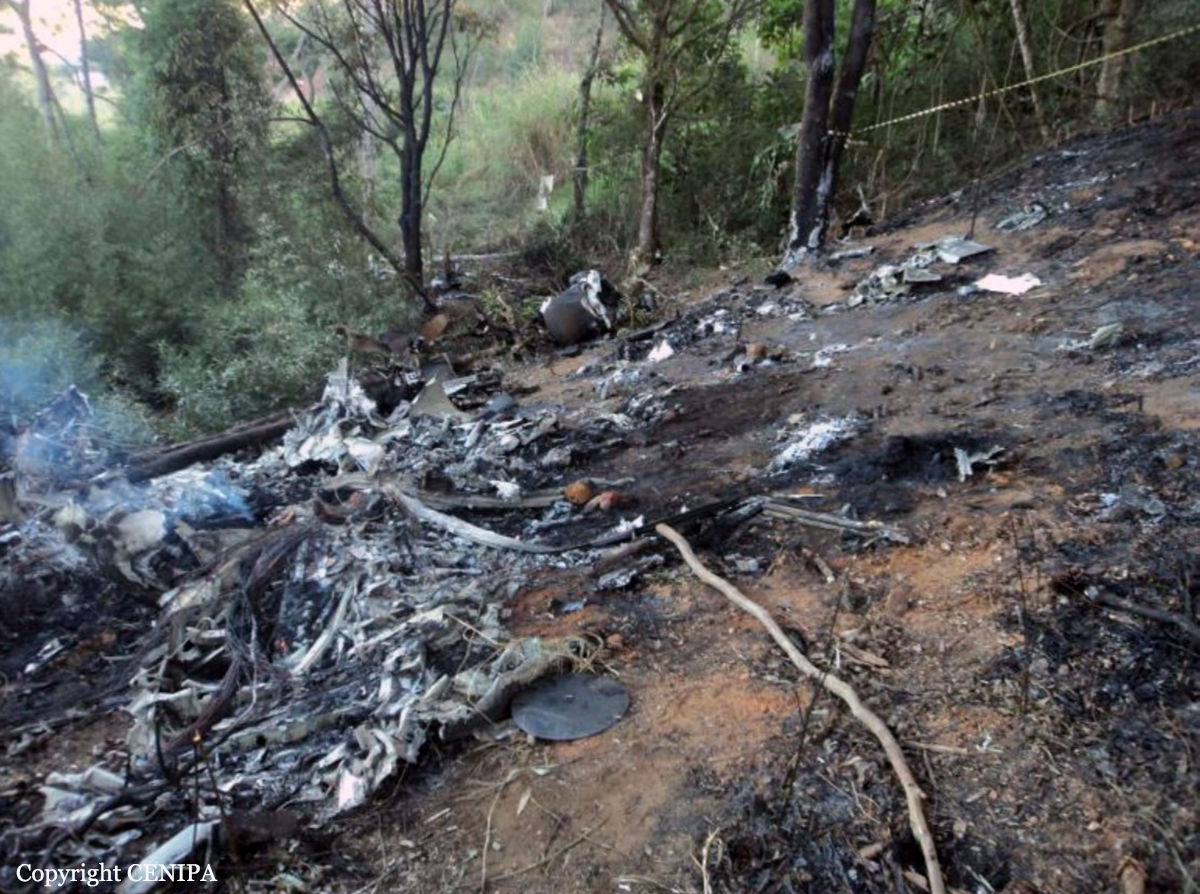
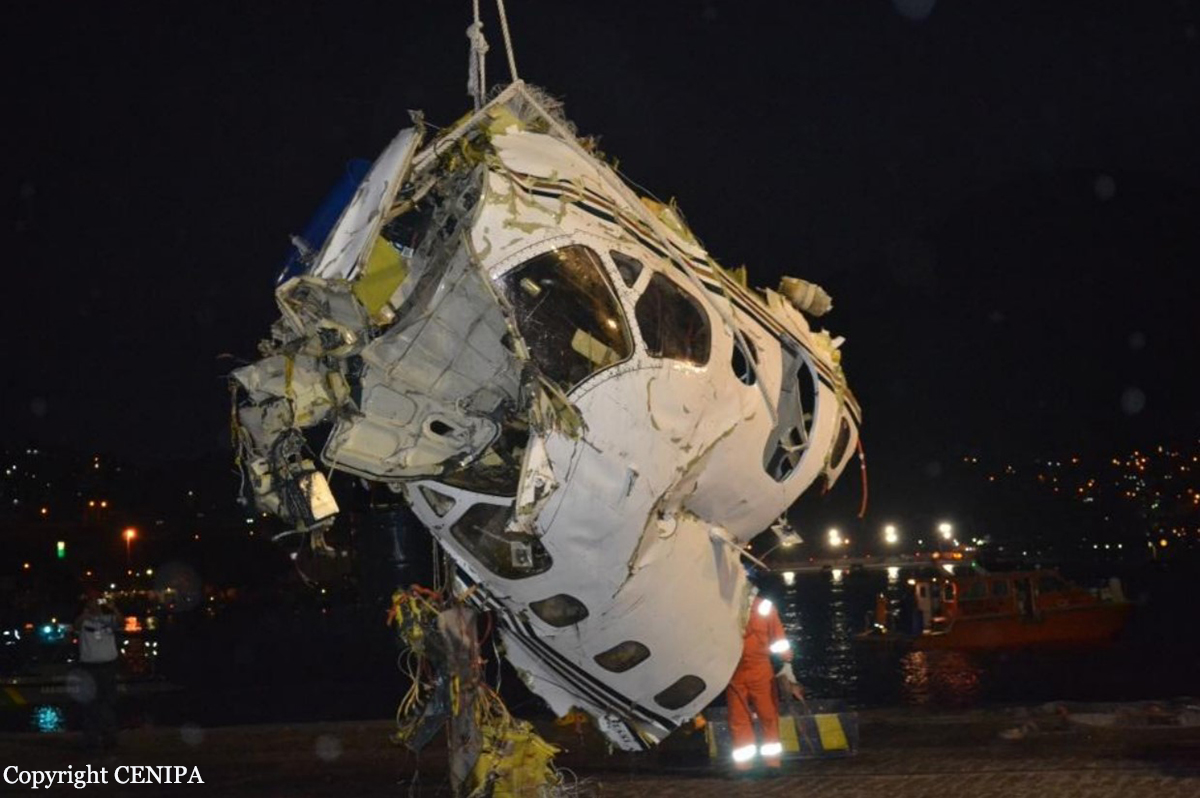
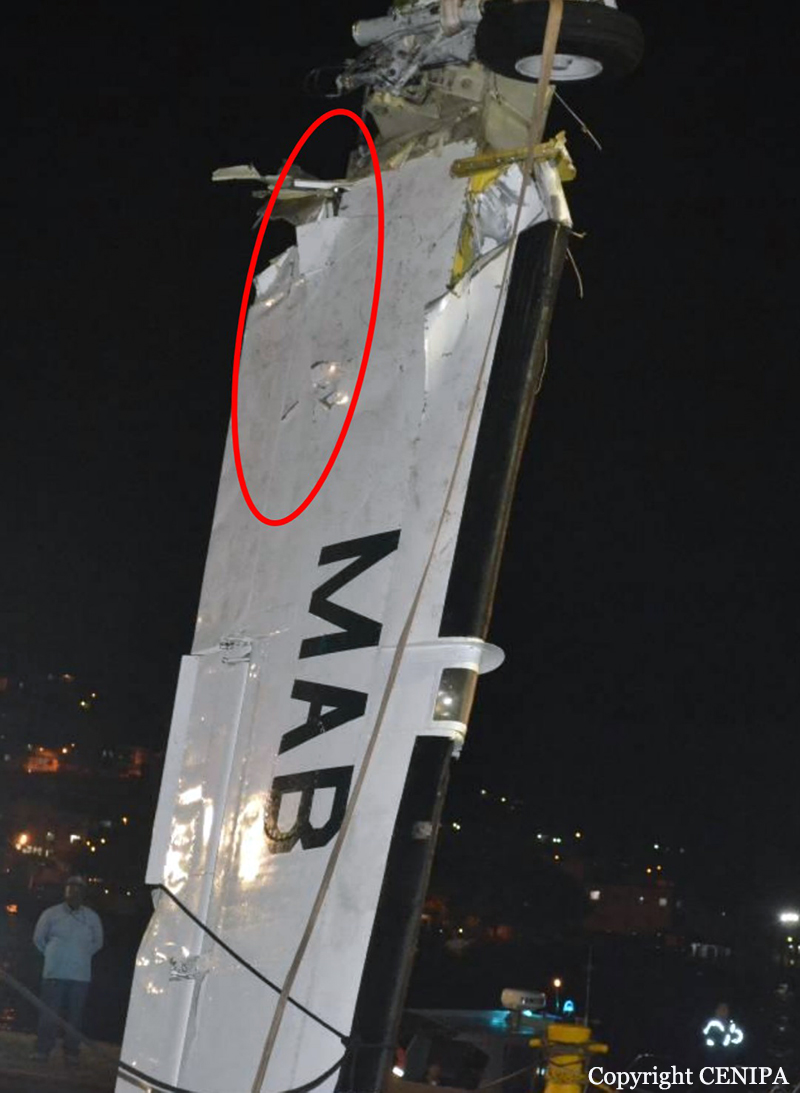
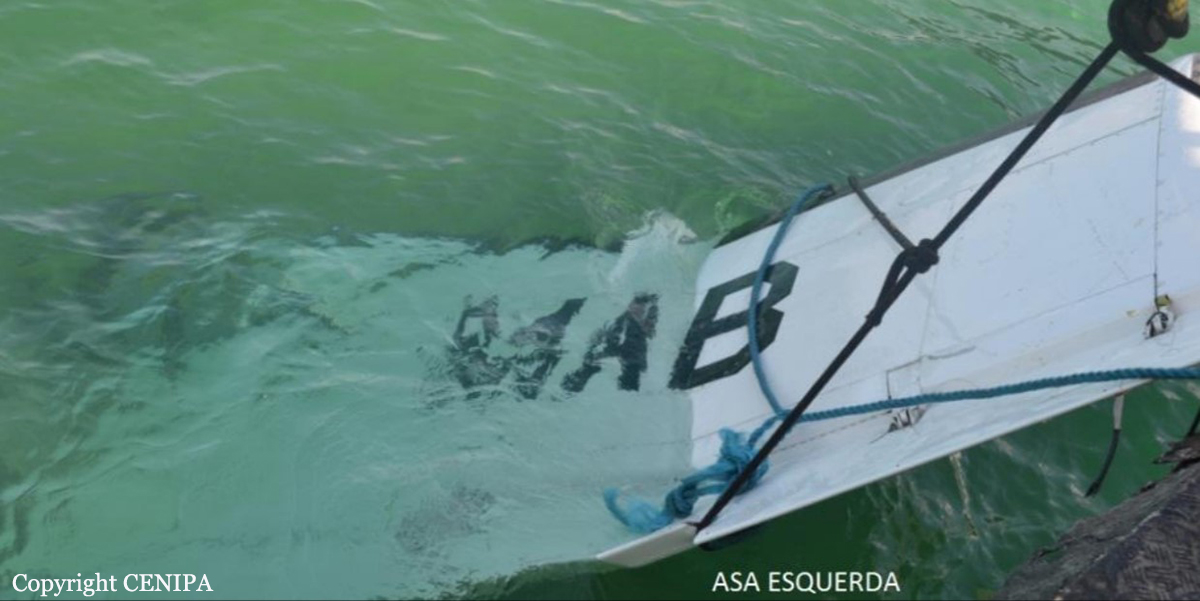
PT-MAB
Survivors:
No
Schedule:
Belo Horizonte - Angra dos Reis
MSN:
121-007
YOM:
1979
Country:
Crew on board:
2
Crew fatalities:
Pax on board:
1
Pax fatalities:
Other fatalities:
Total fatalities:
3
Captain / Total flying hours:
2735
Captain / Total hours on type:
2065.00
Copilot / Total flying hours:
1820
Copilot / Total hours on type:
1283
Circumstances:
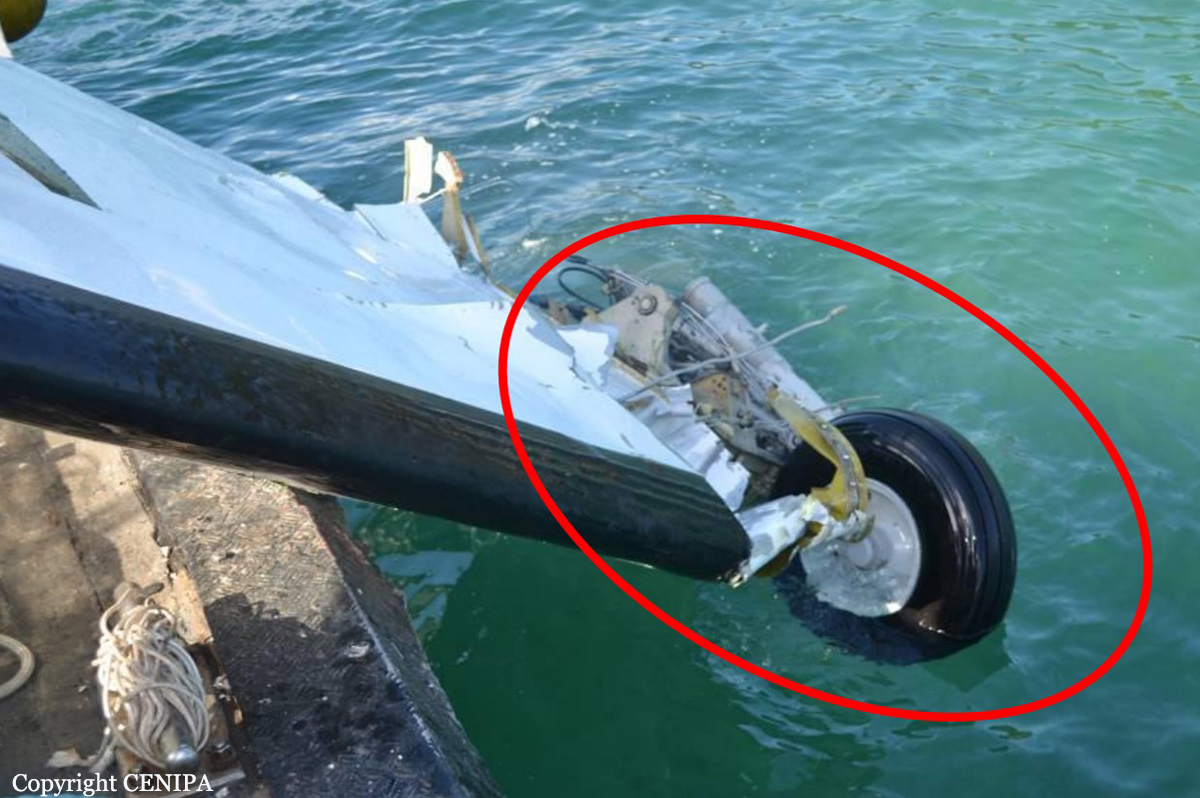
The twin engine aircraft departed Belo Horizonte-Pampulha Airport on a charter flight to Angra dos Reis, carrying one passenger and two pilots. On approach to Angra dos Reis, the crew encountered poor weather conditions with a cold front approaching the area. On short final, while completing a right turn at low height, the right wing struck the water surface and the aircraft crashed in the sea, some 500 metres offshore. The wreckage was found 3 km from the airport. All three occupants were killed and aircraft was destroyed. Visibility was low at the time of the accident with heavy rain falls, low clouds and turbulences. The passenger was the local representative of the Mercedes Benz Group.
Probable cause:
The collision with water and the subsequent accident was the consequence of the decision of the crew to continue the approach at low altitude to maintain a visual contact with the ground. At the time of the accident, the visibility was limited and weather conditions were marginal.
Final Report:
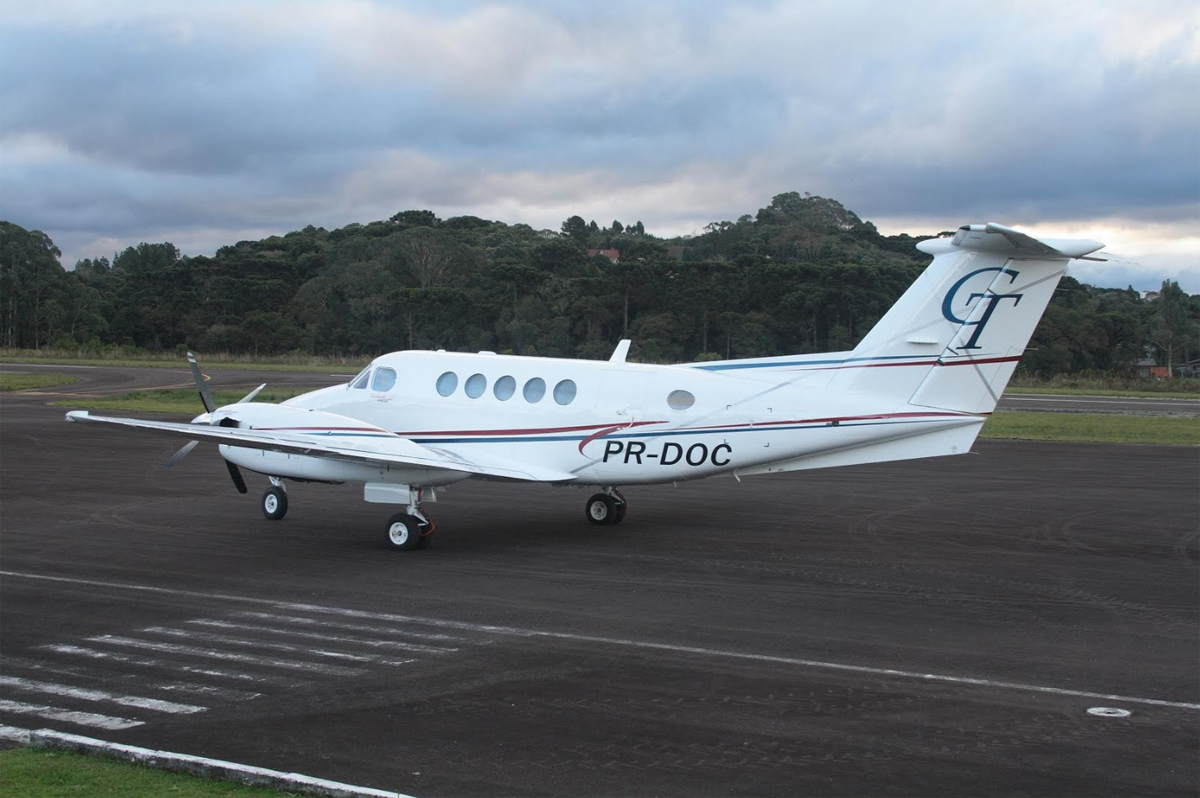
Crash of an Embraer EMB-820C Navajo near Espinosa: 1 killed

Date & Time: Jul 6, 2012 at 1050 LT
Operator:
Registration:
PT-ENG
Flight Phase:
Survivors:
Yes
Schedule:
Gunanmbi - Guanambi
MSN:
820-066
YOM:
1982
Country:
Crew on board:
1
Crew fatalities:
Pax on board:
2
Pax fatalities:
Other fatalities:
Total fatalities:
1
Captain / Total flying hours:
3876
Captain / Total hours on type:
238.00
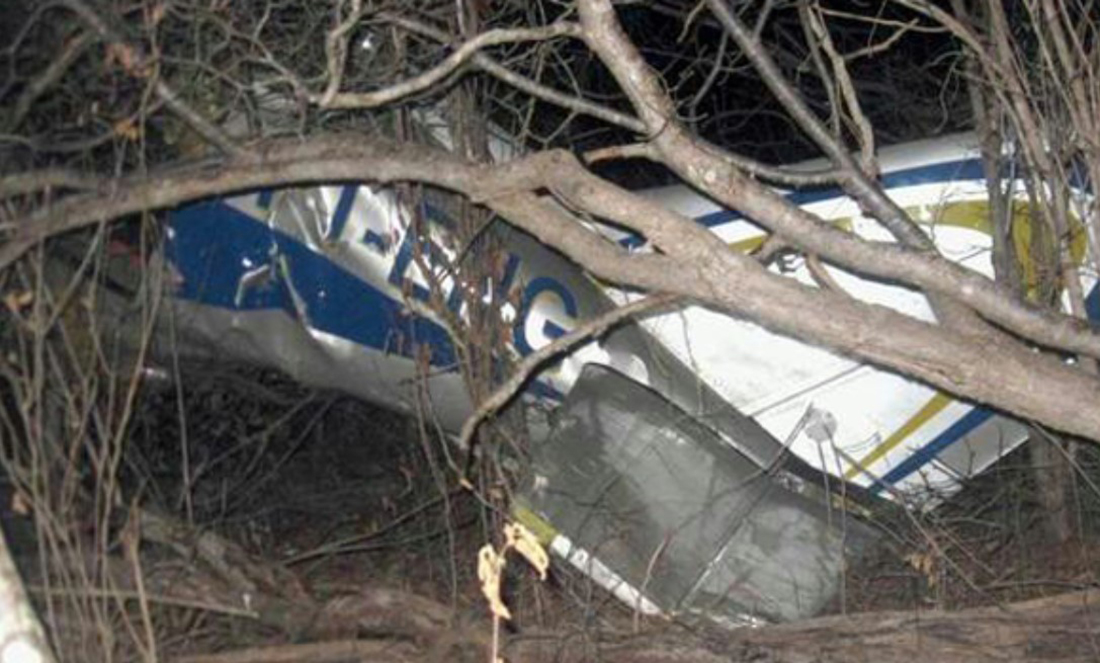
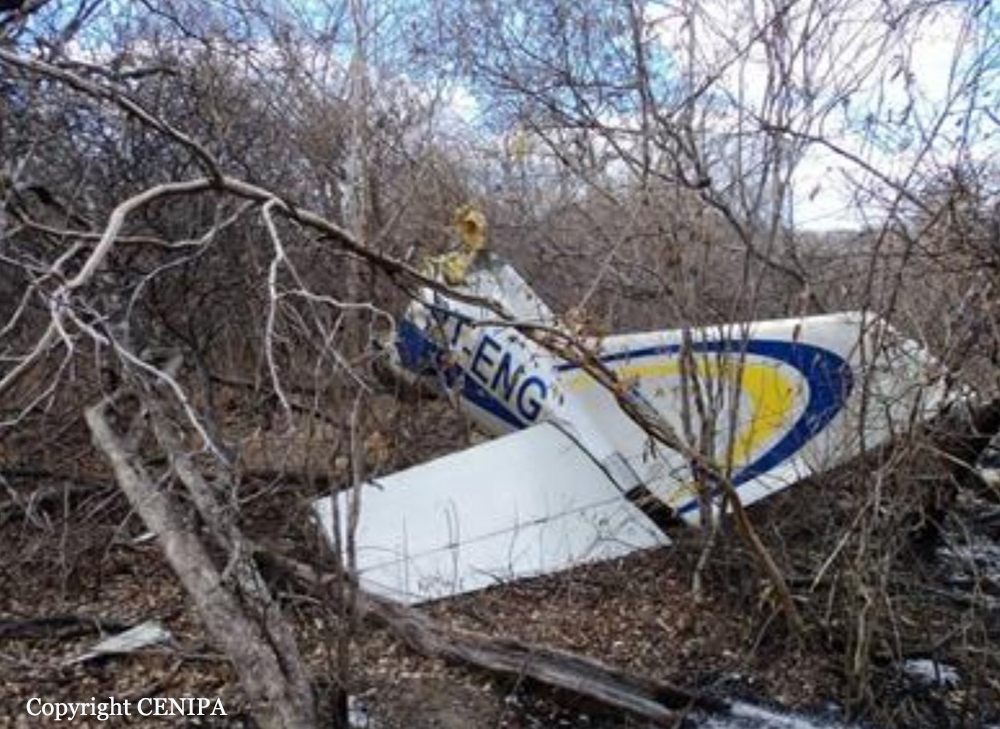
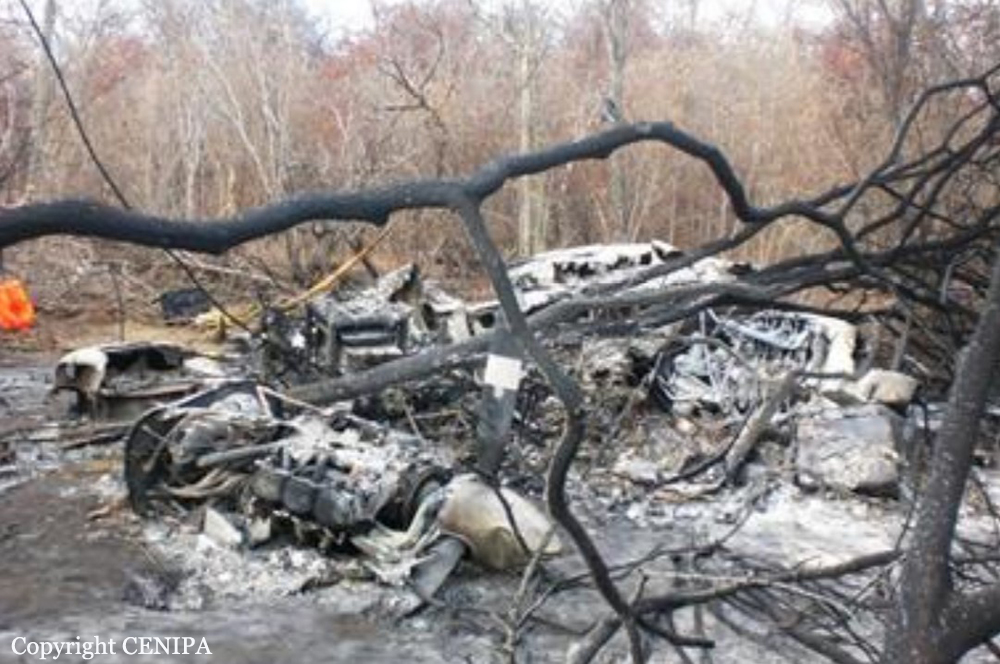
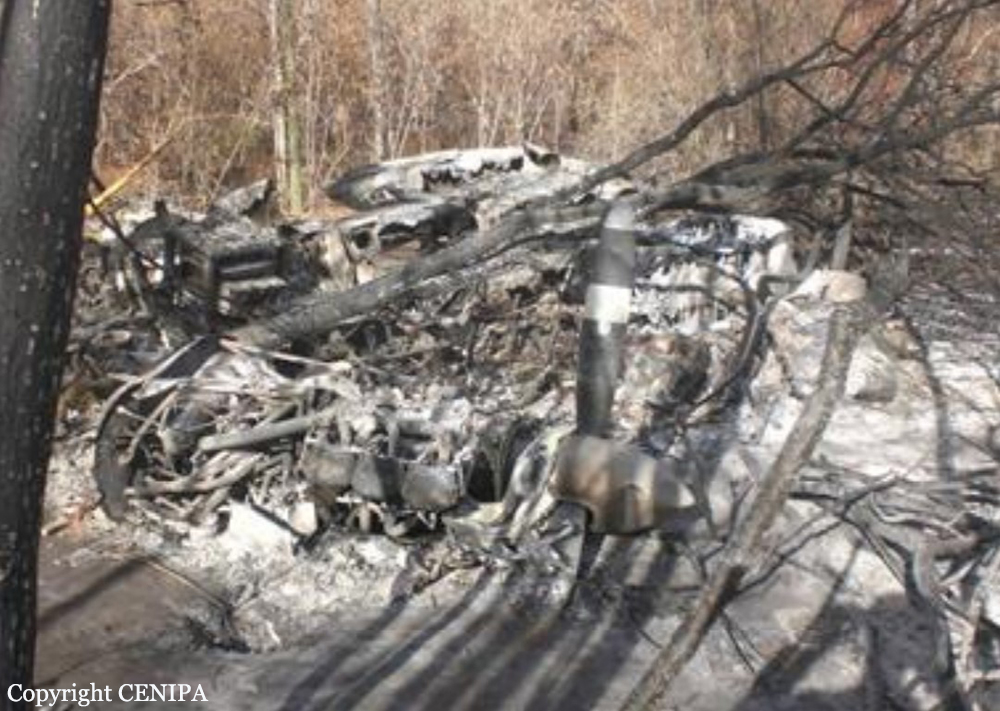
Circumstances:
The twin aircraft departed Guanambi Airport to perform a low level survey flight in the region of Espinosa, carrying two observers and one pilot. About two hours into the flight, while cruising at an altitude of 330 feet, the right engine lost power then failed. While executing the emergency checklist, the left engine failed as well. The pilot attempted an emergency landing when the aircraft crashed in a wooded area, bursting into flames. Both passengers evacuated with minor injuries and the pilot was killed. The aircraft was totally destroyed by a post crash fire.
Probable cause:
There was sufficient fuel in the tanks at the time of the accident as the aircraft was refueled prior to departure for a 5-hour flight. The exact cause of the double engine failure remains unknown. When the right engine failed, the pilot was flying at an altitude of 330 feet which was below the minimum safe altitude fixed at 500 feet. Also, he was apparently using his cell phone.
Final Report:
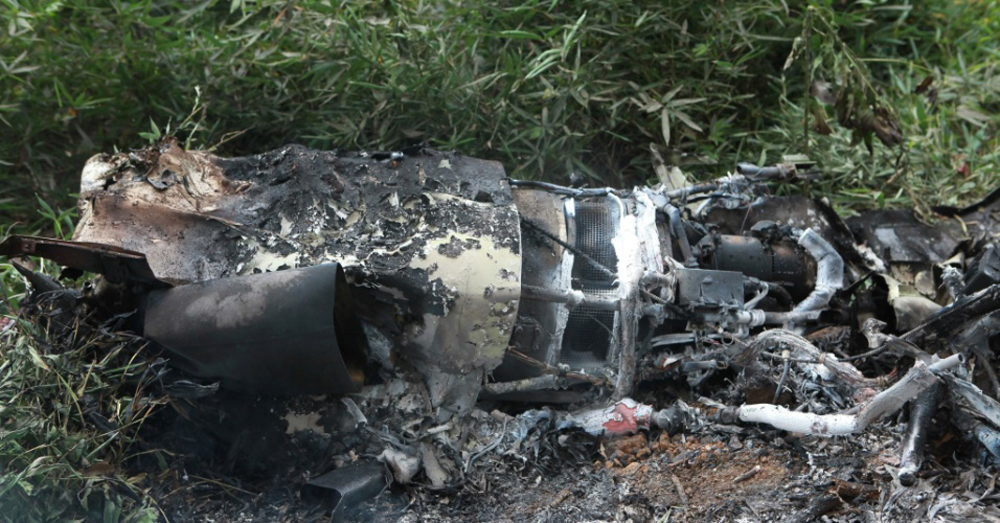
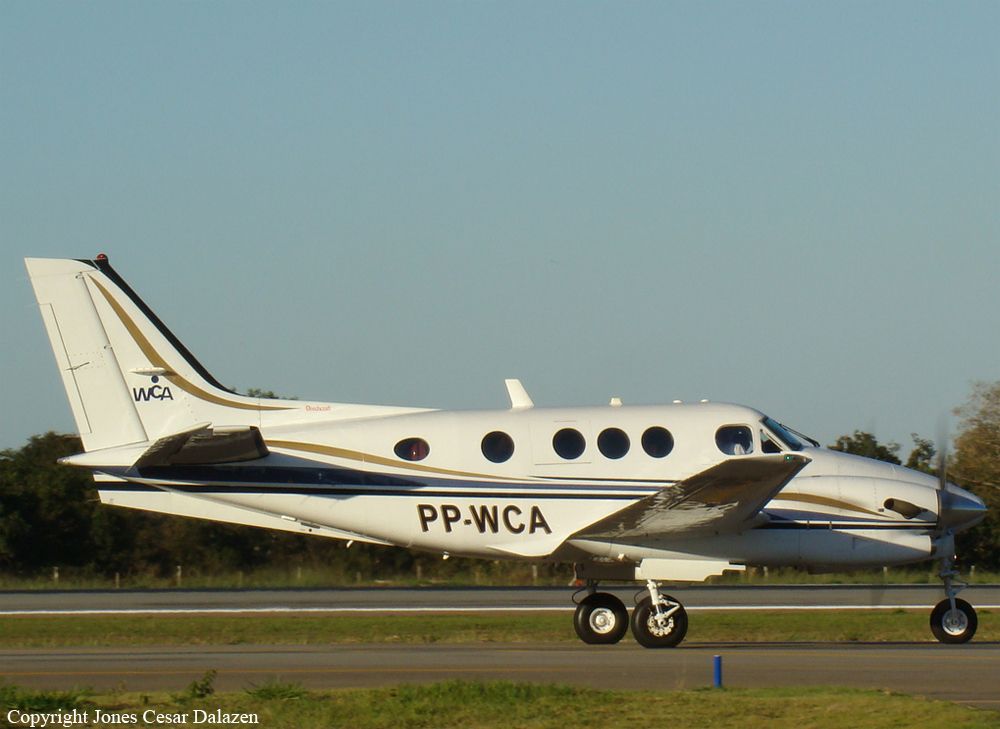
Crash of a Beechcraft C90B King Air in Jundiaí: 1 killed

Date & Time: Apr 20, 2012 at 1430 LT
Type of aircraft:
Registration:
PP-WCA
Flight Type:
Survivors:
No
Schedule:
Jundiaí - Jundiaí
MSN:
LJ-1676
YOM:
2002
Country:
Crew on board:
1
Crew fatalities:
Pax on board:
0
Pax fatalities:
Other fatalities:
Total fatalities:
1
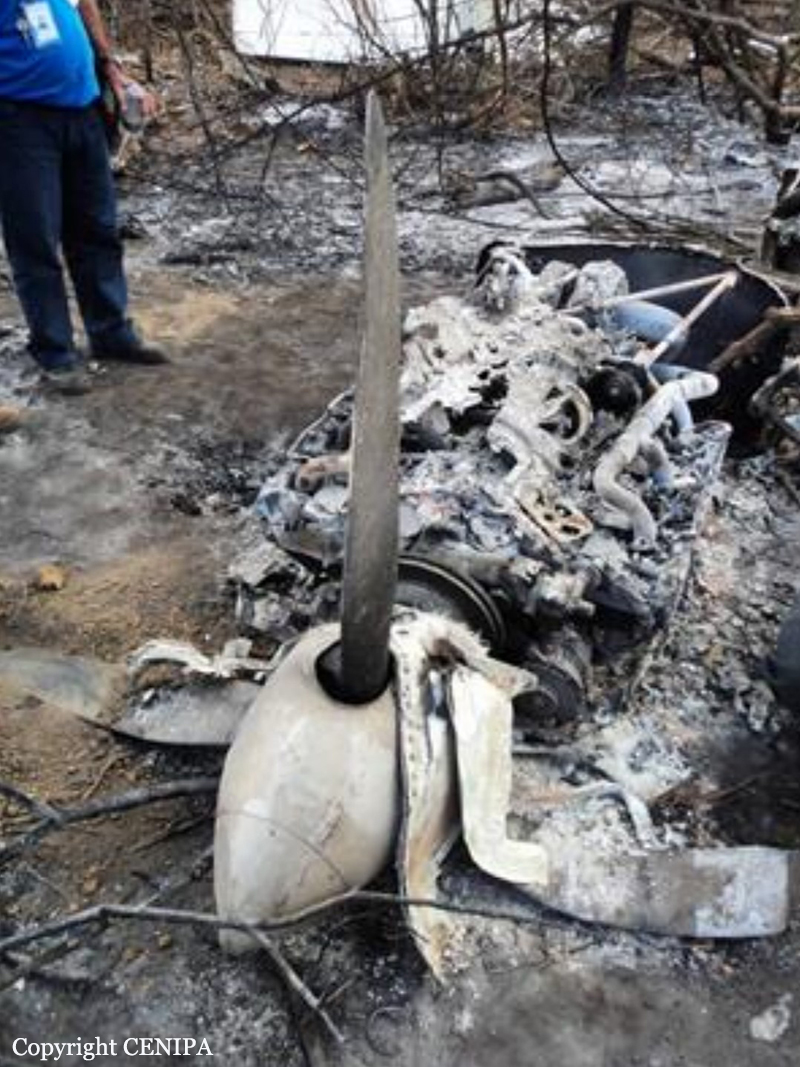
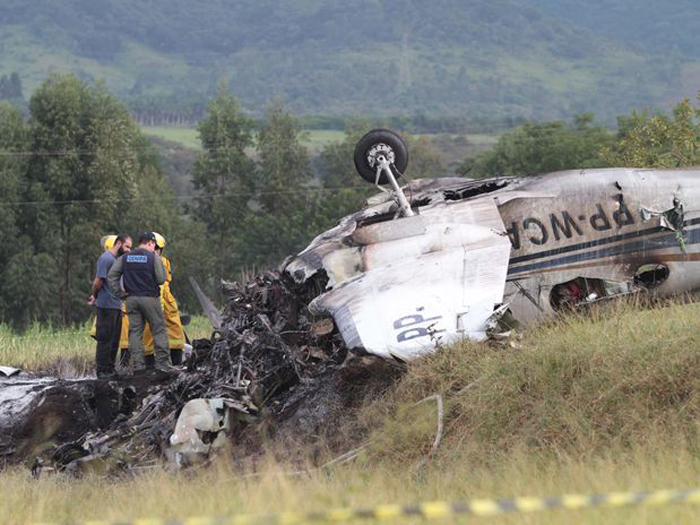
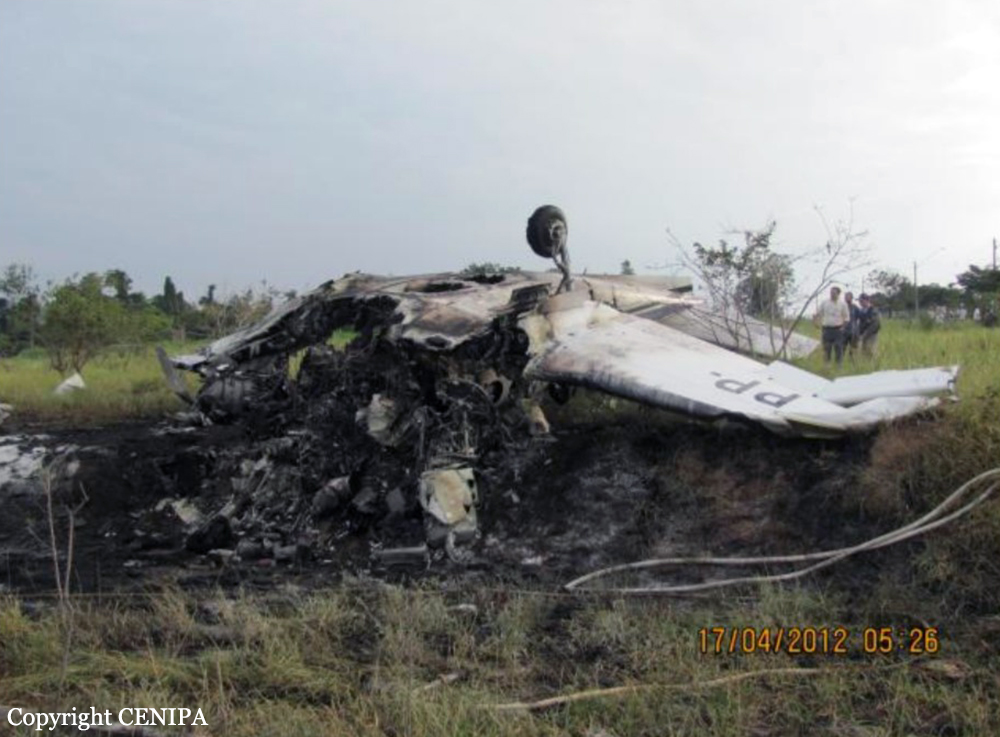
Circumstances:
The pilot, sole aboard, was completing a local flight from Jundiaí-Comandante Rolim Adolfo Amaro Airport. Shortly after takeoff from runway 36, the pilot reported to ATC that the engine lost power and that he was not able to maintain a safe altitude. He was cleared for an immediate return and completed a circuit. On final approach to runway 18, he lost control of the airplane that crashed 180 metres short of runway and came to rest upside down, bursting into flames. The aircraft was totally destroyed and the pilot was killed.
Probable cause:
The following factors were identified:
- Upon intercepting the final leg for landing, the aircraft crossed the approach axis, and the pilot, in an attempt to make the aircraft join the approach axis again, may have depressed the rudder pedal in an inadequate manner, inadvertently making the aircraft enter a Cross Control Stall.
- The pilot, intentionally, violated a number of aeronautical regulations in force in order to fly an aircraft for which he had no training and was not qualified.
- The short experience of the pilot in the aircraft model hindered the correct identification of the situation and the adoption of the necessary corrective measures.
- The DCERTA’s vulnerability allowed a non-qualified pilot to file a flight notification by making use of the code of a qualified pilot. Thus, the last barrier capable of preventing the accident flight to be initiated was easily thrown down, by making it difficult to implement a more effective supervisory action.
Final Report:
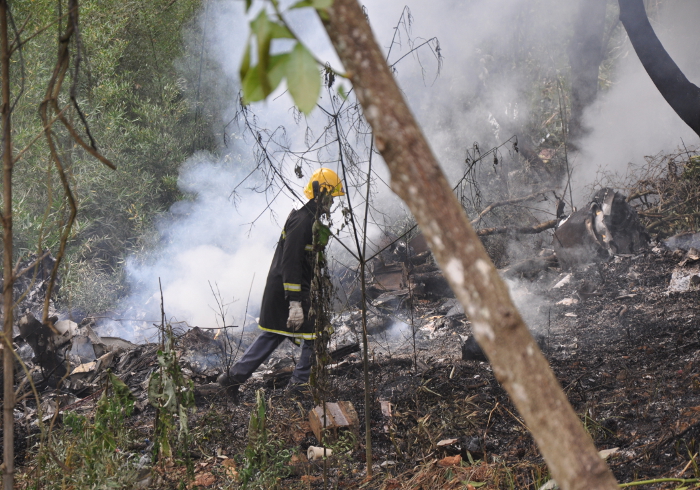
Crash of a Cessna 208B Grand Caravan in Manaus: 1 killed

Date & Time: Feb 28, 2012 at 0715 LT
Type of aircraft:
Operator:
Registration:
PT-PTB
Flight Phase:
Flight Type:
Survivors:
No
Schedule:
Manaus - Manaus
MSN:
208B-0766
YOM:
1999
Country:
Crew on board:
1
Crew fatalities:
Pax on board:
0
Pax fatalities:
Other fatalities:
Total fatalities:
1
Captain / Total flying hours:
12000
Captain / Total hours on type:
158.00
Circumstances:
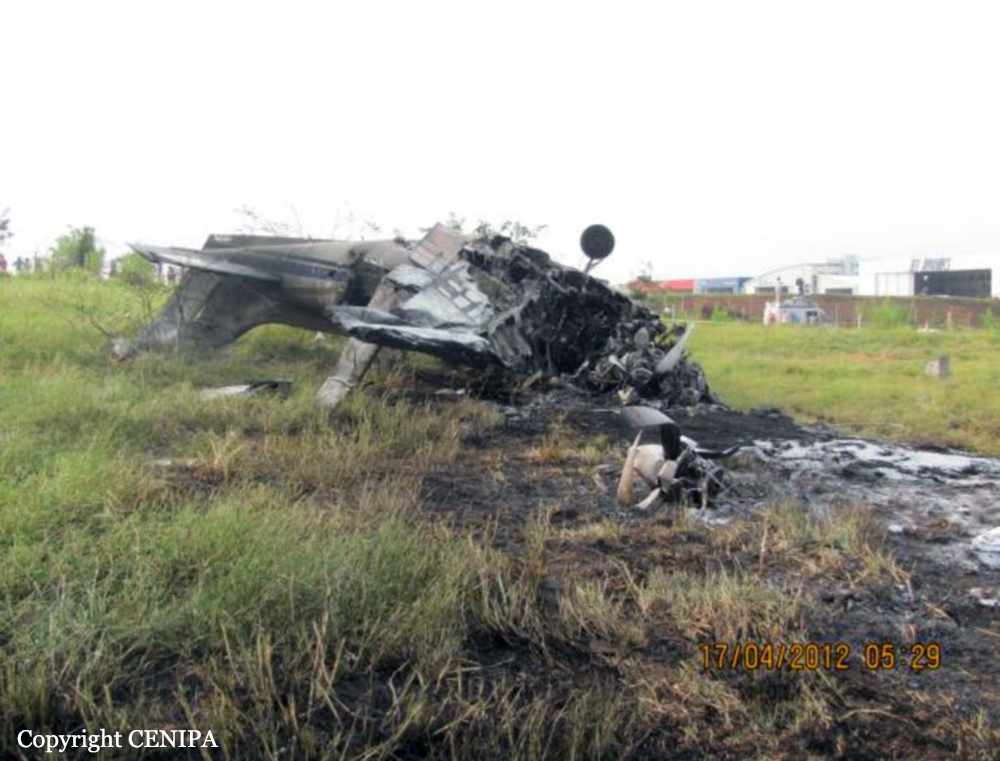
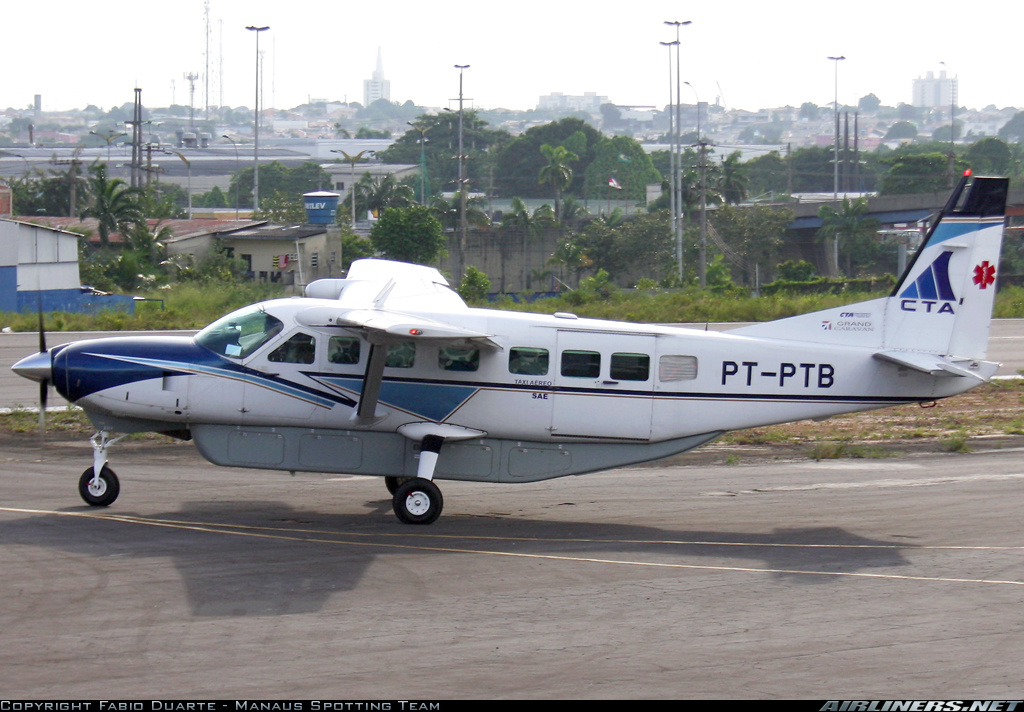
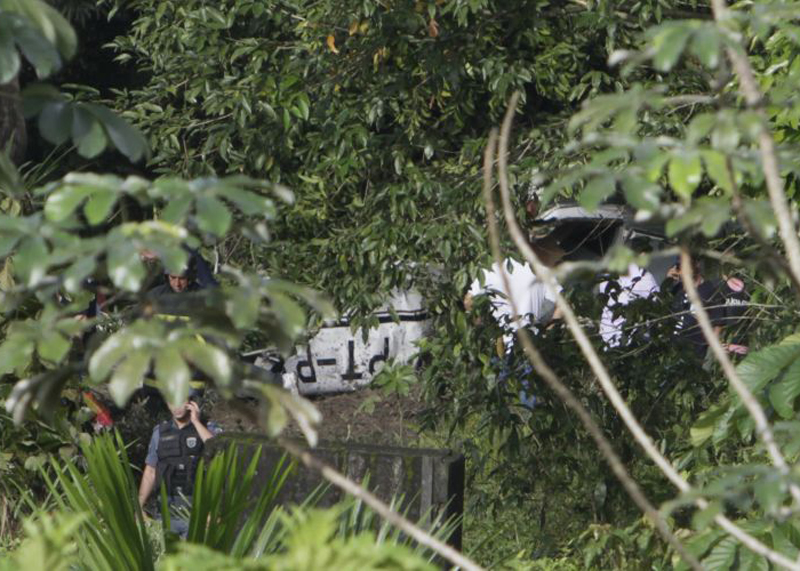
The pilot was performing a positioning flight from Manaus-Aeroclube de Flores Airport to the international Airport of Manaus-Eduardo Gomes. Shortly after takeoff from runway 11 which is 860 metres long, the single engine aircraft failed to gain sufficient altitude. It collided with an electric pole, stalled and crashed in a wooded area. The pilot, sole occupant, was killed.
Probable cause:
It was determined that the loss of control results from the fact that the flight controls were locked. Investigations show that the pilot failed to prepare the flight properly, that he did not follow the pre takeoff checklist and that he rushed the departure. It was reported that the operator was using since two years a control lock that had not been approved by the Civil Aviation Authority, and that no procedure had been put in place place concerning this lock system.
Final Report: