Crash of a Beechcraft C90 King Air in Toowoomba: 4 killed

Date & Time: Nov 27, 2001 at 0837 LT
Type of aircraft:
Operator:
Registration:
VH-LQH
Flight Phase:
Survivors:
No
Schedule:
Toowoomba – Goondiwindi
MSN:
LJ-644
YOM:
1975
Country:
Region:
Crew on board:
1
Crew fatalities:
Pax on board:
3
Pax fatalities:
Other fatalities:
Total fatalities:
4
Captain / Total flying hours:
3693
Captain / Total hours on type:
385.00
Aircraft flight hours:
6931
Circumstances:
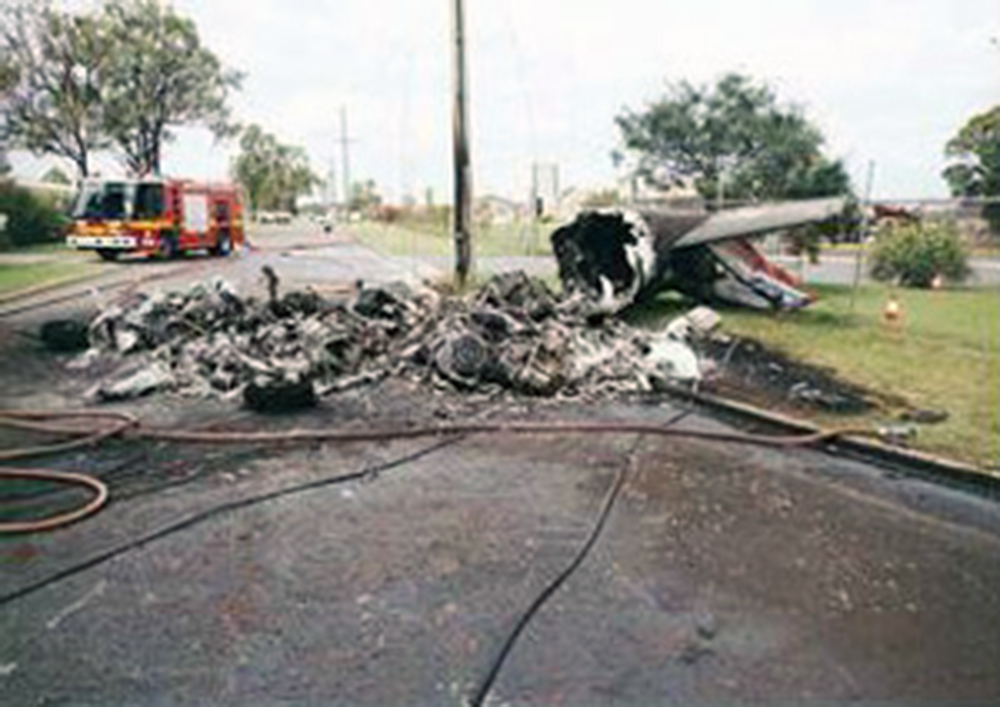
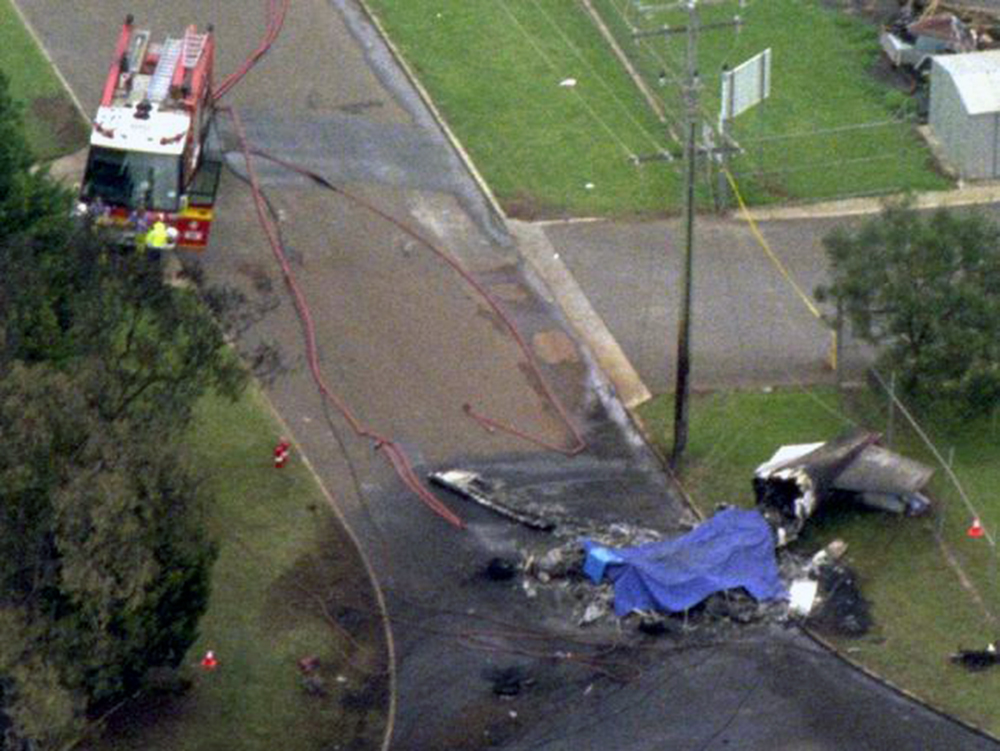
On 25 June 2004, the Australian Transport Safety Bureau released its final investigation report into an accident which occurred on 27 November 2001 at Toowoomba aerodrome, Qld, involving a Beech Aircraft Corporation King Air C90 aircraft, registered VH-LQH, which experienced an engine failure shortly after takeoff. The aircraft was destroyed and all four occupants sustained fatal injuries.
Probable cause:
In light of a further review of the evidence, the ATSB has reconsidered its original finding that the initiating event of the engine failure of VH-LQH was a blade release in the compressor turbine and proposes that an alternative possibility could have been that the initiating event occurred in the power turbine. Notwithstanding this possibility, in either scenario, the remainder of the findings and safety recommendations contained in the original ATSB report are still relevant.
Final Report:

Crash of an Embraer EMB-110P1 Bandeirante in Cootamundra

Date & Time: Jun 25, 2001 at 1021 LT
Operator:
Registration:
VH-OZG
Survivors:
Yes
Schedule:
Sydney – Griffith
MSN:
110-241
YOM:
1980
Country:
Region:
Crew on board:
1
Crew fatalities:
Pax on board:
8
Pax fatalities:
Other fatalities:
Total fatalities:
0
Captain / Total flying hours:
6850
Captain / Total hours on type:
253.00
Circumstances:
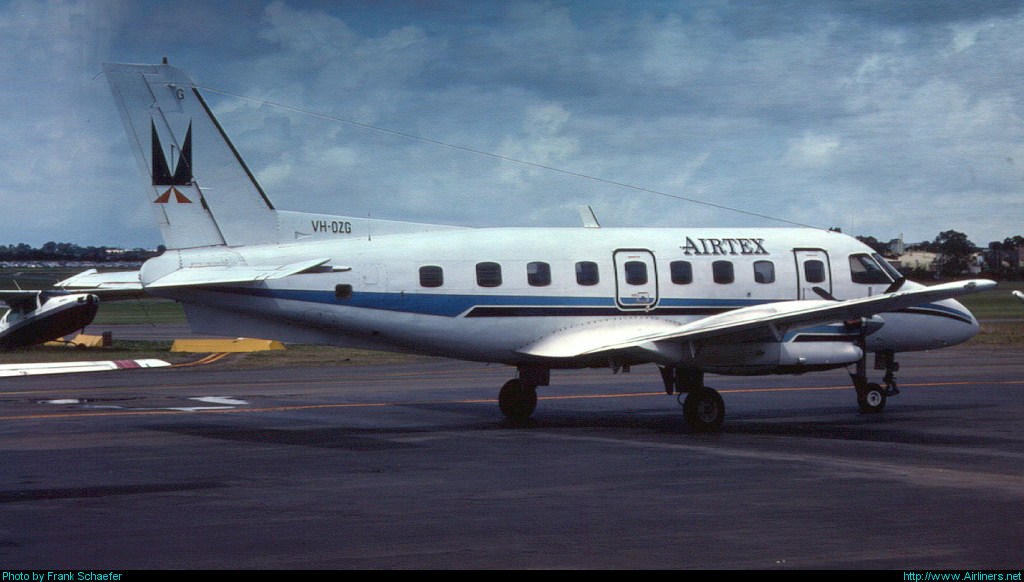
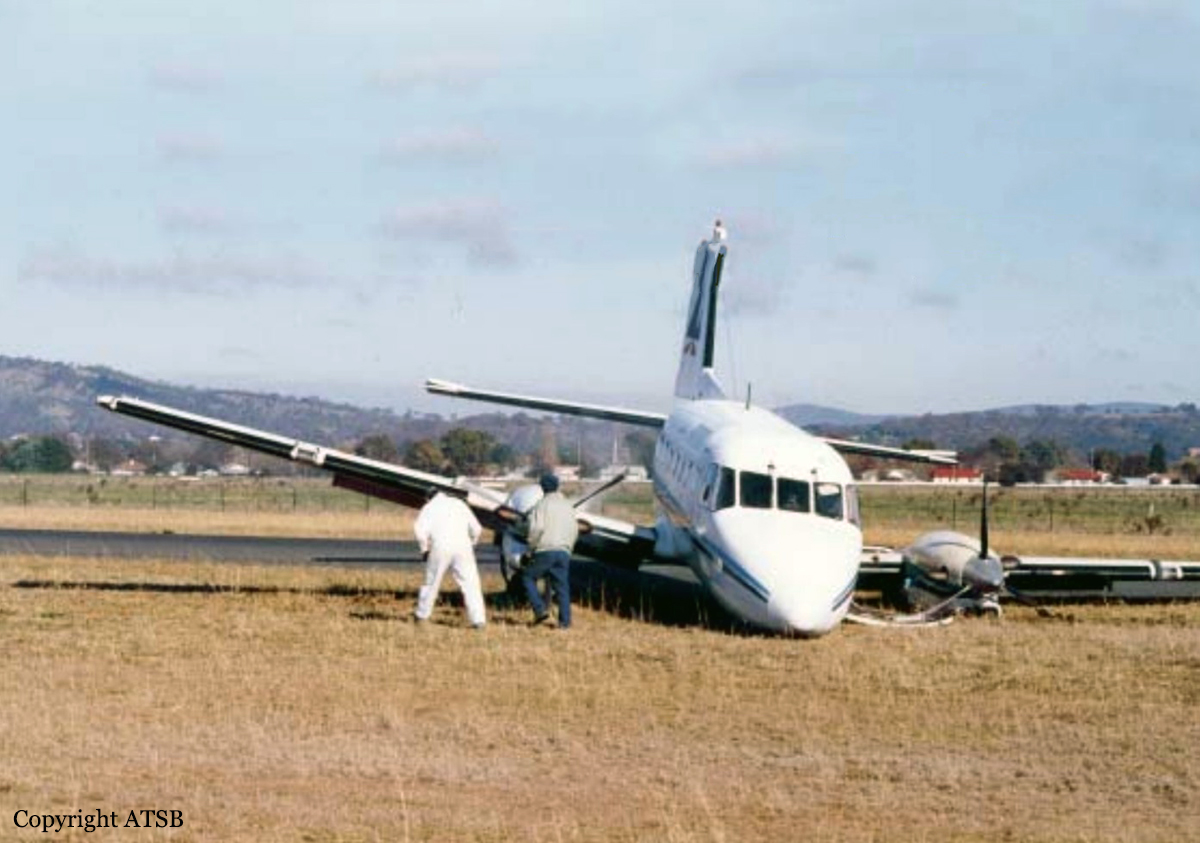
The Embraer EMB-110P1 Bandeirante, VH-OZG, departed from Sydney Kingsford Smith international airport at 0855 on 25 June 2001, on a single-pilot instrument flight rules (IFR) charter flight to Griffith. The nine occupants on board the aircraft included the pilot and eight passengers. At about 0945, while maintaining an altitude of 10,000 ft, the master caution light illuminated. At the same time, the multiple alarm panel ‘GENERATOR 2’ (right generator) warning light also illuminated, indicating that the generator was no longer supplying power to the main electrical bus bar. After resetting the generator and monitoring its output, the pilot was satisfied that it was operating normally. A short time later, the master warning light illuminated again. A number of circuit breakers tripped, accompanied by multiple master alarm panel warnings. The red ‘FIRE’ warning light on the right engine fire extinguisher ‘T’ handle also illuminated, accompanied by the aural fire alarm warning. The pilot reported that after silencing the aural fire alarm, he carried out the engine fire emergency checklist actions. However, he was unable to select the fuel cut-off position with the right fuel condition lever, despite overriding the locking mechanism using his left thumb while attempting to operate the lever with his right hand. He also reported that the propeller lever did not remain in the feathered detent, but moved forward, as if spring-loaded, to an intermediate position. After unsuccessfully attempting to select fuel cut-off with the right fuel condition lever, or feather the right propeller with the propeller lever, the pilot pulled the right ‘T’ handle to discharge the fire bottle. The amber discharge light illuminated and a short time later the fire alarm sounded again. Passengers reported seeing lights illuminated on the multiple alarm panel and heard the sound of a continuous fire alarm in the cockpit. At 0956, the pilot notified air traffic services (ATS) that there was a ‘problem’ with the aircraft, but did not specify the nature of that problem. Almost immediately the pilot transmitted a PAN radio call and advised ATS that there was a fire on board the aircraft. The nearest aerodromes for an emergency landing were not available due to fog, and the pilot decided to divert to Young, which was about 35 NM to the south east of the aircraft’s position at that time. The pilot advised ATS that the fire was extinguished, and that he was diverting the aircraft to Young. Two minutes later, the pilot repeated his advice to ATS stating that a fire in the right engine had been extinguished, and requested emergency services for the aircraft’s arrival at Young. The pilot informed one of the passengers that there was an engine fire warning, and that they would be landing at Young. The passengers subsequently reported seeing flames in the right engine nacelle and white smoke streaming from under the wing. Smoke had also started to enter the cabin in the vicinity of the wing root. The pilot subsequently reported that he had selected the master switch on the air conditioning control panel to the ‘vent’ position, and that he had opened the left direct vision window in an attempt to eliminate smoke from the cabin. When that did not appear to have any effect he closed the direct vision window. The pilot of another aircraft reported to ATS that Young was clear, but there were fog patches to the north. On arrival at Young, however, the pilot of the Bandeirante was unable to land the aircraft because of fog, and advised ATS that he was proceeding to Cootamundra, 27 NM to the south southwest of Young. The crew of an overflying airliner informed ATS that Cootamundra was clear of fog. ATS confirmed that advice by telephoning an aircraft operator at Cootamundra aerodrome. At 1017 thick smoke entered the cabin and the pilot transmitted a MAYDAY. He reported that the aircraft was 9 NM from Cootamundra, and ATS informed him that the aerodrome was clear of fog. The pilot advised that he was flying in visual conditions and that there was a serious fire on board. No further radio transmissions were heard from the aircraft. At 1021, approximately 25 minutes after first reporting a fire, the pilot made an approach to land on runway 16 at Cootamundra. He reported that when he selected the landing gear down on late final there was no indication that the gear had extended. The pilot reported that he did not have sufficient time to extend the gear manually using the emergency procedure because he was anxious to get the aircraft on the ground as quickly as possible. Unaware that the right main landing gear had extended the pilot advised the passengers to prepare for a ‘belly’ landing. He lowered full flap, selected the propeller levers to the feathered position and the condition levers to fuel cut-off. The aircraft landed with only the right main landing gear extended. The right main wheel touched down about 260 m beyond the runway threshold, about one metre from the right edge of the runway. During the landing roll the aircraft settled on the nose and the left engine nacelle and skidded for approximately 450 m before veering left off the bitumen. The soft grass surface swung the aircraft sharply left, and it came to a stop on the grass flight strip east of the runway, almost on a reciprocal heading. The pilot and passengers were uninjured, and vacated the aircraft through the cabin door and left overwing emergency exit. Personnel from a maintenance organisation at the aerodrome extinguished the fire in the right engine nacelle using portable fire extinguishers.
Probable cause:
Significant factors:
1. Vibration from the worn armature shaft of the right starter generator resulted in a fractured fuel return line.
2. The armature shaft of the right engine starter generator failed in-flight.
3. Sparks or frictional heat generated by the failed starter generator ignited the combustible fuel/air mixture in the right engine accessory compartment.
4. Items on the engine fire emergency checklist were not completed, and the fire was not suppressed.
5. The operator’s CASA approved emergency checklist did not contain smoke evacuation procedures.
6. The pilot did not attempt to extend the landing gear using the emergency gear extension when he did not to get a positive indication that the gear was down and locked.
7. The aircraft landed on the right main landing gear and slid to a stop on the right main gear, left engine nacelle and nose.
Final Report:

Crash of a Cessna 208 Caravan I in Nagambie: 1 killed

Date & Time: Apr 29, 2001 at 1312 LT
Type of aircraft:
Operator:
Registration:
VH-MMV
Flight Phase:
Survivors:
Yes
Schedule:
Nagambie - Nagambie
MSN:
208-0003
YOM:
1985
Country:
Region:
Crew on board:
1
Crew fatalities:
Pax on board:
11
Pax fatalities:
Other fatalities:
Total fatalities:
1
Captain / Total flying hours:
4000
Captain / Total hours on type:
700.00
Aircraft flight hours:
8576
Circumstances:
Four parachutists were practising as a team for a skydiving competition. They had completed seven parachute descents prior to the accident flight. Each descent had been video recorded by a cameraman using a helmet-mounted camera. The parachutists used a Cessna Aircraft Company Caravan aircraft. That aircraft was climbed to 14,000 ft with the team of four parachutists, their cameraman, six other parachutists and the pilot. At the drop altitude, the team members carried out their ‘pin check’ in which each parachutist’s equipment was checked to ensure that the release pins for the main and reserve parachutes were correctly positioned. Approaching overhead the drop zone, a roller blind, which covered the exit doorway on the left side of the aircraft, and minimised windblast during the climb, was raised. The cameraman positioned himself on the step outside and to the rear of the exit doorway. The first three members of the team positioned themselves in the exit doorway. The team member nearest to the front of the aircraft faced out and the next two members faced into the aircraft. The team member in the middle grasped the jumpsuits of the adjacent parachutists. The fourth member was inside the aircraft facing the exit. As the team exited the aircraft, the middle parachutist’s reserve parachute’s pilot chute deployed. Due to the bent over position of that parachutist, the action of the ejector spring in the pilot chute pushed the chute upwards and over the horizontal stabiliser of the aircraft, pulling the reserve canopy with it. The parachutist passed below the horizontal stabiliser resulting in the reserve parachute risers and lines tangling around the left elevator and horizontal stabiliser. Eleven seconds later, the empennage separated from the aircraft and the left elevator and the parachutist separated from the empennage. The parachutist descended to the ground with the reserve and main parachutes entangled and landed 800 metres west of the drop zone landing strip. A short section of the elevator was tangled in the parachute lines. The parachutist’s rate of descent was estimated to be 3.6 times greater than that for an average parachutist under canopy. Immediately after the empennage separated, the aircraft entered a steep, nose-down spiral descent. The pilot instructed the remaining parachutists to abandon the aircraft. The last one left the aircraft before it descended through 9,000 ft. The pilot transmitted a mayday call, shutdown the engine and left his seat. On reaching the rear of the cabin, he found that the roller blind had closed, preventing him from leaving the aircraft. After several attempts, the pilot raised the blind sufficiently to allow him to exit the aircraft, and at an altitude of approximately 1,000 ft above ground level, he deployed his parachute and landed safely. The aircraft, minus the empennage, descended almost vertically and crashed on the drop zone landing strip. It was destroyed by impact forces and the post-impact fire. The empennage, in several pieces, landed 600 metres west of the landing strip. A Country Fire Authority fire vehicle arrived at the accident site within two minutes of the accident and extinguished the fire. The parachutist that had been entangled was fatally injured. The injuries sustained when entangled on the horizontal stabiliser made the parachutist incapable of operating the main parachute. The other parachutists and the pilot were uninjured.
Probable cause:
The following factors were identified:
- The parachutist’s reserve parachute deployed prematurely, probably as a result of the parachute container coming into contact with the aircraft doorframe/handrail.
- The reserve parachute risers and lines tangled around the horizontal stabiliser and elevator.
- The reserve canopy partially filled, applying to the aircraft empennage a load that exceeded its design limits.
- The empennage separated from the aircraft and the elevator separated from the empennage, releasing the parachutist and sending the aircraft out of control.
Final Report:

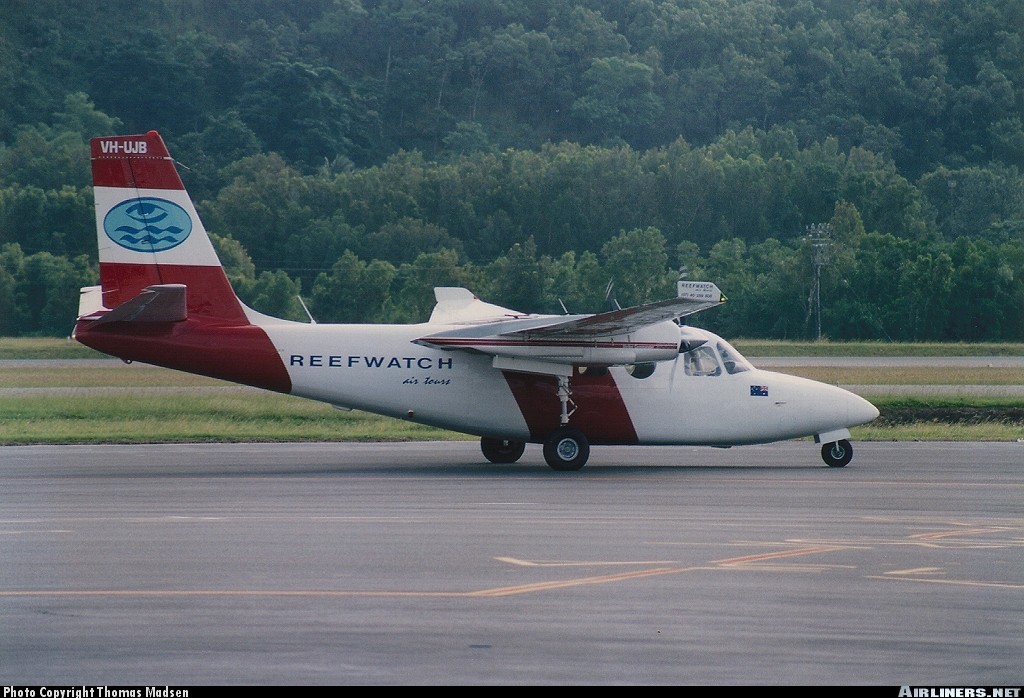
Crash of a Rockwell Shrike Commander 500S on Thornton Peak: 4 killed

Date & Time: Apr 10, 2001 at 0725 LT
Operator:
Registration:
VH-UJB
Flight Phase:
Survivors:
No
Site:
Schedule:
Cairns - Hicks Island
MSN:
500-3152
YOM:
1973
Country:
Region:
Crew on board:
1
Crew fatalities:
Pax on board:
3
Pax fatalities:
Other fatalities:
Total fatalities:
4
Captain / Total flying hours:
9680
Captain / Total hours on type:
2402.00
Circumstances:
The aircraft departed Cairns airport at 0707 Eastern Standard Time (EST) on a charter flight to Hicks Island. The aircraft was being operated under the Instrument Flight Rules (IFR) and the expected flight time was 2 hours. Shortly after takeoff the pilot requested an amended altitude of 4,000 ft. He indicated that he was able to continue flight with visual reference to the ground or water. Air Traffic Services (ATS) issued the amended altitude as requested. The IFR Lowest Safe Altitude for the initial route sector to be flown was 6,000 ft Above Mean Sea Level (AMSL). Data recorded by ATS indicated that approximately 13 minutes after departure, the aircraft disappeared from radar at a position 46NM north of Cairns. At the last known radar position the aircraft was cruising at a ground speed of 180 kts and at an altitude of 4,000 ft AMSL. An extensive search located the wreckage the following afternoon at a location consistent with the last known radar position, on the north-western side of Thornton Peak at an altitude of approximately 4,000 ft (1219 metres) AMSL. The aircraft was destroyed by impact forces and post-impact fire. The pilot and three passengers received fatal injuries. Thornton Peak is the third highest mountain in Queensland and is marked on topographic maps as 4,507 ft (1,374 metres) in elevation. Local residents reported that the mountain was covered by cloud and swept by strong winds for most of the year. The aircraft had been observed by witnesses approximately two minutes prior to impact cruising at high speed, on a constant north-westerly heading, in a wings level attitude and with flaps and landing gear retracted. They stated that the engines appeared to sound normal.
Probable cause:
Radar data recorded by Air Traffic Services and witness reports indicated that the aircraft was flying straight and level and maintaining a constant airspeed. Therefore, it is unlikely that the aircraft was experiencing any instrumentation or engine problems. Why the pilot continued flight into marginal weather conditions at an altitude that was insufficient to ensure terrain clearance, could not be established. The aircraft was flown at an altitude that was insufficient to ensure terrain clearance.
Final Report:

Crash of a Beechcraft 200 Super King Air in Wernadinga Station: 8 killed

Date & Time: Sep 4, 2000 at 1510 LT
Operator:
Registration:
VH-SKC
Flight Phase:
Survivors:
No
Schedule:
Perth - Leonora
MSN:
BB-47
YOM:
1975
Country:
Region:
Crew on board:
1
Crew fatalities:
Pax on board:
7
Pax fatalities:
Other fatalities:
Total fatalities:
8
Captain / Total flying hours:
2053
Captain / Total hours on type:
138.00
Aircraft flight hours:
18771
Circumstances:
On 4 September 2000, a Beech Super King Air 200 aircraft, VH-SKC, departed Perth, Western Australia at 1009 UTC on a charter flight to Leonora with one pilot and seven passengers on board. Until 1032 the operation of the aircraft and the communications with the pilot appeared normal. However, shortly after the aircraft had climbed through its assigned altitude, the pilot’s speech became significantly impaired and he appeared unable to respond to ATS instructions. Open microphone transmissions over the next 8-minutes revealed the progressive deterioration of the pilot towards unconsciousness and the absence of any sounds of passenger activity in the aircraft. No human response of any kind was detected for the remainder of the flight. Five hours after taking off from Perth, the aircraft impacted the ground near Burketown, Queensland, and was destroyed. There were no survivors.
Probable cause:
Due to the limited evidence available, it was not possible to draw definitive conclusions as to the factors leading to the incapacitation of the pilot and occupants of VH-SKC.
The following findings were identified:
1. The pilot was correctly licensed, had received the required training, and there was no evidence to suggest that he was other than medically fit for the flight.
2. The weather conditions on the day presented no hazard to the operation of the aircraft on its planned route.
3. The flightpath flown was consistent with the aircraft being controlled by the autopilot in heading and pitch-hold modes with no human intervention after the aircraft passed position DEBRA.
4. After the aircraft climbed above the assigned altitude of FL250, the speech and breathing patterns of the pilot, evidenced during the radio transmissions, displayed changes consistent with hypoxia.
5. Testing revealed that Carbon Monoxide and Hydrogen Cyanide were highly unlikely to have been factors in the occurrence.
6. The low Carbon Monoxide and Cyanide levels, and the absence of irritation in the airways of the occupants indicated that a fire in the cabin was unlikely.
7. The incapacitation of the pilot and passengers was probably due to hypobaric hypoxia because of the high cabin altitude and their not receiving supplemental oxygen.
8. A rapid or explosive depressurisation was unlikely to have occurred.
9. The reasons for the pilot and passengers not receiving supplemental oxygen could not be determined.
10. Setting the visual alert to operate when the cabin pressure altitude exceeds 10,000 ft and incorporating an aural warning in conjunction with the visual alert, may have prevented the accident.
11. The training and actions of the air traffic controller were not factors in the accident.
Significant factors:
1. The aircraft was probably unpressurised for a significant part of its climb and cruise for undetermined reasons.
2. The pilot and passengers were incapacitated, probably due to hypobaric hypoxia, because of the high cabin altitude and their not receiving supplemental oxygen.
Final Report:

Crash of a Piper PA-60 Aerostar (Ted Smith 600) near Port Keats: 1 killed

Date & Time: Sep 2, 2000 at 2125 LT
Operator:
Registration:
VH-IXG
Flight Phase:
Flight Type:
Survivors:
No
Schedule:
Port Keats – Darwin
MSN:
60-0567-7961185
YOM:
1979
Country:
Region:
Crew on board:
1
Crew fatalities:
Pax on board:
0
Pax fatalities:
Other fatalities:
Total fatalities:
1
Captain / Total flying hours:
15000
Captain / Total hours on type:
122.00
Circumstances:
The pilot had submitted a flight plan nominating a charter category, single pilot, Instrument Flight Rules flight, from Darwin to Port Keats and return. The Piper Aerostar 600A aircraft, with 6 Passengers on board, departed Darwin at 2014 Central Standard Time and arrived at Port Keats at 2106 hours after an uneventful flight. The passengers disembarked at Port Keats and the pilot prepared to return to Darwin alone. At 2119 hours the pilot reported taxying for runway 34 to Brisbane Flight Service. That was the last radio contact with the aircraft. Witnesses noted nothing unusual as the aircraft taxied and then took off from runway 34. As a departure report was not received, a distress phase was declared and subsequently a search was instigated. The following morning a number of major structural components of the aircraft, including the outer left wing, were located at a position 24 km north-east of Port Keats aerodrome and close to the aircraft's flight planned track. The main portion of wreckage was found four days later, destroyed by ground impact. The impact crater was located a considerable distance from the previously located structural components and indicated that an inflight breakup had occurred. The accident was not survivable.
Probable cause:
Shortly after departure from Port Keats aerodrome, the pilot lost control of the aircraft for reasons unknown. Aerodynamic loading of the left wing in excess of the ultimate load limit occurred, resulting in an inflight breakup of the airframe. The investigation was unable to determine the circumstances that led to the loss of control and subsequent inflight break-up of the aircraft.
Final Report:

Crash of a Beechcraft 70 Queen Air in Leonora

Date & Time: Jun 24, 2000 at 1740 LT
Type of aircraft:
Registration:
VH-MWJ
Flight Phase:
Survivors:
Yes
Schedule:
Leonora – Laverton
MSN:
LB-29
YOM:
1970
Country:
Region:
Crew on board:
1
Crew fatalities:
Pax on board:
5
Pax fatalities:
Other fatalities:
Total fatalities:
0
Circumstances:
The Beechcraft Queen Air and Rockwell Aero Commander were being used by a company to conduct private category passenger-carrying flights to transport its workers from Leonora to Laverton in Western Australia. The Aero Commander had departed and was established in the Leonora circuit area when the Queen Air took off. The pilot and one of the passengers of the Queen Air reported the take-off roll appeared normal until the aircraft crossed the runway intersection, when they felt a bump in the aircraft. The pilot reported hearing a loud bang and noticed that the inboard cowl of the right engine had opened. He also reported that he believed he had insufficient runway remaining to stop safely, so he continued the takeoff. The cowl separated from the aircraft at the time, or just after the pilot rotated the aircraft to the take-off attitude. He reported that although the aircraft had left the ground after the rotation, it then would not climb. The aircraft remained at almost treetop level until the pilot and front-seat passenger noticed the side of a tailings dump immediately in front of the aircraft. The pilot said that he pulled the control column fully back. The aircraft hit the hillside parallel to the slope of the embankment, with little forward speed. The impact destroyed the aircraft. Although the occupants sustained serious injuries, they evacuated the aircraft without external assistance. There was no post-impact fire. The aircraft-mounted emergency locator transmitter (ELT) did not activate.
Probable cause:
The examination of the Queen Air wreckage found no mechanical fault that may have contributed to the accident sequence other than the inboard cowl of the right engine detaching during the takeoff. The cowl latching mechanisms appeared to have been capable of operating normally. The two top hinges failing in overload associated with the lack of cowl latch damage suggested that the cowl was probably improperly secured before takeoff. The cowl appeared to have subsequently opened when it experienced the jolt when the aircraft crossed the runway intersection. The lack of any further cowl damage indicated that it detached cleanly and consequently its dislodgment should not have adversely affected the flying qualities of the aircraft.
Final Report:

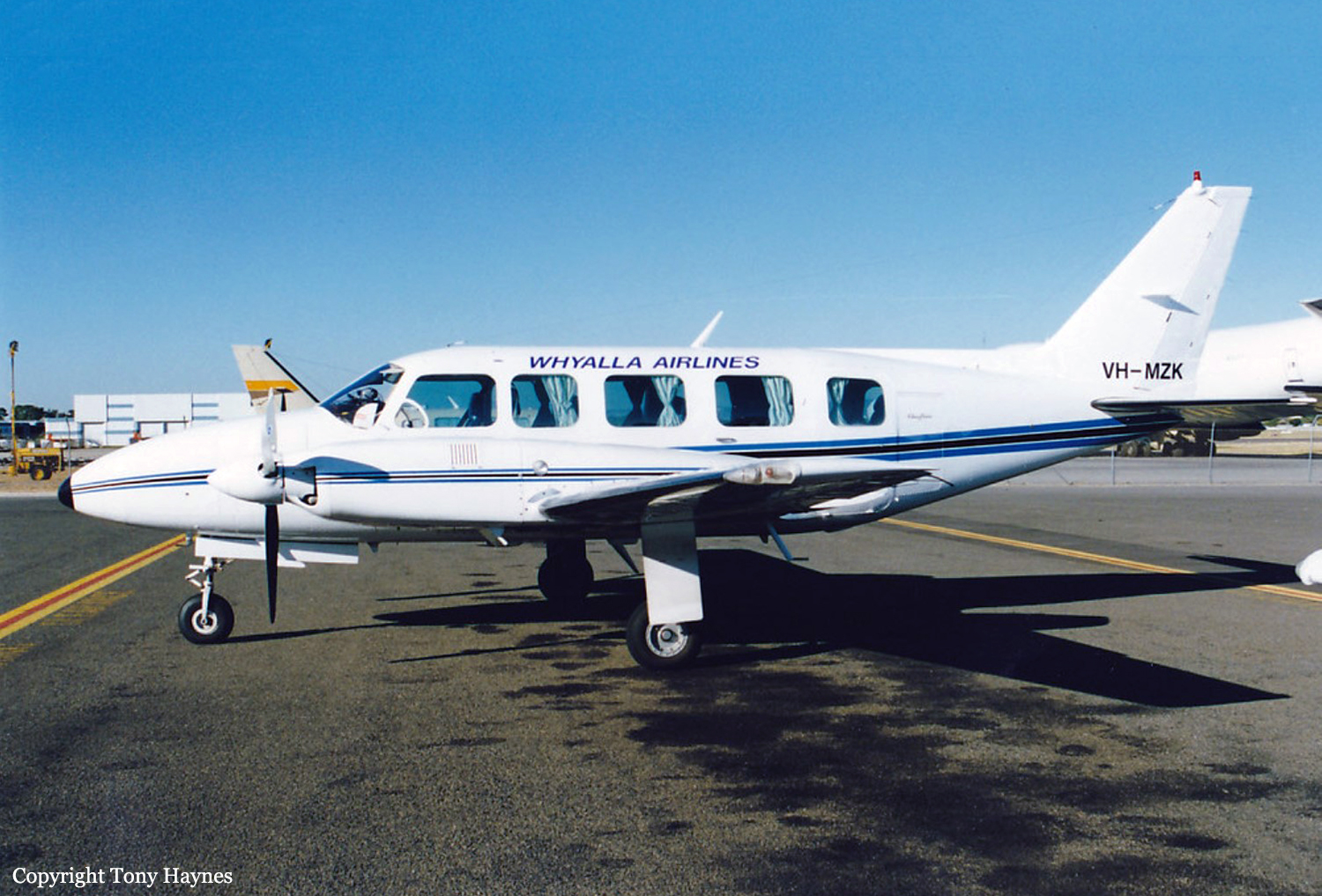
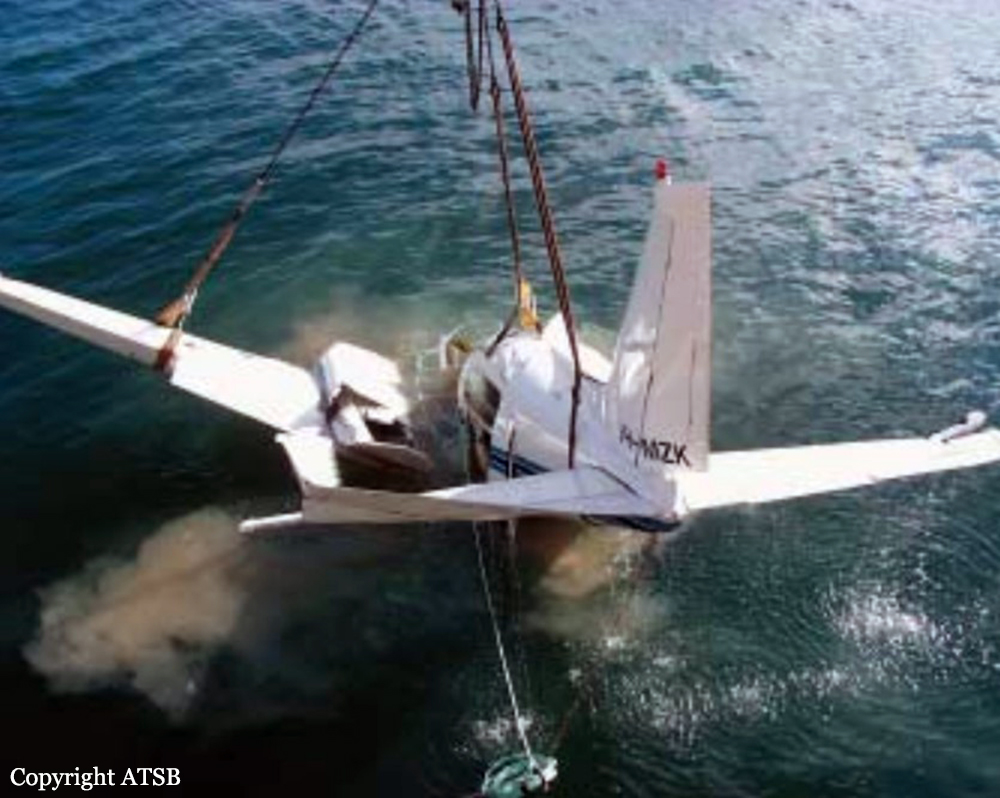
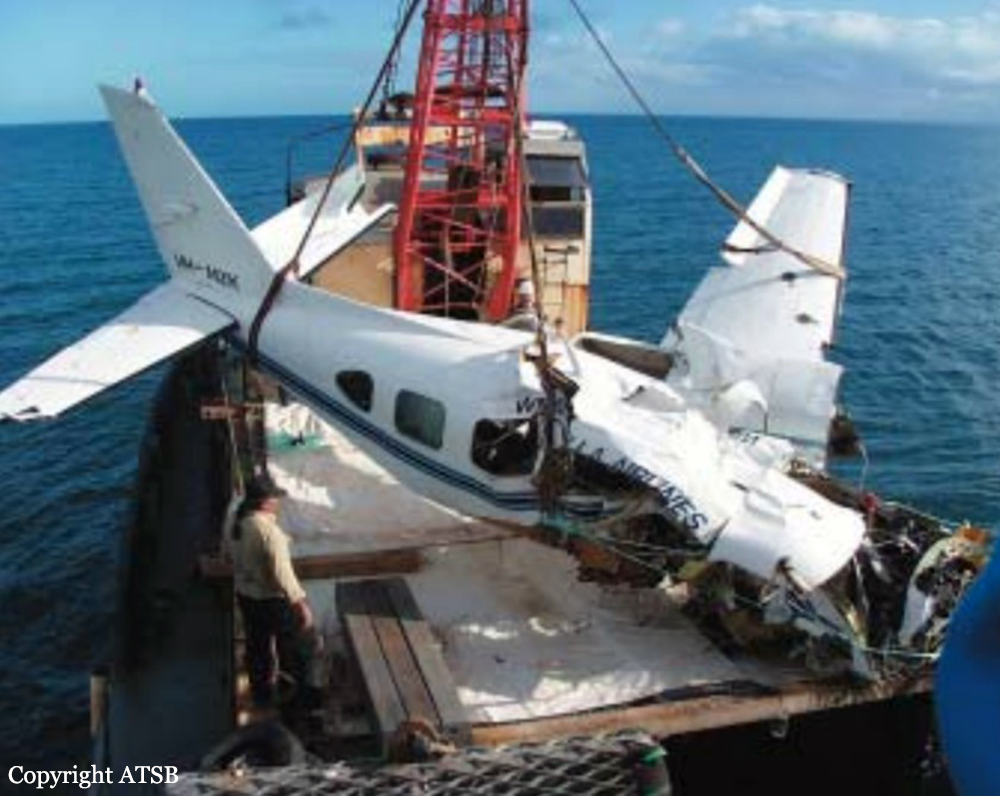
Crash of a Piper PA-31-350 Navajo Chieftain off Whyalla: 8 killed

Date & Time: May 31, 2000 at 1905 LT
Operator:
Registration:
VH-MZK
Survivors:
No
Schedule:
Adelaide - Whyalla
MSN:
31-8152180
YOM:
1981
Flight number:
WW904
Country:
Region:
Crew on board:
1
Crew fatalities:
Pax on board:
7
Pax fatalities:
Other fatalities:
Total fatalities:
8
Captain / Total flying hours:
2211
Captain / Total hours on type:
113.00
Aircraft flight hours:
11837
Circumstances:
On the evening of 31 May 2000, Piper Chieftain, VH-MZK, was being operated by Whyalla Airlines as Flight WW904 on a regular public transport service from Adelaide to Whyalla, South Australia. One pilot and seven passengers were on board. The aircraft departed at 1823 central Standard Time (CST) and, after being radar vectored a short distance to the west of Adelaide for traffic separation purposes, the pilot was cleared to track direct to Whyalla at 6,000 ft. A significant proportion of the track from Adelaide to Whyalla passed over the waters of Gulf St Vincent and Spencer Gulf. The entire flight was conducted in darkness. The aircraft reached 6,000 ft and proceeded apparently normally at that altitude on the direct track to Whyalla. At 1856 CST, the pilot reported to Adelaide Flight Information Service (FIS) that the aircraft was 35 NM south-south-east of Whyalla, commencing descent from 6,000 ft. Five minutes later the pilot transmitted a MAYDAY report to FIS. He indicated that both engines of the aircraft had failed, that there were eight persons on board and that he was going to have to ditch the aircraft, but was trying to reach Whyalla. He requested that assistance be arranged and that his company be advised of the situation. About three minutes later, the pilot reported his position as about 15 NM off the coast from Whyalla. FIS advised the pilot to communicate through another aircraft that was in the area if he lost contact with FIS. The pilot’s acknowledgment was the last transmission heard from the aircraft. A few minutes later, the crew of another aircraft heard an emergency locater transmitter (ELT) signal for 10–20 seconds. Early the following morning, a search and rescue operation located two deceased persons and a small amount of wreckage in Spencer Gulf, near the last reported position of the aircraft. The aircraft, together with five deceased occupants, was located several days later on the sea–bed. One passenger remained missing.
Probable cause:
Engine operating practices:
• High power piston engine operating practices of leaning at climb power, and leaning to near ‘best economy’ during cruise, may result in the formation of deposits on cylinder and piston surfaces that could cause preignition.
• The engine operating practices of Whyalla Airlines included leaning at climb power and leaning to near ‘best economy’ during cruise.
Left engine:
The factors that resulted in the failure of the left engine were:
• The accumulation of lead oxybromide compounds on the crowns of pistons and cylinder head surfaces.
• Deposit induced preignition resulted in the increase of combustion chamber pressures and increased loading on connecting rod bearings.
• The connecting rod big end bearing insert retention forces were reduced by the inclusion, during engine assembly, of a copper–based anti-galling compound.
• The combination of increased bearing loads and decreased bearing insert retention forces resulted in the movement, deformation and subsequent destruction of the bearing inserts.
• Contact between the edge of the damaged Number 6 connecting rod bearing insert and the Number 6 crankshaft journal fillet resulted in localised heating and consequent cracking of the nitrided surface zone.
• Fatigue cracking in the Number 6 journal initiated at the site of a thermal crack and propagated over a period of approximately 50 flights.
• Disconnection of the two sections of the journal following the completion of fatigue cracking in the journal and the fracture of the Number 6 connecting rod big end housing most likely resulted in the sudden stoppage of the left engine.
Right engine:
The factors that were involved in the damage/malfunction of the right engine following the left engine malfunction/failure were:
• Detonation of combustion end-gas.
• Disruption of the gas boundary layers on the piston crowns and cylinder head surface increasing the rate of heat transfer to these components.
• Increased heat transfer to the Number 6 piston and cylinder head resulted in localised melting.
• The melting of the Number 6 piston allowed combustion gases to bypass the piston rings.
The flight:
The factors that contributed to the flight outcome were:
• The pilot responded to the failed left engine by increasing power to the right engine.
• The resultant change in operating conditions of the right engine led to loss of power from, and erratic operation of, that engine.
• The pilot was forced to ditch the aircraft into a 0.5m to 1m swell in the waters of Spencer Gulf, in dark, moonless conditions.
• The absence of upper body restraints, and life jackets or flotation devices, reduced the chances of survival of the occupants.
• The Emergency Locator Transmitter functioned briefly on impact but ceased operating when the aircraft sank.
Final Report:

Crash of a Britten-Norman BN-2A-26 Islander off Cocos Islands: 3 killed

Date & Time: Jan 16, 1999 at 1430 LT
Type of aircraft:
Operator:
Registration:
VH-XFF
Survivors:
Yes
Schedule:
Horn Island - Cocos Islands
MSN:
763
YOM:
1975
Country:
Region:
Crew on board:
1
Crew fatalities:
Pax on board:
3
Pax fatalities:
Other fatalities:
Total fatalities:
3
Captain / Total flying hours:
2540
Captain / Total hours on type:
197.00
Aircraft flight cycles:
16775
Circumstances:
Uzu Air conducted passenger and freight operations between Horn Island and the island communities in the Torres Strait. It operated single-engine Cessna models 206 and 208 aircraft, and twin-engine Britten Norman Islander aircraft. On the morning of the accident, the pilot flew a company Cessna 206 aircraft from Horn Island to Yam, Coconut, and Badu Islands, and then returned to Horn Island. The total flight time was about 93 minutes. The pilot's schedule during the afternoon was to fly from Horn Island to Coconut, Yam, York, and Coconut Islands and then back to Horn Island, departing at 1330 eastern standard time. The flight was to be conducted in Islander, VH-XFF. Three passengers and about 130 kg freight were to be carried on the Horn Island - Coconut Island sector. Another company pilot had completed three flights in XFF earlier in the day for a total of 1.9 hours. He reported that the aircraft operated normally. Witnesses at Horn Island reported that the preparation for the flight, and the subsequent departure of the aircraft at 1350, proceeded normally. The pilot of another company aircraft heard the pilot of XFF report 15 NM SW of Coconut Island at 3,500 ft. A few minutes later, the pilot reported downwind for runway 27 at Coconut Island. Both transmissions sounded normal. Three members of the Coconut Island community reported that, at about 1410, they were on the beach at the eastern extremity of the island, about 250 m from the runway threshold and close to the extended runway centreline. Their recollections of the progress of the aircraft in the Coconut Island circuit are as follows: the aircraft joined the downwind leg and flew a left circuit for runway 27; the aircraft appeared to fly a normal approach until it passed over their position at an altitude of 200-300 ft; and it then veered left and commenced a shallow climb before suddenly rolling right and descending steeply onto a tidal flat, about 30 m seaward from the high-water mark, and about 200 m from their position. A passenger was seriously injured while three other occupants were killed.
Probable cause:
The following findings were identified:
- The pilot initiated a go-around from final approach because of a vehicle on the airstrip.
- The left propeller showed little evidence of rotation damage. The reason for a possible loss of left engine power could not be determined.
- For reasons that could not be established, the pilot lost control of the aircraft at a low height.
Final Report:

Crash of a Rockwell Shrike Commander 500S off Horn Island

Date & Time: Oct 21, 1998 at 0940 LT
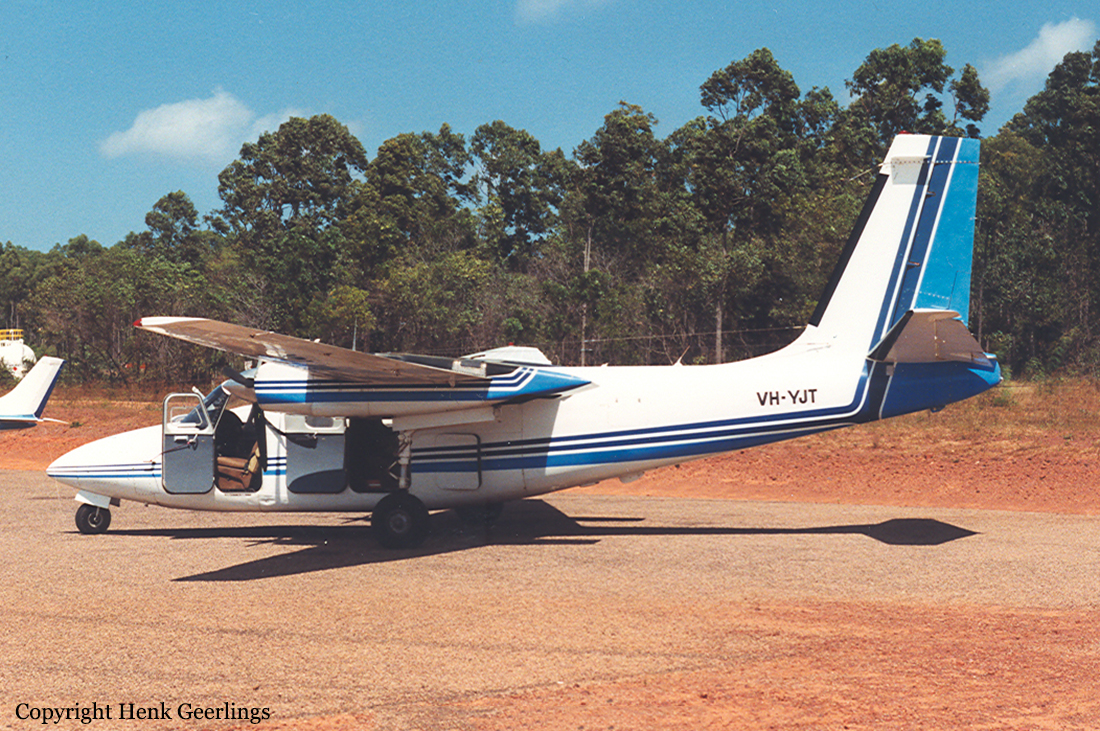
Registration:
VH-YJT
Survivors:
Yes
Schedule:
Boigu Island - Horn Island
MSN:
500-3089
YOM:
1970
Country:
Region:
Crew on board:
1
Crew fatalities:
Pax on board:
4
Pax fatalities:
Other fatalities:
Total fatalities:
0
Captain / Total flying hours:
2045
Captain / Total hours on type:
79.00
Circumstances:
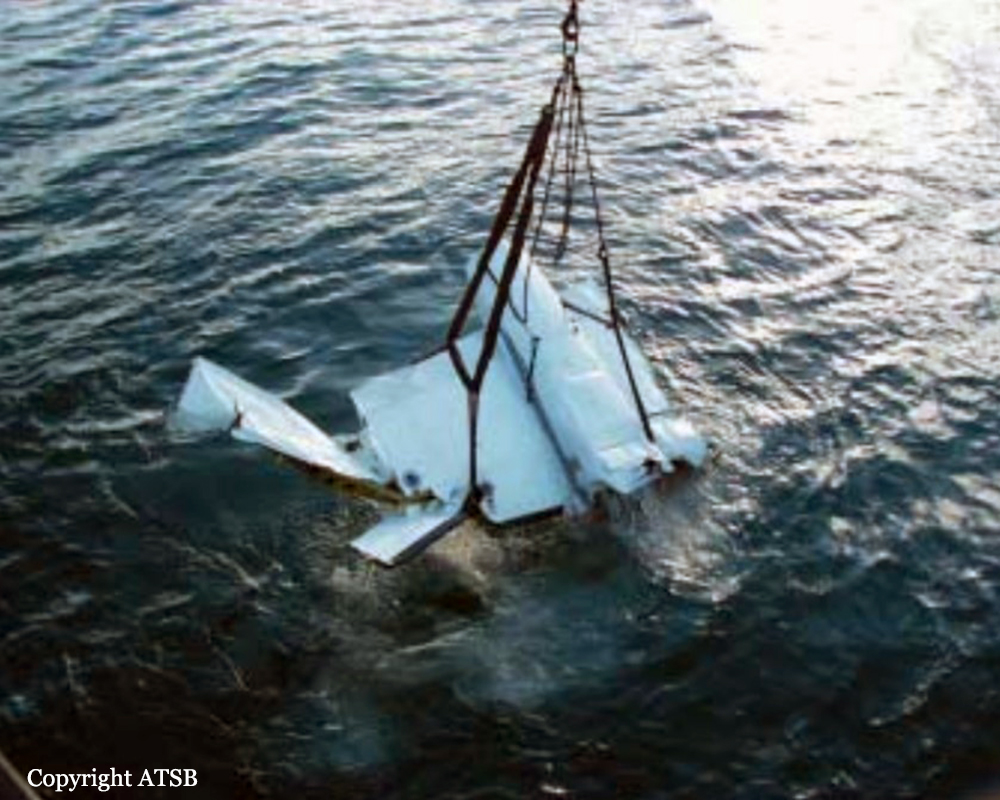
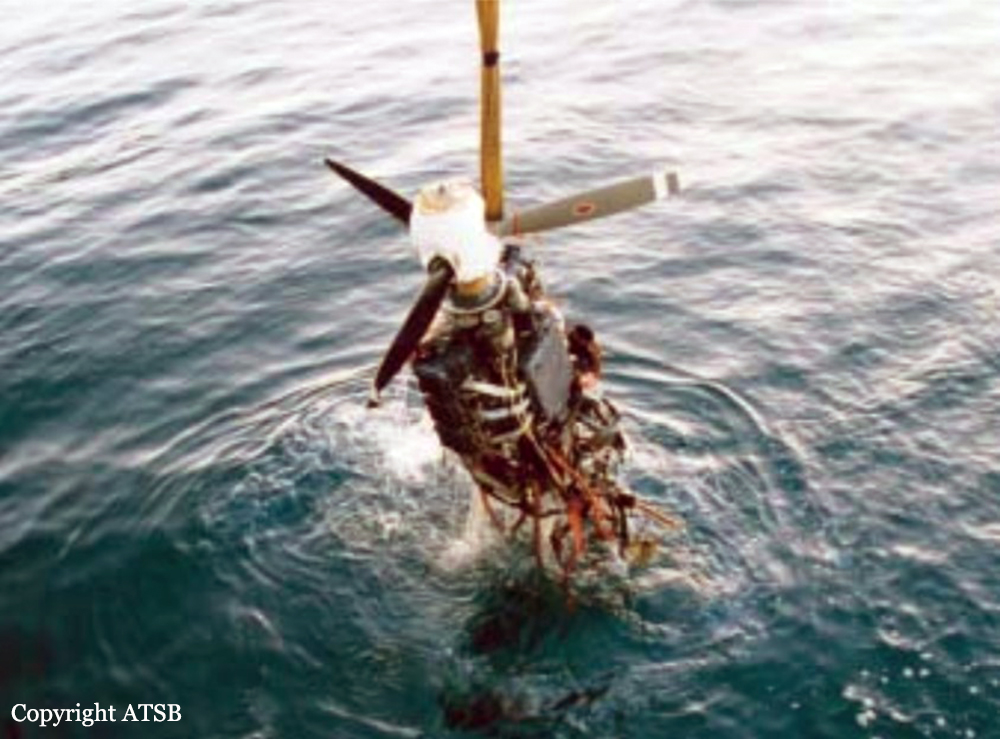
A Shrike Commander departed Horn Island on a charter flight to Saibai and Boigu Islands in accordance with the visual flight rules (VFR). The flight to Saibai took 32 minutes, and a further 13 minutes to Boigu Island. The aircraft then departed Boigu to return to Horn Island with an expected flight time of 35 minutes. The pilot reported that he had maintained 5,500 ft until commencing descent at 35 NM from Horn Island. He tracked to join final approach to runway 14 by 5 NM, reducing power at 1,500 ft. At 5 NM from the runway, the pilot extended the landing gear and approach flap and commenced a long final approach. When the aircraft was approximately 3 NM from the runway both engines commenced to surge, with the aircraft initially yawing to the right. The pilot commenced engine failure procedures and retracted the flaps. He tried a number of times to determine which engine was losing power by retarding the throttle for each engine, before deciding that the right engine was failing. The pilot shut down that engine and feathered the propeller. A short time later, when the aircraft was approximately 200 ft above the water, the left engine also lost power. The pilot established the aircraft in a glide, advised the passengers to prepare for a ditching, and transmitted a MAYDAY report on the flight service frequency before the aircraft contacted the sea. The aircraft quickly filled with water and settled on the seabed. All five occupants were able to escape and make their way ashore.
Probable cause:
The following findings were identified:
- The pilot was correctly licensed and qualified to operate the flight as a VFR charter operation.
- The aircraft was dispatched with an unusable fuel quantity indicator.
- The right engine fuel control unit was worn and allowed additional fuel through the system, increasing fuel consumption by approximately 6 L/hr.
- Inappropriate fuel consumption rates were used for flight planning.
- The aircraft fuel log contained inaccuracies that resulted in a substantial underestimation of the total fuel used.
- At the time of the occurrence, there was no useable fuel in the aircraft fuel system.
- Although the pilot met the Civil Aviation Safety Authority criteria to fulfil his role as chief pilot, he did not have the expertise to effectively ensure the safety of company flight operations.
Final Report: