


Country
Crash of a Partenavia P.68 Observer II in Sant Pere de Vilamajor: 2 killed
Date & Time:
Jun 23, 2009 at 1045 LT
Operator:

Registration:
EC-IPG
Survivors:
No
Schedule:
Sabadell - Sabadell
MSN:
421-21-OB2
YOM:
2003
Crew on board:
2
Crew fatalities:
Pax on board:
0
Pax fatalities:
Other fatalities:
Total fatalities:
2
Captain / Total hours on type:
155.00
Copilot / Total hours on type:
9
Circumstances:
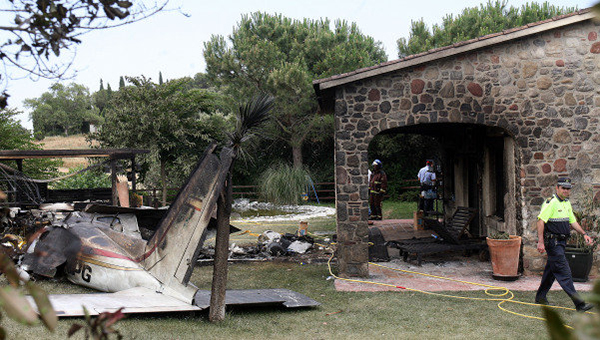
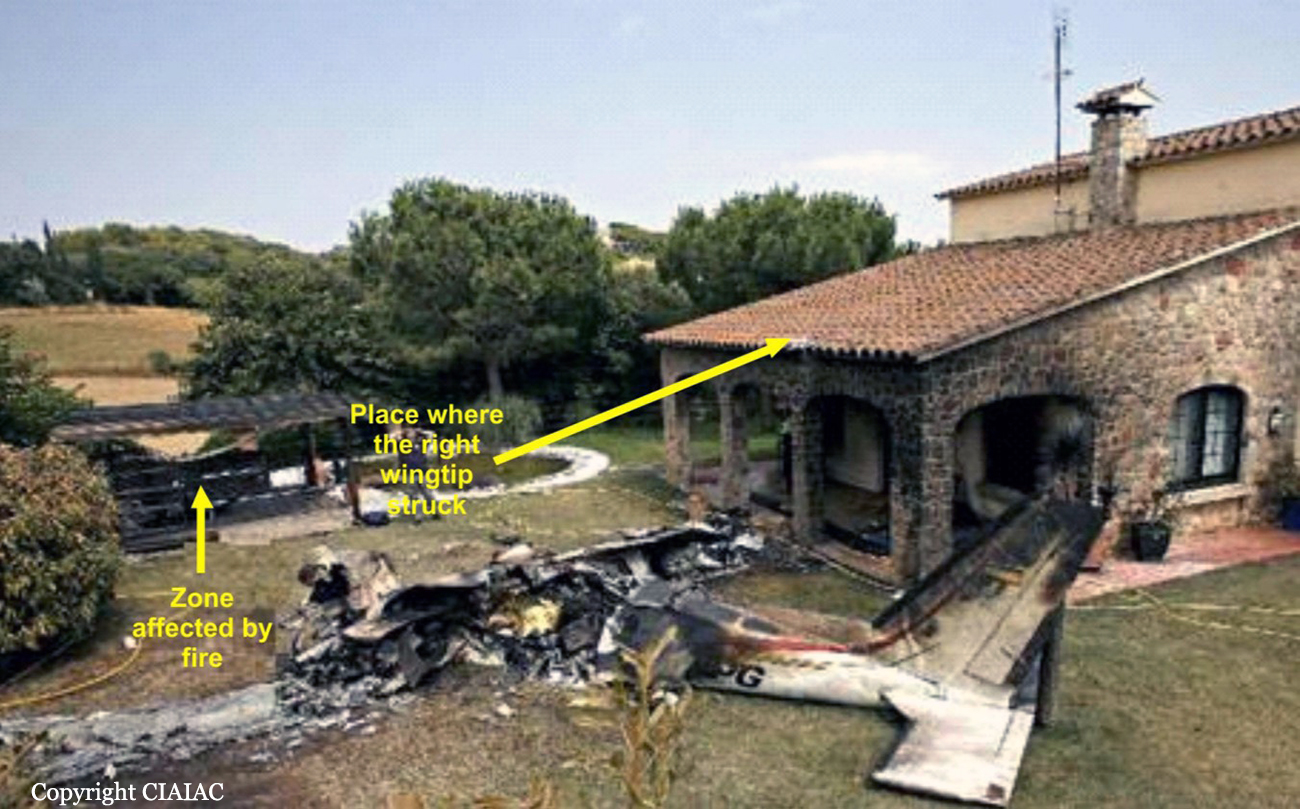
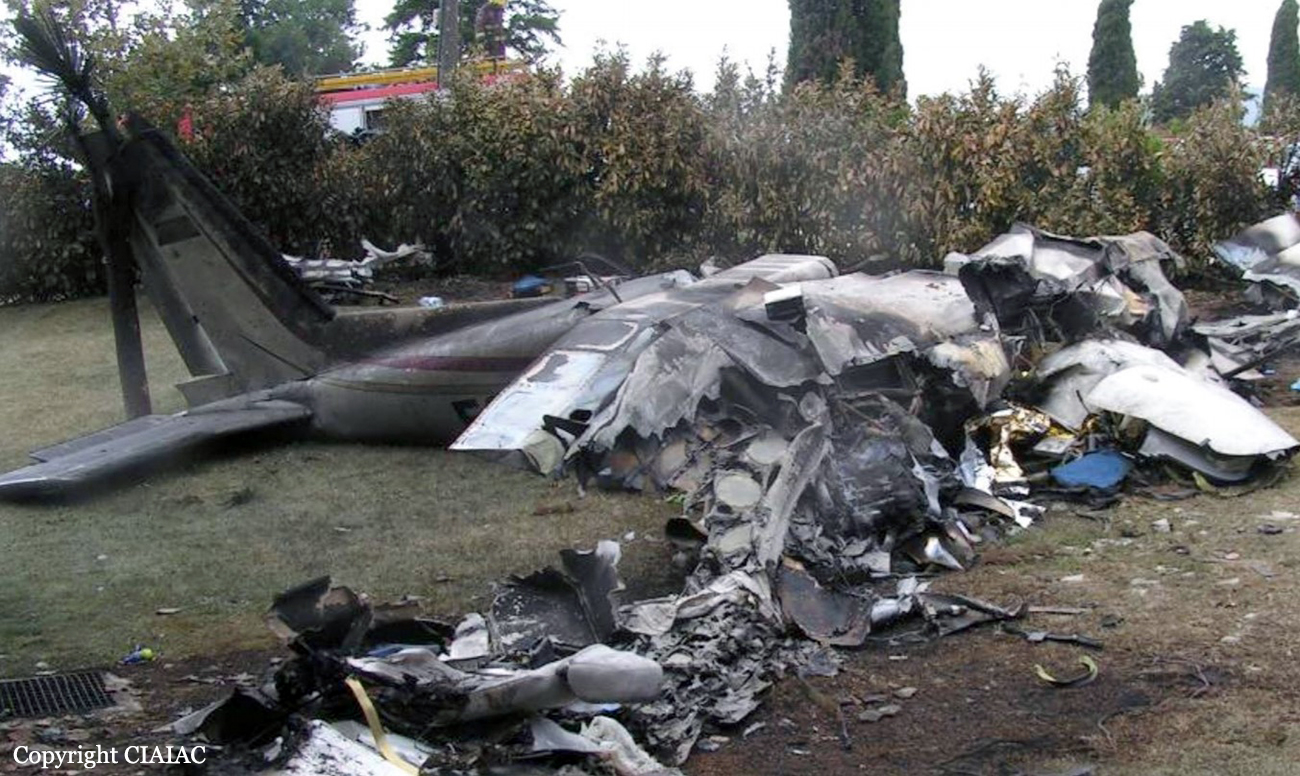
The airplane, a Vulcan Air PA68 Observer 2, registration EC-IPG, had taken off from Sabadell airport to conduct a local flight. Onboard were the instructor and a pilot who was being tested for a CRI (SPA) (Class Rating Instructor). As they were flying over the town of Sant Pere de Vilamajor (Barcelona), the aircraft plunged to the ground, falling within the property limit of a private dwelling (a chalet). Several eyewitnesses reported that they stopped hearing the engine noise and that they then saw the airplane spinning in a nose down attitude. The front part of the airplane (cockpit) impacted the ground first. The crash resulted in a fire, the flames from which reached a part of the aircraft and an arbor next to the house, but not the house itself, though it was affected by the smoke. The two occupants perished immediately and were trapped inside the airplane. They were extracted by emergency personnel. The aircraft was destroyed by the impact and subsequent fire. The post-accident inspection did not reveal any signs of a fault or malfunction of any aircraft component. It has been determined that the accident resulted from a stall caused by flying the aircraft at a low speed. It has also been concluded that there were three contributing factors: the low altitude, the very likely possibility that the crew did not establish guidelines for action prior to the flight and the absence of an authority gradient between the crew members.
Probable cause:
The accident was caused when the aircraft stalled during the performance of a slow flying maneuver with the right engine stopped. Factors that contributed to the accident were the low altitude, the possibility that the crew did not define the responsibilities of each prior to the flight and which may have resulted in a lack of coordination when faced with the circumstances in the final moments of the flight, and the lack of an authority gradient between the crew members.
Final Report:

Crash of a Partenavia P.68C in Gainesville: 3 killed
Date & Time:
Nov 7, 2008 at 0246 LT
Operator:

Registration:
N681KW
Survivors:
No
Schedule:
Key West - Gainesville
MSN:
273
YOM:
1983
Crew on board:
1
Crew fatalities:
Pax on board:
2
Pax fatalities:
Other fatalities:
Total fatalities:
3
Captain / Total hours on type:
1500.00
Aircraft flight hours:
6971
Circumstances:
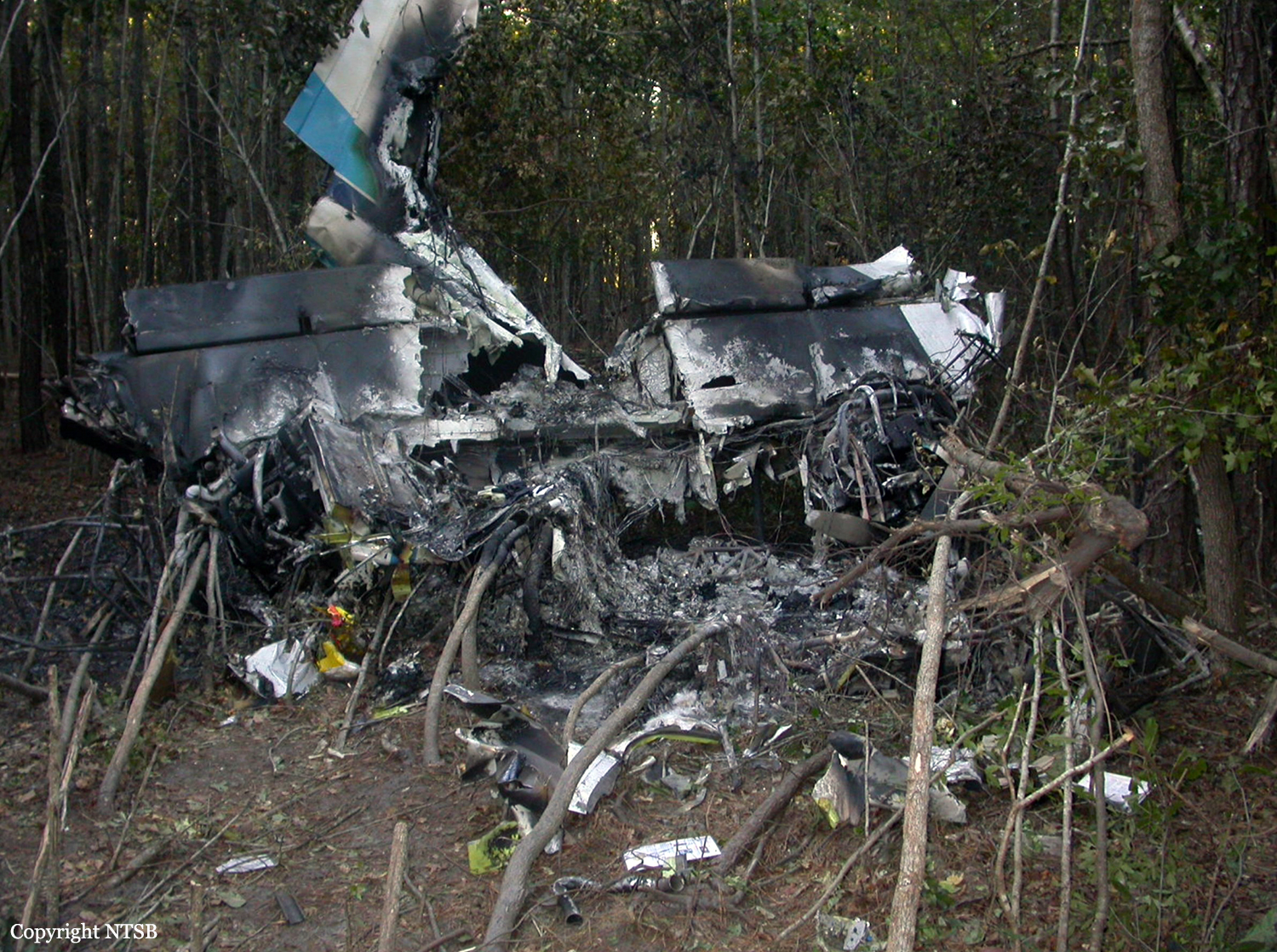
The pilot of the multiengine airplane was flying two passengers at night on an instrument-flight-rules flight plan. One of the passengers had been on an organ recipient waiting list and his wife was accompanying him. A viable matched organ was available at a distant hospital and the passenger had to arrive on short notice for surgery the following morning. All radio communications during the flight between the pilot and air traffic control (ATC), a flight service station (FSS), and a fixed-based operator (FBO) were routine. The pilot was aware of the weather at the destination airport, and had commented to ATC about 75 miles from the destination that the weather was "going up and down…like a real thin fog layer.” Additionally, better weather conditions prevailed at nearby suitable airports. The pilot mentioned one of those airports to ATC in the event he decided to divert. According to an employee at an FBO located at the destination airport, the pilot contacted him via radio and asked about the current weather conditions. The employee replied that the visibility was low due to fog and that he could not see the terminal lights from the FBO. The pilot then asked which of the two alternate airports was closer and the employee stated that he did not know. The employee then heard the pilot “click” the runway lights and contact the local FSS. about 5 miles from runway 29, just prior to the initial approach fix, the pilot radioed on the common traffic advisory frequency and reported a 5-mile final leg for runway 29. The FSS reported that the current weather was automated showing an indefinite ceiling of 100 feet vertical visibility and 1/4 mile visibility in fog. The pilota cknowledged the weather information. The weather was below the minimum published requirements for the instrument-landing-system (ILS) approach at the destination airport. Radar data showed that the flight intercepted and tracked the localizer, then intercepted the glideslope about 1 minute later. There were a few radar targets without altitude data due to intermittent Mode C transponder returns. The last recorded radar target with altitude indicated the airplane was at 600 feet, on glideslope and heading for the approach; however, the three subsequent and final targets did not show altitude information. The last recorded radar target was about 1.4 miles from the runway threshold. The airplane flew below glideslope and impacted 100-foot-tall trees about 4,150 feet from the runway 29 threshold. On-ground facility checks and a postaccident flight check of the ILS runway 29 approach conducted by the Federal Aviation Administration did not reveal malfunctions with the ILS. The cabin and cockpit area, including the NAV/COMM/APP, equipment were consumed by a postimpact fire which precluded viable component testing. Detailed examination of the wreckage that was not consumed by fire did not reveal preimpact mechanical malfunctions that may have contributed to the accident. Given that the pilot was aware of the weather conditions before and during the approach, it is possible that the pilot’s goal of expeditiously transporting a patient to a hospital for an organ transplant may have affected his decision to initiate and continue an instrument approach while the weather conditions were below the published minimum requirements for the approach.
Probable cause:
The pilot's failure to maintain the proper glidepath during an instrument-landing-system (ILS) approach. Contributing to the accident were the pilot's decision to initiate the ILS approach with weather below the published minimums, and the pilot's self-induced pressure to expeditiously transport an organ recipient to a hospital.
Final Report:

Crash of a Partenavia P.68C Victor in Bangalore: 4 killed
Date & Time:
Sep 8, 2007 at 1520 LT
Operator:

Registration:
VT-JOY
Survivors:
No
Schedule:
Bangalore – Cochin
MSN:
436
YOM:
2004
Crew on board:
1
Crew fatalities:
Pax on board:
3
Pax fatalities:
Other fatalities:
Total fatalities:
4
Circumstances:
The aircraft departed Bangalore-Hindustan Airport runway 27 at 1514LT on a flight to Cochin with 3 passengers and one pilot on board. Six minutes after takeoff, the pilot reported technical problems and elected to return for an emergency landing. However, the aircraft entered an uncontrolled descent and crashed in the lakebed of the Gawdanapalya Lake located about 9 km southwest of the airport. The aircraft was destroyed and all four occupants were killed.
Probable cause:
Engine power loss during initial climb after the aircraft had been refueled with Jet fuel instead of Avgas 100LL.
The following contributing factors were identified:
- The low experience of the pilot on type,
- The non-compliance of correct refueling procedure and its supervision by IOC personnel and pilot or operator's representative.
The following contributing factors were identified:
- The low experience of the pilot on type,
- The non-compliance of correct refueling procedure and its supervision by IOC personnel and pilot or operator's representative.
Final Report:


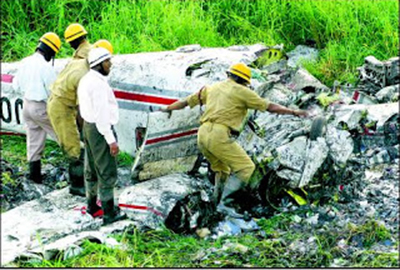
Crash of a Partenavia P.68C in Adjuntas: 2 killed
Date & Time:
Jan 15, 2007 at 0415 LT
Registration:
N90KB
Survivors:
No
Schedule:
Aguadilla - Ponce
MSN:
365
YOM:
1985
Crew on board:
1
Crew fatalities:
Pax on board:
1
Pax fatalities:
Other fatalities:
Total fatalities:
2
Aircraft flight hours:
9611
Circumstances:
The non-instrument rated pilot departed VFR on a dark night at 0359, with an adequate fuel supply for the intended flight, and proceeded in a south-southeasterly heading (approximately 150 degrees) climbing to a maximum altitude of 4,700 feet msl. The flight continued on the south-southeasterly heading, descended to 4,500 feet msl, then descended gradually to 3,800 feet msl where radar contact was lost at 0411:37. The flight continued 4.6 nautical miles on the south-southeasterly heading, and impacted trees in upslope mountainous terrain while on a magnetic heading of 150 degrees. The airplane was destroyed by impact and a postcrash fire; the accident site was located north of, and approximately 146 feet below an east-west oriented ridge line. The tree elevation was 3,299 feet msl, while the elevation at a ridge south of the site was 3,445 feet msl. Cloud tops in the area were calculated to be about 4,000 feet msl. Examination of the airplane structure, flight controls, engines, propellers, and systems revealed no evidence of preimpact failure or malfunction. The altimeter settings for the departure and destination airports were 30.02 inches Hg and 30.01 inches Hg, respectively. The altimeter was found positioned to 29.91 inches Hg. This error would have resulted in the altimeter reading 100 feet lower than if the correct altimeter setting was entered.
Probable cause:
The pilot's failure to maintain altitude/clearance with mountainous terrain for undetermined reasons during a normal descent under instrument meteorological and dark night conditions.
Final Report:
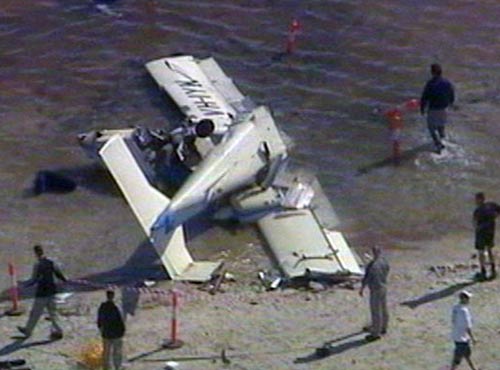
Crash of a Partenavia P.68B Victor off Rottnest Island
Date & Time:
Nov 12, 2006 at 1500 LT
Operator:

Registration:
VH-IYK
Survivors:
Yes
Schedule:
Rottnest Island - Perth
MSN:
138
YOM:
1978
Crew on board:
1
Crew fatalities:
Pax on board:
5
Pax fatalities:
Other fatalities:
Total fatalities:
0
Circumstances:
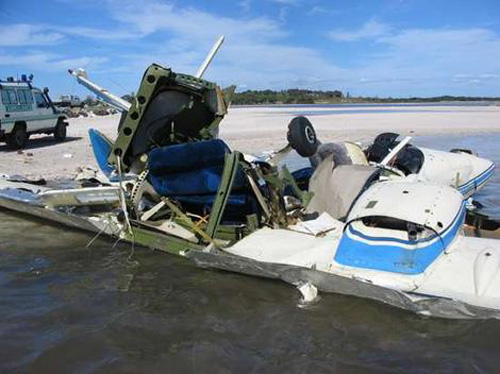
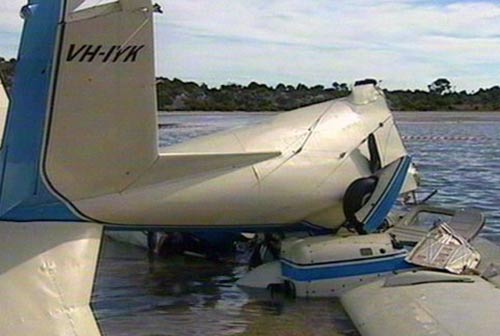
Shortly after takeoff from Rottnest Island Airport, while in initial climb, the twin engine aircraft suffered a bird strike and crashed in a salt lake located near the airport. The aircraft was destroyed upon impact and all six occupants were injured.
Probable cause:
Loss of control during initial climb following a bird strike.

Crash of a Partenavia P.68 in Panda Ranch
Date & Time:
Apr 30, 2006 at 2000 LT
Registration:
N4574C
Survivors:
Yes
Schedule:
Panda Ranch - Honolulu
MSN:
310
YOM:
1983
Crew on board:
1
Crew fatalities:
Pax on board:
4
Pax fatalities:
Other fatalities:
Total fatalities:
0
Captain / Total hours on type:
110.00
Aircraft flight hours:
1900
Circumstances:
The airplane descended into terrain during the takeoff initial climb from a private airstrip in dark night conditions. The four passengers had been flown to the departure airport earlier in the day. After several hours at the destination, the pilot and passengers boarded the airplane and waited for two other airplanes to depart. During the initial climb, the pilot banked the airplane to the right, due to the upsloping terrain in the opposite direction (left) and noise abatement concerns; this maneuver was a standard departure procedure. The airplane collided with the gradually upsloping terrain, coming to rest upright. The pilot did not believe that he had experienced a loss of power. The accident occurred in dark night conditions, about 1 hour after sunset. In his written report, the pilot said he only had 10 hours of total night flying experience.
Probable cause:
The pilot's failure to attain a proper climb rate and to maintain adequate clearance from the terrain during the initial climb in dark night conditions, which resulted in an in-flight collision with terrain.
Final Report:
Crash of a Partenavia P.68 off Puerto Villamil: 2 killed
Date & Time:
Dec 21, 2004 at 1219 LT
Survivors:
No
Schedule:
Baltra Island - Puerto Villamil
Crew on board:
1
Crew fatalities:
Pax on board:
1
Pax fatalities:
Other fatalities:
Total fatalities:
2
Circumstances:
The twin engine aircraft departed Galapagos International Airport (Baltra Island) at 1200LT on a flight to Puerto Villamil Airport, Isabela Island, carrying one passenger and one pilot. At 1219LT, the pilot was cleared to descend to Puerto Villamil Airport when he lost control of the airplane that crashed in the sea. The wreckage was found few hundred metres offshore at 1655LT. Both occupants were killed. The accident occurred three minutes prior to landing.

