Crash of a Mitsubishi MU-2B-60 Marquise in Putnam: 5 killed

Date & Time: Feb 14, 1990 at 0753 LT
Type of aircraft:
Registration:
N300CW
Flight Phase:
Survivors:
No
Schedule:
Midland - Dallas
MSN:
795
YOM:
1980
Location:
Crew on board:
1
Crew fatalities:
Pax on board:
4
Pax fatalities:
Other fatalities:
Total fatalities:
5
Captain / Total flying hours:
10327
Captain / Total hours on type:
35.00
Aircraft flight hours:
2600
Circumstances:
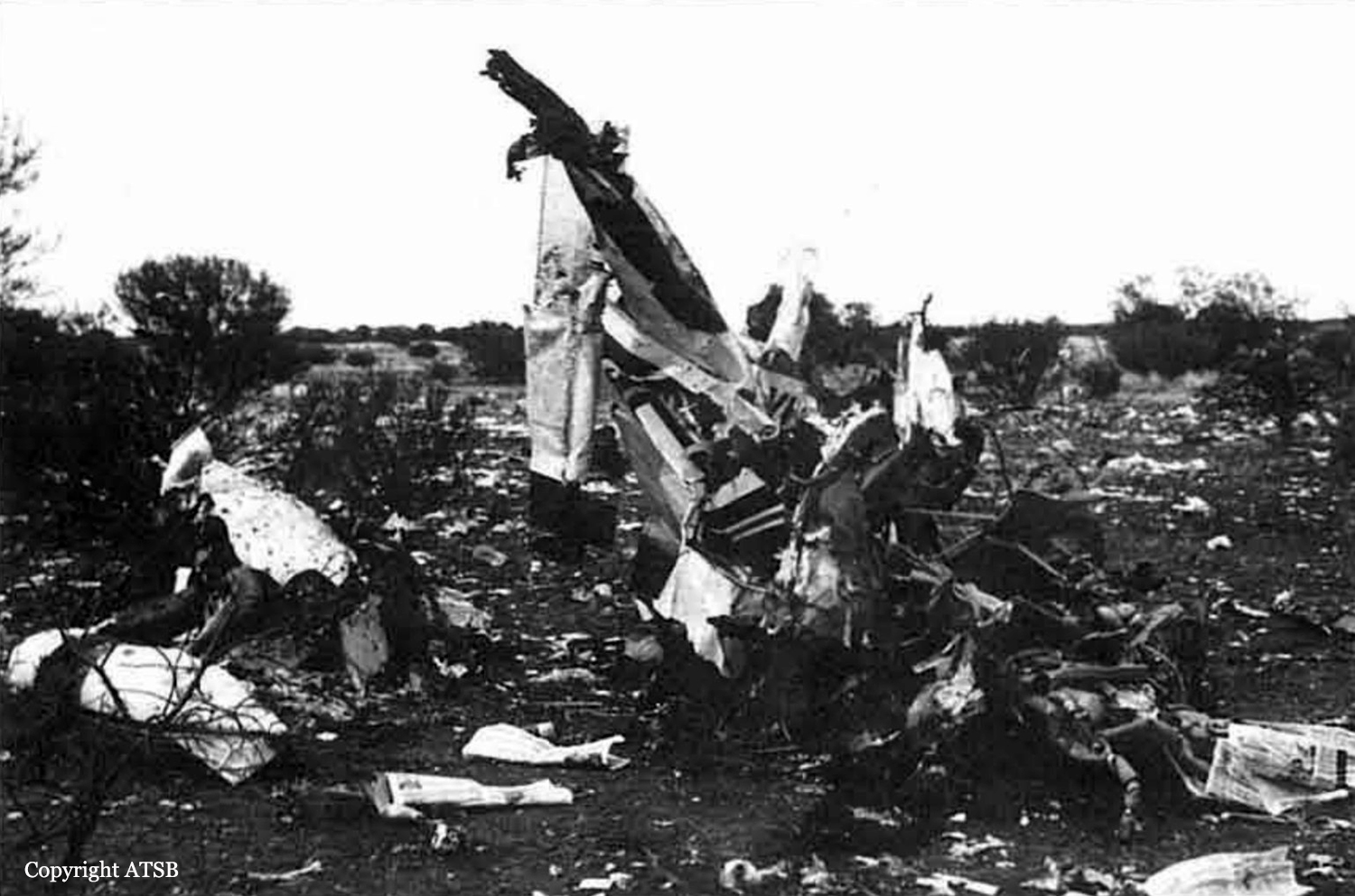
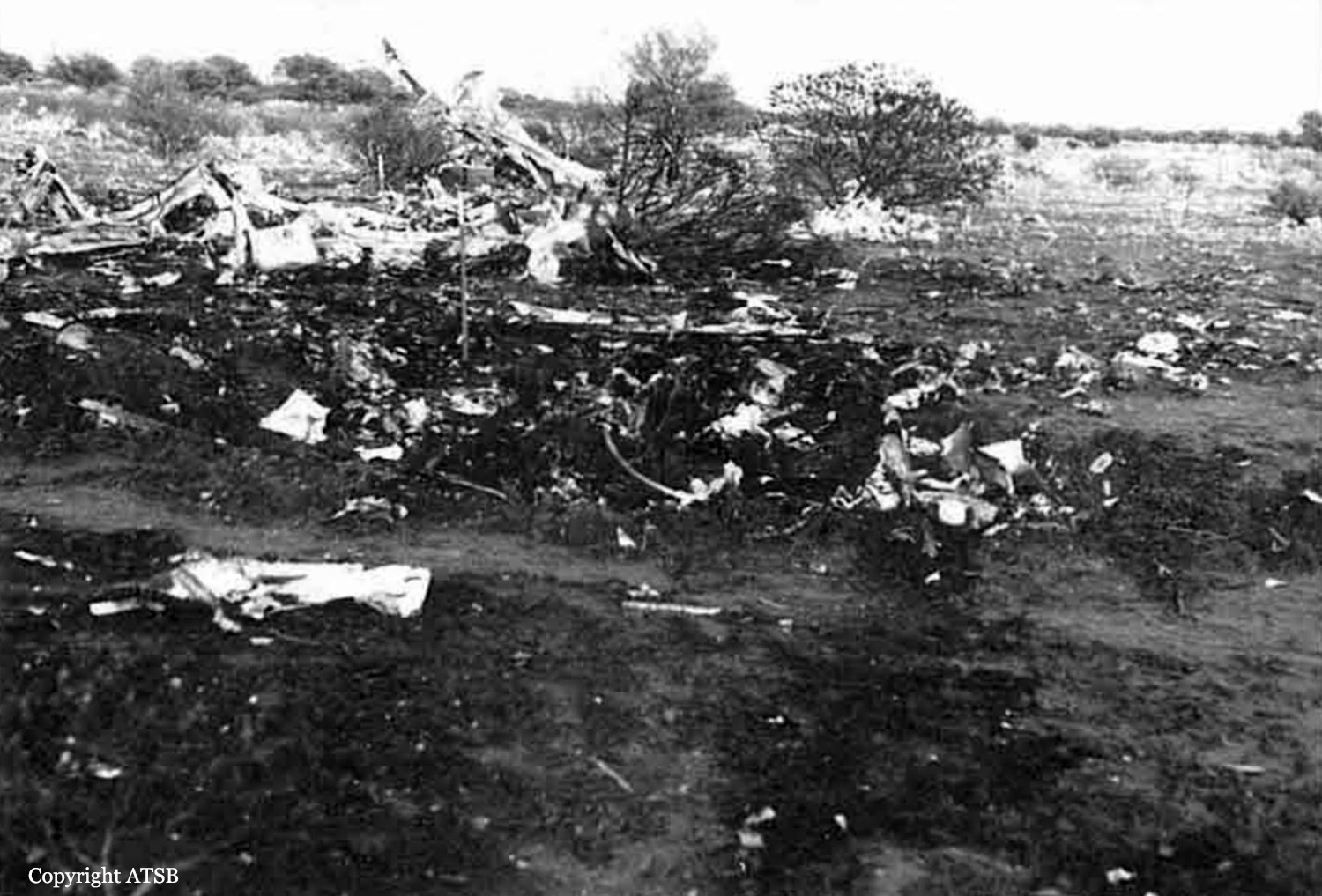
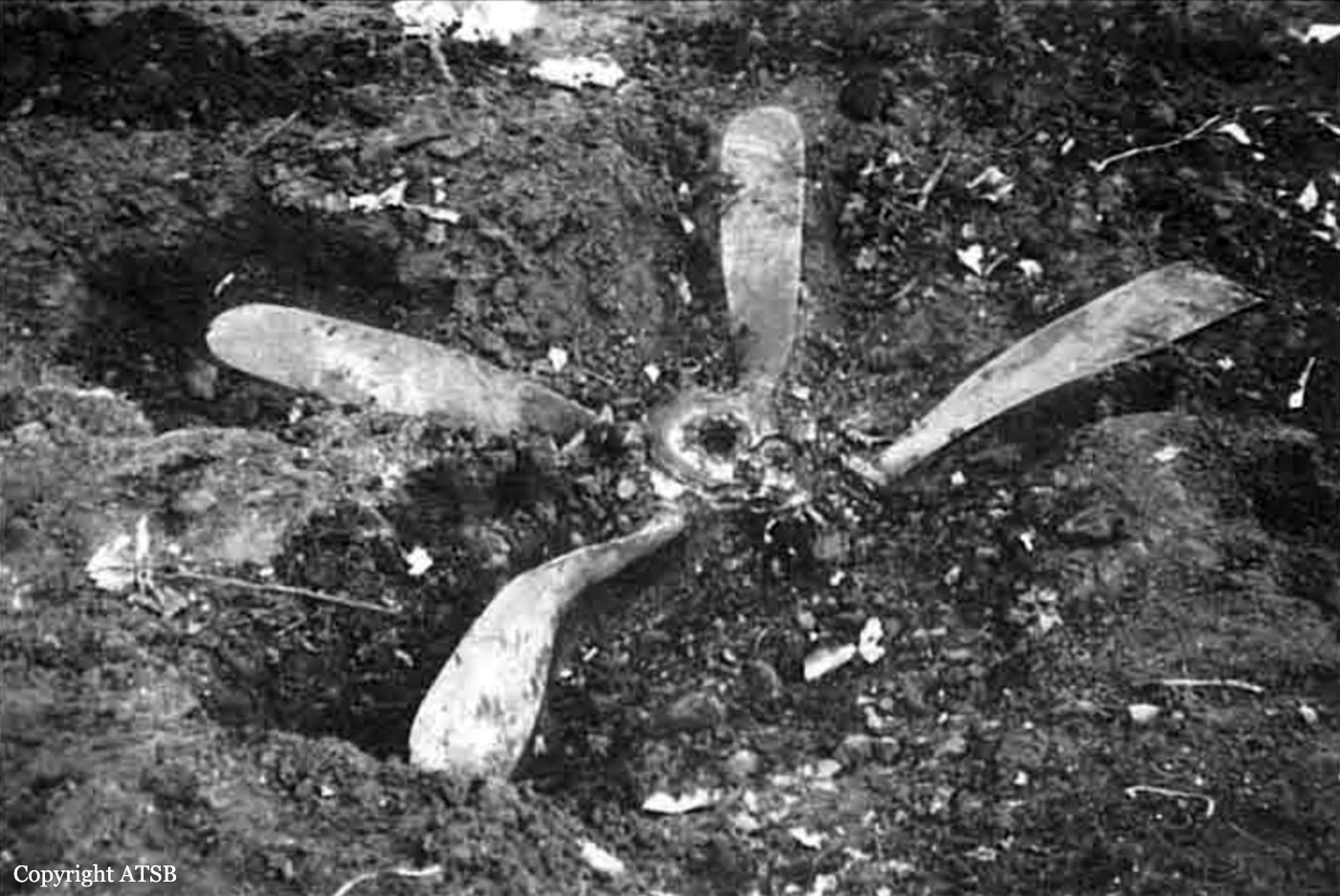
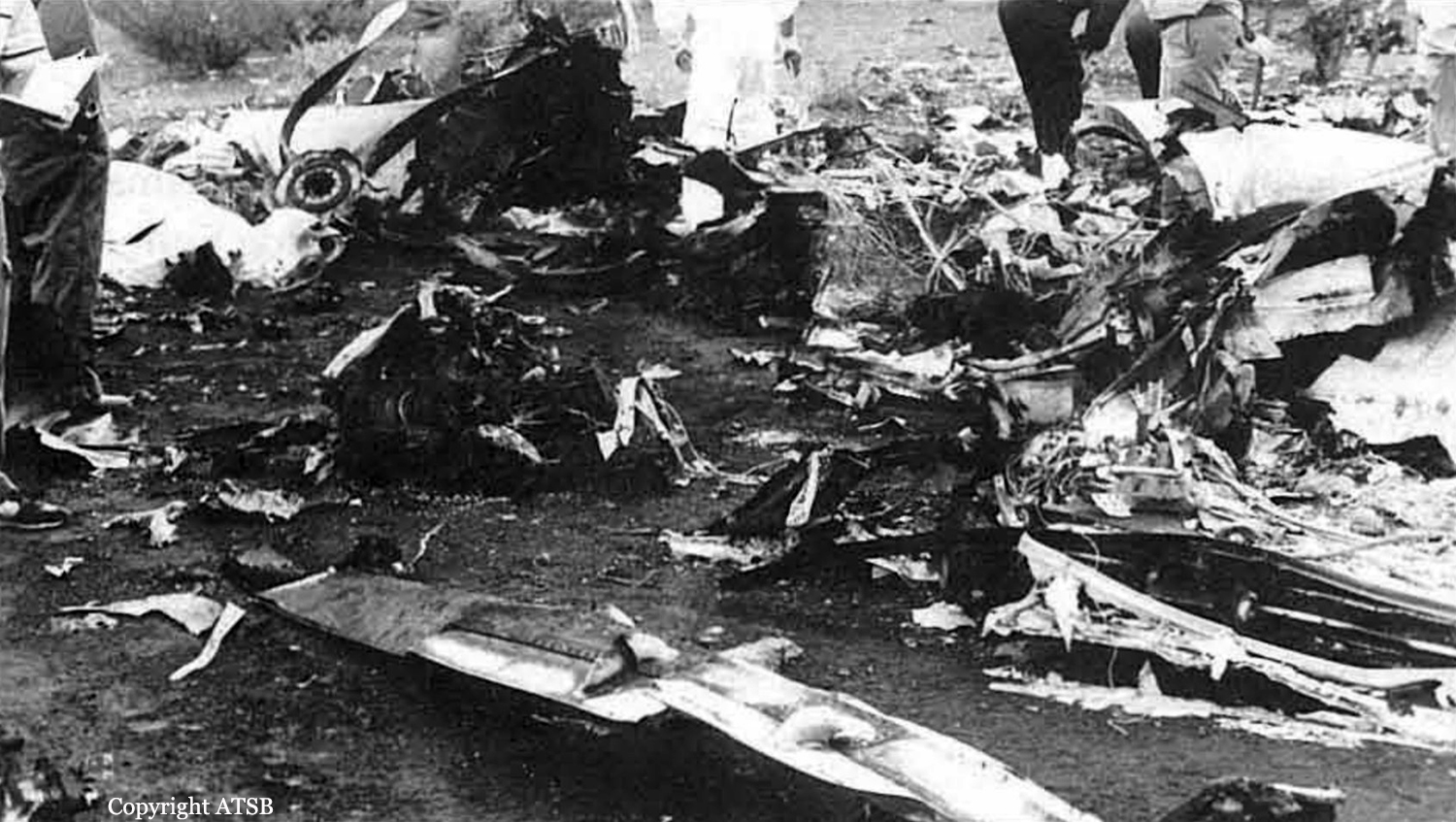
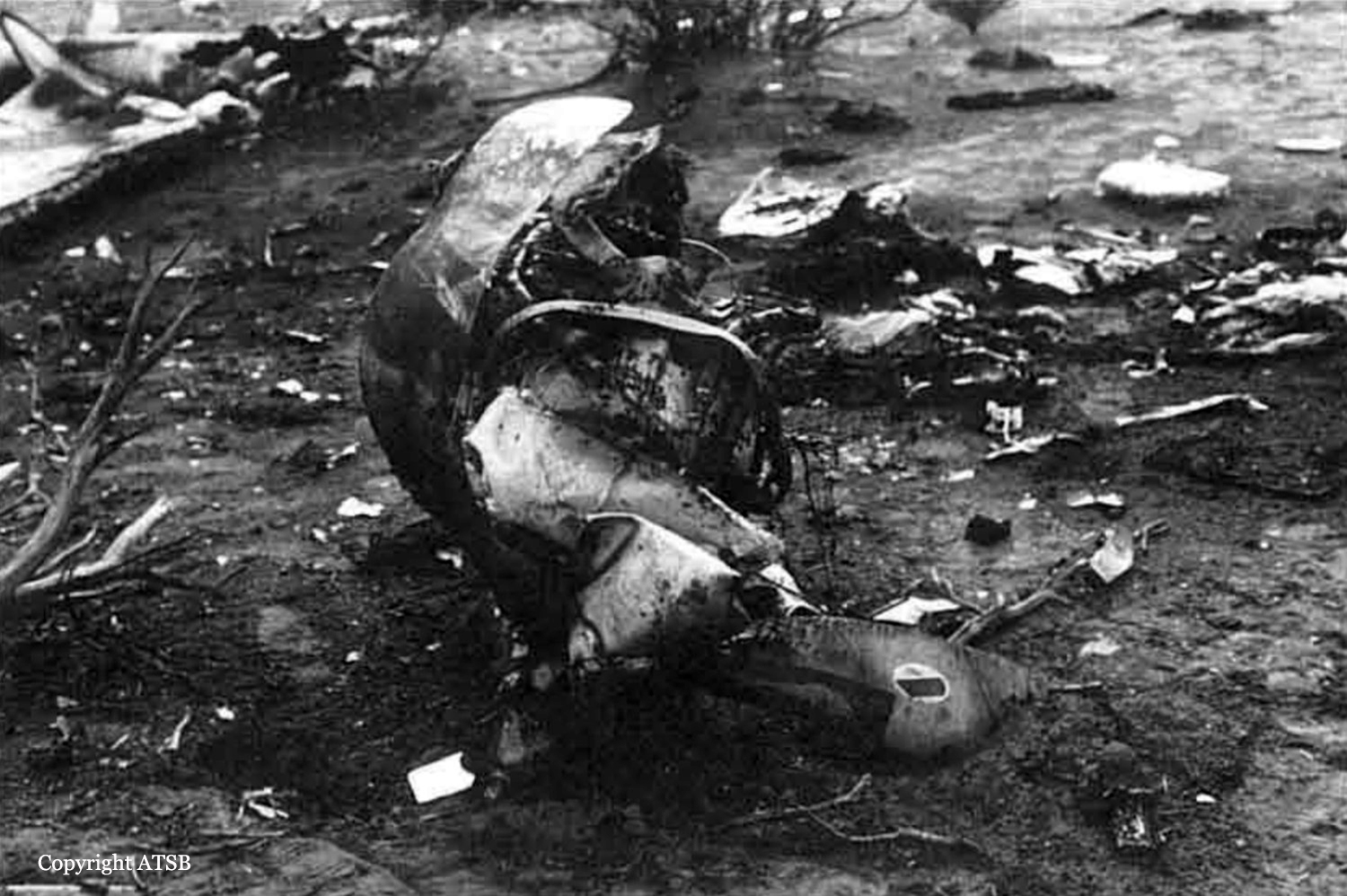
Before takeoff, San Angelo AFSS briefer told the pilot computers were down in south Texas for 1.5 hours and no current weather info was available. Current weather info was available at nws at Midland and FSS's at Midland, McAlester and De Ridder, but the pilot didn't call these, nor did the briefer advise him to do so. Pilot didn't update weather in flight. About 38 minutes after takeoff, in area of potential icing, aircraft slowed from 270 to 150 knots ground speed in 4 minutes, then slowed to 100 knots in next 12 seconds. About 33 seconds before reaching 100 knots, pilot requested descent from 15,000 feet to 13,000 feet. At that time, true ground track was approximately 080° with wind aloft about 213° at 43 knots. Before ATC could clear descent, aircraft descended to 14,800 feet, then radar contact was lost after one return at 9,700 feet. Descent rate between last 2 altitudes: 12,750 fpm. No preimpact malfunction was found. IMC existed above 12,500 feet. Freezing level was forecasted at 10,000 feet to 12,000 feet. Aircraft was certified for flight in known icing conditions, but status of anti-ice/deice equipment wasn't determined due to impact/fire damage. Low levels of ethanol were found in tox samples from all occupants; however, there was evidence that the tox samples were unreliable. All five occupants were killed.
Probable cause:
Improper planning/decision by the pilot, which resulted in excessive accumulation of structural icing (on the aircraft's wings, stabilizers, fuselage, and/or engine inlets), and his failure to maintain adequate airspeed and aircraft control. Factors related to the accident were: the pilot's inadequate weather evaluation due to lack of available information at the automated flight service station (AFSS), his failure to obtain additional information from other weather stations (either before takeoff or during the flight), his lack of experience in this make and model of aircraft, and icing conditions at cruise altitude.
Final Report:


Crash of a Mitsubishi MU-2B-60 Marquise in Rapid City: 1 killed

Date & Time: Feb 9, 1990 at 1114 LT
Type of aircraft:
Registration:
N64MD
Flight Phase:
Flight Type:
Survivors:
Yes
Schedule:
Yuma – Rapid City – Winnipeg
MSN:
747
YOM:
1979
Crew on board:
2
Crew fatalities:
Pax on board:
2
Pax fatalities:
Other fatalities:
Total fatalities:
1
Captain / Total flying hours:
5985
Captain / Total hours on type:
291.00
Aircraft flight hours:
4382
Circumstances:
Witnesses reported that shortly after lift-off, the aircraft entered an unusually steep, nose high attitude, while still at low airspeed. One witness (an ATP pilot) reported the aircraft attained an altitude of approximately 75 to 100 feet and appeared to slow down and enter a VMC roll, then it crashed. Impact occurred in an inverted, nose down attitude, left of the runway. An investigation revealed that a coupling shaft (PN 865888-3) had failed in the left engine and the left prop had feathered. A metallurgical examination of the coupling showed evidence of fatigue. One pilot was killed and three other occupants were injured, one seriously.
Probable cause:
Failure of the pilot to maintain adequate airspeed (VMC), which resulted in a loss of aircraft control. A factor related to the accident was: fatigue failure of a coupling shaft in the #1 engine, which resulted in loss of power in that engine.
Final Report:

Crash of a Mitsubishi MU-2B-60 Marquise near Meekatharra: 2 killed

Date & Time: Jan 26, 1990 at 0105 LT
Type of aircraft:
Registration:
VH-MUA
Flight Phase:
Survivors:
No
Schedule:
Perth - Port Hedland
MSN:
746
YOM:
1979
Country:
Region:
Crew on board:
1
Crew fatalities:
Pax on board:
1
Pax fatalities:
Other fatalities:
Total fatalities:
2
Captain / Total flying hours:
11030
Captain / Total hours on type:
51.00
Aircraft flight hours:
1902
Circumstances:
The aircraft had been chartered for a flight from Perth to Port Hedland. The pilot arrived at the aircraft at 2210 hours on 25 January, and after a short inspection of the aircraft, attended the CAA flight planning office for air traffic control and meteorology briefing. The briefing included information about a tropical cyclone off the NW coast of Australia and its potential effects on the proposed flight. After the flight plan was submitted, the pilot returned to the aircraft at 2315 hours as the loading was being completed, and conducted a preflight inspection of the aircraft and its load. The aircraft departed Perth at 2339 and commenced a climb towards Ballidu, the first turning point, over which it passed at 0003 hours. Subsequently, the aircraft passed over Mt Singleton at 0020, Mt Magnet at 0040 and Meekatharra at 0102 hours. After Ballidu, the aircraft climbed from FL170 to FL190 and climbed further to FL210 after Mt Magnet. While over Meekatharra, the passenger (also a licenced pilot) gave the position report. One minute later, the pilot radioed that the aircraft was out of control and descending. He called again 30 seconds later and advised that the aircraft was in ice and spinning down through 8,000 feet. No further communications were received from the aircraft. Both occupants were killed.
Probable cause:
The following findings were reported:
- The pilot did not have recent experience in high-performance, high-altitude aircraft except for the 51.7 hours gained in the MU-2.
- The pilot did not possess some of the experience levels and recency requirements placed on MU-2 pilots immediately after the accident by the CAA.
- The pilot did not take sufficient account of the operational characteristics of this aircraft type.
- The pilot's situational awareness was probably impaired during the flight, because of the combination of pre-existing cumulative fatigue, and insufficient sleep in the previous 42 hours.
- The meteorological conditions were conducive to the formation of airframe icing on an aircraft flying in cloud along the flight planned route.
- It is probable that control was lost as the aircraft banked to the left over Meekatharra, to change track towards Port Hedland.
- The pilot reported that the aircraft was in ice during his last radio transmission.
- The pilot was unable to recover from the spin before the aircraft hit the ground.
Final Report:

Crash of a Mitsubishi MU-2B-60 Marquise off Orosei: 2 killed

Date & Time: Oct 24, 1989
Type of aircraft:
Registration:
I-IDMA
Flight Phase:
Flight Type:
Survivors:
No
Schedule:
Palermo - Olbia
MSN:
769
YOM:
1980
Location:
Country:
Region:
Crew on board:
2
Crew fatalities:
Pax on board:
0
Pax fatalities:
Other fatalities:
Total fatalities:
2
Circumstances:
The twin engine aircraft was completing a mail flight from Palermo to Olbia with two pilots on board. While approaching Sardinia, the aircraft crashed in unknown circumstances in the Tyrrhenian Sea off Orosei. Both occupants were killed.

Crash of a Mitsubishi MU-2B-20F Marquise off San Diego: 1 killed

Date & Time: Feb 28, 1989 at 1103 LT
Type of aircraft:
Operator:
Registration:
N701DM
Flight Phase:
Flight Type:
Survivors:
No
Schedule:
Carlsbad - Carlsbad
MSN:
149
YOM:
1969
Flight number:
FNT701
Crew on board:
1
Crew fatalities:
Pax on board:
0
Pax fatalities:
Other fatalities:
Total fatalities:
1
Captain / Total flying hours:
7262
Captain / Total hours on type:
1010.00
Circumstances:
The purpose of the flight was to provide airborne intercept training for the US Navy. The mission had just been completed and the accident aircraft, FNT701, and another aircraft, FNT492, were returning home when the accident occurred. Radar data showed FNT701 was at 22,700 feet when it descended slightly to 22,500 feet. FNT701 remained at this altitude for approximately 2 minutes 37 seconds, then began a descent which resulted in impact with the ocean. This final descent rate initially was about 5,000 fpm and increased to 19,000 fpm. No distress calls were made; however, two transmissions were recorded which totaled approximately 30 seconds. There was no voice communication during these transmissions, only an open mike and the sound of prop(s). During the 1st transmission, the word 'oh' could be heard. FNT492 observed FNT701 descend below the clouds and did not detect any distress signals. Little wreckage was recovered during search and rescue operations. The pilot, sole on board, was killed.
Probable cause:
Pilot incapacitation for an unknown reason.
Final Report:

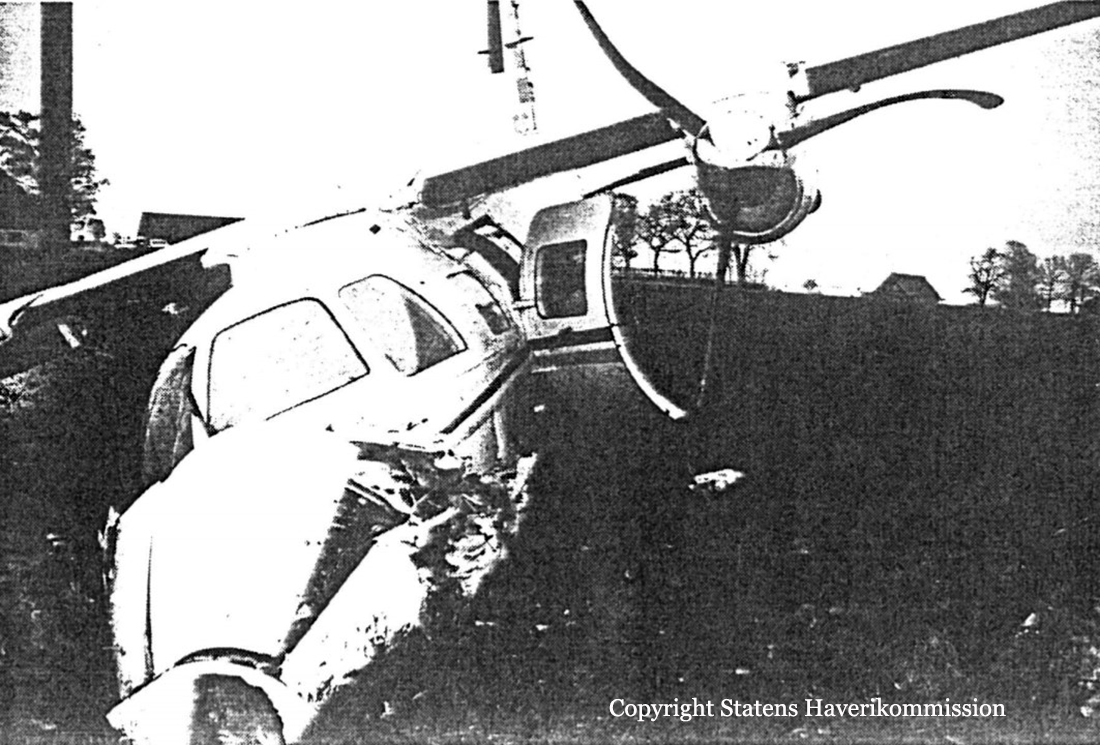
Crash of a Mitsubishi MU-2B-25 Marquise in Falköping

Date & Time: Jan 3, 1989 at 0932 LT
Type of aircraft:
Registration:
SE-KBX
Flight Type:
Survivors:
Yes
Schedule:
Visby - Falköping
MSN:
379
YOM:
1978
Country:
Region:
Crew on board:
1
Crew fatalities:
Pax on board:
0
Pax fatalities:
Other fatalities:
Total fatalities:
0
Captain / Total flying hours:
1330
Captain / Total hours on type:
80.00
Aircraft flight hours:
7150
Circumstances:
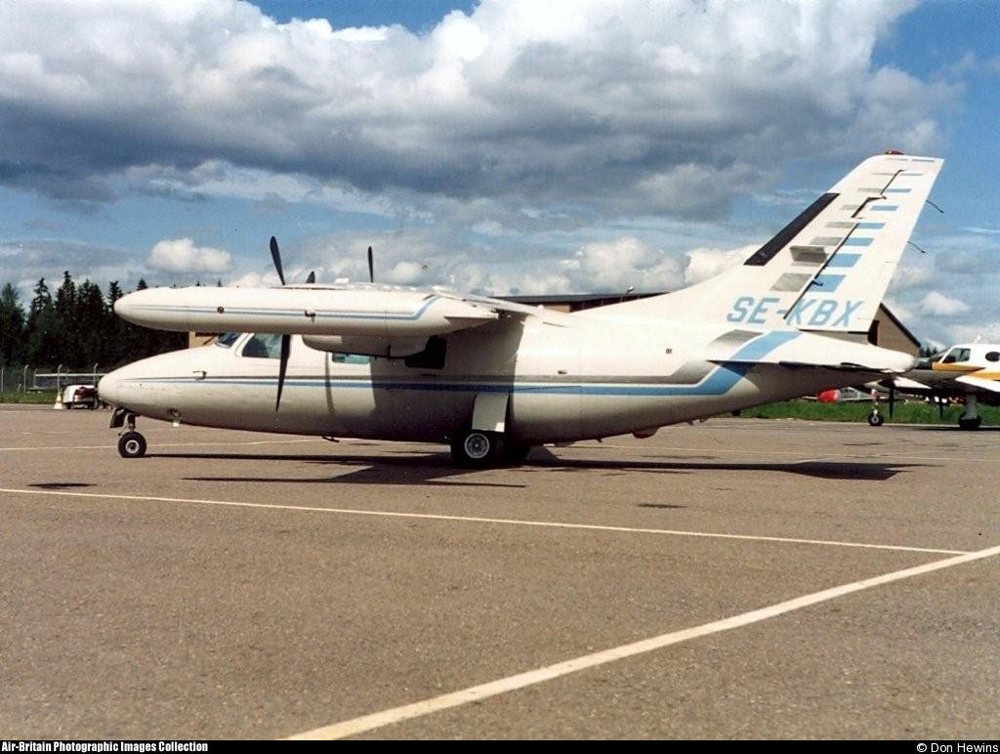
On final approach to Falköping Airport, both engines failed simultaneously. The pilot attempted an emergency landing when the aircraft crashed in an open field located five km short of runway. The aircraft slid for few dozen meters and eventually collided with a stone wall. The pilot was slightly injured and the aircraft was damaged beyond repair.
Probable cause:
It was determined that both engines failed following a fuel exhaustion. The main tanks and those in the wings were empty while the tip tanks still contained fuel. The left auxiliary fuel pump had been changed the day before the accident. The pilot proceeded to the daily inspection but failed to drain the fuel system. The main tank was extremely dirty and the filters in the fuel transfer lines were fitted against the published procedures and were also blocked by impurities. Additionally, those filters contained a lot of water. In all lines, the fuel was so contaminated that electrical resistance caused the fuel gauges to indicate a quantity of fuel far greater than reality. Investigators at the scene of the accident found that the main tank drain valve was open.
Final Report:

Crash of a Mitsubishi MU-2B-60 Marquise in Mansfield: 4 killed

Date & Time: Jan 2, 1989 at 1643 LT
Type of aircraft:
Operator:
Registration:
N500V
Flight Type:
Survivors:
No
Schedule:
Greenville - Mansfield
MSN:
379
YOM:
1973
Crew on board:
1
Crew fatalities:
Pax on board:
3
Pax fatalities:
Other fatalities:
Total fatalities:
4
Captain / Total flying hours:
11700
Captain / Total hours on type:
2860.00
Aircraft flight hours:
3288
Circumstances:
During arrival, the flight was vectored for an ILS runway 32 approach. As the arrival continued, the ATC controller provided the latest info on cloud tops and in-cloud icing. The pilot acknowledged, then inquired about the status of the 'locator.' The controller advised that all components of the ILS, including the outer marker locator, were monitoring normal. Four miles from the outer marker/faf, the pilot was given a final vector, was cleared for the approach and was cleared to circle and land on runway 23. He acknowledged, then radio and radar contact with the aircraft were lost. The aircraft crashed approximately 2 miles southeast of the faf, while in a steep descent on a heading of 140°. No preimpact part failure/malfunction of the aircraft was found, though it was extensively damaged. About three weeks after a boating accident on 7/2/88, the pilot was admitted to a hospital and treated for a stroke, but an autopsy and toxicological checks failed to reveal any condition which would have prevented the pilot from performing his duties. Ad 88-13-01, concerning aircraft equipped with m-4c/d autopilots, was not complied with. All four occupants were killed.
Probable cause:
Failure of the pilot to maintain control of the aircraft, due to spatial disorientation, at about the time he was changing radio frequencies during an IFR approach.
Occurrence #1: loss of control - in flight
Phase of operation: approach - iaf to faf/outer marker (ifr)
Findings
1. Weather condition - clouds
2. Weather condition - icing conditions
3. Weather condition - low ceiling
4. (c) aircraft control - not maintained - pilot in command
5. (c) spatial disorientation - pilot in command
----------
Occurrence #2: in flight collision with terrain/water
Phase of operation: descent - uncontrolled
Final Report:

Crash of a Mitsubishi MU-2B-60 Marquise in Sturt Meadows Station: 10 killed

Date & Time: Dec 16, 1988 at 1015 LT
Type of aircraft:
Registration:
VH-BBA
Flight Phase:
Survivors:
No
Schedule:
Perth – Bellevue Mine – Kalgoorlie – Leinster – Nevoria Mine
MSN:
782
YOM:
1980
Country:
Region:
Crew on board:
1
Crew fatalities:
Pax on board:
9
Pax fatalities:
Other fatalities:
Total fatalities:
20
Captain / Total flying hours:
6249
Captain / Total hours on type:
134.00
Aircraft flight hours:
2827
Circumstances:
The aircraft had been chartered for a return flight from Perth to Bellevue Mine, Kalgoorlie and Nevoria Mine. The aircraft departed Perth on 15 December and arrived at Bellevue Mine after an uneventful flight. The following morning the pilot telephoned Kalgoorlie Flight Service Unit (FSU) and obtained brief details of expected winds for the flight to Kalgoorlie, as well as a forecast of the weather for the aircraft's arrival. He then submitted details of the flight to the flight service officer (FSO), at the same time commenting that there was some adverse weather in the Bellevue Mine area. The flight plan indicated that the pilot intended to climb to flight level (FL) 195 after take-off, with a time interval of 27 min to pass Leonora and a further 22 min to reach Kalgoorlie. The flight plan was amended after take-off to include a brief stop at Leinster. At 0940 hours the aircraft departed for Leinster, 5 km from Bellevue Mine. (This short flight was conducted to pick up passenger baggage.) At 0957 hours the pilot reported to the Kalgoorlie FSU that the aircraft had departed Leinster at 0955 hours and was climbing to FL 195. At 1008 hours he requested traffic information for a climb to FL 210 and, after being advised that there was no traffic, replied that he was climbing to that level. He also remarked that there were some big clouds in the area. No further communications were received from the aircraft. At approximately 1015 hours the aircraft crashed on Sturt Meadows Station. The crash site was approximately 1200 ft above sea level. All 10 occupants were killed.
Probable cause:
It is probable that the pilot did not have an adequate understanding of the operations of the MU-2B-60 aircraft at high altitude. The meteorological conditions were conducive to the formation of ice on aircraft flying in cloud above the freezing level. It is probable that loss of control occurred above the freezing level on climb to an amended altitude of FL 210.
Final Report:

Crash of a Mitsubishi MU-2B-35 Marquise in the Pacific Ocean: 1 killed

Date & Time: Dec 9, 1988 at 0721 LT
Type of aircraft:
Registration:
N296MA
Flight Phase:
Flight Type:
Survivors:
No
Schedule:
Tulsa – Oakland – Honolulu – Majuro – Cairns
MSN:
592
YOM:
1973
Country:
Region:
Crew on board:
1
Crew fatalities:
Pax on board:
0
Pax fatalities:
Other fatalities:
Total fatalities:
1
Circumstances:
During a flight at night from Majuro, Marshall Islands to Cairns, Australia, the pilot requested a descent from FL190 to 12,000 feet to remove ice from the airframe. Later, he requested a climb to FL200. After starting the climb, he made a mayday call to Sydney flight service and reported the aircraft was in an uncontrolled descent. No further transmission was received from the aircraft. The aircraft was presumed to have crashed at sea, about 370 miles east-northeast of Cairns. Neither the aircraft nor the pilot was found. Thunderstorms were reported in the area and the pilot reported being in the clouds during an earlier descent to 12,000 feet. An investigation revealed the aircraft was being ferried from Tulsa, OK. A previous pilot, who flew it to Oakland, refused to continue the flight due to a cabin pressurization problem. A 2nd pilot, who was going to continue the flight, returned to Oakland and landed the aircraft in an overweight condition, which resulted in structural damage. A 3rd pilot continued the flight, making stops in Hawaii and the Marshall Islands.
Probable cause:
Occurrence #1: missing aircraft
Phase of operation: unknown
Findings
1. (c) reason for occurrence undetermined
2. Operation with known deficiencies in equipment - performed - pilot in command
3. Light condition - dark night
4. Weather condition - thunderstorm
5. Weather condition - icing conditions
Final Report:

Crash of a Mitsubishi MU-2B-60 Marquise in Chicago: 1 killed

Date & Time: Nov 16, 1988 at 2233 LT
Type of aircraft:
Registration:
N271MA
Flight Phase:
Flight Type:
Survivors:
No
Schedule:
Chicago - Saint Louis
MSN:
797
YOM:
1980
Crew on board:
1
Crew fatalities:
Pax on board:
0
Pax fatalities:
Other fatalities:
Total fatalities:
1
Captain / Total flying hours:
3507
Captain / Total hours on type:
904.00
Aircraft flight hours:
4282
Circumstances:
The first takeoff was aborted due to a perceived engine problem. Six minutes later on second takeoff, the aircraft climbed to 50 feet, drifted to the right, rolled right and impacted in the infield. This was a single pilot operation in a complex aircraft. Winds exceeded the demonstrated crosswind limitation of the aircraft. There was no evidence that the pilot was using the seat belt or shoulder harness. Post crash investigation of both engines and props determined that there were no operational defects and that both were producing power at the time of impact. Strong gusty winds varying in intensity from 15 to 30 knots and varying in direction from southwest to northwest were prevalent at the airport on the day of the accident. The prop condition levers were found in the taxi position and the power levers were set with the left engine near flight idle position and the right engine at the takeoff position. The pilot, sole on board, was killed.
Probable cause:
Occurrence #1: loss of control - in flight
Phase of operation: takeoff - initial climb
Findings
1. (f) weather condition - gusts
2. (f) weather condition - crosswind
3. (c) compensation for wind conditions - not maintained - pilot in command
4. (f) excessive workload (task overload) - pilot in command
5. (f) light condition - dark night
6. (c) directional control - not maintained - pilot in command
7. (f) procedures/directives - improper - pilot in command
----------
Occurrence #2: in flight collision with terrain/water
Phase of operation: descent - uncontrolled
Findings
8. Seat belt - not used - pilot in command
9. Shoulder harness - not used - pilot in command
Final Report: