Crash of a Cessna 421C Golden Eagle III in Battle Creek: 1 killed

Date & Time: Oct 21, 1995 at 2120 LT
Registration:
N421TV
Flight Type:
Survivors:
No
Schedule:
Broomfield - Battle Creek
MSN:
421C-0334
YOM:
1977
Crew on board:
1
Crew fatalities:
Pax on board:
0
Pax fatalities:
Other fatalities:
Total fatalities:
1
Captain / Total flying hours:
890
Captain / Total hours on type:
218.00
Aircraft flight hours:
3779
Circumstances:
While receiving radar vectors for an approach to land, the airplane (a Cessna 421C) departed controlled flight and impacted the terrain. Witnesses reported that they heard the engines operating before the plane crashed. During an investigation, no mechanical anomalies of the airplane were found. The pilot of a Boeing 727 reported that his airplane accumulated a 'quick load' of ice during his descent to land at the same airport within an hour of the accident.
Probable cause:
The pilot's decision to fly in adverse weather (icing) conditions; the accumulation of airframe ice; and the pilot's failure to maintain adequate airspeed for the situation, which resulted in a loss of aircraft control. The icing condition was a related factor.
Final Report:


Crash of a Cessna 421C Golden Eagle III in Deer Valley: 2 killed

Date & Time: Sep 2, 1995 at 1216 LT
Operator:
Registration:
N3911C
Flight Type:
Survivors:
No
Schedule:
Deer Valley - Deer Valley
MSN:
421C-0138
YOM:
1976
Crew on board:
1
Crew fatalities:
Pax on board:
0
Pax fatalities:
Other fatalities:
Total fatalities:
2
Captain / Total flying hours:
879
Captain / Total hours on type:
10.00
Circumstances:
The pilot was cleared to land, and while on short final the airplane was observed to roll right then left into a yaw and then descend nose down into a parking lot. Witnesses reported the airplane being very low on final approach. According to the pilot's wife, his last flight was about 83 days prior to the accident. No current logbook or other maintenance-type records were recovered except for an invoice. The invoice was dated 12/20/94, and was for an annual inspection and for the replacement of six fuel inlet float valves in compliance with an airworthiness directive. Postaccident examination of the engines, propellers, and airframe components were conducted, with no discrepancies found. Symmetrical power signatures were observed on both propellers. An autopsy revealed mild focal patchy inflammation and mild cardiomegaly, and enlargement of the heart with focal patchy replacement fibrosis. Toxicology revealed Diphenhydramine, Naproxin, acetaminophen, and Salicylate in the blood and the urine at therapeutic levels. Diphenhydramine, at therapeutic levels, causes drowsiness.
Probable cause:
The pilot's failure to maintain positive aircraft control, a proper airspeed and fly a proper approach path during final approach. Contributing factors to the accident were the pilot's physiological condition, impairment as a result of using a sedating medication, and lack of recent experience.
Final Report:

Crash of a Cessna 421C Golden Eagle III in Mesquite: 8 killed

Date & Time: Sep 2, 1995 at 0838 LT
Operator:
Registration:
N6234G
Survivors:
No
Schedule:
North Las Vegas - Yellowstone
MSN:
421C-0265
YOM:
1977
Location:
Crew on board:
1
Crew fatalities:
Pax on board:
7
Pax fatalities:
Other fatalities:
Total fatalities:
8
Captain / Total flying hours:
18628
Captain / Total hours on type:
86.00
Aircraft flight hours:
5461
Circumstances:
After climbing to 18,400 feet msl, the pilot reported a turbocharger problem and reversed course. He said he 'may lose the left engine' and that he was unable to maintain altitude. He diverted to an alternate airport. During a right turn onto final approach, the airplane was observed to cross (overshoot) the extended centerline of the runway. It continued in a right turn back toward the centerline, and then entered a left turn to intercept the inbound course. The turn steepened, and then the airplane entered a spin and crashed 1/2 mile short of the runway. A warped flange and evidence of exhaust gas leakage were found on the Inconel exhaust system Wye collector, at the wastegate outlet of the left engine. Neither propeller was in a feather position. There was evidence that the left engine was providing low power during impact. A note on the pilot's clipboard indicated that the (left engine) fuel flow and cylinder head temperature went to zero, and the manifold pressure dropped to 10 inches. The note also indicated that the pilot switched the 'boost pump' to high, the fuel flow went to 260 psi, and manifold pressure increased to 18.5 inches. Calculations showed that the airplane's gross weight (GW) and center-of-gravity (CG) were 7,645 pounds and 158.32 inches. The maximum allowable GW and CG were 7,450 pounds and 158 inches. During impact, the flaps were fully extended. The 'Engine Inoperative Landing' procedure stated, 'Wing Flaps - DOWN when landing is assured.' Most of the pilot's flight time in the Cessna 421 was before 1985; no record was found of recurrent training in the airplane since 1984. Annual and turbocharger inspections were made at 78 and 120 flight hours, respectively, before the accident, but no logbook entries were made concerning maintenance or replacement parts for the exhaust system. All eight occupants were killed.
Probable cause:
Failure of the pilot to maintain adequate airspeed, while maneuvering on approach, which resulted in an inadvertent stall/spin and uncontrolled collision with terrain. Factors relating to the accident were: the pilot allowed the aircraft weight and balance limitations to be exceeded; the pilot's lack of recurrent training in the make and model of airplane; inadequate maintenance/inspection of the engine exhaust systems; a warped and leaking exhaust system flange on the left engine, which resulted in a loss of power in that engine; and the pilot's improper use of the flaps.
Final Report:

Crash of a Cessna 421C Golden Eagle III off Middleton Island: 4 killed

Date & Time: Jul 29, 1995 at 1150 LT
Registration:
N800DD
Flight Phase:
Flight Type:
Survivors:
No
Schedule:
Juneau - King Salmon
MSN:
421C-0469
YOM:
1978
Crew on board:
1
Crew fatalities:
Pax on board:
3
Pax fatalities:
Other fatalities:
Total fatalities:
4
Captain / Total flying hours:
2000
Aircraft flight hours:
4912
Circumstances:
The flight departed Juneau, Alaska on a VFR flight to King Salmon, Alaska. When the flight was 50 miles southwest of the Yakutat VOR, the pilot requested an IFR clearance. He was cleared direct to Middleton Island VOR, then direct to King Salmon VOR. When the flight was 20 miles northwest of Middleton Island, the pilot contacted ARTCC and indicated his right engine had come apart. The pilot attempted to fly to and land at Middleton Island, Alaska. During the flight, the airplane consistently lost altitude. He flew past the island and was southeast of the island, when radar contact was lost. The airplane was not recovered. Flight crew of rescue aircraft stated they saw bubbles, an oil slick, and airplane debris in the ocean approximately 3 miles south of the Middleton Island Airport. The 1126 adt weather at the airport was in part: 600 feet broken, visibility 5 miles, wind from 117° at 17 gusting 25 knots.
Probable cause:
Mechanical loss of engine power for undetermined reason(s), and subsequent in-flight collision with water (or ditching at sea).
Final Report:

Crash of a Cessna 421C Golden Eagle III near Taos: 4 killed

Date & Time: Mar 5, 1995 at 1355 LT
Registration:
N421BL
Flight Phase:
Flight Type:
Survivors:
No
Site:
Schedule:
Oklahoma City - Taos
MSN:
421C-0605
YOM:
1979
Location:
Crew on board:
1
Crew fatalities:
Pax on board:
3
Pax fatalities:
Other fatalities:
Total fatalities:
4
Captain / Total flying hours:
809
Captain / Total hours on type:
195.00
Circumstances:
The pilot obtained a weather briefing for the IFR flight to Taos, New Mexico, and was advised of forecast conditions for light to moderate rime icing and moderate turbulence at his destination. During descent, about 30 nm east of the Taos VOR, at 15,200 feet, the pilot reported 'light rime icing' and 3 minutes later 'freezing rain.' The airplane was cleared for the VOR DME-B approach to the Taos Airport, and radar services were terminated. The airplane impacted the ground in a steep nose down attitude 7 nm southeast of the VOR and 1 nm right of the inbound approach course. Weather data indicated that the airplane entered clouds about 6 nm east of where 'light rime' was reported and remained in the clouds until it descended below 10,000 feet. Meteorological investigation indicated that the freezing level was about 10,700 feet. Radar data revealed cyclic variations in the airplane's ground speed from 120 to 190 knots, as it crossed the high mountain range east of taos. There was a pirep of severe turbulence on the eastern slope of the mountain range. All four occupants were killed.
Probable cause:
The pilot's decision to continue flight into known adverse weather conditions and the ensuing inadvertent stall due to airframe ice. Factors were the weather conditions.
Final Report:

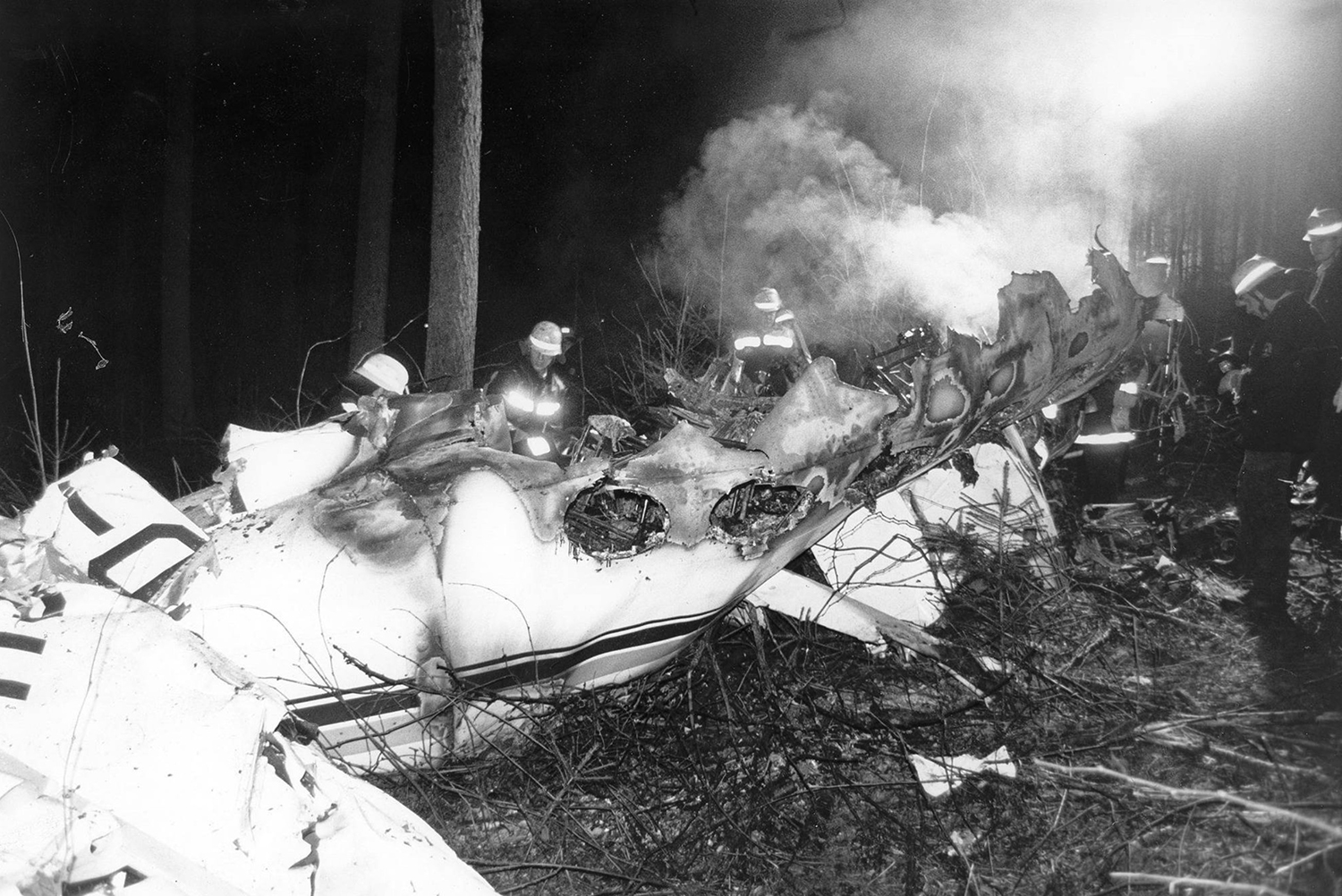
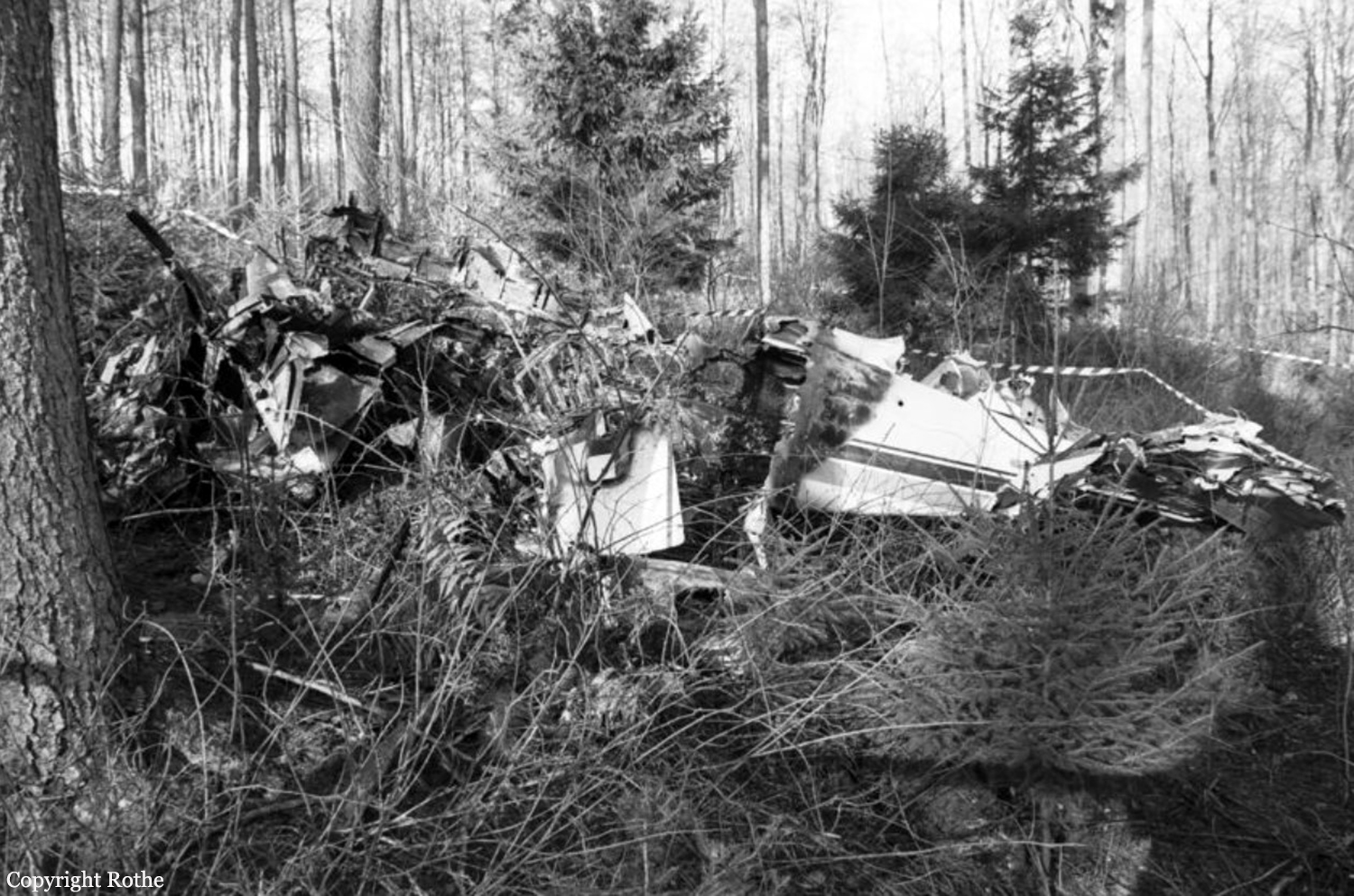
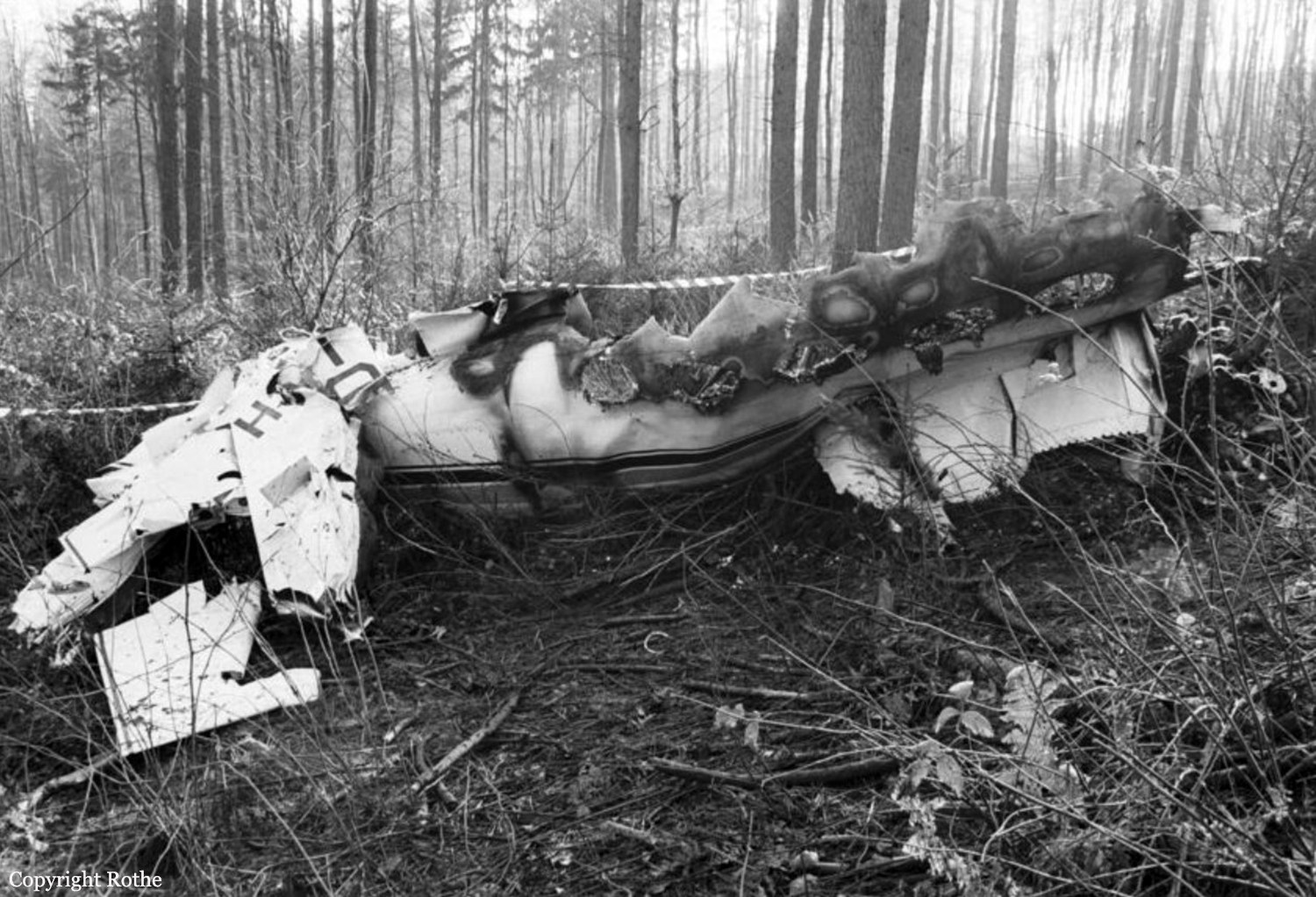
Crash d'un Cessna 421C Golden Eagle III in Heidelberg: 4 killed

Date & Time: Nov 24, 1994 at 1645 LT
Operator:
Registration:
D-IACH
Survivors:
No
Site:
Schedule:
Vienna - Mannheim
MSN:
421C-0672
YOM:
1979
Country:
Region:
Crew on board:
2
Crew fatalities:
Pax on board:
2
Pax fatalities:
Other fatalities:
Total fatalities:
4
Circumstances:
The twin engine aircraft was approaching Mannheim Airport following an uneventful flight from Vienna-Schwechat. The pilot encountered poor visibility due to fog and failed to realize his altitude was too low when the aircraft struck a tall tree, stalled and crashed in a wooded area, bursting into flames. The wreckage was found on the slope of Mt Königstuhl, east of Heidelberg, about 17 km southeast of Mannheim Airport. A passenger was seriously injured while three other occupants were killed. Two weeks later, on December 7, the only survivor died from his injuries. On board were two pilots aged 34 and 29, and two passengers, Otto Rüdiger and Klaus O. Fleck, both head corporate of the Südzucker Group.

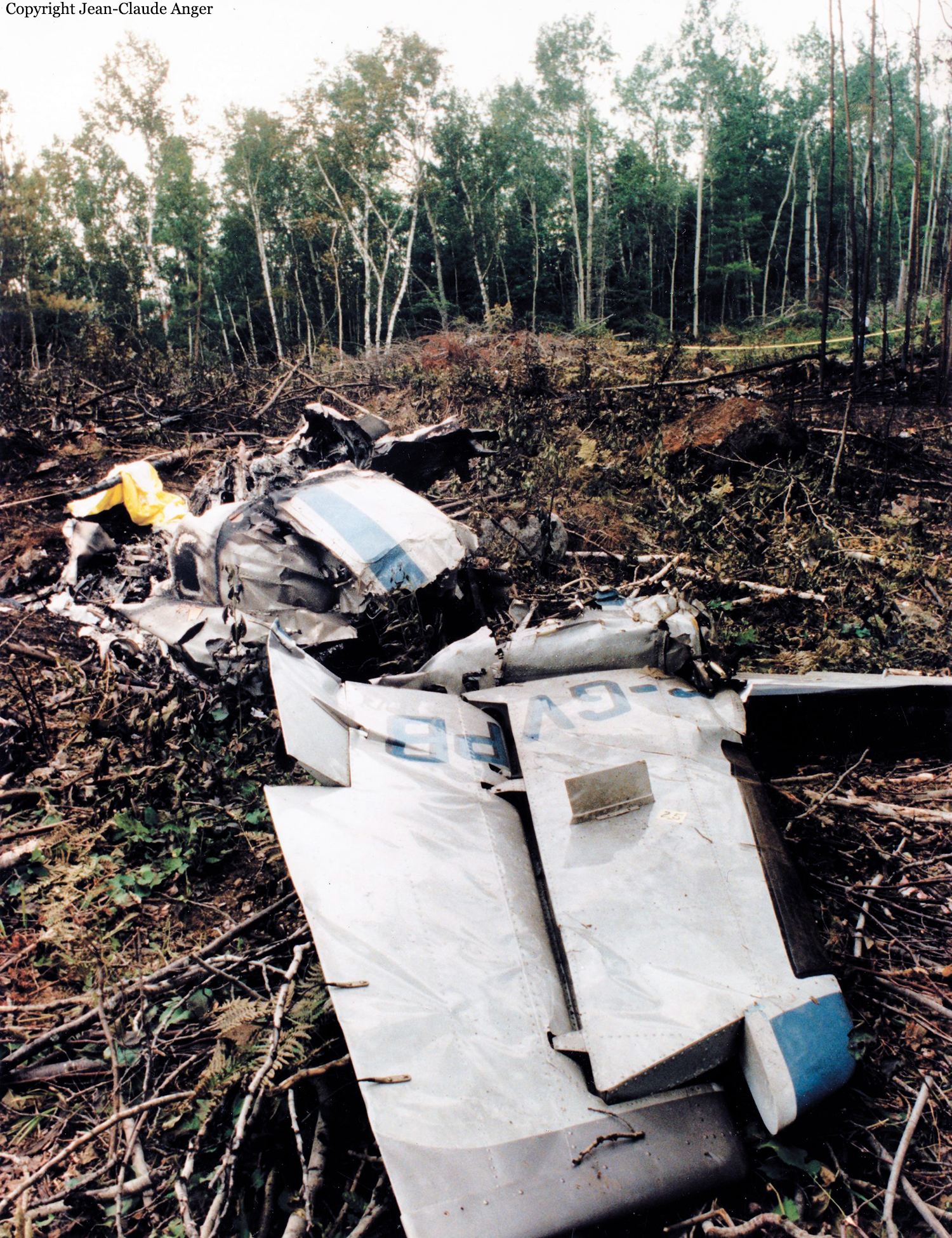
Crash of a Cessna 421C Golden Eagle III in Charlevoix: 6 killed

Date & Time: Aug 3, 1994 at 1950 LT
Registration:
C-GVPB
Flight Phase:
Survivors:
No
Schedule:
Charlevoix - Trois-Rivières
MSN:
421C-0484
YOM:
1973
Country:
Crew on board:
1
Crew fatalities:
Pax on board:
5
Pax fatalities:
Other fatalities:
Total fatalities:
6
Captain / Total flying hours:
5261
Captain / Total hours on type:
1215.00
Aircraft flight hours:
3190
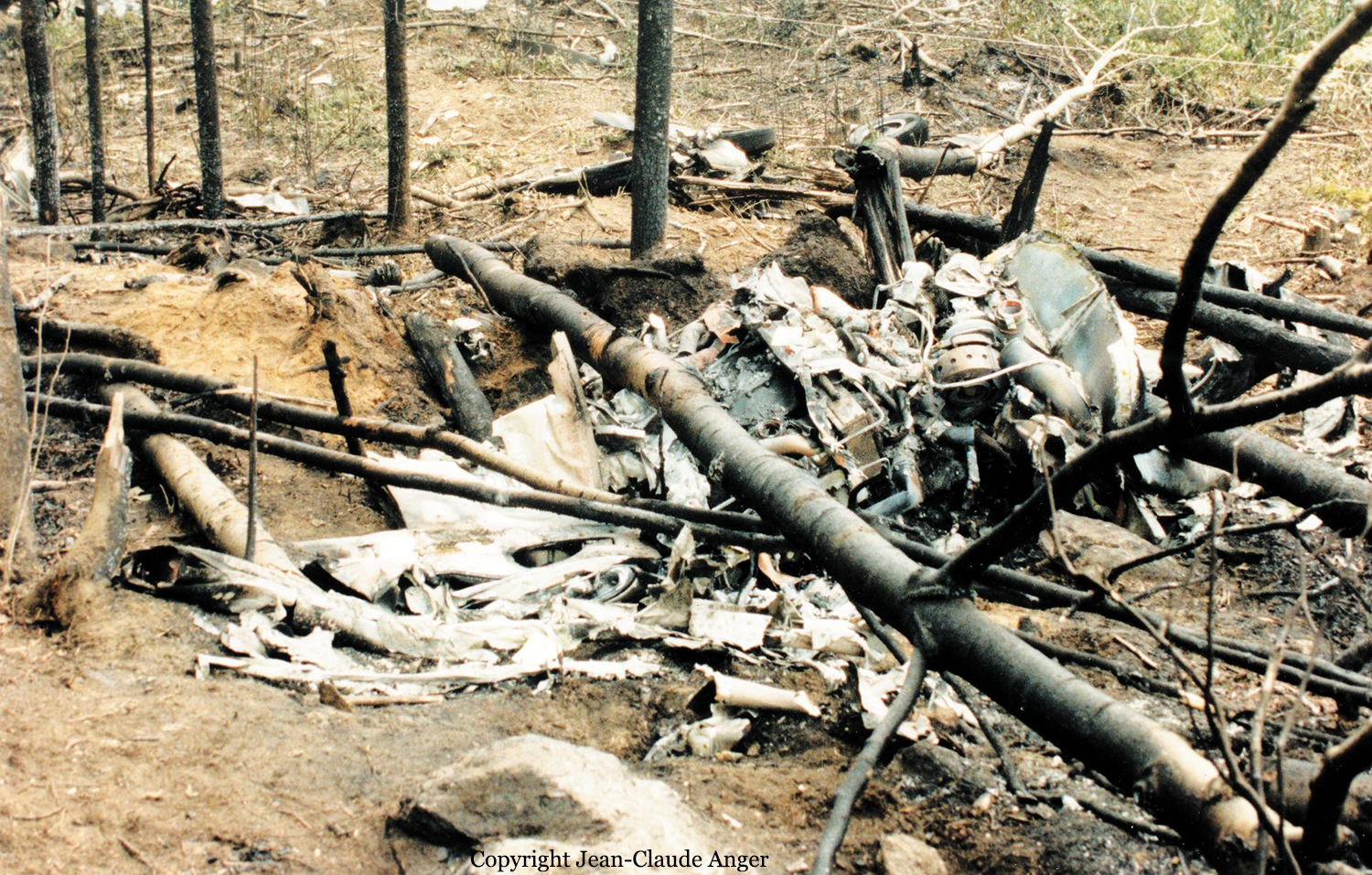
Circumstances:
Around 1950 eastern daylight saving time (EDT), the Cessna 421C aircraft, registration C-GVPB, operated by les Ailes de Charlevoix inc., took off on a visual flight rules (VFR) charter flight from Charlevoix Airport, Quebec, to Trois-Rivières, Quebec, with one pilot and five passengers on board. Shortly after take-off, witnesses saw greyish smoke emanating from the left engine. The aircraft entered a steep left turn followed by a descent. It then continued in the new direction. Shortly after, the aircraft yawed and entered an uncontrolled roll, nosed down, and crashed. The aircraft caught fire on impact. All six occupants were fatally injured during the impact. The aircraft was destroyed.
Probable cause:
It is probable that a loss of oil pressure in the left engine caused a loss of power just after take-off. The pilot was unable to maintain the minimum control speed (VMC) of the aircraft.
Final Report:

Crash of a Cessna 421C Golden Eagle III in Carlsbad: 2 killed

Date & Time: Jun 15, 1994 at 1434 LT
Registration:
N421AG
Flight Phase:
Survivors:
Yes
Schedule:
Carlsbad - Las Vegas
MSN:
421C-0843
YOM:
1980
Crew on board:
1
Crew fatalities:
Pax on board:
2
Pax fatalities:
Other fatalities:
Total fatalities:
2
Captain / Total flying hours:
3340
Captain / Total hours on type:
1240.00
Aircraft flight hours:
2943
Circumstances:
About 2 minutes after takeoff, the pilot declared an emergency, stating that he had lost an engine and needed to return to the airport. The airplane descended into rough, brush-covered terrain and then struck a large dirt berm, about 1-1/2 miles northeast of the departure airport. Examination of the engines did not reveal any obvious mechanical malfunction. The fuel was correct. Combustion chamber signatures indicated that the engines were operated at a lean or mild detonation condition. The flaps were extended about 30 degrees and the landing gear was retracted. The surviving passenger could not recall any dramatic engine problems, only that the airplane could not maintain altitude. The pilot and front seat passenger were not wearing shoulder harnesses.
Probable cause:
A loss of engine power for undetermined reasons. The pilot's failure to raise the flaps and maintain altitude were factors in the accident.
Final Report:

Crash of a Cessna 421C Golden Eagle III in San Antonio: 2 killed

Date & Time: Feb 10, 1994 at 0713 LT
Operator:
Registration:
N741CA
Flight Type:
Survivors:
Yes
Schedule:
San Antonio - Eagle Pass
MSN:
421C-0899
YOM:
1980
Crew on board:
1
Crew fatalities:
Pax on board:
2
Pax fatalities:
Other fatalities:
Total fatalities:
2
Captain / Total flying hours:
5100
Captain / Total hours on type:
400.00
Aircraft flight hours:
2916
Circumstances:
Shortly after takeoff, the pilot reported he had 'a problem' and needed to return immediately. Witnesses observed dark black smoke coming from both engines. The airplane collided with a tree 1/2-mile northeast of the runway threshold. Analysis of fuel samples revealed the presence of approximately 50% jet fuel. The right propeller was found feathered and engine disassembly revealed a hole burned in the right engine number 5 piston. Left engine disassembly revealed piston edges eroded down to the first compression ring. Fuel filler restrictors had been installed in the airplane's fuel tanks, but the fuel truck did not have the restrictive mating nozzle. The fuel truck was owned by the fuel vender and leased to the FBO.
Probable cause:
Improper servicing of the airplane with jet fuel, which resulted in preignition and/or detonation and subsequent failure of pistons in both engines. A factor related to the accident was: the lack of a restrictive mating nozzle on the refueling truck.
Final Report:

Crash of a Cessna 421C Golden Eagle III in McCook: 2 killed

Date & Time: Jan 26, 1994 at 1515 LT
Registration:
N5468G
Survivors:
Yes
Schedule:
Denver - Columbus
MSN:
421C-0215
YOM:
1976
Crew on board:
1
Crew fatalities:
Pax on board:
6
Pax fatalities:
Other fatalities:
Total fatalities:
2
Captain / Total flying hours:
2550
Captain / Total hours on type:
66.00
Aircraft flight hours:
5837
Circumstances:
The part 135 on-demand air taxi flight departed Denver, Colorado, with a destination of Columbus, Nebraska. Weather forecasts were for icing conditions along the entire route of flight. While en route, ATC advised the pilot of reported icing ahead. The pilot was cleared to climb to 19,000 feet to get on top of the clouds. The pilot reported 'some alternator problems,' and requested to divert to North Platte, Nebraska. He then elected to divert to McCook, Nebraska, due to the weather at North Platte. ATC lost communication with the pilot during the diversion. Witnesses reported the airplane circled the McCook Airport twice. According to them, the airplane entered a bank of about 45°, then stalled. Subsequently, it traveled about 190 feet through a stand of trees before coming to rest. Witnesses reported the airplane was covered with ice. One-half inch of mixed ice was found on a piece of windshield. Both alternators had one phase in the stator winding shorted.
Probable cause:
Improper in-flight planning/decision by the pilot, and the accumulation of airframe ice, which resulted in an inadvertent stall. Factors associated with the accident were: partial failure of both alternators, which resulted in a subsequent electrical system failure and an inoperative anti-ice/de-ice system, adverse weather (icing) conditions, and airframe (wing) ice.
Final Report: