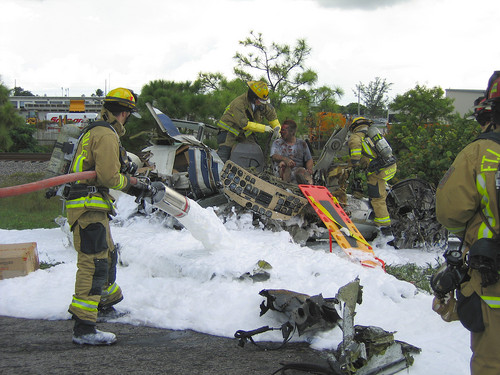
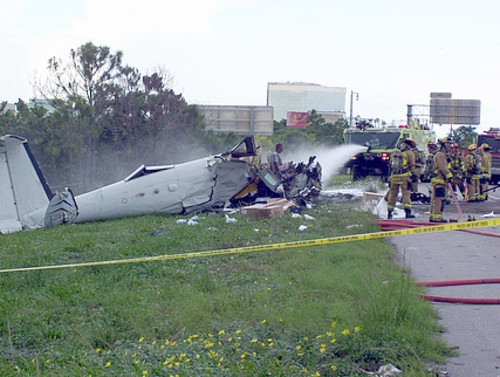
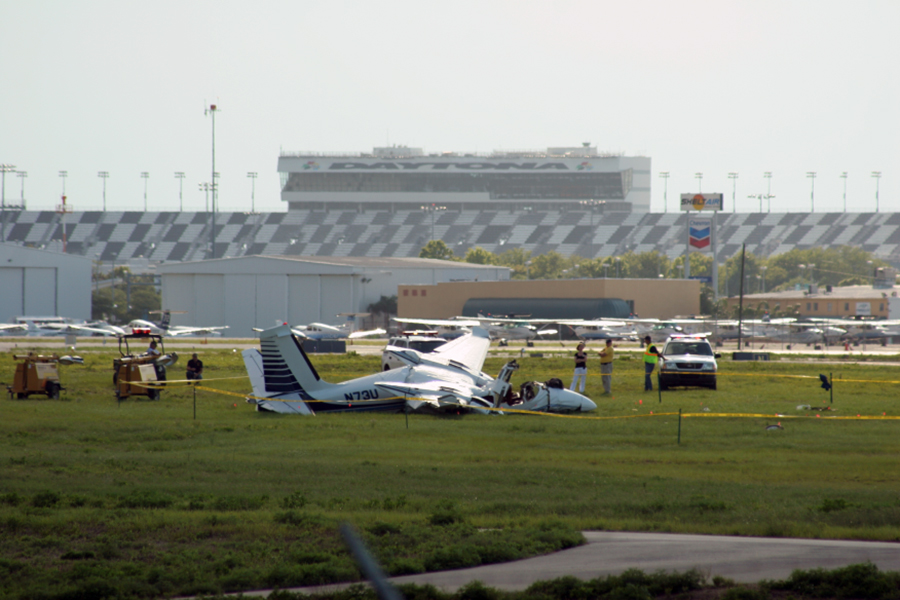
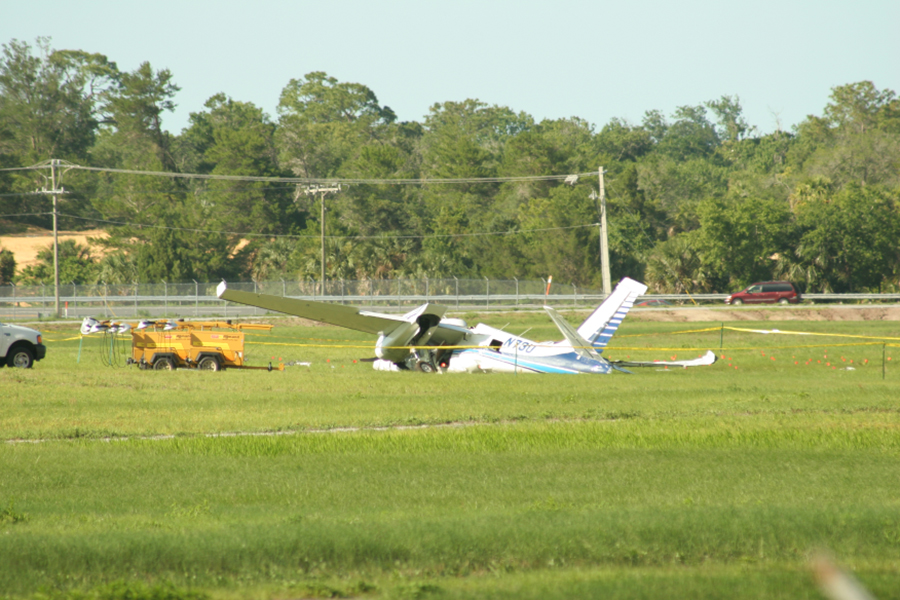
Crash of a Rockwell Shrike Commander 500S in Daytona Beach: 1 killed

Date & Time: May 25, 2009 at 0846 LT
Registration:
N73U
Flight Type:
Survivors:
Yes
Schedule:
Daytona Beach - New Smyrna Beach
MSN:
500-3162
YOM:
1963
Crew on board:
1
Crew fatalities:
Pax on board:
1
Pax fatalities:
Other fatalities:
Total fatalities:
1
Captain / Total flying hours:
1470
Captain / Total hours on type:
574.00
Aircraft flight hours:
3360
Circumstances:
The pilot departed in the twin-engine airplane with an unknown quantity of fuel and a fuel quantity indicating system that was known to be inaccurate. Immediately after takeoff, approximately 1/2 mile beyond the departure end of the runway, witnesses reported the engine noise from the accident airplane as "surging" as the airplane passed overhead, and one witness described a "radical" turn back to the airport. Two witnesses stated that only one engine was running, and added that it was "revving," and would then stop before revving up again. During the descent to the airport, radar data showed the airplane at 93 knots 700 feet and 1 mile from the runway, and at 90 knots at 500 feet and 1/2 mile from the runway, but the airplane crashed prior to the approach end of the runway. Post accident examination of the wreckage revealed no evidence of a pre accident mechanical malfunction. The fuel system had a capacity of 226 gallons, was serviced through a single port on top of the left wing, and the tanks were interconnected to a center fuel sump that fed both engines. The fuel cells were opened through access panels and each was intact and contained only trace amounts of fuel. The airplane was leveled, the drain petcock was opened at the center fuel cell sump, and 1 quart of fuel was drained.
Probable cause:
A total loss of engine power due to fuel exhaustion as a result of the pilot’s inadequate preflight inspection.
Final Report:
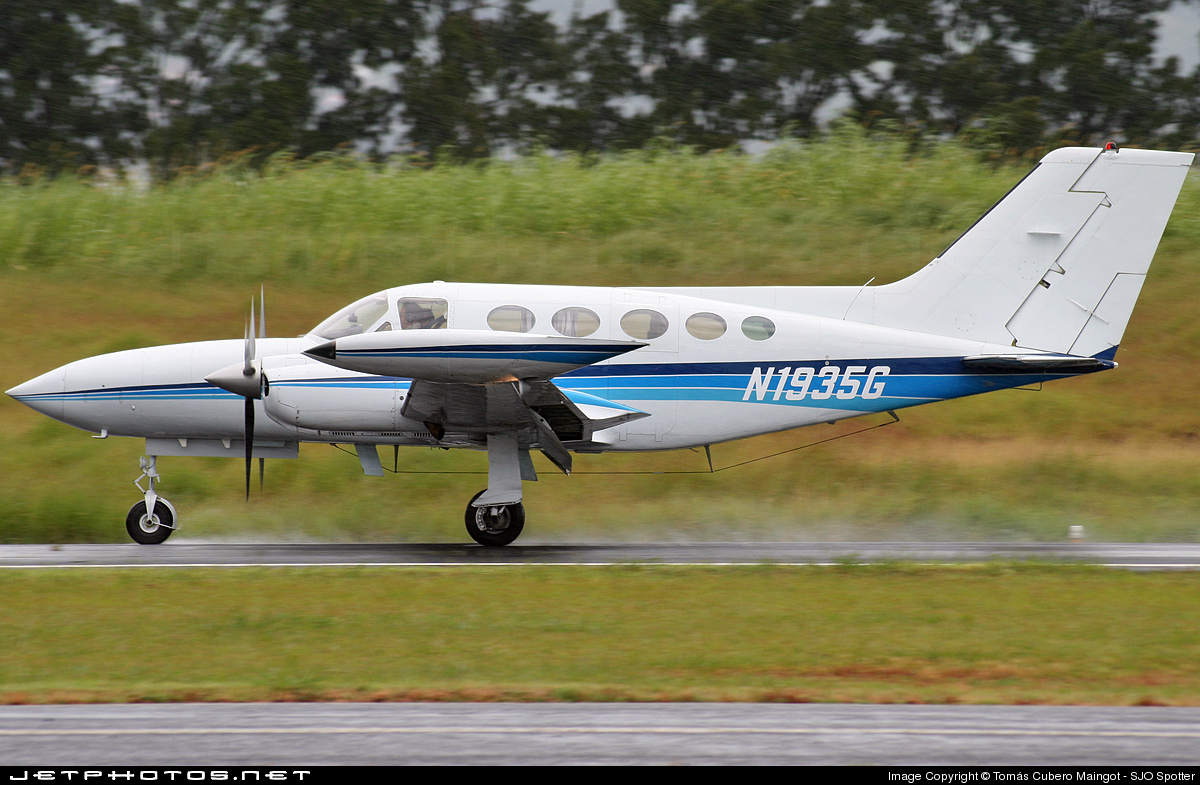
Crash of a Cessna 421B Golden Eagle II in Fort Lauderdale: 1 killed

Date & Time: Apr 17, 2009 at 1115 LT
Operator:
Registration:
N1935G
Flight Phase:
Flight Type:
Survivors:
No
Site:
Schedule:
Fort Lauderdale - Fernandina Beach
MSN:
421B-0836
YOM:
1974
Crew on board:
1
Crew fatalities:
Pax on board:
0
Pax fatalities:
Other fatalities:
Total fatalities:
1
Captain / Total flying hours:
23000
Captain / Total hours on type:
5000.00
Circumstances:
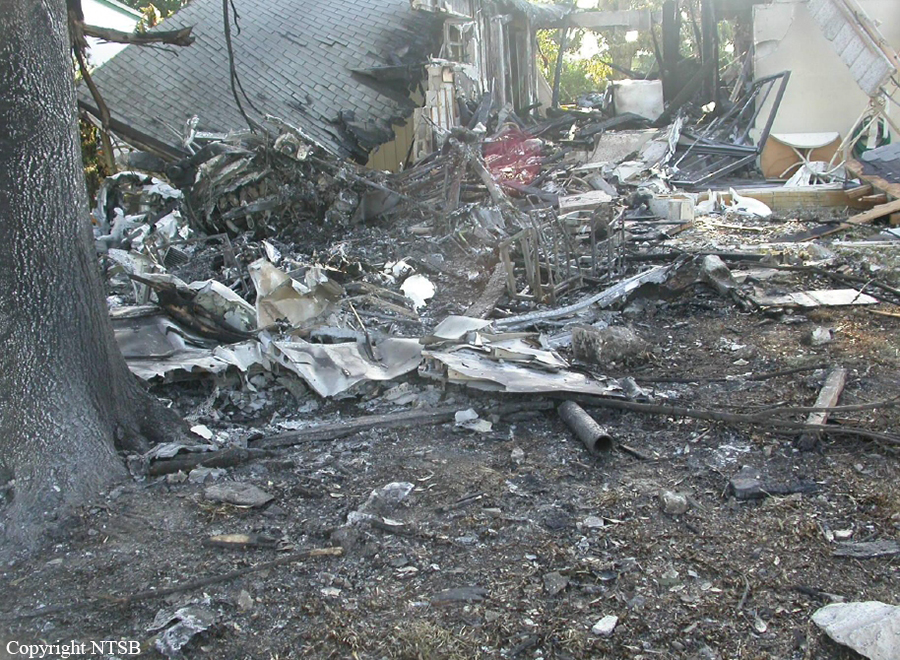
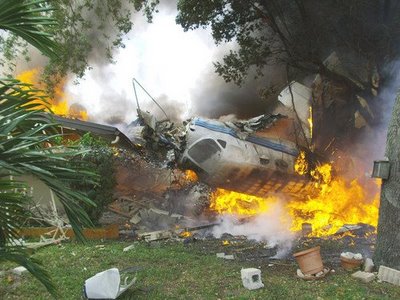
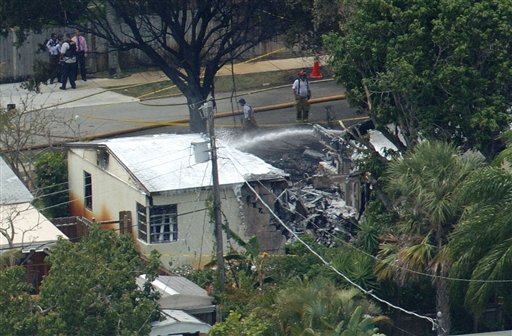
Prior to the accident flight witnesses observed the pilot "haphazardly" pouring oil into the right engine. The pilot then ran the engines at mid-range power for approximately 20 minutes. The airplane subsequently taxied out of the ramp area and departed. Fire was observed emanating from the right engine after rotation. The airplane continued in a shallow climb from the runway, flying low, with the right engine on fire. The airplane then banked right to return to the airport and descended into a residential area. Examination of the right engine revealed an exhaust leak at the No. 4 cylinder exhaust riser flange. Additionally, one of the flange boltholes was elongated, most likely from the resulting vibration. The fuel nozzle and B-nut were secure in the No. 4 cylinder; however, its respective fuel line was separated about 8 inches from the nozzle. No determination could be made as to when the fuel line separated (preimpact or postimpact) due to the impact and postcrash fire damage. Examination of the right engine turbocharger revealed that the compressor wheel exhibited uniform deposits of an aluminum alloy mixture, consistent with ingestion during operation, and most likely from the melting of the aluminum fresh air duct. Additionally, the right propeller was found near the low pitch position, which was contrary to the owner's manual emergency procedure to secure the engine and feather the propeller in the event of an engine fire.
Probable cause:
The pilot's failure to maintain aircraft control and secure the right engine during an emergency return to the airport after takeoff. Contributing to the accident was an in-flight fire of the right engine for undetermined reasons.
Final Report:

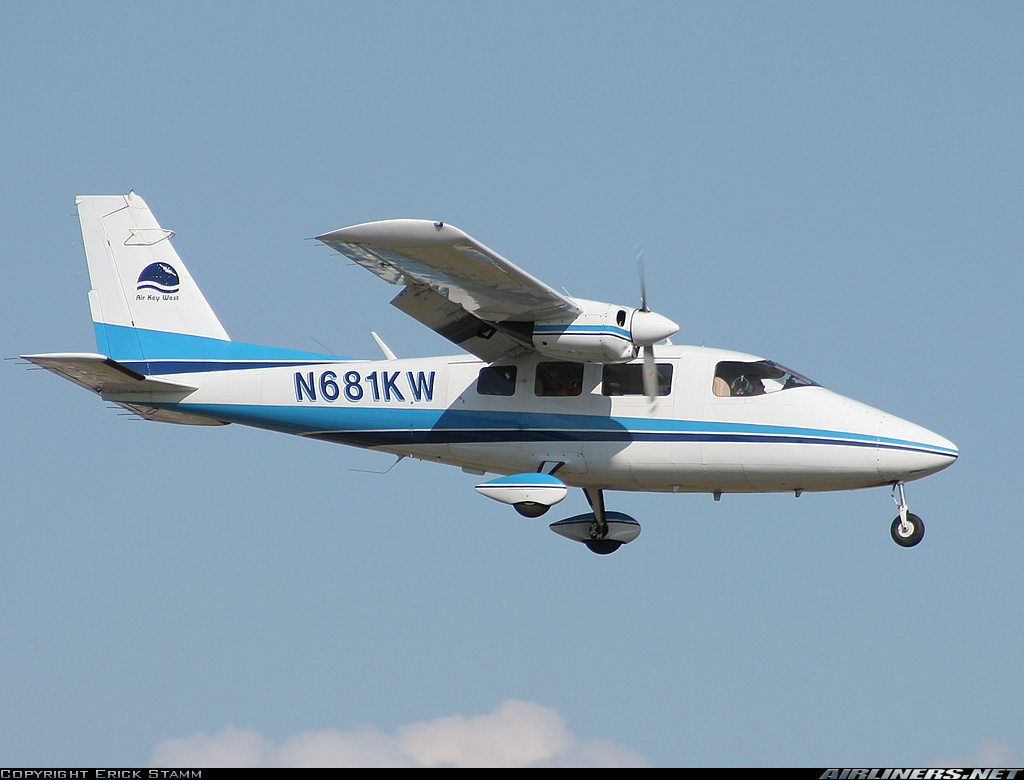
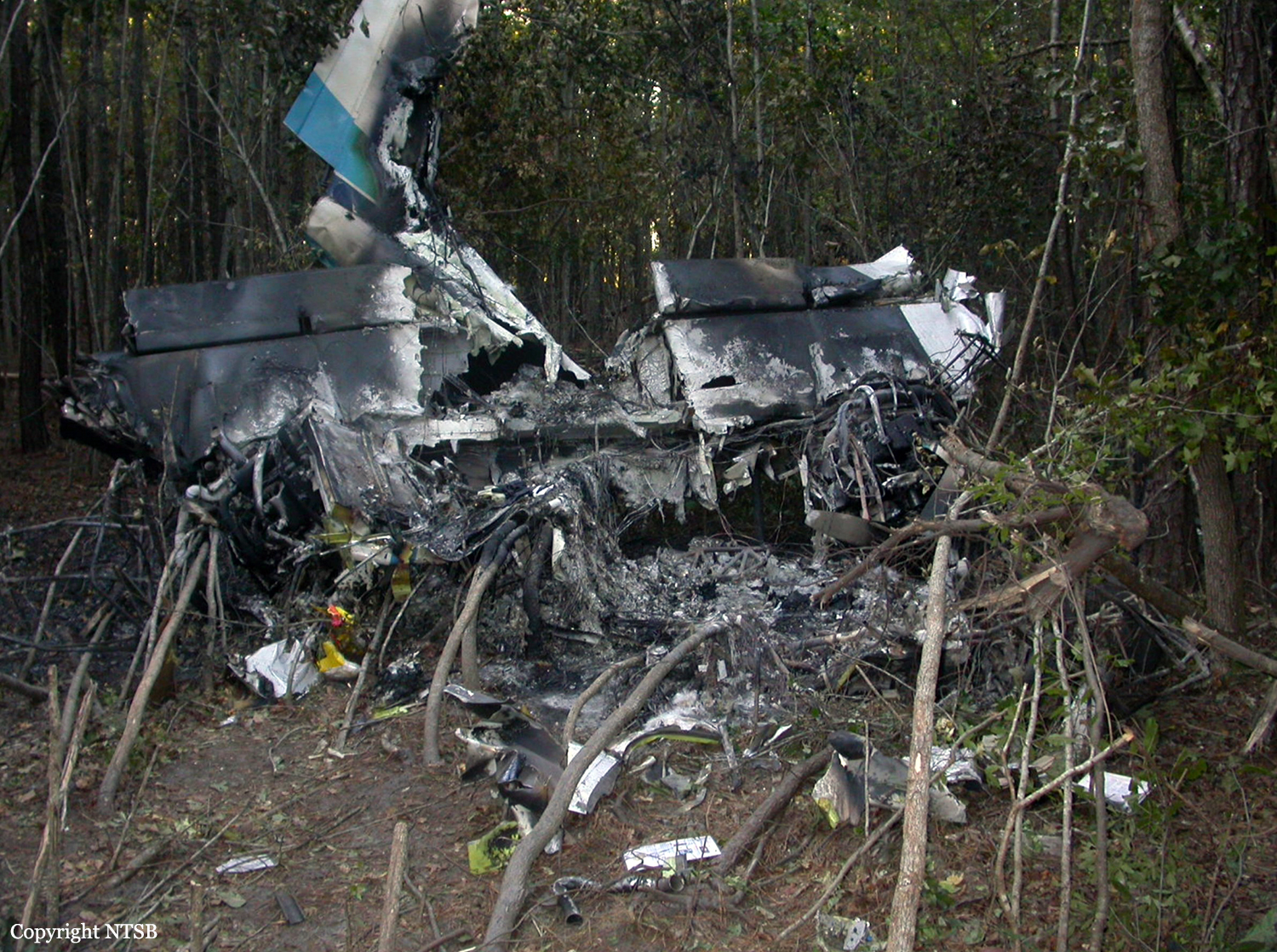
Crash of a Partenavia P.68C in Gainesville: 3 killed

Date & Time: Nov 7, 2008 at 0246 LT
Type of aircraft:
Operator:
Registration:
N681KW
Flight Type:
Survivors:
No
Schedule:
Key West - Gainesville
MSN:
273
YOM:
1983
Crew on board:
1
Crew fatalities:
Pax on board:
2
Pax fatalities:
Other fatalities:
Total fatalities:
3
Captain / Total flying hours:
8300
Captain / Total hours on type:
1500.00
Aircraft flight hours:
6971
Circumstances:
The pilot of the multiengine airplane was flying two passengers at night on an instrument-flight-rules flight plan. One of the passengers had been on an organ recipient waiting list and his wife was accompanying him. A viable matched organ was available at a distant hospital and the passenger had to arrive on short notice for surgery the following morning. All radio communications during the flight between the pilot and air traffic control (ATC), a flight service station (FSS), and a fixed-based operator (FBO) were routine. The pilot was aware of the weather at the destination airport, and had commented to ATC about 75 miles from the destination that the weather was "going up and down…like a real thin fog layer.” Additionally, better weather conditions prevailed at nearby suitable airports. The pilot mentioned one of those airports to ATC in the event he decided to divert. According to an employee at an FBO located at the destination airport, the pilot contacted him via radio and asked about the current weather conditions. The employee replied that the visibility was low due to fog and that he could not see the terminal lights from the FBO. The pilot then asked which of the two alternate airports was closer and the employee stated that he did not know. The employee then heard the pilot “click” the runway lights and contact the local FSS. about 5 miles from runway 29, just prior to the initial approach fix, the pilot radioed on the common traffic advisory frequency and reported a 5-mile final leg for runway 29. The FSS reported that the current weather was automated showing an indefinite ceiling of 100 feet vertical visibility and 1/4 mile visibility in fog. The pilota cknowledged the weather information. The weather was below the minimum published requirements for the instrument-landing-system (ILS) approach at the destination airport. Radar data showed that the flight intercepted and tracked the localizer, then intercepted the glideslope about 1 minute later. There were a few radar targets without altitude data due to intermittent Mode C transponder returns. The last recorded radar target with altitude indicated the airplane was at 600 feet, on glideslope and heading for the approach; however, the three subsequent and final targets did not show altitude information. The last recorded radar target was about 1.4 miles from the runway threshold. The airplane flew below glideslope and impacted 100-foot-tall trees about 4,150 feet from the runway 29 threshold. On-ground facility checks and a postaccident flight check of the ILS runway 29 approach conducted by the Federal Aviation Administration did not reveal malfunctions with the ILS. The cabin and cockpit area, including the NAV/COMM/APP, equipment were consumed by a postimpact fire which precluded viable component testing. Detailed examination of the wreckage that was not consumed by fire did not reveal preimpact mechanical malfunctions that may have contributed to the accident. Given that the pilot was aware of the weather conditions before and during the approach, it is possible that the pilot’s goal of expeditiously transporting a patient to a hospital for an organ transplant may have affected his decision to initiate and continue an instrument approach while the weather conditions were below the published minimum requirements for the approach.
Probable cause:
The pilot's failure to maintain the proper glidepath during an instrument-landing-system (ILS) approach. Contributing to the accident were the pilot's decision to initiate the ILS approach with weather below the published minimums, and the pilot's self-induced pressure to expeditiously transport an organ recipient to a hospital.
Final Report:

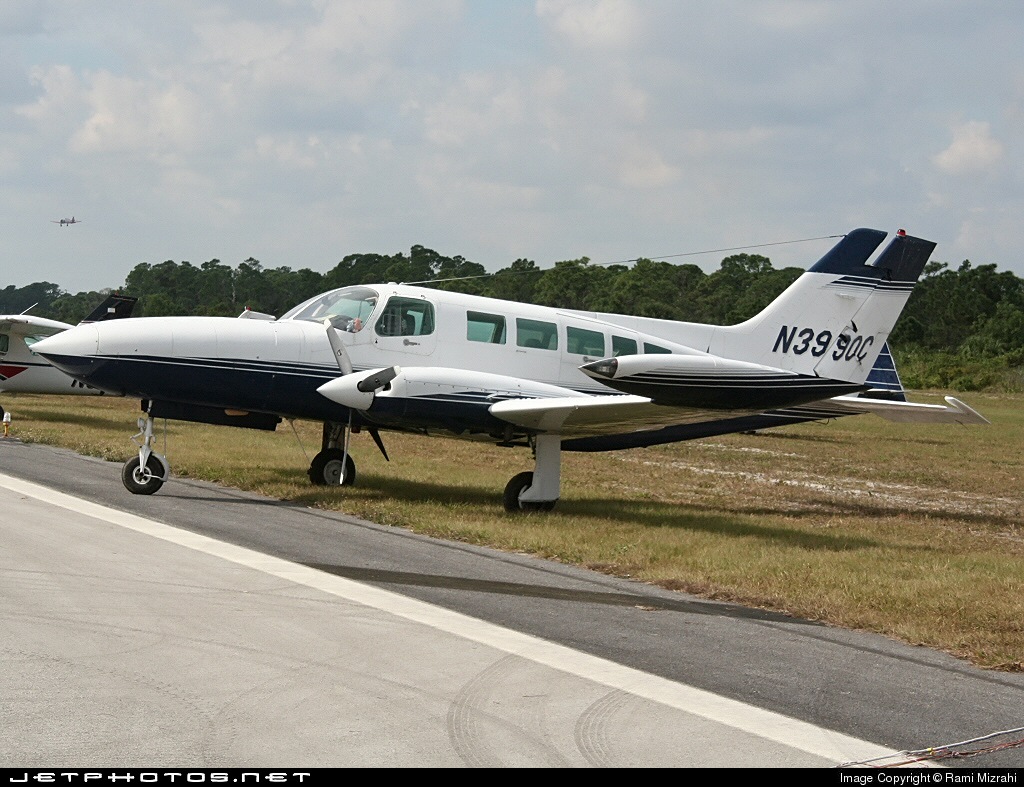
Crash of a Cessna 402B in Ocean Ridge

Date & Time: Jul 22, 2008 at 1350 LT
Type of aircraft:
Registration:
N3990C
Flight Phase:
Flight Type:
Survivors:
Yes
Site:
Schedule:
Lantana - Pompano Beach
MSN:
402B-0857
YOM:
1975
Crew on board:
1
Crew fatalities:
Pax on board:
0
Pax fatalities:
Other fatalities:
Total fatalities:
0
Captain / Total flying hours:
1565
Aircraft flight hours:
7222
Circumstances:
The commercial pilot, who was also the former owner of the twin-engine airplane, stated that the purpose of the flight was to reposition the airplane to an airport approximately 22 miles south of the departure airport. Just prior to the flight, he purchased 10 gallons of fuel for each of the two main tanks. The pilot reported that about 5 minutes after takeoff, at an altitude of approximately 1,000 feet, he experienced a "loss of engine power." However, his three separate accounts of the event were inconsistent with respect to which engine had a problem, or the specific nature of the problem. The pilot reported that the airplane started to lose altitude "rapidly," and that he attempted to "wag the wings" in order to "get all the fuel to be useable." The airplane struck a building and terrain approximately 8 miles south of the departure airport. The pilot sustained serious injuries, but there was no fire. Damage to the left engine and propeller was consistent with the engine running at impact, and precluded an attempt to run the left engine in a test cell. Damage to the right engine and propeller was consistent with low or no power at impact. The right engine was subsequently successfully run in a test cell. No evidence of any pre-accident anomalies that could have contributed to the accident was noted with the airframe, engines, or propellers. The fuel selector valve placards did not accurately depict the fuel system configuration. The fuel quantity and its distribution in the tanks, either at the beginning of the flight or at the time of the accident, could not be determined.
Probable cause:
A partial loss of engine power due to fuel starvation. Contributing to the accident was the pilot’s decision to add only a limited amount of fuel prior to the flight, and the fuel selector valve placards' inaccurate depiction of the airplane fuel tank configuration.
Final Report:

Ground accident of a Rockwell Sabreliner 80 in Fort Lauderdale

Date & Time: Feb 1, 2008 at 1542 LT
Type of aircraft:
Operator:
Registration:
N3RP
Flight Phase:
Flight Type:
Survivors:
Yes
Schedule:
Fort Lauderdale - Brooksville
MSN:
380-42
YOM:
1976
Crew on board:
2
Crew fatalities:
Pax on board:
0
Pax fatalities:
Other fatalities:
Total fatalities:
0
Captain / Total flying hours:
8500
Captain / Total hours on type:
350.00
Copilot / Total flying hours:
14400
Copilot / Total hours on type:
360
Aircraft flight hours:
5825
Circumstances:
The Rockwell International Sabreliner had just been released from the repair station following several months of maintenance, primarily for structural corrosion control and repair. According to the pilots, they began to taxi away from the repair station. Initially, the brakes and steering were satisfactory, but then failed. The airplane then contacted several other airplanes and a tug with an airplane in tow, before coming to a stop. The airplane incurred substantial damage as a result of the multiple collisions. Neither crewmember heard or saw any annunciations to alert them to a hydraulic system problem. Postaccident examination revealed that there was no pressure in the normal hydraulic system, as expected, and that the auxiliary system pressure was adequate to facilitate emergency braking. Additional examination and testing revealed that the aural warning for low hydraulic system pressure was inoperative, but all other hydraulic, steering, and braking systems functioned properly. Both the pilot and copilot were type-rated in the Sabreliner, and each had approximately 350 hours of flight time in type. Neither crewmember had any time in Sabreliners in the 90 days prior to the accident. Operation of the emergency braking system in the airplane required switching the system on, waiting for system pressure to decrease to 1,700 pounds per square inch (psi), pulling the "T" handle, and then pumping the brake pedals 3 to 5 times. In addition, the system will not function if both the pilot's and copilot's brake pedals are depressed simultaneously. The investigation did not uncover any evidence to suggest the crew turned on the auxiliary hydraulic system, or waited for the system pressure to decrease to 1,700 psi in their attempt to use the emergency braking system.
Probable cause:
The depletion of pressure in the normal hydraulic system for an undetermined reason, and the pilots' failure to properly operate the emergency braking system. Contributing to the accident was an inoperative hydraulic system aural warning.
Final Report:

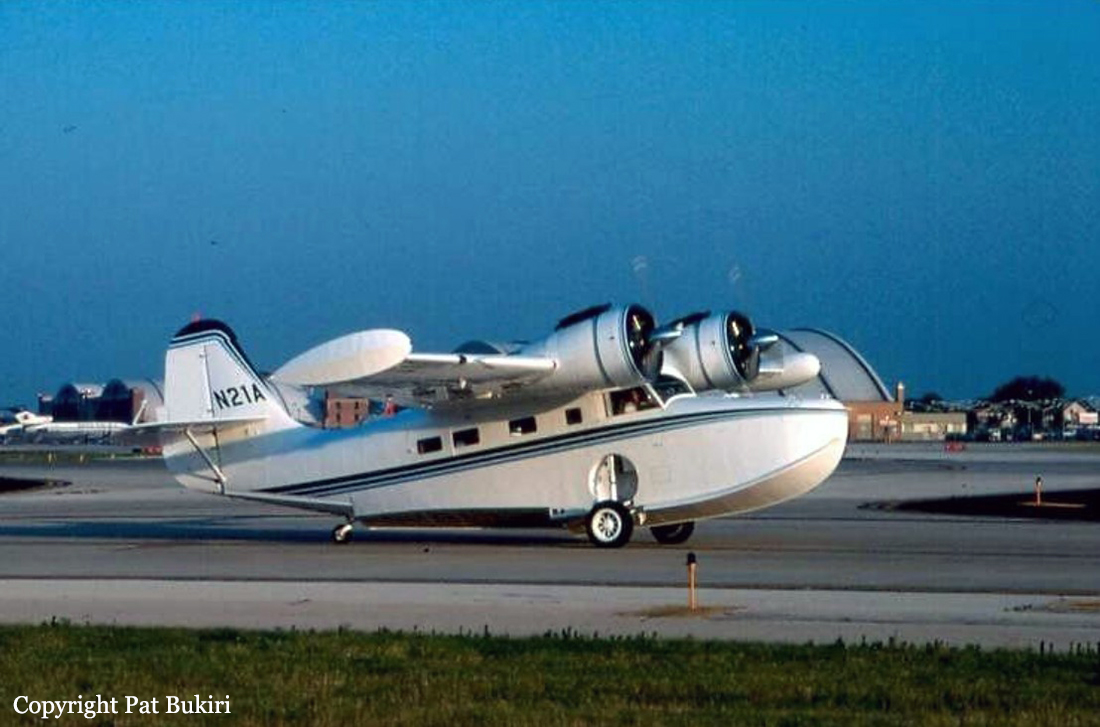
Crash of a Grumman G-21A Goose off Marathon

Date & Time: Jan 29, 2008 at 1723 LT
Type of aircraft:
Registration:
N21A
Flight Type:
Survivors:
Yes
Schedule:
Marathon - Marathon
MSN:
B129
YOM:
1946
Crew on board:
1
Crew fatalities:
Pax on board:
1
Pax fatalities:
Other fatalities:
Total fatalities:
0
Captain / Total flying hours:
16000
Captain / Total hours on type:
100.00
Aircraft flight hours:
24456
Circumstances:
On January 29, 2008, about 1723 eastern standard time, a Grumman G-21A, amphibian airplane N21A, impacted the ocean during landing near Marathon, Florida. The certificated airline transport pilot and passenger received serious injuries and the airplane sustained substantial damage. The flight was operated as a personal flight under the provisions of 14 Code of Federal Regulations (CFR) Part 91, and no flight plan was filed. Visual meteorological conditions prevailed at the time of the accident. The flight departed from the Florida Keys Marathon Airport (MTH) in Marathon, Florida, on January 29, 2008, about 1615. According to the pilot he departed MTH and after take off and the checklist accomplished he proceeded in a westerly direction to inspect a water-work area. The pilot stated that other then that, he had no further recollection of the flight. According to the Federal Aviation Administration (FAA) the passenger stated that the pilot was practicing takeoffs and landings. During a water landing, the left wing contacted the water and the airplane water looped. A Good Samaritan rescued them from the water in his boat and brought them ashore where rescue personal were waiting. Examination of the airplane by the FAA revealed no mechanical malfunctions or failures of the airplane or engine, and none were reported by the pilot or passenger.
Probable cause:
The pilot’s failure to maintain control of the airplane during a water landing.
Final Report:

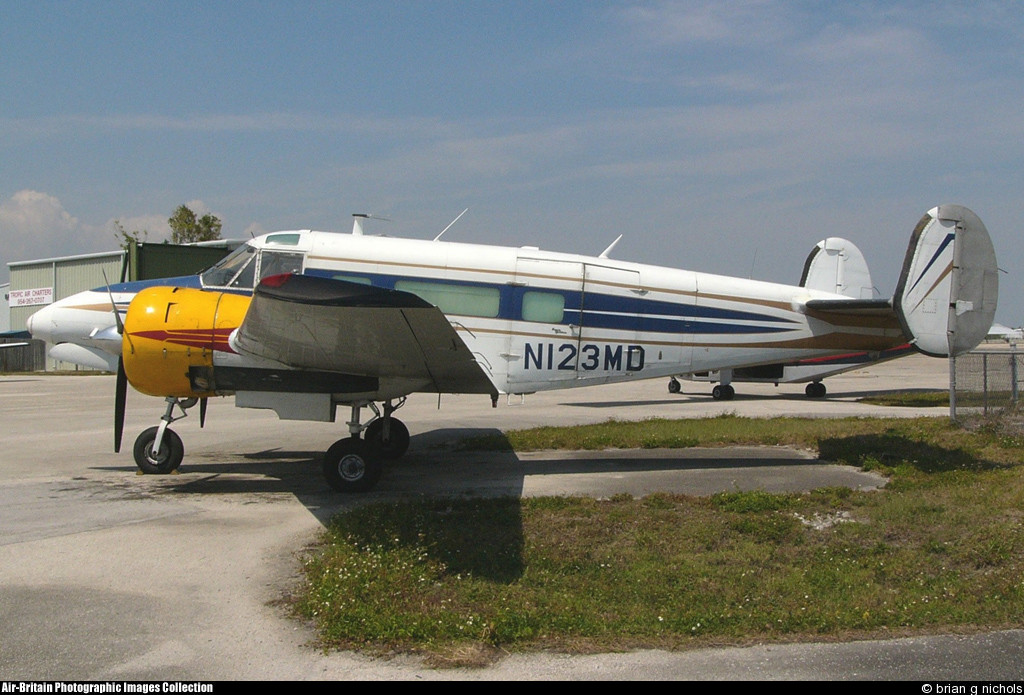
Crash of a Beechcraft H18 in Fort Lauderdale

Date & Time: Sep 21, 2007 at 1328 LT
Type of aircraft:
Operator:
Registration:
N123MD
Flight Phase:
Flight Type:
Survivors:
Yes
Schedule:
Fort Lauderdale - Nassau
MSN:
BA-701
YOM:
1964
Crew on board:
1
Crew fatalities:
Pax on board:
0
Pax fatalities:
Other fatalities:
Total fatalities:
0
Captain / Total flying hours:
3700
Captain / Total hours on type:
450.00
Aircraft flight hours:
13066
Circumstances:
The airplane's right engine experienced a complete loss of power immediately after takeoff and the airplane began to slow. The airplane reached an altitude of approximately 91 feet above ground level and then entered an uncontrolled descent consistent with the onset of a velocity minimum control (VMC) roll to the right. No evidence of any preimpact failures or malfunctions with either the engine or airframe was discovered, and evidence at the scene indicated that the landing gear had been retracted and the right engine propeller feathered. Examination of the cockpit revealed the right engine fuel selector was positioned between the "60 GAL RIGHT AUX" detent and the "RIGHT ENG OFF" detent. Examination of the fuel system between the selector and the right engine indicated that it was in this position prior to impact. Also, placards next to the fuel selectors stated, "WARNING POSITION SELECTORS IN DETENTS ONLY. NO FUEL FLOW TO ENGINES BETWEEN DETENTS." The pilot loaded the majority of the cargo and performed the weight and balance calculations. Examination of the fuselage revealed that all six cargo bins were full. The investigation also discovered that the furthest aft bin contained 265 pounds of cargo even though placarded for a maximum of 75 pounds. All other bins were loaded considerably below their maximum weight limits. Weight and balance calculations revealed the information listed on the weight and balance form produced by the pilot was erroneous and that the actual center of gravity (CG) of the airplane was rear of the aft CG limit, which would have created instability in the handling characteristics of the airplane, especially after a loss of engine power. In addition, the aft-of-limit CG would have increased the airspeed needed to prevent the airplane from entering a VMC roll. Performance calculations indicate that with the right engine having lost power immediately after takeoff, the airplane would most likely not have been able to continue the departure on one operating engine.
Probable cause:
A total loss of engine power due to fuel starvation as a result of the pilot's failure to place the fuel selector for the right engine in the proper position. Contributing to the accident was the improper loading of the cargo.
Final Report:

Crash of a Cessna 208B Caravan in Cross City

Date & Time: Sep 5, 2007 at 0533 LT
Type of aircraft:
Operator:
Registration:
N702PA
Flight Type:
Survivors:
Yes
Schedule:
Mobile - Tampa
MSN:
208-0702
YOM:
1998
Crew on board:
1
Crew fatalities:
Pax on board:
0
Pax fatalities:
Other fatalities:
Total fatalities:
0
Captain / Total flying hours:
11732
Captain / Total hours on type:
5470.00
Aircraft flight hours:
7844
Circumstances:
The pilot stated that he was on a repositioning flight to Tampa, Florida. He was cruising at 11,000 feet msl when, with no warning or spool down time, the engine failed. The engine indications instantly went to zero. The pilot declared an emergency to the air traffic controller and was advised that the nearest airport was 29 miles away. He maneuvered the airplane toward the airport and went through the engine failure procedures. The attempts to restart the engine were unsuccessful. The pilot configured the airplane for best glide speed. After gliding for 22 miles, the airplane's altitude was about 300 feet msl. The pilot slowed the airplane to just above stall speed before impacting small pine trees pulling back on the yoke and stalling the airplane into the trees. The engine was examined at Pratt and Whitney of Canada, with Transportation Safety Board of Canada oversight. The engine compressor turbine blades were fractured at varying heights from the roots to approximately half of the span. Materials analysis determined the blade fractures to display impact damage and overheating. The primary cause of the blade fractures could not be determined. There were no other pre-impact anomalies or operational dysfunction observed to any of the engine components examined. Impact damage to the blade airfoils precluded determination of the original fracture mechanism.
Probable cause:
A total loss of engine power during cruise flight due to the fracture and separation of the compressor turbine blades for undetermined reasons. Contributing to the accident was the unsuitable terrain for a forced landing.
Final Report:

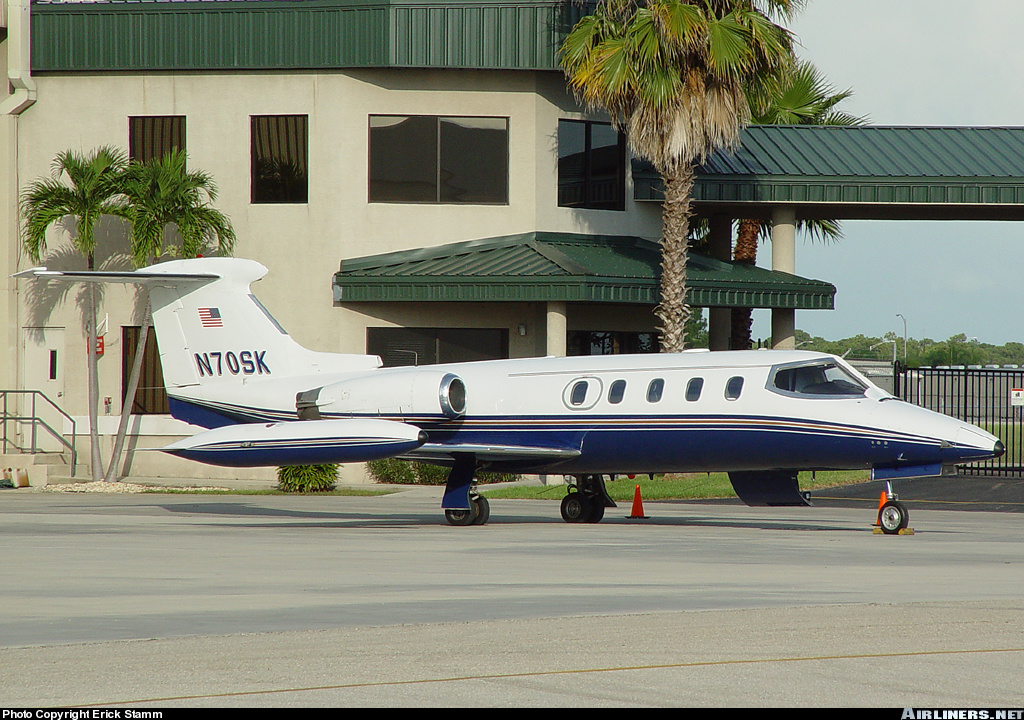
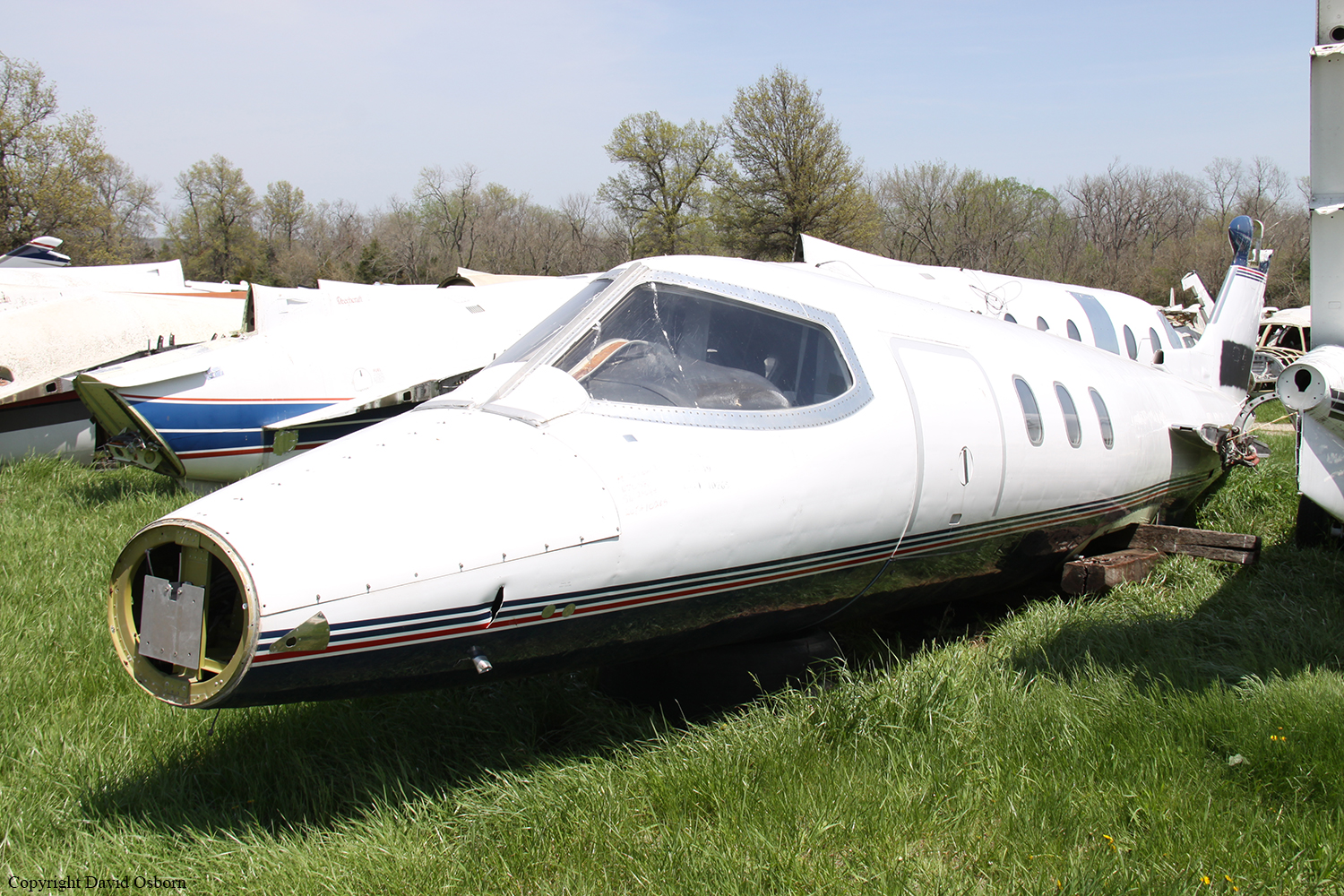
Crash of a Learjet 25 in Saint Augustine

Date & Time: Jul 21, 2007 at 1410 LT
Type of aircraft:
Operator:
Registration:
N70SK
Flight Type:
Survivors:
Yes
Schedule:
Gainesville - Saint Augustine
MSN:
25-49
YOM:
1970
Crew on board:
2
Crew fatalities:
Pax on board:
0
Pax fatalities:
Other fatalities:
Total fatalities:
0
Captain / Total flying hours:
4620
Captain / Total hours on type:
250.00
Copilot / Total flying hours:
2453
Copilot / Total hours on type:
368
Aircraft flight hours:
15812
Circumstances:
About 5 miles from the destination airport, the flight was cleared by air traffic control to descend from its cruise altitude of 5,000 feet for a visual approach. As the first officer reduced engine power, both engines "quit." The captain attempted to restart both engines without success. He then took control of the airplane, and instructed the first officer to contact air traffic control and advise them that the airplane had experienced a "dual flameout." The captain configured the airplane by extending the landing gear and flaps and subsequently landed the airplane on the runway "hard," resulting in substantial damage to the airframe. Both engines were test run following the accident at full and idle power with no anomalies noted. Examination of the airplane revealed that it was equipped with an aftermarket throttle
quadrant, and that the power lever locking mechanism pins as well as the throttle quadrant idle stops for both engines were worn. The power lever locking mechanism internal springs for both the left and right power levers were worn and broken. Additionally, it was possible to repeatedly move the left engine's power lever directly into cutoff without first releasing its power lever locking mechanism; however, the right engine's power lever could not be moved to the cut off position without first releasing its associated locking mechanism. The right throttle thrust reverser solenoid installed on the airplane was found to be non-functional, but it is not believed that this component contributed to the accident. No explicit inspection or repair instructions were available for the throttle quadrant assembly. Other than the throttle quadrant issues, no other issues were identified with either the engines or airframe that could be contributed to both engines losing power simultaneously.
Probable cause:
A loss of power on both engines for an undetermined reason.
Final Report:
Crash of a Piper PA-31-350 Navajo Chieftain in Orlando

Date & Time: Jul 11, 2007 at 1215 LT
Operator:
Registration:
N105GC
Flight Type:
Survivors:
Yes
Schedule:
Melbourne - Orlando
MSN:
31-7652130
YOM:
1976
Crew on board:
1
Crew fatalities:
Pax on board:
0
Pax fatalities:
Other fatalities:
Total fatalities:
0
Captain / Total flying hours:
13000
Captain / Total hours on type:
200.00
Circumstances:
The airplane had undergone routine maintenance, and was returned to service on the day prior to the incident flight. The mechanics who performed the maintenance did not secure the right engine cowling using the procedure outlined in the airplane's maintenance manual. The mechanic who had been working on the outboard side of the right engine could not remember if he had fastened the three primary outboard cowl fasteners before returning the airplane to service. During the first flight following the maintenance, the right engine's top cowling departed the airplane. The pilot secured the right engine, but the airplane was unable to maintain altitude, so he then identified a forced landing site. The airplane did not have a sufficient glidepath to clear a tree line and buildings, so he landed the airplane in a clear area about 1,500 yards short of the intended landing area. The airplane came to rest in a field of scrub brush, and about 5 minutes after the pilot deplaned, the grass under the left engine ignited. The subsequent brush fire consumed the airplane. Examination of the right engine cowling revealed that the outboard latching fasteners were set to the "open" position. When asked about the security of the cowling during the preflight inspection, the pilot stated that he "just missed it."
Probable cause:
The mechanic's failure to secure the right engine cowling fasteners. Contributing to the incident was the pilot's inadequate preflight inspection.
Final Report: