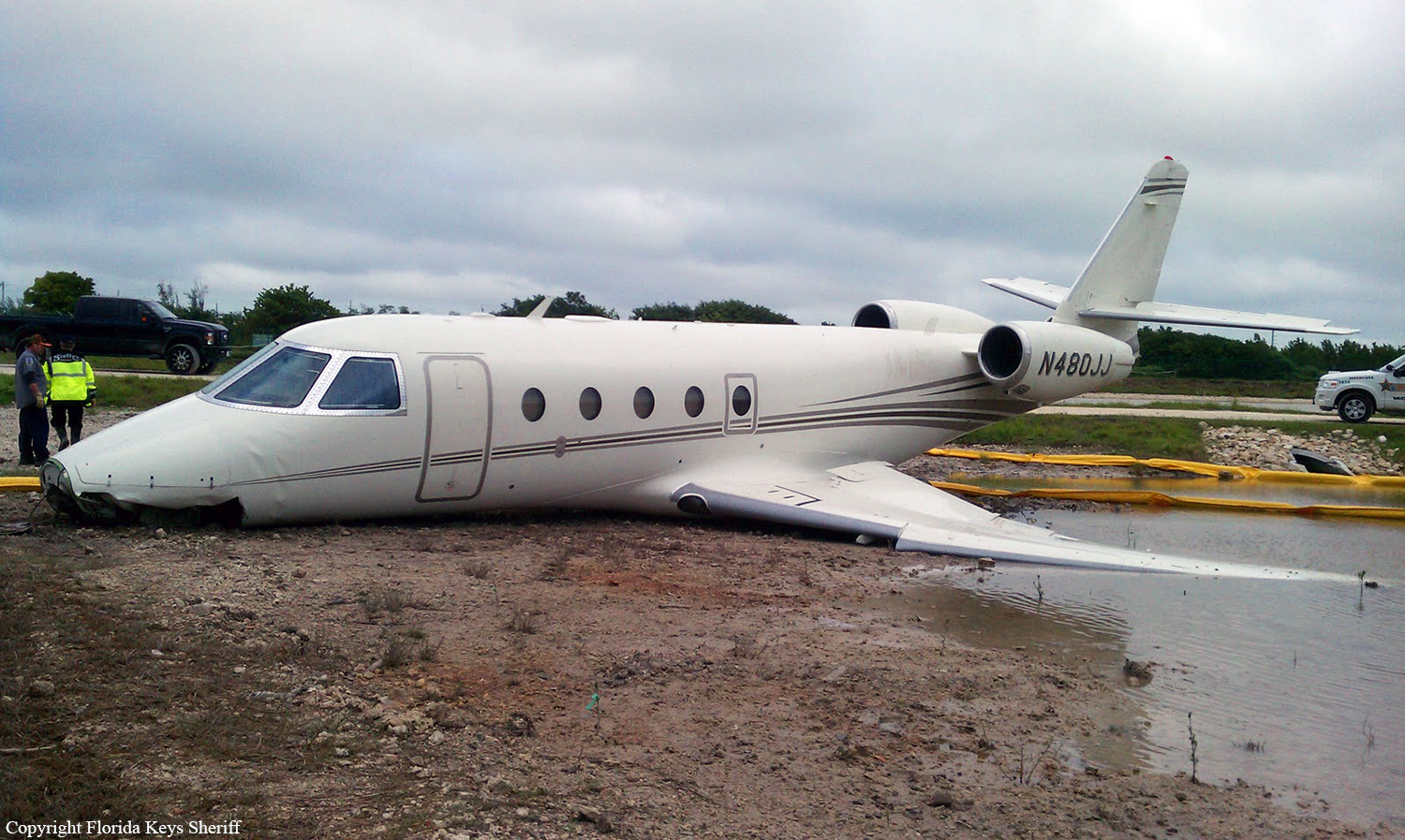
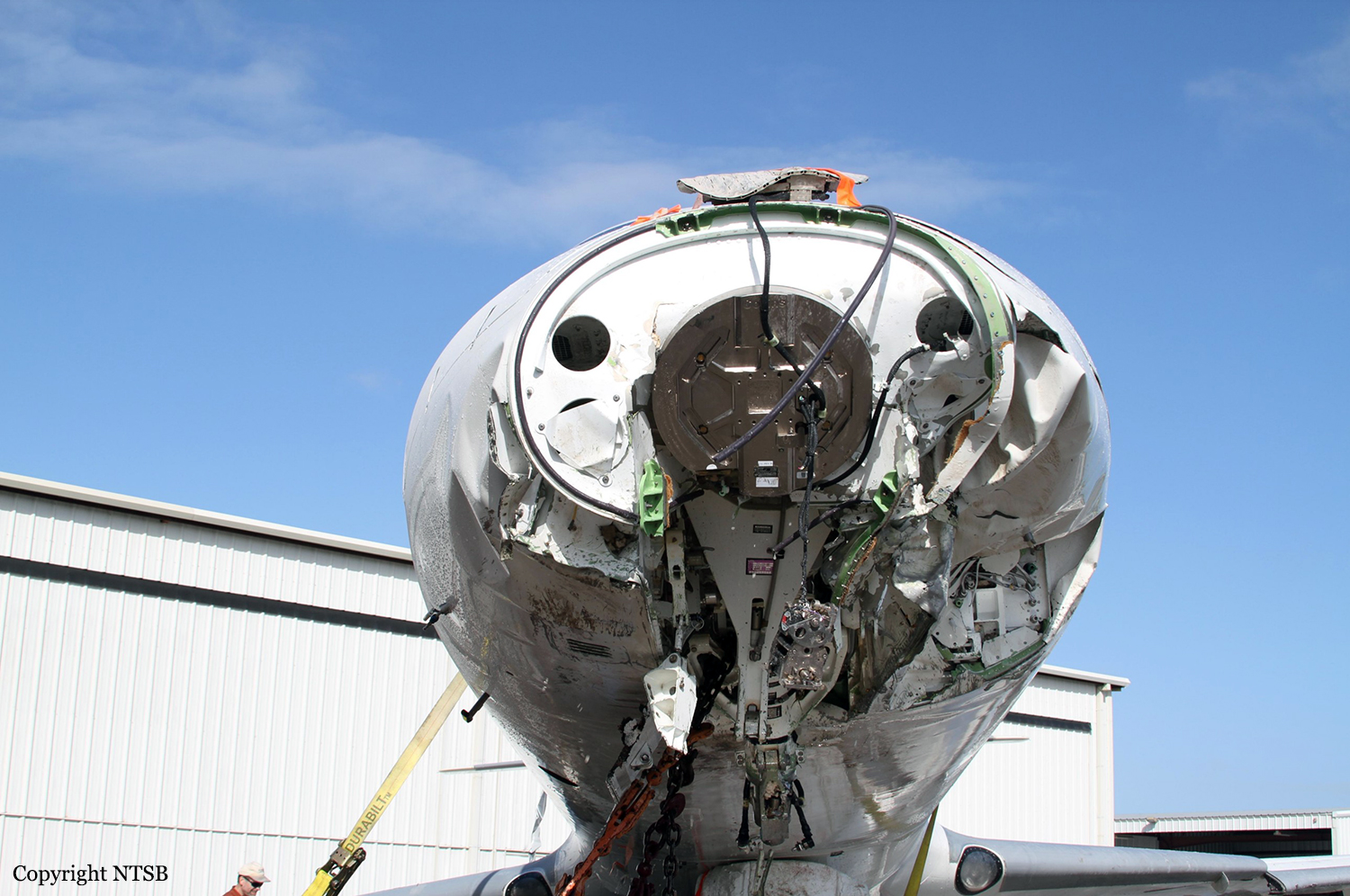
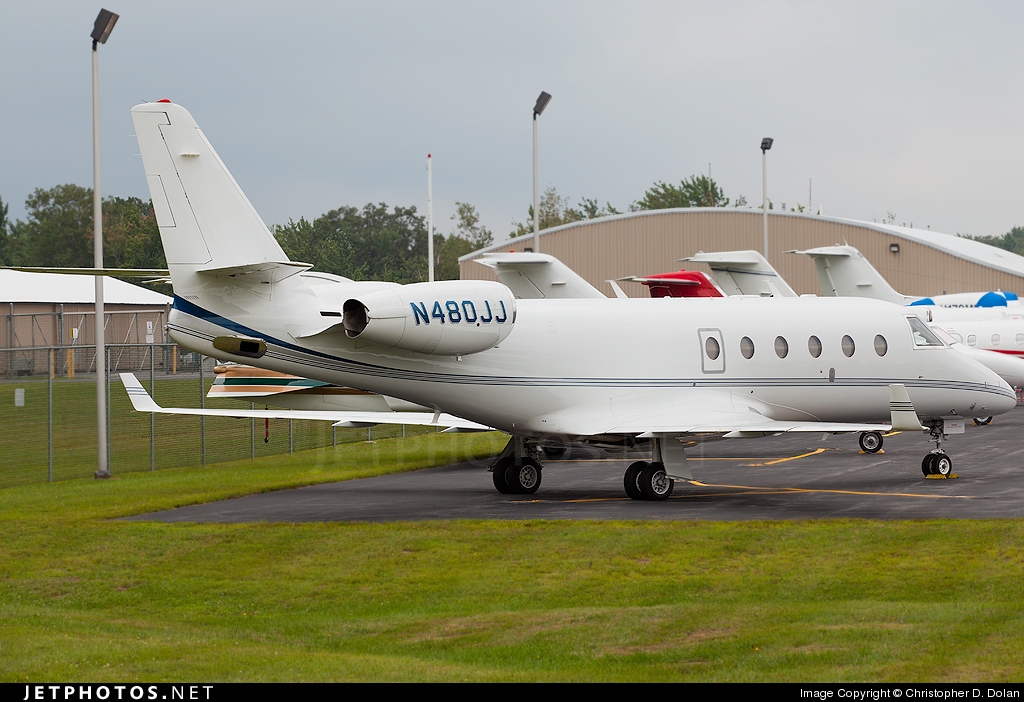
Crash of a Gulfstream G150 in Key West

Date & Time: Oct 31, 2011 at 1942 LT
Type of aircraft:
Operator:
Registration:
N480JJ
Flight Type:
Survivors:
Yes
Schedule:
Stuart - Key West
MSN:
241
YOM:
2007
Crew on board:
2
Crew fatalities:
Pax on board:
2
Pax fatalities:
Other fatalities:
Total fatalities:
0
Captain / Total flying hours:
11000
Captain / Total hours on type:
290.00
Copilot / Total flying hours:
13800
Copilot / Total hours on type:
75
Aircraft flight hours:
1190
Circumstances:
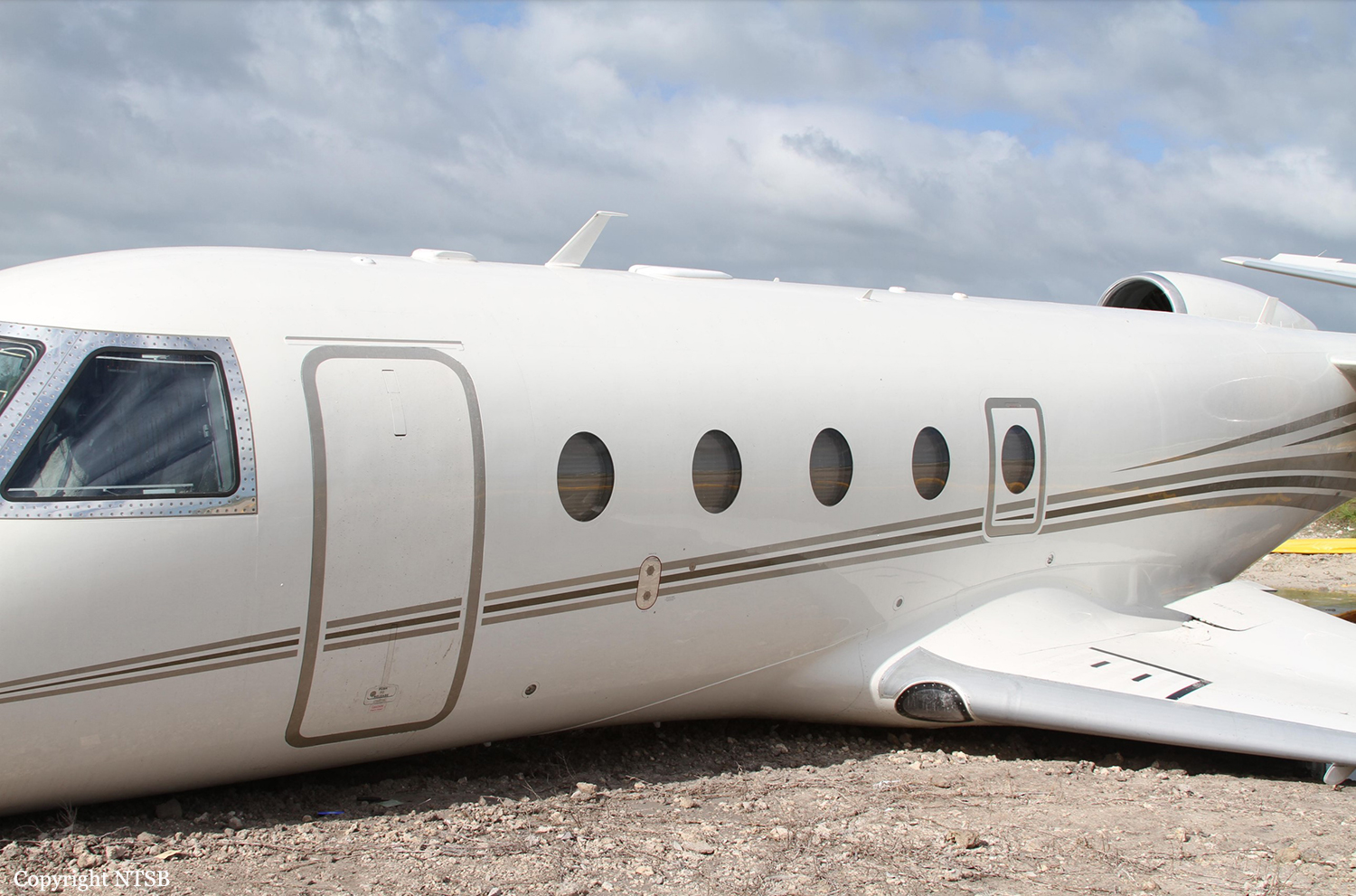
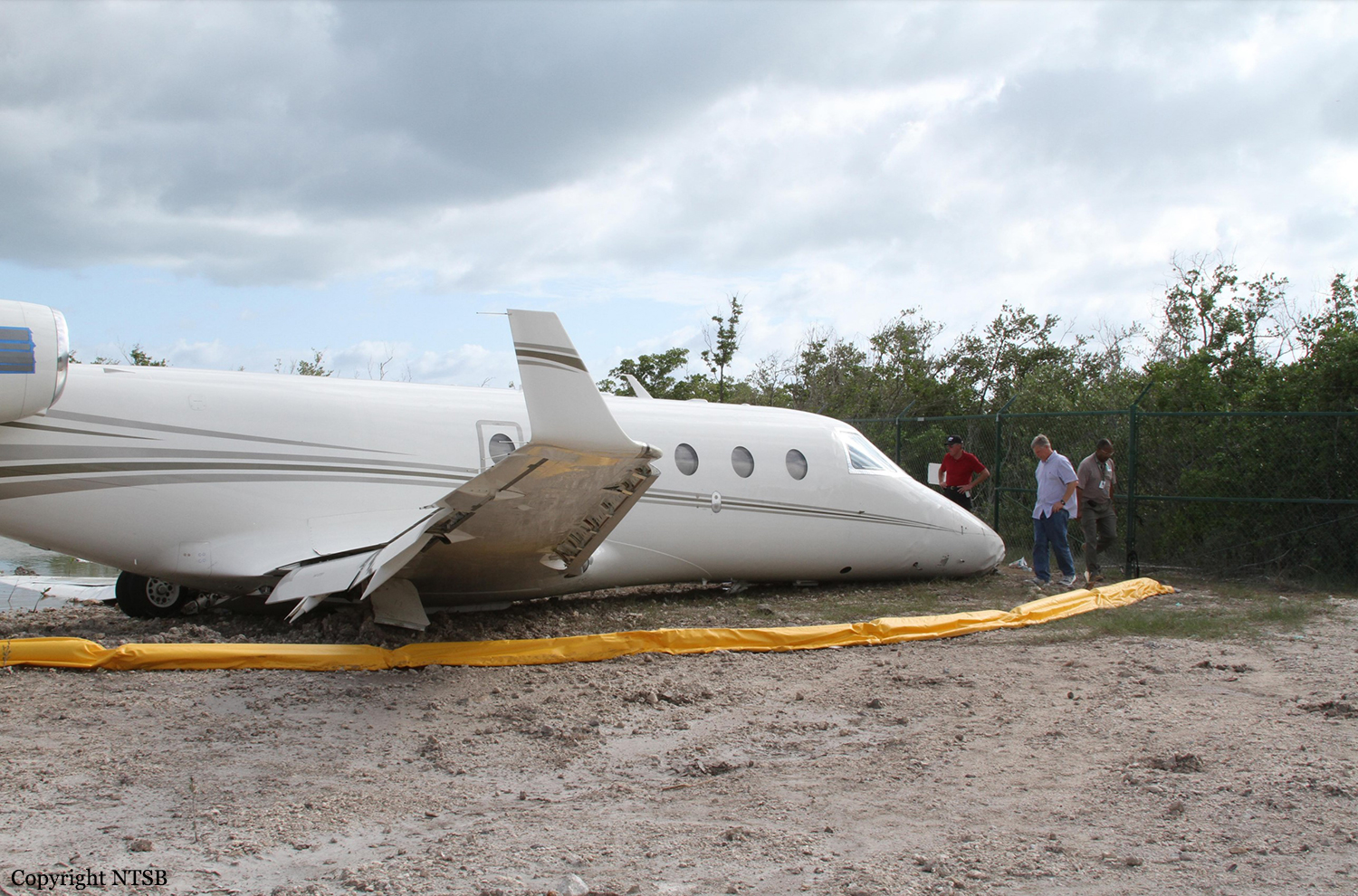
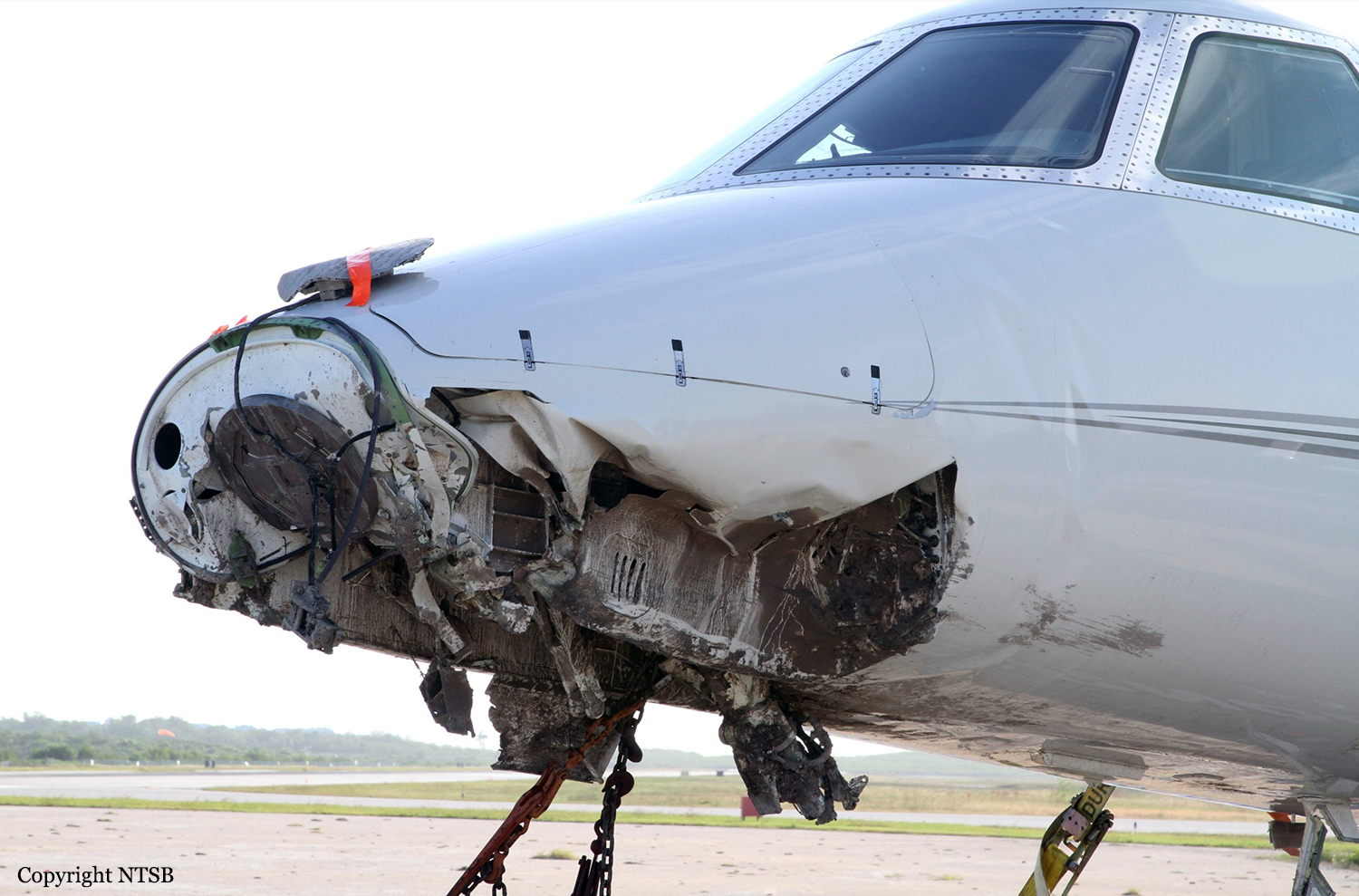
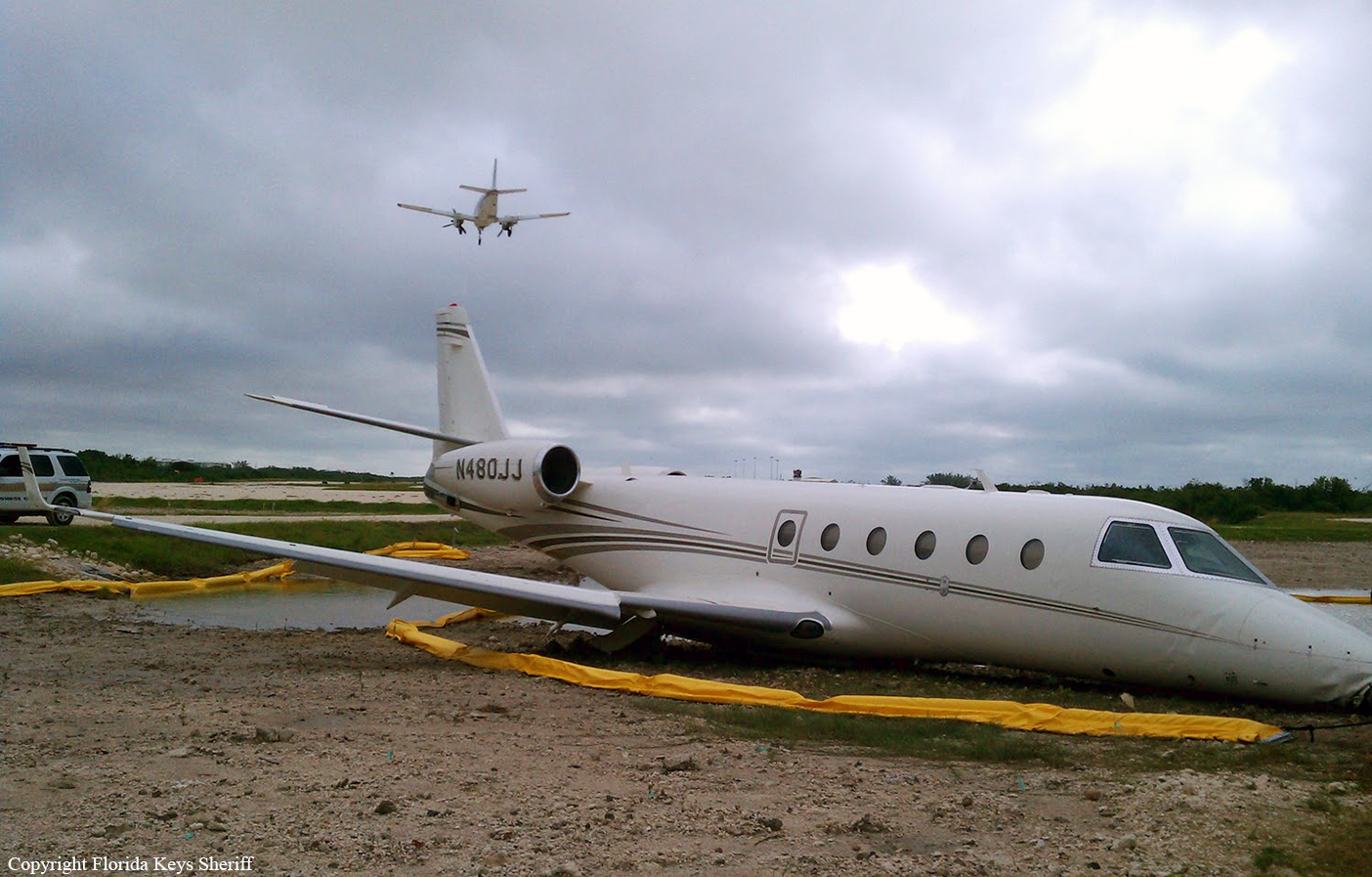
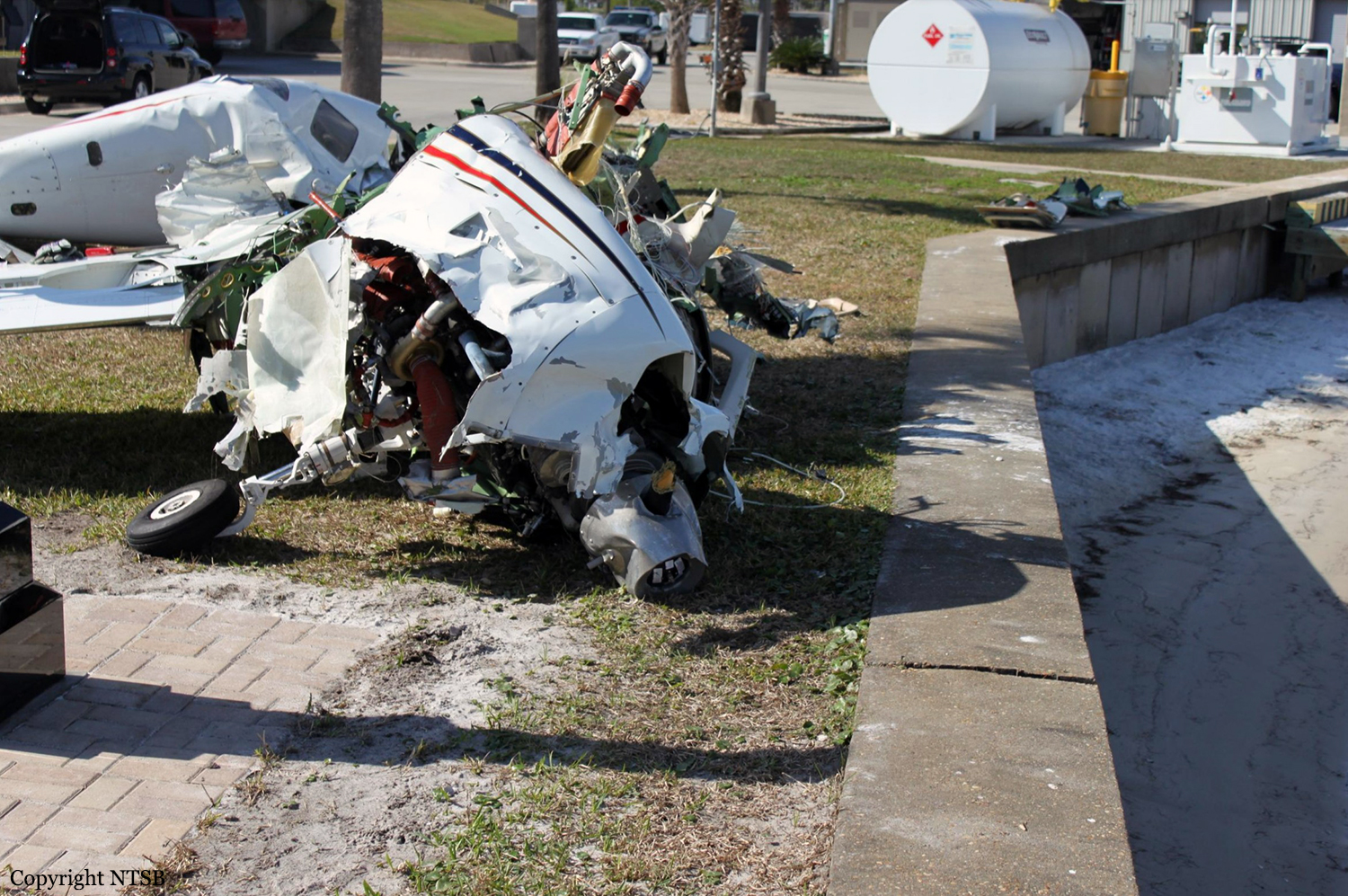
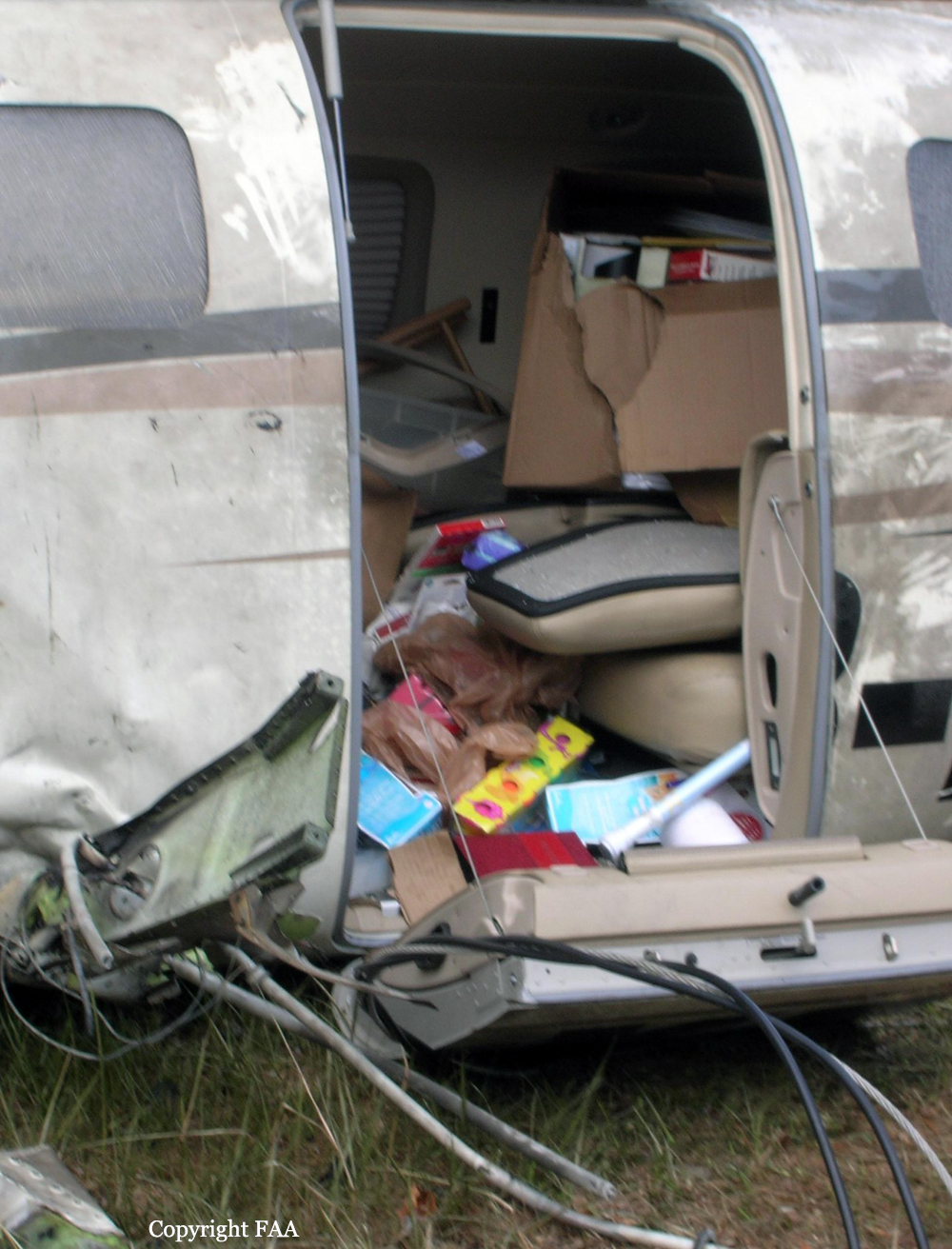
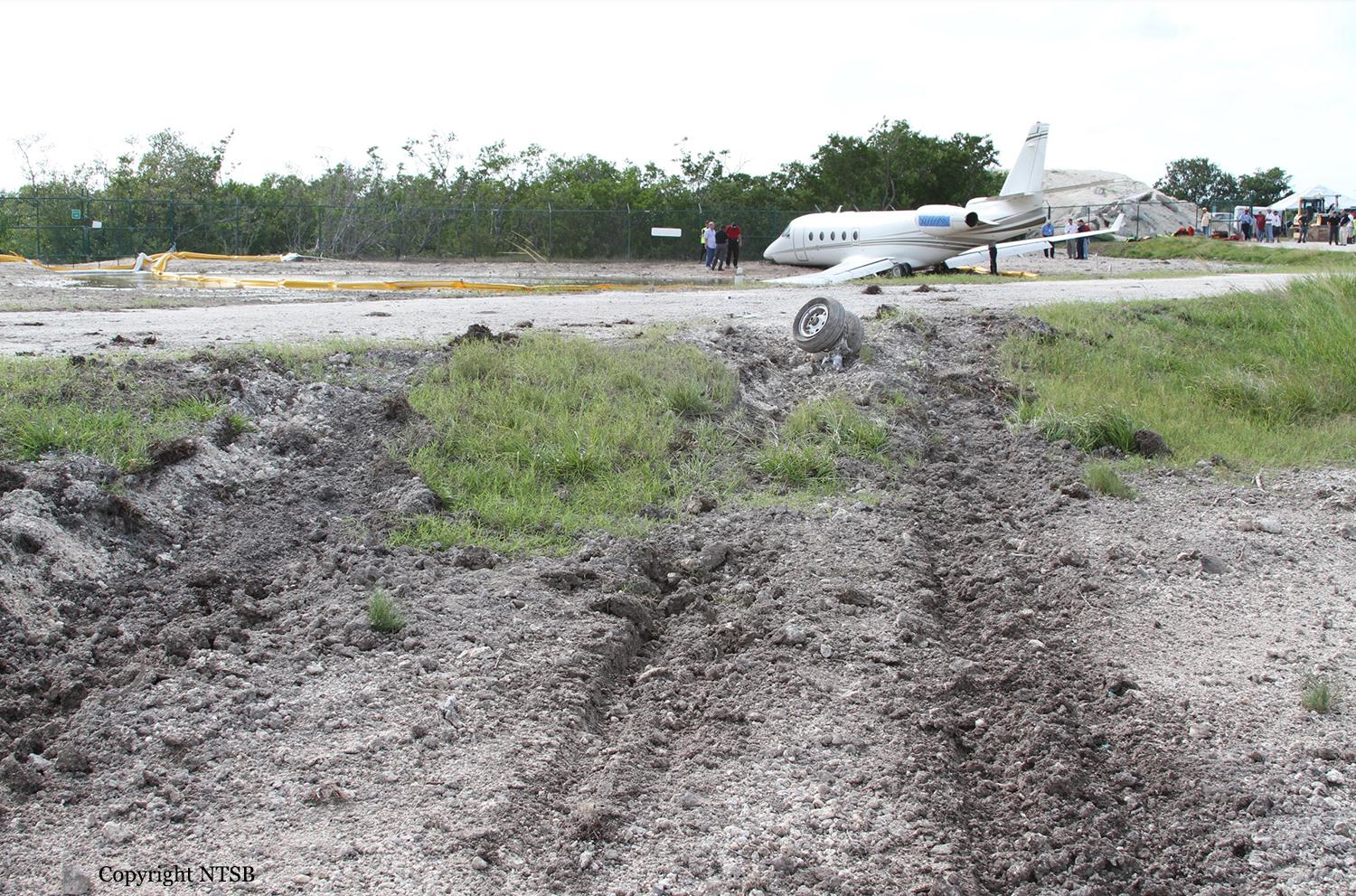
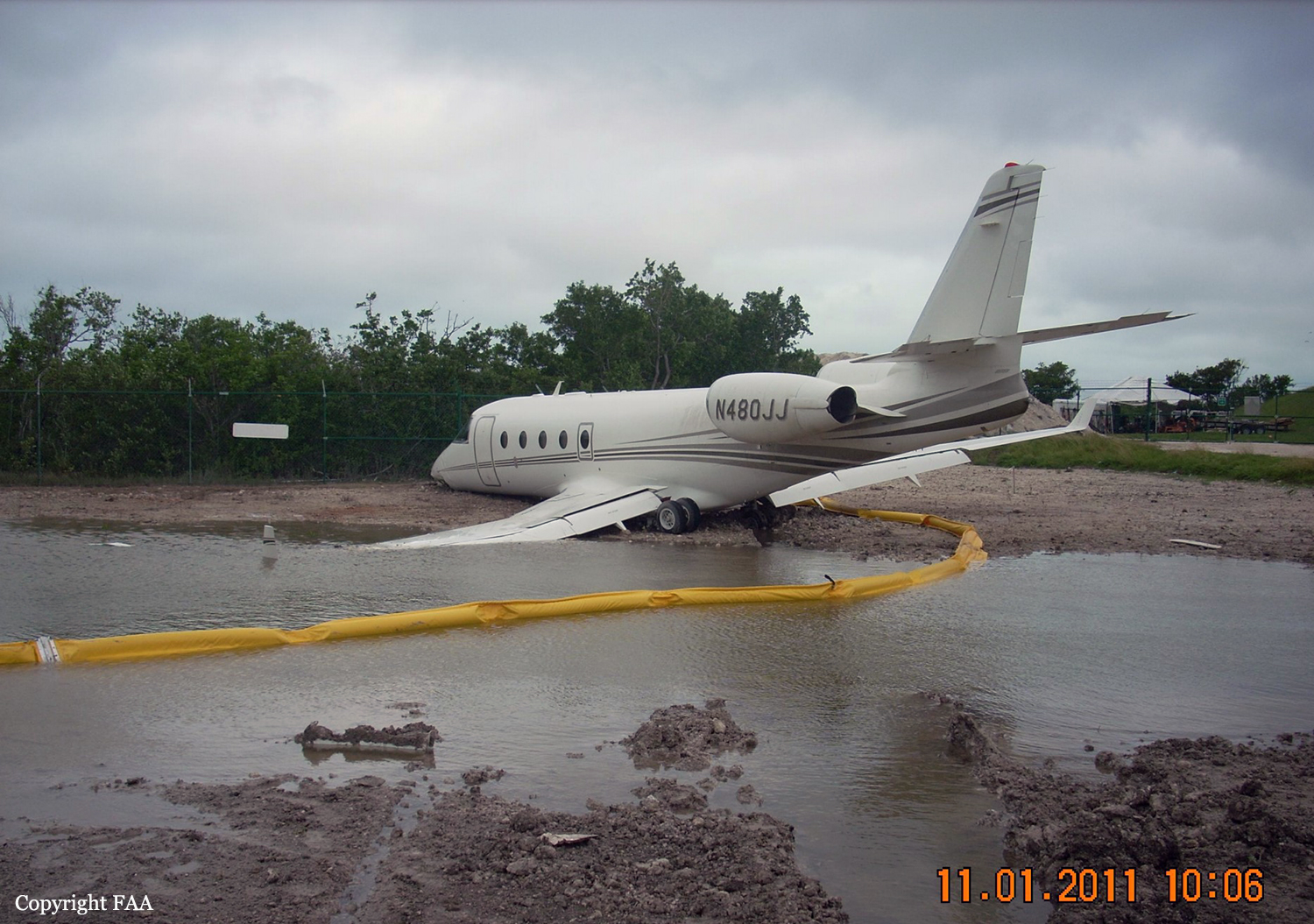
The airplane was approaching the destination airport in night visual meteorological conditions. After losing sight of the runway once and going around, they continued the approach, even though the pilot in command (PIC) stated that he thought they were going to land long. The PIC stated that the main landing gear touched down near the 1,000-foot marker of the 4,801-foot-long runway, about the landing reference speed (Vref) of 120 knots. The PIC stated that he then applied the brakes but thought they were not working; he had not yet activated the thrust reversers. He alerted the second in command (SIC), who also depressed the brake pedals with no apparent results. The PIC suggested a go-around, but the SIC responded that it was too late. The airplane subsequently traveled off the end of the runway, struck a gravel berm, and came to rest about 816 feet beyond the end of the runway. During the impact, one of the passenger seats dislodged from its seat track and was found on the cabin floor, with the passenger still in it. Review of cockpit voice recorder, video, and performance data revealed that the main landing gear touched down at Vref and about 1,650 feet beyond the approach end of the runway. The nosegear then touched down 2.4 seconds later and about 2,120 feet beyond the approach end of the runway, with about 2,680 feet of runway remaining. Digital electronic engine control data revealed that about 8 seconds after weight-on-wheels, the power levers were advanced from the idle position to the takeoff position. The power levers were then returned to the idle position 6 seconds later. The power levers were moved to the reverse thrust position 8 seconds after that and remained in that position for the duration of the accident sequence; both thrust reversers deployed when commanded. Examination and testing of the airplane systems did not reveal any evidence of preimpact mechanical malfunctions with the wheels brakes or any other systems. Although armed, the airbrakes did not deploy upon touchdown; the data available was inconclusive to determine what position the throttles were in at touchdown and why the airbrakes did not deploy. It is likely that the pilots did not detect the wheel braking because its effect was less than expected with the airplane at full power and with the airbrakes stowed. Landing distance data revealed that the airplane required about 2,551 feet to stop at its given weight in the given weather conditions. With a runway distance of 2,680 feet remaining, the airplane could have stopped or gone around uneventfully with appropriate use of all deceleration devices. The landing procedure stated to activate the thrust reversers after nosewheel touchdown and then apply the brakes, as necessary; however, the PIC only applied the brakes. Further, no callouts were made to verify ground spoiler or reverse thrust deployment. The PIC then stated that he was going to go around, but the SIC said it was too late, so the thrust levers were brought back to idle and the reversers were deployed. The PIC's delayed decision to stop or go around resulted in about a 22-second delay in thrust reverser activation, which resulted in the runway overrun. Additionally, the procedure for a (perceived) failed brake system would have been to activate the emergency brake, which neither pilot did. Examination of the seats revealed that a forward-facing seat was installed in the aft-facing position and an aft-facing seat was installed in the forward-facing position. Additionally, the ejected seat's shear plungers were found in the raised position. Had the seat been installed correctly, the plungers would have been in the lowered position, in the seat track. The improper installation most likely resulted in the passenger’s seat separating from the seat track and exacerbating his injuries.
Probable cause:
The pilot in command's failure to follow the normal landing procedures (placing engines into reverse thrust first and then brake), his delayed decision to continue the landing or go-around, and the flight crew's failure to follow emergency procedures once a perceived loss of brakes occurred. Contributing to the seriousness of the passenger's injury was the improper securing of the passenger seat by maintenance personnel.
Final Report:
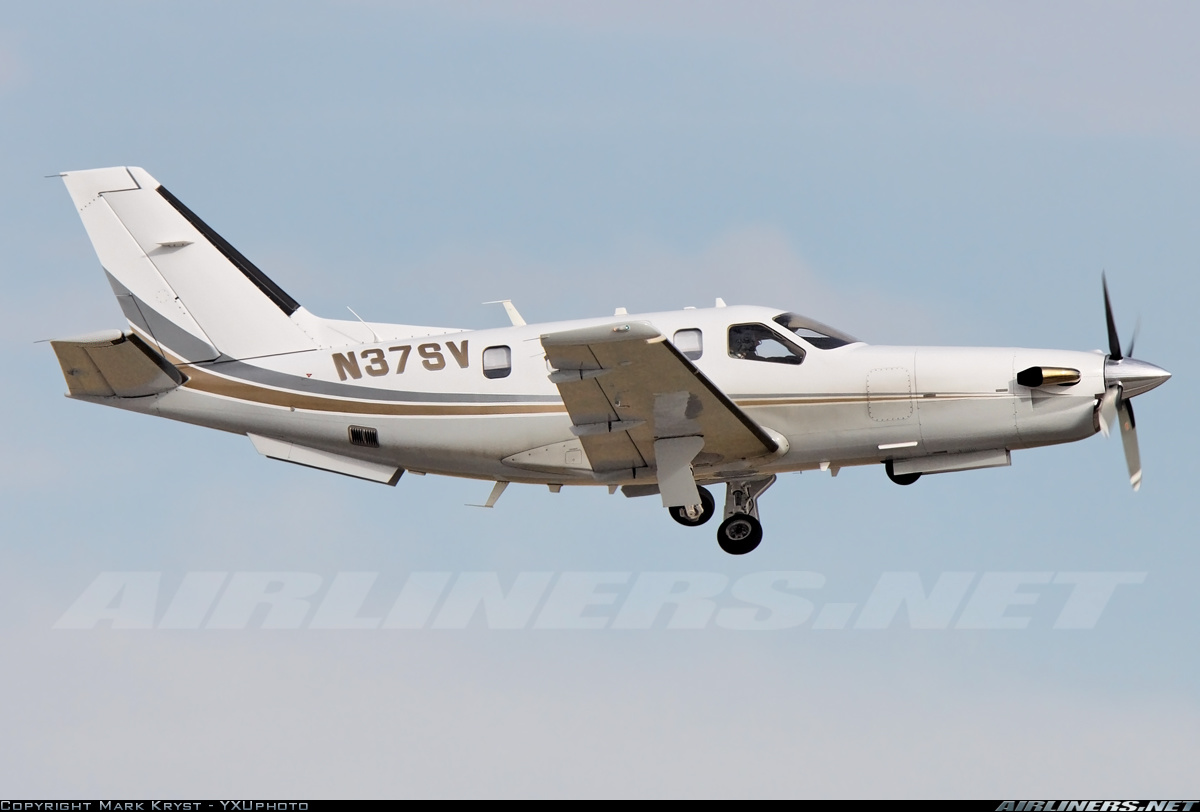
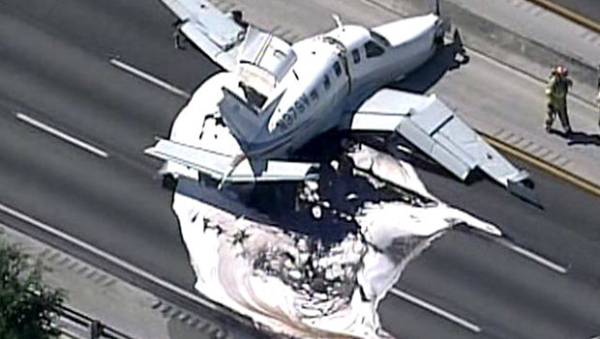
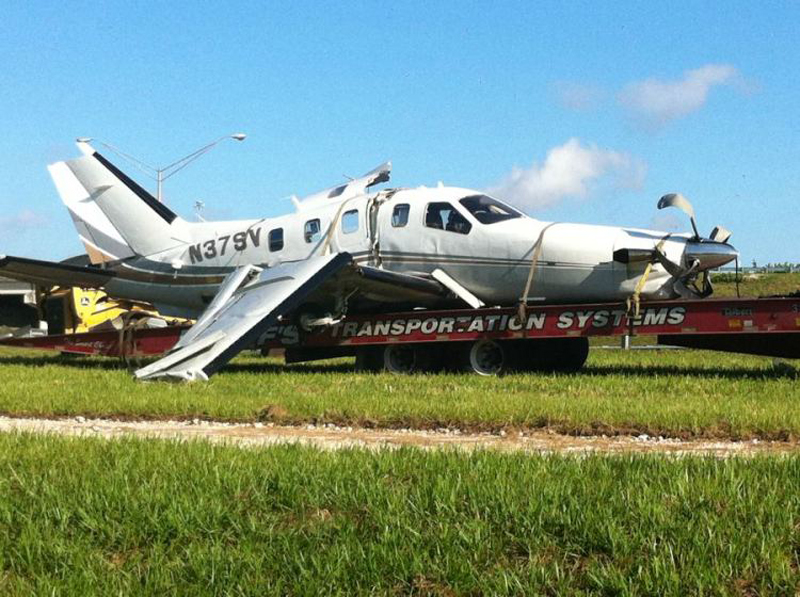
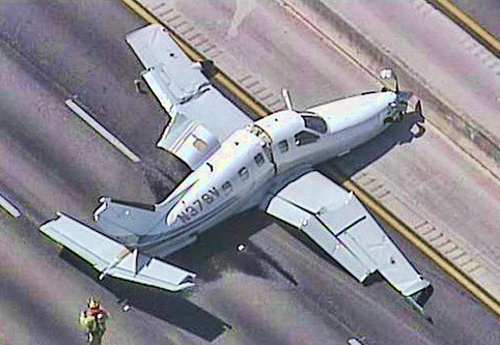
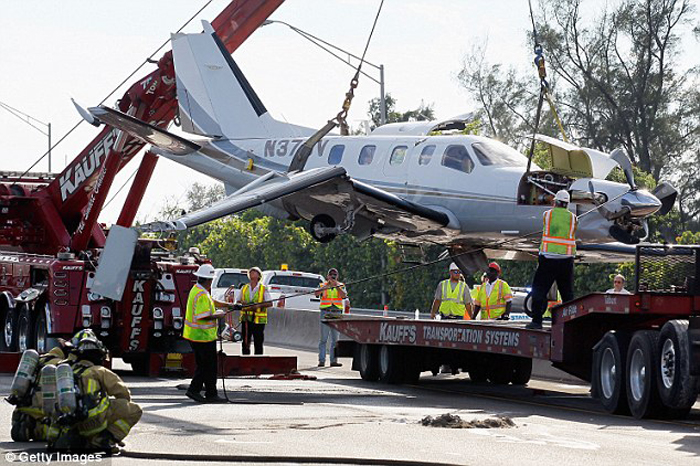
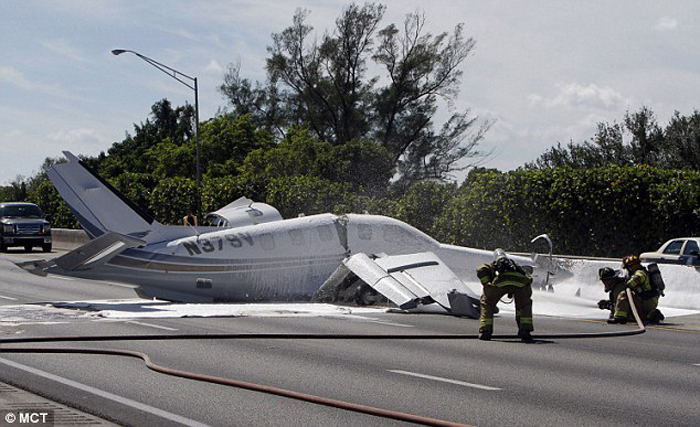
Crash of a Socata TBM-700 in Hollywood

Date & Time: Oct 12, 2011 at 1334 LT
Type of aircraft:
Operator:
Registration:
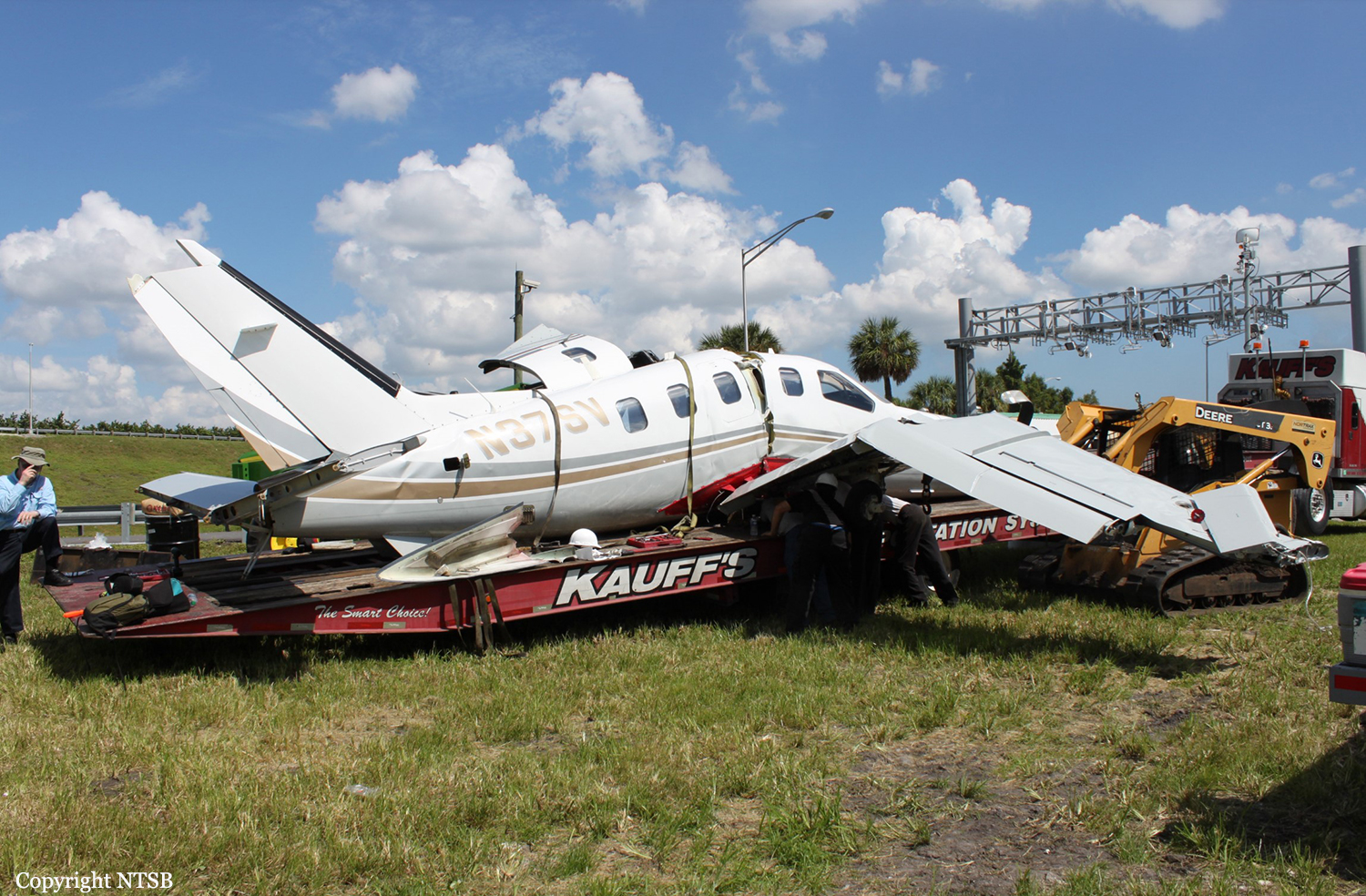
N37SV
Flight Type:
Survivors:
Yes
Site:
Schedule:
North Perry - North Perry
MSN:
441
YOM:
2008
Flight number:
SC332
Crew on board:
2
Crew fatalities:
Pax on board:
0
Pax fatalities:
Other fatalities:
Total fatalities:
0
Captain / Total flying hours:
11071
Captain / Total hours on type:
4053.00
Copilot / Total flying hours:
2500
Copilot / Total hours on type:
5
Aircraft flight hours:
593
Circumstances:
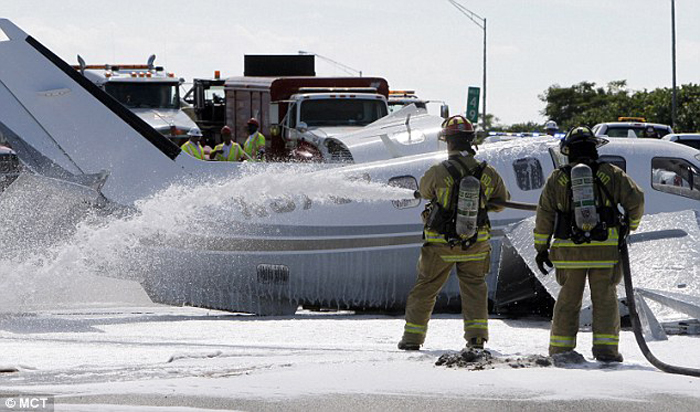
The airplane, registered to SV Leasing Company of Florida, operated by SOCATA North America, Inc., sustained substantial damage during a forced landing on a highway near Hollywood, Florida, following total loss of engine power. Visual meteorological conditions prevailed at the time and an instrument flight rules (IFR) flight plan was filed for the 14 Code of Federal Regulations (CFR) Part 91 maintenance test flight from North Perry Airport (HWO), Hollywood, Florida. The airline transport pilot and pilot-rated other crew member sustained minor injuries; there were no ground injuries. The flight originated from HWO about 1216. The purpose of the flight was a maintenance test flight following a 600 hour and annual inspection. According to the right front seat occupant, in anticipation of the flight, he checked the fuel load by applying electrical power and noted the G1000 indicated the left fuel tank had approximately 36 gallons while the right fuel tank had approximately 108 gallons. In an effort to balance the fuel load with the indication of the right fuel tank, he added 72.4 gallons of fuel to the left fuel tank. At the start of the data recorded by the G1000 for the accident flight, the recorded capacity in the left fuel tank was approximately 105 gallons while the amount in the right fuel tank was approximately 108 gallons. The PIC reported that because of the fuel load on-board, he could not see the level of fuel in the tanks; therefore, he did not visually check the fuel tanks. By cockpit indication, the left tank had approximately 105 gallons and the right tank had approximately 108 gallons. The flight departed HWO, but he could not recall the fuel selector position beneath the thrust lever quadrant. He further stated that the fuel selector switch on the overhead panel was in the "auto" position. After takeoff, the flight climbed to flight level (FL) 280, and levelled off at that altitude about 20 minutes after takeoff. While at that altitude they received a "Fuel Low R" amber warning CAS message on the G1000. He checked the right fuel gauge which indicated 98 gallons, and confirmed that the fuel selector automatically switched to the left tank. After about 10 seconds the amber warning CAS message went out. He attributed the annunciation to be associated with a failure or malfunction of the sensor, and told the mechanic to write this issue down so it could be replaced after the flight. The flight continued and they received an amber warning CAS message, "Fuel Unbalance" which the right fuel tank had more fuel so he switched the fuel selector to supply fuel from the right tank to the engine. The G1000 indicates they remained at that altitude for approximately 8 minutes. He then initiated a quick descent to 10,000 feet mean sea level (msl) and during the descent accelerated to Vmo to test the aural warning horn. They descended to and maintained 10,000 feet msl for about 15 minutes and at an unknown time, they received an amber warning CAS message "Fuel Low R." Once again he checked the right fuel gauge which indicated it had 92 gallons and confirmed that the fuel tank selector automatically switched to the left tank. After about 10 seconds the CAS message went out. Either just before or during descent to 4,000 feet, they received an amber CAS message "Fuel Unbalance." Because the right fuel gauge indicated the fullest tank was the right tank, he switched the fuel selector to supply fuel to the engine from the right tank. The flight proceeded to the Opa-Locka Executive Airport, where he executed an ILS approach which terminated with a low approach. The pilot cancelled the IFR clearance and proceeded VFR towards HWO. While in contact with the HWO air traffic control tower, the flight was cleared to join the left downwind for runway 27L. Upon entering the downwind leg they received another amber CAS message "Fuel Unbalance" and at this time the left fuel gauge indicated 55 gallons while the right fuel gauge indicated 74 gallons. Because he intended on landing within a few minutes, he put the fuel selector to the manual position and switched to the fullest (right) tank. Established on final approach to runway 27L at HWO with the gear down, flaps set to landing, and minimum speed requested by air traffic for separation (85 knots indicated airspeed). When the flight was at 800 feet, the red warning CAS message "Fuel Press" illuminated and the right seat occupant with his permission moved the auxiliary fuel boost pump switch from "Auto" to "On" while he, PIC manually moved the fuel selector to the left tank. In an effort to restore engine power he pushed the power lever and used the manual over-ride but with no change. Assured that the engine had quit, he put the condition lever to cutoff, the starter switch on, and then the condition lever to "Hi-Idle" attempting to perform an airstart. At 1332:42, a flight crew member of the airplane advised the HWO ATCT, "…just lost the engine"; however, the controller did not reply. The PIC stated that he looked to his left and noticed a clear area on part of the turnpike, so he banked left, and in anticipation of the forced landing, placed the power lever to idle, the condition lever to cutoff, the fuel tank selector to off, and put the electrical gang bar down to secure the airplane's electrical system. He elected to retract the landing gear in an effort to shorten the landing distance. The right front seat occupant reported that the airplane was landed in a southerly direction in the northbound lanes of the Florida Turnpike. There were no ground injuries.
Probable cause:
The pilot’s failure to terminate the flight after observing multiple conflicting errors associated with the inaccurate right fuel quantity indication. Contributing to the accident were the total loss of engine power due to fuel starvation from the right tank, the inadequate manufacturing of the right fuel gauge electrical harness, and failure of maintenance personnel to recognize and evaluate the reason for the changing fuel level in the right fuel tank.
Final Report:

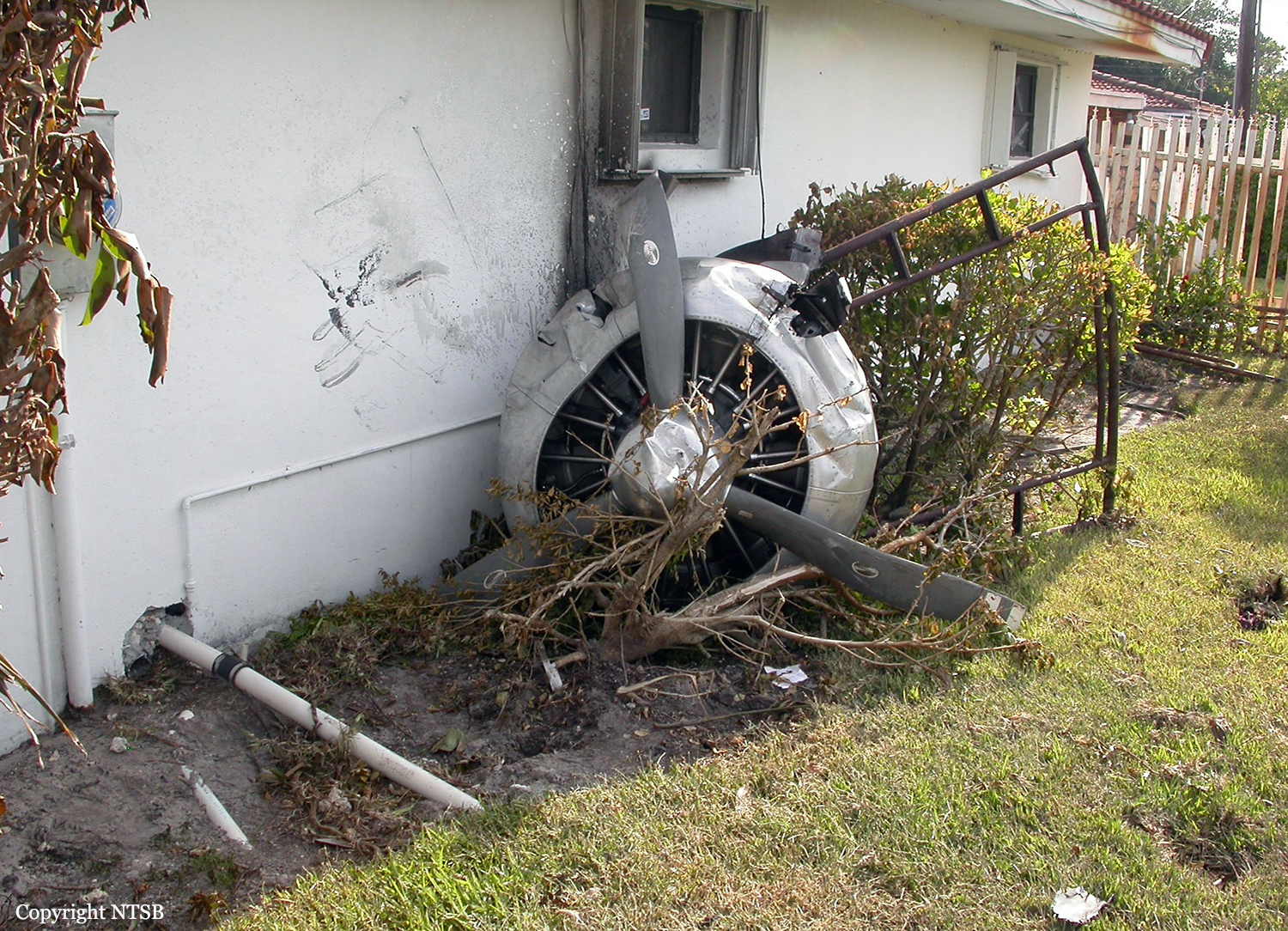
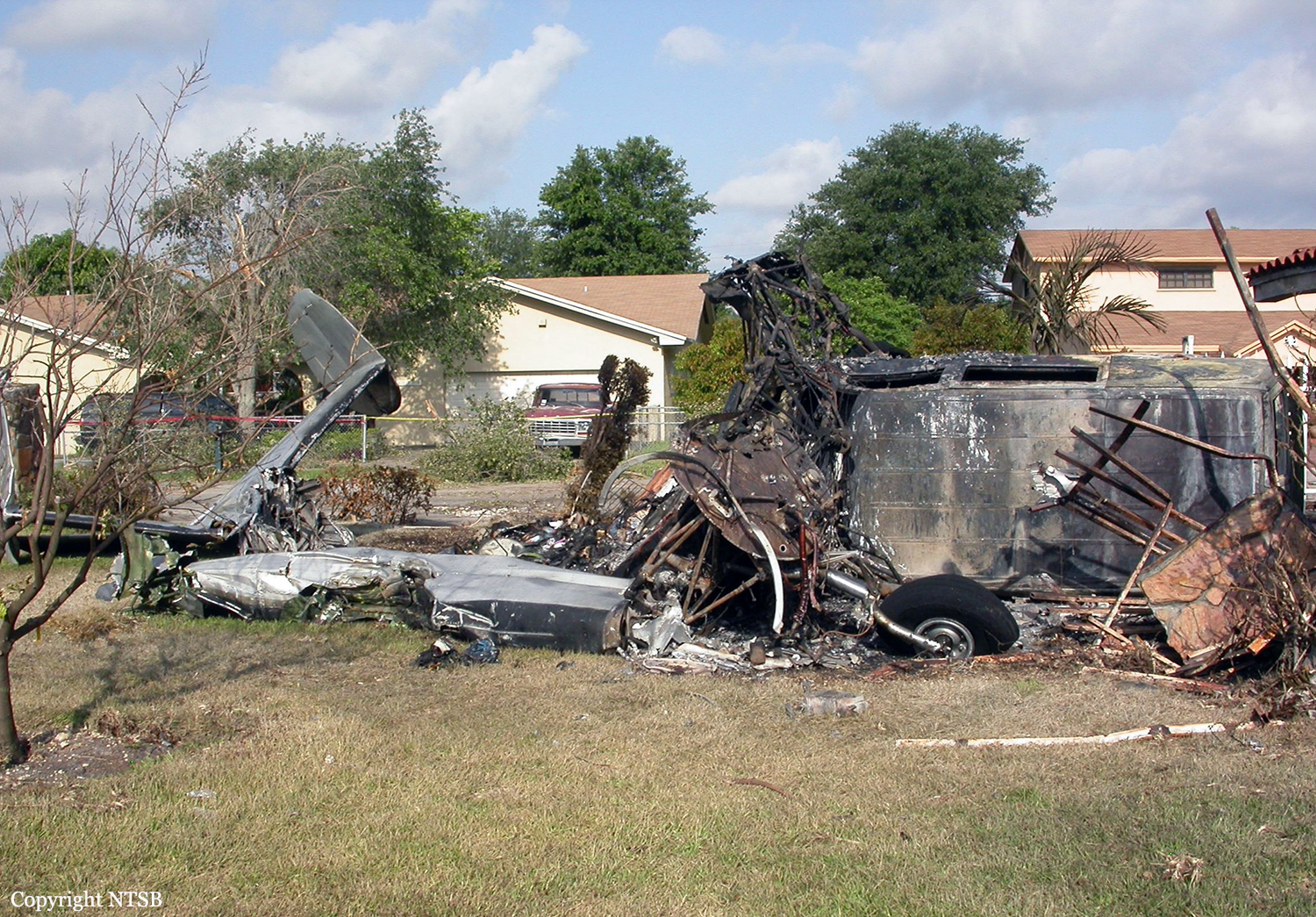
Crash of a Beechcraft E18S in Miami: 1 killed

Date & Time: May 2, 2011 at 0809 LT
Type of aircraft:
Registration:
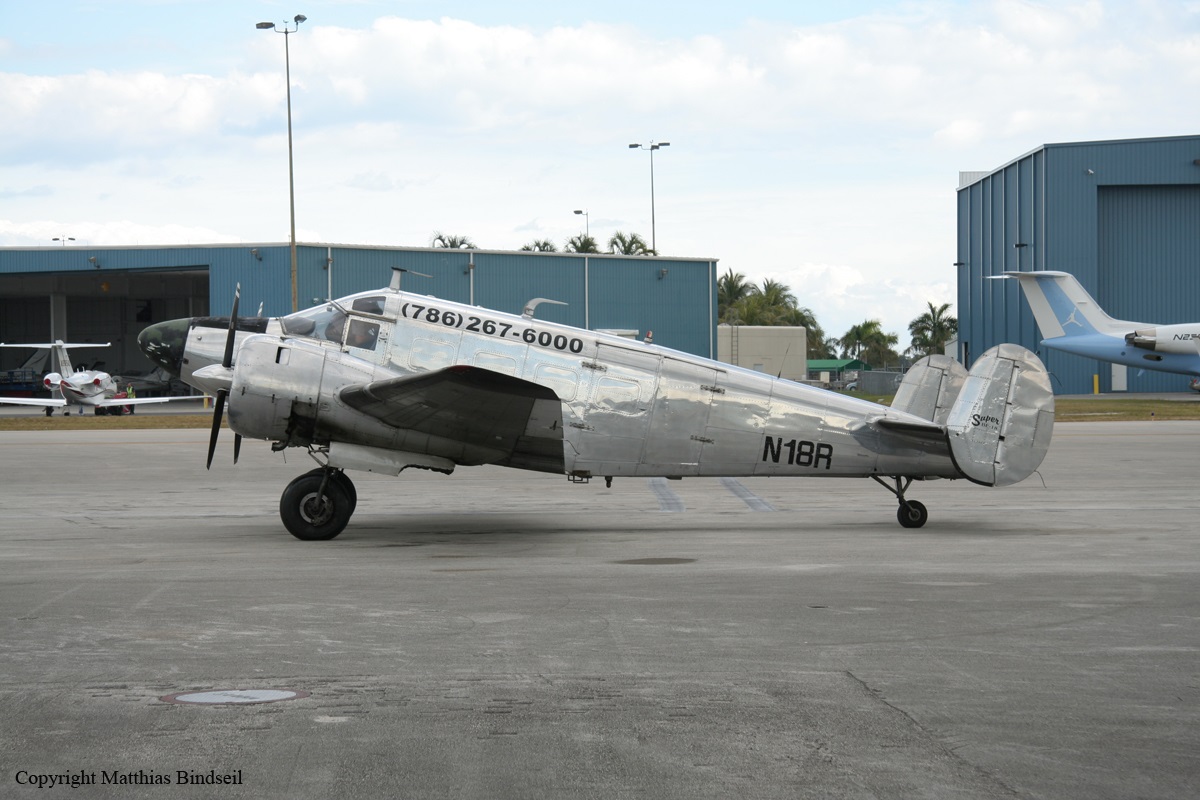
N18R
Flight Phase:
Flight Type:
Survivors:
No
Site:
Schedule:
Miami - Marsh Harbour
MSN:
BA-312
YOM:
1957
Crew on board:
1
Crew fatalities:
Pax on board:
0
Pax fatalities:
Other fatalities:
Total fatalities:
1
Captain / Total flying hours:
6400
Aircraft flight hours:
13221
Circumstances:
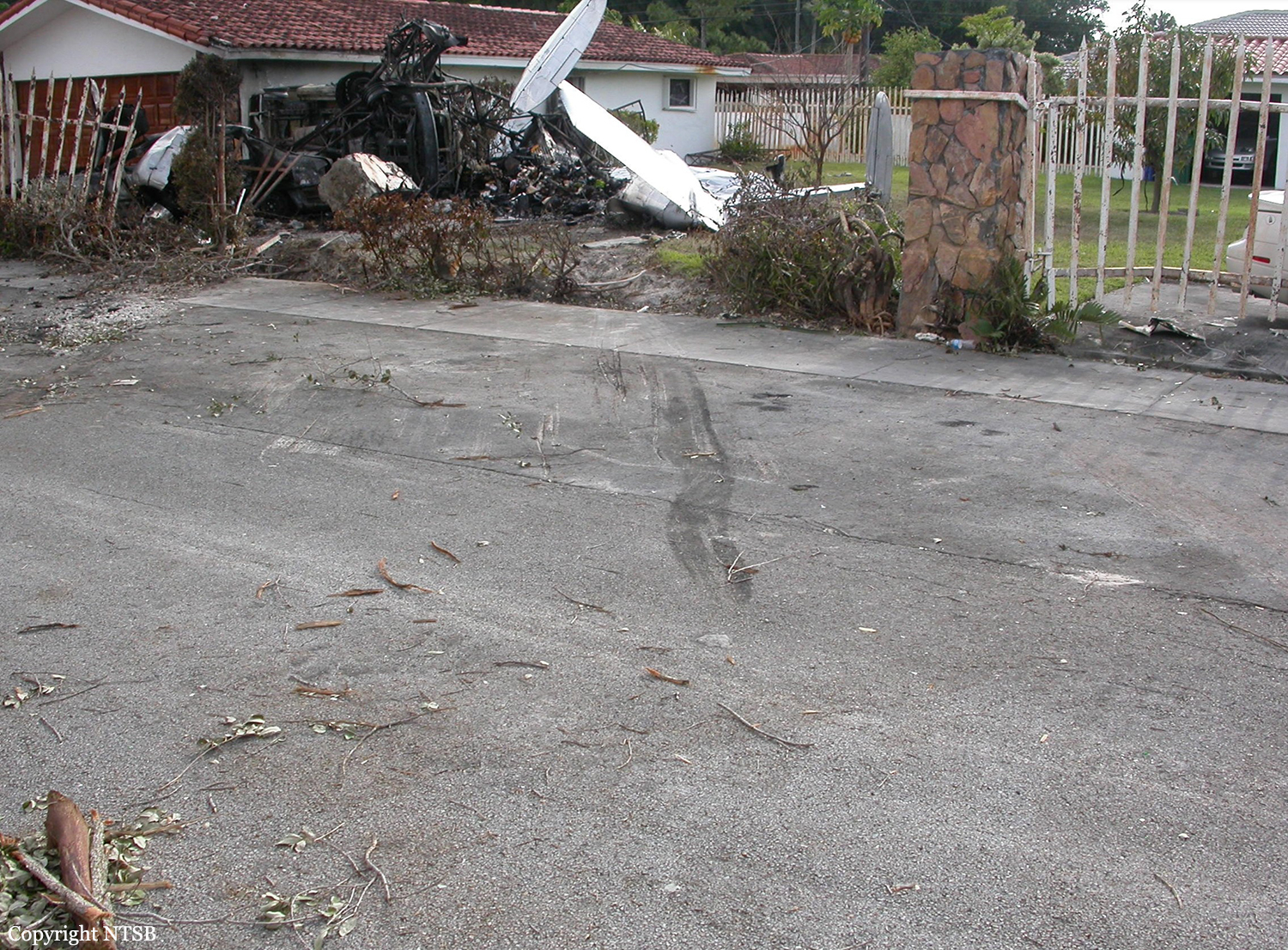
After taking off from runway 9L at his home airport and making an easterly departure, the pilot, who was also the president, director of operations, and chief pilot for the on-demand passenger and cargo operation, advised the air traffic controller that he was turning downwind. According to witnesses, the airplane did not sound like it was developing full power. The airplane climbed to about 100 feet, banked to the left, began losing altitude, and impacted a tree, a fence, and two vehicles before coming to rest in a residential area. A postcrash fire ensued, which consumed the majority of the cabin area and left wing. Examination of the accident site revealed that the airplane had struck the tree with its left inboard wing about 20 feet above ground level. Multiple tree branches exhibiting propeller cuts were found near the base of the tree. Propeller strike marks on the ground also corresponded to the location of the No. 1 (left side) propeller. There were minimal propeller marks from the No. 2 (right side) propeller. Examination of the propellers revealed that the No. 1 propeller blades exhibited chordwise scratching and S-bending, consistent with operation at impact, but the No. 2 propeller blades did not exhibit any chordwise scratching or bending, which indicates that the No. 2 engine was not producing power at the time of impact. There was no evidence that the pilot attempted to perform the manufacturer’s published single engine procedure, which would have allowed him to maintain altitude. Contrary to the procedure, the left and right throttle control levers were in the full-throttle position, the mixture control levers were in the full-rich position, neither propeller was feathered, and the landing gear was down. Postaccident examination of the No. 1 engine revealed no evidence of any preimpact malfunction or failure. However, the No. 2 engine's condition would have resulted in erratic and unreliable operation; the engine would not have been able to produce full rated horsepower as the compression on four of the nine cylinders was below specification and both magnetos were not functioning correctly. Moisture and corrosion were discovered inside the magneto cases; the left magneto sparked internally in a random pattern when tested and its point gap was in excess of the required tolerance. The right magneto's camshaft follower also exhibited excessive wear and its points would not open, rendering it incapable of providing electrical energy to its spark plugs. Additionally, the main fuel pump could not be rotated by hand; it exhibited play in the gear bearings, and corrosion was present internally. When the airplane was not flying, it was kept outdoors. Large amounts of rain had fallen during the week before the accident, which could have led to the moisture and corrosion in the magnetos. Although the pilot had been having problems with the No. 2 engine for months, he continued to fly the airplane, despite his responsibility, particularly as president, director of operations, and chief pilot of the company, to ensure that the airplane was airworthy. During this period, the pilot would take off with the engine shuddering and would circle the departure airport to gain altitude before heading to the destination. On the night before the accident, the director of maintenance (DOM) replaced the No. 1 cylinder on the No. 2 engine, which had developed a crack in the fin area and had oil seeping out of it. After the DOM performed the replacement, he did not do a compression check or check the magnetos; such checks would have likely revealed that four of the remaining cylinders were not producing specified compression, that the magnetos were not functioning correctly, and that further maintenance was necessary. Review of the airplane's maintenance records did not reveal an entry for installation of the cylinder. The last entry in the maintenance records for the airplane was an annual and a 100-hour inspection, which had occurred about 11 months before the accident.
Probable cause:
The pilot’s improper response to a loss of power in the No. 2 engine and his failure to ensure that the airplane was airworthy. Contributing to the accident was the inadequate engine maintenance by the operator's maintenance personnel.
Final Report:
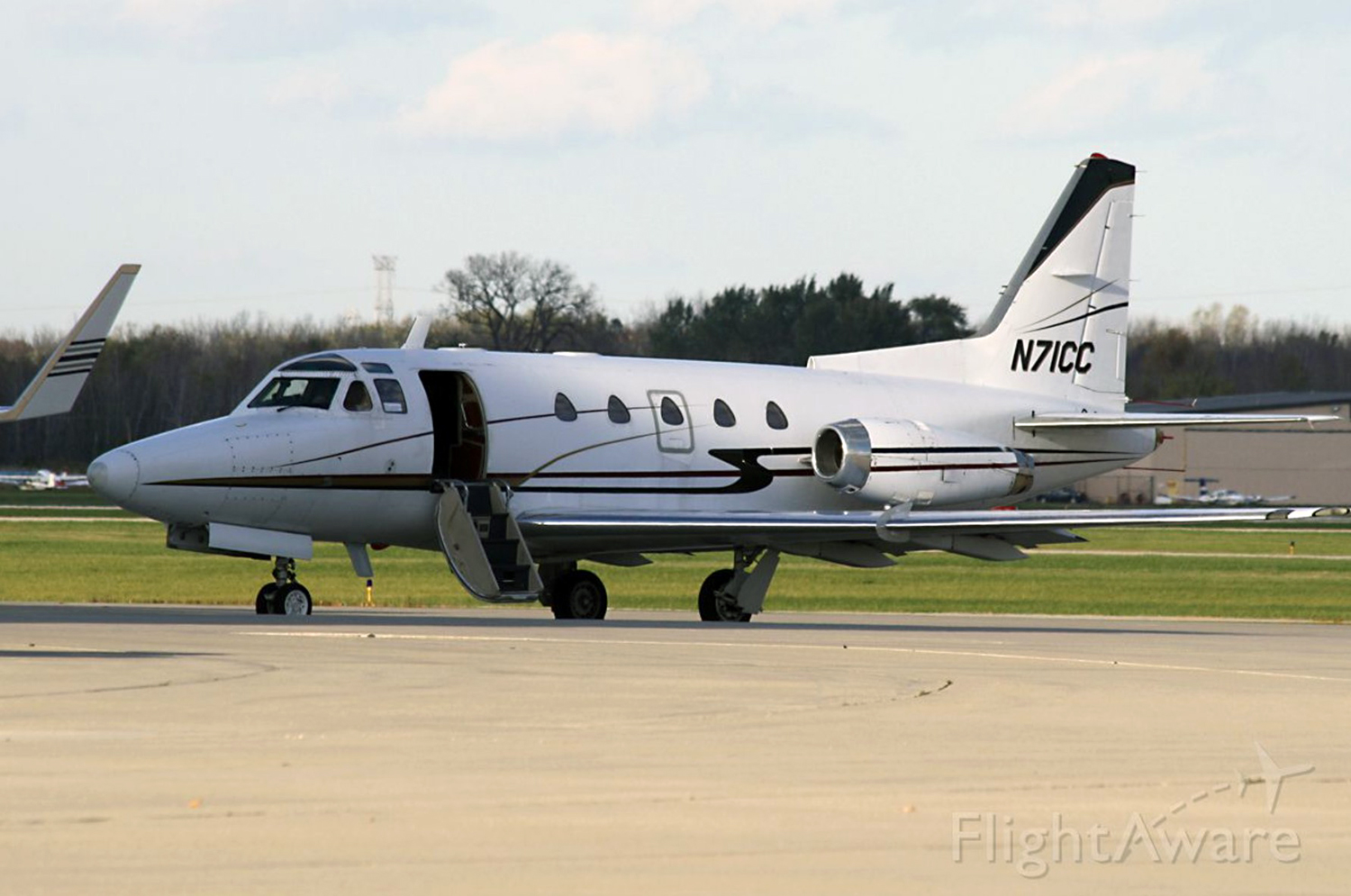
Crash of a Rockwell Sabreliner 60 in Fort Lauderdale

Date & Time: Apr 9, 2011 at 1357 LT
Type of aircraft:
Operator:
Registration:
N71CC
Flight Type:
Survivors:
Yes
Schedule:
Fort Lauderdale – West Palm Beach
MSN:
306-71
YOM:
1974
Crew on board:
2
Crew fatalities:
Pax on board:
0
Pax fatalities:
Other fatalities:
Total fatalities:
0
Circumstances:
On approach to West Palm Beach Airport, the crew encountered technical problems with the undercarriage that could not be lowered. The crew decided to return to his base in Fort Lauderdale. On final, the crew was again unable to lower the gear so the decision was taken to complete a wheels-up landing. The airplane landed on its belly on runway 08 then slid for few dozen metres before coming to rest. The occupants escaped uninjured and the aircraft was damaged beyond repair.
Probable cause:
No investigation was carried out by the NTSB.

Crash of a Piper PA-46-350P Malibu Mirage off Destin: 3 killed

Date & Time: Nov 23, 2010 at 1930 LT
Registration:
N548C
Flight Type:
Survivors:
No
Schedule:
New Orleans – Destin
MSN:
46-36322
YOM:
2001
Crew on board:
1
Crew fatalities:
Pax on board:
2
Pax fatalities:
Other fatalities:
Total fatalities:
3
Captain / Total flying hours:
408
Captain / Total hours on type:
34.00
Aircraft flight hours:
761
Circumstances:
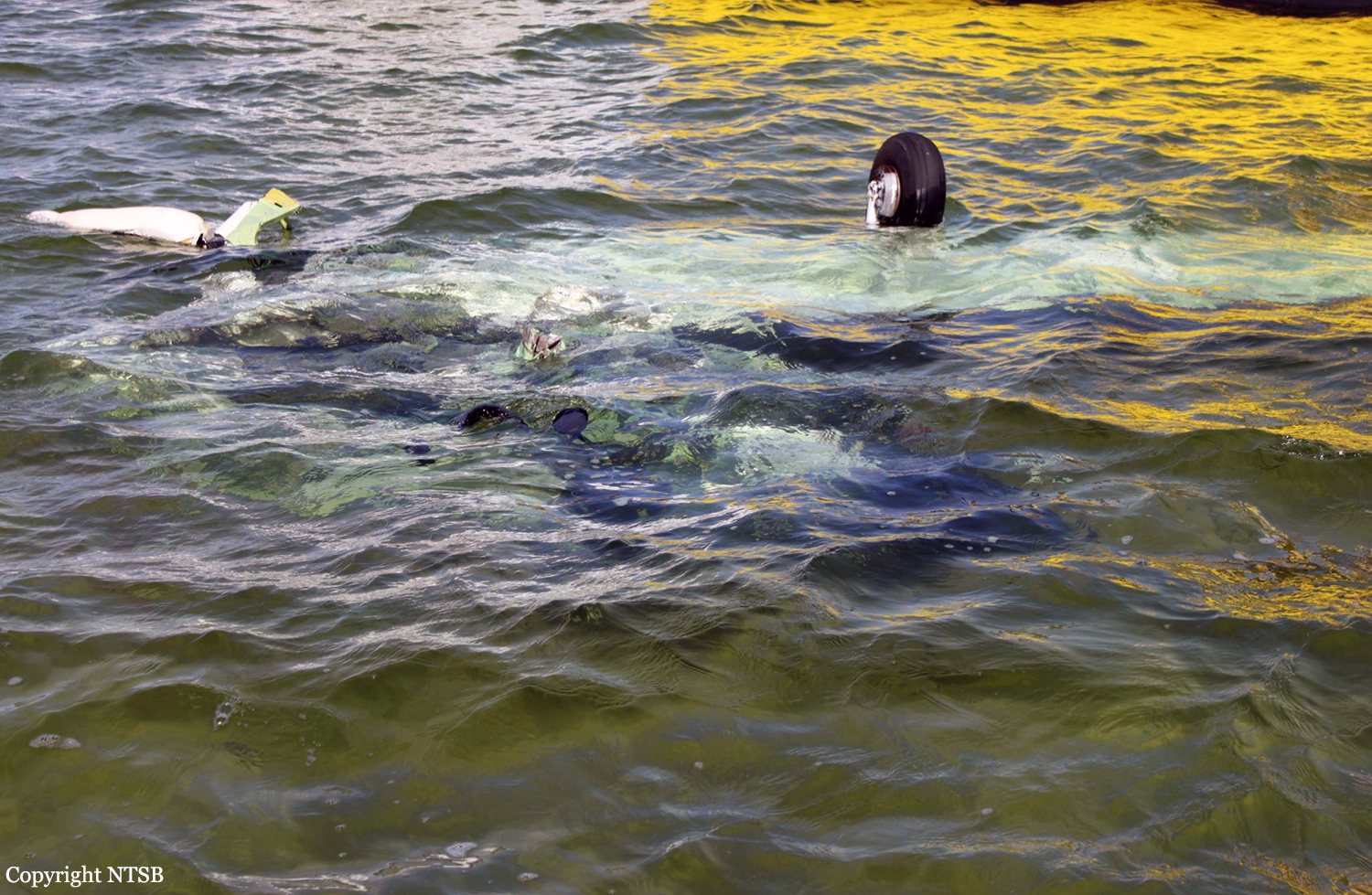
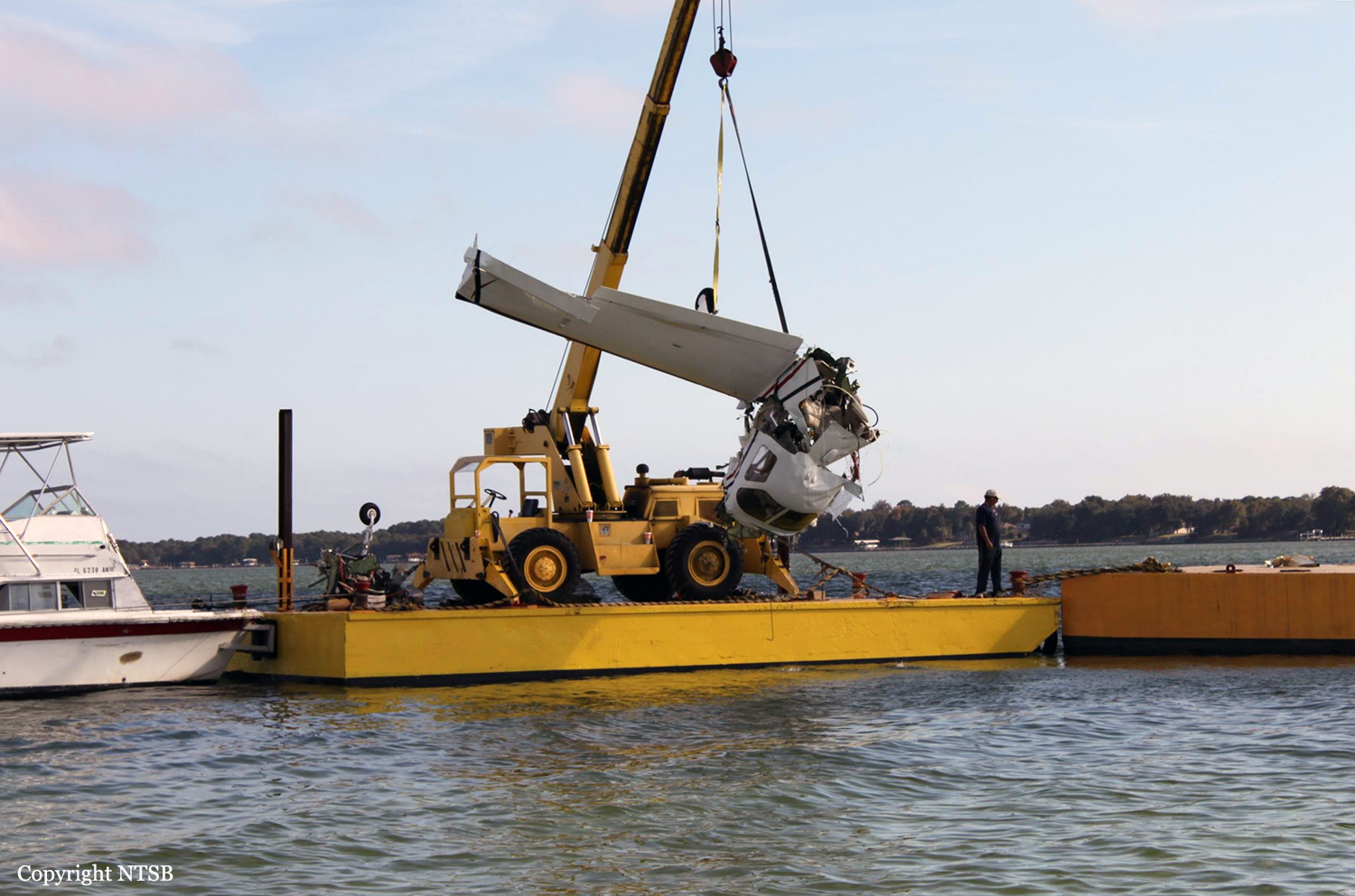
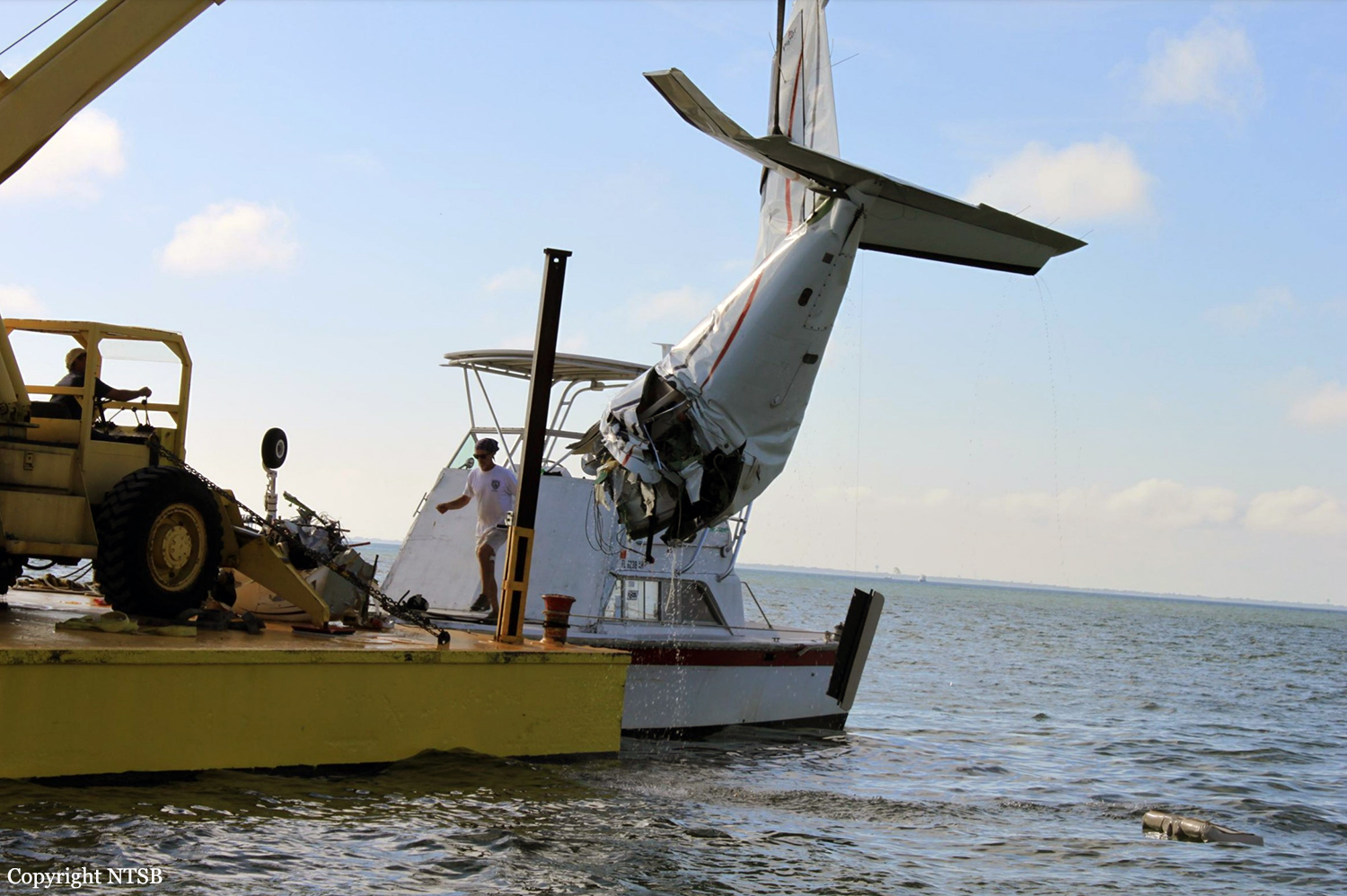
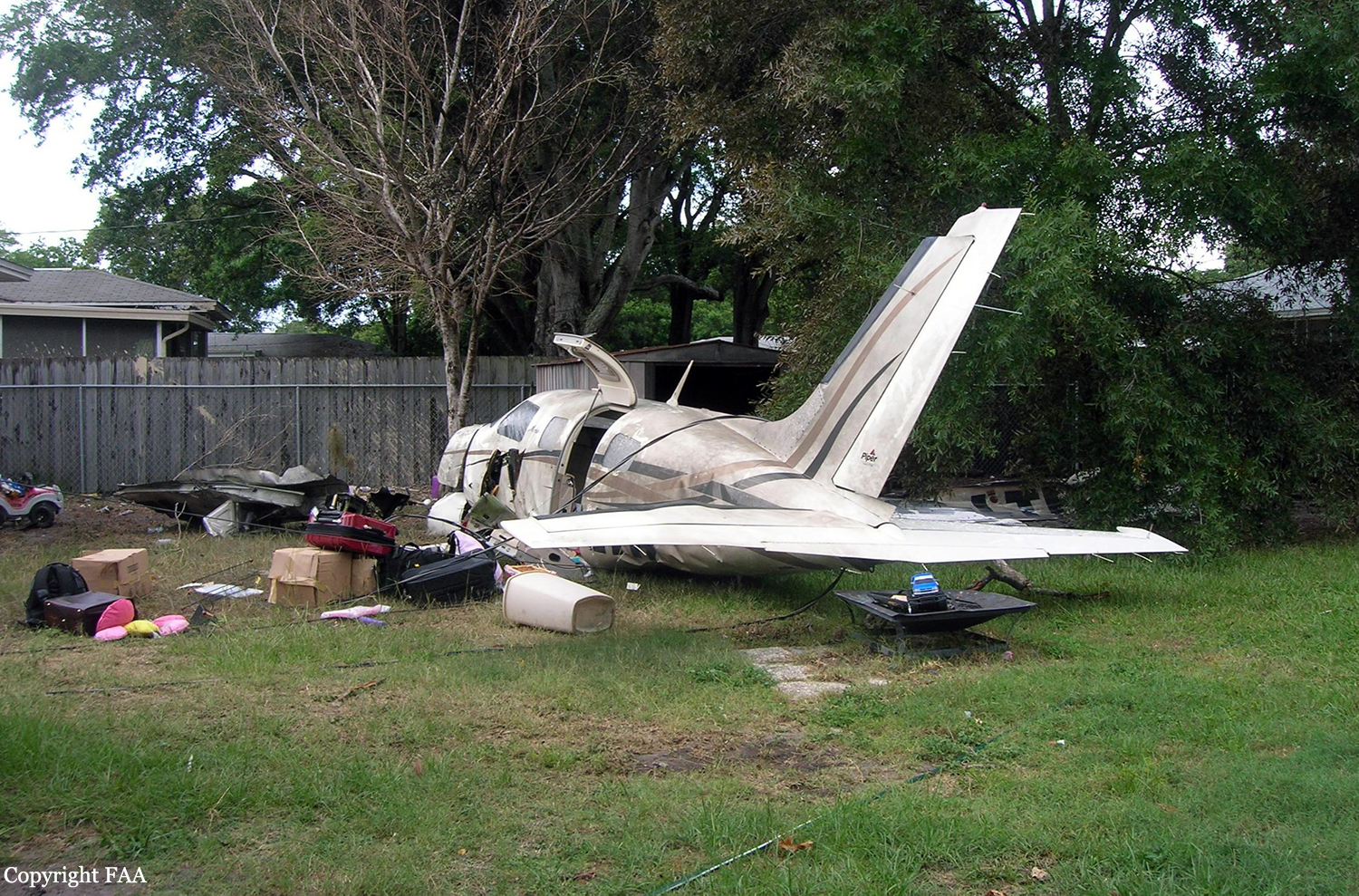
The instrument-rated pilot was executing a night instrument approach when the airplane impacted the water. The published approach minimums for the area navigation/global positioning system approach were 460-foot ceiling and one-mile visibility. Recorded air traffic control voice and radar data indicated that prior to the approach the pilot had turned to an approximately 180-degree heading and appeared to be heading in the direction of another airport. The controller reassigned the pilot a heading in order to intercept the final approach. The airplane was located in the water approximately 5,000 feet from the runway threshold. A postaccident examination of the airplane revealed that the left main landing gear was in the retracted position and the right main and nose landing gear were in the extended position. Examination of the left main landing gear actuator revealed no mechanical anomalies. The pilot had likely just commanded the landing gear to the down position and the landing gear was in transit. It is further possible that, as the gear was in transit, the airplane impacted the water in a left-wing and nose-down attitude and the left gear was forced to a gear-up position.
Probable cause:
Controlled flight into water due to the pilot's improper descent below the published minimum descent altitude.
Final Report:

Crash of a Piper PA-46-350P Malibu Mirage in Clearwater

Date & Time: May 16, 2010 at 1013 LT
Operator:
Registration:
XB-LTH
Flight Phase:
Flight Type:
Survivors:
Yes
Site:
Schedule:
Clearwater – Port-au-Prince
MSN:
46-36428
YOM:
2007
Crew on board:
1
Crew fatalities:
Pax on board:
2
Pax fatalities:
Other fatalities:
Total fatalities:
0
Captain / Total flying hours:
2662
Captain / Total hours on type:
23.00
Aircraft flight hours:
207
Circumstances:
The airplane was loaded more than 500 pounds (about 12 percent) over the certificated maximum gross weight. The airplane lifted off from the 3,500-foot-long runway about one-half to two-thirds down the length of the runway. The pilot retracted the airplane's landing gear and flaps before reaching the airplane manufacturer's recommended retraction speeds. The airplane was unable to gain sufficient altitude and subsequently impacted trees and a house located beyond the departure end of the runway. A postaccident examination of the wreckage and recorded non-volatile memory revealed no evidence of any preimpact mechanical abnormalities.
Probable cause:
The overweight condition of the airplane due to the pilot's inadequate preflight planning, resulting in the airplane's degraded climb performance. Contributing to the accident was the pilot's retraction of the flaps prior to reaching the manufacturer's recommended flap retraction speed.
Final Report:

Crash of a Travel Air 4000 in Fort Myers

Date & Time: Nov 14, 2009 at 1018 LT
Type of aircraft:
Registration:
N3823
Flight Type:
Survivors:
Yes
Schedule:
Fort Myers - Fort Myers
MSN:
306
YOM:
1927
Crew on board:
1
Crew fatalities:
Pax on board:
2
Pax fatalities:
Other fatalities:
Total fatalities:
0
Captain / Total flying hours:
1789
Captain / Total hours on type:
60.00
Aircraft flight hours:
5284
Circumstances:
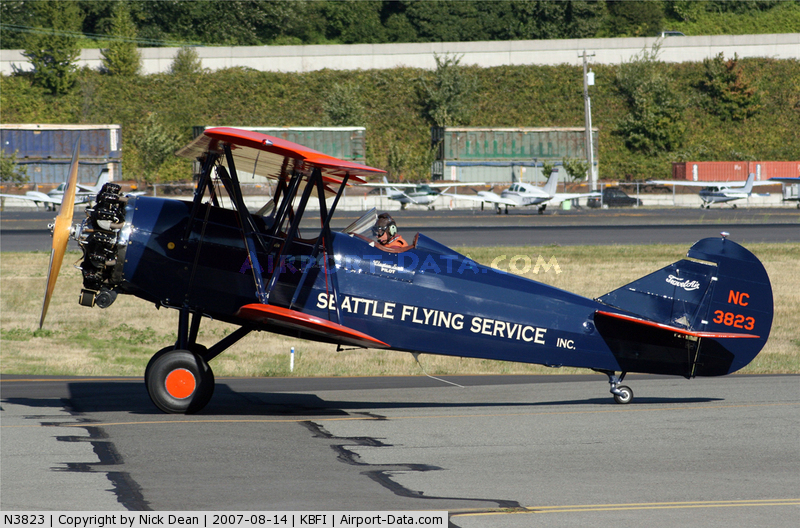
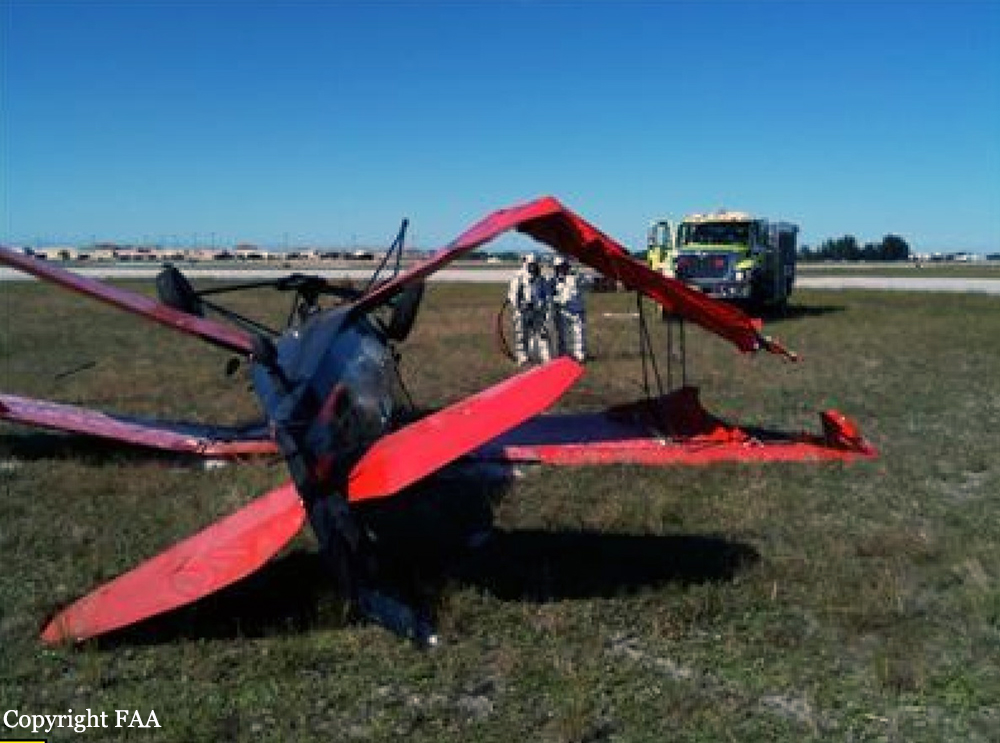
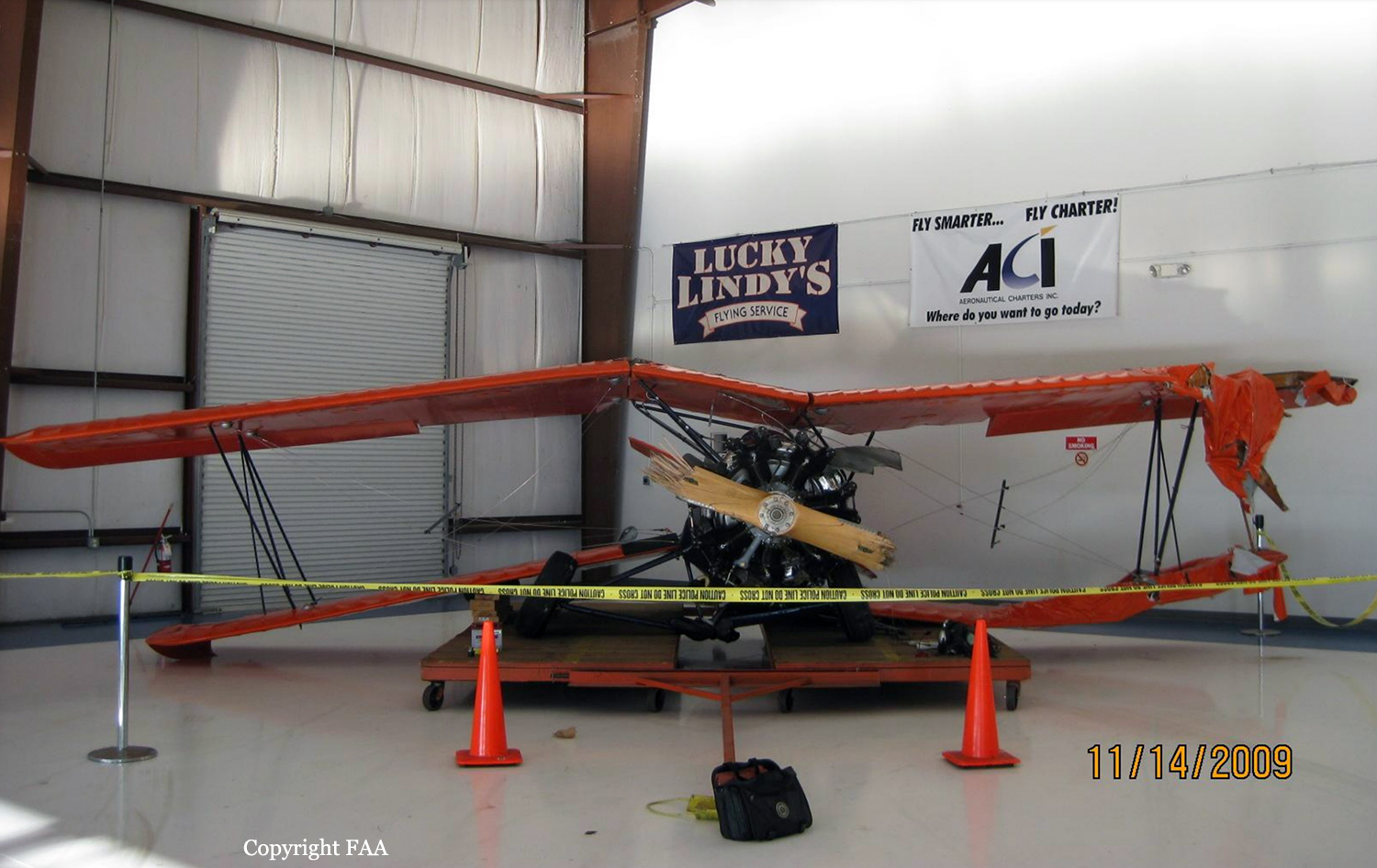
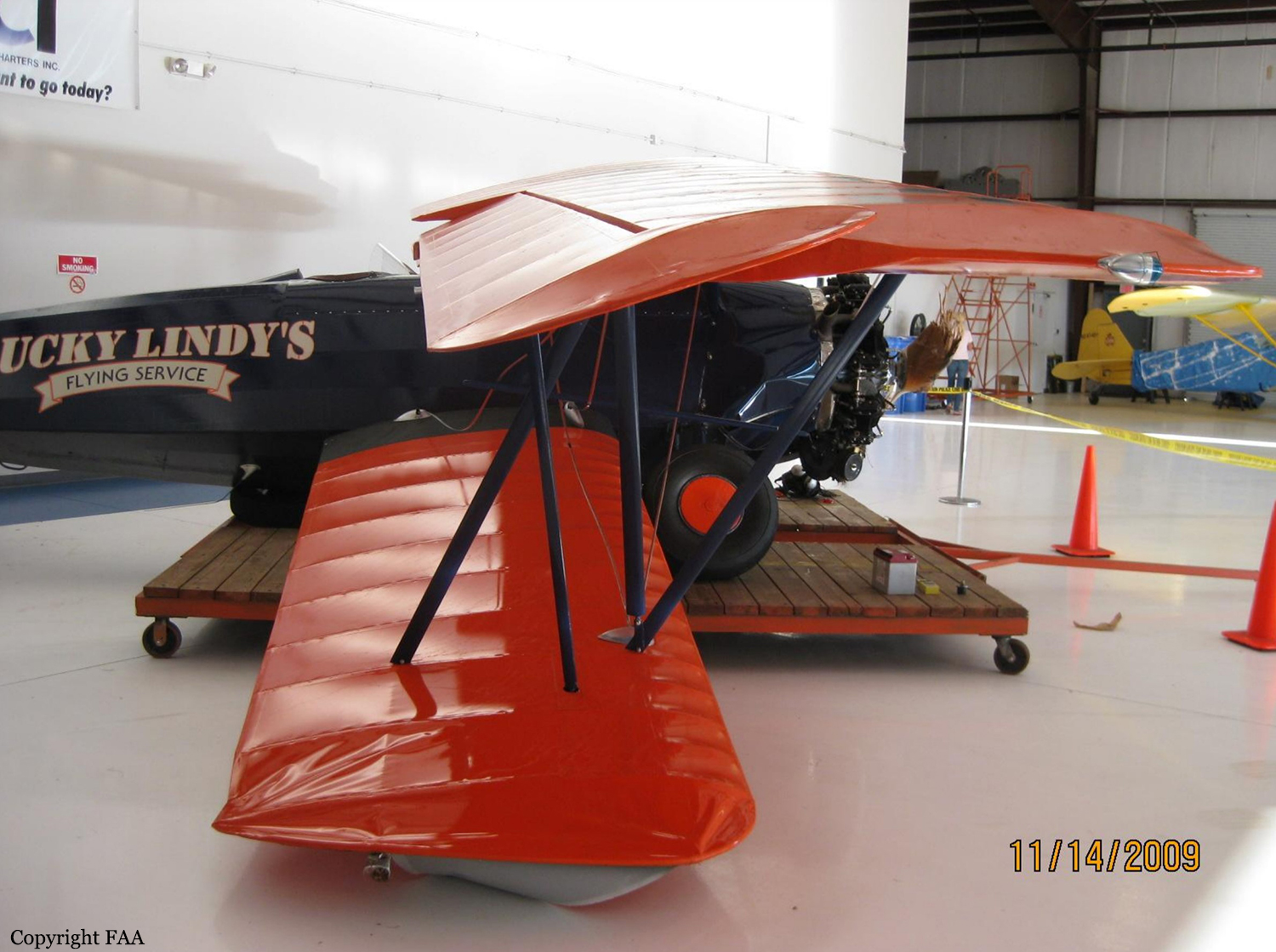
During approach, the pilot of the tailwheel-equipped biplane flew along at 20-30 feet above the runway until he was at midfield. The biplane touched down, bounced back in to the air, touched down again, and bounced once more prior to touching down for a third time in a nose-high attitude. The biplane then veered to the right, the right wing dipped, and the biplane cartwheeled, coming to rest inverted. The pilot had 60 hours of flight experience in the biplane. The previous owner had advised the pilot that landing the biplane took patience to land it perfectly and that attempting to land the biplane on asphalt with low experience could cause the biplane to bump repeatedly. He also advised that if the pilot pulled back on the control stick too soon during landing it could result in ballooning and porpoising.
Probable cause:
The pilot's improper recovery from a bounced landing and failure to maintain directional control, which resulted in a ground loop. Contributing to the accident was the pilot's minimal experience in the airplane make and model.
Final Report:
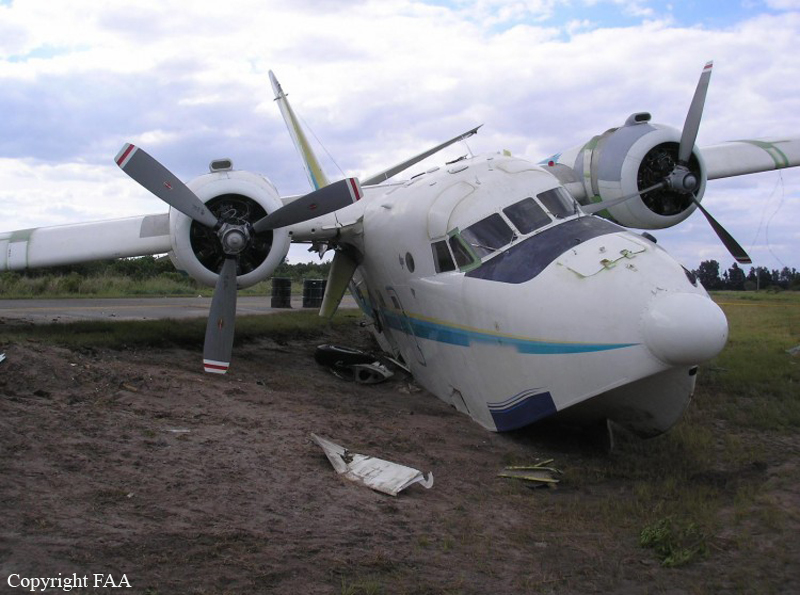
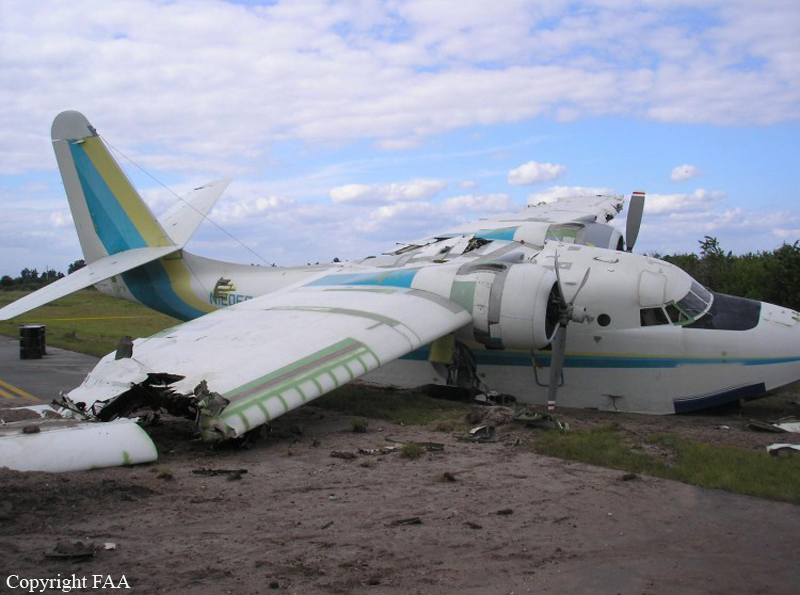
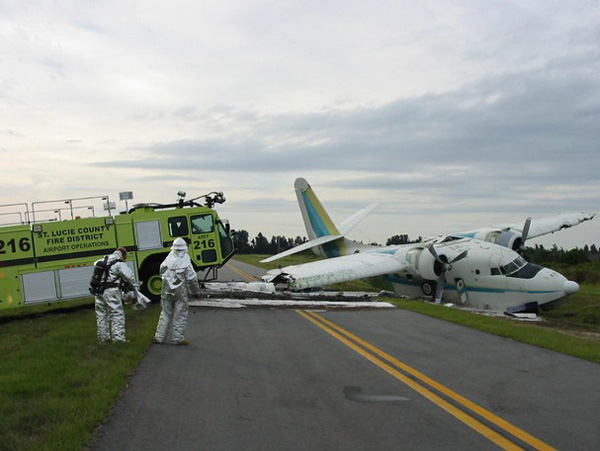
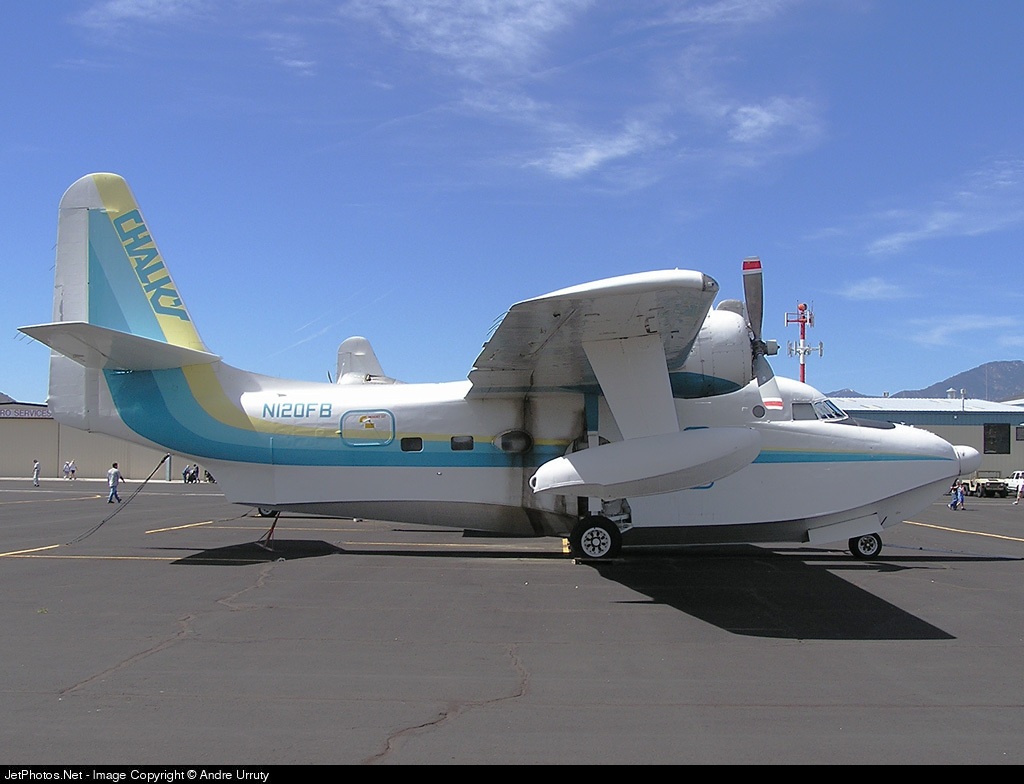
Crash of a Grumman G-111 Albatross in Fort Pierce

Date & Time: Nov 5, 2009 at 1534 LT
Type of aircraft:
Registration:
N120FB
Flight Phase:
Flight Type:
Survivors:
Yes
Schedule:
Fort Pierce - Okeechobee
MSN:
G-331
YOM:
1953
Crew on board:
2
Crew fatalities:
Pax on board:
1
Pax fatalities:
Other fatalities:
Total fatalities:
0
Captain / Total flying hours:
9095
Captain / Total hours on type:
14.00
Copilot / Total flying hours:
11500
Copilot / Total hours on type:
1100
Aircraft flight hours:
3747
Circumstances:
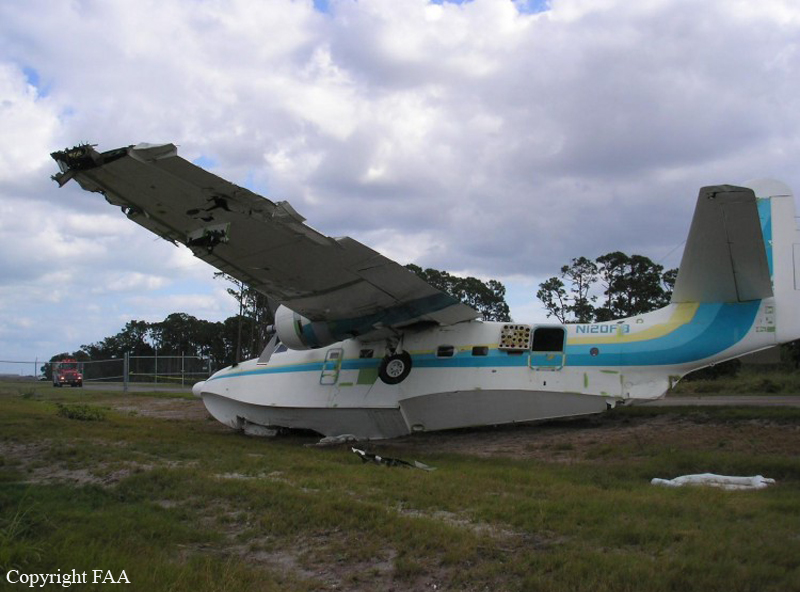
The pilot stated that during the landing gear retraction he heard a loud bang, followed by three to four smaller bangs. The first officer confirmed that the left engine was the affected engine and immediately began feathering the propeller. Once the propeller had been feathered, the captain confirmed the action by looking outside and noticing the propeller in the feathered position. The captain further reported that the right engine was producing the maximum power available and was indicating 55 inches of manifold pressure. Unable to achieve airspeed of greater than 95 to 96 knots indicated, the captain attempted to return to the airport for an emergency landing; however, he was unable to maintain altitude and attempted to land on an airport perimeter road, impacting the airport fence and a sand berm in the process. A cursory examination of the engine and system components revealed no evidence of a preimpact mechanical malfunction.
Probable cause:
A total loss of left engine power and subsequent failure of the airplane to maintain airspeed and altitude on the remaining engine for undetermined reasons.
Final Report:
Crash of a Piper PA-46-350P Malibu Mirage in Zephyrhills: 3 killed

Date & Time: Oct 23, 2009 at 2017 LT
Registration:
N98ZZ
Flight Type:
Survivors:
No
Schedule:
Gainesville – Lakeland
MSN:
46-36169
YOM:
1998
Crew on board:
1
Crew fatalities:
Pax on board:
2
Pax fatalities:
Other fatalities:
Total fatalities:
3
Captain / Total flying hours:
2750
Captain / Total hours on type:
110.00
Aircraft flight hours:
1893
Circumstances:
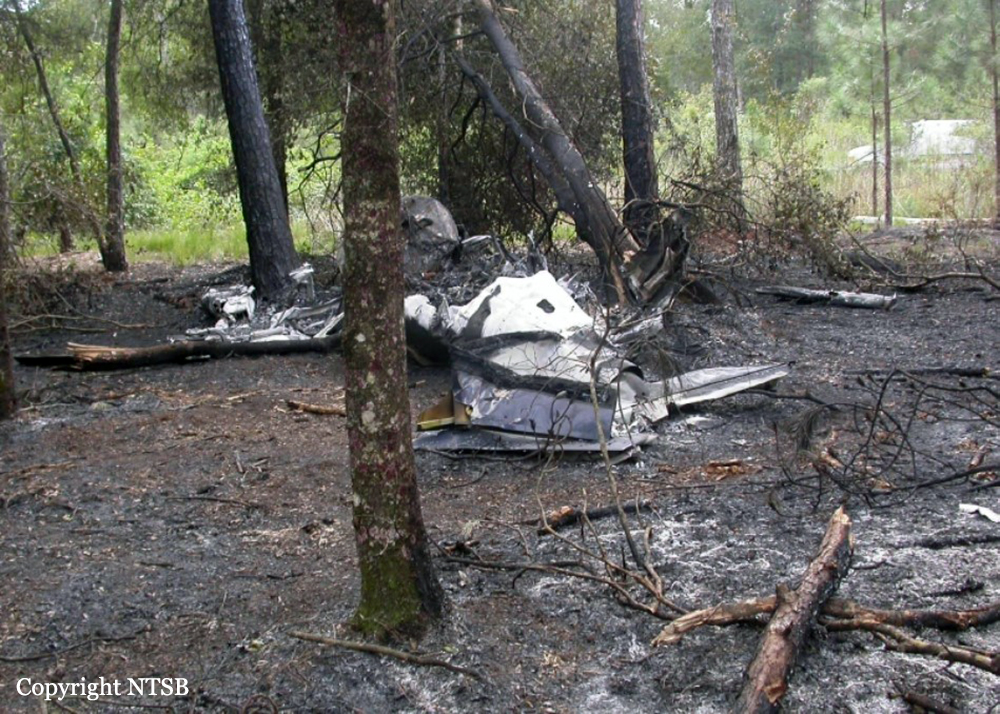
The pilot fueled the airplane prior to departure and flew uneventfully for approximately 30 minutes. The airplane then descended to 2,000 feet on approach to the destination airport, during night visual meteorological conditions. About 30 seconds after being cleared for a visual approach, the pilot declared an emergency to air traffic control and requested assistance to the nearest airport. The controller provided a vector to divert and distance to the nearest suitable airport. The pilot subsequently reported "engine out, engine out" and the airplane impacted wooded terrain about 4 miles northeast of runway 22 at the alternate airport. A post crash fire consumed a majority of the wreckage. Examination of the wreckage, including teardown examination of the engine, did not reveal any preimpact mechanical malfunctions; however, the fuel system and ignition system were consumed by post crash fire and could not be tested.
Probable cause:
A total loss of engine power during a night approach for undetermined reasons.
Final Report:

Crash of a Cessna 421C Golden Eagle III off New Port Richey: 5 killed
Date & Time: Jul 8, 2009 at 1352 LT
Operator:
Registration:
N4467D
Flight Phase:
Survivors:
No
Schedule:
McKinney - Tampa
MSN:
421C-0634
YOM:
1979
Crew on board:
1
Crew fatalities:
Pax on board:
4
Pax fatalities:
Other fatalities:
Total fatalities:
5
Captain / Total flying hours:
1940
Aircraft flight hours:
4326
Circumstances:
Prior to the accident flight, the pilot indicated that he was aware of the thunderstorm activity along his route of flight and that he anticipated deviating around the weather as necessary. While enroute to his destination, the pilot requested and was provided both weather information and pilot reports from other aircraft by air traffic control (ATC). Upon encountering an area of thunderstorm activity that extended east-to-west across the route of flight, the pilot reported encountering significant turbulence, and then downdrafts of 2,000 feet per minute. He then requested a course reversal to exit the weather before he declared an emergency and advised ATC that the airplane was upside down. There were no further transmissions from the pilot and radar contact with the airplane was lost. Review of radar data revealed that the pilot had deviated south and then southwest when the airplane entered a strong and intense echo of extreme intensity. Visible imaging revealed that the echo was located in an area of a rapidly developing cumulonimbus cloud with a defined overshooting top, indicating the storm was in the mature stage or at its maximum intensity. Two debris fields were later discovered near the area where the cumulonimbus cloud had been observed. This was indicative that the airplane had penetrated the main core of the cumulonimbus cloud, which resulted in an inflight breakup of the airplane. Near the heavier echoes the airplane's airborne weather radar may have been unable to provide an accurate representation of the radar echoes along the aircraft's flight path; therefore the final penetration of the intense portion of the storm was likely unintentional.
Probable cause:
The pilot’s decision to operate into a known area of adverse weather, which resulted in the inadvertent penetration of a severe thunderstorm, a subsequent loss of control, and in-flight breakup of the airplane.
Final Report: