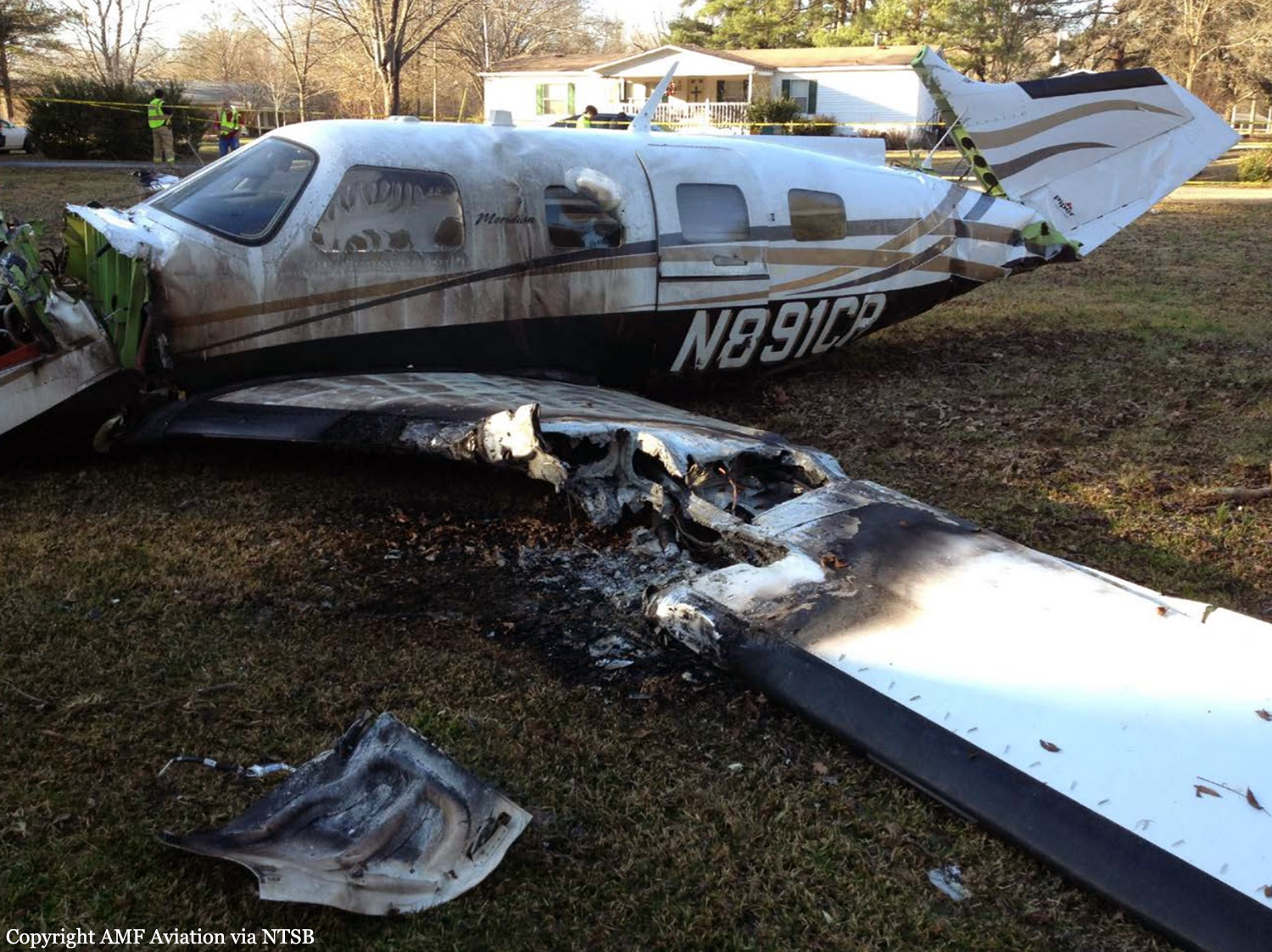
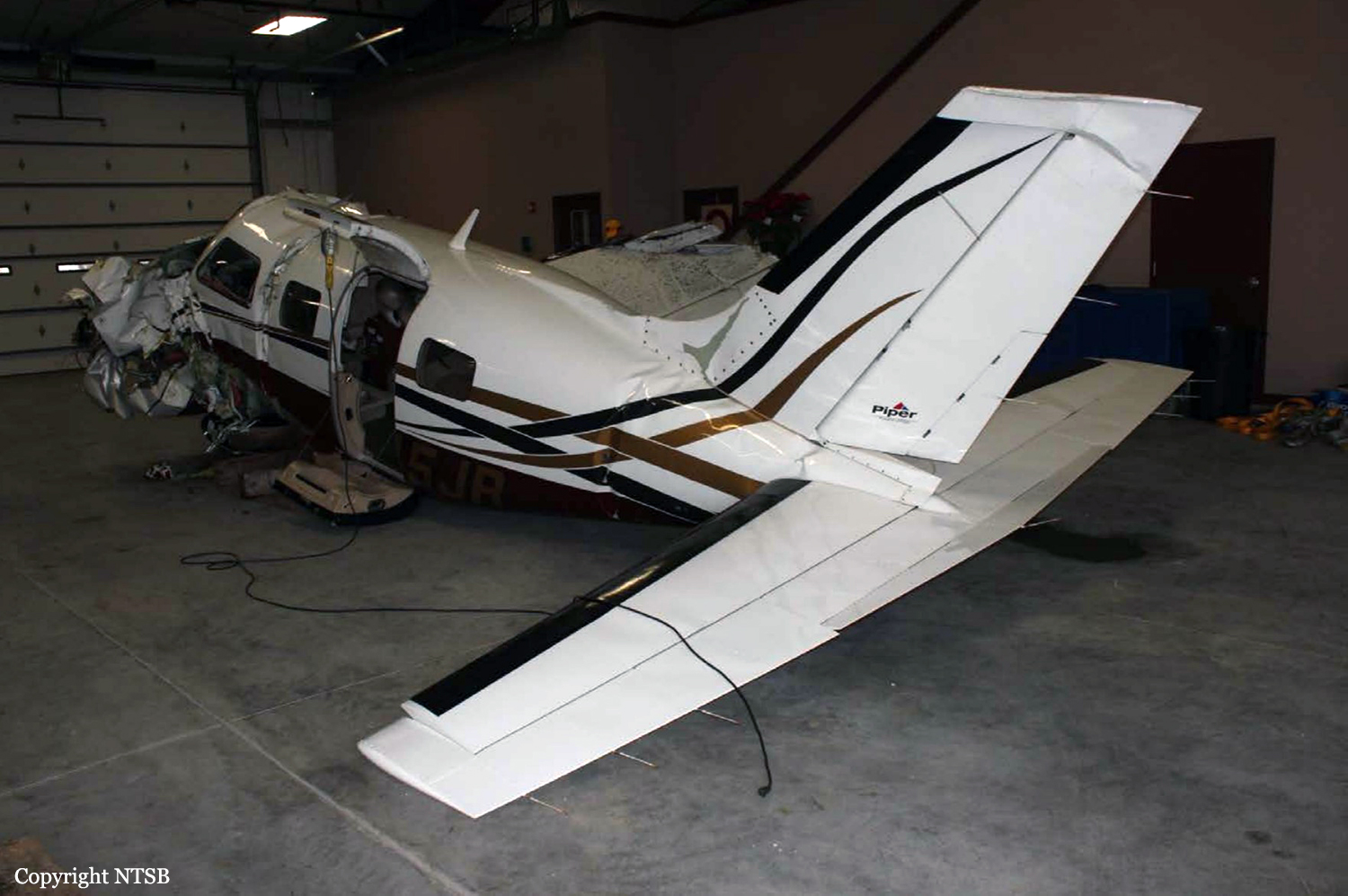
Crash of a Piper PA-46-500TP Malibu Meridian in Corinth

Date & Time: Dec 24, 2015 at 0840 LT
Registration:
N891CR
Flight Phase:
Flight Type:
Survivors:
Yes
Schedule:
Corinth - Key Largo
MSN:
46-97321
YOM:
2007
Crew on board:
1
Crew fatalities:
Pax on board:
3
Pax fatalities:
Other fatalities:
Total fatalities:
0
Captain / Total flying hours:
1990
Captain / Total hours on type:
427.00
Aircraft flight hours:
1407
Circumstances:
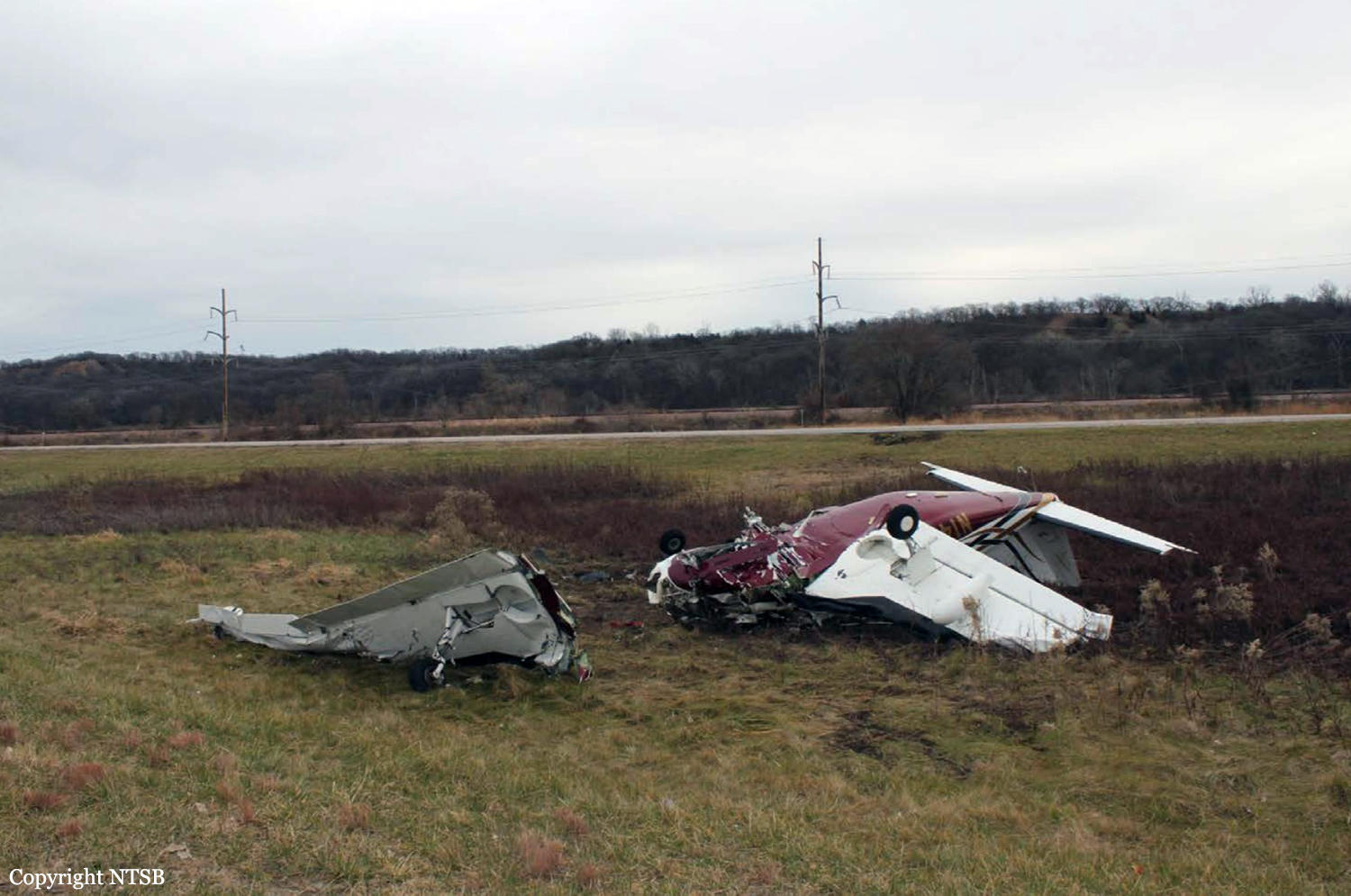
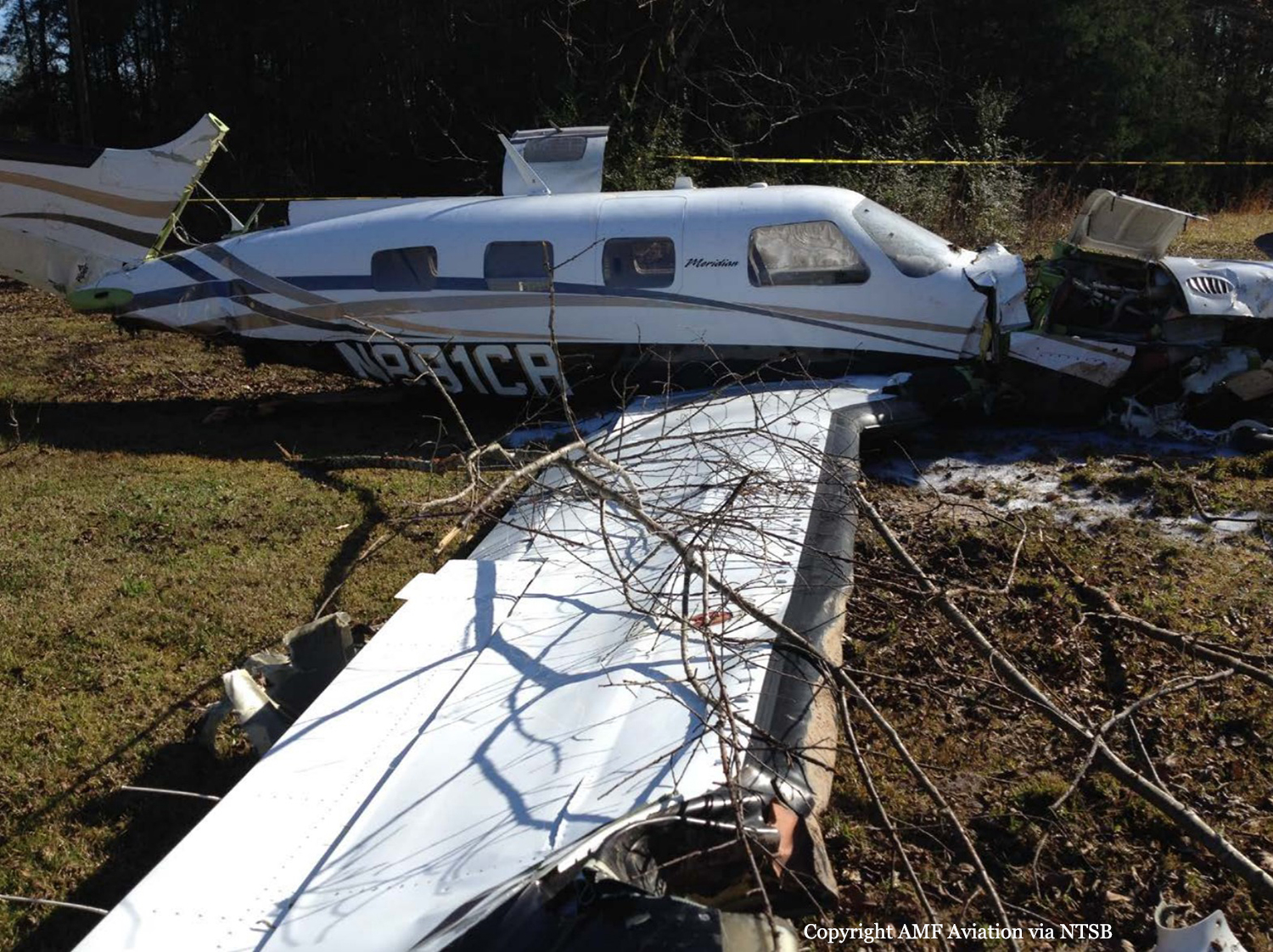
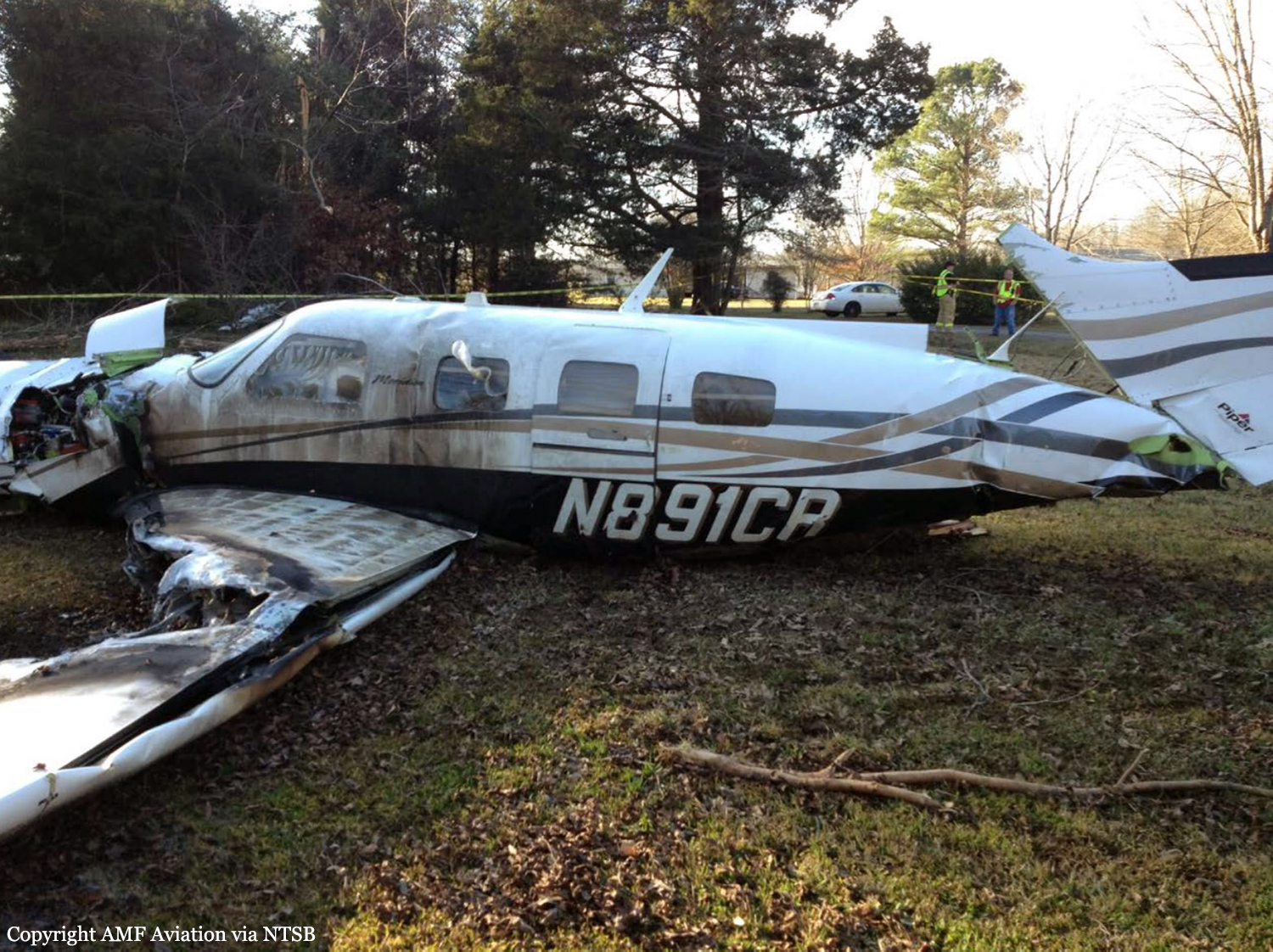
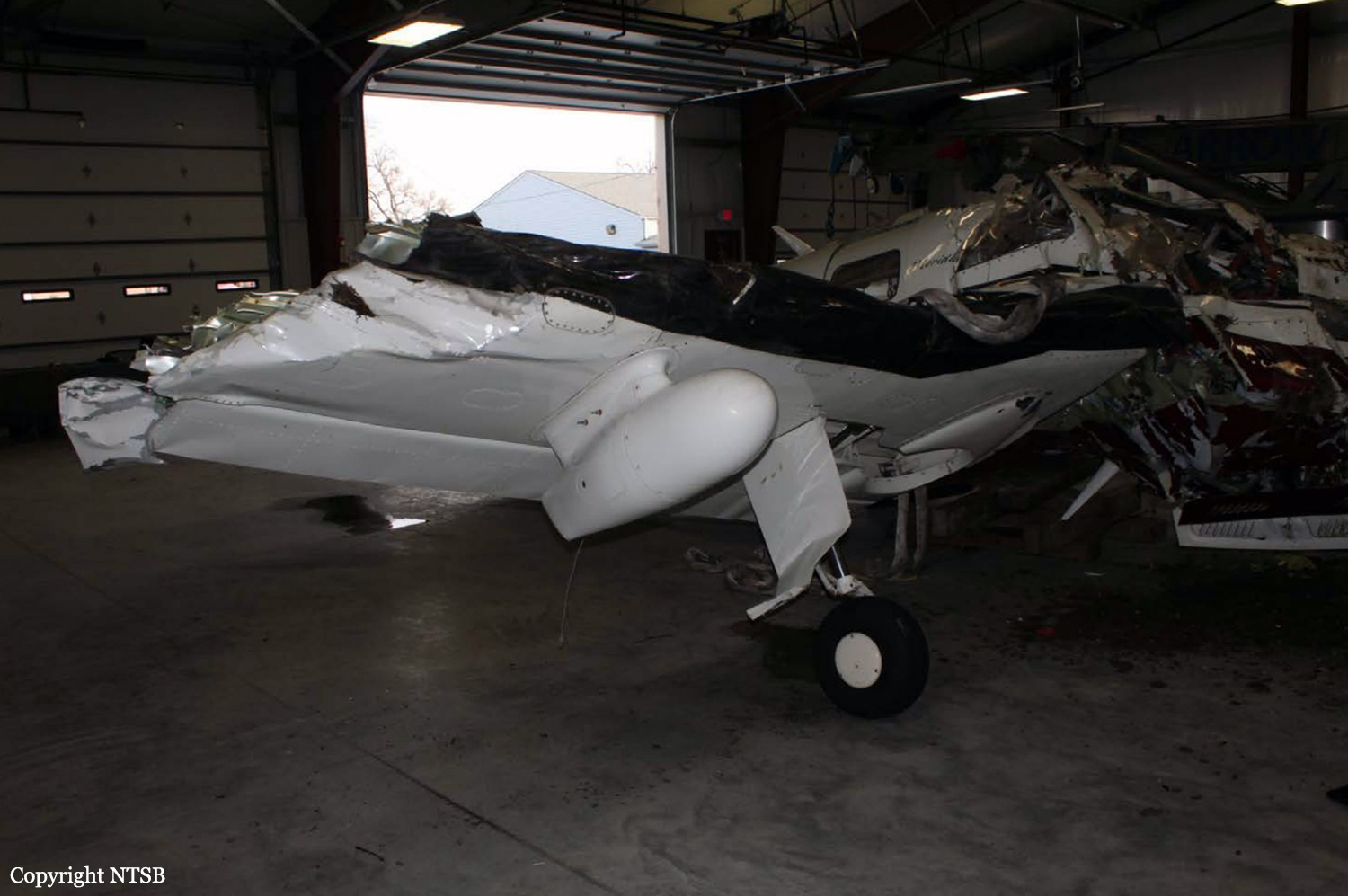
On the day of the accident, a line service technician had disconnected the airplane from a battery charger. After disconnecting the battery, he left the right access door open which provided access to the fuel control unit, fuses, fuel line, oil line, and battery charging port as he always did. He then towed the airplane from the hangar it was stored in, and parked it in front of the airport's terminal building. The three passengers arrived first, and then about 30 minutes later the pilot arrived. He uploaded his navigational charts and did a preflight check "which was normal." The engine start, taxi, and engine run up, were also normal. The wing flaps were set to 10°. After liftoff he "retracted the landing gear" and continued to climb. Shortly thereafter the right cowl door opened partially, and started "flopping" up and down 3 to 4 inches in each direction. He reduced the torque to try to prevent the right cowl door from coming completely open. However, when he turned on the left crosswind leg to return to the runway, the right cowl door opened completely, and the airplane would not maintain altitude even with full power, so he "put the nose back down." The airplane struck trees, and then pancaked, and slid sideways and came to rest, in the front yard of an abandoned house. The private pilot and one passenger received minor injuries. Two passengers received serious injuries, one of whom was found out of her seat, unconscious, on the floor of the airplane shortly after the accident, and died about 227 days later. During the investigation, it could not be determined, if she had properly used the restraint system, as it was found unlatched with the seatbelt portion of the assembly extended. Examination of the wreckage revealed no evidence of any preimpact failures or malfunctions of the airplane or engine that would have precluded normal operation. It was discovered though, that the right access door had not been closed and latched by the pilot before takeoff, as examination of the right access door latches and clevis keepers found them to be functional, with no indication of overstress or deformation which would have been present if the access door had been forced open due to air loads in-flight, or during the impact sequence. Further examination also revealed that the battery charging port cover which was inside the compartment that the right access door allowed access to, had not been placed and secured over the battery charging port, indicating that the preflight inspection had not been properly completed. A checklist that was provided by a simulator training provider was found by the pilot's seat station. Examination of the checklist revealed that under the section titled: "EXTERIOR PREFLIGHT" only one item was listed which stated, "EXTERIOR PREFLIGHT…COMPLETE." It also stated on both sides of the checklist: "FOR SIMULATOR TRAINING PURPOSES ONLY." A copy of the airplane manufacturer's published pilot's operating handbook (POH) was found in a cabinet behind the pilot's seat where it was not accessible from the pilot's station. Review of the POH revealed that it contained detailed guidance regarding the preflight check of the airplane. Additionally, it was discovered that the landing gear was in the down and locked position which would have degraded the airplane's ability to accelerate and climb by producing excess drag, and indicated that the pilot had not retracted the landing gear as he thought he did, as the landing gear handle was still in the down position. Review of recorded data from the airplanes avionics system also indicated that the airplane had roughly followed the runway heading while climbing until it reached the end of the runway. The pilot had then entered a left turn and allowed the bank angle to increase to about 45°, and angle of attack to increase to about 8°, which caused the airspeed to decrease below the stalling speed (which would have been about 20% higher than normal due to the increased load factor from the steep turn) until the airplane entered an aerodynamic stall, indicating that the pilot allowed himself to become distracted by the open door, rather than maintaining control of the airplane. One of the seriously injured passenger passed away 227 days after the accident.
Probable cause:
The pilot's inadequate preflight inspection and his subsequent failure to maintain airplane control, which resulted in an access door opening after takeoff, and the airplane exceeding its critical angle of attack and experiencing an aerodynamic stall.
Final Report:
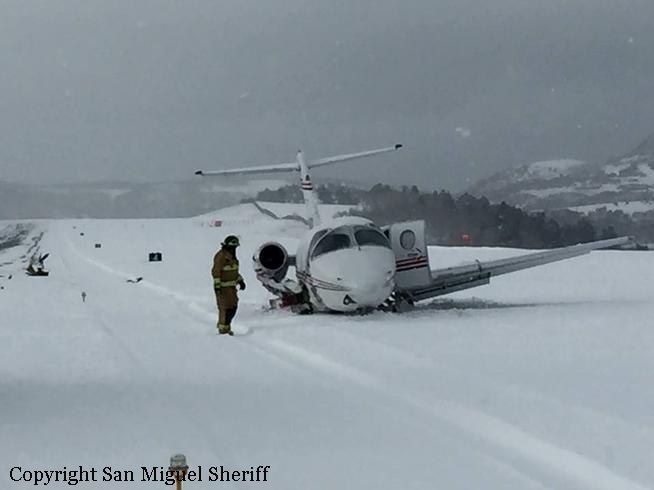
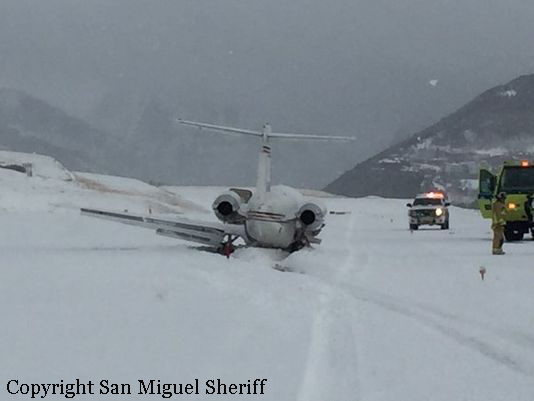
Crash of a Beechcraft BeechJet 400A in Telluride

Date & Time: Dec 23, 2015 at 1415 LT
Type of aircraft:
Operator:
Registration:
XA-MEX
Survivors:
Yes
Schedule:
Monterrey – El Paso – Telluride
MSN:
RK-396
YOM:
2004
Crew on board:
2
Crew fatalities:
Pax on board:
5
Pax fatalities:
Other fatalities:
Total fatalities:
0
Captain / Total flying hours:
7113
Captain / Total hours on type:
1919.00
Copilot / Total flying hours:
8238
Copilot / Total hours on type:
1412
Aircraft flight hours:
5744
Circumstances:
The pilots were conducting an international chartered flight in the small, twin-engine jet with five passengers onboard. Since the weather at the destination was marginal, the flight crew had discussed an alternate airport in case weather conditions required a missed approach at their destination. As the airplane neared the non-towered destination airport, the flight crew received updated weather information, which indicated that conditions had improved. Upon contacting the center controller, the crew was asked if they had the weather and NOTAMS for the destination airport. The crew reported that they received the current weather information, but did not state if they had NOTAM information. The controller responded by giving the flight a heading for the descent and sequence into the airport. The controller did not provide NOTAM information to the pilots. About 2 minutes later, airport personnel entered a NOTAM via computer closing the runway, effective immediately, for snow removal. Although the NOTAM was electronically routed to the controller, the controller's system was not designed to automatically alert the controller of a new NOTAM; the controller needed to select a display screen on the equipment that contained the information. At the time of the accident, the controller's workload was considered heavy. About 8 minutes after the runway closure NOTAM was issued, the controller cleared the airplane for the approach. The flight crew then canceled their instrument flight plan with the airport in sight, but did not subsequently transmit on or monitor the airport's common traffic advisory frequency, which was reportedly being monitored by airport personnel and the snow removal equipment operator. The airplane landed on the runway and collided with a snow removal vehicle about halfway down the runway. The flight crew reported they did not see the snow removal equipment. The accident scenario is consistent with the controllers not recognizing new NOTAM information in a timely manner due to equipment limitations, and the pilots not transmitting or monitoring the common traffic advisory frequency. Additionally, the accident identifies a potential problem for flight crews when information critical to inflight decision-making changes while en route, and problems when controller workload interferes with information monitoring and dissemination.
Probable cause:
The limitations of the air traffic control equipment that prevented the controller's timely recognition of NOTAM information that was effective immediately and resulted in the issuance of an approach clearance to a closed runway. Also causal was the pilots' omission to monitor and transmit their intentions on the airport common frequency. Contributing to the accident was the controller's heavy workload and the limitations of the NOTAM system to distribute information in a timely manner.
Final Report:

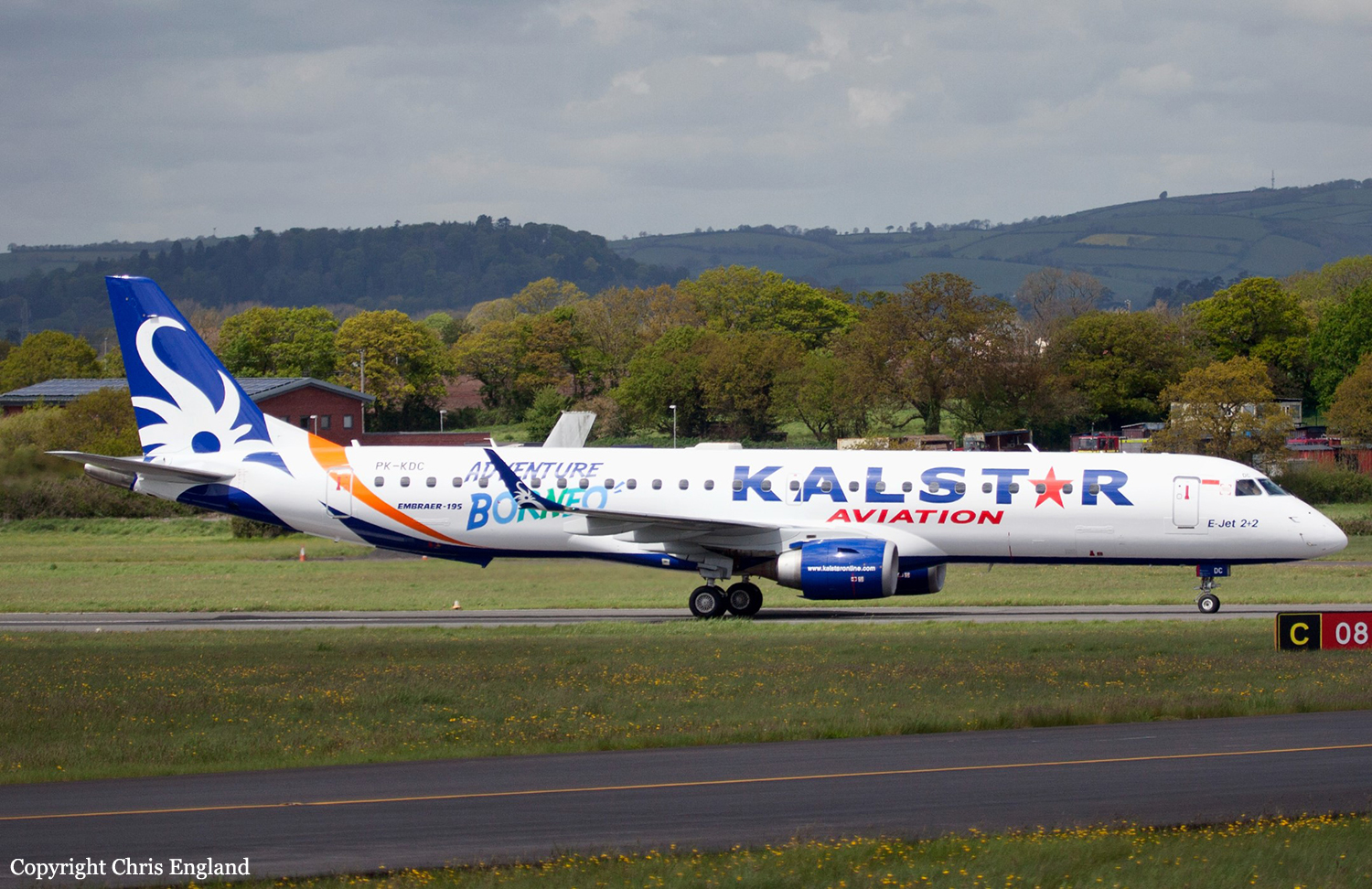
Crash of a Embraer ERJ-190-200LR in Kupang

Date & Time: Dec 21, 2015 at 1746 LT
Type of aircraft:
Operator:
Registration:
PK-KDC
Survivors:
Yes
Schedule:
Ende - Kupang
MSN:
190-00057
YOM:
2006
Flight number:
KD676
Country:
Region:
Crew on board:
5
Crew fatalities:
Pax on board:
120
Pax fatalities:
Other fatalities:
Total fatalities:
0
Captain / Total flying hours:
9800
Captain / Total hours on type:
598.00
Copilot / Total flying hours:
2997
Copilot / Total hours on type:
557
Aircraft flight hours:
16862
Aircraft flight cycles:
14765
Circumstances:
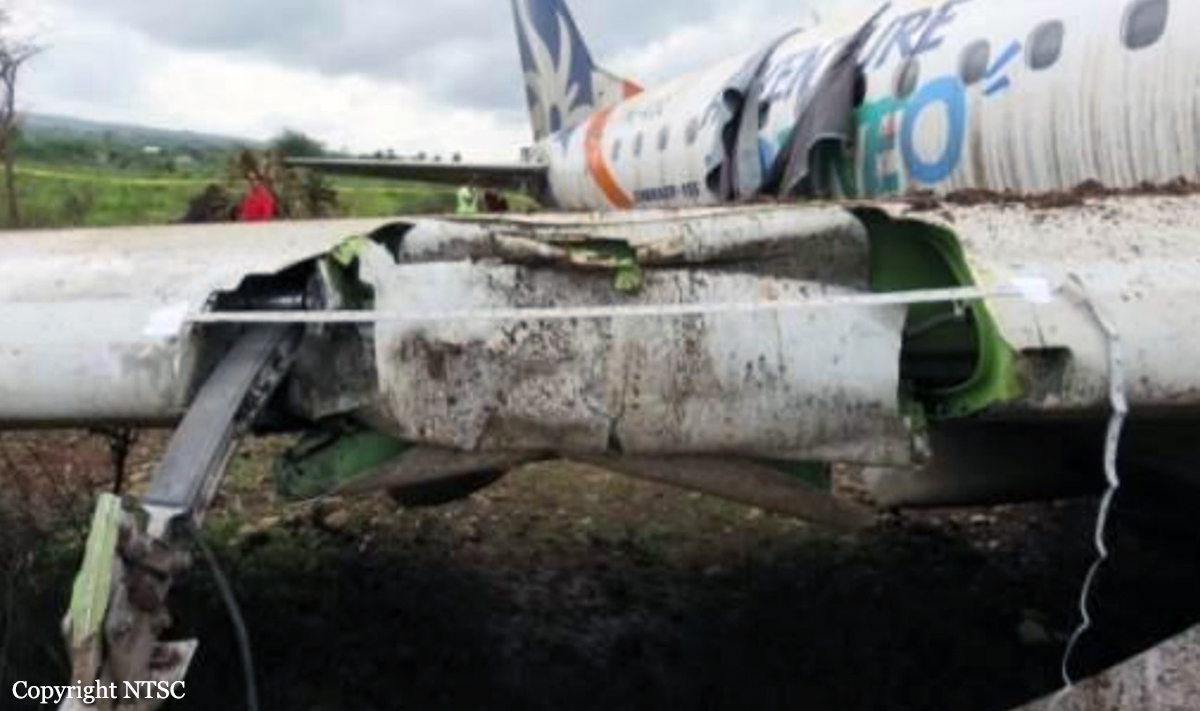
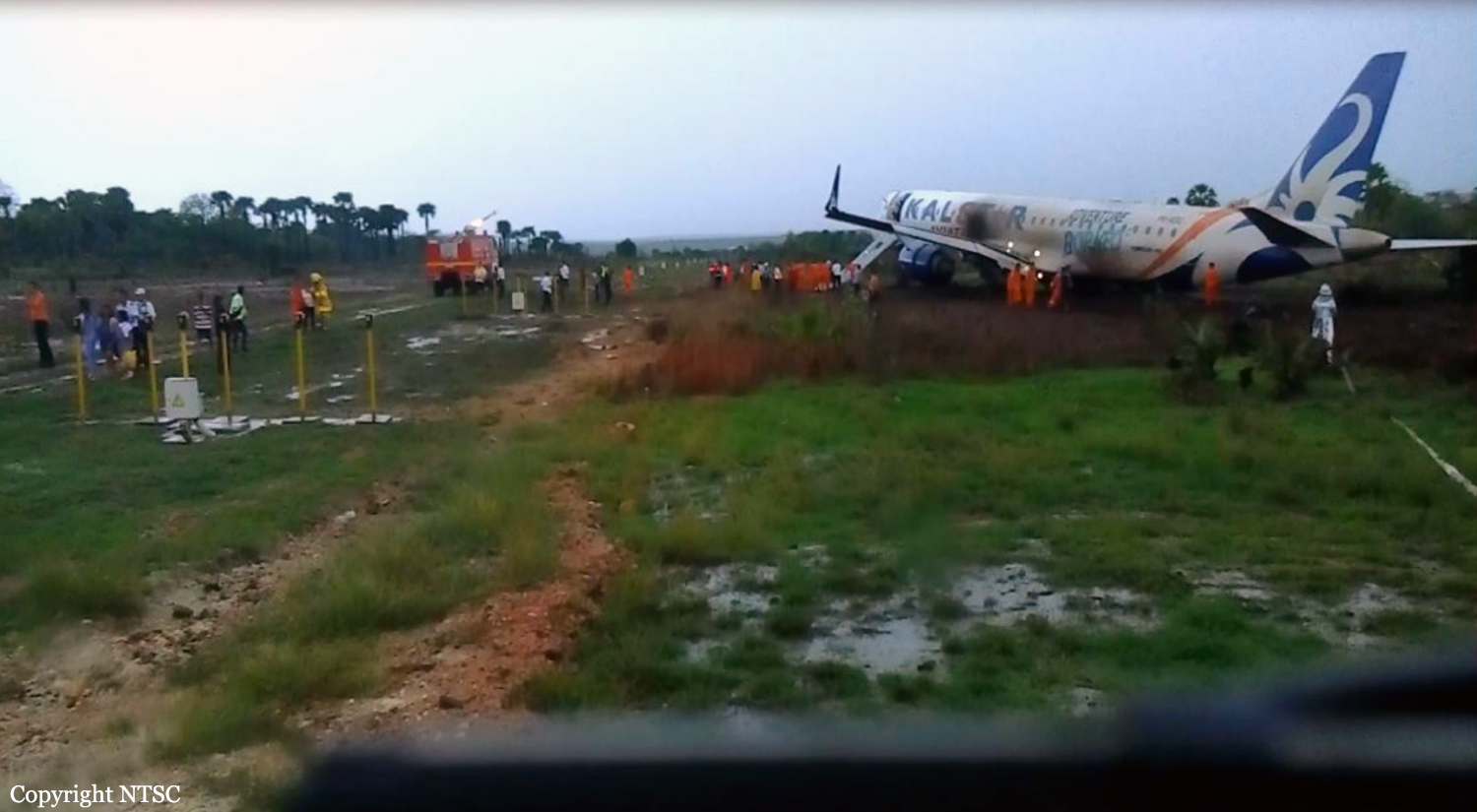
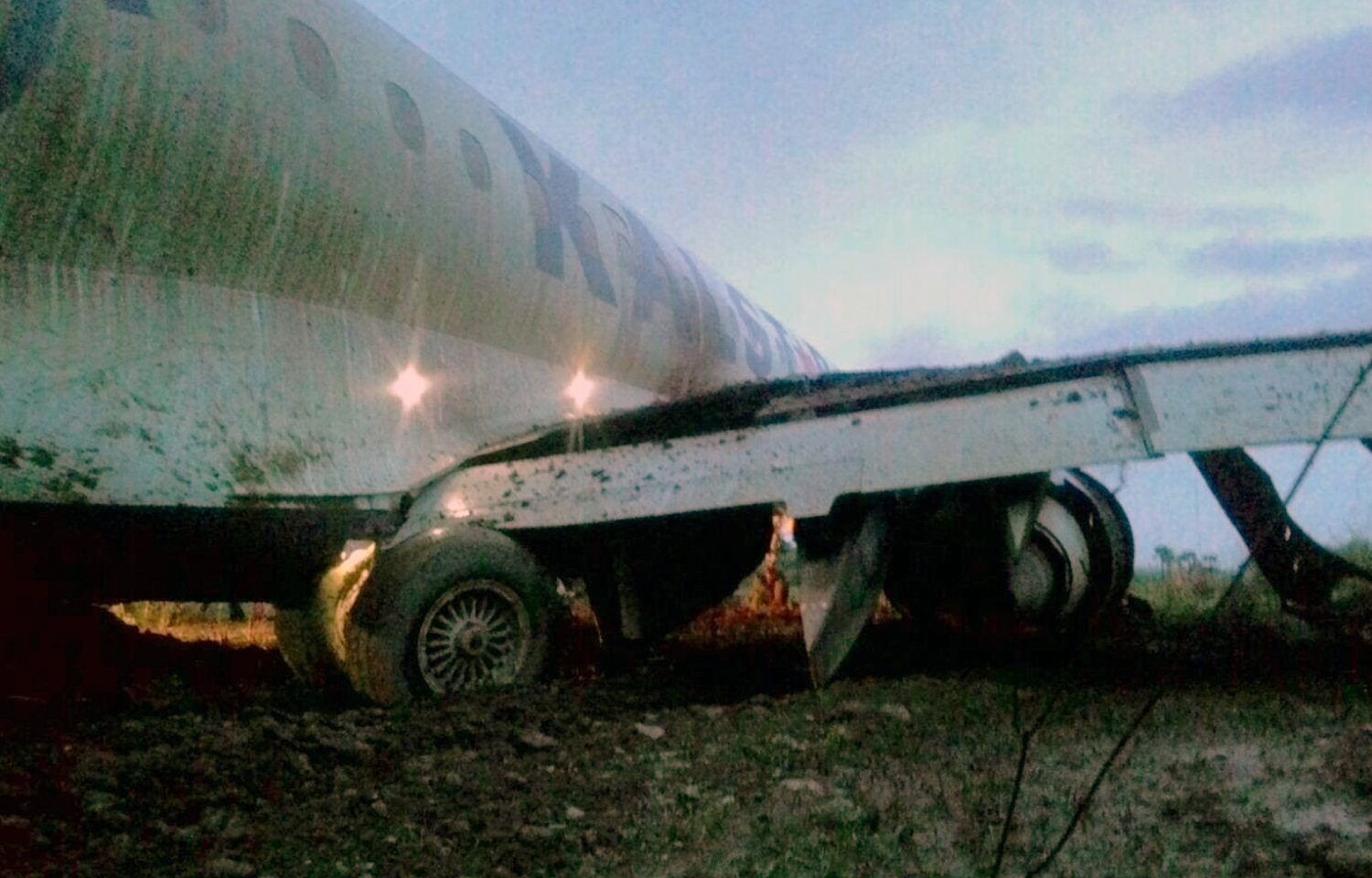
On 21 December 2015, an ERJ 190-200 (Embraer 195) aircraft, registered PK-KDC, was being operated by Kalstar Aviation on a scheduled passenger flight. The crew was scheduled to fly three sectors from I Gusti Ngurah Rai International Airport (WADD) Bali – H. Hasan Aroeboesman Airport (WATE) Ende – El Tari International Airport (WATT) Kupang – Sultan Hasanuddin International Airport (WAAA), Makassar. The aircraft departed Bali at 0734 UTC which was delayed for 74 minutes from the normal schedule, due to late arrival of the aircraft from the previous flight. On the flight from Bali to Ende, the Pilot in Command (PIC) acted as pilot monitoring (PM) and the Second in command (SIC) acted as pilot flying (PF). The aircraft landed in Ende at 0839 UTC. During transit, the PIC received a short message from a flight operations officer of Kalstar Aviation in Kupang which informed him that the visibility at Kupang was 1 km. Considering the weather forecast in the Terminal Aerodrome Forecast (TAFOR) showed that the visibility at Kupang would improve at the time of arrival, the PIC decided to depart to Kupang. Another consideration was the operating hours of Ende which would be closed at 0900 UTC. The operating hours of Ende was extended and the aircraft departed Ende at 0916 UTC, with flight number KD676. On board this flight were two pilots, three flight attendants, and 125 passengers. The PIC acted as PM and the SIC acted as PF. There was no departure briefing performed by the PF. After takeoff, the pilot set the Flight Management System (FMS) to fly direct to KPG VOR and climbed to a cruising altitude of Flight Level (FL) 175 (17,500 feet). During climbing, the PIC instructed the SIC to reduce the aircraft speed by 20 knots with the intention to wait for the weather improvement at Kupang. During cruising, the pilots monitored communication between El Tari Tower controller with another pilot. El Tari Tower controller advised that the visibility at Kupang was 1 km while the minima for approach was 3.9 km. At 0927 UTC, the pilot established communication with El Tari Tower controller and requested for direct to initial approach point SEMAU. At 0932 UTC, the aircraft was at 62 Nm, the aircraft started to descend which was approved to 10,000 feet. When the aircraft passed FL 150, the pilot requested to turn left to fly direct to the inbound track of the VOR/DME approach for runway 07 in order to avoid cloud formation which was indicated by magenta color on the aircraft weather radar. At 0941 UTC, the El Tari Tower controller informed that the visibility on runway 07 was 4 km and issued clearance for RNAV approach to runway 07 and requested that the pilot report when the runway was in sight. Both pilots discussed the plan to make an RNAV approach to runway 07, with landing configuration with flap 5 and auto-brake set to position low. At 0943 UTC, the pilot reported that the runway was in sight when passing 2,500 feet and the El Tari Tower controller informed that the wind was calm and issued a landing clearance. During the approach, the PF noticed that all Precision Approach Path Indicator (PAPI) lights indicated a white color, which indicated that the aircraft was too high for the approach. Recognizing that the aircraft was too high, the crew performed a non-standard configuration setting by extending the landing gear down first with the intention to increase drag. The landing gear was extended at approximately 7 Nm from the runway 07 threshold and afterwards selected the flaps to 1 and 2. The published approach procedure stated that the sequence for establishing landing configuration is by selecting flap 1, flap 2, landing gear down, flap 3 and flap 5. On final approach, the crew noticed the aural warning “HIGH SPEED HIGH SPEED”. The SIC also noticed that the aircraft speed was about 200 knots. The pilots decided to continue the approach considering the runway was 2,500 meters long and would be sufficient for the aircraft to stop with the existing conditions. The pilots compared the runway condition at Kupang with the condition at Ende which had 1,650 meter length runway. On short final approach, the aircraft was on the correct glide path and the speed was approximately 205 knots. The PF noticed the Enhanced Ground Proximity Warning System (EGPWS) warning of “TOO LOW TERRAIN” activated. The aircraft then touched down at approximately the middle of the runway. After touchdown, the PF immediately applied thrust reverser. Realizing that the aircraft was about to overrun the end of the runway, and with the intention to avoid the approach lights on the end of the runway, the PIC turned the aircraft to the right. The aircraft stopped approximately 200 meters from the end of runway 07. At 0946 UTC, the El Tari Tower controller saw the aircraft overrun, then pushed the crash bell and informed the Airport Rescue and Fire Fighting (ARFF).
Probable cause:
Contributing Factors:
- The steep authority gradient resulted in lack of synergy that contributed to least of alternation to correct the improper condition.
- Improper flight management on approach resulted to the aircraft not fully configured for landing, prolong and high speed on touchdown combined with low brake pressure application resulted in insufficient runway for deceleration.
- The deviation of pilot performance was undetected by the management oversight system.
Final Report:

Ground accident of a Boeing 737-3H4 in Nashville

Date & Time: Dec 15, 2015 at 1730 LT
Type of aircraft:
Operator:
Registration:
N649SW
Flight Phase:
Survivors:
Yes
Schedule:
Houston – Nashville
MSN:
27719/2894
YOM:
1997
Flight number:
WN031
Crew on board:
5
Crew fatalities:
Pax on board:
133
Pax fatalities:
Other fatalities:
Total fatalities:
0
Captain / Total flying hours:
19186
Captain / Total hours on type:
14186.00
Copilot / Total flying hours:
15500
Copilot / Total hours on type:
5473
Aircraft flight hours:
58630
Circumstances:
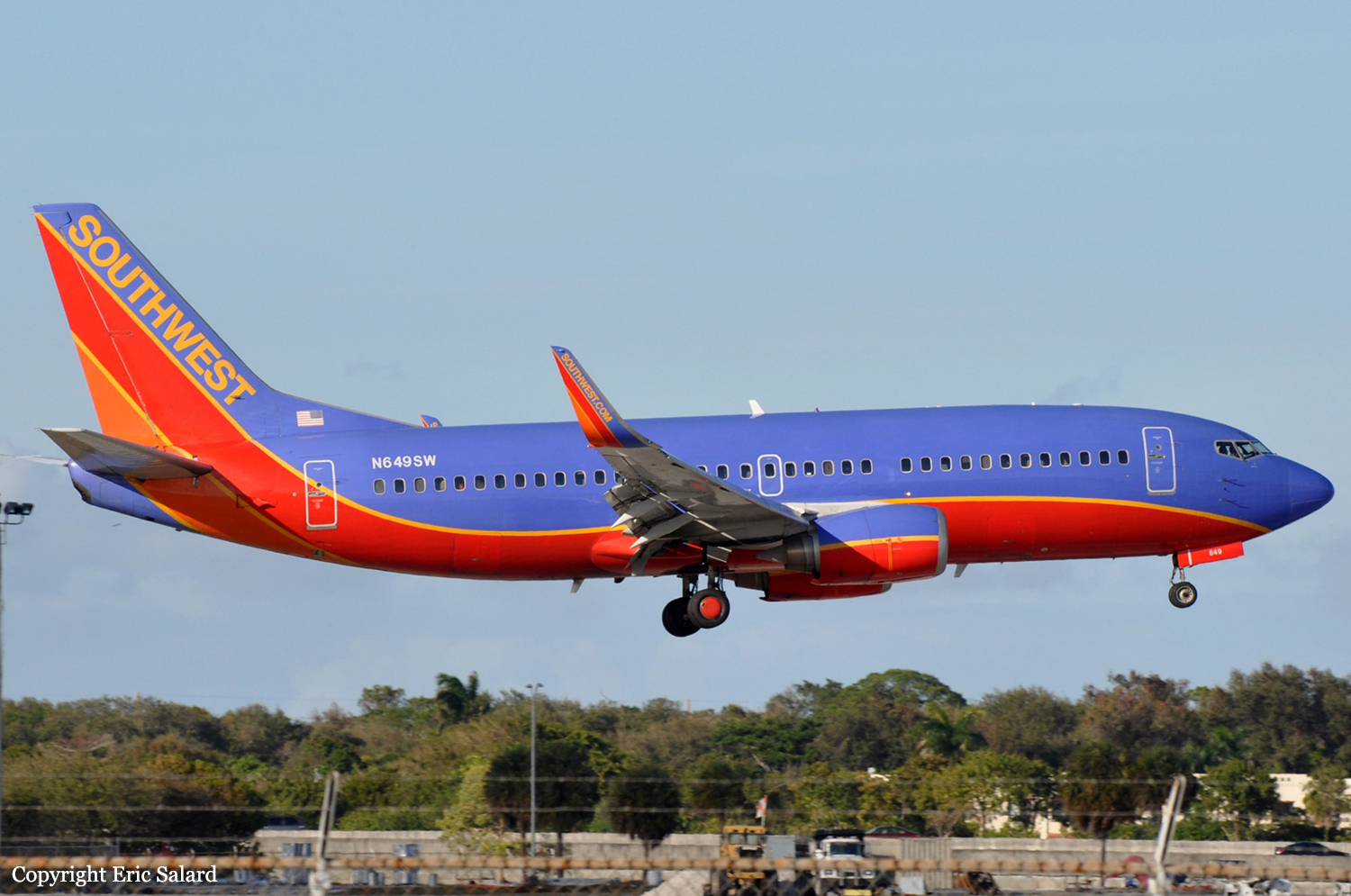
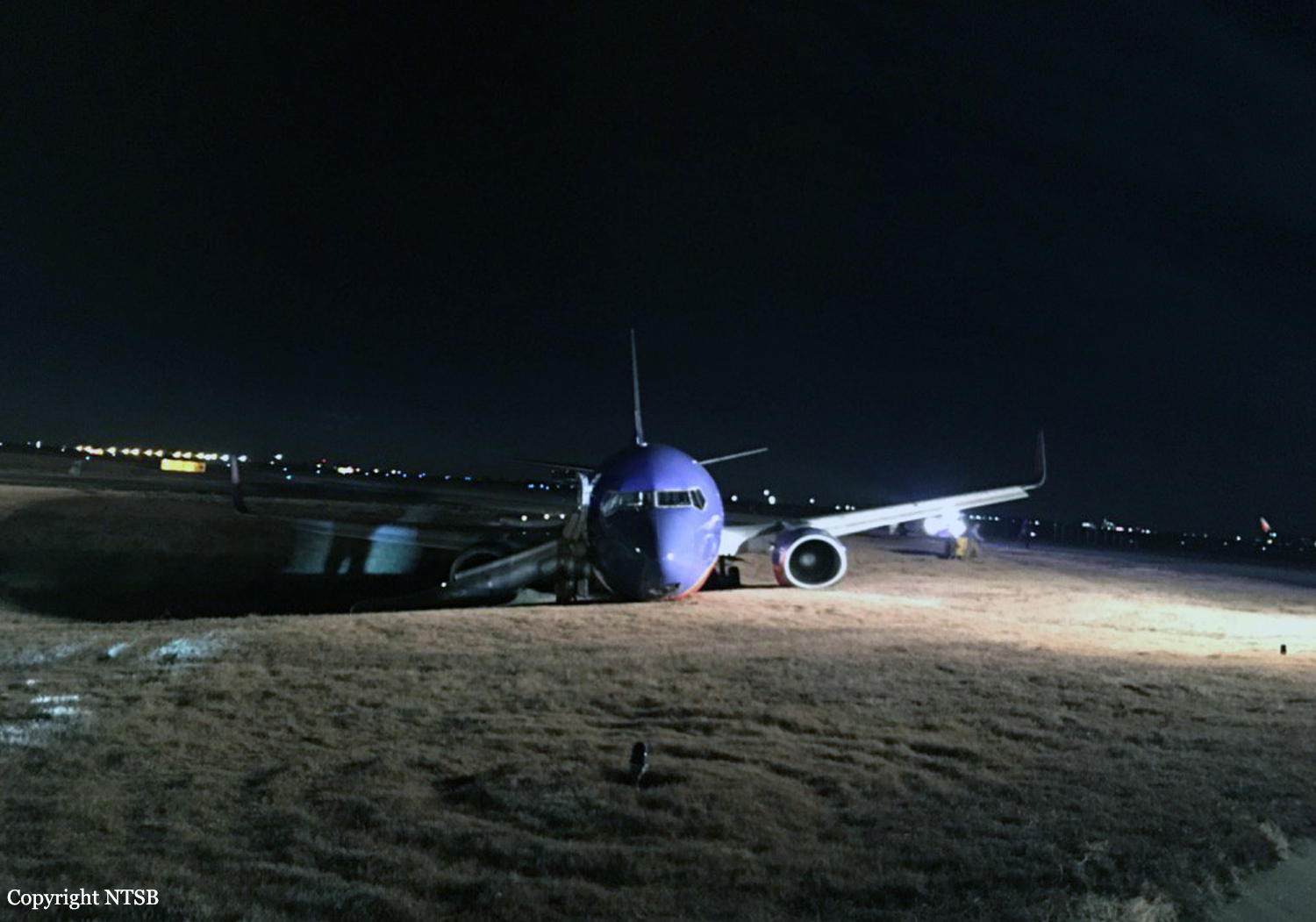
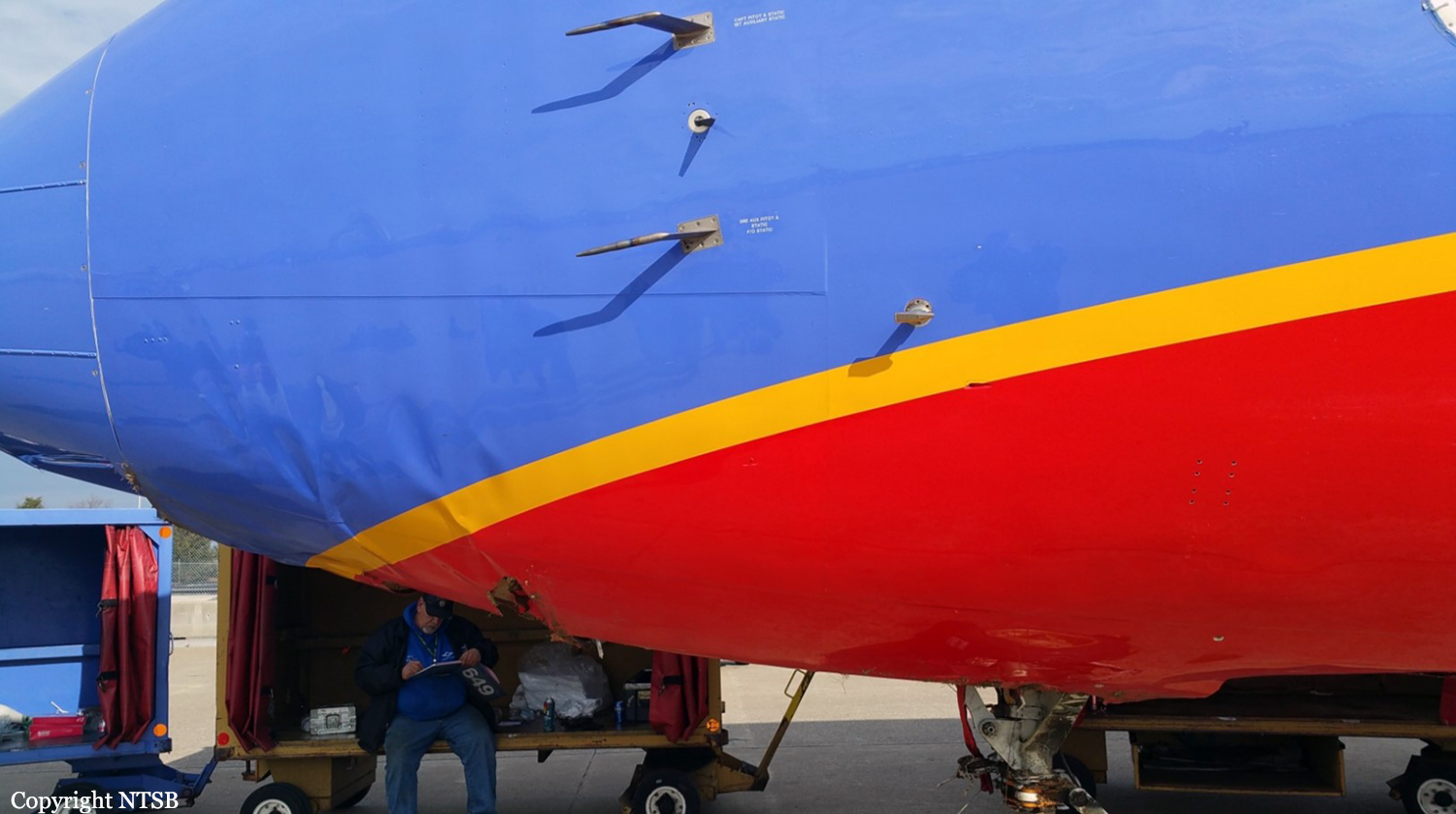
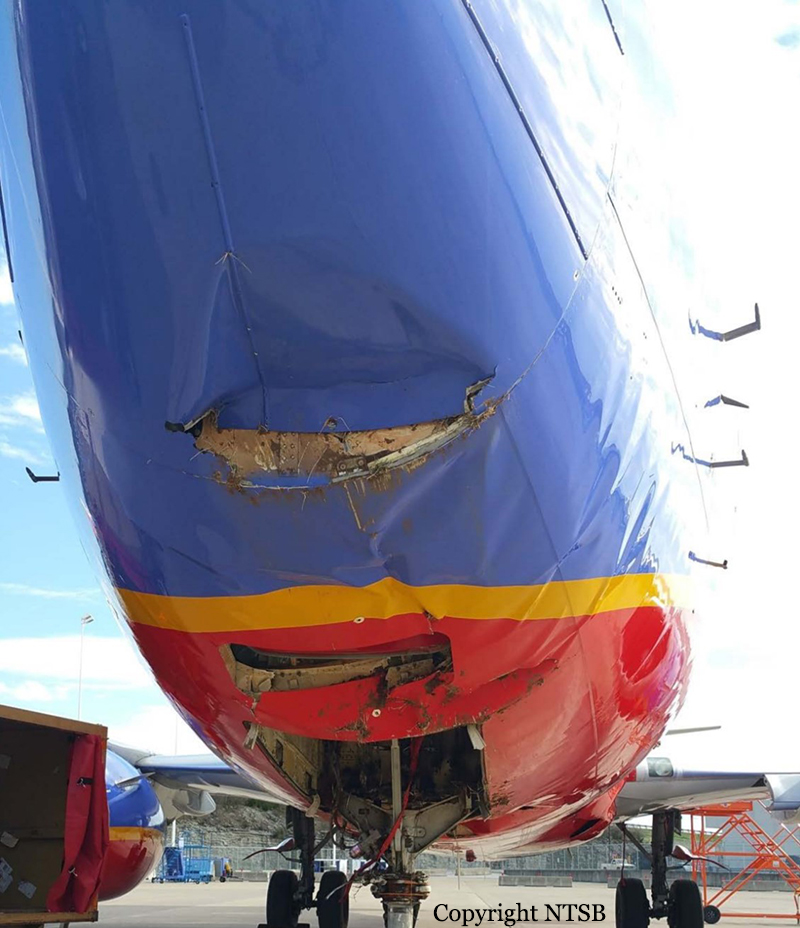
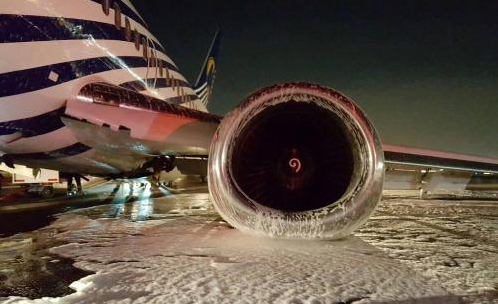
On December 15, 2015, at 5:23pm central standard time (CST), Southwest Airlines flight 31, a Boeing 737-300, N649SW, exited the taxiway while taxing to the gate and came to rest in a ditch at the Nashville International Airport (BNA), Nashville, Tennessee. Nine of the 138 passengers and crew onboard received minor injuries during the evacuation and the airplane was substantially damaged. The airplane was operating under the provisions of 14 Code of Federal Regulations Part 121 as a regularly scheduled passenger flight from William P. Hobby Airport (HOU), Houston, Texas. Weather was not a factor, light conditions were dark just after sunset. The airplane landed normally on runway 20R and exited at taxiway B2. The flight crew received and understood the taxi instructions to their assigned gate. As the crew proceeded along taxiway T3, the flight crew had difficulty locating taxiway T4 as the area was dark, and there was glare from the terminal lights ahead. The crew maneuvered the airplane along T3 and onto T4, and then turned back to the right on a general heading consistent with heading across the ramp toward the assigned gate. The flight crew could not see T4 or the grassy area because the taxiway lights were off and the glare from the terminal lights. As a result, the airplane left the pavement and came to rest in a drainage ditch resulting in substantial damage to airplane. The cabin crew initially attempted to keep the passengers seated, but after being unable to contact the flight crew due to the loud alarm on the flight deck, the cabin crew properly initiated and conducted an evacuation. As a result of past complaints regarding the brightness of the green taxiway centerline lights on taxiways H, J, L and T-6, BNA tower controllers routinely turned off the taxiway centerline lighting. Although the facility had not received any requests on the day of the accident, about 30 minutes prior to the event the tower controller in charge (CIC) turned off the centerline lights as a matter of routine. In doing so, the CIC inadvertently turned off the "TWY J & Apron 2" selector, which included the taxiway lights in the vicinity of the excursion. The airfield lighting panel screensaver feature prevented the tower controllers from having an immediate visual reference to the status of the airfield lighting.
Probable cause:
The flight crew's early turn towards the assigned gate because taxiway lighting had been inadvertently turned off by the controller-in-charge which resulted in the airplane leaving the paved surface. Contributing to the accident was the operation of the screen-saver function on the lighting control panel that prevented the tower controllers from having an immediate visual reference
to the status of the airfield lighting.
Final Report:

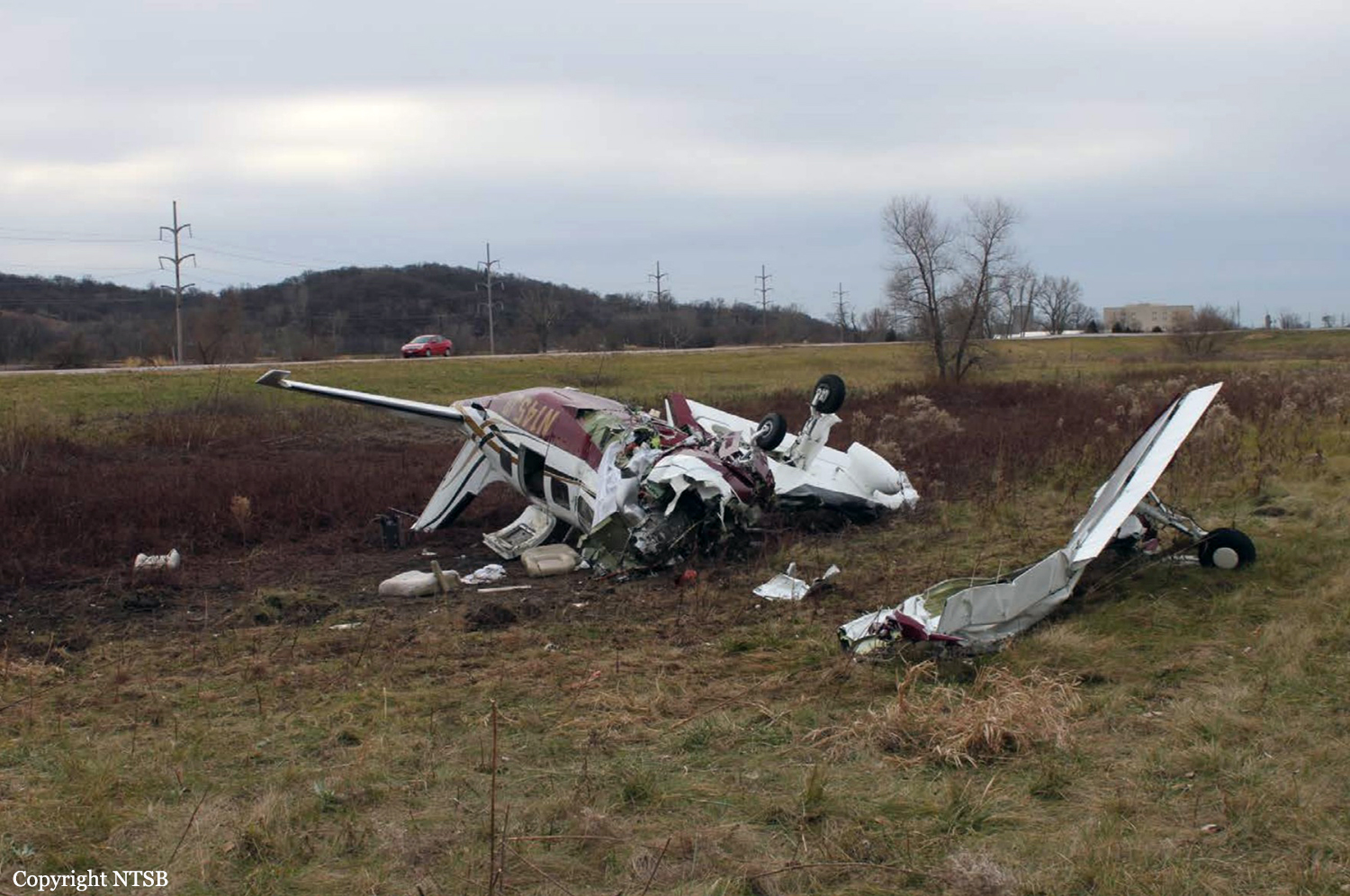
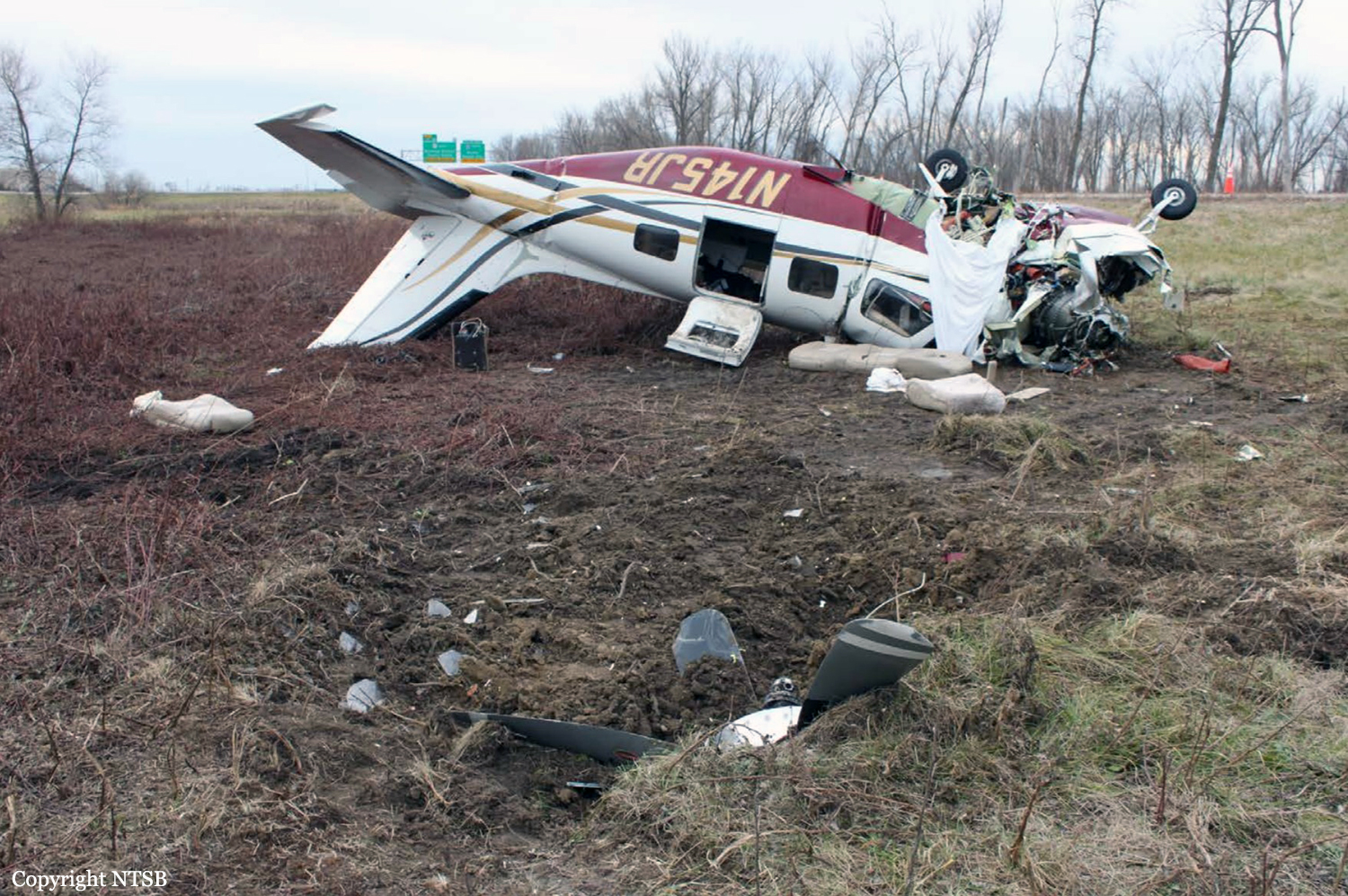
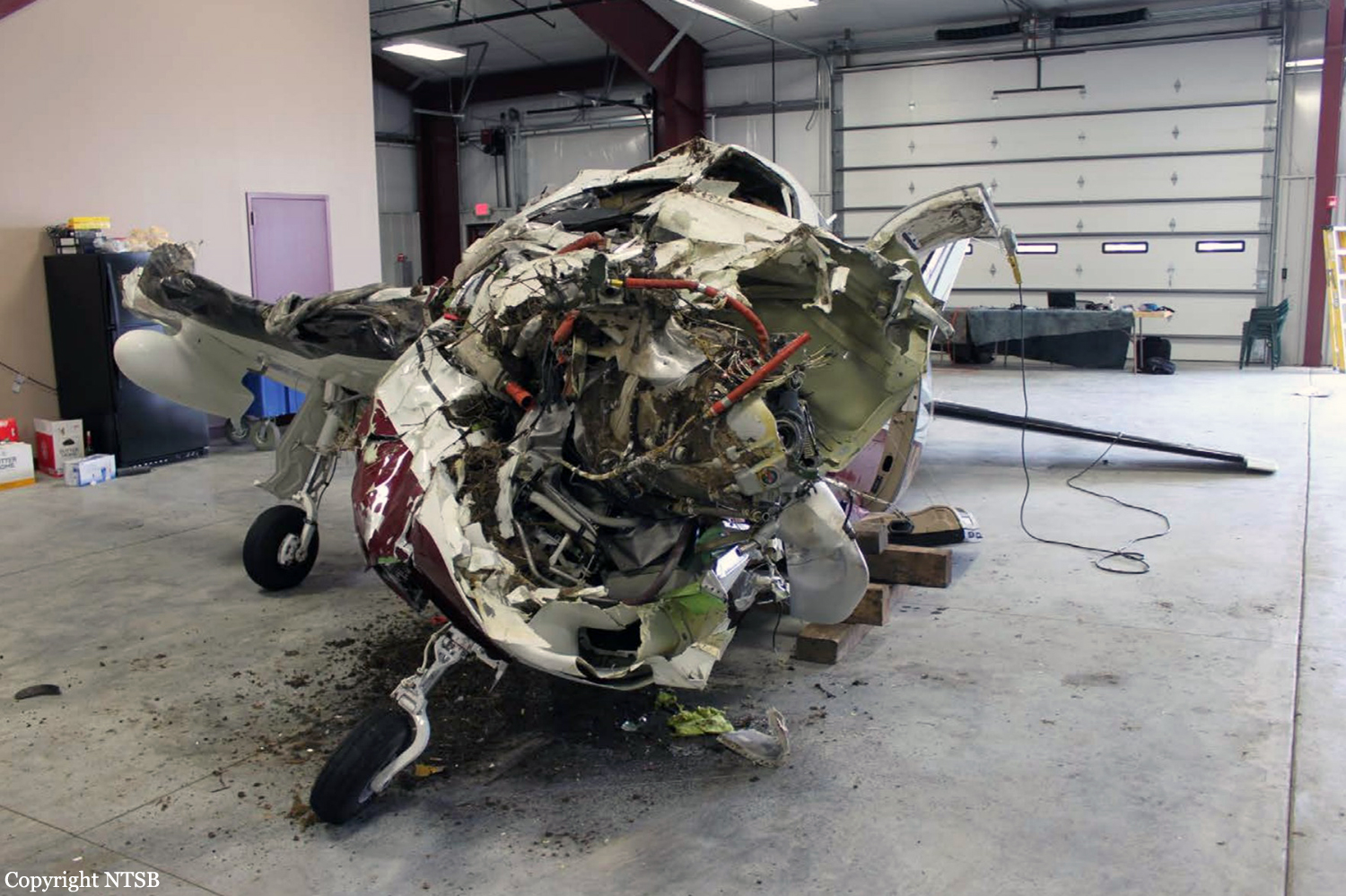
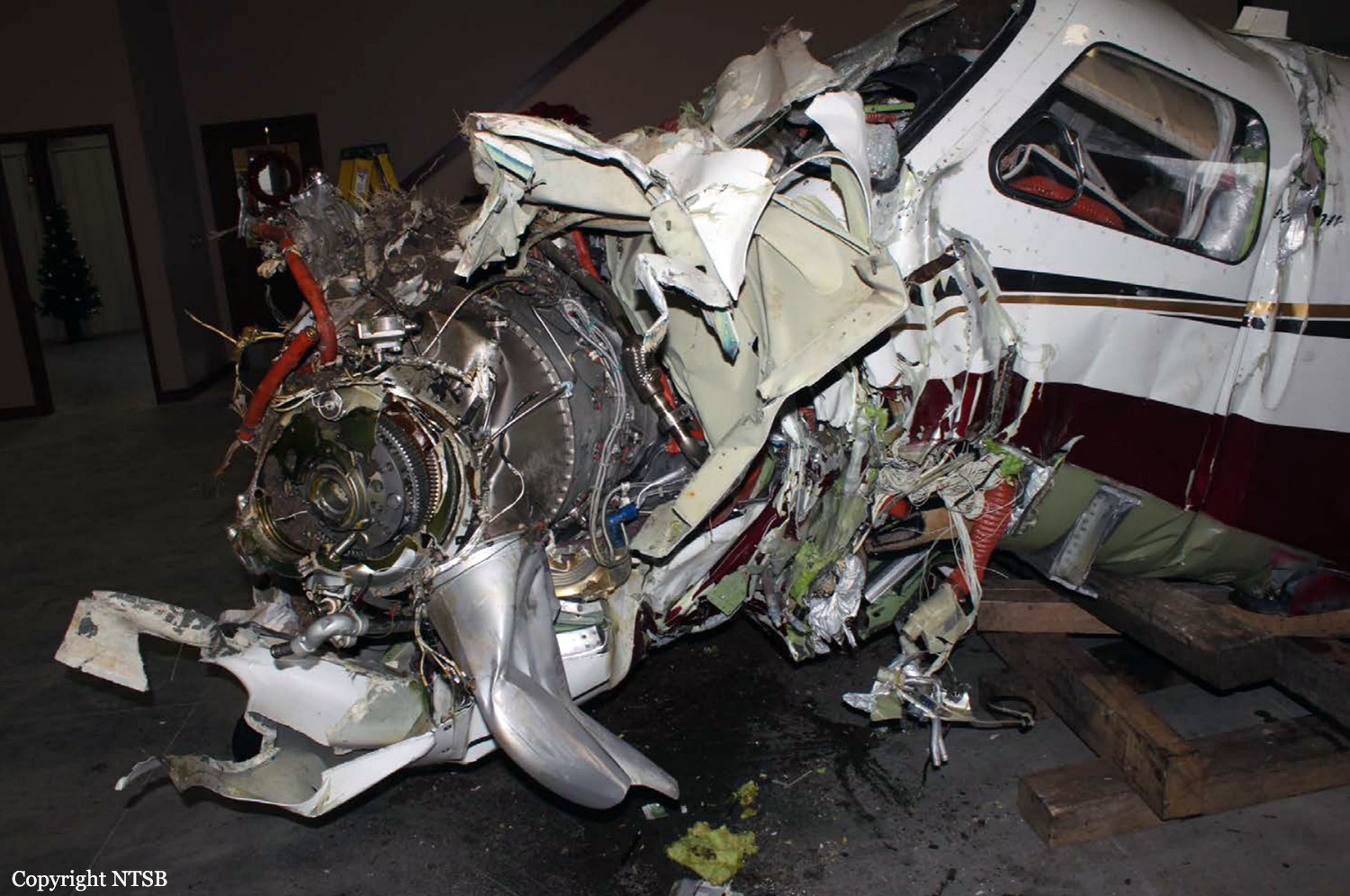
Crash of a Piper PA-46-500TP Meridian in Omaha: 1 killed

Date & Time: Dec 10, 2015 at 1153 LT
Registration:
N145JR
Flight Phase:
Flight Type:
Survivors:
No
Schedule:
Omaha - Trinidad
MSN:
46-97166
YOM:
2003
Crew on board:
1
Crew fatalities:
Pax on board:
0
Pax fatalities:
Other fatalities:
Total fatalities:
1
Captain / Total flying hours:
4840
Captain / Total hours on type:
280.00
Aircraft flight hours:
1047
Circumstances:
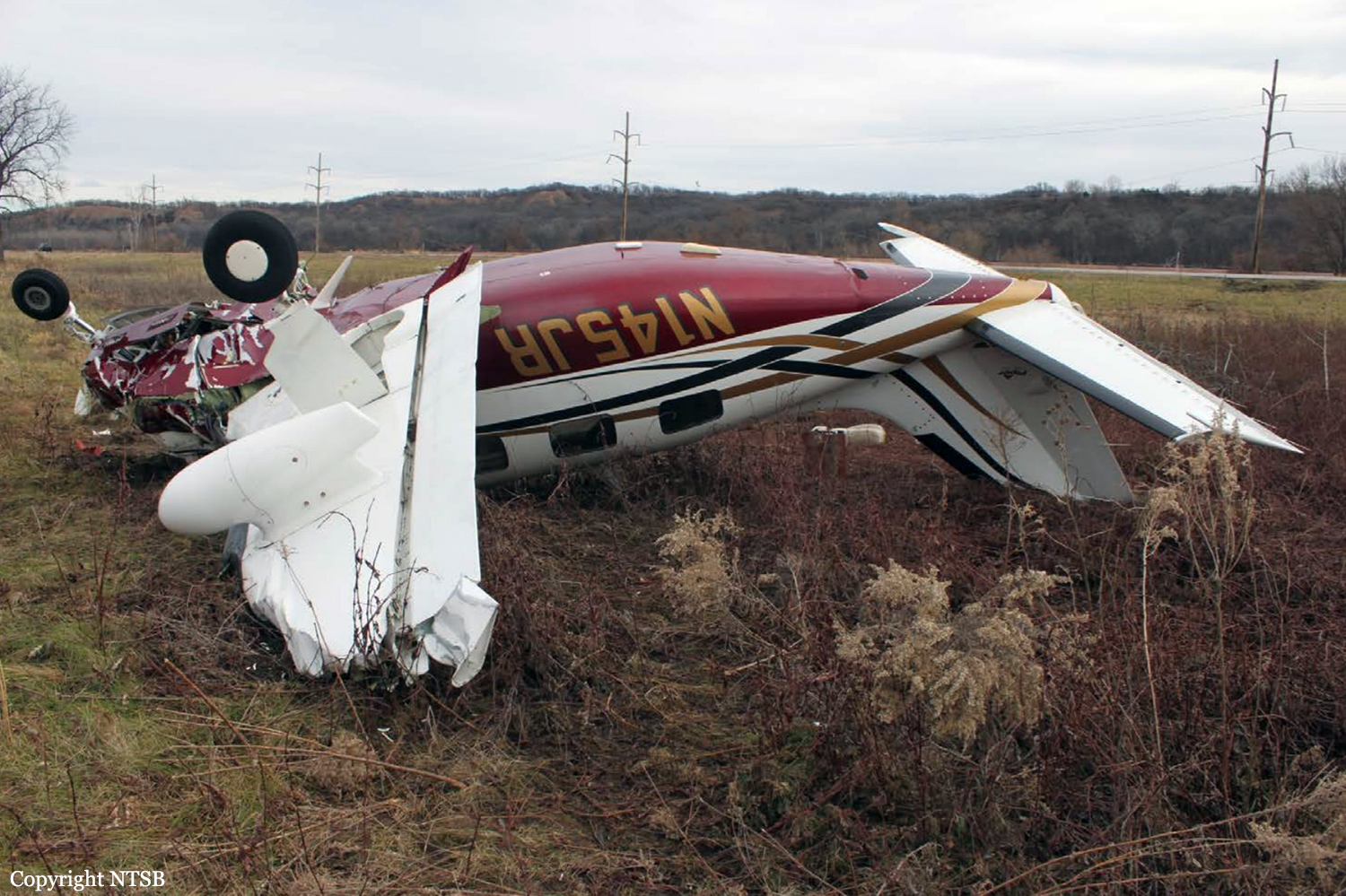
The private pilot was conducting a personal cross-country flight. Shortly after takeoff, the pilot told the air traffic controller that he needed to return to the airport due to an attitude heading reference system (AHRS) "miscommunication." Air traffic control radar data indicated that, at that time, the airplane was about 1.75 miles north of the airport on a southeasterly course about 2,000 ft. mean sea level. About 20 seconds after the pilot requested to return to the airport, the airplane began to descend. The airplane subsequently entered a right turn, which appeared to continue until the final radar data point. The airplane struck power lines about 3/4 of a mile from the airport while maneuvering within the traffic pattern. The power lines were about 75 ft. above ground level. A postaccident examination of the airframe and engine revealed no preimpact mechanical malfunctions or failures that would have precluded normal operation. Although the pilot reported a flight instrumentation issue to air traffic control, the investigation was unable to confirm whether such an anomaly occurred based on component testing and available information. Examination of the standby airspeed indicator revealed that the link arm had separated from the pin on the rocking shaft assembly; however, it likely separated during the accident sequence. No other anomalies were observed. Functional testing indicated that the standby airspeed indicator was likely functional and providing accurate airspeed information to the pilot throughout the flight. Finally, examination of the left and right annunciator panel bulb filaments associated with the left fuel pump advisory revealed that they were stretched, indicating that the left fuel pump advisory indication annunciated at the time of the accident; however, this likely occurred during the accident sequence as a result of an automatic attempt to activate the left fuel pump due to the loss of fuel pressure immediately after the left wing separated. Toxicology testing of the pilot detected low levels of three different sedating antihistamines; however, antemortem levels could not be determined nor could the underlying reason(s) for the pilot's use of these medications. As a result, it could not be determined whether pilot impairment occurred due to the use of the medications or the underlying condition(s) themselves. Although the pilot reported a flight instrumentation issue, this problem would not have affected his ability to control the airplane. Further, the pilot should have been able to see the power lines given the day/visual weather conditions. It is possible that the pilot become distracted by the noncritical anomaly, which resulted in his failure to maintain clearance from the power lines.
Probable cause:
The pilot's failure to maintain clearance from power lines while returning to the airport after becoming distracted by a noncritical flight instrumentation anomaly indication.
Final Report:

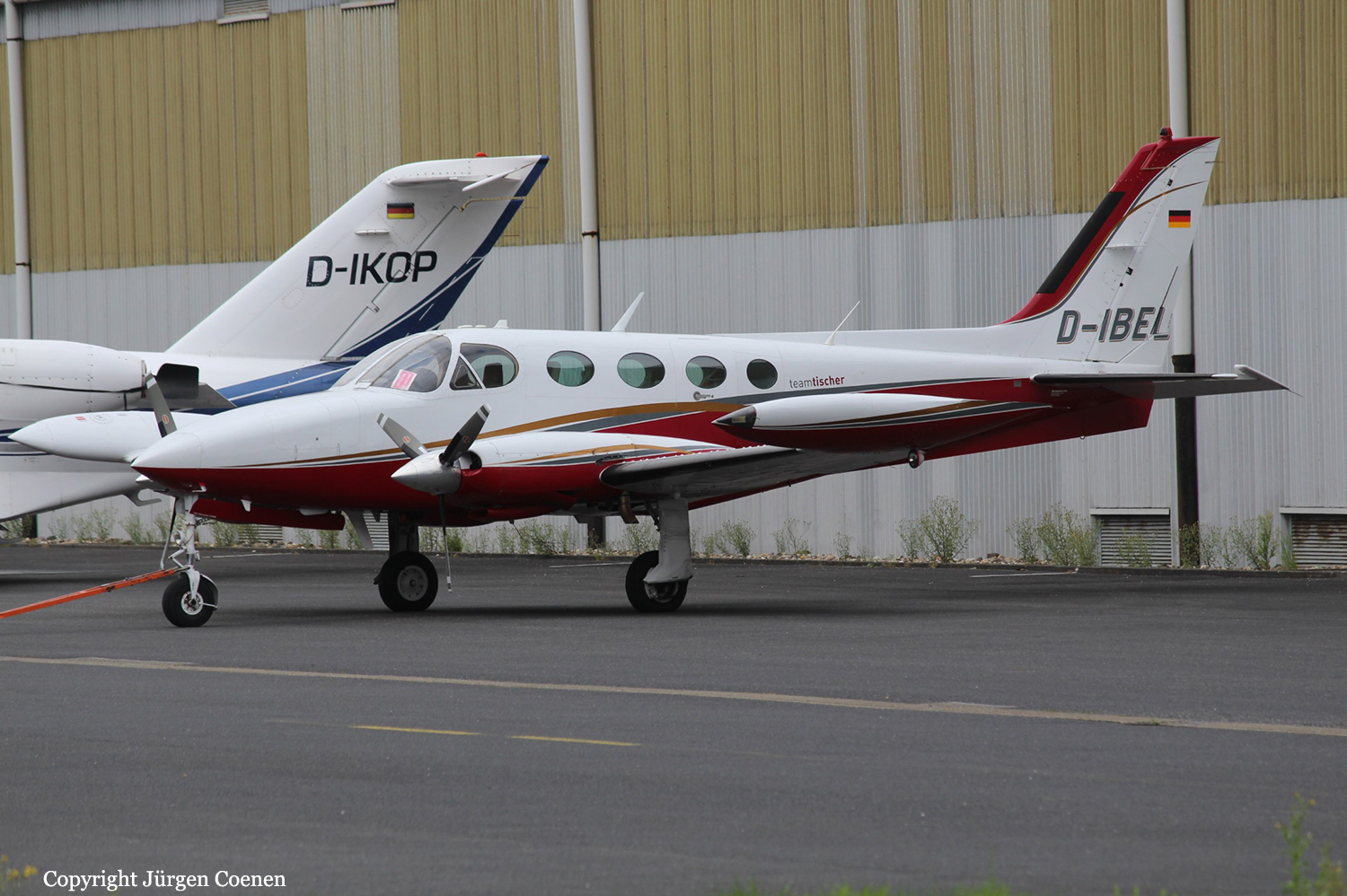
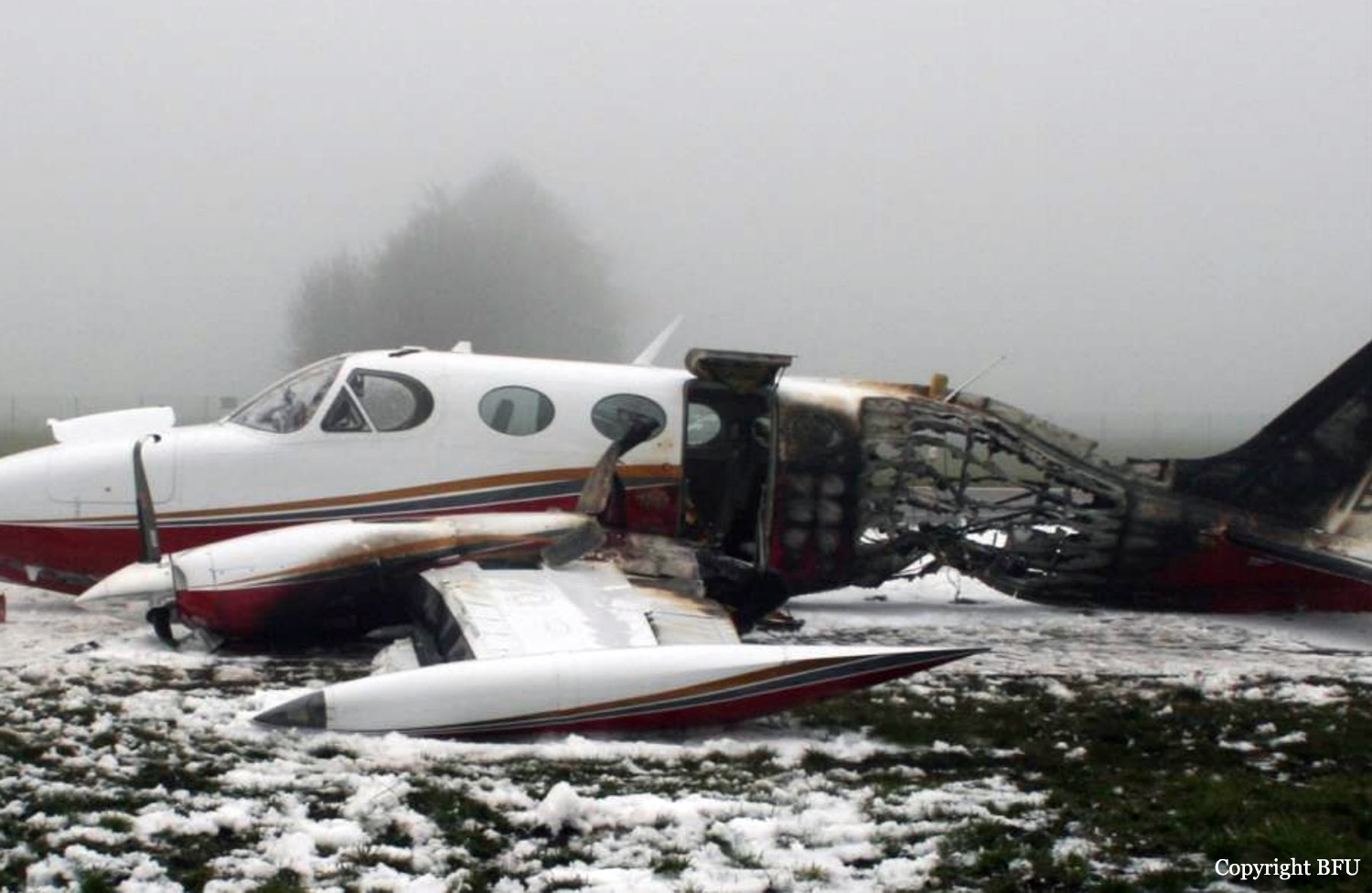
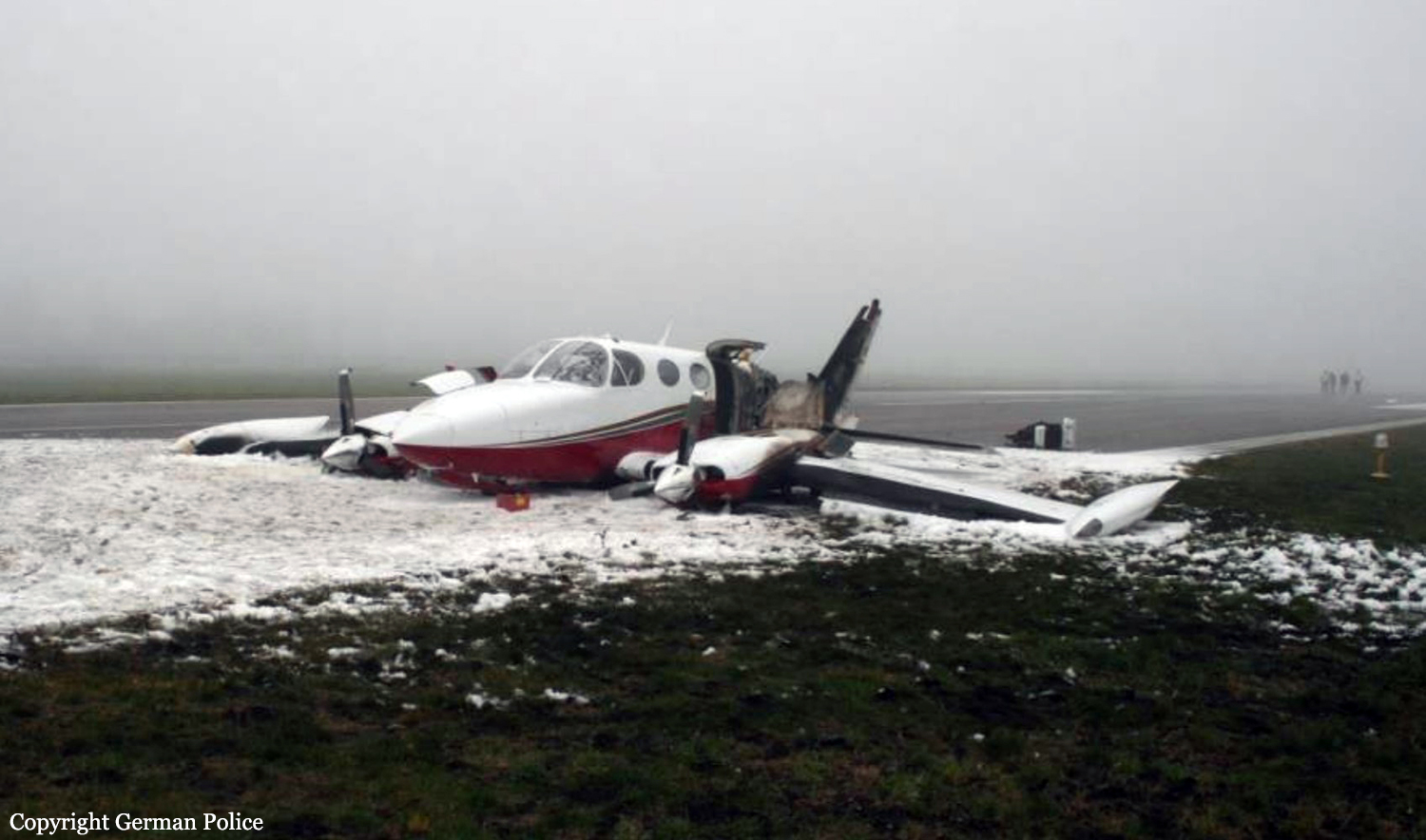
Crash of a Cessna 340A in Augsburg

Date & Time: Dec 8, 2015 at 0942 LT
Type of aircraft:
Operator:
Registration:
D-IBEL
Flight Type:
Survivors:
Yes
Schedule:
Mönchengladbach – Augsburg
MSN:
340A-1814
YOM:
1984
Country:
Region:
Crew on board:
1
Crew fatalities:
Pax on board:
4
Pax fatalities:
Other fatalities:
Total fatalities:
0
Captain / Total flying hours:
5188
Captain / Total hours on type:
75.00
Aircraft flight hours:
3747
Circumstances:
The twin engine aircraft departed Mönchengladbach on a flight to Augsbourg, carrying four passengers and one pilot. On descent to Augsburg Airport, the pilot was informed by ATC that weather conditions at destination were worse than predicted, that the visibility was estimated between 225 and 250 metres, thus below minimums. The pilot acknowledged and informed ATC about his intention to attempt an approach and that he would divert to Oberpfaffenhofen if necessary. On short final, at a height of 200 feet, the pilot established a visual contact with the runway lights and decided to continue. After passing over the threshold, he reduced the engine power when the aircraft entered a stall and impacted the runway surface. On impact, the undercarriage were torn off and the aircraft slid for 104 metres before coming to rest, bursting into flames. Four occupants were seriously injured and the fifth was slightly injured. The aircraft was partially destroyed by a post crash fire.
Probable cause:
The accident is the consequence of the pilot's decision to continue the approach and not to initiate a go-around procedure, which resulted in the aircraft entering an attitude he was unable to control. Poor approach planning on part of the pilot and poor decision making during the approach contributed to the accident, as well as the fact that the runway visual range (RVR) was 250 metres, which was below minimums.
Final Report:

Crash of a De Havilland DHC-8-402Q in Jabalpur

Date & Time: Dec 4, 2015 at 1922 LT
Operator:
Registration:
VT-SUC
Survivors:
Yes
Schedule:
Mumbai – Jabalpur
MSN:
4377
YOM:
2011
Flight number:
SG2458
Country:
Region:
Crew on board:
4
Crew fatalities:
Pax on board:
49
Pax fatalities:
Other fatalities:
Total fatalities:
0
Captain / Total flying hours:
7748
Captain / Total hours on type:
2148.00
Copilot / Total flying hours:
7804
Copilot / Total hours on type:
137
Aircraft flight hours:
11928
Aircraft flight cycles:
11214
Circumstances:
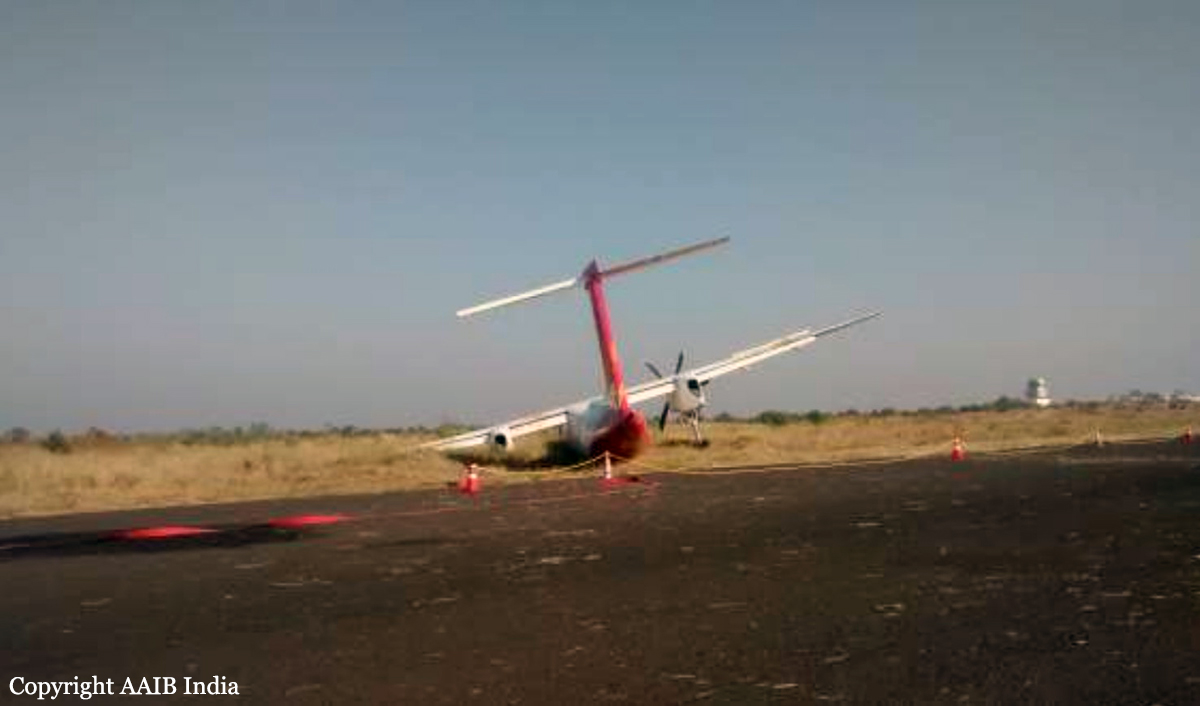
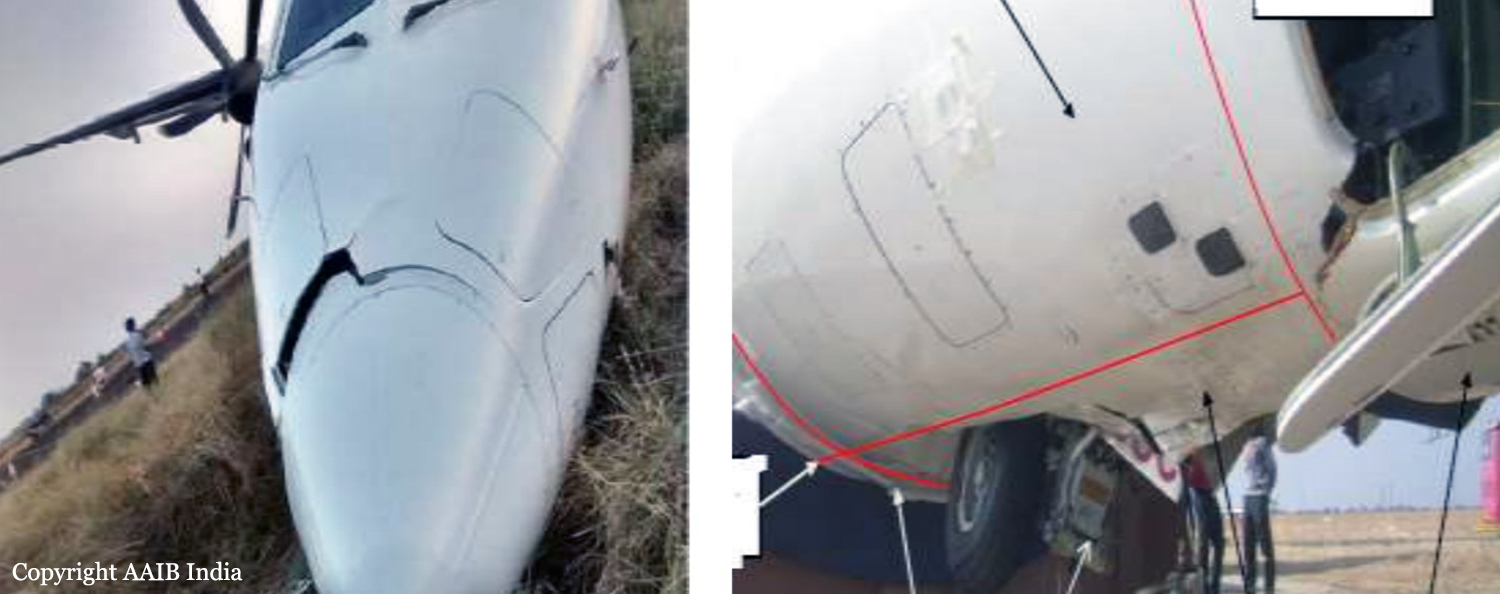
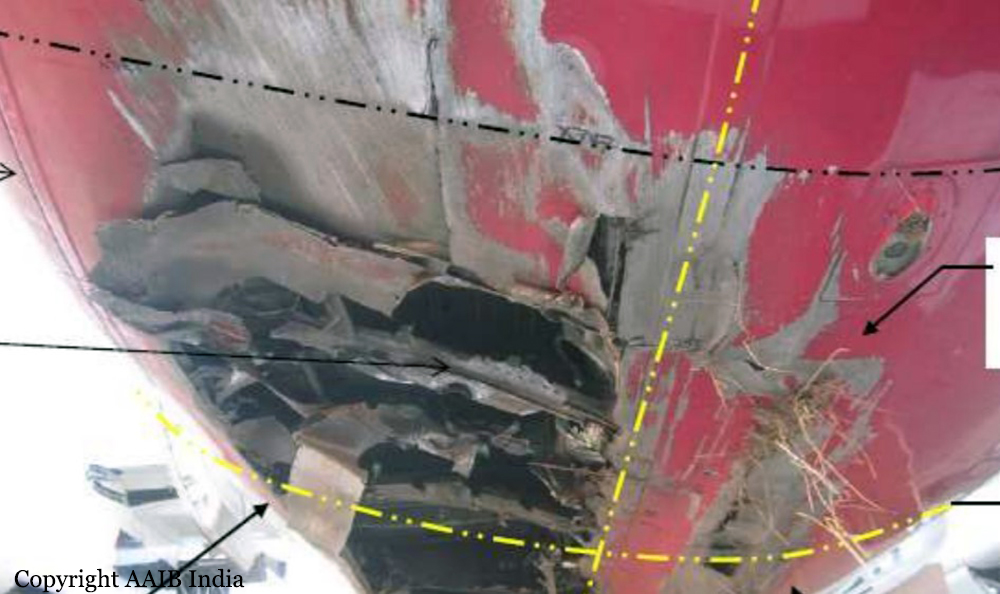
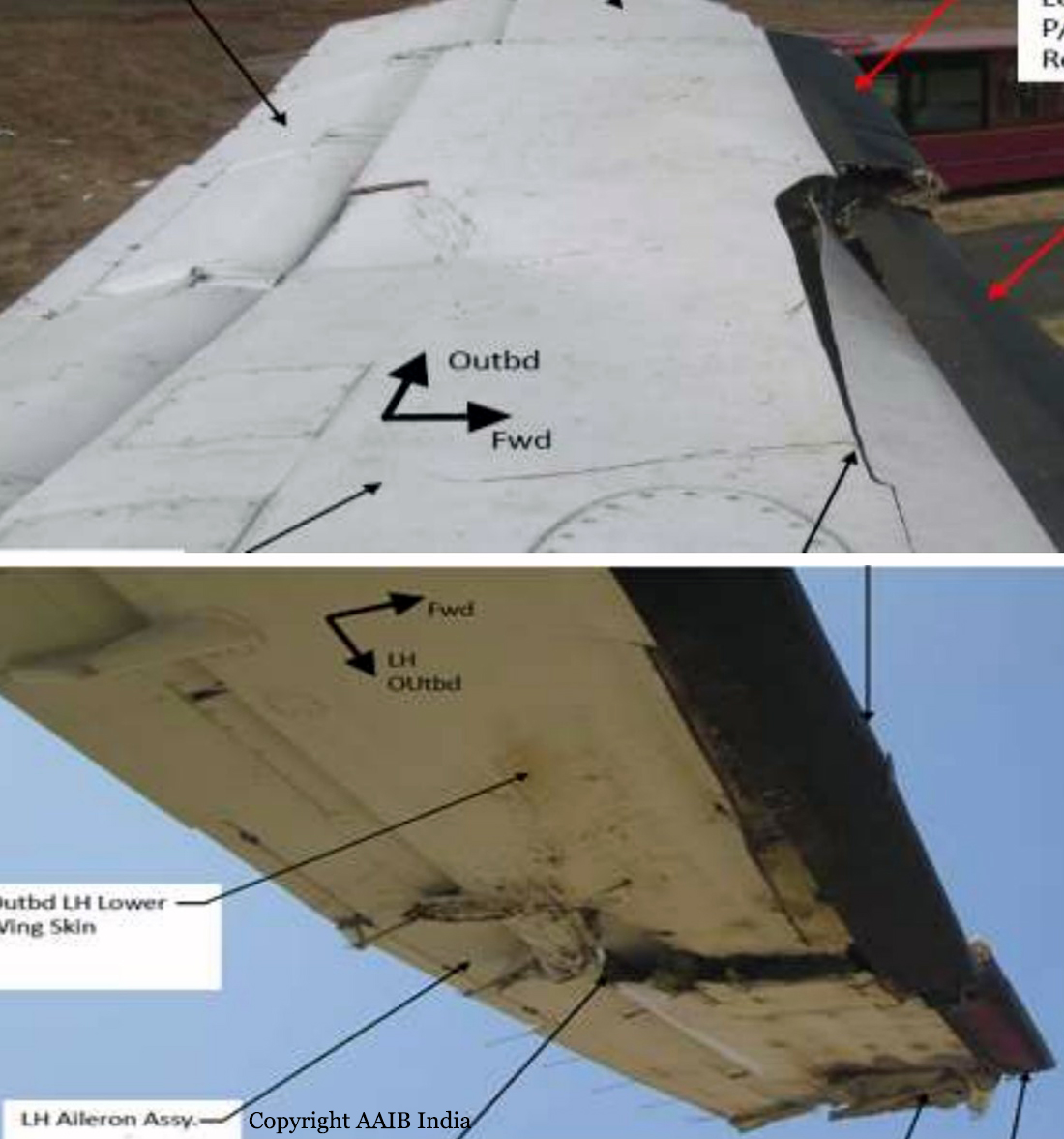
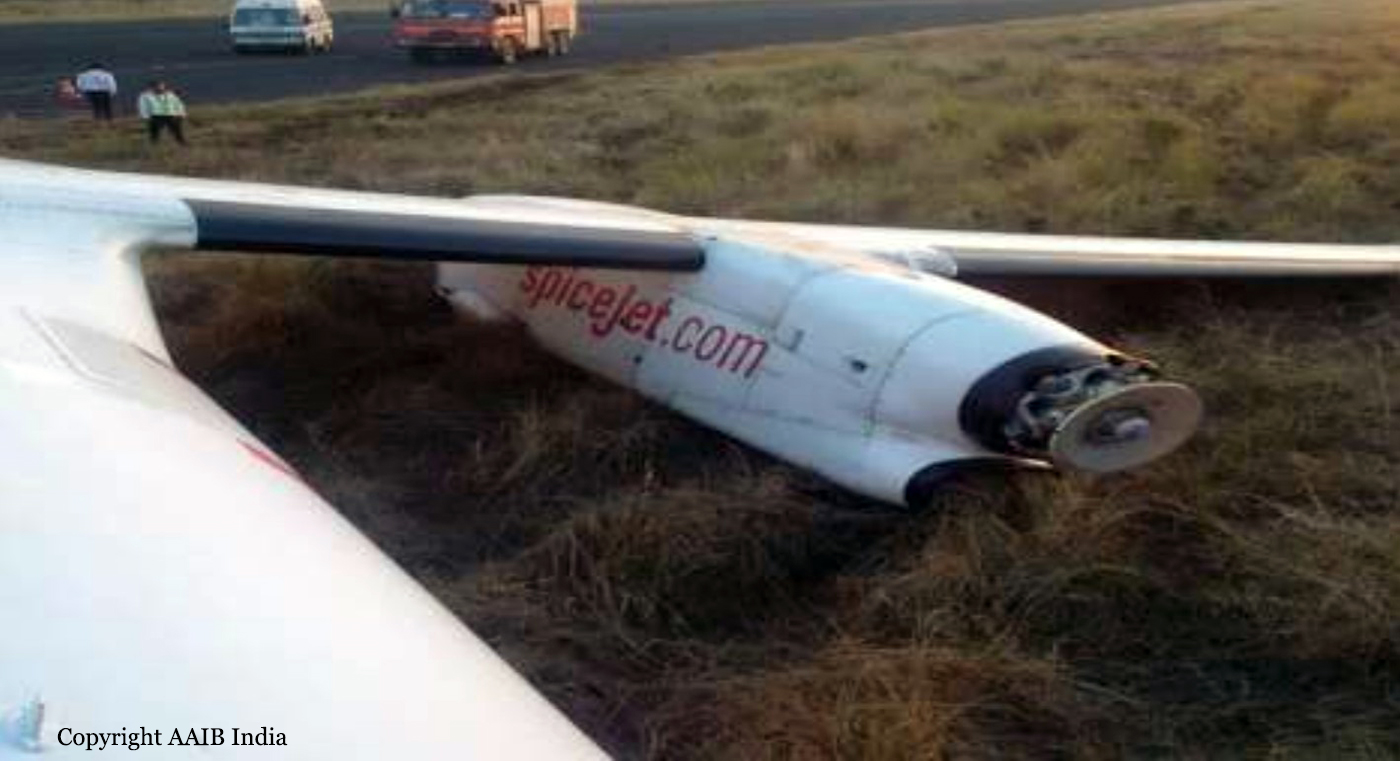
Bombardier Q-400 aircraft VT-SUC belonging to M/s Spice jet Ltd. was involved in wild life strike accident during landing roll at Jabalpur while operating scheduled flight SG2458 from Mumbai to Jabalpur on 04.12.2015. The aircraft was under the command of pilot holding ATPL & duly qualified on type with First Officer also an ATPL holder and qualified on type. There were 49 passengers and 02 cabin crew on board the aircraft. The aircraft VT-SUC took-off from Mumbai for Jabalpur at around 1200 UTC. The enroute flight was uneventful. The aircraft came in contact with ATC Jabalpur at around 1323 UTC. The ATC reported prevailing weather at Jabalpur as surface winds calm, visibility 5000 meters, weather Haze, nonsignificant clouds, and temp 24° C. At 1342 UTC the pilot requested ATC for visual approach runway 06. The ATC cleared VT-SUC for visual approach runway 06 and asked to confirm when runway in sight. At 1347 UTC the pilot confirmed the runway in sight and requested for landing clearance and the same was acknowledged by ATC. The aircraft landed on runway 06 and about 05 to 06 seconds after touch down at around 1350 UTC the aircraft hit wild boars on the runway. The pilot stated that as it was dawn they did not see the wild boars on runway during approach, and saw the wild boars only after touch down and when they were very close to them, also they did not had adequate time to react so as to take any evasive action. Hence, one of the wild boars on runway impacted with LH main landing gear due which the LH Main landing gear got collapsed and the aircraft started drifting towards left. Thereafter LH engine propeller blades came in contact with ground and got sheared off. The aircraft dragged on its belly for around 182 feet and in the process the nose landing gear also collapsed. The aircraft then veered to the left of the center line and subsequently exited the runway onto the left side and came to final halt position in Soft Ground. The pilot then confirmed with first officer about fire and once getting assured that there was no fire gave evacuation call outs. The pilot then contacted ATC for assistance and informed that there were 10 to 11 pigs on the runway and the aircraft had hit the pig and gone off the runway. The Crash Fire Tender (CFT) team along with operational jeep reached the accident site. The pilot shut down the engines. All the passengers were then evacuated safely from the RH side. There was no injury to any of the occupants on board the aircraft and there was no fire.
Probable cause:
The aircraft during its landing roll had a wild life (Wild Boars) strike on the runway, resulting in collapse of left main landing gear and subsequently the aircraft veered to the left of the runway.
Contributory factor:
The presence of wild life in the operational area and the runway was due to several breaches in the boundary wall.
Final Report:
Crash of a BAe 125-800SP in Palm Springs

Date & Time: Dec 4, 2015 at 1420 LT
Type of aircraft:
Registration:
N164WC
Flight Type:
Survivors:
Yes
Schedule:
Palm Springs – Boise
MSN:
258072
YOM:
1986
Crew on board:
2
Crew fatalities:
Pax on board:
0
Pax fatalities:
Other fatalities:
Total fatalities:
0
Aircraft flight hours:
2500
Circumstances:
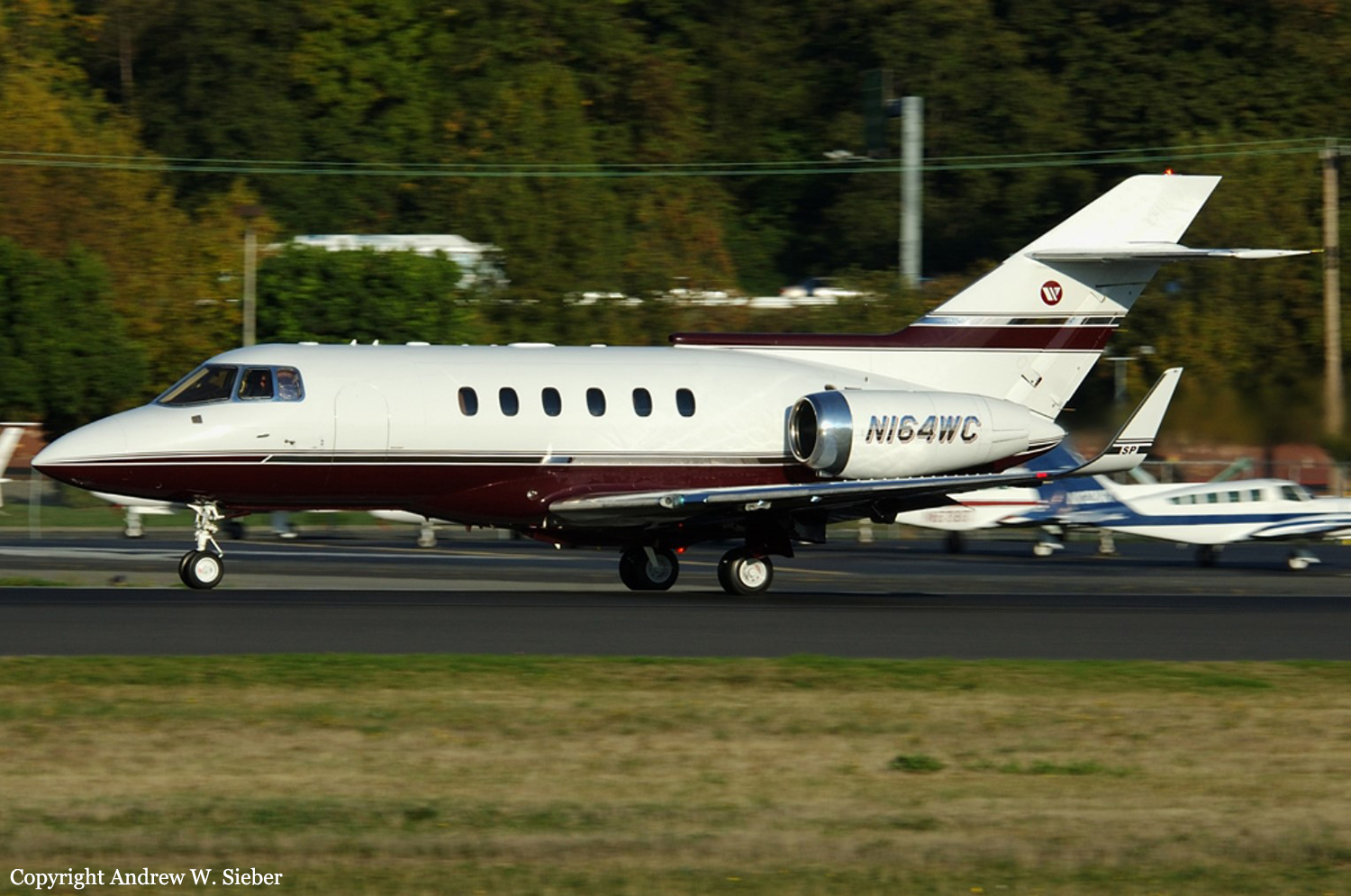
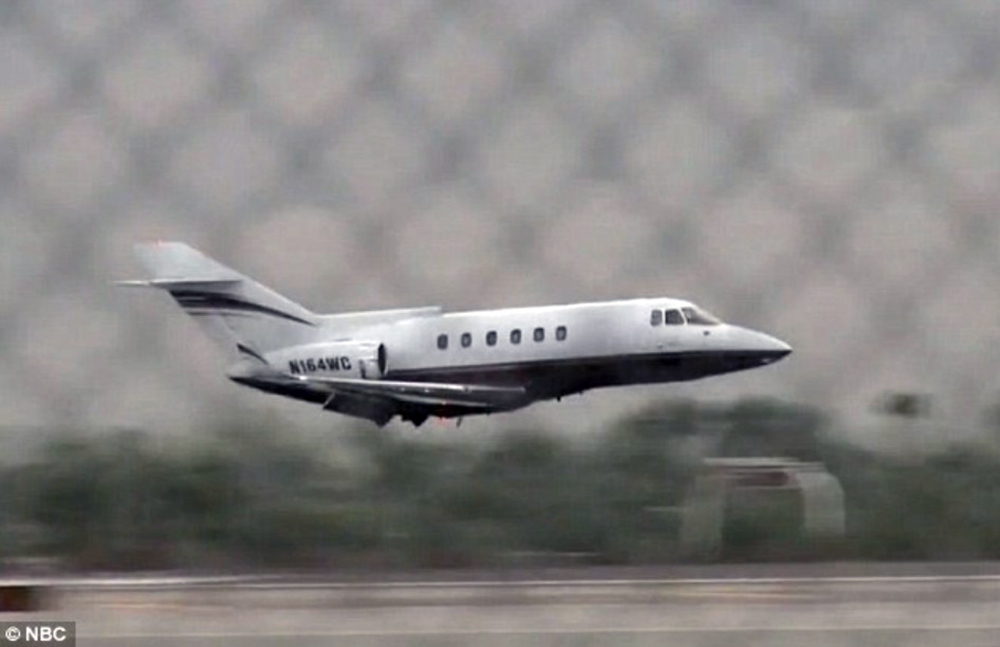
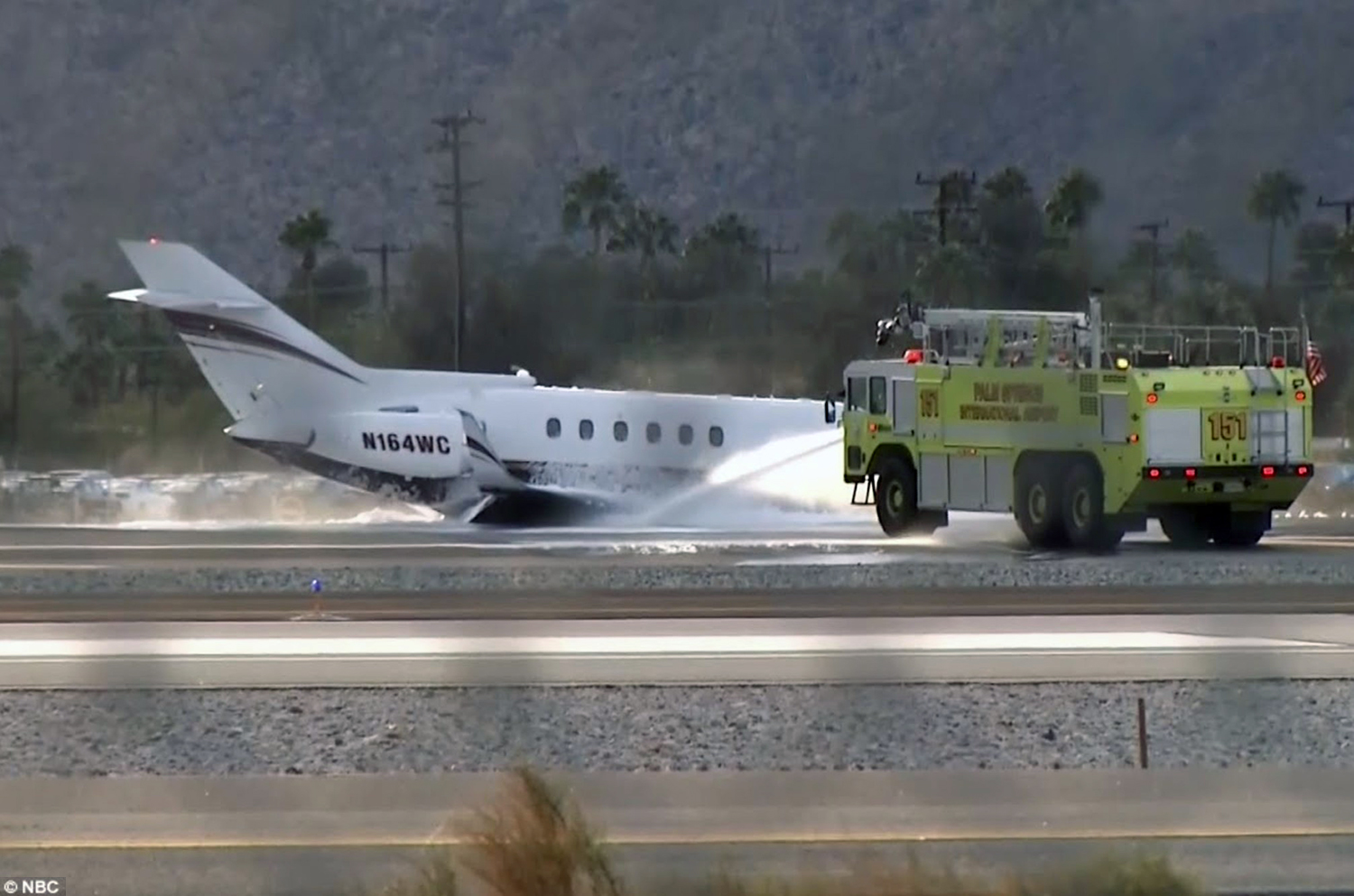
After takeoff from Palm Springs Airport, while on a positioning flight to Boise, the crew encountered technical problems with the undercarriage. Following a holding circuit, the crew decided to return to Palm Springs and to complete a gear up landing. Upon touchdown, the aircraft slid on its belly for few dozen metres before coming to rest. Both pilots evacuated safely and the aircraft was damaged beyond repair.
Probable cause:
No investigations completed by the NTSB.

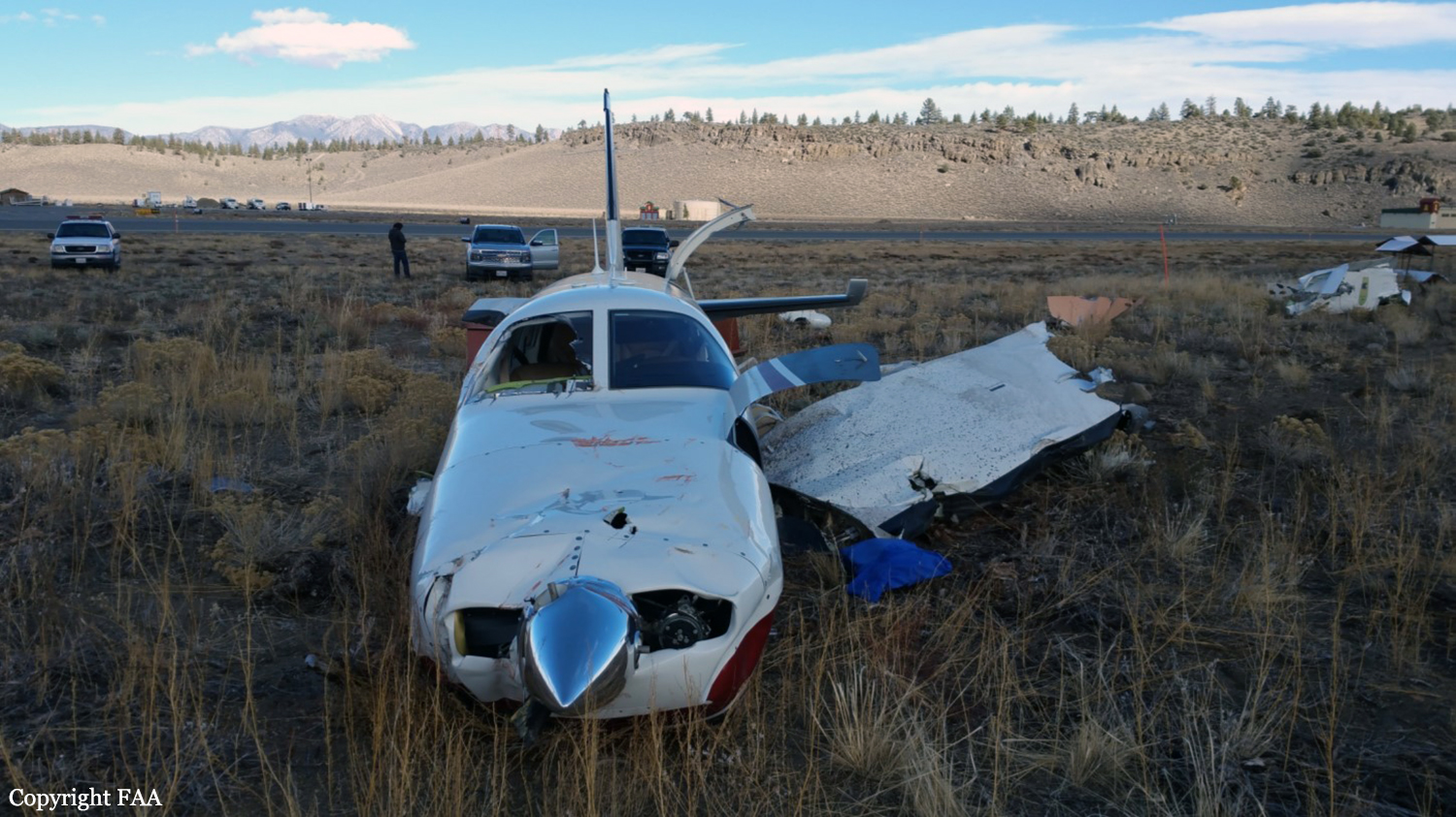
Crash of a Piper PA-46-350P Malibu Mirage in Mammoth Lakes

Date & Time: Dec 3, 2015 at 1220 LT
Operator:
Registration:
N546C
Flight Phase:
Flight Type:
Survivors:
Yes
Schedule:
Mammoth Lakes - Mammoth Lakes
MSN:
46-36626
YOM:
2014
Crew on board:
1
Crew fatalities:
Pax on board:
1
Pax fatalities:
Other fatalities:
Total fatalities:
0
Captain / Total flying hours:
4000
Captain / Total hours on type:
2000.00
Aircraft flight hours:
230
Circumstances:
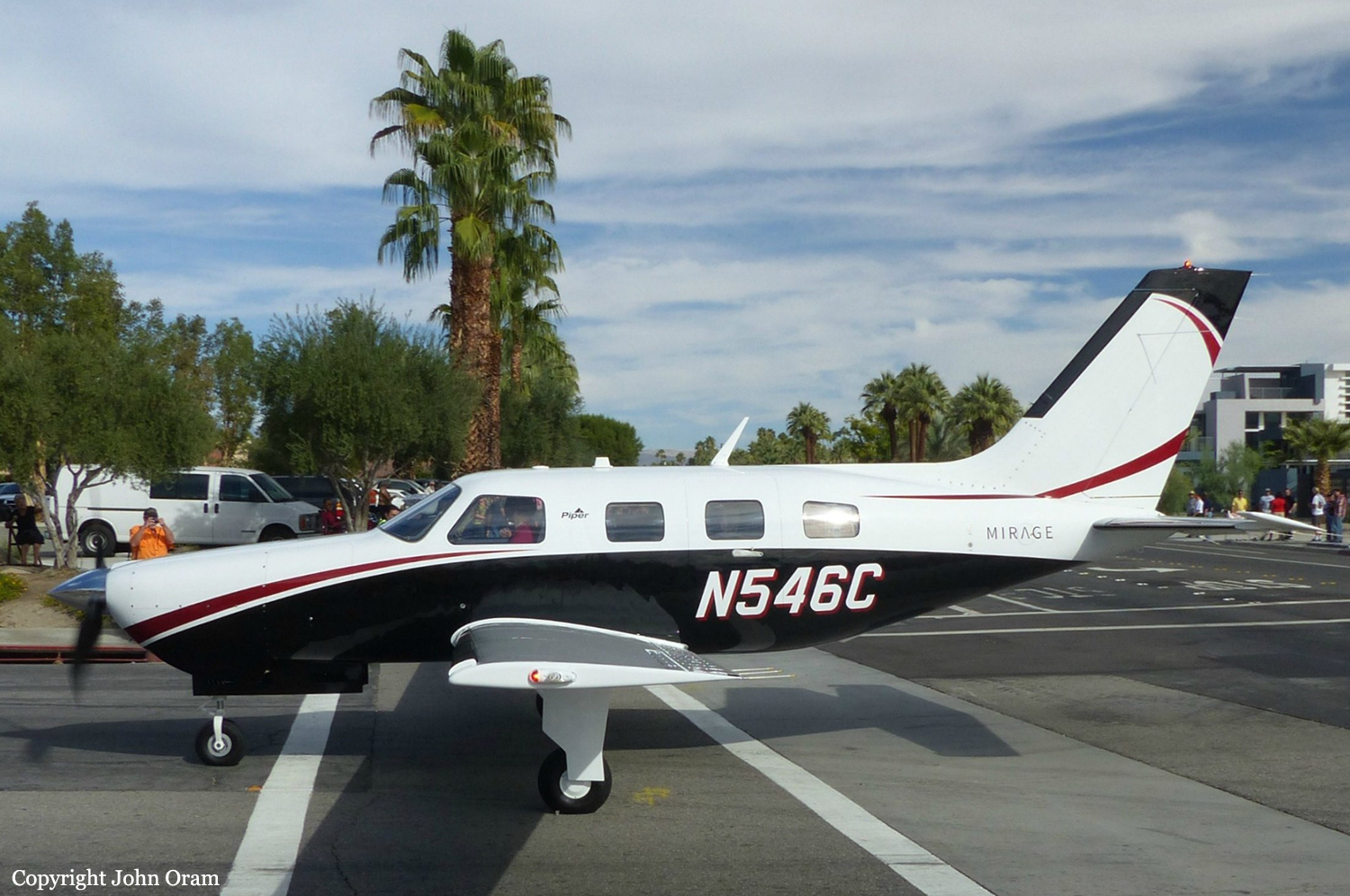
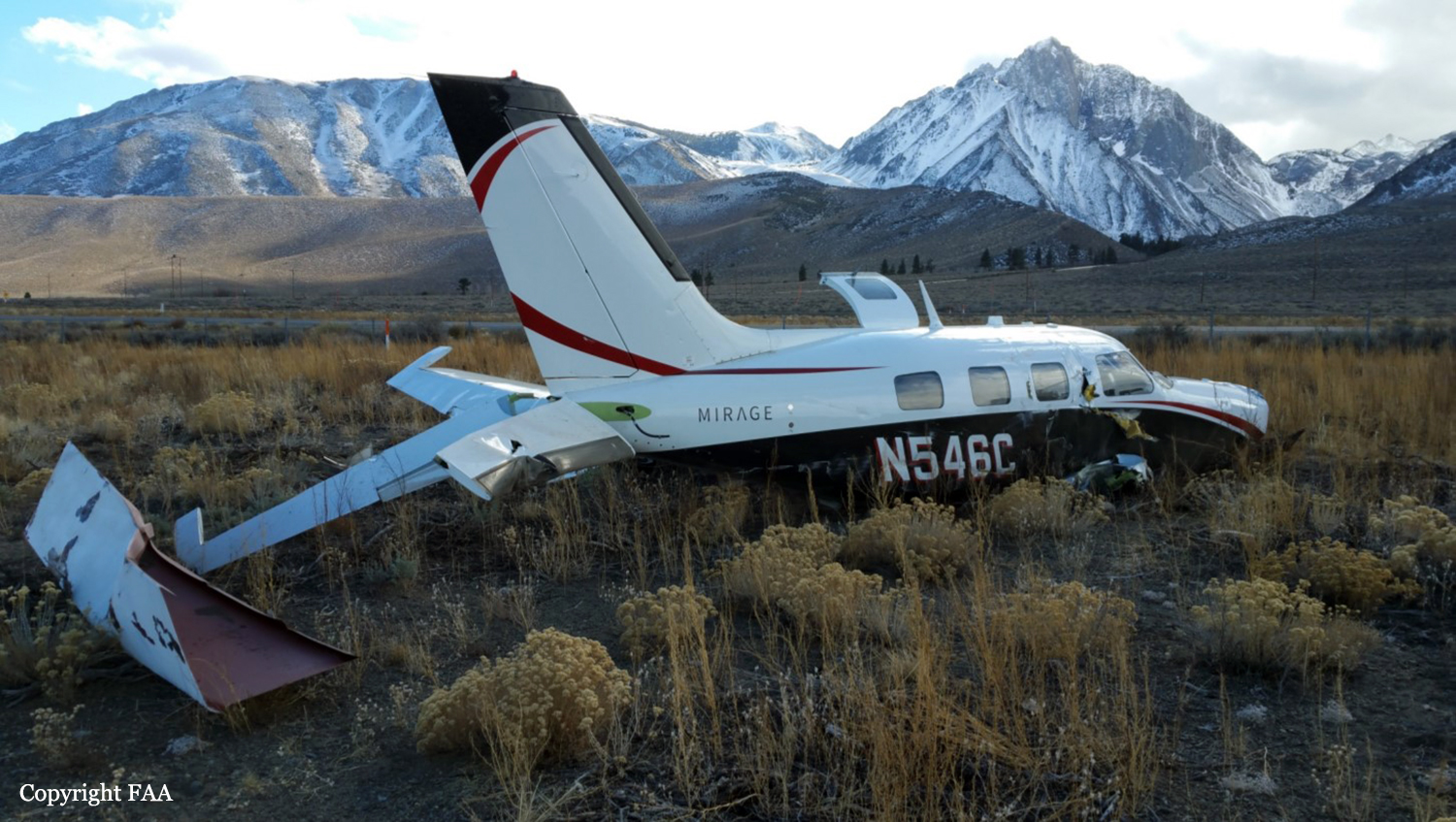
According to the pilot, he checked the winds via his onboard weather reporting device during the run-up, and he stated that the 25 knot wind sock was about ¾ full just moments before the takeoff roll. He reported that during the takeoff roll the airplane encountered a significant wind gust from the right. He stated that the wind gust forced the airplane to exit the left side of the runway, the landing gear collapsed, and the airplane collided with metal pylons which surrounded the wind sock. The airplane sustained substantial damage to both wings, fuselage, horizontal stabilizer and elevator. The pilot reported that there were no mechanical failures or anomalies prior to or during the flight that would have prevented normal flight operation. According to the Airport/Facility Directory, the Airport Remarks state: Airport located in mountainous terrain with occasional strong winds and turbulence. Lighted windsock available at runway ends and centerfield. With southerly crosswinds in excess of 15 knots, experiencing turbulence and possible windshear along first 3000´ of Runway 27. The reported wind at the airport during the time of the accident was from 200 degrees true at 22 knots, with gusts at 33 knots, and the departure runway heading was 27. According to the pilot operating hand book the maximum demonstrated crosswind component for this airplane is 17 knots. The crosswind component during the time of the accident was 26 knots.
Probable cause:
The pilot's decision to takeoff in high crosswind conditions resulting in the inability to maintain an adequate crosswind correction, consequently failing to maintain directional control and departing the runway, and subsequently colliding with fixed airfield equipment.
Final Report:
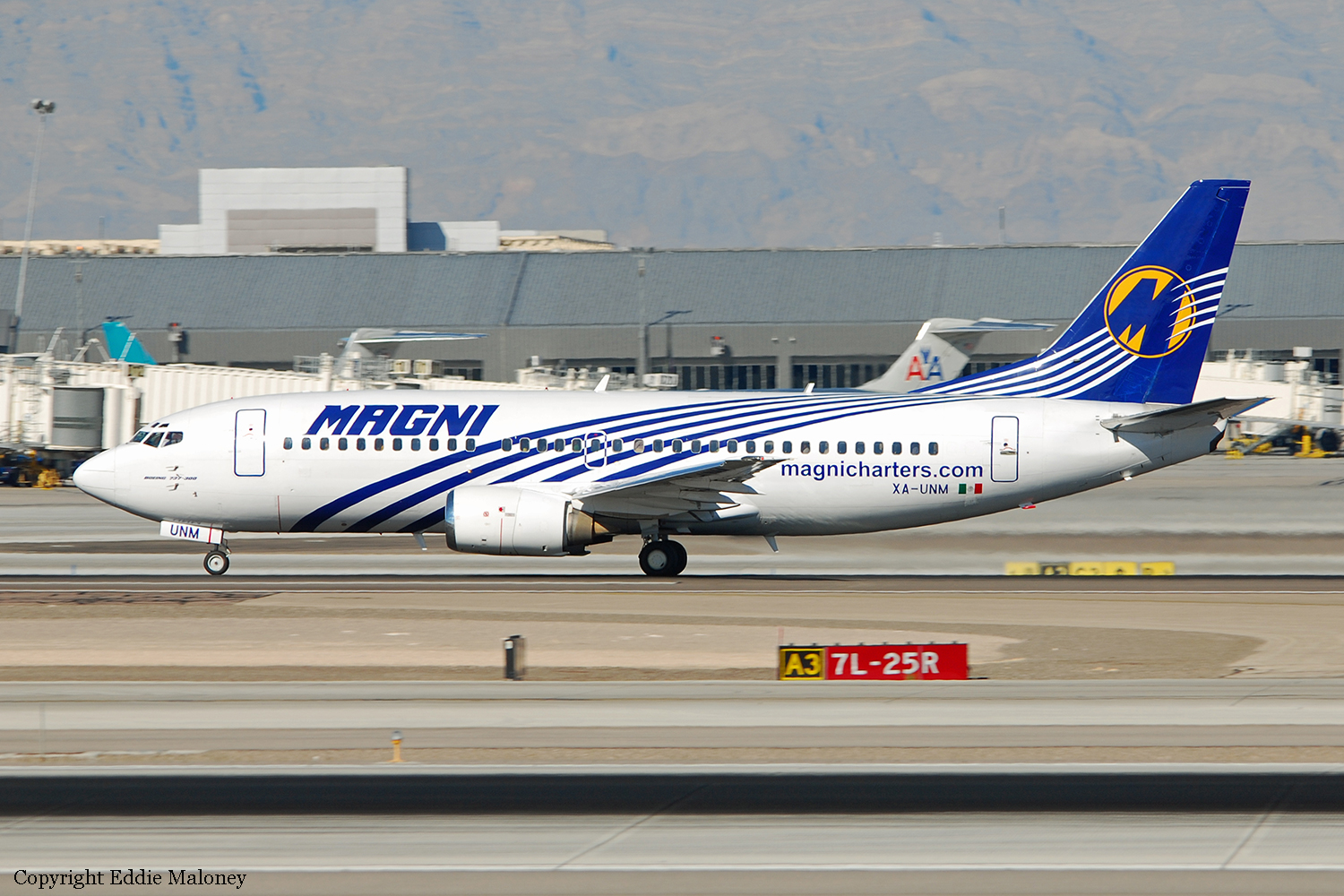
Crash of a Boeing 737-322 in Mexico City

Date & Time: Nov 26, 2015 at 1828 LT
Type of aircraft:
Operator:
Registration:
XA-UNM
Survivors:
Yes
Schedule:
Cancún – Mexico City
MSN:
24248/1636
YOM:
1988
Flight number:
GMT779
Country:
Crew on board:
5
Crew fatalities:
Pax on board:
139
Pax fatalities:
Other fatalities:
Total fatalities:
0
Captain / Total flying hours:
12945
Copilot / Total flying hours:
7606
Aircraft flight hours:
64171
Aircraft flight cycles:
39245
Circumstances:
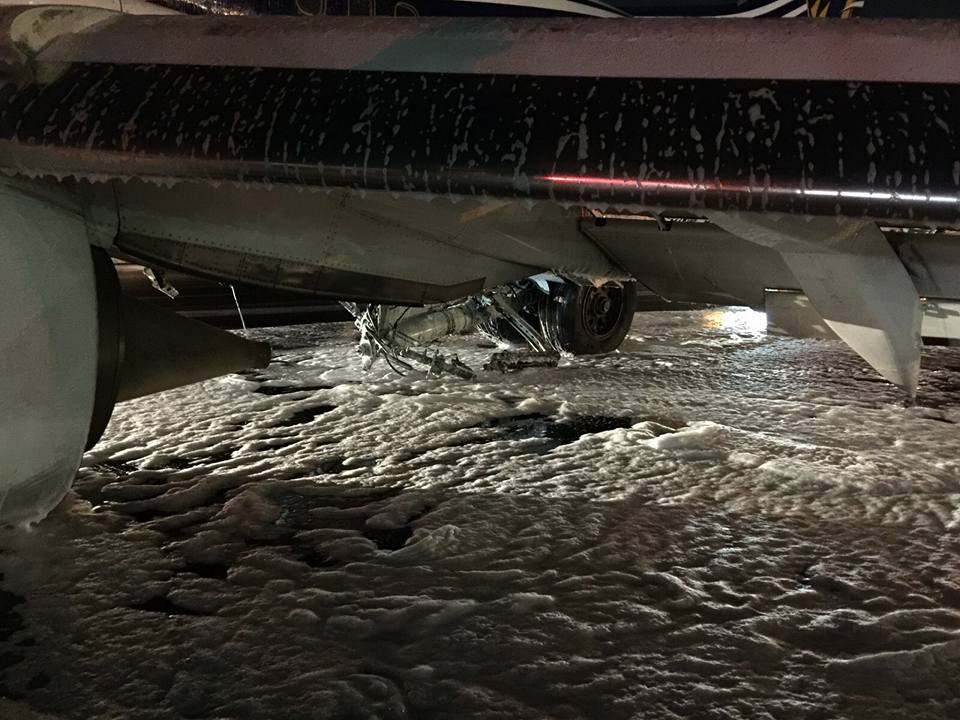
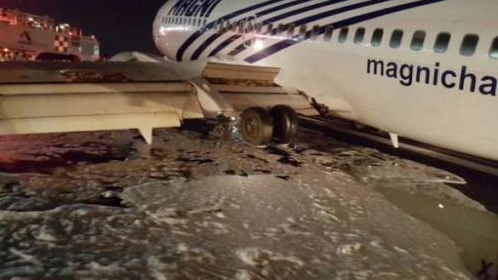
The aircraft departed Cancún on a regular schedule flight to Mexico City, carrying 139 passengers and five crew members. The flight was uneventful. Following an unstabilized approach, the aircraft landed on runway 05L at an excessive speed. After touchdown, severe vibrations occurred when the left main gear collapsed after a course of 1,097 metres. The airplane slid for 980 metres before coming to rest. All 144 occupants evacuated safely and the aircraft was damaged beyond repair.
Probable cause:
Fracture of the shimmy damper piston and subsequent retraction of the left leg assembly of the landing gear due to vibrations caused during the landing run, which could not be damped due to wear and play existing between the dynamic parts of the links, fittings and apex joint of the shimmy damper.
The following contributing factors were identified:
- Unstabilized approach,
- Inadequate service to shimmy damper and shock strut,
- Landing with a low rate of descent,
- Wear in the Apex joint due to a play between this and the lower torsion link,
- Landing with high ground speed and low descent rate.
Final Report: