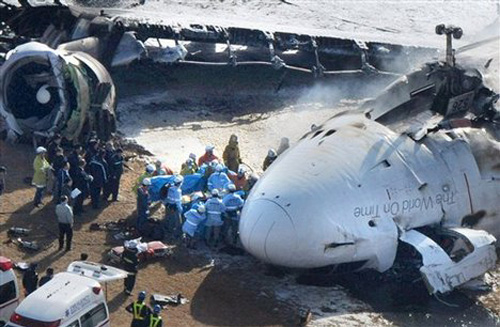
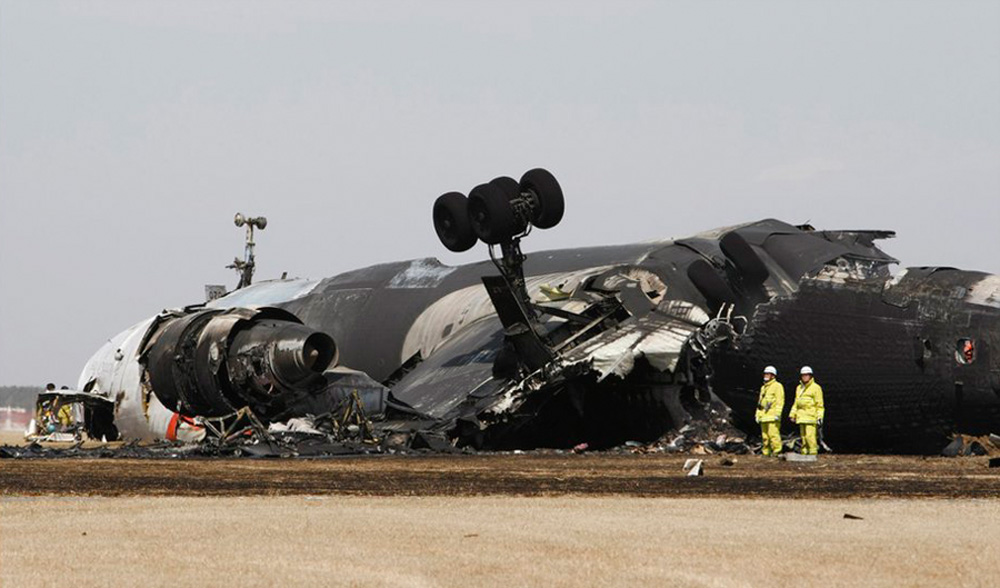
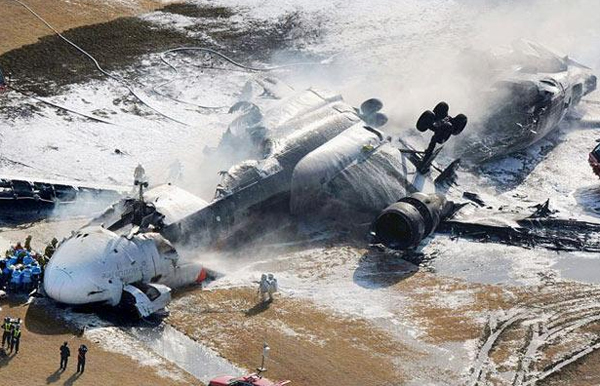
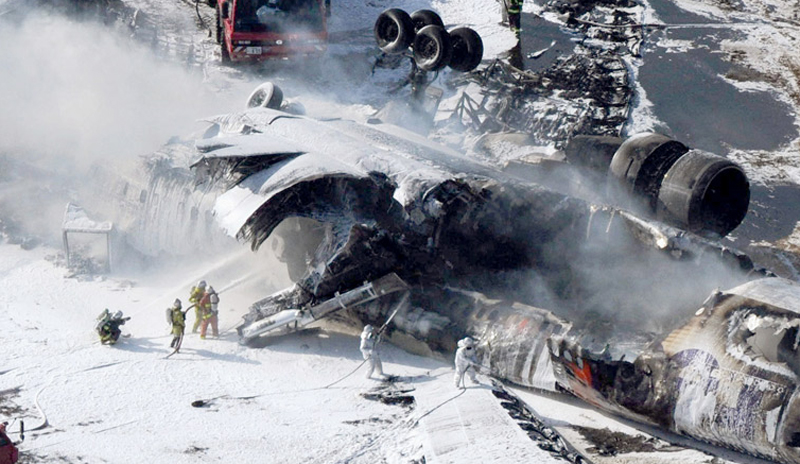
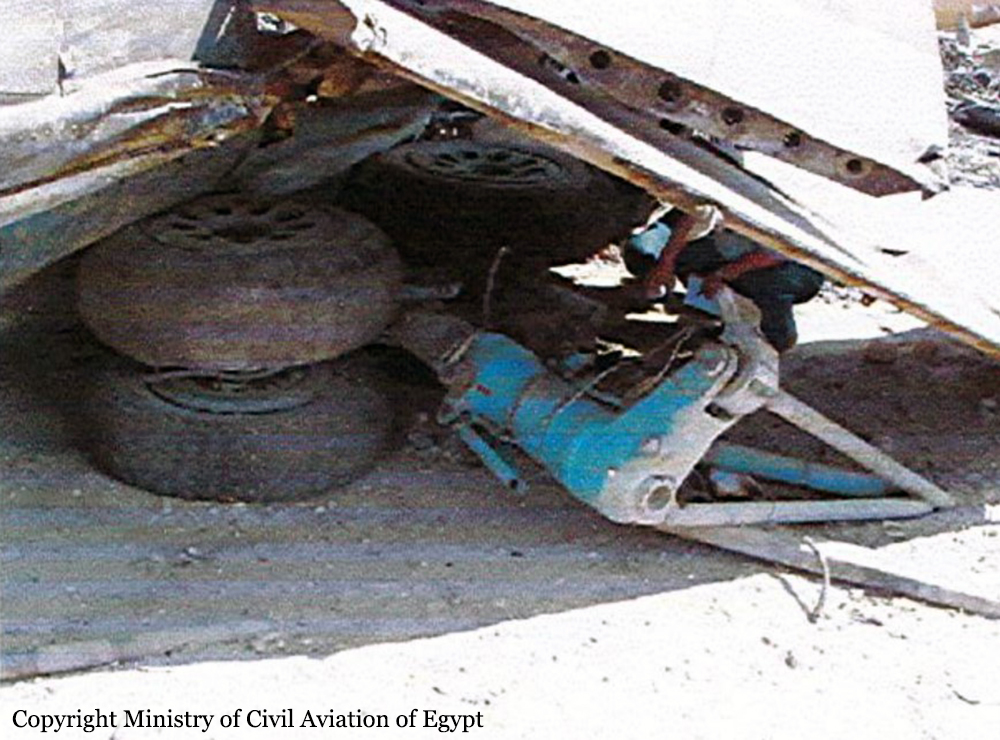
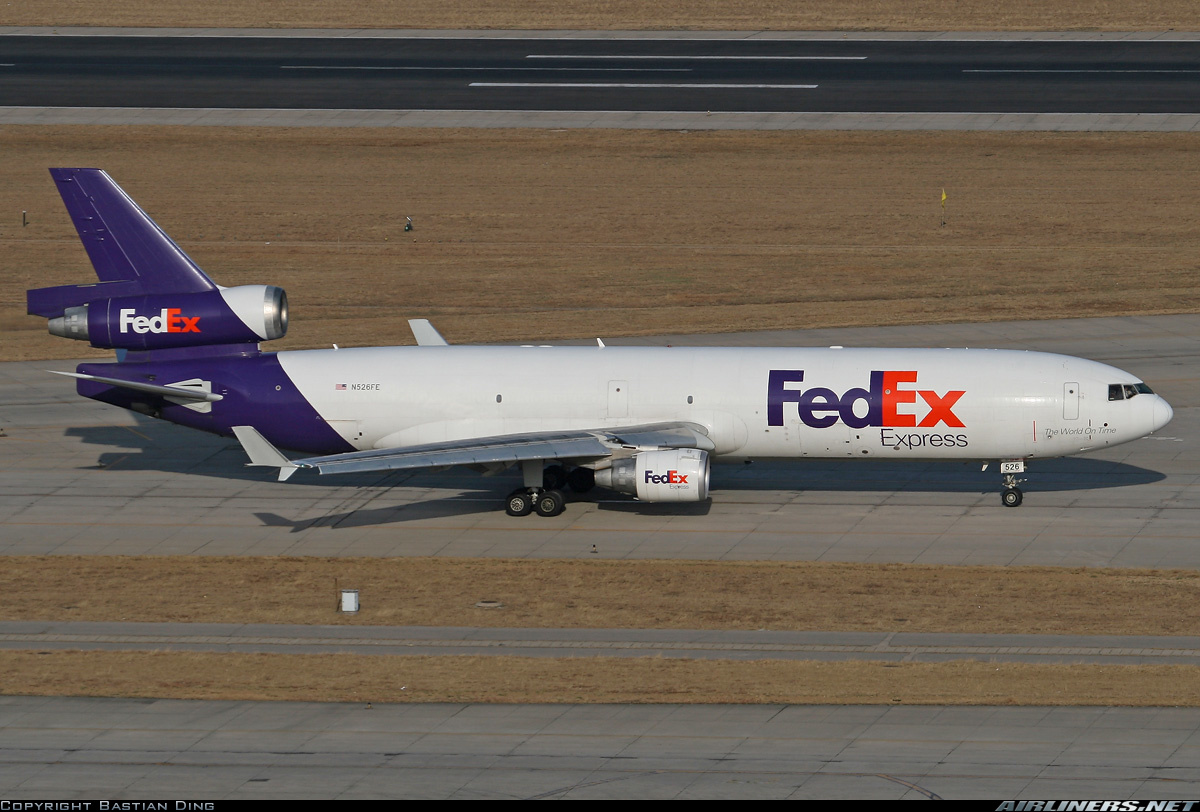
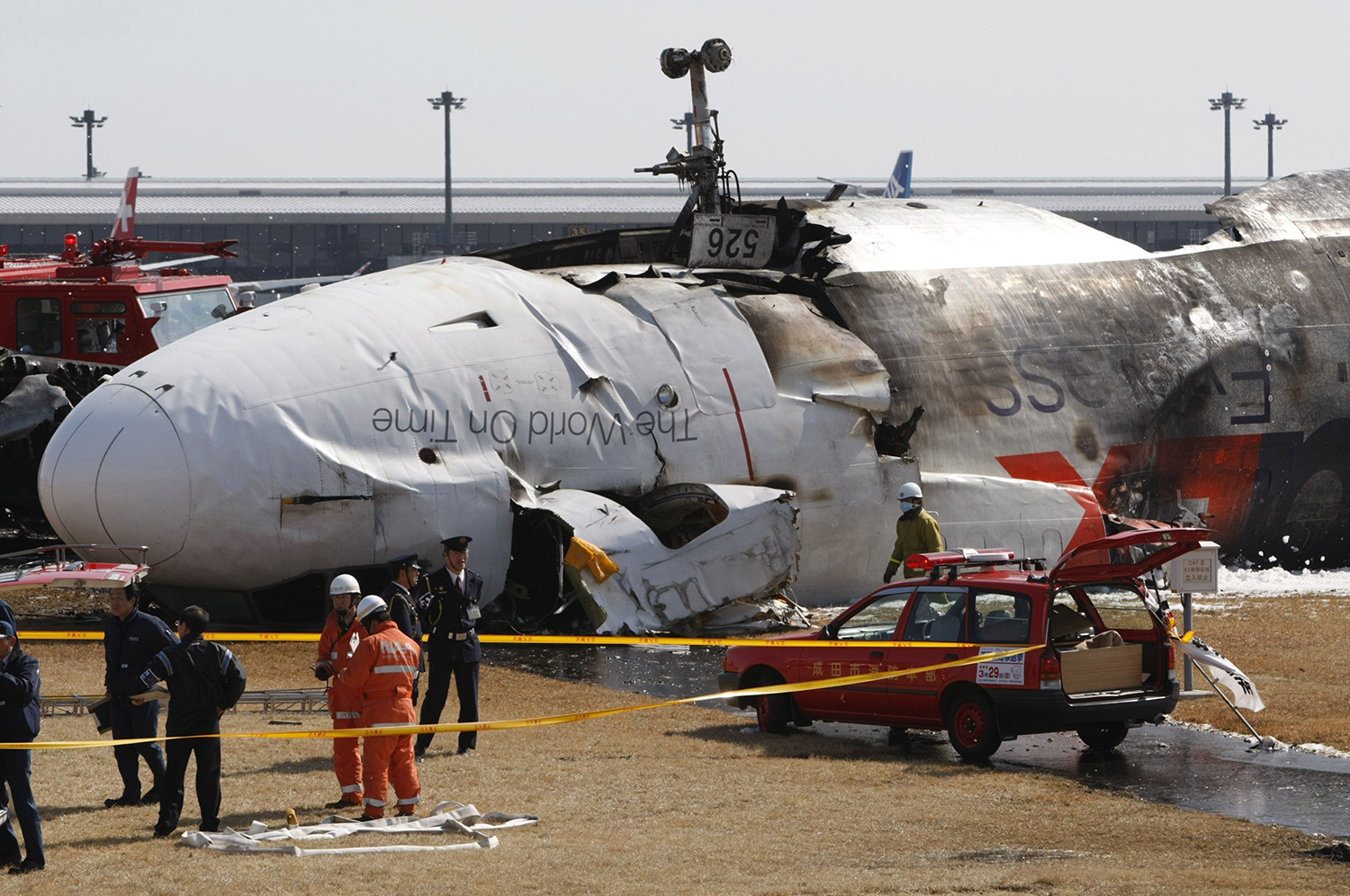
Crash of a McDonnell Douglas MD-11F in Tokyo: 2 killed

Date & Time: Mar 23, 2009 at 0649 LT
Type of aircraft:
Operator:
Registration:
N526FE
Flight Type:
Survivors:
No
Schedule:
Guangzhou - Tokyo
MSN:
48600/560
YOM:
1993
Flight number:
FDX080
Country:
Region:
Crew on board:
2
Crew fatalities:
Pax on board:
0
Pax fatalities:
Other fatalities:
Total fatalities:
2
Captain / Total flying hours:
8132
Captain / Total hours on type:
3648.00
Copilot / Total flying hours:
5248
Copilot / Total hours on type:
879
Aircraft flight hours:
40767
Aircraft flight cycles:
7131
Circumstances:
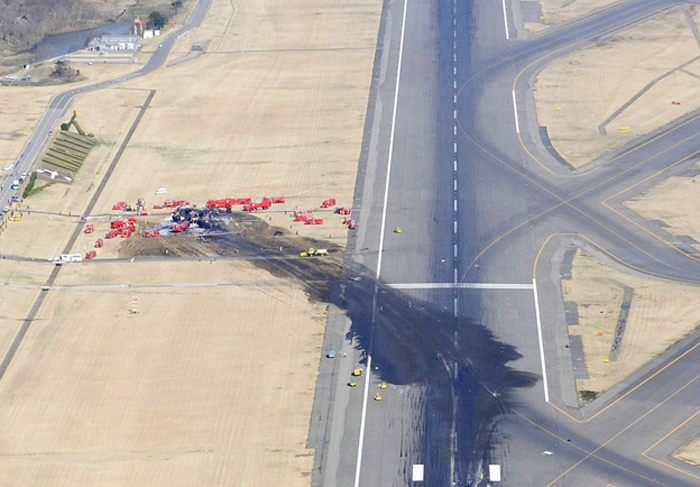
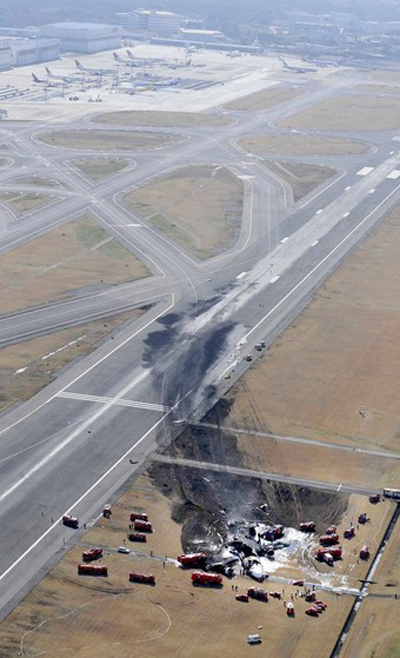
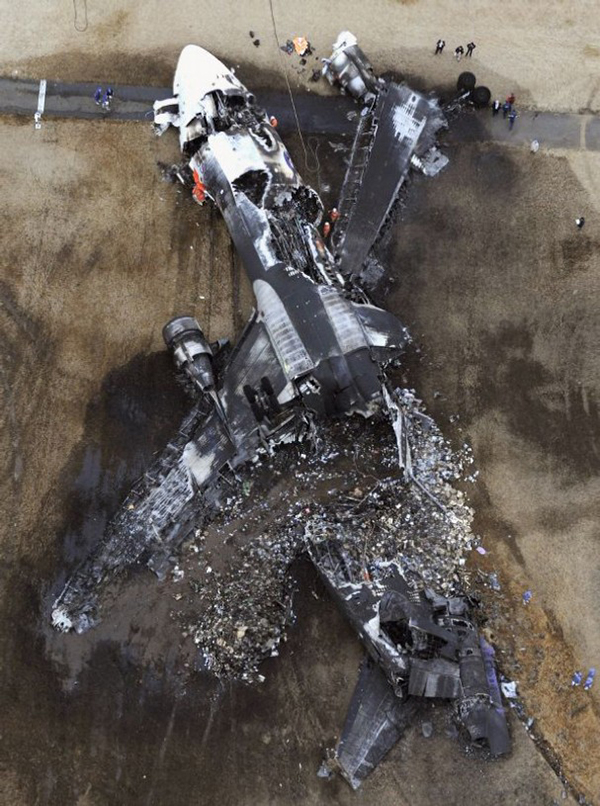
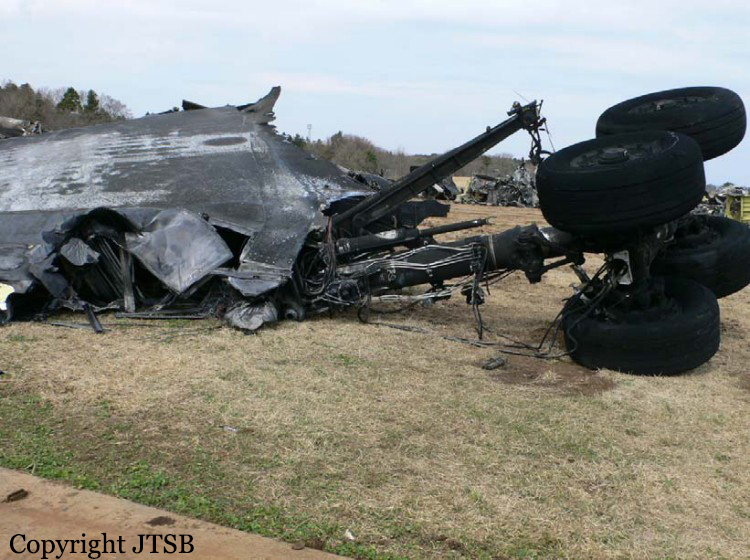
Aircraft bounced repeatedly during landing on Runway 34L at Narita International Airport. During the course of bouncing, its left wing was broken and separated from the fuselage attaching point and the airplane caught fire. The airplane rolled over to the left being engulfed in flames, swerved off the runway to the left and came to rest inverted in a grass area. The Pilot in Command (PIC) and the First Officer (FO) were on board the airplane, and both of them suffered fatal injuries. The airplane was destroyed and the post-crash fire consumed most parts.
Probable cause:
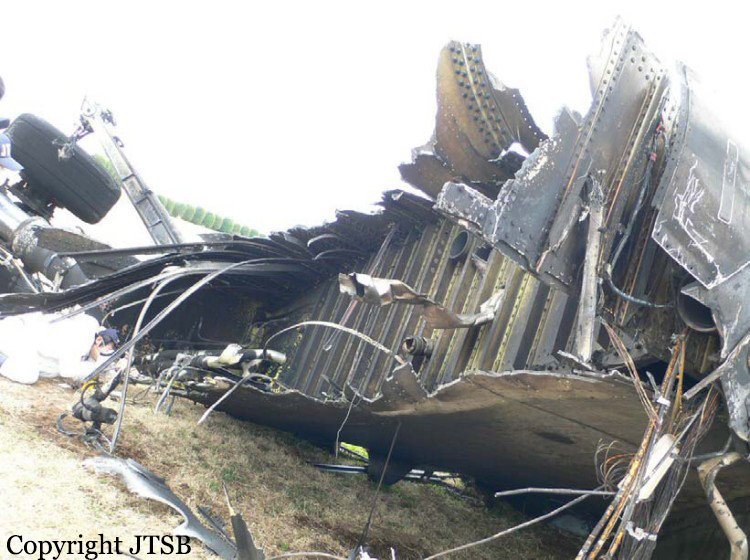
In this accident, when the airplane landed on Runway 34L at Narita International Airport, it fell into porpoising. It is highly probable that the left wing fractured as the load transferred from the left MLG to the left wing structure on the third touchdown surpassed the design limit (ultimate load). It is highly probable that a fire broke out as the fuel spillage from the left wing caught fire, and the airplane swerved left off the runway rolling to the left and came to rest inverted on the grass area. The direct causes which the airplane fell into the porpoise phenomenon are as follows:
a. Large nose-down elevator input at the first touchdown resulted in a rapid nose down motion during the first bounce, followed by the second touchdown on the NLG with negative pitch attitude. Then the pitch angle rapidly increased by the ground reaction force, causing the larger second bounce, and
b. The PF‘s large elevator input in an attempt to control the airplane without thrust during the second bounce. In addition, the indirect causes are as follows:
a. Fluctuating airspeed, pitch attitude due to gusty wind resulted in an approach with a large sink rate,
b. Late flare with large nose-up elevator input resulted in the first bounce and
c. Large pitch attitude change during the bounce possibly made it difficult for the crewmembers to judge airplane pitch attitude and airplane height relative to the ground (MLG height above the runway).
d. The PM‘s advice, override and takeover were not conducted adequately. It is somewhat likely that, if the fuse pin in the MLG support structure had failed and the MLG had been separated in the overload condition in which the vertical load is the primary component, the damage to the fuel tanks would have been reduced to prevent the fire from developing rapidly. It is probable that the fuse pin did not fail because the failure mode was not assumed under an overload condition in which the vertical load is the primary component due to the interpretation of the requirement at the time of type certification for the MD-11 series airplanes.
Final Report:
Crash of a Pilatus PC-12/45 in Butte: 14 killed

Date & Time: Mar 22, 2009 at 1430 LT
Type of aircraft:
Registration:
N128CM
Flight Type:
Survivors:
No
Schedule:
Oroville - Bozeman
MSN:
403
YOM:
2001
Location:
Crew on board:
1
Crew fatalities:
Pax on board:
13
Pax fatalities:
Other fatalities:
Total fatalities:
14
Captain / Total flying hours:
8840
Captain / Total hours on type:
1760.00
Aircraft flight hours:
1916
Circumstances:
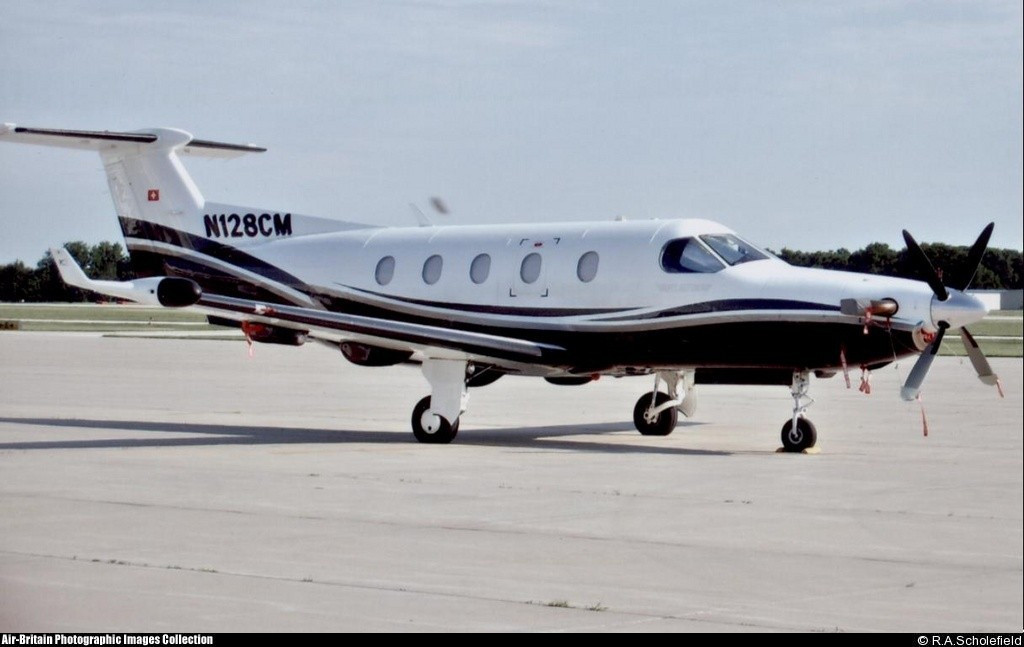
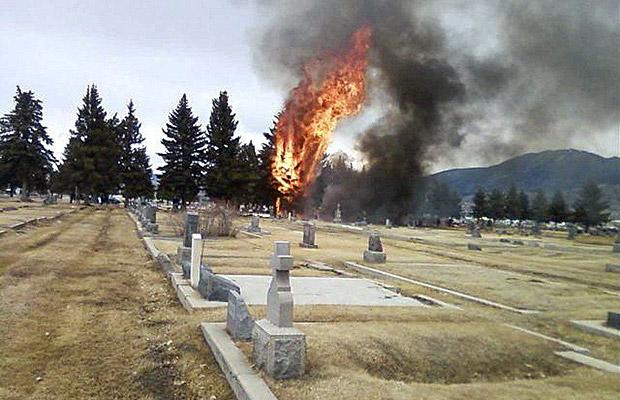
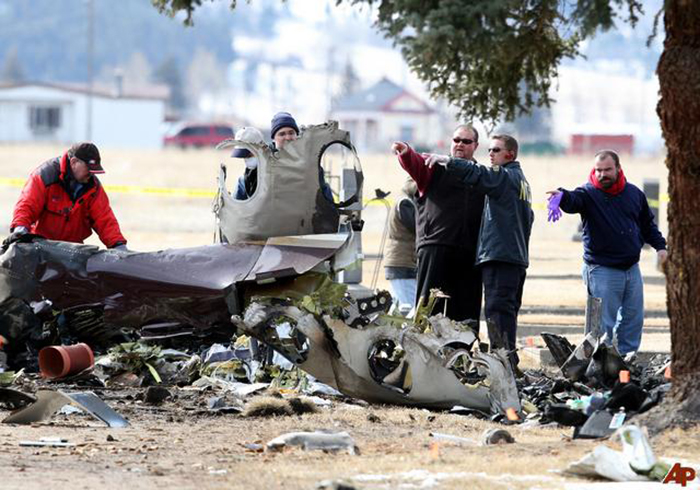
On March 22, 2009, about 1432 mountain daylight time, a Pilatus PC-12/45, N128CM, was diverting to Bert Mooney Airport (BTM), Butte, Montana, when it crashed about 2,100 feet west of runway 33 at BTM. The pilot and the 13 airplane passengers were fatally injured, and the airplane was substantially damaged by impact forces and a post crash fire. The airplane was owned by Eagle Cap Leasing of Enterprise, Oregon, and was operating as a personal flight under the provisions of 14 Code of Federal Regulations Part 91. The flight departed Oroville Municipal Airport, Oroville, California, on an instrument flight rules flight plan with a destination of Gallatin Field, Bozeman, Montana. Visual meteorological conditions prevailed at the time of the accident.
Probable cause:
(1) the pilot’s failure to ensure that a fuel system icing inhibitor was added to the fuel before the flights on the day of the accident;
(2) his failure to take appropriate remedial actions after a low fuel pressure state (resulting from icing within the fuel system) and a lateral fuel imbalance developed, including diverting to a suitable airport before the fuel imbalance became extreme; and
(3) a loss of control while the pilot was maneuvering the left-wing-heavy airplane near the approach end of the runway.
Final Report:
Crash of a Grumman E-2C Hawkeye at Chambers Field NAS

Date & Time: Mar 19, 2009
Type of aircraft:
Operator:
Registration:
165818
Flight Type:
Survivors:
Yes
MSN:
A189
Crew on board:
0
Crew fatalities:
Pax on board:
0
Pax fatalities:
Other fatalities:
Total fatalities:
0
Circumstances:
After touchdown at Norfolk-Chambers Field NAS, a tyre burst. The crew lost control of the airplane that veered off runway and collided with an arrestor gear engine. There were no casualties.
Probable cause:
Loss of control upon landing after a tyre burst.

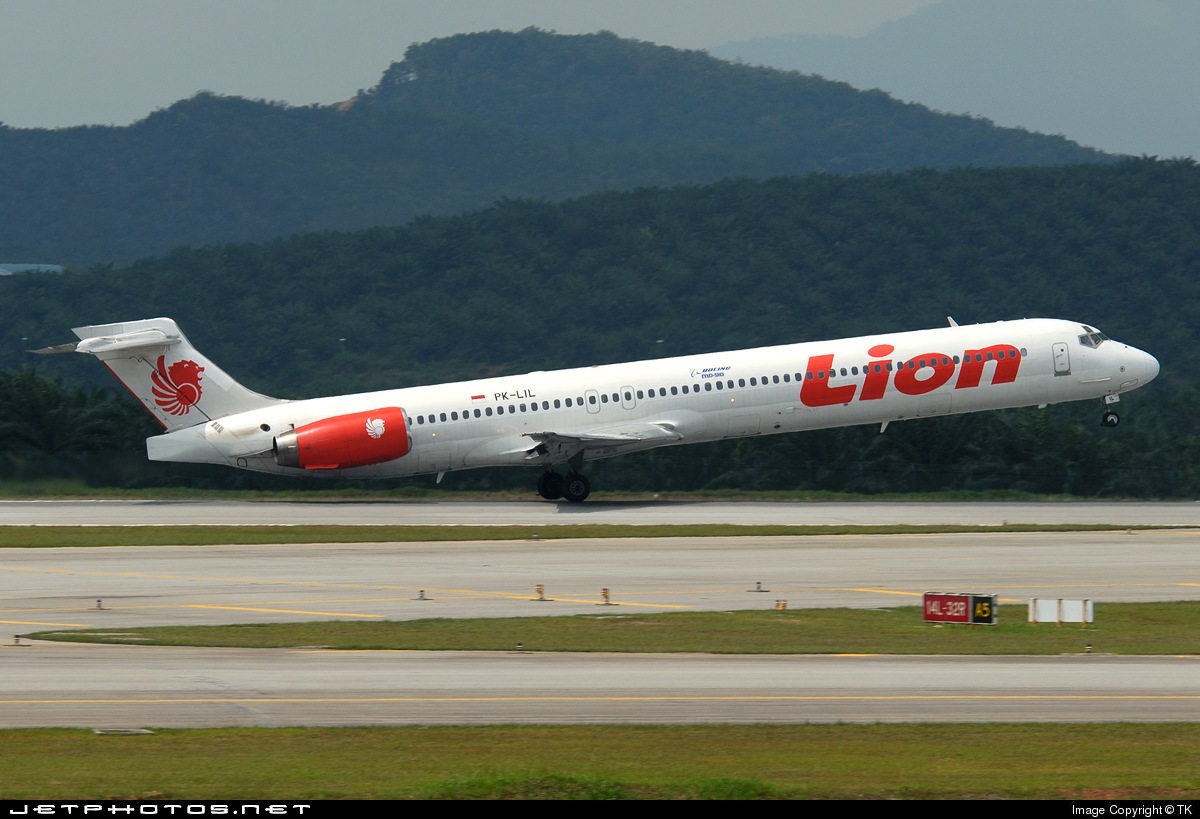
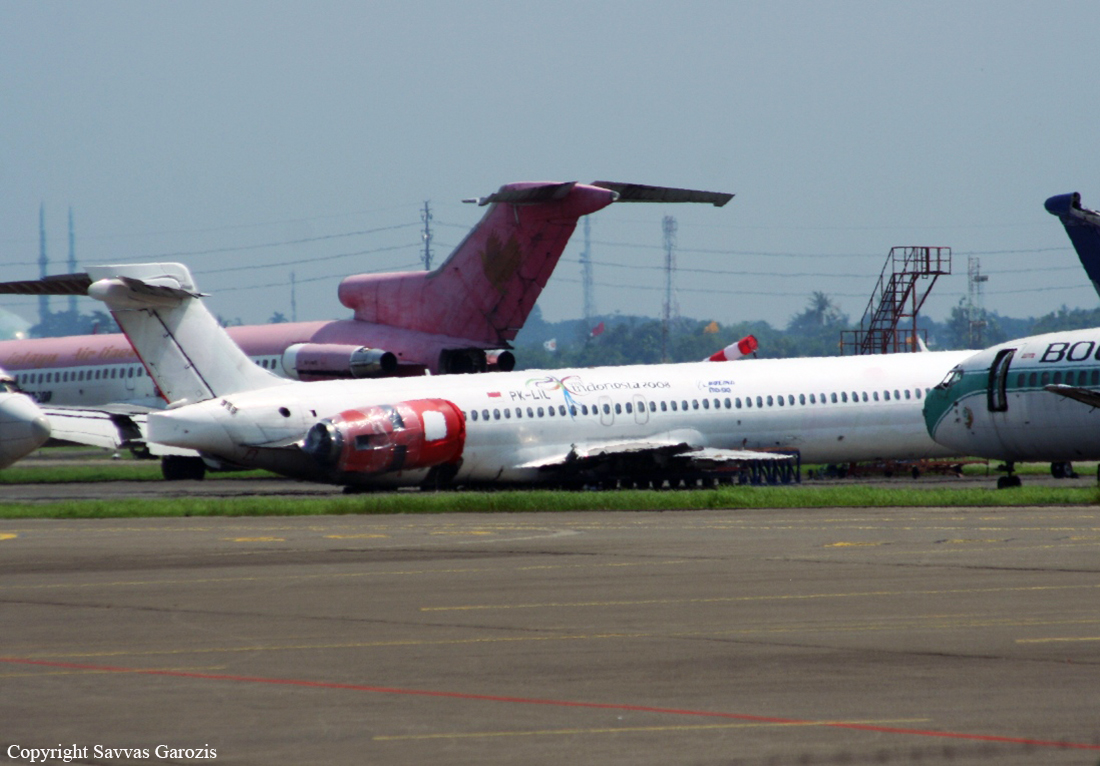
Crash of a McDonnell Douglas MD-90-30 in Jakarta

Date & Time: Mar 9, 2009 at 1535 LT
Type of aircraft:
Operator:
Registration:
PK-LIL
Survivors:
Yes
Schedule:
Ujung Pandang - Jakarta
MSN:
53573/2182
YOM:
1997
Flight number:
LNI793
Country:
Region:
Crew on board:
6
Crew fatalities:
Pax on board:
166
Pax fatalities:
Other fatalities:
Total fatalities:
0
Captain / Total flying hours:
25000
Captain / Total hours on type:
5000.00
Copilot / Total flying hours:
5000
Copilot / Total hours on type:
800
Aircraft flight hours:
18695
Aircraft flight cycles:
14507
Circumstances:
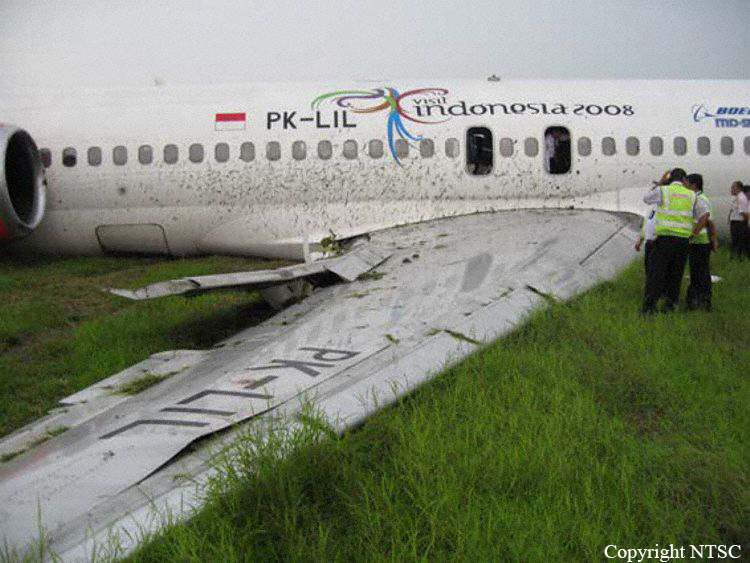
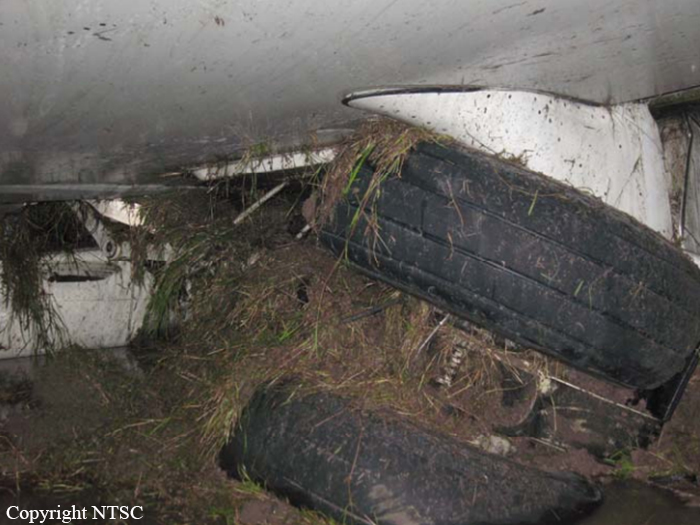
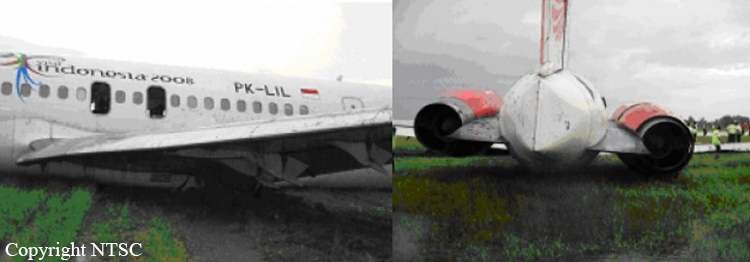
Lion Mentari Airline (Lion Air) as flight number LNI-793, departed from Sultan Hasanuddin Airport (WAAA), Makassar, Ujung Pandang, Sulawesi at 0636 UTC for Soekarno-Hatta International Airport (WIII), Jakarta. The estimated flight hour from Makassar to Jakarta was 2 hours. The crew consisted of two pilots and four flight attendants. There were 166 adult passengers. The copilot was the pilot flying for the sector, and the pilot in command (PIC) was the support/monitoring pilot. During the approach to runway 25L at Jakarta, the weather at the airport was reported as wind direction 200 degrees, wind speed 20 knots, visibility 1,000 meters, and rain. The PIC reported that he decided to take over control from the copilot. The PIC later reported that he had the runway in sight passing through 1,000 feet on descent, and he disengaged the autopilot at 400 feet. At about 50 feet the aircraft drifted to the right and the PIC initiated corrective action to regain the centreline. The aircraft touched down to the left of the runway 25L centerline and then commenced to drift to the right. The PIC reported that he immediately commenced corrective action by using thrust reverser, but the aircraft increasingly crabbed along the runway with the tail to the right of runway heading. The investigation subsequently found that the right thrust reverser was deployed, but left thrust reverser was not deployed. The aircraft stopped at 0835 on the right side of the runway 25L, 1,095 meters from the departure end of the runway on a heading of 152 degrees; 90 degrees to the runway 25L track. The main landing gear wheels collapsed, and still attached to the aircraft, were on the shoulder of the runway and the nose wheel was on the runway. The passengers and crew disembarked via the front right escape slide and right emergency exit windows. None of the occupants were injured
Probable cause:
The aircraft was not stabilized approach at 100 feet above the runway.
Final Report:
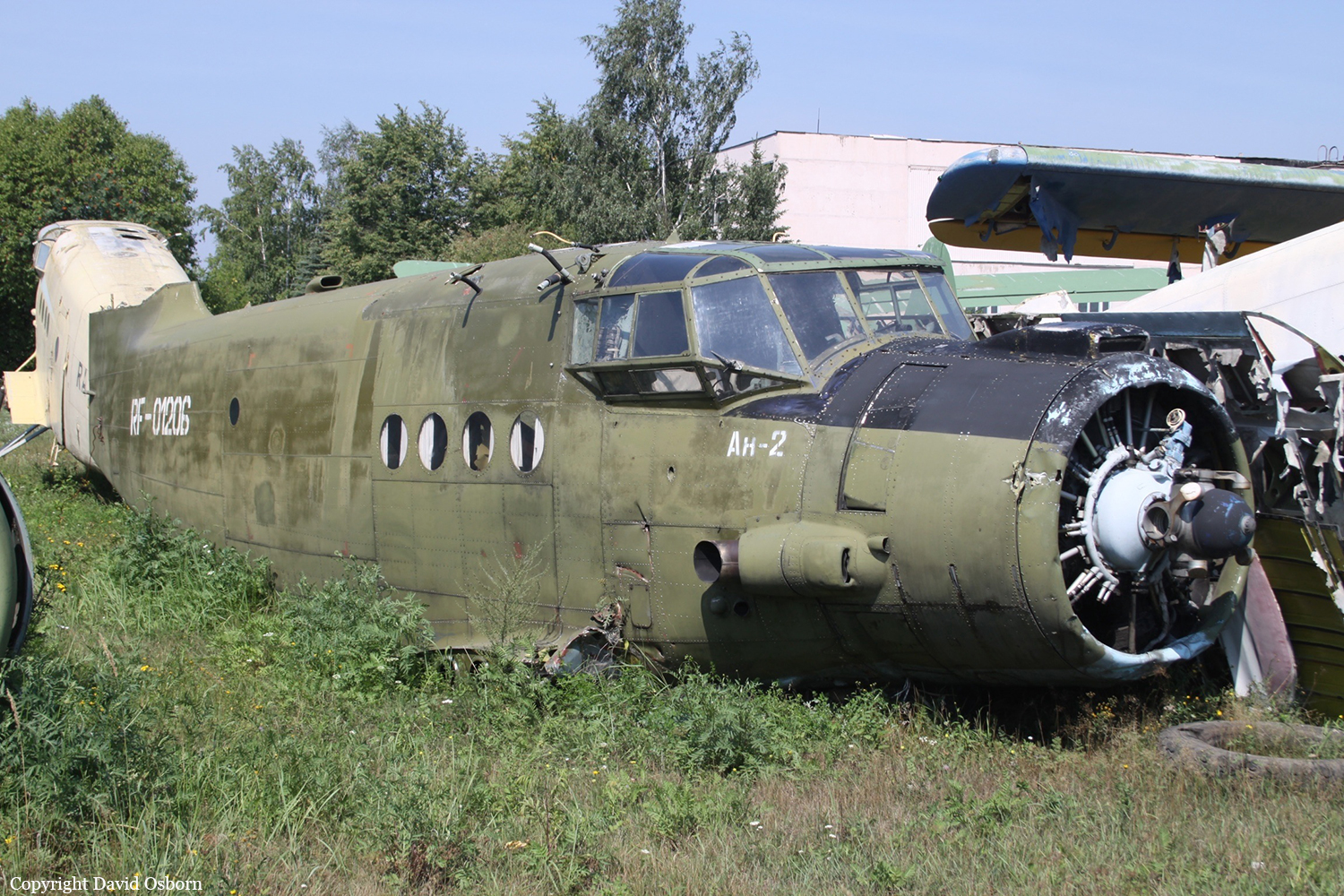
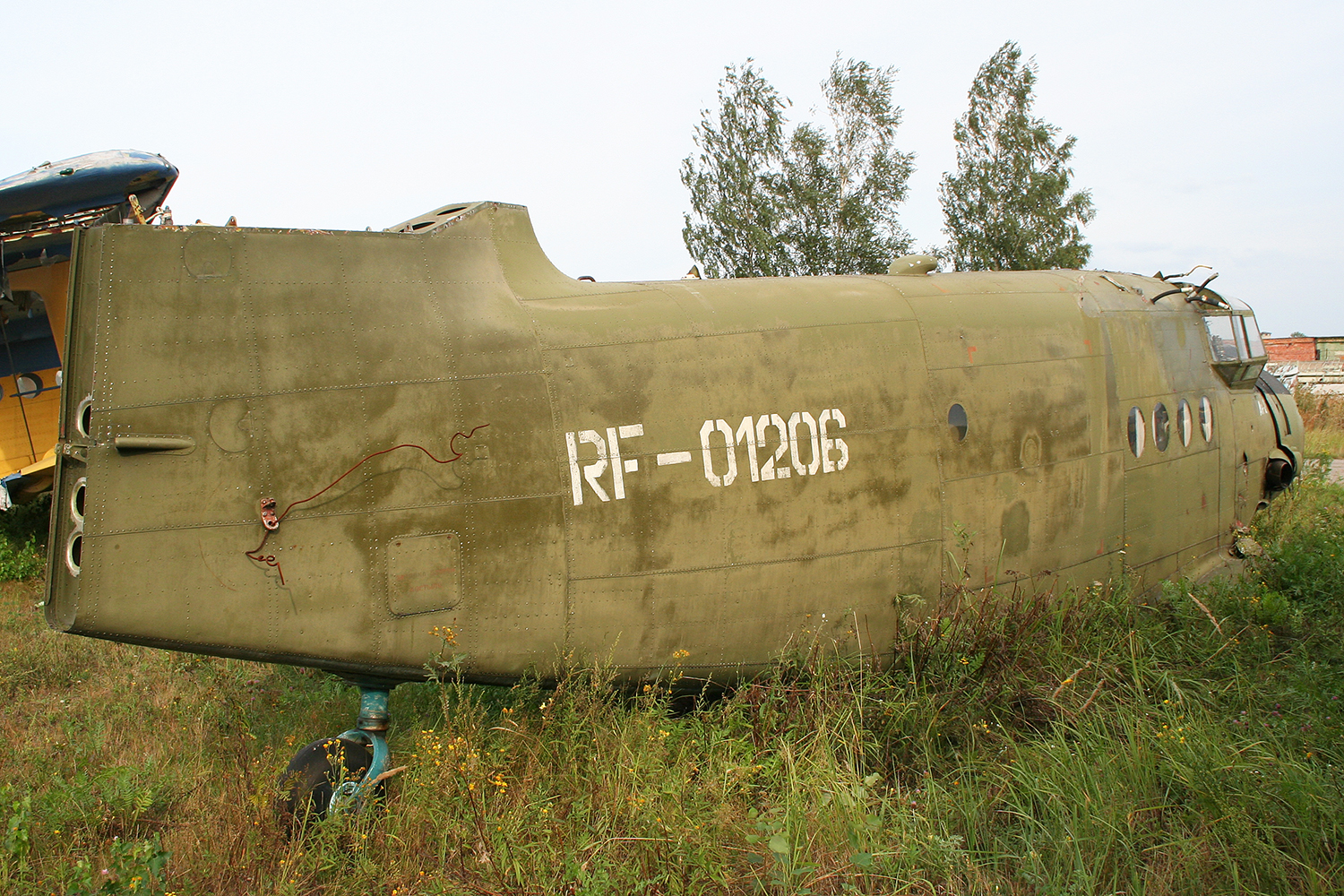
Crash of a PZL-Mielec AN-2T in Volosovo

Date & Time: Mar 7, 2009
Type of aircraft:
Operator:
Registration:
RF-01206
Flight Phase:
Survivors:
Yes
Schedule:
Volosovo - Volosovo
MSN:
1G98-22
YOM:
1968
Country:
Region:
Crew on board:
1
Crew fatalities:
Pax on board:
10
Pax fatalities:
Other fatalities:
Total fatalities:
0
Circumstances:
45 seconds after takeoff, while climbing, the aircraft stalled and crashed in a snow covered field. The pilot and all 10 skydivers escaped uninjured while the aircraft was damaged beyond repair.

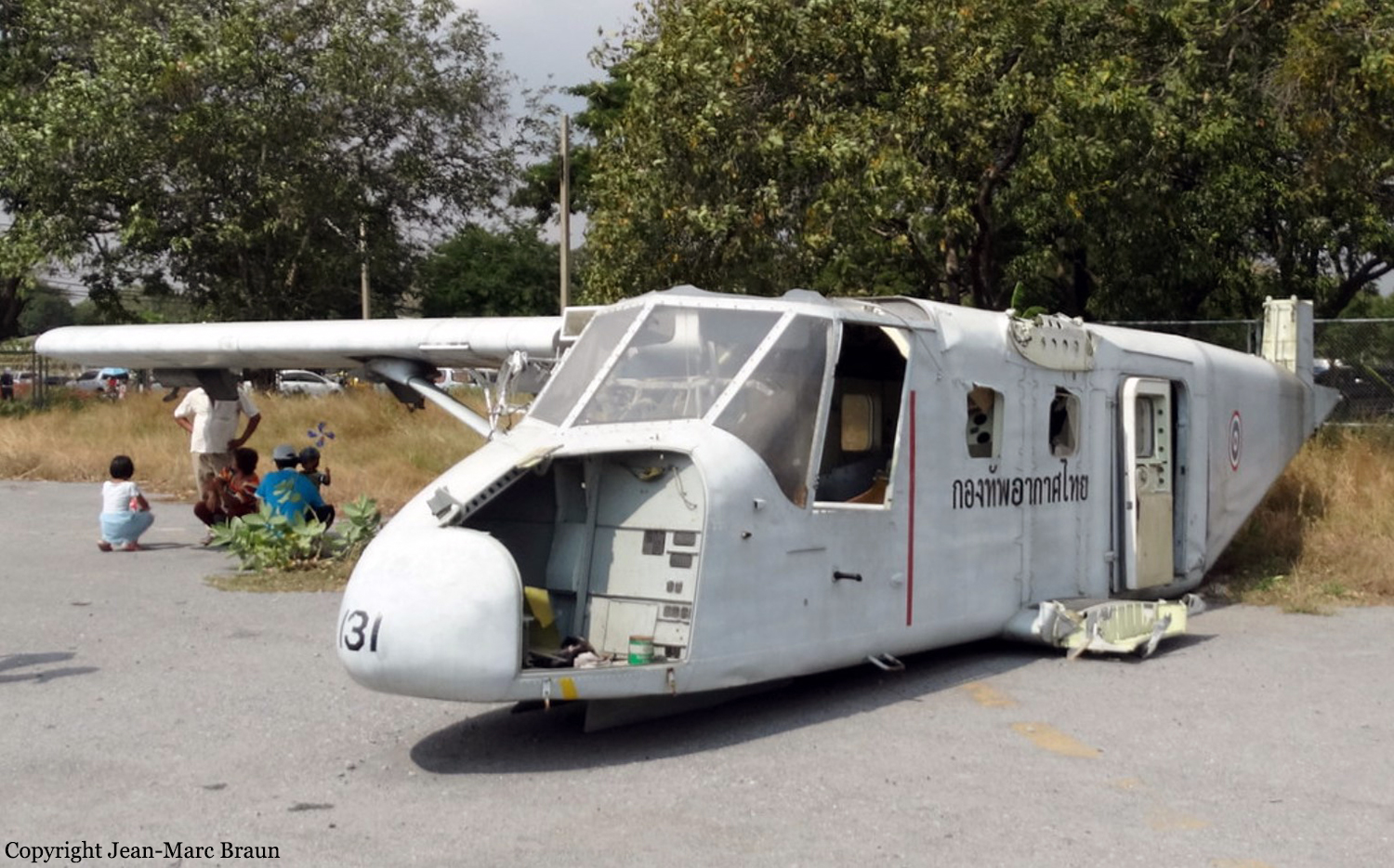
Crash of a GAF Nomad N.22B at Lop Buri AFB: 1 killed

Date & Time: Mar 6, 2009 at 1000 LT
Type of aircraft:
Operator:
Registration:
L9-5/25
Flight Phase:
Flight Type:
Survivors:
Yes
Schedule:
Lop Buri – Phitsanulok
MSN:
137
YOM:
1982
Country:
Region:
Crew on board:
5
Crew fatalities:
Pax on board:
0
Pax fatalities:
Other fatalities:
Total fatalities:
1
Circumstances:
Shortly after takeoff from Lop Buri AFB, the left engine failed. The aircraft rolled to the left, causing the left wing to struck the runway surface. The aircraft went out of control and crashed few dozen metres further. Four crew members were seriously injured while the fifth occupant was killed.
Probable cause:
Failure of the left engine just after liftoff for unknown reasons.

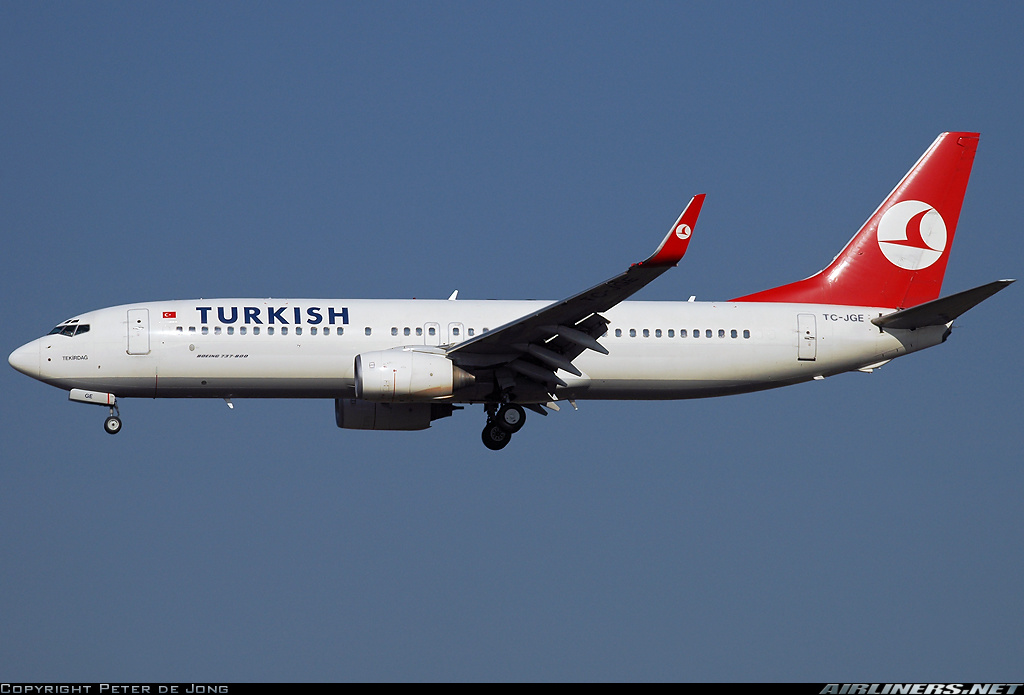
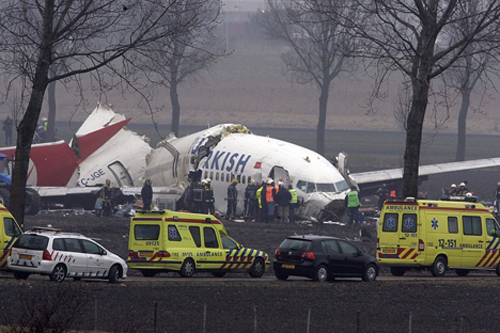
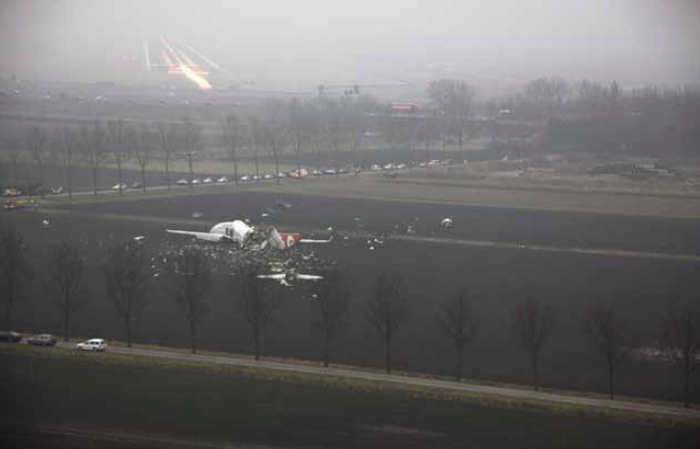
Crash of a Boeing 737-8F2 in Amsterdam: 9 killed

Date & Time: Feb 25, 2009 at 1026 LT
Type of aircraft:
Operator:
Registration:
TC-JGE
Survivors:
Yes
Schedule:
Istanbul - Amsterdam
MSN:
29789/1065
YOM:
2002
Flight number:
TK1951
Country:
Region:
Crew on board:
7
Crew fatalities:
Pax on board:
128
Pax fatalities:
Other fatalities:
Total fatalities:
9
Captain / Total flying hours:
17000
Captain / Total hours on type:
10885.00
Copilot / Total flying hours:
4146
Copilot / Total hours on type:
44
Circumstances:
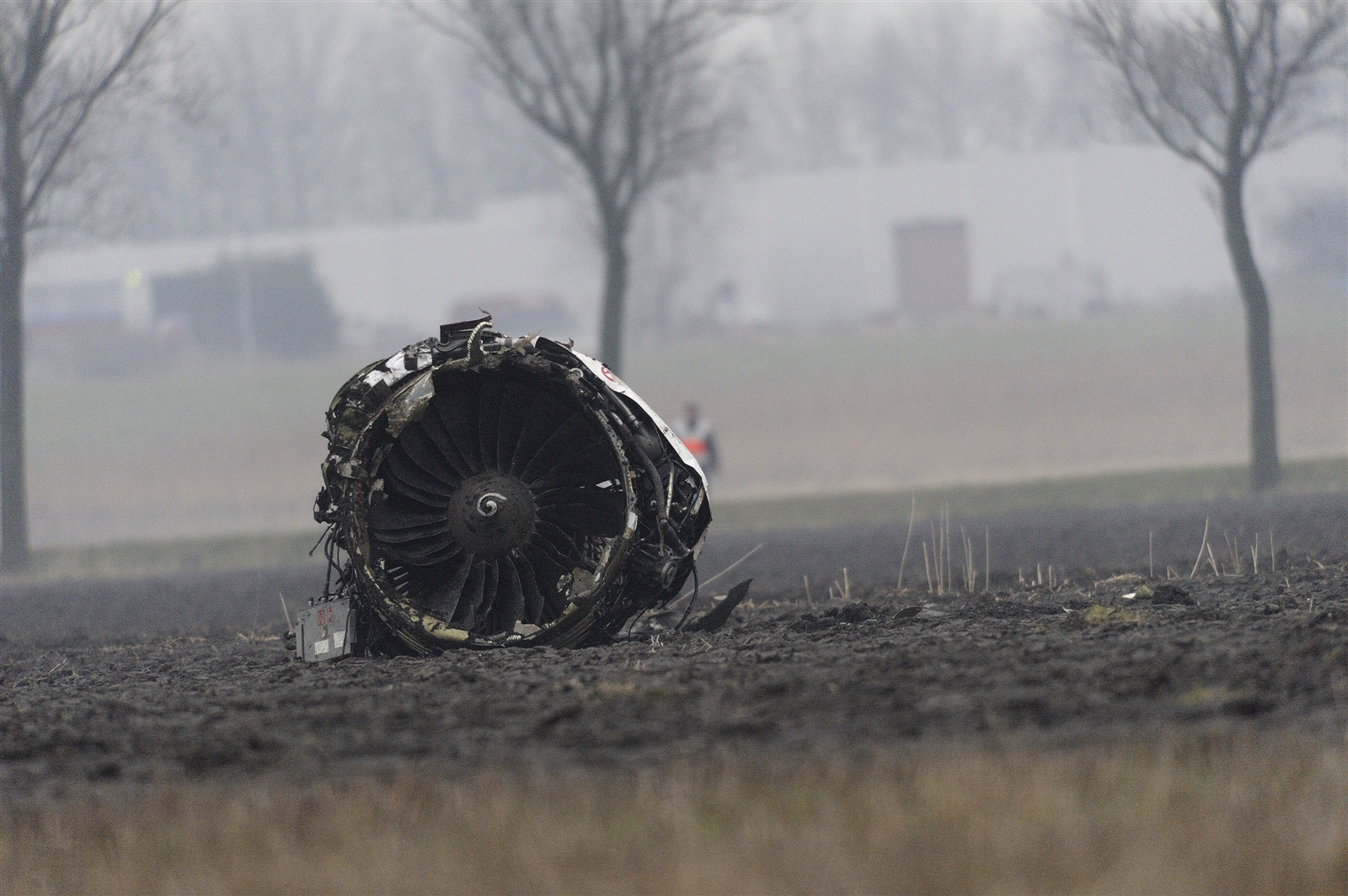
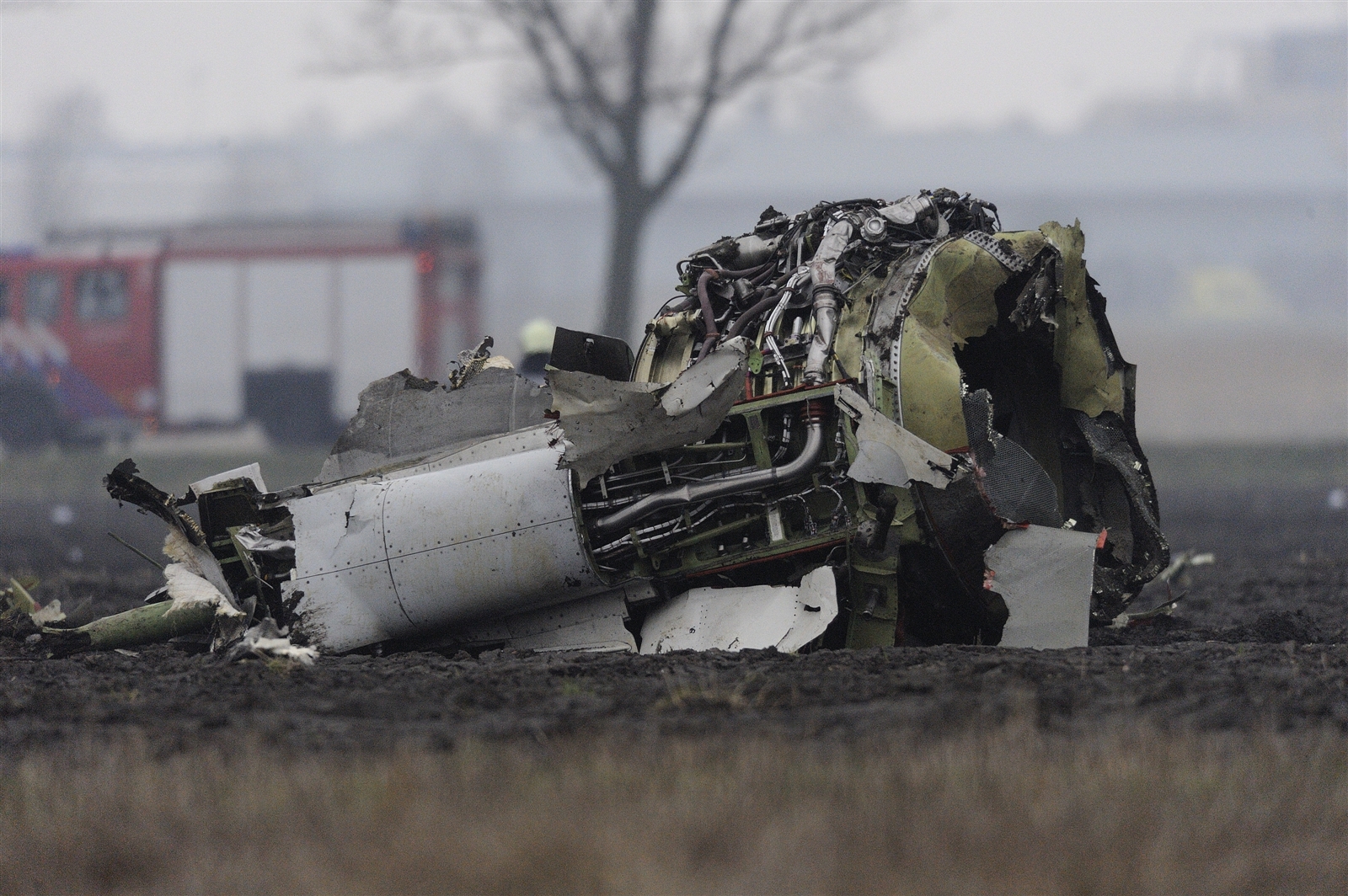
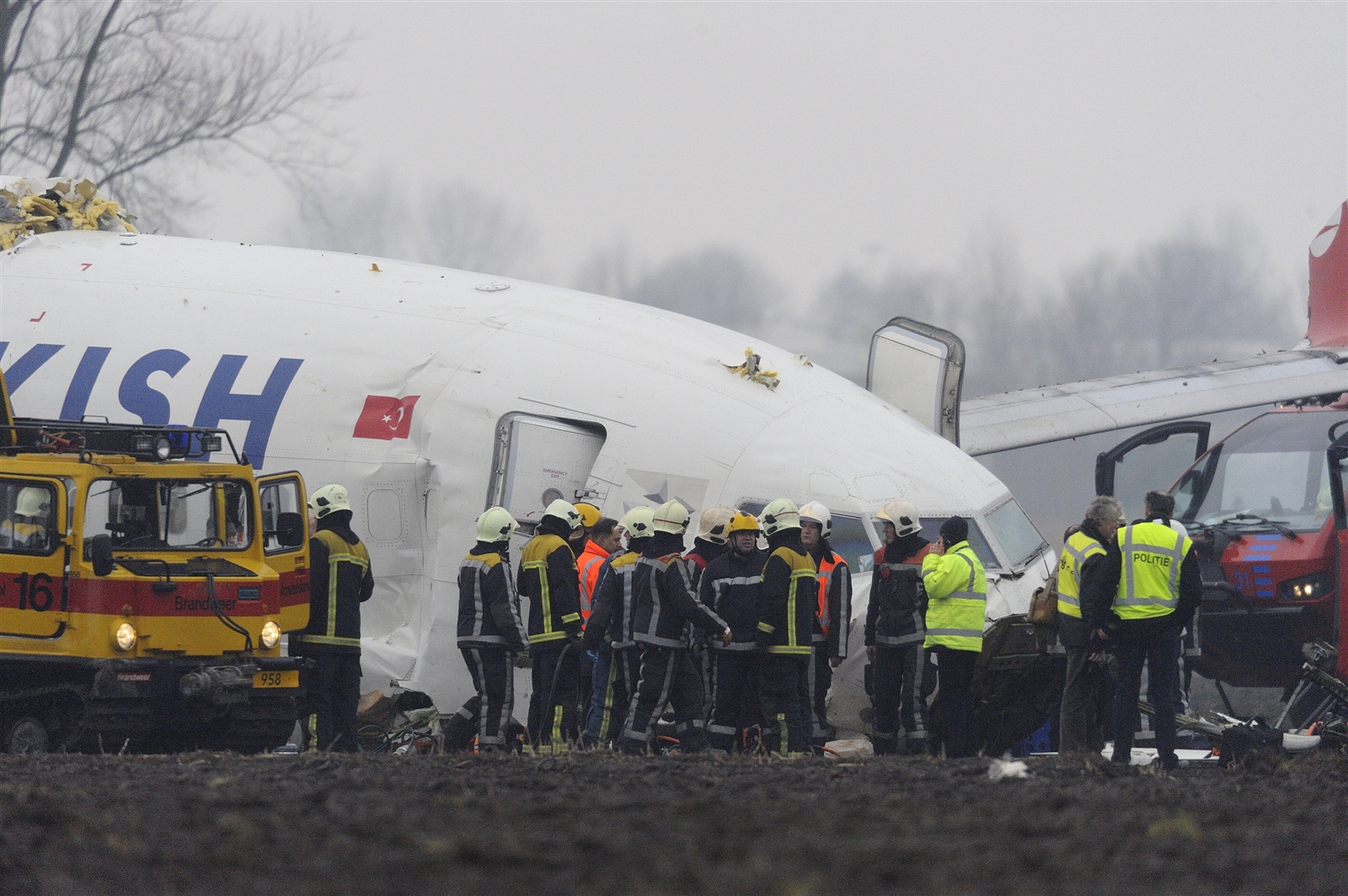
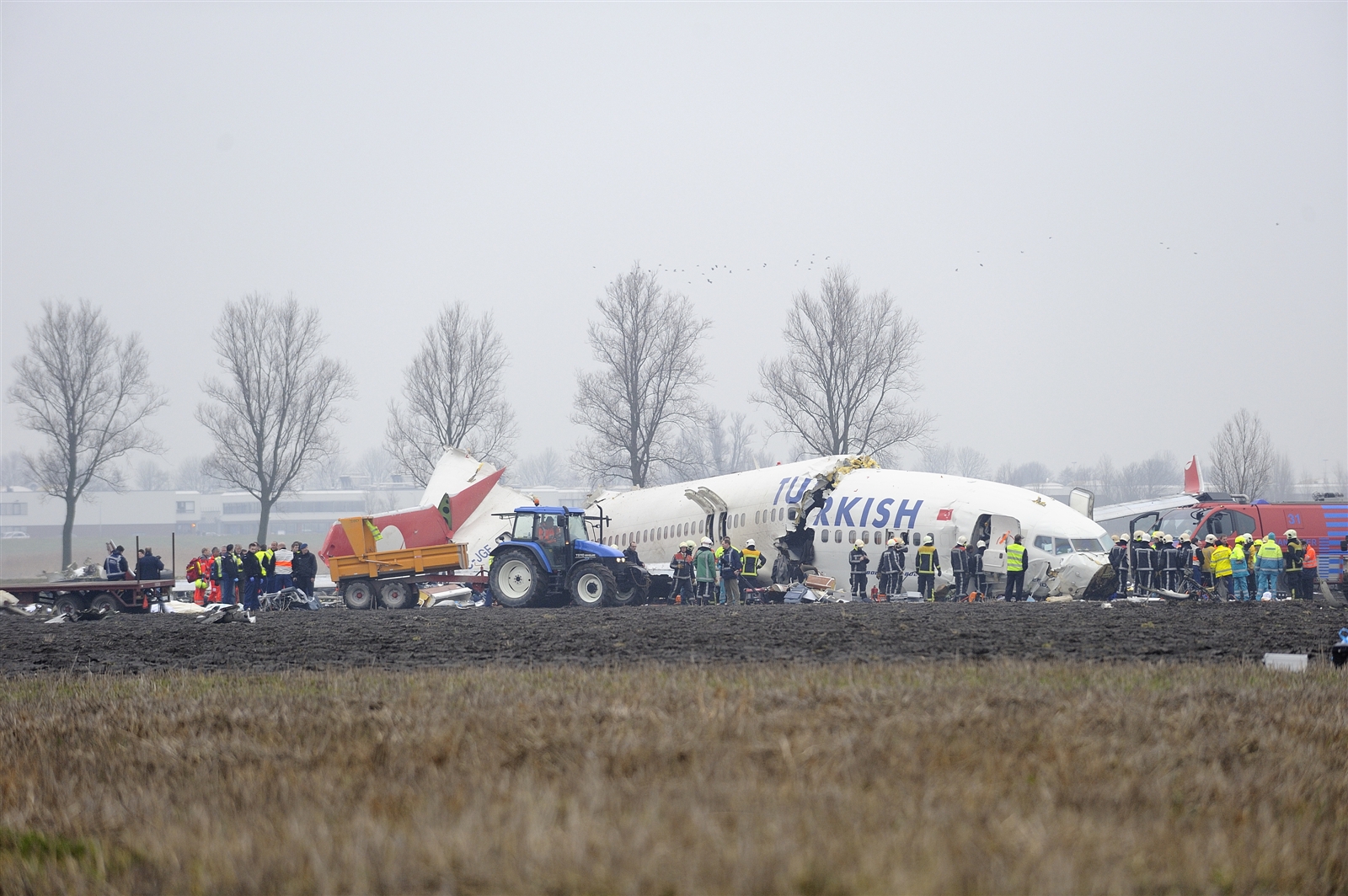
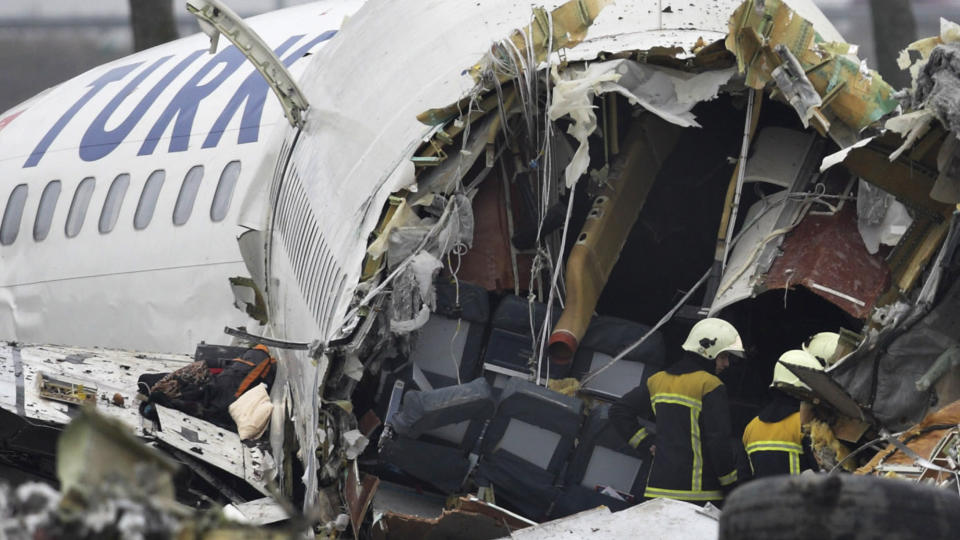
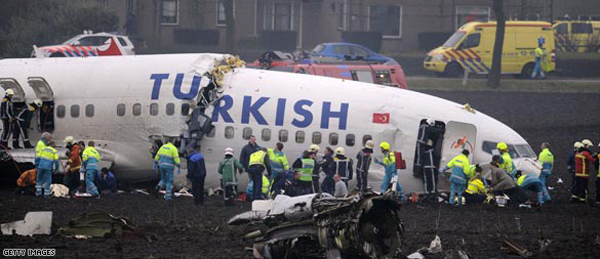
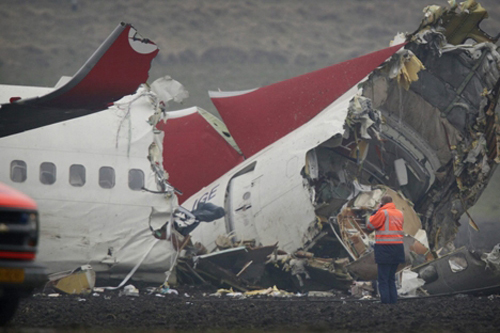
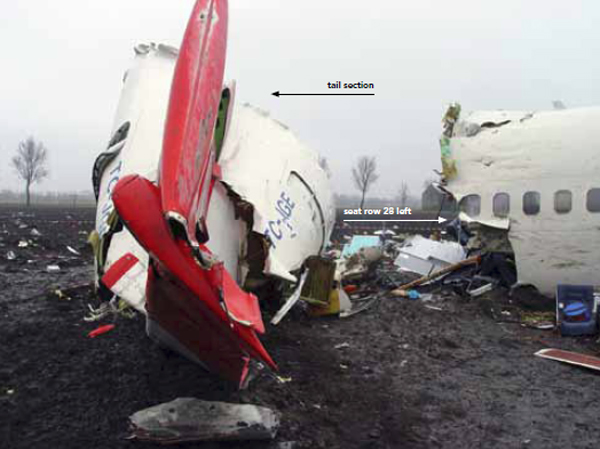
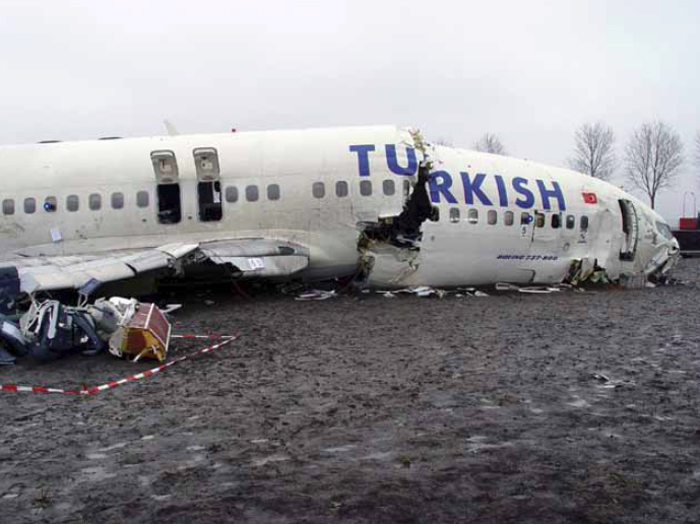
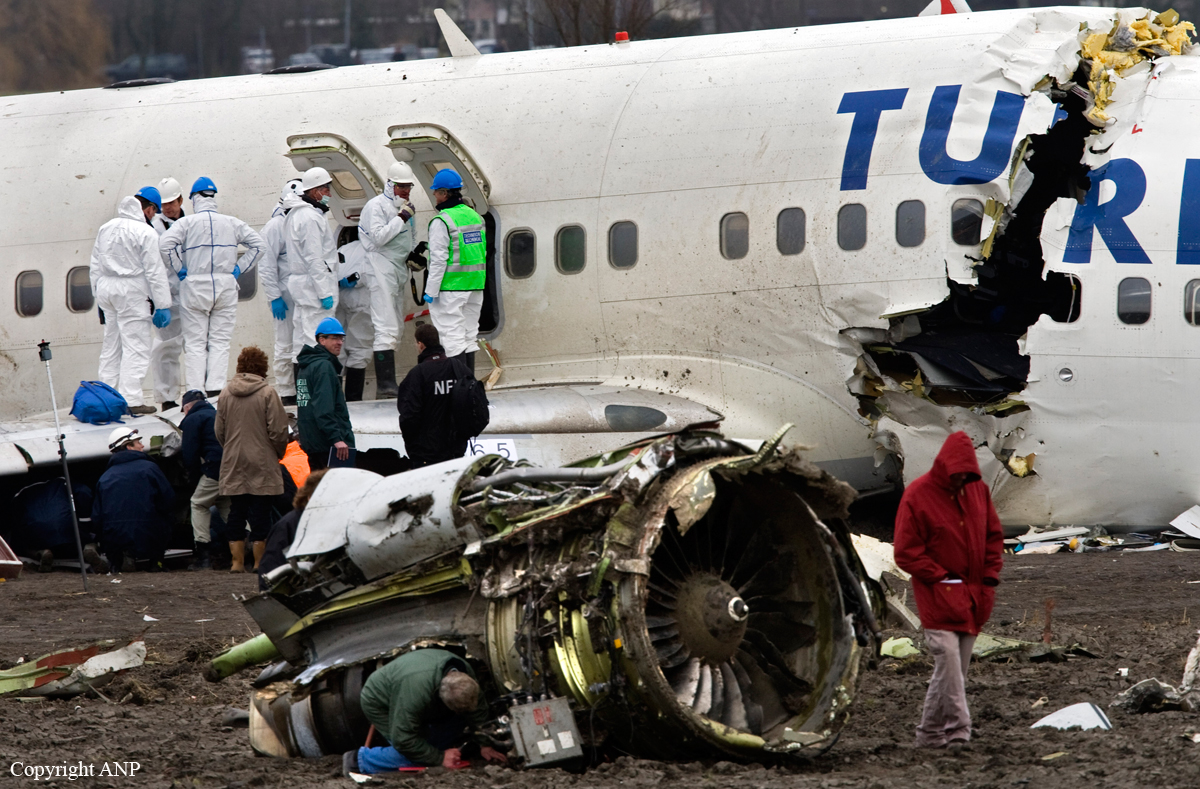
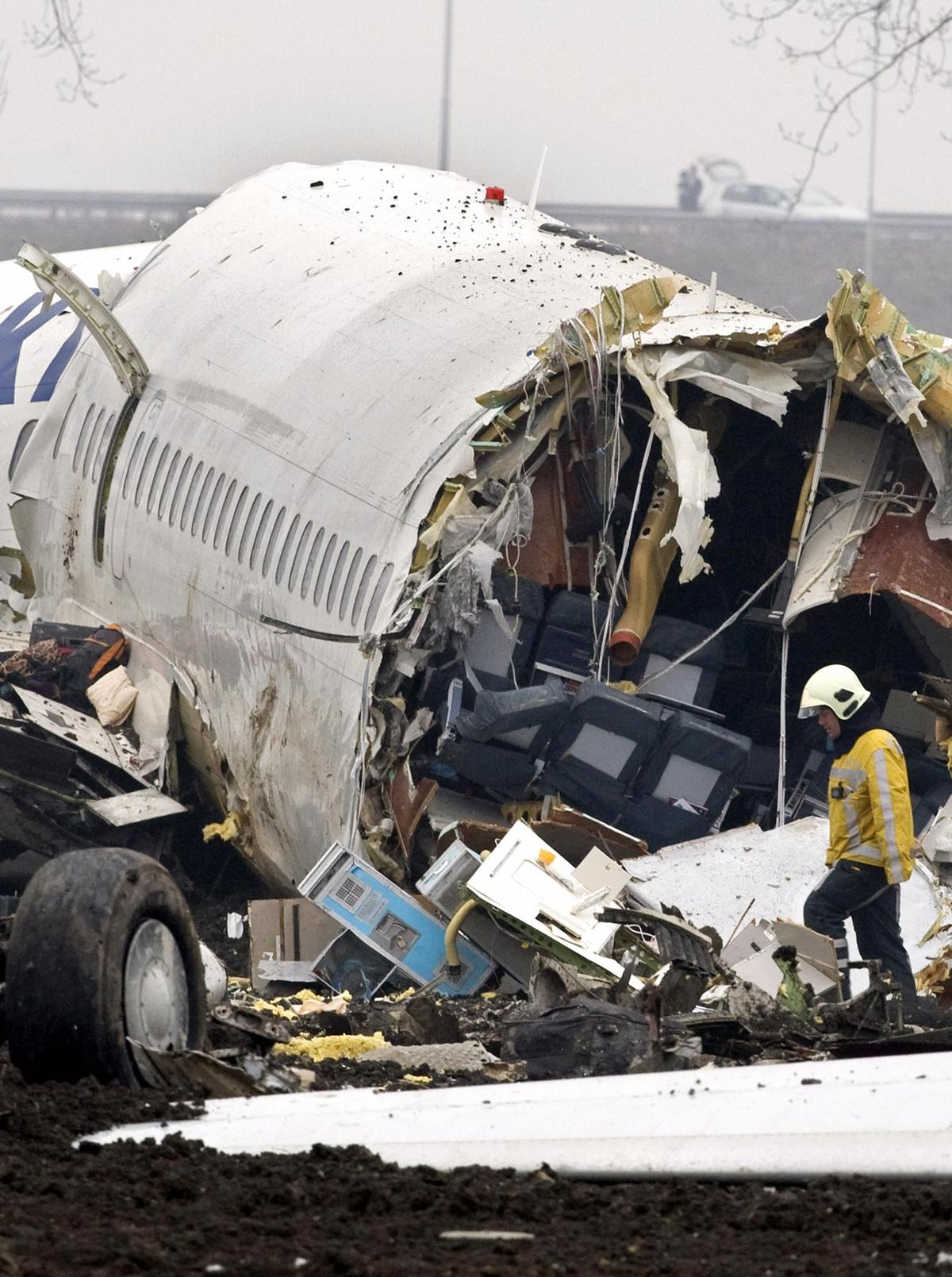
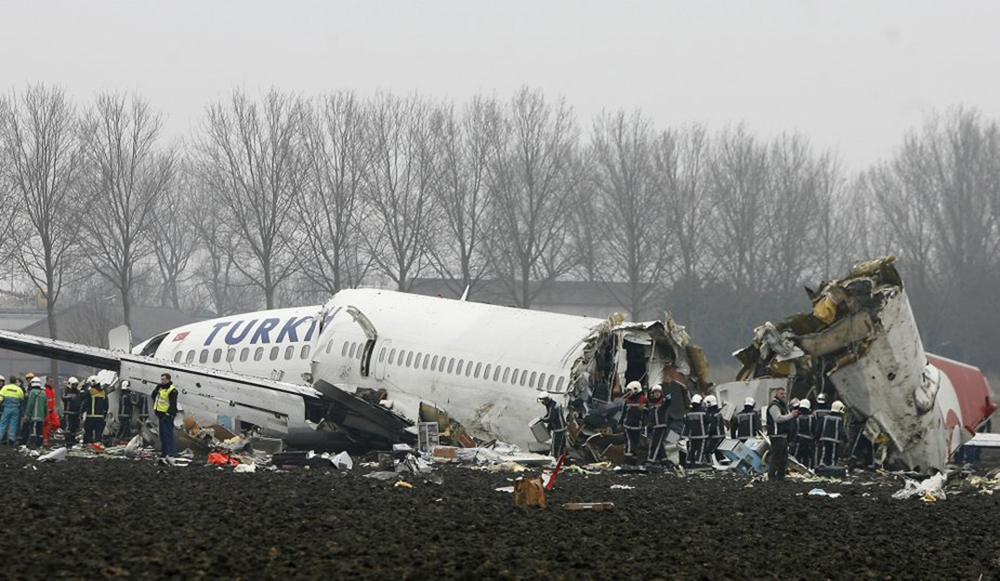
Turkish Airlines Flight 1951, a Boeing 737-800, departed Istanbul-Atatürk International Airport (IST) for a flight to Amsterdam-Schiphol International Airport (AMS), The Netherlands. The flight crew consisted of three pilots: a line training captain who occupied the left seat, a first officer under line training in the right seat and an additional first officer who occupied the flight deck jump seat. The first officer under line training was the pilot flying. The en route part of the flight was uneventful. The flight was descending for Schiphol and passed overhead Flevoland at about 8500 ft. At that time the aural landing gear warning sounded. The aircraft continued and was then directed by Air Traffic Control towards runway 18R for an ILS approach and landing. The standard procedure for runway 18R prescribes that the aircraft is lined up at least 8 NM from the runway threshold at an altitude of 2000 feet. The glidepath is then approached and intercepted from below. Lining up at a distance between 5 and 8 NM is allowed when permitted by ATC. Flight 1951 was vectored for a line up at approximately 6 NM at an altitude of 2000 feet. The glide slope was now approached from above. The crew performed the approach with one of the two autopilot and autothrottle engaged. The landing gear was selected down and flaps 15 were set. While descending through 1950 feet, the radio altimeter value suddenly changed to -8 feet. And again the aural landing gear warning sounded. This could be seen on the captain’s (left-hand) primary flight display. The first officer’s (right-hand) primary flight display, by contrast, indicated the correct height, as provided by the right-hand system. The left hand radio altimeter system, however, categorised the erroneous altitude reading as a correct one, and did not record any error. In turn, this meant that it was the erroneous altitude reading that was used by various aircraft systems, including the autothrottle. The crew were unaware of this, and could not have known about it. The manuals for use during the flight did not contain any procedures for errors in the radio altimeter system. In addition, the training that the pilots had undergone did not include any detailed system information that would have allowed them to understand the significance of the problem. When the aircraft started to follow the glidepath because of the incorrect altitude reading, the autothrottle moved into the ‘retard flare’ mode. This mode is normally only activated in the final phase of the landing, below 27 feet. This was possible because the other preconditions had also been met, including flaps at (minimum) position 15. The thrust from both engines was accordingly reduced to a minimum value (approach idle). This mode was shown on the primary flight displays as ‘RETARD’. However, the right-hand autopilot, which was activated, was receiving the correct altitude from the right-hand radio altimeter system. Thus the autopilot attempted to keep the aircraft flying on the glide path for as long as possible. This meant that the aircraft’s nose continued to rise, creating an increasing angle of attack of the wings. This was necessary in order to maintain the same lift as the airspeed reduced. In the first instance, the pilots’ only indication that the autothrottle would no longer maintain the pre-selected speed of 144 knots was the RETARD display. When the speed fell below this value at a height of 750 feet, they would have been able to see this on the airspeed indicator on the primary flight displays. When subsequently, the airspeed reached 126 knots, the frame of the airspeed indicator also changed colour and started to flash. The artificial horizon also showed that the nose attitude of the aircraft was becoming far too high. The cockpit crew did not respond to these indications and warnings. The reduction in speed and excessively high pitch attitude of the aircraft were not recognised until the approach to stall warning (stick shaker) went off at an altitude of 460 feet. The first officer responded immediately to the stick shaker by pushing the control column forward and also pushing the throttle levers forward. The captain however, also responded to the stick shaker commencing by taking over control. Assumingly the result of this was that the first officer’s selection of thrust was interrupted. The result of this was that the autothrottle, which was not yet switched off, immediately pulled the throttle levers back again to the position where the engines were not providing any significant thrust. Once the captain had taken over control, the autothrottle was disconnected, but no thrust was selected at that point. Nine seconds after the commencement of the first approach to stall warning, the throttle levers were pushed fully forward, but at that point the aircraft had already stalled and the height remaining, of about 350 feet, was insufficient for a recovery. According to the last recorded data of the digital flight data recorder the aircraft was in a 22° ANU and 10° Left Wing Down (LWD) position at the moment of impact. The airplane impacted farmland. The horizontal stabilizer and both main landing gear legs were separated from the aircraft and located near the initial impact point. The left and right engines had detached from the aircraft. The aft fuselage, with vertical stabilizer, was broken circumferentially forward of the aft passenger doors and had sustained significant damage. The fuselage had ruptured at the right side forward of the wings. The forward fuselage section, which contained the cockpit and seat rows 1 to 7, had been significantly disrupted. The rear fuselage section was broken circumferentially around row 28.
Probable cause:
During the accident flight, while executing the approach by means of the instrument landing system with the right autopilot engaged, the left radio altimeter system showed an incorrect height of -8 feet on the left primary flight display. This incorrect value of -8 feet resulted in activation of the ‘retard flare’ mode of the auto-throttle, whereby the thrust of both engines was reduced to a minimal value (approach idle) in preparation for the last phase of the landing. Due to the approach heading and altitude provided to the crew by air traffic control, the localiser signal was intercepted at 5.5 NM from the runway threshold with the result that the glide slope had to be intercepted from above. This obscured the fact that the auto-throttle had entered the retard flare mode. In addition, it increased the crew’s workload. When the aircraft passed 1000 feet height, the approach was not stabilized so the crew should have initiated a go around. The right autopilot (using data from the right radio altimeter) followed the glide slope signal. As the airspeed continued to drop, the aircraft’s pitch attitude kept increasing. The crew failed to recognize the airspeed decay and the pitch increase until the moment the stick shaker was activated. Subsequently the approach to stall recovery procedure was not executed properly, causing the aircraft to stall and crash.
Final Report:

Crash of a Lockheed C-130H Hercules in Egypt

Date & Time: Feb 24, 2009
Type of aircraft:
Operator:
Registration:
1272
Flight Type:
Survivors:
Yes
MSN:
4714
YOM:
1977
Location:
Country:
Region:
Crew on board:
0
Crew fatalities:
Pax on board:
0
Pax fatalities:
Other fatalities:
Total fatalities:
0
Circumstances:
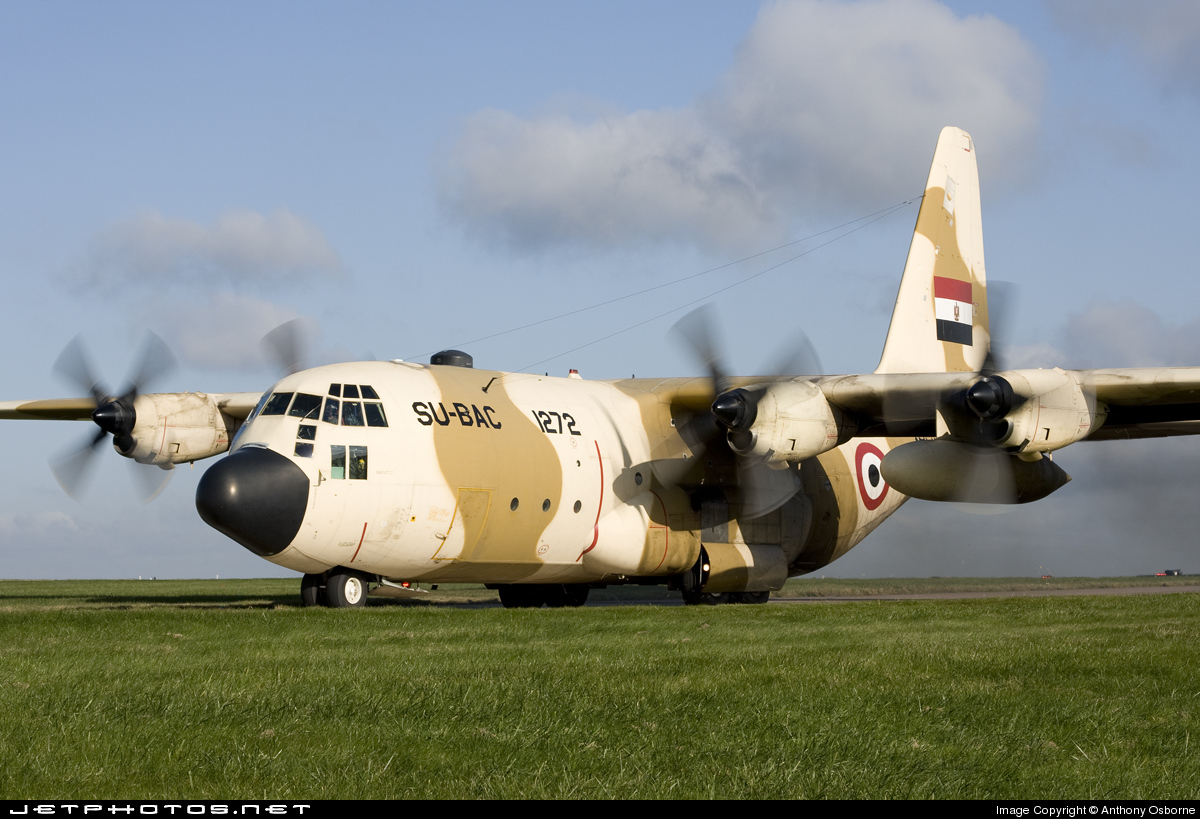
The crew was completing a night training mission with touch-and-go on an airbase somewhere in Egypt. In unknown circumstances, the aircraft crashed on landing and was damaged beyond repair. There were no casualties. The aircraft had the dual registration SU-BAC (civil) and 1272 (military).

Crash of a PZL-Mielec AN-2SX in Bishkek

Date & Time: Feb 22, 2009 at 1249 LT
Type of aircraft:
Operator:
Registration:
EX-68039
Flight Phase:
Survivors:
Yes
Schedule:
Bishkek - Bukhara
MSN:
1G193-11
YOM:
1981
Flight number:
GRA4571
Country:
Region:
Crew on board:
2
Crew fatalities:
Pax on board:
2
Pax fatalities:
Other fatalities:
Total fatalities:
0
Captain / Total flying hours:
8215
Captain / Total hours on type:
7362.00
Copilot / Total flying hours:
7613
Copilot / Total hours on type:
4985
Aircraft flight hours:
6132
Circumstances:
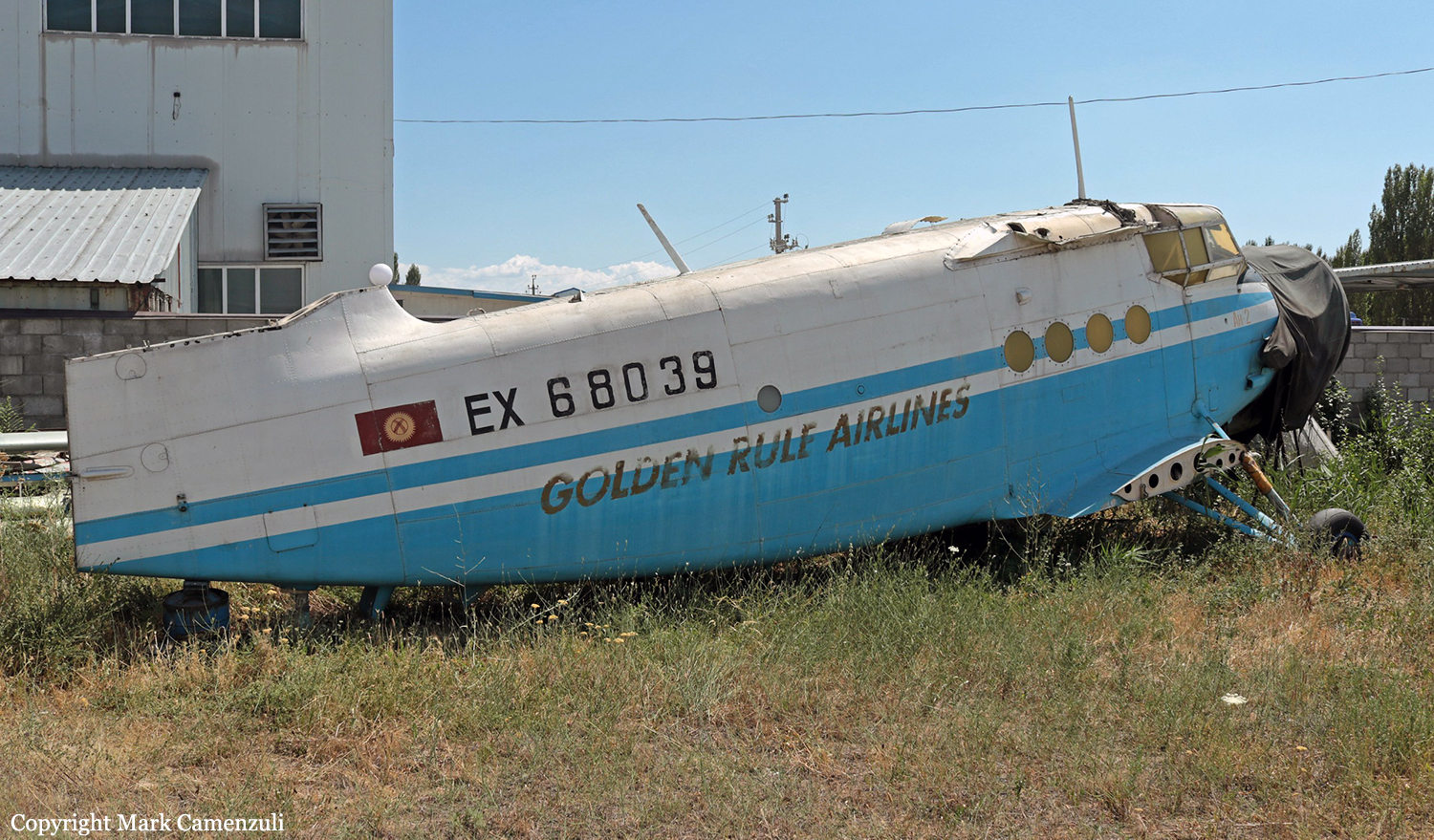
The single engine aircraft departed from a small airstrip in Bishkek on a charter service (flight GRA4571) to Bukhara with two passengers and two pilots on board. About a minute after takeoff, while in initial climb, the engine lost power. The crew informed ATC about the situation and was cleared for an immediate return. Shortly later, the engine failed and the crew attempted an emergency landing in an open field located near the aerodrome. Upon landing, the aircraft collided with a small drainage ditch, lost its left main gear and both left wings before coming to rest. All four occupants escaped with minor injuries and the aircraft was damaged beyond repair.
Probable cause:
The reason for the loss of engine power in flight, most likely, was a reduction in the filing of the gasoline due to clogging of fuel filters. The appearance, structure and nature of the impurities found in the fuel on the aircraft were not characteristic of impurities accumulated in the fuel supply system in normal operating conditions. The source of the impurities in aircraft fuel system could not be found.
Final Report:
Crash of an Antonov AN-12B in Luxor: 5 killed

Date & Time: Feb 20, 2009 at 0418 LT
Type of aircraft:
Operator:
Registration:
S9-SVN
Flight Phase:
Flight Type:
Survivors:
No
Schedule:
Kisangani – Entebbe – Luxor – Mykolaiv
MSN:
6 3 443 10
YOM:
1966
Flight number:
LFT1015
Location:
Country:
Region:
Crew on board:
5
Crew fatalities:
Pax on board:
0
Pax fatalities:
Other fatalities:
Total fatalities:
5
Captain / Total flying hours:
20000
Copilot / Total flying hours:
6397
Aircraft flight hours:
11692
Aircraft flight cycles:
6451
Circumstances:
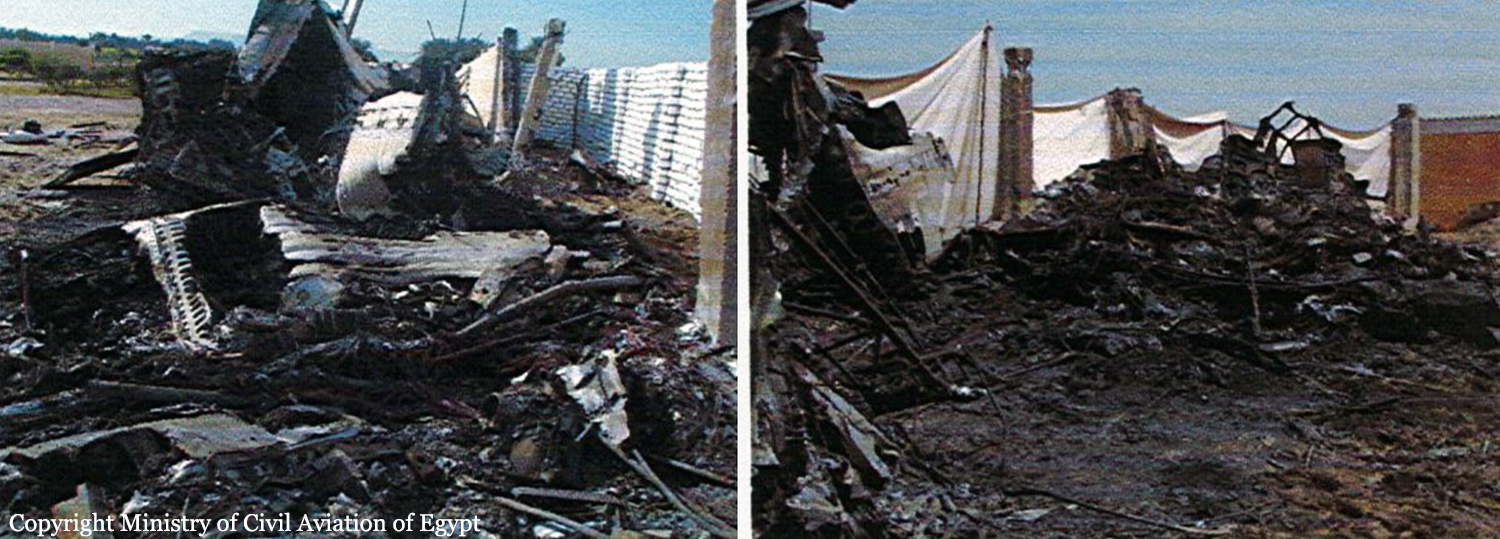
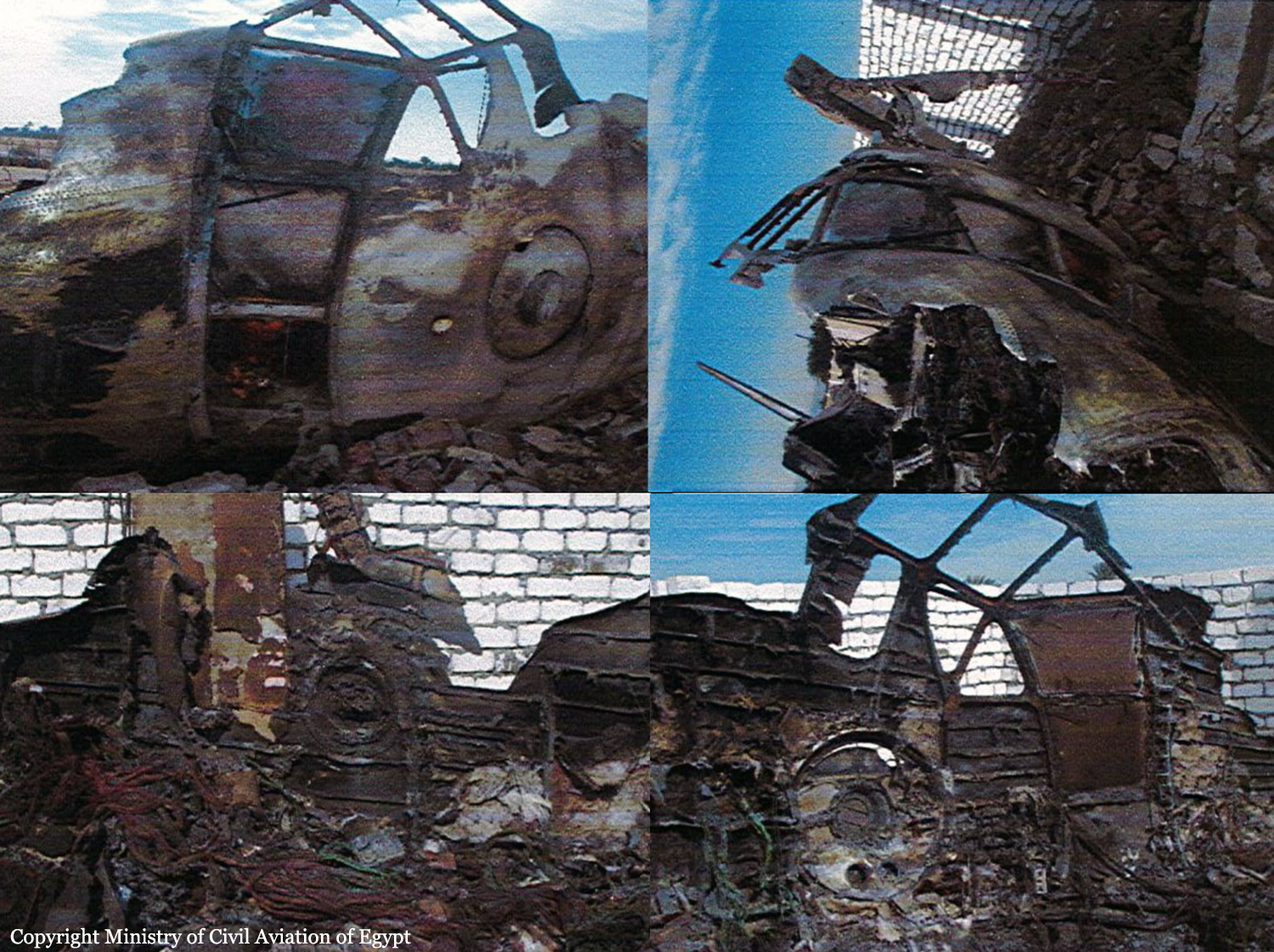
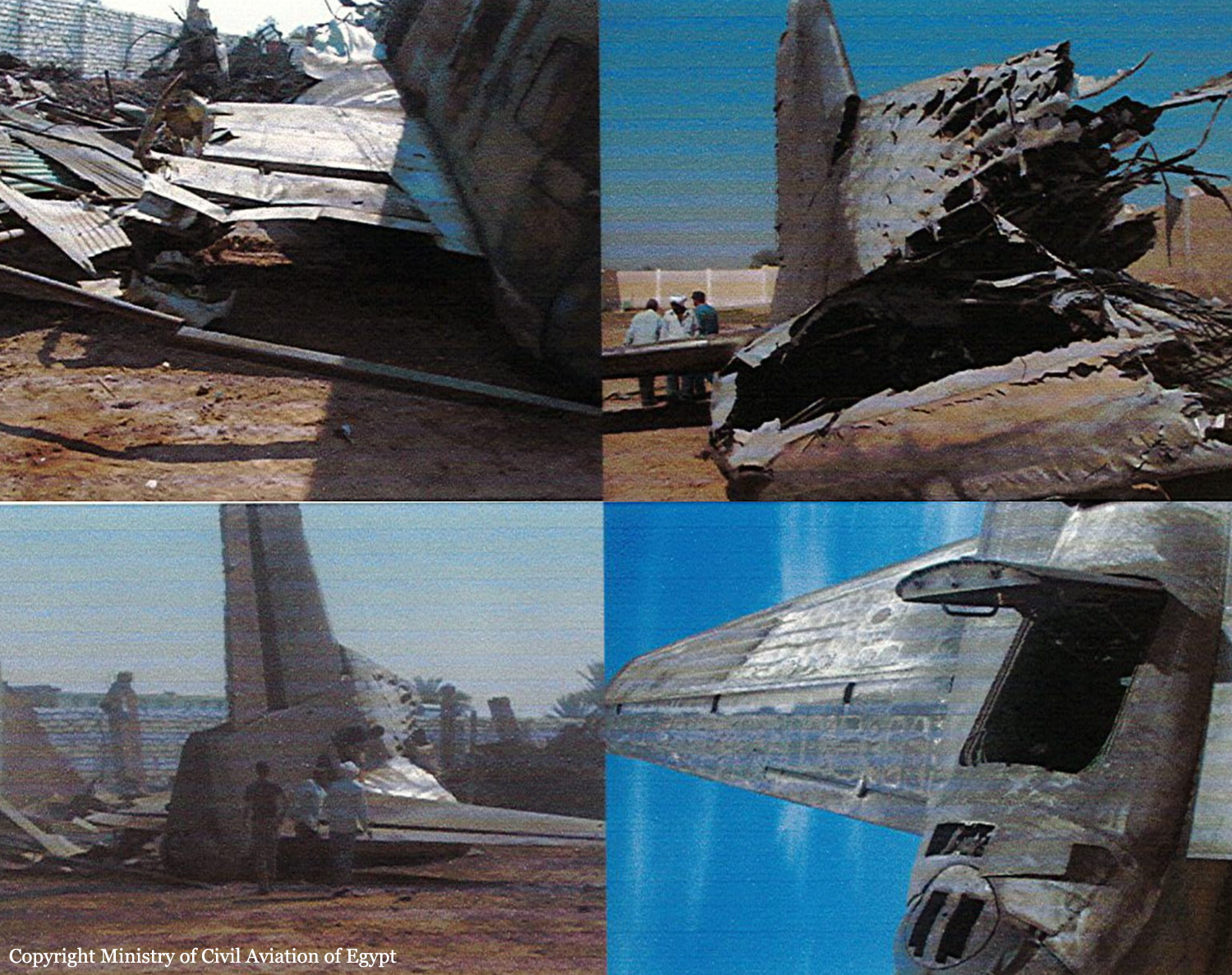
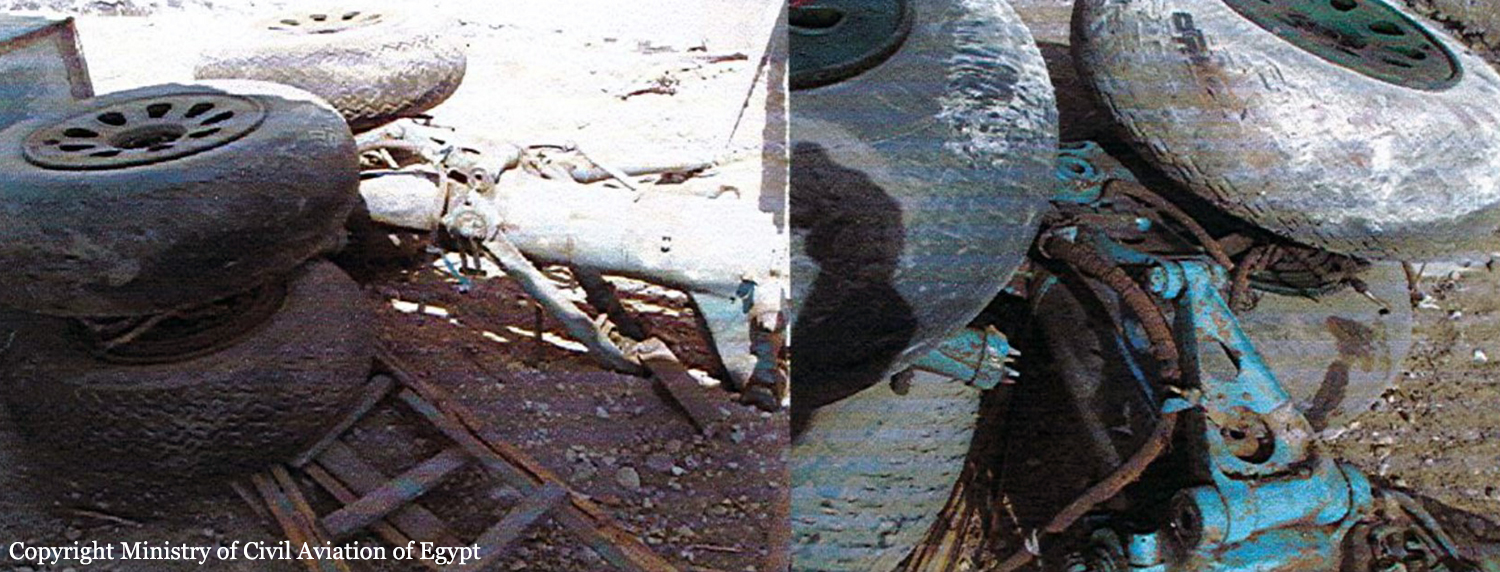
The four engine aircraft was transferred from Kisangani to Mykolaiv, Ukraine, for maintenance purposes. Two enroute stops were scheduled in Entebbe and Luxor. Ar 0417LT, the crew was cleared for takeoff. The aircraft started rolling on runway 02 for takeoff but it kept rolling on it till it reached its end. The aircraft continued rolling in the sand drifting from the runway centerline to the right, crossing a service road and eventually crashing into a military zone located 500 metres from the runway end. The aircraft crashed into one of the buildings inside the military unit causing complete destruction of the building. The right wing also crashed into another building putting the aircraft on fire and forcing the aircraft to turn right. The aircraft kept moving forward the military unit fence (next to Tiba-Luxor road) and stopped there, crashing in its way into oil barrel. The accident resulted in the total destruction and fire of the aircraft and the fatality of its crew but no further injuries.
Probable cause:
The following factors were identified:
- Lack of available thrust which corresponded to the power of only two engines running during take off run,
- Lack of authorized maintenance of the aircraft,
- The uncoordinated crew actions in the critical situation (both pilots had previously flown as captains). The lack of coordination is confirmed by the braking trails left by the main landing gear at the end of RWY -02, based on FCOM instructions, and in case of rejected takeoff attempt, the crew had to set the throttles to idle, lower the nose gear to reach the runway and then use the propellers for braking (releasing them from the stops). Also, to reduce the roll and to maintain the direction they were to use the nose wheel steering and wheel brakes as well as emergency braking if needed. Actually the crew did neither of the above procedures, except using the main wheel brakes.
Final Report: