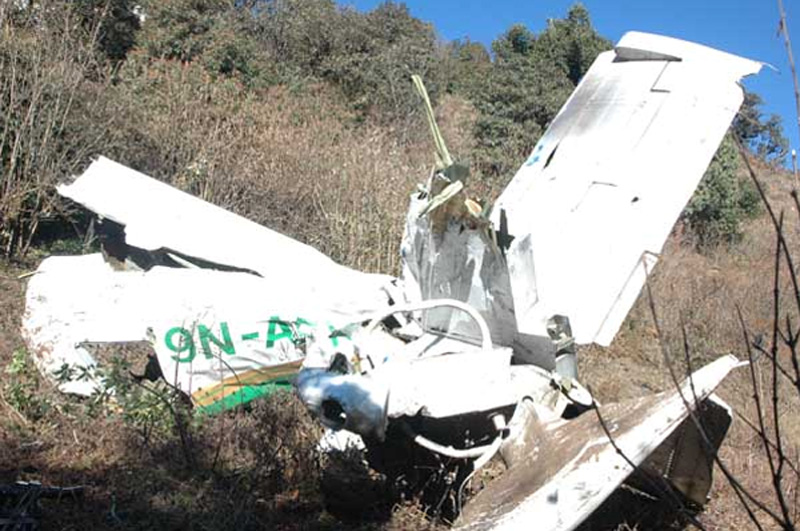
Crash of a Grumman G-21G Turbo Goose in Al Ain: 4 killed

Date & Time: Feb 27, 2011 at 2007 LT
Type of aircraft:
Operator:
Registration:
N221AG
Flight Phase:
Flight Type:
Survivors:
No
Schedule:
Al Ain - Riyadh
MSN:
1240
YOM:
1944
Region:
Crew on board:
1
Crew fatalities:
Pax on board:
3
Pax fatalities:
Other fatalities:
Total fatalities:
4
Captain / Total flying hours:
1000
Captain / Total hours on type:
50.00
Aircraft flight hours:
9926
Circumstances:
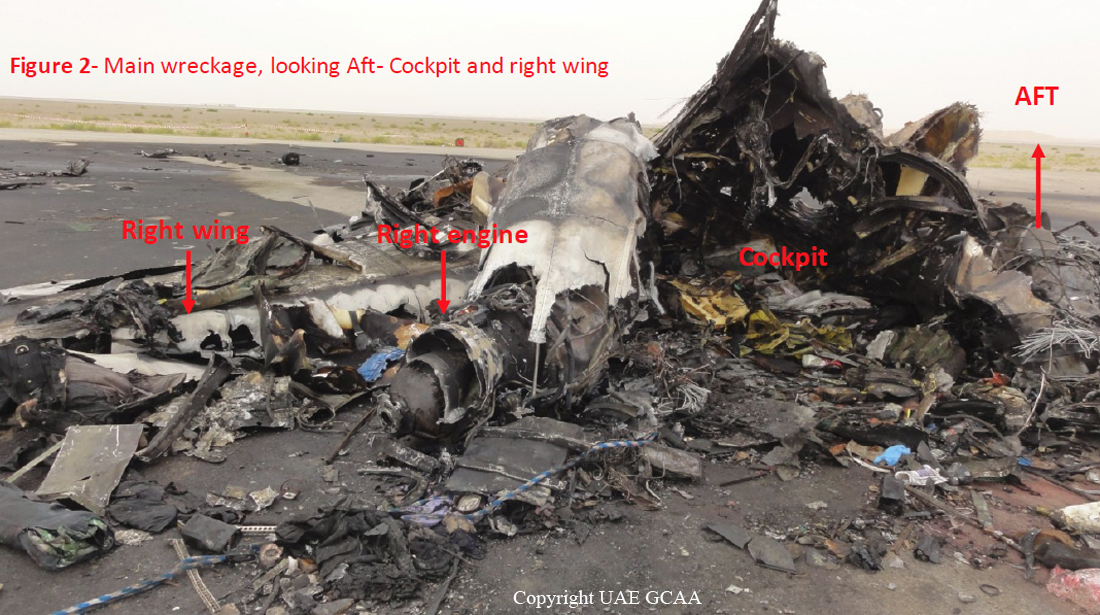
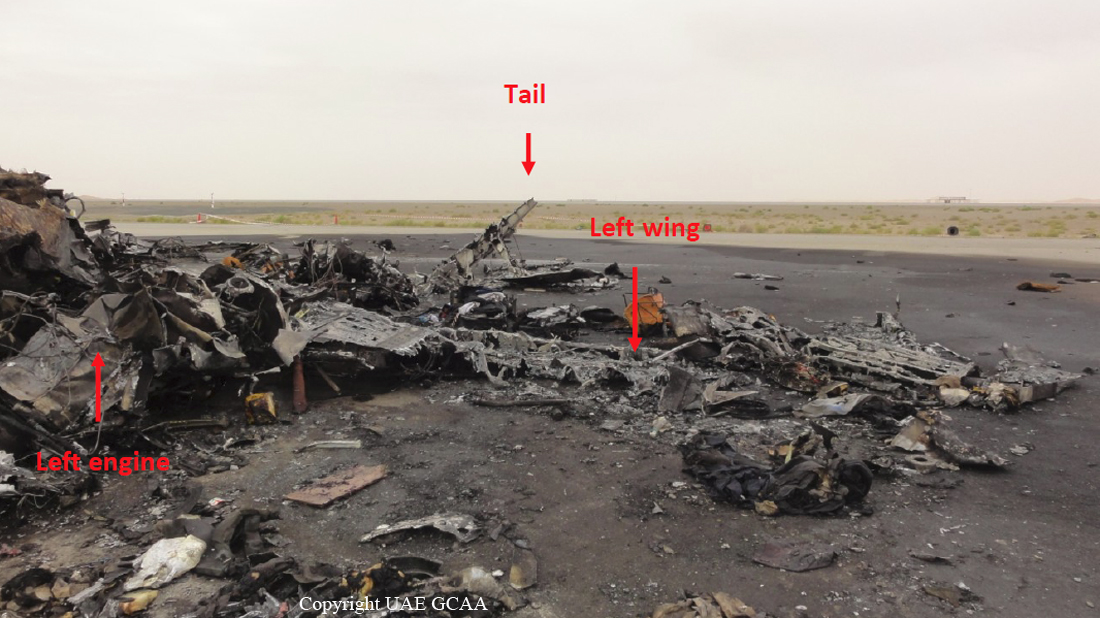
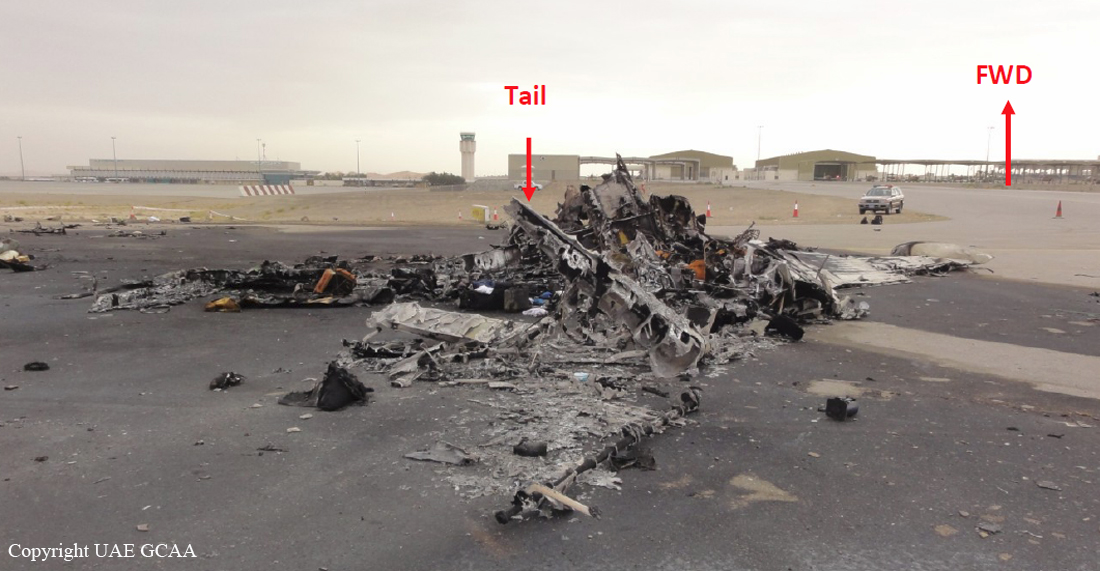
On 27 February 2011, at approximately 12:12:20 UTC, a mechanic working on McKinnon G-21G, registration mark N221AG, called the operational telephone line of Al Ain International Airport tower and informed the Aerodrome Controller (ADC) that the Aircraft would depart that evening. The Aerodrome Controller requested the estimated time of departure (ETD) and the mechanic stated that the departure would not be before 1400 outbound to Riyadh, Saudi Arabia. The ADC asked if the flight crew were still planning to perform a test flight before departure to the planned destination. The mechanic answered that they have not flown the Aircraft for a while and they want to stay in the pattern to make sure everything is “okay” prior to departure on the cleared route. The ADC advised that they could expect a clearance to operate in the circuit until they were ready to depart. The mechanic advised that there would be no need land, they only wished to stay in the circuit and to go straight from there towards the cleared route. The ADC asked the mechanic about the Aircraft type, the mechanic answered that it is Grumman Goose equipped with turbine engines and it would be heading back to the United States for an autopilot installation and annual inspection and “everything”. The mechanic commented to the ADC that the Aircraft was unique in the world with the modifications that it had. At 13:53:15, the ADC contacted the mechanic and requested an ETD update. The mechanic advised that there would be a further one-hour delay due to waiting for fuel. A witness, who is an instructor at the flight academy where the Aircraft was parked, stated that he had formed the impression that the maintenance personnel “…looked stressed out and they were obviously behind schedule and were trying to depart as soon as possible for the test flight so everything would go as planned and they could depart to Riyadh the same evening”. At approximately 14:10, the Aircraft was pushed out of the hangar, and the two mechanics moved luggage from inside the hangar and loaded it onboard the Aircraft. The mechanics also loaded a bladder extra fuel tank onboard and placed it in the cabin next to the main passenger door. At 14:17, the Aircraft was fueled with 1,898 liters of Jet-A1 which was 563 liters less than the 650 USG (2,461 liters) requested by the crew. At approximately 15:00, and after performing exterior checks, the male, 28 year old pilot in command (PIC), and another male, 61 years old pilot boarded the Aircraft and occupied the cockpit left and right seats, respectively. The two mechanics occupied the two first row passenger seats. The PIC and the other pilot were seen by hangar personnel using torchlights while following checklists and completing some paperwork. At 15:44:48, the PIC contacted the Airport Ground Movement Controller (GMC) on the 129.15 MHz radio frequency in order to check the functionality of the two Aircraft radios. Both checks were satisfactory as advised by the GMC. Thereafter, and while the Aircraft was still on the hangar ramp, the PIC informed the GMC that he was ready to copy the IFR clearance to Riyadh. The GMC queried if the Aircraft was going to perform local circuits and then pick up the IFR flight plan to the destination. The PIC replied that he would like to make one circuit in the pattern, if available, then to [perform] low approach and from there he (the PIC) would be able to accept the clearance to destination. The GMC acknowledged the PIC’s request and advised him to expect a left closed circuit not above two thousand feet and to standby for a clearance. The PIC read back this information correctly. At 15:48:58, the GMC gave engine start clearance and, at 15:50:46, the PIC reported engine start and requested taxi clearance at 15:52:16. The GMC cleared the Aircraft to taxi to the holding point of Runway (RWY) 19. The GMC advised, again, to expect a left hand (LH) closed circuit not above two thousand feet VFR and to request IFR clearance from the tower once airborne. The GMC instructed the squawk as 3776, which was also read back correctly. At 15:55:13, the PIC requested a three-minute delay on the ramp. The GMC acknowledged and instructed the crew to contact the tower once the Aircraft was ready to taxi. At 15:56:03, the PIC called the GMC and requested taxi clearance; he was recleared to the holding point of RWY 19. At 15:57:53, the GMC advised that, after completion of the closed circuit, route to the destination via the ROVOS flight planned route on departure RWY 19 and to make a right turn and maintain 6,000 ft. The PIC read back the instructions correctly. At 16:02:38, and while the Aircraft was at the holding point of RWY 19, the PIC contacted the ADC on 119.85 MHz to report ready-for-departure for a closed circuit. The ADC instructed to hold position then he asked the PIC if he was going to perform only one closed circuit. The PIC replied that it was “only one circuit, then [perform] a low approach and from there capture the IFR to Riyadh.” At 16:03:56, the ADC instructed the PIC “to line up and wait” RWY 19 which, at that time, was occupied by a landing aircraft that vacated the runway at 16:05:23. At 16:05:37, the Aircraft was cleared for takeoff. The ADC advised the surface wind as 180°/07 kts and requested the crew to report left downwind which was acknowledged by the PIC correctly. The Aircraft completed the takeoff acceleration roll, lifted off and continued initial climb normally. When the Aircraft reached 300 to 400 ft AGL at approximately the midpoint of RWY 19, it turned to the left while the calibrated airspeed (CAS) was approximately 130 kts. The Aircraft continued turning left with increasing rate and losing height. At approximately 16:07:11, the Aircraft impacted the ground of Taxiway ‘F’, between Taxiway ‘K’ and ‘L’ with a slight nose down attitude and a slight left roll. After the impact, the Aircraft continued until it came to rest after approximately 32 m (105 ft) from the initial impact point. There was no attempt by the PIC to declare an emergency. The Aircraft was destroyed due to the impact forces and subsequent fire. All the occupants were fatally injured.
Probable cause:
The Air Accident Investigation Sector determines that the cause of the Accident was the PIC lapse in judgment and failure to exercise due diligence when he decided to enter into a steep left turn at inadequate height and speed.
Contributing factors:
- The PIC’s self-induced time pressure to rapidly complete the post maintenance flight.
- The PIC’s desire to rapidly accomplish the requested circuit in the pattern.
- The PIC’s lack of recent experience in the Aircraft type.
- The flight was SPIFR requiring a high standard of airmanship.
Final Report:

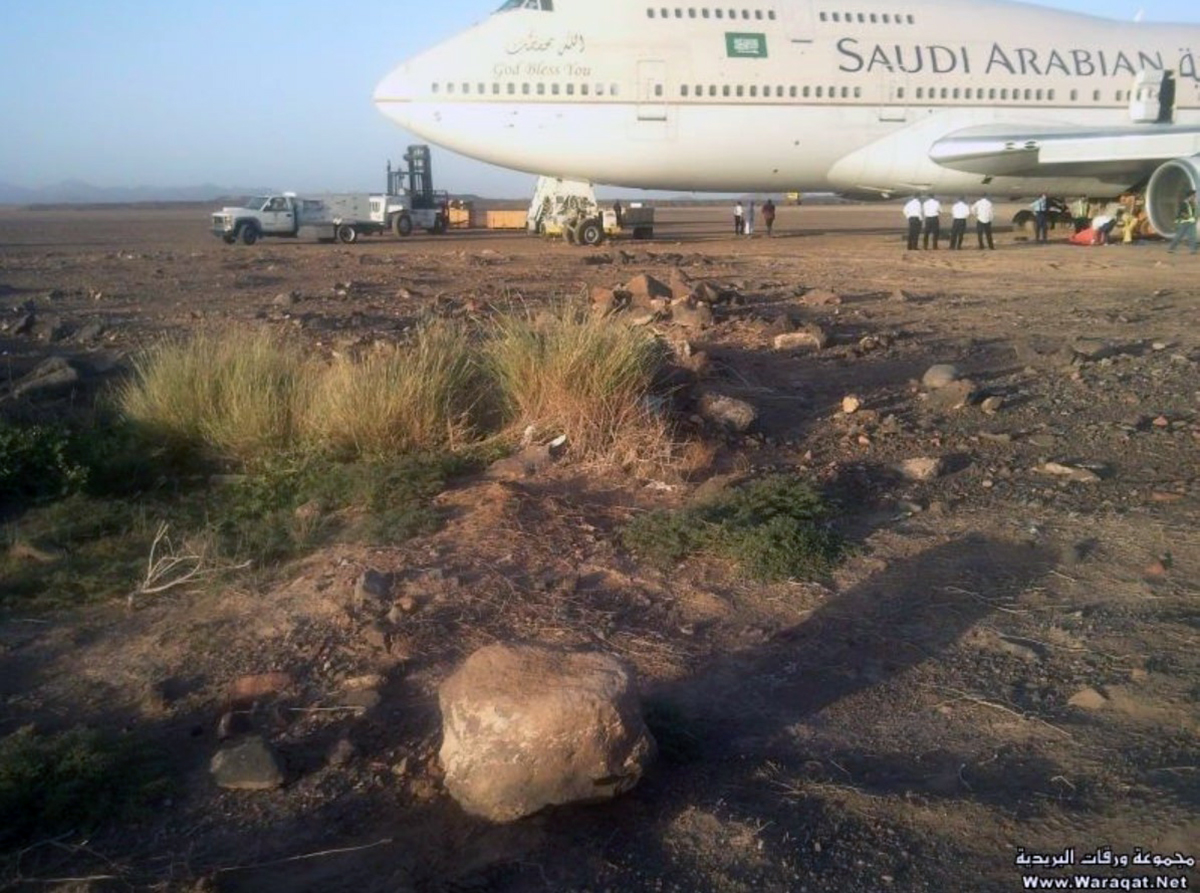
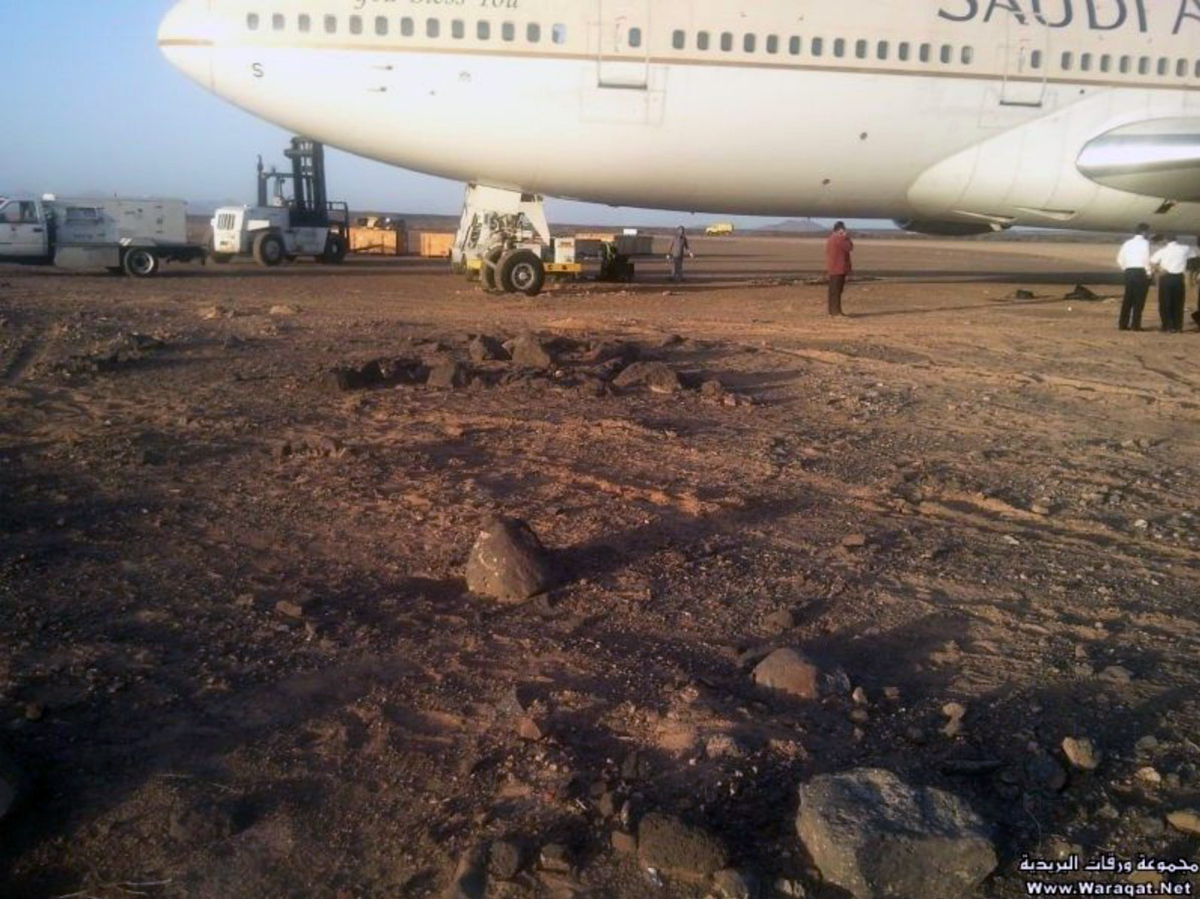
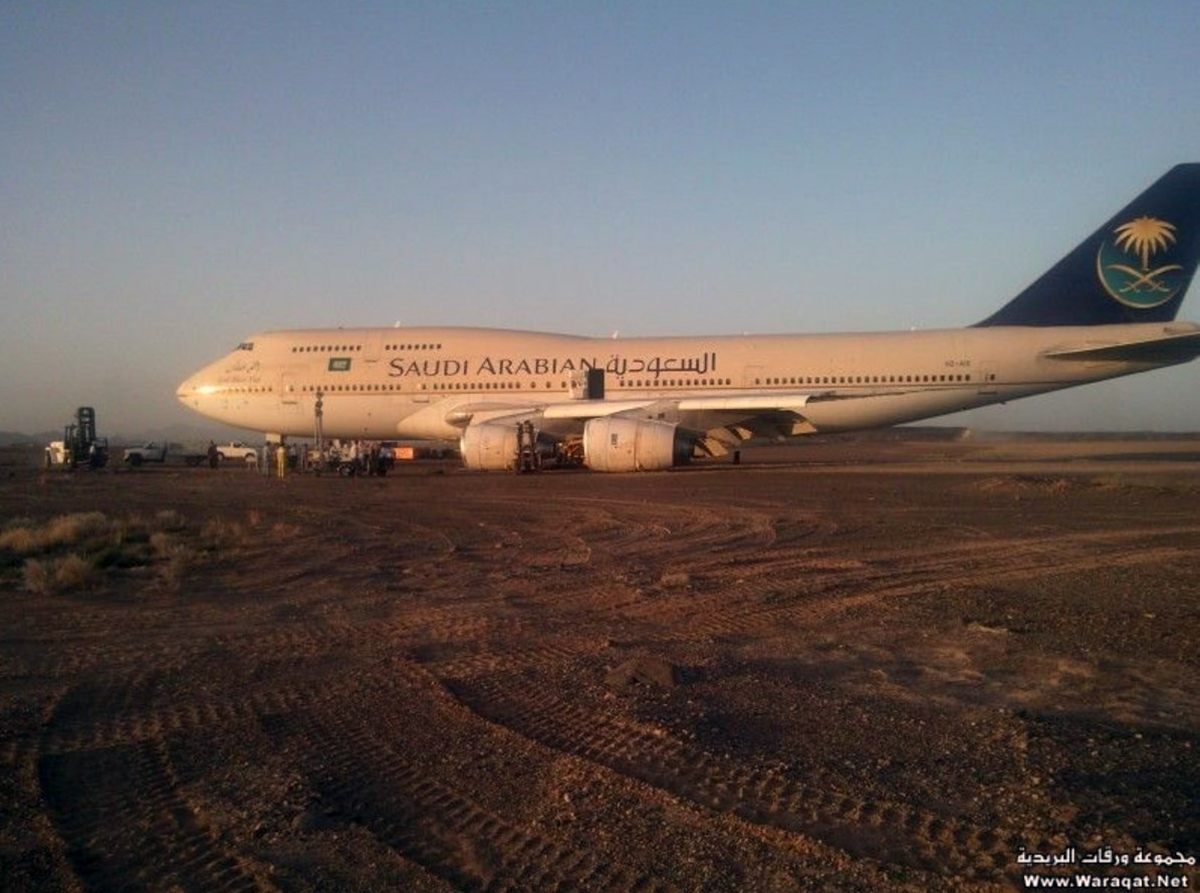
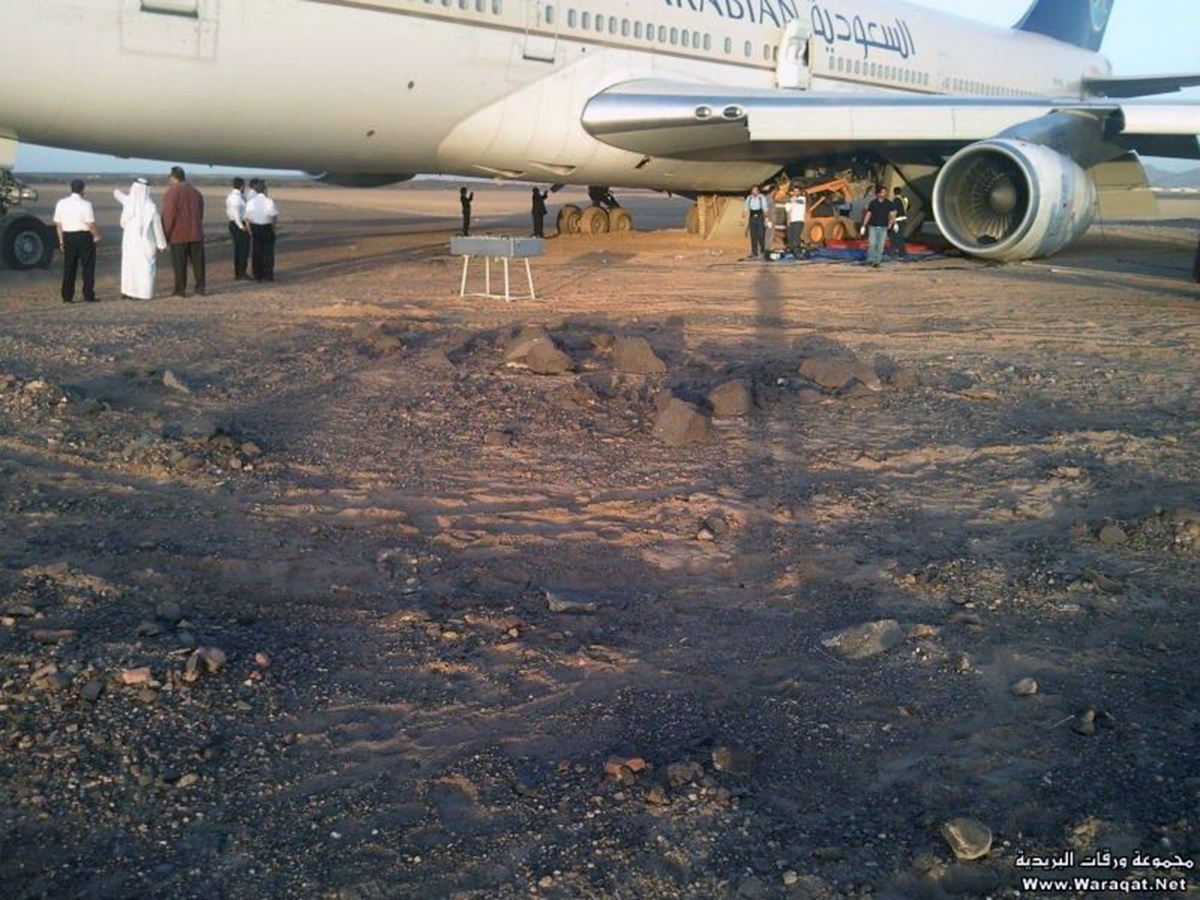
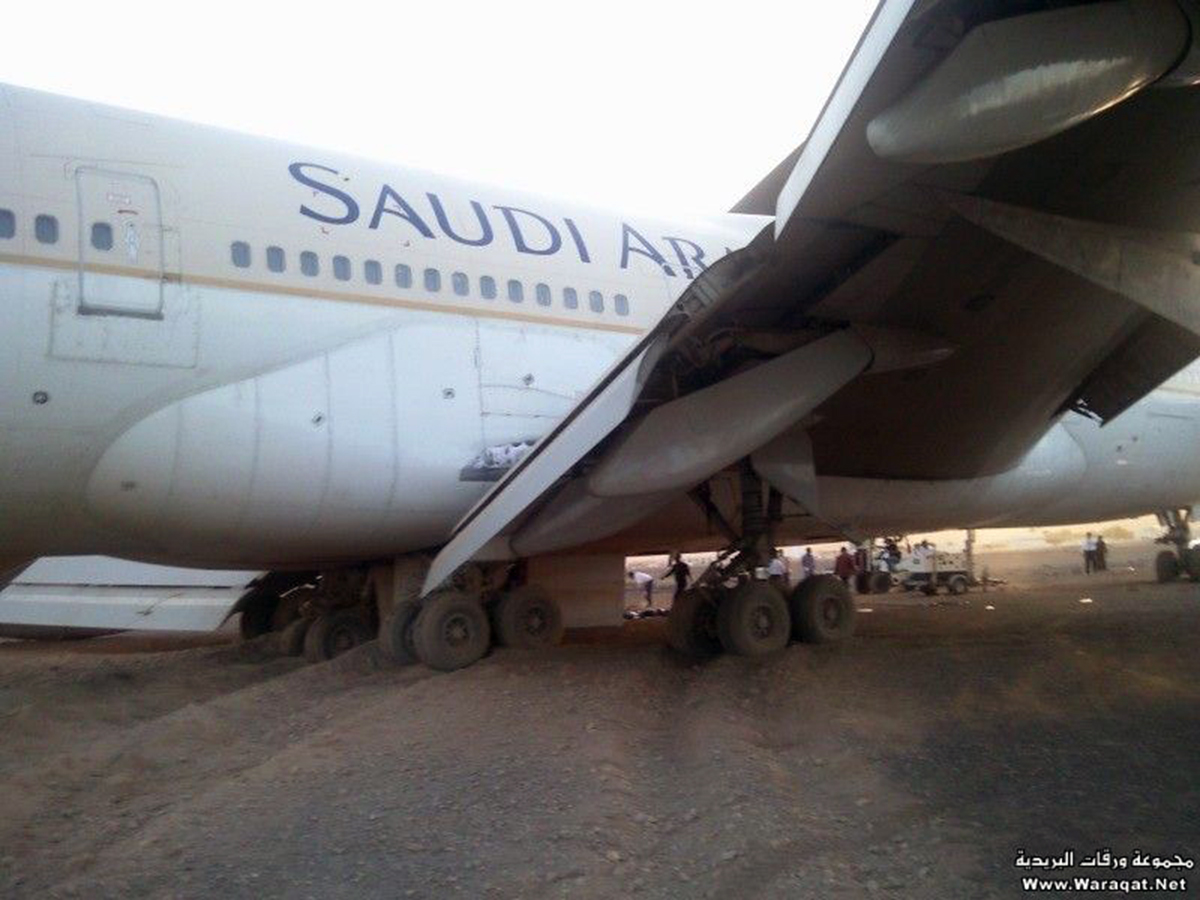
Ground accident of a Boeing 747-368 in Madinah

Date & Time: Feb 16, 2011
Type of aircraft:
Operator:
Registration:
HZ-AIS
Survivors:
Yes
Schedule:
Riyadh - Madinah
MSN:
23270/645
YOM:
1986
Flight number:
SV817
Country:
Region:
Crew on board:
17
Crew fatalities:
Pax on board:
260
Pax fatalities:
Other fatalities:
Total fatalities:
0
Circumstances:
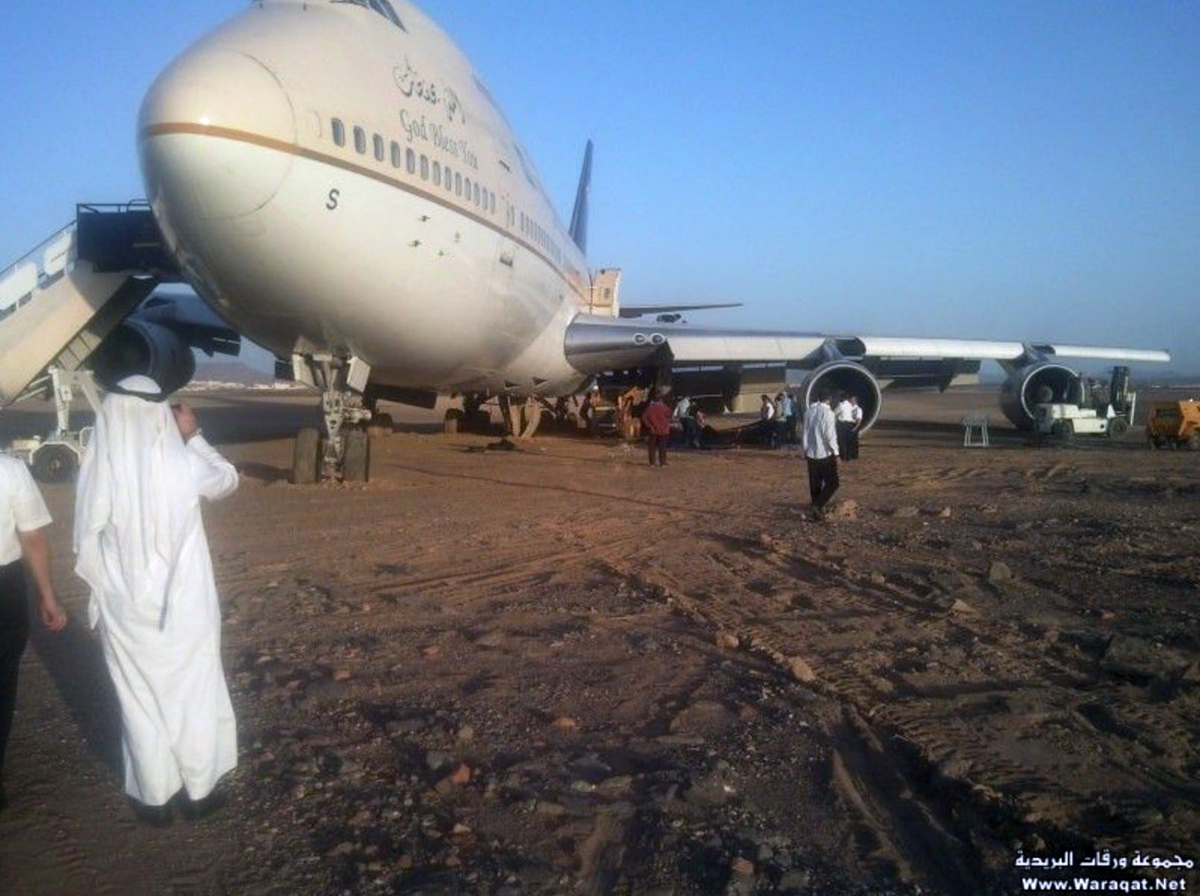
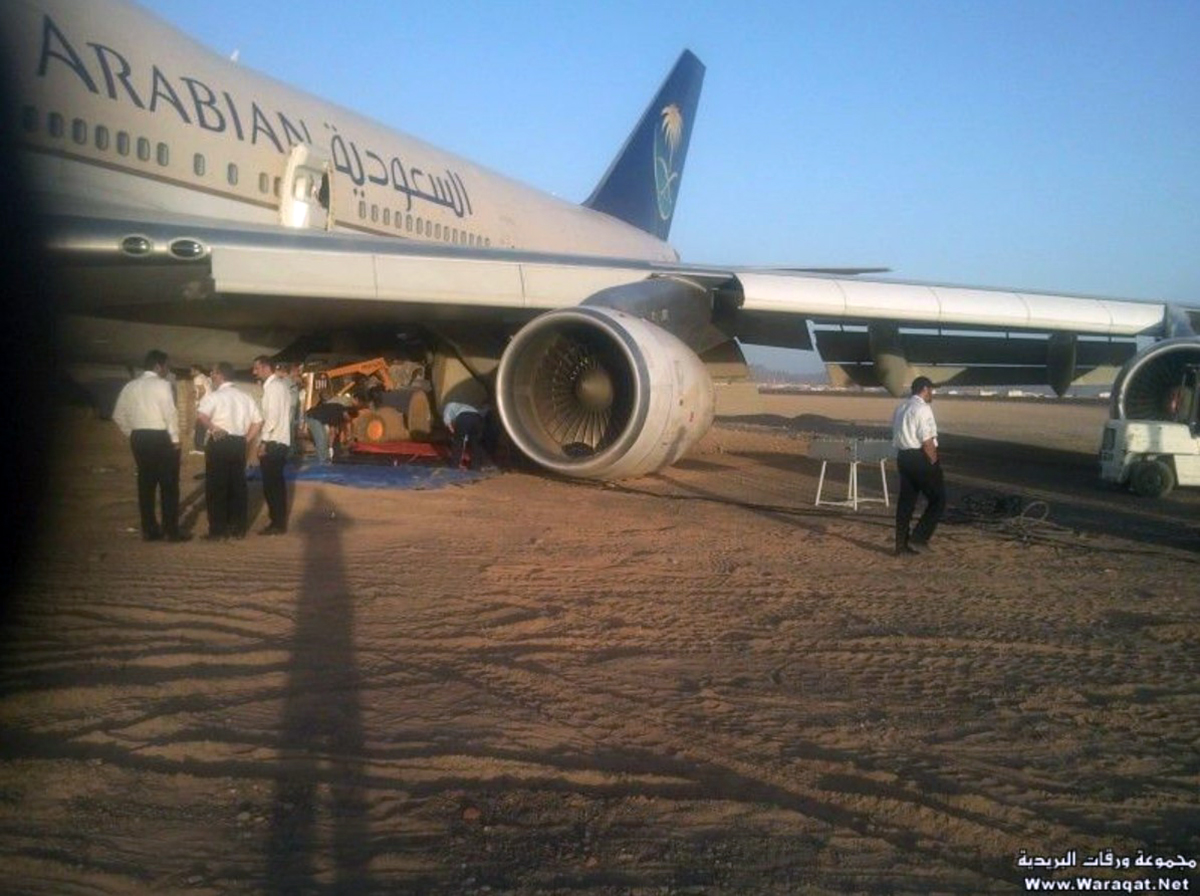
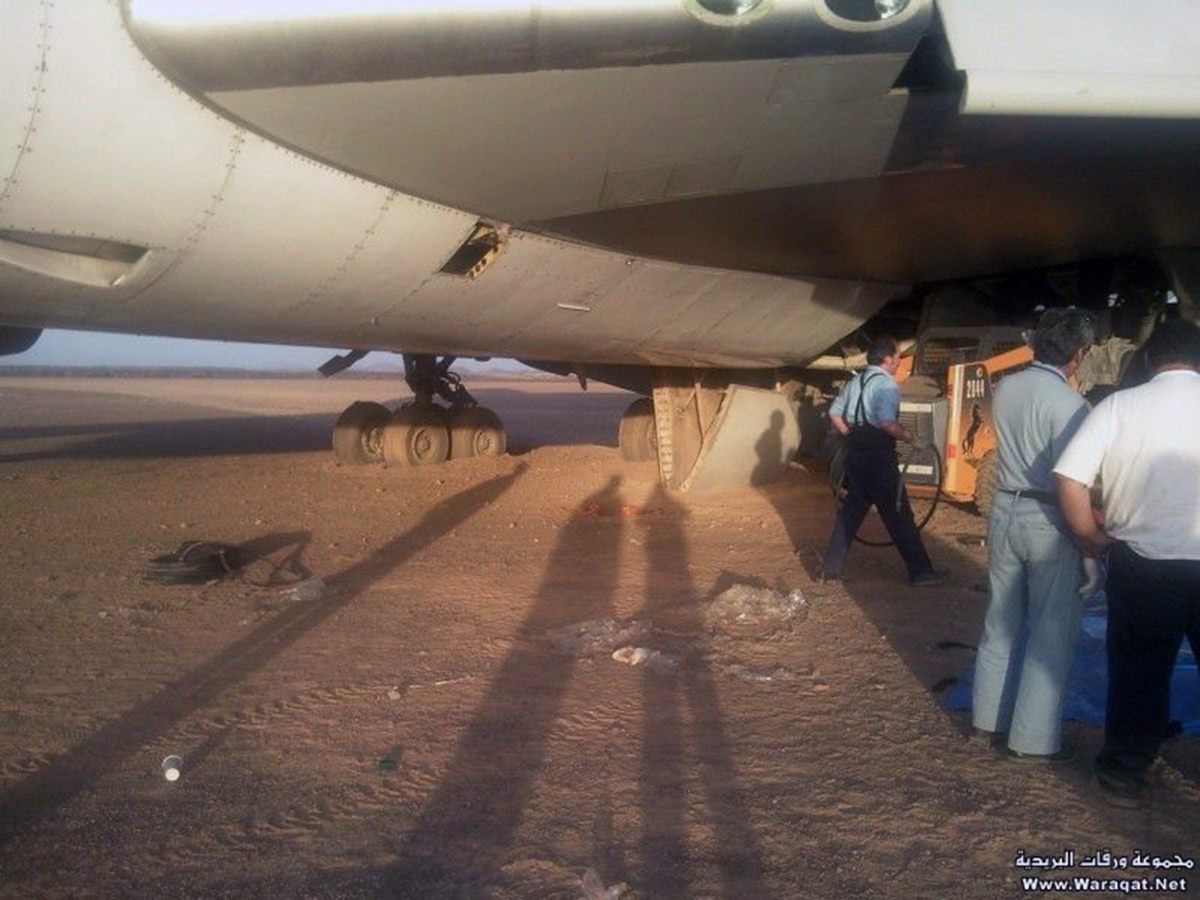
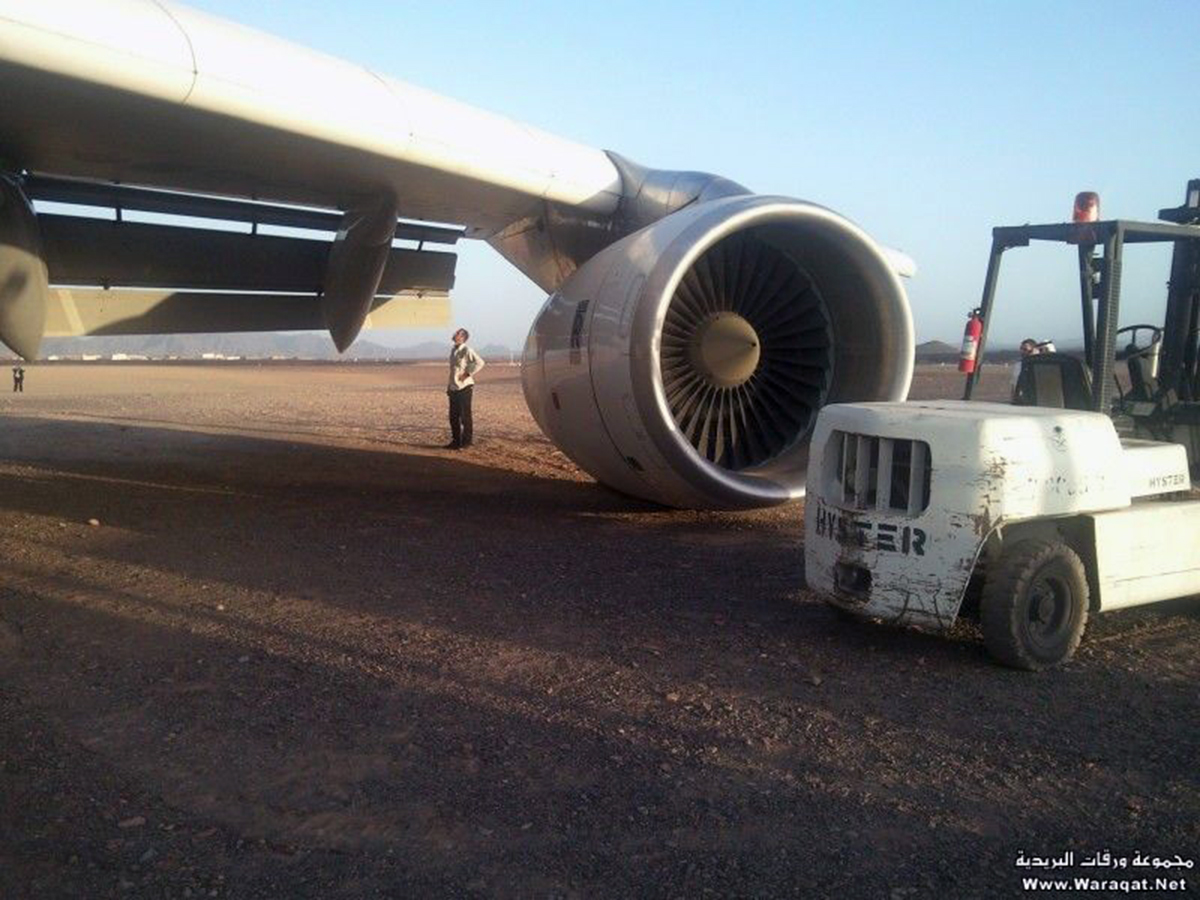
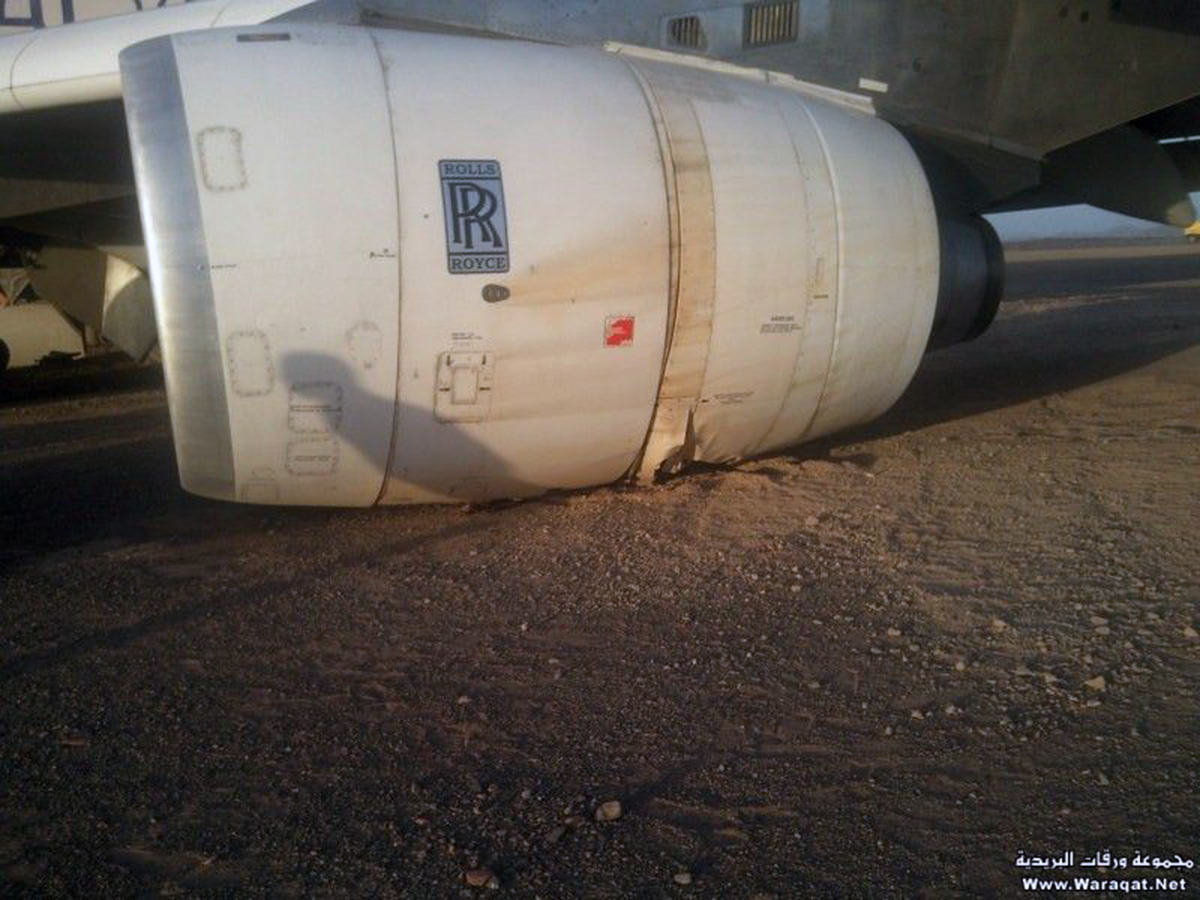
After landing at Madinah-Mohammad Bin Abdulaziz Airport runway 17, the crew completed the braking procedure and vacated via taxiway B. For unknown reasons, the aircraft departed the concrete zone and entered a sandy area, causing the left main gear to dug in and both left engines n°1 and 2 to struck the ground. All 277 occupants evacuated safely while the aircraft was damaged beyond repair.

Crash of a Casa 212 Aviocar 100 near Tanjung Pinang: 5 killed

Date & Time: Feb 12, 2011 at 1342 LT
Type of aircraft:
Operator:
Registration:
PK-ZAI
Flight Phase:
Flight Type:
Survivors:
No
Schedule:
Batam - Tanjung Pinang
MSN:
120/18N
YOM:
1980
Country:
Region:
Crew on board:
2
Crew fatalities:
Pax on board:
3
Pax fatalities:
Other fatalities:
Total fatalities:
5
Captain / Total flying hours:
13027
Captain / Total hours on type:
3311.00
Copilot / Total flying hours:
2577
Copilot / Total hours on type:
152
Aircraft flight hours:
29990
Aircraft flight cycles:
35128
Circumstances:
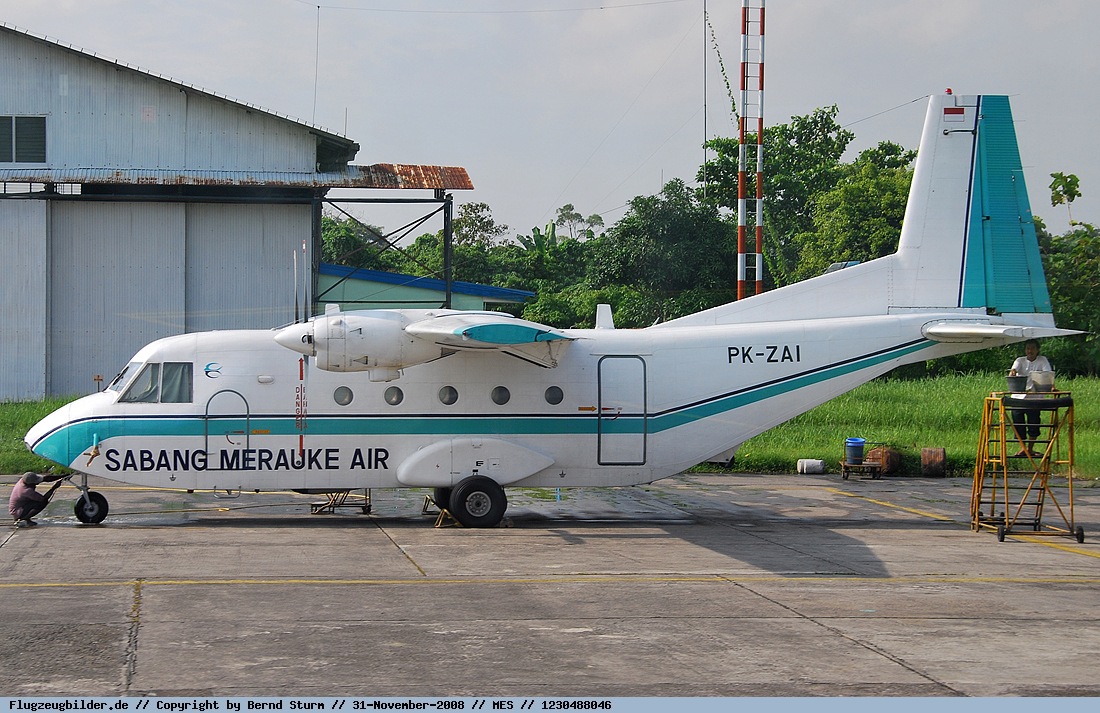
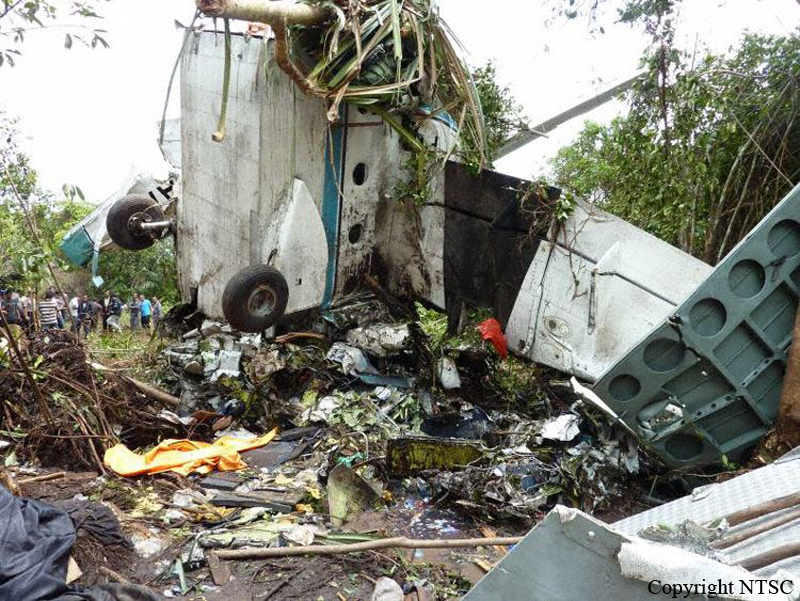
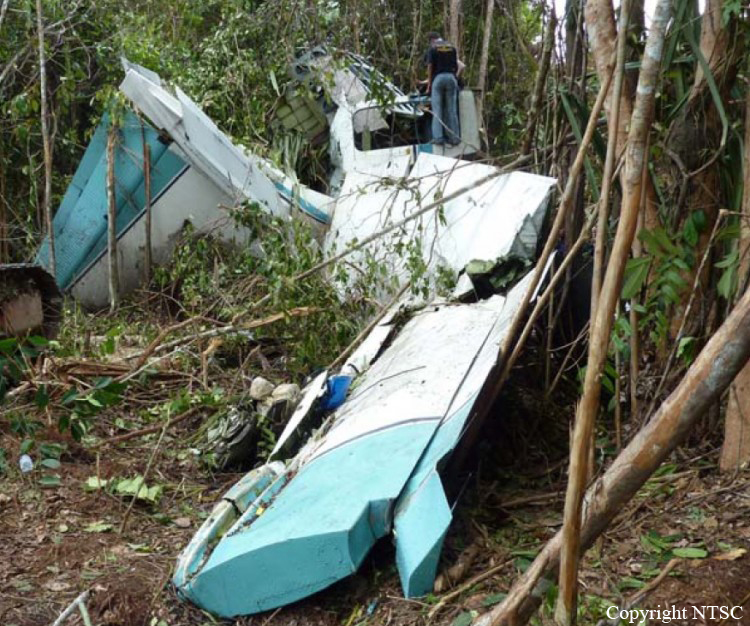
On 12 February 2011, a CASA C212-100 aircraft, registered PK-ZAI, operated by Sabang Merauke Raya Air Charter (SMAC), departed from Hang Nadim Airport, Batam (BTH/WIDD) at 1318 LT (0618 UTC)1 for a test flight following an engine replacement to the engine number one. The test flight was conducted over Tanjung Pinang Island area. There were five persons on board consisted of two pilots, and three company engineers. At 0628 UTC the aircraft appeared on Tanjung Pinang Approach radar display and was flying toward Tanjung Pinang area. Tanjung Pinang Approach controller informed that the aircraft was identified flying over Tanjung Pinang at 2000 feet. At 0633 UTC the aircraft received clearance to climb to 4000 feet. At 0644 UTC the aircraft disappeared from Tanjung Pinang radar display. The last position of the aircraft identified on the radar display was on 16 miles radial 010º from Tanjung Pinang airport. Tanjung Pinang Approach controller could not communicate with the PK-ZAI. At 0705 UTC, the controller requested relay by another aircraft to search PK-ZAI. The other aircrafts could not communicate with PK-ZAI. At 0706 UTC Tanjung Pinang Approach controller received information from Indonesian Air Force Base at Gunung Bintan that an aircraft had crashed at Gunung Kijang forest, Bintan Island. After receiving the information, Tanjung Pinang Airport staff coordinated with SAR Bureau, local police, and Indonesian Army for search and rescue operation. The aircraft was found at Gunung Kijang forest, Bintan Island at coordinate 1° 10’ 45” N; 104° 34’ 22” E, about 30 km north of Tanjung Pinang Airport. All occupants were fatally injured in this accident. The aircraft was substantially damaged.
Probable cause:
Factors contributed to the accident are as follows:
• The flight test was not properly well prepared; there was no flight test plan.
• The current and applicable CMM is dissimilar the According to the CASA 212-100 and Garrett TPE331-5 Maintenance Manuals related to flight test requirement after the change of only one engine.
• The left engine was shut down using normal/ ground shut down procedure. It used the fuel shut off switches off followed by pulling the Power Lever rearward to reverse, as indicated by the propeller pitch.
• The right engine most likely shut down by wind milling prior the impact, it was indicated the propellers piston distance position to the cylinder was about normal flight range position and no indication of rotating impact on the blades.
• The Casa Service Bulletin No. 212-76-07 Revision 1 issued dated 23 December 1991 (Anti Reverse) that applicable for Casa 212 -100/200, was not incorporated to this aircraft.
• The PIC with pareses or paralysis vestibular organ or system could not response normally to the three dimensional motion or movement. This condition may the subject more sensitive to suffer Spatial Disorientation (SDO). The SDO is the pilot could not perceived rightly his position motion and attitude to the earth horizontal or to his aircraft or other aircraft and could as the dangerous precondition for unsafe action.
• The Director (DGCA) decree No 30/II/200 issued on 20 February 2009 stated that for issuing medical certificate for pilot after 60th birthday require several additional medical examination items. Point 1.b of this decree states the Video Nystagmography examination.(differed the ICAO Doc 8984).
Final Report:
Crash of a Hawker 850XP in Sulaymaniyah: 7 killed

Date & Time: Feb 4, 2011 at 1749 LT
Type of aircraft:
Operator:
Registration:
OD-SKY
Flight Phase:
Survivors:
No
Schedule:
Sulaymānīyah - Ankara
MSN:
258804
YOM:
2006
Country:
Region:
Crew on board:
3
Crew fatalities:
Pax on board:
4
Pax fatalities:
Other fatalities:
Total fatalities:
7
Circumstances:
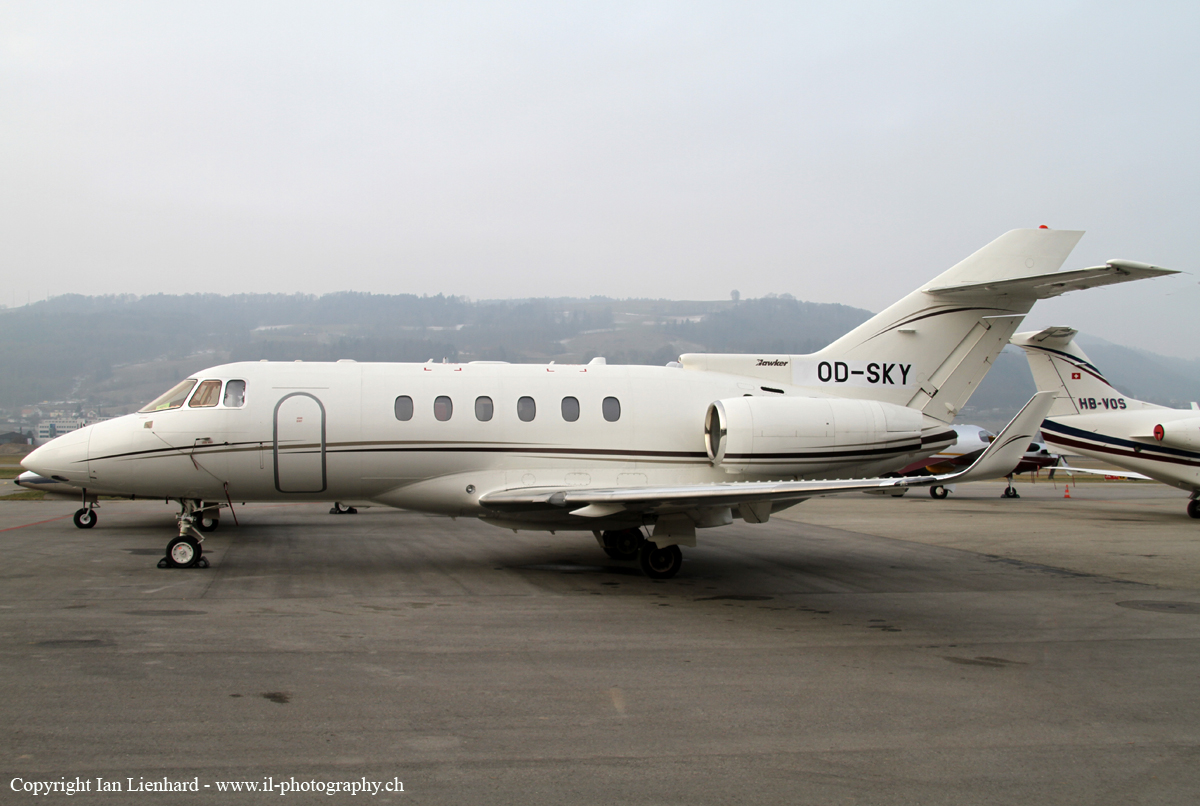
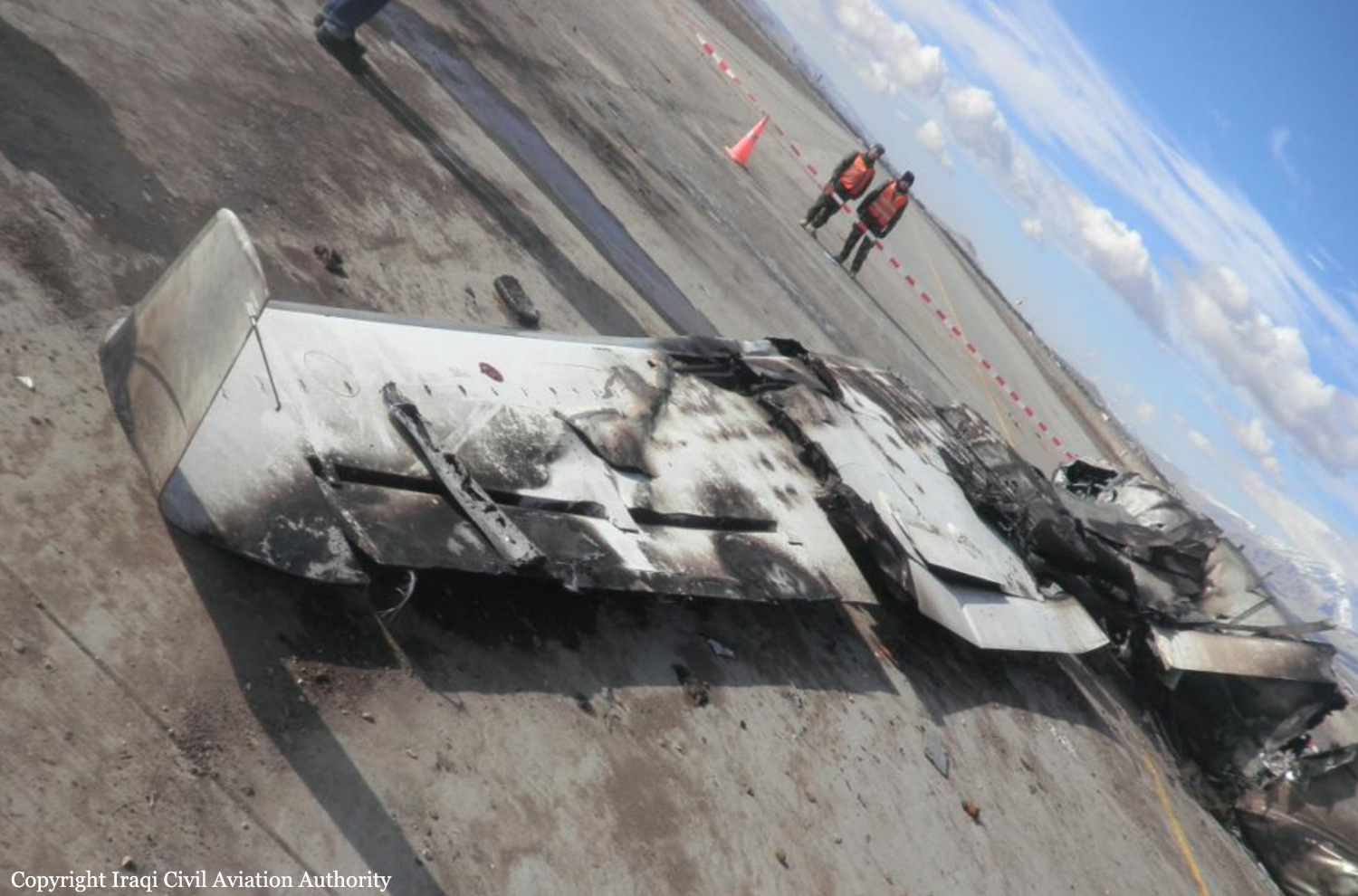
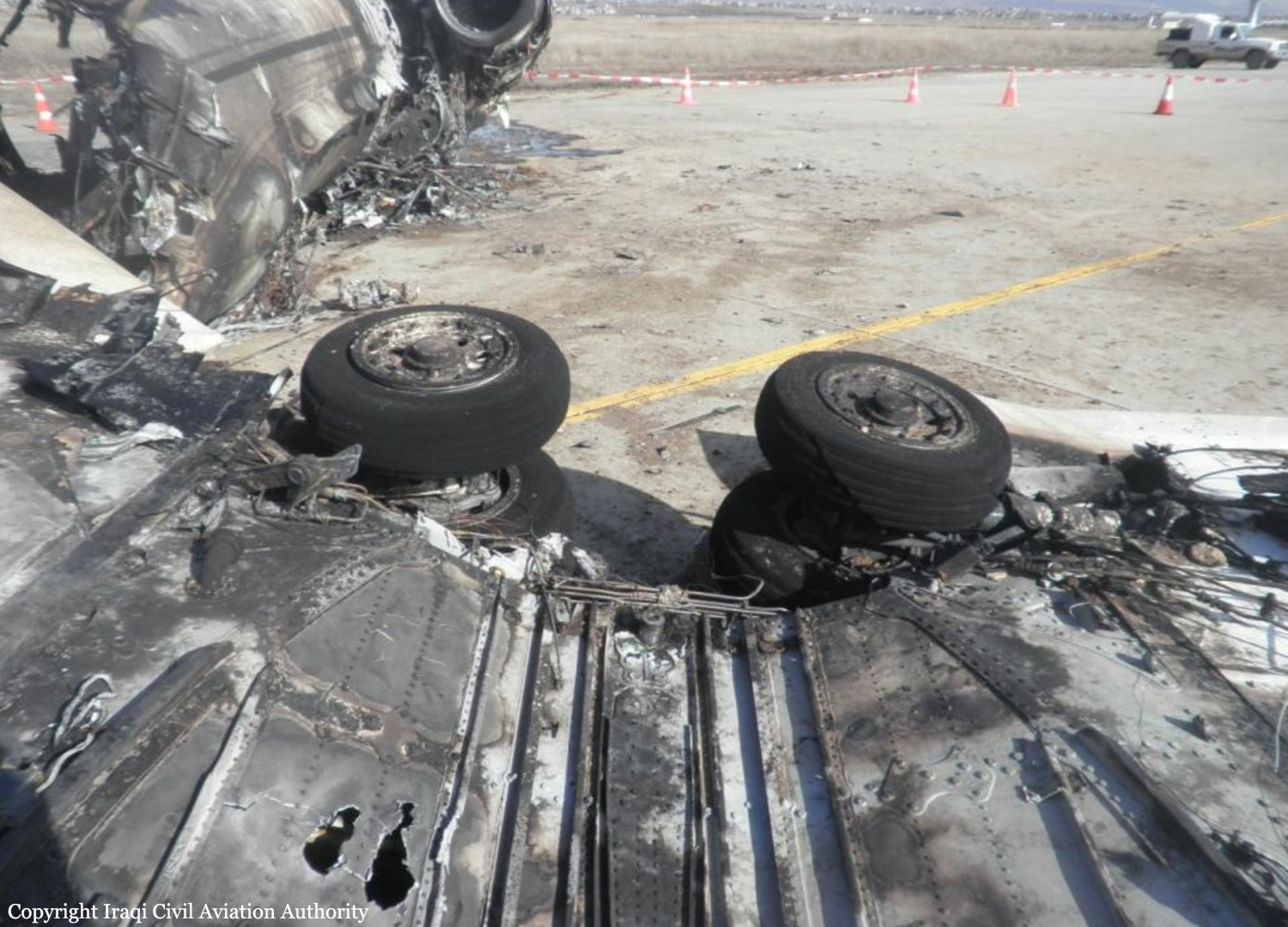
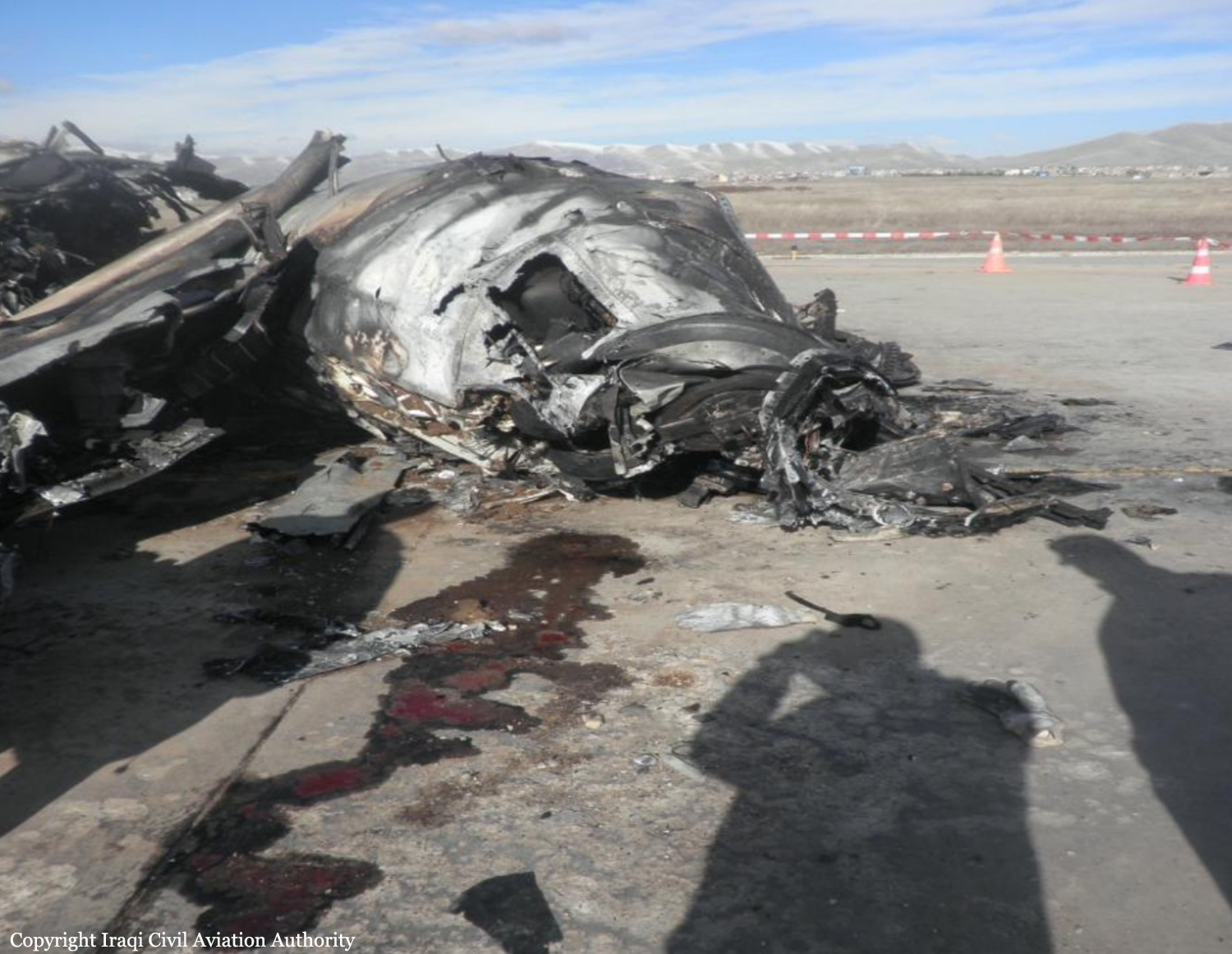
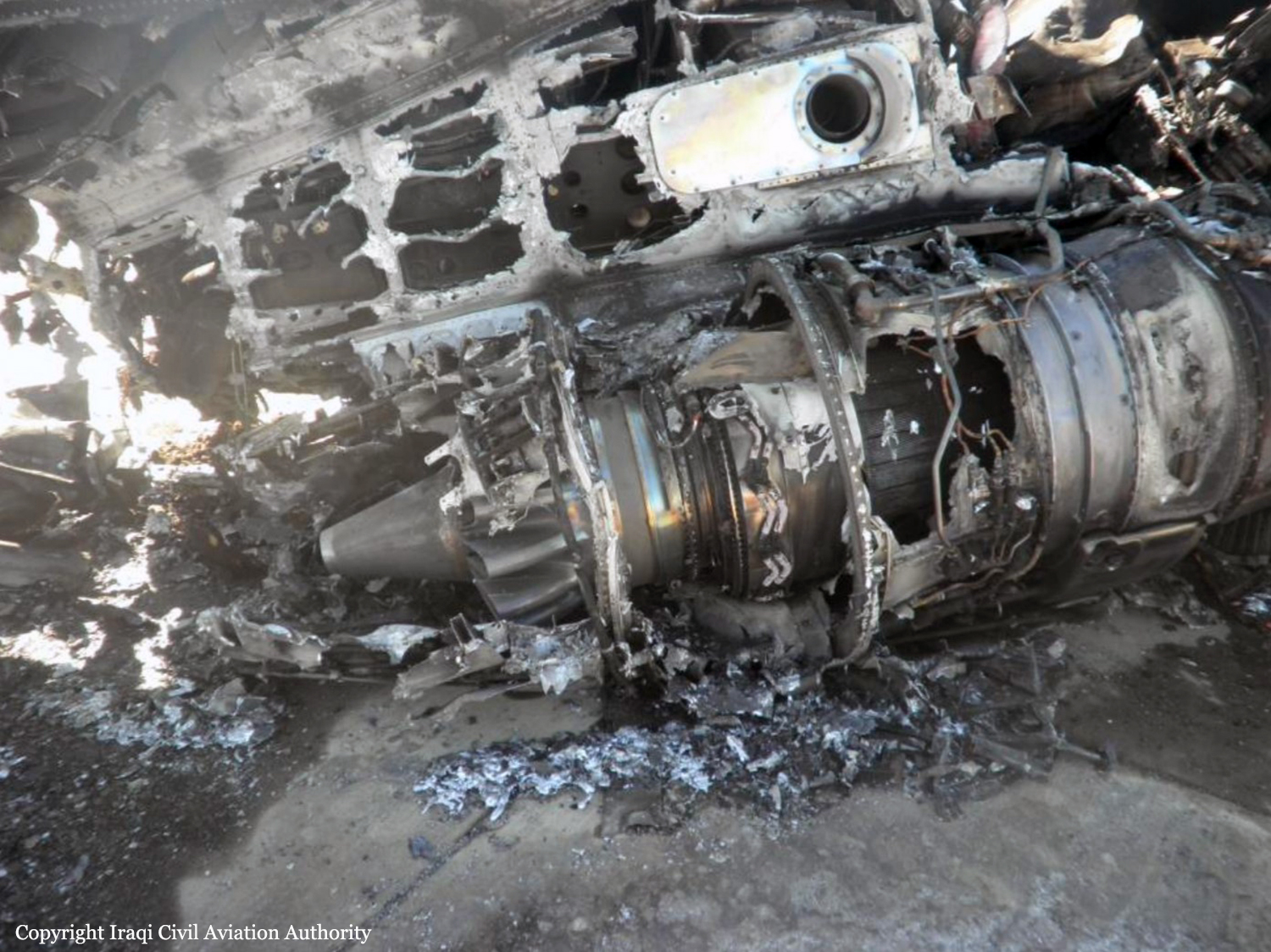
Shortly after take off from Sulaymaniyah Airport runway 31, while in initial climb, the aircraft stalled and crashed 2,100 metres from the airport, bursting into flames. The aircraft was totally destroyed by a post crash fire and all seven occupants were killed, among them four employees of the Iraqi communications company Asiacell. Weather conditions at the time of the accident were as follow: 1,500 metres visibility in snow falls, overcast 3,500 feet.
Probable cause:
The following findings were identified:
- The wings, elevator and horizontal stabilizer top surface were contaminated with ice and snow.
- The crew was in a hurry due to early passenger arrival.
- The crew didn’t remove the snow and ice contamination from the control surfaces nor did he call for de-icing actions.
- Ice and snow contamination on tail section most likely cause sluggish rotation during the takeoff; this will resulting in over rotation and wing stall.
- Snow and ice contamination on the wing, fuselage and tail will compromise the normal takeoff characteristics.
- A combination of snow and ice causing disruptive air flow, heaver actual weights and over rotation, the combination of which most likely didn’t activate the stall warning safety design. The aircraft could stall asymmetrical without warning during takeoff.
- That was the probable cause of the accident.
Final Report:
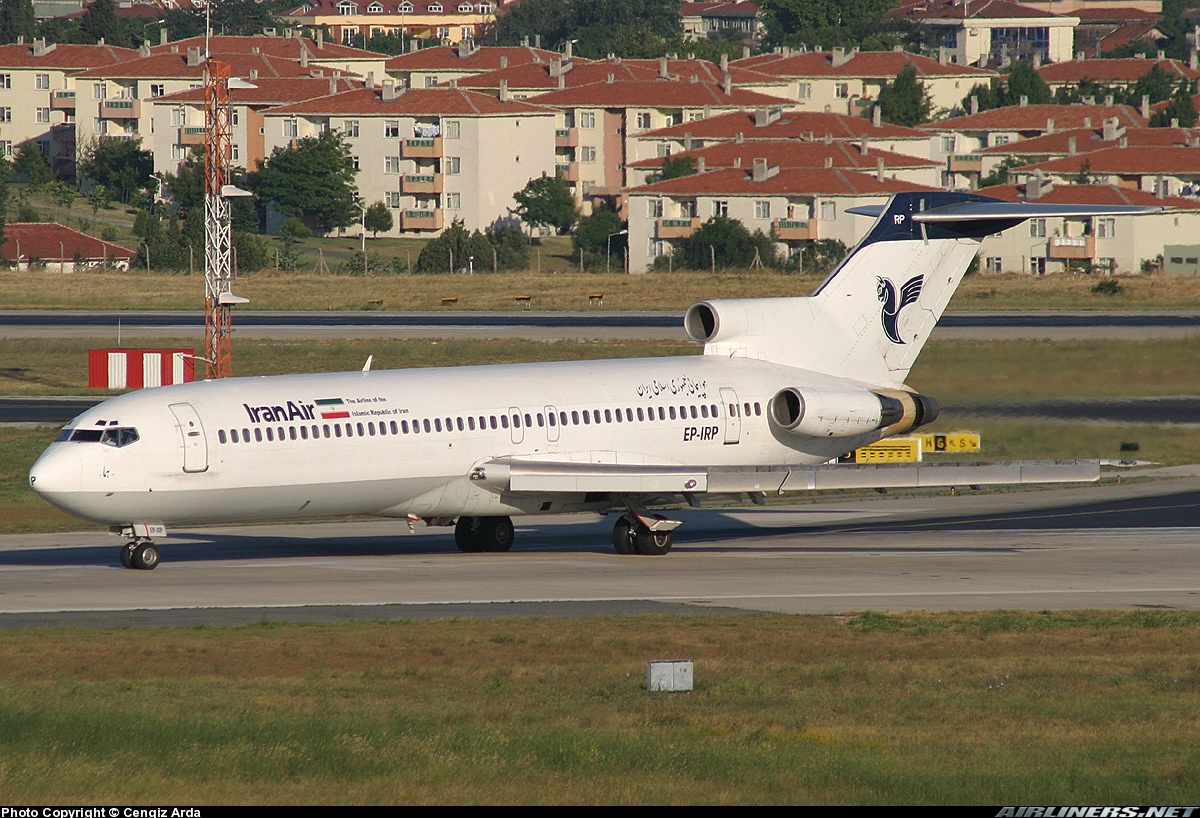
Crash of a Boeing 727-286 in Orūmīyeh: 78 killed

Date & Time: Jan 9, 2011 at 1945 LT
Type of aircraft:
Operator:
Registration:
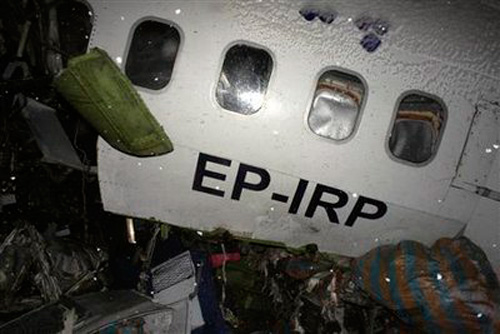
EP-IRP
Survivors:
Yes
Schedule:
Tehran - Orumiyeh
MSN:
20945/1048
YOM:
1974
Flight number:
IR277
Country:
Region:
Crew on board:
9
Crew fatalities:
Pax on board:
96
Pax fatalities:
Other fatalities:
Total fatalities:
78
Aircraft flight hours:
9019
Circumstances:
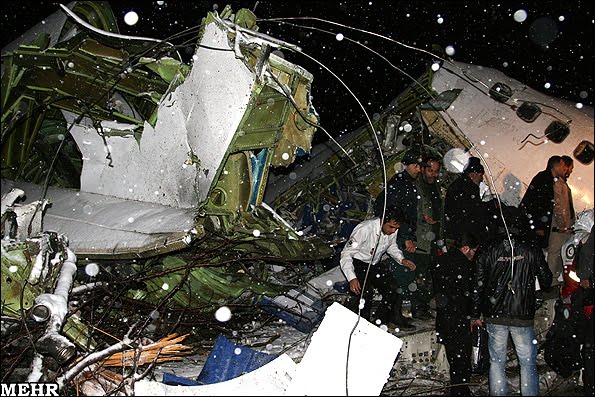
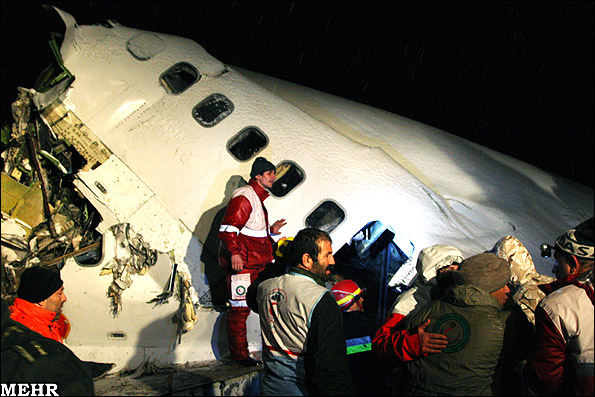
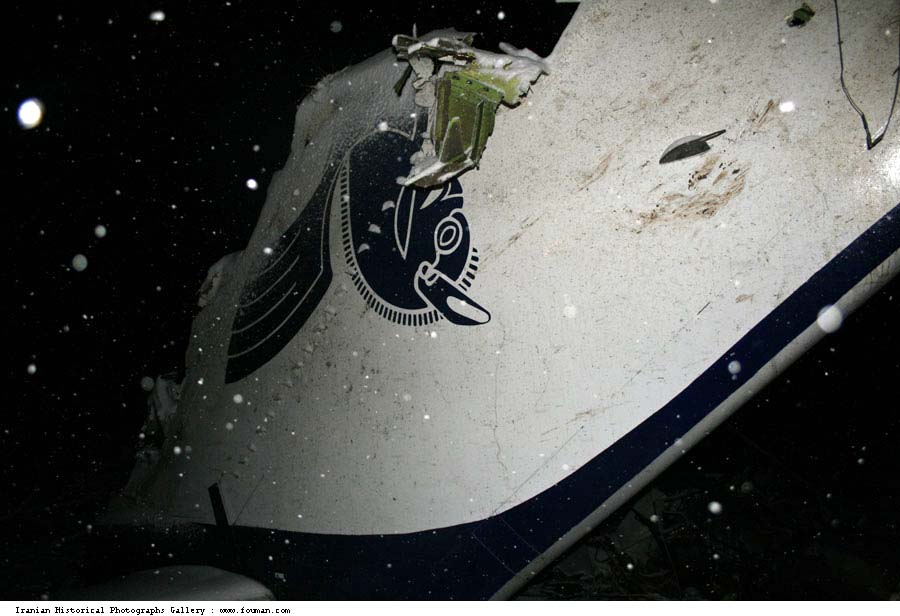
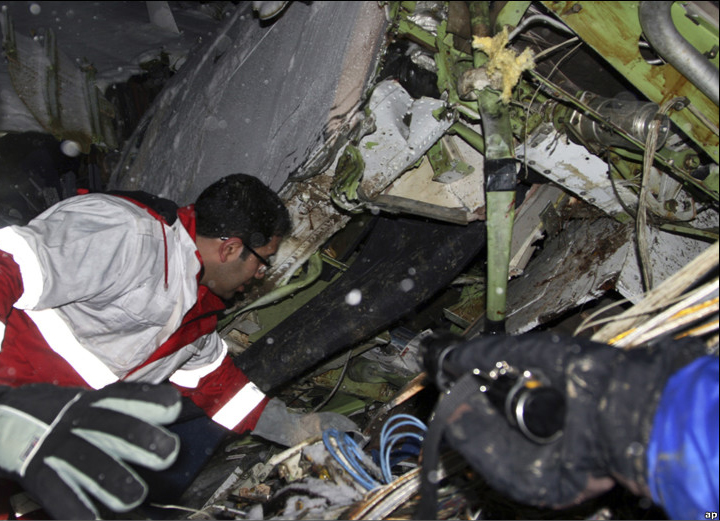
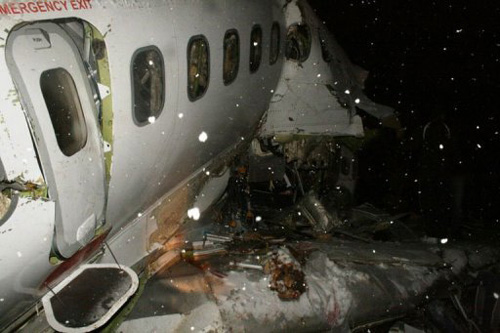
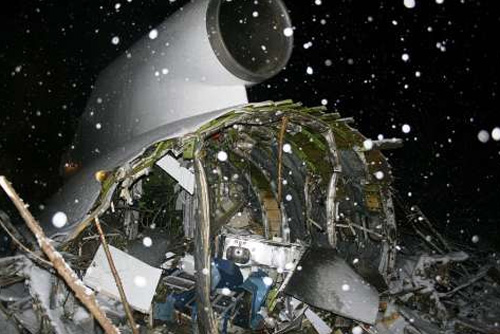
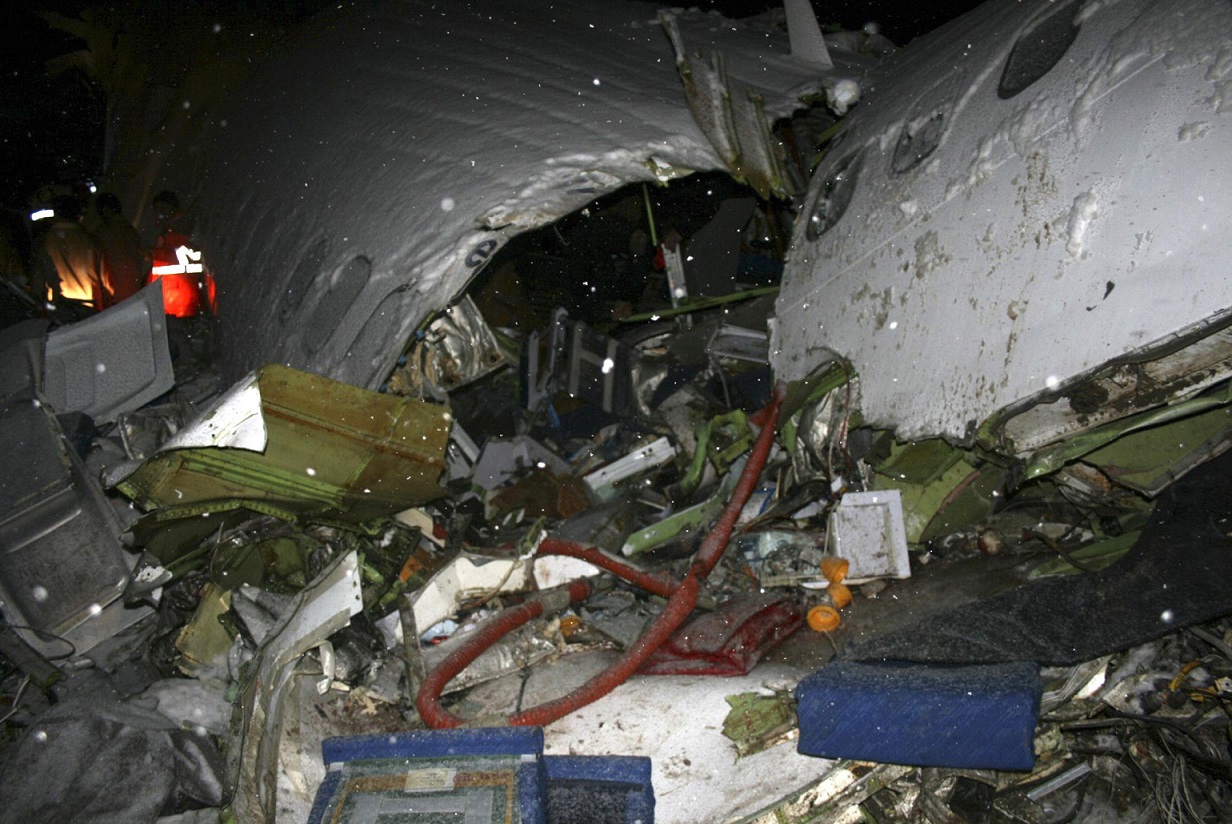
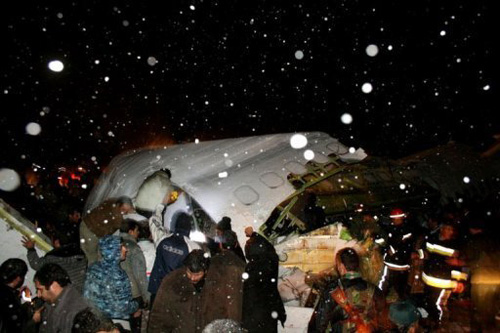
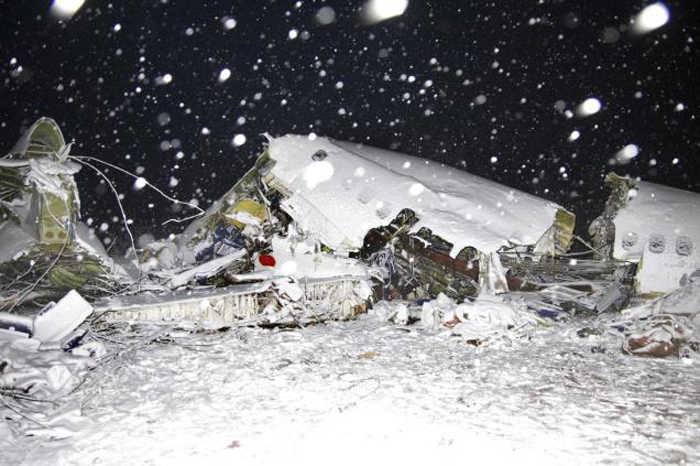
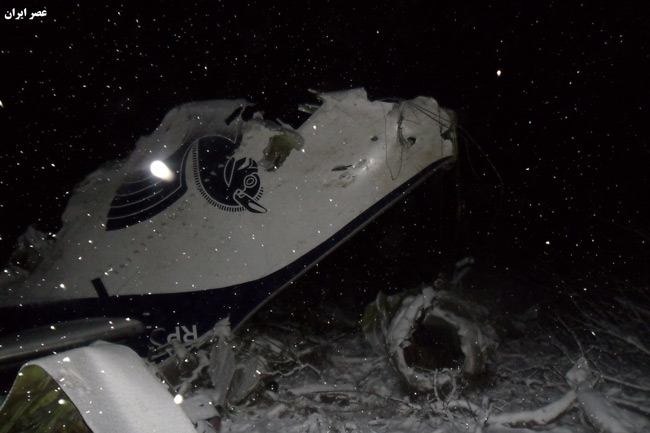
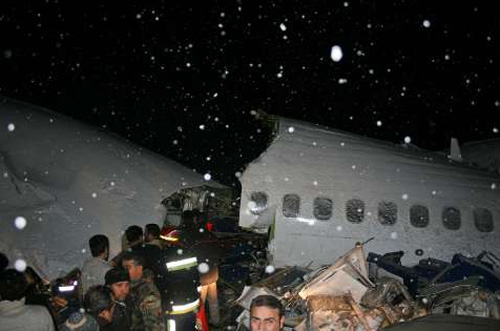
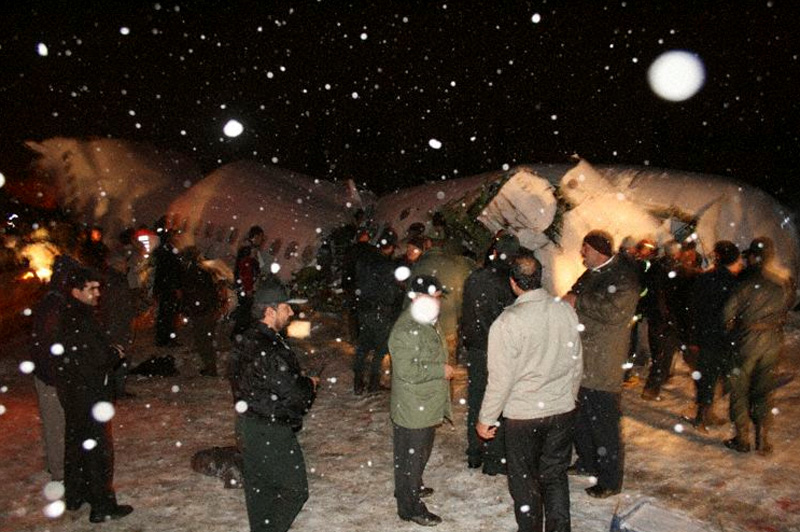
The aircraft departed Tehran-Mehrabad Airport at 1815LT with a delay of more than two hours due to poor weather conditions at destination. While descending to Orūmīyeh Airport by night, the crew encountered poor weather conditions with snow falls, visibility 800 metres and three ceilings at 1,500, 2,000 and 6,000 feet. After the crew was unable to intercept the ILS, the decision to initiate a go-around procedure was taken. Approaching the stall speed, the stick shaker activated and the aircraft probably encountered icing conditions. In a left bank angle estimated between 26 and 40°, the engine n°3 and 1 failed. At an altitude of 600 feet and at a speed of 96 knots, the flaps were retracted, causing the aircraft to stall and to impact the ground. The aircraft broke in three but there was no fire. 70 passengers and 8 crew members were killed while 27 other occupants were injured, some seriously.
Probable cause:
Bad weather conditions for the aircraft and inappropriate actions by cockpit crew to confront the situation is the main cause of the accident. The following contributing factors were identified:
- The old technology of aircraft systems,
- Absence of a suitable simulator for adverse weather conditions,
- Failure to correctly follow the operating manual by the flight crew,
- Inadequate cockpit resources management (CRM).

Crash of a Piper PA-46-350P Malibu Mirage in Kumamoto: 2 killed

Date & Time: Jan 3, 2011 at 1714 LT
Operator:
Registration:
JA701M
Flight Phase:
Flight Type:
Survivors:
No
Site:
Schedule:
Kumamoto – Kitakyūshū
MSN:
46-36188
YOM:
1999
Country:
Region:
Crew on board:
1
Crew fatalities:
Pax on board:
1
Pax fatalities:
Other fatalities:
Total fatalities:
2
Captain / Total flying hours:
1537
Captain / Total hours on type:
119.00
Aircraft flight hours:
1497
Circumstances:
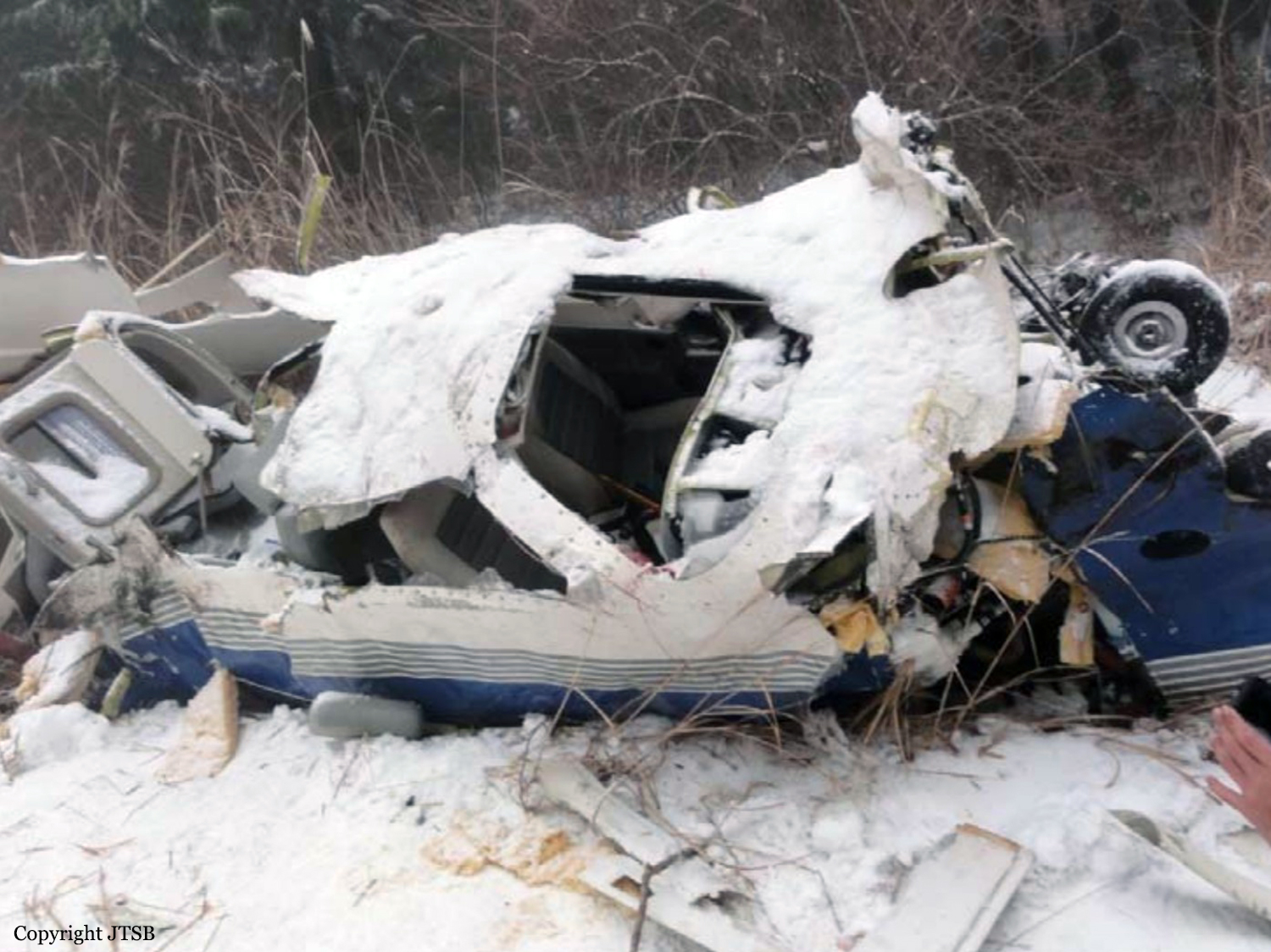
The single engine aircraft departed Kumamoto Airport runway 07 at 1711LT on a private flight to Kitakyūshū, with two persons on board: a PIC in the left seat and a passenger in the right seat. At 17:12:11, the radar of the Kumamoto aerodrome station C captured the aircraft. The pilot made a position report at 6 nm north of the airport at 2,300 feet. While climbing to the altitude of 6,500 feet, the pilot was instructed to change the frequency. About three minutes after takeoff, the aircraft collided with trees and crashed in a wooded area located on the southeast slope of Mt Yago, about 14 km northeast of Kumamoto Airport. The wreckage was found in the afternoon of the following day at an altitude of 850 metres. The aircraft was destroyed and both occupants were killed, Mr. & Mrs. Hiroshi and Hiromi Kanda.
Probable cause:
It is highly probable that the aircraft collided with the mountain slope during its in-cloud post-takeoff climb with low climb rate on its VFR flight to Kitakyushu Airport from Kumamoto Airport, resulting in the aircraft destruction and fatal injuries of two persons on board–the PIC and the passenger. It is somewhat likely that the contributing factor to in-cloud flight toward mountain slope with low climb rate is the PIC’s lack of familiarization with terrain features near Kumamoto Airport; however, the JTSB was unable to clarify the reason.
Final Report:
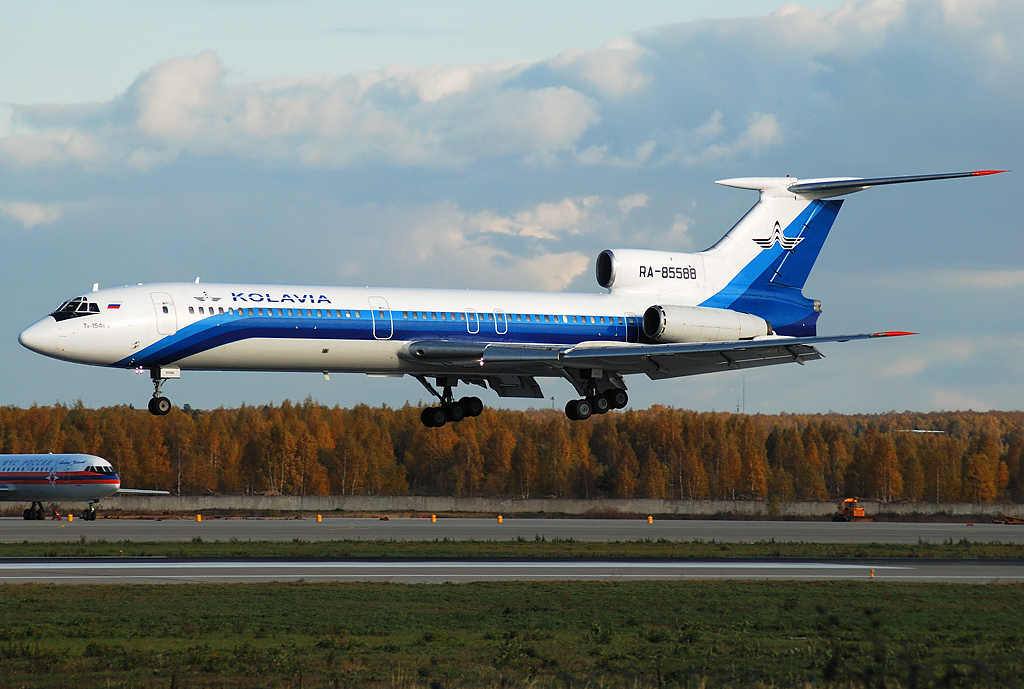
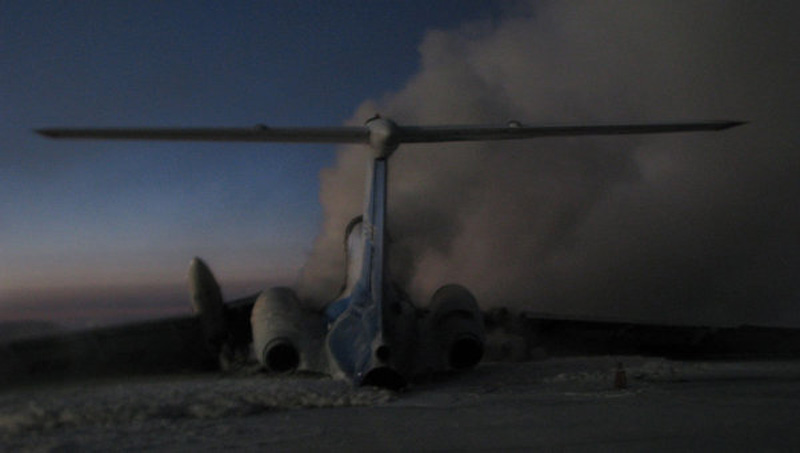
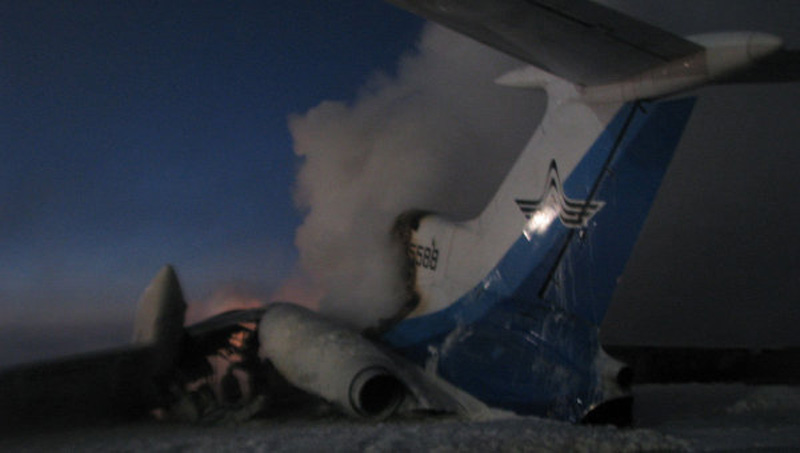
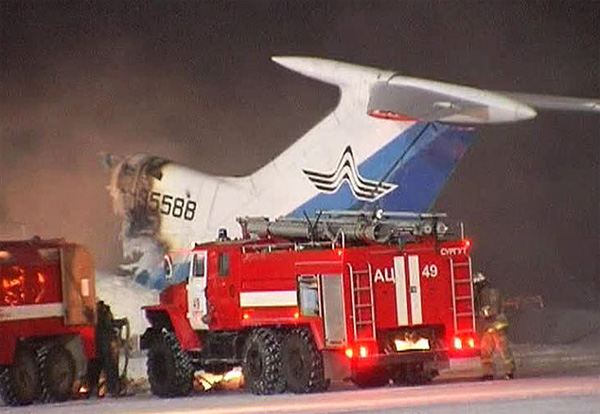
Ground fire of a Tupolev TU-154B-2 in Surgut: 3 killed

Date & Time: Jan 1, 2011 at 1525 LT
Type of aircraft:
Operator:
Registration:
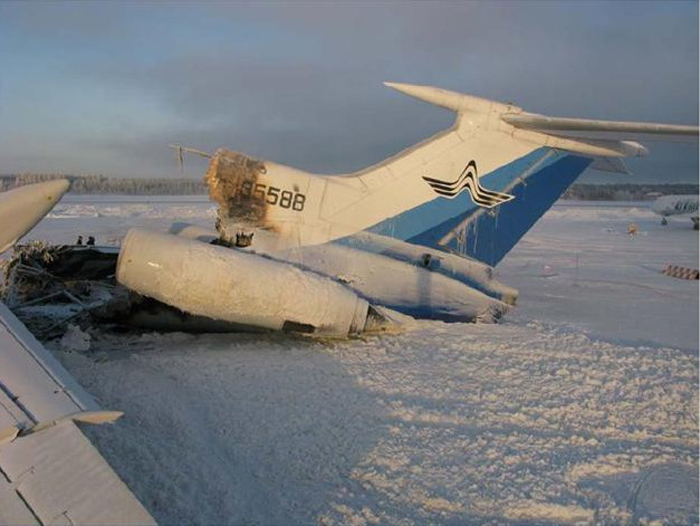
RA-85588
Flight Phase:
Survivors:
Yes
Schedule:
Surgut - Moscow
MSN:
83A588
YOM:
1983
Flight number:
KGL348
Country:
Region:
Crew on board:
8
Crew fatalities:
Pax on board:
126
Pax fatalities:
Other fatalities:
Total fatalities:
3
Captain / Total flying hours:
12202
Captain / Total hours on type:
2780.00
Copilot / Total flying hours:
3775
Copilot / Total hours on type:
3279
Aircraft flight hours:
32354
Aircraft flight cycles:
13147
Circumstances:
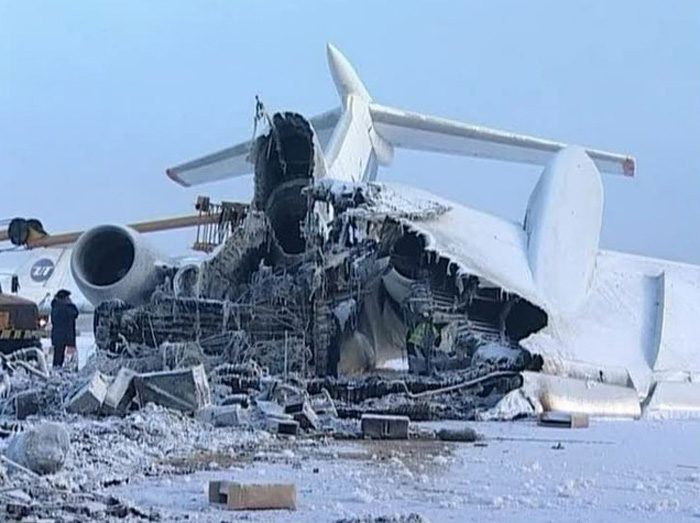
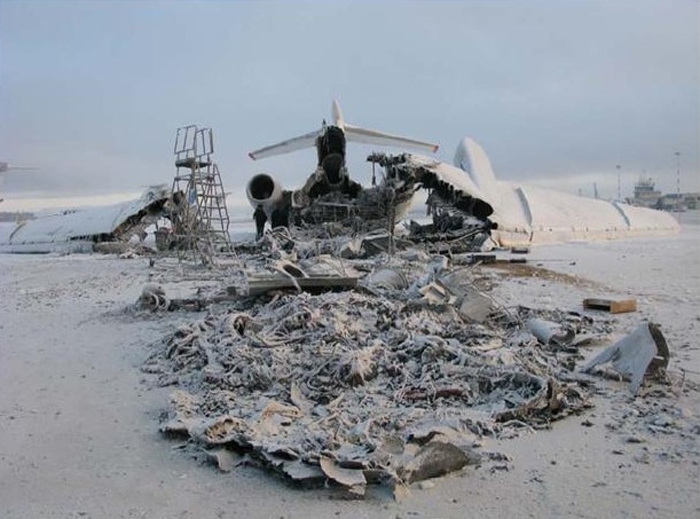
Ready for taxi, the crew started the engines when a short circuit occurred and a fire erupted in the rear compartment. The evacuation of all 134 occupants was initiated but three passengers died while 32 others were seriously injured. The aircraft was totally destroyed by fire. The OAT was -29° C at the time of the incident.
Probable cause:
A short circuit emerged while the aircraft generators were connected to the aircraft's electrical system after start-up of the engines, via an APU. The short circuit caused a strong fire in the generators compartment in the tail which spread rapidly through the fuselage. The cause of the fire was an electrical arc produced by electrical currents exceeding ten to 20 times the nominal loads when two generators not synchronized with each other were brought online but got connected together instead of being connected to parallel busses. The following contributing factors were identified:
- Poor technical conditions of contacts TKS233DOD responsible for connecting the generators with the electrical busses, that were damaged by prolonged operation without maintenance. A contact normally open was welded and fractured insulation material moved between contacts that are normally closed. These abnormal contact positions led to the connection between #2 and #3 generators.
- Differences in the schematic diagrams of generator 2 and generators 1 and 3. When the switch is moved from "check" to "enable" with no delay in the "neutral" position generator 2 is brought online without time delay which leads to increased wear of normally closed contacts in the TKS233DOD unit.
- The specific design of the electrical systems to ensure power supply to each bus from either the APU or either engine integrated drive generator.
Final Report:
Crash of an Antonov AN-22A near Krasny Oktyabr: 12 killed

Date & Time: Dec 28, 2010 at 2130 LT
Type of aircraft:
Operator:
Registration:
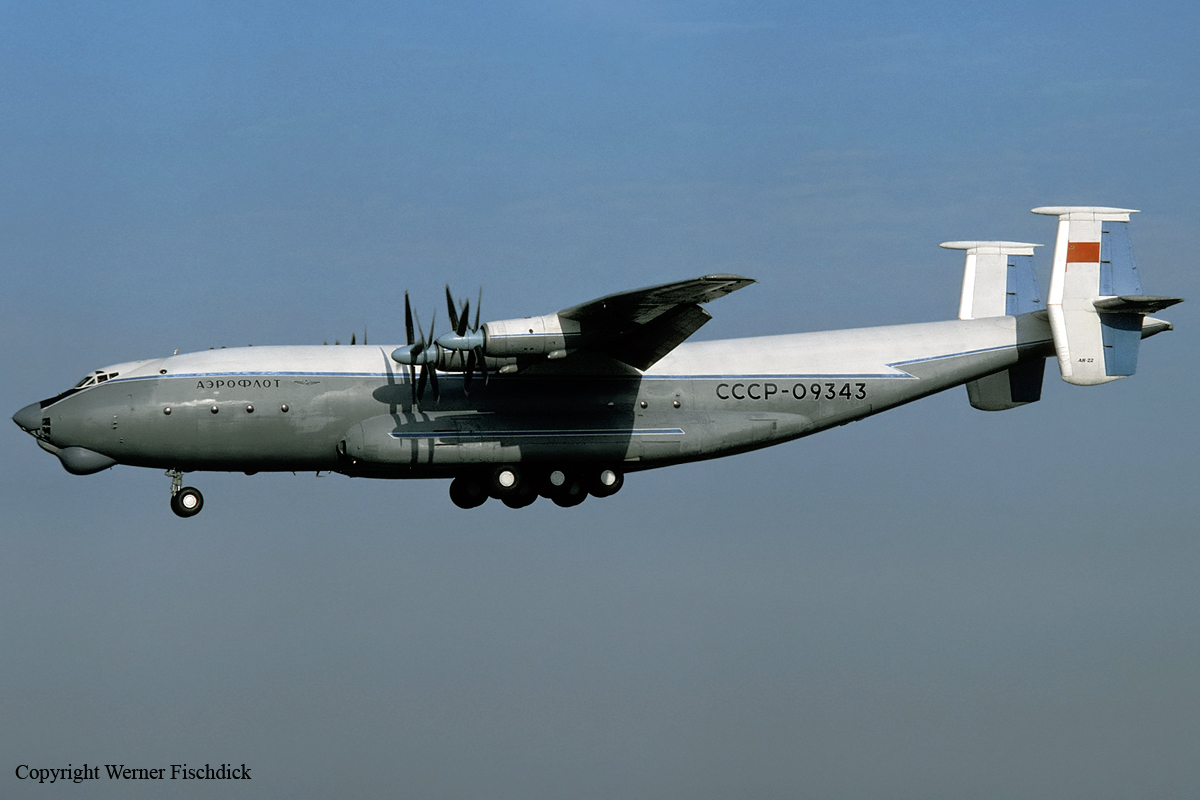
RA-09343
Flight Phase:
Flight Type:
Survivors:
No
Schedule:
Voronezh - Tver
MSN:
043482272
YOM:
1974
Country:
Region:
Crew on board:
12
Crew fatalities:
Pax on board:
0
Pax fatalities:
Other fatalities:
Total fatalities:
12
Circumstances:
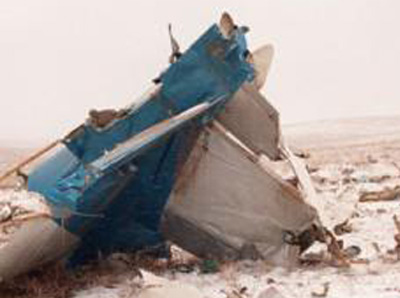
The crew was returning to his base at Tver-Migalovo after he delivered a MiG-31 to the Voronezh Military Aviation Engineering University. While in cruising flight, the four engine aircraft entered an uncontrolled descent and crashed in a snow covered prairie located near Krasny Oktyabr. The aircraft was totally destroyed and all 12 occupants were killed.

Crash of a De Havilland DHC-6 Twin Otter 300 near Okhaldhunga: 22 killed

Date & Time: Dec 15, 2010 at 1530 LT
Operator:
Registration:
9N-AFX
Flight Phase:
Survivors:
No
Site:
Schedule:
Lamidanda - Kathmandou
MSN:
806
YOM:
1984
Country:
Region:
Crew on board:
3
Crew fatalities:
Pax on board:
19
Pax fatalities:
Other fatalities:
Total fatalities:
22
Captain / Total flying hours:
6700
Captain / Total hours on type:
5000.00
Copilot / Total flying hours:
1100
Copilot / Total hours on type:
341
Circumstances:
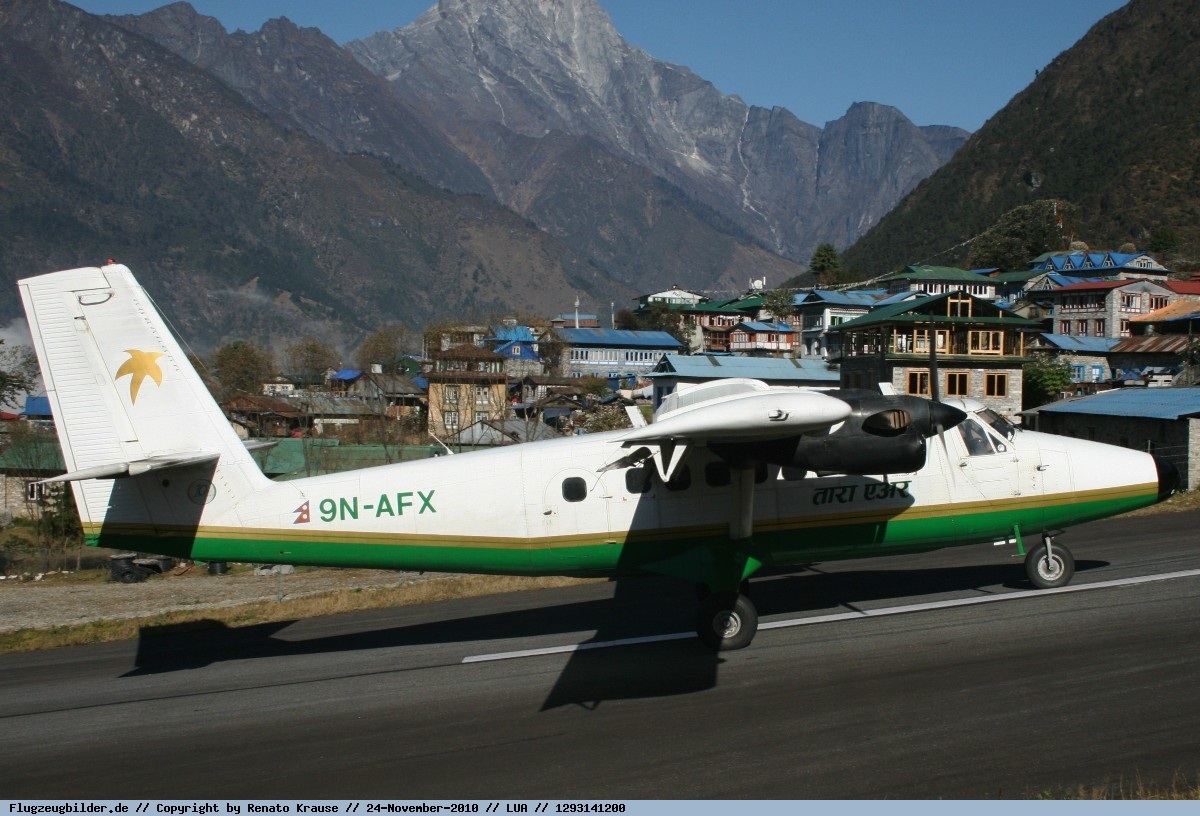
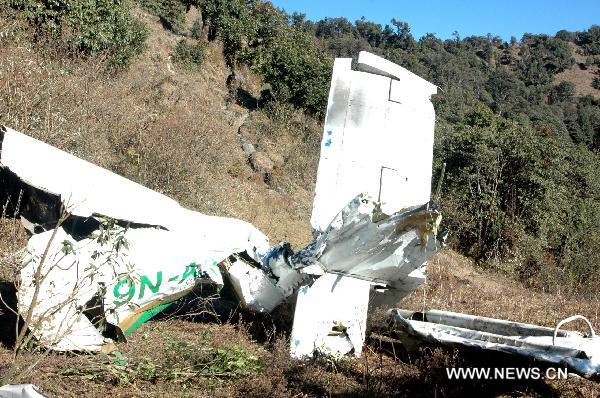
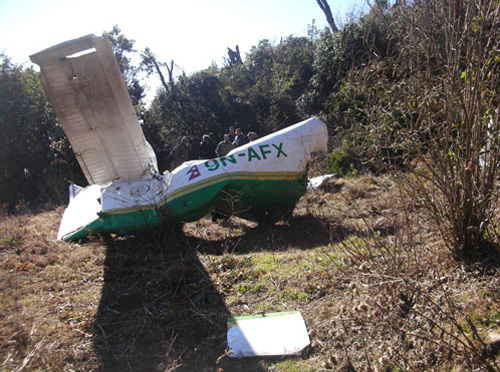
The twin engine aircraft departed Lamidanda Airport at 1508LT on a flight to Kathmandu. Shortly after departure, the crew was cleared to climb to 10,500 feet but ATC ask them to maintain 8,500 feet due to traffic. The captain disagreed with this ATC instruction and continued to climb. The copilot asked the captain to accept the ATC proposal so finally, the captain cleared the copilot (who was the pilot in command) to descend to 8,500 feet despite the fact it was risky due to the mountainous terrain. Few minutes later, the aircraft entered clouds when the right wing impacted ground. The aircraft crashed in a rocky area located on the Palunge Hill, near Okhaldhunga. The wreckage was found the following morning. The aircraft was destroyed by impact forces and all 22 occupants were killed. IMC conditions prevailed at the time of the accident due to low visibility (cloudy conditions).
Probable cause:
The cause of the accident was the unwise decision taken by the crew to descend without taking the harsh mountain terrain into consideration. Controlled flight into terrain.