Crash of an Antonov AN-12AP near Omsukchan: 11 killed

Date & Time: Aug 9, 2011 at 1532 LT
Type of aircraft:
Operator:
Registration:
RA-11125
Flight Phase:
Flight Type:
Survivors:
No
Site:
Schedule:
Komsomolsk-on-Amur – Magadan – Keperveyem
MSN:
3 3 410 06
YOM:
1963
Flight number:
LN9209
Country:
Region:
Crew on board:
9
Crew fatalities:
Pax on board:
2
Pax fatalities:
Other fatalities:
Total fatalities:
11
Captain / Total flying hours:
15297
Captain / Total hours on type:
6263.00
Copilot / Total flying hours:
3939
Copilot / Total hours on type:
3838
Aircraft flight hours:
18709
Aircraft flight cycles:
9172
Circumstances:
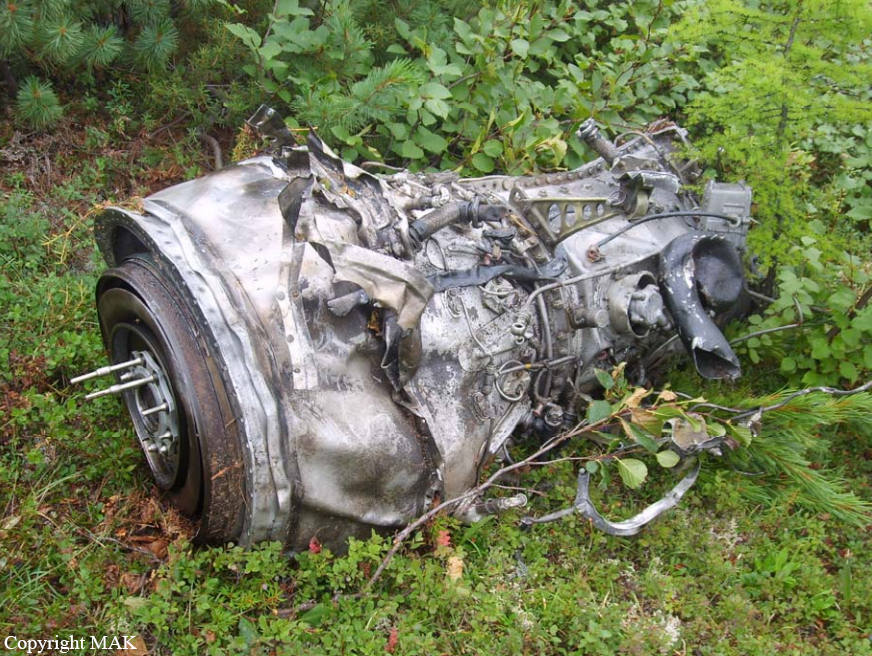
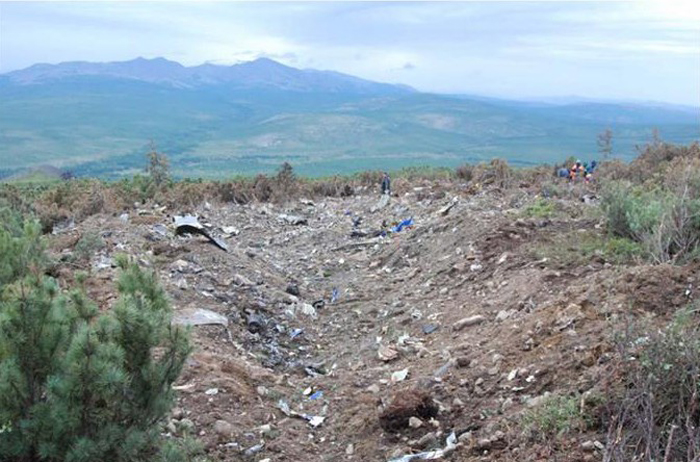
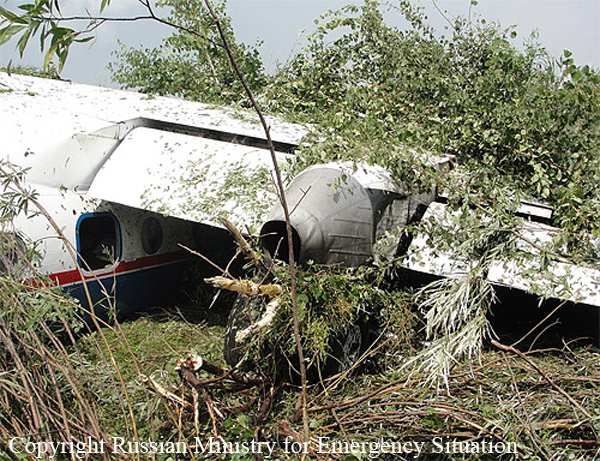
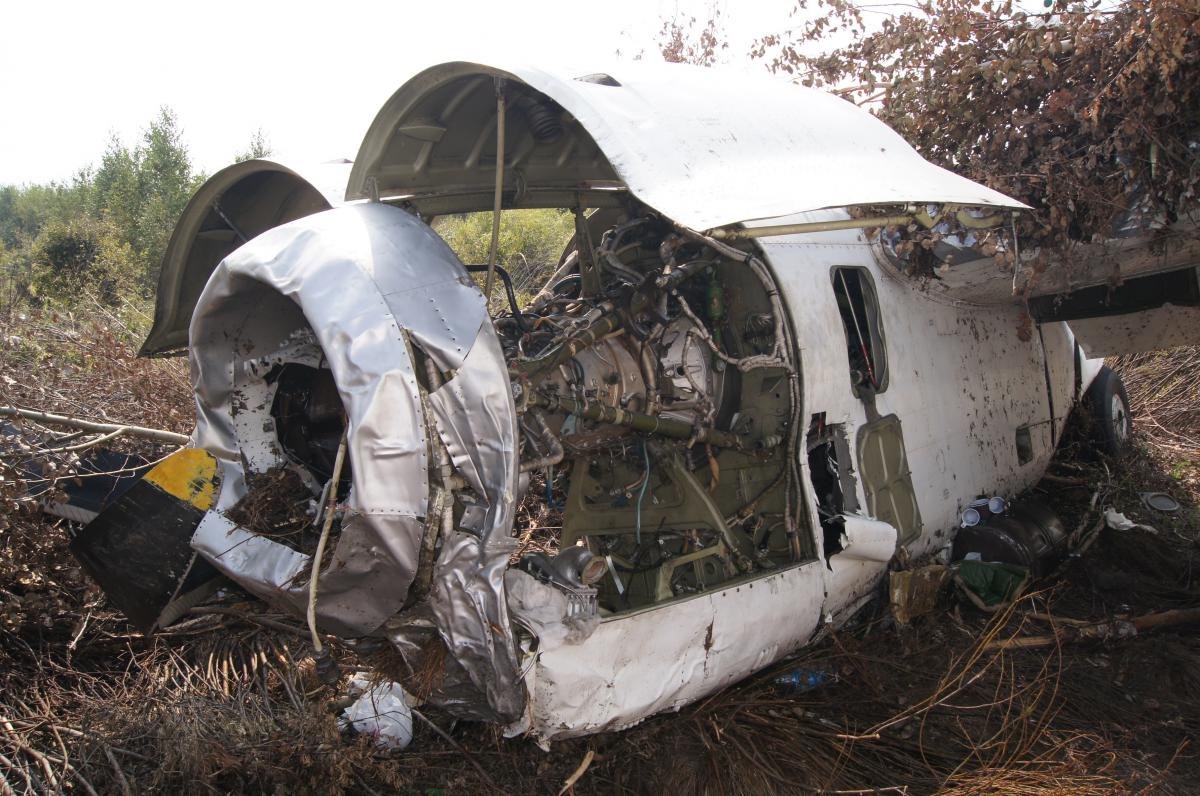
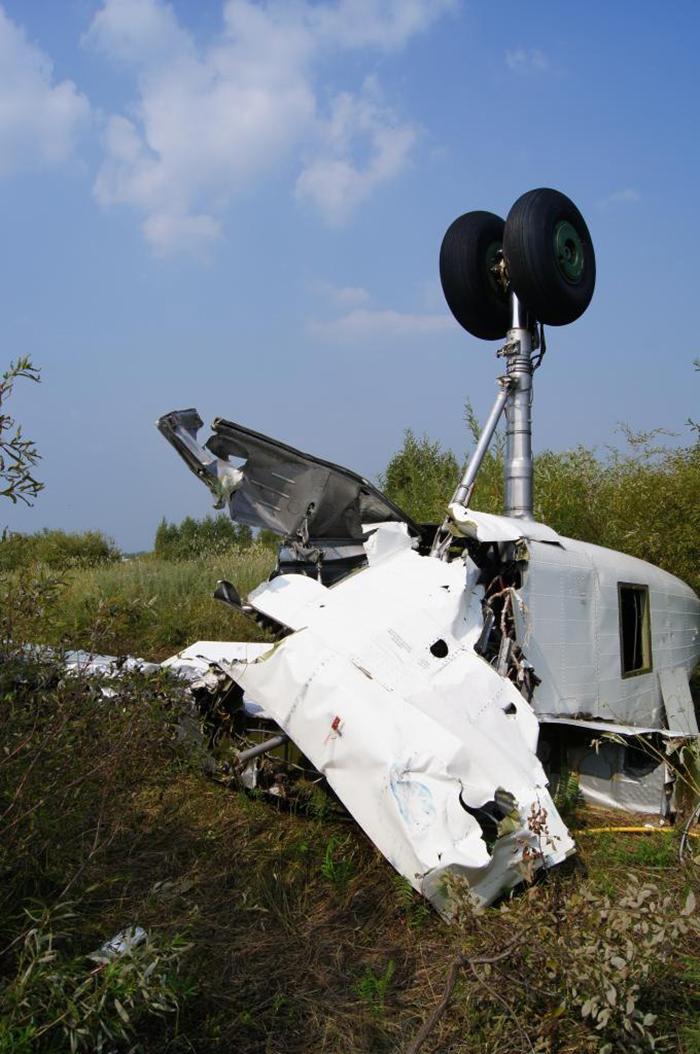
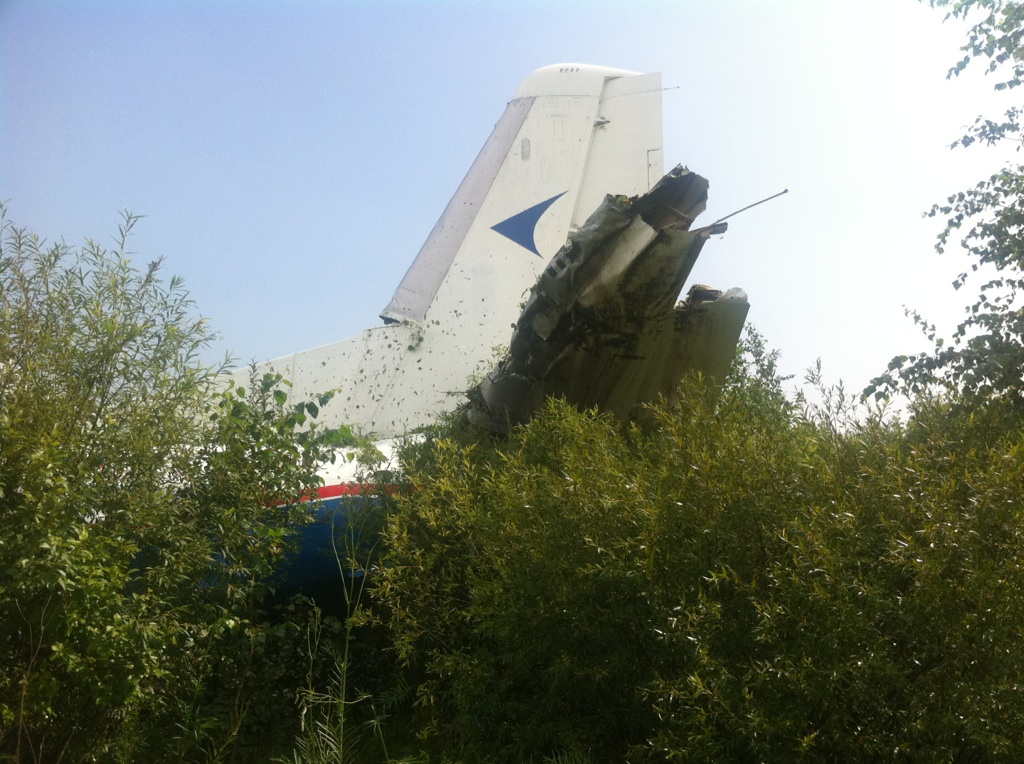
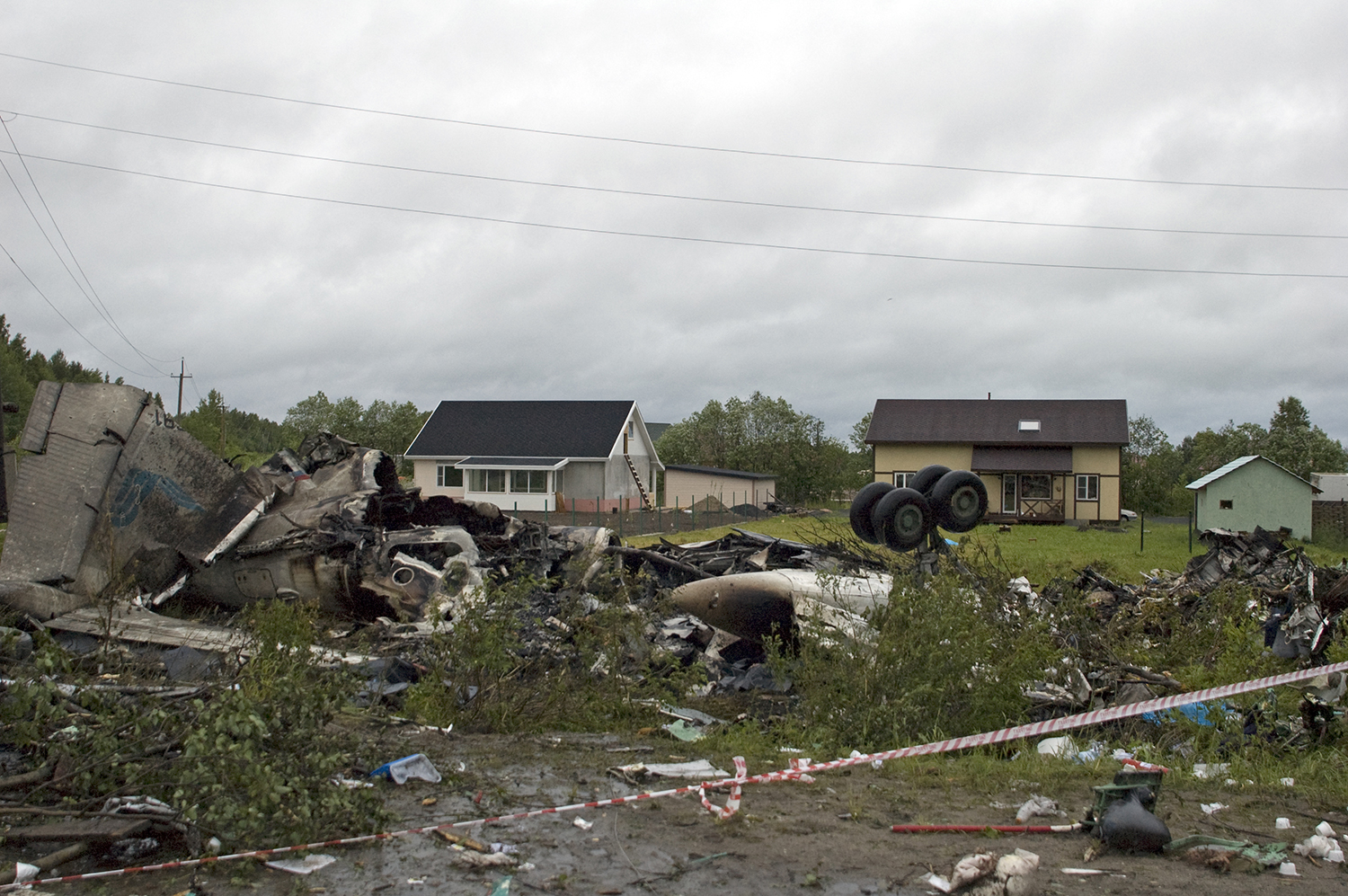
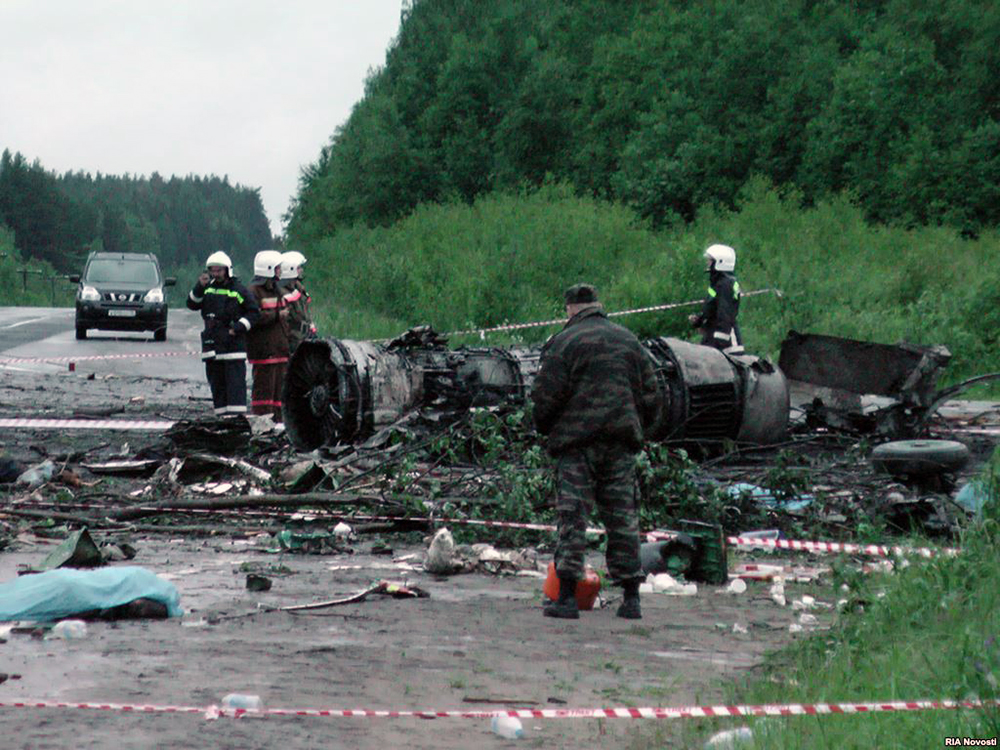
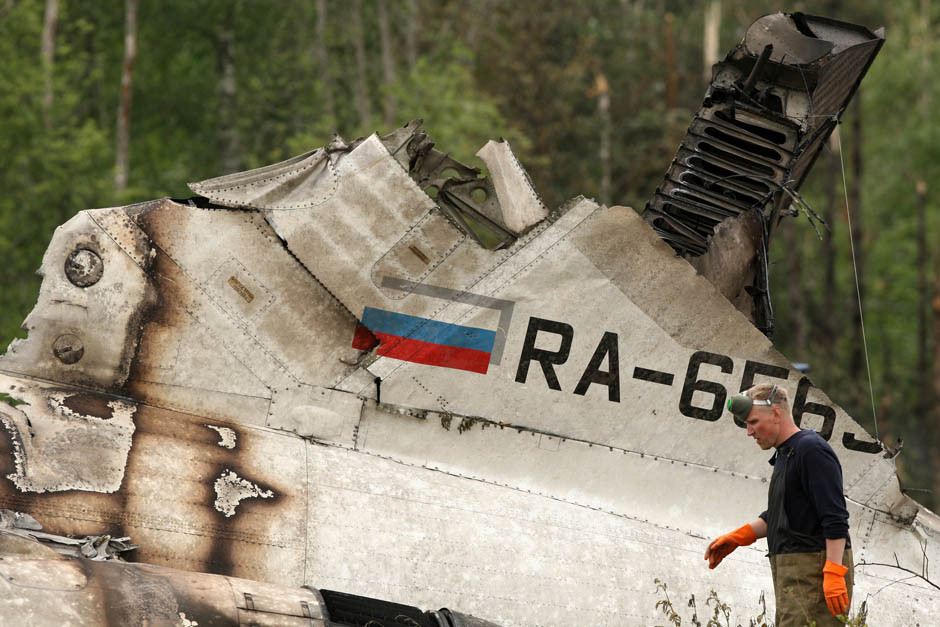
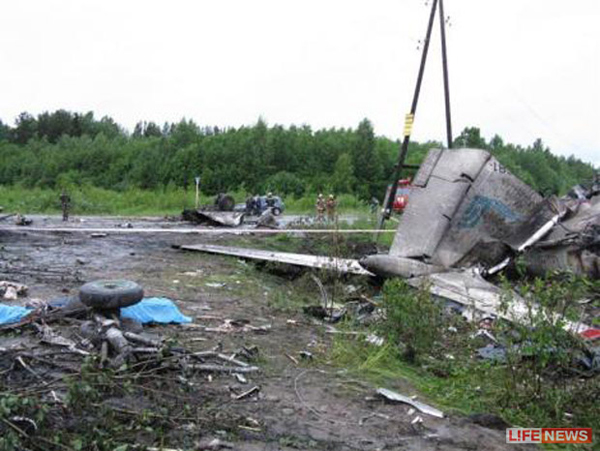
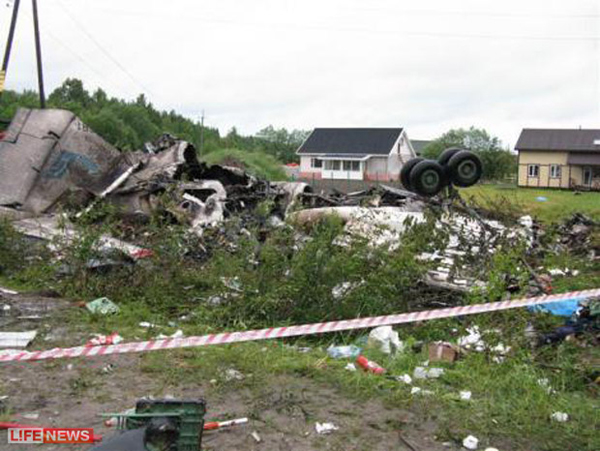
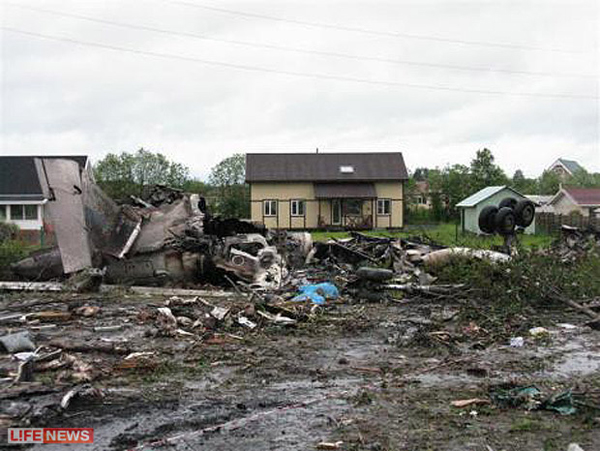
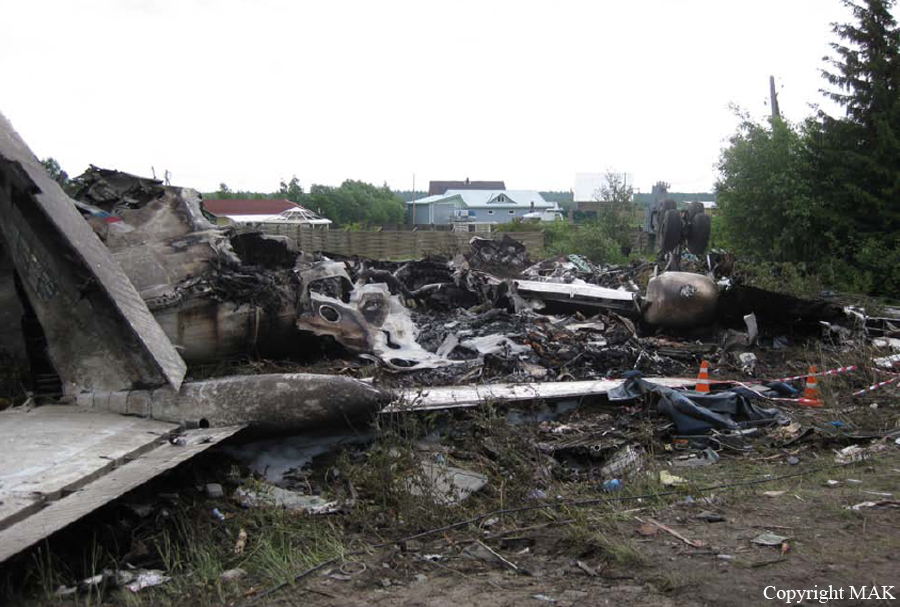
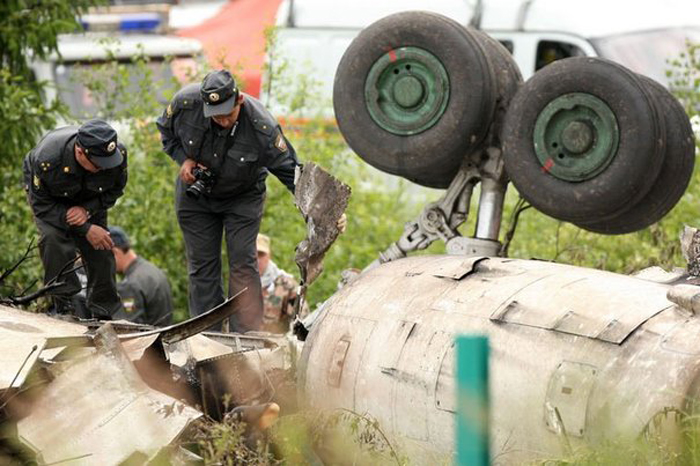
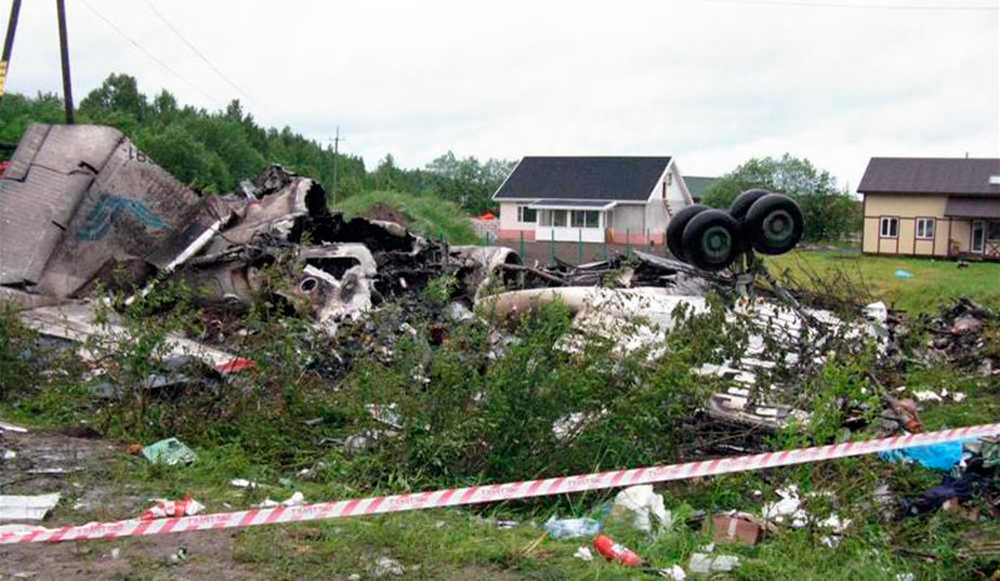
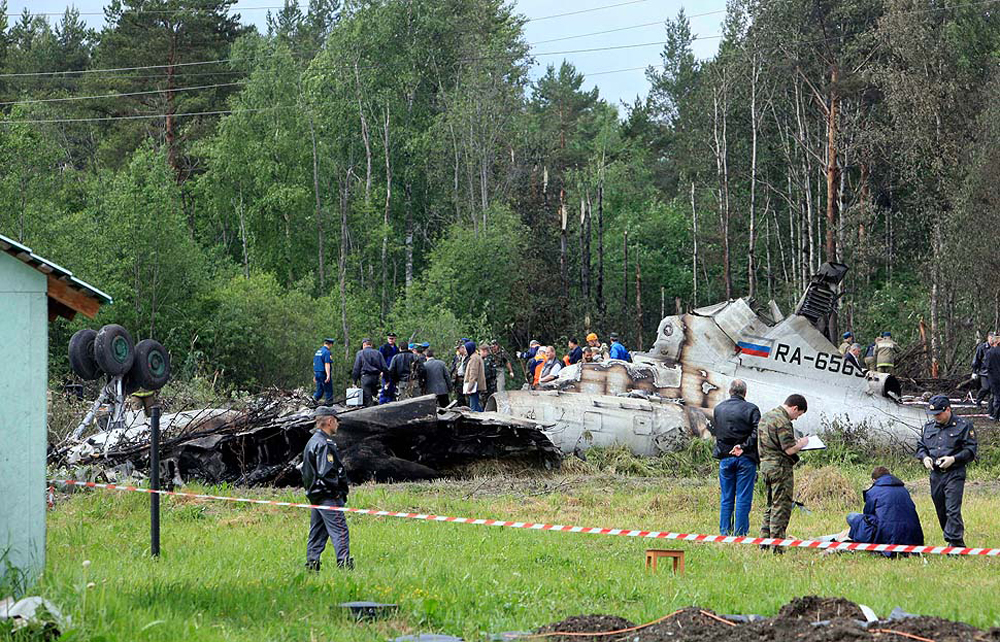
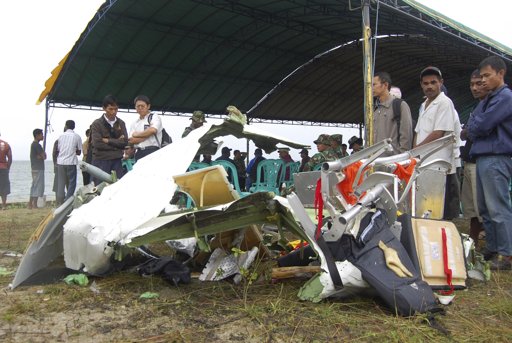
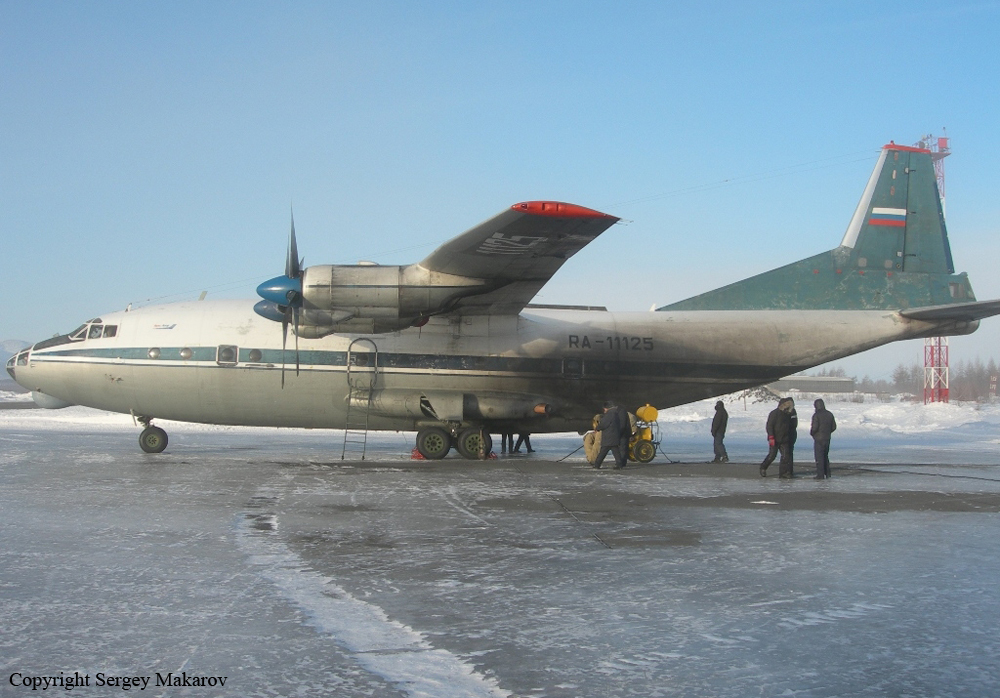
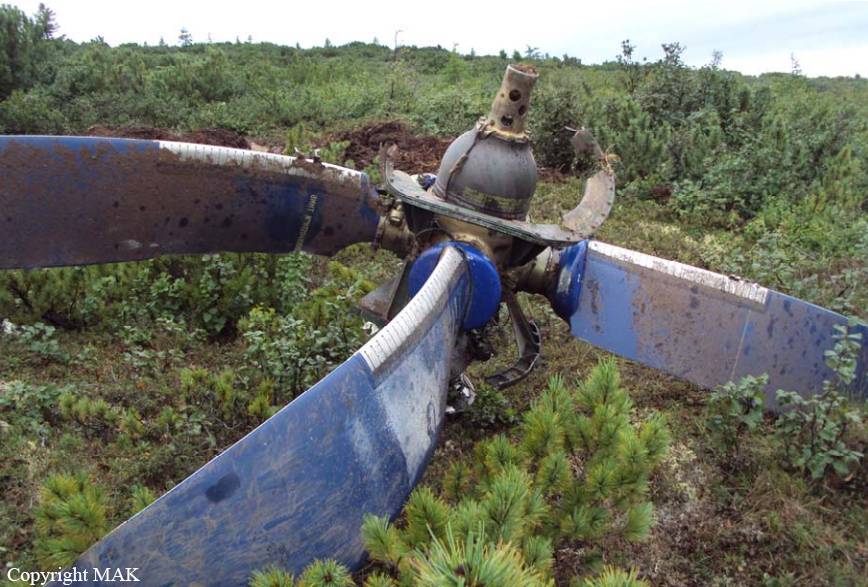
The four engine aircraft departed Komsomolsk-on-Amur Airport on a cargo service (flight LN9209) to Keperveyem with an intermediate stop in Magadan, carrying 17,43 tons of various goods, two passengers and a crew of nine. The aircraft departed Komsomolsk-on-Amur Airport at 1437LT. At 1520LT, while cruising at an altitude of 7,500 metres about 430 km northeast from his departure point, the crew informed ATC about a fuel leak on the engine n°1, requested a descent to 6,600 metres then the clearance to return to Komsomolsk-on-Amur. After the engine n°1 caught fire, the crew declared an emergency and started an emergency descent. Out of control, the aircraft crashed on the slope of a mountain located about 82 km southwest from Omsukchan. The aircraft disintegrated on impact and the debris were found a day later at an altitude of 1,006 metres. All 11 occupants were killed. This Antonov AN-12 was the oldest model still in commercial service in Russia.
Probable cause:
The probable causes of the crash were:
Following the inflight shut down of engine number one and feathering of the number one propeller the longitudinal (roll) control of the aircraft was lost due to load-bearing properties of the left wing and possible damage to the left hand aileron control wiring resulting in the aircraft's uncontrolled excessive roll to the left and subsequent impact with terrain. The fire started in the tail section of the #1 engine nacelle and spread forward and onto the wing. The fire was most likely fed by fuel leaking from a fuel line connection to the low pressure fuel pump at engine #1, the fuel most likely ignited due to contact with hot engine parts. Due to the disintegration of the aircraft and fire damage it was not possible to establish the location of fuel leaks and the cause with certainty. The inability of the fire suppression system to extinguish such a fire in its early stages as well as the lack of checklists/guidelines in the aircraft's flight manual for fuel leaks inside the engine nacelle contributed to the delay of more than 2 minutes to shut the engine down. The mountainous terrain underneath the aircraft, low level overcast cloud and lack of time due to continued fire did not permit the crew to select a proper site for an emergency landing.
Final Report:
Crash of an Antonov AN-24RV in Blagoveshchensk

Date & Time: Aug 8, 2011 at 1412 LT
Type of aircraft:
Operator:
Registration:
RA-46561
Survivors:
Yes
Schedule:
Irkutsk - Chita - Blagoveshchensk - Khabarovsk
MSN:
67310609
YOM:
1976
Flight number:
RD103
Country:
Region:
Crew on board:
5
Crew fatalities:
Pax on board:
36
Pax fatalities:
Other fatalities:
Total fatalities:
0
Captain / Total flying hours:
11555
Captain / Total hours on type:
6722.00
Copilot / Total flying hours:
3268
Copilot / Total hours on type:
575
Aircraft flight hours:
12346
Aircraft flight cycles:
13767
Circumstances:
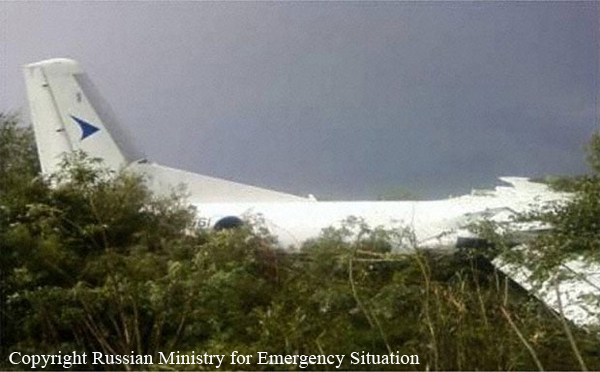
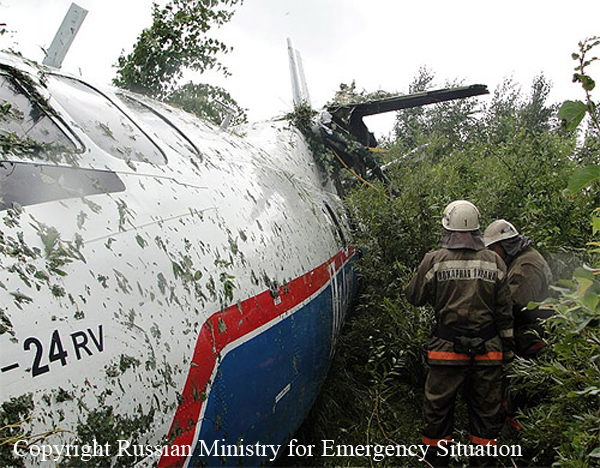
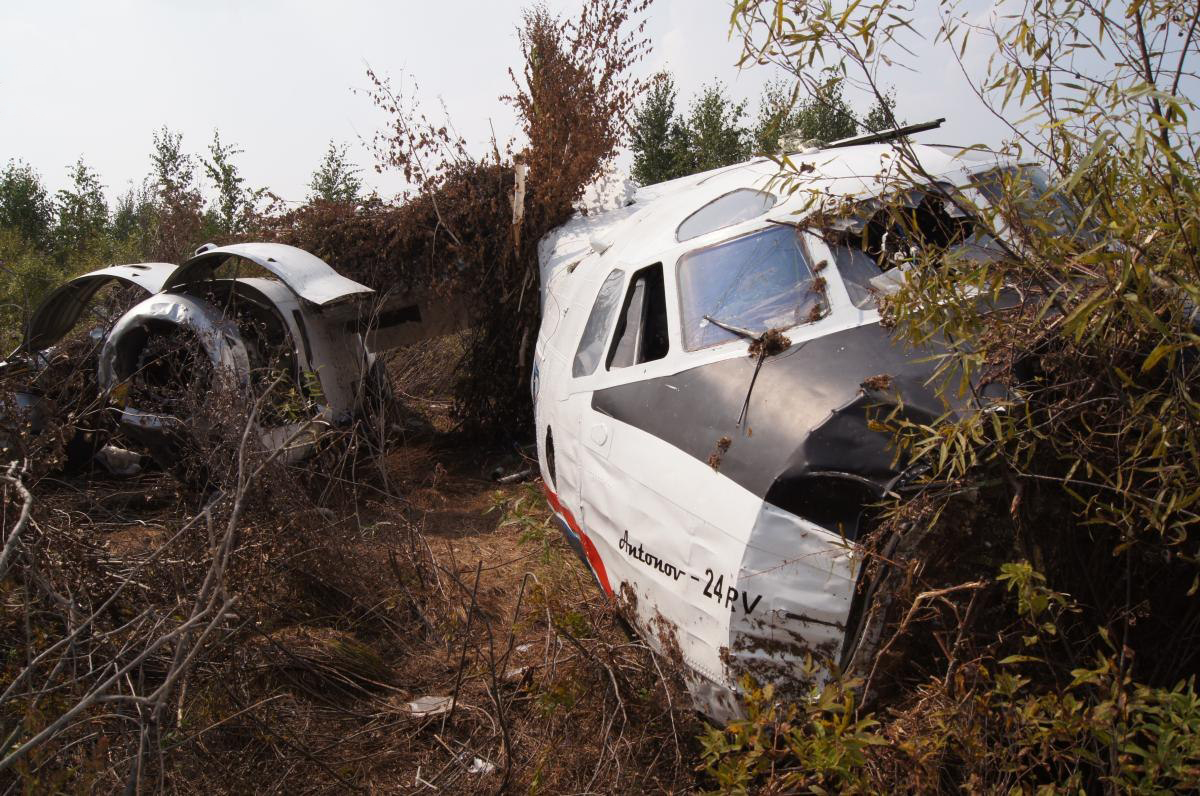
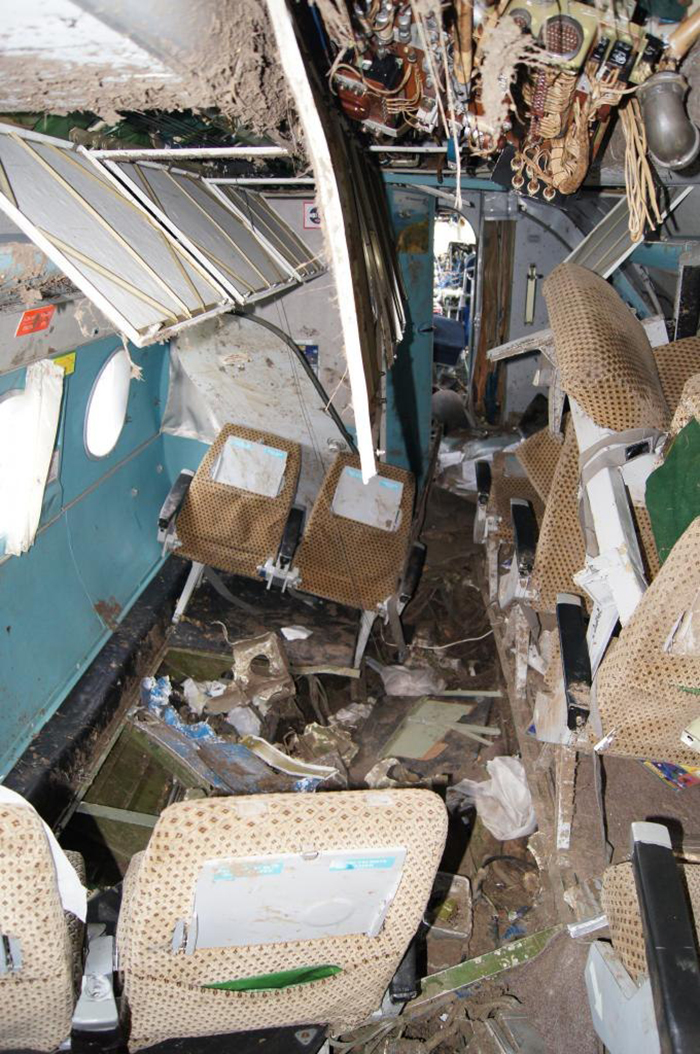
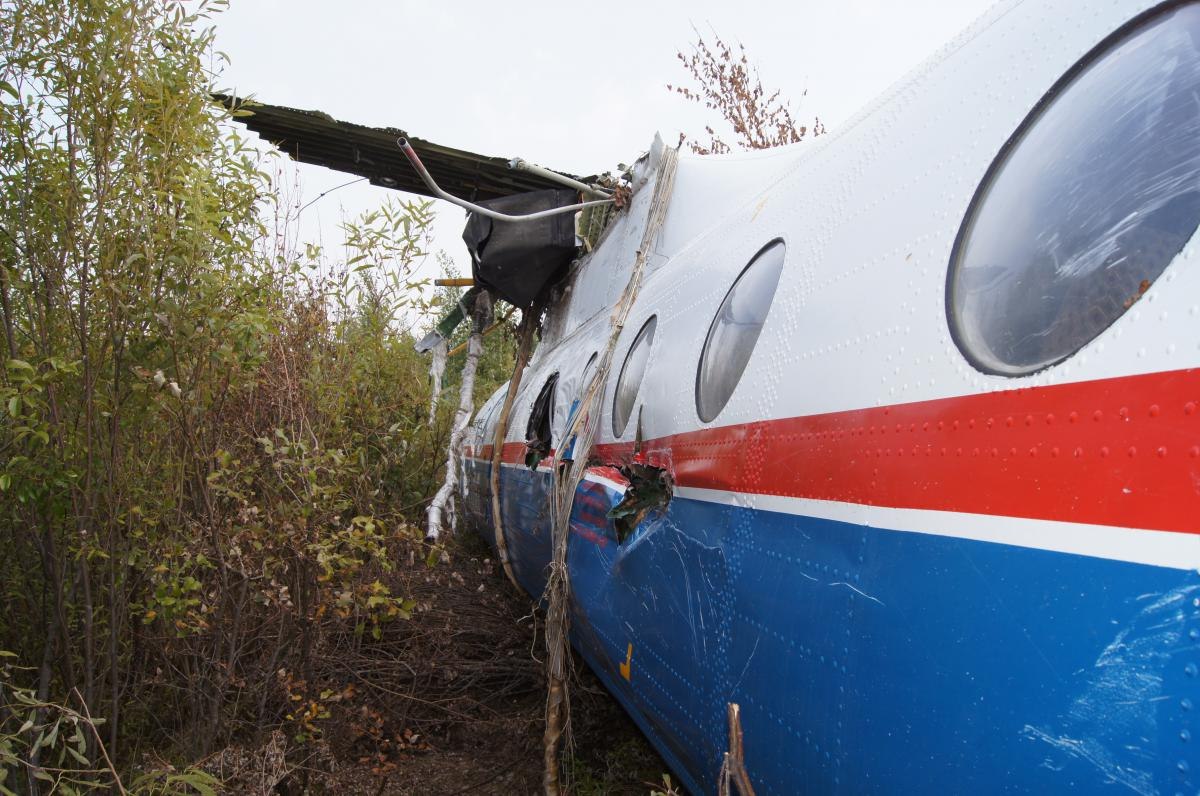
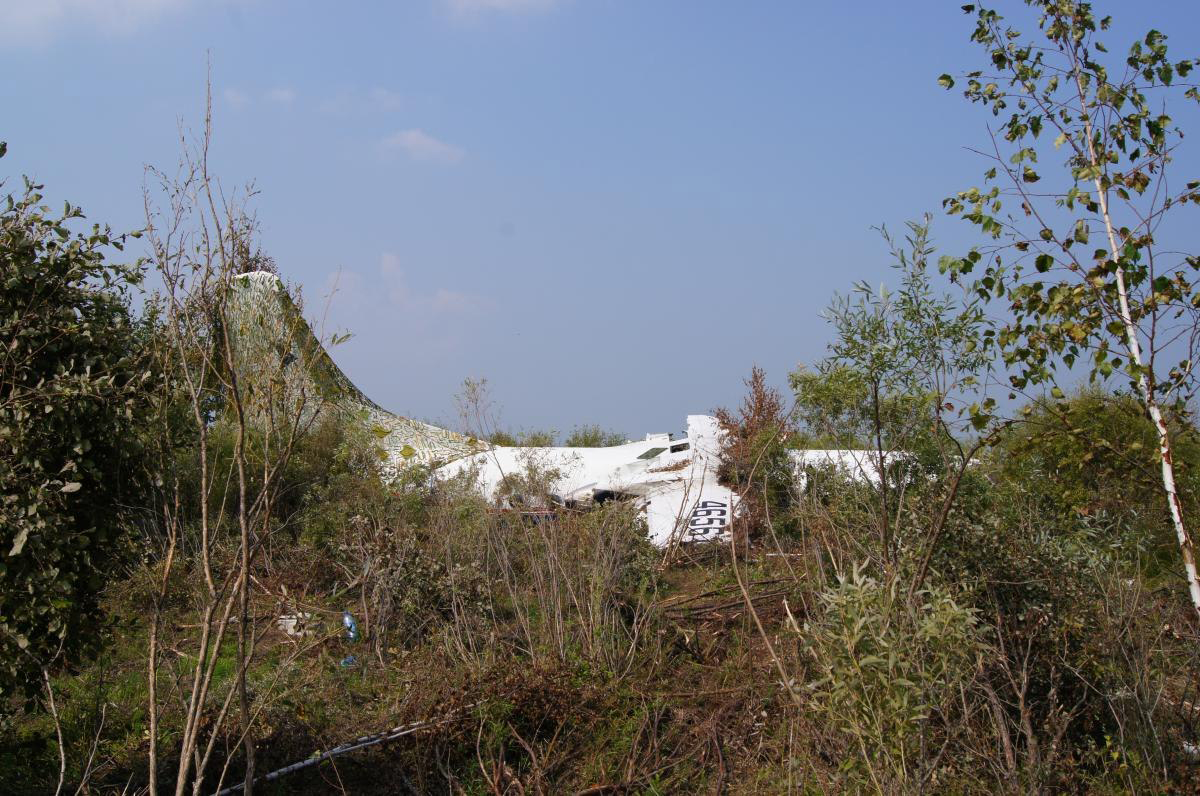
Following an uneventful flight from Chita, the crew initiated the approach to Blagoveshchensk in poor weather conditions with reduced visibility, heavy rain falls, thunderstorm activity and a cloud base at 150 metres. On final approach, despite he did establish any visual contact with the runway or its light system, the captain continued the approach and passed below the MDA. As the aircraft was not properly aligned with the runway centerline, it descended too low and impacted trees 210 meters to the right of the centerline and 50 meters short of runway 36. Upon impact, the left wing was torn off and the aircraft crashed in a wooded area. It slid over a distance of 450 metres before coming to rest. There was no fire. All 41 occupants were rescued, among them 9 were injured.
Probable cause:
The probable causes of the accident were the failure of the crew to go around and the descent well below decision height without visual reference to landmarks when the aircraft approached the airfield in weather conditions below the captain's, aircraft's and airfield's minima and in dangerous/adverse weather phenomena like thunderstorm, heavy rain and severe turbulence as well as the lack of appropriate response and required actions following terrain awareness warning system alerts resulted in a controlled flight into terrain, collision with obstacles and the destruction of the aircraft.
Contributing factors:
- the crew underestimated the weather conditions at the destination airport thus taking an erroneous decision to attempt an approach in thunderstorm and heavy rain showers,
- unsatisfactory meteorological support of the flight, the dispatcher and later air traffic control provided information about visibility, cloud and wind data that did not correspond to actual conditions that were significantly worse than minimums required,
- clearance for the approach by air traffic control despite the presence of dangerous weather phenomena (thunderstorm, heavy rain) at the aerodrome, which did not correspond to the standard operating procedures at Blagoveshchensk,
- inadequate staffing with a first officer who was performing his first flight after a prolonged leave without proper preparation and training,
- unsatisfactory crew interaction and the failure to adhere to standard operating procedures, especially the call outs of approaching decision height, the absence of a decision by the commander to continue the landing or go-around and the lack of action to recommend/initiate a go around by the first officer.
Final Report:

Crash of an Antonov AN-24RV in Strezhevoy: 7 killed

Date & Time: Jul 11, 2011 at 1156 LT
Type of aircraft:
Operator:
Registration:
RA-47302
Survivors:
Yes
Schedule:
Tomsk - Surgut
MSN:
5 73 103 02
YOM:
1975
Flight number:
IK9007
Country:
Region:
Crew on board:
4
Crew fatalities:
Pax on board:
33
Pax fatalities:
Other fatalities:
Total fatalities:
7
Captain / Total flying hours:
4570
Captain / Total hours on type:
4064.00
Copilot / Total flying hours:
9476
Copilot / Total hours on type:
5100
Aircraft flight hours:
48489
Aircraft flight cycles:
32783
Circumstances:
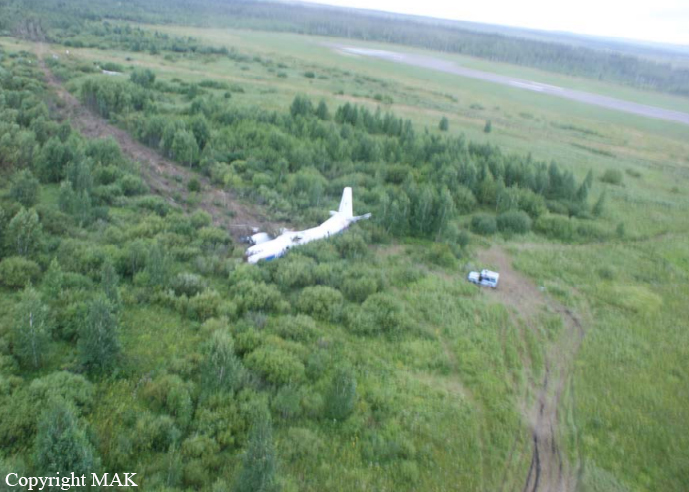
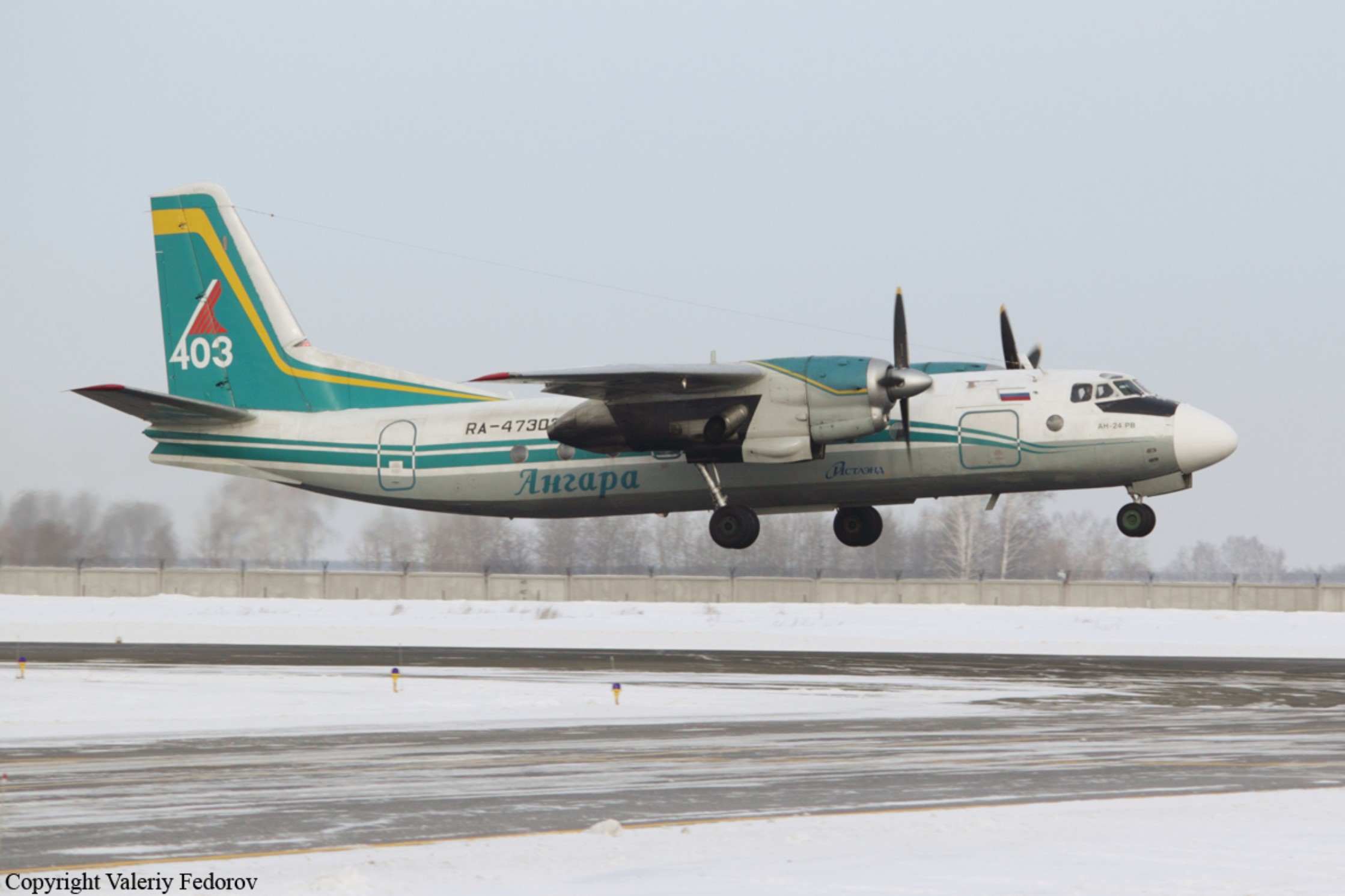
The twin engine aircraft departed Tomsk Airport at 1010LT on a flight (callsign IK9007/SP5007) to Surgut, carrying 33 passengers and a crew of four. About an hour and 26 minutes into the flight, the left engine's 'chips in oil' warning light came on. About eight minutes later, a burning smell was noticed in the cockpit and the captain decided to divert to Nizhnevartovsk Airport. During the descent, the left engine caught fire. Its propeller was feathered and the crew decided to divert to Strezhevoy Airport. But as the fire could not be extinguished, the captain eventually attempted an emergency landing in the Ob River. Upon landing, the aircraft broke in two and came to rest in shallow water. Seven passengers were killed while all other occupants were rescued.
Probable cause:
The Interstate Aviation Committee (MAK) released their final report in Russian concluding the probable causes of the accident were:
The catastrophe of the AN-24 RA-47302 occurred when ditching became necessary due to a fire in the left hand engine's nacelle. The destruction of the aircraft and loss of life was caused by collision with underwater obstacles that the crew could not anticipate or avoid. The fire in the left hand engine nacelle was caused by the fracture of a centrifugal breather releasing an air-fuel emulsion into the engine compartment as well as a delayed reaction to shut the engine down by the crew following an magnetic chip detector indication together with indications of oil pressure fluctuations, a burning smell and a low oil pressure indication. A delay in indicating engine vibrations to the crew as result of degradation of the engine vibration sensoring equipment, most likely caused by changes of the rotor speed of the engine as result of the aft bearing failure of the compressor rotor and/or misalignment of the sensor, which probably influenced the decision of the crew to shut the engine down with a delay. Cause of the fracture of the centrifugal breather was the destruction of the impeller due to prolonged exposure to hot air-fuel emulsion due to the failure of the aft compressor rotor support bearing. It was not possible to determine the cause of the destruction of the aft compressor rotor support bearing due to significant secondary damage. Most likely the destruction was caused by misalignment such as:
- Incorrect assembly of support parts mating with the compressor rotor during on-condition engine repairs,
- Or deviations from required geometry of support parts mating with the compressor rotor.
Contributing factors were:
- Psychological unpreparedness of the captain to shut the engine down due to lack of experience with the aircraft on one engine inoperative
- Late detection of the fire and as a consequence late attempts to extinguish the fire, it was however not possible to establish why the fire was detected late due to lack of objective information about the performance of the fire alarm systems.
Final Report:

Crash of a De Havilland DHC-6 Twin Otter 310 in the Maadhiggaru Falhu lagoon

Date & Time: Jul 11, 2011 at 0910 LT
Operator:
Registration:
8Q-TMD
Flight Type:
Survivors:
Yes
Schedule:
Male - Male
MSN:
530
YOM:
1977
Flight number:
TMW201A
Region:
Crew on board:
2
Crew fatalities:
Pax on board:
0
Pax fatalities:
Other fatalities:
Total fatalities:
0
Captain / Total flying hours:
5732
Captain / Total hours on type:
3387.00
Copilot / Total flying hours:
2650
Copilot / Total hours on type:
2650
Aircraft flight hours:
34746
Aircraft flight cycles:
62428
Circumstances:
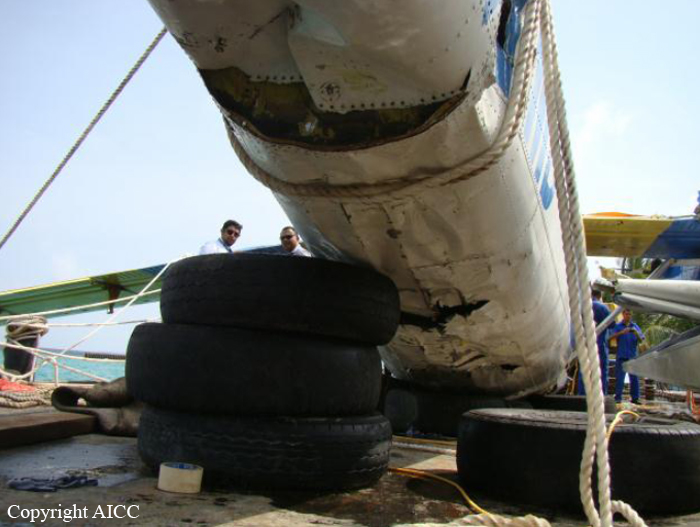
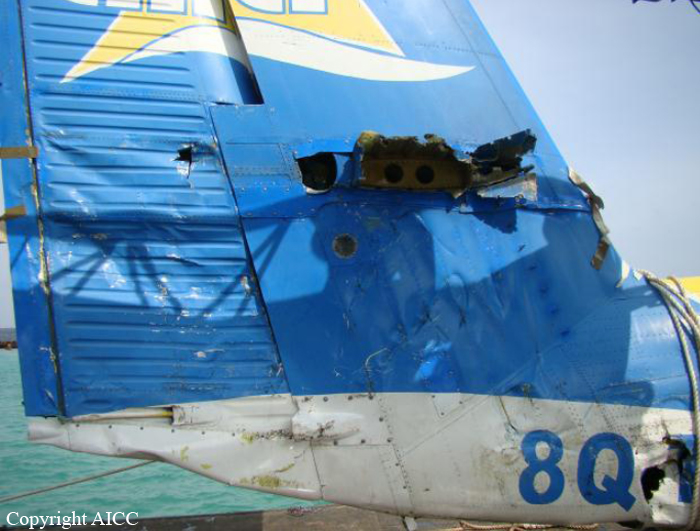
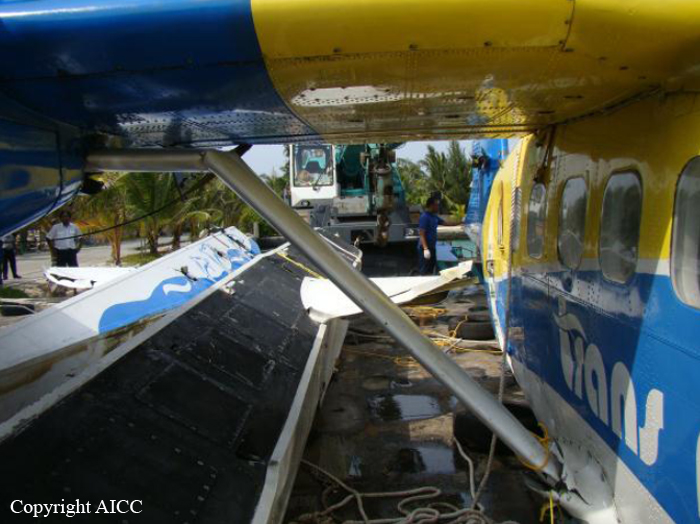
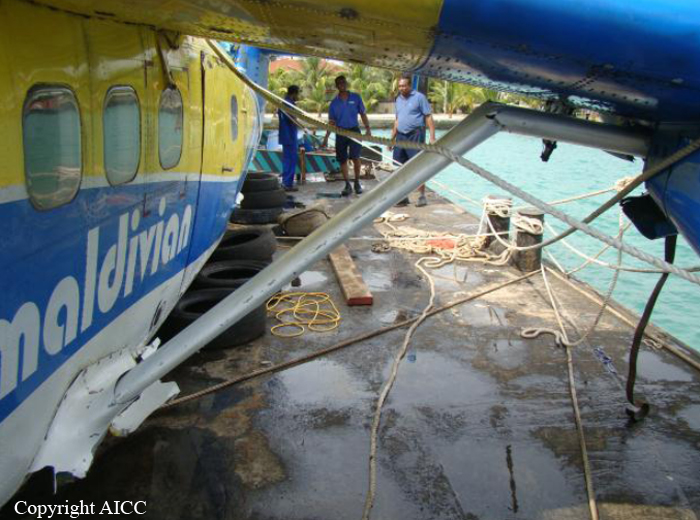
The 8Q-TMD aircraft took-off from water runway of Male’ International Airport North Bound Left (NL) at 0820 hrs local time on 11 July 2011 for a routine training flight bound to Maadhiggaru Falhu (a lagoon located approximately 15 nautical miles south west of the Male’ International Airport). The sky was clear with good visibility and wind 8-10 knots from west and south west. During the training 5 landings and take-offs were made simulating different conditions of flight. Crew confirmed that all these landings and take-offs were made inside the lagoon except the last landing where the crew decided to land on open water outside the lagoon. Crew were simulating single engine landing with a tail wind. As per the crew, the aircraft initial touch down was smooth. However, they stroke a wave which made the aircraft bounce up for about 20 feet. With the low power the aircraft hit the water again, resulting in multiple float attachments to break. Both front and main spreader bars broke and floats rose up twisted, hitting the engine bottom cowlings. Propeller cut was found on top front of both floats.
Probable cause:
Impact with a high swell during landing followed by a high bounce and hard landing resulting in both float attachments being damaged and detached with a major structural damages. Major contributing factor was higher than normal touch down speed due to abnormal landing configuration.
Contributing factors:
- Selection of inappropriate landing site (channel) and landing direction (tail wind) based on surface conditions present at that time,
- Simulation of multiple emergencies,
- Abnormal landing configuration (flaps at zero) for single engine landing,
- Time pressure to complete the training and return to commercial operations.
Final Report:

Crash of an Ilyushin II-76TD near Bagram AFB: 9 killed

Date & Time: Jul 6, 2011 at 0010 LT
Type of aircraft:
Operator:
Registration:
4K-AZ55
Flight Type:
Survivors:
No
Site:
Schedule:
Baku - Bagram AFB
MSN:
20534 20680
YOM:
2005
Country:
Region:
Crew on board:
9
Crew fatalities:
Pax on board:
0
Pax fatalities:
Other fatalities:
Total fatalities:
9
Circumstances:
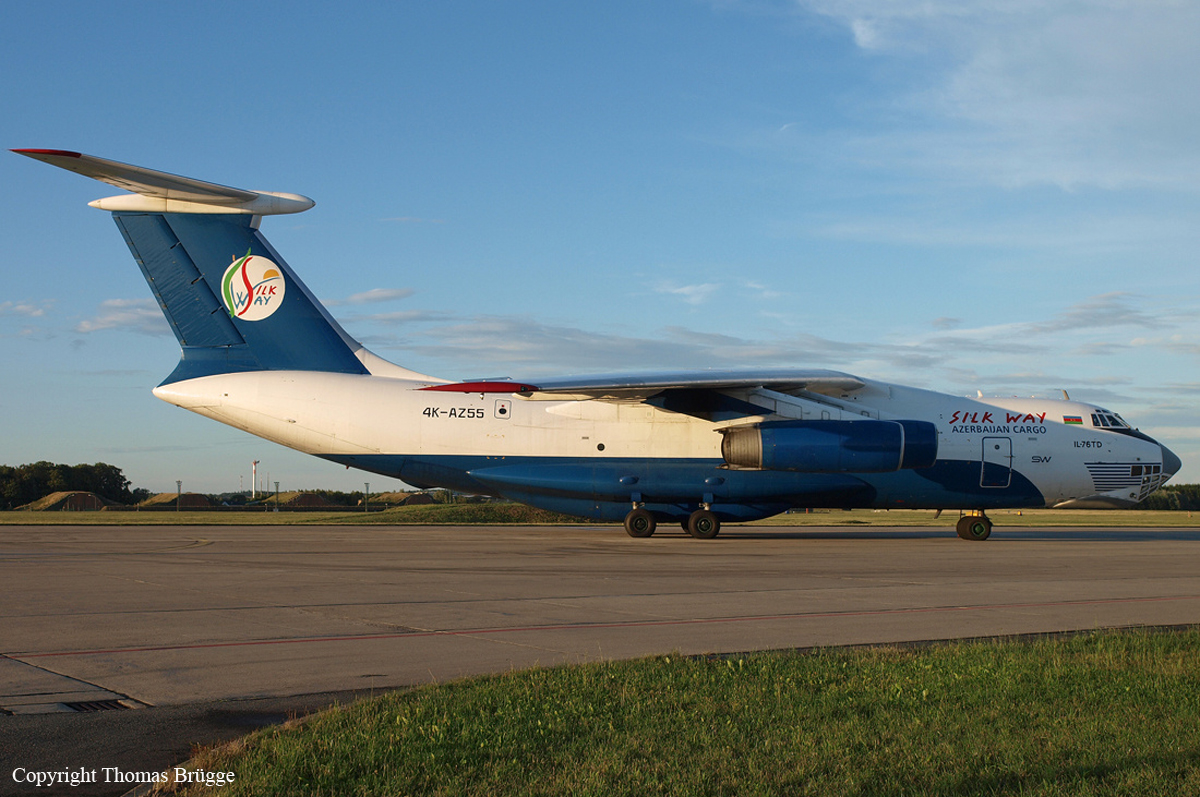
The four engine aircraft departed Baku-Bina Airport at 2126LT on a cargo flight to Bagram AFB, carrying 9 crew members and a load of 18 tons of various goods destined to the NATO forces deployed in Afghanistan. While approaching Bagram AFB by night, at an altitude of 12,500 feet, the aircraft impacted the slope of a mountain located 25 km from the airport. The wreckage was found at the first light of day. The aircraft was destroyed and all 9 occupants were killed.

Crash of a Tupolev TU-134A-3 in Petrozavodsk: 47 killed

Date & Time: Jun 20, 2011 at 2340 LT
Type of aircraft:
Operator:
Registration:
RA-65691
Survivors:
Yes
Schedule:
Moscow - Petrozavodsk
MSN:
63195
YOM:
1980
Flight number:
CGI9605
Country:
Region:
Crew on board:
9
Crew fatalities:
Pax on board:
43
Pax fatalities:
Other fatalities:
Total fatalities:
47
Captain / Total flying hours:
8501
Captain / Total hours on type:
3158.00
Copilot / Total flying hours:
2846
Copilot / Total hours on type:
1099
Aircraft flight hours:
35591
Aircraft flight cycles:
20977
Circumstances:
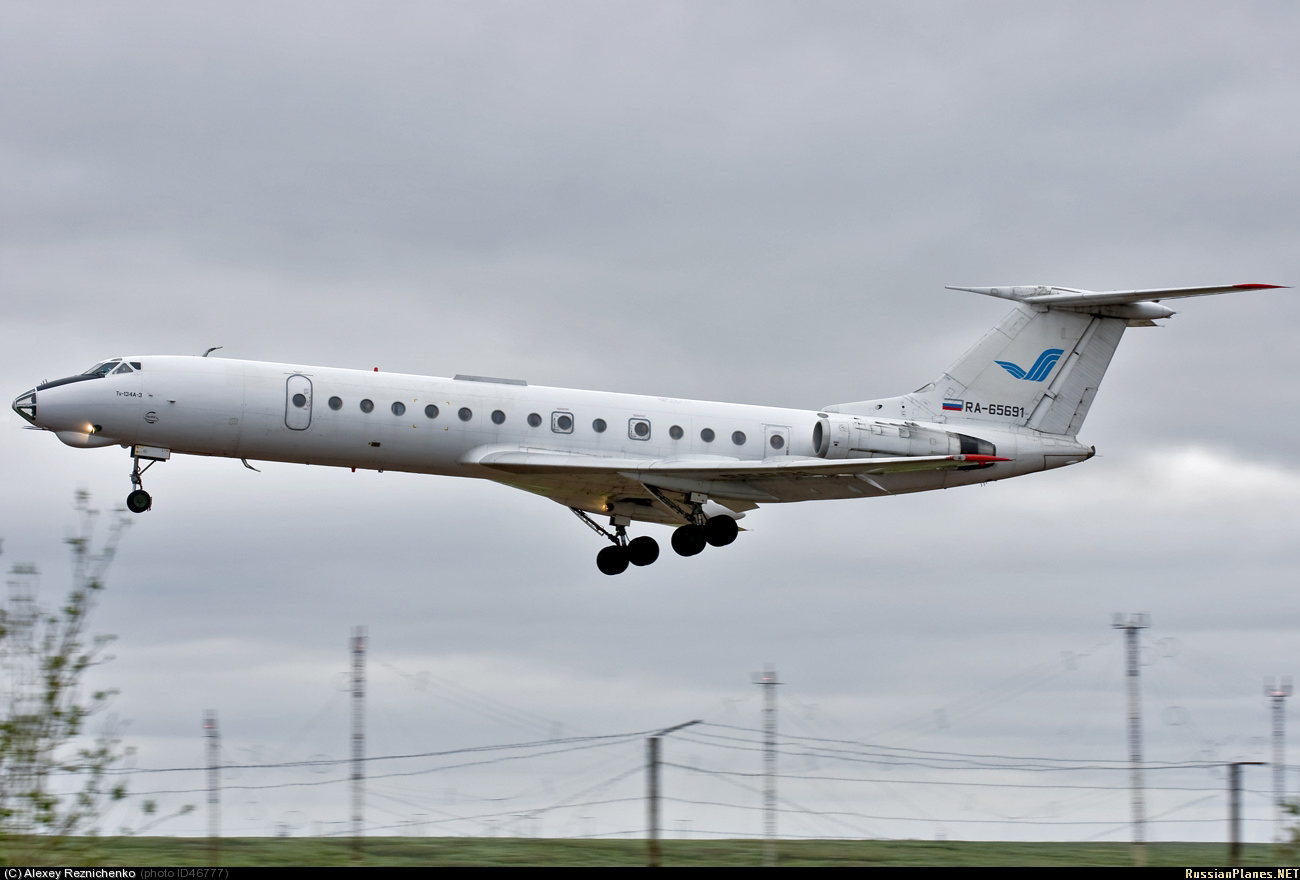
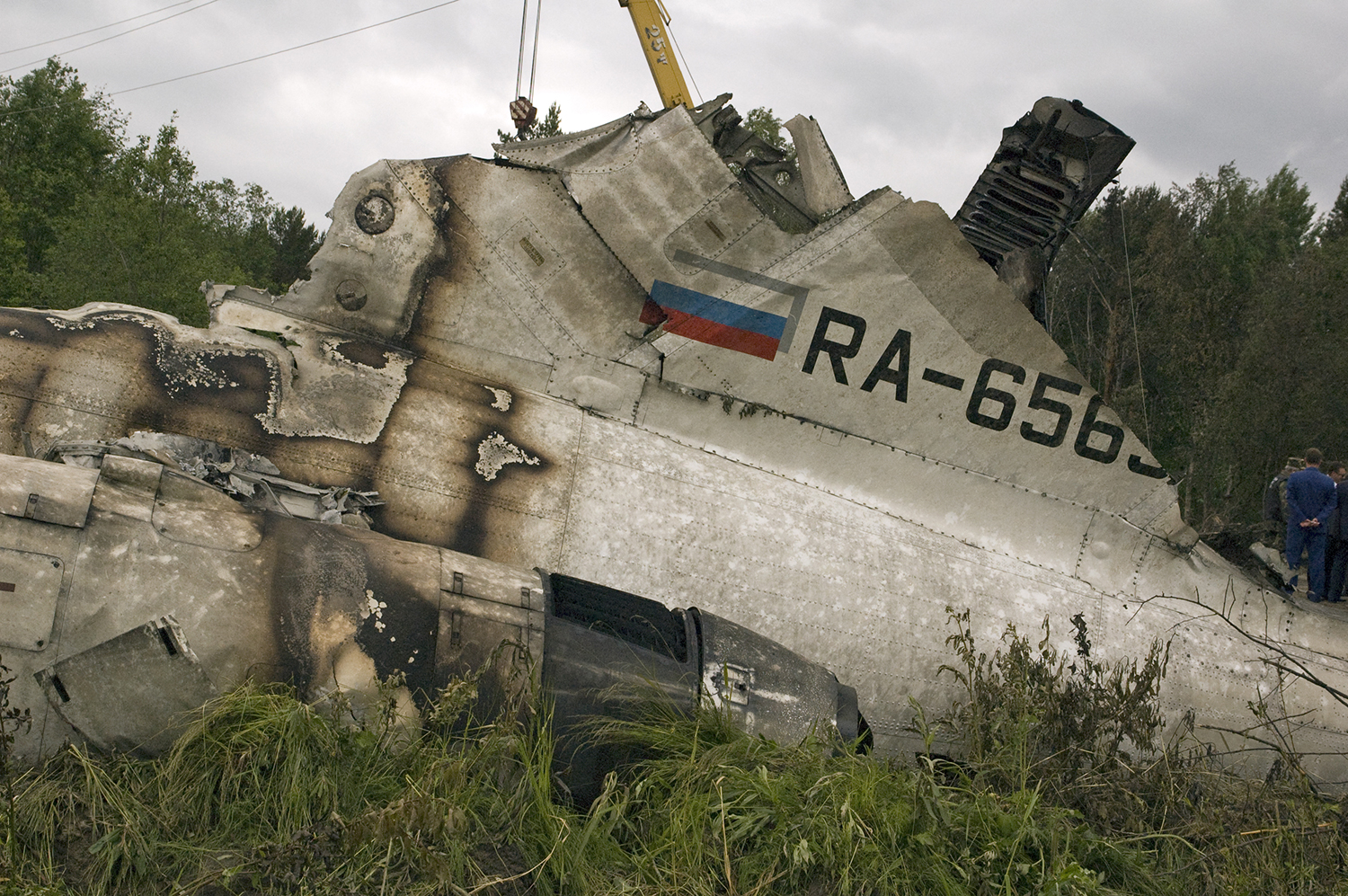
Aircraft left Moscow-Domodedovo Airport in 2224LT for Petrozavodsk, Karelia. On final approach by night and fog reducing vertical visibility to 300 metres, crew descended too low without a visual contact was established with the runway lights. Aircraft descended below the MDA, hit an electric pole, crashed on a road and came to rest in a garden, 570 metres short of runway 02. Eight people were rescued as all other 44 occupants were killed. Flight was operated by RusAir on behalf of RusLine (flight 243). Russian FIFA's football referee Vladimir Pettaï was also killed in this accident. Two days later, a survivor died from his injuries. The weekend following the accident (five days and six days later), two survivors died from their injuries (burns).
Probable cause:
When the aircraft approached the airfield in weather below minimums for the aerodrome descending on autopilot at a fixed vertical speed, crew failed to decide to go around in absence of visual contact with approach lights and landmarks and permitted the aircraft to descend below minimum descent altitude, which led to impact with trees and the ground in controlled flight.
Following factors were considered as contirbutory:
- unsatisfactory crew resource management by the commander who effectively removed the first officer from the control loop in the final stages of the accident flight and who subordinated himself to the navigator showing increased activity however in the state of mild alcoholic intoxication.
- the navigator was in the state of mild alcoholic intoxication
- unjustified weather forecasts by height of cloud base, visibility and severe weather including fog as well as the non-conformity of weather data of Petrozavodsk Airport transmitted to the crew 30 and 10 minutes prior to estimated landing.
- Failure to use indications by the ADFs and other devices of the aircraft while using indications by an unapproved satellite navigation system KLN-90 in violation of flight manual supplements for the TU-134.
Final Report:

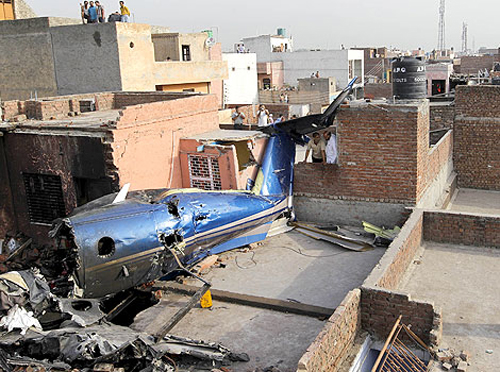
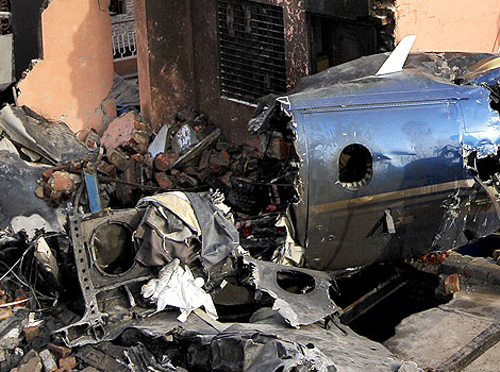
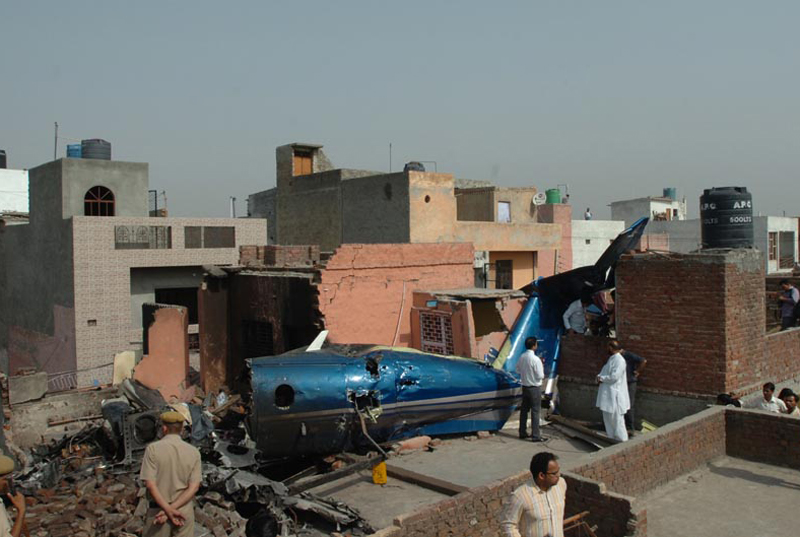
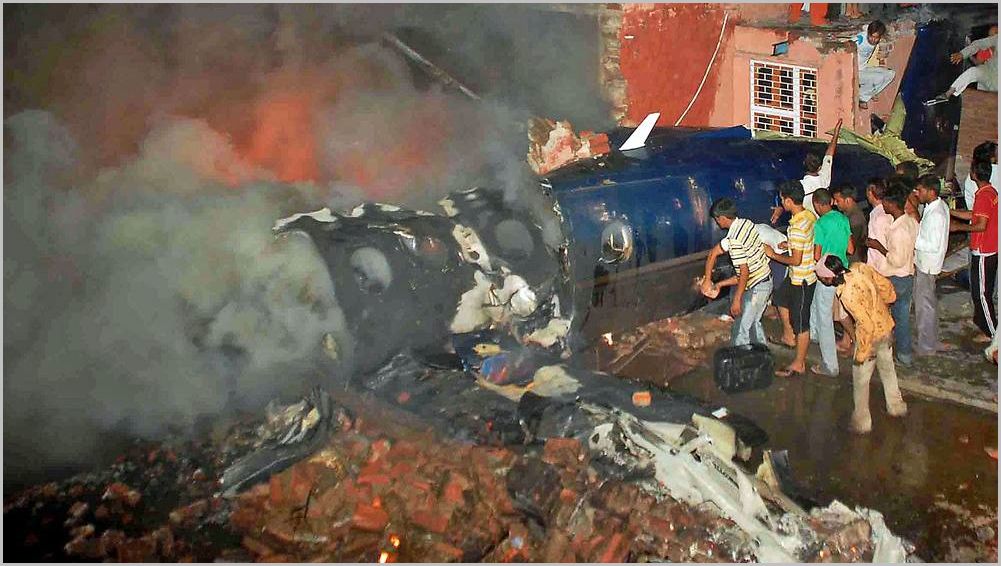
Crash of a Pilatus PC-12/45 in Faridabad: 10 killed

Date & Time: May 25, 2011 at 2243 LT
Type of aircraft:
Operator:
Registration:
VT-ACF
Flight Phase:
Flight Type:
Survivors:
No
Site:
Schedule:
Patna - New Delhi
MSN:
632
YOM:
2005
Country:
Region:
Crew on board:
2
Crew fatalities:
Pax on board:
5
Pax fatalities:
Other fatalities:
Total fatalities:
10
Captain / Total flying hours:
1521
Captain / Total hours on type:
1300.00
Copilot / Total flying hours:
300
Copilot / Total hours on type:
70
Aircraft flight hours:
1483
Circumstances:
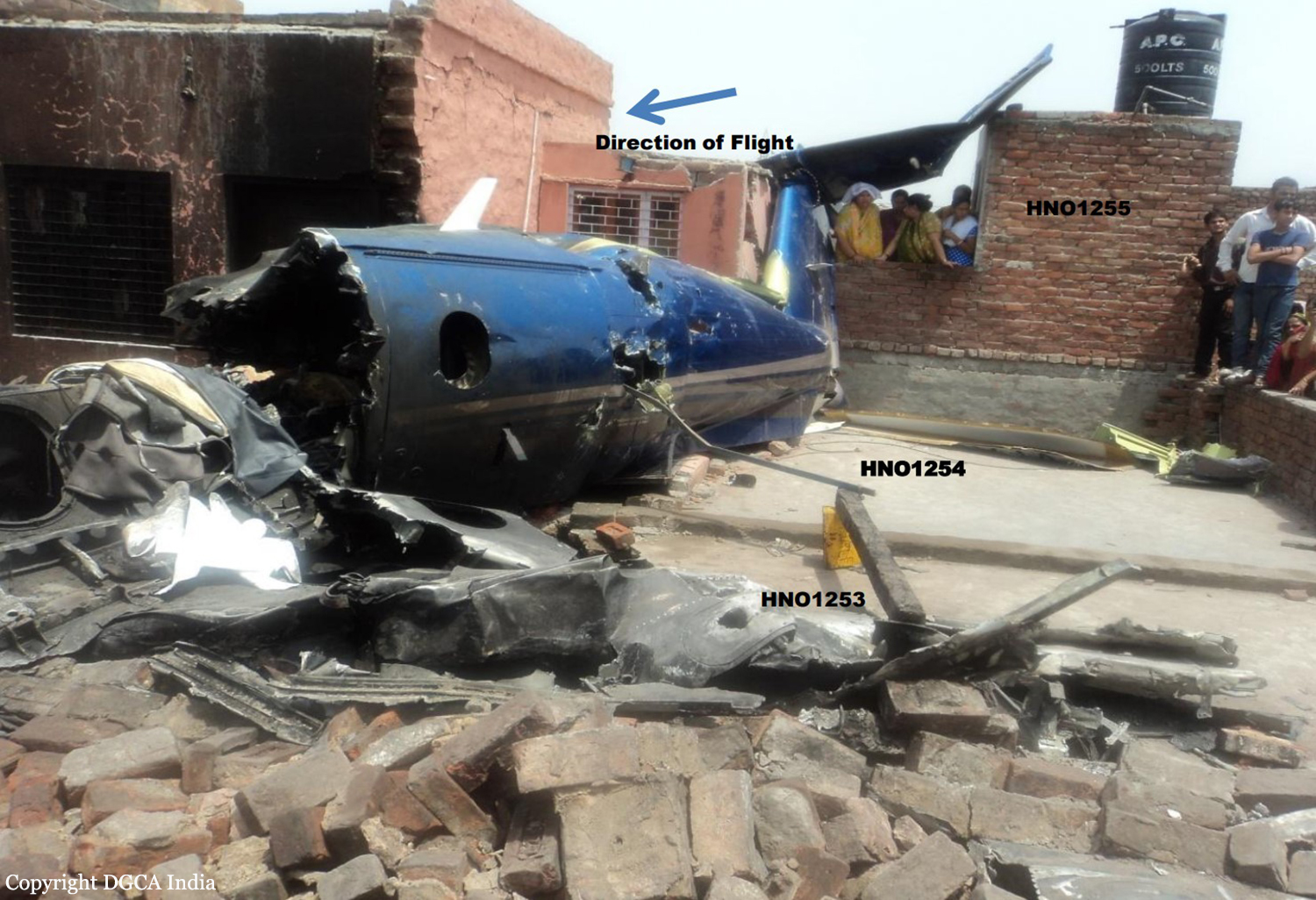
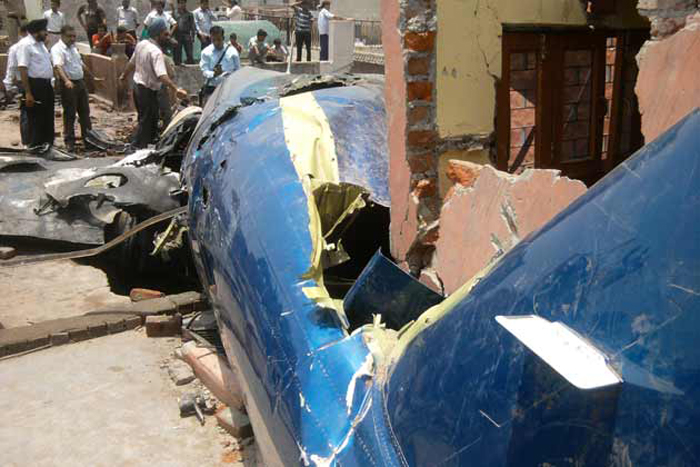
M/s Air Charter Services Pvt Ltd. offered their aircraft VT-ACF for operating medical evacuation flight to pick one critically ill patient from Patna on 25/05/2011. The Aircraft took off from Delhi to Patna with two crew members, two doctors and one male nurse. The Flight to Patna was uneventful. The Air Ambulance along with patient and one attendant took off from Patna at 20:31:58 IST, the aircraft during arrival to land at Delhi crashed near Faridabad on a Radial of 145 degree and distance of 15.2 nm at 22:42:32 IST. Aircraft reached Patna at 18:31 IST. Flight Plan for the flight from Patna to Delhi was filed with the ATC at Patna via W45-LLK-R594 at FL260, planned ETD being 22:00 hours IST and EET of 2hours for a planned ETA at VIDP being 24:00 hours IST. The crew took self-briefing of the weather and same “Self Briefing” was recorded on the flight plan submitted at ATC Patna. The passenger manifest submitted at Patna indicated a total of 2 crew and 5 passengers inclusive of the patient. Weather at Patna at the time of departure was 3000m visibility with Haze. Total fuel on board for departure at Delhi was 1516 lts. The preflight/transit inspection of the aircraft at Patna was carried out by the crew as per laid down guidelines. The crew requested for startup at 20:21 IST from Patna ATC and reported airborne at 20:33:43 IST. The aircraft climbed and maintained FL 260 for cruise. On handover from Varanasi Area Control (Radar), the aircraft came in contact with Delhi Area Control (East) Radar at 21:53:40 IST at 120.9 MHz. At 21:53:40 IST aircraft was identified on Radar by squawking code 3313. At 22:02:05 IST the crew requested for left deviation of 10° due to weather, the same was approved by the RSR controller. At 22:05:04 IST the crew informed that they have a critical patient on board and requested for priority landing and ambulance on arrival. The same was approved by the RSR controller. The aircraft was handed over to Approach Control on 126.35 MHz at 22:28:03 IST. At 22:28:18 IST VT-ACF contacted TAR (Terminal Approach Radar) on 126.35 MHz and it was maintaining FL160. At 22:32:22 IST, VT-ACF was asked to continue heading to DPN (VOR) and was cleared to descend to FL110. At 22:36:34 IST, the TAR controller informed VT-ACF about weather on HDG 330°, the crew replied in “Affirmative” and requested for left heading. At 22:38:12 IST, TAR controller gave aircraft left heading 285° which was copied by the aircraft. The aircraft started turning left, passing heading 289, it climbed from FL125 to FL141. At 22:40:32 IST the TAR controller gave 3 calls to VT-ACF. At 22:40:43 IST aircraft transmitted a feeble call “Into bad weather”, at that instance the aircraft had climbed FL 146.Thereafter the aircraft was seen turning right in a very tight turn at a low radar ground speed and loosing height rapidly from FL146 to FL 016. Again at 22:41:32 IST TAR controller gave call to VT-ACF, aircraft transmitted a feeble call “Into bad weather. Thereafter the controller gave repeated calls on both 126.35 MHz and also 121.5 MHz, before the blip on radar became static on a radial of 145 degree at 15.2 nm from DPN VOR at 22:42:32 IST. All attempts to raise contact with the aircraft failed. The TAR controller then informed the duty WSO and also the ATC Tower. At 22:50:00 IST, the tower informed the WSO that they have got a call from the City Fire Brigade confirming that an aircraft has crashed near Faridabad in a congested residential area known as Parvatia Colony. After the accident, local residents of the area and police tried to put off the fire and extricate the bodies from the wreckage of the aircraft.
Probable cause:
The probable cause of the accident could be attributed to departure of the aircraft from controlled flight due to an external weather related phenomenon, mishandling of controls, spatial disorientation or a combination of the three.
Final Report:

Crash of a PZL-Mielec AN-2R in Sofyevka

Date & Time: May 17, 2011 at 1915 LT
Type of aircraft:
Operator:
Registration:
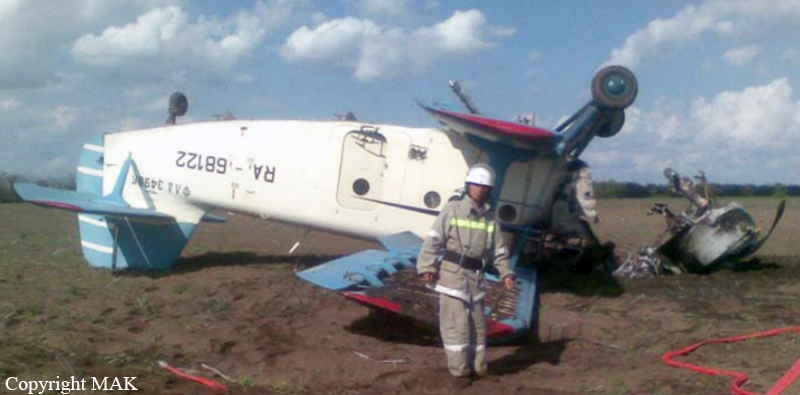
RA-68122
Flight Phase:
Survivors:
Yes
MSN:
1G195-27
YOM:
1982
Country:
Region:
Crew on board:
1
Crew fatalities:
Pax on board:
0
Pax fatalities:
Other fatalities:
Total fatalities:
0
Captain / Total flying hours:
8000
Circumstances:
The pilot, sole on board, was performing a crop spraying flight when the engine lost power. He elected to make an emergency landing in a field 2 kilometers from Sofyevka, in the Stavropol krai. Upon touchdown, the aircraft rolled over and came to rest upside down, bursting into flames. The pilot escaped uninjured while the aircraft was partially destroyed by fire. The wreck was evacuated and disposed away before the arrival of the accident investigation commission. Therefore, it was not possible to the MAK to determine the cause of the engine failure. As the pilot did not have any valid licence for this kind of aircraft, this PZL-Mielec AN-2R built on 11FEB1982 did not have a valid Certificate of Airworthiness. It had a double registration: FLA-34906 and RA-68122 which was the official one present in the Russian Civil Aviation registry.
Probable cause:
Engine failure in flight for undetermined reasons.
Final Report:

Crash of a Xian MA60 off Kaimana: 25 killed

Date & Time: May 7, 2011 at 1405 LT
Type of aircraft:
Operator:
Registration:
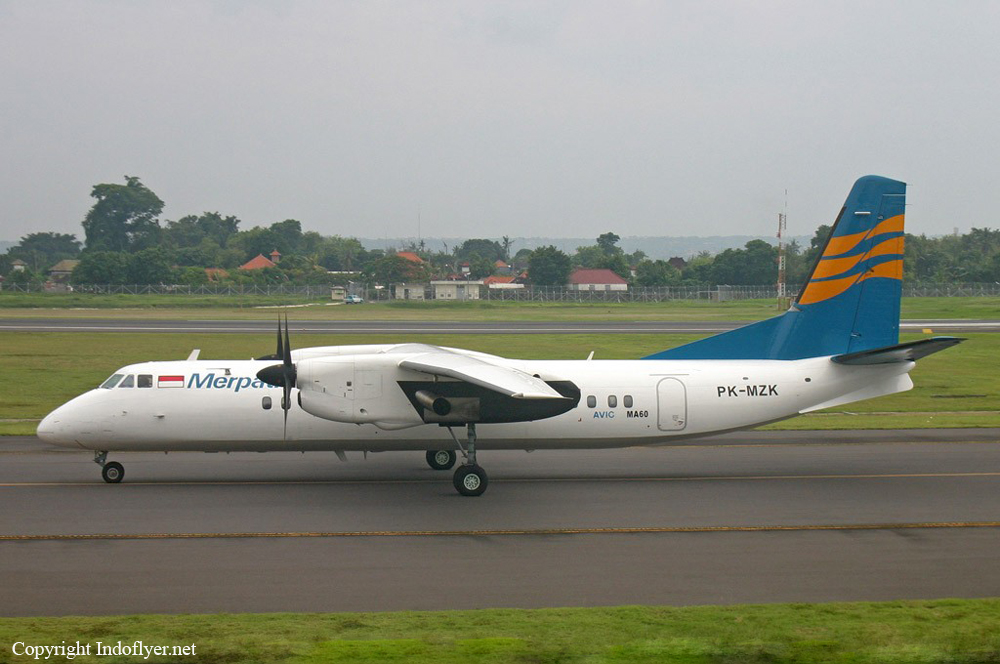
PK-MZK
Survivors:
No
Schedule:
Jayapura - Sorong - Kaimana - Nabire - Biak
MSN:
06 03
YOM:
2008
Flight number:
MZ8968
Country:
Region:
Crew on board:
4
Crew fatalities:
Pax on board:
21
Pax fatalities:
Other fatalities:
Total fatalities:
25
Captain / Total flying hours:
24470
Captain / Total hours on type:
199.00
Copilot / Total flying hours:
370
Copilot / Total hours on type:
234
Aircraft flight hours:
615
Aircraft flight cycles:
764
Circumstances:
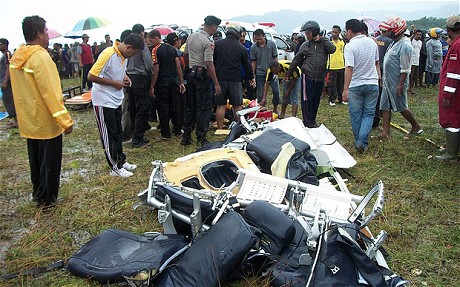
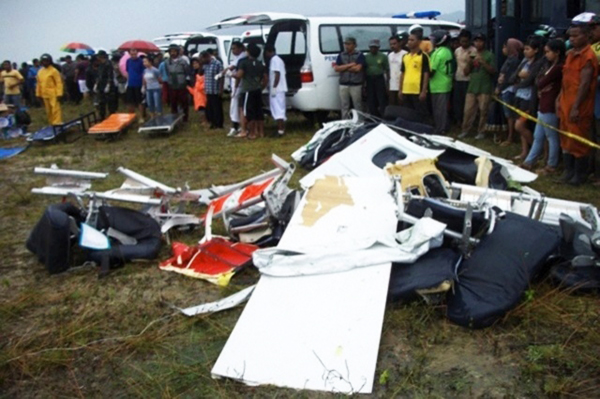
On 7 May 2011, an Xi ’An MA60 aircraft, registered PK-MZK was being operated by PT. Merpati Nusantara Airline as a scheduled passenger flight MZ 8968, from Domine Eduard Osok Airport, Sorong, Papua Barat to Utarom Airport (WASK), Kaimana1, Papua Barat. The accident flight was part of series of flight scheduled for the crew. The aircraft departed from Sorong at 0345 UTC2 and with estimated arrival time in Kaimana at 0454 UTC. In this flight, the Second in Command (SIC) was as Pilot Flying (PF) and the Pilot in Command (PIC) as Pilot Monitoring (PM). On board the flight were 2 pilots, 2 flight attendants, 2 engineers and 19 passengers consisting of 16 adults, 1 child and 2 infants. The flight from Sorong was planned under the Instrument Flight Rules (IFR)3. The destination, Kaimana, had no published instrument approach procedure. Terminal area operations, including approach and landing, were required to be conducted under the Visual Flight Rules (VFR). At about 0425 UTC, after passing waypoint JOLAM the crew of MZ 8968 contacted Kaimana Radio and informed that the weather at Kaimana was raining, horizontal visibility of 3 to 8 kilometers, cloud Cumulonimbus broken at 1500 feet, south westerly wind at a speed of 3 knots, and ground temperature 29°C. The last communication with the crew of MZ 8968 occurred at about 0450 UTC. The flight crew asked whether there were any changes in ground visibility and the AFIS officer informed them that the ground visibility remained at 2 kilometer. The visual flight rules requires a visibility of minimum 5 km and cloud base higher than 1500 feet. The evidence indicates that during the final segment of the flight, both crew member were looking outside the aircraft to sight the runway. During this period the flight path of the aircraft varied between 376 to 585 feet and the bank angle increased from 11 to 38 degree to the left. The rate of descent then increased significantly up to about 3000 feet per minute and finally the aircraft impacted into the sea. The accident site was about 800 meters south west of the beginning of runway 01 or 550 meters from the coastline. Most of the wreckage were submerged in the shallow sea between 7 down to 15 meter deep. All 25 occupants were fatally injured. The aircraft was destroyed and submerged into the sea.
Probable cause:
FINDINGS:
1. The aircraft was airworthy prior the accident. There is no evidence that the aircraft had malfunction during the flight.
2. The crew had valid flight license and medical certificate. There was no evidence of crew incapacitation.
3. In this flight the SIC acted as Pilot Flying until the PIC took control of the aircraft at the last part of the flight.
4. According to company operation manual (COM), in a VMC (Visual Meteorological Condition), a “minimum, minimum” EGPWS alert while the approach was not stabilized should be followed by the action of abandoning the approach.
5. The cockpit crew did not conduct any crew approach briefing and checklist reading.
6. As it was recorded in the CVR during the final segment of the flight, both crews member were looking out-side to look for the runway. It might reduce the situational awareness.
7. At the final segment of the flight, the FDR recorded as follows:
• The approach was discontinued started at 376 feet pressure altitude (250 feet radio altitude) and reached the highest altitude of 585 feet pressure altitude. While climbing the aircraft was banking to the left reaching a roll angle of 38 degree. The torque of both engines was increased reaching 70% and 82% for the left and right engine respectively.
• During the go-around, the flaps were retracted to 5 and subsequently to 0 position, and the landing gears were retracted. The aircraft started to descend, and the pitch angle reached 13 degree nose down.
• The rate of descend increased significantly reaching about 3000 feet per minute, and finally the aircraft crashed into the shallow sea.
8. The rapid descent was mainly a result of a combination of situations such as high bank angle (up to 38 deg to the left) and the flaps retracted to 5 and subsequently to 0 position, and also the combination of other situations: engine torque, airspeed, and nose-down pitch.
9. The ERS button was determined in the CRUISE mode instead of TOGA mode. This had led the torque reached 70% and 82% during discontinuing the approach.
10. The flaps were retracted to 5 and subsequently to 0, while the MA-60 standard go-around procedure is to set the flaps at 15.
11. There was limited communications between the crew along the flight. This type of interaction indicated that there was a steep trans-cockpit authority gradient.
12. The SIC was trained in the first three batches which was conducted by the aircraft manufacturer instructor and syllabus, while the PIC was trained by Merpati instructor using modified syllabus. Inadequacy/ineffectivity in the training program may lead to actions that deviated from the standard procedure and regression to the previous type.
13. The investigation found that the Flight Crew Operation Manual (FCOM) and Aircraft Maintenance Manual (AMM) used non-standard English Aviation Language. This finding was supported by a review performed by the Australian Transport Safety Bureau (ATSB).
OTHER FINDINGS:
1. The DFDR does not have the Lateral and Longitudinal acceleration. These two parameters which were non safety related items were mandatory according to the CASR parts 121.343 and 121.344, and at the time of the MA 60 certification, the CCAR 121 did not require those two parameters.
2. Due to impact forces and immersion in water, the Emergency Locator Transmitter (ELT) did not transmit any signal.
FACTORS:
Factors contributed to the accident are as follows:
1. The flight was conducted in VFR in condition that was not suitable for visual approach when the visibility was 2 km. In such a situation a visual approach should not have been attempted.
2. There was no checklist reading and crew briefing.
3. The flight crew had lack of situation awareness when tried to find the runway, and discontinued the approach.
4. The missed approach was initiated at altitude 376 feet pressure altitude (250 feet radio altitude), the pilot open power to 70% and 82% torque followed by flap retracted to 5 and subsequently to 0. The rapid descent was mainly caused by continuously increase of roll angle up to 38 degree to the left and the retraction of flaps from 15 to 0 position.
5. Both crew had low experience/flying time on type.
6. Inadequacy/ineffectivity in the training program may lead to actions that deviated from the standard procedure and regression to the previous type.
Final Report:

Crash of an Embraer ERJ-145EP in Moscow

Date & Time: Apr 28, 2011 at 1625 LT
Type of aircraft:
Operator:
Registration:
UR-DNK
Survivors:
Yes
Schedule:
Dniepropetrovsk – Moscow
MSN:
145-039
YOM:
1997
Flight number:
UDN505
Country:
Region:
Crew on board:
4
Crew fatalities:
Pax on board:
30
Pax fatalities:
Other fatalities:
Total fatalities:
0
Circumstances:
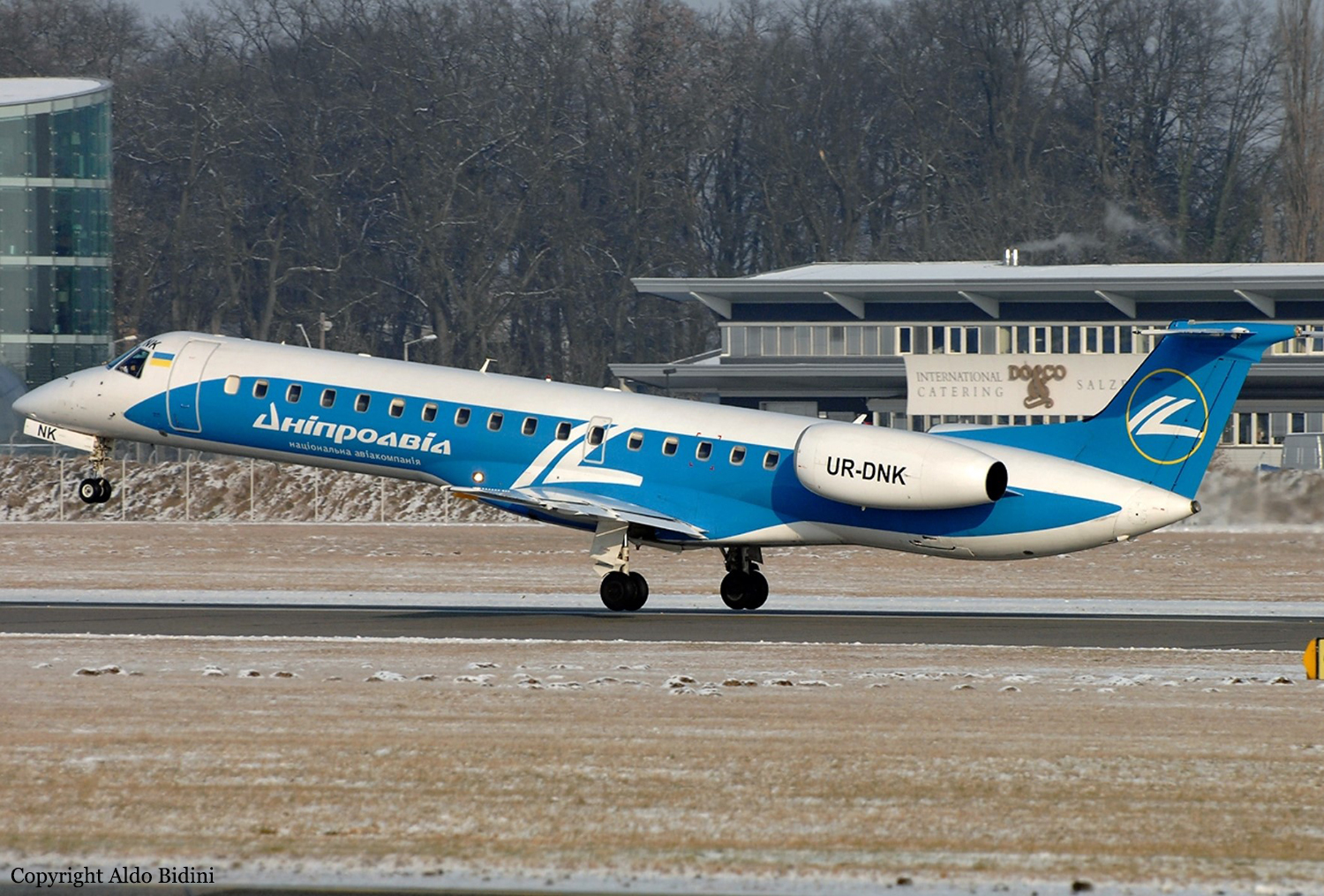
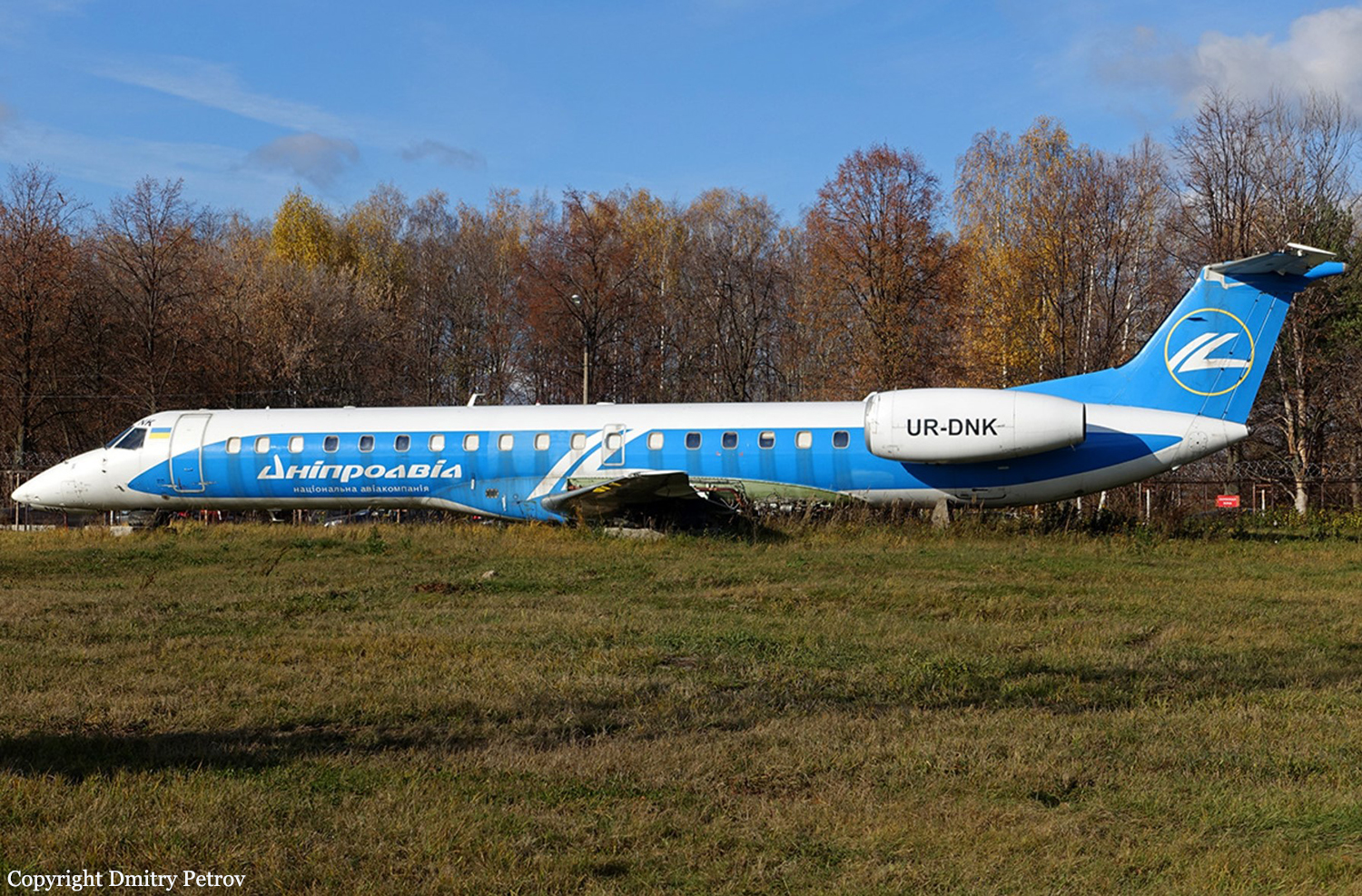
Following an uneventful flight from Dniepropetrovsk, the copilot started the approach to Moscow-Sheremetyevo Airport runway 25R with the flaps down at 22°. After touchdown, he started the braking procedure but the aircraft failed to decelerate as expected. The emergency braking systems were activated without any noticeable effect. Approaching the end of the runway at a speed of 70 knots, the copilot turn to the right in an attempt to veer off runway. The airplane ground looped then contacted a grassy area and lost its undercarriage before coming to rest. All 34 occupants escaped uninjured while the aircraft was damaged beyond repair.
Probable cause:
Failure of the brakes is suspected.