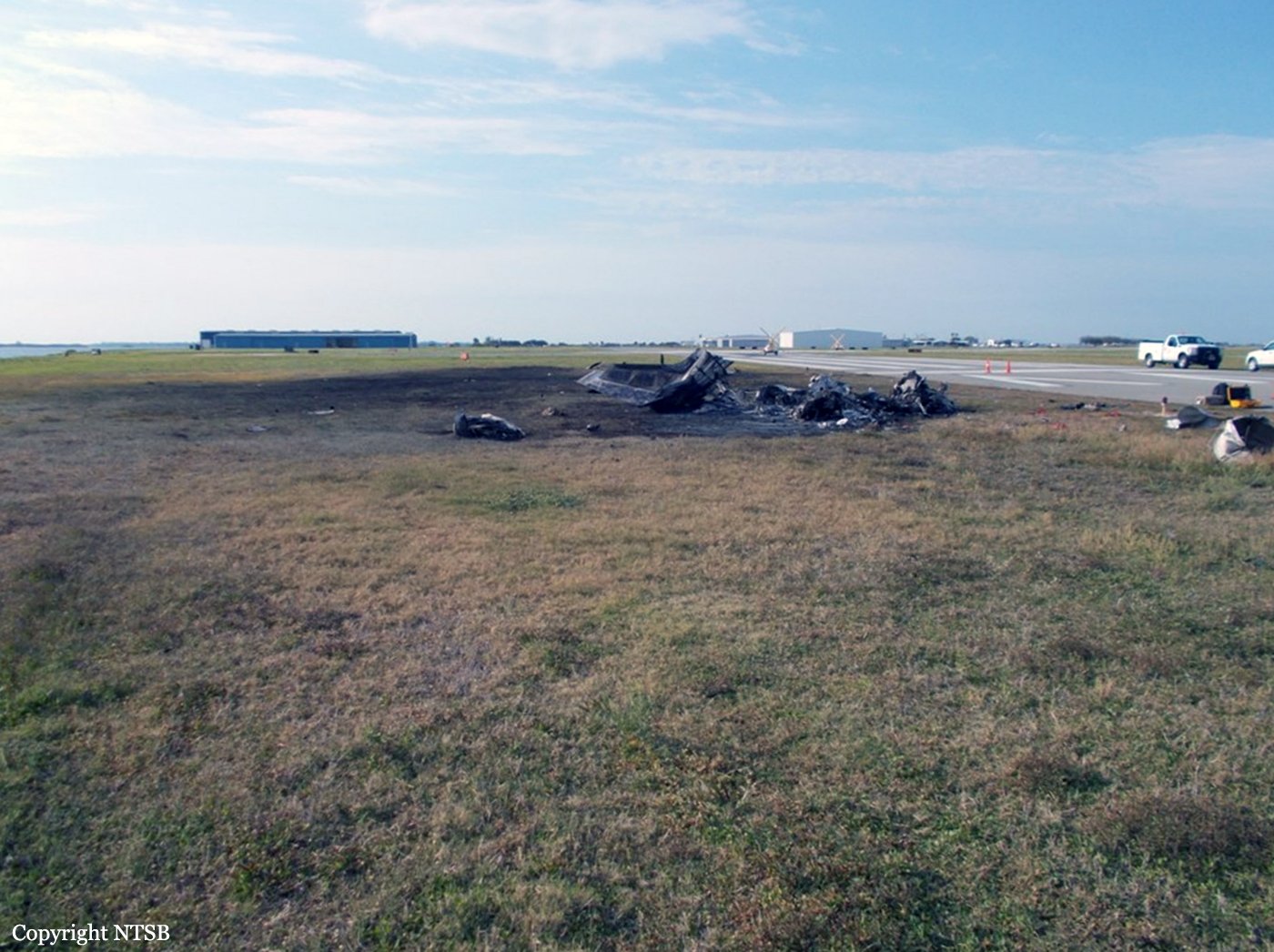
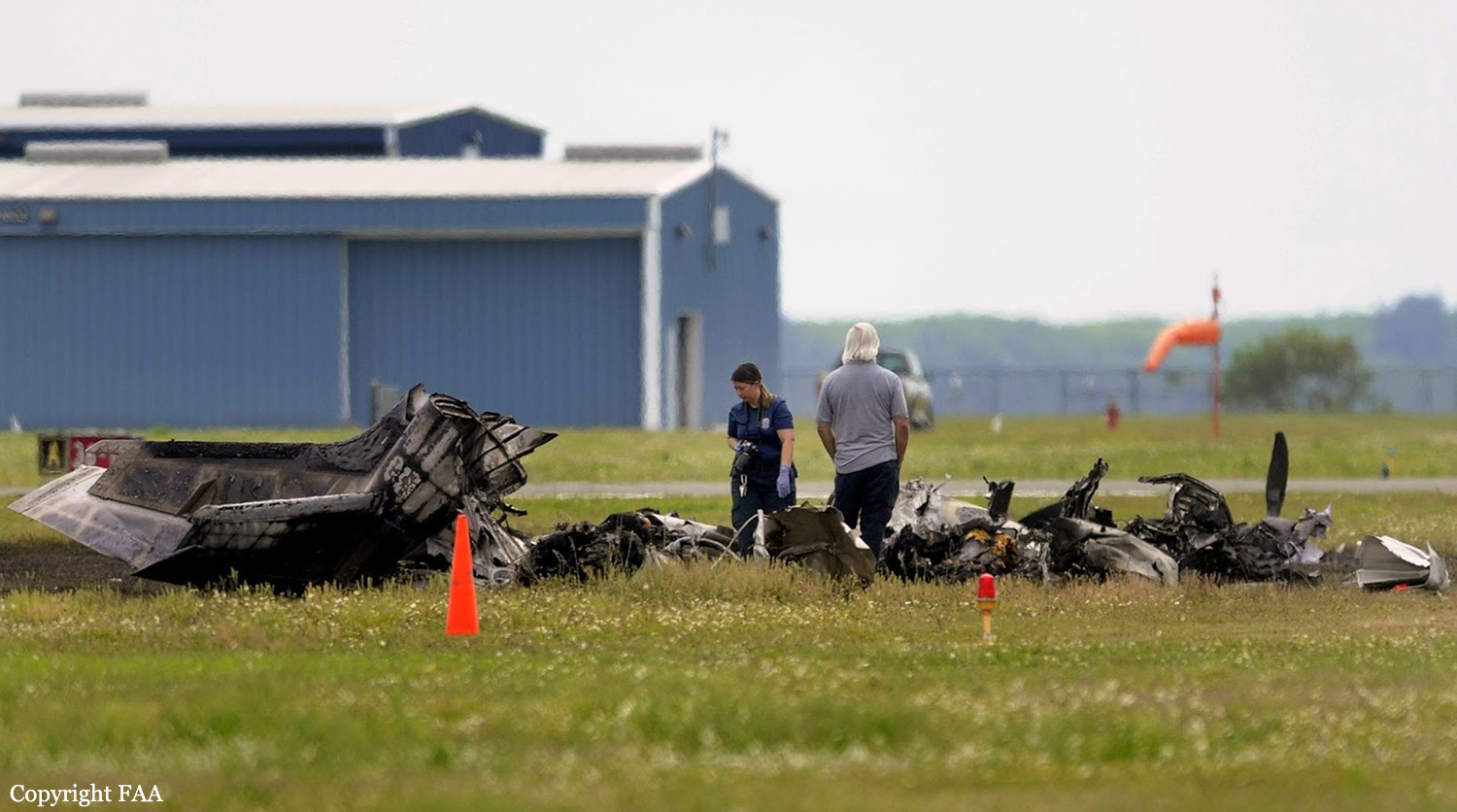
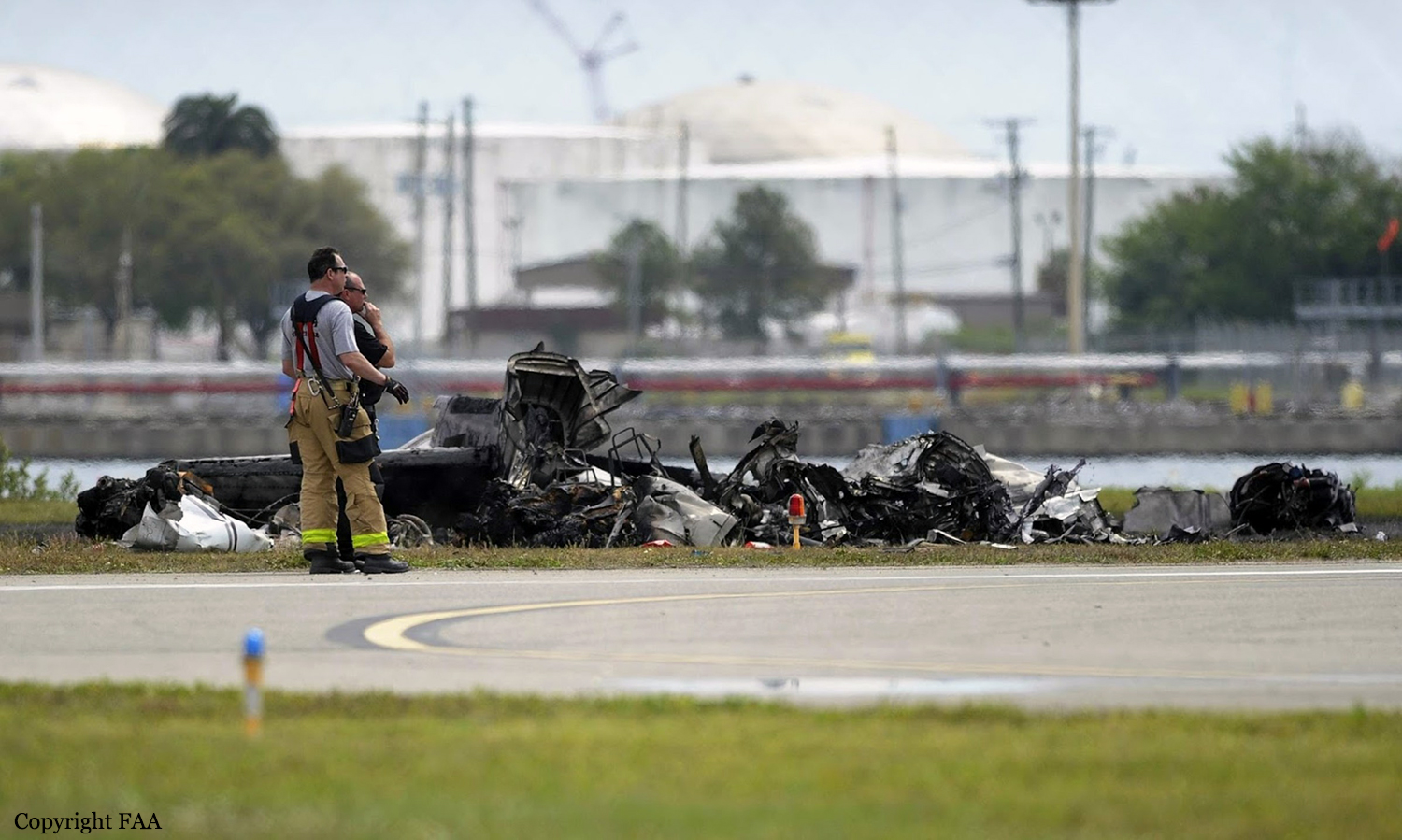
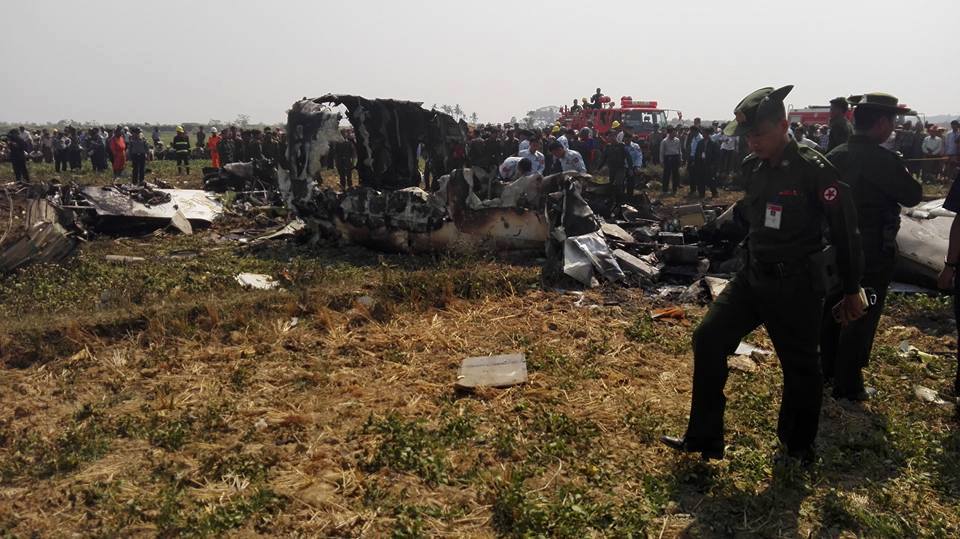
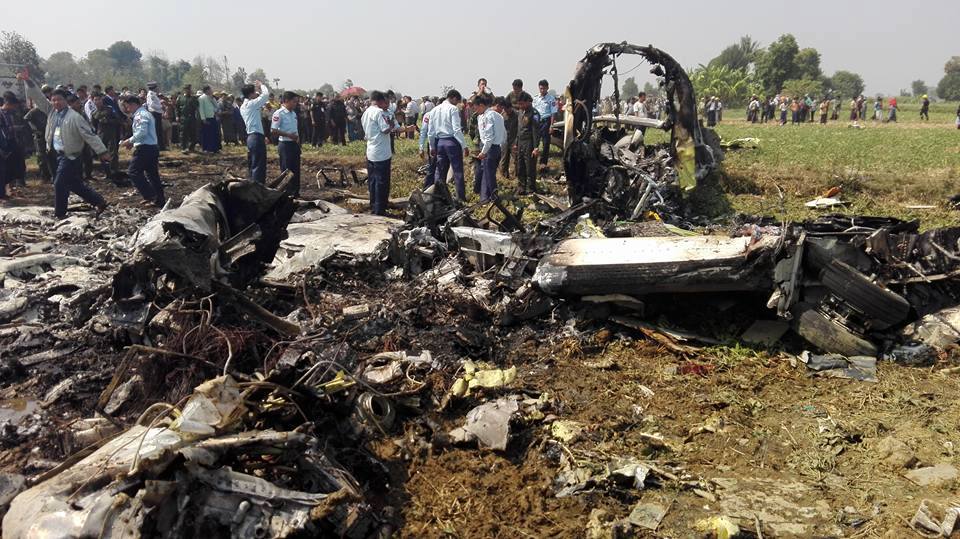
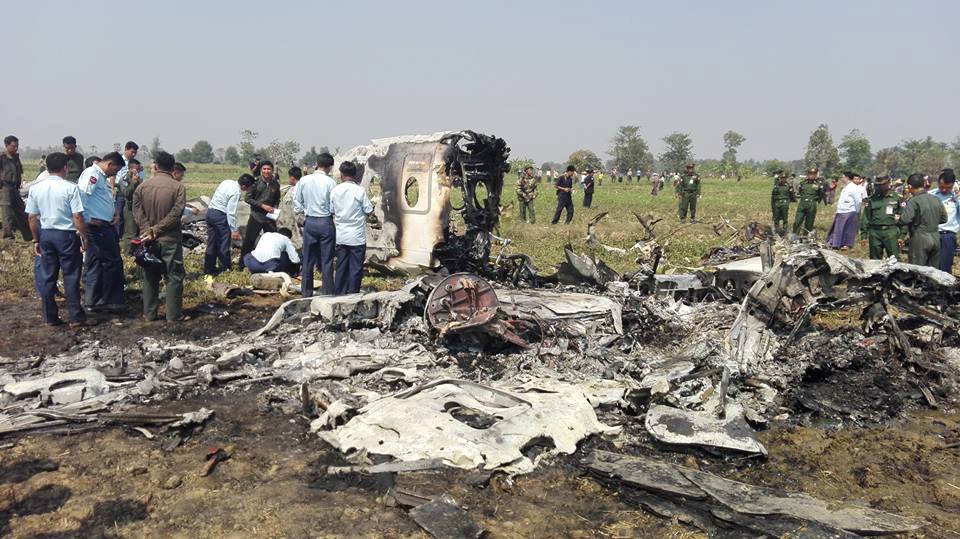
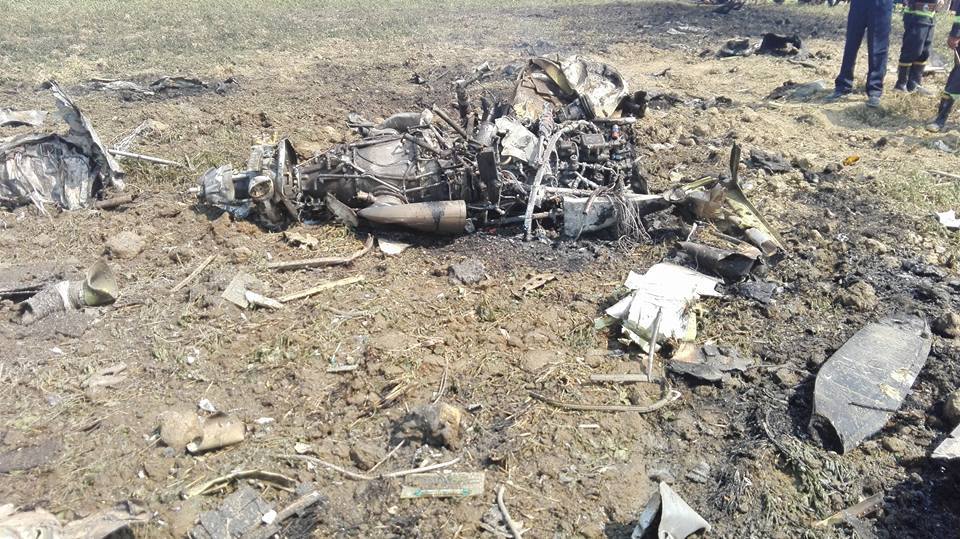
Crash of a Cessna 340A in Tampa: 2 killed

Date & Time: Mar 18, 2016 at 1130 LT
Type of aircraft:
Operator:
Registration:
N6239X
Flight Phase:
Flight Type:
Survivors:
No
Schedule:
Tampa – Pensacola
MSN:
340A-0436
YOM:
1978
Crew on board:
1
Crew fatalities:
Pax on board:
1
Pax fatalities:
Other fatalities:
Total fatalities:
2
Captain / Total flying hours:
5195
Aircraft flight hours:
3963
Circumstances:
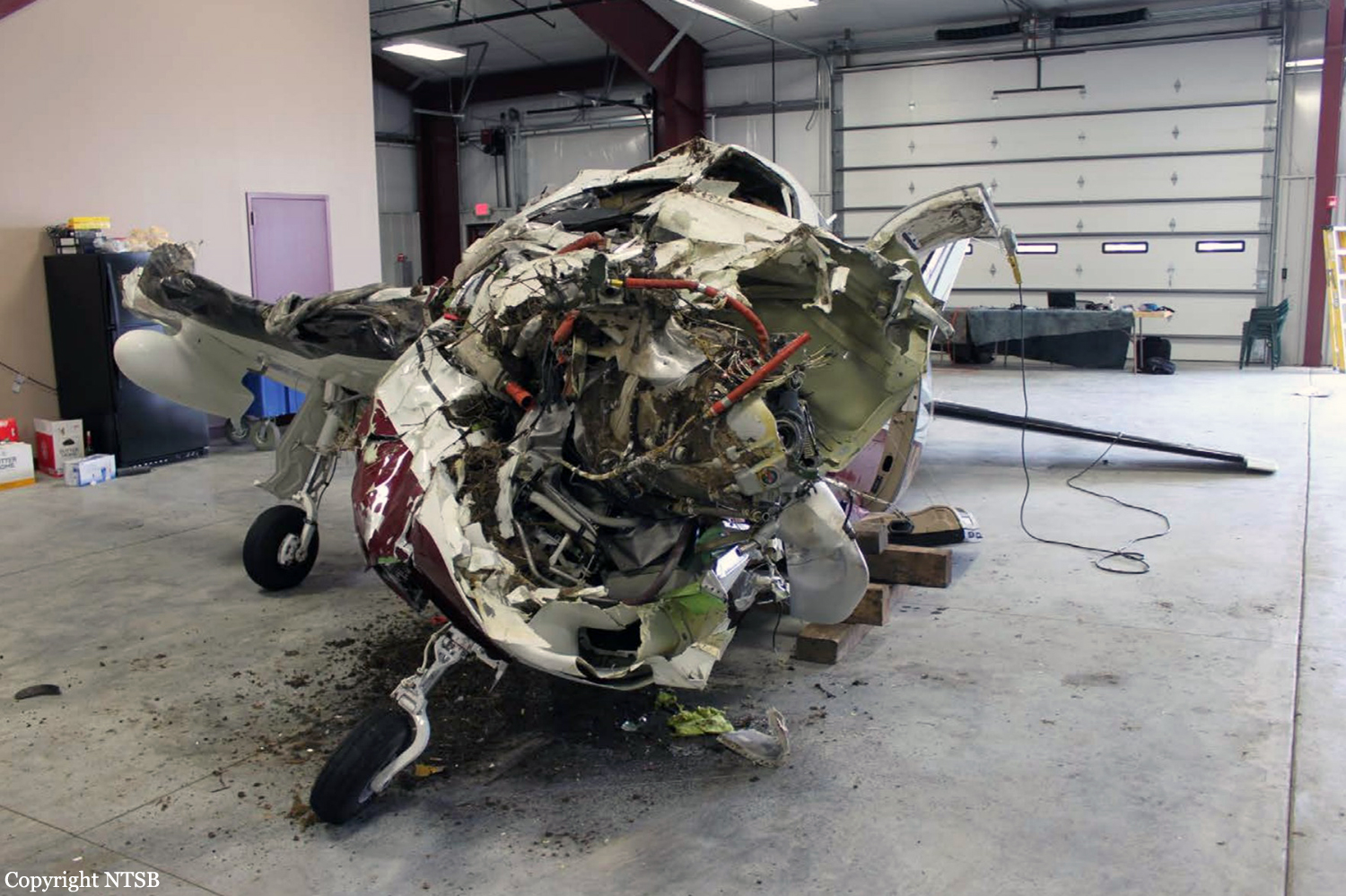
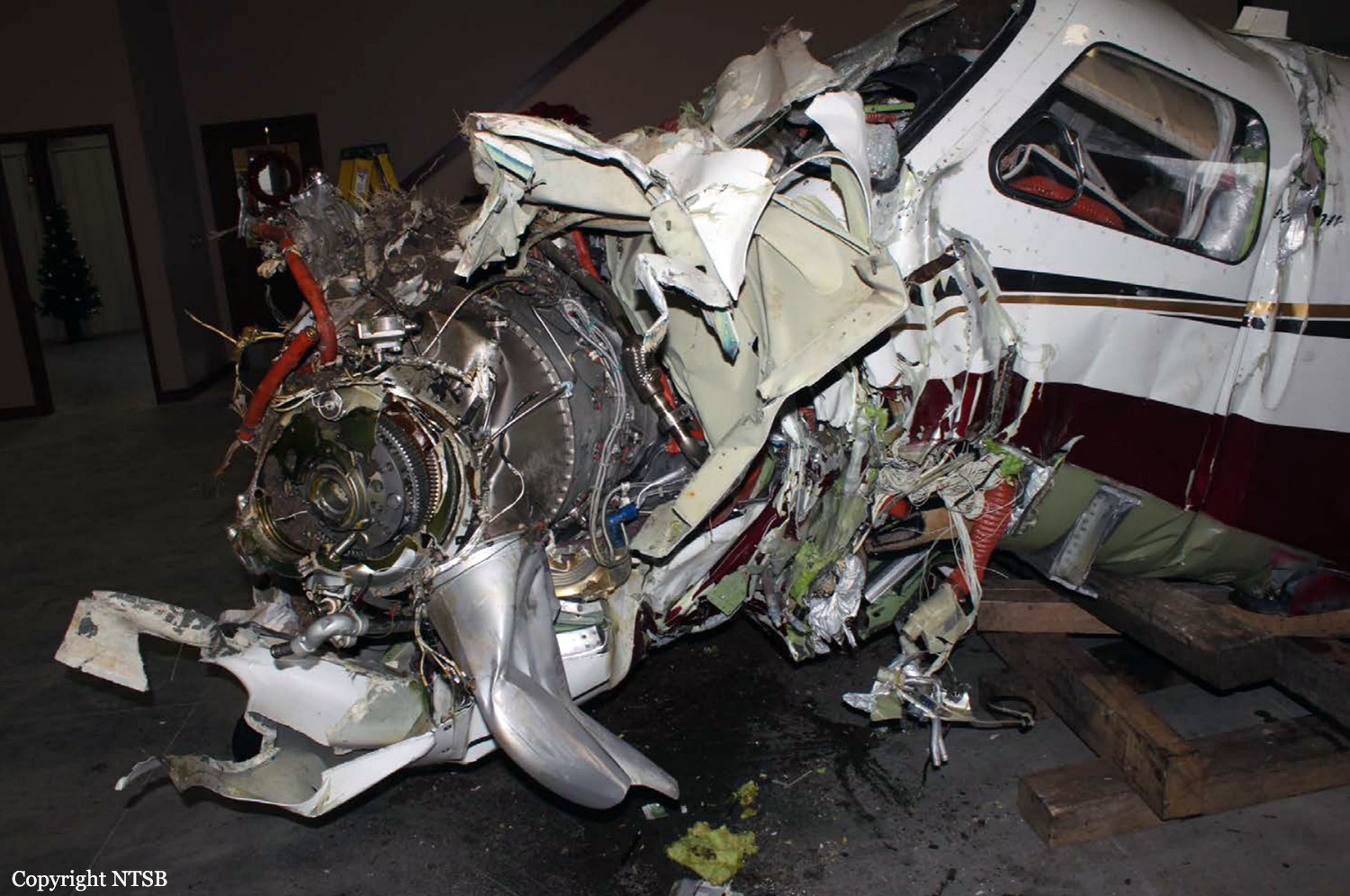
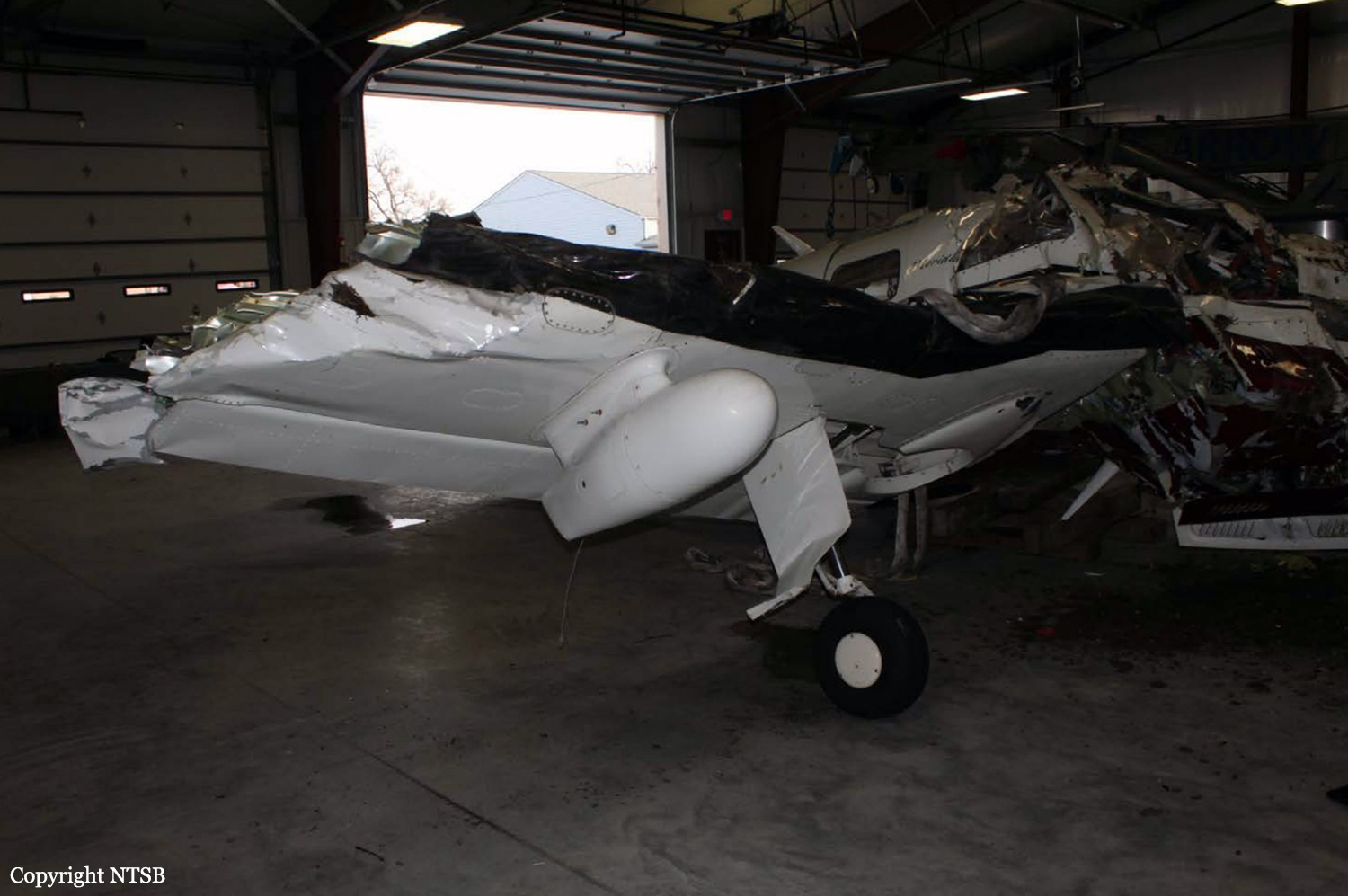
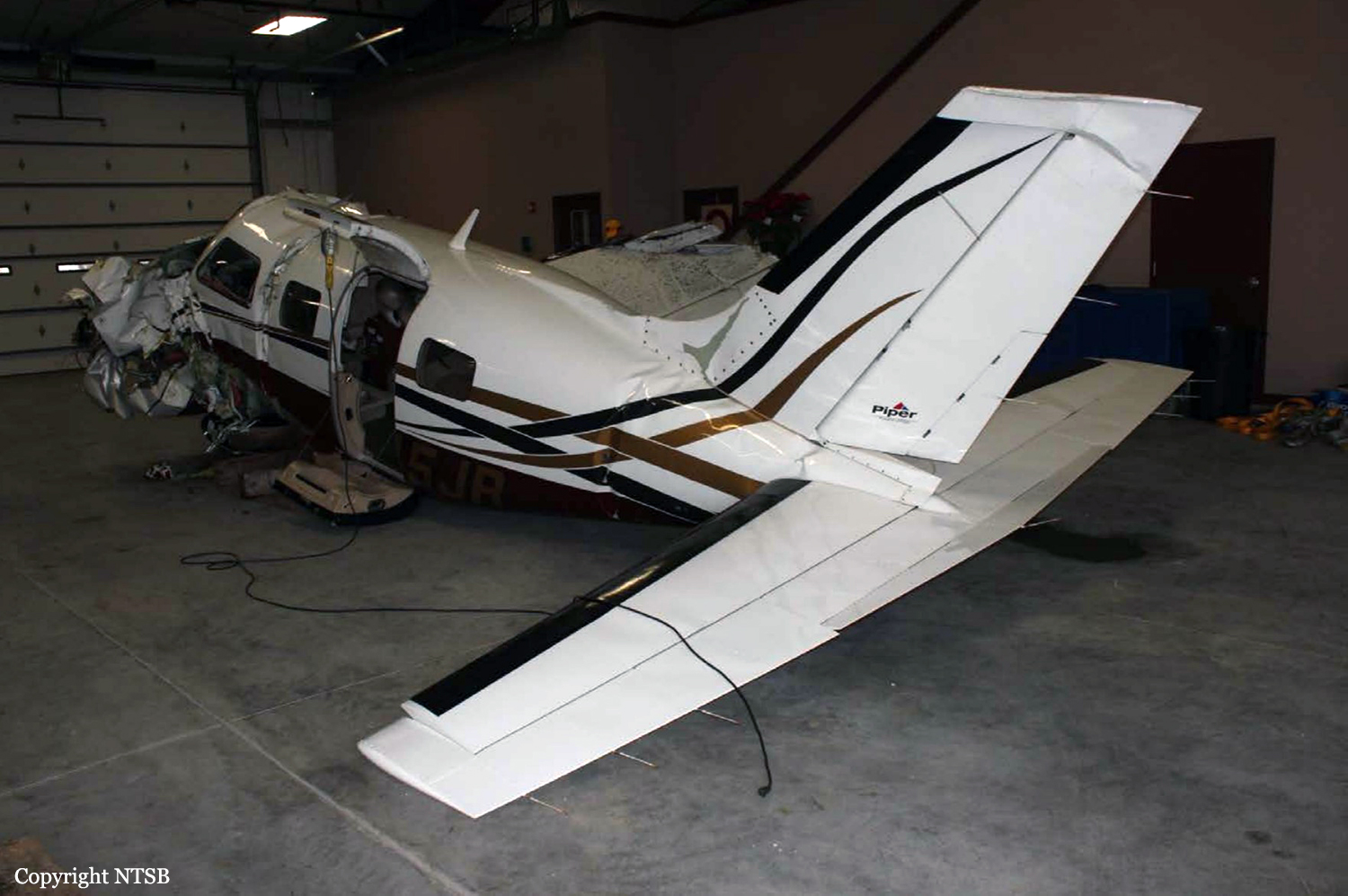
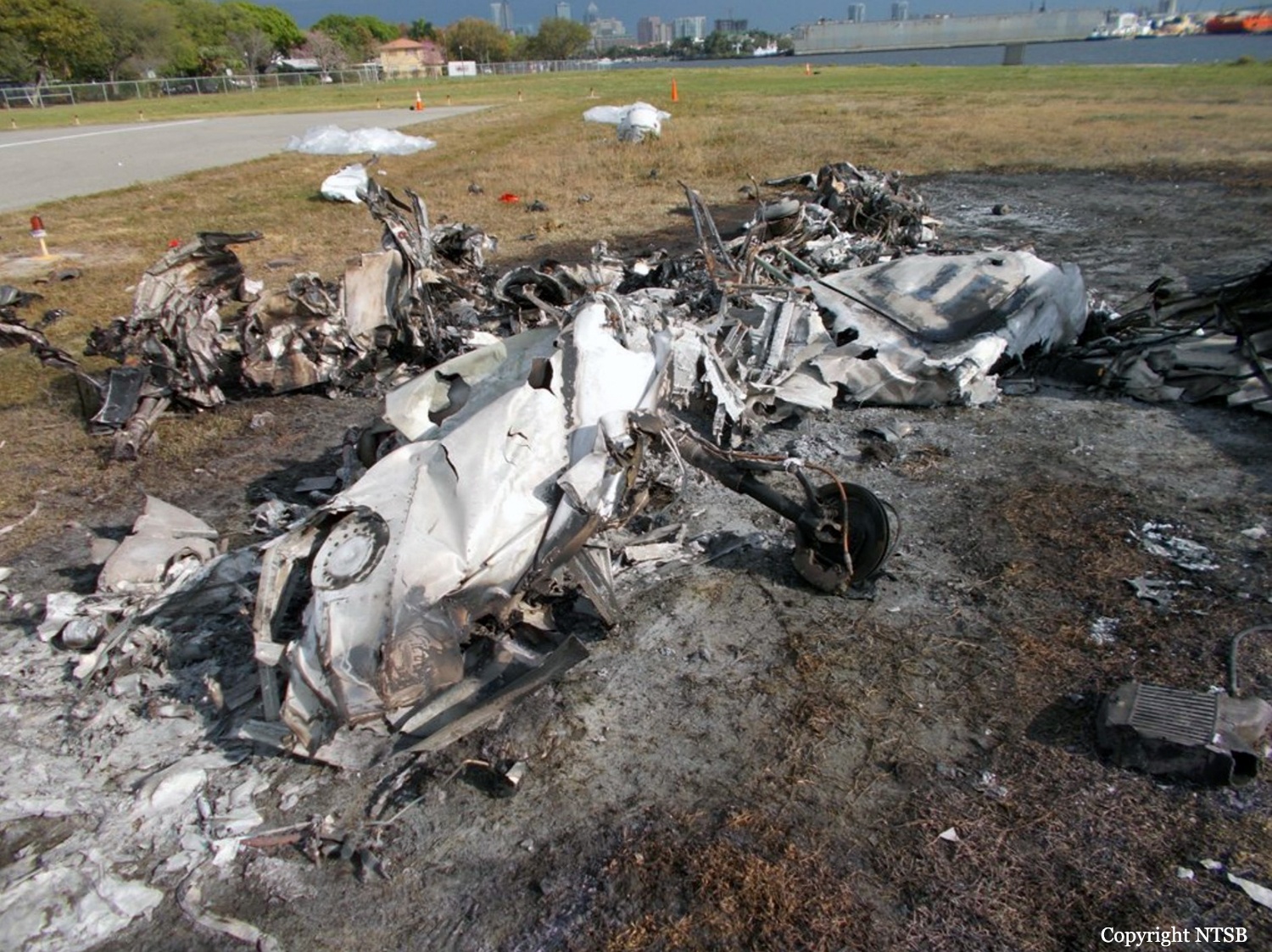
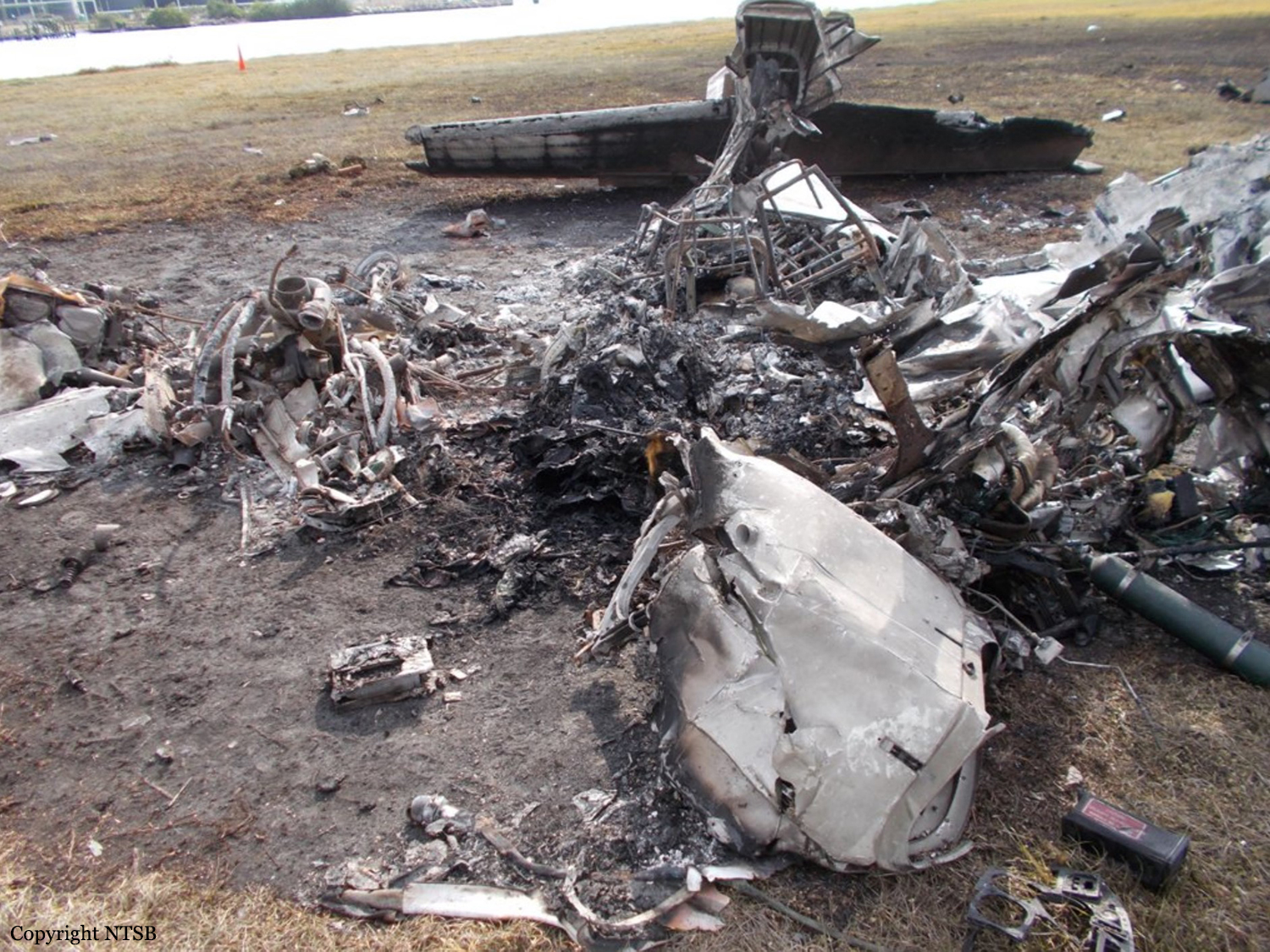
The airline transport pilot and pilot-rated passenger were departing on an instrument flight rules (IFR) cross country flight from runway 4 in a Cessna 340A about the same time that a private pilot and pilot rated passenger were departing on a visual flight rules repositioning flight from runway 36 in a Cessna 172M. Visual meteorological conditions prevailed at the airport. The runways at the nontowered airport converged and intersected near their departure ends. According to a witness, both airplanes had announced their takeoff intentions on the airport's common traffic advisory frequency (CTAF), which was not recorded; the Cessna 340A pilot's transmission occurred about 10 to 15 seconds before the Cessna 172M pilot's transmission. However, the witness stated that the Cessna 172M pilot's transmission was not clear, but he was distracted at the time. Both occupants of the Cessna 172M later reported that they were constantly monitoring the CTAF but did not hear the transmission from the Cessna 340A pilot nor did they see any inbound or outbound aircraft. Airport video that captured the takeoffs revealed that the Cessna 172M had just lifted off and was over runway 36 approaching the intersection with runway 4, when the Cessna 340A was just above runway 4 in a wings level attitude with the landing gear extended and approaching the intersection with runway 36. Almost immediately, the Cessna 340A then began a climbing left turn with an increasing bank angle while the Cessna 172M continued straight ahead. The Cessna 340A then rolled inverted and impacted the ground in a nose-low and left-wing-low attitude. The Cessna 172M, which was not damaged, continued to its destination and landed uneventfully. The Cessna 340A was likely being flown at the published takeoff and climb speed of 93 knots indicated airspeed (KIAS). The published stall speed for the airplane in a 40° bank was 93 KIAS, and, when the airplane reached that bank angle, it likely exceeded the critical angle of attack and entered an aerodynamic stall. Examination of the Cessna 340A wreckage did not reveal any preimpact mechanical malfunctions that would have precluded normal operation. Because of a postcrash fire, no determination could be made as to how the radios and audio panel were configured for transmitting and receiving or what frequencies were selected. There were no reported discrepancies with the radios of the Cessna 172M, and there were no reported difficulties with the communication between the Cessna 340A and the Federal Aviation Administration facility that issued the airplane's IFR clearance. Additionally, there were no known issues related to the CTAF at the airport. Toxicological testing detected unquantified amounts of atorvastatin, diphenhydramine, and naproxen in the Cessna 340A pilot's liver. The Cessna 340A pilot's use of atorvastatin or naproxen would not have impaired his ability to hear the radio announcements, see the other airplane taking off on the converging runway, or affected his performance once the threat had been detected. Without an available blood level of diphenhydramine, it could not be determined whether the drug was impairing or contributed to the circumstances of the accident.
Probable cause:
The intentional low altitude maneuvering during takeoff in response to a near-miss with an airplane departing from a converging runway, which resulted in an exceedance of the airplane's critical angle of attack and a subsequent aerodynamic stall.
Final Report:
Crash of a Beechcraft 1900D in Karachi

Date & Time: Mar 18, 2016 at 0820 LT
Type of aircraft:
Operator:
Registration:
AP-BII
Flight Phase:
Survivors:
Yes
Schedule:
Karachi – Sui
MSN:
UE-45
YOM:
1993
Country:
Region:
Crew on board:
3
Crew fatalities:
Pax on board:
18
Pax fatalities:
Other fatalities:
Total fatalities:
0
Captain / Total flying hours:
2885
Captain / Total hours on type:
717.00
Copilot / Total flying hours:
3614
Copilot / Total hours on type:
245
Aircraft flight hours:
19574
Aircraft flight cycles:
30623
Circumstances:
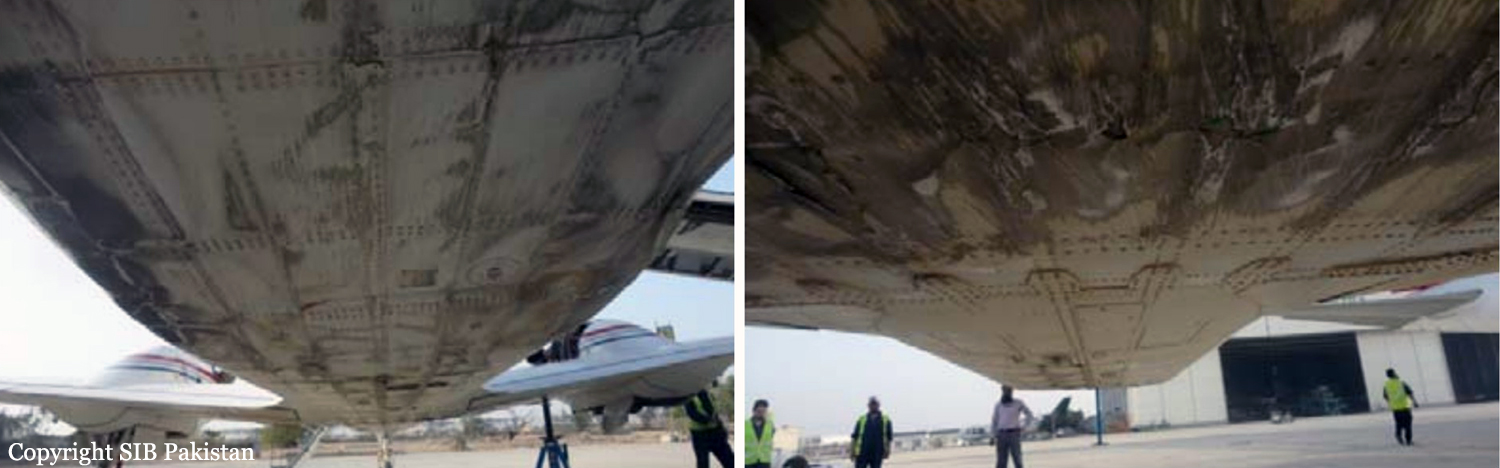
The Aircraft Sales and Services (Private) Limited (ASSL) aircraft Beechcraft-1900D Registration No. AP-BII was scheduled for a chartered flight on 18th March, 2016 from Karachi to Sui. Just after takeoff from runway 25L at 0820 hrs local time, the crew observed power loss of right engine and made a gear up landing on the remaining runway on the right side of centreline. After touchdown, the aircraft went off the runway towards right side and then came back on the runway before coming to a final stop 1,050 feet short from the end of runway. The Captain and one passenger received serious injuries due to hard impact of the aircraft with ground. All other passengers and technician remained unhurt.
Probable cause:
The investigation therefore, concludes that:
- Some internal malfunction of the Propeller Governor Part No. 8210-410 Serial No. 2490719 was the cause of experienced uncommanded auto feather. However, exact cause of the occurrence could not be determined.
- Continuing take off below V1 speed (104kts) after encountering engine malfunction and after takeoff raising flaps below recommended height (400ft AGL) lead to decrease in lift and unsustainability of flight.
Final Report:

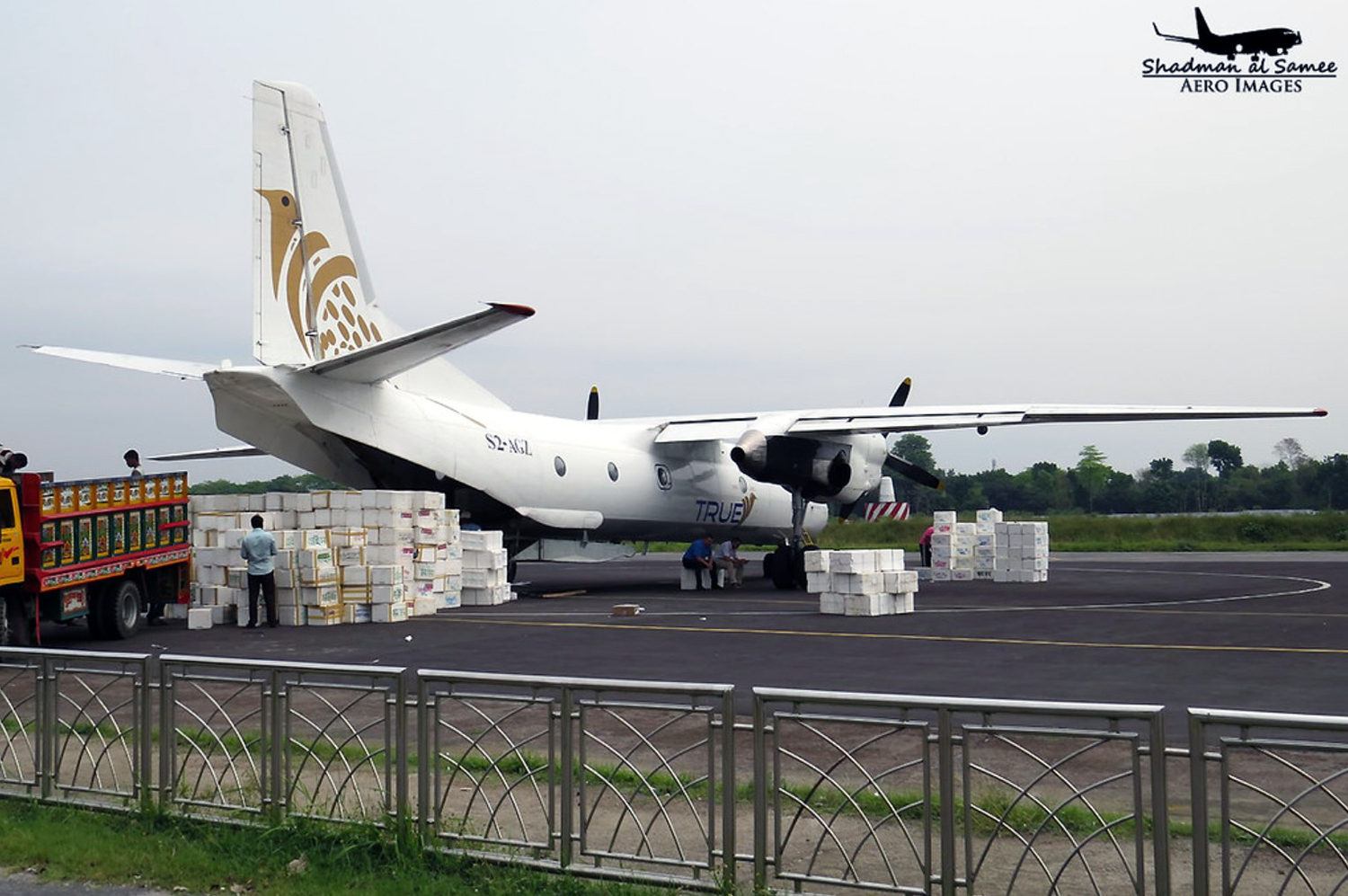
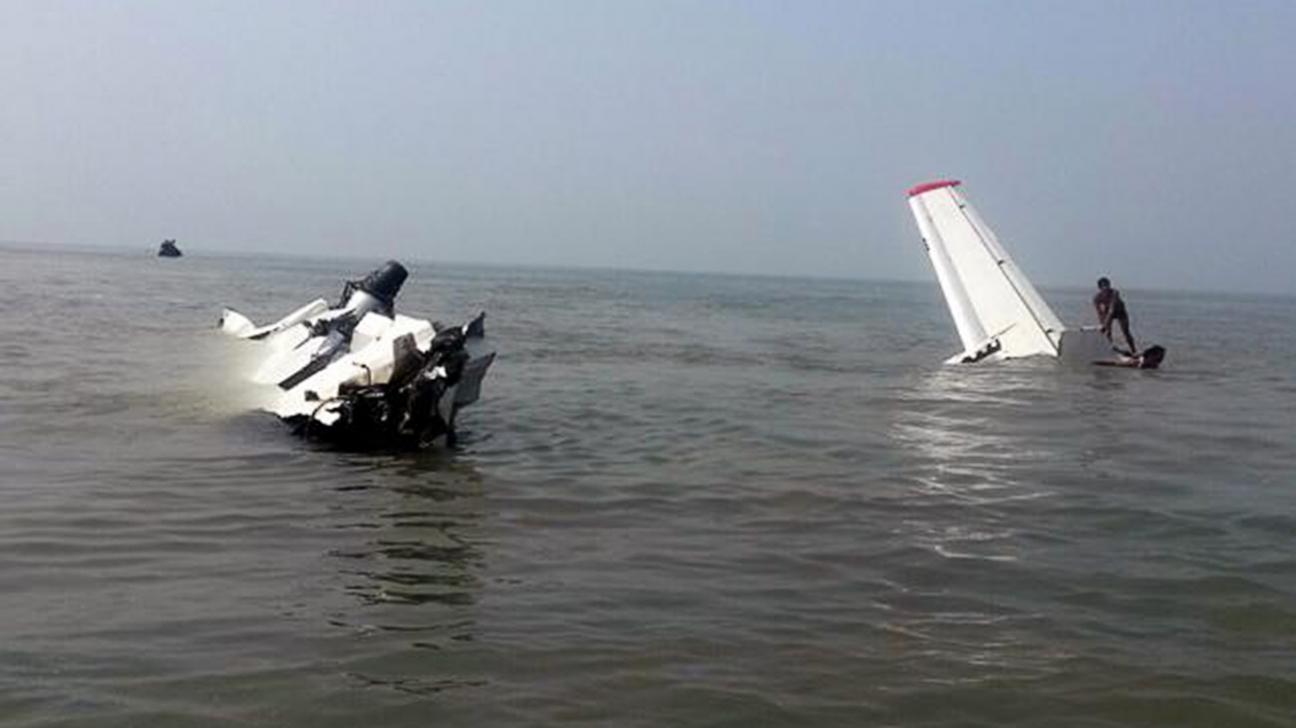
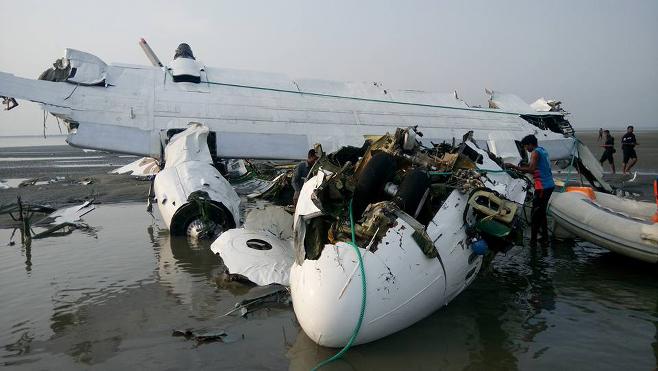
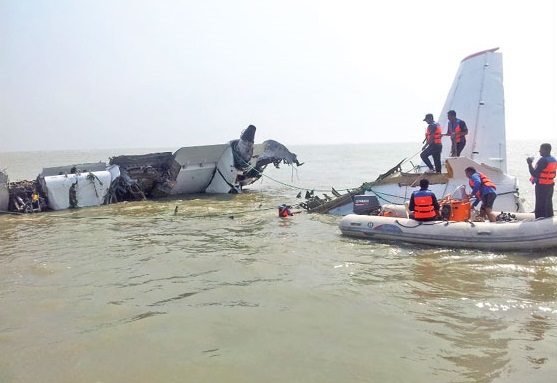
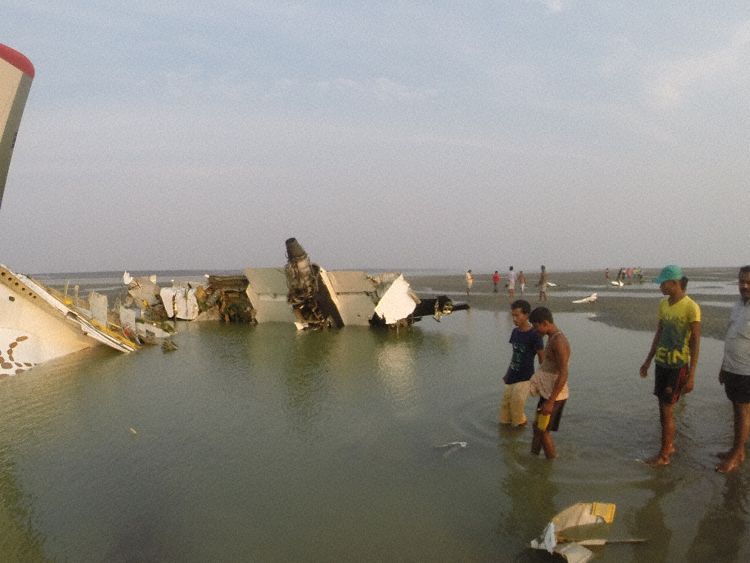
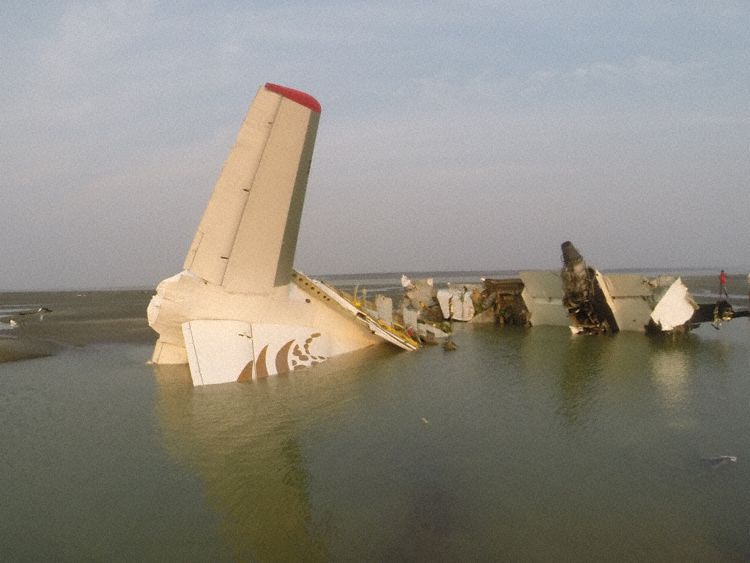
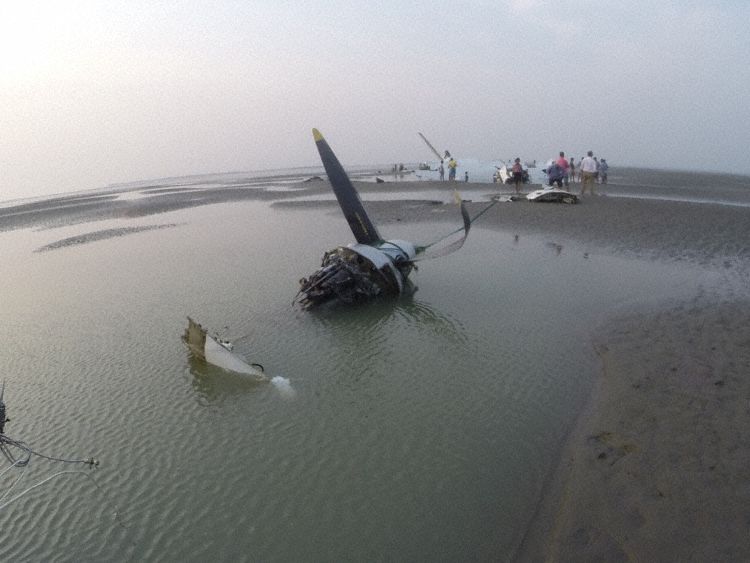
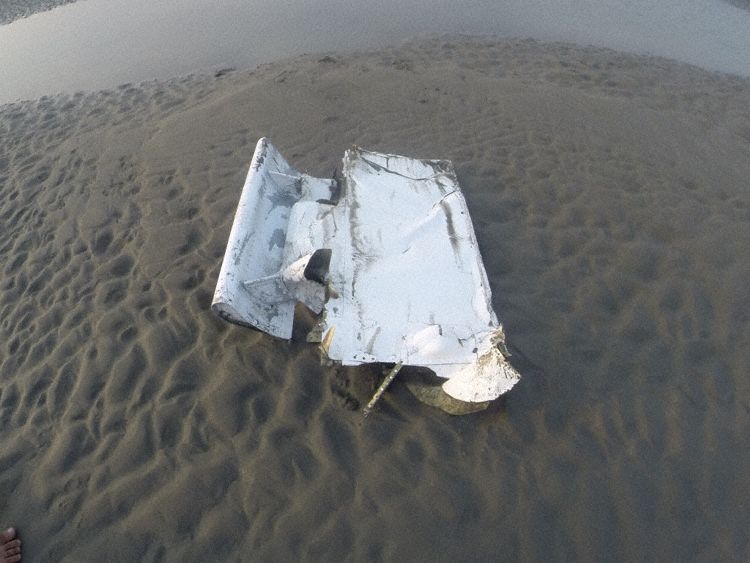
Crash of an Antonov AN-26B off Cox's Bazar: 3 killed

Date & Time: Mar 9, 2016 at 0905 LT
Type of aircraft:
Operator:
Registration:
S2-AGZ
Flight Phase:
Flight Type:
Survivors:
Yes
Schedule:
Cox’s Bazar – Jessore
MSN:
134 08
YOM:
1984
Flight number:
21
Country:
Region:
Crew on board:
4
Crew fatalities:
Pax on board:
0
Pax fatalities:
Other fatalities:
Total fatalities:
3
Captain / Total flying hours:
13315
Captain / Total hours on type:
6896.00
Copilot / Total flying hours:
1438
Copilot / Total hours on type:
1195
Aircraft flight hours:
16379
Aircraft flight cycles:
17299
Circumstances:
On March 9, 2016 one AN -26B aircraft belonging to True Aviation Ltd was operating a schedule cargo flight from a small domestic airport (Cox’s Bazar-VGCB) in southern Bangladesh to another domestic airport (Jessore -VGJR) in western Bangladesh, The cargo was Shrimp fries. As per the General Declaration the total cargo quantity was 802 boxes weighing 4800 kg. The airline had filled a flight plan keeping the ETD blank. The flight plan routing was CB W4 CTG W5 JSR at FL 100. All the documents except the load sheet were found properly signed and are in the possession of AAIT. According to ATC controller’s statement and recorded tape the aircraft requested for startup clearance at 0258z. As per the recordings with ATC the controller passed the visibility information of Jessore Airport as 3km. The aircraft started engines and requested for taxi. The aircraft was cleared to taxi to Runway 35 via taxiway S. The aircraft requested for takeoff clearance and was cleared for Take Off at 0305z. Immediately after airborne the pilot reported engine failure without mentioning initially which engine had failed but later confirming failure of the left engine and requested for immediate return back to Cox’s Bazar airport. He was advised by ATC to call left hand down wind. But the control tower spotted the aircraft making a right hand down wind at a very low altitude. All emergency services were made standby from the ATC. The aircraft called final and requested for landing clearance. For reasons so far unknown the aircraft made a low level Go Around. The controller in the tower saw the aircraft flying at about 400 to 500 feet. The surviving Flight Navigator also confirmed this in his statement. The ATC advised the captain to call left hand down wind. But there was no response from the crew. The ATC repeatedly kept calling the aircraft but there was no response from the crew and total communication was lost. At time 0332z the airport authority came to know through other means that the aircraft had crashed approximately 03km west of the airport.
Probable cause:
The accident was the consequence of the combination of the following factors:
a) Failure to initiate a rejected take off during take off roll following the indication of engine failure;
b) Failure to adhere to the company SOP following the detection of the engine failure during take off;
c) Considering the poor visibility at Cox’s Bazar Airport, diverting to the alternate airfield Chittagong Airport located only 50 nm away that has the provision for full ILS approach facility. This could have helped the crew in carrying out a proper one engine out precision approach landing;
d) The aircraft flew at a speed much lower than the clean configuration speed. The aircraft flew at 225 km/h in clean configuration whereas the minimum clean configuration speed is 290 km/hr.
e) As per the FDR data the aircraft stalled while making a turn towards the side of the failed engine at a very low altitude.
Final Report:

Crash of a Beechcraft 1900D in Naypyidaw: 5 killed

Date & Time: Feb 10, 2016 at 0940 LT
Type of aircraft:
Operator:
Registration:
4601
Flight Phase:
Flight Type:
Survivors:
No
Schedule:
Naypyidaw – Namhsan
MSN:
UE-177
YOM:
1995
Country:
Region:
Crew on board:
2
Crew fatalities:
Pax on board:
3
Pax fatalities:
Other fatalities:
Total fatalities:
5
Circumstances:
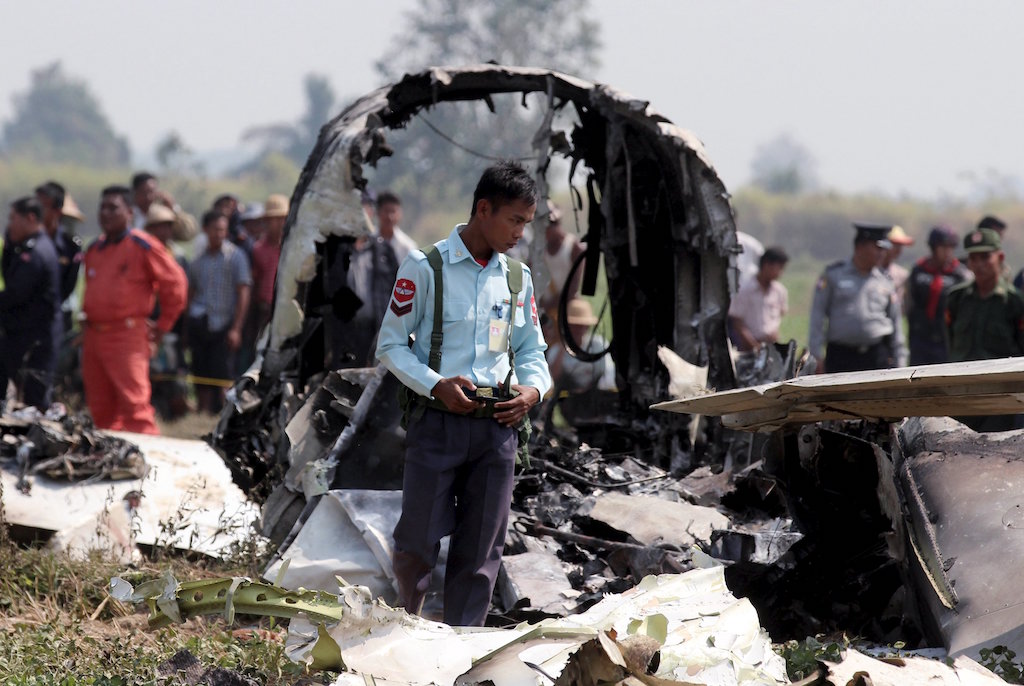
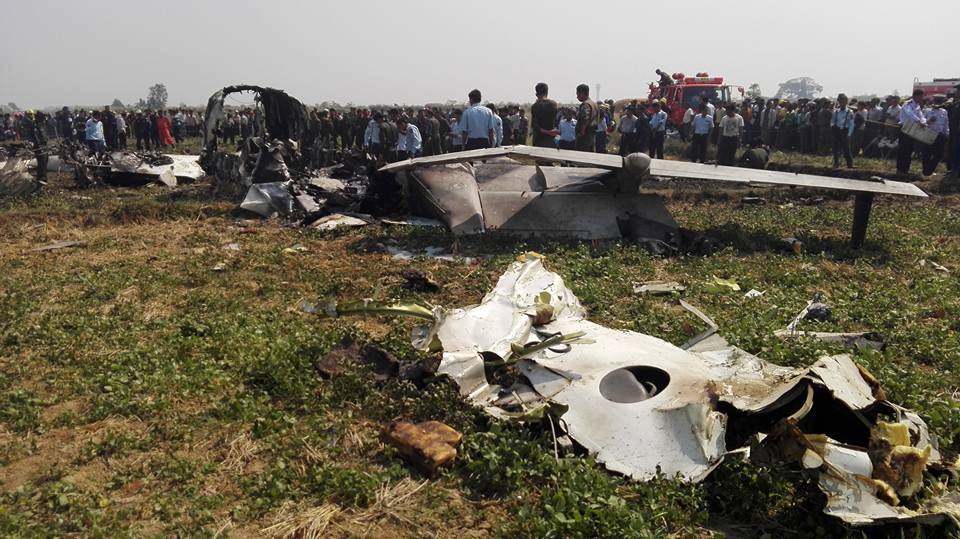
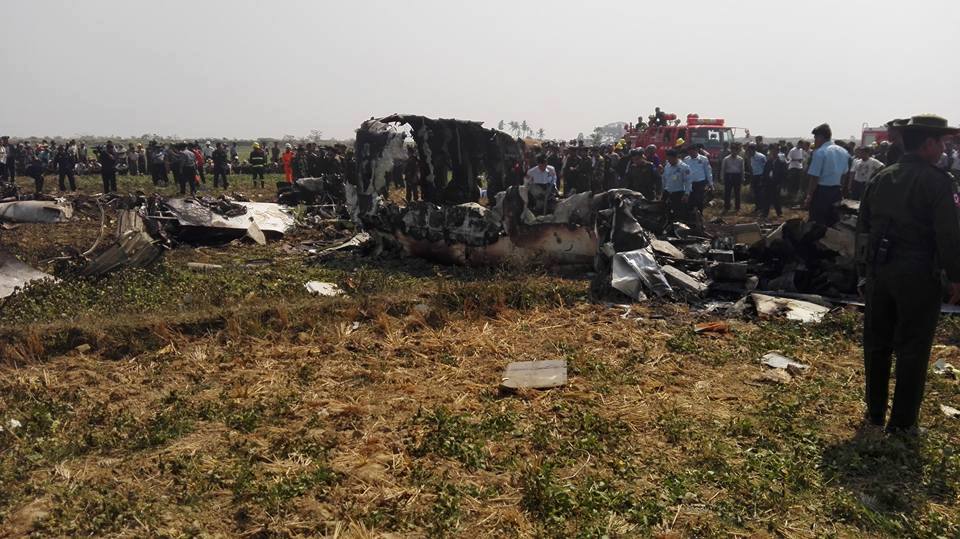
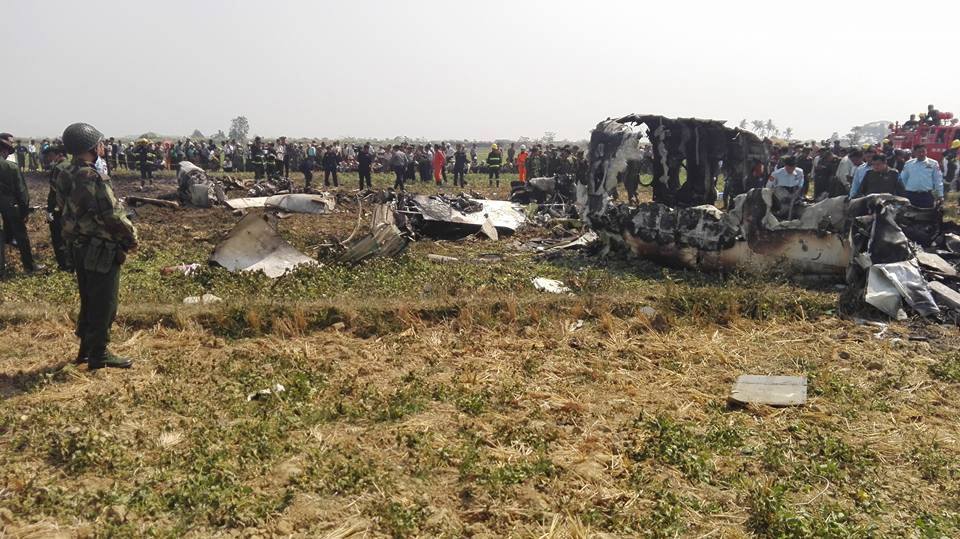
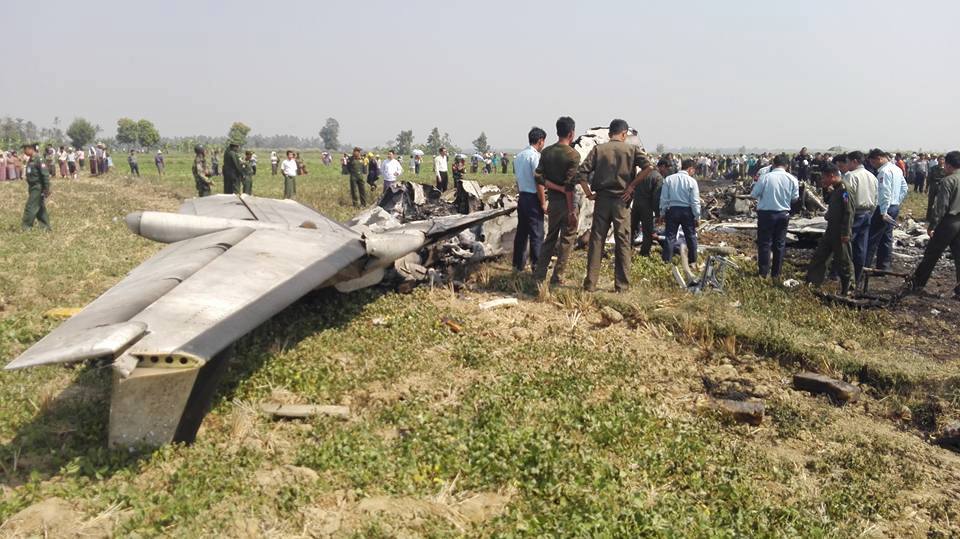
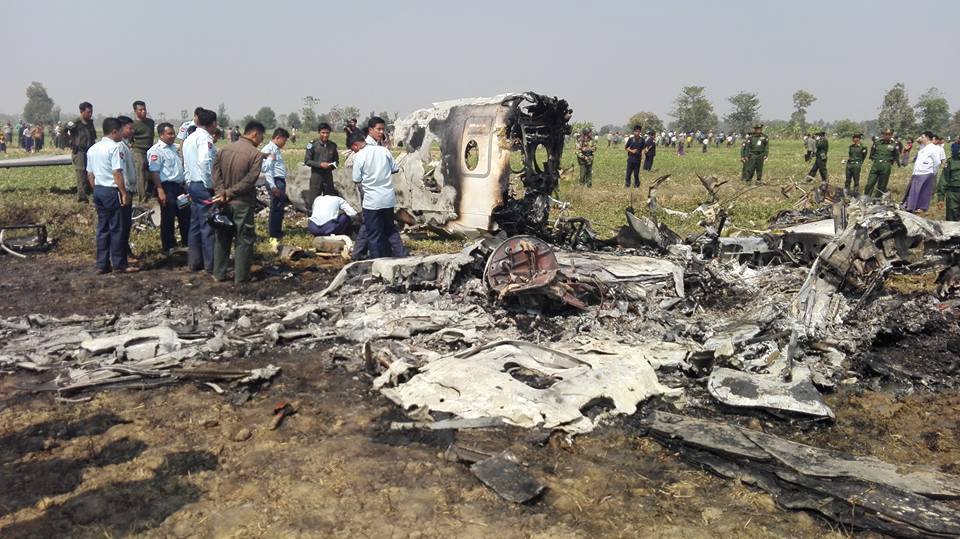
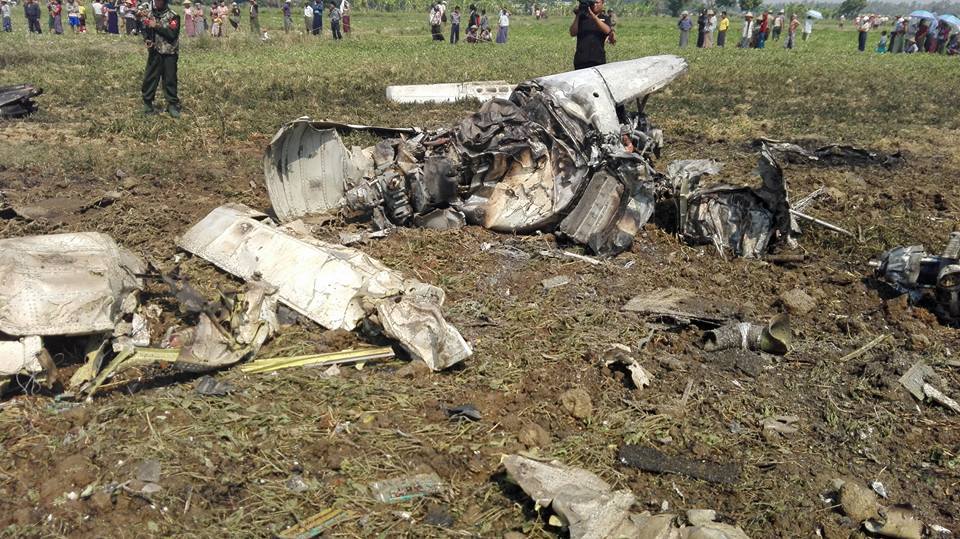
Shortly after takeoff from Naypyidaw Airport, while climbing to an altitude of about 500 feet, the aircraft entered an uncontrolled descent and crashed in an open field located 600 metres past the runway end, bursting into flames. Four occupants were killed while a passenger was seriously injured and evacuated to a local hospital. He died from his injuries few hours later. Used for emergency flights, the airplane was carrying three officers to Namhsan, Shan State, to assist with the aftermath of a fire there. Those officers who were killed were Major Aung Kyaw Moe, Captain Aung Paing Soe and Captain Htin Kyaw Soe.

Crash of a Socata TBM-900 off Florianópolis: 2 killed

Date & Time: Feb 1, 2016 at 0519 LT
Type of aircraft:
Registration:
PP-LIG
Flight Phase:
Flight Type:
Survivors:
No
Schedule:
Florianópolis – Ji-Paraná
MSN:
1071
YOM:
2015
Country:
Crew on board:
1
Crew fatalities:
Pax on board:
1
Pax fatalities:
Other fatalities:
Total fatalities:
2
Captain / Total flying hours:
1535
Captain / Total hours on type:
154.00
Aircraft flight hours:
195
Circumstances:
The single engine aircraft departed Florianópolis-Hercilio Luz Airport at 0515LT on a private flight to Ji-Paraná, carrying one passenger and one pilot. While climbing by night at an altitude of 3,600 feet, the pilot initiated a right turn. Then the aircraft completed a 360 turn and crashed in the sea off Campeche Island. Few debris were found the following morning floating on water and the main wreckage was found two weeks later. Both occupants were killed.
Probable cause:
Contributing factors:
- Application of commands – undetermined
Considering the hypothesis of spatial disorientation, of the disabling type, it is possible that the pilot has reached a situation of complete inability to operate correctly controls the aircraft in order to regain control of the flight.
- Attitude – undetermined
It is possible that the high subordination of the pilot to the requests of his boss has made it difficult for you to position yourself in relation to your limitation in flying at night and in instrument flight meteorological conditions.
- Disorientation – undetermined
Conditions favorable to disorientation, that is, the night flight over the sea, within clouds and manual operation, as well as the dynamics of the aircraft trajectory recorded by the radar, among other factors, make spatial disorientation the main hypothesis for the accident.
- Visual illusions – undetermined
It is also possible that the pilot suffered visual illusions when flying over the sea in night time. When not seeing the lighting on land, and being at night dark, with cloudiness, the pilot may have confused spatial references.
- Instruction – undetermined
It is possible that the lack of familiarity with the English language has made it difficult, in to some degree, knowledge of the resources, equipment and systems present in the aircraft, as well as in the instruction received in a flight simulator.
Final Report:

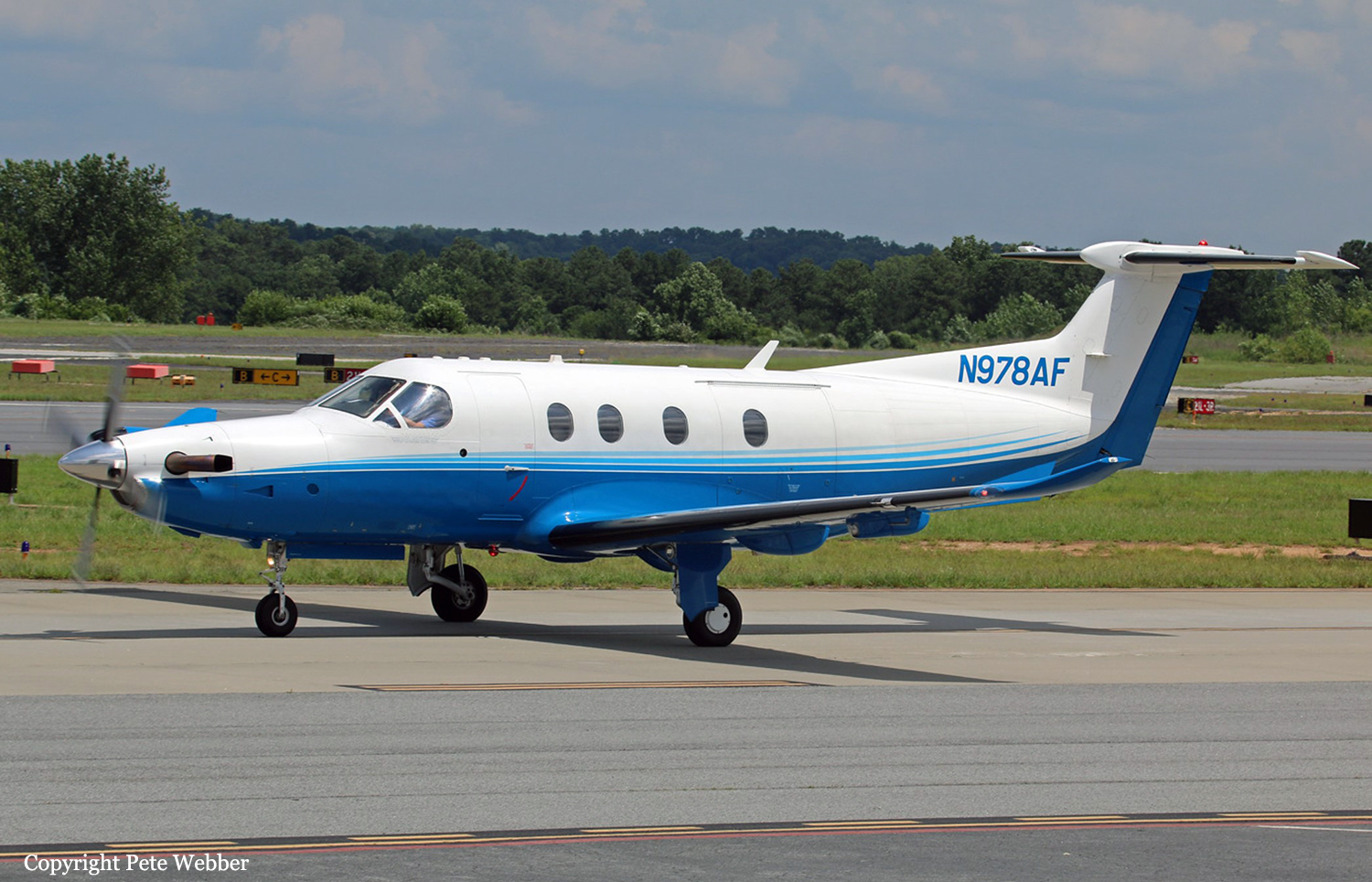
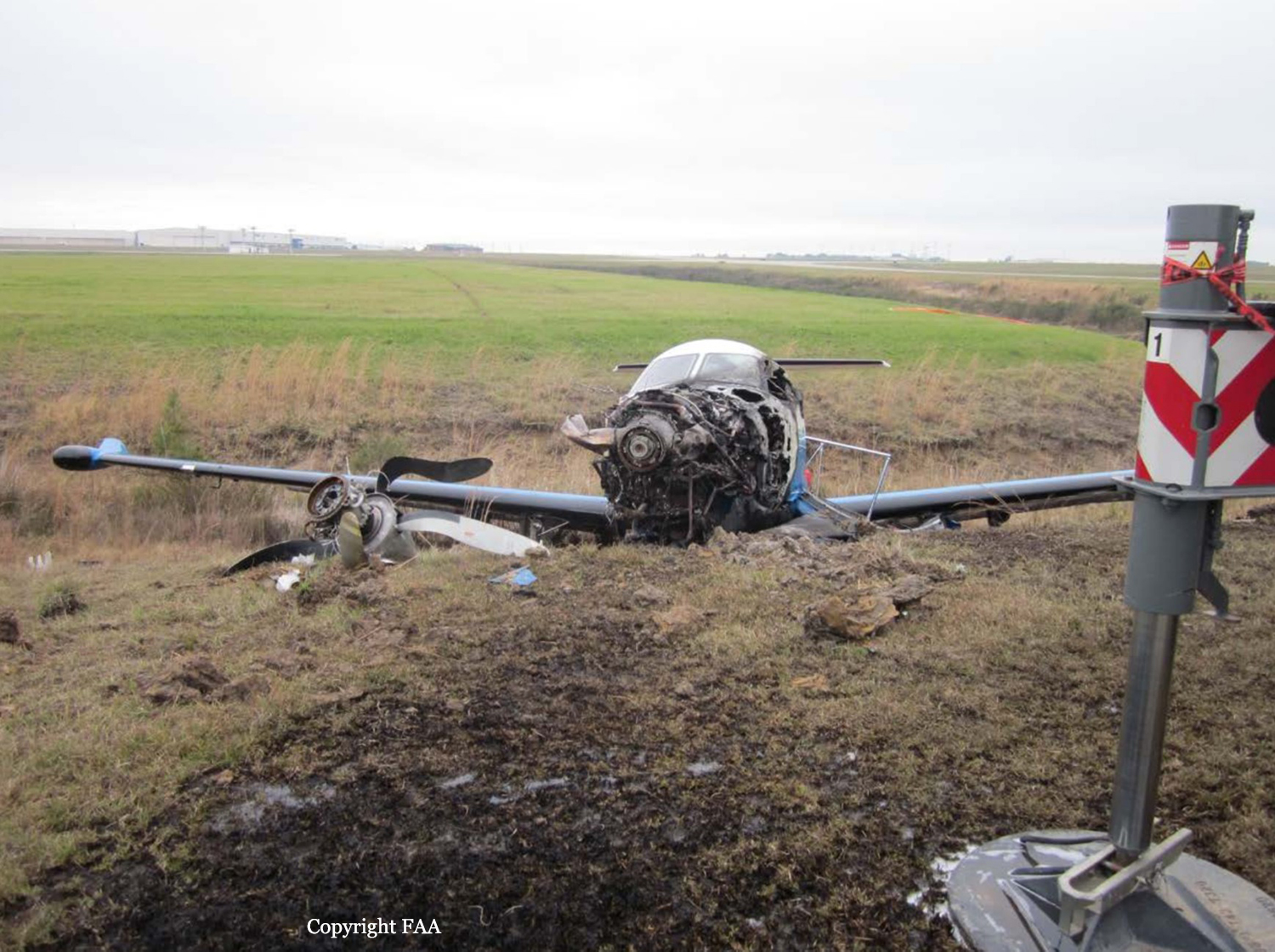
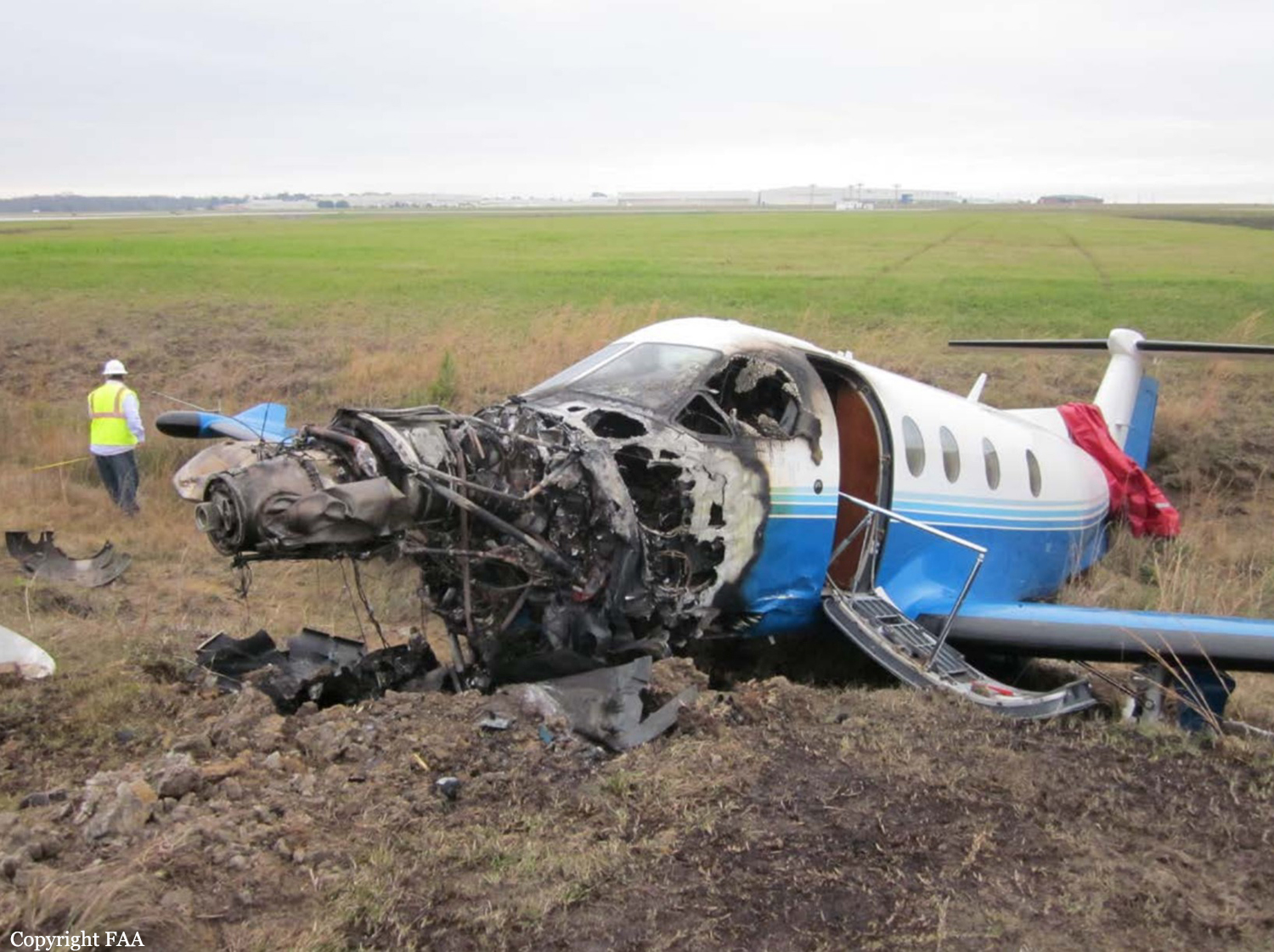
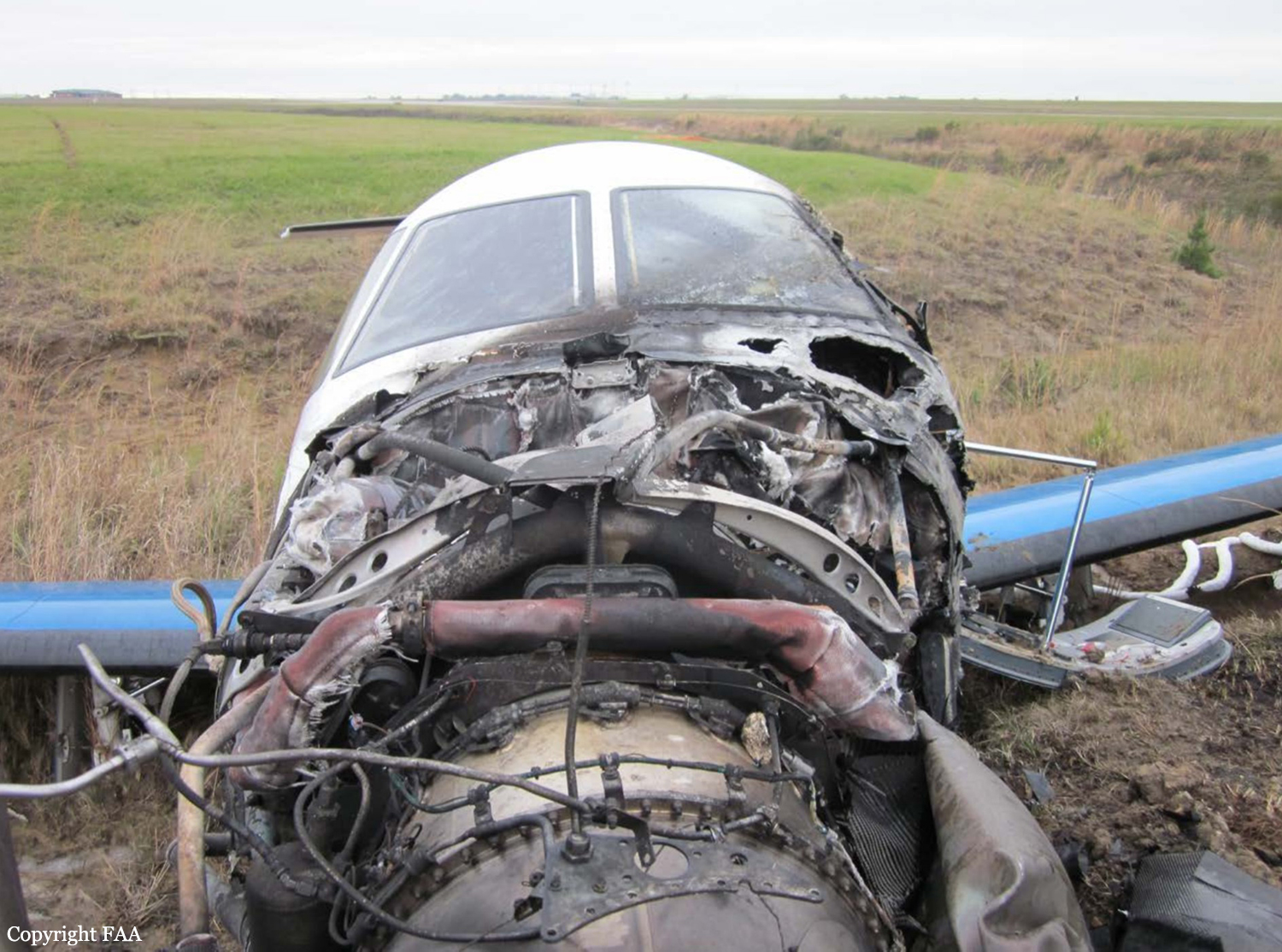
Ground accident of a Pilatus PC-12/47E in Savannah

Date & Time: Jan 6, 2016 at 0835 LT
Type of aircraft:
Operator:
Registration:
N978AF
Flight Phase:
Flight Type:
Survivors:
Yes
Schedule:
Savannah - Lexington
MSN:
1078
YOM:
2008
Flight number:
Cobalt Air 727
Crew on board:
2
Crew fatalities:
Pax on board:
0
Pax fatalities:
Other fatalities:
Total fatalities:
0
Captain / Total flying hours:
23141
Captain / Total hours on type:
534.00
Copilot / Total flying hours:
7900
Copilot / Total hours on type:
5100
Aircraft flight hours:
4209
Circumstances:
The aircraft collided with a ditch during a precautionary landing after takeoff from Savannah/Hilton Head International Airport (SAV), Savannah, Georgia. The pilot and copilot sustained minor injuries, and the airplane was substantially damaged. The airplane was registered to Upper Deck Holdings, Inc. and was being operated by PlaneSense, Inc,. as a Title 14 Code of Federal Regulations Part 91 positioning flight. Visual meteorological conditions prevailed, and an instrument flight rules flight plan was filed for the flight to Blue Grass Airport (LEX), Lexington, Kentucky. The pilot in the left seat was the pilot monitoring and the copilot in the right seat was the pilot flying. The crew had the full length of the runway 1 available (7,002 ft) for takeoff. The pilots reported that the acceleration and takeoff was normal and after establishing a positive rate of climb, the crew received an auditory annunciation and a red crew alerting system (CAS) torque warning. The engine torque indicated 5.3 pounds per square inch (psi); the nominal torque value for the conditions that day was reported by the crew to be 43.3 psi. With about 2,700 ft of runway remaining while at an altitude of 200 ft msl, the copilot elected to land immediately; the copilot pushed the nose down and executed a 90° left descending turn and subsequently landed in the grass. Although he applied "hard" braking in an attempt to stop, the airplane impacted a drainage ditch, resulting in substantial impact damage and a postimpact fire. The pilot reported that, after takeoff, he observed a low torque CAS message and the copilot told him to "declare an emergency and run the checklist." The pilot confirmed that the landing gear were extended and the copilot turned the airplane to the left toward open ground between the runways and the terminal. About 60 seconds elapsed from the start of the takeoff roll until the accident. The airport was equipped with security cameras that captured the airplane from its initial climb through the landing and collision. One camera, pointed toward the west-southwest, recorded the airplane's left descending turn and its landing in the grass, followed by impact and smoke. A second camera, mounted on the control tower, pointed toward the southeast and showed the airplane during the initial climb before it leveled off and entered a descending left turn; it also showed the airplane land and roll through the grass before colliding with the ditch.
Probable cause:
The pilots' failure to follow proper procedures in response to a crew alerting system warning for high engine torque values, which necessitated an off-runway emergency landing during which the airplane sustained substantial damage due to postimpact fire. Contributing to the accident was the erroneous engine torque indication for reasons that could not be determined.
Final Report:

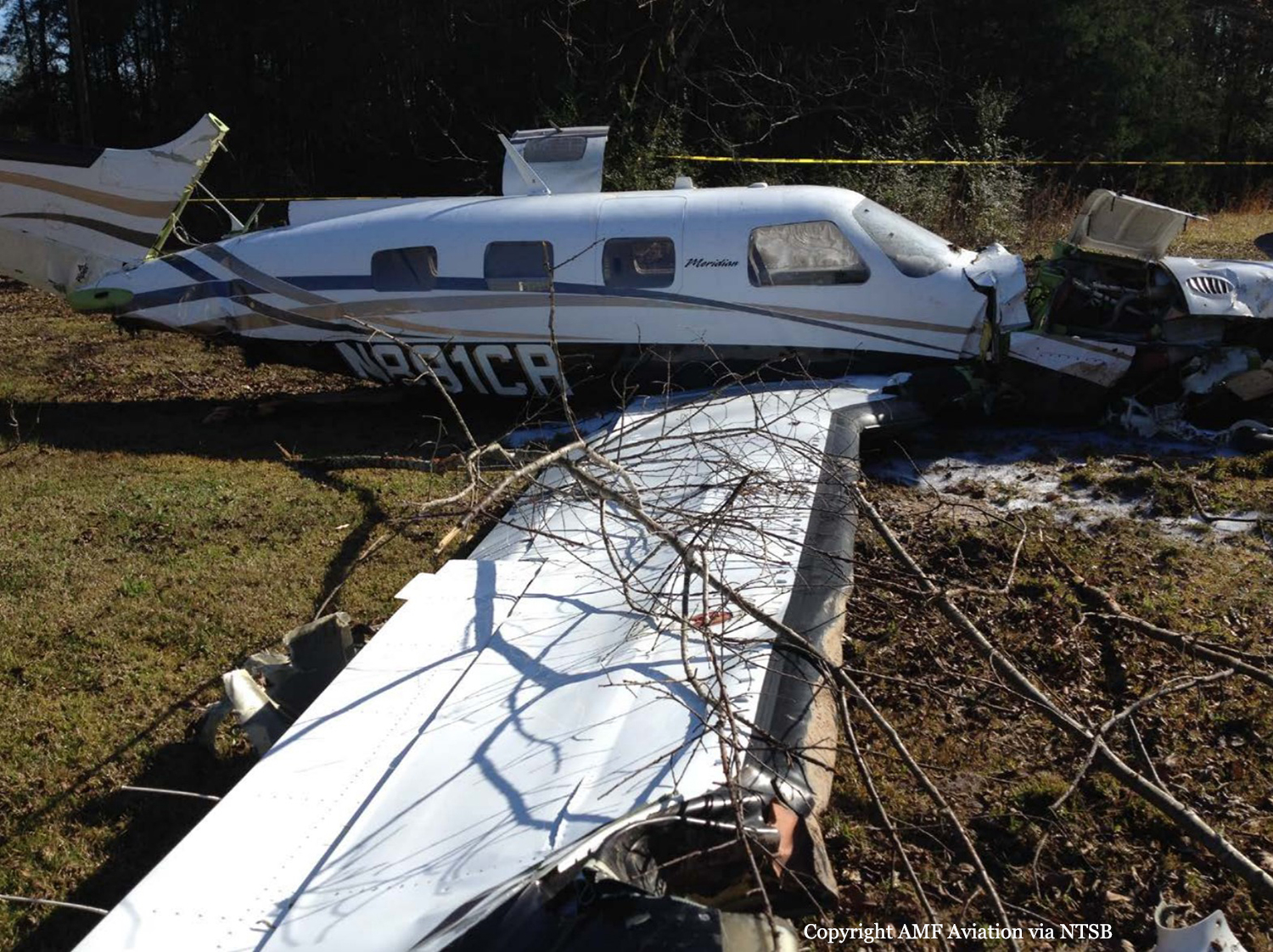
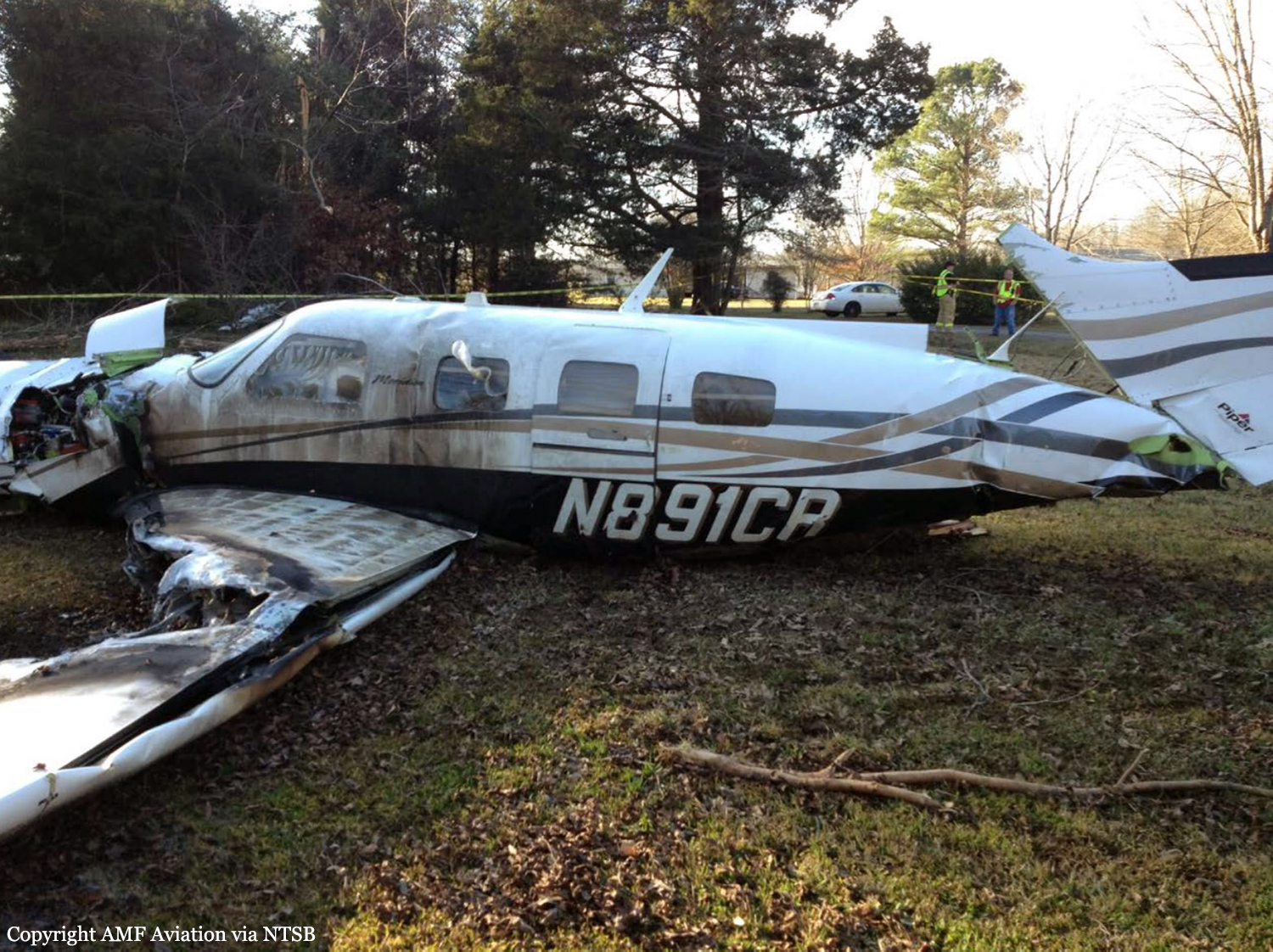
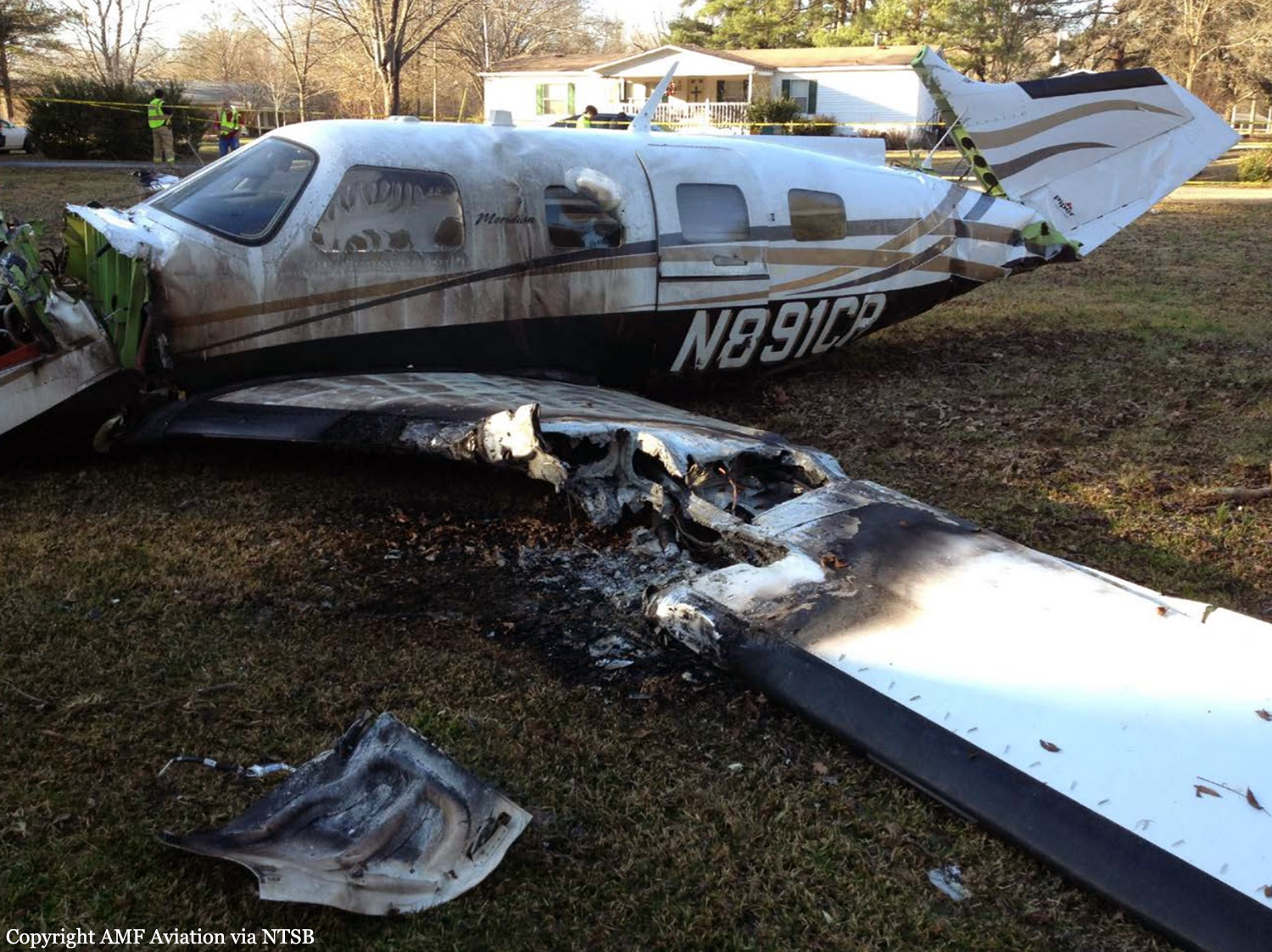
Crash of a Piper PA-46-500TP Malibu Meridian in Corinth

Date & Time: Dec 24, 2015 at 0840 LT
Registration:
N891CR
Flight Phase:
Flight Type:
Survivors:
Yes
Schedule:
Corinth - Key Largo
MSN:
46-97321
YOM:
2007
Crew on board:
1
Crew fatalities:
Pax on board:
3
Pax fatalities:
Other fatalities:
Total fatalities:
0
Captain / Total flying hours:
1990
Captain / Total hours on type:
427.00
Aircraft flight hours:
1407
Circumstances:
On the day of the accident, a line service technician had disconnected the airplane from a battery charger. After disconnecting the battery, he left the right access door open which provided access to the fuel control unit, fuses, fuel line, oil line, and battery charging port as he always did. He then towed the airplane from the hangar it was stored in, and parked it in front of the airport's terminal building. The three passengers arrived first, and then about 30 minutes later the pilot arrived. He uploaded his navigational charts and did a preflight check "which was normal." The engine start, taxi, and engine run up, were also normal. The wing flaps were set to 10°. After liftoff he "retracted the landing gear" and continued to climb. Shortly thereafter the right cowl door opened partially, and started "flopping" up and down 3 to 4 inches in each direction. He reduced the torque to try to prevent the right cowl door from coming completely open. However, when he turned on the left crosswind leg to return to the runway, the right cowl door opened completely, and the airplane would not maintain altitude even with full power, so he "put the nose back down." The airplane struck trees, and then pancaked, and slid sideways and came to rest, in the front yard of an abandoned house. The private pilot and one passenger received minor injuries. Two passengers received serious injuries, one of whom was found out of her seat, unconscious, on the floor of the airplane shortly after the accident, and died about 227 days later. During the investigation, it could not be determined, if she had properly used the restraint system, as it was found unlatched with the seatbelt portion of the assembly extended. Examination of the wreckage revealed no evidence of any preimpact failures or malfunctions of the airplane or engine that would have precluded normal operation. It was discovered though, that the right access door had not been closed and latched by the pilot before takeoff, as examination of the right access door latches and clevis keepers found them to be functional, with no indication of overstress or deformation which would have been present if the access door had been forced open due to air loads in-flight, or during the impact sequence. Further examination also revealed that the battery charging port cover which was inside the compartment that the right access door allowed access to, had not been placed and secured over the battery charging port, indicating that the preflight inspection had not been properly completed. A checklist that was provided by a simulator training provider was found by the pilot's seat station. Examination of the checklist revealed that under the section titled: "EXTERIOR PREFLIGHT" only one item was listed which stated, "EXTERIOR PREFLIGHT…COMPLETE." It also stated on both sides of the checklist: "FOR SIMULATOR TRAINING PURPOSES ONLY." A copy of the airplane manufacturer's published pilot's operating handbook (POH) was found in a cabinet behind the pilot's seat where it was not accessible from the pilot's station. Review of the POH revealed that it contained detailed guidance regarding the preflight check of the airplane. Additionally, it was discovered that the landing gear was in the down and locked position which would have degraded the airplane's ability to accelerate and climb by producing excess drag, and indicated that the pilot had not retracted the landing gear as he thought he did, as the landing gear handle was still in the down position. Review of recorded data from the airplanes avionics system also indicated that the airplane had roughly followed the runway heading while climbing until it reached the end of the runway. The pilot had then entered a left turn and allowed the bank angle to increase to about 45°, and angle of attack to increase to about 8°, which caused the airspeed to decrease below the stalling speed (which would have been about 20% higher than normal due to the increased load factor from the steep turn) until the airplane entered an aerodynamic stall, indicating that the pilot allowed himself to become distracted by the open door, rather than maintaining control of the airplane. One of the seriously injured passenger passed away 227 days after the accident.
Probable cause:
The pilot's inadequate preflight inspection and his subsequent failure to maintain airplane control, which resulted in an access door opening after takeoff, and the airplane exceeding its critical angle of attack and experiencing an aerodynamic stall.
Final Report:

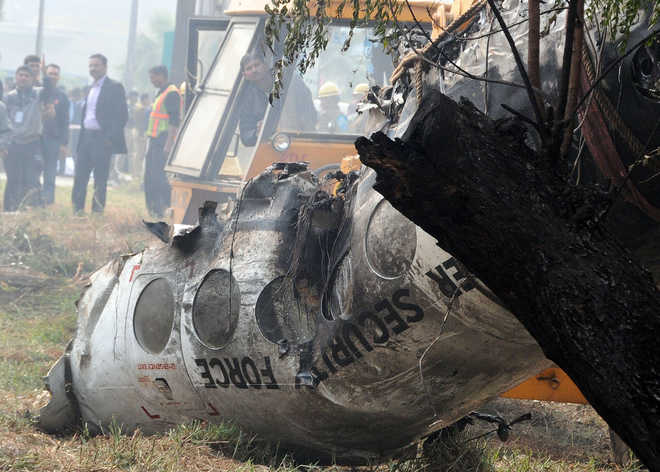
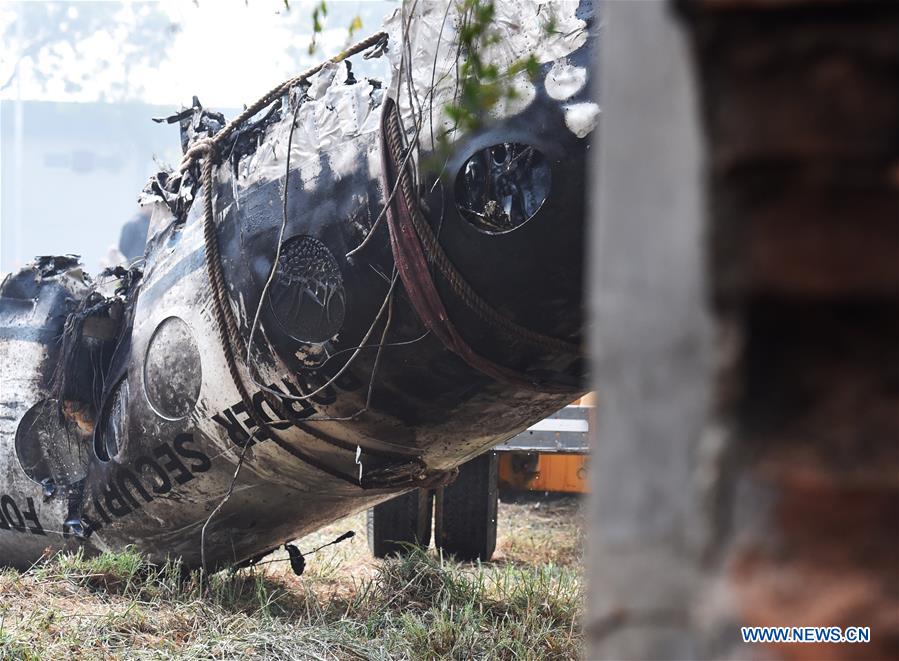
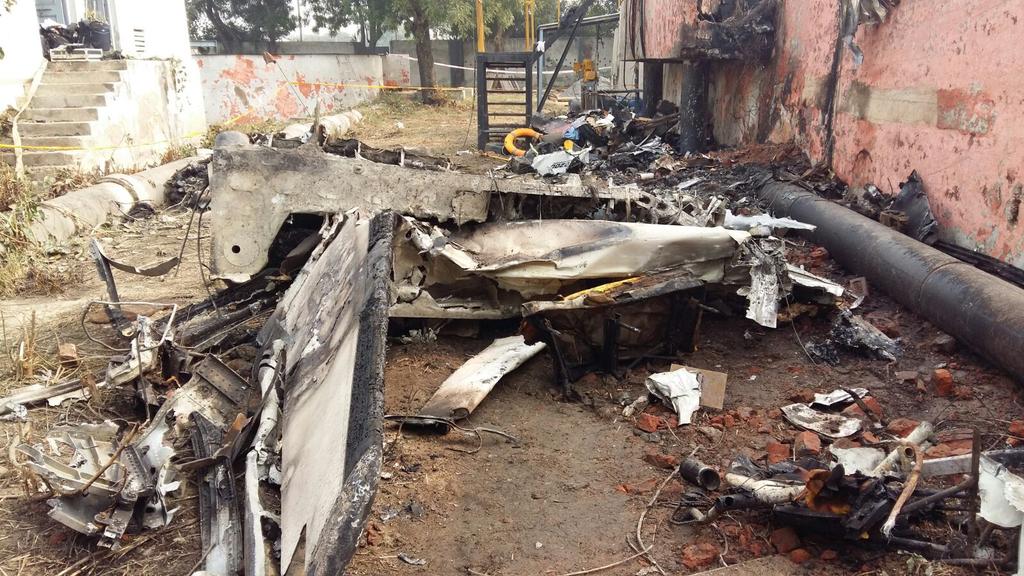
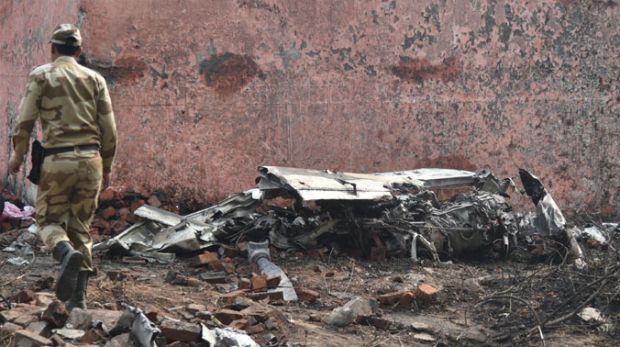
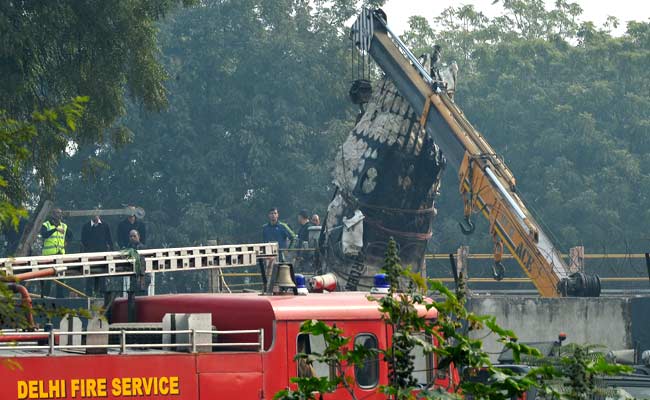
Crash of a Beechcraft 200 Super King Air in New Delhi: 10 killed

Date & Time: Dec 22, 2015 at 0938 LT
Operator:
Registration:
VT-BSA
Flight Phase:
Survivors:
No
Site:
Schedule:
New Delhi - Ranchi
MSN:
BB-1485
YOM:
1994
Country:
Region:
Crew on board:
2
Crew fatalities:
Pax on board:
8
Pax fatalities:
Other fatalities:
Total fatalities:
10
Captain / Total flying hours:
964
Captain / Total hours on type:
764.00
Copilot / Total flying hours:
891
Copilot / Total hours on type:
691
Aircraft flight hours:
4766
Aircraft flight cycles:
2745
Circumstances:
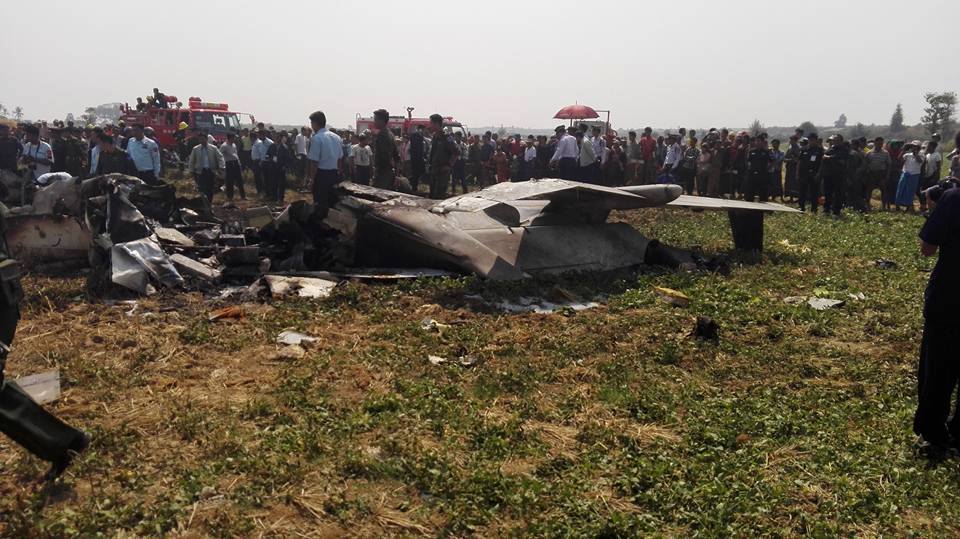
Beechcraft Super King Air B-200 aircraft, VT-BSA belonging to BSF Air Wing was involved in an accident on 22.12.2015 while operating a flight from IGI Airport, New Delhi to Ranchi. The flight was under the command of a CPL holder with another CPL holder as Second-in-Command. There were ten persons on board including two flight crew members. As per the scheduling procedure of the Operator, the flying programme for 22.12.2015 was approved by the ADG (Logistics) on the recommendation of the DIG (Air) for VT-BSA on 21.12.2015. The programme included names of the flight crew along with the following sectors: from Delhi to Ranchi ETD 0800 ETA 1030 and from Ranchi to Delhi ETD 1300 ETA 1600. The task was as per instructions on the subject dated 23rd July 2015. As per the weight & load data sheet there were 8 passengers with 20 Kgs. of baggage in the aft cabin compartment. The actual take-off weight shown was 5668.85 Kgs as against the maximum take-off weight of 5669.9 Kgs. Fuel uplifted was 1085 Kgs. The aircraft was taken out of hangar of the Operator at 0655 hrs on 22.12.2015 and parked outside the hangar for operating the subject flight. At around 0745 hrs, the passengers reached the aircraft who were mainly technical personnel supposed to carry out scheduled maintenance of Mi-17 helicopter of the Operator at Ranchi. They were carrying their personnel baggage along with tools and equipment required for the maintenance. At around 0915 hrs the flight crew contacted ATC Delhi and requested for clearance to operate the flight to Ranchi. The aircraft was cleared to Ranchi via R460 and FL210. Runway in use was given as 28. At 0918 hrs the doors were closed and the flight crew had started carrying out the check list. After the ATC issued taxi clearance, the aircraft had stopped for some time after commencing taxiing. The pilot informed the ATC that they will take 10 minutes delay for further taxi due to some administrative reasons. The taxi clearance was accordingly cancelled. After a halt of about 6 to 7 minutes, the pilot again requested the ATC for taxi clearance and the same was approved by the ATC. Thereafter, the aircraft was given take-off clearance from runway 28. The weather at the time of take-off was: Visibility 800 meters with Winds at 100°/03 knots. Shortly after take-off and attaining a height of approximately 400 feet AGL, the aircraft progressively turned left with simultaneous loss of height. It had taken a turn of approximately 180o and impacted some trees before hitting the outside perimeter road of the airport in a left bank attitude. Thereafter, it impacted 'head on' with the outside boundary wall of the airport. After breaking the outside boundary wall, the wings impacted two trees and the aircraft hit the holding tank of the water treatment plant. The tail portion and part of the fuselage overturned and went into the water tank. There was post impact fire and the portion of the aircraft outside the water tank was destroyed by fire. All passengers and crew received fatal injuries due impact and fire. The ELT was operated at 0410 hours UTC (0940 hours IST). The fire fighting team reached the site and extinguished the fire. The bodies were then recovered from the accident site. 08 bodies were recovered from the holding tank of the water treatment plant and bodies of both pilots were recovered from the heavily burnt portion of the cockpit lying adjacent (outside) to the wall of the holding tank of the water treatment tank.
Probable cause:
The accident was caused due to engagement of the autopilot without selecting the heading mode by the flight crew just after liftoff (before attaining sufficient height) in poor foggy conditions and not taking corrective action to control the progressive increase in left bank; thereby, allowing the aircraft to traverse 180° turn causing the aircraft to lose height in a steep left bank attitude followed by impact with the terrain.
Final Report:
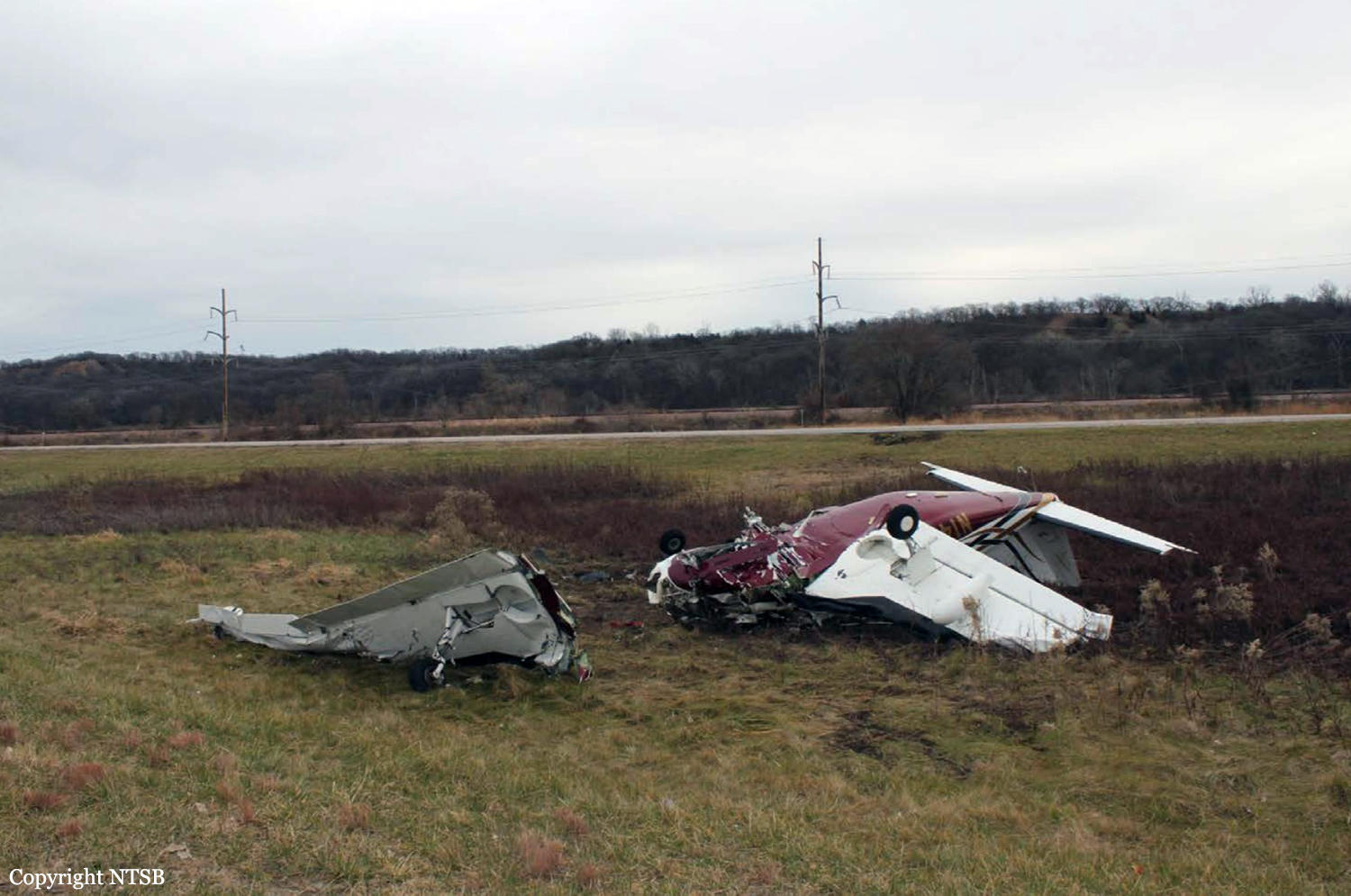
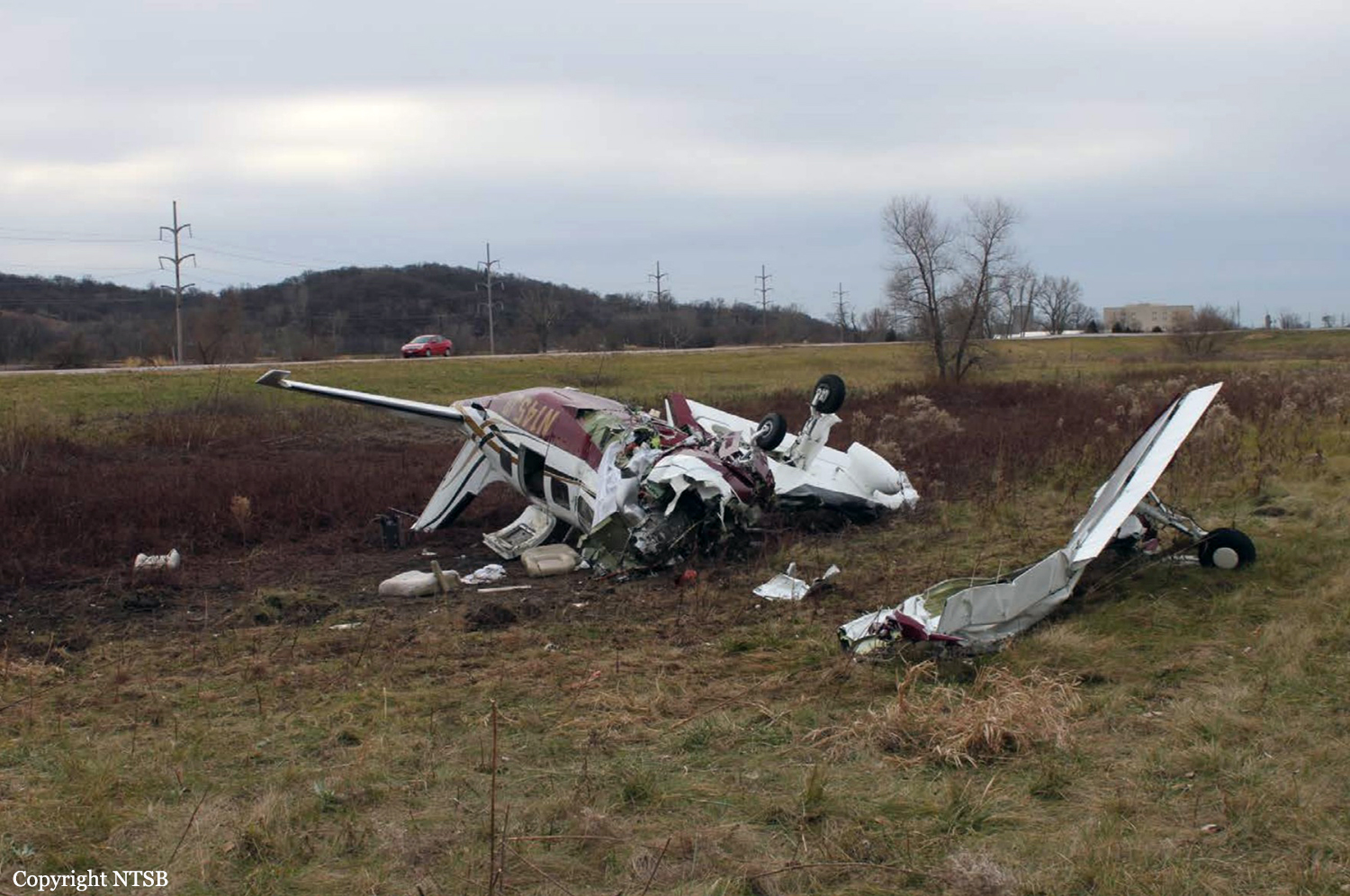
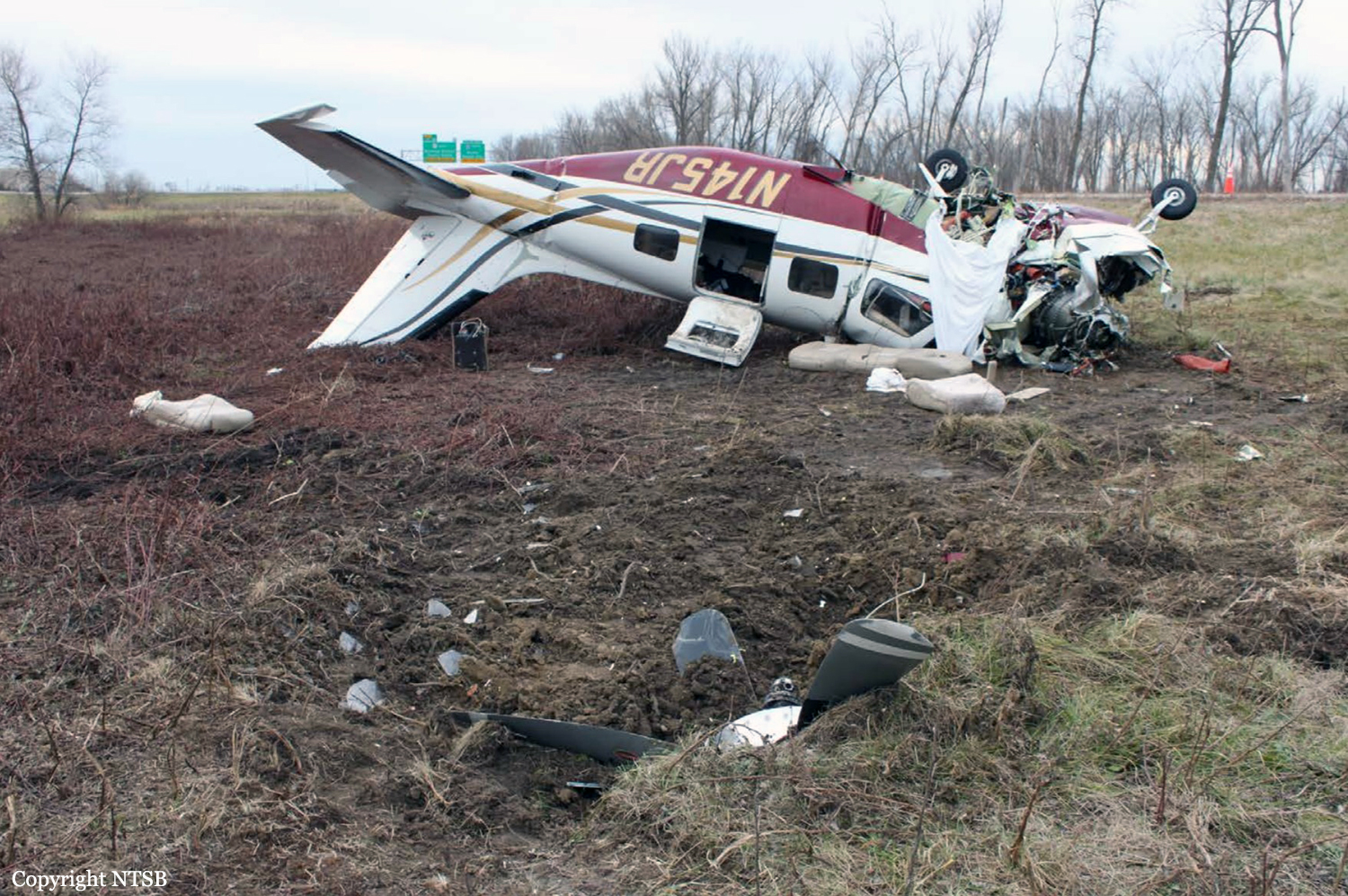
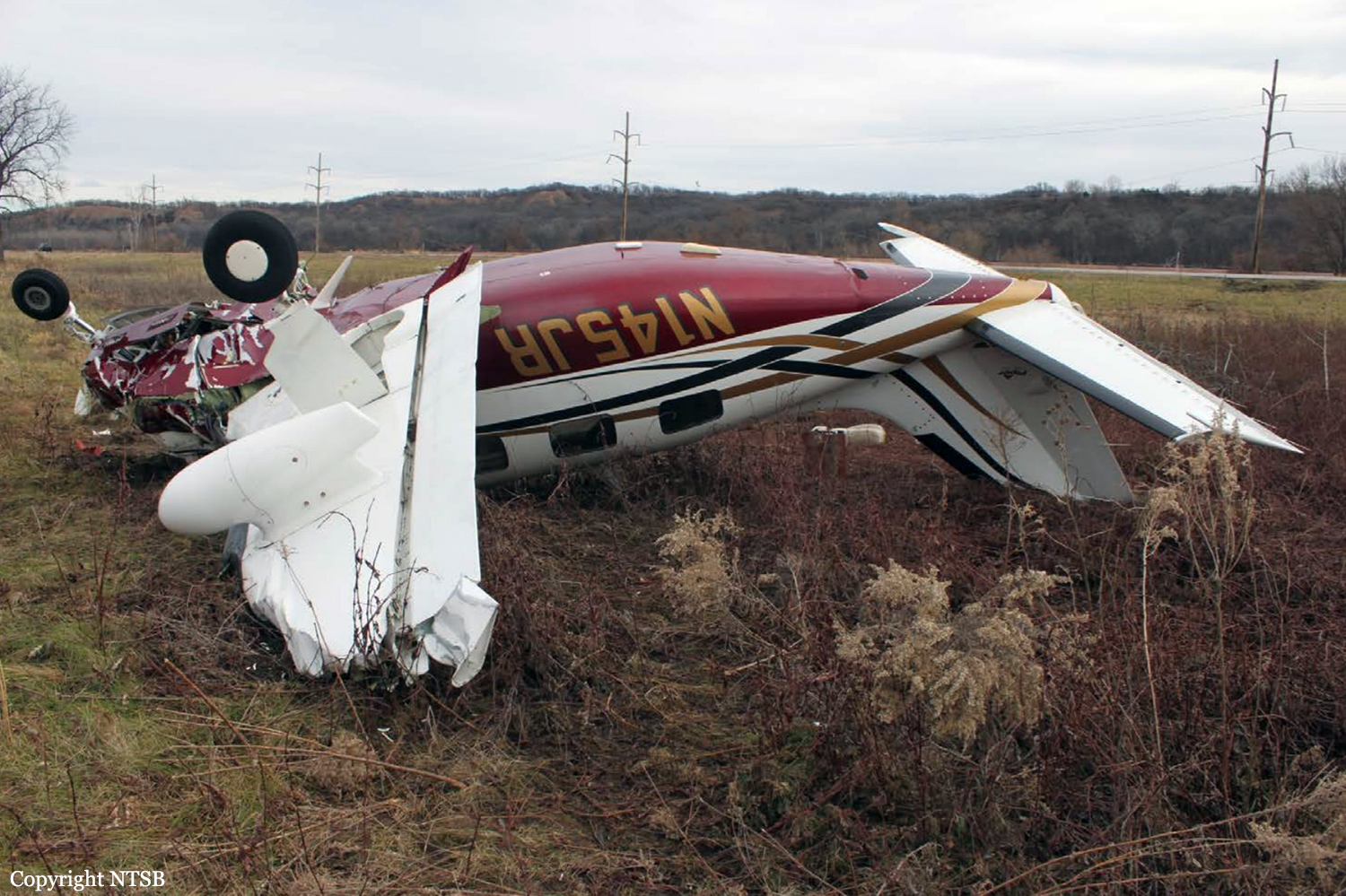
Crash of a Piper PA-46-500TP Meridian in Omaha: 1 killed

Date & Time: Dec 10, 2015 at 1153 LT
Registration:
N145JR
Flight Phase:
Flight Type:
Survivors:
No
Schedule:
Omaha - Trinidad
MSN:
46-97166
YOM:
2003
Crew on board:
1
Crew fatalities:
Pax on board:
0
Pax fatalities:
Other fatalities:
Total fatalities:
1
Captain / Total flying hours:
4840
Captain / Total hours on type:
280.00
Aircraft flight hours:
1047
Circumstances:
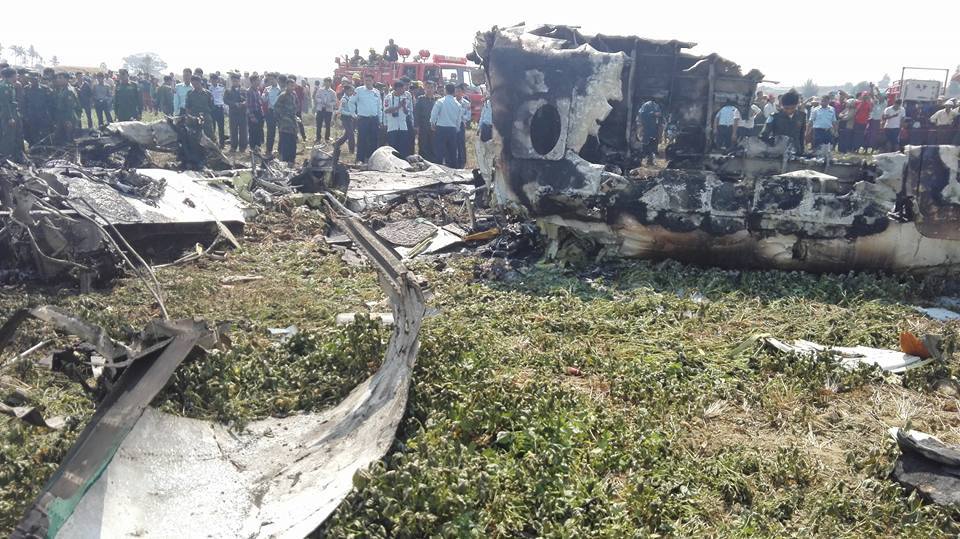
The private pilot was conducting a personal cross-country flight. Shortly after takeoff, the pilot told the air traffic controller that he needed to return to the airport due to an attitude heading reference system (AHRS) "miscommunication." Air traffic control radar data indicated that, at that time, the airplane was about 1.75 miles north of the airport on a southeasterly course about 2,000 ft. mean sea level. About 20 seconds after the pilot requested to return to the airport, the airplane began to descend. The airplane subsequently entered a right turn, which appeared to continue until the final radar data point. The airplane struck power lines about 3/4 of a mile from the airport while maneuvering within the traffic pattern. The power lines were about 75 ft. above ground level. A postaccident examination of the airframe and engine revealed no preimpact mechanical malfunctions or failures that would have precluded normal operation. Although the pilot reported a flight instrumentation issue to air traffic control, the investigation was unable to confirm whether such an anomaly occurred based on component testing and available information. Examination of the standby airspeed indicator revealed that the link arm had separated from the pin on the rocking shaft assembly; however, it likely separated during the accident sequence. No other anomalies were observed. Functional testing indicated that the standby airspeed indicator was likely functional and providing accurate airspeed information to the pilot throughout the flight. Finally, examination of the left and right annunciator panel bulb filaments associated with the left fuel pump advisory revealed that they were stretched, indicating that the left fuel pump advisory indication annunciated at the time of the accident; however, this likely occurred during the accident sequence as a result of an automatic attempt to activate the left fuel pump due to the loss of fuel pressure immediately after the left wing separated. Toxicology testing of the pilot detected low levels of three different sedating antihistamines; however, antemortem levels could not be determined nor could the underlying reason(s) for the pilot's use of these medications. As a result, it could not be determined whether pilot impairment occurred due to the use of the medications or the underlying condition(s) themselves. Although the pilot reported a flight instrumentation issue, this problem would not have affected his ability to control the airplane. Further, the pilot should have been able to see the power lines given the day/visual weather conditions. It is possible that the pilot become distracted by the noncritical anomaly, which resulted in his failure to maintain clearance from the power lines.
Probable cause:
The pilot's failure to maintain clearance from power lines while returning to the airport after becoming distracted by a noncritical flight instrumentation anomaly indication.
Final Report:
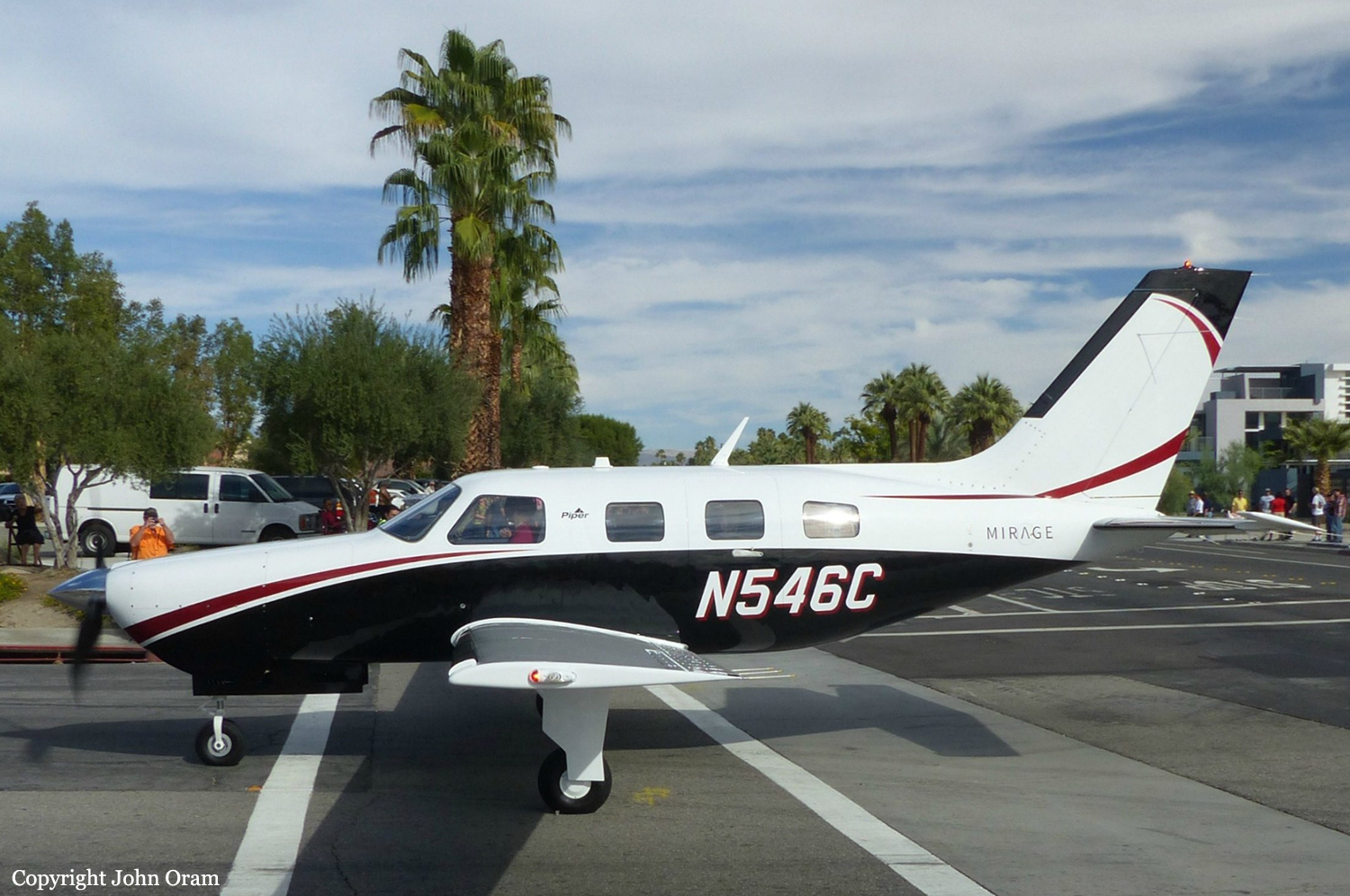
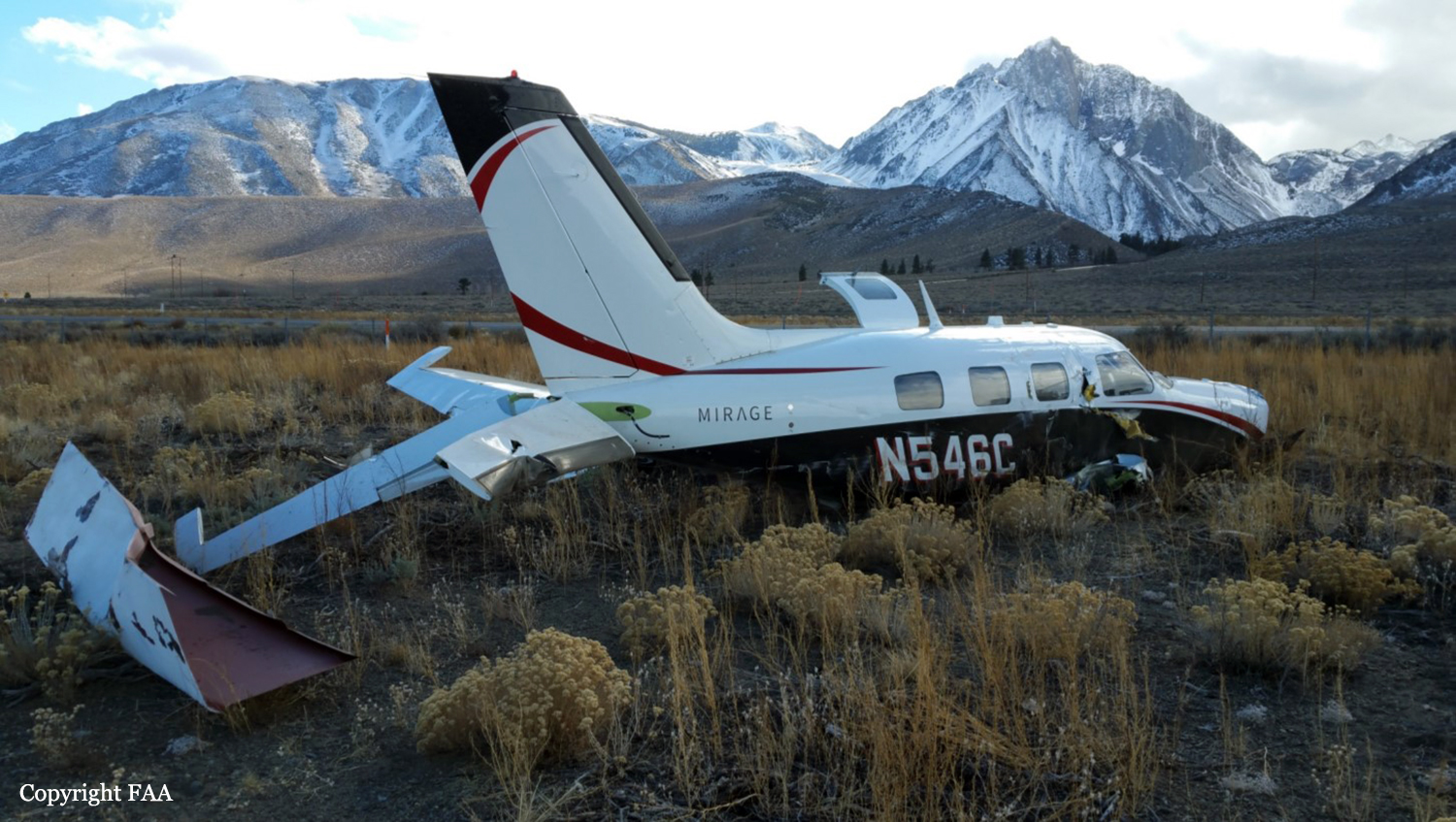
Crash of a Piper PA-46-350P Malibu Mirage in Mammoth Lakes

Date & Time: Dec 3, 2015 at 1220 LT
Operator:
Registration:
N546C
Flight Phase:
Flight Type:
Survivors:
Yes
Schedule:
Mammoth Lakes - Mammoth Lakes
MSN:
46-36626
YOM:
2014
Crew on board:
1
Crew fatalities:
Pax on board:
1
Pax fatalities:
Other fatalities:
Total fatalities:
0
Captain / Total flying hours:
4000
Captain / Total hours on type:
2000.00
Aircraft flight hours:
230
Circumstances:
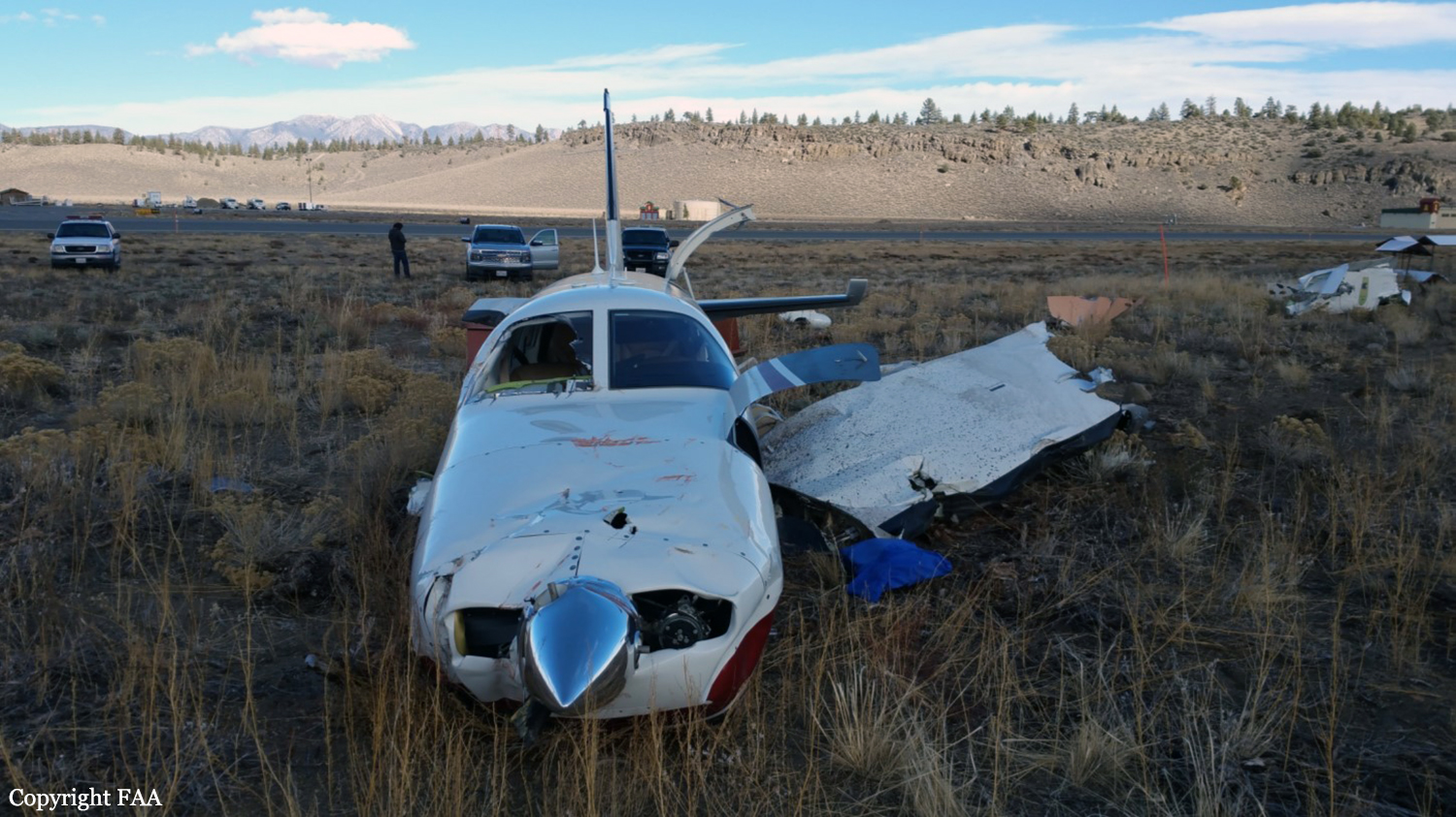
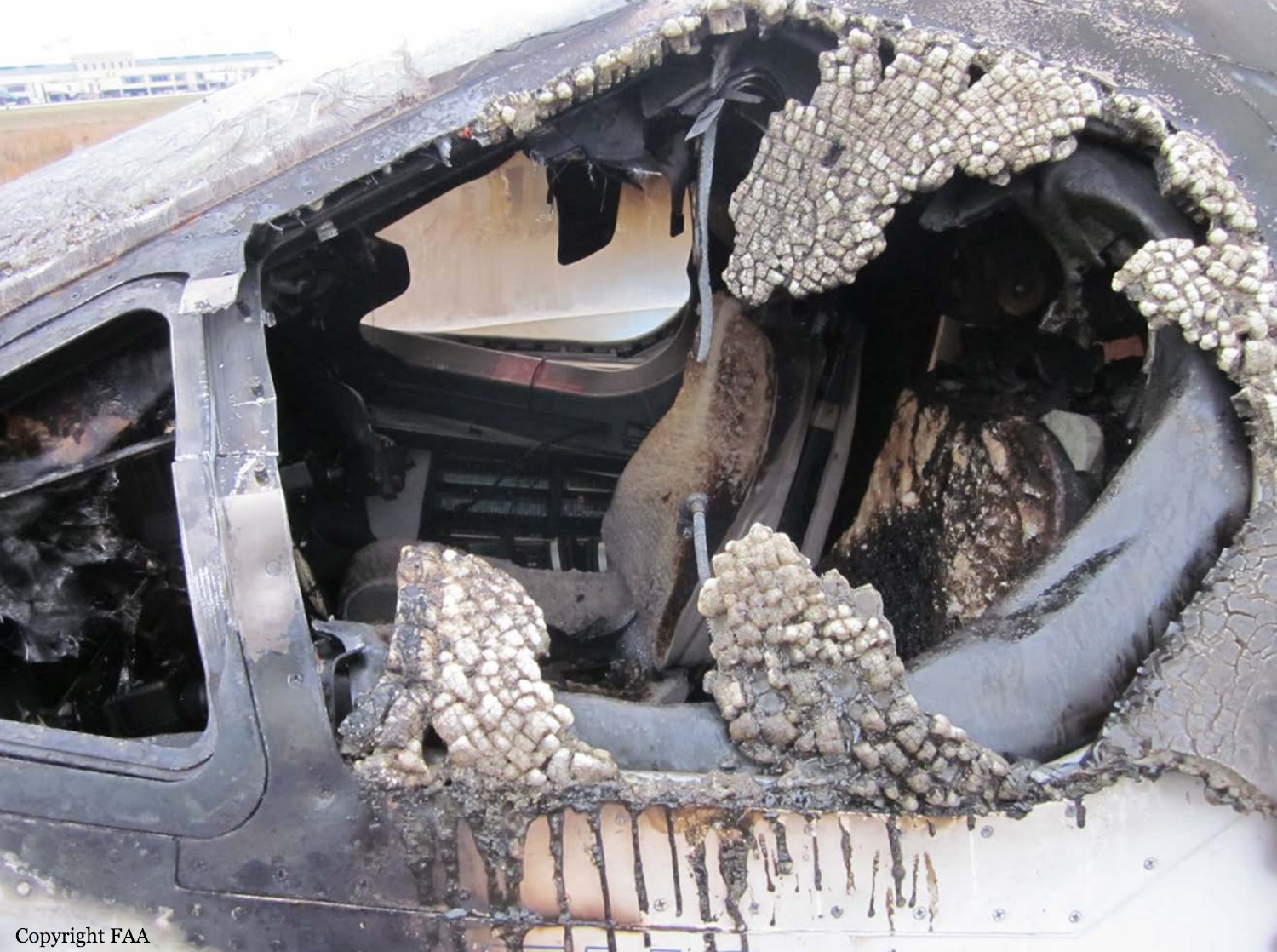
According to the pilot, he checked the winds via his onboard weather reporting device during the run-up, and he stated that the 25 knot wind sock was about ¾ full just moments before the takeoff roll. He reported that during the takeoff roll the airplane encountered a significant wind gust from the right. He stated that the wind gust forced the airplane to exit the left side of the runway, the landing gear collapsed, and the airplane collided with metal pylons which surrounded the wind sock. The airplane sustained substantial damage to both wings, fuselage, horizontal stabilizer and elevator. The pilot reported that there were no mechanical failures or anomalies prior to or during the flight that would have prevented normal flight operation. According to the Airport/Facility Directory, the Airport Remarks state: Airport located in mountainous terrain with occasional strong winds and turbulence. Lighted windsock available at runway ends and centerfield. With southerly crosswinds in excess of 15 knots, experiencing turbulence and possible windshear along first 3000´ of Runway 27. The reported wind at the airport during the time of the accident was from 200 degrees true at 22 knots, with gusts at 33 knots, and the departure runway heading was 27. According to the pilot operating hand book the maximum demonstrated crosswind component for this airplane is 17 knots. The crosswind component during the time of the accident was 26 knots.
Probable cause:
The pilot's decision to takeoff in high crosswind conditions resulting in the inability to maintain an adequate crosswind correction, consequently failing to maintain directional control and departing the runway, and subsequently colliding with fixed airfield equipment.
Final Report: