Crash of a Shijiazhuang Yunsunji Y-5B in Ningbo

Date & Time: Nov 19, 1999
Type of aircraft:
Registration:
B-8479
Survivors:
Yes
MSN:
0107
YOM:
1990
Location:
Country:
Region:
Crew on board:
2
Crew fatalities:
Pax on board:
5
Pax fatalities:
Other fatalities:
Total fatalities:
0
Circumstances:
Ten minutes after takeoff from Ningbo Airport, the crew informed ATC about engine problems and was cleared to return. After making a 180 turn, the crew started the descent and was eventually forced to attempt an emergency landing. The aircraft crashed in a rice paddy field located near the runway threshold. All seven occupants escaped uninjured while the aircraft was damaged beyond repair after it lost its undercarriage and one wing.
Probable cause:
Engine failure due to oil exhaustion.

Crash of a Beechcraft C90B King Air in Poznań

Date & Time: Nov 12, 1999 at 0930 LT
Type of aircraft:
Operator:
Registration:
D-IDIX
Survivors:
Yes
Schedule:
Melle-Grönegau – Poznań
MSN:
LJ-1495
YOM:
1997
Country:
Region:
Crew on board:
2
Crew fatalities:
Pax on board:
4
Pax fatalities:
Other fatalities:
Total fatalities:
0
Circumstances:
The crew departed Melle-Grönegau Airport at 0736LT on a charter flight to Poznań, carrying four passengers and two pilots. While descending to Poznań at an altitude of 7,000 feet, the crew was informed about weather conditions at destination with a visibility of 700 metres, an RVR of 650 metres and a ceiling at 200 feet. After being cleared to descent to runway 29, the crew was informed about local patches of fog at the airport and the RVR dropped to 350 metres. On short final, at a height of about 500 feet, as the crew was unable to establish any visual contact with the approach lights and the runway lights, the captain decided to initiate a go-around procedure. Shortly later, the aircraft struck the ground to the left of the runway. Upon impact, the undercarriage were torn off. The aircraft slid for about 150 metres and came to rest with both engines and the left wing torn of as well. All six occupants escaped uninjured.
Final Report:

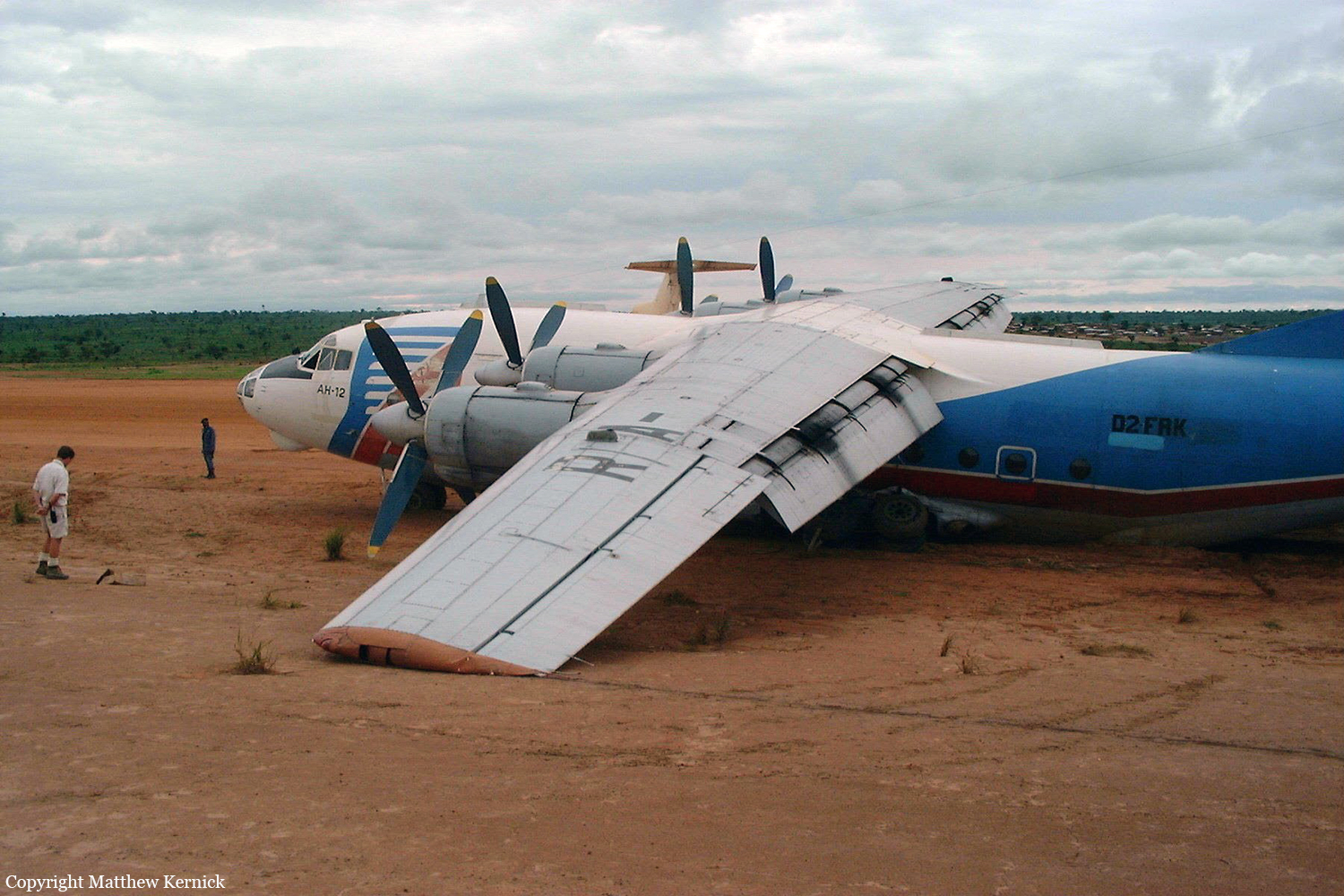
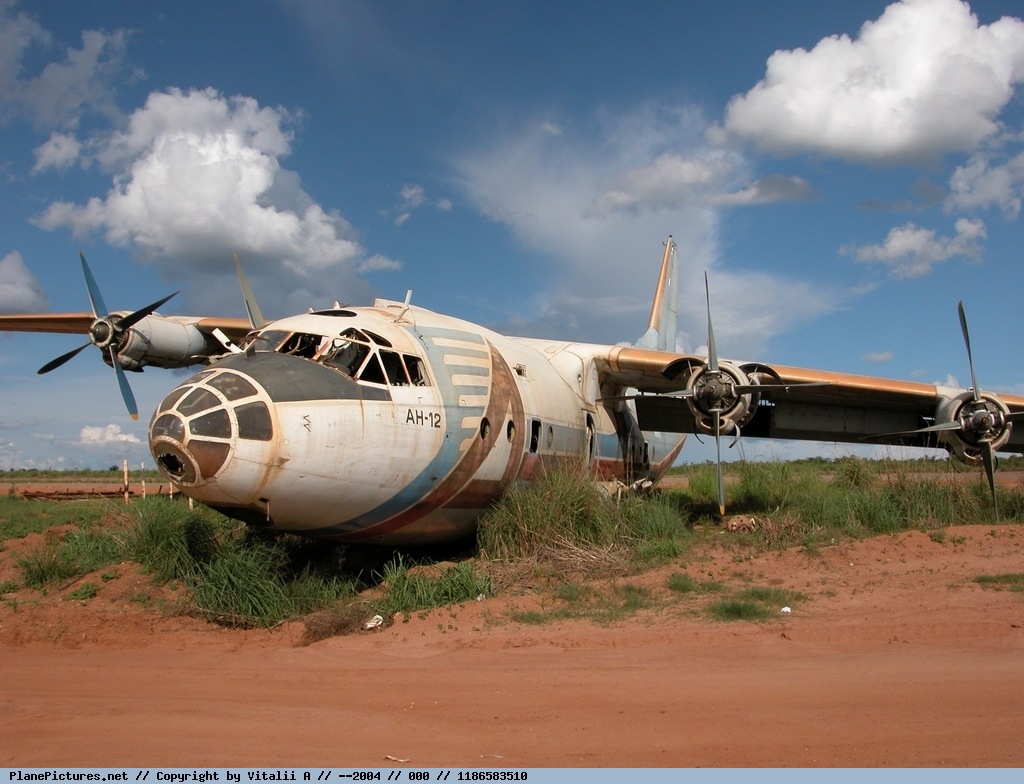
Crash of an Antonov AN-12B in Lucapa

Date & Time: Nov 12, 1999
Type of aircraft:
Operator:
Registration:
D2-FRK
Flight Type:
Survivors:
Yes
Schedule:
Luena – Lukapa
MSN:
6344202
YOM:
1966
Country:
Region:
Crew on board:
6
Crew fatalities:
Pax on board:
0
Pax fatalities:
Other fatalities:
Total fatalities:
0
Circumstances:
On landing, the left main gear collapsed. The aircraft skidded on runway for few dozen metres before coming to rest on the left side of the runway. While all six crew were unhurt, the aircraft was damaged beyond repair and abandoned at Lucapa Airport.
Probable cause:
Failure of the left main gear upon landing.

Crash of a Cessna T303 Crusader in Binghamton

Date & Time: Nov 1, 1999 at 0616 LT
Type of aircraft:
Operator:
Registration:
N511AR
Survivors:
Yes
Schedule:
Portland – Youngstown
MSN:
303-00192
YOM:
1982
Crew on board:
1
Crew fatalities:
Pax on board:
2
Pax fatalities:
Other fatalities:
Total fatalities:
0
Captain / Total flying hours:
2430
Captain / Total hours on type:
60.00
Aircraft flight hours:
5480
Circumstances:
While in cruise flight, at 6,000 feet, the left engine lost power. The pilot attempted a restart of the engine, but only about one-half rotation of the left engine propeller was observed, and the engine was secured. The pilot stated that he was unable to maintain altitude and initiated a decent. He requested and was cleared for an instrument approach at an airport where the weather conditions were, 1/4 statute mile of visibility, fog, and a vertical visibility of 100 feet. On the approach, at the minimum descent altitude, the pilot executed a missed approach. As the airplane climbed, the pilot reported to the controller that the 'best altitude [he] could get was 2,200 feet.' A second approach was initiated to the reciprocal runway. While on the second approach, the pilot 'was going to fly the aircraft right to the runway, and told the controller so.' He put the gear down, reduced power, and decided there was 'no hope for a go-around.' He then 'flew down past the decision height,' and about 70-80 feet above the ground, 'added a little power to smooth the landing.' The pilot also stated, 'The last thing I remember was the aircraft nose contacting the runway.' A passenger stated that once the pilot could not see the runway, [the pilot] 'applied power, pitched the nose up,' and attempted a 'go-around' similar to the one that was executed on the first approach. Disassembly of the left engine revealed that the crankshaft was fatigue fractured between connecting rod journal number 2 and main journal number 2. Review of the pilot's operating handbook revealed that the single engine service ceiling, at a weight of 4,800 pounds, was 11,700 feet. The average single engine rate of climb, at a pressure altitude of 6,000 feet, was 295 feet per minute. The average single engine rate of climb, at a pressure altitude of 1,625 feet, was 314 feet per minute. Review of the ILS approach plate for Runway 34 revealed that the decision height was 200 feet above the ground.
Probable cause:
The pilot's improper in-flight decision to descend below the decision height without the runway environment in sight, and his failure to execute a missed approach. A factor in the accident was the failed crankshaft.
Final Report:

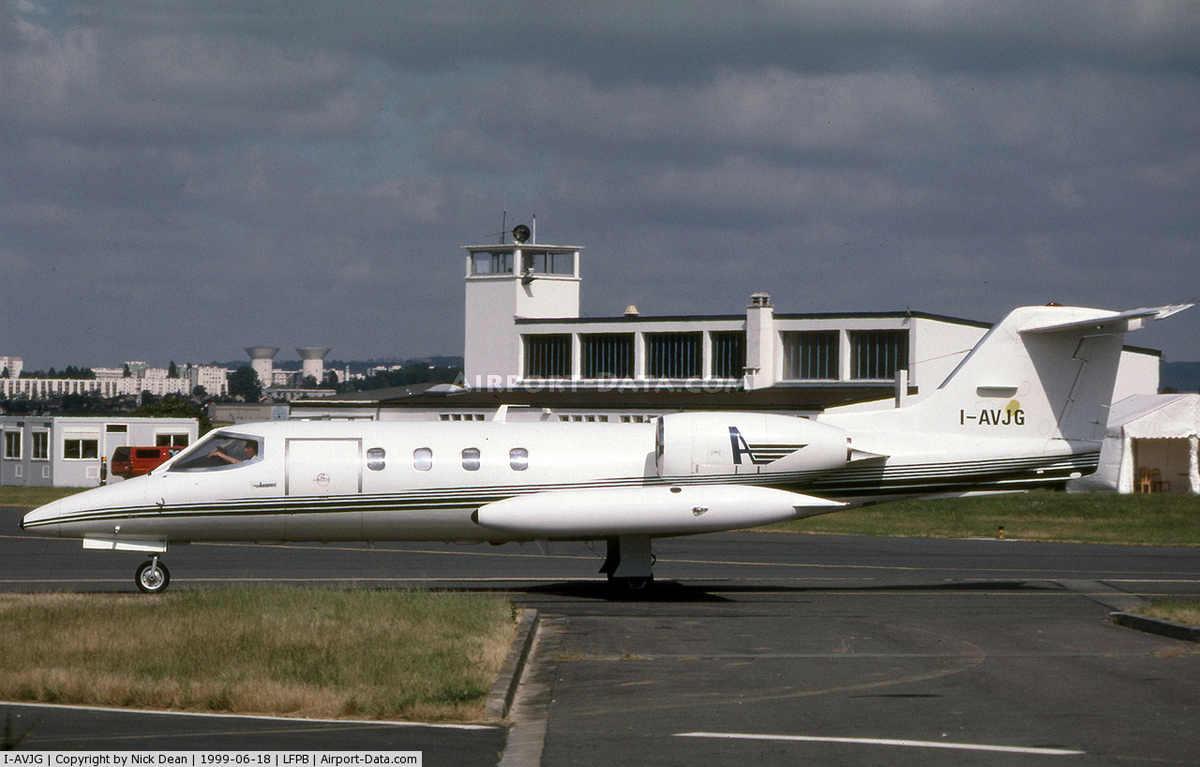
Crash of a Learjet 35A off Genoa: 3 killed

Date & Time: Oct 24, 1999 at 1015 LT
Type of aircraft:
Operator:
Registration:
I-AVJG
Survivors:
No
Schedule:
Milan - Genoa
MSN:
35-189
YOM:
1978
Location:
Country:
Region:
Crew on board:
2
Crew fatalities:
Pax on board:
1
Pax fatalities:
Other fatalities:
Total fatalities:
3
Circumstances:
The aircraft was completing a charter flight from Milan to Genoa with two pilots and one passenger on board, the Director of an Italian Company working for Coca Cola. On approach to Genoa-Cristoforo Colombo Airport, the crew encountered poor weather conditions with low clouds and rain falls. Due to insufficient visibility, the crew initiated a go-around procedure. Few minutes later, while completing a second attempt to land, the aircraft descended too low and crashed in the sea some 8 km short of runway. The aircraft was destroyed upon impact and all three occupants were killed.

Crash of a Rockwell Shrike Commander 500S in Recife

Date & Time: Oct 21, 1999 at 0745 LT
Registration:
PP-SEA
Flight Type:
Survivors:
Yes
Schedule:
Recife – Patos – Sousa – Mossoró – Caicó – Currais Novos – Recife
MSN:
500-1801-16
YOM:
1968
Country:
Crew on board:
2
Crew fatalities:
Pax on board:
0
Pax fatalities:
Other fatalities:
Total fatalities:
0
Captain / Total flying hours:
4000
Captain / Total hours on type:
600.00
Copilot / Total flying hours:
500
Copilot / Total hours on type:
100
Circumstances:
The twin engine aircraft departed Recife-Guararapes Airport in the early morning on a round cargo trip with a load of medicines. Complete stops were made in Patos, Sousa, Mossoró, Caicó and Currais Novos. On the last leg from Currais Novos to Recife, while approaching Recife-Guararapes Airport, both engines failed simultaneously after a total flight of 3 hours and 50 minutes. The crew declared an emergency and attempted to land immediately when the aircraft collided with trees and power cables before crashing in a wooded area located 17 km short of runway 18. Both pilots were injured and the aircraft was damaged beyond repair.
Probable cause:
Double engine failure on final approach due to fuel exhaustion. The following contributing factors were identified:
- Poor flight preparation and planning,
- The crew was overconfident,
- The crew miscalculated the total fuel quantity needed for the entire mission,
- Wrong fuel consumption calculation,
- Taxing time and wind component were not taken into consideration in the fuel consumption calculation,
- Incorrect values relative to the aircraft performances,
- Poor crew resources management.
Final Report:

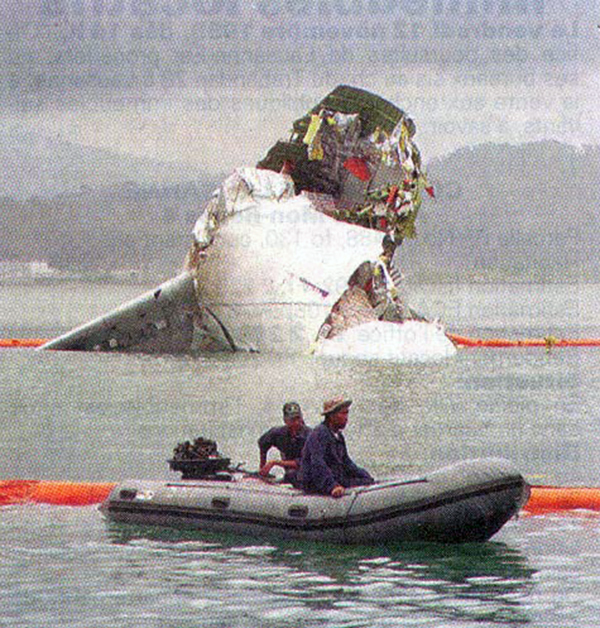
Crash of a McDonnell Douglas MD-11F in Subic Bay

Date & Time: Oct 17, 1999 at 2357 LT
Type of aircraft:
Operator:
Registration:
N581FE
Flight Type:
Survivors:
Yes
Schedule:
Shanghai – Subic Bay
MSN:
48419
YOM:
1990
Flight number:
FDX087
Country:
Region:
Crew on board:
2
Crew fatalities:
Pax on board:
0
Pax fatalities:
Other fatalities:
Total fatalities:
0
Captain / Total flying hours:
14000
Captain / Total hours on type:
1430.00
Copilot / Total flying hours:
5700
Copilot / Total hours on type:
2300
Aircraft flight hours:
30278
Aircraft flight cycles:
5817
Circumstances:
The aircraft departed Shanghai-Hongqiao Airport at 2116LT on a cargo flight to Subic Bay with a load of electronics and garments. Weather conditions at Subic Bay Airport was at follow: scattered at 1,800 feet and 7,000 feet, light rain, wind calm and visibility six km. At 2315LT, the aircraft landed on runway 07 (2,400 metres long). Unable to stop within the remaining distance (the runway was wet), the aircraft overran and plunged in the Subic Bay. Both pilots were injured and the aircraft was totally destroyed.
Probable cause:
The failure of the flight crew to properly address an erroneous airspeed indication during descent and landing, their failure to verify and select the correct airspeed by checking the standby airspeed indicator, and their failure to execute a missed approach. These failures led to an excessive approach and landing speed that resulted in a runway overshoot. Contributing factors to the accident were clogged pitot tube drain holes, the MD-11's insufficient alerting system for airspeed anomalies, and the failure of the SEL ELEV FEEL MAN and SEL FLAP LIM OVR D checklists to refer the crew to the standby airspeed indicator.
Final Report:

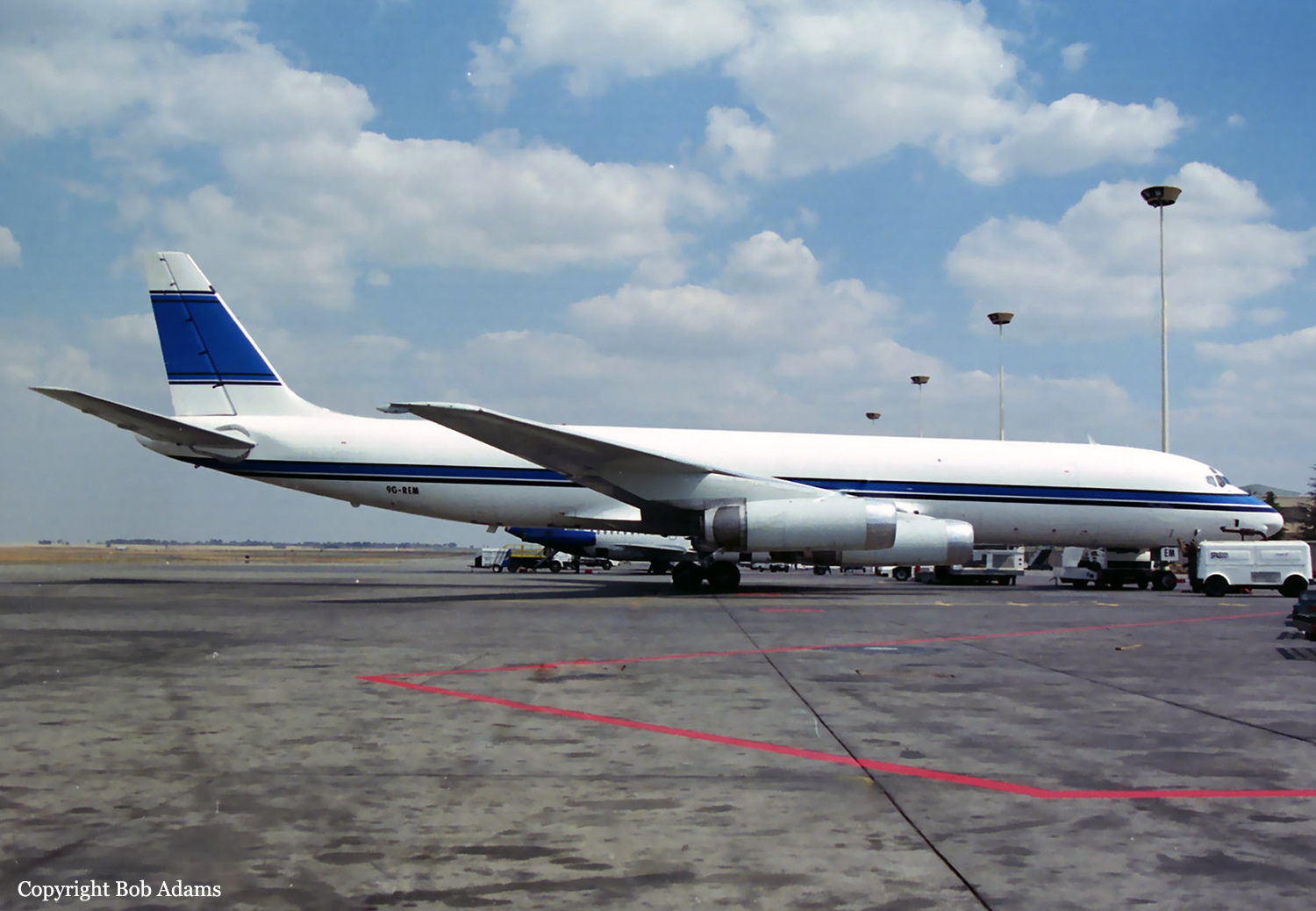
Crash of a Douglas DC-8-62F in Kinshasa

Date & Time: Oct 16, 1999 at 1146 LT
Type of aircraft:
Registration:
9G-REM
Flight Type:
Survivors:
Yes
Schedule:
Ostend - Tunis - Kinshasa
MSN:
45910
YOM:
1967
Region:
Crew on board:
6
Crew fatalities:
Pax on board:
2
Pax fatalities:
Other fatalities:
Total fatalities:
0
Circumstances:
While on an ILS approach to runway 24 at Kinshasa-N'Djili Airport, the captain decided to initiate a go-around procedure. While in a circuit in the vicinity of the airport, the pilot informed ATC he would complete the second approach visually and made a short pattern because of low fuel reserve. On approach with a 6 knots tailwind, the aircraft was unstable and not properly aligned when it landed hard on the left of the centerline. Out of control, it veered off runway to the left, lost its undercarriage and came to rest few hundred metres further, bursting into flames. All eight occupants were rescued, among them one was slightly injured. The aircraft was totally destroyed by impact forces and a post crash fire.
Probable cause:
Wrong approach configuration.

Crash of a Mitsubishi MU-300 Diamond I in Parma

Date & Time: Oct 15, 1999 at 1058 LT
Type of aircraft:
Operator:
Registration:
I-VIGI
Survivors:
Yes
Schedule:
Rome - Parma
MSN:
013
YOM:
1981
Country:
Region:
Crew on board:
3
Crew fatalities:
Pax on board:
5
Pax fatalities:
Other fatalities:
Total fatalities:
0
Circumstances:
While on an ILS approach to Parma Airport in poor weather conditions, the aircraft struck the ground and crashed in an open field about 3,5 km short of runway. All eight occupants were rescued, among them one pilot was injured. The aircraft was damaged beyond repair. The visibility was limited to 800 metres due to foggy conditions.

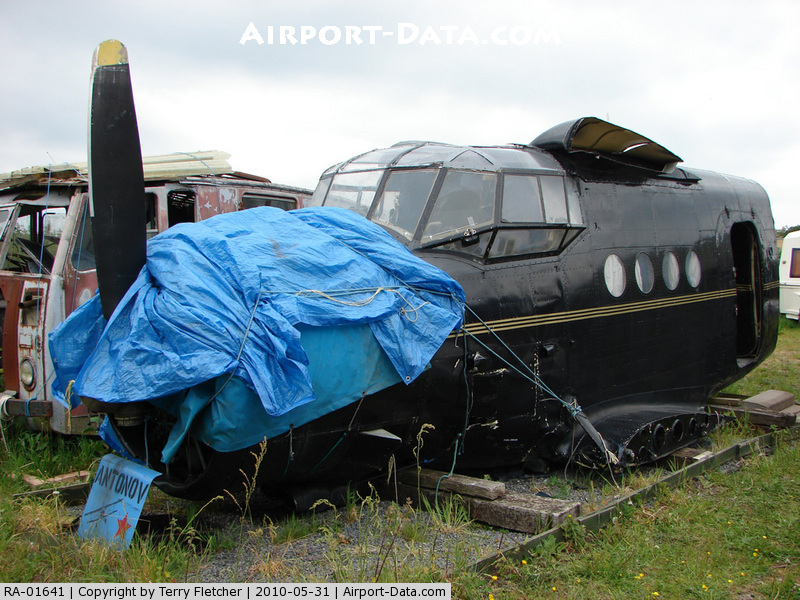
Crash of a PZL-Mielec AN-2R in Mitton

Date & Time: Oct 15, 1999
Type of aircraft:
Registration:
RA-01641
Flight Type:
Survivors:
Yes
MSN:
1G190-47
YOM:
1981
Region:
Crew on board:
0
Crew fatalities:
Pax on board:
0
Pax fatalities:
Other fatalities:
Total fatalities:
0
Circumstances:
On approach, the single engine aircraft collided with trees and crash landed. There were no casualties but the aircraft was damaged beyond repair.