Crash of a McDonnell Douglas MD-11F in Subic Bay

Date & Time: Oct 17, 1999 at 2357 LT
Type of aircraft:
Operator:
Registration:
N581FE
Flight Type:
Survivors:
Yes
Schedule:
Shanghai – Subic Bay
MSN:
48419
YOM:
1990
Flight number:
FDX087
Country:
Region:
Crew on board:
2
Crew fatalities:
Pax on board:
0
Pax fatalities:
Other fatalities:
Total fatalities:
0
Captain / Total flying hours:
14000
Captain / Total hours on type:
1430.00
Copilot / Total flying hours:
5700
Copilot / Total hours on type:
2300
Aircraft flight hours:
30278
Aircraft flight cycles:
5817
Circumstances:
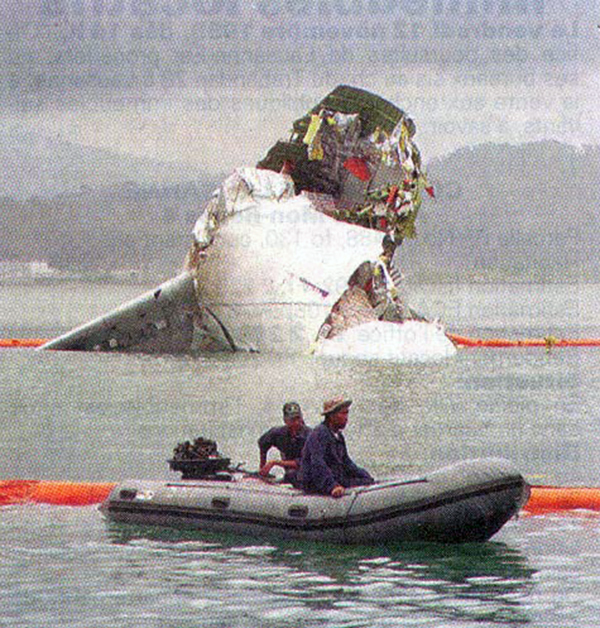
The aircraft departed Shanghai-Hongqiao Airport at 2116LT on a cargo flight to Subic Bay with a load of electronics and garments. Weather conditions at Subic Bay Airport was at follow: scattered at 1,800 feet and 7,000 feet, light rain, wind calm and visibility six km. At 2315LT, the aircraft landed on runway 07 (2,400 metres long). Unable to stop within the remaining distance (the runway was wet), the aircraft overran and plunged in the Subic Bay. Both pilots were injured and the aircraft was totally destroyed.
Probable cause:
The failure of the flight crew to properly address an erroneous airspeed indication during descent and landing, their failure to verify and select the correct airspeed by checking the standby airspeed indicator, and their failure to execute a missed approach. These failures led to an excessive approach and landing speed that resulted in a runway overshoot. Contributing factors to the accident were clogged pitot tube drain holes, the MD-11's insufficient alerting system for airspeed anomalies, and the failure of the SEL ELEV FEEL MAN and SEL FLAP LIM OVR D checklists to refer the crew to the standby airspeed indicator.
Final Report:

Crash of a Douglas DC-8-62F in Kinshasa

Date & Time: Oct 16, 1999 at 1146 LT
Type of aircraft:
Registration:
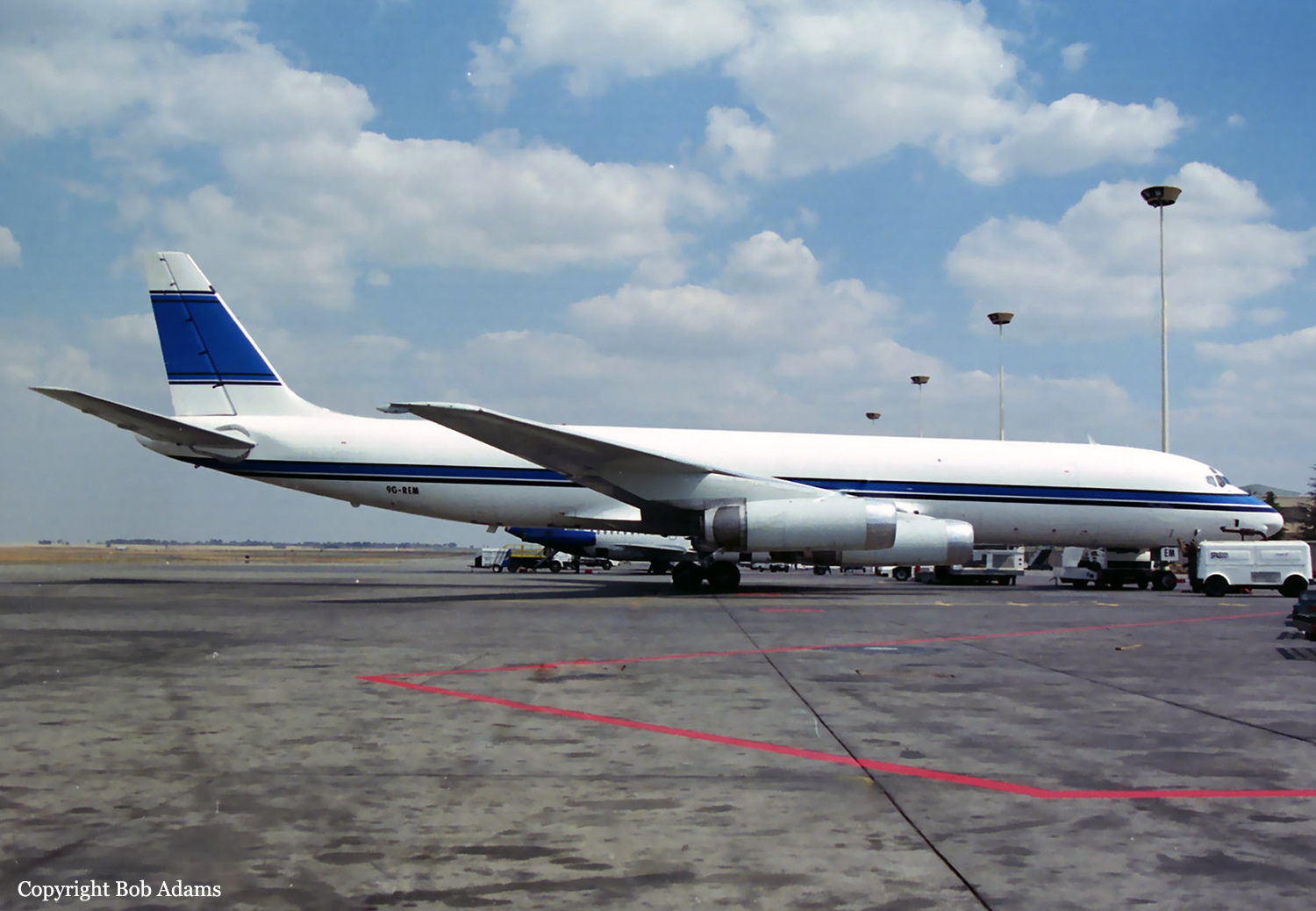
9G-REM
Flight Type:
Survivors:
Yes
Schedule:
Ostend - Tunis - Kinshasa
MSN:
45910
YOM:
1967
Region:
Crew on board:
6
Crew fatalities:
Pax on board:
2
Pax fatalities:
Other fatalities:
Total fatalities:
0
Circumstances:
While on an ILS approach to runway 24 at Kinshasa-N'Djili Airport, the captain decided to initiate a go-around procedure. While in a circuit in the vicinity of the airport, the pilot informed ATC he would complete the second approach visually and made a short pattern because of low fuel reserve. On approach with a 6 knots tailwind, the aircraft was unstable and not properly aligned when it landed hard on the left of the centerline. Out of control, it veered off runway to the left, lost its undercarriage and came to rest few hundred metres further, bursting into flames. All eight occupants were rescued, among them one was slightly injured. The aircraft was totally destroyed by impact forces and a post crash fire.
Probable cause:
Wrong approach configuration.

Crash of a Mitsubishi MU-300 Diamond I in Parma

Date & Time: Oct 15, 1999 at 1058 LT
Type of aircraft:
Operator:
Registration:
I-VIGI
Survivors:
Yes
Schedule:
Rome - Parma
MSN:
013
YOM:
1981
Country:
Region:
Crew on board:
3
Crew fatalities:
Pax on board:
5
Pax fatalities:
Other fatalities:
Total fatalities:
0
Circumstances:
While on an ILS approach to Parma Airport in poor weather conditions, the aircraft struck the ground and crashed in an open field about 3,5 km short of runway. All eight occupants were rescued, among them one pilot was injured. The aircraft was damaged beyond repair. The visibility was limited to 800 metres due to foggy conditions.

Crash of a PZL-Mielec AN-2R in Mitton

Date & Time: Oct 15, 1999
Type of aircraft:
Registration:
RA-01641
Flight Type:
Survivors:
Yes
MSN:
1G190-47
YOM:
1981
Region:
Crew on board:
0
Crew fatalities:
Pax on board:
0
Pax fatalities:
Other fatalities:
Total fatalities:
0
Circumstances:
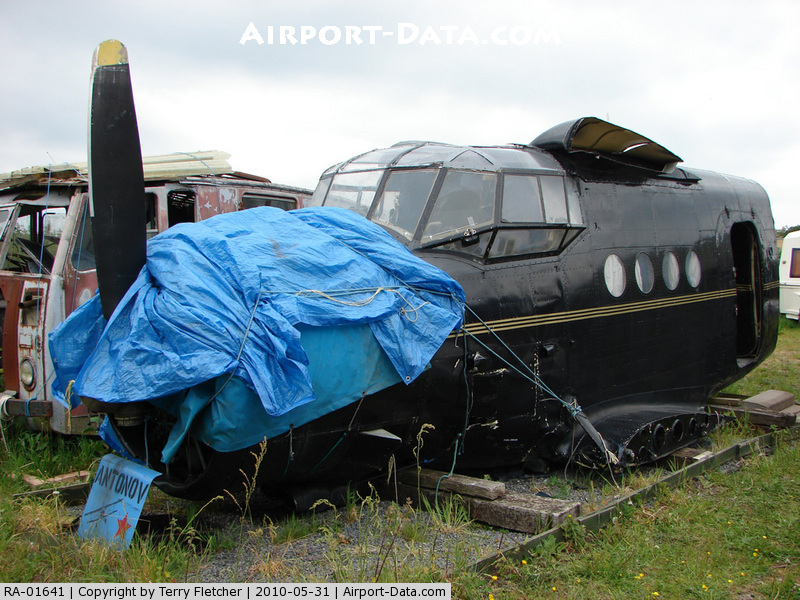
On approach, the single engine aircraft collided with trees and crash landed. There were no casualties but the aircraft was damaged beyond repair.

Crash of an Antonov AN-12BP in Pekanbaru

Date & Time: Sep 29, 1999
Type of aircraft:
Operator:
Registration:
LZ-SFJ
Flight Type:
Survivors:
Yes
MSN:
4 3 421 05
YOM:
1964
Country:
Region:
Crew on board:
7
Crew fatalities:
Pax on board:
0
Pax fatalities:
Other fatalities:
Total fatalities:
0
Circumstances:
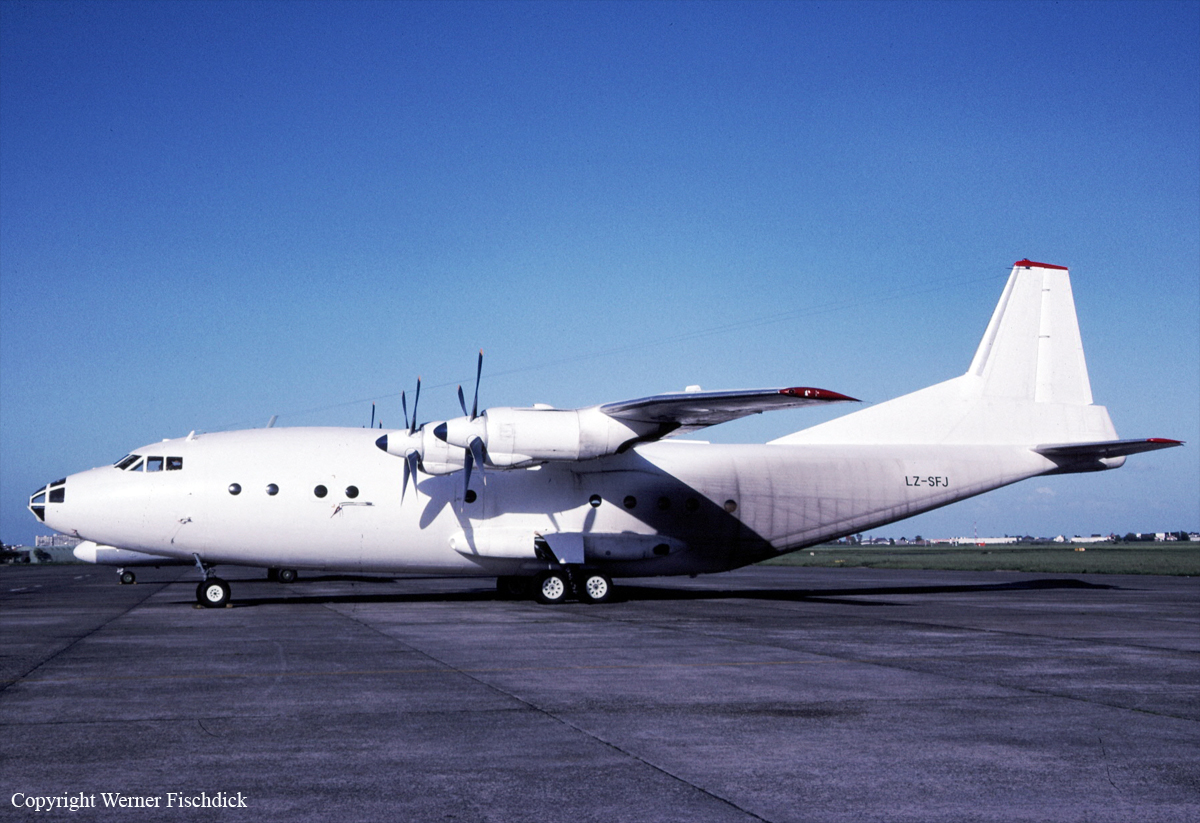
On final approach to Pekanbaru-Simpang Tiga Airport, the four engine aircraft struck the ground and crashed 1,300 metres short of runway and came to rest, broken in two. All seven crew members escaped with minor injuries. The aircraft was completing a cargo flight on behalf of Mandala Airlines.

Crash of a Piper PA-31P Pressurized Navajo in Louisville: 1 killed

Date & Time: Sep 27, 1999 at 0605 LT
Type of aircraft:
Operator:
Registration:
N100EE
Flight Type:
Survivors:
No
Schedule:
Tupelo - Louisville
MSN:
31-7530003
YOM:
1975
Crew on board:
1
Crew fatalities:
Pax on board:
0
Pax fatalities:
Other fatalities:
Total fatalities:
1
Captain / Total flying hours:
4100
Circumstances:
The pilot received a weather briefing before departure and when near the destination airport, cleared for the NDB approach. The pilot reported the procedure turn inbound; published MDA is 1,300 feet msl. Witnesses on the airport reported heavy low fog and heard the pilot announce over the UNICOM frequency, 'Oh there is fog rolling into Starkville too?' One of the witnesses advised the pilot they could go to another airport due to the fog; the pilot responded he would execute the approach. The witnesses heard the engines operating at full power then heard the impact and saw a fireball. The airplane impacted the runway inverted, slid across the runway, and came to rest in grass off the runway. A post crash fire destroyed the airplane. Tree contact approximately 972 feet northwest of the runway impact location separated approximately 51 inches of the left wing. Examination of the engines, propellers, and flight controls revealed no evidence of preimpact failure or malfunction. The pilot had twice failed his airline transport pilot checkride. The designated examiner of the second failed flight test indicated the pilot was marginal in all flight operations. The NDB was checked after the accident; no discrepancies were noted.
Probable cause:
The pilot's disregard for the published minimum descent altitude resulting in tree contact and separation of 51 inches of the left wing. Findings in the investigation were the pilot's two failures of the ATP checkride in a multiengine airplane.
Final Report:

Crash of a Learjet 24A in Gainesville

Date & Time: Sep 26, 1999 at 0935 LT
Type of aircraft:
Operator:
Registration:
N224SC
Flight Type:
Survivors:
Yes
Schedule:
Sarasota - Gainesville
MSN:
24-100
YOM:
1966
Crew on board:
2
Crew fatalities:
Pax on board:
3
Pax fatalities:
Other fatalities:
Total fatalities:
0
Captain / Total flying hours:
4830
Captain / Total hours on type:
580.00
Aircraft flight hours:
12869
Circumstances:
The pilots stated that approach and landing were normal. During landing rollout, about 2,000 feet down the runway, the brakes became ineffective. The aircraft continued to roll off the end of the runway, down an embankment, across a 4 lane road, and came to rest in a drainage ditch. Post-crash examination of the main landing gear brakes showed that 3 out of the 4 brake assemblies were worn beyond allowable limits and all 4 antiskid wheel generators were not producing voltage within the allowable limits. The outboard right main tire had failed during landing roll do to the antiskid becoming inoperative due to the low voltage of the wheel generator. The airplane had received an A-1 through A-6 inspection 2 days before the accident and this was the first flight since the inspection. The A-5 inspection requires inspection of the landing gear brake assemblies for wear, cracks, hydraulic leaks, and release.
Probable cause:
The inadequate inspection of the main landing gear brake assemblies, which lead to operation of the aircraft with worn brakes that failed during the landing roll. Contributing factors were the descending terrain, roadway and ditch.
Final Report:

Crash of a Cessna 421C Golden Eagle III in Santa Monica

Date & Time: Sep 23, 1999 at 0703 LT
Registration:
N26585
Survivors:
Yes
Schedule:
Long Beach – Santa Monica
MSN:
421C-0832
YOM:
1980
Crew on board:
1
Crew fatalities:
Pax on board:
0
Pax fatalities:
Other fatalities:
Total fatalities:
0
Captain / Total flying hours:
4050
Captain / Total hours on type:
2150.00
Aircraft flight hours:
3915
Circumstances:
During the final approach, while executing a VOR-A instrument approach, the airplane landed hard, collided with the runway VASI display, and caught fire. The airplane had received radar vectors for the approach and was turned to a 20-degree intercept for the final approach course when 2.5 miles from the initial approach fix. Radar track data showed the airplane continued inbound to the field slightly left of course with a ground speed varying between 135 and 125 knots and a descent rate of approximately 700 feet per minute. The pilot said he descended through the clouds about 850 feet above ground level and saw the airport approximately 1 to 2 miles ahead. He noticed that he was left of the runway centerline and corrected to the right. He realized that he had overcorrected and turned back to the left. The pilot reported that he felt that the approach was stabilized although the descent rate was greater than usual. The airplane impacted the ground about 1,000 feet from the approach end of the runway abeam the air traffic control tower on an approximate heading of 185 degrees. The impact collapsed the landing gear and the airplane slid forward another 1,000 feet down the runway and came to rest approximately midfield on the runway. The pilot stated that he had not experienced any mechanical problems with the aircraft or the navigation equipment prior to the accident. A Special Weather Observation taken at the time of the accident contained the following: sky condition overcast at 500 feet; winds from 230 degrees at 3 knots; visibility 2 miles.
Probable cause:
The failure of the pilot to establish and maintain a stabilized approach, which resulted in a hard landing and on-ground collision with the airport VASI display.
Final Report:

Crash of a Piper PA-31-350 Navajo Chieftain in Newnan: 2 killed

Date & Time: Sep 21, 1999 at 0522 LT
Registration:
N27343
Flight Type:
Survivors:
No
Schedule:
Charlotte - Newnan
MSN:
31-7752163
YOM:
1977
Crew on board:
1
Crew fatalities:
Pax on board:
1
Pax fatalities:
Other fatalities:
Total fatalities:
2
Captain / Total flying hours:
2000
Captain / Total hours on type:
250.00
Aircraft flight hours:
8340
Circumstances:
The flight was cleared for a localizer approach to runway 32 at Newnan-Coweta County Airport during dark night conditions. About 8 minutes later the pilot reported to air traffic control that he had missed approach and would like to try another approach. The flight was radar vectored to the final approach course and again cleared for the localizer runway 32 approach. The flight was observed on radar to continue the approach until a point about 4 nautical miles from the airport, at which time radar contact was lost. The last observed altitude was 1,600 feet msl. The aircraft collided with 80-foot tall trees, while established on the localizer for runway 32, about 1.3 nautical miles from the runway. About the time of the accident the weather at the airport was reported as a cloud ceiling 200 feet agl, and visibility .75 statute miles. Post crash examination of the aircraft structure, flight controls, engines, propellers, and systems showed no evidence of pre-crash failure or malfunction.
Probable cause:
The pilot's failure to maintain the minimum descent altitude while executing a localizer approach. Contributing factors were low ceilings and dark night conditions as well as the trees.
Final Report:

Crash of a Rockwell Shrike Commander 500S in Santa Catalina La Tinta: 6 killed

Date & Time: Sep 16, 1999 at 1130 LT
Operator:
Registration:
TG-RBK
Survivors:
No
Schedule:
Guatemala City – Santa Catalina La Tinta
MSN:
500-1809-19
YOM:
1968
Country:
Crew on board:
1
Crew fatalities:
Pax on board:
5
Pax fatalities:
Other fatalities:
Total fatalities:
6
Circumstances:
On approach to a private airstrip located near Santa Catalina La Tinta, the twin engine aircraft crashed in unknown circumstances 300 metres short of runway. The aircraft was destroyed and all six occupants were killed. Weather conditions at the time of the accident were poor with low clouds and rain falls. Thunderstorm activity was reported all along the route.