Crash of a Beechcraft AT-11 Kansan in Yuba City

Date & Time: Jul 11, 1960
Type of aircraft:
Operator:
Registration:
N6957C
Flight Phase:
Flight Type:
Survivors:
Yes
Site:
MSN:
5076
YOM:
1943
Crew on board:
2
Crew fatalities:
Pax on board:
0
Pax fatalities:
Other fatalities:
Total fatalities:
0
Circumstances:
While conducting a firefighting mission in the region of Yuba City, the crew was forced to attempt an emergency landing for unknown reason. The twin engine aircraft crash landed in canyon and came to rest in flames. While both occupants were evacuated safely, the aircraft was destroyed by fire.

Crash of an Antonov AN-2 near Aldan: 3 killed

Date & Time: Jul 5, 1960 at 0445 LT
Type of aircraft:
Operator:
Registration:
CCCP-98282
Flight Phase:
Survivors:
Yes
Site:
MSN:
1101 473 09
YOM:
0
Country:
Region:
Crew on board:
4
Crew fatalities:
Pax on board:
0
Pax fatalities:
Other fatalities:
Total fatalities:
3
Aircraft flight hours:
1896
Circumstances:
The crew was performing a geophysical survey flight in the west part of Aldan, Yakutia. At the end of the mission, the crew was returning to the east and while flying face to the sun at a height of 1,046 meters, the single engine aircraft struck tree tops and crashed in flames in a dense wooded area located about 145 km west of Aldan. The captain and the flight engineer were killed instantly. The flight operator and the navigator were injured and walked away to find help. After four km walk, the navigator died from his injuries and his body was found thirteen days later on July 18. The flight operator eventually find help and was evacuated to a local hospital. At the time of the accident, the visibility was reduced to one km due to clouds.
Probable cause:
It was determined that the crew failed to take into consideration the high OAT ( 23°) and its effect on the rate of climb and the airplane's performances. Also, the following factors were considered as contributing:
- The crew failed to make any reconnaissance flight prior to the mission,
- Flying against the sun,
- Poor flight preparation.

Crash of a Boeing KC-97G-28-BO Stratotanker near Newry: 5 killed

Date & Time: Jun 27, 1960
Type of aircraft:
Operator:
Registration:
52-2738
Flight Phase:
Flight Type:
Survivors:
No
Site:
Schedule:
Plattsburgh - Plattsburgh
MSN:
16769
YOM:
1952
Location:
Crew on board:
5
Crew fatalities:
Pax on board:
0
Pax fatalities:
Other fatalities:
Total fatalities:
5
Circumstances:
At 8:15 PM on Monday, June 27, 1960, crew T-51 of the 380th Air Refueling Squadron departed Plattsburgh AFB aboard a KC-97G for the "Fighting Fox" air refueling area over Maine. Their mission was part of a SAC Operational Readiness Inspection of the 380th Bombardment Wing code named "Jet Stream Golf". They, and a backup KC-97G, were to refuel a B-47 under simulated combat conditions. The mission was expected to last just under four hours, with both tankers returning to Plattsburgh. After a successful rendezvous with the bomber, the tanker descended to the refueling altitude of 15,500 feet and accelerated, nose down, to 190 knots. The low altitude, when compared to today's KC-135 and KC-10 operations, was one of the necessities of refueling jet bombers like the B-47 and B-52 with a reciprocating engine powered aircraft. As the B-47 closed with the KC-97 from a higher altitude in "observation" position, everything seemed fine. Logistical radio exchanges were made and the bomber began to descend and close into refueling position. As they approached, the B-47 pilot and copilot saw a long stream of flame come back toward them from the KC-97's number one engine, then suddenly disappear. A small spot of white hot glow was noted near the rear of the number one engine. Seconds later, a large ball of flame enveloped the engine and the surrounding wing area. The boom operator transmitted "breakaway, breakaway, breakaway", and the B-47 commander took up a loose formation position off the tanker's right wing. The backup tanker, above and to the rear, made radio contact asking if they were in trouble, to which Lt. Burgess, the aircraft commander calmly replied "Roger, I'm on fire". At this point, the aircraft entered a gradual left turn which continued to get steeper, and turned into a spiral or spin. It was later determined that the left wing outboard of the burning engine had failed due to fire damage, before the crew could complete the "engine fire" drill. It was later found in Howard Pond some three miles from the crash site. The B-47 commander called "bail out! bail out!" but got no reply and spotted no parachutes. Witnesses on the ground, including over three hundred moviegoers at the Rumford Point Drive-In, saw the flaming aircraft spin down with burning pieces falling off. The fuel laden tanker crashed into Jonathan Smith Mountain near Route 26 in the Town of Newry. The aircraft was totally destroyed and all five crew members were killed.
Crew:
Lt William Burgess, pilot,
Lt Lewis Turner, copilot,
Lt Raymond Kisonas, navigator,
M/Sgt Harold Young, flight engineer,
T/Sgt Robert Costello, boom operator.
Source: http://www.mewreckchasers.com/kc97art.html
Probable cause:
The investigation revealed that the accident was caused by a lubrication failure to the supercharger impeller shaft of the number one engine, leading to premature failure. The impeller, leaving the engine nacelle, did major damage and caused fuel leakage resulting in the severe fire and rapid structural failure of the wing.


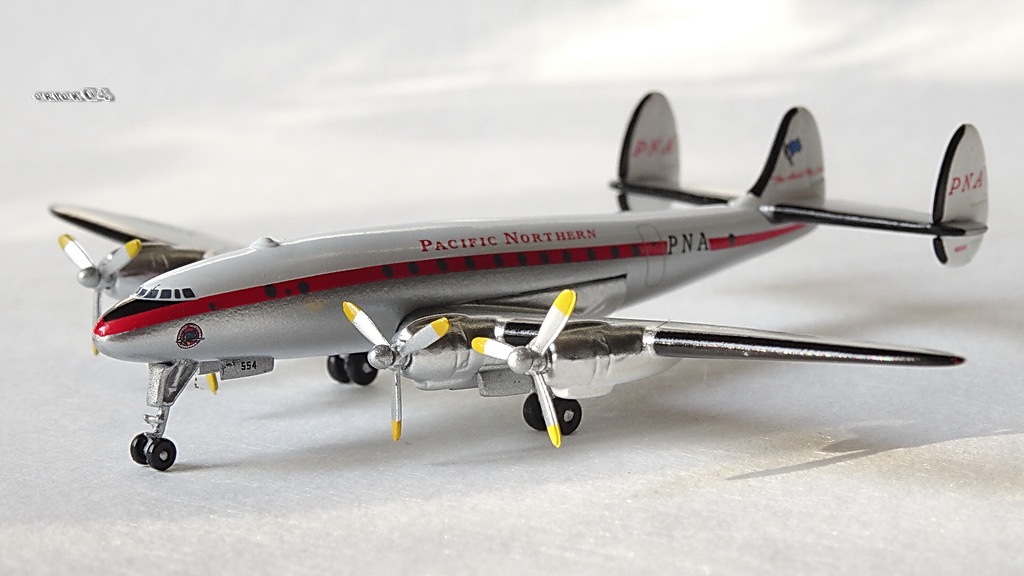
Crash of a Lockheed L-749A-79-32 Constellation on Mt Gilbert: 14 killed

Date & Time: Jun 14, 1960 at 0447 LT
Operator:
Registration:
N1554V
Flight Phase:
Survivors:
No
Site:
Schedule:
Seattle – Cordova – Anchorage
MSN:
2555
YOM:
1947
Flight number:
PN201
Crew on board:
5
Crew fatalities:
Pax on board:
9
Pax fatalities:
Other fatalities:
Total fatalities:
14
Captain / Total flying hours:
14460
Captain / Total hours on type:
4318.00
Copilot / Total flying hours:
2258
Copilot / Total hours on type:
563
Aircraft flight hours:
30560
Circumstances:
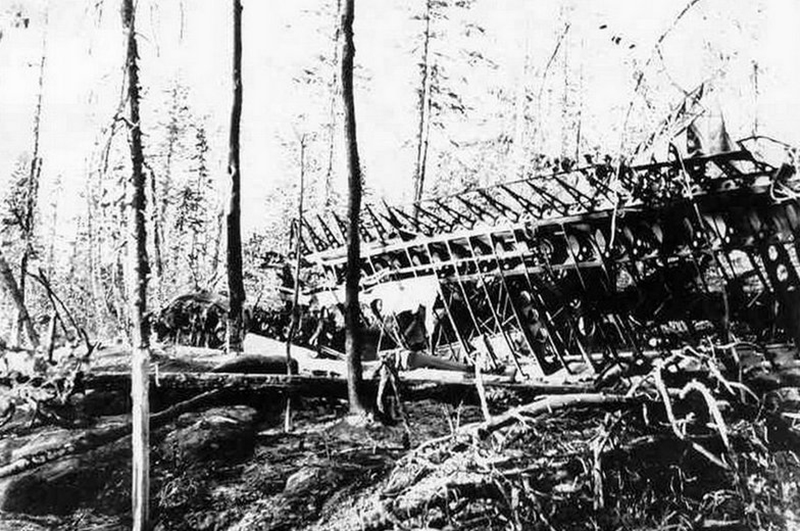
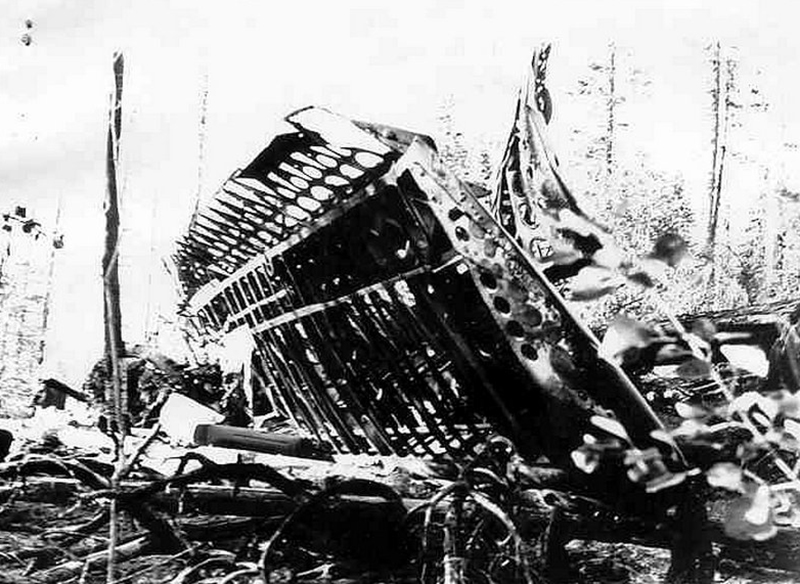
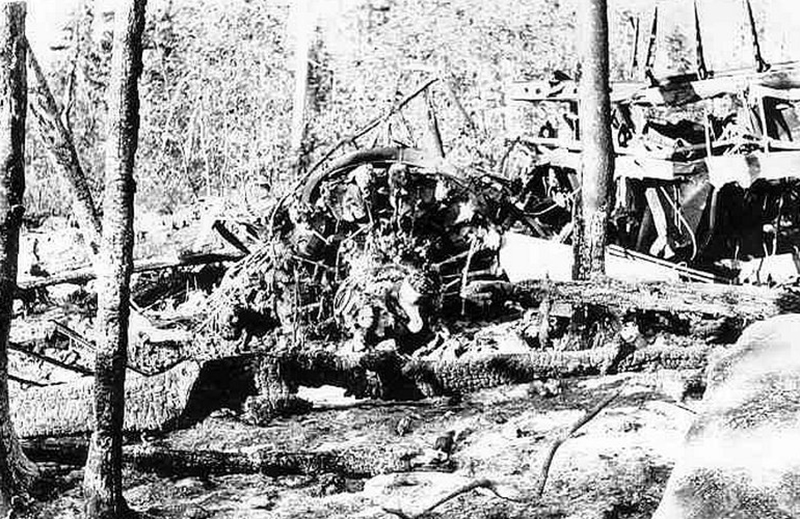
Pacific Northern Flight 201 failed to maintain its intended track after taking off from Cordova, Alaska, bound for Anchorage, Alaska. Mt. Gilbert is approximately 28 nautical miles to the right of the flight's first intended checkpoint and is 9,646 feet in elevation. At an altitude of 9,000 feet, crashed into the sheer face of Mt. Gilbert, killing all nine passengers and five crew members.
Probable cause:
The Board determines that the probable cause of this accident was the failure of the crew to use all available navigational aids in establishing the aircraft's position on Amber I Airway, thereby allowing the aircraft to deviate from course and fly over hazardous terrain. A contributing factor was the failure of Air Defense Radar, which had been tracking the aircraft, to notify either ARTCC or the crew that the aircraft was proceeding on a dangerous course.
Final Report:

Crash of an Ilyushin II-14P in Tkvarcheli: 31 killed

Date & Time: Jun 10, 1960 at 1055 LT
Type of aircraft:
Operator:
Registration:
CCCP-91571
Flight Phase:
Survivors:
No
Site:
Schedule:
Rostov-on-Don – Krasnodar – Sochi – Sukhumi – Kutaisi – Tbilisi
MSN:
7 34 31 07
YOM:
7
Flight number:
SU207
Country:
Region:
Crew on board:
7
Crew fatalities:
Pax on board:
24
Pax fatalities:
Other fatalities:
Total fatalities:
31
Aircraft flight hours:
5423
Circumstances:
After his departure from Sukhumi Airport, the crew continued to the southeast bound for Kutaisi at an altitude of 1,200 meters when poor weather conditions were encountered with clouds from 600 to 1,000 meters. Following a navigation error, the aircraft deviated 17 km to the north when it struck trees and crashed in flames on the north slope of Mt Rech (1,436 meters high) located near Tkvarcheli. The wreckage was found a day later. The airplane was completely destroyed by impact forces and a post crash fire and all 31 occupants were killed.
Probable cause:
It was determined that the accident was the consequence of a navigation error on part of the crew, causing the aircraft to be off track by 17 km to the north. The following factors were considered as contributing:
- The crew was hastily fixed the day prior to the accident on a complexe routing,
- In spite of this complexity, the operations of the company failed to join a navigator to the crew, either a mechanic,
- Poor flight preparation,
- Poor weather assessment,
- The crew failed to make fix point after his departure from Sukhumi,
- Absence of radio monitoring on part of the Sukhumi services,
- Meteorologists failed to inform the pilots about the wind component and the weather conditions along the route,
- Shortcomings were noted with ATC services as the person in charge to follow the plane was a trainee who was not authorized to work independently. It was noted that for 20 minutes (a period corresponding to a distance of 100 km), the crew did not receive any ATC messages about his position or flight path.

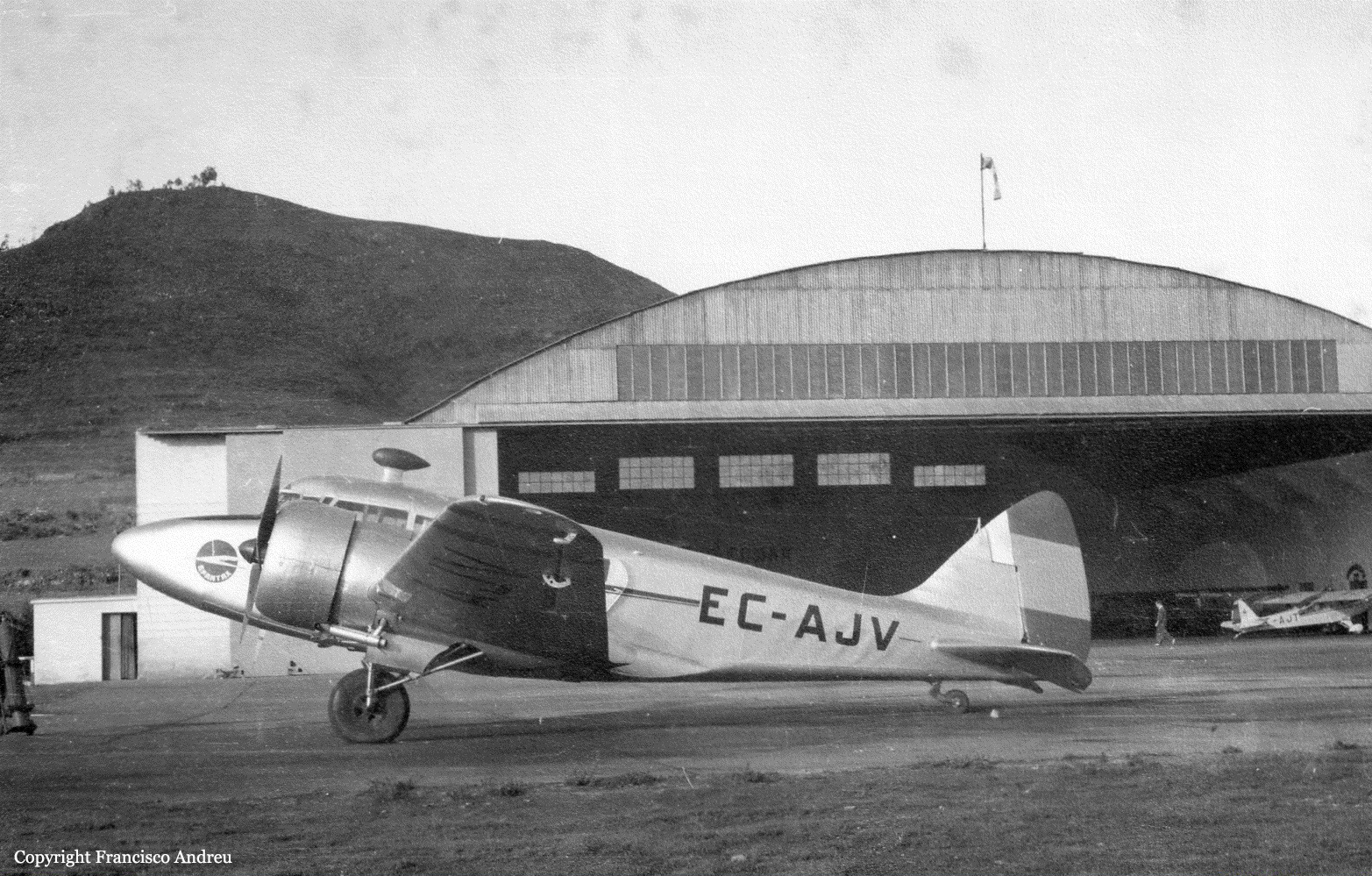
Crash of an Airspeed AS.65 Consul into the Atlantic Ocean

Date & Time: May 25, 1960 at 1700 LT
Type of aircraft:
Operator:
Registration:
EC-AJV
Flight Phase:
Survivors:
Yes
Schedule:
El Aaiun - Las Palmas
MSN:
4339
YOM:
1946
Country:
Region:
Crew on board:
1
Crew fatalities:
Pax on board:
3
Pax fatalities:
Other fatalities:
Total fatalities:
0
Circumstances:
The twin engine aircraft departed Al Aaiun Airport at 1605LT on a schedule flight to Las Palmas-Gando, Canary Islands. Less than one hour later, while cruising, the left engine hydraulic pressure dropped. Unable to maintain a safe altitude, the pilot ditched the airplane about 74 km east of the Canary coast. All four occupants were rescued while the airplane sank and was lost.
Probable cause:
Failure of the left engine in flight due to hydraulic pressure issue.

Crash of a North American B-25C Mitchell in Jakarta: 4 killed

Date & Time: May 23, 1960
Operator:
Flight Phase:
Flight Type:
Survivors:
No
Schedule:
Jakarta - Jakarta
Country:
Region:
Crew on board:
4
Crew fatalities:
Pax on board:
0
Pax fatalities:
Other fatalities:
Total fatalities:
4
Circumstances:
Crashed in unknown circumstances on an airbase located in Jakarta, killing all four crew members who were completing a local training mission.

Crash of a Curtiss C-46F-1-CU Commando near El Sosneado: 9 killed

Date & Time: May 18, 1960 at 1530 LT
Type of aircraft:
Registration:
LV-GGJ
Flight Phase:
Flight Type:
Survivors:
No
Site:
Schedule:
Buenos Aires – Santiago de Chile – Lima
MSN:
22554
YOM:
1945
Country:
Crew on board:
4
Crew fatalities:
Pax on board:
5
Pax fatalities:
Other fatalities:
Total fatalities:
9
Circumstances:
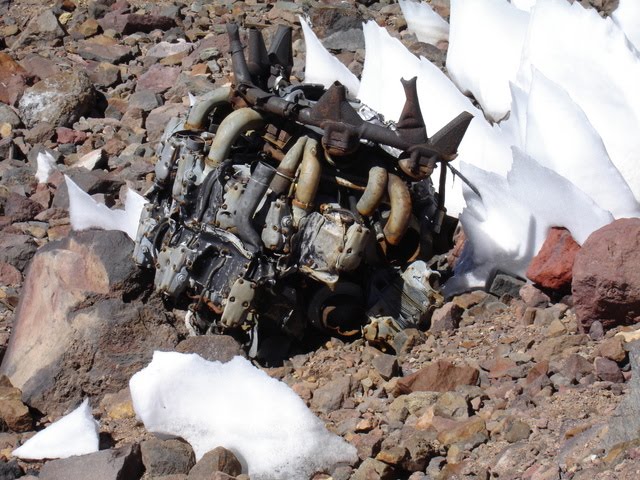
The aircraft departed Buenos Aires-Ezeiza-Ministro Pistarini Airport at 1104LT with a crew of four, five passengers and seven race horses that should be delivered in Lima, Peru. An intermediate stop was scheduled at Santiago de Chile. The crew continued the flight under VFR at 3,000 meters in good weather conditions but while approaching the region of San Luis, weather deteriorated with turbulences and poor conditions. While cruising at an altitude of 4,500 meters, the airplane disintegrated in the air and eventually crashed on the slope of a mountain located near El Sosneado. SAR operations were conducted but eventually suspended few days later as no trace of the aircraft nor the crew was found. The wreckage was spotted on 21 November 1961 in an isolated area.
Crew:
Pedro Lafuente, pilot,
Fermín Gómez, copilot,
Domingo Vacarelli, mechanic,
Oscar Carballo, navigator.
Paasengers:
Sergio Etcheverry,
Carlos Luján,
Pedro Puccineri,
Omar Silva,
Raúl Díaz.
Probable cause:
The aircraft flew into extremely violent turbulence, was subjected to stresses greater than those for which it was designed, and in-flight structural failure resulted. Contributing causes were:
- Insufficient flight preparation,
- Failure of the pilote to familiarize himself with the prevailing weather conditions,
- The horses were improperly secured.

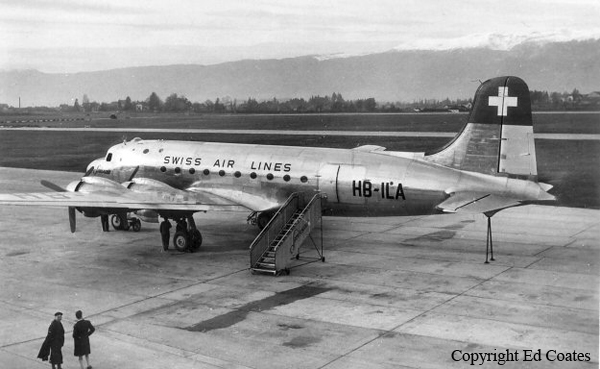
Crash of a Douglas DC-4-1009 near Tora Tonga: 12 killed

Date & Time: May 15, 1960 at 2257 LT
Type of aircraft:
Operator:
Registration:
HB-ILA
Flight Phase:
Survivors:
No
Site:
Schedule:
Geneva – Dakar – Niamey – Khartoum – Mecca
MSN:
43072
YOM:
1946
Country:
Region:
Crew on board:
10
Crew fatalities:
Pax on board:
2
Pax fatalities:
Other fatalities:
Total fatalities:
12
Circumstances:
The aircraft was completing a positioning flight from Geneva to Mecca with intermediate stop at Dakar, Niamey and Khartoum, carrying a crew of ten and two Swiss journalists. While overflying Sudan by night at an altitude of 8,000 feet, the airplane struck the slope of a mountain located in the Djebel Marra. The wreckage was located few hours later. The airplane was destroyed and all 12 occupants were killed.
Probable cause:
It was determined that the accident was the consequence of the combination of the following factors:
- The fact that the aircraft progressed actually at an average ground speed of at least 200-205 knots while the crew believed they were proceeding with no more than 175-178 knots as estimated before takeoff,
- That a slight directional difference of 2 or 3 degrees may have existed between the calculated track and the actual flight path,
- That these two navigation inaccuracies could build up during a flight of 2,5 hours and could eventually result in a position error of about 70 NM to the west and about 30 NM to the south,
- That for reasons unknown to the Board the position report given for 1906Z and apparently established on the base of an astronomical fix must have been inaccurate and that the crew were, therefore, not able to be conscious of the discrepancies between the dead-reckoning and their actual position,
- That the aircraft flying at 8000 feet hit a slope of the Djebel Marra mountains four minutes before the crew expected to be overhead the El Fasher beacon where they would have begun the climb to 12000 feet and when, in their belief the aircraft should have been still more than 60 NM away from these mountains.

Crash of a Percival Pembroke C.54 in Krusendorf

Date & Time: May 10, 1960
Type of aircraft:
Operator:
Registration:
SE 514
Flight Phase:
Flight Type:
Survivors:
Yes
MSN:
1002
Country:
Region:
Crew on board:
0
Crew fatalities:
Pax on board:
0
Pax fatalities:
Other fatalities:
Total fatalities:
0
Circumstances:
An engine exploded in flight, forcing the crew to reduce his altitude and to attempt an emergency landing. The airplane crashed in flames in a field located in Krusendorf and was destroyed by fire. All occupants escaped uninjured.
Probable cause:
Engine explosion in flight.