Crash of a Beechcraft B200 Super King Air in Cape Girardeau

Date & Time: Feb 2, 2007 at 0930 LT
Registration:
N777AJ
Flight Phase:
Survivors:
Yes
Schedule:
Rogers - Staunton
MSN:
BB-1638
YOM:
1998
Crew on board:
2
Crew fatalities:
Pax on board:
0
Pax fatalities:
Other fatalities:
Total fatalities:
0
Captain / Total flying hours:
4048
Captain / Total hours on type:
110.00
Copilot / Total flying hours:
2806
Copilot / Total hours on type:
28
Aircraft flight hours:
1834
Circumstances:
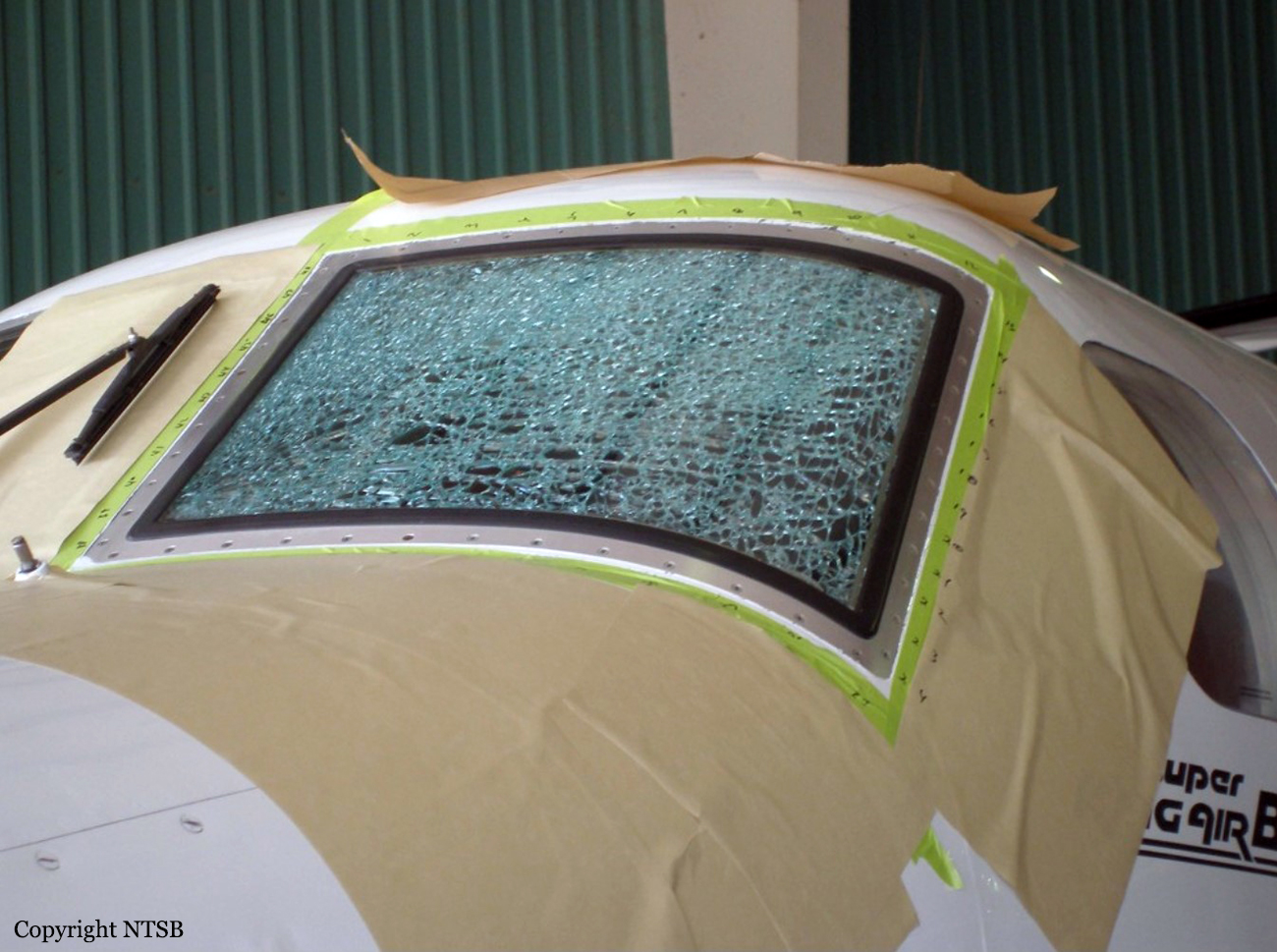
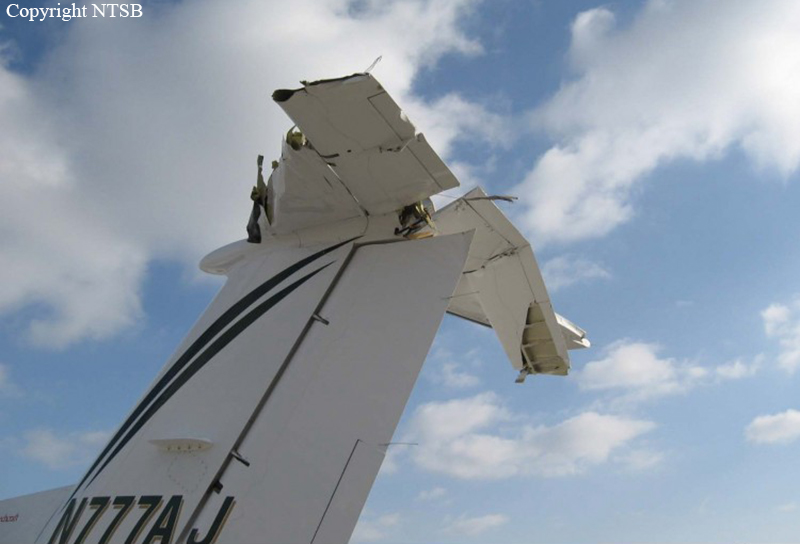
The airplane was operated by a company pilot. A noncompany pilot, who had not attended or completed a training course or received a checkout for Raytheon Aircraft Company Beech King Air 200 airplanes, was asked by the pilot to accompany him on the flight so that the noncompany pilot could accumulate flight time. The flight only required one pilot. While the airplane was in cruise flight (27,000 feet mean sea level), the cockpit voice recorder (CVR) recorded the sound of the windshield fracturing. The CVR transcript indicated that the company pilot was not in the cockpit when the windshield fractured because he was emptying trash in the cabin. This action showed poor judgment considering the noncompany pilot was not qualified in the airplane. Although the windshield stayed in place, the company pilot stated that “within seconds” after it fractured, he depressurized the airplane because he was unsure about the windshield’s “integrity.” However, the Beech King Air Airplane Flight Manual (AFM) states to maintain cabin pressurization in the event of a fractured windshield and further states that the airplane can continue flight for up to 25 hours with the windshield fractured. During the on-scene examinations, an unapproved document (not derived from the AFM) that contained several checklists was found on the airplane. The company pilot stated that he used this document and that it “came with the airplane.” The document did not include a checklist addressing a cracked or shattered windshield. The company pilot most likely was not aware that the airplane should not have been depressurized nor that it could operate for 25 hours after the fracture occurred and, therefore, that the fractured windshield did not present an in-flight emergency. The CVR transcript revealed that, after depressurizing the airplane, the pilots attempted to use the oxygen masks but were unable to receive any oxygen. (The pilots most likely did not turn the oxygen on once they needed it because they either forgot as a result of the emergency or because they did not have time to do so before they lost consciousness.) According to the company pilot, during his preflight inspection of the airplane, the oxygen system was functional. He stated that, after the inspection, he turned the oxygen system ready switch to the OFF position because he wanted to “save” the oxygen, which was not in accordance with the Before Start checklist in the AFM. Post accident functional testing of the oxygen system revealed normal operation. The unapproved checklists document did not include the instruction to leave the oxygen system on. Regardless, the pilot stated that he knew the approved checklist stated to leave the oxygen system on but that he still chose to turn it off. The pilot exhibited poor judgment by using an unapproved, incomplete checklists document and by knowingly deviating from approved preflight procedures. About 1 minute after the pilots tried to get oxygen, the CVR recorded the last comment by either pilot. For about the next 7 minutes until it stopped recording, the CVR recorded the sounds of increased engine propeller noise, the landing gear and overspeed warning horns, and altitude alerts indicating that the airplane had entered an uncontrolled descent. (The CVR’s 4-g impact switch was found in the open position during the on-scene examination, indicating that the airplane experienced at least 4 acceleration of gravity forces.) Further, a plot of two radar data points, recorded after the last pilot comment, showed that the airplane descended from 25,400 feet to 7,800 feet within 5 minutes. Shortly thereafter, the pilots regained consciousness and recovered from the uncontrolled descent. The airplane was substantially damaged by the acceleration forces incurred during the uncontrolled descent and subsequent recovery. Examination of the windshield revealed that a dense network of fractures was located on the inner glass ply; however, the windshield did not lose significant pieces of glass and maintained its structural integrity. Therefore, the fractures did not preclude safe continued flight. Post accident examinations revealed evidence that the fracture initiated due to a design deficiency in the glass. The manufacturer redesigned the windshield in 2001 (the accident airplane was manufactured in 1998), and no known similar fractures have occurred in the newly designed windshield. The manufacturer chose not to issue a service bulletin for a retrofit of the new windshield design in airplanes manufactured before 2001 because the fracture of one pane of glass is not a safety-of-flight issue.
Probable cause:
The company pilot’s poor judgment before and during the flight, including turning the oxygen system ready switch to the OFF position after he conducted the preflight inspection and using an unapproved checklist, which did not provide guidance for a fractured windshield and resulted in his depressurizing the airplane. Members Hersman and Sumwalt did not approve this probable cause. Member Hersman filed a dissenting statement, with which Member Sumwalt concurred. The statement can be found in the public docket for this accident.
Final Report:
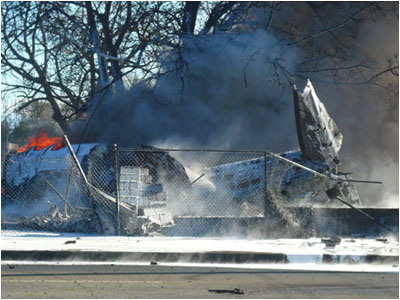
Ground accident of a Beechcraft 99A Airliner in Milwaukee

Date & Time: Jan 24, 2007 at 2000 LT
Type of aircraft:
Operator:
Registration:
N699CZ
Flight Phase:
Flight Type:
Survivors:
Yes
Schedule:
Stevens Point – Milwaukee
MSN:
U-133
YOM:
1969
Flight number:
FRG1509
Crew on board:
1
Crew fatalities:
Pax on board:
0
Pax fatalities:
Other fatalities:
Total fatalities:
0
Captain / Total flying hours:
13400
Captain / Total hours on type:
2400.00
Aircraft flight hours:
35447
Circumstances:
A Beech 99 and a Cessna 402 were substantially damaged in a ground collision that occurred during night taxi operations at General Mitchell International Airport (MKE), Milwaukee, Wisconsin. Both pilots followed each of the controller's instructions to proceed to the same cargo ramp using intersecting taxiways after having landed. Neither controller had advised either pilot that other aircraft would be approaching the same taxiway intersection. Neither pilot reported seeing the other airplane approaching the taxiway intersection. The Cessna 402 landed on runway 25R and was instructed to taxi to the cargo ramp via Golf, Bravo, and Alpha taxiways. The Beech 99 landed on runway 25L. The taxi instructions given to the Beech 99 pilot were to turn right at taxiway A2 (high-speed taxiway), monitor ground on frequency 121.8, and taxi to the cargo ramp. The local controller reported he scanned taxiway A, the runway, and saw the Beech 99 clear of the runway. As the Beech 99 prepared to turn off taxiway A2 onto taxiway A, the Cessna 402 approached the taxiway A and taxiway A2 intersection. The Beech 99's right propeller impacted the Cessna 402's left wing tip fuel tank. The impact of the two airplanes resulted in a fire. Both of the pilots involved in the ground collision evacuated their respective airplanes. The FAA Order 7110.65, "Air Traffic Control," states that the absence of holding instructions authorizes an aircraft to cross all taxiways and runways that intersect the taxi route. FAA Order 7110.65, "Air Traffic Control," states that it is the procedure for controllers to instruct aircraft where to turn off the runway after landing and advise the aircraft to hold short of a runway or taxiway if required for traffic. Neither aircraft was issued hold short instructions. The Airport Surface Detection Equipment Model X (ASDEX), provided images of each airplane's movement leading up to the time of the ground collision. The ASDE-X replay showed the Beech 99 taxiing at 20 knots on taxiway A2 approaching the taxiway A intersection. The Cessna 402 was shown taxiing at 20 knots just short of the taxiway A and taxiway A2 intersection. Both pilots reported that they did not see the other airplane approaching the same intersection while taxiing. Title 14 Code of Federal Regulations Part 91 states that vigilance shall be maintained by each person operating an aircraft so as to "see and avoid" other aircraft.
Probable cause:
The failure of both pilots to adequately scan for and avoid other aircraft traffic during taxi operations, and the failure of Air Traffic Control to issue a traffic advisory to both of the pilots. A contributing factor to the accident was the night time light conditions.
Final Report:

Crash of a Cessna 550 Citation II in Butler

Date & Time: Jan 24, 2007 at 0905 LT
Type of aircraft:
Operator:
Registration:
N492AT
Flight Type:
Survivors:
Yes
Schedule:
Winchester - Butler
MSN:
550-0472
YOM:
1983
Crew on board:
2
Crew fatalities:
Pax on board:
2
Pax fatalities:
Other fatalities:
Total fatalities:
0
Captain / Total flying hours:
22700
Captain / Total hours on type:
1200.00
Copilot / Total flying hours:
1758
Copilot / Total hours on type:
85
Aircraft flight hours:
10735
Circumstances:
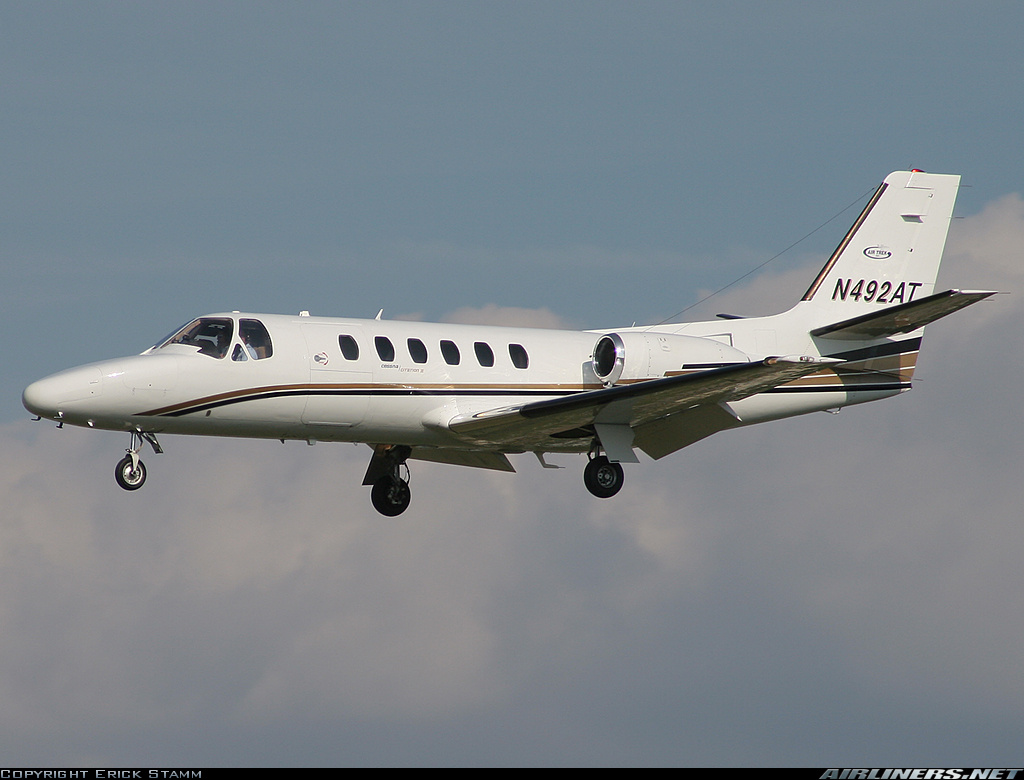
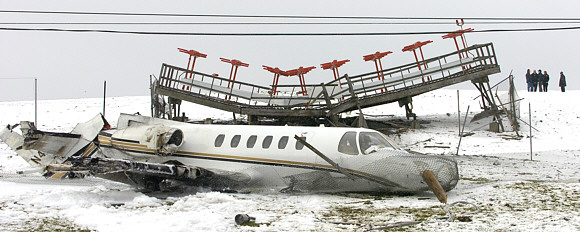
The Citation 550 was being repositioned for an air ambulance transportation flight, and was on approach to land on a 4,801-foot-long, grooved, asphalt runway. The airplane was being flown manually by the copilot, who reported that the landing approach speed (Vref) was 106 knots. The pilot-in-command (PIC) estimated that the airplane "broke out" of the clouds about two miles from the runway. Both pilots stated that the airplane continued to descend toward the runway, while on the glide slope and localizer. Neither pilot could recall the airplane's touchdown point on the runway, or the speed at touchdown. Witnesses observed the airplane, "high and fast" as it crossed over the runway threshold. The airplane touched down about halfway down the runway, and continued off the departure end. It then struck a wooden localizer antenna platform, and the airport perimeter fence, before crossing a road, and coming to rest about 400 feet from the end of the runway. Data downloaded from the airplane's Enhanced Ground Proximity Warning System (EGPWS) revealed that the airplane's groundspeed at touchdown was about 140 knots. Review of the cockpit voice recorder suggested that the PIC failed to activate the airplane's speed brake upon touchdown. Braking action was estimated to be "fair" at the time of the accident, with about 1/4 to 1/2 inches of loose, "fluffy" snow on the runway. The PIC reported that he thought the runway might be covered with an inch or two of snow, which did not concern him. The copilot reported encountering light snow during the approach. Both pilots stated that they were not aware of any mechanical failures, or system malfunctions during the accident; nor were any discovered during post accident examinations. According to the airplane flight manual, the conditions applicable to the accident flight prescribed a Vref of 110 knots, with a required landing distance on an uncontaminated runway of approximately 2,740 feet. The prescribed landing distance on a runway contaminated with 1-inch of snow, at a Vref of 110 knots was approximately 5,800 feet. At Vref + 10 knots, the required landing distance increased to about 7,750 feet.
Probable cause:
The copilot's failure to maintain the proper airspeed, and failure to obtain the proper touchdown point, and the pilot-in-command's inadequate supervision, which resulted in an overrun. Contributing to the accident was the PIC's failure to activate the speed brake upon touchdown and the snow contaminated runway.
Final Report:

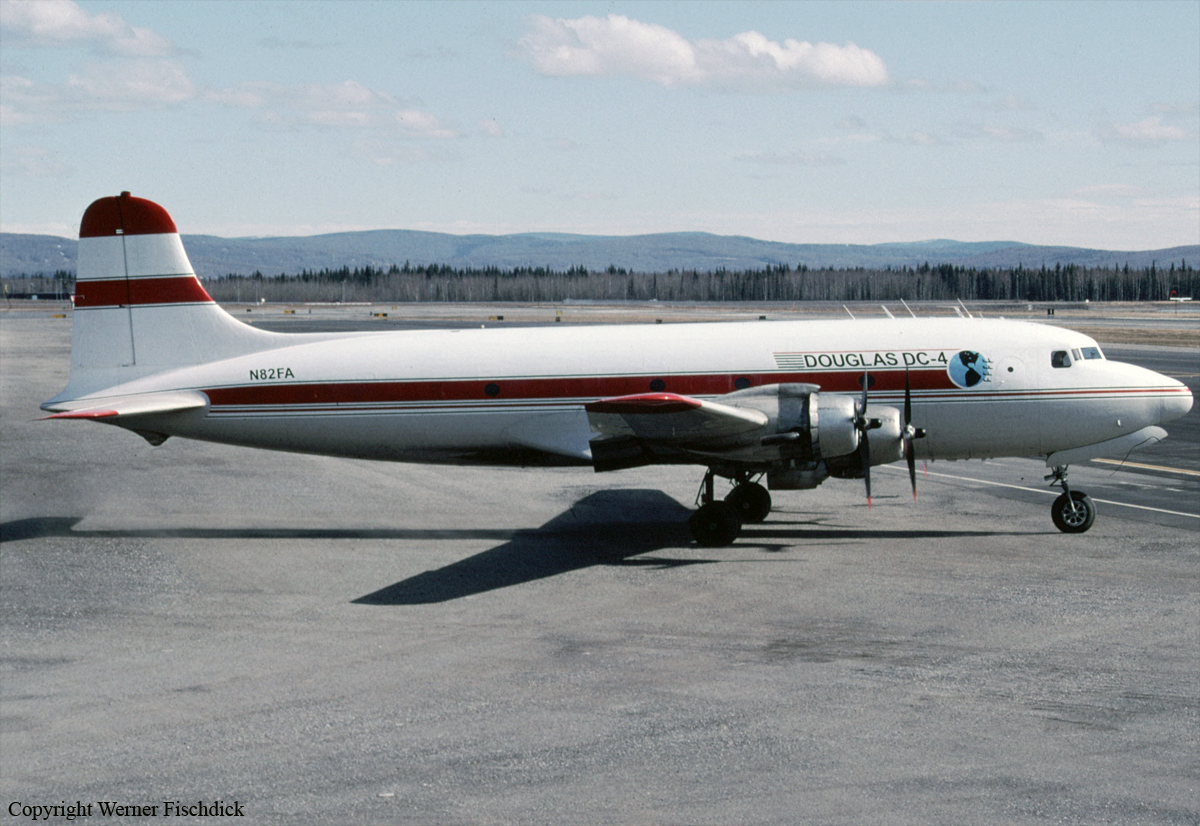
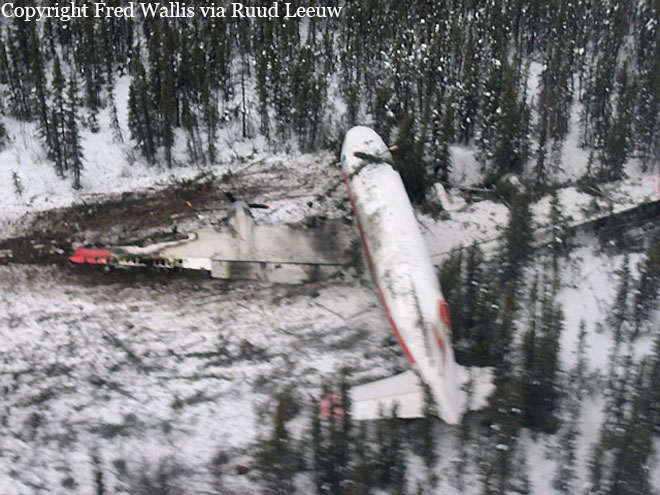
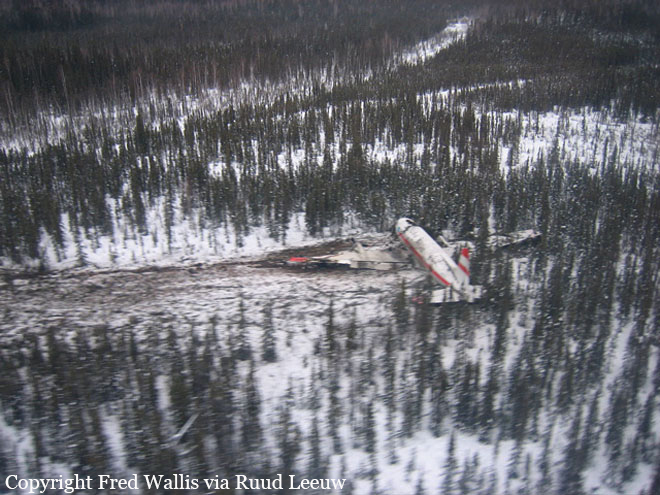
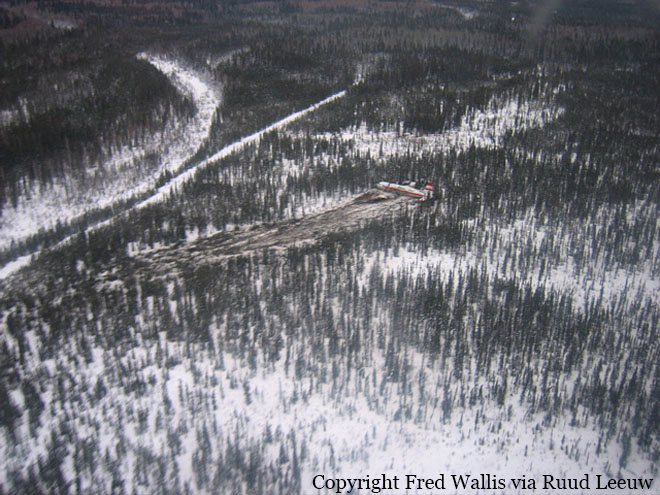
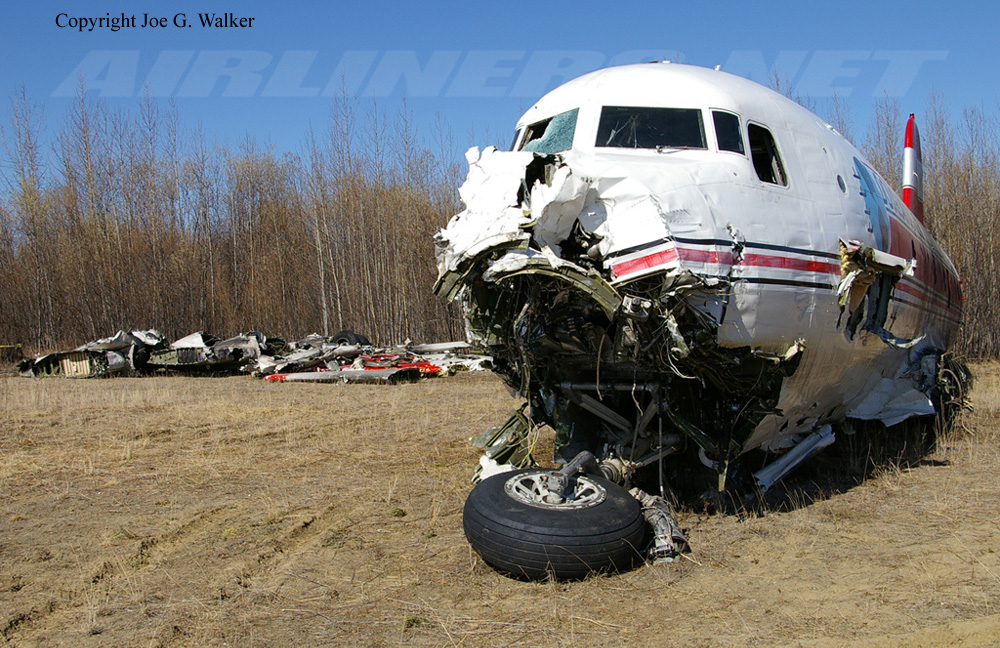
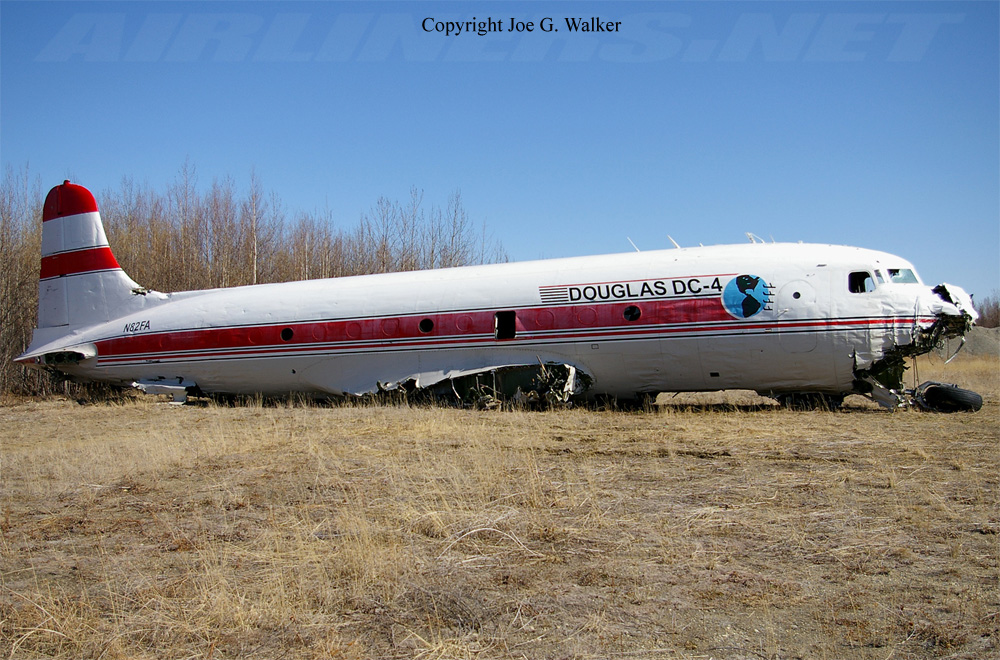
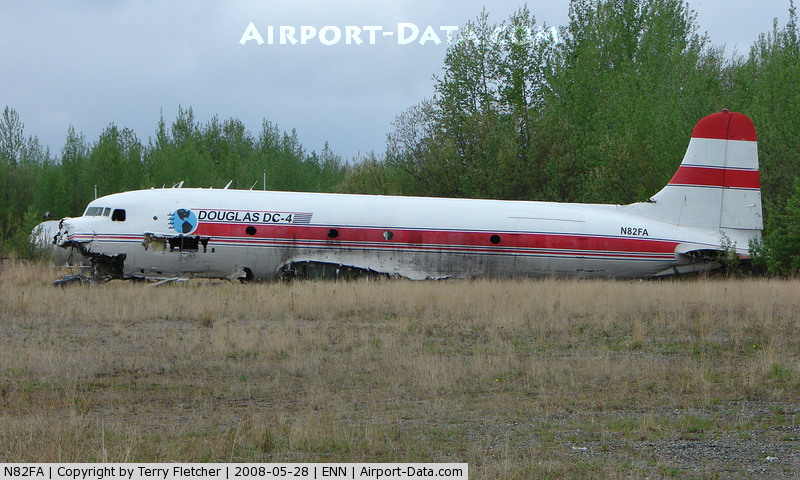
Crash of a Douglas C-54G-DC Skymaster near Nenana

Date & Time: Jan 17, 2007 at 1550 LT
Type of aircraft:
Operator:
Registration:
N82FA
Flight Phase:
Flight Type:
Survivors:
Yes
Schedule:
Fairbanks - Nixon Fork Mine
MSN:
35960
YOM:
1945
Location:
Crew on board:
2
Crew fatalities:
Pax on board:
0
Pax fatalities:
Other fatalities:
Total fatalities:
0
Captain / Total flying hours:
2750
Captain / Total hours on type:
1550.00
Copilot / Total flying hours:
796
Copilot / Total hours on type:
61
Aircraft flight hours:
28933
Circumstances:
The flight crew was delivering a cargo of fuel in the four-engine airplane under Title 14, CFR Part 125, when the airplane lost power in the number 2 engine. The captain elected to shut the engine down and return to the airport. He said during the shutdown procedure, the engine caught fire, and that the fire extinguishing system was activated. The crew thought the fire was out, but it erupted again, and the captain elected to land the airplane gear-up on the snow covered tundra. Once on the ground, the left wing was consumed by fire. An inspection by company maintenance personnel revealed that an overhauled engine cylinder had failed at its base, resulting in a fire. The airplane was not examined by the NTSB due to its remote location.
Probable cause:
The failure of an engine cylinder during cruise flight, which resulted in an in-flight fire, and subsequent emergency gear-up landing on snow-covered tundra. A factor in the accident was the failure of the fire suppression equipment to extinguish the fire.
Final Report:

Crash of a Cessna 425 Conquest I in Harbor Springs

Date & Time: Jan 12, 2007 at 1830 LT
Type of aircraft:
Registration:
N425TN
Flight Type:
Survivors:
Yes
Schedule:
Toledo - Harbor Springs
MSN:
425-0196
YOM:
1984
Crew on board:
1
Crew fatalities:
Pax on board:
2
Pax fatalities:
Other fatalities:
Total fatalities:
0
Captain / Total flying hours:
1991
Captain / Total hours on type:
60.00
Aircraft flight hours:
2345
Circumstances:
The pilot reported that during cruise descent the airplane accumulated about 1/2-to 3/4-inch of rime ice between 8,000 and 6,000 feet. During the approach, the pilot noted that a majority of the ice had dissipated off the leading edge of both wings, although there was still trace ice on the aft-portion of the wing deice boots. The pilot maintained an additional 20 knots during final approach due to gusting winds from the north-northwest. He anticipated there would be turbulence caused by the surrounding topography and the buildings on the north side of the airport. While on short final for runway 28, the pilot maintained approximately 121 knots indicated airspeed (KIAS) and selected flaps 30-degrees. He used differential engine power to assist staying on the extended centerline until the airplane crossed the runway threshold. After crossing the threshold, the pilot began a landing flare and the airspeed slowed toward red line (92 KIAS). Shortly before touchdown, the airplane "abruptly pitched up and was pushed over to the left" and flight control inputs were "only marginally effective" in keeping the wings level. The airplane drifted off the left side of the runway and began a "violent shuddering." According to the pilot, flight control inputs "produced no change in aircraft heading, or altitude." The pilot advanced the engine throttles for a go-around as the left wing impacted the terrain. The airplane cartwheeled and subsequently caught fire. No pre-impact anomalies were noted with the airplane's flight control systems and deice control valves during a postaccident examination. No ice shapes were located on the ground leading up to the main wreckage. The reported surface wind was approximately 4 knots from the north-northwest.
Probable cause:
The pilot's failure to maintain aircraft control and adequate airspeed during landing flare. Contributing to the accident was the aerodynamic stall/mush encountered at a low altitude.
Final Report:

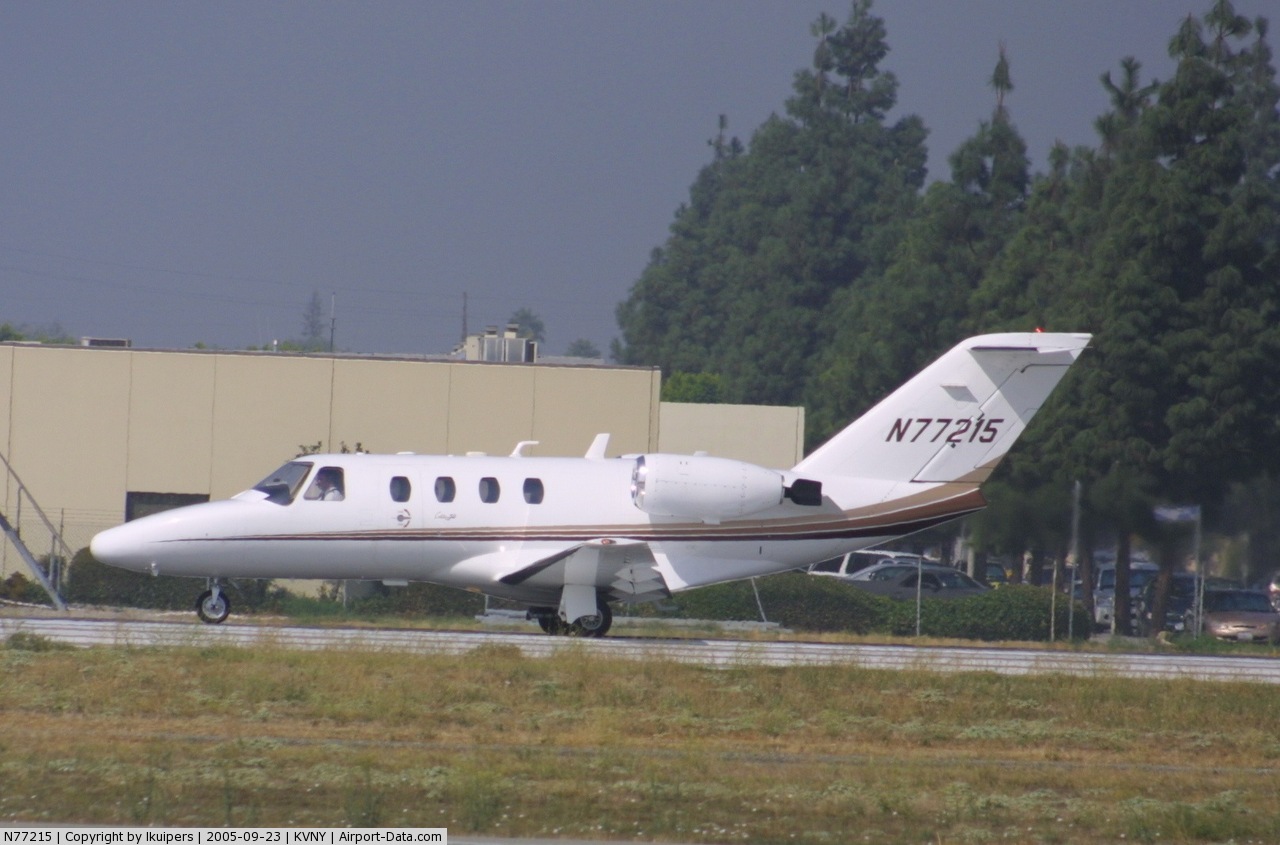
Crash of a Cessna 525 CJ1 in Van Nuys: 2 killed

Date & Time: Jan 12, 2007 at 1107 LT
Type of aircraft:
Operator:
Registration:
N77215
Flight Phase:
Flight Type:
Survivors:
No
Site:
Schedule:
Van Nuys - Long Beach
MSN:
525-0149
YOM:
1996
Crew on board:
2
Crew fatalities:
Pax on board:
0
Pax fatalities:
Other fatalities:
Total fatalities:
2
Captain / Total flying hours:
38000
Captain / Total hours on type:
800.00
Aircraft flight hours:
3001
Circumstances:
Line personnel reported that as the airplane was being fueled, the second pilot loaded more than one bag in the left front baggage compartment. With fueling complete, line personnel saw the second pilot pull the front left baggage door down, but not lock or latch it. Witnesses near midfield of the 8,001-foot long runway, reported that the airplane was airborne, and the front left baggage door was closed. Witnesses near the end of the runway, reported that the airplane was about 200 feet above ground level (agl) and they noted that the front left baggage door was open and standing straight up. All of the witnesses reported that the airplane turned slightly left, leveled off, and was slow. The airplane began to descend, and the wings were slightly rocking before it stalled, broke right, and collided with the terrain. Investigators found no anomalies with the airframe or engines that would have precluded normal operation. The forward baggage doors' design incorporates a key lock in the lower center of each door, and two latches in the left and right bottom section of the doors. There are two hinges in the upper left and right sections of the door. The handles latched the door to the door frame in the fuselage. The key would be in the horizontal position in an unlocked condition, and in the vertical position in a locked condition. The front left baggage door was found within the main wreckage debris field and had sustained mechanical and thermal damage. The key lock was in the horizontal position. Several instances of a baggage door opening in flight have been recorded in Cessna Citation airplanes. In some cases, the door separated, and in others it remained attached. The crews of these other airplanes returned to the airport and landed successfully.
Probable cause:
The pilot's failure to maintain an adequate airspeed during the initial climb resulting in an inadvertent stall/spin. Contributing to the accident were the second pilots inadequate preflight, failure to properly secure the front baggage door, and the front left baggage door opening in flight, which likely distracted the first pilot.
Final Report:

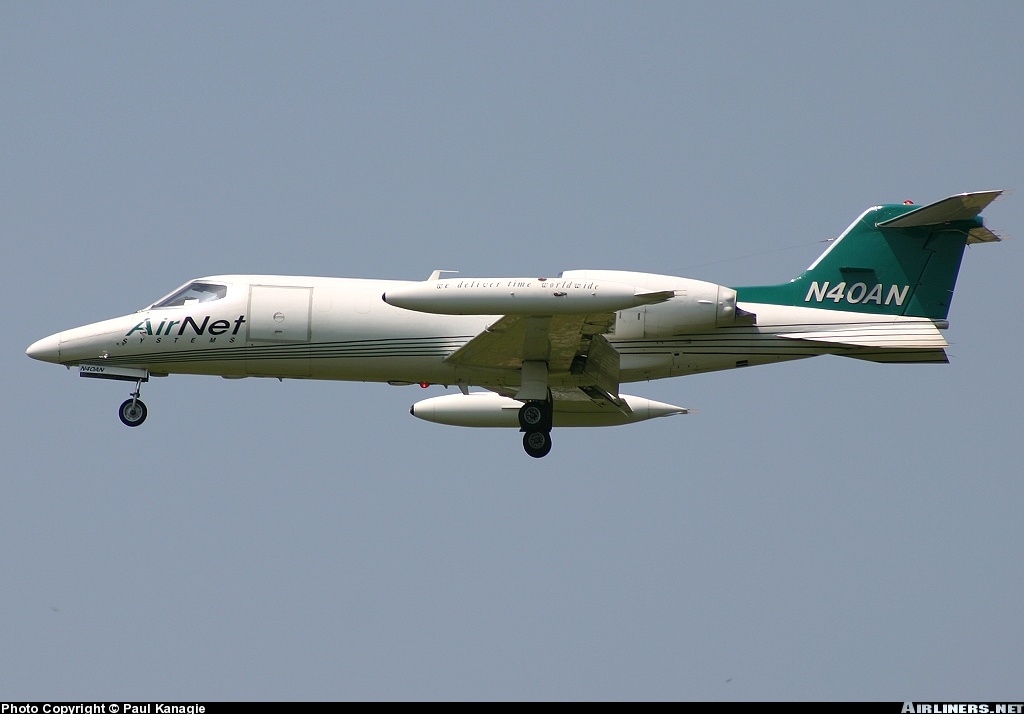
Crash of a Learjet 35A in Columbus

Date & Time: Jan 10, 2007 at 0330 LT
Type of aircraft:
Operator:
Registration:
N40AN
Flight Type:
Survivors:
Yes
Schedule:
Jacksonville - Columbus
MSN:
35-271
YOM:
1979
Crew on board:
2
Crew fatalities:
Pax on board:
0
Pax fatalities:
Other fatalities:
Total fatalities:
0
Captain / Total flying hours:
6400
Captain / Total hours on type:
1700.00
Copilot / Total flying hours:
3500
Copilot / Total hours on type:
600
Aircraft flight hours:
20332
Circumstances:
The airplane was substantially damaged during an in-flight recovery after the captain attempted an intentional aileron roll maneuver during cruise flight and lost control. The cargo flight was being operated at night under the provisions of 14 CFR Part 135 at the time of the accident. The captain reported the airplane was "functioning normally" prior to the intentional aileron roll maneuver. The captain stated that the "intentional roll maneuver got out of control" while descending through flight level 200. The captain reported that the airplane "over sped" and experienced "excessive G-loads" during the subsequent recovery. The copilot
reported that the roll maneuver initiated by the captain resulted in a "nose-down unusual attitude" and a "high speed dive." Inspection of the airplane showed substantial damage to the left wing and elevator assembly.
Probable cause:
The pilot's failure to maintain aircraft control during an inflight maneuver which resulted in the design stress limits of the airplane being exceeded. A factor was the excessive airspeed
encountered during recovery.
Final Report:

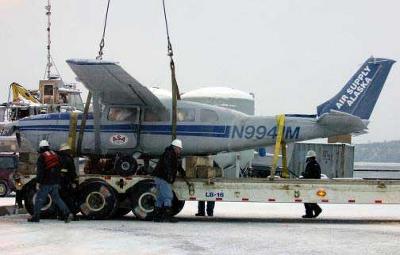
Crash of a Cessna 207A Skywagon in the Cook Inlet: 1 killed

Date & Time: Jan 9, 2007 at 1035 LT
Operator:
Registration:
N9941M
Flight Phase:
Flight Type:
Survivors:
No
Schedule:
Kenai - Kokhanok
MSN:
207-0748
YOM:
1981
Crew on board:
1
Crew fatalities:
Pax on board:
0
Pax fatalities:
Other fatalities:
Total fatalities:
1
Captain / Total flying hours:
5291
Captain / Total hours on type:
512.00
Aircraft flight hours:
13774
Circumstances:
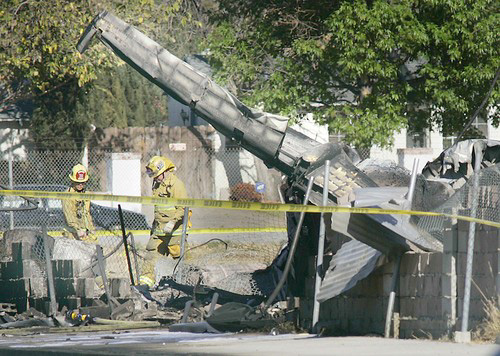
The commercial certificated pilot prepared for a VFR cross-country nonscheduled cargo flight under Title 14, CFR Part 135, by preflighting the wheel-equipped airplane and starting the engine. The airplane had been parked on the airport ramp overnight, with an electric engine heater and an engine cover on. A portion of the flight was over ocean waters to a remote village. After engine start, the pilot contacted the company owner and reported that the engine oil pressure appeared to be low, but within the operating range. The owner and the pilot discussed the possible reasons, such as cold ambient temperatures, which was about -20 degrees F. The pilot then departed, and reported to his company that the engine pressure was good. About 10 minutes later, he declared an emergency and stated he was ditching in the water, about 18 miles west of the departure airport. Retrieved track data from the pilot's GPS showed the airplane's maximum altitude was 1,439 feet msl, while crossing the ocean in an area that was about 22 miles wide. A review of the manufacturer's maximum glide distance chart revealed that from an altitude of about 1,500 feet, the airplane could glide about 2.1 nautical miles. The airplane was located about two hours after the accident, floating nose down next to a segment of pan ice, about 8.8 miles from the initial accident location. The pilot was not recovered with the airplane, and subsequent searches did not locate him. Following recovery of the airplane, examination of the engine revealed a 8 X 5 inch hole in the top of the case, adjacent to the number 2 cylinder. The number 2 connecting rod was broken from its crankshaft journal, and broken from the bottom of the piston. The number 1 connecting rod bearing was missing from its normal position on the crankshaft journal and the rod had evidence of high heat. Evidence of oil starvation and high heat signatures to several crankshaft and connecting rod bearings was found throughout the engine, along with a large amount of fragmented bearing material. The pilot was not wearing any personal flotation equipment, and the expected survival time in the 29 degree F ocean water was about 30 minutes. The company's operations manual does not contain a written policy requiring pilot's to maintain sufficient altitude to reach shore when crossing ocean waters.
Probable cause:
The total loss of engine power during cruise flight due to the disintegration of engine bearings and the fracture of a connecting rod, which resulted in a ditching into ice covered ocean water. Factors contributing to the survivability of the accident were the pilot's improper decision to fly over frigid water without sufficient altitude to reach a suitable landing area, the lack of written policy and procedures by the operator requiring sufficient altitude to reach shore when crossing ocean waters, temperature extremes consisting of sub-zero air and below freezing water temperatures, and the lack of personal flotation/survival equipment.
Final Report:
Crash of a Piper PA-61 Aerostar (Ted Smith 601) in Jamestown: 1 killed

Date & Time: Jan 8, 2007 at 0950 LT
Operator:
Registration:
N720Z
Flight Phase:
Flight Type:
Survivors:
No
Schedule:
Jamestown – Buffalo
MSN:
61-0592-7963262
YOM:
1979
Crew on board:
1
Crew fatalities:
Pax on board:
0
Pax fatalities:
Other fatalities:
Total fatalities:
1
Captain / Total flying hours:
5531
Captain / Total hours on type:
753.00
Aircraft flight hours:
2783
Circumstances:
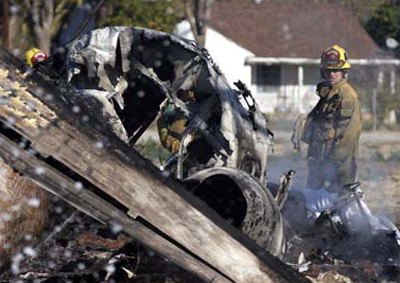
During the initial climb, a "throbbing or surging" sound was heard as the airplane departed in gusting wind conditions with a 600-foot ceiling and 1/2 mile visibility in snow. Moments later the airplane came "straight down" and impacted the ground. During examination of the wreckage, it was discovered that that the fuel selector switch for the right engine had been in the "X-FEED" position during the accident. Examination of documents discovered in the wreckage revealed, three documents pertaining to operation of an Aerostar. These documents consisted of two airplane flight manuals (AFMs) from two different manufacturers, and a checklist. Examination of the first of the AFMs revealed, that it had the name of both the pilot and the operator on the cover of the document. Further examination revealed that it had been published 4 years prior to the manufacture of the accident airplane, and contained information for a Ted Smith Aerostar Model 601P, which the operator had previously owned. This document contained no warnings regarding the use of the crossfeed system during takeoff. Examination of the second of the two AFMs found in the wreckage revealed that it was the Federal Aviation Administration (FAA) approved AFM for the accident airplane. Unlike the first AFM, the second AFM advised that the fuel selector "X-FEED" position should be used in "level coordinated flight only." It also advised that each engine fuel selector "must be in the ON position for takeoff, climb, descent, approach, and landing." It also warned that, if the airplane was not in a level coordinated flight attitude, "engine power interruptions may occur on one or both engines" when "X-FEED" is selected "due to unporting of the respective engine's fuel supply intake port." Review of the checklist contained in the FAA approved AFM for the Piper Aircraft Model 601P under "STARTING ENGINES," required a check of the crossfeed system prior to engine start by selecting each fuel selector to "ON," then selecting "X-FEED," and after verifying valve actuation and annunciator light illumination, returning the fuel selector to "ON." Additionally, under "BEFORE TAKEOFF" It also required that the fuel selectors be checked in the "ON" position, and that the "X-FEED" annunciator light was out, prior to takeoff. Examination of the pilot's checklist revealed that, it consisted of multiple pages inserted into plastic protective sleeves and included both typed, and hand written information. A review of the section titled "BEFORE TAKEOFF" revealed that the checklist item "Fuel Selectors - ON Position," which was listed in the AFM, had been omitted.
Probable cause:
The pilot's incorrect selection of the right engine fuel selector position, which resulted in fuel starvation of the right engine, a loss of the right engine's power, and a loss of control during initial climb. Contributing to the accident were the pilot's inadequate preflight planning and preparation, and his improper use of the manufacturer's published normal operating procedures.
Final Report:
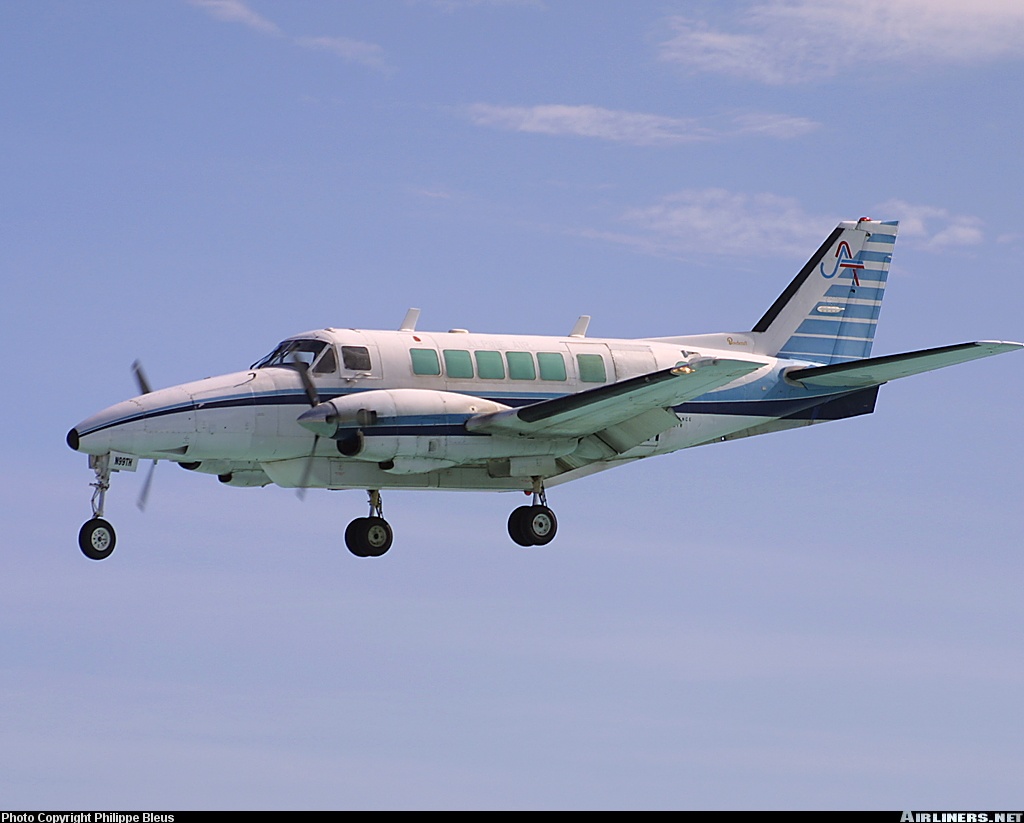
Crash of a Beechcraft 99 in Rapid City

Date & Time: Dec 29, 2006 at 0200 LT
Type of aircraft:
Operator:
Registration:
N99TH
Flight Type:
Survivors:
Yes
Schedule:
Pierre - Rapid City
MSN:
U-155
YOM:
1974
Flight number:
AIP408
Crew on board:
1
Crew fatalities:
Pax on board:
0
Pax fatalities:
Other fatalities:
Total fatalities:
0
Captain / Total flying hours:
3652
Captain / Total hours on type:
3069.00
Aircraft flight hours:
39795
Circumstances:
The airplane was on an instrument flight rules flight in night instrument meteorological conditions when the accident occurred. The airplane had been cleared for an ILS approach and the pilot elected to use a non-published procedure to intercept the final approach. After becoming established on the final approach, the airplane impacted the ground about 7 miles from the destination airport at an elevation approximately the same as the airport elevation. Flight inspections of the instrument approach performed prior to and subsequent to the accident revealed satisfactory performance of both the localizer and glideslope functions. The number one altimeter setting did not match the altimeter setting that was current at the time of the accident. Post accident examination of the altimeters revealed that the number one altimeter read 360 feet high. No determination was made as to whether the discrepancy existed prior to impact. However, the pilot did not report any pre-flight discrepancies with regard to the airplane's altimeters. No other anomalies were found or reported with regard to the airplane's structure or systems.
Probable cause:
The pilot's failure to follow the published instrument approach procedure which contributed to his failure to maintain altitude and clearance from terrain during the instrument approach. A factor was the night light condition.
Final Report: