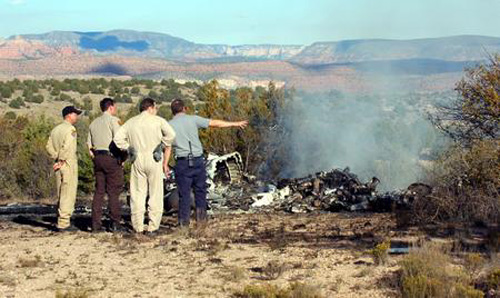
Crash of a Cessna 414 Chancellor in Johnstown: 2 killed

Date & Time: Dec 26, 2006 at 1555 LT
Type of aircraft:
Operator:
Registration:
N400CS
Flight Type:
Survivors:
No
Schedule:
Morgantown - Teterboro
MSN:
414-0613
Crew on board:
2
Crew fatalities:
Pax on board:
0
Pax fatalities:
Other fatalities:
Total fatalities:
2
Captain / Total flying hours:
3547
Aircraft flight hours:
5904
Circumstances:
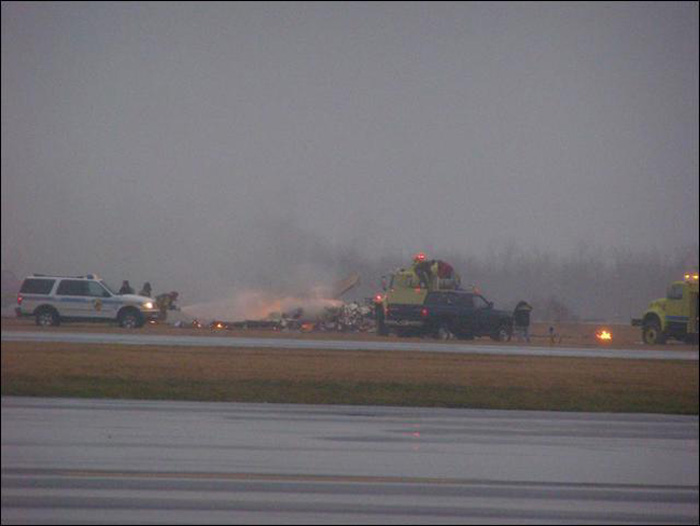
The airplane encountered in-flight icing, and the pilot diverted to an airport to attempt to knock the ice off at a lower altitude. During the instrument approach, the pilot advised the tower controller of the ice, and that it depended on whether or not the ice came off the airplane if she would land. As the airplane broke out of the clouds, it appeared to tower personnel to be executing a missed approach; however, it suddenly "dove" for the runway. The tower supervisor noticed that the landing gear were not down, and at 75 to 100 feet above the runway, advised the pilot to go around. The airplane continued to descend, and by the time it impacted the runway, the landing gear were only partially extended, and the propellers and airframe impacted the pavement. The pilot then attempted to abort the landing. The damaged airplane became airborne, climbed to the right, stalled, and nosed straight down into the ground.
Probable cause:
The pilot's improper decision to abort the landing with a damaged airplane. Contributing to the accident were the damage from the airplane's impact with the runway, the pilot's failure to lower the landing gear prior to the landing attempt, and the in-flight icing conditions.
Final Report:
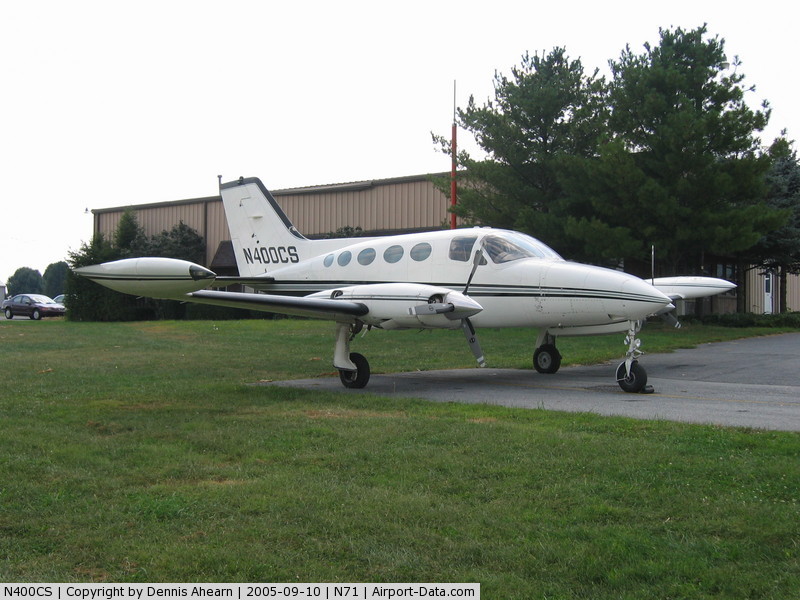
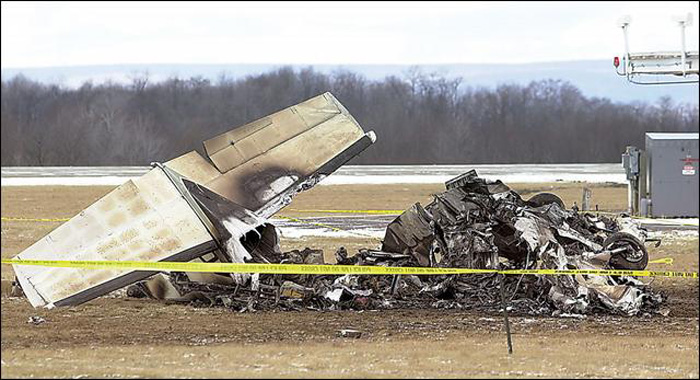
Crash of a Cessna 414A Chancellor in Lawrenceville: 3 killed

Date & Time: Dec 25, 2006 at 2030 LT
Type of aircraft:
Operator:
Registration:
N62950
Flight Type:
Survivors:
No
Schedule:
Pahokee - Lawrenceville
MSN:
414-0086
YOM:
1970
Crew on board:
1
Crew fatalities:
Pax on board:
2
Pax fatalities:
Other fatalities:
Total fatalities:
3
Captain / Total flying hours:
631
Captain / Total hours on type:
406.00
Aircraft flight hours:
4313
Circumstances:
According to Atlanta Air Route Traffic Control Center (ARTCC) personnel, the pilot was given the current weather information before attempting his first instrument approach into Gwinnett County Airport-Briscoe Field (LZU), Lawrenceville, Georgia, which included: winds calm, visibility 1/2-mile in fog, and ceiling 100 feet. The pilot acknowledged the current weather information and elected to continue for the instrument landing system (ILS) runway-25 approach. During the first landing attempt, the pilot reported that he was going to execute a missed approach, but that he saw the airport below and wanted to attempt another approach. The ARTCC controller provided the pilot with radar vectors back to the ILS runway-25 approach and again updated the pilot with current weather conditions. During the second approach the tower controller advised the pilot that he was left of the runway-25 centerline. Shortly after the pilot acknowledged that he was left of the centerline, the tower controller saw a bright "orange glow" off of the left side of the approach end of runway 25. Although the weather conditions were below approach minimums for the runway 25-approach, the pilot elected to attempt the landing. A flight inspection of the ILS was completed on December 26, 2006, and the results of the inspection revealed that the ILS runway-25 approach system was satisfactory. Examination of the airframe, flight control system components, engines and system components revealed no evidence of preimpact mechanical malfunction.
Probable cause:
The pilot's failure to follow the instrument approach procedure. Contributing to the accident was the pilot's descent below the prescribed decision height altitude.
Final Report:

Crash of a Cessna 340A in Charleston: 4 killed

Date & Time: Dec 22, 2006 at 1335 LT
Type of aircraft:
Registration:
N808RA
Flight Type:
Survivors:
No
Schedule:
Rock Hill – Charleston
MSN:
340A-0796
YOM:
1979
Crew on board:
1
Crew fatalities:
Pax on board:
3
Pax fatalities:
Other fatalities:
Total fatalities:
4
Captain / Total flying hours:
1504
Captain / Total hours on type:
129.00
Aircraft flight hours:
3828
Circumstances:
According to an airport employee at the Charleston Executive Airport (JZI), Charleston, South Carolina, the pilot contacted the JZI UNICOM radio frequency to request an airport advisory. The airport employee informed the pilot that the "winds were from 180 at 12 knots gusting to 17." The pilot then responded that he would be landing on runway 18, and was advised by the employee that there was no "runway 18." The pilot then stated that he would land on runway 27, and shortly thereafter said that he would land on runway 22. The employee said that out of curiosity he stepped outside to witness the approach of the airplane. He said that the airplane was southwest of the airport moving northeast perpendicular to runway 22, at an altitude of approximately 500 feet. He watched as the airplane was on a left base for runway 22. He said that the airplane overshot the runway and began a "tight, low right turn" away from the airport. Shortly thereafter, the airplane stalled and completed two revolutions before it was lost from his sight. Examination of the airframe, flight controls, engine assemblies and accessories revealed no evidence of a pre-crash mechanical failure or malfunction. A forensic toxicology test was performed on specimens from the pilot by the FAA Bioaeronautical Sciences Research Laboratory, Oklahoma City, Oklahoma. The specimens contained, Tramadol (also known by the trade name Ultram), which is used for the management of moderate to severe pain. The level of Tramadol found in the pilot's blood on post-mortem toxicology testing was at least twice that of maximal regular doses of the substance. Single doses have been shown to cause mild impairment of psychomotor abilities in healthy volunteers. Diphenhydramine was also found in the blood of the pilot. The pilot may have been impaired, at that time, due to the use of Tramadol or Diphenhydramine or both.
Probable cause:
The pilot's failure to maintain airspeed during a turn from base to final, resulting in an inadvertent stall/spin. Contributing to the accident was the impairment of the pilot due to the combination of drugs found in his toxicological report.
Final Report:

Crash of a Cessna 421B Golden Eagle II in Greenhead: 5 killed

Date & Time: Dec 22, 2006 at 0849 LT
Operator:
Registration:
N70BC
Flight Phase:
Flight Type:
Survivors:
No
Schedule:
Destin - Marsh Harbour
MSN:
421B-0813
YOM:
1974
Crew on board:
1
Crew fatalities:
Pax on board:
4
Pax fatalities:
Other fatalities:
Total fatalities:
5
Captain / Total flying hours:
15000
Aircraft flight hours:
6478
Circumstances:
Prior to takeoff, the pilot contacted Eglin Clearance Delivery for a weather briefing. He was informed of severe thunderstorms in the area and worked out a plan with the Clearance Delivery operator to avoid them. The flight originated from Destin Florida Airport, Destin, Florida about 0832 central standard time en route to Marsh Harbor, Bahamas. Eglin South Approach Control provided vectors to steer the flight around the weather. At 0841:30, the flight was handed off to Tyndall Approach Control. The flight was informed that it was entering "a line of weather that's going to continue for the next 15 miles." At 0844:10, Tyndall Approach Control alerted all aircraft of "hazardous weather." Tyndall Approach Control also informed the flight that their station was not equipped with the same detailed weather radar that Eglin had, and instructed the flight to continue on its current vector, which was provided by Eglin. About 4 minutes later, the pilot contacted ATC to request a block altitude clearance because he was "up and down here quite a bit." The controller provided a clearance for 4,000 through 6,000 feet. The pilot acknowledged the clearance, and there were no further communications with the flight. The pilot and four passengers were fatally injured, and the aircraft was destroyed after impacting the ground near Greenhead, Florida. According to the Sheriff, the property owner who initially located the wreckage, said that there was heavy rain, thunder, lightning and wind in the area at the time of the accident. The NTSB conducted a meteorological study and weather data along with the airplane's track and found it to be consistent with the airplane encountering a level 5 thunderstorm.
Probable cause:
The pilot-in-command's improper planning/decision and continued flight into known adverse weather which resulted in an encounter with a level 5 thunderstorm.
Final Report:

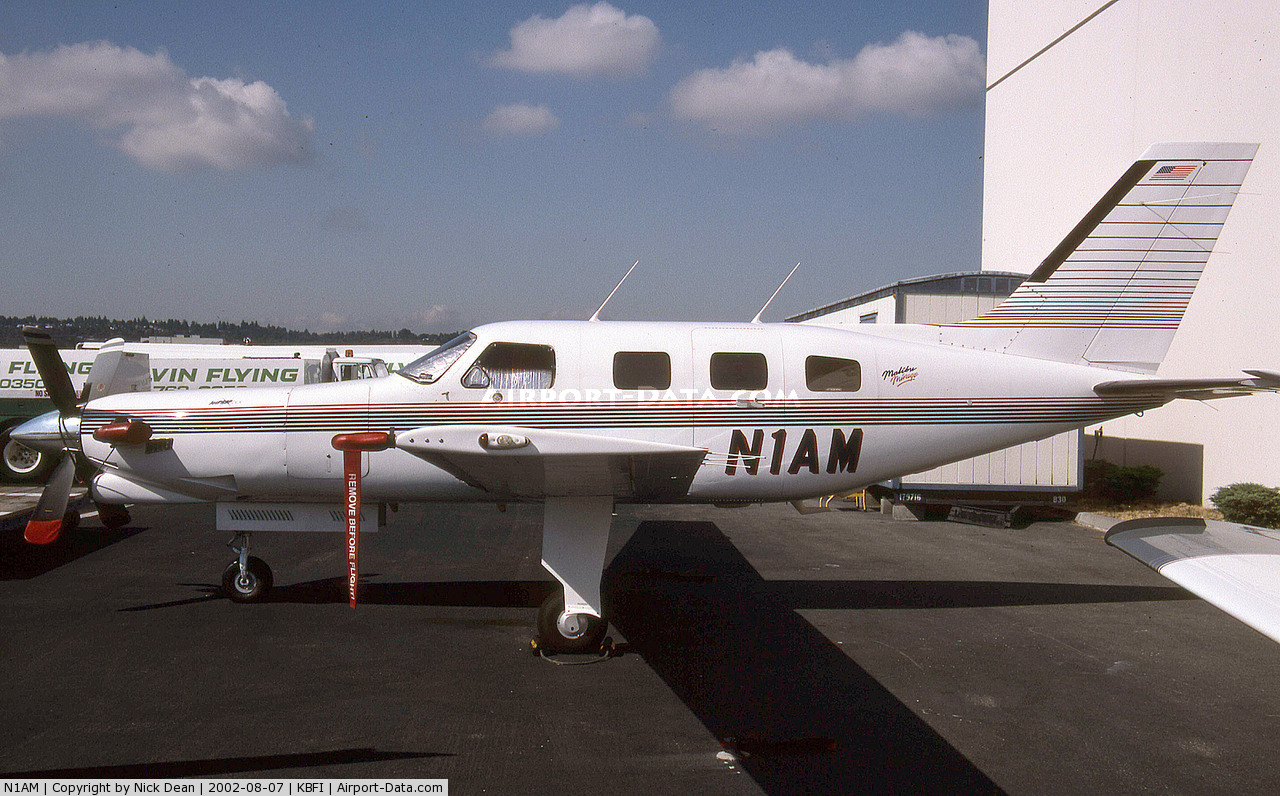
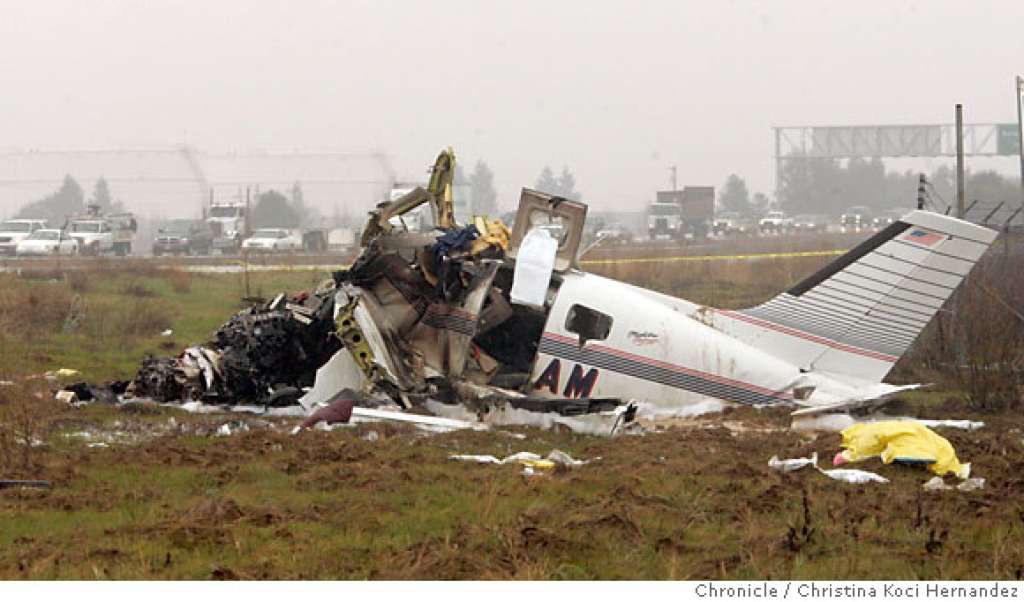
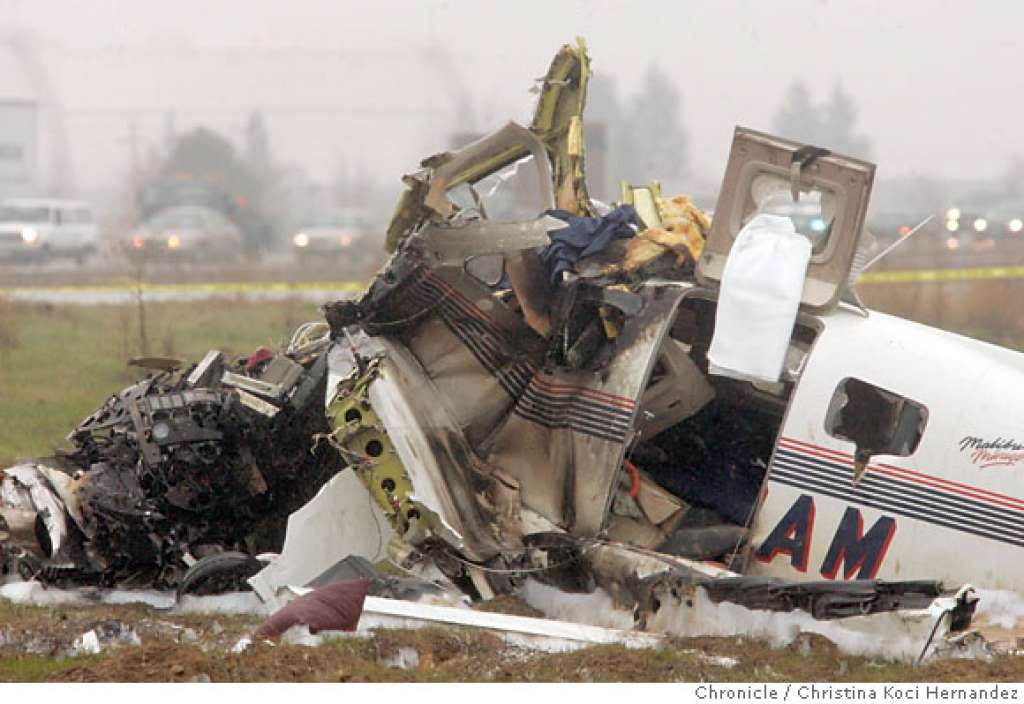
Crash of a Piper PA-46-350P Malibu Mirage in Concord: 4 killed

Date & Time: Dec 21, 2006 at 1101 LT
Registration:
N1AM
Flight Type:
Survivors:
No
Schedule:
San Diego – Concord
MSN:
46-22061
YOM:
1989
Crew on board:
1
Crew fatalities:
Pax on board:
3
Pax fatalities:
Other fatalities:
Total fatalities:
4
Captain / Total flying hours:
3628
Captain / Total hours on type:
25.00
Aircraft flight hours:
2470
Circumstances:
While on an instrument approach for landing, the local tower air traffic controller observed on the BRITE radar repeater scope that the airplane passed the outer marker (OM), 600 feet below the permissible crossing altitude. The controller issued a low altitude alert to the pilot and cleared him to land. The controller also reminded the pilot that the minimum descent altitude for the Localizer Directional Aid (LDA) approach was 440 feet, and provided instructions for the missed approach. At that point the pilot reported that he had the airport in sight and acknowledged the landing instructions. The controller again cleared the pilot to land on the prescribed runway for the instrument approach, and the pilot acknowledged the landing clearance. Shortly thereafter the controller instructed the pilot to execute the missed approach as the radar track showed that the airplane was off course. The pilot was instructed to initiate a climbing left turn to the VOR. The pilot said he had the airport in sight and that he saw one of the cross runways and wanted to land. The controller told the pilot that circling to that runway was not an authorized procedure for the LDA approach and again instructed the pilot to perform the missed approach. A witness stated that he was working on a storage container, about 50 feet in height, when the airplane passed overhead. He estimated the airplane to be about 50 feet higher than the storage container. The airplane made a turn westbound and the witness looked away for a second. When he looked back the airplane was in a nose and left wing down attitude and then it impacted the ground. Another witness located on the airport's north-northeast corner also observed the airplane flying toward the airport. He reported simultaneously hearing the engine power up and observed the left wing stall prior to it impacting the ground. Both witnesses reported that they did not hear anything wrong with the engine. Examination of the airframe, power plant, and propeller revealed no mechanical anomalies that would have precluded normal operation. Internal damage signatures in the engine and propeller were consistent with the production of significant power at the time of impact. A review of the weather in the area revealed that while light rain and mist were occurring near the accident site, no meteorological phenomena existed that would have adversely affected the flight. The pilot and two passengers were killed while a third passenger, a boy aged 12, was seriously injured. He died from his injuries few hours later.
Probable cause:
Failure of the pilot to follow the prescribed instrument approach procedures and to maintain an adequate airspeed while maneuvering in the airport environment that led to a stall.
Final Report:

Crash of a Cessna 421B Golden Eagle II in La Fonda Ranch

Date & Time: Dec 15, 2006 at 2111 LT
Operator:
Registration:
N642CB
Flight Type:
Survivors:
Yes
Schedule:
Dallas-Fort Worth - La Fonda Ranch
MSN:
421B-0010
YOM:
1970
Crew on board:
1
Crew fatalities:
Pax on board:
0
Pax fatalities:
Other fatalities:
Total fatalities:
0
Captain / Total flying hours:
7660
Captain / Total hours on type:
200.00
Circumstances:
The 7,660-hour airline transport rated pilot lost control of the twin-engine airplane while attempting to abort the landing. Dark night conditions prevailed for the attempted landing on runway 18. Runway 18 was reported to be 5,280-feet long, by 50 feet wide. The asphalt runway was reported to be dry and in good condition at the time of the accident. The pilot stated in the accident report (NTSB form 6120.1/2) that "I saw the one row of lights on short final and my mind played a trick on me. I had the thought that I was off-course and that those lights were houses." The pilot delayed making the decision to execute a go-around and by the time he added power the airplane had touched down in the "turnaround" area to the right of the approach end of runway 18. During the inadvertent touchdown the airplane rolled to the left and the left propeller struck the ground, resulting in damage to the left engine. The pilot added that he elected to retard the right engine to avoid losing control of the airplane and the airplane impacted the ground to the left of the runway. The airplane came to rest in an area of small bushes and mesquite trees. The pilot was able to egress the airplane unassisted through the main cabin door, and was not injured. A post-impact fire developed and consumed the airplane. The pilot reported that he was familiar with the airport and had operated several airplanes in and out of that location. Weather reported at Del Rio International Airport, located approximately 11 miles north of the accident site, was clear skies, 3 miles visibility, with winds from 150 degrees at 5 knots, temperature of 70 degrees Fahrenheit, and an altimeter setting of 29.95 inches of Mercury. The pilot added that he was not aware that the first 5 or 6 runway lights on the left side of the runway (at the approach end) were out of service when he initiated the night landing approach.
Probable cause:
The pilot's failure to maintain proper runway alignment on final approach and his delayed decision to execute a go-around. Factors were the dark night conditions and the inoperative runway edge lights.
Final Report:

Crash of a Piper PA-61 Aerostar (Ted Smith 601) in West Dover: 1 killed

Date & Time: Dec 2, 2006 at 1245 LT
Registration:
N9797Q
Flight Type:
Survivors:
No
Schedule:
White Plains – West Dover
MSN:
61-0432-160
YOM:
1977
Crew on board:
1
Crew fatalities:
Pax on board:
0
Pax fatalities:
Other fatalities:
Total fatalities:
1
Captain / Total flying hours:
14000
Captain / Total hours on type:
2600.00
Aircraft flight hours:
2953
Circumstances:
On the day of the accident, the pilot was returning to his home airport, after dropping off friends at a different airport. No weather briefing or flight plan was filed with Flight Service for either flight. A witness and radar data depicted the accident airplane on a straight-in approach for runway 1, in a landing configuration, at a ground speed of approximately 120 knots. The last radar target was recorded about 1/4 mile from the runway threshold, at an altitude of approximately 150 feet agl. The wreckage was later found about 1/2 mile east of the runway threshold. Review of weather information revealed general VFR conditions along the route of flight, and at reporting stations near the accident site. Gusty winds, low-level wind shear, and moderate to severe turbulence also prevailed at the time of the accident. In addition, weather radar depicted scattered light snow showers in the vicinity of the accident site, and possibly a snow squall. Examination of the wreckage did not reveal any preimpact mechanical malfunctions. The pilot had a total flight experience of 14,000 hours, with 8,500 hours in multiengine airplanes, including 2,600 hours in the same make and model as the accident airplane. He also had 4,100 hours of instrument flight experience.
Probable cause:
A loss of control during approach for undetermined reasons, which resulted in a collision with trees.
Final Report:

Crash of a Cessna 421B Golden Eagle II in Big Bear Lake: 3 killed

Date & Time: Nov 14, 2006 at 1013 LT
Registration:
N642BD
Flight Phase:
Survivors:
No
Schedule:
Big Bear Lake - Las Vegas
MSN:
421B-0658
YOM:
1974
Crew on board:
1
Crew fatalities:
Pax on board:
2
Pax fatalities:
Other fatalities:
Total fatalities:
3
Captain / Total flying hours:
4700
Aircraft flight hours:
4556
Circumstances:
Witnesses said that it appeared that the left engine sustained a loss of power just after rotation and liftoff. The airplane initially had a positive rate of climb, but then immediately yawed to the left as it cleared 30-foot-high power lines that were perpendicular across the flight path. The airport is at the east end of a lake in a mountain valley; the airplane departed to the west and was flying over the lake. The airplane was about 2 miles from the runway when witnesses observed dark smoke coming from the left engine, and the smoke increased significantly as the flight continued. The airplane banked hard left with the wings perpendicular to the ground, and then nosed in vertically. The landing gear remained down throughout the accident sequence. On site examination revealed that the top spark plugs for the left engine were black and sooty. A detailed examination revealed that the left turbocharger turbine wheel shaft fractured and separated. Extreme oxidation of the fracture surfaces prevented identification of the failure mode; however, the oxidation was the result of high temperature exposure indicating that the fracture occurred while the turbocharger was at elevated temperature during operation. The multiple planes exhibited by the fracture also were not consistent with a ductile torsional failure as would be expected from a sudden stoppage of either rotor. No evidence of a mechanical malfunction was noted to the right engine. The Cessna Owners Manual for the airplane notes that the most critical time for an engine failure is a 2-3 second period late in the takeoff while the airplane is accelerating from the minimum single-engine control speed of 87 KIAS to a safe single-engine speed of 106 KIAS. Although the airplane is controllable at the minimum control speed, the airplane's performance is so far below optimum that continued flight near the ground is improbable. Once 106 KIAS is achieved, altitude can more easily be maintained while the pilot retracts the landing gear and feathers the propeller. The best single-engine rate-of-climb is 108 KIAS with flaps up below 18,000 feet msl. Section VI of the manual provides operational data for single-engine climb capability. The data was only valid for the following conditions: gear and flaps retracted, inoperative propeller feathered, wing banked 5 degrees toward the operating engine, 39.5 inches of manifold pressure if below 18,000 feet, and mixture at recommended fuel flow.
Probable cause:
Failure of the turbine wheel shaft in the left turbocharger during the takeoff initial climb for undetermined reasons, and the pilot's failure to attain and maintain safe single engine airspeed that led to a loss of control.
Final Report:

Crash of a Cessna T303 Crusader in Mill Creek: 5 killed

Date & Time: Nov 13, 2006 at 2003 LT
Type of aircraft:
Registration:
N611BB
Flight Phase:
Flight Type:
Survivors:
No
Schedule:
South Bend - Ankeny
MSN:
303-00145
YOM:
1982
Crew on board:
1
Crew fatalities:
Pax on board:
4
Pax fatalities:
Other fatalities:
Total fatalities:
5
Captain / Total flying hours:
504
Aircraft flight hours:
4577
Circumstances:
The pilot departed his home airport at 0502 and landed at another airport where he picked up employees of a marketing company to fly them to an out of state meeting. The accident occurred at 2003 shortly after taking off on the return trip to fly the employees back home. Shortly before departure a fourth passenger was added to the flight after his commercial flight was cancelled. A person who worked for the fixed base operator at the departure airport stated the pilot looked tired or just ready to go home. The pilot received his clearance for the IFR flight prior to takeoff. The pilot misread the clearance back to the controlled and was corrected. Radar data showed the pilot initially flew the assigned south-southwest heading prior to the airplane turning right to a westerly heading. The controller queried the pilot and issued a heading to intercept the VOR. The pilot corrected the heading and shortly thereafter the airplane once again began a right turn back toward the west. The airplane continued to climb throughout the heading changes. Radar data showed the airplane then began another left turn during which time it entered a spiraling rapid descent. According to weather data, the airplane was in instrument meteorological conditions when this occurred. The airplane impacted the terrain in an open cornfield. Weight and balance calculations indicate the airplane was at least 383 pounds over gross weight. Post accident inspection of the airplane and engines did not reveal any preexisting failure/malfunction.
Probable cause:
The pilot became spatially disoriented and as a result failed to maintain control of the airplane. Factors associated with the accident were the instrument meteorological conditions aloft and the pilot being fatigued.
Final Report:

Crash of a Piper PA-42-720 Cheyenne III in Prescott: 5 killed

Date & Time: Oct 18, 2006 at 1347 LT
Type of aircraft:
Operator:
Registration:
N121CS
Flight Phase:
Flight Type:
Survivors:
No
Schedule:
Prescott - Prescott
MSN:
42-8001032
YOM:
1981
Crew on board:
1
Crew fatalities:
Pax on board:
4
Pax fatalities:
Other fatalities:
Total fatalities:
5
Captain / Total flying hours:
4363
Aircraft flight hours:
5317
Circumstances:
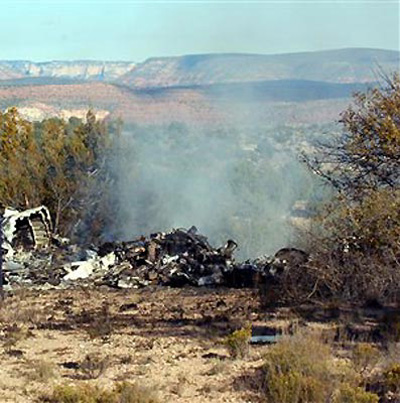
The pilot of a MiG 21 and the pilot of a Piper PA-42 Cheyenne III met just prior to the flight to discuss the flight in which the Cheyenne pilot would be taking aerial photos of the MiG. The two pilots established a minimum altitude of 2,500 to 3,000 feet agl and 200 knots as their minimum airspeed. The pilots did not establish a minimum separation distance, as it was not intended to be a formation flight. The MiG pilot reported that after takeoff the aircraft experienced a problem with the landing gear retraction. The pilot recycled the landing gear and a successful gear retraction was indicated. The MiG pilot notified the Cheyenne pilot of the situation and the Cheyenne pilot indicated that they would join up with the MiG, look it over and check-out the landing gear, and let the MiG pilot know what they saw. The MiG pilot flew at 9,000 feet msl in a 30-degree right hand turn at 200 knots (about 90 percent power set) with approach flaps selected (approximately 25 degrees) until the Cheyenne met up with the MiG. The MiG pilot reported that he observed the Cheyenne meet up with him at his 5 o'clock position about 300-400 feet behind him and about the same altitude. In this position, the Cheyenne was in the direct path of the high velocity jet core exhaust from the MiG. The MiG pilot looked forward and when he looked back, he could not see the Cheyenne. The Cheyenne pilot then contacted the MiG pilot and made a comment about the right landing gear or gear door, but the statement was not completed. The MiG pilot did not hear back from the Cheyenne pilot. The MiG pilot then observed smoke rising from the desert terrain and notified air traffic control. The airport manager that was monitoring the conversation between the two aircraft stated that he heard the Cheyenne pilot indicate that he would "drop down and go underneath and let you know how it looks." Wreckage documentation noted that the main wreckage was located in an inverted position on flat terrain. The T-tail, which consisted of the upper half of the vertical stabilizer, horizontal stabilizer, and elevator had separated in flight and was located about 1/2 mile south of the main wreckage. Inspection of the upper portion of the aft vertical spar displayed a right bend and twist at the point of separation. No evidence of pre-existing cracks, corrosion or wear was noted to the material. Inspection of the MiG aircraft found no evidence of contact between the two aircraft.
Probable cause:
The failure of the pilot following a jet aircraft to maintain adequate separation from the high velocity jet core exhaust. The separation of the T-tail upper section vertical stabilizer of the following aircraft due to contact with the high velocity jet core exhaust was a factor.
Final Report: