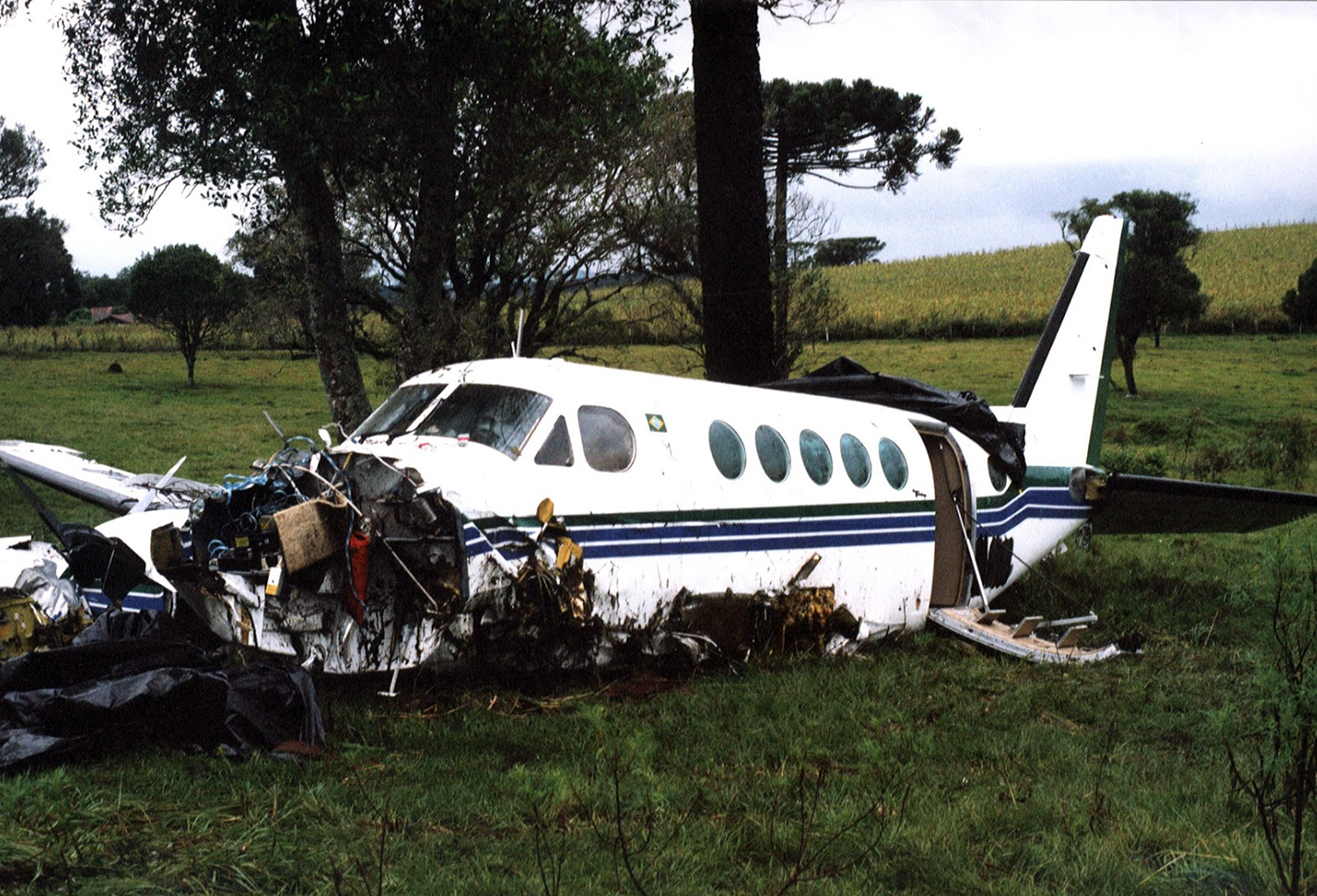
Crash of a Rockwell 681BT Turbo Commander in São Paulo: 7 killed

Date & Time: Dec 16, 2000 at 2120 LT
Registration:
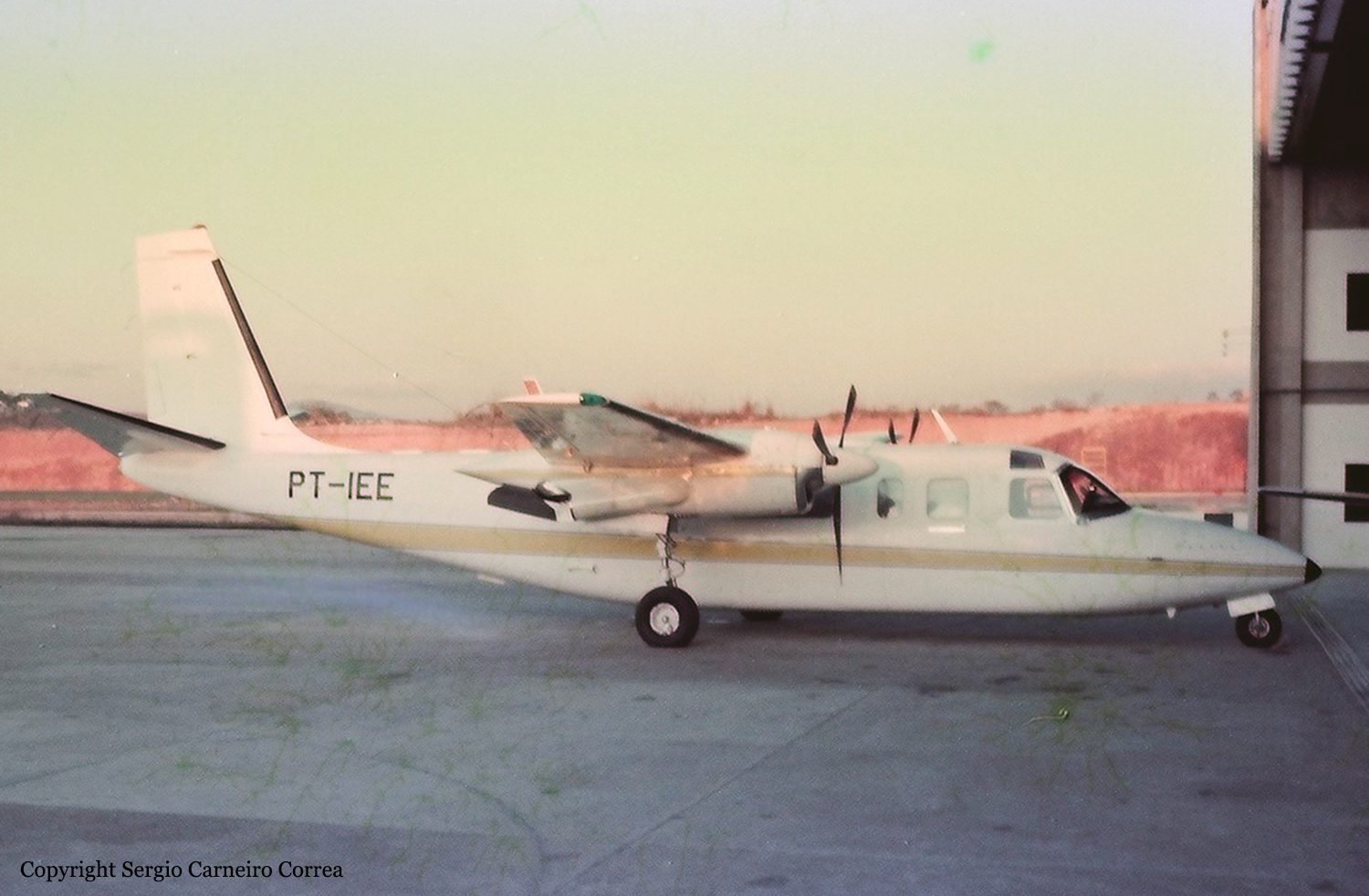
PT-IEE
Flight Phase:
Survivors:
No
Site:
Schedule:
São Paulo – Maringá
MSN:
681-6071
YOM:
1972
Country:
Crew on board:
2
Crew fatalities:
Pax on board:
5
Pax fatalities:
Other fatalities:
Total fatalities:
7
Captain / Total flying hours:
5000
Captain / Total hours on type:
600.00
Copilot / Total flying hours:
2500
Copilot / Total hours on type:
200
Circumstances:
After takeoff from runway 17 at São Paulo-Congonhas Airport, the crew was cleared to climb to 5,500 feet maintaining heading 270. Weather conditions were poor with clouds, atmospheric turbulences and strong winds. At an altitude of 5,300 feet, the aircraft lost height and descended to 4,700 feet, an altitude that was maintained for 17 seconds. Then the aircraft entered an uncontrolled descent and crashed in four houses located in the district of Vila Anhanguera, about 5,5 km southwest of the airport. The aircraft and all four houses were destroyed. All seven occupants were killed while on the ground, six people were injured, one seriously.
Probable cause:
The accident occurred in poor weather conditions. It was determined that during initial climb, the aircraft's attitude, speed and altitude varied suddenly and rapidly, causing the pilot flying a stressful situation insofar as he believed that artificial horizons presented technical problems. In such a situation, investigators consider probable the hypothesis that the pilot made inadequate corrections, exacerbating the abnormal situation in which he was operating. The following contributing factors were identified:
- The crew were suffered fatigue because they had been on duty for more than 15 hours and were unable to observe satisfactory rest time at Congonhas airport,
- This fatigue certainly affected the pilots in their decision-making,
- The urge to return home and distrust of instruments in difficult flight conditions seriously compromised the performance of pilots and their ability to make decisions,
- A direct contact with passengers was stressful as they were going through a period of mourning and were eager to return home to Maringá,
- Weather conditions were unfavorable and contributed to the anxiety of the crew,
- Poor assessment of these conditions by the pilots,
- The working time of the pilots exceeded the limitations and the operator did not take into account adequate rest conditions for the crew,
- The training of the captain in instrument flights in recent months was insufficient.
Final Report:

Crash of a Beechcraft E90 King Air near Goiânia

Date & Time: May 30, 2000 at 1620 LT
Type of aircraft:
Operator:
Registration:
PP-EFC
Flight Type:
Survivors:
Yes
Schedule:
Itapuranga - Goiânia
MSN:
LW-15
YOM:
1972
Location:
Country:
Crew on board:
2
Crew fatalities:
Pax on board:
7
Pax fatalities:
Other fatalities:
Total fatalities:
0
Captain / Total flying hours:
5756
Captain / Total hours on type:
2000.00
Copilot / Total flying hours:
13000
Copilot / Total hours on type:
500
Circumstances:
The twin engine aircraft departed a private strip in Itapuranga on a flight to Goiânia, carrying seven passengers and two pilots. About 10 minutes after takeoff, while in cruising altitude, the captain informed ATC about the failure of the right engine. Because the flight was short (25 minutes in total), he decided to continue to Goiânia. Twelve minutes later, the left engine failed as well. The crew declared an emergency and as he was unable to reach Goiânia Airport, he attempted an emergency landing in a pasture. The aircraft crash landed 13 km short of runway 14 threshold. All nine occupants were rescued, among them seven were injured, three seriously.
Probable cause:
Both engines failed 12 minutes apart due to fuel exhaustion. The following contributing factors were identified:
- Fuel tanks were empty,
- The fuel quantity was insufficient to cover the requested flying distance,
- Poor flight preparation and planning,
- Complacency on part of the copilot,
- Wrong decisions on part of the captain,
- Failures in the organization of flights within the operations of the Government of the State of Goiás,
- Miscalculations in fuel consumption.
- Operating an airplane with faulty fuel gauges,
- Failures in monitoring related to flight safety culture,
- Poor crew resources management,
- Poor crew coordination,
- Lack of crew interactions.
Final Report:

Crash of a Beechcraft 65-B80 Queen Air in Belo Horizonte: 3 killed

Date & Time: Apr 12, 2000 at 1328 LT
Type of aircraft:
Registration:
PT-KKI
Flight Phase:
Flight Type:
Survivors:
No
Site:
Schedule:
Belo Horizonte - Sorocaba
MSN:
LD-483
YOM:
1974
Country:
Crew on board:
1
Crew fatalities:
Pax on board:
2
Pax fatalities:
Other fatalities:
Total fatalities:
3
Captain / Total flying hours:
2019
Circumstances:
Shortly after takeoff from Belo Horizonte-Pampulha Airport, while in initial climb, the left engine failed. The pilot lost control of the aircraft that rolled to the left, lost height and crashed onto four houses located in the district of São Bernardo near the airport. The aircraft and four houses were destroyed. All three occupants were killed and two other people on the ground were injured.
Probable cause:
Failure of the left engine that was not lubricated according to published procedures. Inappropriate engine maintenance on part of the operator. Also, it was reported that the pilot's experience on this type of aircraft was insufficient.
Final Report:
Crash of an Embraer EMB-110P1 Bandeirante in Envira

Date & Time: Jan 31, 2000 at 1030 LT
Operator:
Registration:
PP-EAM
Flight Type:
Survivors:
Yes
Schedule:
Tefé - Eirunepé
MSN:
110-498
YOM:
1990
Location:
Country:
Crew on board:
2
Crew fatalities:
Pax on board:
17
Pax fatalities:
Other fatalities:
Total fatalities:
0
Captain / Total flying hours:
4800
Captain / Total hours on type:
4000.00
Copilot / Total flying hours:
2000
Copilot / Total hours on type:
1600
Circumstances:
En route from Tefé to Eirunépé, weather conditions deteriorated and the crew decided to divert to the non controlled Envira Airport. Following a visual approach in heavy rain falls, the aircraft landed 500 metres past the runway threshold. After touchdown, the crew started the braking procedure but the aircraft encountered aquaplaning conditions and was unable to stop within the remaining distance. It overran and came to rest 100 metres further in a ravine. The captain was seriously injured, the copilot suffered minor injuries and all 16 passengers escaped uninjured.
Probable cause:
The aircraft suffered aquaplaning after landing and was unable to stop within the remaining distance. The following contributing factors were identified:
- The operator authorized the crew to divert to an unapproved airport with an aircraft weighing more than the limits specified in the operations manual without performing adequate supervision in the execution of the flight;
- Deviations on part of the crew;
- Lack of Crew Resources Management;
- Lack of crew coordination and communication;
- Lack of crew instruction and training on part of the operator;
- Poor weather conditions with heavy rain falls;
- The runway surface was wet and the aircraft suffered aquaplaning;
- The aircraft was overloaded;
- The landing was completed with a tailwind component;
- The crew failed to perform the approach briefing according to published procedures.
Final Report:

Crash of a Cessna 208A Caravan I in João Pessoa

Date & Time: Dec 8, 1999 at 1950 LT
Type of aircraft:
Operator:
Registration:
PT-OHA
Flight Phase:
Flight Type:
Survivors:
Yes
Schedule:
João Pessoa – Recife
MSN:
208-0097
YOM:
1986
Country:
Crew on board:
2
Crew fatalities:
Pax on board:
0
Pax fatalities:
Other fatalities:
Total fatalities:
0
Captain / Total flying hours:
4000
Captain / Total hours on type:
1900.00
Copilot / Total flying hours:
6000
Copilot / Total hours on type:
2100
Circumstances:
Few minutes after takeoff from João Pessoa-Presidente Castro Pinto Airport, while on a cargo flight to Recife, the crew reported engine problems and elected to return. Unable to maintain a safe altitude, the crew attempted an emergency landing when the aircraft struck trees and crashed near a motorway. Both pilots were injured and the aircraft was damaged beyond repair.
Probable cause:
Engine failure due to poor maintenance. The following contributing factors were identified:
- Maintenance procedures not followed by the operator mechanics,
- Poor crew coordination,
- Lack of crew training.
Final Report:

Crash of a Rockwell Shrike Commander 500S in Recife

Date & Time: Oct 21, 1999 at 0745 LT
Registration:
PP-SEA
Flight Type:
Survivors:
Yes
Schedule:
Recife – Patos – Sousa – Mossoró – Caicó – Currais Novos – Recife
MSN:
500-1801-16
YOM:
1968
Country:
Crew on board:
2
Crew fatalities:
Pax on board:
0
Pax fatalities:
Other fatalities:
Total fatalities:
0
Captain / Total flying hours:
4000
Captain / Total hours on type:
600.00
Copilot / Total flying hours:
500
Copilot / Total hours on type:
100
Circumstances:
The twin engine aircraft departed Recife-Guararapes Airport in the early morning on a round cargo trip with a load of medicines. Complete stops were made in Patos, Sousa, Mossoró, Caicó and Currais Novos. On the last leg from Currais Novos to Recife, while approaching Recife-Guararapes Airport, both engines failed simultaneously after a total flight of 3 hours and 50 minutes. The crew declared an emergency and attempted to land immediately when the aircraft collided with trees and power cables before crashing in a wooded area located 17 km short of runway 18. Both pilots were injured and the aircraft was damaged beyond repair.
Probable cause:
Double engine failure on final approach due to fuel exhaustion. The following contributing factors were identified:
- Poor flight preparation and planning,
- The crew was overconfident,
- The crew miscalculated the total fuel quantity needed for the entire mission,
- Wrong fuel consumption calculation,
- Taxing time and wind component were not taken into consideration in the fuel consumption calculation,
- Incorrect values relative to the aircraft performances,
- Poor crew resources management.
Final Report:

Crash of an Embraer EMB-110 Bandeirante in Monte Dourado: 2 killed

Date & Time: Sep 14, 1999 at 2130 LT
Operator:
Registration:
PT-ODK
Flight Type:
Survivors:
No
Schedule:
Belém - Monte Dourado
MSN:
110-002
YOM:
1969
Country:
Crew on board:
2
Crew fatalities:
Pax on board:
0
Pax fatalities:
Other fatalities:
Total fatalities:
2
Captain / Total flying hours:
10000
Captain / Total hours on type:
1200.00
Copilot / Total flying hours:
1600
Copilot / Total hours on type:
1200
Circumstances:
The twin engine aircraft departed Belém-Val de Cans Airport on a cargo flight to Monte Dourado with two pilots on board and a load of 1,636 kilos of limestone grit divided into 36 bags of 45.45 kilos each. After a flight of 1 hour and 18 minutes, the crew was cleared to descend by night to Monte Dourado Airport. On final approach, the crew was able to send a brief message saying the aircraft was crashing. The aircraft was destroyed on impact and both pilots were killed.
Probable cause:
The following findings were identified:
- The total weight of the aircraft upon departure from Belém Airport was 650 kilos above MTOW,
- The cargo was not stowed in the cabin but simply stored on the floor,
- The left engine was not providing power at impact and the aircraft entered a left turn and then an uncontrolled descent until impact with the ground,
- Failure of the left engine due to the presence of an aluminum part obstructing the fuel pipe. Metallographic analyzes confirmed that this aluminum part likely came from a thread of the fuel pump,
- Complacency of the crew who failed to follow the published procedures of the operator.
Final Report:

Crash of a Beechcraft A100 King Air in Irati

Date & Time: Apr 14, 1999 at 1200 LT
Type of aircraft:
Operator:
Registration:
PT-LZA
Flight Phase:
Flight Type:
Survivors:
Yes
Schedule:
Foz do Iguaçu – Curitiba
MSN:
B-200
YOM:
1974
Location:
Country:
Crew on board:
2
Crew fatalities:
Pax on board:
0
Pax fatalities:
Other fatalities:
Total fatalities:
0
Captain / Total flying hours:
4000
Captain / Total hours on type:
1300.00
Copilot / Total flying hours:
1320
Copilot / Total hours on type:
60
Circumstances:
The crew departed Foz do Iguaçu Airport at 2215LT on a ferry flight to Curitiba. About 55 minutes into the flight, while in cruising altitude by night, the right engine failed, followed few seconds later by the left engine. The crew reduced his altitude and attempted an emergency landing when the aircraft crashed in a grassy area near Irati. While the copilot escaped uninjured, the captain was injured. The aircraft was destroyed.
Probable cause:
Failure of both engines in flight due to fuel exhaustion. The following findings were identified:
- The crew failed to prepare the flight according to published procedures,
- The crew failed to check there was sufficient fuel in tanks prior to departure,
- The crew failed to follow the pre takeoff checklist,
- The captain showed excessive self confidence
- The captain exercised pressure on the copilot,
- The crew suffered fatigue due to an excessive period of work. At the time of the accident, the crew was overduty by three hours,
- The crew consumed alcohol beverages the night before the flight.
Final Report:

Crash of a Learjet 24D in Ribeirao Preto: 5 killed

Date & Time: Apr 7, 1999 at 1147 LT
Type of aircraft:
Registration:
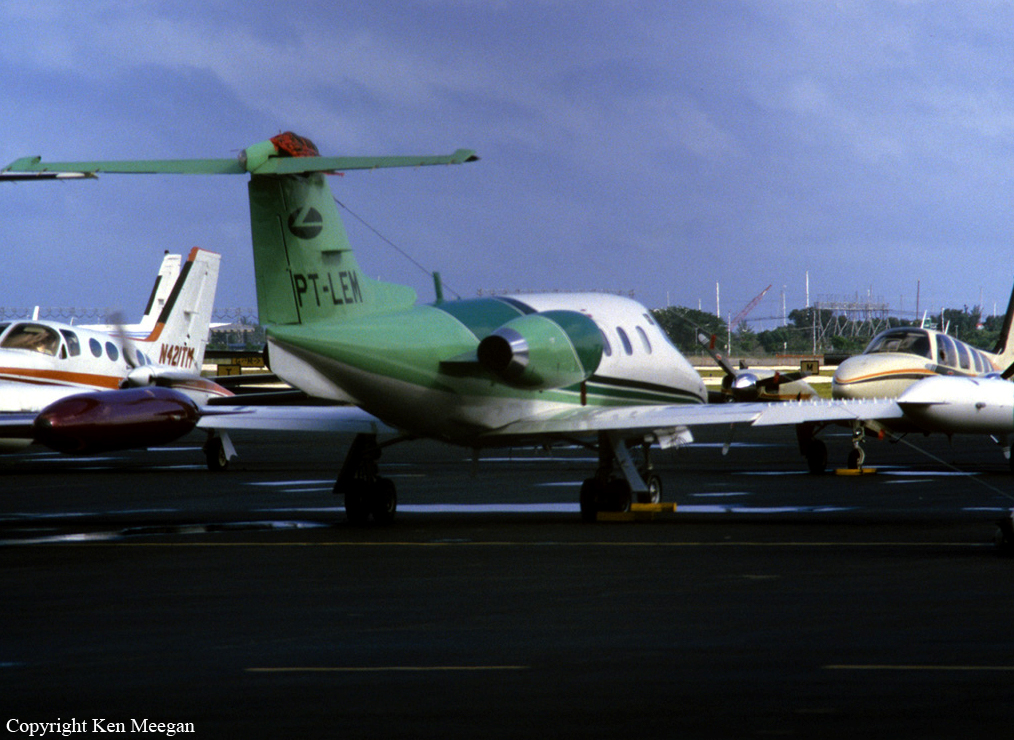
PT-LEM
Flight Type:
Survivors:
No
Schedule:
São Paulo - Ribeirão Preto
MSN:
24-270
YOM:
1973
Country:
Crew on board:
5
Crew fatalities:
Pax on board:
0
Pax fatalities:
Other fatalities:
Total fatalities:
5
Captain / Total flying hours:
4000
Captain / Total hours on type:
4000.00
Copilot / Total flying hours:
6000
Copilot / Total hours on type:
100
Circumstances:
The aircraft departed São Paulo-Congonhas on a training flight to Ribeirão Preto-Leite Lopes Airport, carrying five crew members, instructor and pilots. On final approach to runway 18, during the last segment, just prior to touchdown, the aircraft rolled to the right, causing the right wing tip to struck the runway surface. The pilot-in-command overcorrected, the aircraft went out of control and crashed 420 metres past the first impact, bursting into flames. All five occupants were killed.
Probable cause:
Contributing Factors:
- There was the participation of individual psychological variables in the pilot-in-command's performance due to the excess of self-confidence and self-demand in his customary behavior, besides the dissimulation regarding his real qualification for the type of flight. The personality with traces of permissiveness and insecurity of the co-pilot also contributed to the occurrence, as it allowed the aircraft to be operated by an unqualified pilot, with no employment link with the company.
- There was a lack of adequate supervision by Manacá Táxi Aéreo, as it allowed a crew member who had not operated the type of aircraft for one year and had not made any type of flight for four months, besides not having any employment relationship with that company. It is also necessary to consider the failure of supervision at the organizational level due to the issue of an incorrect license by the DAC, giving rise to the possibility of its use for the revalidation of license in aircraft for which the pilot was not qualified to exercise the function of commander.
- The entire sequence of events began with pilot errors resulting from the pilot's lack of flight experience in the left-hand seat on the aircraft in question.
- The inadequate use of cockpit resources destined to the aircraft operation, due to an ineffective accomplishment of the tasks assigned to each crew member, besides the interpersonal conflict resulting from the co-pilot's intervention in the pilot in command operation, in the final approach phase, already close to the aircraft's touchdown, configure the collaboration of this factor to the accident.
- The inadequate use of the aircraft commands, by the pilot in command, making excessive aileron corrections in the final approach phase, near the landing.
- The pilot was qualified as a co-pilot on the equipment, but due to a typing error, he was issued a pilot license. Thus, the situation and operation of the pilot in question were totally irregular.
Final Report:

Crash of a Beechcraft A90 King Air in Franca: 2 killed

Date & Time: Mar 23, 1999 at 1910 LT
Type of aircraft:
Registration:
PT-OUL
Flight Phase:
Flight Type:
Survivors:
No
Schedule:
Franca – Ribeirão Preto
MSN:
LJ-125
YOM:
1966
Country:
Crew on board:
2
Crew fatalities:
Pax on board:
0
Pax fatalities:
Other fatalities:
Total fatalities:
2
Captain / Total flying hours:
3500
Captain / Total hours on type:
650.00
Copilot / Total flying hours:
206
Circumstances:
Less than a minute after takeoff from Franca Airport, while climbing in poor weather conditions, the twin engine aircraft nosed down and crashed in a huge explosion about 1,500 metres past the runway end. The aircraft was destroyed and both pilots were killed. They were completing a cargo flight to Ribeirão Preto, carrying documents on behalf of Banco do Brasil.
Probable cause:
The following findings were identified:
- The crew was in a hurry to take off in order to avoid poor weather approaching the airport,
- The crew took off from an intersection with a taxiway,
- Immediately after takeoff, the aircraft entered clouds,
- Approximately one minute after liftoff, the aircraft impacted ground,
- After the first impact, the aircraft flew for another 200 metres and again collided with the ground and exploded,
- The aircraft was totally destroyed by a post crash fire,
- The pilot had a hearing problem that was stabilized and was being researched by HASP. Considering the relationship between ear and ear balance, spatial disorientation in the pilot in
in the face of the adverse conditions it experienced: flight conditions by instruments associated with “windshear”. Since the search could not be completed above mentioned, this aspect remains undetermined,
- Individual characteristics contributed due to the habits acquired by the pilot and his eventual practice of taking off from the taxiway, delaying the point from which the aircraft would achieve the best characteristics flight performance,
- Poor weather conditions with CB's, sudden changes in wind, strong turbulence and rain, were conducive to the emergence of the phenomenon of “Windshear”, representing a real risk to the operation of any aircraft, being that voluntary entry or not, in this type of training, results almost always in the loss of control of the aircraft with unforeseeable consequences. The crew faced these conditions when the aircraft took off,
- It was evident from the witness statements that the pilot was in a hurry to take off, in addition to having used runway 23 from the intersection and towards the sector most affected by poor weather.
Final Report: