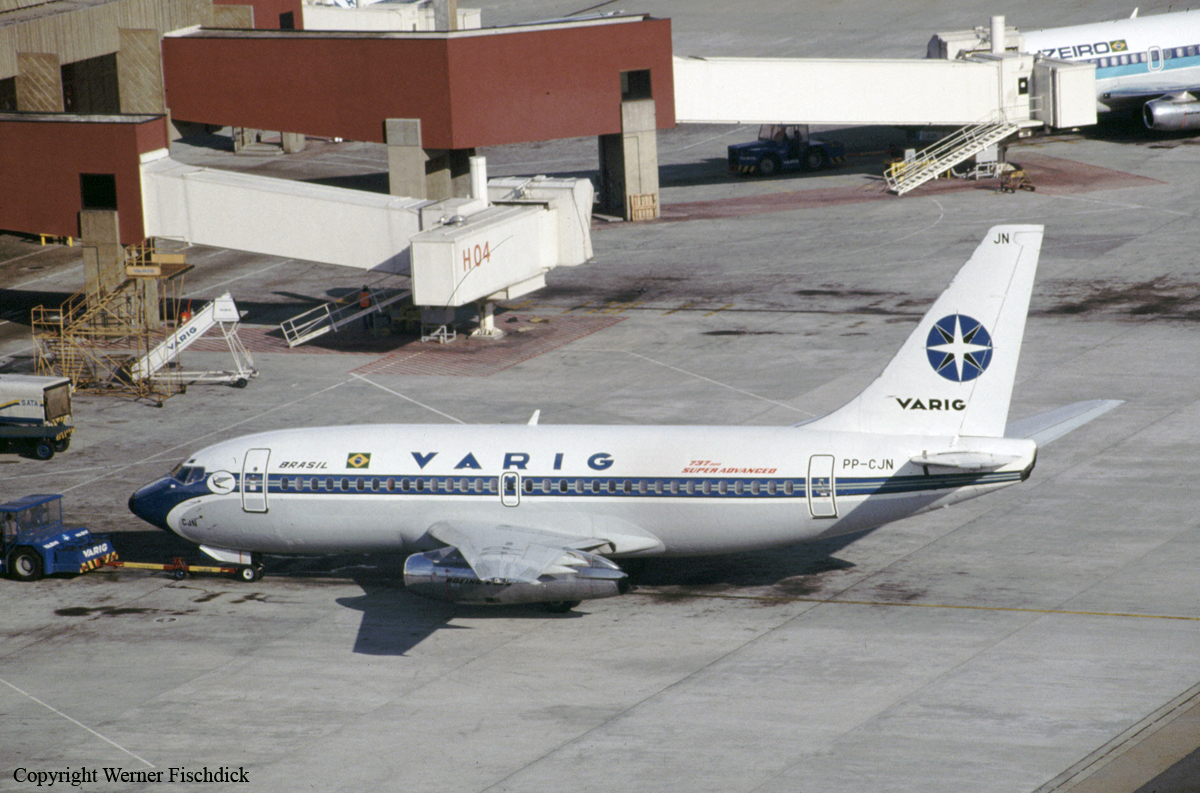
Crash of a Boeing 737-2C3 in Goiânia

Date & Time: Sep 16, 2001 at 1053 LT
Type of aircraft:
Operator:
Registration:
PP-CJN
Survivors:
Yes
Schedule:
São Paulo – Goiânia
MSN:
21012
YOM:
1974
Flight number:
RG2240
Location:
Country:
Crew on board:
5
Crew fatalities:
Pax on board:
62
Pax fatalities:
Other fatalities:
Total fatalities:
0
Aircraft flight hours:
68500
Aircraft flight cycles:
65500
Circumstances:
On final approach to Goiânia-Santa Genoveva Airport, the crew encountered poor weather conditions with a limited visibility due to rain. The aircraft landed about 500 metres past the runway threshold but as it was misaligned, the right main gear touched down on the left side of the runway. The crew attempted to steer the plane back onto the runway when the right main gear collapsed. The aircraft went out of control, lost its right engine then its nose gear and came to rest on the runway. All 67 occupants evacuated safely.
Probable cause:
Wrong approach configuration on part of the crew who continued the approach while the aircraft was not properly aligned with the runway centerline.
Crash of an Embraer EMB-820C Navajo in Curitiba

Date & Time: Jun 6, 2001 at 2010 LT
Operator:
Registration:
PT-EFU
Flight Type:
Survivors:
Yes
Schedule:
Guarapuava – Curitiba
MSN:
820-031
YOM:
1976
Country:
Crew on board:
2
Crew fatalities:
Pax on board:
1
Pax fatalities:
Other fatalities:
Total fatalities:
0
Captain / Total flying hours:
2600
Captain / Total hours on type:
592.00
Circumstances:
Following an uneventful cargo flight from Guarapuava, the crew started the descent to Curitiba-Bacacheri Airport by night and adverse weather conditions. After touchdown on a wet runway surface, the twin engine aircraft went out of control, overran and collided with a concrete wall. All three occupants were injured, one of the pilot seriously.
Probable cause:
The decision of the crew to land at Curitiba-Bacacheri Airport was not appropriate due to poor weather conditions. The crew underestimated the weather conditions at destination and should take the decision to divert to a more suitable terrain.
Final Report:

Crash of a Embraer EMB-820C Navajo in São Paulo: 1 killed

Date & Time: Jun 5, 2001 at 2030 LT
Registration:
PT-EHL
Flight Type:
Survivors:
No
Site:
Schedule:
Franca – São Paulo
MSN:
820-048
YOM:
1977
Country:
Crew on board:
1
Crew fatalities:
Pax on board:
0
Pax fatalities:
Other fatalities:
Total fatalities:
1
Captain / Total flying hours:
2000
Captain / Total hours on type:
600.00
Aircraft flight hours:
5289
Circumstances:
The aircraft departed Franca Airport in the evening on a cargo flight to São Paulo, carrying one pilot and bank notes. On a night approach to São Paulo-Congonhas Airport, the pilot cancelled the IFR flight plan when he encountered technical problems with the right engine. He shut down the engine and continued the approach to runway 35R without informing ATC of his situation. Too high on the glide, he apparently decided to initiate a go-around when he lost control of the aircraft that rolled to the left, lost height and crashed in a residential area, bursting into flames. The aircraft was destroyed and the pilot was killed. Two people on the ground were injured.
Probable cause:
It was determined that the hydraulic pump on the right engine failed in flight, forcing the pilot to shut the engine down. It was reported that the pilot continued the approach in a single-engine configuration without informing ATC and that the aircraft was too high on the glide and approaching with an excessive speed. The pilot improperly analyzed the aircraft's flight conditions after shutting down the right engine, causing the aircraft to enter an approach configuration that was not compliant with the published procedures.
Final Report:

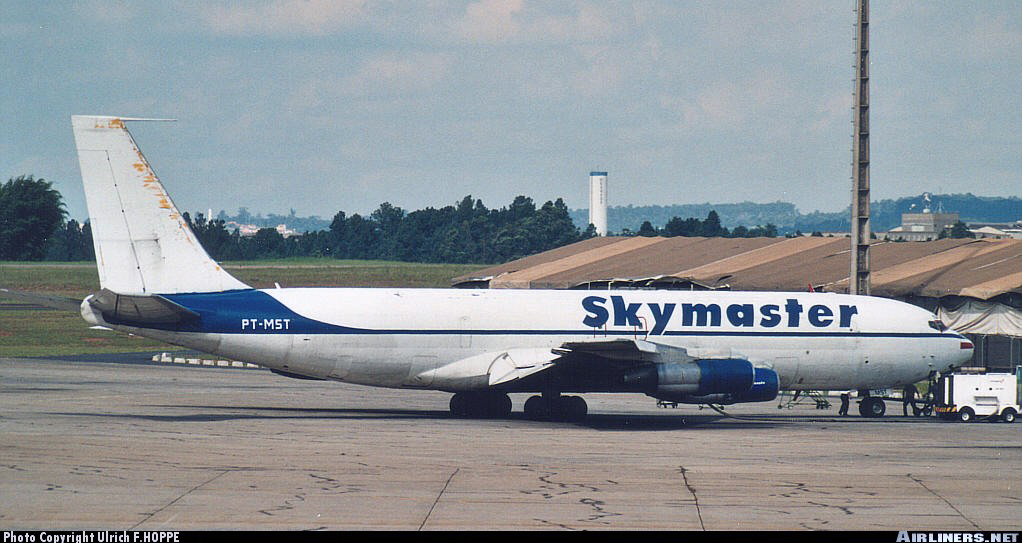
Crash of a Boeing 707-331C in São Paulo

Date & Time: Mar 7, 2001 at 0030 LT
Type of aircraft:
Operator:
Registration:
PT-MST
Flight Type:
Survivors:
Yes
Schedule:
Belém – Brasilía – São Paulo
MSN:
18711
YOM:
1964
Flight number:
SKC9101
Country:
Crew on board:
3
Crew fatalities:
Pax on board:
0
Pax fatalities:
Other fatalities:
Total fatalities:
0
Captain / Total flying hours:
4200
Captain / Total hours on type:
2543.00
Copilot / Total flying hours:
3858
Copilot / Total hours on type:
361
Aircraft flight hours:
70422
Aircraft flight cycles:
28047
Circumstances:
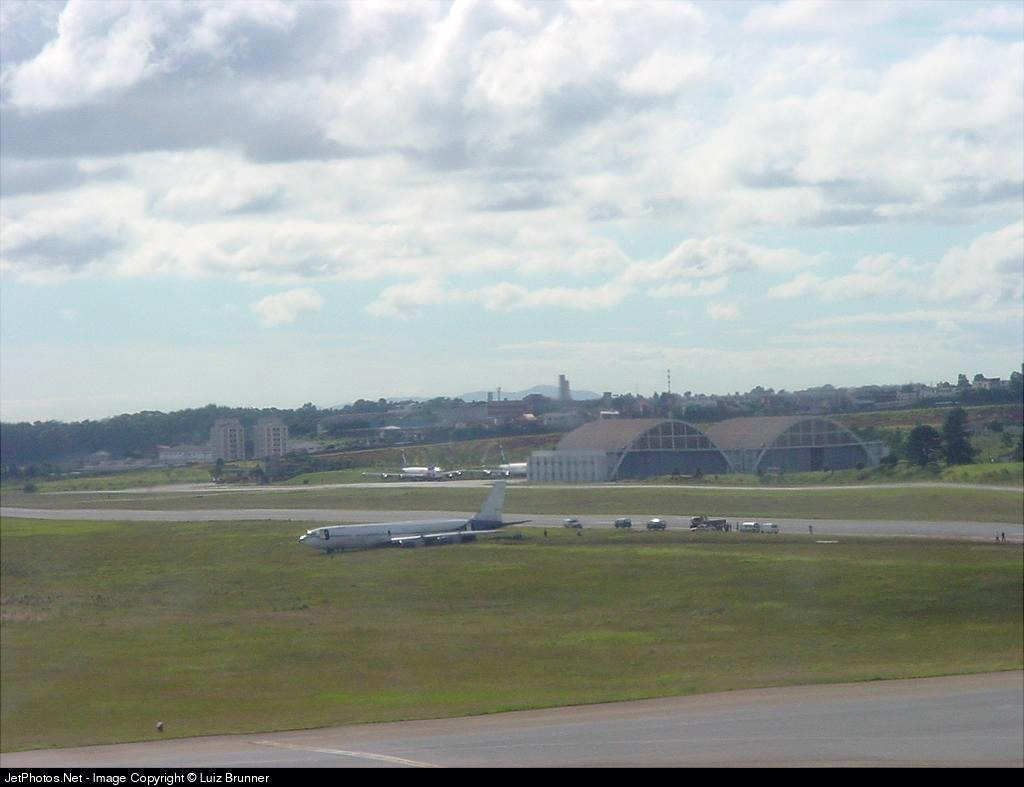
The aircraft was completing a cargo flight from Belém to São Paulo with an intermediate stop in Brasilía, carrying three crew members and a load of various goods such as mail and fish. While descending to São Paulo-Guarulhos Airport in good weather conditions at an altitude of 10,000 feet, the crew encountered technical problems with the trim system. Several manual controls and tests were conducted and the system worked before failing again between 6,000 and 4,700 feet. The captain decided to continue the approach but the aircraft became unstable and nosed down on short final. It landed hard on runway 09R, causing the undercarriage to be torn off. The aircraft slid for about 1,000 metres then veered off runway to the left and came to rest in a grassy area. All three crew members escaped uninjured while the aircraft was damaged beyond repair.
Probable cause:
The exact cause of the technical problems on the trim system could not be determined with certainty. The following contributing factors were identified:
- The decisions of the crew and more particularly of the captain during the last phase of flight were incorrect,
- The crew training program for emergency situation was incomplete,
- Improper use of flaps and slats on final approach made the situation worse,
- The captain did not follow the procedure determined for such an emergency situation and decided to continue the approach maneuver, increasing the risk margin and placing the airplane in critical operating conditions,
- Due to deviations from the published standard operational procedures, such as failure to complete the approach briefing and not following the approach checklist, the coordination among the flight crew was poor, leading to further deviations and putting the crew in a critical situation.
Final Report:

Crash of an Embraer EMB-820C Navajo in Varginha

Date & Time: Feb 22, 2001 at 1935 LT
Operator:
Registration:
PT-LFP
Flight Phase:
Flight Type:
Survivors:
Yes
Schedule:
Varginha – Belo Horizonte
MSN:
820-038
YOM:
1977
Country:
Crew on board:
2
Crew fatalities:
Pax on board:
0
Pax fatalities:
Other fatalities:
Total fatalities:
0
Captain / Total flying hours:
1959
Captain / Total hours on type:
213.00
Copilot / Total flying hours:
658
Copilot / Total hours on type:
276
Circumstances:
The twin engine aircraft departed Varginha-Major-Brigadeiro Trompowsky Airport on a mail flight to Belo Horizonte-Pampulha Airport with two pilots on board. After takeoff, while in initial climb, the right engine lost power. The aircraft lost height and crash landed in an open field. It slid for about 100 metres before coming to rest, bursting into flames. Both pilots escaped with minor injuries and the aircraft was destroyed by fire.
Probable cause:
Loss of power on the right engine for undetermined reasons. The following findings were identified:
- Poor flight preparation on part of the crew,
- The crew did not know the exact weight of the mail/cargo,
- The crew did not have sufficient training/instruction regarding a possible loss of engine power at takeoff,
- Poor engine maintenance as the right engine had experienced power issues in the past that had not been resolved,
- Poor crew coordination,
- When the loss of power occurred on the right engine, the captain asked the copilot to raise the landing gear and preferred to resolve the emergency situation alone,
- Poor evaluation of the aircraft performances on part of the crew in regard of the weight and balance values and CofG.
Final Report:

Crash of a Mitsubishi MU-2B-25 Marquise in Macapá

Date & Time: Feb 10, 2001 at 1230 LT
Type of aircraft:
Operator:
Registration:
PT-LEW
Survivors:
Yes
Schedule:
Belém – Macapá
MSN:
244
YOM:
1972
Location:
Country:
Crew on board:
3
Crew fatalities:
Pax on board:
2
Pax fatalities:
Other fatalities:
Total fatalities:
0
Captain / Total flying hours:
3680
Captain / Total hours on type:
55.00
Copilot / Total flying hours:
4512
Copilot / Total hours on type:
644
Circumstances:
On final approach to Macapá Airport, the left engine exploded and caught fire. The aircraft lost height, descended below the glide and eventually crash landed in a grassy area to the right of the runway and came to rest, bursting into flames. All five occupants escaped uninjured while the aircraft was damaged beyond repair.
Probable cause:
Failure of the second stage of the high pressure compressor disk in the left engine. Investigations were unable to determine the exact cause of the this failure, maybe following fatigue cracks or a construction defect. It was reported that the left engine accumulated 3,000 flying hours since the last compressor overhaul.
Final Report:

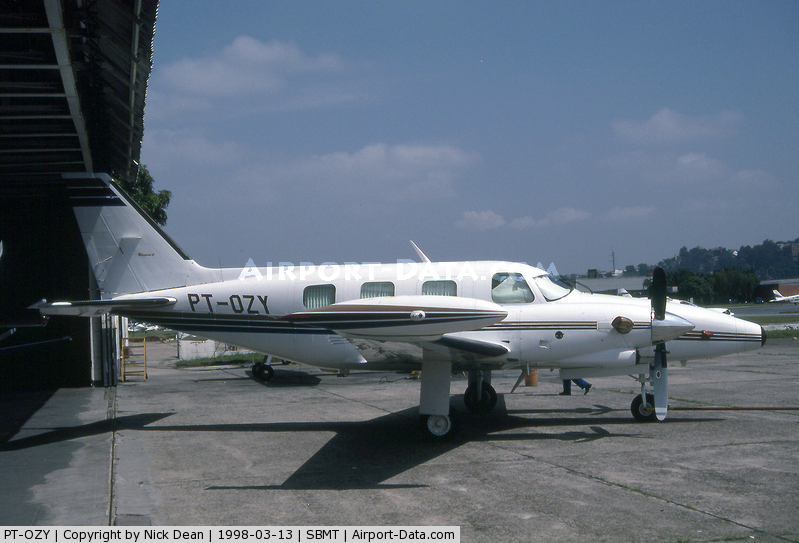
Crash of a Piper PA-31T Cheyenne II in Água Comprida: 6 killed

Date & Time: Jan 12, 2001 at 1900 LT
Type of aircraft:
Operator:
Registration:
PT-OZY
Flight Phase:
Flight Type:
Survivors:
No
Schedule:
Goiânia – Ribeirão Preto
MSN:
31-7820030
YOM:
1978
Country:
Crew on board:
2
Crew fatalities:
Pax on board:
4
Pax fatalities:
Other fatalities:
Total fatalities:
6
Circumstances:
The twin engine aircraft departed Goiânia on a private flight to Ribeirão Preto, carrying four passengers and two pilots, the aircraft's owner and a friend. Three minutes after being cleared by Brasilía Control Center, at an altitude of 18,000 feet, the pilot informed ATC about poor weather conditions and severe turbulences. Shortly later, the aircraft entered an uncontrolled descent and crashed in a sugarcane field located near Água Comprida. The aircraft was destroyed by impact forces and a post crash fire and all six occupants were killed.
Probable cause:
It is believed that the pilot lost control of the aircraft in poor weather conditions after he suffered a spatial disorientation. The following contributing factors were identified:
- Poor flight preparation,
- Poor weather conditions with atmospheric turbulences,
- The pilot showed anxiety and complacency,
- The pilot was not properly licensed to operate in IFR conditions,
- The pilot was inexperienced,
- The pilot's actions were likely inappropriate while facing an unexpected situation.
Final Report:

Crash of a Britten-Norman BN-2A-21 Islander near Cascalho: 3 killed

Date & Time: Jan 11, 2001 at 1440 LT
Type of aircraft:
Registration:
PT-KNE
Flight Phase:
Survivors:
No
Site:
Schedule:
Paramirim - Paramirim
MSN:
696
YOM:
1973
Location:
Country:
Crew on board:
2
Crew fatalities:
Pax on board:
1
Pax fatalities:
Other fatalities:
Total fatalities:
3
Captain / Total flying hours:
3886
Captain / Total hours on type:
3263.00
Copilot / Total flying hours:
6088
Copilot / Total hours on type:
23
Circumstances:
The twin engine aircraft departed Paramirim Airport at 1400LT on a 3-hours ore prospecting flight, carrying two pilots and one passenger. En route, weather conditions worsened and the crew apparently decided to return to Paramerim when he encountered atmospheric turbulences and windshear. The aircraft stalled and crashed in a mountainous area. After 17 hours without contact, the aircraft was declared as missing. Its wreckage was found the following day at 1800LT near the summit of Mt Serra Preta, near Cascalho, about 27 km east of Paramirim. The aircraft was destroyed and all three occupants were killed.
Probable cause:
Loss of control after the crew encountered adverse weather conditions with low level windshear. The following contributing factors were identified:
- Although the operations were carried out in accordance with the regulations in force, the pilots regularly exceeded the flight times and this type of prospecting mission is extremely tiring insofar as it is systematically operated at low altitude without the aid of the autopilot system in a high outside temperature environment, leading to greater than normal physical wear of the pilots,
- Poor flight preparation regarding the probable evolution of the weather conditions,
- The accident occurred in low visibility as the crew was presumably trying to return to his base,
- The accident occurred outside of the intended flight area,
- The flight, which was scheduled to take three hours, was started with an aircraft whose tanks were full (seven hours autonomy), unnecessarily increasing its weight,
- Poor flight planning,
- Non-compliance with standard operator procedures on part of the crew who positioned the flaps in an inappropriate angle to fly over obstacles,
- In the days preceding the accident, two incidents occurred at Paramirim Airport involving the captain, and neither of these two events had been reported to the management of the operator, indicating the absence of an effective control of operations,
- The supervision of crew schedules was poor,
- The operator wanted this type of flight to be carried out in the morning in order to avoid atmospheric turbulence specific to the region, but the crew decided to take off in the afternoon when the conditions were not favorable.
Final Report:

Crash of an Embraer EMB-820C Navajo in Jequié: 2 killed

Date & Time: Jan 11, 2001
Operator:
Registration:
PT-EFA
Flight Type:
Survivors:
No
Schedule:
Ilhéus – Jequié
MSN:
820-025
YOM:
1976
Location:
Country:
Crew on board:
2
Crew fatalities:
Pax on board:
0
Pax fatalities:
Other fatalities:
Total fatalities:
2
Captain / Total flying hours:
15536
Captain / Total hours on type:
10179.00
Copilot / Total flying hours:
650
Circumstances:
On approach to Jequié Airport, the crew encountered poor weather conditions. While descending too low in the Vale de Pedra, the aircraft struck the ground and crashed few km from the airport. The captain was killed and the copilot was seriously injured. He died few hours later.
Probable cause:
The crew continued the descent under VFR mode in IMC conditions and descended too low to maintain a visual contact with the ground until the aircraft impacted terrain. The following contributing factors were identified:
- Poor crew coordination,
- Lack of visibility,
- The crew failed to follow the published procedures.
Final Report:

Crash of a PZL-Mielec AN-2 in Anápolis

Date & Time: Dec 19, 2000 at 1200 LT
Type of aircraft:
Registration:
SP-FLU
Flight Type:
Survivors:
Yes
Schedule:
Canarana – Anápolis
MSN:
1G237-33
YOM:
1989
Country:
Crew on board:
1
Crew fatalities:
Pax on board:
2
Pax fatalities:
Other fatalities:
Total fatalities:
0
Captain / Total hours on type:
250.00
Circumstances:
After being ferried from Alta Floresta following maintenance, the pilot was completing a flight from Canarana to Anápolis with two passengers on board. Upon touchdown on runway 07, he encountered crosswinds from the left and lost control of the airplane that veered off runway to the right. It flew over a ravine, struck irregularities in the terrain and came to rest. All three occupants escaped with minor injuries and the aircraft was damaged beyond repair. The aircraft was still operated under a Polish registration SP-FLU while this was already cancelled. The owner was in the process of applying for a Brazilian certificate of registration.
Probable cause:
The following findings were identified:
- It was not possible to determine the contribution of the physiological aspect because the pilot was not found and his license had expired.
- At the critical moment of landing, a state of indecision was triggered in the pilot regarding the procedure to be adopted (landing or going around), impairing its decision-making capacity and causing delay in decision making.
- The pilot did not act adequately on the aircraft controls in order to counteract the action of the crosswind, allowing the aircraft to stand to the right of the approach axis and touch the right side of the runway. Subsequently, he was unable to prevent the left wings from climbing, causing the lower right wing to touch the ground and exit the runway.
- The pilot's decision not to go around immediately when he noticed the first signs of the aircraft's turning tendency, forced by the wind effect and, consequently, having lost full control of the aircraft, contributed to the worsening of the subsequent facts. The pilot acted belatedly when he decided to go around.
- The owner of the aircraft no longer verified that the technical qualification and the Certificate of Physical Capacity of the pilot were up to date for the performance of the air activity, as well as the certificates necessary for the operation of the aircraft. It also went against what prescribes the CTA certification, which establishes two pilots as the minimum crew for the aircraft.
- The left cross wind, associated with the inadequacy of the pilot's controls to counteract it, resulted in the right wing touching the ground, with consequent loss of control of the aircraft.
- The pilot failed to carry out a readaptation flight in the aircraft with a qualified instructor, being for more than three years without flying in the equipment.
Final Report: