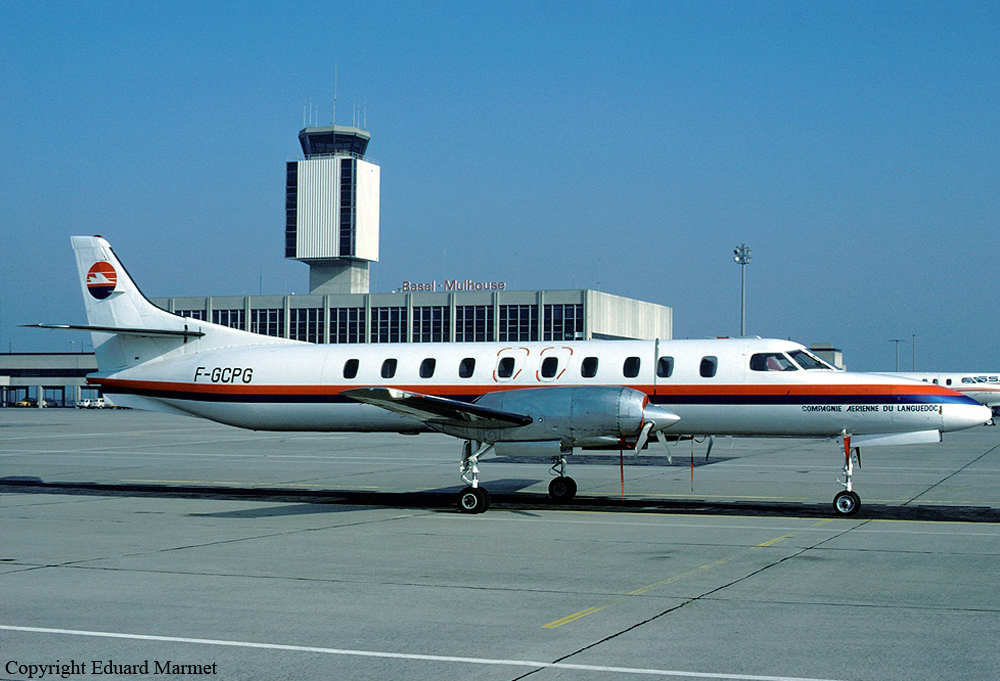
Crash of a Swearingen SA226TC Metro II in Montluçon: 4 killed

Date & Time: Nov 18, 1988 at 0631 LT
Type of aircraft:
Operator:
Registration:
F-GCPG
Flight Phase:
Survivors:
No
Schedule:
Montluçon - Paris
MSN:
TC-334E
YOM:
1980
Flight number:
FU440
Country:
Region:
Crew on board:
2
Crew fatalities:
Pax on board:
2
Pax fatalities:
Other fatalities:
Total fatalities:
4
Aircraft flight hours:
10346
Circumstances:
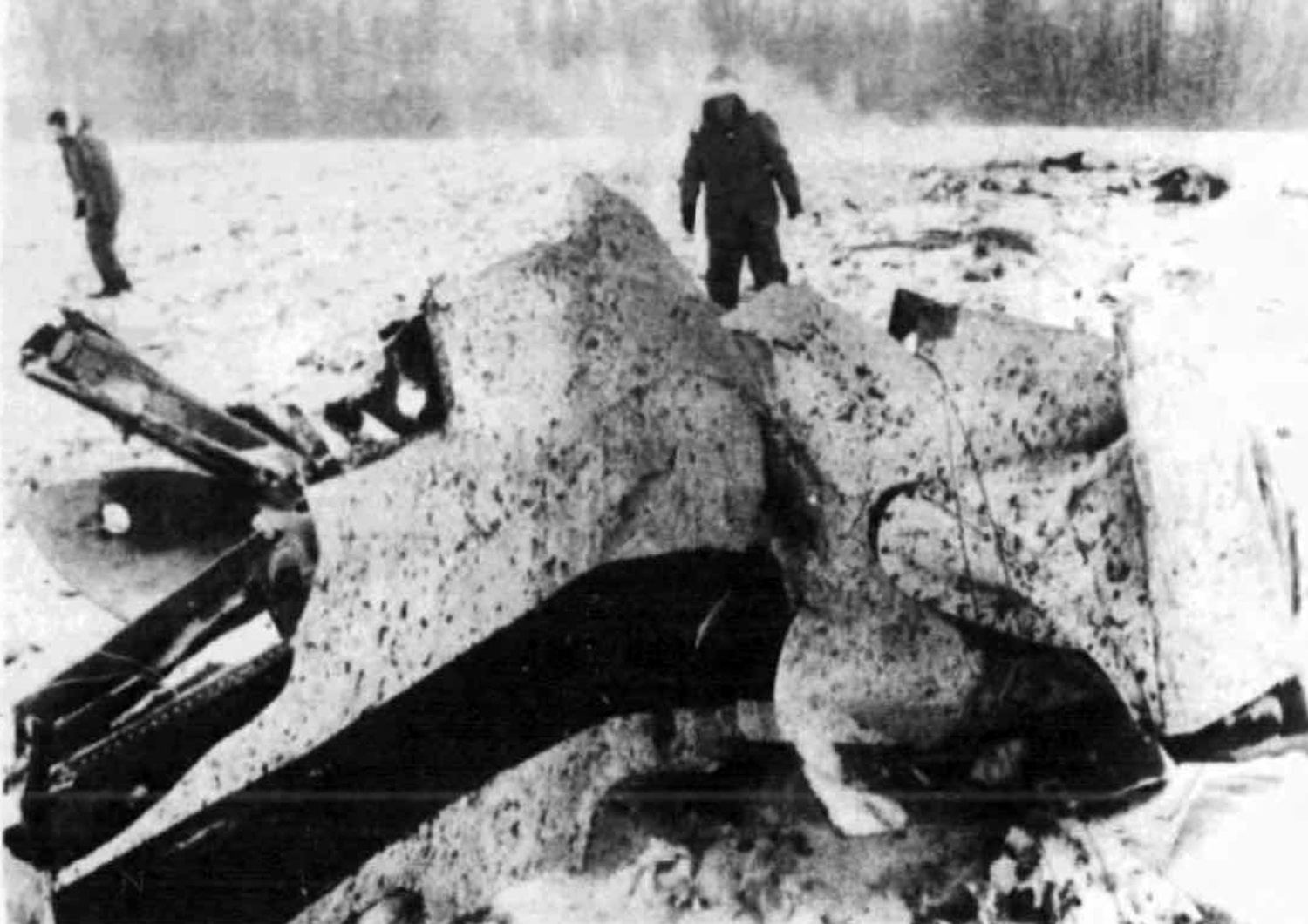
Following a night takeoff at Montluçon-Guéret Airport, while in initial climb, the aircraft nosed down and struck the ground 600 meters past the runway end. It slid for few dozen meters, collided with bushes and eventually came to rest, bursting into flames. All four occupants were killed. It appears that the Stall Avoidance System (SAS) had activated, resulting in the stick pusher activation at a critical altitude. The Metro's SAS system, as well as the SAS system on this particular aircraft, had a history of problems. These problems resulted in several NTSB Safety Recommendations (A-84-66, A-88-154). The copilot was at controls at the time of the accident.
Crew:
Gérard Van Der Veecken, pilot,
Christian Rémondon, copilot.
Passengers:
Robert Aupetit,
Patrick Desdoit.
Probable cause:
The accident resulted from a reduction in the attitude of the airplane causing a downward trajectory in the moments that followed the takeoff. It is likely that this decrease in attitude is due to an untimely triggering of the stick pusher. The absence of a recorder and the complete destruction of the SAS (apart from angle of attack vane and its transmitter) did not prove this hypothesis. With or without inadvertent triggering of the stick pusher, the imprecision of the right horizon and the absence of external visual references played an important role in this accident.

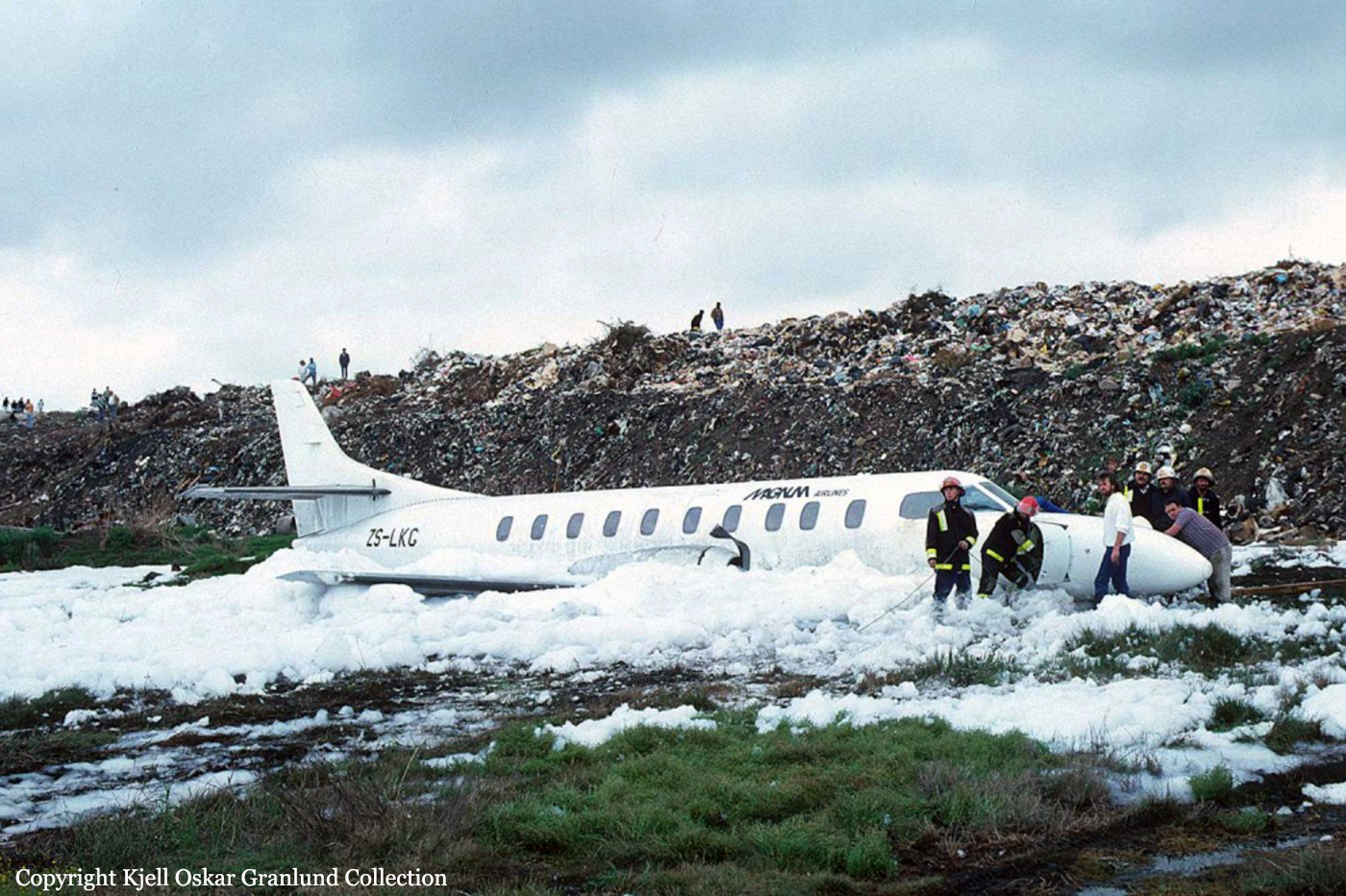
Crash of a Swearingen SA226TC Metro II in Johannesburg

Date & Time: Nov 18, 1988
Type of aircraft:
Operator:
Registration:
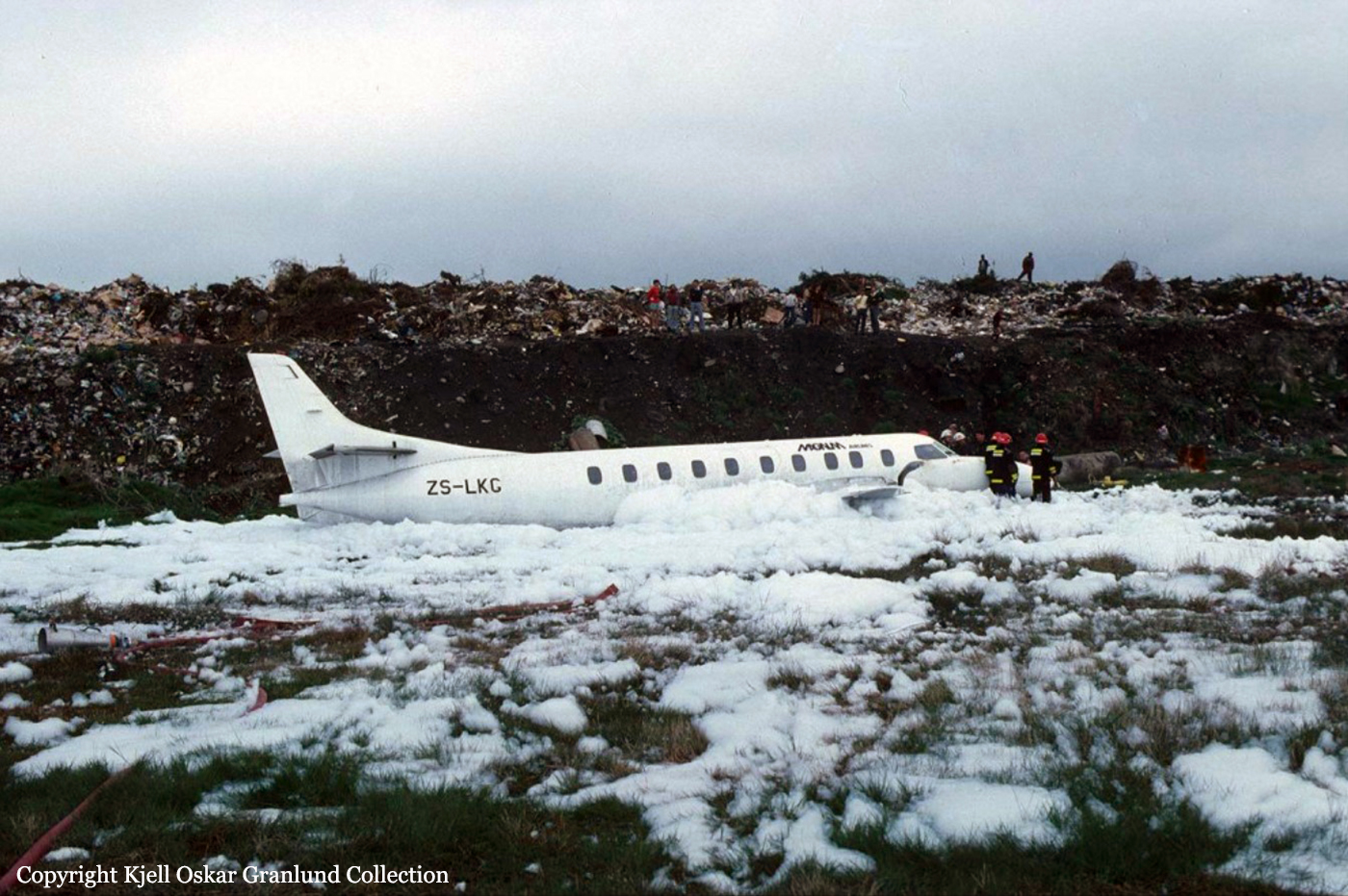
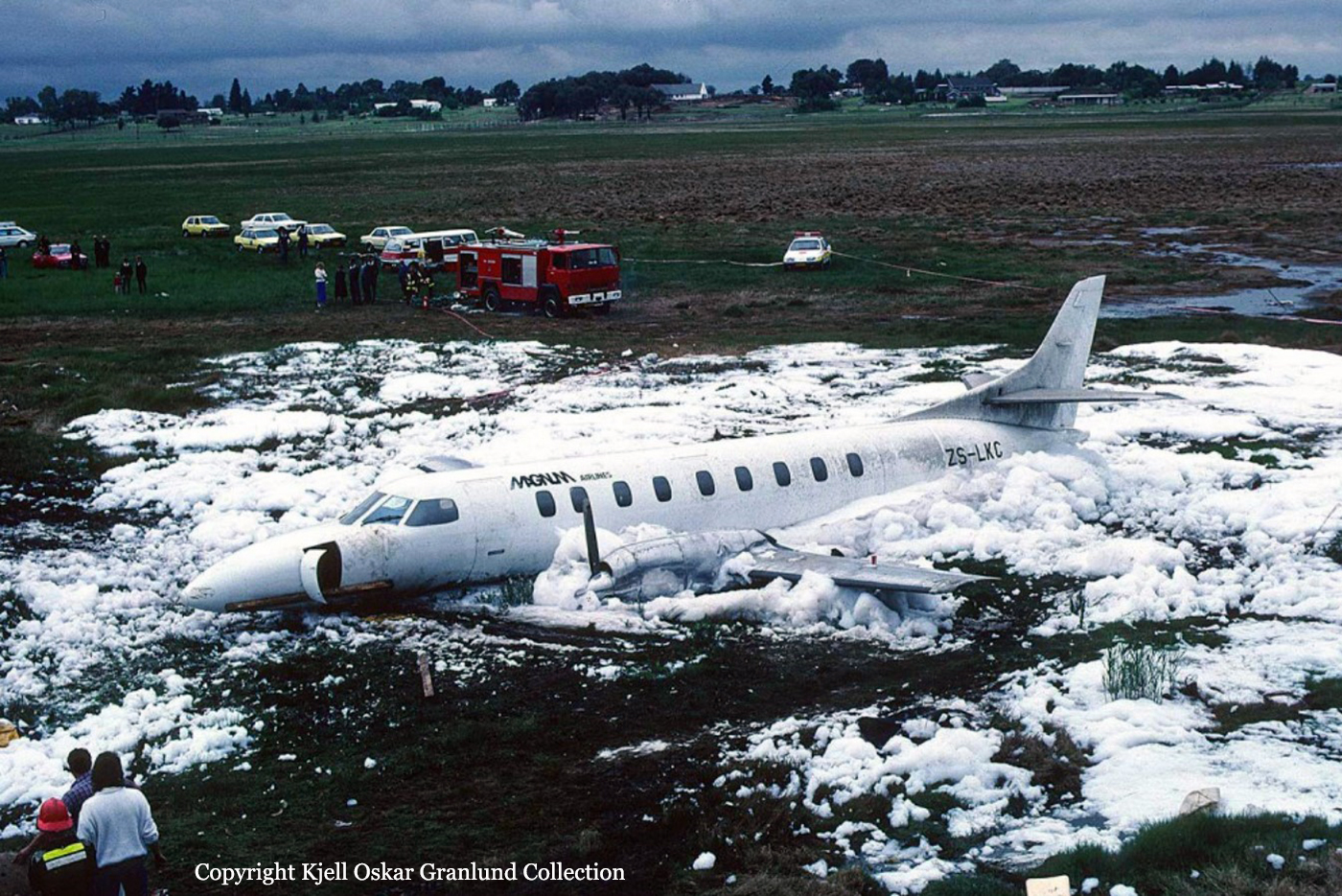
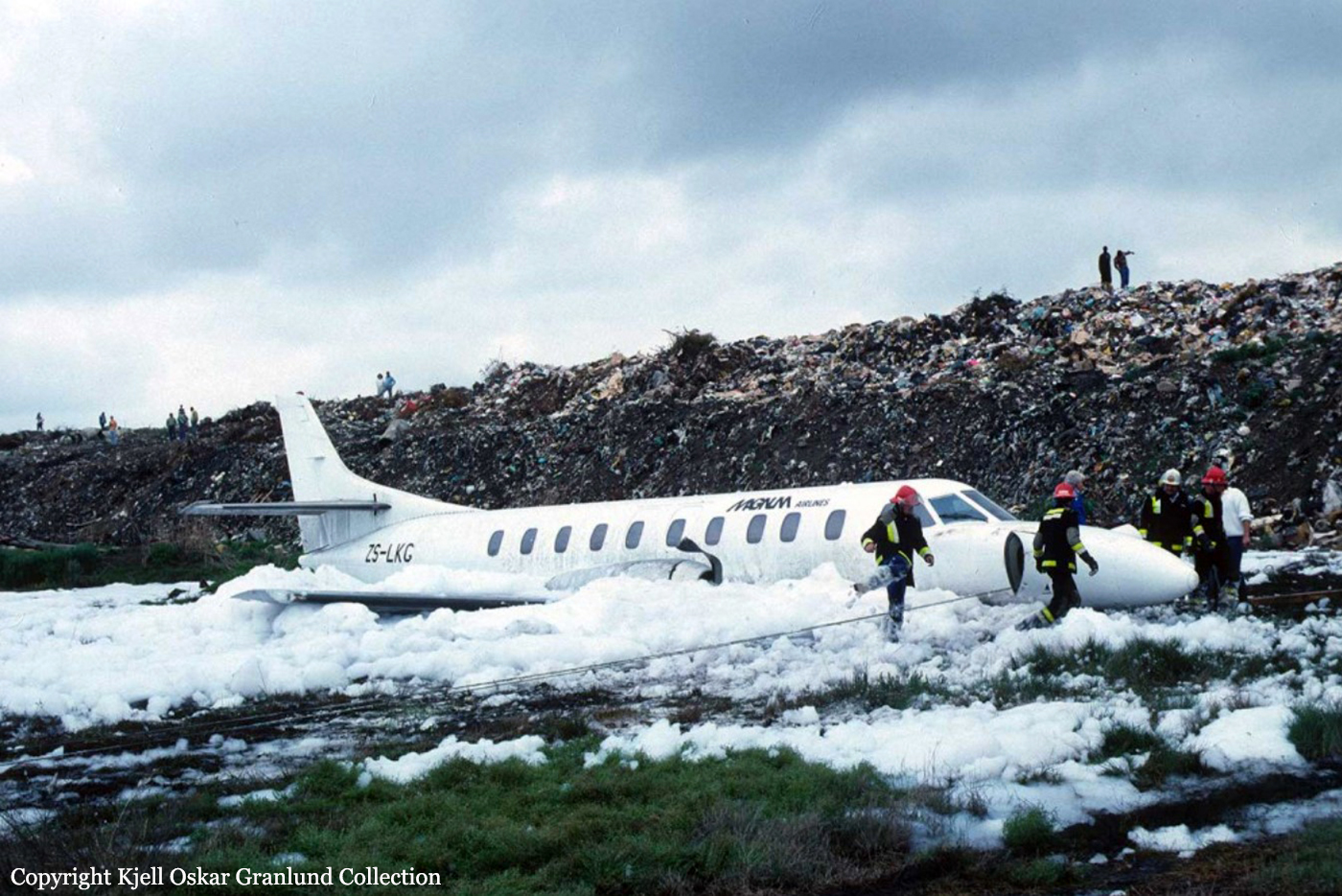
ZS-LKG
Flight Phase:
Survivors:
Yes
MSN:
TC-291
YOM:
1979
Country:
Region:
Crew on board:
2
Crew fatalities:
Pax on board:
10
Pax fatalities:
Other fatalities:
Total fatalities:
0
Circumstances:
After takeoff from Johannesburg-Jan Smuts Airport, the crew declared an emergency following the failure of the left engine. The crew elected to return but eventually completed a belly landing in a field located near the airport. All 12 occupants escaped uninjured while the aircraft was damaged beyond repair.
Probable cause:
Failure of the left engine shortly after takeoff for unknown reasons.

Crash of a Swearingen SA226AC Metro II off Hamilton: 2 killed

Date & Time: Feb 11, 1988 at 0332 LT
Type of aircraft:
Operator:
Registration:
C-GJDX
Flight Type:
Survivors:
No
Schedule:
Toronto - Hamilton
MSN:
TC-211EE
YOM:
1974
Country:
Crew on board:
2
Crew fatalities:
Pax on board:
0
Pax fatalities:
Other fatalities:
Total fatalities:
2
Circumstances:
The crew departed Toronto-Lester Bowles Pearson Airport on a short night cargo flight to Hamilton. While descending in good weather conditions, the airplane went out of control and crashed into Lake Ontario, few km off Hamilton. Both pilots were killed.

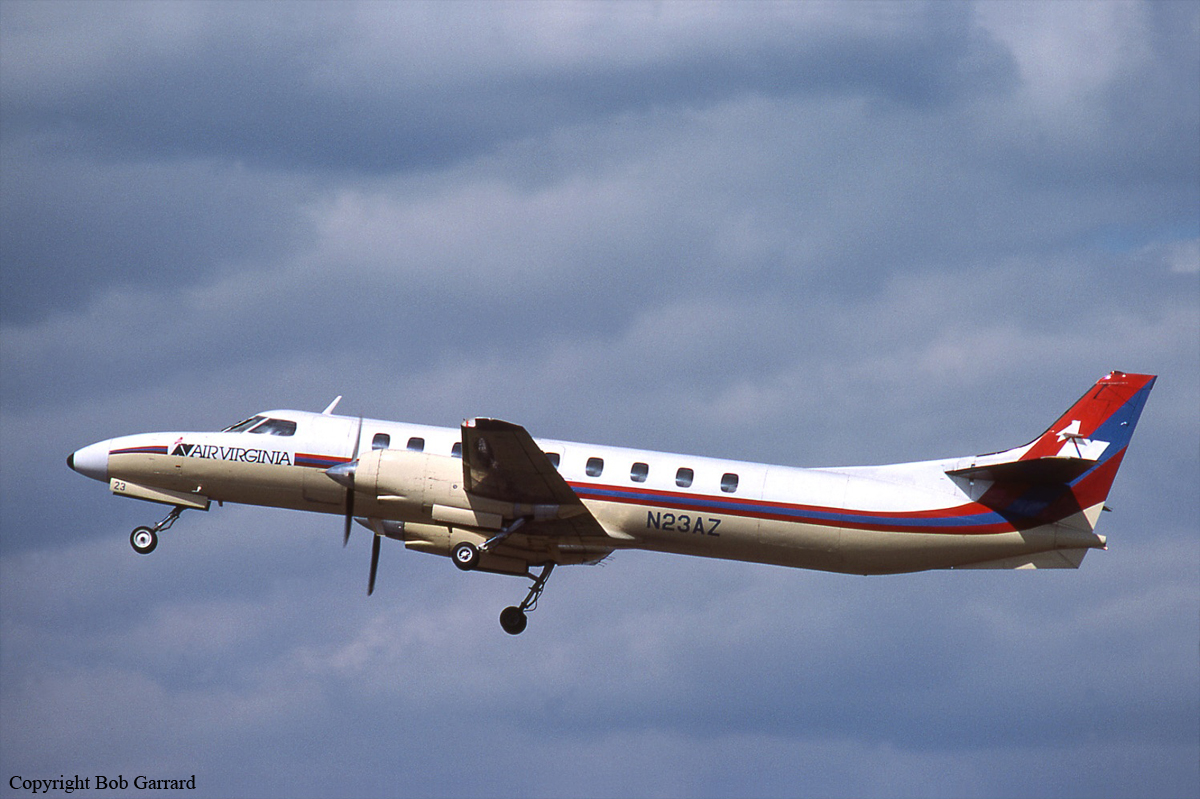
Crash of a Swearingen SA226TC Metro II in Washington-Dulles

Date & Time: Dec 18, 1987 at 1936 LT
Type of aircraft:
Operator:
Registration:
N23AZ
Survivors:
Yes
Schedule:
Newark - Washington DC
MSN:
TC-260
YOM:
1978
Crew on board:
2
Crew fatalities:
Pax on board:
6
Pax fatalities:
Other fatalities:
Total fatalities:
0
Captain / Total flying hours:
7200
Captain / Total hours on type:
400.00
Aircraft flight hours:
12820
Circumstances:
The aircraft had descended through a cloud layer enroute for the scheduled landing at IAD and according to the crew had picked up some trace rime ice on its wing surfaces. Although pitot and sas (stall avoidance system) heat were used the captain elected not to use engine inlet anti-ice. Just inside the outer marker the left engine lost power followed shortly by the right engine. The captain was able to set the aircraft down in an open field where the gear collapsed during the landing roll. The engines were successfully run-up at the Garrett facility. The flight manual contains a warning and a note stating that engine heat and continuous ignition must be used after leaving icing conditions until the pilot is confident that any significant residual ice will not be ingested into the engines. Ice was found lying beneath the right wing which matched the curvature of the leading edge of the wing. A round conical shaped piece of ice was found along the wreckage path which matched the nose of the propeller spinner.
Probable cause:
Occurrence #1: loss of engine power (total) - nonmechanical
Phase of operation: approach - faf/outer marker to threshold (ifr)
Findings
1. All engines
2. (f) weather condition - icing conditions
3. (c) in-flight planning/decision - improper - pilot in command
4. (c) anti-ice/deice system - not used - pilot in command
5. (c) inadequate initial training - check pilot
6. (c) inadequate certification/approval, airman - company/operator mgmt
7. (f) wing, skin - ice
----------
----------
Occurrence #3: gear collapsed
Phase of operation: landing - flare/touchdown
Findings
8. (f) terrain condition - open field
9. (f) terrain condition - downhill
10. (f) light condition - dark night
Final Report:

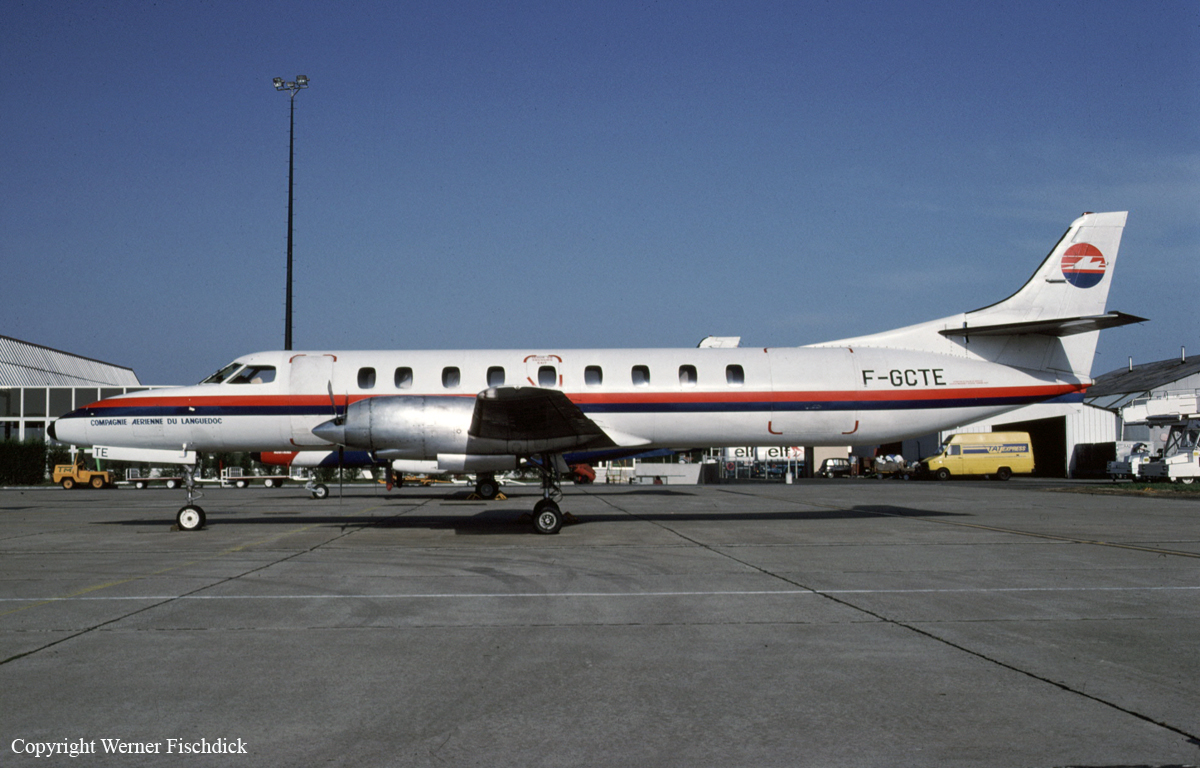
Crash of a Swearingen SA226TC Metro II in Le Puy

Date & Time: Nov 22, 1987 at 2020 LT
Type of aircraft:
Operator:
Registration:
F-GCTE
Flight Type:
Survivors:
Yes
Schedule:
Lyon - Le Puy
MSN:
TC-365
YOM:
1980
Country:
Region:
Crew on board:
2
Crew fatalities:
Pax on board:
0
Pax fatalities:
Other fatalities:
Total fatalities:
0
Circumstances:
The crew was completing a positioning flight from Lyon-Satolas Airport to Le Puy-Loudes Airport, Haute-Loire. On final approach by night, at an altitude of 500 feet, the crew positioned both propellers to fine pitch when both engines failed simultaneously. The airplane stalled and crash landed in an open field located few hundred meters short of runway threshold. Both pilots escaped with minor injuries while the aircraft was damaged beyond repair.
Probable cause:
It was determined that weather conditions were considered as marginal at the time of the accident with icing conditions. Both engines failed after the crew positioned both propellers to fine pitch due to an excessive accumulation of ice. The crew failed to activate the engine deicing systems and also failed to restart the engine. It was also reported there was no antifreeze liquid used.

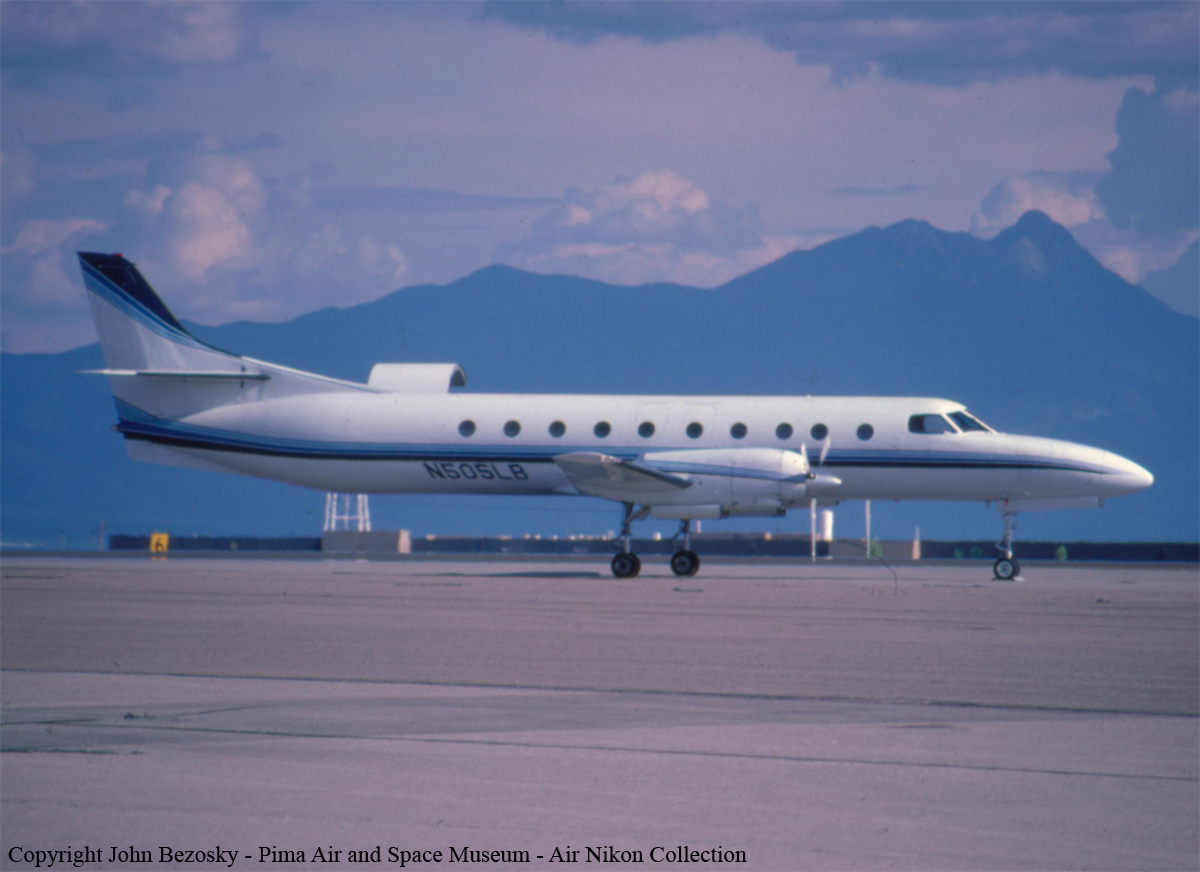
Crash of a Swearingen SA226TC Metro II in Wilmington: 2 killed

Date & Time: Apr 23, 1987 at 1935 LT
Type of aircraft:
Registration:
N505LB
Flight Phase:
Flight Type:
Survivors:
No
Schedule:
Wilmington - Lumberton
MSN:
TC-202
YOM:
1972
Crew on board:
2
Crew fatalities:
Pax on board:
0
Pax fatalities:
Other fatalities:
Total fatalities:
2
Captain / Total flying hours:
6160
Captain / Total hours on type:
1860.00
Aircraft flight hours:
7667
Circumstances:
The right engine failed during takeoff immediately after rotation 3,000 feet down the 7,002 feet runway 16. The pilot continued the flight and the landing gear remained extended. The unauthorized pilot rated passenger made transmissions to the tower. Witnesses reported that the aircraft reached approximately 150 feet then descended into trees 20° to the right of runway centerline and 3,000 feet south of the airport. The pre-1979 3rd stage stator assembly in the right engine did not have the latest manufacture welding process/inspection and failed causing the uncontained turbine failure. Instruments in the wreckage indicated that an undeterminable loss of electrical power occurred at the time of engine failure. Performance data indicated that a safe landing could have been made on the remaining runway past the point of engine failure. Both occupants were killed.
Probable cause:
Occurrence #1: loss of engine power (partial) - mech failure/malf
Phase of operation: takeoff - initial climb
Findings
1. (f) turbine assembly, nozzle retention - inadequate
2. (f) acft/equip, inadequate design - manufacturer
3. (f) turbine assembly, turbine wheel - burst
4. (f) electrical system - undetermined
----------
Occurrence #2: forced landing
Phase of operation: descent - emergency
----------
Occurrence #3: in flight collision with object
Phase of operation: descent - uncontrolled
Findings
5. (f) object - tree(s)
6. (c) in-flight planning/decision - poor - pilot in command
7. (f) pressure induced by others - pilot in command
8. (c) emergency procedure - not followed - pilot in command
9. (c) all available runway - not used - pilot in command
----------
Occurrence #4: in flight collision with terrain/water
Phase of operation: descent - uncontrolled
Findings
10. Terrain condition - ground
Final Report:

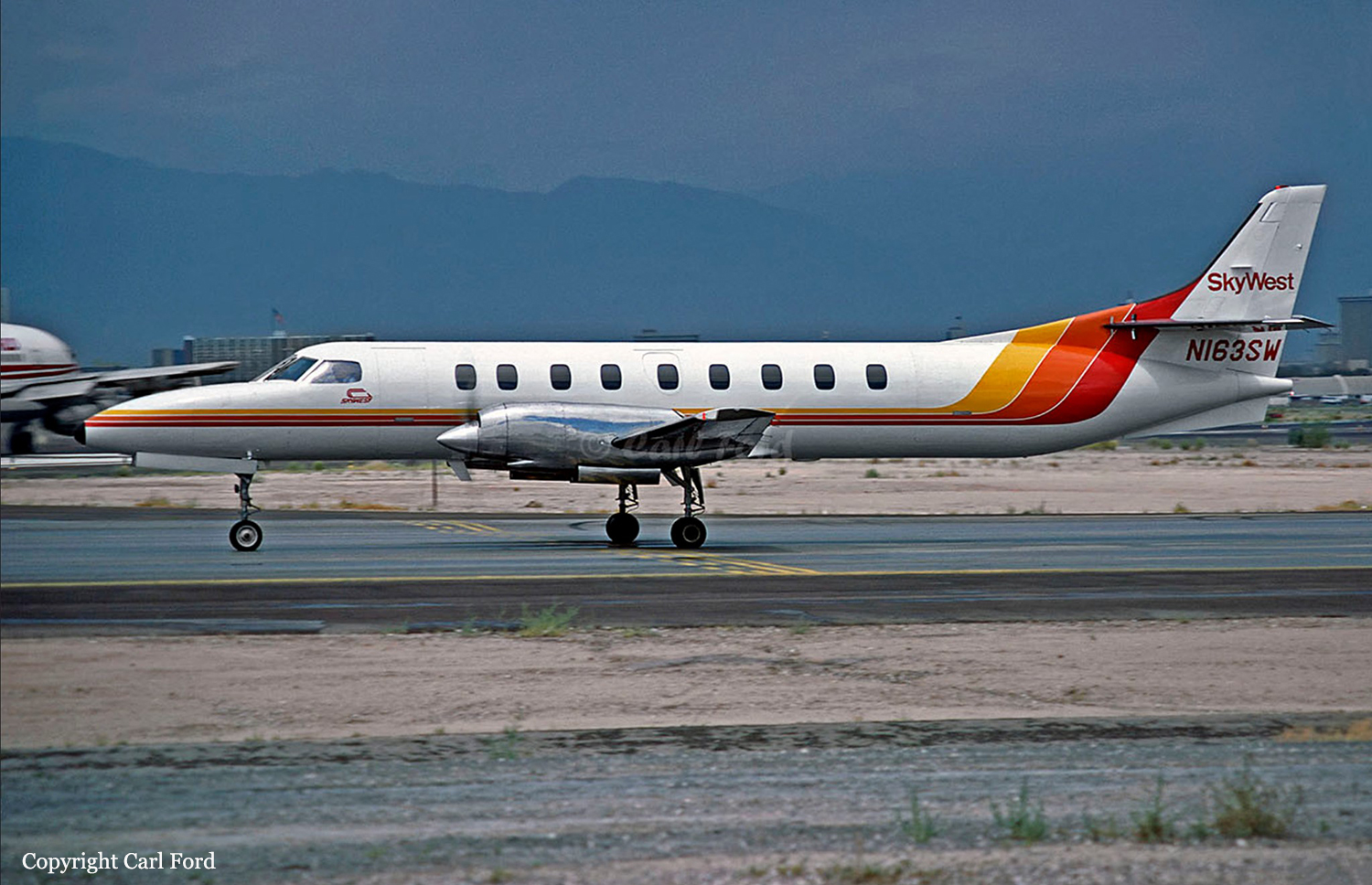
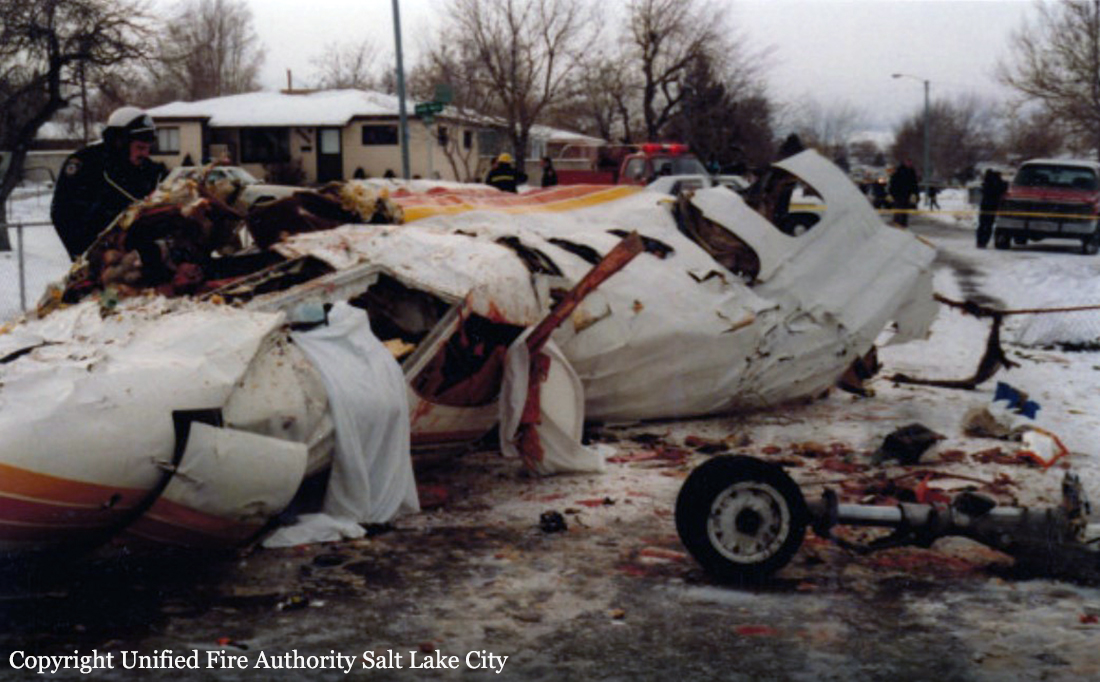
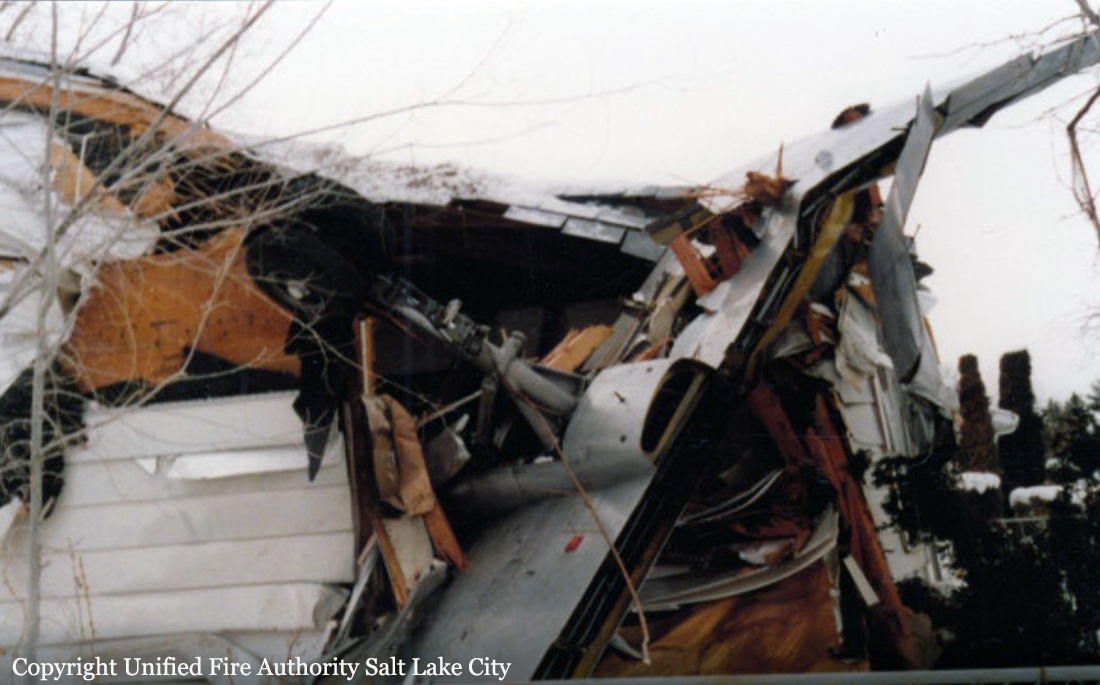
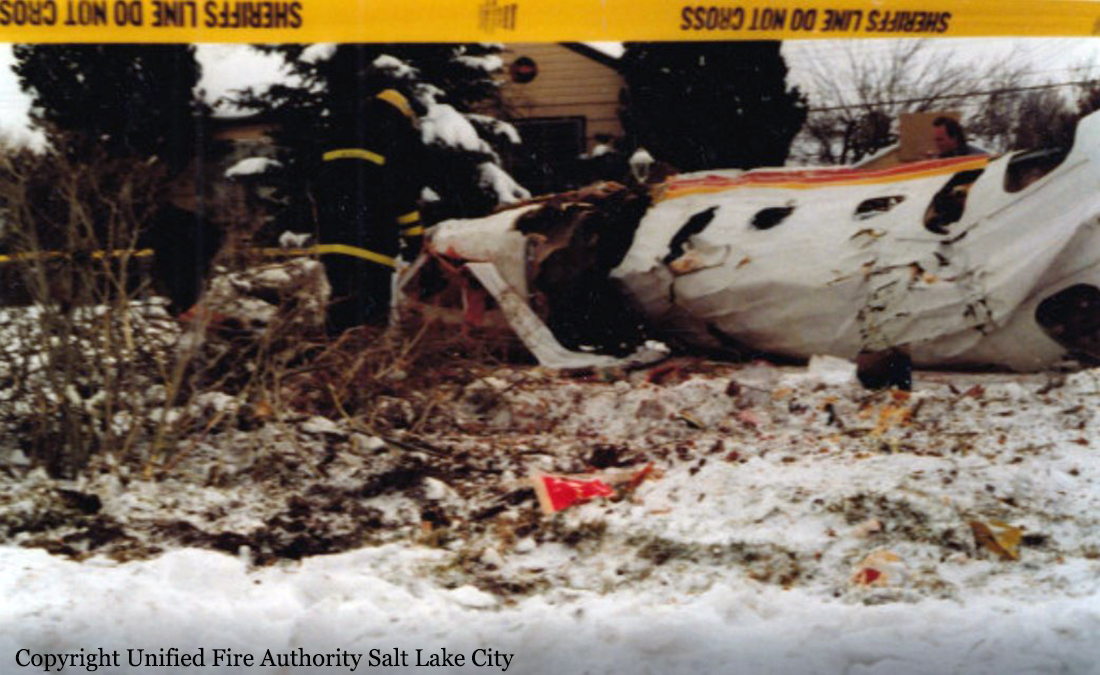
Crash of a Swearingen SA226TC Metro II in Salt Lake City: 8 killed

Date & Time: Jan 15, 1987 at 1252 LT
Type of aircraft:
Operator:
Registration:
N163SW
Survivors:
No
Site:
Schedule:
Pocatello - Salt Lake City
MSN:
TC-327
YOM:
1980
Flight number:
OO1834
Crew on board:
2
Crew fatalities:
Pax on board:
6
Pax fatalities:
Other fatalities:
Total fatalities:
8
Captain / Total flying hours:
3885
Captain / Total hours on type:
1863.00
Copilot / Total flying hours:
4555
Copilot / Total hours on type:
1205
Aircraft flight hours:
15116
Circumstances:
On January 15, 1987, at 1216 mountain standard time, SkyWest flight 1834, a Fairchild Swearingen SA-226TC (METRO II), registration Nl635W, departed Pocatello, Idaho, on a regularly scheduled passenger flight to Salt Lake City, Utah (SLC). The flight was operating under the provisions of Title 14 Code of Federal Regulations Part 121 with two pilots and six passengers aboard. Flight 1834 was handed off from the SLC Air Route Traffic Control Center to the Bear Sector controller at the SLC Terminal Radar Approach Control (TRACON) for a left downwind arrival to SLC International Airport. At 1237:49, the Bear sector controller issued a heading of 100” to flight 1834 and advised the flight to expect vectors for a visual approach to runway 34L. (See Air Traffic Control Transcript in appendix C). During the next few minutes, flight 1834 was given further vectors and descent clearances, and at 1247:21, it was given a frequency change to the TRACON Final controller. At 1250:28, after being cleared to descend to 7,000 feet mean sea level (msl), the Final controller advised, “SkyWest eight thirty four, traffic ten to nine o’clock, four miles, six thousand, Boeing seven, ah, thirty seven three hundred.” Flight 1834 acknowledged, “SkyWest eight thirty four has the traffic.” At 1250:35, the Final controller advised, “SkyWest eight thirty four, plan to follow that traffic, there’s traffic south of him eleven o’clock, six miles north bound, [a] seven thirty seven out of seven thousand five hundred, for the right.” Flight 1834 responded, “OK, we’ll follow the first one, SkyWest eight thirty four.” At 1250:44, the Final controller advised, “SkyWest eight thirty four, wait a minute, report the other one in sight.” Flight 1834 responded, “We’re looking for him.” At 1251:02, the Final controller transmitted, “SkyWest eight thirty four, ten o’clock four miles, seven thousand four hundred.” Flight 1834 replied, “Eight thirty four, we’re looking.” The Final controller then issued instructions at 1251: 15 for flight 1834 to make a left turn to 070”, and the flight acknowledged. At 1251:32, the Final controller transmitted, “SkyWest eight thirty four, traffic’s ten to eleven o’clock, three miles.” Flight 1834 did not acknowledge that transmission, and at 1251:43, the Final controller advised, “SkyWest eight thirty four, turn left heading zero five zero.” The flight acknowledged and reported, “Still have no contact on that traffic.” At 1251:50, the Final controller transmitted, “SkyWest eight thirty four, roger, turn further left heading three six zero.” Flight 1834 acknowledged and at 1251:58, an expletive was transmitted over the TRACON Final control frequency during a transmission from SkyWest flight 575. There were no further transmissions from flight 1834. According to the UNICOM I/ operator at SLC Municipal 2 Airport (SLC 2) about 1115 or 1120, a pilot in Mooney M20C, registration N6485U, operating under 14 CFR Part 91, called to inquire if the runway was clear. The Mooney was occupied by a private pilot in the left seat and an instructor pilot in the right seat. The UNICOM operator advised that the runway was clear, and a few minutes later, a pilot in the Mooney called for and was given an airport advisory. The UNICOM operator observed the Mooney taxi to runway 34 and take off about 1125 or 1130. The Mooney remained in the traffic pattern at SLC 2 performing touch-and-go landings. There were no other aircraft in the traffic pattern at the time. The UNICOM operator stated that she last talked to the Mooney about 1145 to 1150 when a pilot called, “Final for 34.” The UNICOM operator said that she observed the airplane perform a touch-and: go landing, but she did not observe the direction of departure of the airplane. There were no further known communications with the Mooney regarding departing the traffic pattern or any additional aspects of the flight. According to recorded air traffic control (ATC) radar data, after the Mooney departed the SLC 2 traffic pattern at 1235, y the airplane flew south and maneuvered about 25 miles south southeast of SLC International Airport before beginning a turn to the northwest. The airplane continued in a northwesterly direction until it was about 9 miles south of SLC International Airport where it began a gradual left turn until its target merged with the target of SkyWest flight 1834. The targets merged at 1257 :58--the time the expletive was recorded on the ATC tape at the SLC TRACON. The Final approach controller stated that he did observe a visual flight rules (VFR) target about 3 to 4 miles southwest of SLC 2 moving north to northwest when flight 1834 was on downwind. He said he had no more than normal cause to monitor the target. He also stated that it was not unusual to observe VFR targets in the pattern near SLC 2 during visual meteorological conditions. Other controllers at SLC TRACON also stated that it was not uncommon to observe numerous targets operating in the traffic pattern at SLC 2. The Final controller and other controllers added that they normally would observe the VFR targets near SLC 2 disappear from the radarscope and then reappear during practice touch-and-go landings. The Final controller said that he did not recall seeing any VFR targets in the vicinity of SkyWest 1834 as it was turning toward final just before the collision. The Fin.al controller stated that his workload was moderate, and all of his equipment was operating normally before the accident. In addition, the Local controller in the SLC tower stated that he did not observe the target of the Mooney on the tower Bright Radar Indicator Tower Equipment display. There was no evidence that the Mooney pilots were in radio contact with any ATC facility at the time of the accident. Several eyewitnesses were interviewed who observed the airplanes before and after the collision. Some of the witnesses stated that the nose of the METRO II pitched up just before impact. The witnesses stated that the METRO II was headed northeasterly and the Mooney was headed northwesterly just before impact. They stated that the METRO II had made a few left turns as it turned toward the northeast. In general, the eyewitnesses agreed that the two airplanes collided with the Mooney striking the METRO II’s right forward fuselage area with its nose. After the collision, both airplanes fell to the ground with wreckage scattered over 2 square miles in a residential section of Kearns, Utah. There was no fire. The collision occurred at 7,000 feet msl in daylight visual meteorological conditions. All 10 occupants in both aircraft were killed. There were no casualties on the ground.
Probable cause:
Lack of navigational vigilance by the Mooney instructor pilot which led to the authorized intrusion into the Salt Lake City airport radar service area. Contributing to the accident were the absence of a Mode-C transponder on the Mooney airplane and the limitations of the air traffic control system to provide collision protection under the circumstances of this accident.
Final Report:

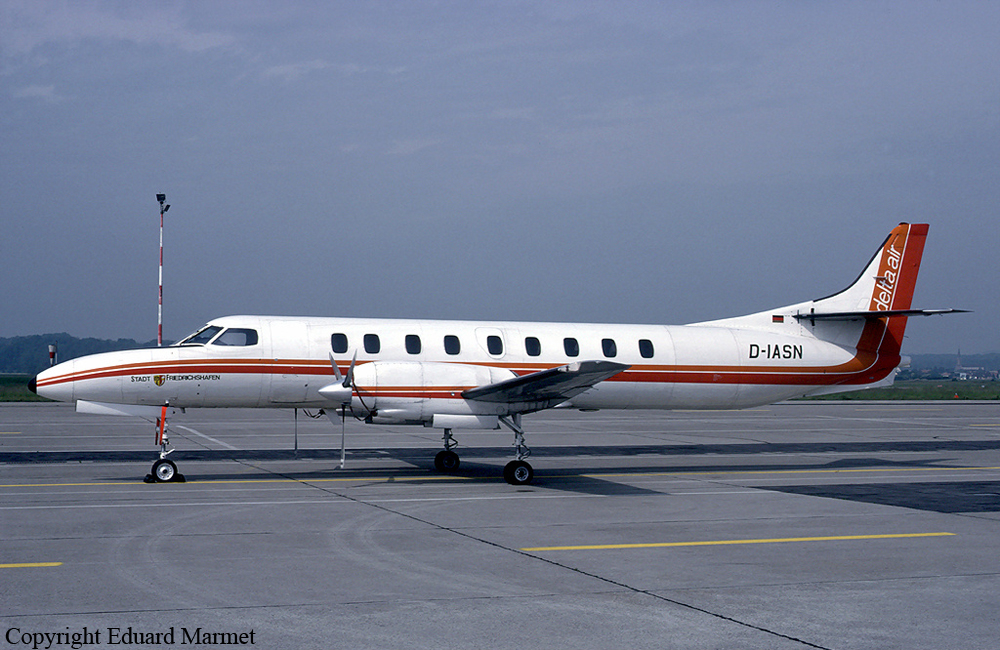
Crash of a Swearingen SA226TC Metro II in Friedrichshafen

Date & Time: Dec 4, 1985
Type of aircraft:
Operator:
Registration:
D-IASN
Survivors:
Yes
MSN:
TC-297
YOM:
1979
Country:
Region:
Crew on board:
0
Crew fatalities:
Pax on board:
0
Pax fatalities:
Other fatalities:
Total fatalities:
0
Circumstances:
Crashed upon landing under unknown circumstances. There were no casualties.

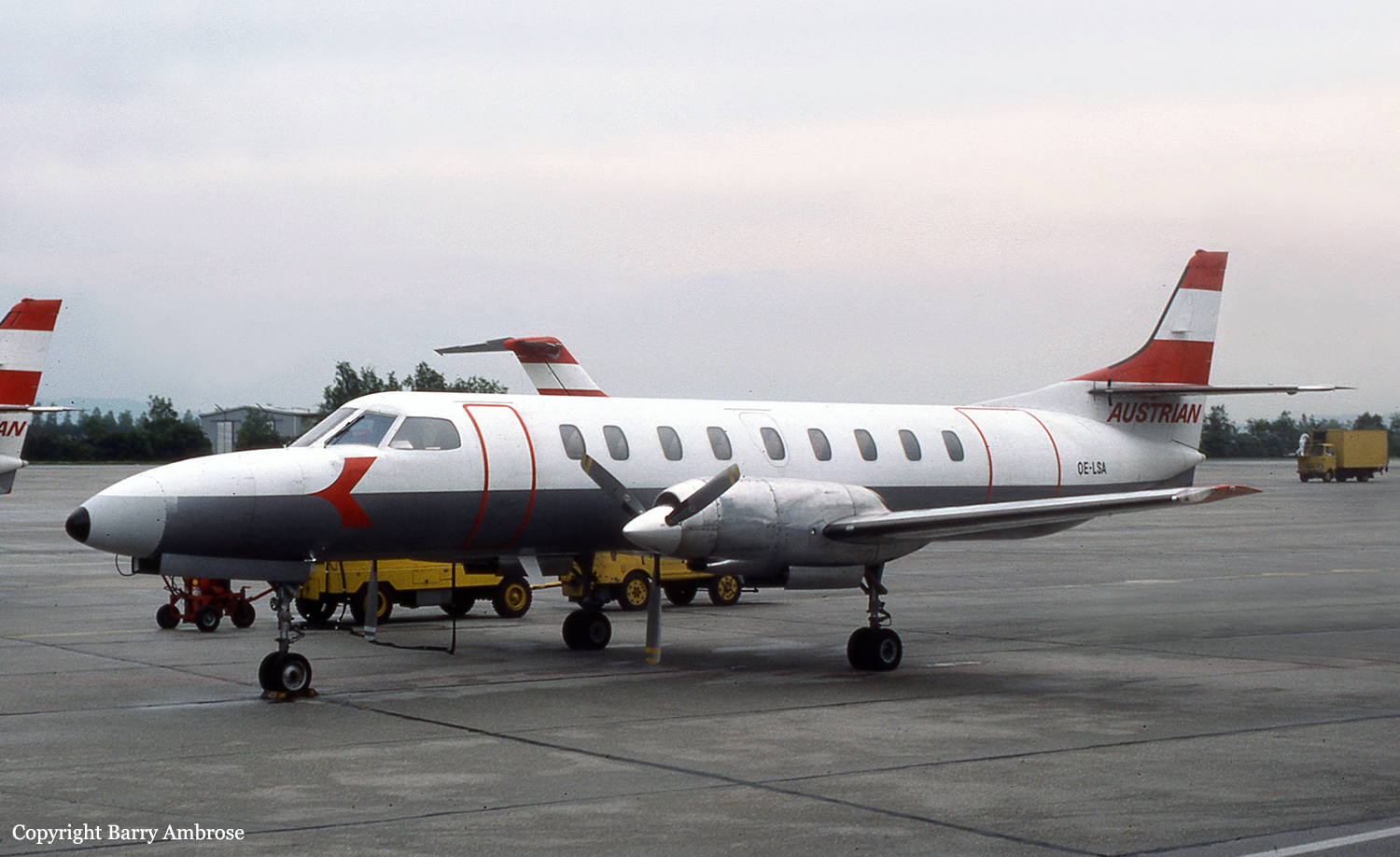
Crash of a Swearingen SA226TC Metro II in Vienna

Date & Time: Sep 17, 1984
Type of aircraft:
Registration:
OE-LSA
Survivors:
Yes
MSN:
TC-315
YOM:
1979
Country:
Region:
Crew on board:
3
Crew fatalities:
Pax on board:
8
Pax fatalities:
Other fatalities:
Total fatalities:
0
Circumstances:
For unknown reasons, the twin engine aircraft belly landed at Vienna-Schwechat Airport. All 11 occupants escaped uninjured while the aircraft was damaged beyond repair.

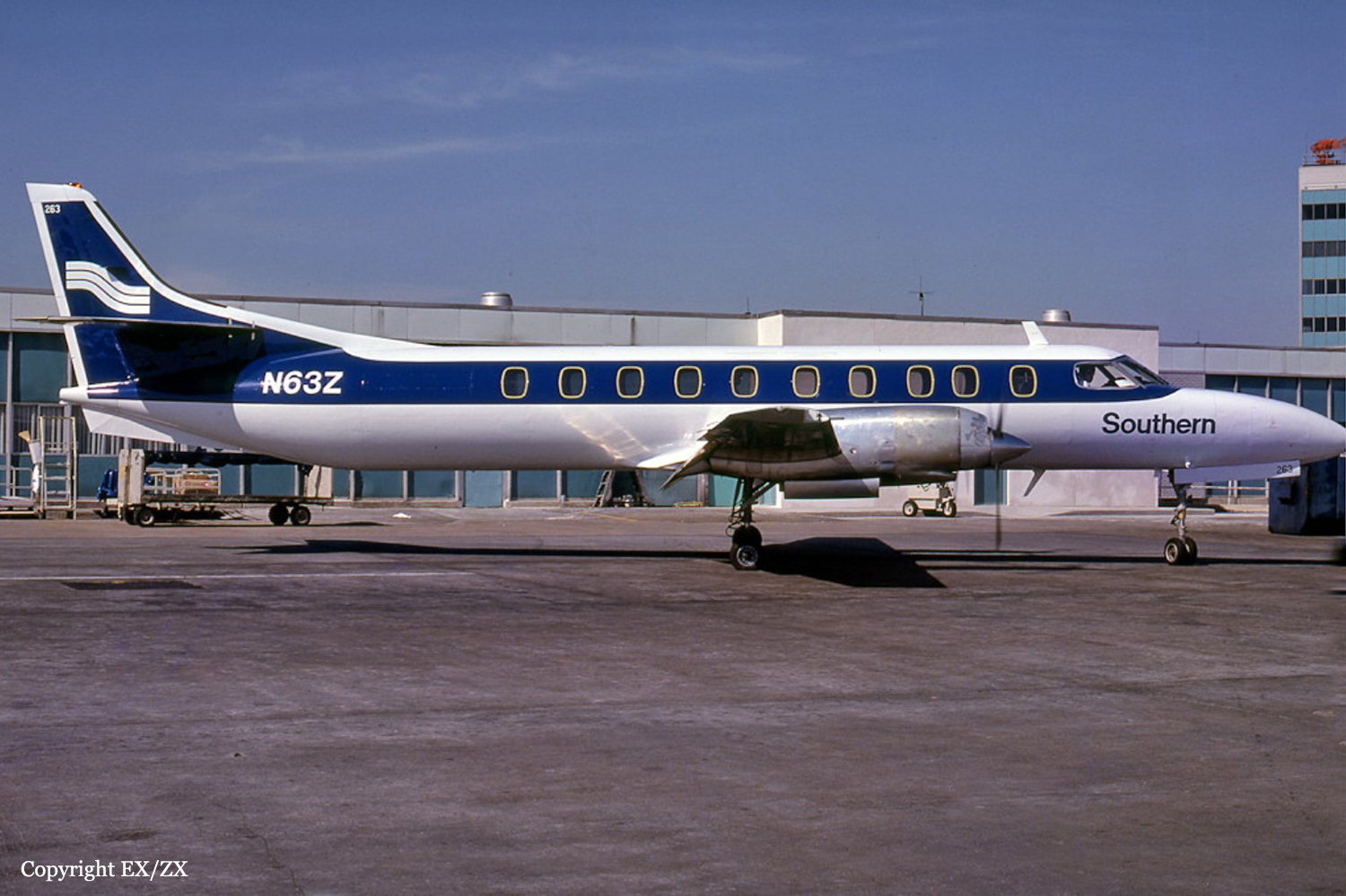
Crash of a Swearingen SA226TC Metro II in Terre Haute: 3 killed

Date & Time: Jan 30, 1984 at 0630 LT
Type of aircraft:
Operator:
Registration:
N63Z
Flight Phase:
Flight Type:
Survivors:
No
Schedule:
Terre Haute - Evansville
MSN:
TC-240
YOM:
1977
Crew on board:
2
Crew fatalities:
Pax on board:
1
Pax fatalities:
Other fatalities:
Total fatalities:
3
Captain / Total flying hours:
19189
Captain / Total hours on type:
1501.00
Aircraft flight hours:
10607
Circumstances:
After taking off from runway 23, the aircraft crashed ssw of the airport about 6,300 feet from the departure end of the runway and about 1,800 feet to the left of the runway centerline. Impact occurred while the aircraft was in a steep descent. The wreckage path was scattered along a heading of 035° from the initial impact point. The aircraft was demolished by impact and fire and no preimpact part failure or malfunction was found that would have caused the accident. All three occupants were killed.
Probable cause:
Occurrence #1: loss of control - in flight
Phase of operation: takeoff
Findings
1. (c) reason for occurrence undetermined
2. Light condition - dawn
3. Weather condition - rain
4. Weather condition - fog
----------
Occurrence #2: in flight collision with terrain/water
Phase of operation: takeoff
Final Report: