Ground fire of a Swearingen SA226TC Metro II in Hot Springs

Date & Time: Aug 27, 1983 at 2003 LT
Type of aircraft:
Registration:
N503SS
Flight Phase:
Survivors:
Yes
Schedule:
Dallas - Hot Springs - Little Rock
MSN:
TC-229E
YOM:
1977
Crew on board:
2
Crew fatalities:
Pax on board:
2
Pax fatalities:
Other fatalities:
Total fatalities:
0
Captain / Total flying hours:
5120
Captain / Total hours on type:
3000.00
Circumstances:
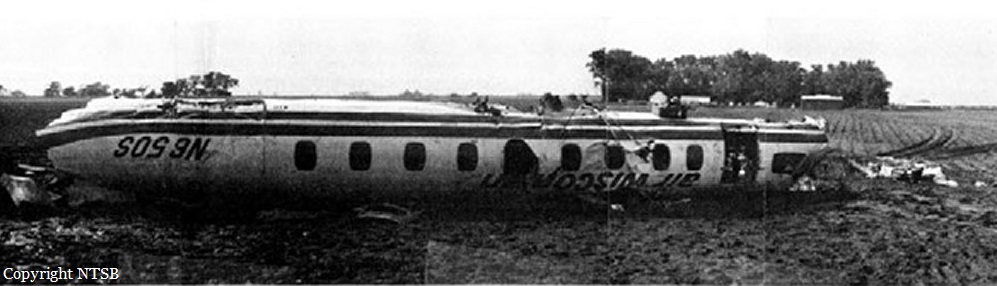
Turning onto the runway the copilot observed a flash behind his instrument panel. He then received an electrical shock to his right arm from the right console. A fire then erupted at the lower right hand corner of his instrument panel. The crew and pax evacuated the aircraft. The interior of the aircraft was consumed by fire as well as most of the upper half of the fuselage. Examination of the right side wire bundle revealed numerous indications of arcing between wires and from wires to ground. One wire was arced at a point in line with a plastic oxygen line. There was also an oily residue inside the wire bundle. A small section of the right brake pressure line exhibited signs of elect arcing. The hydraulic system pressure gage copper line also showed signs of arcing. The plastic oxygen lines from the the cockpit side of the forward pressure bulkhead to the cockpit outlets had been consumed by fire and the oxygen supply was depleated.
Probable cause:
Occurrence #1: fire
Phase of operation: taxi - to takeoff
Findings
1. (c) fuselage,instrument/electrical panel - shorted
2. (c) fuselage,instrument/electrical panel - arcing
3. (c) electrical system, electric wiring - arcing
4. (c) electrical system, electric wiring - contamination
5. (c) electrical system, electric wiring - fire
6. (c) oxygen system, crew - burst
7. (c) fuselage, instrument/electrical panel - fire
8. (c) fuselage - fire
Final Report:


Crash of a Swearingen SA226TC Metro II in South Africa

Date & Time: Apr 14, 1982
Type of aircraft:
Operator:
Registration:
ZS-KYA
Survivors:
Yes
MSN:
TC-331
YOM:
1980
Country:
Region:
Crew on board:
0
Crew fatalities:
Pax on board:
0
Pax fatalities:
Other fatalities:
Total fatalities:
0
Circumstances:
Suffered an accident somewhere in South Africa. There were no casualties.

Crash of a Swearingen SA226TC Metro II in Emerald

Date & Time: Apr 2, 1981
Type of aircraft:
Operator:
Registration:
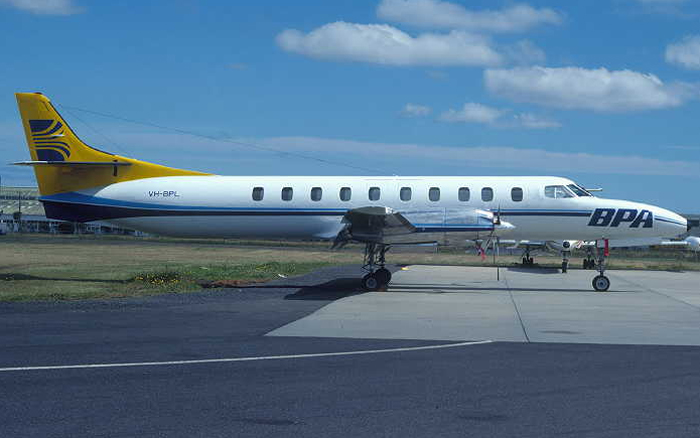
VH-BPL
Flight Phase:
Flight Type:
Survivors:
Yes
MSN:
TC-272
YOM:
1978
Country:
Region:
Crew on board:
1
Crew fatalities:
Pax on board:
0
Pax fatalities:
Other fatalities:
Total fatalities:
0
Circumstances:
At liftoff, the pilot lost control of the airplane that crashed on runway. The pilot, sole on board, was injured and the aircraft was damaged beyond repair.

Crash of a Swearingen SA226TC Metro II in Valley: 13 killed

Date & Time: Jun 12, 1980 at 1546 LT
Type of aircraft:
Operator:
Registration:
N650S
Flight Phase:
Survivors:
Yes
Schedule:
Appleton - Minneapolis - Lincoln
MSN:
TC-228
YOM:
1977
Flight number:
ZW965
Location:
Crew on board:
2
Crew fatalities:
Pax on board:
13
Pax fatalities:
Other fatalities:
Total fatalities:
13
Captain / Total flying hours:
8391
Captain / Total hours on type:
6000.00
Copilot / Total flying hours:
4063
Copilot / Total hours on type:
143
Aircraft flight hours:
8055
Circumstances:
The airplane departed Appleton, Wisconsin, at 1245LT on a regular schedule service (ZW965) to Lincoln, Nebraska, with an intermediate stop in Minneapolis. En route, while cruising at 12,000 feet, the crew encountered moderate turbulences and precipitation and was cleared to descend to 8,000 feet then later at 6,000 feet. As turbulences were getting worse, the crew was later cleared to descend to 4,000 feet and finally 3,000 feet. While descending to 6,000 feet, massive water ingestion caused both engines to lose power simultaneously. Both engines were restarted but the Metro couldn't recover and struck a muddy field in a slight nose down, right wing-down attitude. The aircraft bounced and hit the ground 288 feet further on. The plane skidded 1,022 feet before coming to rest inverted. There was no fire. Two passengers were seriously injured while 13 other occupants were killed.
Probable cause:
The flight crew's continued flight into an area of severe thunderstorms, and the resultant precipitation-induced flameout or loss of power of both engines at an altitude from which recovery could not be made. Contributing to the cause of the accident was the failure of the flight crew to utilise all available sources of weather information and the failure of the air traffic control system to disseminate critical weather information to the air traffic controllers and to the crew of Flight 965, the failure of air traffic control supervisory personnel to accomplish key job functions, and the failure of Center Weather Service Unit meteorologists to disseminate critical weather information to the Omaha Radar Approach Control Facility supervisors. Also contributing was the precipitation induced X-band radar attenuation which limited tile ability of airborne weather radar to detect the extent and intensity of the weather disturbances.
Final Report:

Crash of a Swearingen SA226TC Metro II in Esperance

Date & Time: May 13, 1980 at 0745 LT
Type of aircraft:
Operator:
Registration:
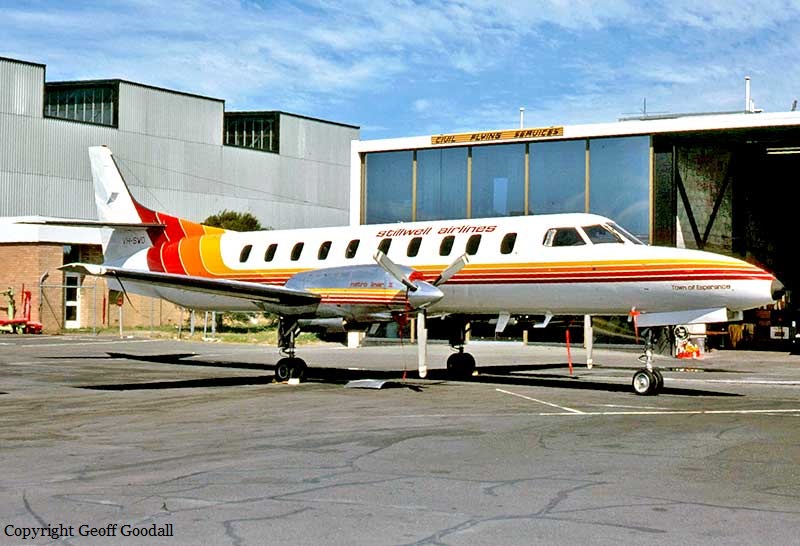
VH-SWO
Survivors:
Yes
Schedule:
Perth - Esperance
MSN:
TC-275
YOM:
1978
Country:
Region:
Crew on board:
1
Crew fatalities:
Pax on board:
11
Pax fatalities:
Other fatalities:
Total fatalities:
0
Captain / Total flying hours:
9010
Captain / Total hours on type:
1155.00
Circumstances:
Weather conditions at Esperance were fine; there was no cloud, visibility was in excess of 30 km and the surface wind was from the northwest at 5 to 10 knots. The aircraft entered the circuit on a left downwind leg for an approach to Runway 29. The flaps were lowered, firstly a quarter and then half-way, on the downwind leg and the landing gear was extended just before the aircraft turned onto a base leg. This configuration, and an airspeed of 133 knots (best single - engine rate of climb speed), was maintained until after the aircraft was straightened onto final approach. At an altitude of 1100 feet, the pilot considered he was at Decision Height and committed to land. He lowered full flaps and reduced the airspeed to 115 knots. At about this time, as he was retarding the power levers, the right engine flamed out. The pilot reported that he promptly sensed the engine failure and checked the engine instruments while re-opening both power levers. He noted both torque and fuel flow indication s for the right engine were zero. He briefly considered retracting the landing gear and flaps but decided to do neither. Left engine power was increased initially to the maximum available of 940°C ITT (Inter-turbine temperature) and then adjusted to the normal maximum limit of 923°C ITT. The right propeller was feathered. During this period the aircraft banked to the right and turned away from the runway. Its airspeed had reduced and the rate of descent increased. The turn had been opposed but the pilot found that the application of full left rudder and aileron would not enable him to maintain runway heading, although the airspeed was above the minimum control airspeed of 94 knots, specified in the aircraft flight manual. It was evident to the pilot that the aircraft would land short of the aerodrome, amongst trees to the right of the runway approach path. He therefore abandoned his efforts to regain the normal approach path and allowed the aircraft to turn further to the right, towards a large, clear paddock. Just before touchdown, he observed a power pole on his selected landing path and he again turned further right to avoid it. During this turn the right wing tip struck the ground. The nosegear then impacted heavily and collapsed . The aircraft slid and bounced across the ground for 188 metres before coming to rest. Fuel from ruptured line s ignite d under the left engine , but the fire was slow to develop and the occupants were able to make an orderly evacuation . By the time the fire brigade arrived from Esperance township, the fire had spread and most of the aircraft was consumed.
Probable cause:
The right engine had flamed out because of fuel starvation, when a spur gear in the fuel control drive train failed. Five teeth of the spur gear had broken off and the remaining teeth were badly worn. The failures and abnormal wear were due to looseness of the torque sensor housing, in which the spur gear was mounted, allowing the gear to move out of its correct alignment. The housing had probably loosened because of vibration, as its natural frequency was close to some frequencies generated by the engine during normal operation. The following contributing factors were reported:
- The natural frequency of the torque sensor housings in the engines fitted to VH-SWO were susceptible to vibration frequencies generated by the engines during normal operation,
- Vibration loosened the torque sensor housing on the right engine, which in turn led to misalignment of a spur gear in the fuel drive train, failure of the gear and fuel starvation
of the engine,
- The engine failed when the aircraft was being operated in a landing configuration which precluded a successful continuation of the landing approach,
- The landing procedure used by the pilot was in accordance with the operator's Company Operations Manual, which did not appreciate the poor performance and handing' difficulties of the Swearingen SA226TC in the event of an engine failure in the landing configuration.
Final Report:

Crash of a Swearingen SA226TC Metro II in Austin

Date & Time: Aug 13, 1978 at 1643 LT
Type of aircraft:
Operator:
Registration:
N300TL
Survivors:
Yes
Schedule:
San Antonio - Austin
MSN:
TC-238E
YOM:
1977
Crew on board:
2
Crew fatalities:
Pax on board:
16
Pax fatalities:
Other fatalities:
Total fatalities:
0
Captain / Total flying hours:
4985
Captain / Total hours on type:
815.00
Circumstances:
On final approach to Austin-Robert Mueller Airport, the left engine failed. The crew continued the approach but forgot to lower the landing gear. The airplane belly landed and slid for dozen yards before coming to rest. Two occupants, among them the copilot, were seriously injured while 16 other people escaped with minor injuries. The aircraft was written off.
Probable cause:
Failure of the left engine on final approach due to inadequate preflight preparation on part of the flying crew. The following contributing factors were reported:
- Mismanagement of fuel,
- Fuel starvation,
- Failed to assure the gear was down and locked,
- Improper emergency procedures,
- Failed to follow approved procedures,
- Aircraft refueled in right wing with 125 gallons before 18 minutes flight,
- Crossflow valve found off.
Final Report: