Crash of a Rockwell Aero Commander 500B in Twin Falls

Date & Time: Apr 2, 1977 at 0355 LT
Registration:
N223LH
Flight Type:
Survivors:
Yes
Schedule:
Twin Falls – Boise – Twin Falls – Pocatello – Boise – Twin Falls
MSN:
500-1528-188
YOM:
1965
Country:
Crew on board:
1
Crew fatalities:
Pax on board:
0
Pax fatalities:
Other fatalities:
Total fatalities:
0
Captain / Total flying hours:
4963
Captain / Total hours on type:
63.00
Circumstances:
While descending by night to Twin Falls, both engines stopped simultaneously. Due to loss of speed, the airplane lost height. The pilot elected to make an emergency landing when the airplane struck power cables and crashed in a snow covered field. The pilot was injured and the aircraft was damaged beyond repair.
Probable cause:
Double engine failure caused by a fuel exhaustion. The following contributing factors were reported:
- Collision with wires/poles,
- Mismanagement of fuel,
- Miscalculated fuel consumption,
- Fuel exhaustion,
- High obstructions.
Final Report:

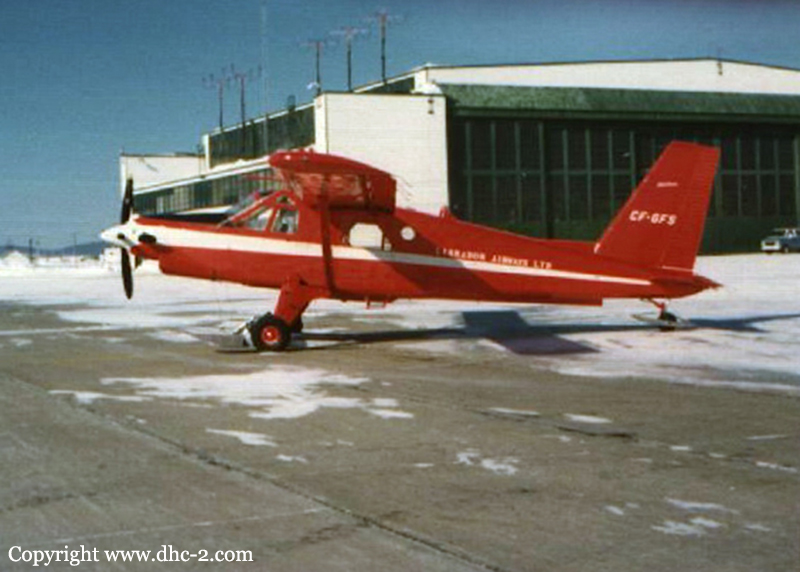
Crash of a De Havilland DHC-2 Beaver in North West River: 2 killed

Date & Time: Jan 7, 1976
Type of aircraft:
Operator:
Registration:
CF-GFS
Flight Phase:
Survivors:
Yes
MSN:
1634TB19
YOM:
1966
Country:
Crew on board:
1
Crew fatalities:
Pax on board:
5
Pax fatalities:
Other fatalities:
Total fatalities:
2
Circumstances:
After takeoff from an icy lake, the airplane nosed down and crashed. Two passengers were killed while five other occupants were injured.

Crash of a Mitsubishi MU-2B-25 Marquise in Gander: 2 killed

Date & Time: Mar 24, 1974
Type of aircraft:
Registration:
N333MA
Flight Phase:
Flight Type:
Survivors:
No
MSN:
288
YOM:
1974
Country:
Crew on board:
2
Crew fatalities:
Pax on board:
0
Pax fatalities:
Other fatalities:
Total fatalities:
2
Circumstances:
Shortly after takeoff from Gander Airport, while in initial climb, the twin engine airplane encountered difficulties to gain height. It struck trees, stalled and crashed in flames in a wooded area. The aircraft was destroyed by a post crash fire and both pilots, en route to Europe, were killed.

Crash of a Cessna 340A in Gander: 1 killed

Date & Time: Mar 31, 1973 at 2350 LT
Type of aircraft:
Operator:
Registration:
N7691Q
Flight Type:
Survivors:
No
Schedule:
Wichita – Portland – Gander
MSN:
340A-0190
YOM:
1973
Country:
Crew on board:
1
Crew fatalities:
Pax on board:
0
Pax fatalities:
Other fatalities:
Total fatalities:
1
Circumstances:
The pilot, sole on board, was completing a delivery flight from Wichita to France via Portland and Gander. The approach to Gander was initiated by night and good weather conditions. On final, the pilot descended too low when the twin engine airplane struck trees and crashed few km short of runway threshold. The aircraft was destroyed and the pilot was killed. Still owned by Cessna Aircraft, the airplane was on its way to France to be delivered to its future operator Flo Air.
Probable cause:
Improper IFR operation on part of the pilot who misjudged distance and altitude on final approach. The following factors were reported:
- High obstructions,
- Visual conditions,
- Dark night,
- No visual reference.
Final Report:

Crash of a De Havilland DHC-3 Otter in Deer Lake

Date & Time: Sep 27, 1971
Type of aircraft:
Operator:
Registration:
CF-MPZ
Flight Phase:
MSN:
328
YOM:
1960
Country:
Crew on board:
0
Crew fatalities:
Pax on board:
0
Pax fatalities:
Other fatalities:
Total fatalities:
0
Circumstances:
Crashed in unknown circumstances near Deer Lake Airport. Crew fate remains unknown.

Crash of a BAe 125-400A in Wabush: 8 killed

Date & Time: Nov 11, 1969 at 1830 LT
Type of aircraft:
Operator:
Registration:
CF-CFL
Survivors:
No
Schedule:
Churchill Falls - Wabush - Montreal
MSN:
25193/NA725
YOM:
1969
Country:
Crew on board:
2
Crew fatalities:
Pax on board:
6
Pax fatalities:
Other fatalities:
Total fatalities:
8
Circumstances:
The twin engine aircraft departed Churchill Falls Airport at 1800LT on a flight to Montreal with an intermediate stop in Wabush (Labrador City). On final approach, the crew encountered poor weather conditions and failed to realize his altitude was insufficient. Out of track, the airplane struck trees then crashed on a mountainous terrain located few km from the airport. The controller at Wabush Airport informed Moncton ATC about the disappearance of the aircraft and SAR operations were initiated. All eight occupants were killed, among them Donald J. McParland, President of Churchill Falls (Labrador) Corporation, his assistant John Lethbridge, Eric Lambert and three employees of the Acres Canadian Bechtel.
Probable cause:
It was determined that the aircraft was off course on approach after the crew referred to the wrong NDB. Low visibility caused by poor weather conditions was a contributing factor.

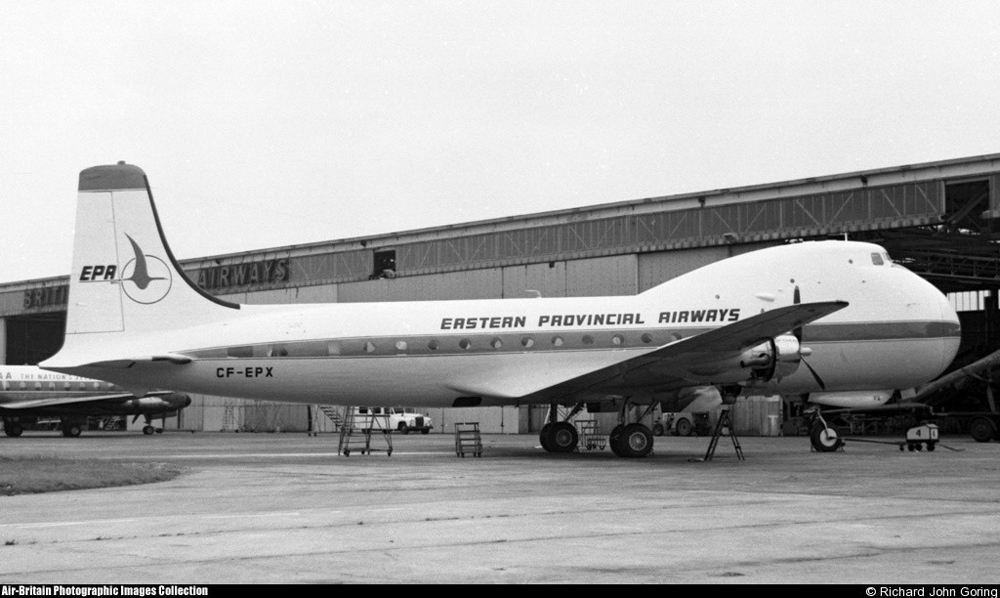
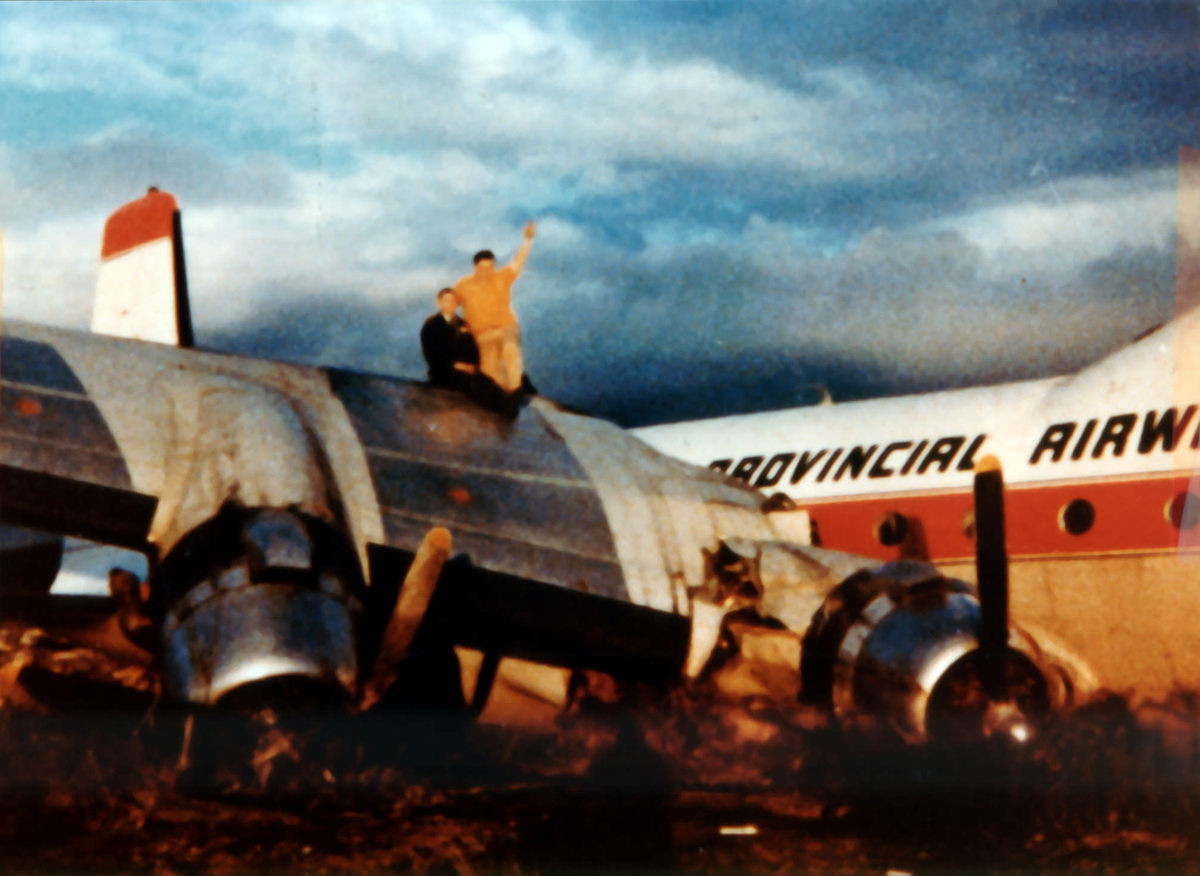
Crash of a Aviation Traders ATL-98 Carvair in Twin Falls

Date & Time: Sep 28, 1968
Operator:
Registration:
CF-EPX
Survivors:
Yes
Schedule:
Goose Bay – Twin Falls
MSN:
6/7480
YOM:
1944
Country:
Crew on board:
5
Crew fatalities:
Pax on board:
33
Pax fatalities:
Other fatalities:
Total fatalities:
0
Circumstances:
The pilot, who had limited experience on Carvair aircraft, possibly wanted to touch down as early as possible on the short runway. The main wheels however struck the top of an embankment about 8 feet from the runway threshold. The pilot overshoot and had to feather the no. 2 prop immediately, because the engine was not developing power. The aircraft circled for a while and then touched down on its nosegear. The plane settled on the left wing and swung off the runway.
Probable cause:
The pilot's distraction with the landing hazard led him to attempt a touchdown dangerously close to the runway threshold. The pilot was assigned to perform a landing on a marginal landing area.

Crash of a Dassault Falcon 20C in Goose Bay

Date & Time: Oct 1, 1967
Type of aircraft:
Registration:
HB-VAP
Survivors:
Yes
Schedule:
Geneva – Keflavik – Goose Bay
MSN:
37
YOM:
1966
Country:
Crew on board:
3
Crew fatalities:
Pax on board:
4
Pax fatalities:
Other fatalities:
Total fatalities:
0
Circumstances:
The aircraft was completing a transatlantic flight from Geneva to Goose Bay with an intermediate stop in Keflavik. On final approach to Goose Bay Airport, both engines failed simultaneously. The crew realized he could not reach the airport so the captain decided to attempt an emergency landing. The airplane belly landed, slid for several yards and came to rest 11 km short of runway. All seven occupants were rescued while the aircraft was damaged beyond repair.
Probable cause:
Double engine failure on approach caused by a fuel exhaustion.

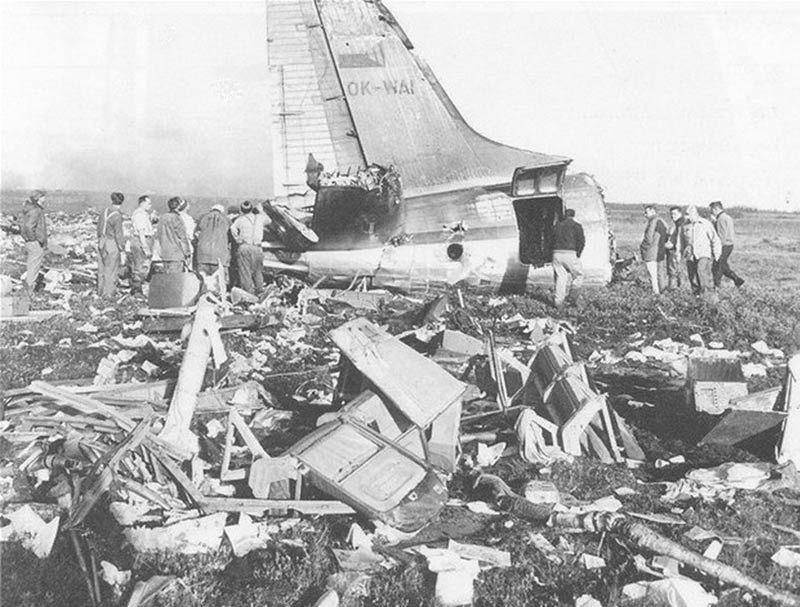
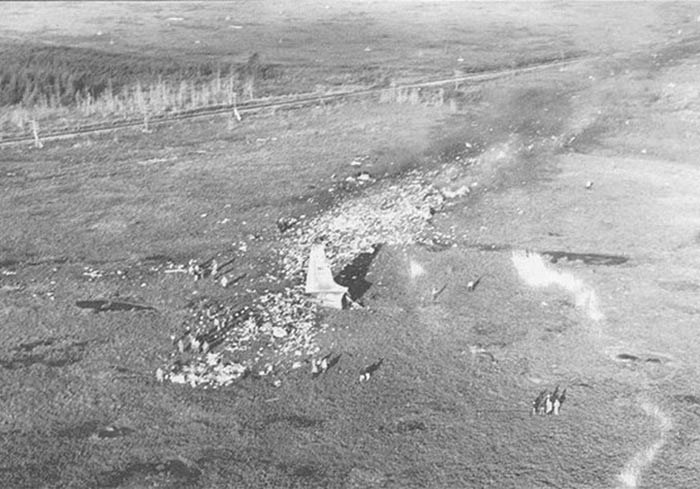
Crash of an Ilyushin II-18D in Gander: 37 killed

Date & Time: Sep 5, 1967 at 0240 LT
Type of aircraft:
Operator:
Registration:
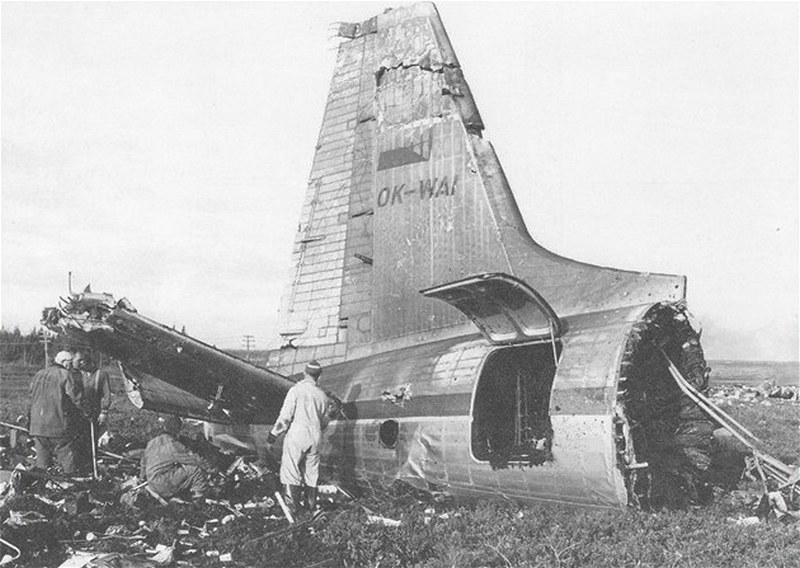
OK-WAI
Flight Phase:
Survivors:
Yes
Schedule:
Prague – Shannon – Gander – Havana
MSN:
187 0097 05
YOM:
1967
Flight number:
OK523
Country:
Crew on board:
8
Crew fatalities:
Pax on board:
61
Pax fatalities:
Other fatalities:
Total fatalities:
37
Captain / Total flying hours:
17303
Captain / Total hours on type:
5360.00
Copilot / Total flying hours:
10749
Copilot / Total hours on type:
1291
Aircraft flight hours:
766
Circumstances:
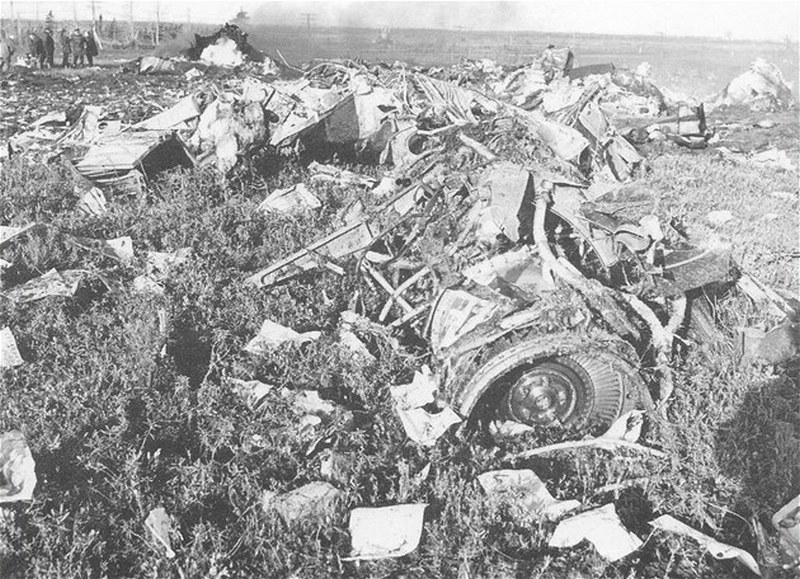
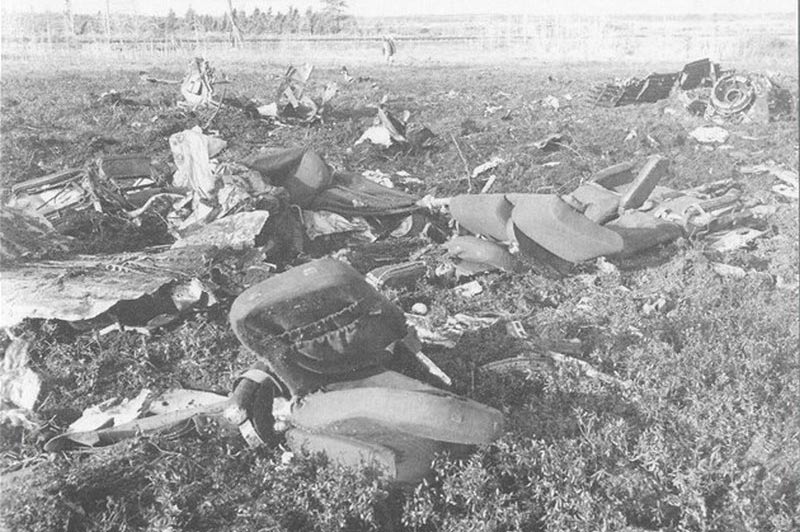
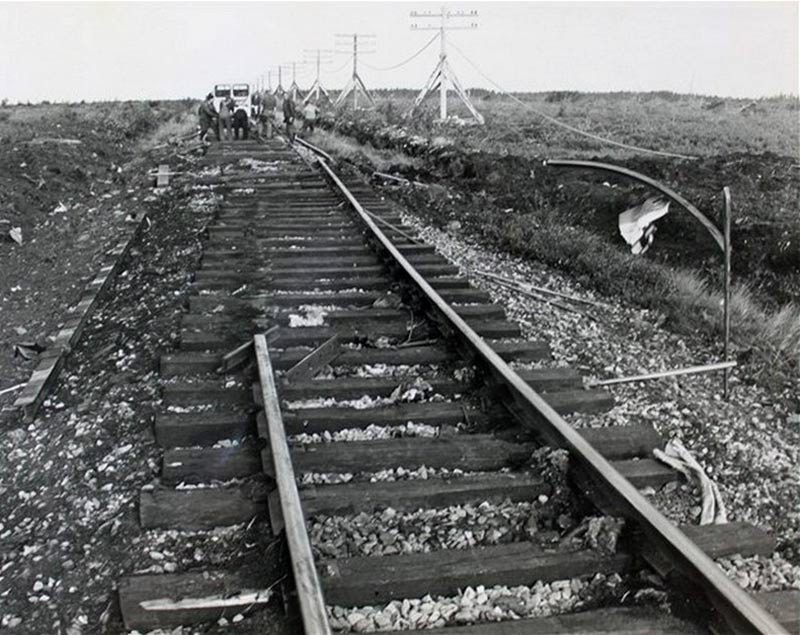
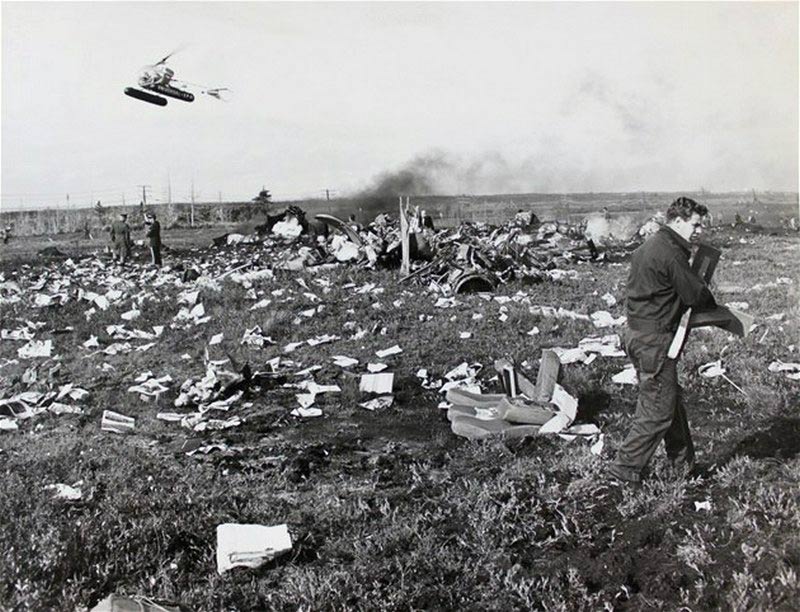
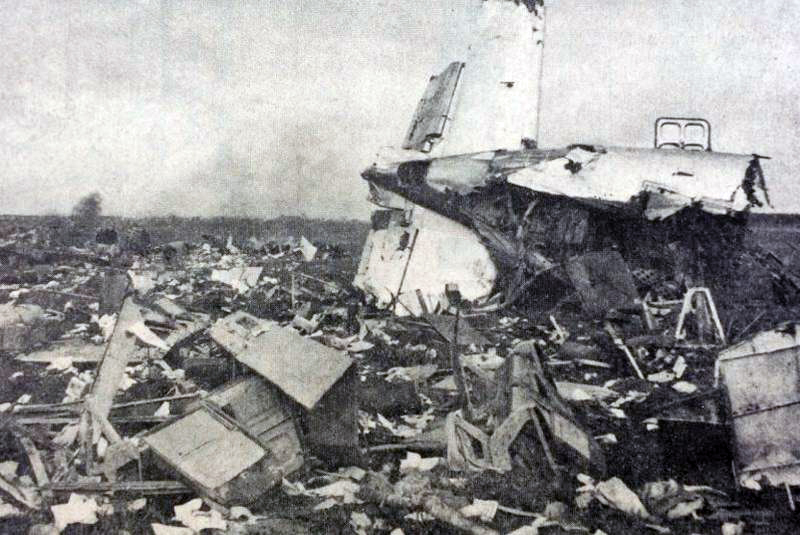
Flight 523 was a scheduled international flight from Prague, Czechoslovakia to Havana, Cuba, via Shannon, Ireland, and Gander, Newfoundland. It departed Prague at 1649 hours GMT on 4 September and proceeded to Shannon where it arrived at 2020 hours for a routine servicing stop. It departed Shannon at 2131 hours arriving at Gander at 0326 hours on 5 September following an uneventful flight. The crew which had flown the aircraft from Prague disembarked at Gander and was replaced by a crew which had been off duty in Gander from 3 September. At Gander the aircraft was serviced and refuelled under the supervision of the flight engineer of the outgoing flight. A flight plan to Havana was filed at about 0405 hours and at 0504 hours the aircraft began taxiing to the threshold of runway 14. It was cleared to take-off at 0508 hours. The length of the ground roll was normal, the undercarriage and flaps were retracted, but the angle of climb was abnormally shallow. At 0509 hours the flight advised the tower controller that the aircraft was airborne, the tower controller acknowledged the transmission and advised the flight to contact Air Traffic Control Centre on a frequency of 119.7 MHz. Whilst the radio operator was changing frequency the aircraft struck the ground about 4 000 feet beyond the end of the runway. The accident occurred at 0510 hours GMT. Debris scattered on 1,500 meters and 32 occupants were wounded while 37 others were killed, among them 4 crew members.
Probable cause:
Investigations were unable to determine the exact cause of the accident.
Final Report:

Crash of a Canadian Vickers PBV-1A Canso off Catalina: 1 killed

Date & Time: Jun 23, 1965
Registration:
CF-OFJ
Flight Type:
Survivors:
Yes
MSN:
CV-315
YOM:
1944
Country:
Crew on board:
2
Crew fatalities:
Pax on board:
0
Pax fatalities:
Other fatalities:
Total fatalities:
1
Circumstances:
The crew was engaged in a fire fighting mission in Little Catalina, Newfoundland. While completing a scooping manoeuvre, the seaplane went out of control and sank into the Catalina Bay. A pilot was killed while the second occupant was injured. The aircraft was lost.