Crash of a Britten-Norman BN-2A-26 Islander near Desert Center: 2 killed

Date & Time: Oct 31, 1987 at 1330 LT
Type of aircraft:
Registration:
N25MR
Flight Phase:
Flight Type:
Survivors:
No
Site:
Schedule:
El Paso - Santa Paula
MSN:
881
YOM:
1980
Crew on board:
1
Crew fatalities:
Pax on board:
1
Pax fatalities:
Other fatalities:
Total fatalities:
2
Captain / Total flying hours:
3000
Captain / Total hours on type:
3.00
Aircraft flight hours:
1119
Circumstances:
The pilot was hired to ferry an Islander from El Paso, TX to Santa Paula, CA. He represented himself to the ferry company as being an experienced Islander pilot. No previous Islander flight time was found in the pilot's logbook. It was the pilot's 40th birthday and he was anxious to complete the flight. He neither filed flight plans nor had current charts. Approaching the Chiriaco summit area along I-10 the terrain rose and a ground-based witness reported clouds were low. The pilot continued the westbound flight. Evidence indicated an overstressed aircraft and an in-flight breakup. Both occupants were killed.
Probable cause:
Occurrence #1: airframe/component/system failure/malfunction
Phase of operation: maneuvering
Findings
1. (f) weather condition - low ceiling
2. Terrain condition - rising
3. (f) in-flight planning/decision - improper - pilot in command
4. (f) self-induced pressure - pilot in command
5. Lack of total experience in type of aircraft - pilot in command
6. (c) design stress limits of aircraft - exceeded - pilot in command
7. Wing - separation
8. Flight control surfaces/attachments - separation
----------
Occurrence #2: in flight collision with terrain/water
Phase of operation: descent - uncontrolled
Final Report:


Crash of a Cessna 208A Caravan I near Travis AFB: 1 killed

Date & Time: Oct 23, 1987 at 0423 LT
Type of aircraft:
Operator:
Registration:
N828FE
Flight Phase:
Flight Type:
Survivors:
No
Schedule:
Oakland - Reno
MSN:
208-0073
YOM:
1985
Crew on board:
1
Crew fatalities:
Pax on board:
0
Pax fatalities:
Other fatalities:
Total fatalities:
1
Captain / Total flying hours:
10495
Captain / Total hours on type:
642.00
Aircraft flight hours:
1721
Circumstances:
While cruising on a scheduled cargo flight in IMC the pilot encountered moderate to severe turbulence near an area where weather cells could have been observed on the aircraft's radar. The pilot reversed course, declared an emergency and lost control of the aircraft. The aircraft entered an uncontrolled descent, collided with terrain and was destroyed. The recently hired pilot had completed the FAA approved ground and flight training program in the aircraft. During the pilot's recent training, neither the FAA nor the operator required the pilot to demonstrate proficiency in unusual attitude recoveries or have knowledge in the operation of the aircraft's weather radar. Company employees, which included the pilot's husband, stated that the pilot had no previous experience with weather radar and did not understand the weather radar installed in this aircraft. They further stated that the pilot appeared to be tired. The pilot, sole on board, was killed.
Probable cause:
The National Transportation Safety Board determines the probable cause(s) of this accident to be:
Pilot's encounter with severe turbulence which precipitated a loss of Aircraft control.
Findings
Occurrence #1: in flight encounter with weather
Phase of operation: cruise - normal
Findings
1. Light condition - dark night
2. (f) weather condition - turbulence in clouds
3. (f) weather radar - not understood - pilot in command
4. (f) inadequate initial training - company/operator management
5. (f) inadequate initial training - faa (principal operations inspector)
6. (c) flight into known adverse weather - continued - pilot in command
----------
Occurrence #2: loss of control - in flight
Phase of operation: maneuvering - turn to reverse direction
Findings
7. (c) spiral - uncontrolled - pilot in command
8. (f) spatial disorientation - pilot in command
9. (f) fatigue (lack of sleep) - pilot in command
----------
Occurrence #3: in flight collision with terrain/water
Phase of operation: descent - uncontrolled
Final Report:
Crash of a Dassault Falcon 10 in Rancho Murieta: 3 killed

Date & Time: Oct 15, 1987 at 1528 LT
Type of aircraft:
Registration:
N121FJ
Flight Phase:
Flight Type:
Survivors:
No
Schedule:
Rancho Murieta - San José
MSN:
192
YOM:
1981
Crew on board:
2
Crew fatalities:
Pax on board:
1
Pax fatalities:
Other fatalities:
Total fatalities:
3
Captain / Total flying hours:
8407
Captain / Total hours on type:
1200.00
Aircraft flight hours:
475
Circumstances:
The aircraft flew to the airport for a sales demonstration flight. The crew boarded the aircraft and taxied out for departure. Witnesses, including two pilots with aerobatic experience, watched the aircraft departure, make a left traffic pattern and do a low fly-by down the runway. At the departure end of the runway, the aircraft pitched up into a steep climb. At 600 feet agl, the aircraft entered a left aileron roll, which the witnesses said was 'smooth, coordinated and with the nose on the point.' At the inverted point of the roll, the roll changed from an aileron to a barrel roll. One pilot witness said that it appeared the 'crew lost it at the top' and that the crew 'held the back pressure too long at the top.' At the 270° point of the roll, the aircraft was seen to 'fall out' or 'dish out' of the roll; it recovered to wings level flight at about 100 feet agl in a very nose high attitude settling into the ground with a high vertical descent rate. No preimpact eng or control system malfunctions were found. All three occupants were killed.
Probable cause:
The National Transportation Safety Board determines the probable cause(s) of this accident to be:
In flight loss of control by the pilot flying while performing an Intentional low level aerobatic maneuver.
Findings
Occurrence #1: loss of control - in flight
Phase of operation: maneuvering
Findings
1. (c) judgment - poor - pilot in command
2. (c) aerobatics - intentional - pilot in command
3. (f) ostentatious display - pilot in command
4. (f) altitude - inadequate - pilot in command
5. (c) flight controls - improper use of - pilot in command
----------
Occurrence #2: in flight collision with terrain/water
Phase of operation: descent - uncontrolled
Final Report:

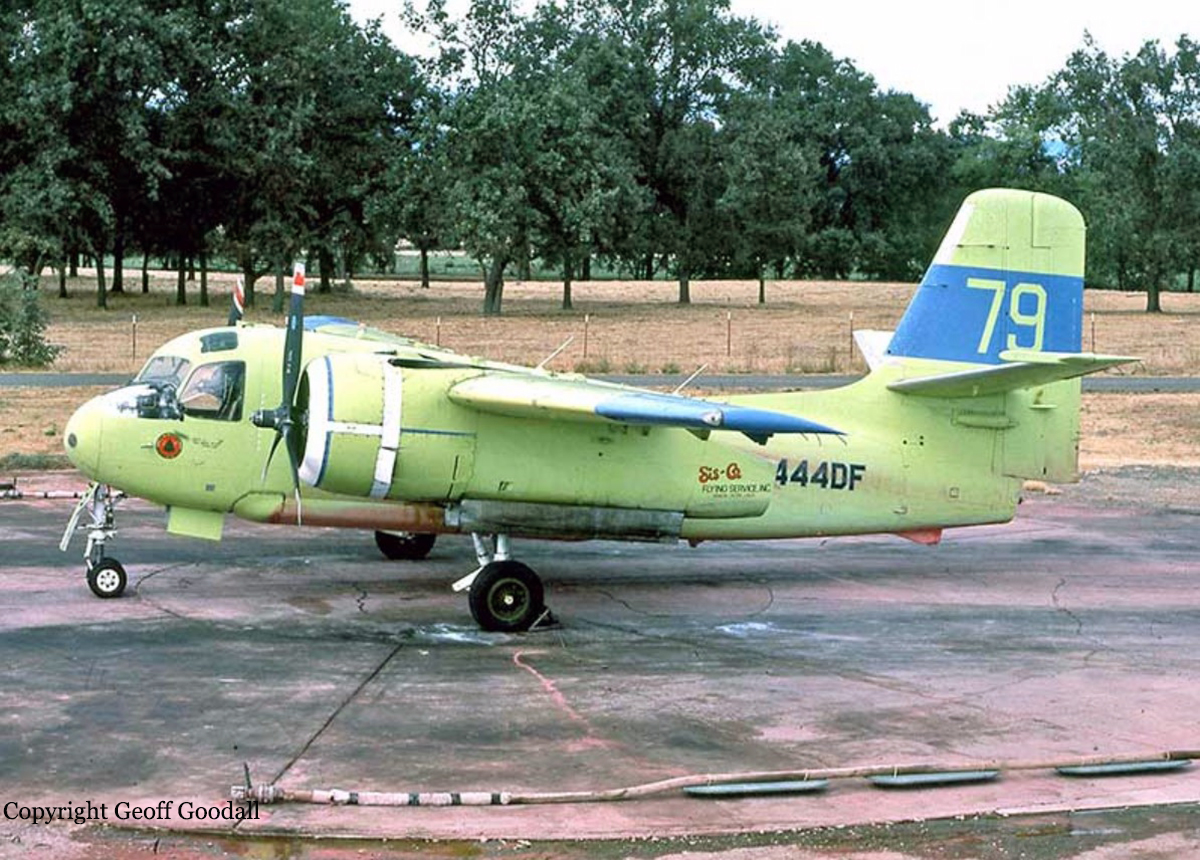
Crash of a Grumman S-2F-1 Tracker in Weott: 1 killed

Date & Time: Oct 7, 1987 at 1055 LT
Type of aircraft:
Operator:
Registration:
N444DF
Flight Phase:
Flight Type:
Survivors:
No
Schedule:
Rohnerville - Rohnerville
MSN:
119
YOM:
1957
Flight number:
Tanker 79
Crew on board:
1
Crew fatalities:
Pax on board:
0
Pax fatalities:
Other fatalities:
Total fatalities:
1
Circumstances:
The aircraft was engaged in a fire fighting mission in the region of Weott, California. While returning to his base at Rohnerville to pick up another load of retardant, the pilot was able to send a brief mayday message when the aircraft crashed. The pilot, sole on board was killed.
Probable cause:
No investigations were conducted by the NTSB.

Crash of a Cessna 340A in Otay Mesa: 6 killed

Date & Time: Sep 30, 1987 at 0759 LT
Type of aircraft:
Registration:
XA-KOA
Survivors:
No
Schedule:
Guerrero Negro – Tijuana
MSN:
340A-0978
YOM:
1980
Crew on board:
1
Crew fatalities:
Pax on board:
5
Pax fatalities:
Other fatalities:
Total fatalities:
6
Captain / Total flying hours:
2525
Captain / Total hours on type:
100.00
Circumstances:
At approximately 0600, the aircraft departed Guerrero Negro, Mexico on an air taxi flight to Tijuana, Mexico. At 0715, the Tijuana weather was reported as partially obscured, visibility 1 mile with fog, haze and smoke, wind calm. During arrival, the pilot was cleared for an ILS runway 09 approach and reported over the final approach fix. However, the aircraft crashed at about 0759, before reaching the middle marker, which was 1/2 mile from the approach end of runway 09. Impact was on a ridge about 110 feet below the airport elevation and approximately 100 yards north of the international border. The aircraft was found a short time later by US Border patrol personnel. No preimpact part failure or malfunction was found. The 0800 weather at Tijuana was in part: sky partially obscured, visibility 1/10 mile with fog and haze, wind 210° at 4 knots. About 1 mile north at Brown Field, the weather was in part: sky partially obscured, visibility 3/4 mile with fog and haze, wind 280° at 4 knots. A toxicology check of the pilot's blood showed an alcohol level of 0.7‰. Calculations showed the sun would have been 16 ° above the horizon on a magnetic azimuth of 89.8°. All six occupants were killed.
Probable cause:
Occurrence #1: in flight collision with terrain/water
Phase of operation: approach - faf/outer marker to threshold (ifr)
Findings
1. (f) weather condition - low ceiling
2. (f) weather condition - fog
3. (f) light condition - sunglare
4. (f) visual/aural perception - pilot in command
5. (c) ifr procedure - improper - pilot in command
6. (c) proper altitude - not maintained - pilot in command
7. (f) impairment (alcohol) - pilot in command
Final Report:

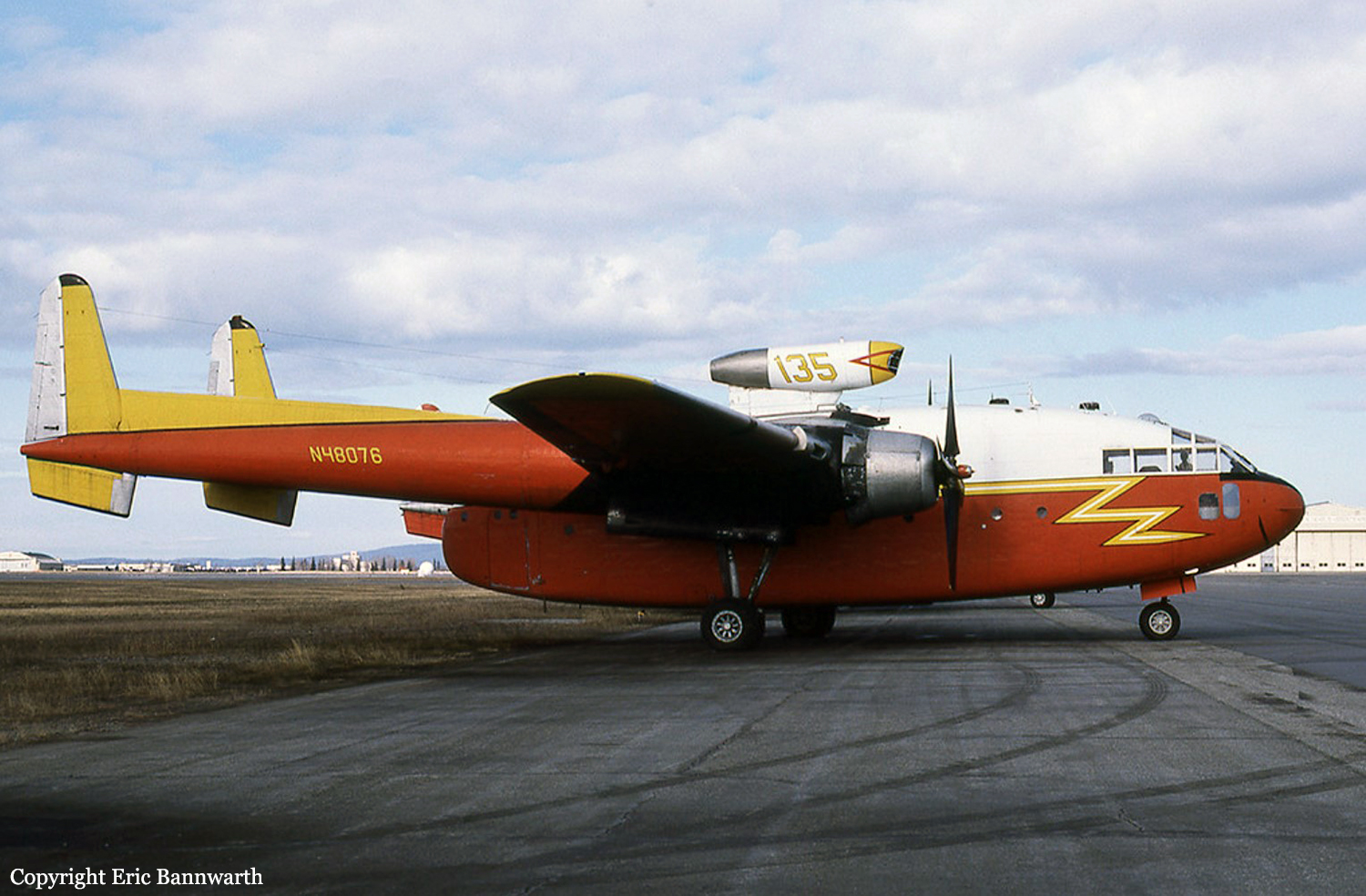
Crash of a Fairchild C-119G Flying Boxcar in Castle Crags State Park: 3 killed

Date & Time: Sep 16, 1987 at 1730 LT
Operator:
Registration:
N48076
Flight Phase:
Flight Type:
Survivors:
No
Site:
Schedule:
Montague - Redding
MSN:
11005
YOM:
1952
Crew on board:
3
Crew fatalities:
Pax on board:
0
Pax fatalities:
Other fatalities:
Total fatalities:
3
Circumstances:
The Fairchild C-119G airtanker had been dispatched to a fire about six miles west of Castle Crags State Park, California at 17:05 and departed the Siskiyou County Airport, CA (SIY) shortly thereafter. N48076, another airtanker of the same kind, a leadplane, and an air attack arrived at the fire at the same time. Two more airtankers followed shortly thereafter. The leadplane identified the target, the approach and departure routes, indicated the target was at an elevation of 4,500 feet, that the ridge on final approach was to be crossed at 6,600 feet, advised there was no wind, there was good visibility, and that there was no turbulence except a "1.5g bump" going across the head of the fire. The leadplane directed one of the C-119 airtankers to drop first. That airtanker aborted their first run because of excess speed. On the second pass, it crossed the ridge at a different point, permitting a somewhat longer final approach. That drop was a successful one. The run was made through a saddle then down a creek to the fire some two miles down stream with a planned exit down stream into a larger canyon. The leadplane then directed the mishap C-119G airtanker to drop next. The mishap airtanker used the same approach as the first airtanker. The mishap airtanker reached the uphill side of the fire when the crew reported trouble maintaining proper speed and dropped their retardant on the fire. At about the time the pilot dropped the retardant, a structural failure occurred and the right wing separated from the airframe along with the tip of the left wing and the tail booms. The fuselage with both engines and most of the left wing attached encountered terrain impact and burned as a unit.
Source: https://www.fs.usda.gov/managing-land/fire
Probable cause:
In-flight loss of control following the structural failure of the right wing.

Crash of a Piper PA-61 Aerostar (Ted Smith 601P) in Corona

Date & Time: Sep 14, 1987 at 1130 LT
Registration:
N902RG
Flight Phase:
Survivors:
Yes
Schedule:
Corona – Carlsbad
MSN:
61-0666-7963311
YOM:
1979
Crew on board:
1
Crew fatalities:
Pax on board:
1
Pax fatalities:
Other fatalities:
Total fatalities:
0
Captain / Total flying hours:
4634
Captain / Total hours on type:
120.00
Aircraft flight hours:
1295
Circumstances:
The airplane was refueled before it departed on the accident flight; the pilot did not supervise the fueling. Shortly after takeoff, the pilot advised the Ontario departure controller that both engines were experiencing a power loss and that he suspected jet fuel contamination. The airplane collided with a berm during the ensuing forced landing. The investigation revealed that the FBO fueled the airplane with 131.3 gallons of Jet A fuel. Investigators did not locate any witnesses who saw the pilot preflight the airplane. The pilot sustained severe head injuries and could not recall if he had preflighted the airplane - the right front seat passenger was not present when the pilot boarded the aircraft.
Probable cause:
Occurrence #1: loss of engine power (partial) - nonmechanical
Phase of operation: climb - to cruise
Findings
1. All engines
2. (c) fluid, fuel grade - incorrect
3. (c) refueling - improper - fbo personnel
4. (f) inadequate initial training - fbo personnel
5. (c) preflight planning/preparation - improper - pilot in command
----------
Occurrence #2: forced landing
Phase of operation: descent - emergency
----------
Occurrence #3: on ground/water collision with object
Phase of operation: landing - roll
Findings
6. Terrain condition - berm
Final Report:

Crash of a Beechcraft B200 Super King Air in South Lake Tahoe: 4 killed

Date & Time: Jul 17, 1987 at 1930 LT
Operator:
Registration:
N1870S
Flight Type:
Survivors:
No
Schedule:
Hayward - South Lake Tahoe
MSN:
BB-1106
YOM:
1983
Crew on board:
1
Crew fatalities:
Pax on board:
3
Pax fatalities:
Other fatalities:
Total fatalities:
4
Captain / Total flying hours:
3995
Captain / Total hours on type:
381.00
Aircraft flight hours:
478
Circumstances:
While on an instrument flight plan in IMC, the flight was cleared for an instrument approach to the South Lake Tahoe Airport, the intended destination. The aircraft departed the initial approach fix on the published transition to the final approach course. Radar contact was lost at 11,400 feet. Afterward, the aircraft was observed descending out of clouds and maneuvering erratically in VMC until it impacted terrain with no apparent attempt to recover. Medical records revealed pilot had a history of hypertension, hyperlipidemia, and recent loss of 41 pounds on a rigid weight loss program. The autopsy revealed severe arteriosclerosis. Medical records indicated the pilot had been taking diazide intermittently for several years. Post-accident tox results were negative. The circumstances of the accident, in combination with the pilot's severe diet, medical history, and postmortem examination results support the conclusion that the pilot became incapacitated in flight. All four occupants were killed.
Probable cause:
Occurrence #1: loss of control - in flight
Phase of operation: approach - iaf to faf/outer marker (ifr)
Findings
1. (c) incapacitation(other cardiovascular) - pilot in command
Final Report:

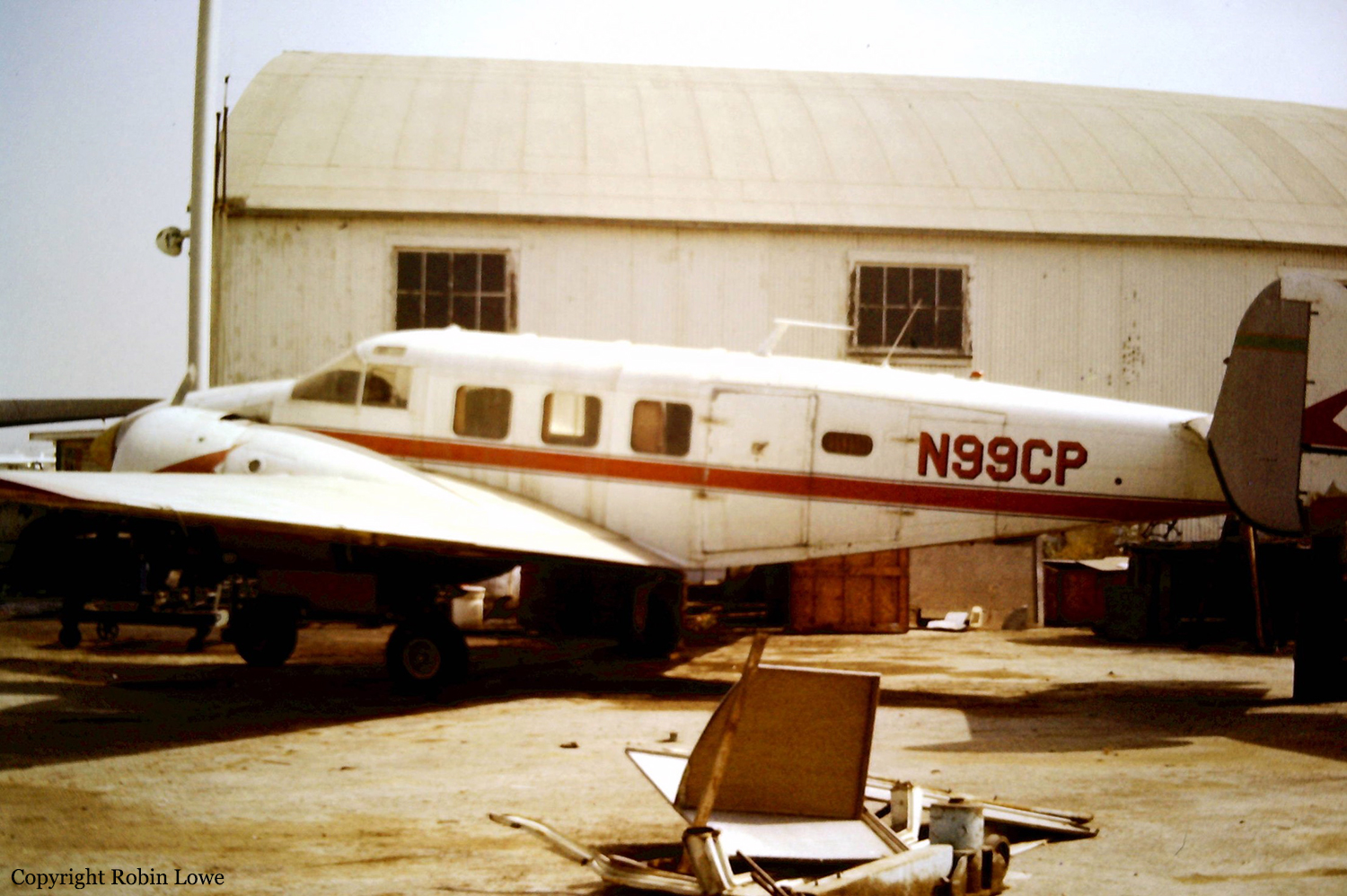
Crash of a Beechcraft D18S in Riverside

Date & Time: Jul 10, 1987 at 1915 LT
Type of aircraft:
Registration:
N99CP
Flight Phase:
Flight Type:
Survivors:
Yes
Schedule:
Long Beach – Banning
MSN:
A-11
YOM:
1945
Crew on board:
1
Crew fatalities:
Pax on board:
1
Pax fatalities:
Other fatalities:
Total fatalities:
0
Captain / Total flying hours:
9300
Captain / Total hours on type:
158.00
Aircraft flight hours:
5297
Circumstances:
The aircraft had not been flown for several years and was on a flight to ferry it to another location. While cruising at 7,500 feet, the pilot decided to start using auxiliary fuel. Shortly after moving the fuel selectors to the auxiliary position, both engines lost power and would not restart. The pilot landed on a road, but the wings struck posts/mailboxes and then the aircraft hit a dirt bank. Fuel samples were taken and a visual examination revealed obvious contamination and discoloration. The aircraft had been given an annual inspection just before the flight. Both occupants escaped uninjured.
Probable cause:
Occurrence #1: loss of engine power (total) - nonmechanical
Phase of operation: cruise
Findings
1. 2 engines
2. (c) fluid, fuel - contamination
3. (c) maintenance, annual inspection - inadequate - other maintenance personnel
4. (c) aircraft preflight - inadequate - pilot in command
----------
Occurrence #2: forced landing
Phase of operation: descent - emergency
----------
Occurrence #3: on ground/water collision with object
Phase of operation: landing - roll
Final Report:

Crash of a Beechcraft A60 Duke in Santa Rosa: 2 killed

Date & Time: Jul 7, 1987 at 1028 LT
Type of aircraft:
Operator:
Registration:
N7485D
Flight Type:
Survivors:
No
Schedule:
Santa Rosa – South Lake Tahoe
MSN:
P-165
YOM:
1971
Crew on board:
1
Crew fatalities:
Pax on board:
1
Pax fatalities:
Other fatalities:
Total fatalities:
2
Captain / Total flying hours:
5505
Circumstances:
The pilot and his wife planned a 30 minutes pleasure flight to Lake Tahoe. Prior to departure the pilot failed to visually inspect the amount of fuel in the right wing tank. The tank was full. The tank's cap probably appeared to be secured when, in fact, because of a unique design characteristic, it was merely resting on top of the filler neck. Upon takeoff rotation the cap came off the filler neck and it was followed by a fuel spray. The pilot responded and stayed in a very low altitude and close-in traffic pattern. He attempted to land immediately. He lost control during the turn to final, stalled and collided with the pavement prior to reaching the threshold. Both occupants were killed.
Probable cause:
The probable cause(s) of this accident to be the pilot's failure to maintain adequate airspeed on final approach which Resulted in the aircraft stalling.
Findings:
Occurrence #1: miscellaneous/other
Phase of operation: standing - pre-flight
Findings
1. (f) fuel system, cap - not secured
2. (f) aircraft preflight - inadequate - pilot in command
----------
Occurrence #2: loss of control - in flight
Phase of operation: approach - vfr pattern - final approach
Findings
3. (f) fluid, fuel - siphoning
4. (f) precautionary landing - attempted - pilot in command
5. (c) emergency procedure - improper - pilot in command
6. (c) airspeed (vso) - not maintained - pilot in command
7. (f) stall - inadvertent - pilot in command
----------
Occurrence #3: in flight collision with terrain/water
Phase of operation: descent - uncontrolled
Final Report: