Crash of a De Havilland DHC-2 Beaver in Miners Point: 6 killed

Date & Time: Aug 7, 1994 at 1355 LT
Type of aircraft:
Registration:
N126UA
Flight Phase:
Survivors:
Yes
Schedule:
Kodiak - Karluk Lake
MSN:
1400
YOM:
1959
Crew on board:
1
Crew fatalities:
Pax on board:
6
Pax fatalities:
Other fatalities:
Total fatalities:
6
Captain / Total flying hours:
1023
Captain / Total hours on type:
139.00
Aircraft flight hours:
22159
Circumstances:
The VFR only part 135 on demand sightseeing flight entered instrument meteorological conditions and collided with terrain. The surviving passenger reported that as the flight progressed, the ceiling and visibility deteriorated. Witnesses in the area reported heavy fog and estimated the ceiling and visibility to be 50 feet and one-fourth of a mile. The company's training program and operations policies and procedures did not address VFR flight in marginal weather conditions. A passenger survived while six other occupants were killed, among them three Dutch and two Swiss citizens.
Probable cause:
The pilot of the VFR only flight intentionally entered instrument meteorological conditions. Factors in the accident were the inadequate procedures/directives by the company/operator management concerning continued VFR flight in marginal weather conditions and the fog.
Final Report:

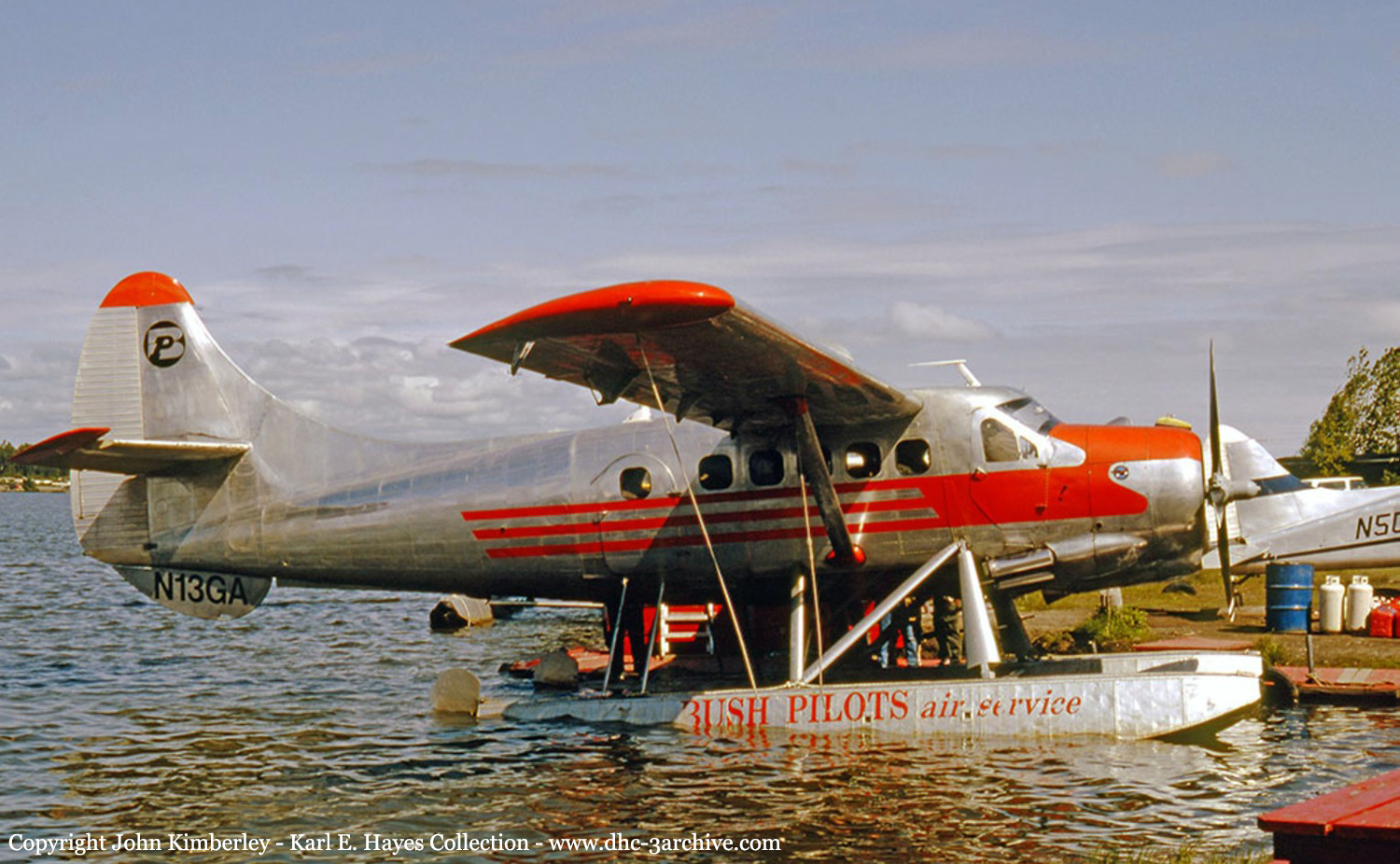
Crash of a De Havilland DHC-3 Otter off Taku Lodge: 7 killed

Date & Time: Jun 23, 1994 at 2015 LT
Type of aircraft:
Operator:
Registration:
N13GA
Flight Phase:
Survivors:
Yes
Schedule:
Taku Lodge - Juneau
MSN:
179
YOM:
1956
Crew on board:
1
Crew fatalities:
Pax on board:
10
Pax fatalities:
Other fatalities:
Total fatalities:
7
Captain / Total flying hours:
12000
Captain / Total hours on type:
400.00
Aircraft flight hours:
7672
Circumstances:
Five aircraft departed a lodge, one behind the other. Fog and drizzle were encountered, and the pilot of the first aircraft radioed to the pilots of the other aircraft to cross the river to the east shoreline. A passenger in the fourth aircraft (N13GA) stated that when the aircraft was over the middle of the river, she could not see either shore due to fog. The pilot of N13GA (a floatplane) stated that he encountered deteriorating weather and started a descent, intending to make a precautionary landing. He began to level, expecting conditions to improve. Subsequently, the floatplane hit the surface of 'glassy water' and crashed. Seven passengers were killed and four other occupants were seriously injured. The aircraft was destroyed.
Probable cause:
VFR flight by the pilot into instrument meteorological conditions (IMC), and his failure to maintain altitude (clearance) above the surface of the river. Factors related to the accident were: the adverse weather conditions, and the surface condition of the river (glassy water).
Final Report:

Crash of a De Havilland DHC-3 Otter off Thorne Bay

Date & Time: Nov 10, 1993
Type of aircraft:
Registration:
N98AT
Flight Phase:
Flight Type:
Survivors:
Yes
Schedule:
Thorne Bay - Ketchikan
MSN:
181
YOM:
1956
Crew on board:
1
Crew fatalities:
Pax on board:
2
Pax fatalities:
Other fatalities:
Total fatalities:
0
Circumstances:
The single engine airplane was returning to its base in Ketchikan following maintenance in Thorne Bay. Shortly after takeoff, while climbing, the engine lost power, forcing the pilot to attempt an emergency landing. While landing on water, a control wire snapped, causing the airplane to nose down in the water, coming to rest upside down. All three occupants were rescued by coastguard 20 minutes later and the aircraft sank.
Probable cause:
Loss of engine power on climb out for unknown reasons.

Crash of a Cessna 207A Stationair 7-II near Kenai: 1 killed

Date & Time: Oct 16, 1993 at 0630 LT
Operator:
Registration:
N208SC
Flight Phase:
Flight Type:
Survivors:
No
Site:
Schedule:
Kenai - Homer
MSN:
207-0445
YOM:
1978
Location:
Crew on board:
1
Crew fatalities:
Pax on board:
0
Pax fatalities:
Other fatalities:
Total fatalities:
1
Captain / Total flying hours:
1487
Captain / Total hours on type:
175.00
Aircraft flight hours:
9067
Circumstances:
The pilot reportedly flew a route along the power lines between Kenai and Homer. The flight took place on a dark moonless night over rising terrain. The accident site was located 200 yards east of the power lines. Radar data shows the airplane in the area of the crash site at a steady state heading, airspeed, and level altitude. This flight marked the first time that the pilot did not complete a company flight plan. On his off days, the pilot got 9-11 hours of sleep. His wife said he was not a morning person. The pilot had commented to her that when away from home, the quality of his sleep was poor. On the day of the accident, the pilot was awake at 0340 for the 0500 departure; he had about 6 hours of sleep.
Probable cause:
The pilot's failure to maintain adequate altitude for terrain clearance. Factors which contributed to the accident were: the pilot's lack of usual sleep, the night light condition and hilly terrain.
Final Report:

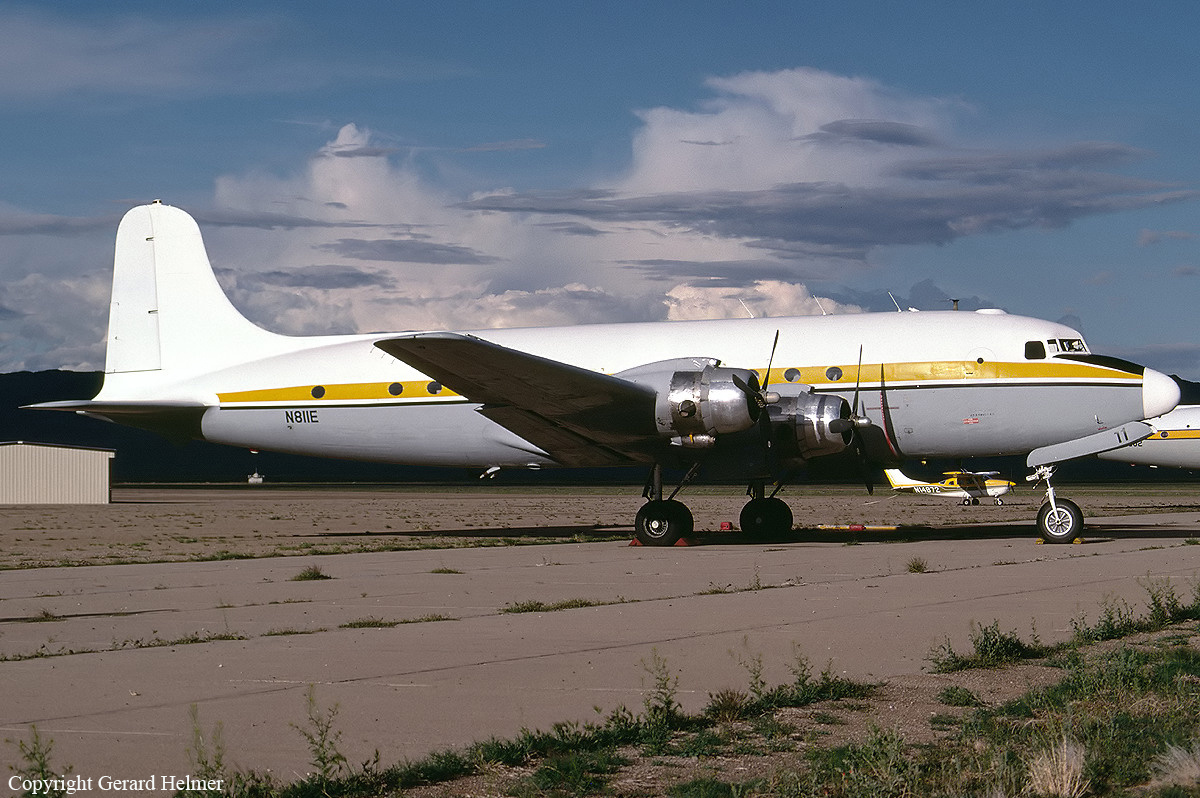
Crash of a Douglas C-54G-15-DO Skymaster in Point Lay

Date & Time: Oct 8, 1993 at 1735 LT
Type of aircraft:
Operator:
Registration:
N811E
Flight Type:
Survivors:
Yes
Schedule:
Fairbanks - Point Lay
MSN:
36080
YOM:
1945
Crew on board:
2
Crew fatalities:
Pax on board:
1
Pax fatalities:
Other fatalities:
Total fatalities:
0
Captain / Total flying hours:
20000
Captain / Total hours on type:
2400.00
Aircraft flight hours:
28585
Circumstances:
The captain stated there were no runway condition reports and a local contact stated the runway was in good condition. They landed and the braking action was nil. The captain maneuvered the airplane to a dry patch of dirt on the left side of the runway. When the main gear rolled onto the dry patch the airplane veered sharply to the left and departed the runway. Both crewmembers stated a go around was not possible. According to landing performance charts, the minimum landing runway length was 4,500 feet on a dry hard surface runway. The actual runway length was 3,500 feet.
Probable cause:
The pilot-in-command's failure to perform proper preflight planning by not computing the required landing runway length.
Final Report:

Crash of a De Havilland DHC-2 Beaver in Iliamna: 3 killed

Date & Time: Aug 31, 1993 at 1105 LT
Type of aircraft:
Operator:
Registration:
N64273
Flight Phase:
Survivors:
Yes
Schedule:
Iliamna - Stayhok River
MSN:
897
YOM:
1956
Location:
Crew on board:
1
Crew fatalities:
Pax on board:
5
Pax fatalities:
Other fatalities:
Total fatalities:
3
Captain / Total flying hours:
1100
Captain / Total hours on type:
900.00
Aircraft flight hours:
5518
Circumstances:
While maneuvering at low altitude to observe moose, the airplane stalled into the ground. The lodge's senior pilot stated that the lodge had no recurrent training program. Three passengers were killed while three other occupants including the pilot were seriously injured.
Probable cause:
The pilot's failure to maintain airspeed resulting in an inadvertent stall. A factor in the accident was the inadequate recurrent training of the pilot by the operator/management.
Final Report:

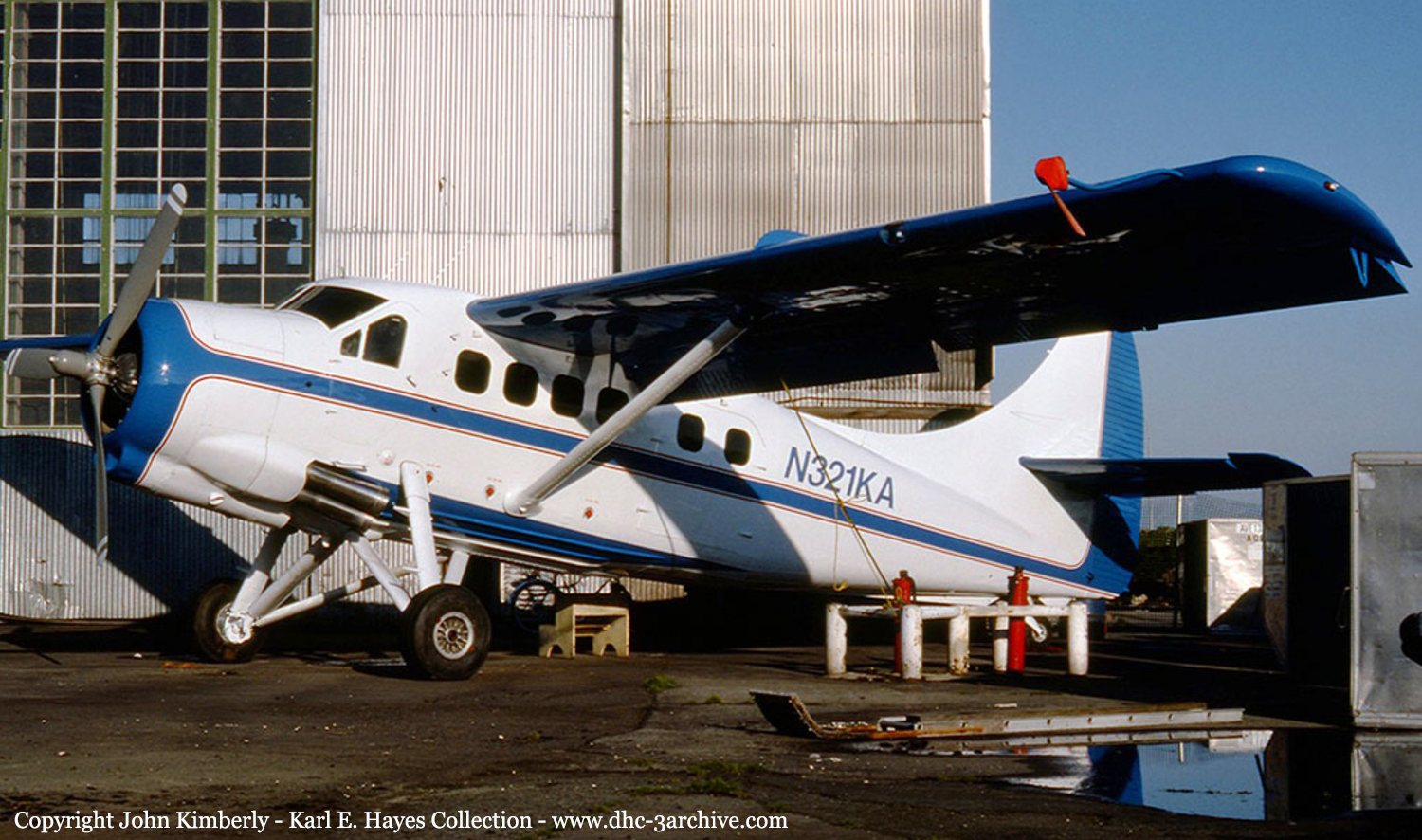
Crash of a De Havilland DHC-3 Otter in Nikabuna Lake

Date & Time: Aug 19, 1993 at 1522 LT
Type of aircraft:
Operator:
Registration:
N321KA
Flight Phase:
Survivors:
Yes
Schedule:
Nikabuna Lake - Anchorage
MSN:
415
YOM:
1962
Crew on board:
1
Crew fatalities:
Pax on board:
5
Pax fatalities:
Other fatalities:
Total fatalities:
0
Captain / Total flying hours:
7500
Captain / Total hours on type:
350.00
Aircraft flight hours:
7200
Circumstances:
The on-demand fishing/hunting charter air carrier pilot experienced a total loss of power and landed in a small lake. During the ground run following the emergency landing a oil-fed fire destroyed the aircraft. Investigators found inadequate flight following documentation, and fuel records or maintenance records for accident acft or operation. Passenger witnesses reported low fuel gauges prior to takeoff. Fuel pump examination indicated fuel starvation.
Probable cause:
Fluid, fuel starvation as a result of the pilot-in-command's improper inflight planning/decision. A factor in the accident was the operator's inadequate flight time and fuel upload record keeping.
Final Report:

Crash of a Piper PA-31-350 Navajo Chieftain off Nome

Date & Time: Aug 13, 1993 at 1950 LT
Operator:
Registration:
N6SF
Flight Phase:
Survivors:
Yes
Schedule:
Lavrentiya – Provideniya – Gambell – Nome
MSN:
31-7405204
YOM:
1974
Location:
Crew on board:
1
Crew fatalities:
Pax on board:
6
Pax fatalities:
Other fatalities:
Total fatalities:
0
Captain / Total flying hours:
17943
Captain / Total hours on type:
317.00
Aircraft flight hours:
8083
Circumstances:
The business flight departed Lavrentya, Russia with what the pilot-in-command estimated to be 50 gallons of usable fuel on board the airplane and landed in Provideniya, Russia around 40 minutes later with about 30 gallons of fuel remaining. The plane took on an additional 30 gallons of fuel. The pilot said that he normally departed Provideniya with 120 gallons of fuel but that there was no additional fuel available. The flight departed Provideniya with what the pilot estimated to be 1 hour and 45 minutes of fuel endurance and landed in Gamble, Alaska on St Lawrence Island approximately 25 minutes later. The pilot did not dip stick the fuel tanks to verify the amount of fuel on board. The pilot did not check on the availability of fuel in Gamble. The right and left engines lost power approximately 40 minutes and 50 minutes, respectively after departing gamble. The airplane did not carry personal flotation devices for the passengers.
Probable cause:
Fuel exhaustion due to the pilot in commands improper preflight planning/preparation.
Final Report:

Crash of a Cessna 208 Caravan I off Kodiak

Date & Time: Aug 2, 1993 at 1500 LT
Type of aircraft:
Operator:
Registration:
N9526F
Flight Type:
Survivors:
Yes
Schedule:
King Salmon - Kodiak
MSN:
208-0085
YOM:
1986
Location:
Crew on board:
1
Crew fatalities:
Pax on board:
0
Pax fatalities:
Other fatalities:
Total fatalities:
0
Captain / Total flying hours:
4000
Captain / Total hours on type:
30.00
Aircraft flight hours:
5993
Circumstances:
On August 2, 1993, at 1500 Alaska daylight time, an amphibious Cessna 208 airplane, N9526F, operated by MarkAir, Inc., nosed over after landing on the water with the wheels extended at Geographic Harbor, located about 75 miles west of Kodiak, Alaska. The commercial pilot, the sole occupant, sustained minor injuries, and the airplane was substantially damaged. The unscheduled domestic cargo flight, operating under 14 CFR Part 135, departed King Salmon, Alaska at 1426. Visual meteorological conditions existed, and a company VFR flight plan was filed.
During a telephone conversation with the pilot shortly after the accident, he stated that he "just failed to use and comply with the airplanes checklist to ensure that the wheels were retracted for the water landing". He further stated that he was very distracted and preoccupied with several other mission related activities.
Probable cause:
The pilot in command did not use the airplane checklist. A factor was his diverted attention to other mission related activities.
Final Report:

Crash of a Cessna 207A Stationair 7 near Holy Cross

Date & Time: May 6, 1993 at 1530 LT
Operator:
Registration:
N70364
Flight Phase:
Flight Type:
Survivors:
Yes
Schedule:
Shageluk - Aniak
MSN:
207-0550
YOM:
1979
Crew on board:
1
Crew fatalities:
Pax on board:
0
Pax fatalities:
Other fatalities:
Total fatalities:
0
Captain / Total flying hours:
5395
Captain / Total hours on type:
1470.00
Aircraft flight hours:
7801
Circumstances:
The pilot reported that while in cruise flight looking at birds out the left side cockpit window he observed peripherally a 'white flash' fill the right side of the forward wind screen followed immediately by an audible 'thump'. The airplane began an uncontrollable descent and yaw to the right. The engine continued to run smoothly. Advancing the engine power controls had no noticeable effect on his ability to arrest the descent. The NTSB investigator in charge visited the accident site. No evidence was found of a bird strike. The accident site was surrounded by tall (white) birch trees. The pilot stated that he was not sure what he struck and that it could have been a tree.
Probable cause:
The failure of the pilot in command to maintain the proper altitude. The trees were a factor in the accident.
Final Report: