Crash of a Cessna 207A Stationair 7-II in Nome: 2 killed

Date & Time: Apr 3, 1993 at 1011 LT
Operator:

Registration:
N6467H
Flight Phase:
Survivors:
No
Schedule:
Nome - Elim
MSN:
207-0531
YOM:
1979
Flight number:
XY403
Location:
Crew on board:
1
Crew fatalities:
Pax on board:
1
Pax fatalities:
Other fatalities:
Total fatalities:
2
Captain / Total flying hours:
3213
Captain / Total hours on type:
1763.00
Aircraft flight hours:
11854
Circumstances:
Pireps provided to the pilot by FSS prior to takeoff indicated that fog and low visibility had been encountered on the pilot's route to the east, forcing airplanes to return to Nome. In addition, as the flight taxied for takeoff, the pilot was told '... VFR is not recommended to the east...'. The airplane impacted flat snow covered terrain in a steep left wing down attitude approximately 4 miles east of the departure end of the runway. The area was a treeless, snow covered flat coastal plain bordered by a sea frozen with white ice. The pilot had returned to work 4/1 after a 30-day suspension following a takeoff accident, and was assigned only to Cessna 207 'VFR only' airplanes. The poi did not discuss the earlier accident or the pilot with the operator's management.
Probable cause:
The pilot initiated VFR flight into instrument meteorological and whiteout conditions. Factors which contributed to the accident were: inadequate supervision of the pilot by the company, inadequate oversight by the Federal Aviation Administration, the pilot's self induced pressure to conduct the flight, and the existing weather conditions and snow covered terrain.
Final Report:


Crash of a Cessna 402C in Nome

Date & Time: Feb 20, 1993 at 0900 LT
Type of aircraft:
Operator:
Registration:
N4182G
Flight Phase:
Survivors:
Yes
Schedule:
Nome - Savoonga
MSN:
402C-0284
YOM:
1980
Location:
Crew on board:
1
Crew fatalities:
Pax on board:
1
Pax fatalities:
Other fatalities:
Total fatalities:
0
Captain / Total flying hours:
3201
Captain / Total hours on type:
736.00
Aircraft flight hours:
5905
Circumstances:
The airplane was removed from a hangar about one hour before departure. During the interim period, the ambient temperature was about 32° F and it was snowing lightly. No deicing fluid was used on the airplane. The pilot reported observing only water on the plane's wings. The passenger (a rated pilot) reported to an alaska state trooper that the airplane had accumulated a little ice before the flight departed. The airplane became airborne about 1,000 feet from the end of the 5,576 feet long runway. Shortly after rotation, the airplane began to buffet and would not climb. The airplane impacted in a near horizontal attitude on level snow covered tundra. The pilot reported that immediately after exiting the airplane, he observed a coarse layer of ice on the aft two thirds of the wings. During the test run of both engines, no problems were noted that would have caused and/or contributed toward the inability of the airplane to sustain flight.
Probable cause:
The pilot in command not removing the ice from the plane's airfoil surfaces before takeoff. The weather condition was a factor.
Final Report:

Crash of a Mitsubishi MU-2B-35 Marquise near Nome

Date & Time: Jan 5, 1993 at 2021 LT
Type of aircraft:
Operator:
Registration:
N900YH
Flight Type:
Survivors:
Yes
Schedule:
Bethel - Nome
MSN:
584
YOM:
1973
Location:
Crew on board:
1
Crew fatalities:
Pax on board:
0
Pax fatalities:
Other fatalities:
Total fatalities:
0
Captain / Total flying hours:
11150
Captain / Total hours on type:
512.00
Aircraft flight hours:
6725
Circumstances:
After making a refueling stop, the pilot took off at night and was cruising at FL200. After about 30 minutes of flight, the right engine fuel filter bypass warning light illuminated. About 2 minutes later, the same warning light for the left engine illuminated. Soon thereafter the right engine, then the left engine, lost power. The pilot made a forced landing on a moving ice pack in the Bering sea, which resulted in substantial damage. Ice was found in the engine and main fuel screens. Significant amounts of water and/or ice were found in 3 tanks, which had been refueled before takeoff. A higher than normal amount of water was also found in the fuel sample taken from the nozzle of the refueling tanker. The flight manual required that an approved ice inhibitor be added to the fuel, if not premixed. Fuel at the refueling stop was not premixed and the pilot had no icing inhibitor (prist) with him on this flight. He did not drain fuel from the tanks during preflight, since the temperature was so cold he feared the drain might freeze open.
Probable cause:
Fuel starvation due to improper refueling procedures by the fbo personnel, inadequate preflight by the pilot, and resultant ice in the fuel, which blocked fuel flow to the engines. A factor was the lack of suitable terrain for a forced landing.
Final Report:

Crash of a Beechcraft C-12F Huron on Mt Chilkat: 8 killed

Date & Time: Nov 12, 1992 at 0910 LT
Type of aircraft:
Operator:
Registration:
85-1261
Flight Phase:
Flight Type:
Survivors:
No
Site:
Schedule:
Elmendorf – Juneau
MSN:
BP-52
YOM:
1985
Crew on board:
2
Crew fatalities:
Pax on board:
6
Pax fatalities:
Other fatalities:
Total fatalities:
8
Circumstances:
The crew started the descent to Juneau Airport in poor weather conditions. At an altitude of 2,600 feet, while cruising in clouds, the twin engine aircraft struck the slope of a mountain located in the Chilkat Mountain Range, about 38 miles northwest of Juneau Airport. The aircraft was destroyed upon impact and all eight occupants were killed among them General Thomas C. Carroll, second Chief of Staff of the USAF in Alaska.
Crew:
Col Thomas Clark, pilot,
Cwo John Pospisil, copilot.
Passengers:
Sfc Richard E. Brink,
Gen Thomas C. Carroll,
Mg Kenneth W. Himsel,
Sgm Llewellyn A. Kahklen,
Sgt Michael J. Schmidt,
Col Wilfred E. Wood.
Probable cause:
Controlled flight into terrain after the crew followed a wrong approach track for unknown reasons. At the time of the accident, the visibility was poor due to heavy rain falls and the crew informed ground about his position that was not correct according to ATC radar.

Crash of a Cessna 402C in Kiana: 3 killed

Date & Time: Nov 8, 1992 at 1820 LT
Type of aircraft:
Operator:
Registration:
N67941
Flight Phase:
Survivors:
No
Site:
Schedule:
Kotzebue – Noorvik – Kiana – Selawik
MSN:
402C-0633
YOM:
1982
Location:
Crew on board:
1
Crew fatalities:
Pax on board:
2
Pax fatalities:
Other fatalities:
Total fatalities:
3
Captain / Total flying hours:
4528
Captain / Total hours on type:
915.00
Aircraft flight hours:
7971
Circumstances:
The airplane was on a VFR flight from Kotzebue to Noorvik, Kiana, Selawik, and return to Kotzebue. The flight had overflown Kiana due to unplowed runway conditions, and was proceeding to Selawik when it crashed into Shelly mountain. According to the rescue personnel, the mountain tops in the area of the accident were obscured by snow, fog and clouds. The terrain was covered with snow. The pilot had a previous accident involving whiteout conditions where he flew into rising terrain. All three occupants were killed.
Probable cause:
The pilot in command's attempt to fly VFR into IMC conditions. Factors were snow, whiteout conditions, and mountainous terrain.
Final Report:

Crash of a Cessna 207 Skywagon near Montague Island: 2 killed

Date & Time: Nov 6, 1992 at 1620 LT
Registration:
N1686U
Flight Phase:
Survivors:
No
Site:
Schedule:
Montague Island - Seward
MSN:
207-0286
YOM:
1975
Crew on board:
1
Crew fatalities:
Pax on board:
1
Pax fatalities:
Other fatalities:
Total fatalities:
2
Captain / Total flying hours:
4734
Captain / Total hours on type:
2000.00
Aircraft flight hours:
11291
Circumstances:
This was 1 of 2 company airplanes that had landed on a beach to pick up hunters for a return trip to Seward. The other airplane, a Cessna 206, was flown by the company chief pilot. The witnesses in the Cessna 206 said that the accident airplane took off 5 minutes before their Cessna 206 and 'disappeared into the weather and was never seen again.' They described the weather at the bay and along the route to Seward to be 400- 600 feet ceilings and visibility approximately one mile in fog. The wreckage was located 6 miles west of the takeoff point at an elevation of 1,000 feet in mountainous terrain. Both occupants were killed.
Probable cause:
The pilot's intentional VFR departure into instrument meteorological conditions, and the company chief pilot's failure to exercise adequate supervision. The weather conditions were factors in the accident.
Final Report:

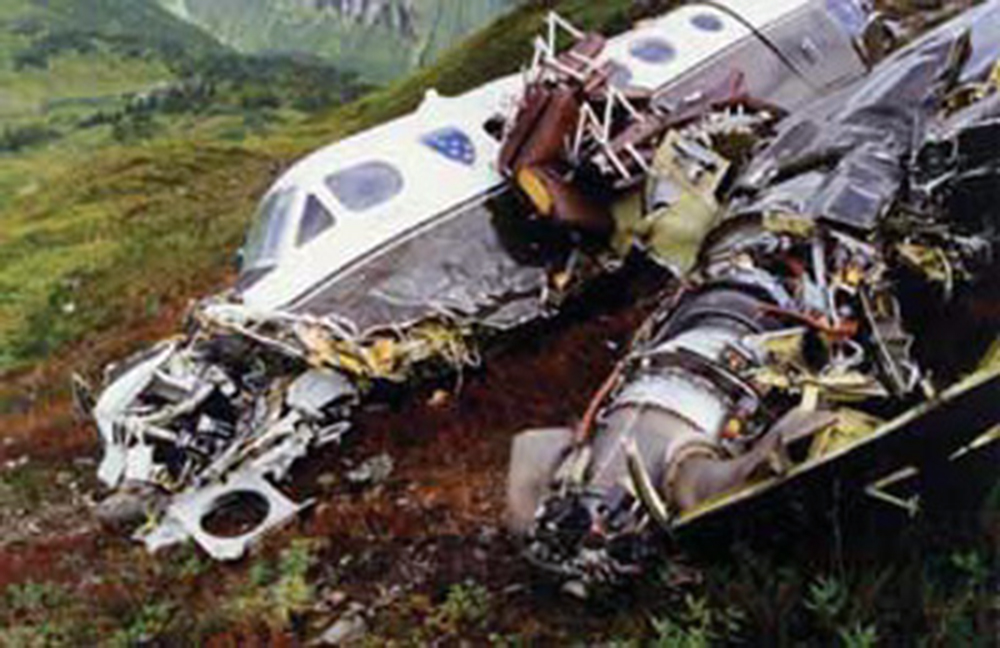
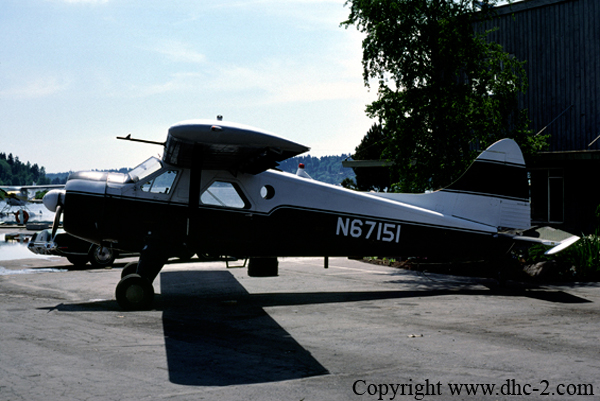
Crash of a De Havilland DHC-2 Beaver near Dillingham: 5 killed

Date & Time: Jul 30, 1992 at 1100 LT
Type of aircraft:
Operator:
Registration:
N67151
Flight Phase:
Survivors:
Yes
Site:
Schedule:
Bristol Bay Lodge - Togiak River
MSN:
900
YOM:
1956
Crew on board:
1
Crew fatalities:
Pax on board:
6
Pax fatalities:
Other fatalities:
Total fatalities:
6
Captain / Total flying hours:
8842
Captain / Total hours on type:
550.00
Aircraft flight hours:
7892
Circumstances:
The destination camp is located about 50 miles southwest of the departure lodge, and is separated by mountains with some peaks over 4,000 feet asl. The general area weather included low ceilings. The operator stated that shortly before the accident he observed the youth creek weather 'better than 400 feet...', and told the pilot that it appeared good enough to make the flight. The pilot stated that as he flew up youth creek he could see that the pass was closed by low clouds and attempted to reverse direction. The pilot stated he 'made a hard steep turn, and the airplane stalled...' the pilot said the weather was about 800 feet ceiling and visibility of 1 mile. When the pilot was admitted into the hospital immediately following the accident, he was diagnosed as having an insulin dependent diabetic condition. His medical records contain no evidence of, and the pilot denied any knowledge of, any pre-accident diabetic condition. Five passengers were killed while the pilot and a passenger were seriously injured. A day later, the survivor passenger died from his injuries.
Probable cause:
The pilot's delayed decision in reversing course and his failure to maintain airspeed during the maneuver. Factors related to the accident were: mountainous terrain and a low ceiling.
Final Report:

Crash of a Cessna 207 Skywagon in Yakutat: 1 killed

Date & Time: Jul 29, 1992 at 0900 LT
Operator:
Registration:
N7ME
Flight Type:
Survivors:
No
Schedule:
Dry Bay - Yakutat
MSN:
207-0263
YOM:
1974
Location:
Crew on board:
1
Crew fatalities:
Pax on board:
0
Pax fatalities:
Other fatalities:
Total fatalities:
1
Captain / Total flying hours:
9500
Captain / Total hours on type:
2000.00
Aircraft flight hours:
3292
Circumstances:
The crash occurred at the 1,100 foot level of a mountainside while the airplane was flying a course roughly parallel to the mountain range. Marginal weather conditions were reported for the area. The pilot's 22-year-old son stated that in those type weather conditions his father would routinely climb up into the soup. Set a loran course for home, and sit back and relax. When close to home he would descend to vfr conditions over the flat coastal area and land. The pilot, sole on board, was killed.
Probable cause:
The pilot elected to fly an improper altitude. Contributing factors were the pilots attempt to fly VFR into IMC conditions, and the obscured weather.
Final Report:

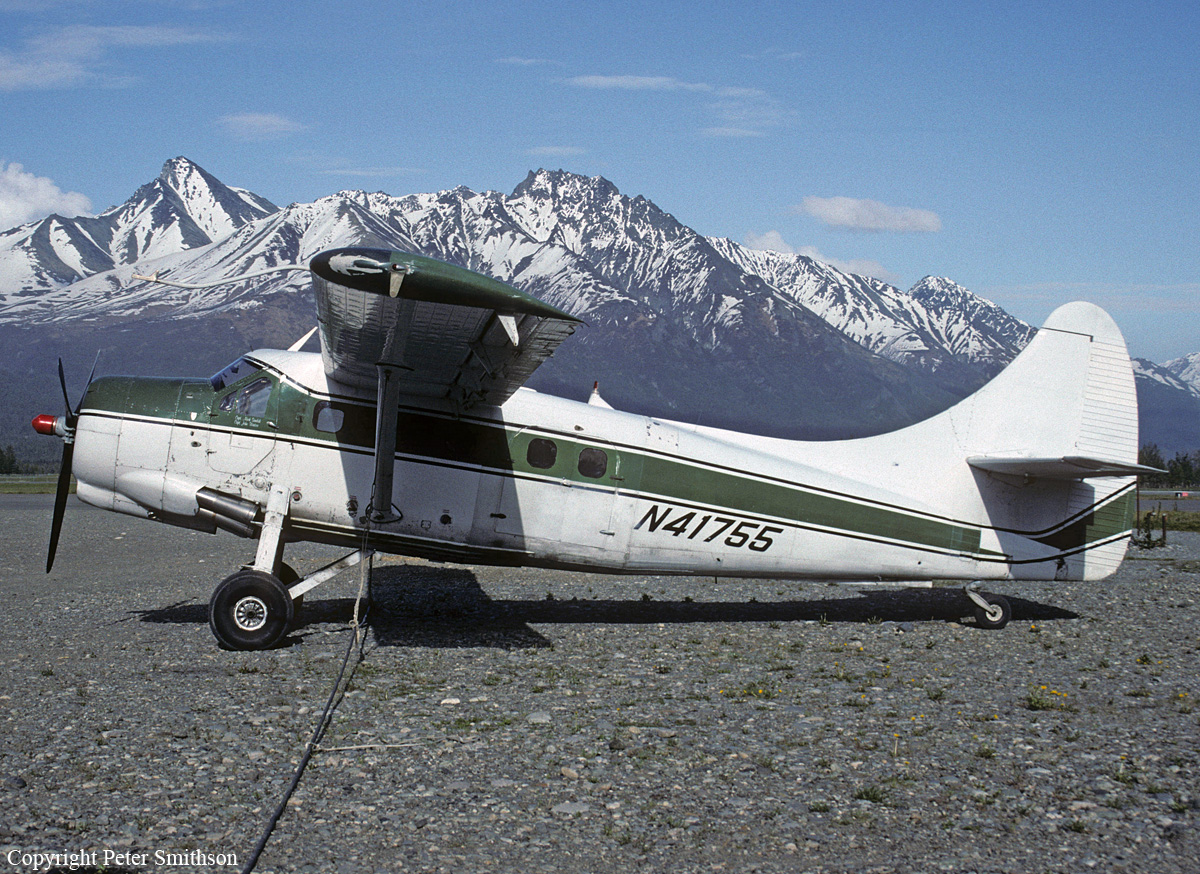
Crash of a De Havilland DHC-3 Otter near McGrath

Date & Time: Jul 22, 1992 at 1530 LT
Type of aircraft:
Operator:
Registration:
N41755
Flight Phase:
Survivors:
Yes
Schedule:
Nikolai - Silvertip Lodge
MSN:
339
YOM:
1960
Location:
Crew on board:
1
Crew fatalities:
Pax on board:
1
Pax fatalities:
Other fatalities:
Total fatalities:
0
Captain / Total flying hours:
8500
Captain / Total hours on type:
320.00
Aircraft flight hours:
10587
Circumstances:
The airplane was in cruise flight when the pilot noticed a slight fire smell. The engine began to lose power slowly and would not respond to engine control inputs. The pilot landed on a gravel bar and had to extinguish the fire in the engine accessory case with the fire extinguisher and dirt. The airplane has not been recovered and the engine has not been examined.
Probable cause:
The fire in the engine accessory drive assembly. Factor was the rough an uneven forced landing area.
Final Report:

Crash of a Cessna 207A Stationair 8-II in Dillingham

Date & Time: Jul 20, 1992 at 0922 LT
Operator:
Registration:
N9975M
Flight Phase:
Flight Type:
Survivors:
Yes
Site:
Schedule:
Dillingham - New Koliganek
MSN:
207-0772
YOM:
1984
Crew on board:
1
Crew fatalities:
Pax on board:
0
Pax fatalities:
Other fatalities:
Total fatalities:
0
Captain / Total flying hours:
2800
Captain / Total hours on type:
200.00
Circumstances:
The pilot bent down to retrieve the fire extinguisher between his feet and to replace it in the bracket located under the pilot's seat. When he looked up he saw a hill in front of the airplane. He pulled up and the airplane struck the hill but continued to fly. He pulled back on the yoke and added full power and the airplane entered the clouds. He noticed he was about to stall the airplane so he lowered the nose and the airplane immediately struck the hill again and nosed over.
Probable cause:
The pilot in command's failure to maintain visual lookout and clearance from terrain. A factor was the pilot diverted his attention to secure a loose fire extinguisher.
Final Report: