Crash of a Piper PA-31-310 Navajo in Valdez: 4 killed

Date & Time: Jun 25, 1995 at 1557 LT
Type of aircraft:
Operator:
Registration:
N62851
Flight Type:
Survivors:
No
Schedule:
Homer - Valdez
MSN:
31-7612085
YOM:
1976
Location:
Crew on board:
1
Crew fatalities:
Pax on board:
3
Pax fatalities:
Other fatalities:
Total fatalities:
4
Captain / Total flying hours:
4800
Circumstances:
The pilot received an instrument approach clearance to a non tower airport surrounded by mountainous terrain. Weather conditions on the ground were VFR, and the pilot descended through an overcast. The approach environment was not serviced by any atc radar facility. The pilot declared a missed approach to the appropriate faa flight service station, and was advised to contact ARTCC. ARTCC never received a radio transmission from the pilot. The airplane wreckage was located approximately 6 miles beyond the airport, slightly to the north of the extended runway centerline. Missed approach procedures were for an immediate climb, and then a climbing right turn to reverse direction away from the airport. The missed approach segment began 5.2 DME miles prior to the airport. Minimum descent altitude (MDA) for the approach was 4,320 feet msl (4,200 feet above the runway elevation); impact with mountainous terrain occurred at about the same altitude. All four occupants were killed.
Probable cause:
The pilot's failure to follow the published ifr (missed approach) procedure and assure adequate altitude/clearance from mountainous terrain.
Final Report:
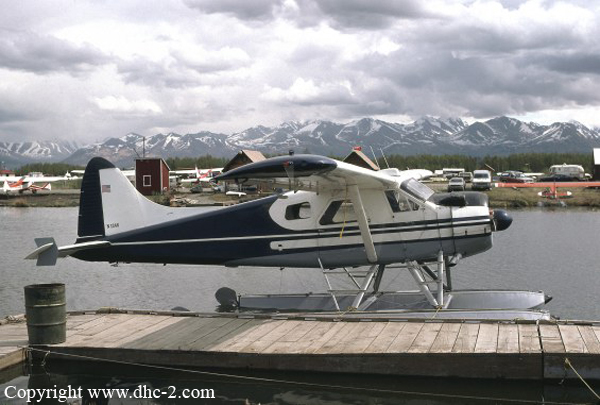

Crash of a De Havilland DHC-2 Beaver in Nondalton: 4 killed

Date & Time: Jun 20, 1995 at 1645 LT
Type of aircraft:
Registration:
N1348
Flight Phase:
Survivors:
No
Schedule:
Kukaklek Lake - Port Alsworth
MSN:
1348
YOM:
1959
Crew on board:
1
Crew fatalities:
Pax on board:
3
Pax fatalities:
Other fatalities:
Total fatalities:
4
Captain / Total flying hours:
18300
Captain / Total hours on type:
4000.00
Aircraft flight hours:
9499
Circumstances:
The certificated airline transport pilot of N1348 and 3 passengers were northwest bound at 200 feet over a remote river. The business flight was en route to a fishing lodge after picking up lodge clients from a remote lake. The certificated commercial pilot and sole occupant of N7832H was southbound at 200 feet over the same area of the river. Witnesses observed the two airplanes collide and descend into the river. The witnesses did not observe either airplane take evasive action. The weather conditions were reported as scattered clouds at 3,500 feet and a visibility of 25 miles.
Probable cause:
The failure of both pilots to maintain adequate visual lookout.
Final Report:

Crash of a Cessna 207 Skywagon in Kodiak

Date & Time: Apr 25, 1995 at 1940 LT
Operator:
Registration:
N1769U
Flight Phase:
Flight Type:
Survivors:
Yes
Site:
Schedule:
Old Harbor - Kodiak
MSN:
207-0369
YOM:
1977
Crew on board:
1
Crew fatalities:
Pax on board:
0
Pax fatalities:
Other fatalities:
Total fatalities:
0
Captain / Total flying hours:
3700
Captain / Total hours on type:
700.00
Aircraft flight hours:
11036
Circumstances:
The pilot was informed by another company pilot that the higher passes were closed. He then attempted to fly through 'high pass' located near old harbor. The pilot described the weather as overcast with ceilings obscured, and flight visibility was 2 to 3 miles. The pass was snow covered. As he entered the pass he lost visual reference due to whiteout conditions and he initiated a left turn to exit the pass. Approx half way through the turn the left wing struck the mountain.
Probable cause:
The pilot's continued flight into known adverse weather. The whiteout condition was a factor.
Final Report:

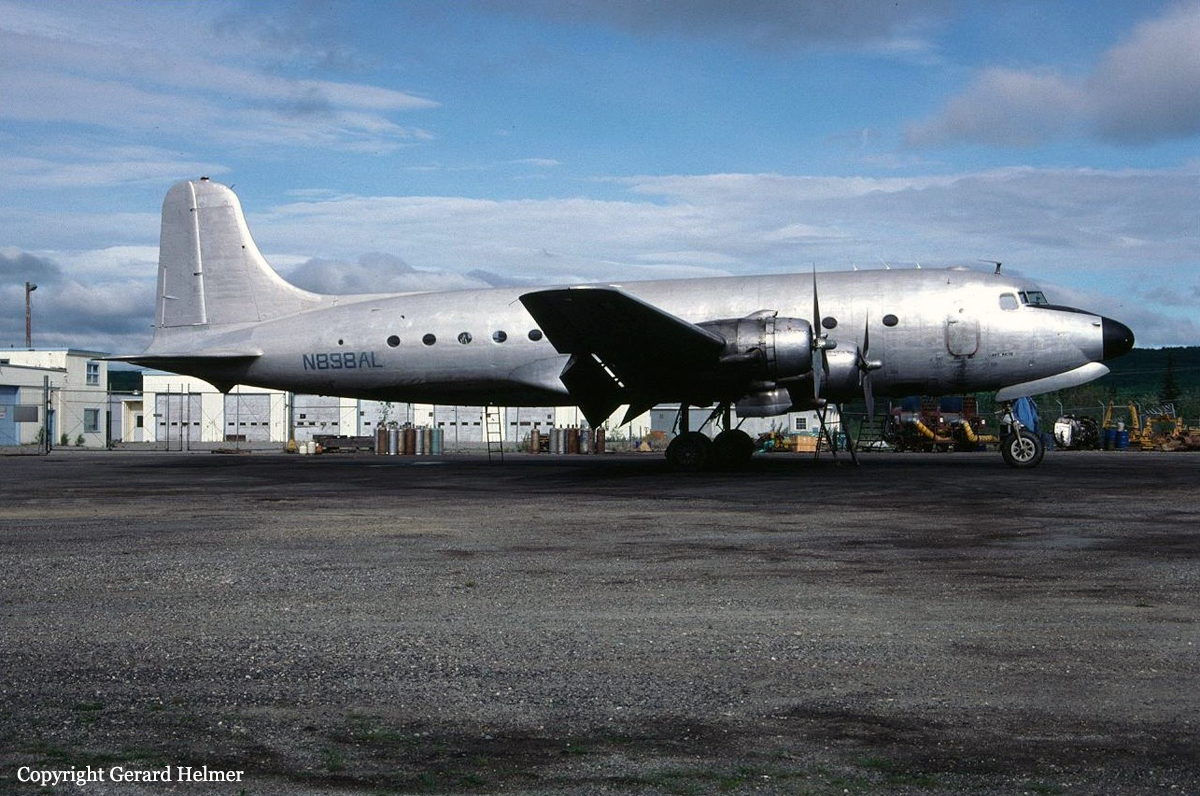
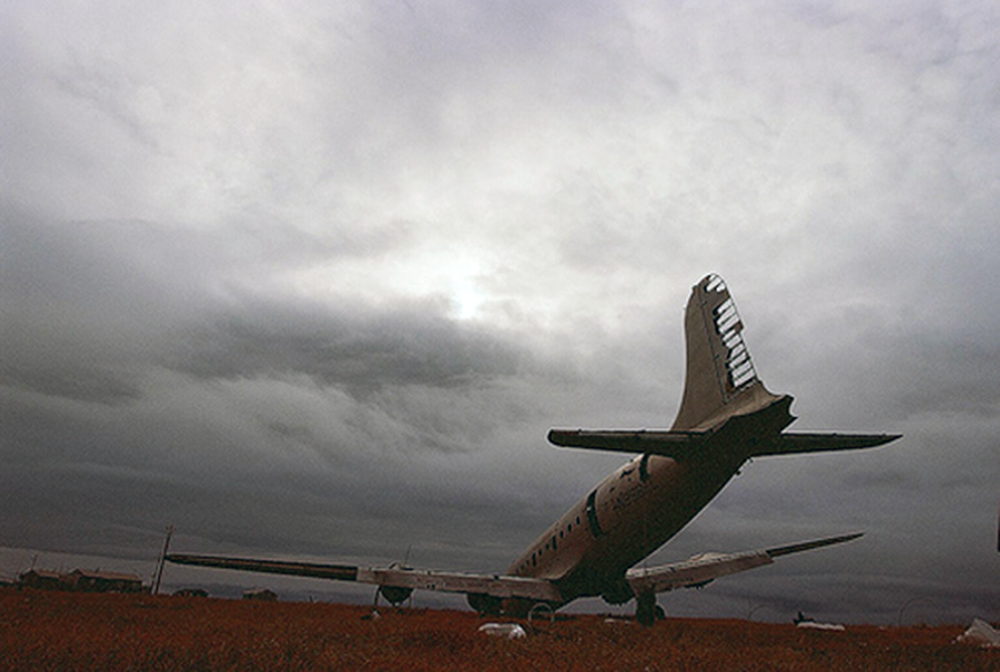
Crash of a Douglas C-54G-5-DO Skymaster in Kivalina

Date & Time: Apr 17, 1995 at 1300 LT
Type of aircraft:
Operator:
Registration:
N898AL
Flight Type:
Survivors:
Yes
Schedule:
Galena - Kivalina
MSN:
35986
YOM:
1945
Location:
Crew on board:
2
Crew fatalities:
Pax on board:
1
Pax fatalities:
Other fatalities:
Total fatalities:
0
Captain / Total flying hours:
3500
Captain / Total hours on type:
2000.00
Circumstances:
The four engine transport category airplane was carrying a load of fuel oil for distribution to the village of kivalina. The pilot reported he flew over the 3,000 feet long by 60 feet wide strip prior to landing, and noted in the center of the runway some gravel was visible through a layer of surrounding snow. He said he could not see any snow banks or deeper snow in the landing area, and available notices to airmen did not mention any snow banks or snow berms on the runway. The pilot said the airplane landed near the threshold and on the centerline, but, the left main landing gear soon encountered a snow berm and the airplane was pulled to the left. The airplane subsequently impacted other snow berms on the left side of the runway and the nose landing gear collapsed. The U.S. Government's supplement for Alaska airports, for the Kivalina Airport, states, in part: unattended. Caution: runway condition not monitored, recommend visual inspection prior to using.
Probable cause:
The pilot's failure to identify a hazardous landing area. Factors in the accident are the presence of snow banks/berms on the runway, and the inadequate snow removal by airport personnel.

Crash of a Cessna 207A Skywagon in Bethel

Date & Time: Mar 20, 1995 at 1155 LT
Operator:
Registration:
N1719U
Flight Phase:
Survivors:
Yes
Schedule:
Bethel - Kalskag
MSN:
207-0319
YOM:
1976
Location:
Crew on board:
1
Crew fatalities:
Pax on board:
1
Pax fatalities:
Other fatalities:
Total fatalities:
0
Captain / Total flying hours:
1434
Captain / Total hours on type:
158.00
Aircraft flight hours:
11868
Circumstances:
After receiving a special VFR (SVFR) clearance, the pilot departed the airport with a passenger on a scheduled commuter flight to a remote airport. About 14 miles north of the airport, at 1,000 feet mean sea level (msl), the pilot encountered whiteout conditions and reversed course, descending to about 500 feet msl. The pilot requested a SVFR arrival back to the departure airport and began maneuvering to intercept the inbound course. While in instrument meteorological conditions, the airplane descended and collided with flat, snow covered terrain about 5 mile north of the airport. The pilot was unable to distinguish any terrain features until impact with the ground.
Probable cause:
The pilot's continued VFR flight into imc conditions and a failure to maintain altitude. A factor in the accident was 'whiteout' weather conditions.
Final Report:

Crash of a Cessna T207A Turbo Stationair 8 in Ketchikan

Date & Time: Mar 10, 1995 at 0745 LT
Registration:
N6478H
Flight Phase:
Survivors:
Yes
Schedule:
Ketchikan - Wrangell
MSN:
207-0538
YOM:
1979
Crew on board:
1
Crew fatalities:
Pax on board:
2
Pax fatalities:
Other fatalities:
Total fatalities:
0
Captain / Total flying hours:
1352
Captain / Total hours on type:
750.00
Aircraft flight hours:
16116
Circumstances:
Prior to departing on a scheduled air taxi flight with two passengers, the pilot obtained a weather briefing that included airmets for mountain obscuration, IFR and icing conditions. VFR flight was not recommended. A company flight that departed before the accident flight, returned to the company base due to low ceilings, after the accident flight departed. The flight departed on a VFR flight plan and encountered low ceilings in the area of mountainous terrain. The pilot began maneuvering around the terrain and during a period of obscuration, collided with several trees. The company operations manual specifies that the pilot is responsible for the conduct of the flight; however, procedures are included that detail the dispatch responsibilities, dissemination of weather information, and the director of operations responsibility to monitor and cancel flights if necessary.
Probable cause:
The pilot's continued visual flight rules (VFR) flight into instrument meteorological conditions (IMC). Factors in the accident were fog and low ceilings, and a failure of the operator to follow their procedures specified in the company operations manual.
Final Report:

Crash of a Cessna 207A Skywagon near Kotzebue: 1 killed

Date & Time: Feb 25, 1995 at 1250 LT
Operator:
Registration:
N6479H
Flight Phase:
Survivors:
No
Site:
Schedule:
Kotzebue - Kivalina
MSN:
207-0539
YOM:
1979
Flight number:
UYA1907
Crew on board:
1
Crew fatalities:
Pax on board:
0
Pax fatalities:
Other fatalities:
Total fatalities:
1
Captain / Total flying hours:
1607
Captain / Total hours on type:
333.00
Aircraft flight hours:
8434
Circumstances:
Approximately 10 minutes after departure, the pilot was contacted by a company pilot flying in the opposite direction. During their conversation the pilot stated that he was 'looking for wolves.' Shortly thereafter, the company pilot told the pilot that his radio transmissions were breaking up. The pilot replied that it was probably because he was 'behind a ridge.' The company pilot temporarily went off frequency; however, when he switched back he was unable to contact the pilot. The aircraft was later located on the southwest side of a box canyon about 100 feet below the top of the ridge. The normal course line for the route typically flown by company pilots is 6 miles away. The pilot had no prior experience in mountain flying.
Probable cause:
The pilot's decision to enter a box canyon area at an altitude inadequate to maintain terrain clearance. The pilot's lack of mountain flying experience was a factor in this accident.
Final Report:

Crash of a Cessna 402C in Koyuk: 5 killed

Date & Time: Dec 10, 1994 at 1900 LT
Type of aircraft:
Operator:
Registration:
N1238K
Survivors:
No
Schedule:
Nome - Koyuk
MSN:
402C-1019
YOM:
1985
Flight number:
XY2402
Location:
Crew on board:
1
Crew fatalities:
Pax on board:
4
Pax fatalities:
Other fatalities:
Total fatalities:
5
Captain / Total flying hours:
15804
Captain / Total hours on type:
828.00
Aircraft flight hours:
10722
Circumstances:
The airplane was on a flight at night from Nome to Koyuk, AK, when it crashed into a mountain at the 2,725 foot level. The accident site was directly on a course line between the Nome and Koyuk Airports. The ceiling at nome was 3,500 overcast at the time of departure. According to rescue personnel, weather at the accident area was: indefinable ceiling and poor visibility with heavy snow and blowing snow. The pilot had a hand held GPS on board that he had barrowed from another pilot. But the database could not be retrieved from the GPS. According to the owner of the GPS, he and the accident pilot programmed different waypoints. The pilot did not file a VFR or an ifr flight plan with the FAA.
Probable cause:
VFR flight by the pilot into instrument meteorological conditions (IMC), and his failure to maintain sufficient altitude or clearance from mountainous terrain. Factors related to the accident were: darkness and the adverse weather conditions.
Final Report:

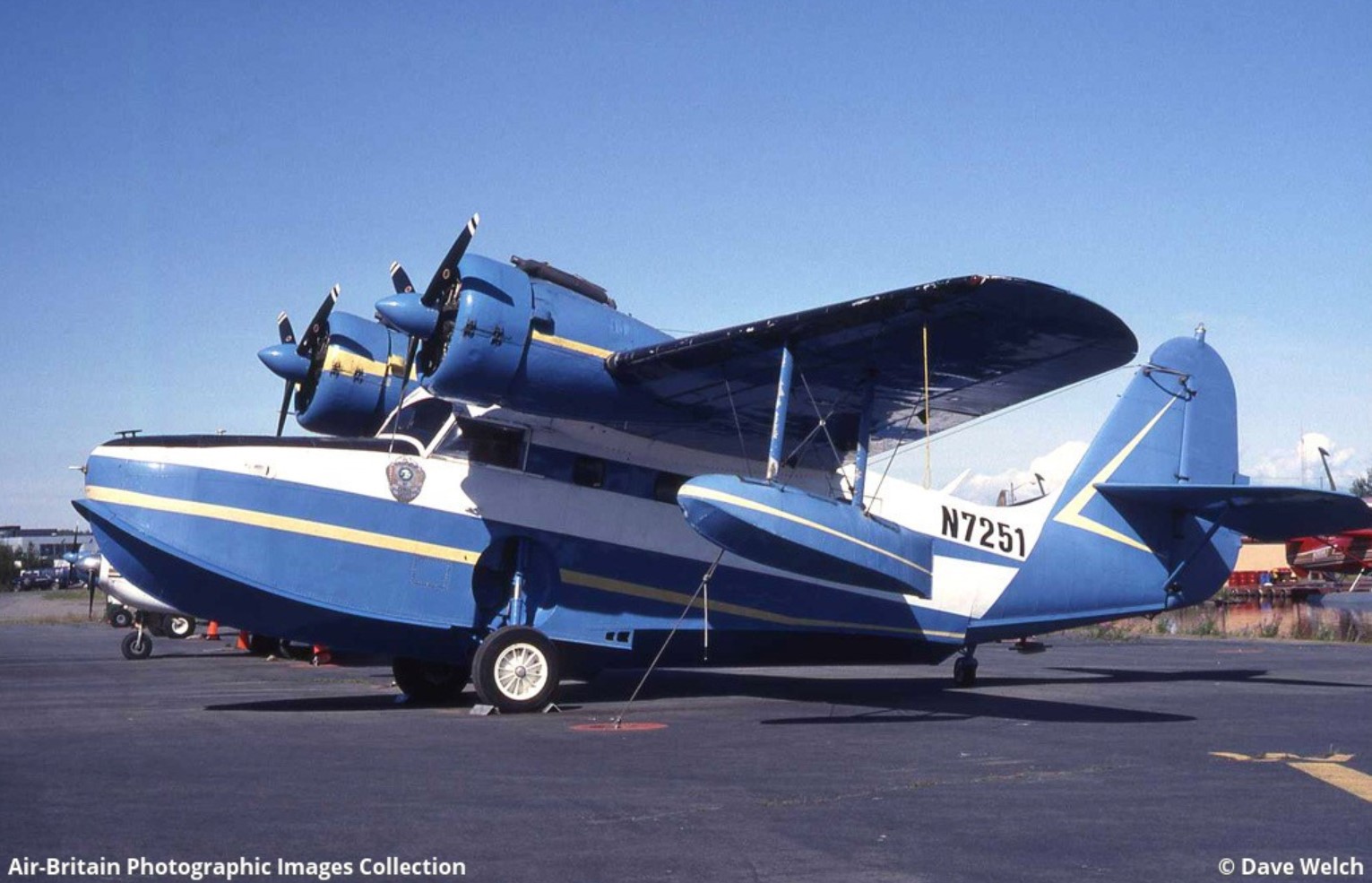
Crash of a Grumman G-21A Goose in Haines: 2 killed

Date & Time: Oct 11, 1994 at 1715 LT
Type of aircraft:
Operator:
Registration:
N7251
Flight Phase:
Survivors:
No
MSN:
B028
YOM:
1943
Location:
Crew on board:
2
Crew fatalities:
Pax on board:
0
Pax fatalities:
Other fatalities:
Total fatalities:
2
Circumstances:
Crashed in unknown circumstances near Haines while completing a survey flight on behalf of the fish and wildlife Department. Both occupants were killed.

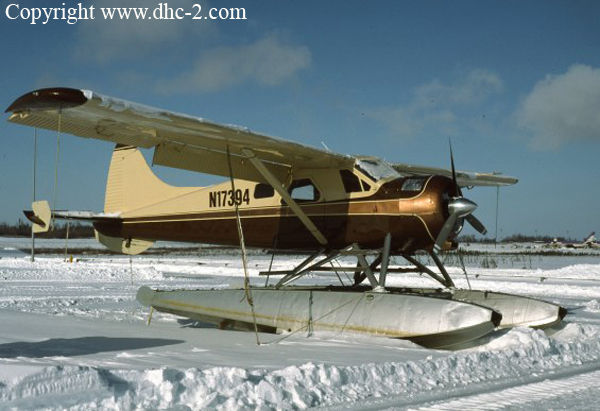
Crash of a De Havilland DHC-2 Beaver in Port Alsworth: 3 killed

Date & Time: Aug 11, 1994 at 1700 LT
Type of aircraft:
Registration:
N17394
Flight Phase:
Survivors:
No
Site:
Schedule:
Caribou Lake - Niniski
MSN:
495
YOM:
1953
Crew on board:
1
Crew fatalities:
Pax on board:
2
Pax fatalities:
Other fatalities:
Total fatalities:
3
Captain / Total flying hours:
6200
Captain / Total hours on type:
3500.00
Aircraft flight hours:
6775
Circumstances:
The plane was observed to enter a valley with mountains on both sides. While the pilot was maneuvering the airplane to the left to reverse direction, it collided with terrain. Witnesses reported the plane's engine sounded normal and that the weather was good with clear skies, unlimited visibility and light wind. A pilot who flew over the accident site minutes after the mishap reported the area was devoid of turbulence. This was a part 135, on-demand, lodge/hunting guide operation. All three occupants were killed.
Probable cause:
Improper in-flight planning/decision by the pilot, and his failure to remain clear of mountainous terrain. The box/blind canyon and proximity of mountainous terrain were related factors.
Final Report: