Crash of an Ilyushin II-76M near Yablonovo: 74 killed

Date & Time: Jan 24, 2024 at 1115 LT
Type of aircraft:
Operator:
Registration:
RF-86868
Flight Phase:
Flight Type:
Survivors:
No
Schedule:
Moscow - Belgorod
MSN:
00134 28833
YOM:
1981
Country:
Region:
Crew on board:
6
Crew fatalities:
Pax on board:
68
Pax fatalities:
Other fatalities:
Total fatalities:
74
Circumstances:
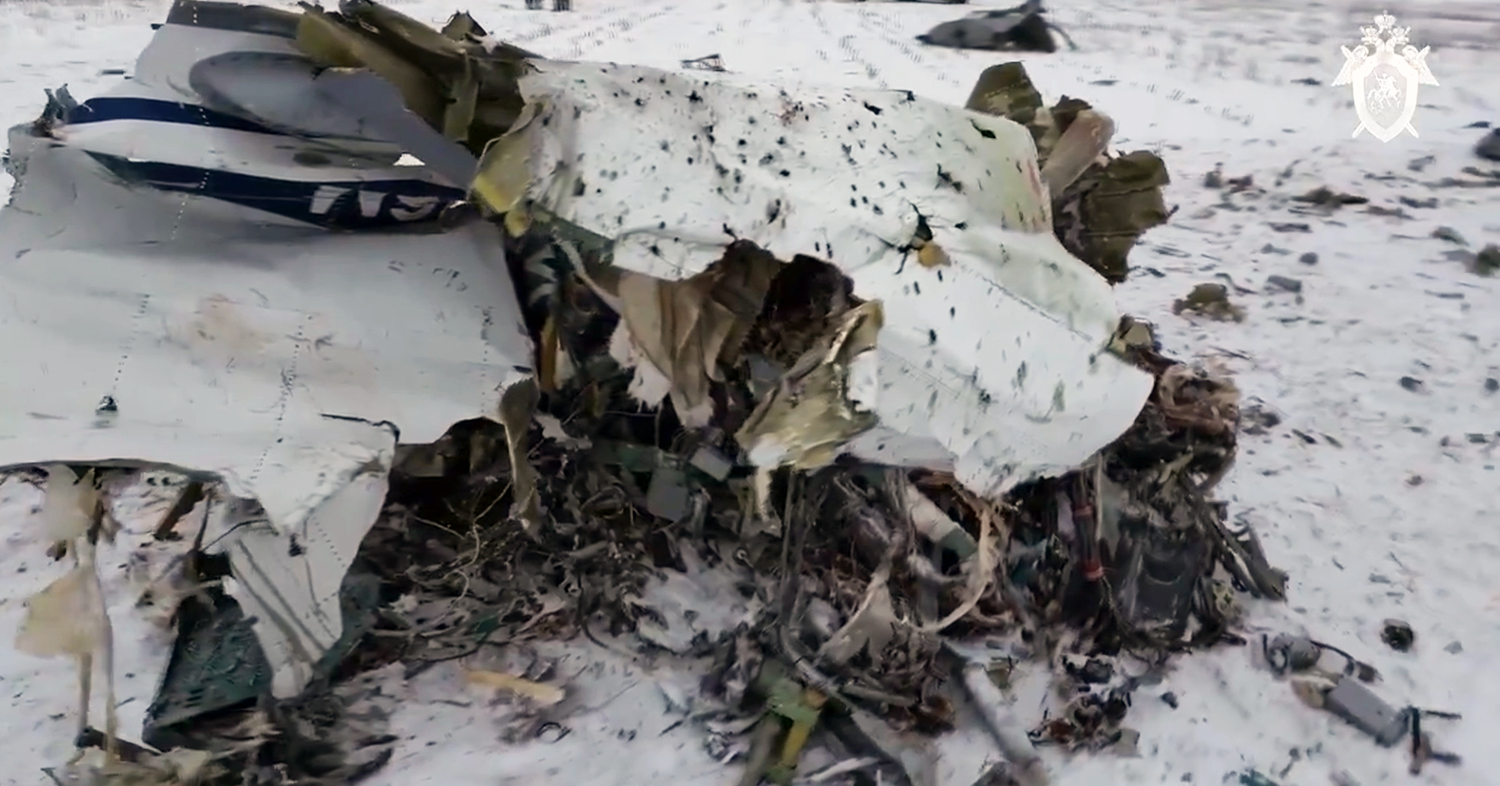
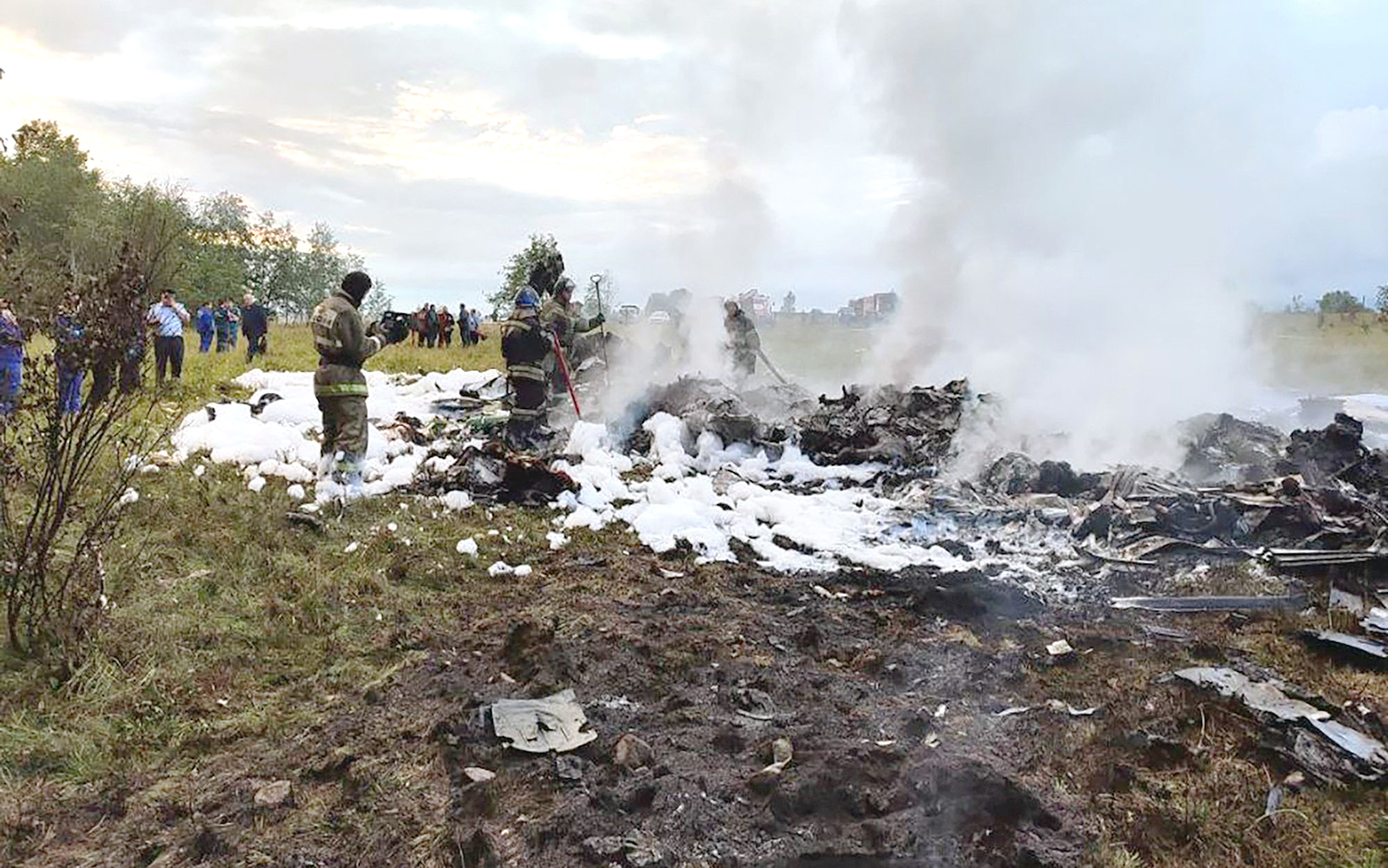
The airplane departed Moscow-Chkalovsky Airport on a flight to Belgorod, carrying 65 Ukrainian soldiers, three accompanying people and six crew members. The crew started the descent to Belgorod Airport when the airplane entered an uncontrolled descent, rolled to the left and eventually crashed in a snow covered field located in Yablonovo, about 55 km northeast of Belgorod Airport. The airplane disintegrated on impact and all 74 occupants were killed. The exact circumstances of the accident remains unclear as Russian Authorities claim that the airplane has been shot down, by error or voluntarily, by a Ukrainian missile. The 65 Ukrainian soldiers were transferred to Belgorod as part of a prisoner exchange program.
Crew:
Stanislav Bezzubkin, pilot,
Alexey Vysokin, copilot,
Andrey Piluev, flight engineer,
Sergey Zhitenev, technician,
Igor Sablinsky, radio operator.

Crash of a Quest Kodiak 100 in Lorida

Date & Time: Jan 19, 2024 at 1713 LT
Type of aircraft:
Operator:
Registration:
N5799
Flight Type:
Survivors:
Yes
Schedule:
LaBelle – Lakeport
MSN:
100-0277
YOM:
2019
Crew on board:
1
Crew fatalities:
Pax on board:
4
Pax fatalities:
Other fatalities:
Total fatalities:
0
Captain / Total flying hours:
80
Captain / Total hours on type:
80.00
Circumstances:
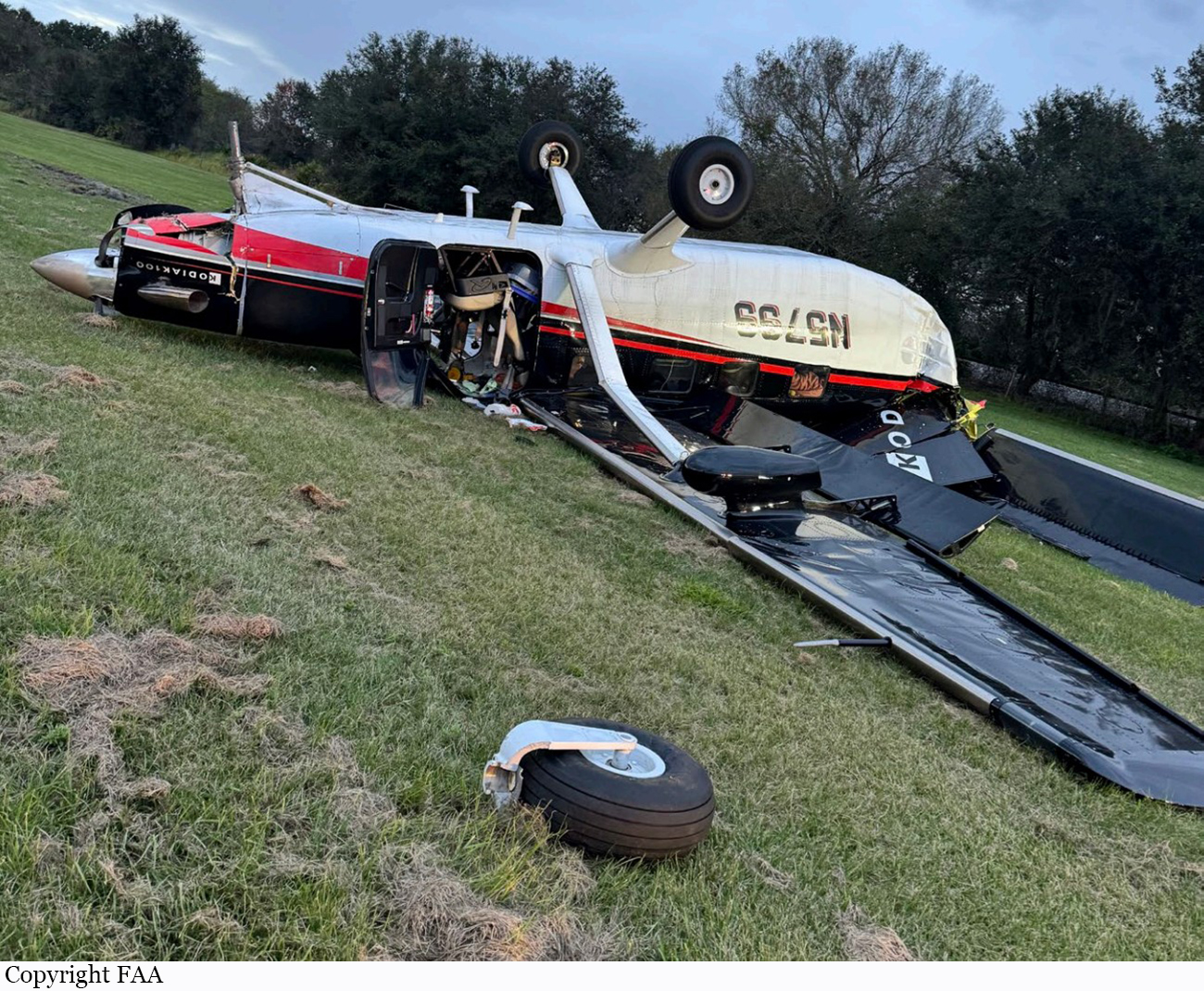
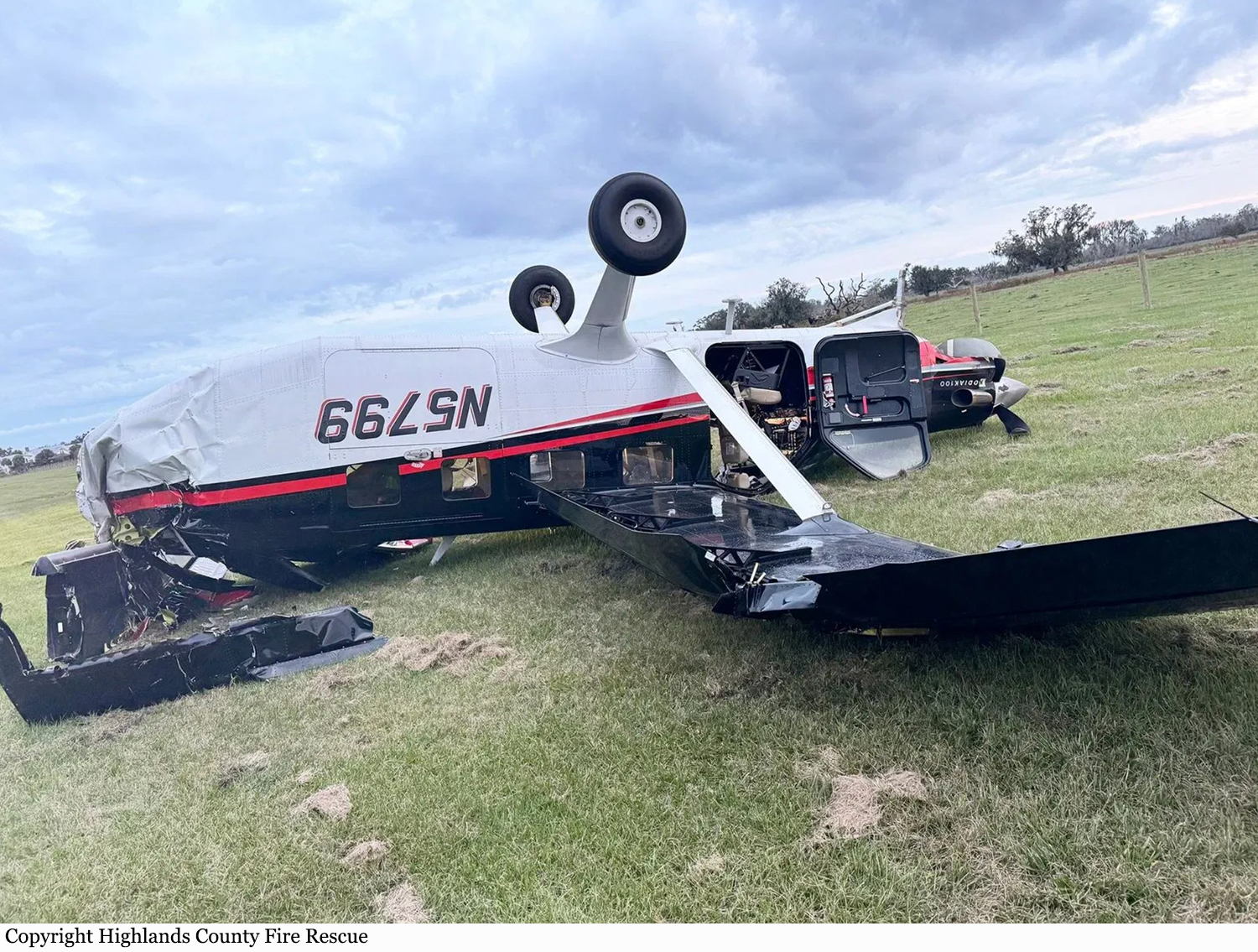
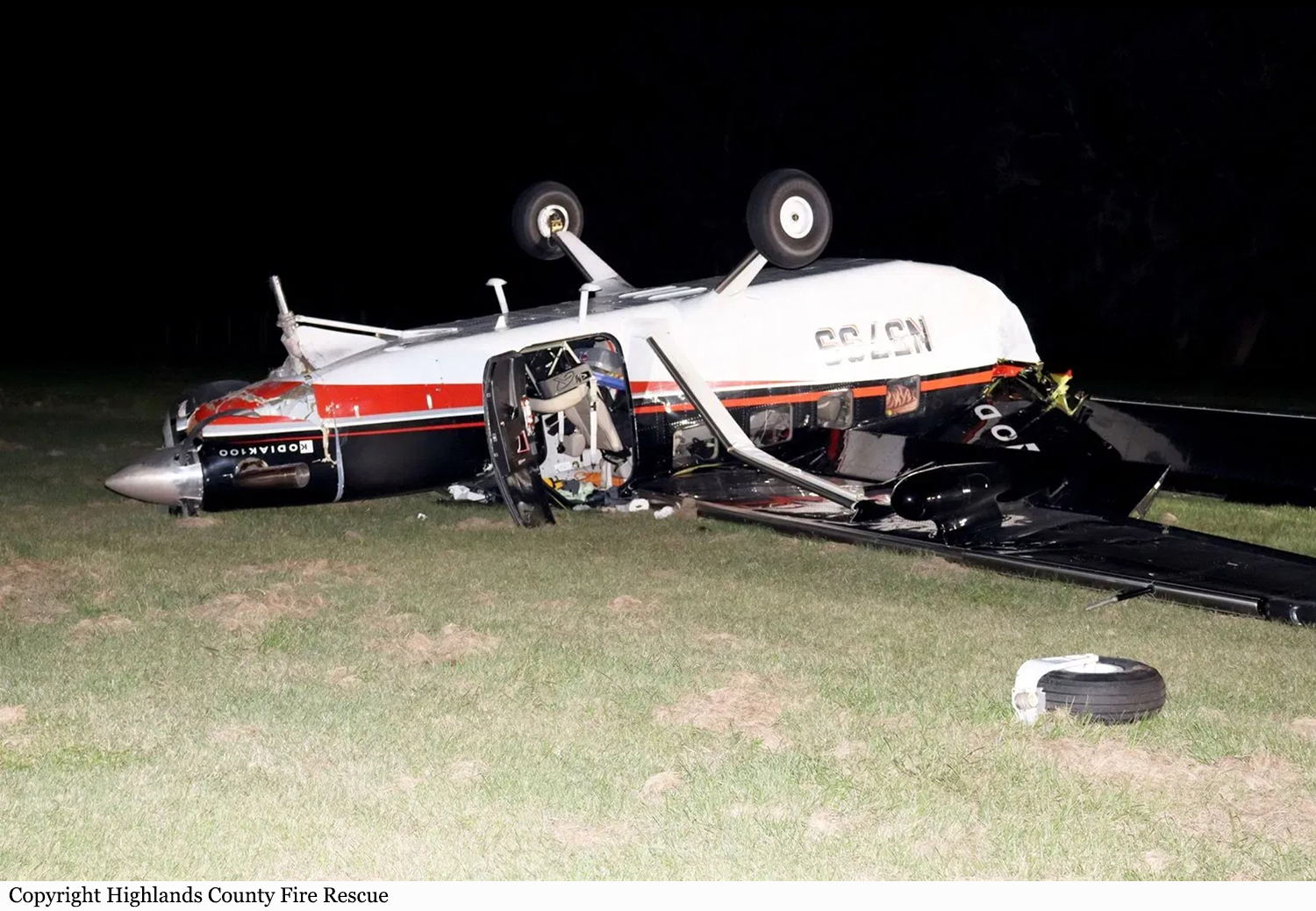
The pilot reported, “upon touchdown, the plane jumped back up as I reduced power all the way back.” He said that the airplane bounced twice on the grass runway, resulting in the nose wheel separating from the airplane. Subsequently, the nose landing gear strut dug into the ground, and the airplane nosed over. The airplane’s fuselage, wings, and empennage were substantially damaged. The pilot reported that there were no preimpact mechanical malfunctions or failures of the airplane that would have precluded normal operation.
Probable cause:
The improper recovery from a bounced landing, which resulted in a hard landing and subsequent noseover.
Final Report:

Crash of a Pilatus PC-12/45 near San Angelo: 2 killed

Date & Time: Dec 14, 2023 at 1318 LT
Type of aircraft:
Operator:
Registration:
N188PC
Flight Type:
Survivors:
No
Schedule:
Jacksonville – San Angelo
MSN:
188
YOM:
1997
Crew on board:
1
Crew fatalities:
Pax on board:
1
Pax fatalities:
Other fatalities:
Total fatalities:
2
Circumstances:
While on final approach to San Angelo-Mathis Field, the single engine airplane entered a rapid descent with a rate of 5,058 feet per minute then crashed in an open field located about 12 km south of the airport. The airplane was totally destroyed and both occupants were killed.

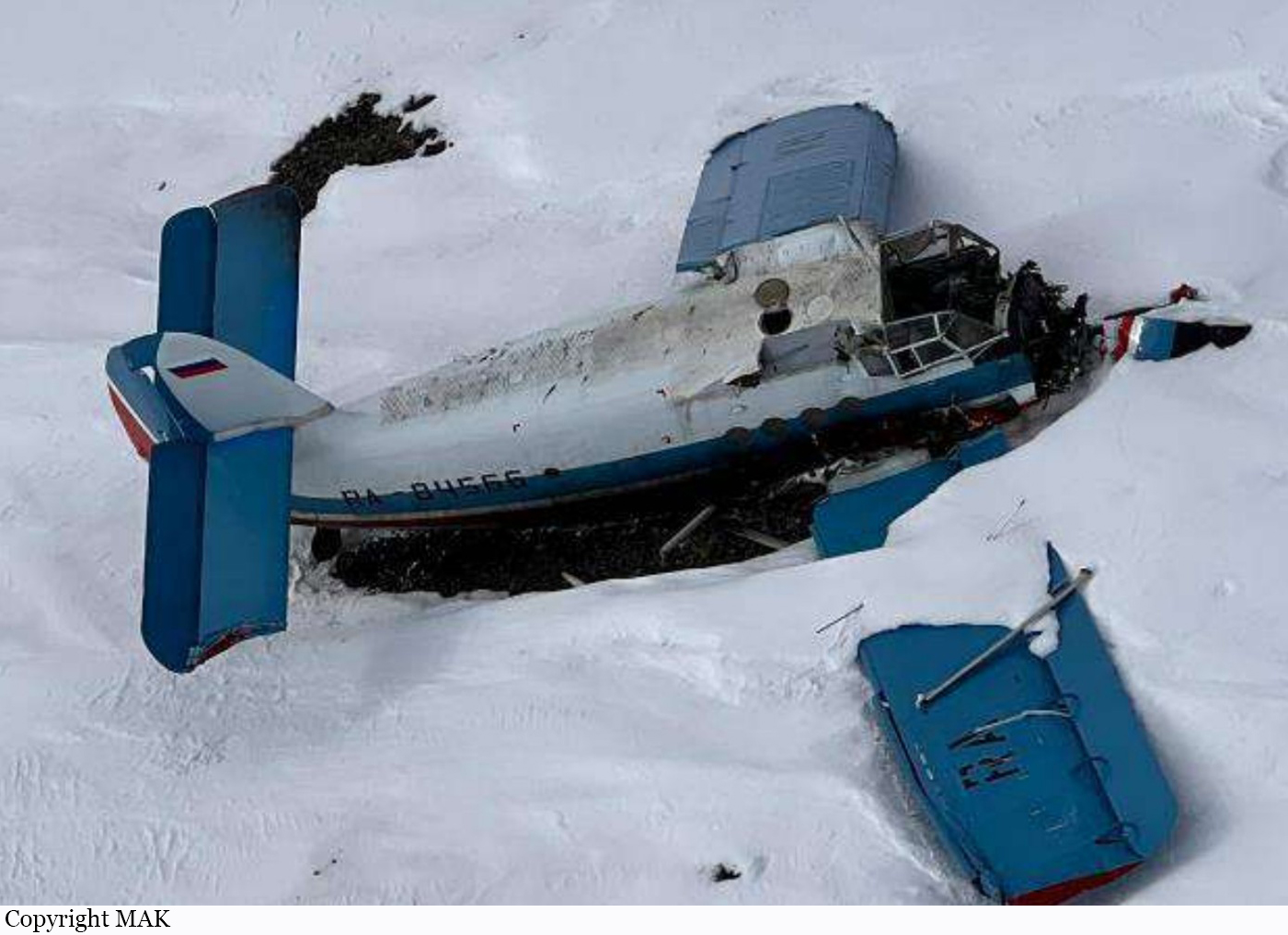
Crash of a PZL-Mielec AN-2R near Polyarny

Date & Time: Nov 10, 2023 at 1242 LT
Type of aircraft:
Operator:
Registration:
RA-84566
Flight Phase:
Flight Type:
Survivors:
Yes
Schedule:
Pevek - Polyarny
MSN:
1G189-33
YOM:
1980
Country:
Region:
Crew on board:
1
Crew fatalities:
Pax on board:
2
Pax fatalities:
Other fatalities:
Total fatalities:
0
Captain / Total flying hours:
7978
Captain / Total hours on type:
851.00
Aircraft flight hours:
345
Circumstances:
The single engine airplane departed Pevek on a cargo flight to Polyarny, carrying two passengers, one pilot and a load of 150 kg of various goods. Approaching the destination, weather conditions deteriorated with heavy rain falls. In limited visibility, the airplane impacted the ground and crashed in the snow covered tundra few km from Polyarny. The wreckage was found few hours later and all three occupants were injured, the captain seriously. The airplane was a TR-301, a version of the AN-2 without the lower wings. Modification were performed by Tekhnoregion under MSN ТR301.21.004.
Probable cause:
The collision with a mountainside occurred in a mountainous area during daylight under Instrument Meteorological Conditions (IMC) that did not permit Visual Flight Rules (VFR) operations, as a result of the pilot-in-command (PIC) losing visual contact with the ground.
The following contributing factors were identified:
- The decision by the PIC to proceed with the flight despite forecasted meteorological conditions along the route and at the landing site that did not permit VFR operations (due to heavy precipitation).
- The failure of the PIC to take appropriate measures to avoid an hazardous area when signs of dangerous meteorological phenomenons became evident during the flight.
- Conducting the flight in violation of the aircraft's operational limitations under conditions unsuitable for VFR.
- The PIC's failure to make a timely decision to return to the departure airport or divert to an alternate airport when weather conditions deteriorated to levels below the minimums established for VFR operations.
Final Report:

Crash of a Rockwell Gulfstream 695A Jetprop 1000 near Cloncurry: 3 killed

Date & Time: Nov 4, 2023 at 1430 LT
Operator:

Registration:
VH-HPY
Flight Phase:
Flight Type:
Survivors:
No
Schedule:
Toowoomba - Mount Isa
MSN:
96051
YOM:
1982
Flight number:
Birddog 370
Country:
Region:
Crew on board:
1
Crew fatalities:
Pax on board:
2
Pax fatalities:
Other fatalities:
Total fatalities:
3
Captain / Total flying hours:
4900
Captain / Total hours on type:
102.00
Aircraft flight hours:
7566
Circumstances:
On the morning of 4 November 2023, a Gulfstream 695A, registered VH-HPY, was being operated by AGAIR on an instrument flight rules flight from Toowoomba to Mount Isa, Queensland. On board the aircraft were the pilot and 2 camera operators. The purpose of the flight was to conduct line scanning of fire zones located north of Mount Isa. About 1 hour and 50 minutes into the flight, while the aircraft was in cruise at flight level 280, air traffic control (ATC) lost radio contact with the pilot. Over the following 30 minutes, ATC made multiple attempts to re-establish contact, including using alternate frequencies and relaying messages via other aircraft in the vicinity. VH-HPY was observed diverging from track and ATC declared an uncertainty phase for the aircraft. About 20 minutes later, ATC called the pilot’s mobile telephone, and a brief conversation took place. During the conversation, the pilot’s speech was observed as slow and flat. In response, ATC upgraded the aircraft’s status to an alert phase and initiated their hypoxic pilot emergency procedures. About 10 minutes later, the crew of a nearby aircraft was able to establish contact with the pilot, having been requested to do so by ATC. The alert phase was downgraded to an uncertainty phase and, a short time later, ATC re-established direct contact with the pilot. The uncertainty phase was cancelled 1 minute later. The pilot confirmed that their oxygen system was operating normally, and they were issued a clearance to undertake line scanning north of Mount Isa. Over the following 4 minutes, the pilot repeated the clearance from ATC 4 times, seeming uncertain about the status of the clearance. The radio recordings during this period indicate that the pilot’s rate and volume of speech had substantially lowered from earlier communications and was worsening. The pilot’s final radio transmission displayed the slowest speaking rate of all their communications during the flight and contained stuttering and operational mistakes. Air traffic control did not attempt to re-establish contact with the pilot until about 18 minutes later, however no further responses from the pilot were received. A short time later, the aircraft departed controlled flight, initially entering a descending anticlockwise turn with an increasing rate of descent. At about 10,500 ft, the aircraft likely transitioned into an aerodynamic spin, with a subsequent average rate of descent of about 13,500 ft/min. The aircraft collided with terrain 55 km south-east of Cloncurry. The 3 occupants were fatally injured, and the aircraft was destroyed by impact forces and a fuel-fed post-impact fire.
Probable cause:
Contributing factors
- The pilot's ability to safely operate the aircraft was almost certainly significantly degraded by the onset of altitude hypoxia.
- While in cruise at flight level 280, both power levers were probably reduced without an appropriate descent rate being initiated, resulting in a progressive reduction of airspeed.
- The aircraft entered a descending anticlockwise turn with an increasing rate of descent. At about 10,500 ft, control input(s) were almost certainly made, probably an attempt to recover, that transitioned the aircraft from a high-speed descent to a spin condition that was likely unrecoverable and which continued until the impact with terrain.
- The pilot had a normalized practice of operating VH-HPY with a cabin altitude that required the use of supplemental oxygen. These flights were conducted without access to a suitable oxygen supply, significantly increasing the risk of altitude hypoxia induced incapacitation.
- The aircraft's pressurization system probably did not attain the required cabin altitude when operating at flight level 280 during the accident flight. The pilot probably knowingly continued the flight with a cabin altitude that required the use of supplemental oxygen, without access to a suitable oxygen supply.
- The AGAIR aircraft VH-HPY pressurization system could not reliably attain the required cabin altitude during flight due to a known, long-term, unresolved intermittent defect. AGAIR management personnel were aware of the defect and, through a combination of inaction, encouragement and, in some instances direct involvement, permitted the aircraft to continue operations at an excessive cabin altitude. (Safety issue)
- AGAIR management exercised ineffective operational control over the line scanning activities. As a result, the ongoing intermittent pressurization defect was not formally recorded, the issues with the aircraft were not communicated to the AGAIR safety manager, and the hazardous practice of operating the aircraft at a cabin altitude that required the use of supplemental oxygen, without access to a suitable oxygen supply, was allowed to continue. (Safety issue)
- The AGAIR head of flying operations did not communicate critical safety information about the known intermittent pressurization defect on VH-HPY when they were phoned by air traffic control about concerns that the pilot may be impacted by hypoxia.
- After being told by the pilot that operations were normal, controllers likely reduced their vigilance about hypoxia and did not re-identify the possibility of hypoxia during the subsequent progressive deterioration of the pilot’s speech.
Other factors that increased risk:
- AGAIR Gulfstream 690 and 695 aircraft were operated with known defects without being recorded on the aircraft’s maintenance releases, likely as a routine practice. For VH-HPY, the absence of documented historical information limited the ability to assess the operational impact of the pressurization defect and the effectiveness of maintenance rectification activities. (Safety issue)
- The Airservices Australia hypoxic pilot emergency checklist did not contain guidance on ceasing the emergency response. This increased the risk that a controller may inappropriately downgrade the emergency response during a developing hypoxic scenario. (Safety issue)
Other finding:
- A 2019 Civil Aviation Safety Authority surveillance event of AGAIR triggered by concerns reported by an AGAIR pilot, including delayed rectification of airworthiness issues, did not include a crosscheck of maintenance releases against the aircraft logbooks, which limited the surveillance team’s ability to determine whether any non-reporting and improper deferral of defects had been taking place at that time.
Final Report:


Crash of a Pilatus PC-6/B2-H4 Turbo Porter in Breu: 1killed

Date & Time: Oct 29, 2023 at 1100 LT
Operator:
Registration:
OB-1600
Flight Type:
Survivors:
Yes
Schedule:
Pucallpa – Breu
MSN:
789
YOM:
1977
Location:
Country:
Crew on board:
2
Crew fatalities:
Pax on board:
0
Pax fatalities:
Other fatalities:
Total fatalities:
1
Circumstances:
The single engine airplane departed Pucallpa-Captain David Abensur Rengifo Airport around 1000LT on a cargo flight to Breu with two pilots on board. On approach to Breu-Tipishsa Airport, the airplane crashed in unknown circumstances in a wooded area located about 4 km northwest of Breu. The captain was killed and the copilot was injured.

Crash of a Piper PA-46-310P Malibu JetProp DLX in Pierre: 1 killed

Date & Time: Oct 23, 2023 at 1611 LT
Registration:
N92884
Flight Phase:
Flight Type:
Survivors:
Yes
Schedule:
Pierre – Steamboat Springs
MSN:
46-36107
YOM:
1997
Crew on board:
1
Crew fatalities:
Pax on board:
1
Pax fatalities:
Other fatalities:
Total fatalities:
1
Captain / Total flying hours:
2810
Captain / Total hours on type:
680.00
Aircraft flight hours:
3653
Circumstances:
The pilot reported that before takeoff on the cross-country flight, the airplane contained 100 gallons of fuel, with 11 gallons in the header fuel tank, and the airplane’s automatic fuel transfer system was configured as per the checklist. No anomalies were noted during the engine start, takeoff, and initial climb. About 7 minutes into the flight and climbing through 12,000 ft mean sea level (msl), the engine sustained an abrupt loss of power that was confirmed by the loss of torque and engine compressor turbine rpm (Ng) speed. The pilot noted no cockpit warning or abnormal indications before the loss of engine power. The pilot declared an emergency and then executed a 180° turn back to the departure airport. The pilot attempted two engine restarts, and both were unsuccessful. Unable to make it back to the airport, the pilot executed an off airport forced landing. During the forced landing, the airplane sustained substantial damage to the fuselage and both wings. A postaccident examination of the airframe, fuel system components, and functional engine test revealed no evidence of mechanical malfunctions or failures that would have precluded normal operation. The fuel transfer pump switch was found in the manual position. The engine’s fuel was provided by the airframe header tank. Avionics data indicated that during the short flight, the header fuel tank quantity consistently decreased, and the airplane’s automatic fuel system did not continually resupply fuel to the header tank. Based on the available data, a functional engine test, and functional testing of the airplane’s fuel system, it is likely the pilot improperly configured the airplane’s fuel transfer system, which prevented the header fuel tank from automatically refilling during the flight and resulted in fuel starvation and total loss of engine power. Although the pilot reported that he had configured the airplane’s automatic fuel transfer system per the checklist, it is likely that the fuel transfer switch was in the manual or OFF position during the flight. In addition, the pilot did not properly monitor the header tank’s fuel quantity.
Probable cause:
The total loss of engine power due to fuel starvation as a result of the pilot’s improper configuration of the automatic fuel transfer system. Contributing to the accident was the pilot’s failure to adequately monitor the header tank’s fuel quantity.
Final Report:

Crash of a Beechcraft 200 Super King Air in Elk Grove Village

Date & Time: Sep 8, 2023 at 1841 LT
Operator:
Registration:
N220KW
Flight Type:
Survivors:
Yes
Schedule:
Chicago – Waterloo
MSN:
BB-1120
YOM:
1983
Crew on board:
1
Crew fatalities:
Pax on board:
0
Pax fatalities:
Other fatalities:
Total fatalities:
0
Captain / Total flying hours:
3394
Captain / Total hours on type:
156.00
Aircraft flight hours:
9817
Circumstances:
The pilot reported that he had completed a charter flight and departed to pick up new passengers at an airport about 200 nautical miles away. While on approach to the destination airport, the previous passengers notified the pilot that they were ready to be picked up, so the pilot did not land and turned the airplane back toward the departure airport. The pilot climbed to 10,000 ft and noticed the airplane’s fuel burn was high, so he climbed to 16,000 ft. The pilot reported that “everything was routine until about a 3-mile final” to the runway, when the controller asked the pilot to slow to a final approach speed. An airplane was still on the runway, so the controller told the pilot to go around. The pilot told controllers twice that he had minimum fuel available. The pilot continued on a visual approach for the same runway when the right engine lost power followed by the left engine. He feathered both propellers and made a forced landing to a wooded area. The airplane sustained substantial damage to the fuselage, both wings, and the empennage. The pilot reported that there were no preimpact mechanical malfunctions or failures that would have precluded normal operation. The pilot later stated that he was “trying to do too much with too little” fuel and the accident was a result of poor fuel management. Although the controller directed the pilot to go around, the pilot should have recognized the criticality of the minimum fuel situation and landed the airplane.
Probable cause:
The pilot’s improper fuel planning, that resulted in a total loss of engine power due to fuel exhaustion, and a subsequent forced landing. Also causal was the pilot’s decision to go around with minimum fuel.
Final Report:

Crash of a Cessna 207 Skywagon in Mbukula

Date & Time: Aug 26, 2023
Operator:
Registration:
9S-LAL
Flight Phase:
Flight Type:
Survivors:
Yes
Schedule:
Lubumbashi – Kananga
MSN:
207-0320
YOM:
1976
Region:
Crew on board:
1
Crew fatalities:
Pax on board:
1
Pax fatalities:
Other fatalities:
Total fatalities:
0
Circumstances:
The single engine airplane crashed in unknown circumstances in Mbukula while performing a flight from Lubumbashi to Kananga. The crew was supposed to make a stop in Mbukula to deliver fuel cans and chairs to the village chief's home when the accident occurred.

Crash of an Embraer EMB-135BJ Legacy 600 in Kuzhenkino: 10 killed

Date & Time: Aug 23, 2023 at 1715 LT
Operator:
Registration:
RA-02795
Flight Phase:
Flight Type:
Survivors:
No
Schedule:
Moscow - Saint Petersburg
MSN:
145-1008
YOM:
2007
Country:
Region:
Crew on board:
3
Crew fatalities:
Pax on board:
7
Pax fatalities:
Other fatalities:
Total fatalities:
10
Circumstances:
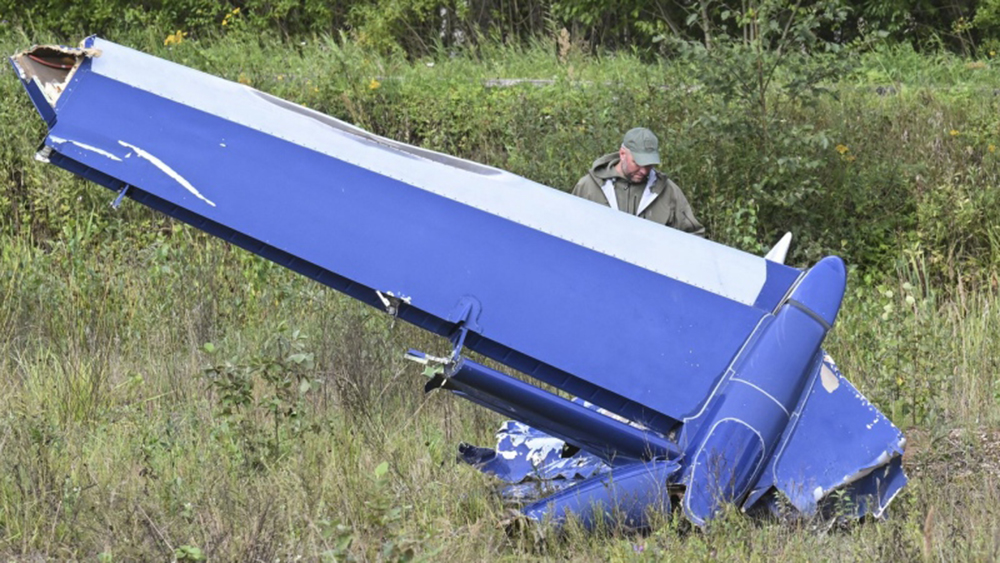
The Legacy departed Moscow-Sheremetyevo Airport shortly before 1645LT on a flight to St Petersburg-Pulkovo, carrying seven passengers and three crew members. According to the radar, while cruising at FL280, it entered an uncontrolled descent and spiraled into the ground until it crashed in an open field located near the village of Kuzhenkino, bursting into flames. The airplane was destroyed and all 10 occupants were killed. The airplane was the property of the Wagner Group owned by Evgueni Viktorovitch Prigozhine who was on board with Dmitry Utkin, n°2 of the group. It is showable on videos that the airplane was emanating white/grey smoke while spiraling to the ground.