Crash of a Britten Norman BN-2A-26 Islander in Monkey Mountain

Date & Time: Jul 6, 2014 at 0950 LT
Type of aircraft:
Registration:
8R-GGY
Survivors:
Yes
Schedule:
Ogle – Omai – Mahdia – Monkey Mountain
MSN:
470
YOM:
1975
Country:
Crew on board:
1
Crew fatalities:
Pax on board:
1
Pax fatalities:
Other fatalities:
Total fatalities:
0
Circumstances:
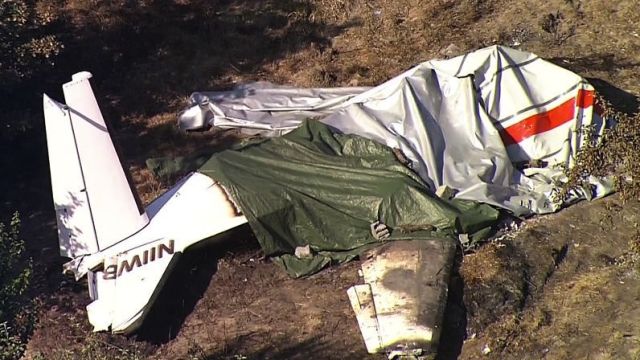
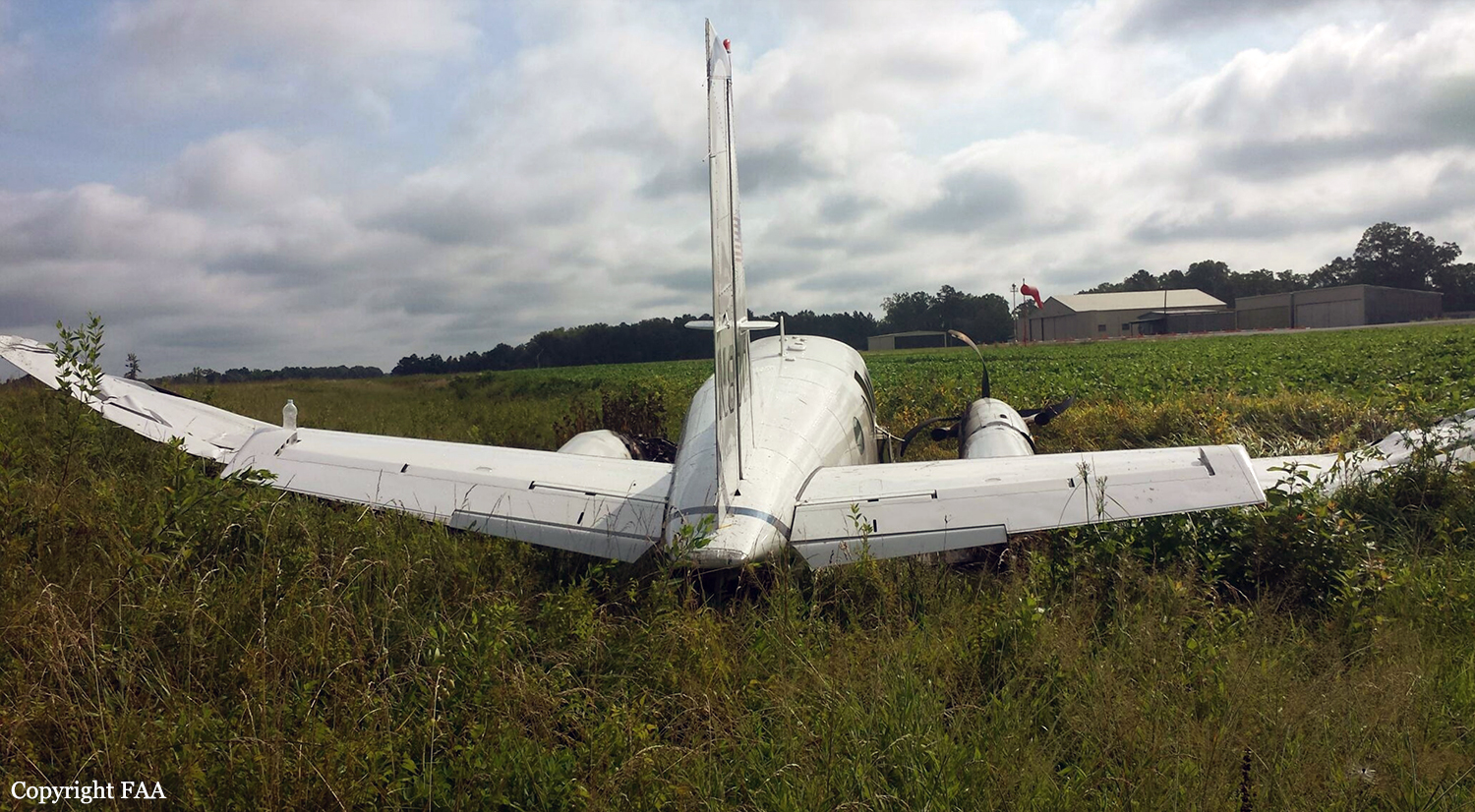
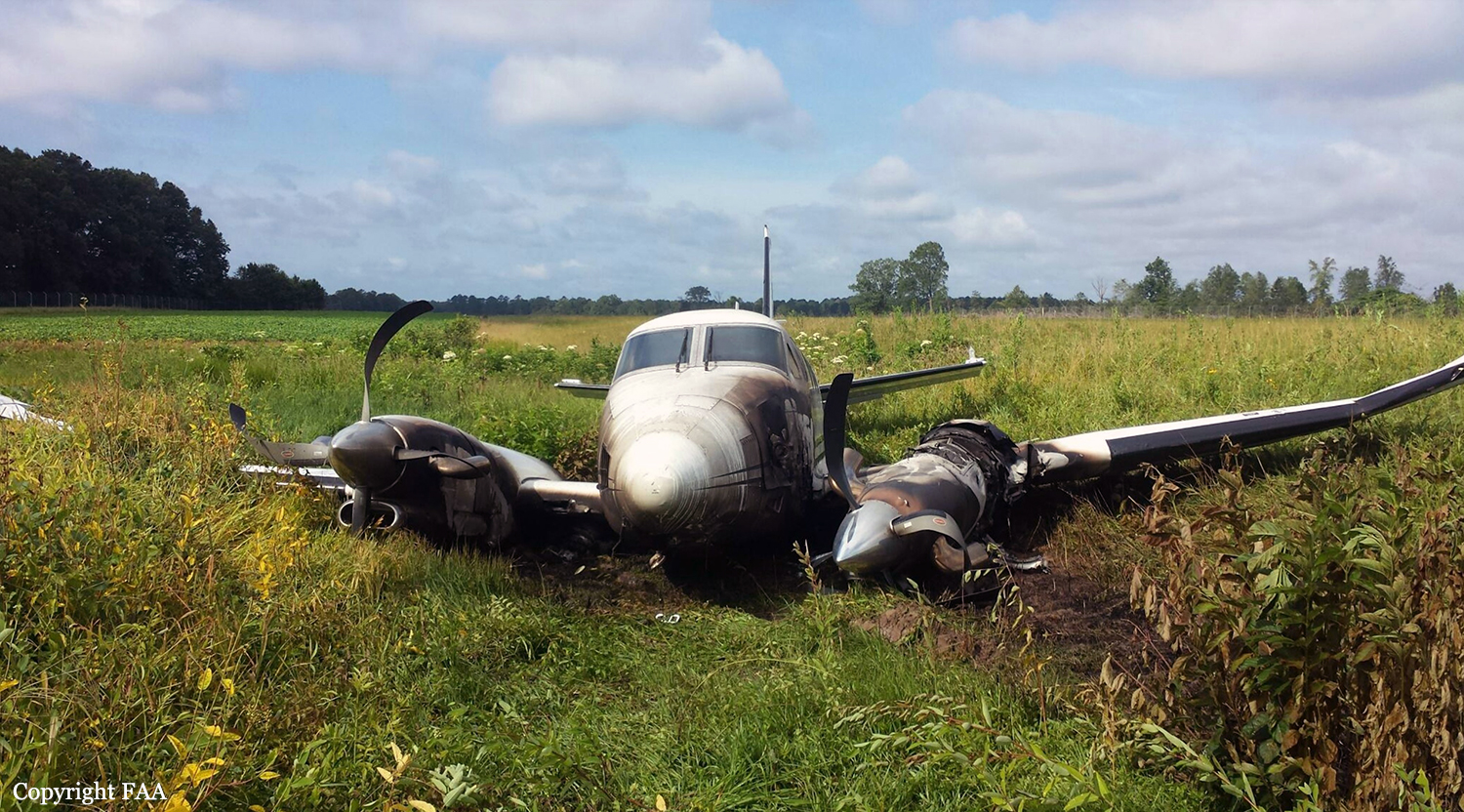
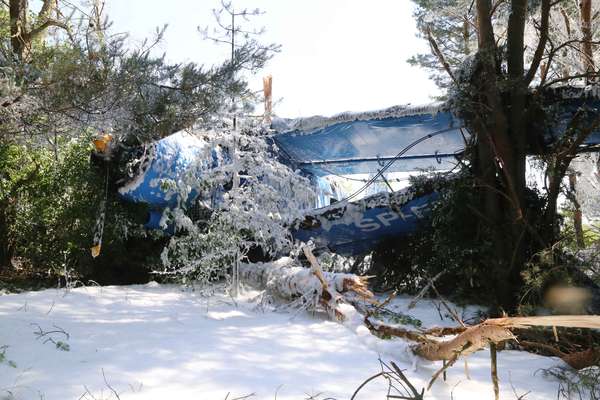
The Authority said the aircraft left the Ogle International Airport earlier in the day and made stops at Omai and Mahdia before heading at Monkey Mountain Airfield with several goods on board. On approach to Monkey Mountain, the plane circled the airstrip several times before landing. Shortly after setting down, it was claimed the aircraft veered off the runway, hit few obstacles and came to rest. While both occupants were uninjured, the aircraft was damaged beyond repair. It appears that weather was poor at the time of the accident with rain and winds and low clouds.
Probable cause:
Guyana Civil Aviation Authority (GCAA) Director General Zulficar Mohamed disclosed that an initial investigation revealed that the Pilot involved in the Monkey Mountain mishap landed short of the runway. As a result, the landing gear of the plane was damaged and from there on, it was difficult to control the 10-seater Islander aircraft. The aircraft subsequently veered off the airstrip causing extensive damage. Mr. Mohamed further stated that the wrecked aircraft is beyond repair, but he was unsure if the operators will attempt to salvage what is left. The aircraft, owned by Domestic Airways, was piloted by Captain Orlando Charles.

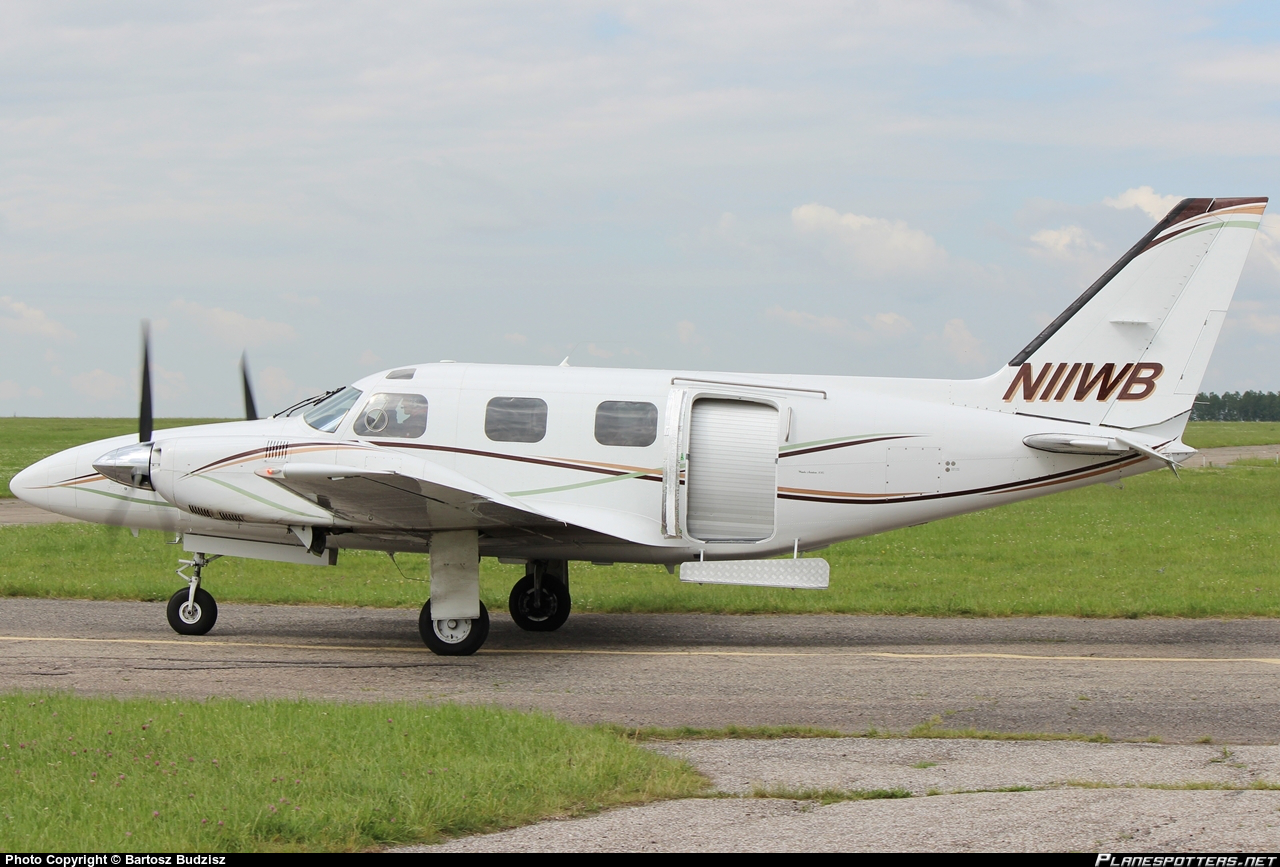
Crash of a Piper PA-31P Pressurized Navajo in Częstochowa: 11 killed

Date & Time: Jul 5, 2014 at 1611 LT
Type of aircraft:
Registration:
N11WB
Flight Phase:
Survivors:
Yes
Schedule:
Częstochowa - Częstochowa
MSN:
31P-7630005
YOM:
1976
Country:
Region:
Crew on board:
1
Crew fatalities:
Pax on board:
11
Pax fatalities:
Other fatalities:
Total fatalities:
11
Captain / Total flying hours:
996
Captain / Total hours on type:
40.00
Circumstances:
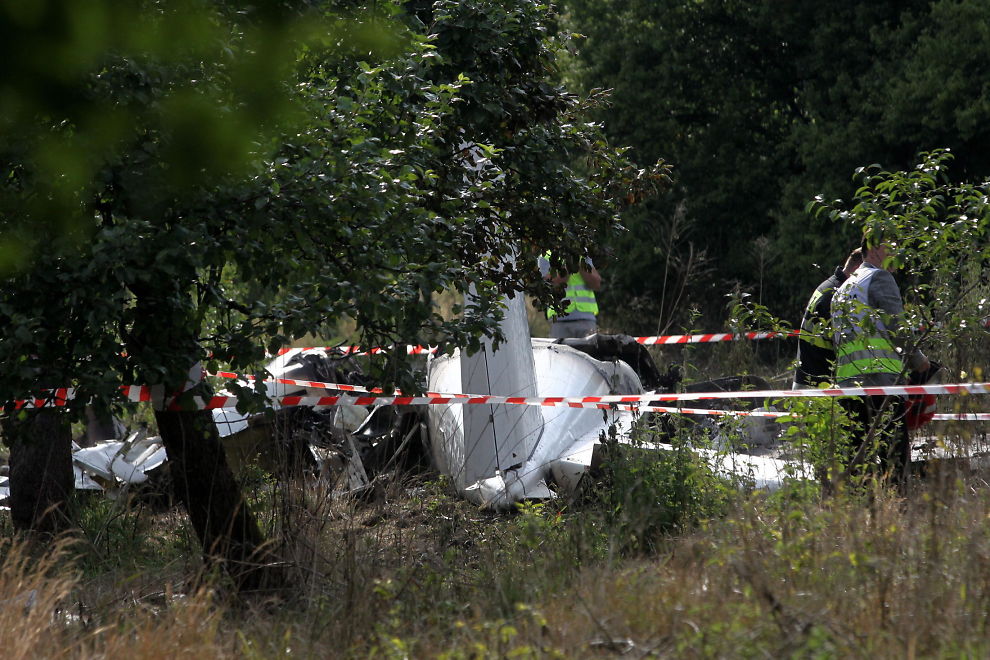
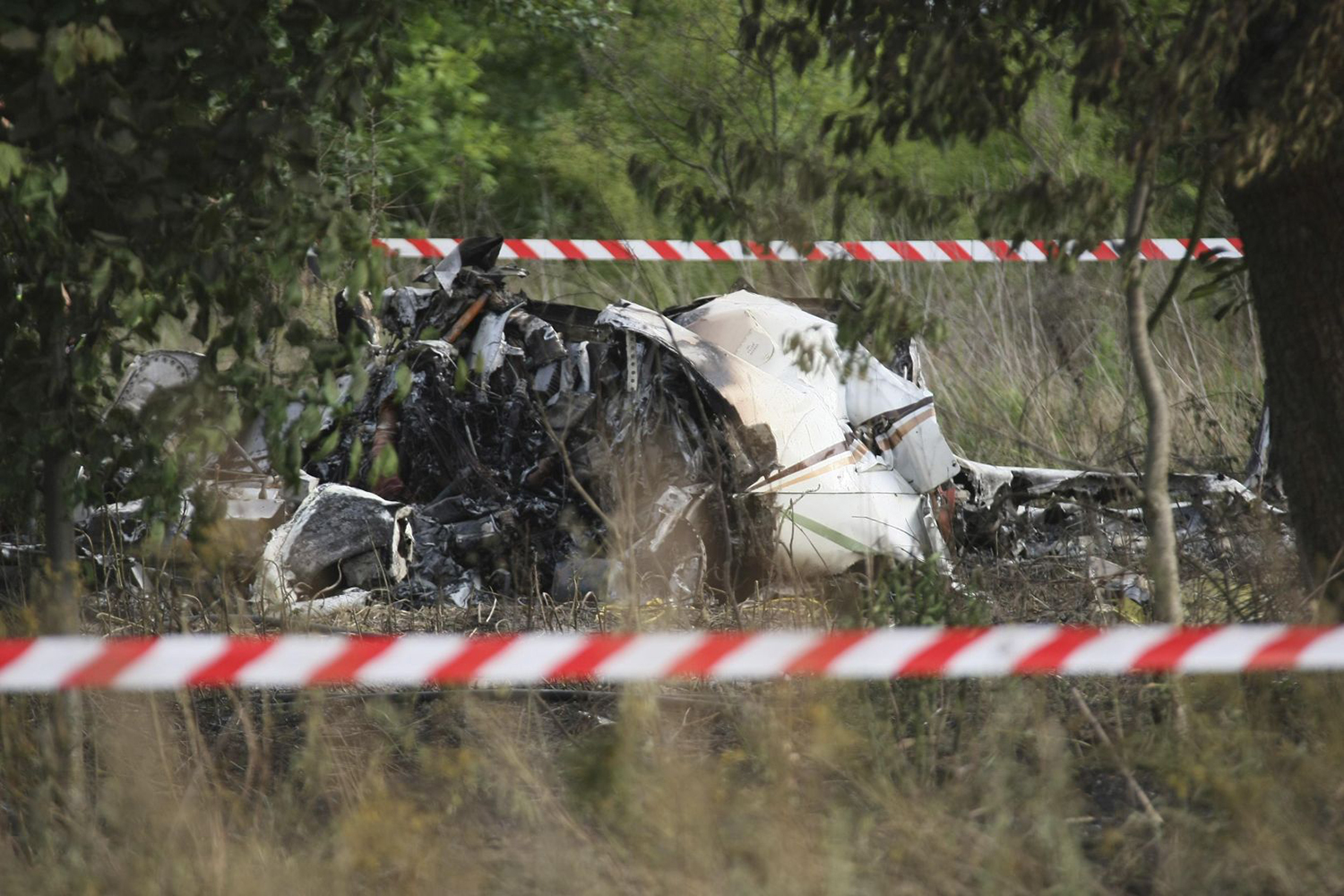
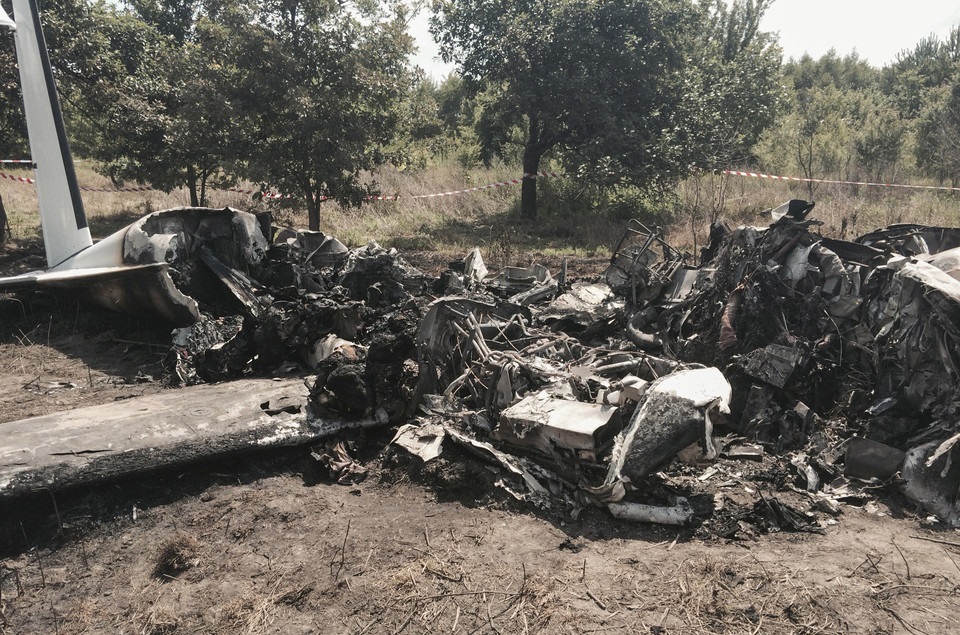
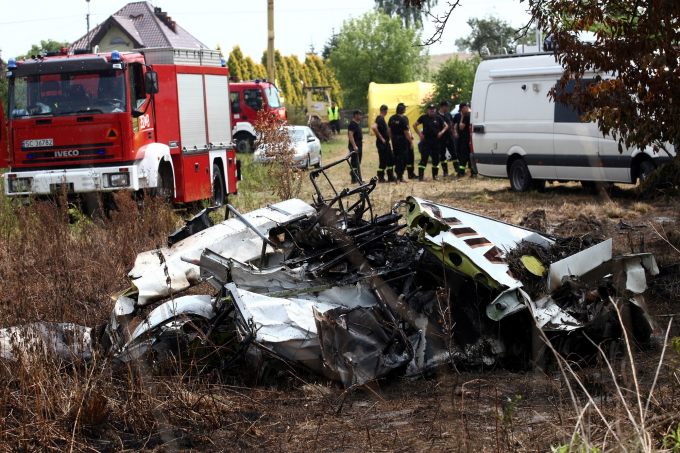
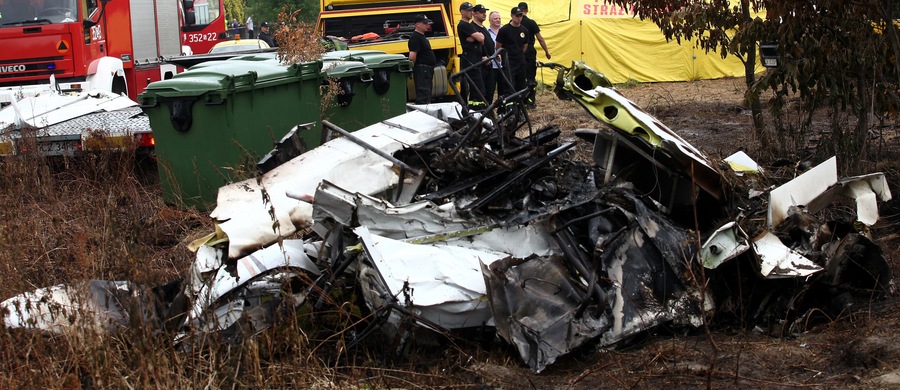
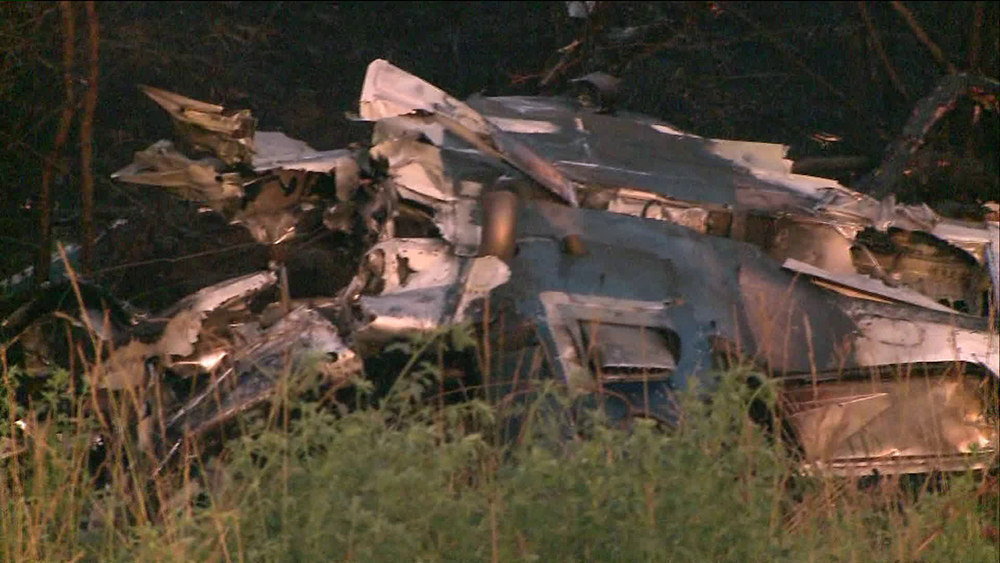
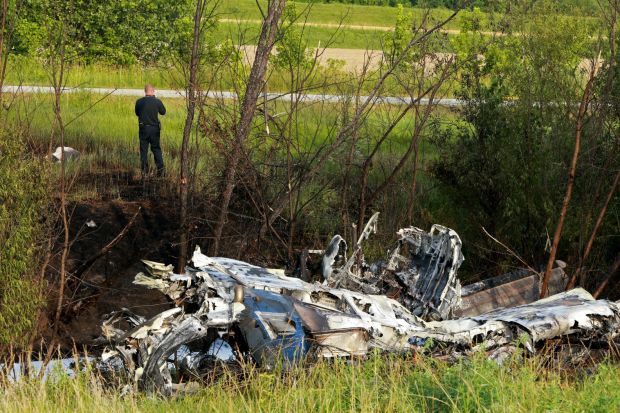
The twin engine aircraft was engaged in a series of skydiving flights at Częstochowa-Rudniki Airport, Silesia. It took off from runway 26C with 11 skydivers and one pilot on board. During initial climb, at an altitude of 100 metres, the pilot encountered technical problems with the engines and elected to make an emergency landing. He informed the passengers about the emergency situation and reduced his altitude when the aircraft rolled to the left to an angle of 70° then stalled and crashed in a wooded area, bursting into flames. The wreckage was found 4,200 metres past the runway end. Three skydivers were seriously injured while 9 other occupants were killed. Few minutes later, two of the survivors died from their injuries.
Probable cause:
The following findings were identified:
- The aircraft was operated without a valid CofA,
- Failure of the left engine during initial climb after the crankshaft failed, causing the malfunction of the propeller that could not be feathered, resulting in an asymmetry that caused the aircraft to enter a stall condition. Damages to the pin clutch connecting the crankshaft to the drive shaft of the right engine transmission could be due to the following causes: an earlier impact of a propeller's blade with an obstacle, in circumstances and time which could not be determined and/or a long-term fatigue process caused by uneven engine operation (one of the cylinders was replaced on the right engine),
- Improper maintenance of the aircraft,
- The left engine was producing low power due to improper operation,
- The fuel in the tanks did not meet the engine manufacturer's requirements,
- The aircraft was modified in violation of its Type Certificate,
- A high ambiant temperature.
Final Report:

Crash of a Cessna 414 Chancellor in Creve Coeur

Date & Time: Jun 26, 2014 at 0457 LT
Type of aircraft:
Registration:
N1552T
Flight Type:
Survivors:
Yes
Schedule:
Creve Cœur – Hopkinsville
MSN:
414-0267
YOM:
1972
Crew on board:
1
Crew fatalities:
Pax on board:
0
Pax fatalities:
Other fatalities:
Total fatalities:
0
Captain / Total flying hours:
775
Captain / Total hours on type:
90.00
Aircraft flight hours:
7626
Circumstances:
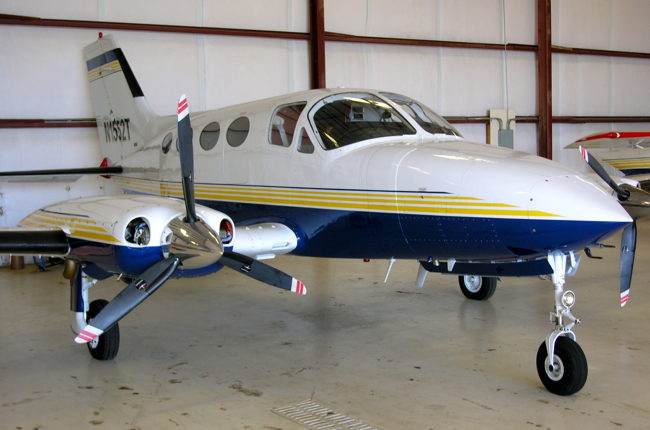
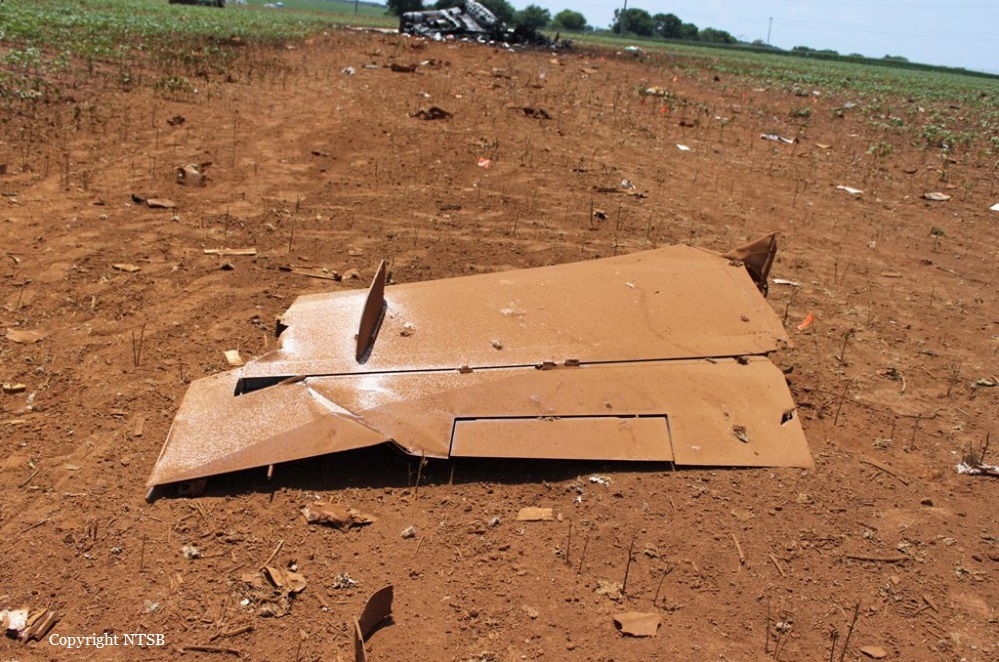
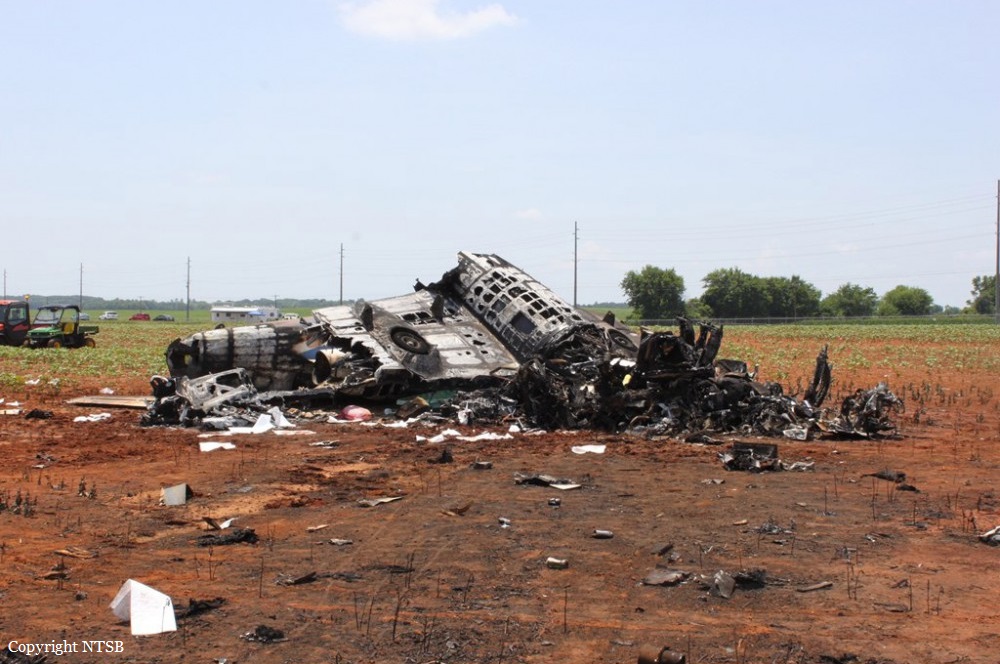
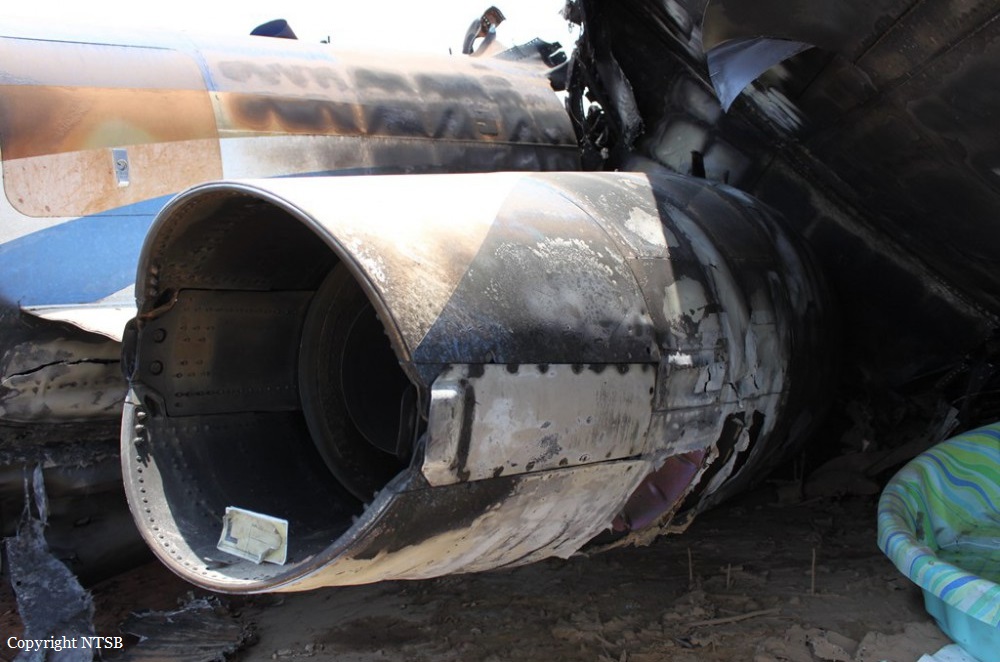
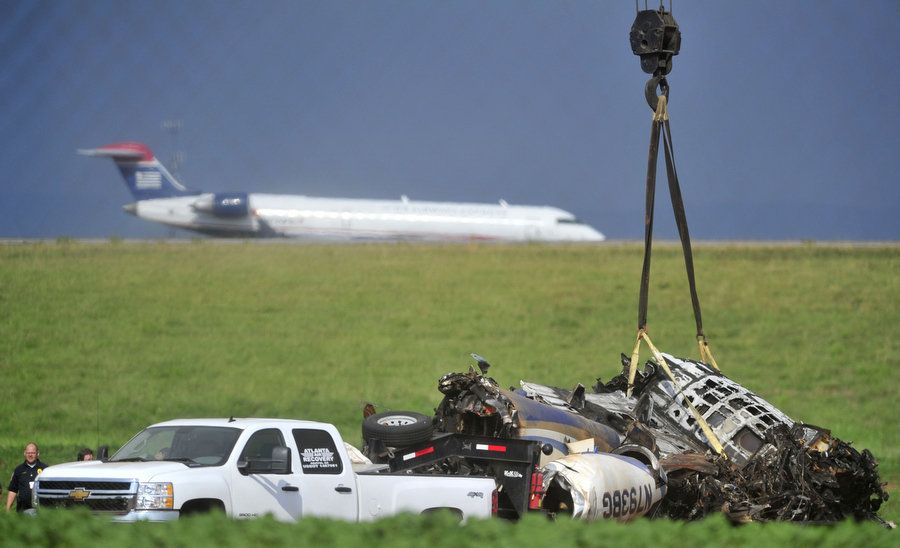
The pilot reported that, shortly after takeoff, the twin-engine airplane's left front baggage door opened. He attempted to return to the airport, but the left engine lost engine power while the airplane was on the downwind leg of the traffic pattern. The airplane subsequently impacted power lines and terrain. An explosion occurred during the impact sequence, and a fire ensued that almost completely consumed the airframe. Tear down examination of the right engine revealed no anomalies. A test run of the left engine revealed no anomalies; however, due to impact and fire damage, it was not possible to fully test or examine the left engine's fuel system. The reason for the left engine’s loss of power could not
be determined.
Probable cause:
The loss of left engine power for reasons that could not be determined due to impact and fire damage.
Final Report:

Crash of a Beechcraft C90A King Air in Houston

Date & Time: Jun 25, 2014 at 0750 LT
Type of aircraft:
Operator:
Registration:
N800MK
Survivors:
Yes
Schedule:
Memphis - Houston
MSN:
LJ-1460
YOM:
1997
Crew on board:
2
Crew fatalities:
Pax on board:
3
Pax fatalities:
Other fatalities:
Total fatalities:
0
Captain / Total flying hours:
2105
Captain / Total hours on type:
223.00
Copilot / Total flying hours:
12000
Copilot / Total hours on type:
700
Aircraft flight hours:
2708
Circumstances:
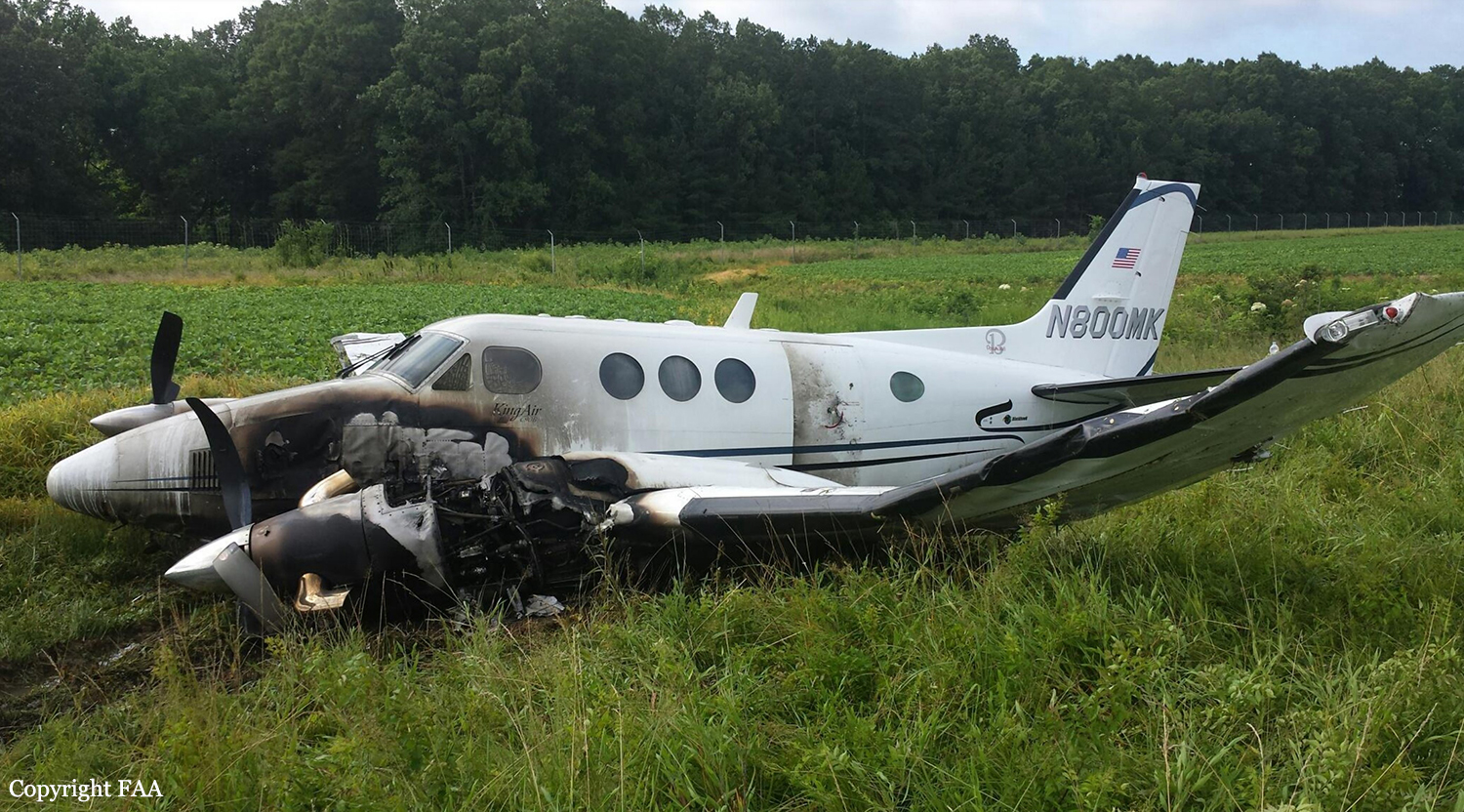
On June 25, 2014, about 0750 central daylight time, a Raytheon Aircraft Company C90A, N800MK, was substantially damaged following a runway excursion during an attempted go-around at Houston, Mississippi (M44). The commercial-rated pilot, co-pilot, and two passengers were not injured, while one passenger received minor injuries. The airplane was
operated by BECS, LLC under the provisions of 14 CFR Part 91, and an instrument flight rules flight plan was filed. Day, visual meteorological conditions prevailed for corporate flight that originated at Memphis, Tennessee (MEM). According to the pilot, who was seated in the left, cockpit seat, he was at the controls and was performing a visual approach to runway 21. Just prior to touchdown, while at 90 knots and with approach flaps extended, the right wing "rose severely and tried to put the airplane into a severe left bank." He recalled that the co-pilot called "wind shear" and "go around." As he applied power, the airplane rolled left again, so he retarded the throttles and allowed the airplane to settle into the grass on the left side of runway 21. The airplane struck a ditch, spun around, and came to rest in the grass, upright. A post-crash fire ensued in the left engine area. The pilot and passengers exited the airplane using the main entry door. The pilot reported no mechanical anomalies with the airplane prior to the accident. The co-pilot reported the following. As they turned onto final, he noticed that the wind "picked up" a little by the wind sock. The final approach was stable, and as the pilot began to flare, he noticed the vertical speed indicator "pegged out." The airplane encountered an unexpected wind shear just above the runway. He called out for a go around. The pilot was doing everything he could to maintain control of the airplane. It was a "jarring" effect when they hit the shear. It felt like the wind was trying to lift the tail and cartwheel them over. He felt that the pilot did a good job of keeping the airplane from flipping over. In his 30,000-plus hours flying airplanes, he has never experienced anything quite like what they experienced with this shear. He has instructed on the King Air and does not feel that the pilot could have done anything different to avoid the accident.
Probable cause:
The National Transportation Safety Board determines the probable cause(s) of this accident to be: The pilot’s failure to maintain a stabilized approach and his subsequent failure to maintain airplane control during the landing flare, which resulted in touchdown off the side of the runway and collision with a ditch.
Final Report:

Crash of an IAI 1124A Westwind II in Huntsville: 3 killed

Date & Time: Jun 18, 2014 at 1424 LT
Type of aircraft:
Registration:
N793BG
Flight Phase:
Flight Type:
Survivors:
No
Schedule:
Huntsville - Huntsville
MSN:
392
YOM:
1983
Crew on board:
3
Crew fatalities:
Pax on board:
0
Pax fatalities:
Other fatalities:
Total fatalities:
3
Captain / Total flying hours:
20200
Captain / Total hours on type:
850.00
Copilot / Total flying hours:
28421
Copilot / Total hours on type:
1816
Aircraft flight hours:
7571
Circumstances:
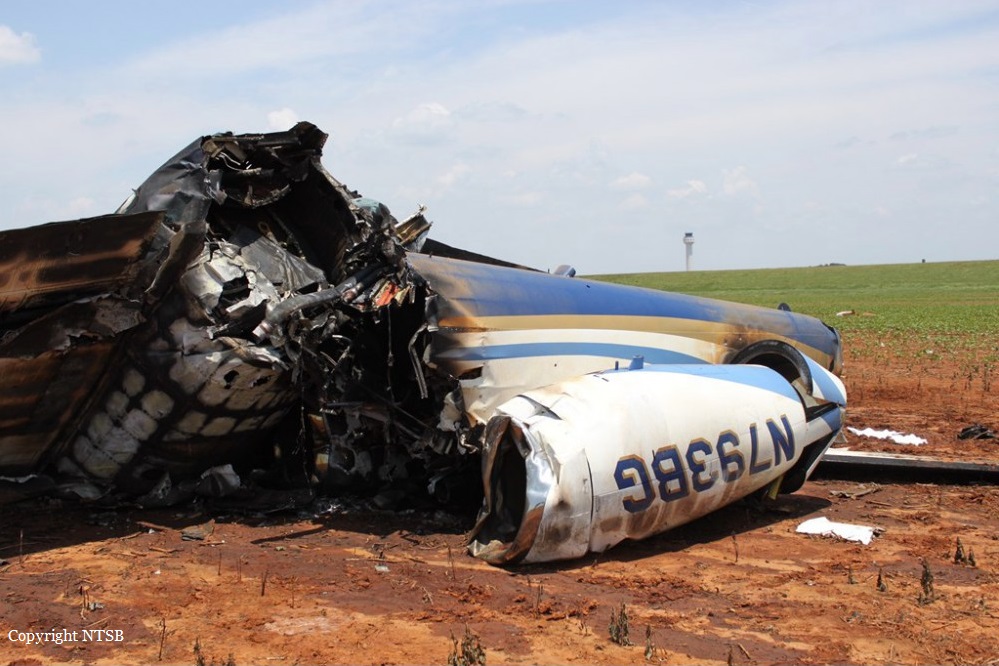
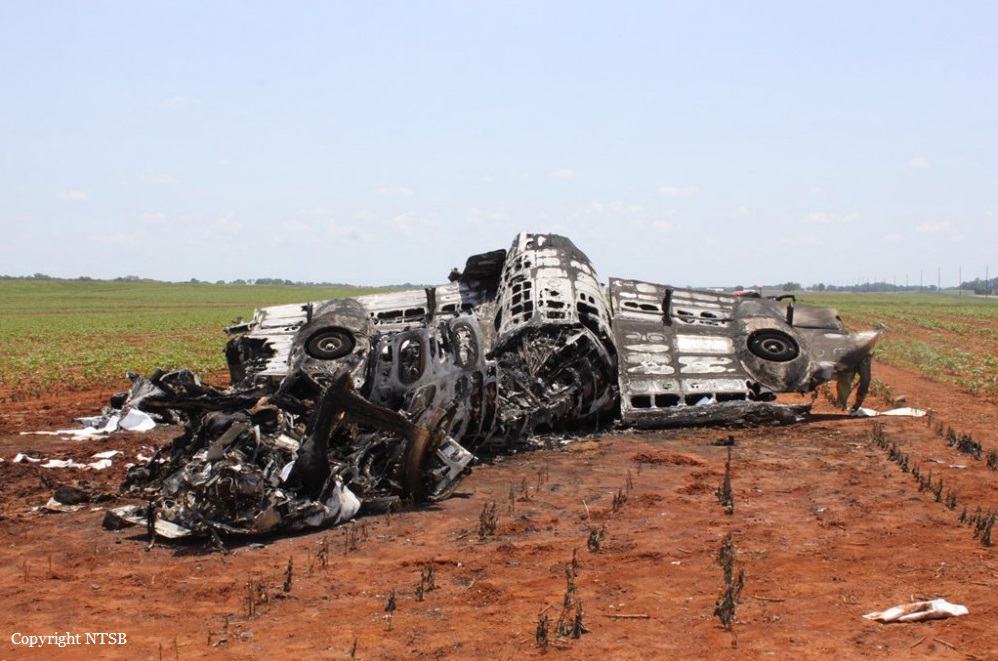
A pilot proficiency examiner (PPE) was using the airplane to conduct a pilot-in-command (PIC) proficiency check for two company pilots. Before the accident flight, one of the two company pilots on board received a PIC proficiency check, which terminated with a full-stop landing and reverse thrust application; no discrepancies with either thrust reverser were discussed by either flight crewmember. The pilot being examined then left the cockpit, and the accident pilot positioned himself in the left front seat while the PPE remained in the right front seat. The flight crew then taxied to the approach end of the runway to begin another flight. Data from the enhanced ground proximity system (EGPWS) revealed that, the flight began the takeoff roll with the flaps retracted, the thrust reversers armed, and both engines stabilized at 96 percent N2. About 2 seconds later, the cockpit voice recorder (CVR) recorded the "V1" call while on the airplane was on the runway; acoustic analysis indicated that the N2 speed of one engine, likely the right, decreased; the N2 speed of the other engine remained constant. This decrease in N2 speed was consistent with the PPE retarding right engine thrust to flight idle with the intent of simulating an engine failure. The takeoff continued, and, while the airplane was in a wings-level climb at an airspeed of 148 knots about 18 ft radar altitude, the CVR recorded the pilot command that the landing gear be retracted. The landing gear remained extended, and, about 1 second after the command to retract the landing gear, or about 3 seconds after becoming airborne, while about 33 ft above the runway and at the highest recorded airspeed of 149 knots, the CVR recorded the beginning of a rattling sound, which was consistent with the deployment of the right thrust reverser, and it continued to the end of the recording. About 1.5 seconds after the rattling sound began, the CVR recorded the PPE asking, "…what happened," which indicates that the deployment was likely not annunciated in the cockpit. The right engine N2 speed continued to gradually decrease, and the airplane rolled slightly left, back to a wings-level position. The airplane continued climbing with the landing gear extended as pitch changes continued to occur. During this time, the flight crew exchanged comments about their lack of understanding about what was occurring. While flying 10 knots above V2 speed with the left engine N2 speed remaining steady and the right engine N2 speed decreasing at a slightly greater rate than previously, the airplane began a right roll with a corresponding steady decrease in airspeed from about 144 knots. About 9 seconds after the original call to retract the landing gear, the CVR recorded the PPE requesting that the landing gear be retracted, which occurred 1 second later. The airplane then continued in the right turn with the airspeed steadily decreasing, and about 11 seconds after the PPE asked "…what happened", the EGPWS sounded a bank angle alert. At that time, the airplane was in a right roll of about 30 degrees, and the airspeed was about 132 knots. The right roll continued to a maximum value of about 39 degrees, which was the last valid bank angle value recorded. The airplane impacted the ground off the right side of the runway in a nose- and right-winglow attitude. The landing gear and flaps were retracted, and there was no evidence of preimpact failure or malfunction of the flight controls for roll, pitch, and yaw; nor was there any evidence of a mechanical failure or malfunction of either engine. A definitive reason for the deployment of the right thrust reverser could not be determined. No previous instances of inadvertent in-flight thrust reverser deployment were documented by the operator of the accident airplane or by the airframe manufacturer for the accident airplane make and model. Certification flight testing of an airplane with the same thrust reverser system determined that the airplane remained controllable with the right thrust reverser deployed and throttle retarder system functioning. The flight testing also included application of a momentary, peak burst of right engine thrust, again with no controllability issues noted. It was also noted that with the installed throttle retarder system, in the event of inadvertent thrust reverser deployment, that the engine's thrust should have been reduced to idle within 4 to 8 seconds. Acoustic analysis of the accident flight indicated that the lowest recorded N2 rpm value was about 84 percent and that the reduction in rpm occurred over a period of about 8.5 seconds, after the right thrust reverser deployed. No determination could be made as to why the throttle retarder system did not reduce the right engine thrust to flight idle as designed. Additionally, no determination could be made as to why the flight crew was not able to maintain directional control of the airplane following deployment of the right thrust reverser. Although the PPE had severe coronary artery disease, which placed him at risk for an acute coronary event that would cause symptoms like chest pain, shortness of breath, or sudden unconsciousness, the CVR recorded no evidence of impairment. Neither the heart disease nor the medications he was taking to treat it would have impaired his judgement or physical functioning. Therefore, it is unlikely any medical condition or substance contributed to the PPE's actions. Additionally, there was no evidence that any medical condition would have impaired judgement or physical functioning of the pilot being examined.
Probable cause:
The flight crew's inability to maintain airplane control during initial climb following deployment of the right thrust reverser for reasons that could not be determined because postaccident examination of the airframe and engine thrust reverser system did not reveal any anomalies. Contributing to the accident was the excessive thrust from the right engine with the thrust reverser deployed for reasons that could not be determined during postaccident examinations and testing.
Final Report:

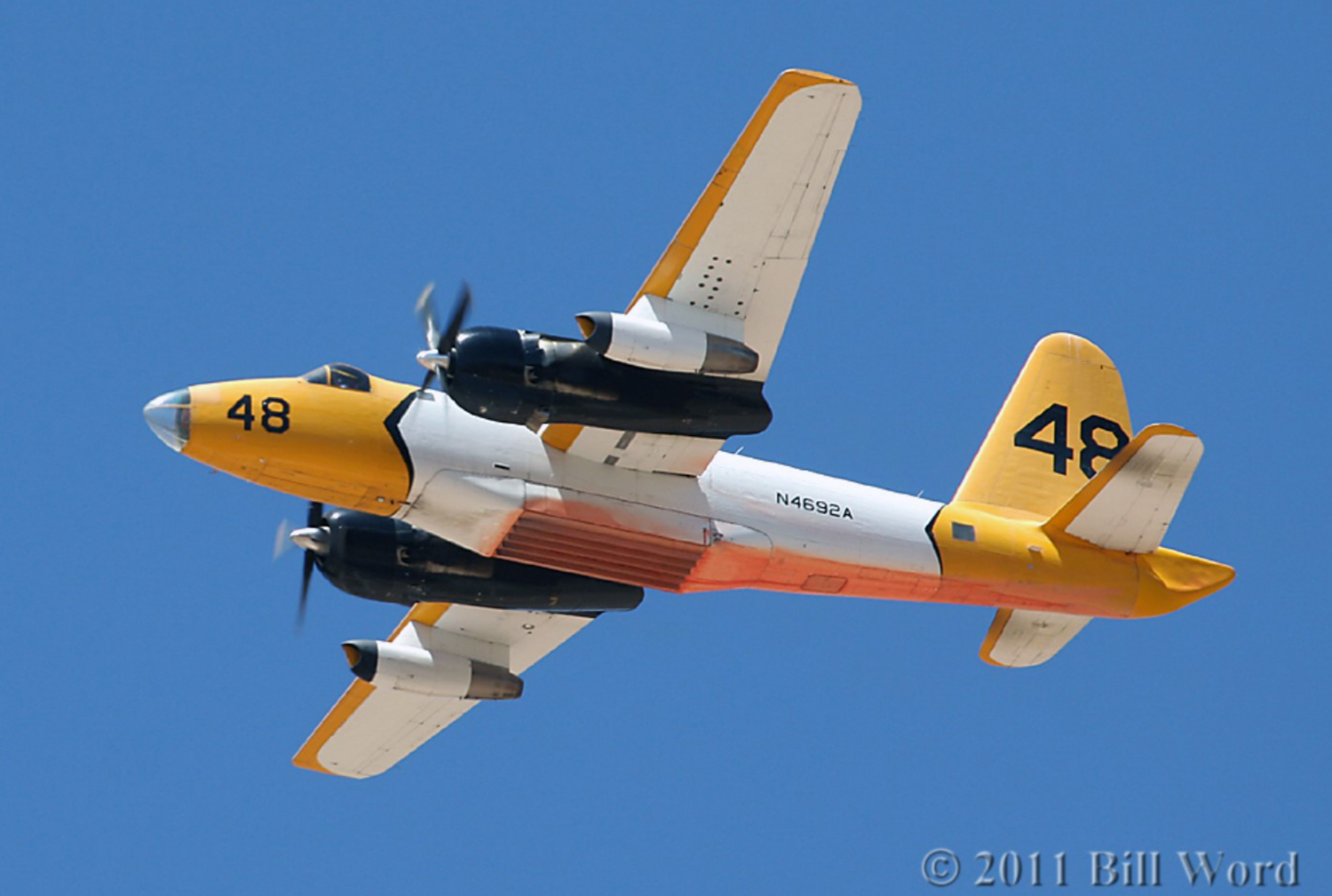
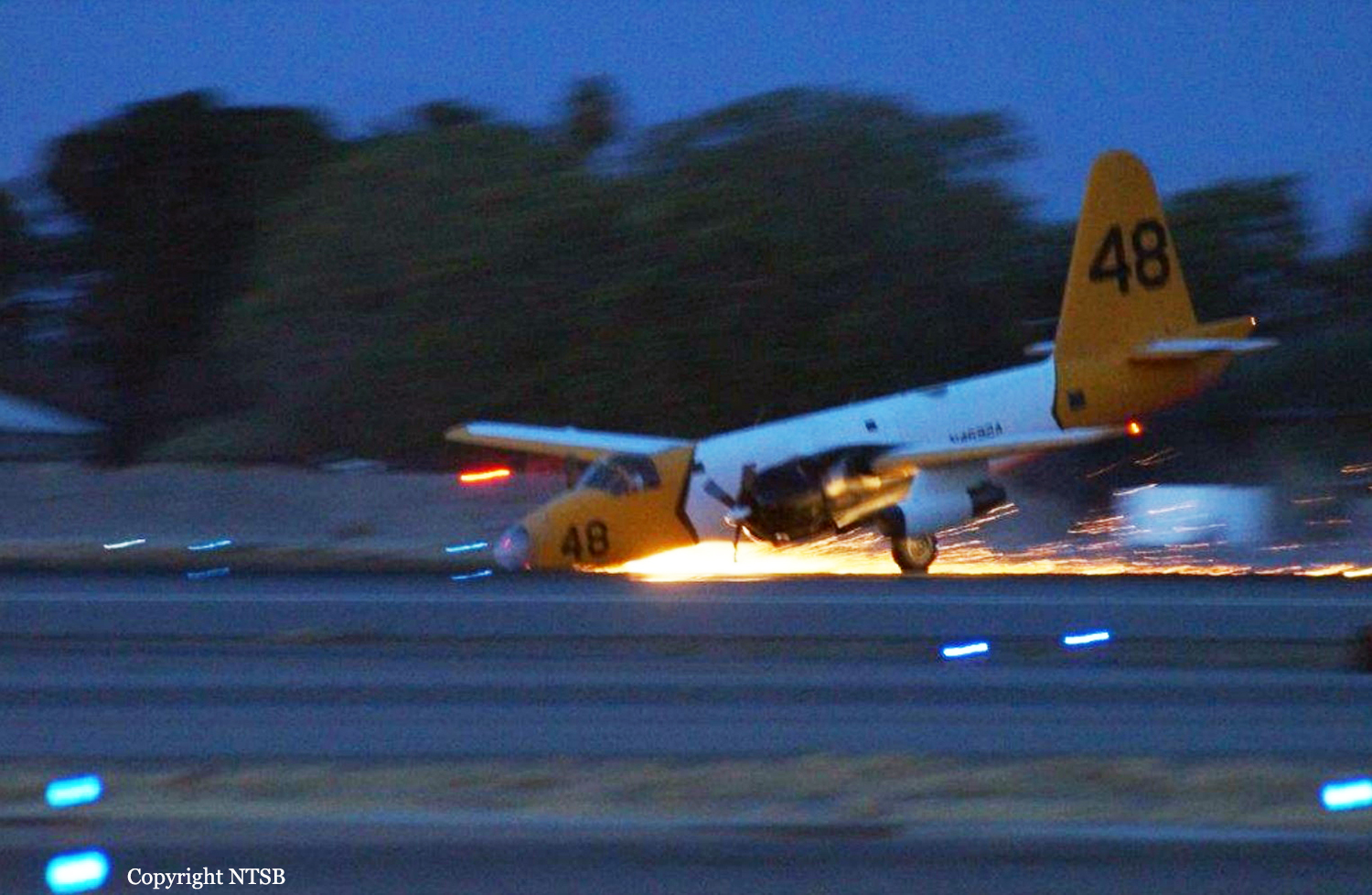
Crash of a Lockheed SP-2H Neptune in Fresno

Date & Time: Jun 15, 2014 at 2044 LT
Type of aircraft:
Operator:
Registration:
N4692A
Flight Type:
Survivors:
Yes
Schedule:
Porterville - Porterville
MSN:
726-7247
YOM:
1958
Flight number:
Tanker 48
Crew on board:
2
Crew fatalities:
Pax on board:
0
Pax fatalities:
Other fatalities:
Total fatalities:
0
Captain / Total flying hours:
14410
Captain / Total hours on type:
2010.00
Copilot / Total flying hours:
5100
Copilot / Total hours on type:
2650
Aircraft flight hours:
10484
Circumstances:
The captain reported that, while returning to the departure airport following an uneventful aerial drop, he noticed that the hydraulic pressure gauge indicated 0. The first officer subsequently verified that the sight gauge for the main hydraulic fluid reservoir was empty. The flight crew began performing the emergency gear extension checklist and verified that the nosewheel landing gear was extended. The captain stated that the first officer then installed the pin in the nosewheel landing gear as part of the emergency checklist. As the flight crewmembers diverted to a nearby airport because it had a longer runway and emergency resources, they briefed the no-flap landing. The first officer extended the main landing gear using the emergency gear release, which resulted in three down-and-locked landing gear indications. Subsequently, the airplane landed normally; however, during the landing roll, the nosewheel landing gear collapsed, and the airplane then came to rest nose low. Postaccident examination of the airplane revealed that the nosewheel landing gear pin was disengaged from the nosewheel jury strut, and the pin was not located. The disengagement of the pin allowed the nosewheel landing gear to collapse on landing. It could not be determined when or how the pin became disengaged from the jury strut. Installation of the pin would have required the first officer to maneuver in a small area and install the pin while the nose landing gear door was open and the gear extended. Further, the pin had a red flag attached to it. When inserted during flight, the flag encounters a high amount of airflow that causes it to vibrate; this could have resulted in the pin becoming disengaged after it was installed. Evidence of a hydraulic fluid leak was observed around the right engine cowling drain. The right engine hydraulic pump case was found cracked, and the backup ring was partially extruded, which is consistent with hydraulic system overpressurization. The reason for the overpressurization of the hydraulic system could not be determined during postaccident examination.

Probable cause:
The collapse of the nosewheel landing gear due to the disengagement of the nosewheel landing gear pin. Contributing to the accident was the failure of the main hydraulic system due to overpressurization for reasons that could not be determined during postaccident examination of the airplane.
Final Report:

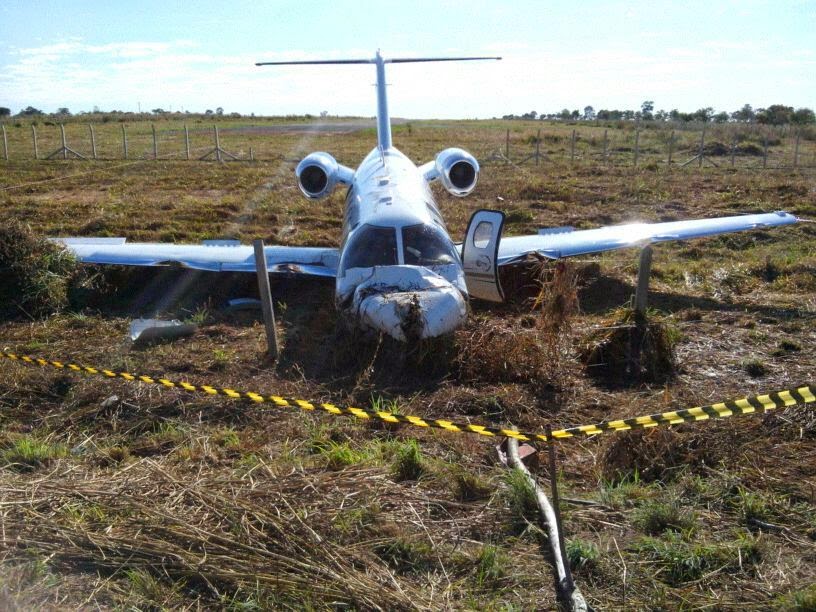
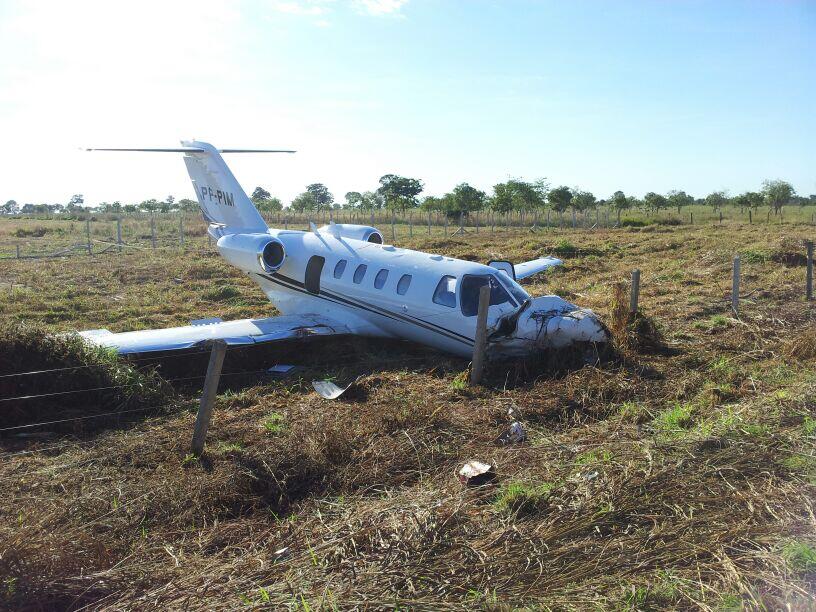
Crash of a Cessna 525 CitationJet CJ1 in Aruanã

Date & Time: Jun 13, 2014 at 0747 LT
Type of aircraft:
Operator:
Registration:
PP-PIM
Survivors:
Yes
Schedule:
Goiânia – Aruanã
MSN:
525-0548
YOM:
2005
Location:
Country:
Crew on board:
2
Crew fatalities:
Pax on board:
5
Pax fatalities:
Other fatalities:
Total fatalities:
0
Captain / Total flying hours:
17000
Captain / Total hours on type:
38.00
Copilot / Total flying hours:
1078
Copilot / Total hours on type:
4
Aircraft flight hours:
3517
Circumstances:
The aircraft departed Goiânia on a flight to Aruanã, carrying two pilots and five passengers who should take part to the funeral of former football player Fernandão who died in an helicopter crash. Following an uneventful flight, the crew completed the landing on runway 24 which is 1,280 metres long. After touchdown, the aircraft was unable to stop within the remaining distance and overran. While contacting soft ground, the nose gear collapsed then the aircraft collided with a concrete fence and came to a halt 150 metres further against a second fence. All seven occupants were injured, the captain seriously. The aircraft was damaged beyond repair.
Probable cause:
The following findings were identified:
- The copilot was not certified in the C525 type aircraft,
- The aircraft was above the maximum landing weight limit, but within the balance limit,
- On 13JUN2014, there was a NOTAM in force, informing the prohibition of jet aircraft operation in SWNH,
- The pilot acted incorrectly on the handle of the auxiliary gear control, thinking that he was applying the emergency brake, making the braking of the aircraft impossible.
- The activation of the incorrect lever for the emergency braking of the aircraft was due to insufficient training received by the pilot for the use of the system in question, thus compromising the proper management of the abnormal condition.
- The emergency brake actuator handle of the aircraft was located outside the pilot's sight field, which, together with the lack of knowledge about the correct lever to be activated for emergency braking, favored the pilot's automatic response in triggering the lever that was most adjusted and visually available on the panel - the emergency landing gear drive lever.
- The instruction that the pilot received to operate the Cessna aircraft, model 525 did not emphasize in the theoretical phase the proper use of the emergency brake, nor contemplated training for the use of this system.
- Despite having a lot of experience in aviation, the pilot was little experienced in the aircraft and still did not know basic functionalities like the use of the emergency brake and the engine shutdown through the evacuation checklist procedure.
Final Report:

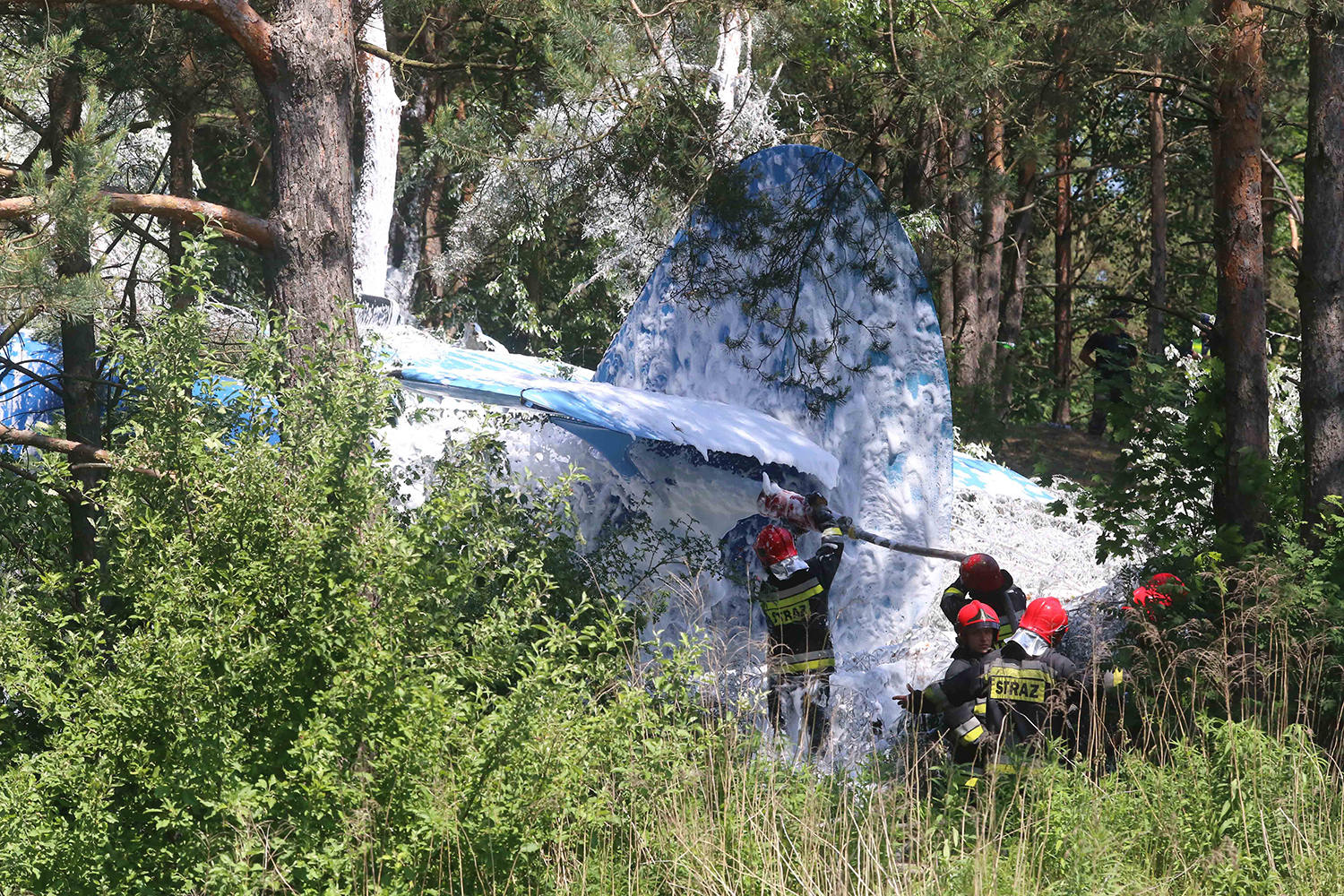
Crash of a PZL-Mielec AN-2T in Olsztyn

Date & Time: Jun 8, 2014 at 1115 LT
Type of aircraft:
Operator:
Registration:
SP-FDZ
Survivors:
Yes
Schedule:
Olsztyn - Olsztyn
MSN:
1G74-73
YOM:
1967
Country:
Region:
Crew on board:
2
Crew fatalities:
Pax on board:
0
Pax fatalities:
Other fatalities:
Total fatalities:
0
Captain / Total flying hours:
3460
Captain / Total hours on type:
490.00
Copilot / Total flying hours:
875
Copilot / Total hours on type:
205
Circumstances:
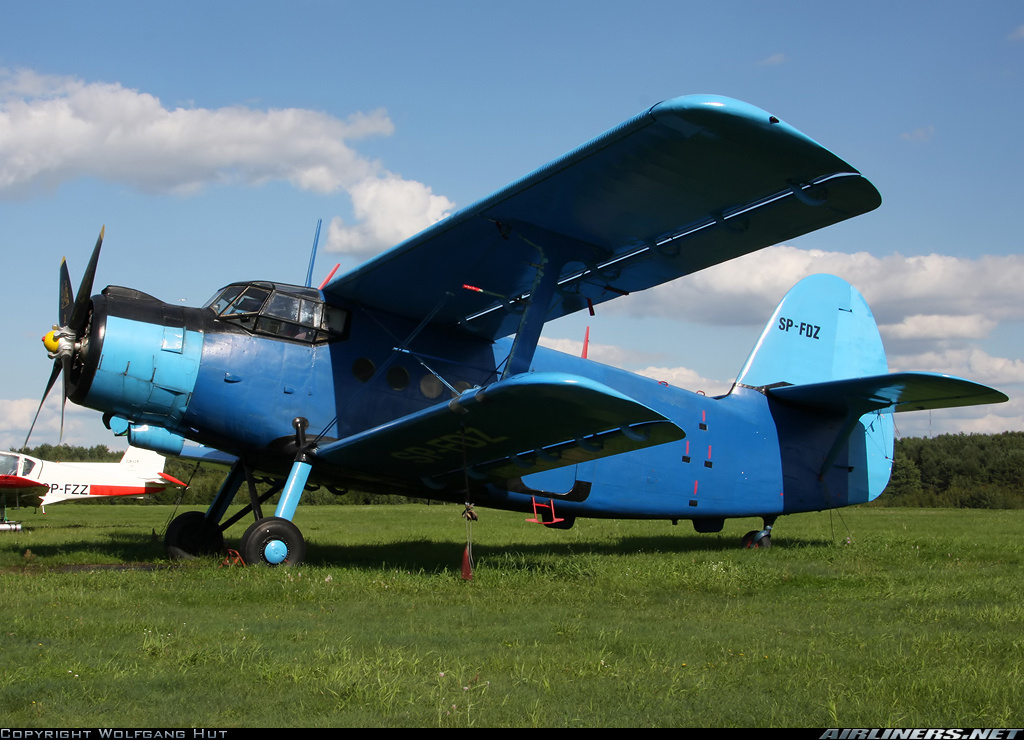
The single engine aircraft was completing local skydiving missions from Olsztyn Airport. Following a successful flight, the crew was returning to the airfield. On short final, the engine lost power. The aircraft lost height, collided with trees and crashed in a wooded area, coming to rest about 200 metres short of runway. Both pilots were injured and the aircraft was destroyed.
Probable cause:
The following findings were identified:
- Engine malfunction due to fuel shortage,
- Lack of fuel gauge monitoring on part of the crew,
- Poor crew coordination,
- Failure of the crew to respond with appropriate action when the warning light showing a lack of fuel came on.
Final Report:

Crash of an Antonov AN-2 in Starosel'ye: 2 killed

Date & Time: Jun 7, 2014 at 1440 LT
Type of aircraft:
Operator:
Registration:
RF-02883
Flight Phase:
Flight Type:
Survivors:
No
Schedule:
Starosel'ye - Starosel'ye
Country:
Region:
Crew on board:
1
Crew fatalities:
Pax on board:
1
Pax fatalities:
Other fatalities:
Total fatalities:
2
Circumstances:
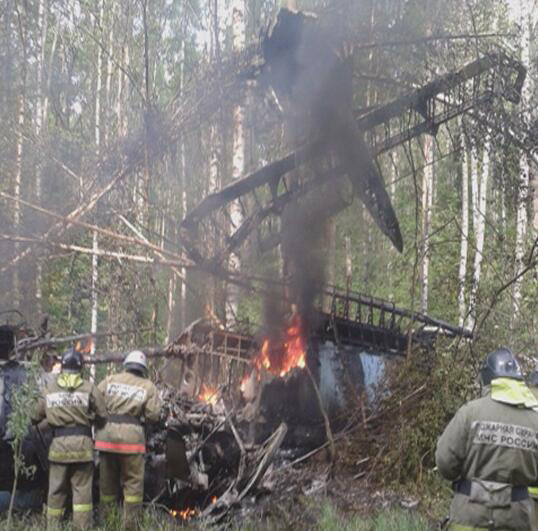
Shortly after takeoff from Starosel'ye Airfield, while in initial climb, the aircraft impacted trees, stalled and crashed in a wooded area, bursting into flames. The aircraft was totally destroyed by a post crash fire and both occupants were killed. It was reported that the aircraft was not on the Russian Aviation Register and that the registration RF-02883 was unknown to the authority. Also, the pilot decided to takeoff from an airstrip that was closed to traffic and failed to announce his flight to ATC.

Ground fire of an Ilyushin II-96-300 in Moscow

Date & Time: Jun 3, 2014 at 1425 LT
Type of aircraft:
Operator:
Registration:
RA-96010
Flight Phase:
Survivors:
Yes
MSN:
74393201007
YOM:
1994
Country:
Region:
Crew on board:
0
Crew fatalities:
Pax on board:
0
Pax fatalities:
Other fatalities:
Total fatalities:
0
Aircraft flight hours:
51427
Aircraft flight cycles:
7625
Circumstances:
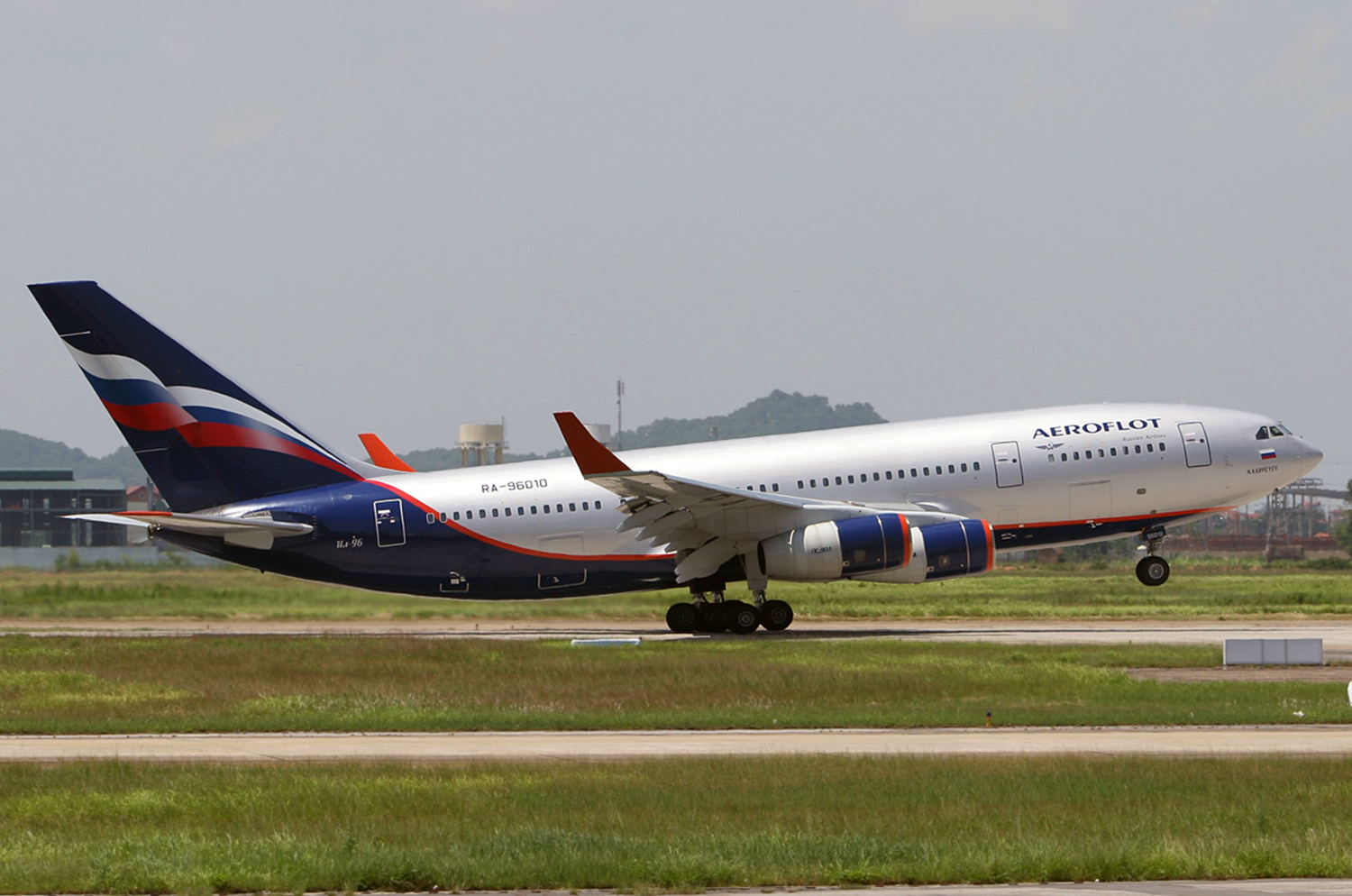
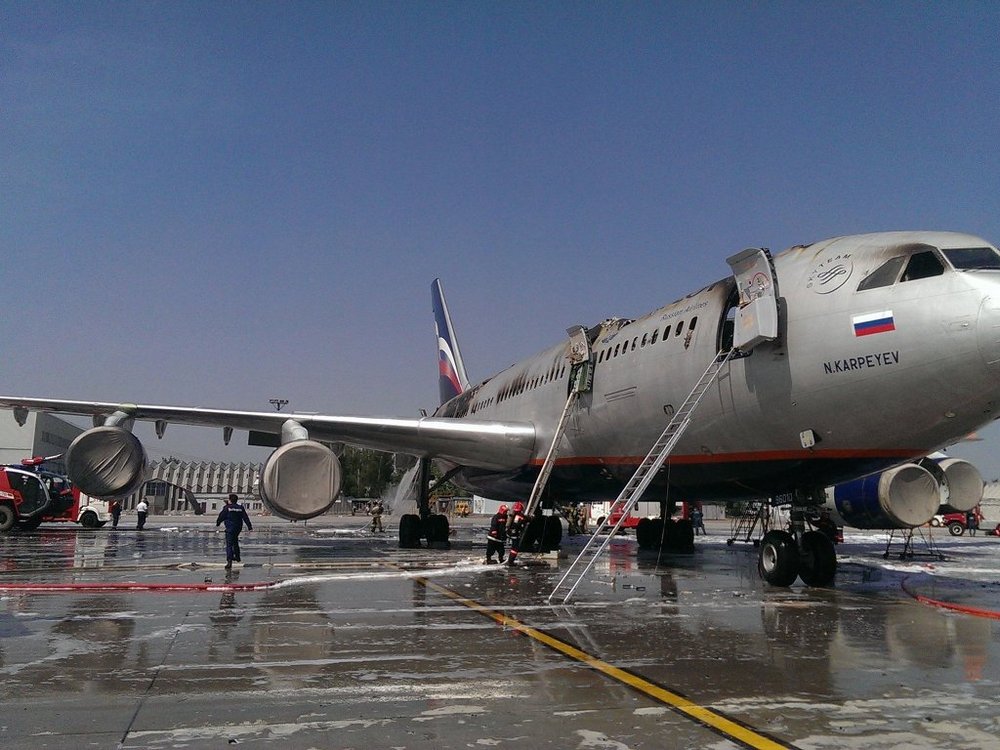
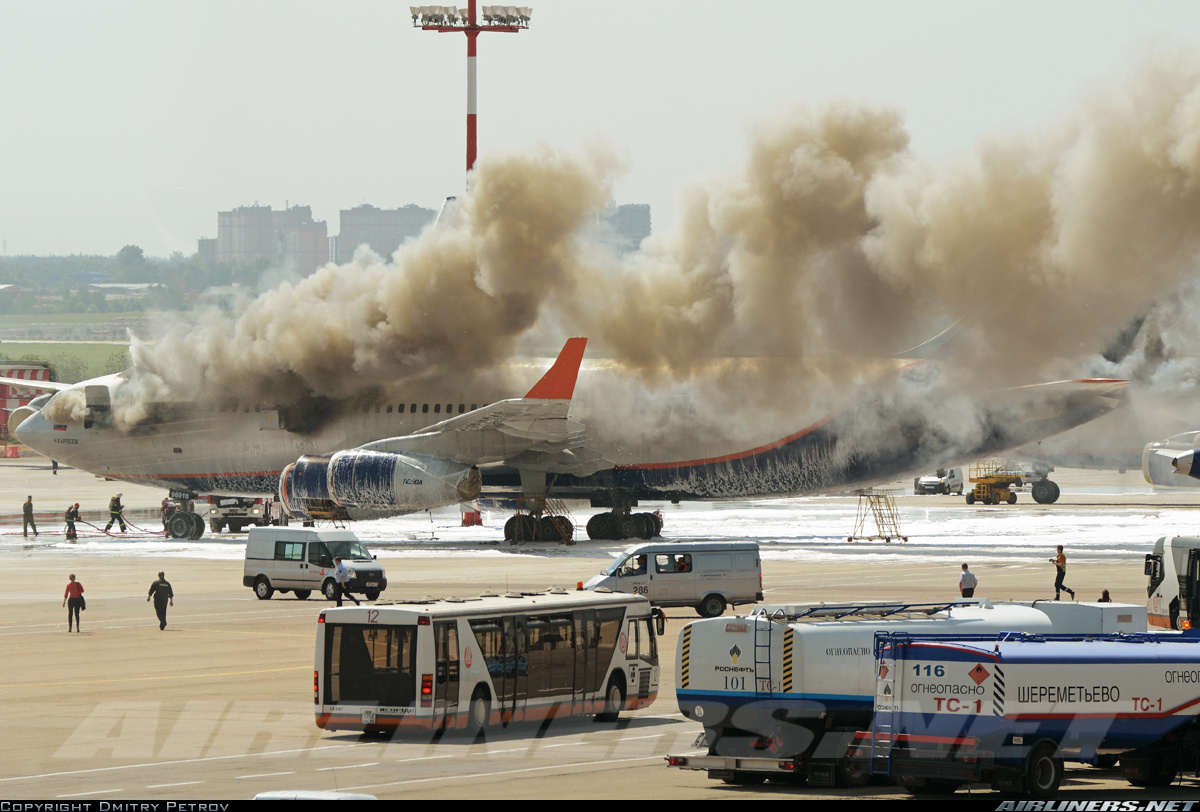
The aircraft was parked on the apron at Moscow-Sheremetyevo Airport since two months as it was offered for sale and not in service anymore. In the afternoon, a fire erupted in the cockpit for unknown reasons. It took more than an hour to the fire brigade to extinguish the fire that destroyed all the cabin and the roof of the aircraft.
Probable cause:
Destroyed by fire of unknown origin. There were no investigations on this mishap.