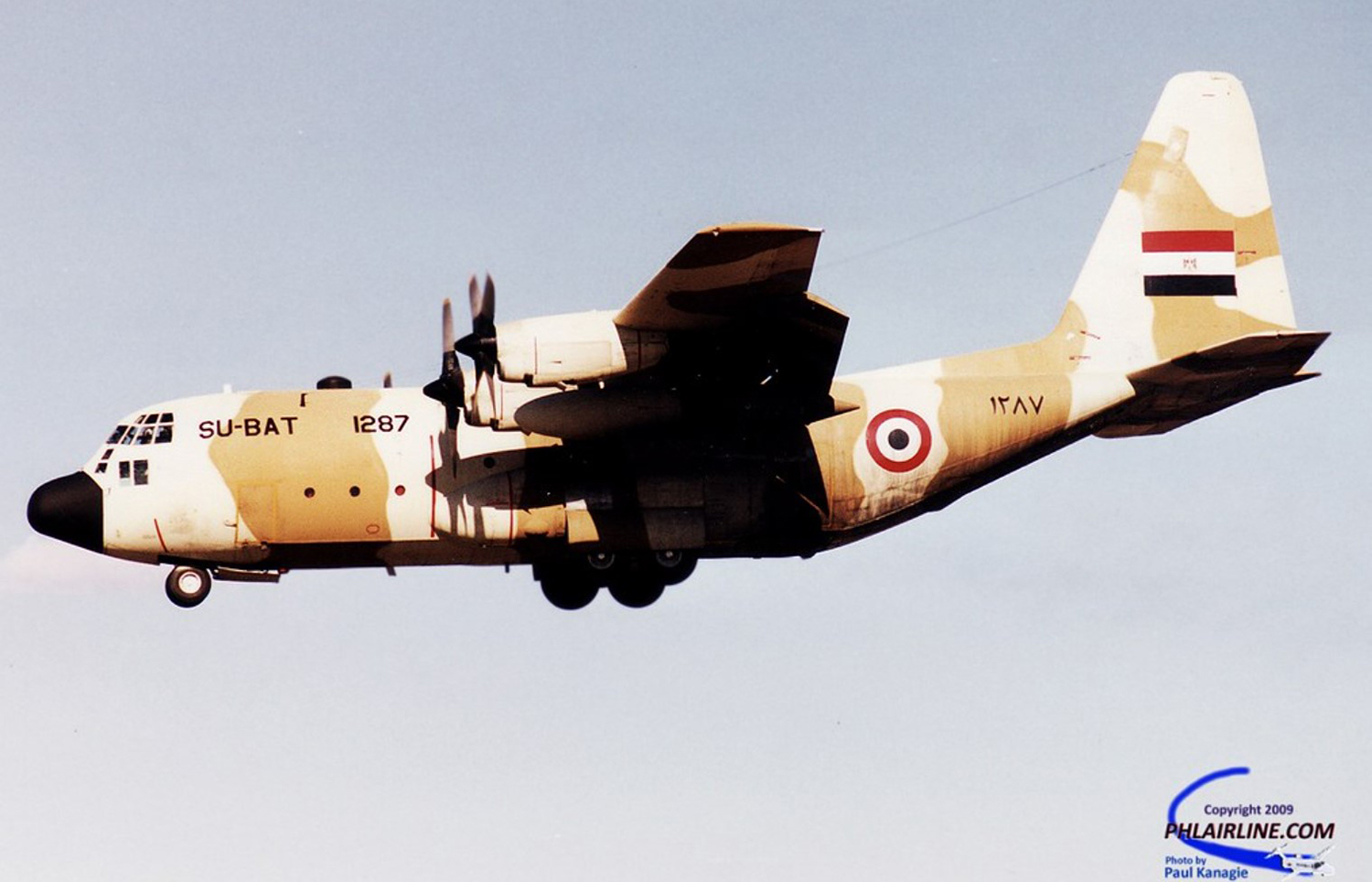
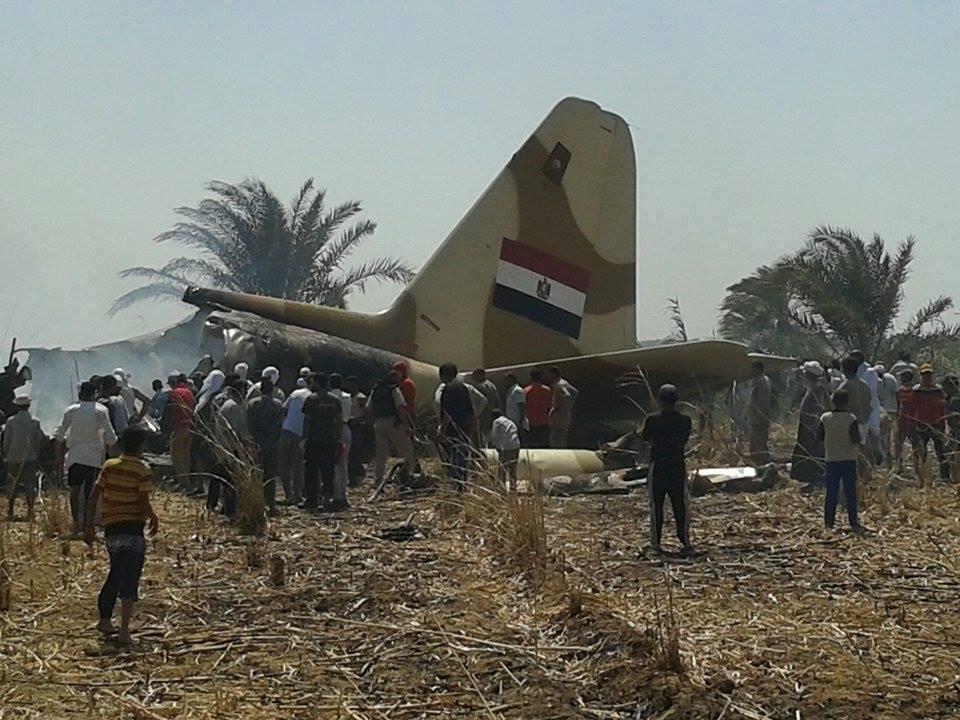
Crash of a Lockheed C-130H Hercules at Kawm Ushim AFB: 6 killed

Date & Time: Sep 21, 2014
Type of aircraft:
Operator:
Registration:
1287
Flight Type:
Survivors:
Yes
Schedule:
Kawm Ushim - Kawm Ushim
MSN:
4809
YOM:
1979
Country:
Region:
Crew on board:
7
Crew fatalities:
Pax on board:
0
Pax fatalities:
Other fatalities:
Total fatalities:
6
Circumstances:
The crew was performing a training flight at Kawm Ushim AFB. On final approach, the crew encountered technical difficulties and control was lost. The aircraft crashed short of runway and was destroyed by a post crash fire. A crew member survived while six others were killed. Dual registration 1287 and SU-BAT.

Crash of an Antonov AN-32 in Chandigarh

Date & Time: Sep 20, 2014 at 2130 LT
Type of aircraft:
Operator:
Registration:
K2757
Flight Type:
Survivors:
Yes
Schedule:
Bathinda – Chandigarh
MSN:
12 02
YOM:
1987
Country:
Region:
Crew on board:
4
Crew fatalities:
Pax on board:
5
Pax fatalities:
Other fatalities:
Total fatalities:
0
Circumstances:
For unknown reason, the aircraft seems to be unstable on landing. Upon touchdown, the right wing hit the ground and was torn off. Out of control, the aircraft veered off runway, went through a grassy area and came to rest upside down, bursting into flames. All nine occupants escaped with minor injuries and the aircraft was destroyed.

Crash of a Piper PA-61 Aerostar (Ted Smith 601P) in Austin: 1 killed

Date & Time: Sep 10, 2014 at 1326 LT
Operator:
Registration:
N711YM
Flight Type:
Survivors:
No
Schedule:
Dallas – Austin
MSN:
61-0215-023
YOM:
1975
Crew on board:
1
Crew fatalities:
Pax on board:
0
Pax fatalities:
Other fatalities:
Total fatalities:
1
Captain / Total flying hours:
525
Captain / Total hours on type:
37.00
Aircraft flight hours:
3438
Circumstances:
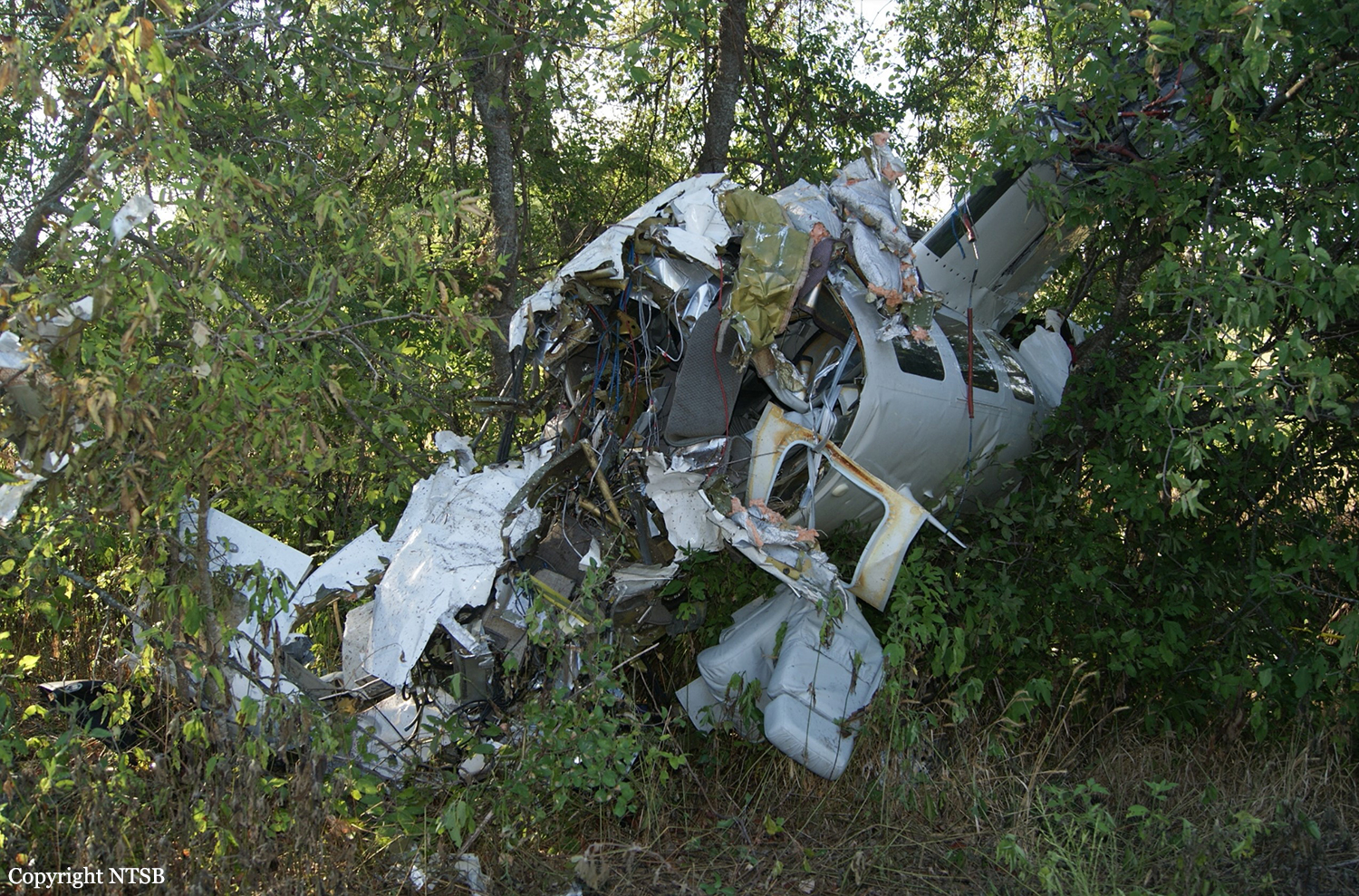
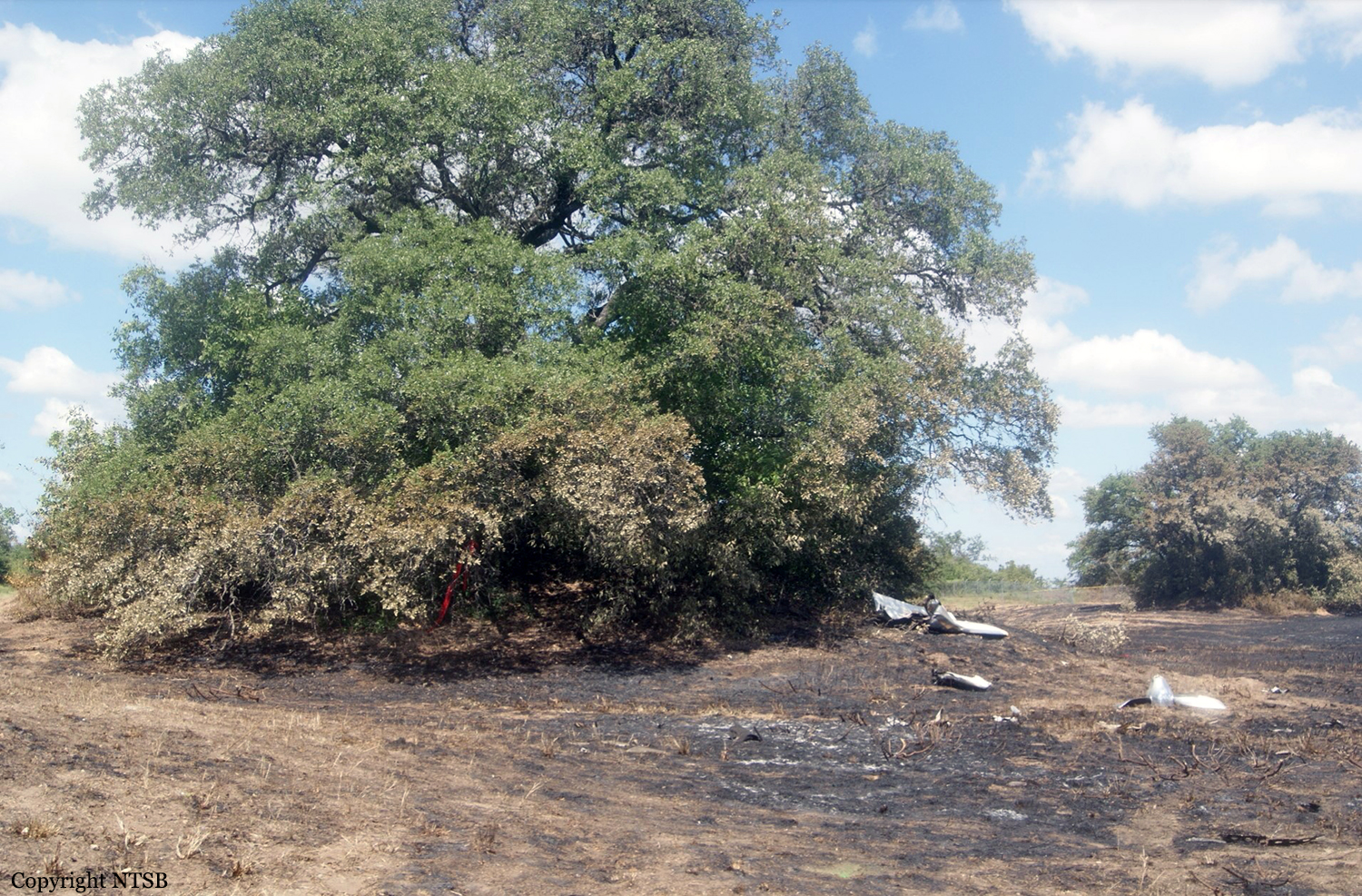
Witnesses reported observing the airplane flying slowly toward the airport at a low altitude. The left engine was at a low rpm; "sputtering," "knocking," or making a "banging" noise; and trailing black smoke. One witness said that, as the airplane passed over his location, he saw the tail "kick" horizontally to the right and the airplane bank slightly left. The airplane subsequently collided with trees and impacted a field 1/2 mile north of the airport. Disassembly of the right engine revealed no anomalies, and signatures on the right propeller blades were consistent with power and rotation on impact. The left propeller was found feathered. Disassembly of the left engine revealed that the spark plugs were black and heavily carbonized, consistent with a rich fuel-air mixture; the exhaust tubing also exhibited dark sooting. The rubber boot that connected the intercooler to the fuel injector servo was found dislodged and partially sucked in toward the servo. The clamp used to secure the hose was loose but remained around the servo, the safety wire on the clamp was in place, and the clamp was not impact damaged or bent. The condition of the boot and the clamp were consistent with improper installation. The time since the last overhaul of the left engine was about 1,050 hours. The last 100-hour inspection occurred 3 months before the accident, and the airplane had been flown only 0.8 hour since then. It could not be determined when the rubber boot was improperly installed. Although the left engine had failed, the pilot should have been able to fly the airplane and maintain altitude on the operable right engine, particularly since he had appropriately feathered the left engine.
Probable cause:
The pilot's failure to maintain sufficient clearance from trees during the single engine and landing approach. Contributing to the accident was the loss of power in the left engine due to an improperly installed rubber boot that became dislodged and was then partially sucked into the fuel injector servo, which caused an excessively rich fuel-air mixture that would not support combustion.
Final Report:

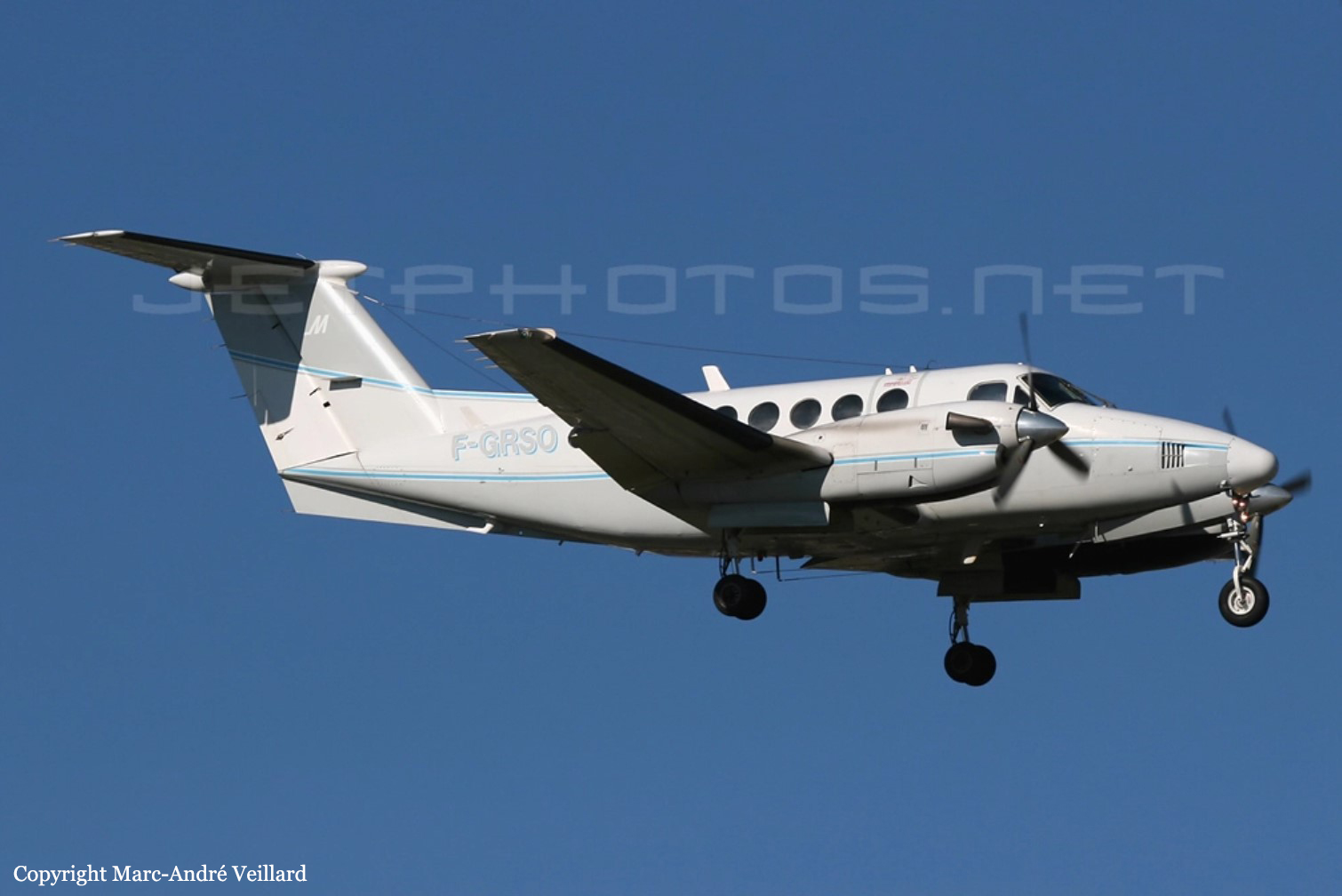
Crash of a Beechcraft 200C Super King Air in Nouméa

Date & Time: Sep 9, 2014 at 1150 LT
Operator:
Registration:
F-GRSO
Flight Type:
Survivors:
Yes
Schedule:
Lifou – Nouméa
MSN:
BL-11
YOM:
1980
Region:
Crew on board:
2
Crew fatalities:
Pax on board:
2
Pax fatalities:
Other fatalities:
Total fatalities:
0
Circumstances:
The twin engine airplane departed Lifou Airport on an ambulance flight to Nouméa-Magenta Airport, carrying two passengers and two pilots. On approach to Magenta Airport, the crew followed the checklist and lower the landing gears. As all three green light failed to came on the cockpit panel, the crew elected to lower the gears manually without success. The crew completed two low passes in front of the control tower and it was confirmed that the left main gear seems to be down but not locked. After a 45-minute flight to burn fuel, the crew completed the landing. Upon touchdown, both main landing gear collapsed while the nose gear remained extended. The aircraft slid for few dozen metres before coming to rest. All four occupants evacuated safely and the aircraft was damaged beyond repair.
Probable cause:
The rupture of two teeth of the sprocket of the control cylinder of the left main landing gear caused the cylinder to be locked and thus caused the mechanical system to extend the landing gear. This blockage prevented the complete extension and locking of the landing gear. This rupture and other damage to the two main landing gear actuators was probably the result of improper installation of the toothed gear and / or improper adjustment of the assembly.
Final Report:

Crash of a Piper PA-31-350 Navajo Chieftain in Araracuara: 10 killed

Date & Time: Sep 6, 2014 at 1505 LT
Operator:
Registration:
HK-4755
Flight Phase:
Survivors:
No
Schedule:
Araracuara – Florencia
MSN:
31-7952044
YOM:
1979
Country:
Crew on board:
2
Crew fatalities:
Pax on board:
8
Pax fatalities:
Other fatalities:
Total fatalities:
10
Captain / Total flying hours:
792
Captain / Total hours on type:
523.00
Copilot / Total flying hours:
211
Aircraft flight hours:
14601
Circumstances:
The twin engine aircraft departed Araracuara Airport runway 09 at 1503LT on a charter flight to Florencia, carrying eight passengers and two pilots. During initial climb, the right engine failed. The crew lost control of the airplane that stalled and crashed in a wooded area. The wreckage was found 8,2 km from the airport. The airplane disintegrated on impact and all 10 occupants were killed, among them a Swiss citizen.
Probable cause:
Loss of control during initial climb following the failure of the right engine for undetermined reasons.
The following contributing factors were identified:
- The crew failed to follow the published procedures when the right engine failed,
- The aircraft was likely operated with a total weight above MTOW,
- A poor risk assessment while performing an operation outside of the aircraft's performance limits.
Final Report:

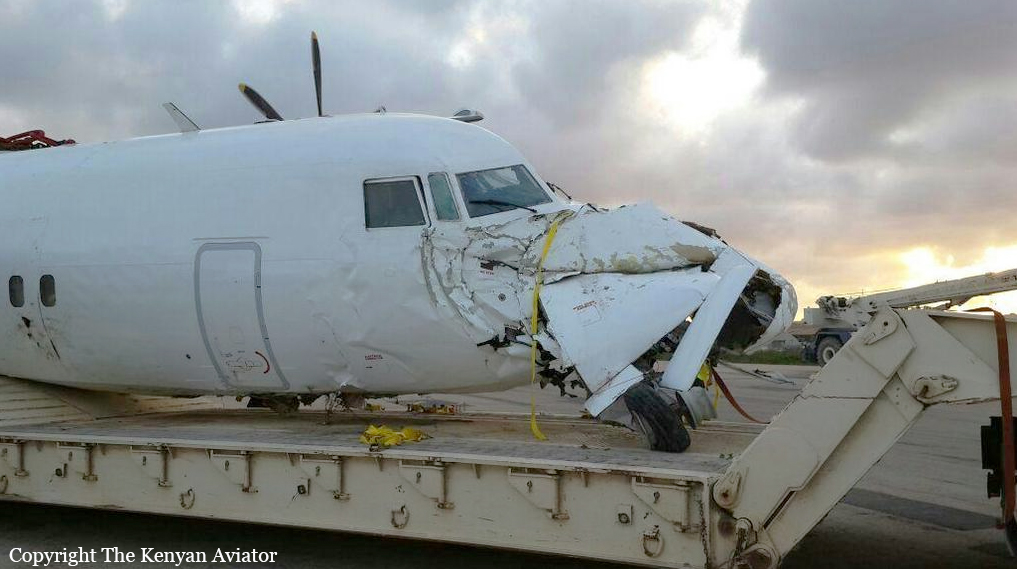
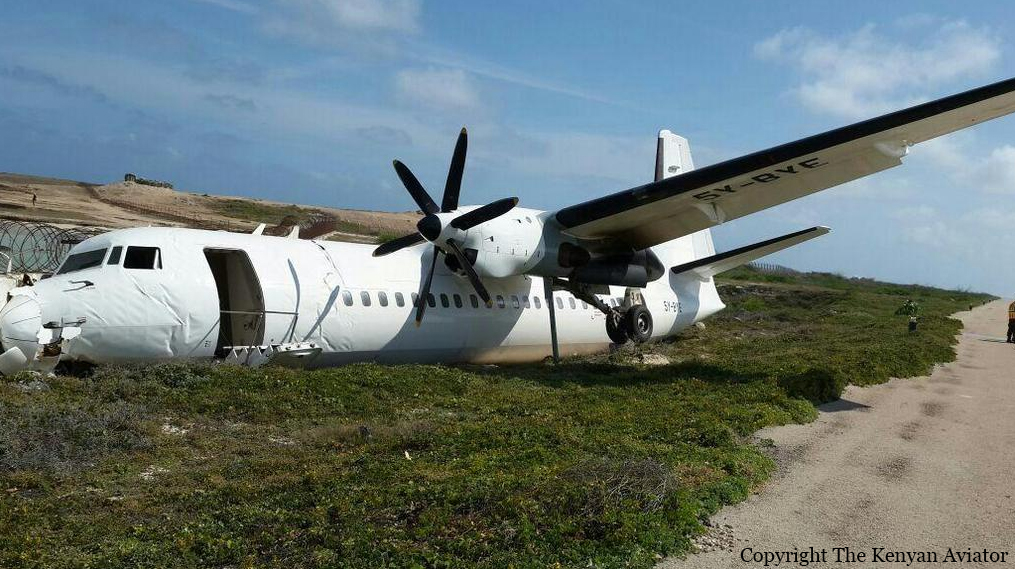
Crash of a Fokker 50 in Mogadishu

Date & Time: Sep 6, 2014 at 1030 LT
Type of aircraft:
Operator:
Registration:
5Y-BYE
Survivors:
Yes
Schedule:
Galkayo - Mogadishu
MSN:
20204
YOM:
1990
Flight number:
6J715
Country:
Region:
Crew on board:
3
Crew fatalities:
Pax on board:
21
Pax fatalities:
Other fatalities:
Total fatalities:
0
Circumstances:
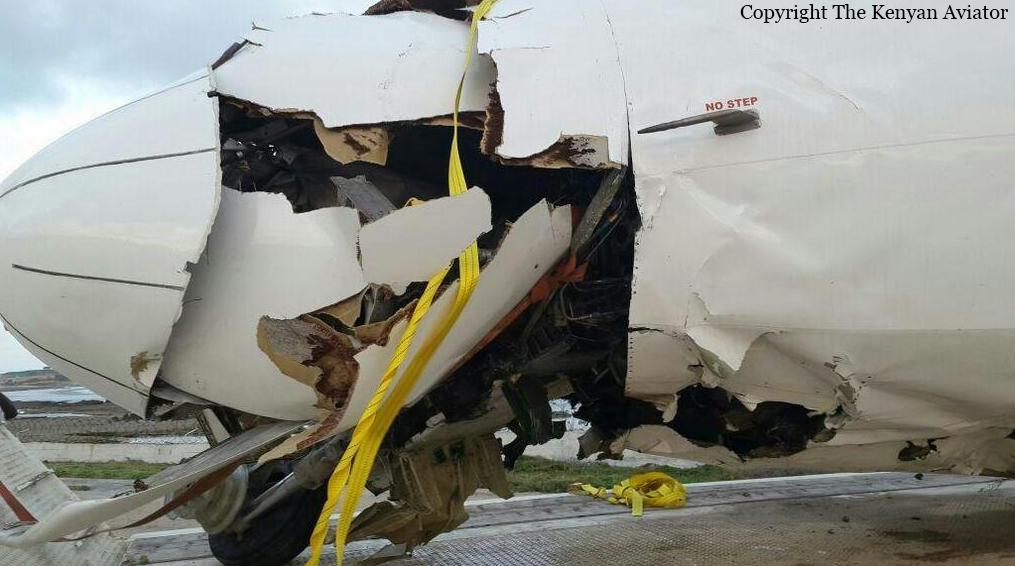
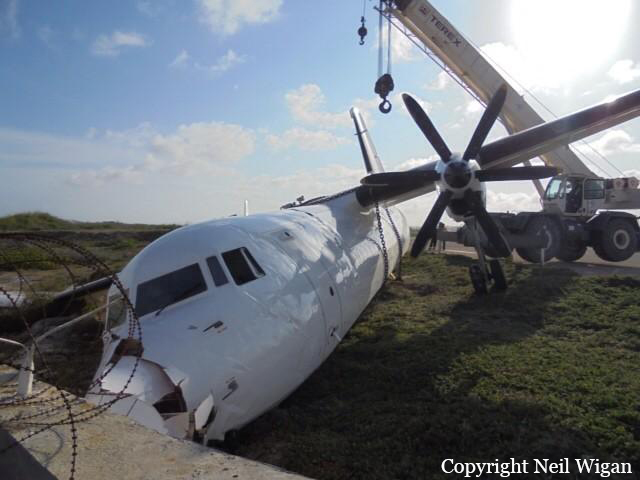
Upon landing on runway 05 at Mogadishu Airport, the right main gear failed. The aircraft veered off runway to the right then rolled for few dozen metres, collided with a concrete perimeter fence and came to rest. There was no fire. It appears the right wing and the right engine suffered severe damage (the right broke in two). The nose of the aircraft was destroyed and the fuselage was bent on several areas. All 24 occupants evacuated safely. The aircraft was completing a domestic schedule flight on behalf of Jubba Airways.

Crash of a Piper PA-46-350P Malibu Mirage in Cortez

Date & Time: Sep 3, 2014 at 1238 LT
Registration:
N747TH
Flight Type:
Survivors:
Yes
Schedule:
Cortez - Cortez
MSN:
46-36200
YOM:
1999
Location:
Crew on board:
2
Crew fatalities:
Pax on board:
0
Pax fatalities:
Other fatalities:
Total fatalities:
0
Captain / Total flying hours:
4000
Captain / Total hours on type:
2050.00
Copilot / Total flying hours:
4184
Copilot / Total hours on type:
1648
Aircraft flight hours:
2900
Circumstances:
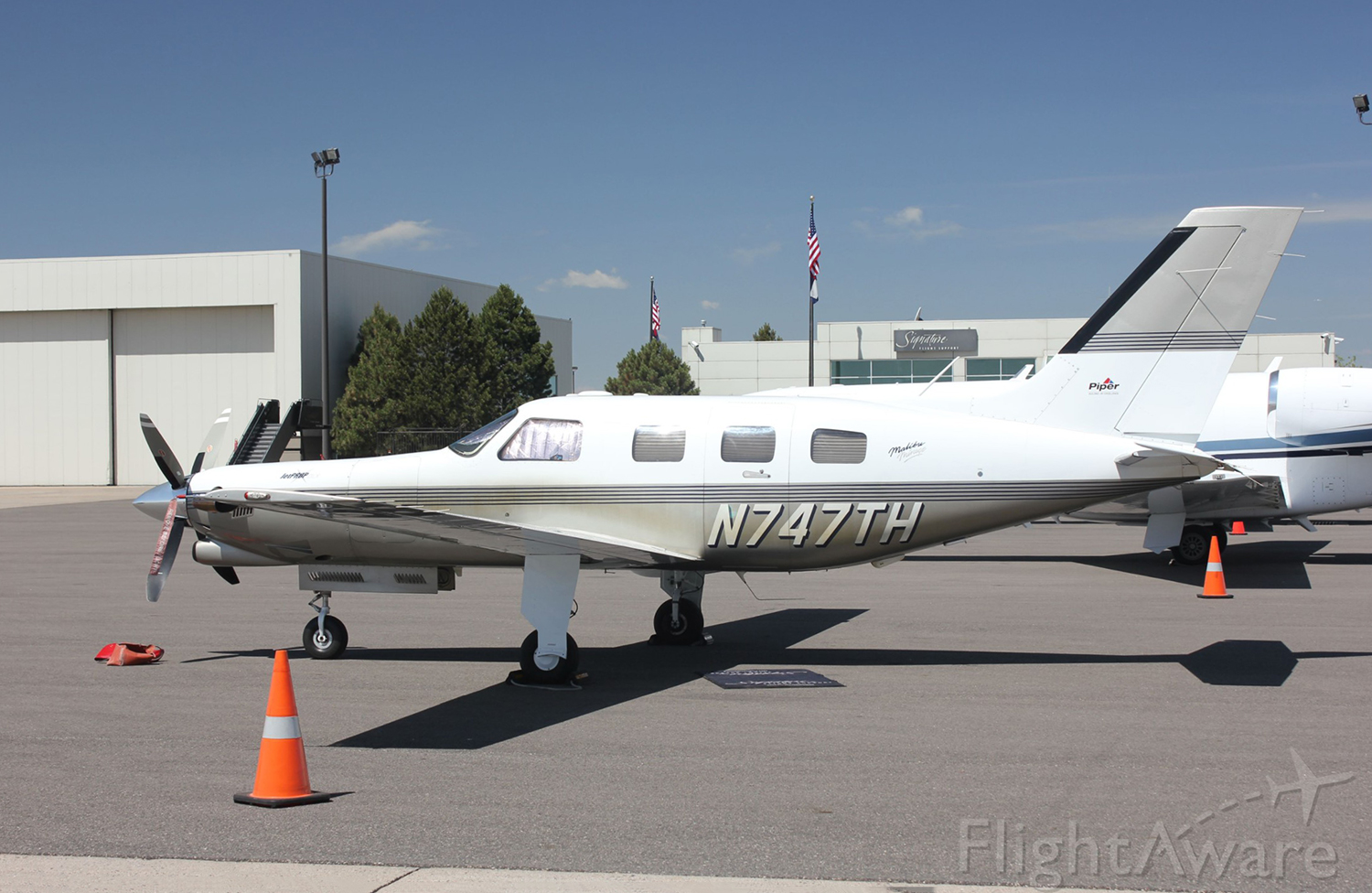
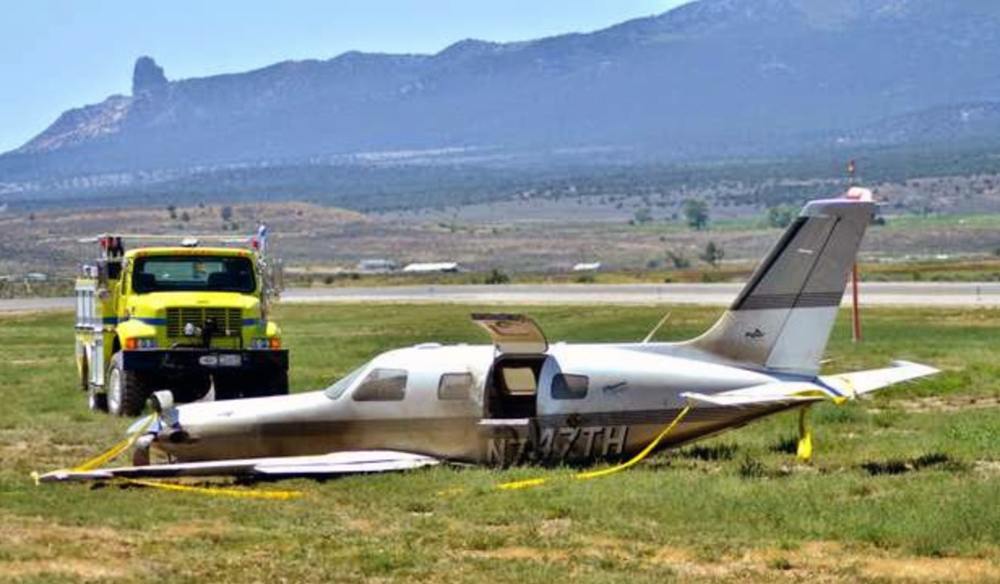
The accident occurred during a local instructional flight to satisfy the commercial pilot's annual insurance currency requirements in the accident airplane. The flight instructor reported that the pilot was demonstrating a simulated loss of engine power during initial climb and return for a downwind landing. During initial climb, upon reaching 1,200 ft above ground level (agl), the flight instructor reduced engine power to flight idle and feathered the propeller. In response, the pilot reduced airplane pitch and entered a left, 45-degree-bank turn back toward the airport. The flight instructor stated that, upon rolling wings level, the airplane appeared to be lower than he had expected as it glided toward the runway; however, he believed there was sufficient altitude remaining to safely land on the runway and told the pilot to continue without increasing the engine power. The flight instructor ultimately decided to abort the maneuver as the airplane crossed over the runway threshold at 40 ft agl. The flight instructor advanced the engine power lever to the full-forward position and increased airplane pitch to arrest the descent; however, he did not perceive an increase in engine thrust. Without an increase in engine thrust and with the increased pitch, the airplane's airspeed decreased rapidly, and the airplane entered an aerodynamic stall about 30 ft above the runway. The airplane impacted the runway before sliding into a grassy area. The flight instructor reported that he did not recall advancing the propeller control when he decided to abort the maneuver, and, as such, the perceived lack of engine thrust was likely because the propeller remained feathered after he increased engine power. Additionally, the flight instructor postulated that the airplane's landing gear had not been retracted after takeoff, which resulted in a reduced climb gradient, and, as such, the airplane entered the maneuver farther away from the airport than anticipated. Further, with the landing gear extended, the airplane experienced a reduction in glide performance during the simulated forced landing. The flight instructor reported that the accident could have been prevented if he had maintained a safe flying airspeed after he took control of the airplane. Additionally, he believed that his delayed decision to abort the maneuver resulted in an insufficient margin of safety.
Probable cause:
The flight instructor's delayed decision to abort the simulated engine out maneuver, his failure to unfeather the propeller before restoring engine power, and his inadequate airspeed management, which led to an aerodynamic stall at low altitude.
Final Report:

Crash of a Piper PA-46-350P Malibu Mirage in Erie: 5 killed

Date & Time: Aug 31, 2014 at 1150 LT
Registration:
N228LL
Flight Type:
Survivors:
No
Schedule:
Denver - Erie
MSN:
46-22164
YOM:
1994
Location:
Crew on board:
1
Crew fatalities:
Pax on board:
4
Pax fatalities:
Other fatalities:
Total fatalities:
5
Captain / Total flying hours:
1300
Aircraft flight hours:
2910
Circumstances:
The private pilot was inbound to the airport, attempting to conduct a straight-in approach to runway 33. Due to the prevailing wind, traffic flow at the time of the pilot's arrival was on runway 15. Another airplane was departing the airport in the opposite direction and crossed in close proximity to the accident airplane. The departing traffic altered his course to the right to avoid the accident airplane while the accident airplane stayed on his final approach course. The two aircraft were in radio communication on the airport common traffic advisory frequency and were exercising see-and-avoid rules as required. Witnesses reported that as the airplane continued down runway 33 for landing, they heard the power increase and observed the airplane make a left-hand turn to depart the runway in an attempted go-around. The airplane entered a left bank with a nose-high attitude, failed to gain altitude, and subsequently stalled and impacted terrain. It is likely the pilot did not maintain the necessary airspeed during the attempted go-around and exceeded the airplane's critical angle of attack. The investigation did not reveal why the pilot chose to conduct the approach with opposing traffic or why he attempted a landing with a tailwind, but this likely increased the pilot's workload during a critical phase of flight.
Probable cause:
The pilot's failure to maintain adequate airspeed and exceedance of the critical angle of attack during a go-around with a tailwind condition, which resulted in an aerodynamic stall. A contributing factor to the accident was the pilot's decision to continue the approach with opposing traffic.
Final Report:

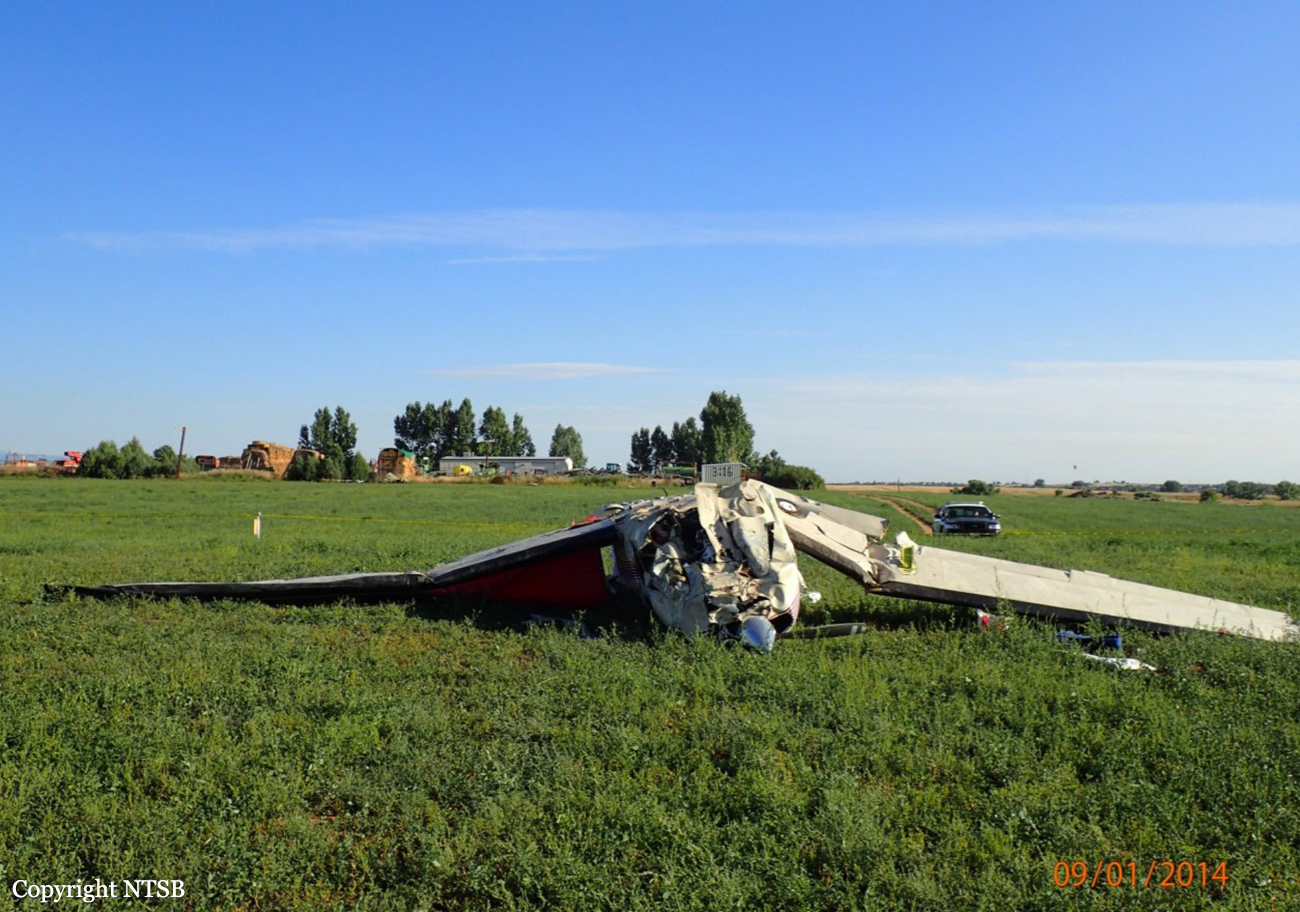
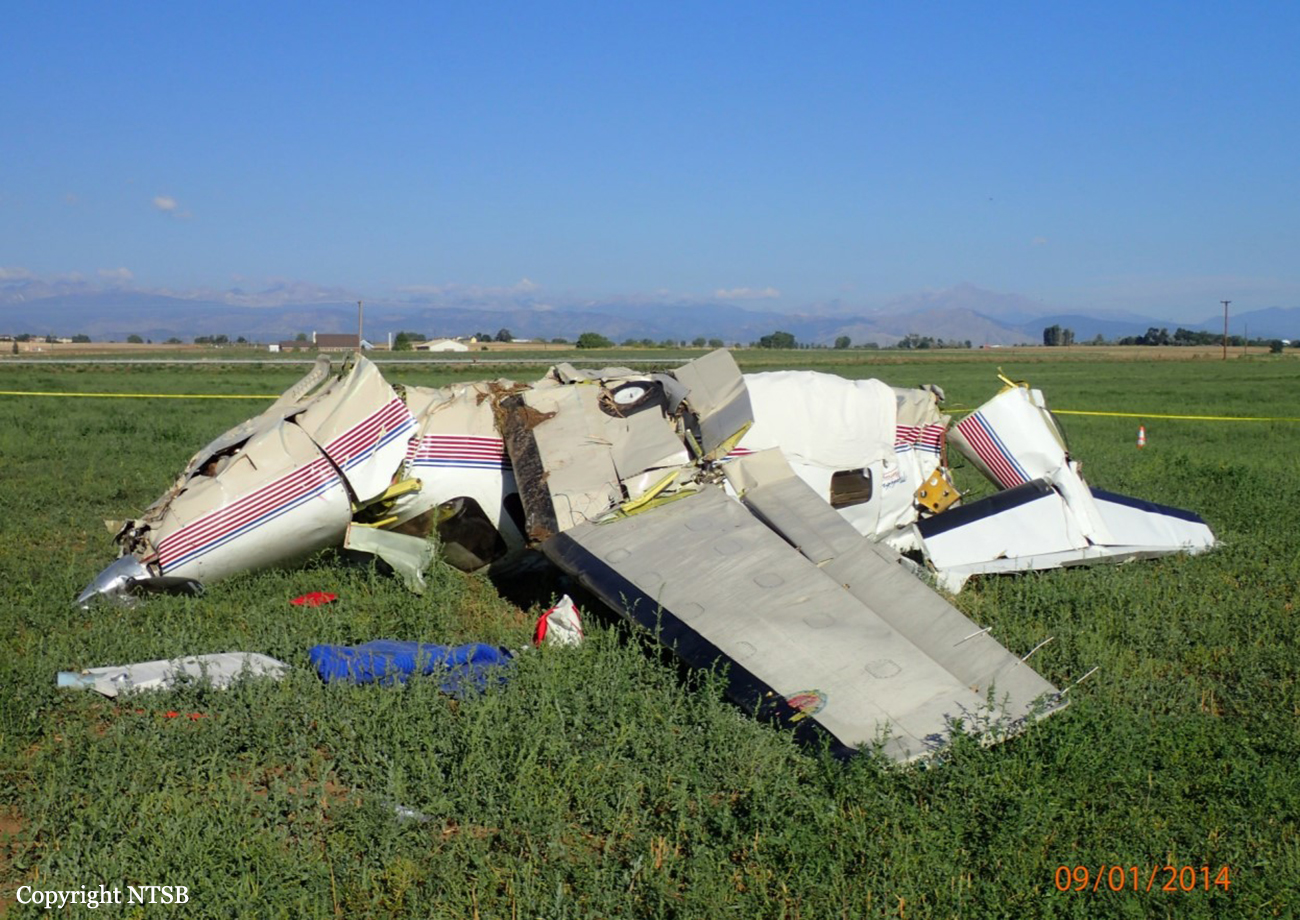
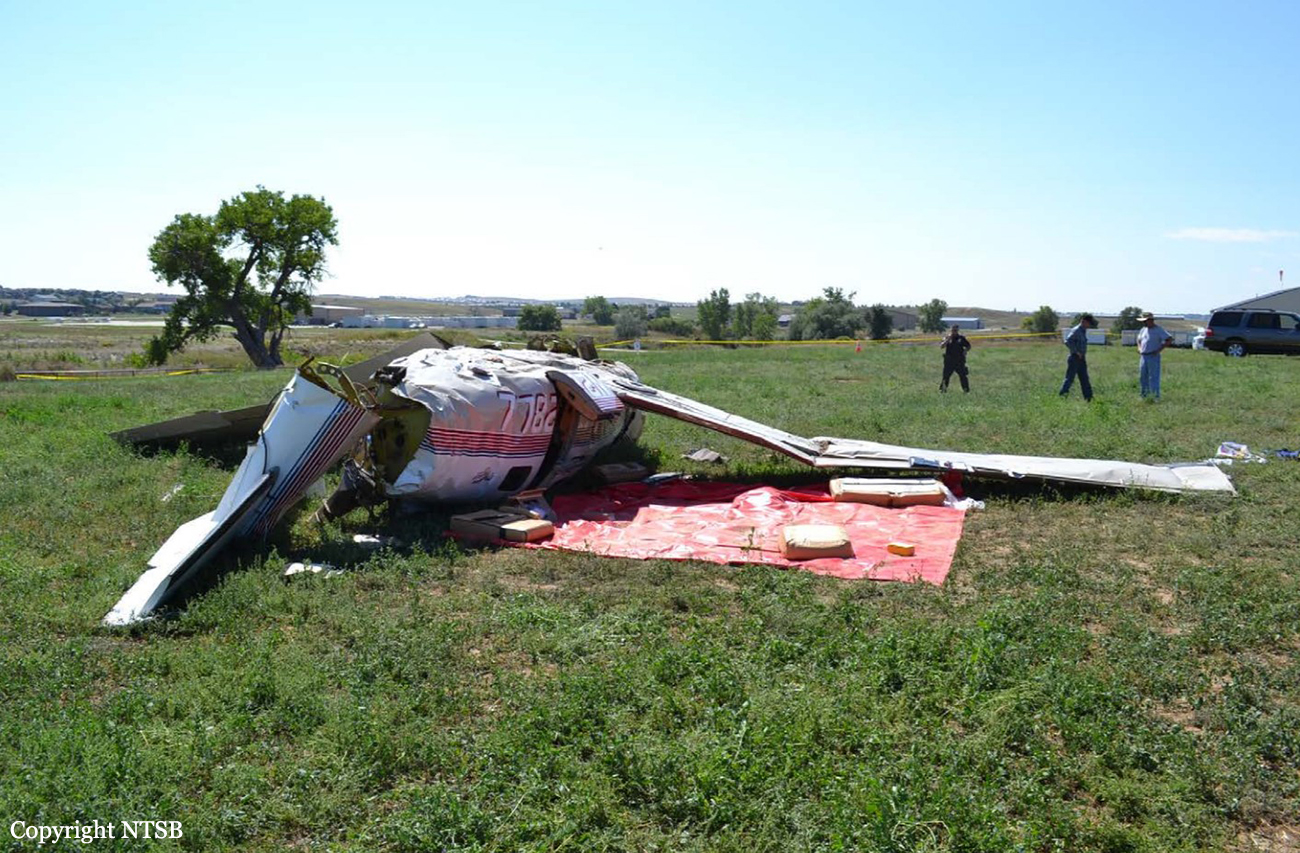
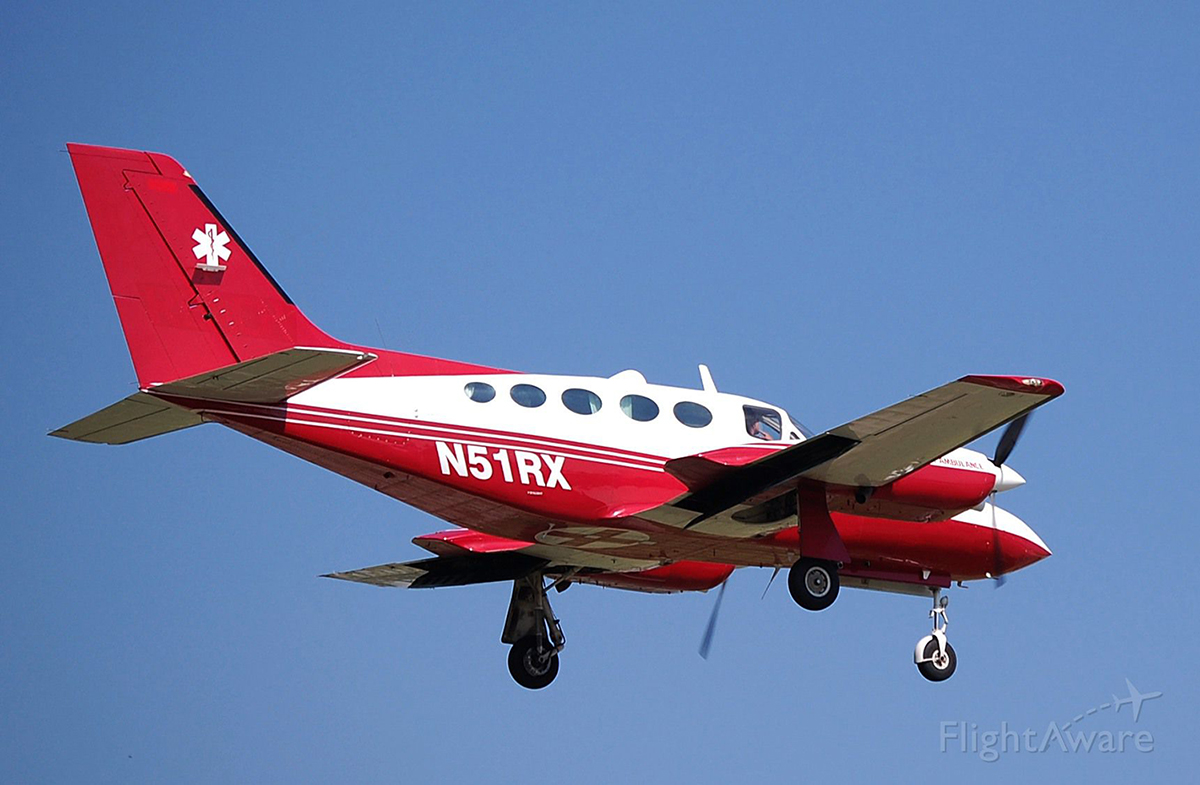
Crash of a Cessna 421C Golden Eagle III in Las Cruces: 4 killed

Date & Time: Aug 27, 2014 at 1903 LT
Registration:
N51RX
Flight Phase:
Flight Type:
Survivors:
No
Schedule:
Las Cruces – Phoenix
MSN:
421C-0871
YOM:
1974
Crew on board:
1
Crew fatalities:
Pax on board:
3
Pax fatalities:
Other fatalities:
Total fatalities:
4
Captain / Total flying hours:
2432
Captain / Total hours on type:
52.00
Aircraft flight hours:
8181
Circumstances:
According to the line service technician who worked for the fixed-base operator (FBO), before taking off for the air ambulance flight with two medical crewmembers and one patient onboard, the pilot verbally asked him to add 40 gallons of fuel to the airplane, but the pilot did not specify the type of fuel. The line service technician drove a fuel truck to the front of the airplane and added 20 gallons of fuel to each of the multiengine airplane's wing tanks. The pilot was present during the refueling and helped the line service technician replace both fuel caps. Shortly after takeoff, a medical crewmember called the company medical dispatcher and reported that they were returning to the airport because smoke was coming from the right engine. Two witnesses reported seeing smoke from the airplane Several other witnesses reported seeing or hearing the impact and then immediately seeing smoke or flames. On-scene evidence showed the airplane was generally eastbound and upright when it impacted terrain. A postimpact fire immediately ensued and consumed most of the airplane. Investigators who arrived at the scene the day following the accident reported clearly detecting the smell of jet fuel. The airplane, which was equipped with two reciprocating engines, should have been serviced with aviation gasoline, and this was noted on labels near the fuel filler ports, which stated "AVGAS ONLY." However, a postaccident review of refueling records, statements from the line service technician, and the on-scene smell of jet fuel are consistent with the airplane having been misfueled with Jet A fuel instead of the required 100LL aviation gasoline, which can result in detonation in the engine and the subsequent loss of engine power. Postaccident examination of the engines revealed internal damage and evidence of detonation. It was the joint responsibility of the line technician and pilot to ensure that the airplane was filled with aviation fuel instead of jet fuel and their failure to do so led to the detonation in the engine and the subsequent loss of power during initial climb.In accordance with voluntary industry standards, the FBO's jet fuel truck should have been equipped with an oversized fuel nozzle; instead, it was equipped with a smaller diameter nozzle, which allowed the nozzle to be inserted into the smaller fuel filler ports on airplanes that used aviation gasoline. The FBO's use of a small nozzle allowed it to be inserted in the accident airplane's filler port and for jet fuel to be inadvertently added to the airplane.
Probable cause:
The misfueling of the airplane with jet fuel instead of the required aviation fuel, and the resultant detonation and a total loss of engine power during initial climb. Contributing to the accident were the line service technician's inadvertent misfueling of the airplane, the pilot's inadequate supervision of the fuel servicing, and the fixed-base operator's use of a small fuel nozzle on its jet fuel truck.
Final Report:

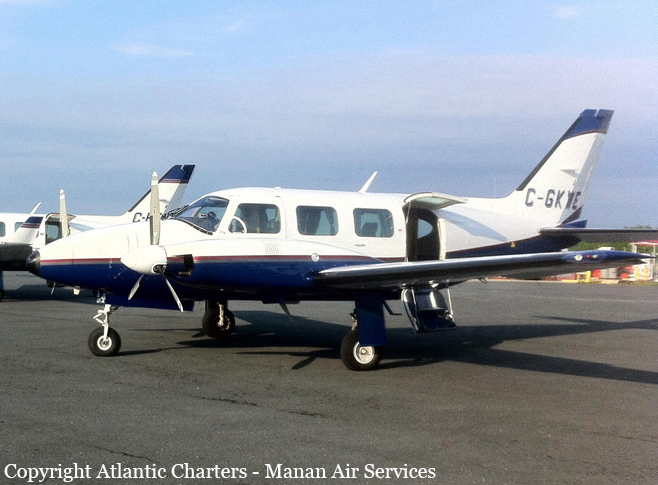
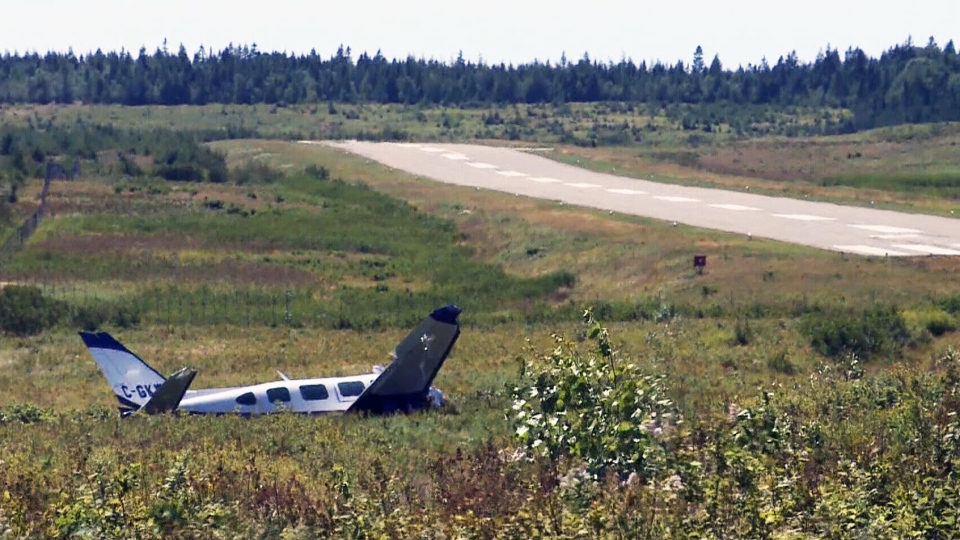
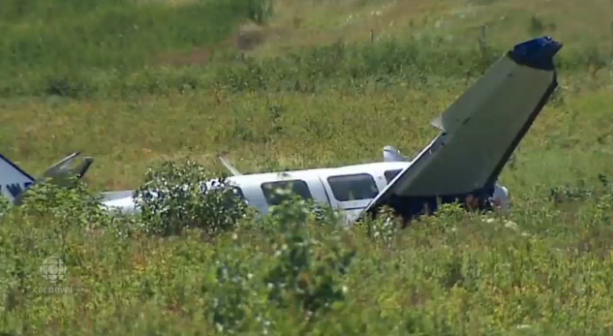
Crash of a Piper PA-31-325 Navajo in Grand Manan Island: 2 killed

Date & Time: Aug 16, 2014 at 0512 LT
Type of aircraft:
Operator:
Registration:
C-GKWE
Flight Type:
Survivors:
Yes
Schedule:
Saint John - Grand Manan Island
MSN:
31-7812037
YOM:
1978
Country:
Crew on board:
2
Crew fatalities:
Pax on board:
2
Pax fatalities:
Other fatalities:
Total fatalities:
2
Captain / Total flying hours:
17400
Copilot / Total flying hours:
304
Copilot / Total hours on type:
67
Circumstances:
The Atlantic Charters Piper PA-31aircraft had carried out a MEDEVAC flight from Grand Manan, New Brunswick, to Saint John, New Brunswick. At 0436 Atlantic Daylight Time, the aircraft departed Saint John for the return flight to Grand Manan with 2 pilots and 2 passengers. Following an attempt to land on Runway 24 at Grand Manan Airport, the captain carried out a go-around. During the second approach, with the landing gear extended, the aircraft contacted a road perpendicular to the runway, approximately 1500 feet before the threshold. The aircraft continued straight through 100 feet of brush before briefly becoming airborne. At about 0512, the aircraft struck the ground left of the runway centreline, approximately 1000 feet before the threshold. The captain and 1 passenger sustained fatal injuries. The other pilot and the second passenger sustained serious injuries. The aircraft was destroyed; an emergency locator transmitter signal was received. The accident occurred during the hours of darkness.
Probable cause:
Findings as to causes and contributing factors:
1. The captain commenced the flight with only a single headset on board, thereby preventing a shared situational awareness among the crew.
2. It is likely that the weather at the time of both approaches was such that the captain could not see the required visual references to ensure a safe landing.
3. The first officer was focused on locating the runway and was unaware of the captain’s actions during the descent.
4. For undetermined reasons, the captain initiated a steep descent 0.56 nautical mile from the threshold, which went uncorrected until a point from which it was too late to recover.
5. The aircraft contacted a road 0.25 nautical mile short of the runway and struck terrain.
6. The paramedic was not wearing a seatbelt and was not restrained during the impact sequence.
Findings as to risk:
1. If cockpit data recordings are not available to an investigation, then the identification and communication of safety deficiencies to advance transportation safety may be precluded.
2. If crew members are unable to communicate effectively, then they are less likely to anticipate and coordinate their actions, which could jeopardize the safety of flight.
3. If crew resource management training is not provided, used and continuously fostered, then there is a risk that pilots will be unprepared to avoid or mitigate crew errors encountered during flight.
4. If an actual weight and balance cannot be determined, then the aircraft may be operating outside of its approved limits, which could affect the aircraft’s performance characteristics.
5. If pre-computed weight and balance forms do not include standard items, then it increases the likelihood of omissions in weight and balance calculations, which increases the risk of inadvertently overloading or incorrectly loading the aircraft.
6. If organizations carry out a maintenance task that they consider to be elementary work and the task is not approved as an elementary work task, then there is a risk that the aircraft will not conform to its type design, which could jeopardize the safety of flight.
7. If individuals are performing maintenance tasks for which they have not received approved training, then there is a risk that the task will not be performed in accordance with the manufacturer’s instructions.
8. If components are not installed in accordance with the manufacturer’s instructions, then occupants are at a greater risk of injury or death during an incident or accident if these components are not properly secured.
9. If organizations do not record when maintenance is carried out, then the proper completion of tasks cannot be confirmed, and there is a risk that the aircraft will not conform to its type design, which could jeopardize the safety of flight.
10. If an aircraft is modified without regulatory approval and without supporting documentation, then the aircraft is not in compliance with all applicable standards of airworthiness, which could jeopardize the safety of flight.
11. If an operator undertakes unapproved changes to a supplemental type certificate, then there is a risk that the aircraft will not be airworthy, which could jeopardize the safety of flight.
12. If organizations do not use modern safety management practices, then there is an increased risk that hazards will not be identified and risks mitigated.
13. If Transport Canada does not adopt a balanced approach that combines thorough inspections for compliance with audits of safety management processes, unsafe operating practices may not be identified, thereby increasing the risk of accidents.
14. If organizations contract aviation companies to provide a service with which the organizations are not familiar, then there is an increased risk that safety deficiencies will go unnoticed, which could jeopardize the safety of the organizations’ employees.
15. If passengers are not provided with a regular safety briefing, then there is an increased risk that they will not use the available safety equipment or be able to perform necessary emergency functions in a timely manner to avoid injury or death.
16. If passengers are not properly restrained, then there is an increased risk of injuries and death to those passengers and the other occupants in the event of an accident.
17. If carry-on baggage, equipment or cargo is not restrained, then occupants are at a greater risk of injury or death if these items become projectiles in a crash.
18. If carry-on baggage, equipment or cargo is not restrained, then there is an increased risk that the occupants’ access to normal and emergency exits, and to safety equipment, will be completely or partially blocked.
19. If pilots continue an approach below published minimum descent altitudes without seeing the required visual references, then there is a risk of collision with terrain and/or obstacles.
20. If current charts and databases are not used, then navigational accuracy and obstacle avoidance cannot be assured.
21. If GPS (global positioning system) approaches are conducted without the approved Operations Specification, then there is a risk that the pilot’s training and knowledge will be inadequate to safely conduct the approach.
22. If medical symptoms/conditions are not reported to Transport Canada, then it negates some of the safety benefit of examinations and increases the risk that pilots will continue to fly with a medical condition that poses a risk to safety.
Other findings:
1. The pilot who installed the air ambulance system did not have approved training, nor was the pilot approved to carry out elementary work.
2. Atlantic Charters was not approved to install the air ambulance system as an elementary work task.
3. Atlantic Charters’ pre-computed weight and balance form did not include a line item to indicate nacelle fuel.
4. The semi-annual safety training offered to paramedics in lieu of safety briefings prior to flights did not meet regulatory requirements.
Final Report: