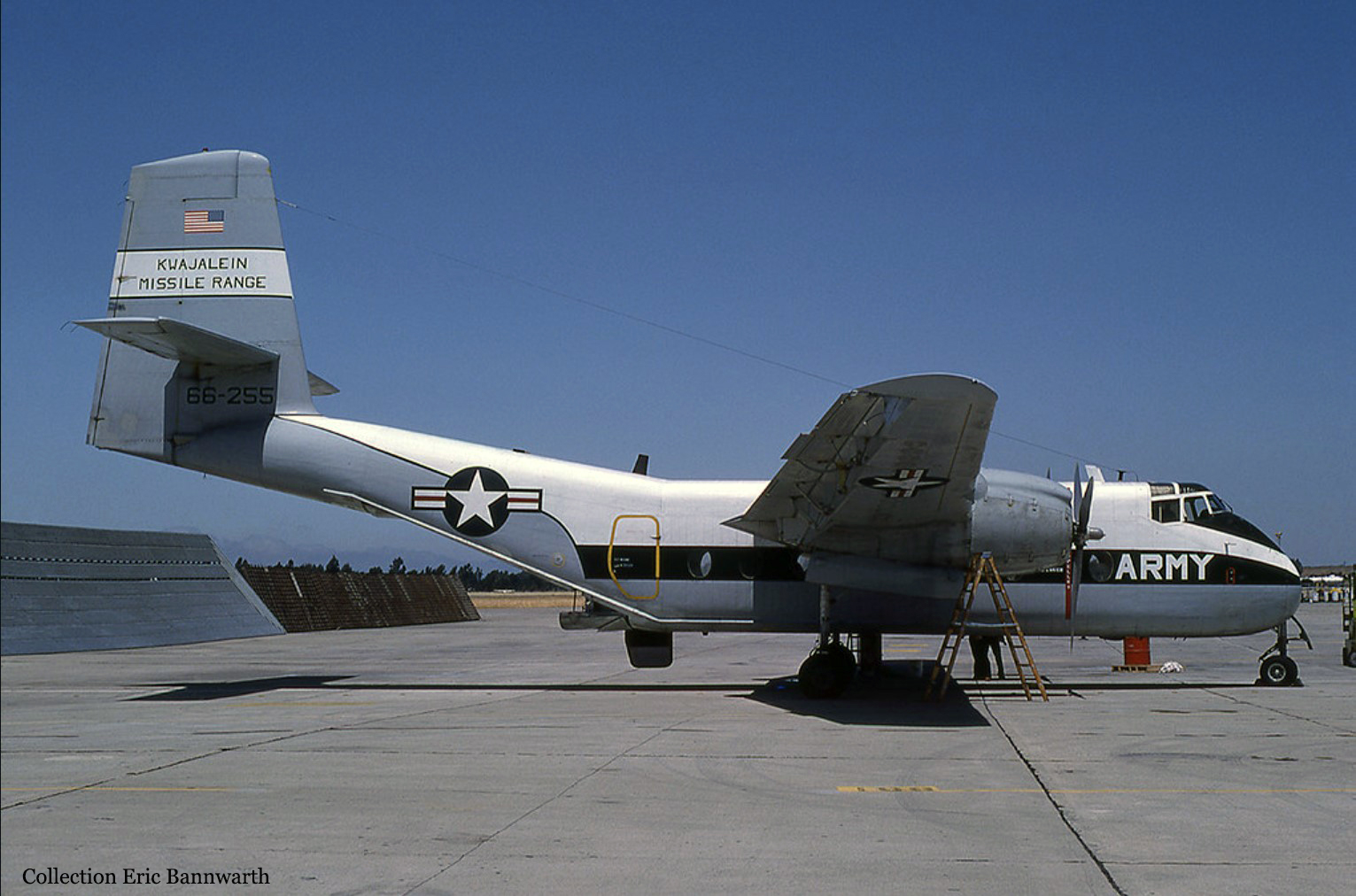
Crash of a De Havilland C-7A Caribou in Kwajalein

Date & Time: Jan 18, 1984
Type of aircraft:
Operator:
Registration:
66-255
Flight Type:
Survivors:
Yes
Schedule:
Kwajalein - Kwajalein
MSN:
255
YOM:
1967
Region:
Crew on board:
0
Crew fatalities:
Pax on board:
0
Pax fatalities:
Other fatalities:
Total fatalities:
0
Circumstances:
The crew was completing a local training mission at Kwajalein Island Airport. Upon touchdown, one of the undercarriage collapsed. The aircraft came to rest on the runway and was damaged beyond repair. There were no casualties.
Crash of a Rockwell Grand Commander 690 in Greenville: 4 killed

Date & Time: Jan 17, 1984 at 0738 LT
Registration:
N81717
Survivors:
No
Schedule:
Rome - Greenville
MSN:
690-11445
YOM:
1978
Crew on board:
2
Crew fatalities:
Pax on board:
2
Pax fatalities:
Other fatalities:
Total fatalities:
4
Captain / Total flying hours:
13834
Captain / Total hours on type:
1126.00
Aircraft flight hours:
11540
Circumstances:
As the pilot was making an ILS approach in IMC weather, the aircraft descended into trees and crashed about 1-1/2 mi from the runway threshold. The decision height for this approach was 1,316 feet msl and was located less than a mile from the threshold. A controller said that the last altitude readout he remembers for the aircraft was 1,200 feet at about 2 miles from threshold. When the radar target disappeared from the display, the controller asked for a position report, but received no reply. The 0740 est weather at Greenville, SC, was in part: sky condition zero obscured, visibility zero with fog, wind calm. The elevation of the crash site was 980 feet msl. All four occupants were killed.
Probable cause:
Occurrence #1: in flight collision with object
Phase of operation: approach - faf/outer marker to threshold (IFR)
Findings
1. (c) IFR procedure - improper - pilot in command
2. (f) weather condition - low ceiling
3. (f) weather condition - fog
4. (f) weather condition - below approach/landing minimums
5. (c) decision height - misjudged - pilot in command
6. (c) missed approach - delayed - pilot in command
7. (f) object - tree(s)
Final Report:

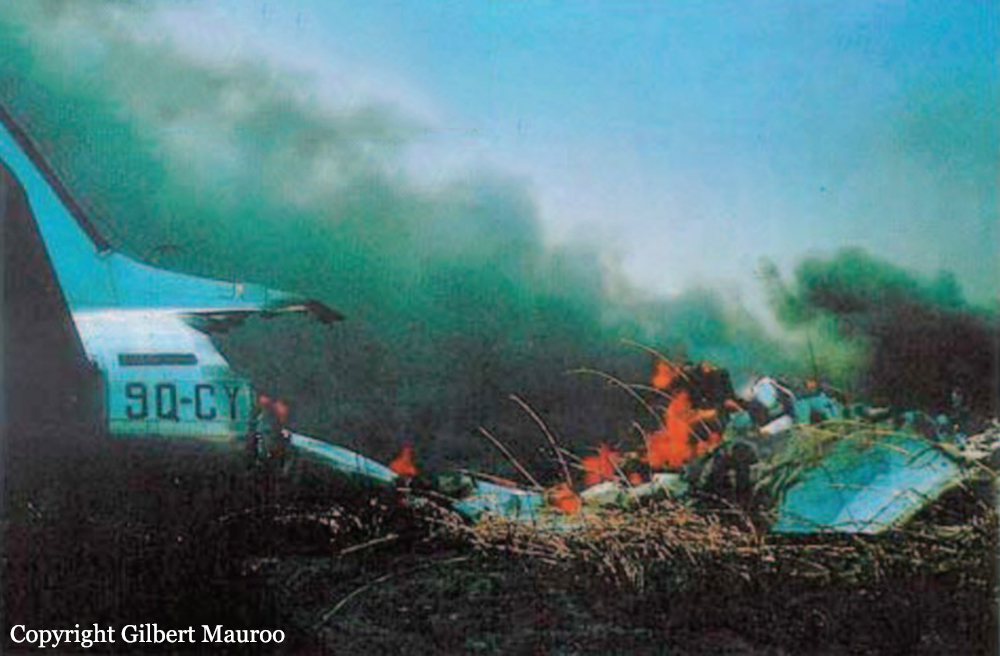
Crash of a Douglas C-47-DL in Kissidougou

Date & Time: Jan 16, 1984 at 1030 LT
Registration:
9Q-CYD
Survivors:
Yes
MSN:
9010
YOM:
1943
Country:
Region:
Crew on board:
2
Crew fatalities:
Pax on board:
15
Pax fatalities:
Other fatalities:
Total fatalities:
0
Circumstances:
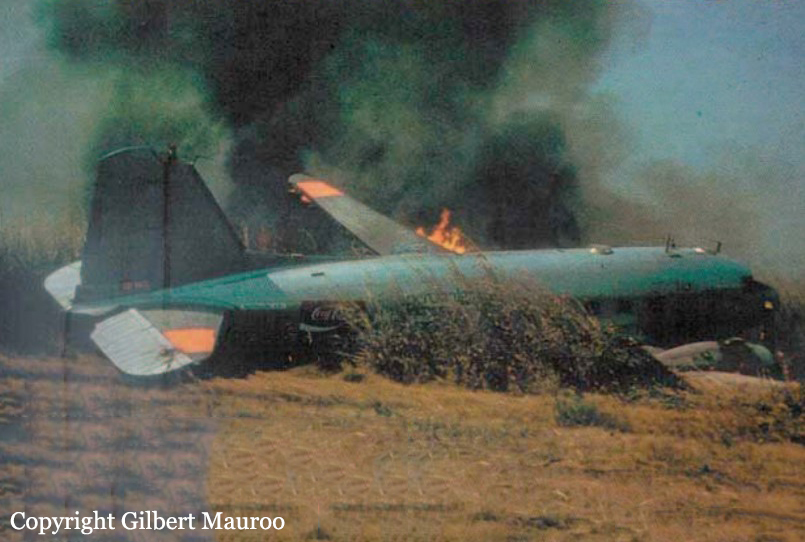
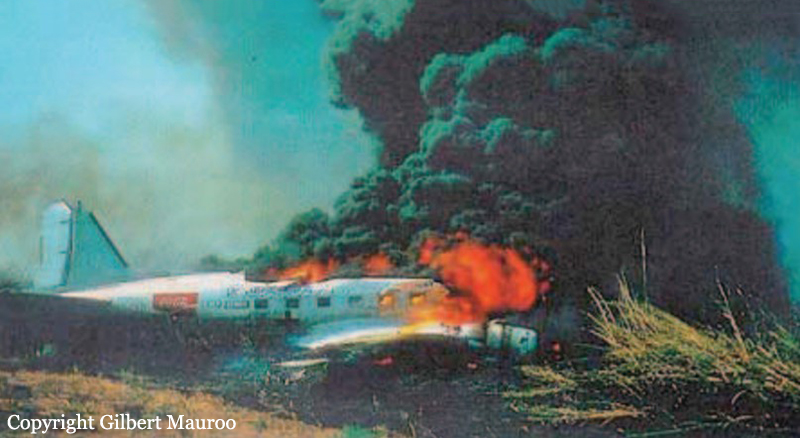
The aircraft was engaged in a charter flight, carrying people and support equipment for the Paris - Dakar Rally. After takeoff, while in initial climb, the left engine failed and the propeller was feathered. The crew decided to return for an emergency landing but on final, the aircraft became unstable after the undercarriage would be lowered at a height of 30-40 feet. The aircraft landed to the right of the runway and came to rest in a grassy area. The hot engines set fire to the dry grass and the aircraft was destroyed by fire. All 17 occupants escaped uninjured.
Photos by Gilbert Mauroo on http://www.vieillestiges.be/nl/articles/5

Crash of an Antonov AN-12 in Teseny: 26 killed

Date & Time: Jan 15, 1984
Type of aircraft:
Operator:
Registration:
1506
Flight Type:
Survivors:
No
MSN:
4 020 02
YOM:
1964
Country:
Region:
Crew on board:
5
Crew fatalities:
Pax on board:
21
Pax fatalities:
Other fatalities:
Total fatalities:
26
Circumstances:
On approach to Teseney Airport, the four engine aircraft was hit by ground fire and crashed few km from the airport. All 26 occupants were killed.
Probable cause:
Shot down by ground fire.

Crash of a Fokker F27 Friendship 100 in New York

Date & Time: Jan 13, 1984 at 1442 LT
Type of aircraft:
Operator:
Registration:
N148PM
Flight Phase:
Survivors:
Yes
Schedule:
New York - Ottawa
MSN:
10108
YOM:
1958
Flight number:
PM035
Crew on board:
3
Crew fatalities:
Pax on board:
21
Pax fatalities:
Other fatalities:
Total fatalities:
0
Captain / Total flying hours:
7012
Captain / Total hours on type:
799.00
Copilot / Total flying hours:
3151
Copilot / Total hours on type:
197
Aircraft flight hours:
42040
Aircraft flight cycles:
39945
Circumstances:
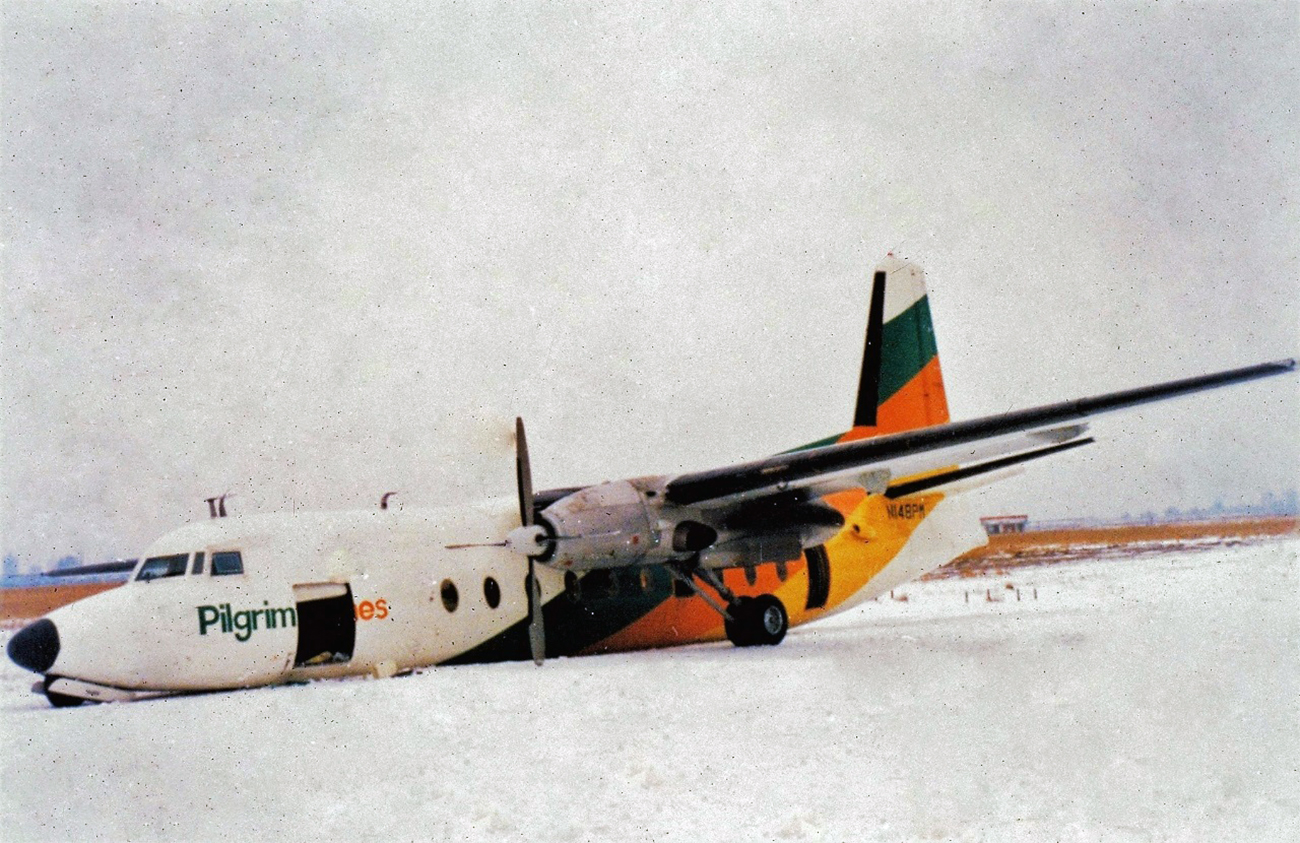
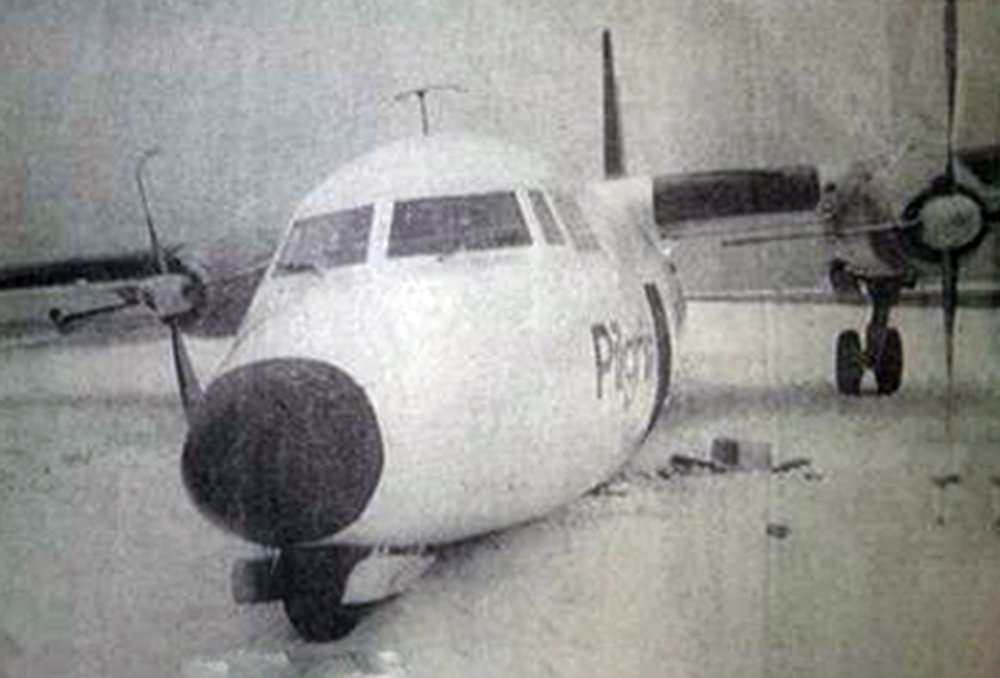
At 1442 on January 13, 1984, Pilgrim Airline Flight 35, a scheduled 14 CFR Part 121 flight with 21 passengers and a crew of three took off from runway 04L at John F. Kennedy International Airport, Jamaica, New York, en route to Ottawa, Canada. The weather was, in part, ceiling 2,700 feet overcast, visibility 7 miles; wind, 050° at I4 knots; and temperature 26°. As the captain raised the landing gear, the propeller on the left engine autofeathered. The captain initiated emergency procedures and told the first officer that he was retarding the power lever for the left engine. Concurrently, according to the cockpit voice recorder, the right engine experienced a power loss, and the airplane began to descend. The first officer, who was flying the airplane, maintained directional control, and the captain immediately put the landing gear lever down. however, the airplane struck the runway before the landing gear extended fully, and slid about 1,200 feet before stopping near the intersection of taxiway "G" and runway 04L. The captain and 13 passengers incurred minor injuries, and the flight attendant incurred a fracture of the spine. The airplane was damaged substantially; there was no postcrash fire.
Probable cause:
The flight crew's failure to use engine anti-ice on the inbound flight to JFK, the captain's failure to conduct a thorough pre-flight inspection, and the flight crew's decision to use engine anti-ice on take-off from JFK which led to power losses on both engines.
Final Report:

Crash of a Douglas EC-54U Skymaster in Cochabamba: 1 killed

Date & Time: Jan 13, 1984
Type of aircraft:
Operator:
Registration:
CP-1090
Flight Type:
Survivors:
Yes
Schedule:
Cochabamba - La Paz
MSN:
36036
YOM:
1945
Country:
Crew on board:
3
Crew fatalities:
Pax on board:
0
Pax fatalities:
Other fatalities:
Total fatalities:
1
Circumstances:
After takeoff from Cochabamba-Jorge Wilsterman Airport, while climbing, the engine n°2 failed. The crew was cleared to return for an emergency landing but the aircraft was unstable on final. Upon touchdown, the aircraft went out of control, veered off runway to the left and came to rest in a drainage ditch. A crew member was killed while two others were injured.
Probable cause:
Failure of the engine n°2 after takeoff for unknown reasons.

Crash of a Cessna 411A in Gainesville

Date & Time: Jan 12, 1984 at 1830 LT
Type of aircraft:
Registration:
N4500Q
Flight Type:
Survivors:
Yes
Schedule:
Conroe - Gainesville
MSN:
411-0300
YOM:
1969
Crew on board:
1
Crew fatalities:
Pax on board:
2
Pax fatalities:
Other fatalities:
Total fatalities:
0
Circumstances:
The aircraft crashed while on an ILS approach to the Gainsville Airport. Investigation revealed that the pilot had advised approach control that he was 'low on fuel.' After two missed approaches the pilot radioed that he was 'out of fuel.' The pilot did not have charts or approach plates aboard the aircraft, however ATC was not aware of this factor. Attempts to acquire additional information from the pilot have been unsuccessful. All three occupants escaped with minor injuries.
Probable cause:
Occurrence #1: loss of engine power(total) - nonmechanical
Phase of operation: approach - faf/outer marker to threshold (IFR)
Findings
1. (f) fluid,fuel - exhaustion
2. (c) preflight planning/preparation - improper - pilot in command
3. (c) fuel system - inadequate - pilot in command
4. (c) in-flight planning/decision - improper - pilot in command
----------
Occurrence #2: forced landing
Phase of operation: landing - flare/touchdown
Final Report:

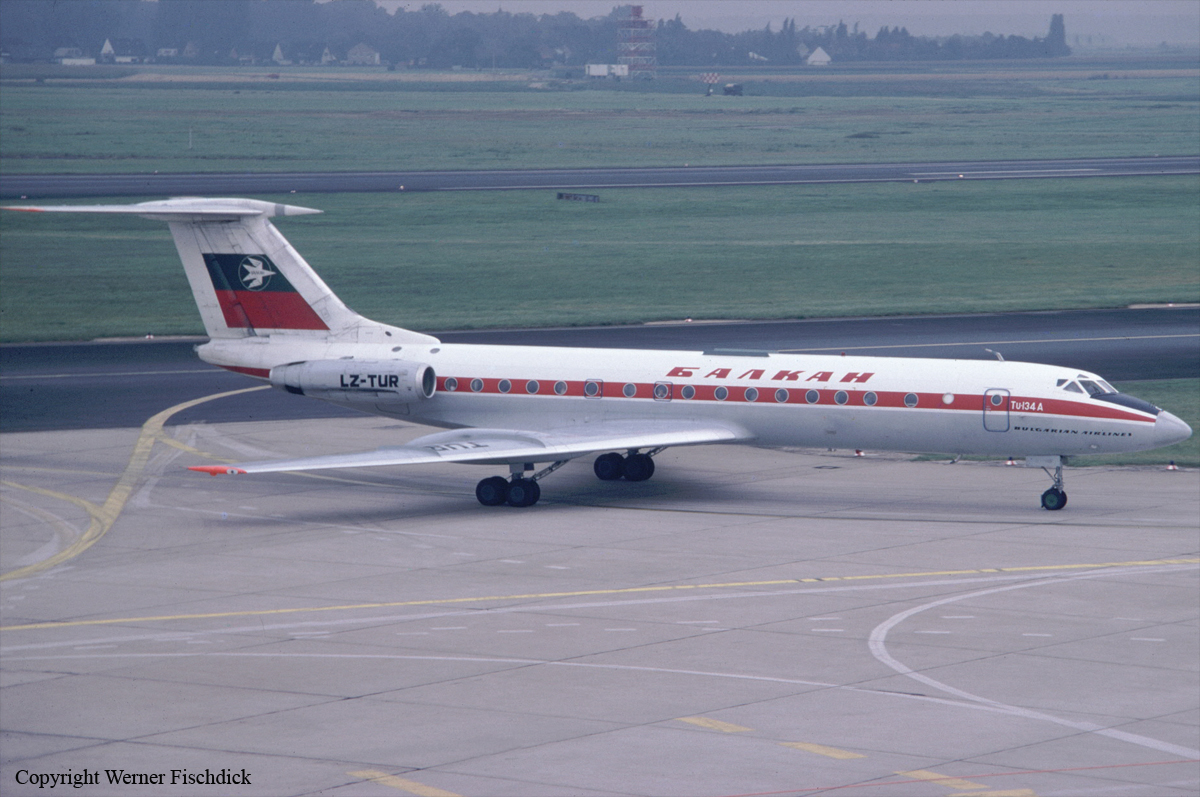
Crash of a Tupolev TU-134A in Sofia: 50 killed

Date & Time: Jan 10, 1984 at 1938 LT
Type of aircraft:
Operator:
Registration:
LZ-TUR
Survivors:
No
Schedule:
Berlin - Sofia
MSN:
4 35 23 08
YOM:
1974
Country:
Region:
Crew on board:
5
Crew fatalities:
Pax on board:
45
Pax fatalities:
Other fatalities:
Total fatalities:
50
Circumstances:
The approach to Sofia-Vrazhdebna Airport was initiated by night and limited visibility due to snow falls. On short final, the crew descended below the glide when the aircraft struck successively power cables and tree tops and crashed in a wooded area located 4 km short of runway threshold, bursting into flames. The aircraft was destroyed and all 50 occupants were killed.
Probable cause:
The decision of the crew to continue the approach below the glide without any visual contact with the runway until impact with obstacles.

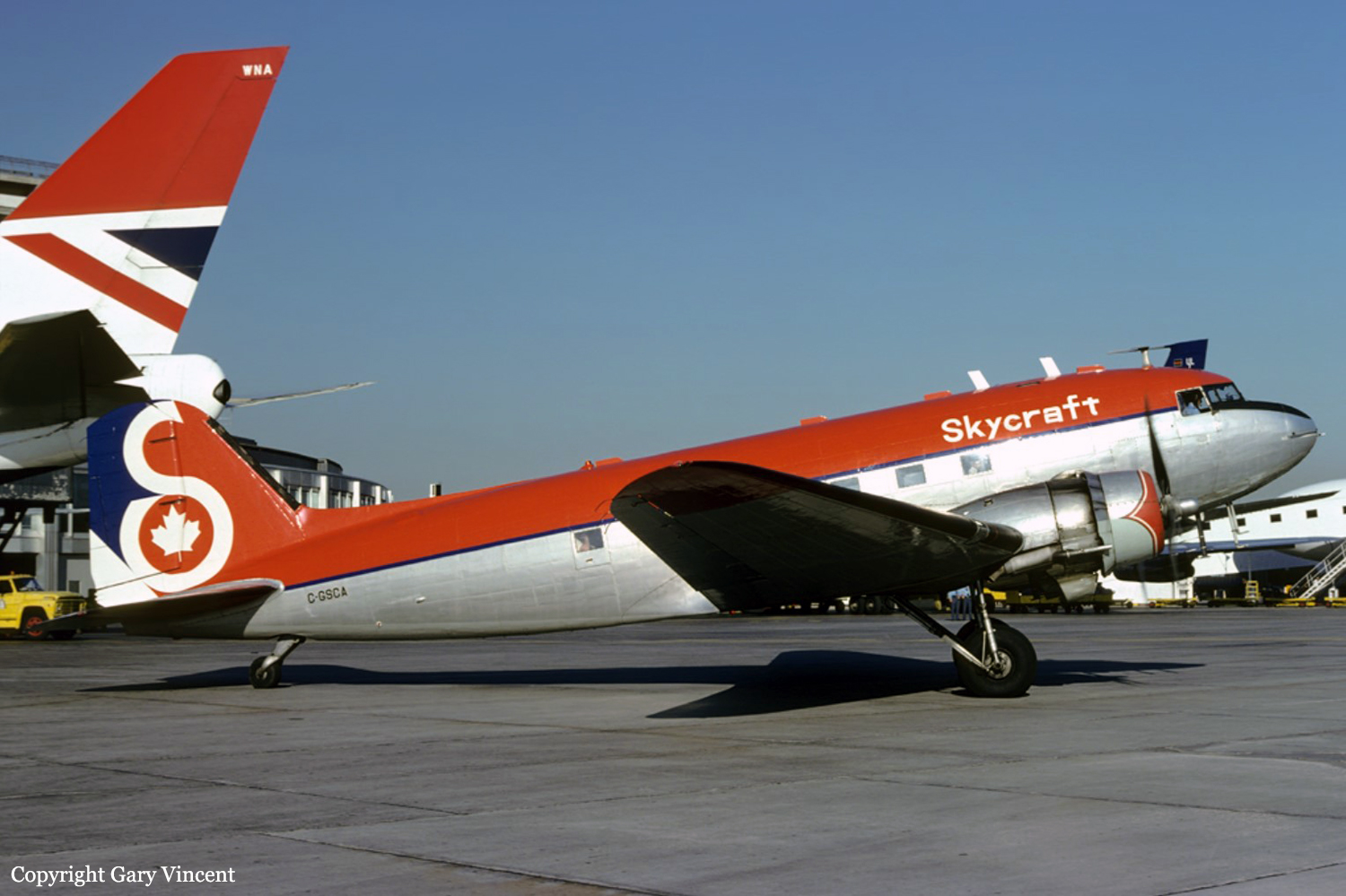
Crash of a Douglas C-47B-20-DK in Saint Louis: 1 killed

Date & Time: Jan 9, 1984 at 2232 LT
Operator:
Registration:
C-GSCA
Flight Phase:
Flight Type:
Survivors:
Yes
Schedule:
Saint Louis - Toronto
MSN:
15745/27190
YOM:
1945
Crew on board:
2
Crew fatalities:
Pax on board:
0
Pax fatalities:
Other fatalities:
Total fatalities:
1
Captain / Total flying hours:
4000
Captain / Total hours on type:
1350.00
Aircraft flight hours:
17933
Circumstances:
After landing, the pilot-in-command (pic) placed a refueling order to fill the aircraft's two 210 gallons main tanks for a return flight to Toronto, Ontario, Canada. After the cargo was unloaded and the aircraft was refueled, the aircrew aborted the 1st two attempts to takeoff due to slow aircraft performance. Engine run-ups were performed after each abort and reportedly, the engines checked normal. After the 2nd aborted takeoff, the aircrew called the fbo and requested that the refueler be asked what type of fuel was added. The response was '100LL Avgas.' On the 3rd attempt to depart, the aircraft took off, but both engines lost power as the landing gear was retracted. The aircrew selected a highway on which to land. However, the left wing hit a utility pole, then the aircraft went thru a fence and hit a highway embankment. Investigation revealed that Jet-A fuel had been added to the aircraft rather than 100LL fuel. The truck containing Jet-A fuel looked similar to the one with 100LL Avgas, but was properly designated with fuel grade markings. A pilot was killed, the second was seriously injured.
Probable cause:
Occurrence #1: loss of engine power (total) - nonmechanical
Phase of operation: takeoff - initial climb
Findings
1. (c) fluid,fuel - improper
2. (c) maintenance, service of aircraft/equipment - improper - fbo personnel
3. Aircraft performance, two or more engines - inoperative
----------
Occurrence #2: forced landing
Phase of operation: descent - emergency
----------
Occurrence #3: in flight collision with object
Phase of operation: descent - emergency
Findings
4. (f) object - utility pole
----------
Occurrence #4: on ground/water collision with object
Phase of operation: landing
Findings
5. (f) object - fence
----------
Occurrence #5: on ground/water encounter with terrain/water
Phase of operation: landing
Findings
6. (f) terrain condition - dirt bank/rising embankment
Final Report:

Crash of a Cessna T207A Skywagon in Zolfo Springs: 2 killed

Date & Time: Jan 7, 1984 at 0700 LT
Registration:
N73180
Flight Phase:
Flight Type:
Survivors:
No
Schedule:
Zolfo Springs - Homestead
MSN:
207-0567
YOM:
1980
Crew on board:
1
Crew fatalities:
Pax on board:
1
Pax fatalities:
Other fatalities:
Total fatalities:
2
Captain / Total flying hours:
11730
Aircraft flight hours:
1473
Circumstances:
The aircraft collided with trees and the ground during takeoff in IMC weather. The visibility was zero due to ground fog. There were no known witnesses to the accident but there was evidence of a collision with a 60 feet high tree at the end of the 3,000 feet runway. It was not determined whether the pilot used all of the runway. After the collision with the tree the aircraft hit the ground in a left bank and cartwheeled. Both occupants were killed.
Probable cause:
Occurrence #1: in flight collision with terrain/water
Phase of operation: takeoff - initial climb
Findings
1. (f) weather condition - low ceiling
2. (f) weather condition - obscuration
3. (f) weather condition - fog
4. (c) judgment - poor - pilot in command
5. (f) object - tree(s)
6. (c) clearance - not attained - pilot in command
Final Report: