Crash of a Cessna 414 Chancellor in MBS-Tri City: 3 killed

Date & Time: Mar 5, 1992 at 1504 LT
Type of aircraft:
Registration:
N69662
Flight Phase:
Flight Type:
Survivors:
No
Schedule:
MBS-Tri-City - Chicago
MSN:
414-0621
YOM:
1975
Crew on board:
2
Crew fatalities:
Pax on board:
1
Pax fatalities:
Other fatalities:
Total fatalities:
3
Captain / Total flying hours:
2057
Captain / Total hours on type:
184.00
Aircraft flight hours:
4106
Circumstances:
While loading a patient & his personal gear in the aircraft for an air ambulance flight, the aircraft tipped onto its tail. As a result, the tail bumper was forced upward into the belly of the empennage. The pilot refused the offer to have a mechanic look at the damage, and remarked 'this has happened before.' after takeoff, the pilot radioed to the tower that he had a jammed elevator, and was coming around to land. While maneuvering on a base leg, control was lost & the airplane was observed to crash with one wing perpendicular to the ground. Another airplane was in the takeoff position on the runway. The airplane was configured with a hospital litter/stretcher and oxygen bottle on the right side of the cabin. There was no record for the approval for, or installation of, the stretcher. In addition, there was no weight & balance record for the airplane with the stretcher installation. All three occupants were killed.
Probable cause:
The pilot's poor judgement in attempting flight after the airplane's fuselage was damaged during a loading operation. Factors which contributed to the accident were: the operator's failure to provide proper weight and balance data for the airplane, the pilot's failure to supervise the loading operation, and his failure to accept the services of a mechanic to inspect the damage.
Final Report:

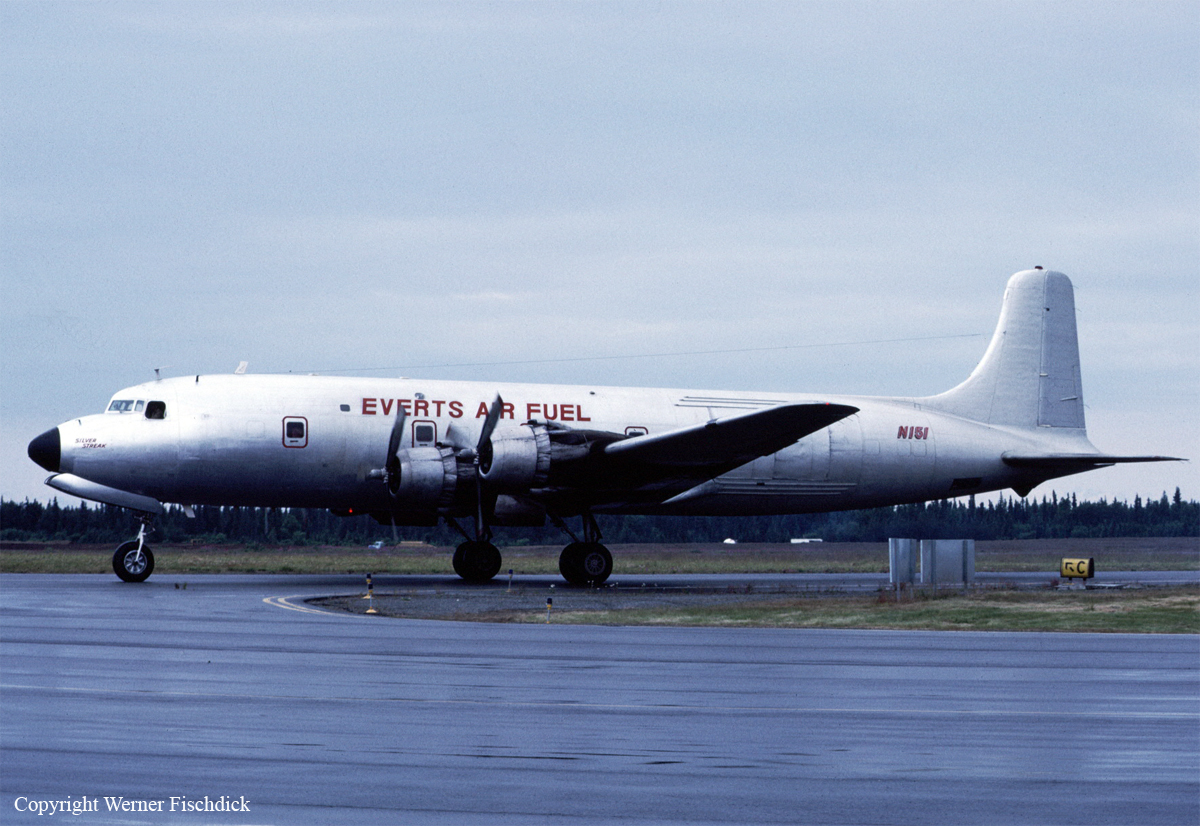
Crash of a Douglas DC-6BF in Selawik

Date & Time: Mar 3, 1992 at 1820 LT
Type of aircraft:
Operator:
Registration:
N151
Flight Type:
Survivors:
Yes
Schedule:
Fairbanks-Selawik
MSN:
45174
YOM:
1957
Location:
Crew on board:
3
Crew fatalities:
Pax on board:
0
Pax fatalities:
Other fatalities:
Total fatalities:
0
Captain / Total flying hours:
6800
Captain / Total hours on type:
5600.00
Aircraft flight hours:
33232
Circumstances:
The heavily loaded fuel tanker landed with an approximate 3 knot tailwind, overran the departure end of the runway, and came to a stop on a frozen river. The last two thirds of the 3,150 feet long gravel runway was covered with ice. The crew stated that the propellers either failed to go into reverse, or were slow in reversing, to assist in stopping. Examination revealed that all propeller blades were in the reversed position. Outside air temperature was minus 30 to minus 35° F. The airplane performance chart used to calculate the landing distance was for 'concrete runways'. Stopping distance was not predicated on the use of reverse propeller thrust. Post accident calculations, using the same chart, found the estimated landing distance needed for the accident flight to be 100 to 200 feet more than the length of the runway.
Probable cause:
The pilot's inadequate pre flight planning and disregarding the aircraft performance data. Contributing factors were the extreme outside air temperatures, the icy runway, and the tailwind.
Final Report:

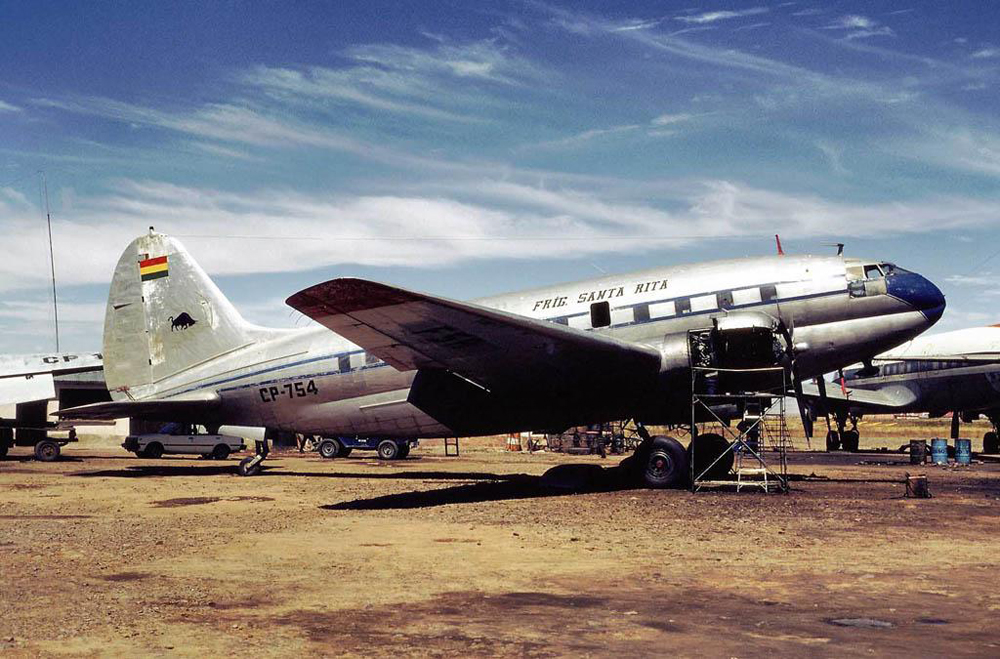
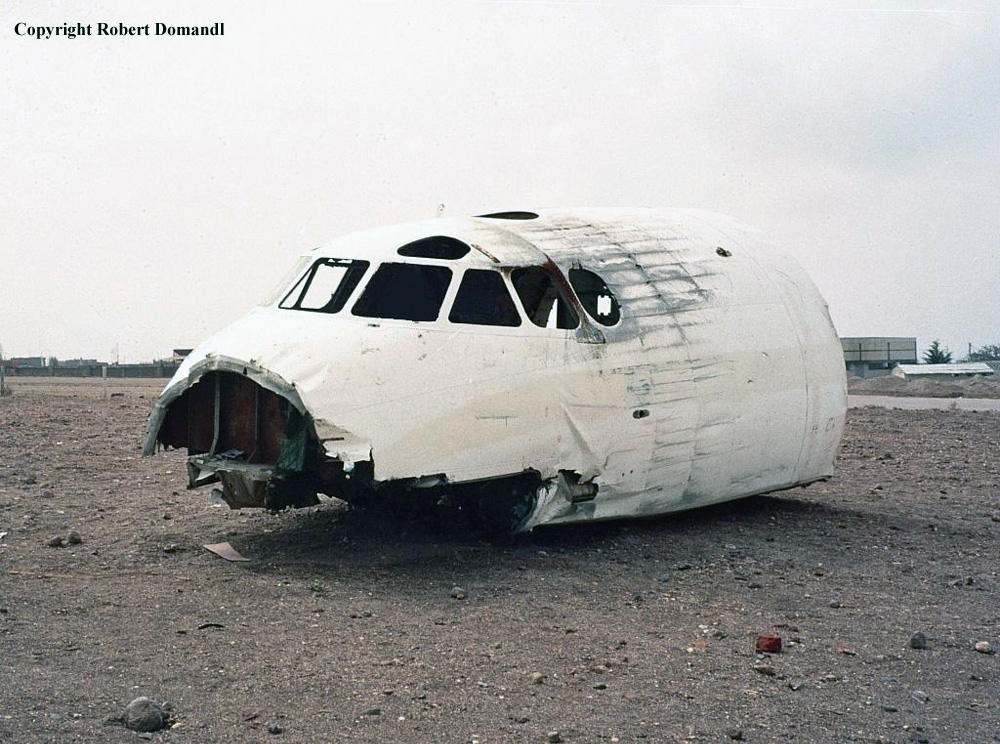
Crash of a Curtiss C-46F-1-CU Commando in Estencia: 5 killed

Date & Time: Mar 2, 1992 at 1600 LT
Type of aircraft:
Operator:
Registration:
CP-754
Flight Phase:
Flight Type:
Survivors:
No
Schedule:
Estencia - La Paz
MSN:
22570
YOM:
1945
Location:
Country:
Crew on board:
3
Crew fatalities:
Pax on board:
2
Pax fatalities:
Other fatalities:
Total fatalities:
5
Circumstances:
The aircraft was completing a cargo flight to La Paz, carrying two passengers, three crew members and a load of meat. During the takeoff roll on a wet runway, the left engine lost power. The captain decided to continue and started the rotation. Just after liftoff, the airplane banked left, causing the left wing to struck the ground. Out of control, the aircraft crashed 500 metres from the runway end, bursting into flames. All five occupants were killed.
Probable cause:
For unknown reasons, the crew decided to continue the takeoff procedure after the left engine lost power. The fact that the runway surface was wet was considered as a contributing factor as the aircraft's speed was insufficient.

Crash of an Antonov AN-26SM in Friedrichshafen

Date & Time: Feb 27, 1992
Type of aircraft:
Operator:
Registration:
52+10
Flight Type:
Survivors:
Yes
MSN:
14208
YOM:
1985
Country:
Region:
Crew on board:
0
Crew fatalities:
Pax on board:
0
Pax fatalities:
Other fatalities:
Total fatalities:
0
Circumstances:
Damaged beyond repair following a very hard landing at Friedrichshafen-Bodensee Airport. There were no injuries.

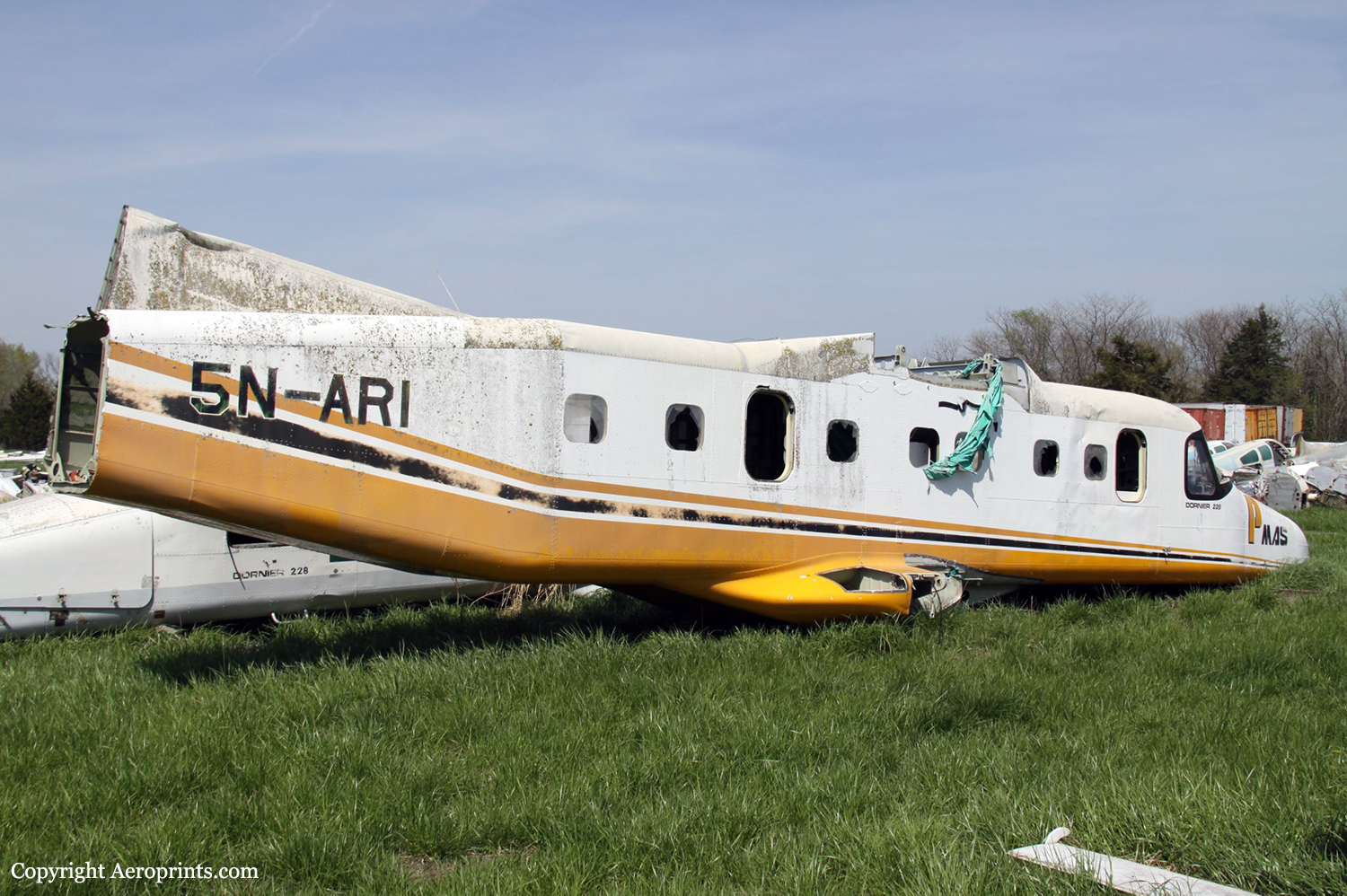
Crash of a Dornier DO228-201 in Eket

Date & Time: Feb 26, 1992 at 1056 LT
Type of aircraft:
Operator:
Registration:
5N-ARI
Survivors:
Yes
Schedule:
Lagos - Eket
MSN:
8012
YOM:
1983
Location:
Country:
Region:
Crew on board:
2
Crew fatalities:
Pax on board:
10
Pax fatalities:
Other fatalities:
Total fatalities:
0
Aircraft flight hours:
2819
Circumstances:
The Dornier 228 originated from Lagos (LOS) at 07:00 UTC. Destination was Eket. Enroute, the captain briefed his copilot that the wind was northerly at 2 knots. He decided to use runway 19. He also briefed that they would descend to the Minimum Descent Altitude (MDA) of 500 ft. and if they did not have the field in sight by then, they would carry out a missed approach, maintain runway heading and climb to 1,500 ft. From Lagos, they were cruising at 11,000 ft. and started the descent at about 77 nm from Port Harcourt, which was close to Eket. On clearance to 5000 ft by Port Harcourt Approach Control, the crew called Eket Control who descended them to 3,500 ft. At about 10 nm from Eket the NDB frequency was picked up and the crew informed Eket that they were leaving 3500ft for 1500. When the aircraft came overhead the NDB they shot the approach. On the outbound leg of 195 they turned 45° for a right procedure turn and still maintaining 1500ft. Flap 1 was selected with the speed lever set in the high RPM position. With the runway inbound on track 105 magnetic, the landing gear was selected in the down position and the aircraft was descended to 500ft. After 90 seconds into the final approach on runway 01, the co-pilot called out "runway-in-sight" but the captain thought the aircraft was high, so he announced he was overshooting, whereas, while giving evidence the co-pilot said she advised the overshoot when the ADF needle swung. Another approach was attempted. They came back to the same runway 01 to maintain the MDA and the runway was sighted from about 2 miles out at 400 feet height. The co-pilot thought the aeroplane was high and called for a missed approach. Then another landing attempt was made for runway 19. At about between 600 - 700 feet height above the approach path, the captain instructed his co-pilot "when you see the field, give me flaps 2, I am going to land". As soon as the co-pilot sighted the runway at about 2nm out, she selected flap 2. The captain descended for the field and while they came over the threshold, the speed was between 95 and 98 knots. Height above threshold was 300ft; the co-pilot felt that the aeroplane was high, but she thought that at flap 2 the aircraft was committed to land. This time the First Officer did not warn the captain though she felt that the aircraft was high. The captain said that he descended fast from 300ft with the target aim of touching down at about the 6th centre line marking from the threshold. After the touchdown, the captain applied reverse pitch but no effect of the deceleration was felt. He then moved the throttle levers to the maximum reverse position, yet there was no deceleration effect. The next action was to go on the brakes while the aircraft still had the rolling speed of about 80 knots. The captain felt that only the right brakes were effective because-the aeroplane skidded to the right; when there was no directional control, the captain said that he then used the opposite rudder for control. The commander was still fighting with the directional control when the aeroplane overran the end of the paved way at about 40 knots with the brakes still applied. The airplane sustained damage to the wheels and propellers. The fuselage was buckled just forward of the left wing leading-edge and at the fuselage/wing rear attachment point. Also the right hand side of the fuselage had bucklings at the forward section.
Probable cause:
The accident was probably caused by the failure of the crew to accord due considerations and proper planning to the prevailing weather conditions. This resulted in a long landing, which extended into the unsuccessful braking action. The contributory factor to the accident was the emergence of communication breakdown and non display of professional airmanship within the cockpit area. The crux of that discord is the company's recommendation to seat a trainee officer on the left seat for at least 100 flying hours. This decision was not verbally resisted by the senior trainee captain but the aura existed everywhere and this led to the animosity within the cockpit.

Crash of a Beechcraft H18 in Morganton: 1 killed

Date & Time: Feb 26, 1992 at 0826 LT
Type of aircraft:
Operator:
Registration:
N347G
Flight Type:
Survivors:
No
Schedule:
Charlotte - Morganton
MSN:
BA-654
YOM:
1963
Crew on board:
1
Crew fatalities:
Pax on board:
0
Pax fatalities:
Other fatalities:
Total fatalities:
1
Captain / Total flying hours:
10000
Captain / Total hours on type:
3000.00
Aircraft flight hours:
13506
Circumstances:
The commercial pilot was on a part 135 cargo flight. Since the destination airport had no weather reporting facility, company policy and far 135 required a VFR descent and landing from the MVA. The pilot requested and received clearance for a localizer approach to the airport, although a nearby airport was reporting 400' broken/3 miles with fog. The pilot reported to ATC that he had missed his first approach, and requested a second approach to the same airport. After executing the missed approach, the aircraft impacted mountainous terrain while aligned with the extended centerline of the localizer. Cap personnel reported that the accident site was obscured in clouds at the time of the accident. The investigation revealed that the aircraft descended about 1,500 feet below a minimum altitude on the first approach attempt. Mode c altitude data was lost during the missed approach. Four years earlier, this pilot descended below glidepath on an ILS approach and crashed into trees with weather below approach minimums. The pilot, sole on board, was killed.
Probable cause:
The failure of the pilot to follow far and company procedures, and his failure to maintain proper altitude during the approach. Factors were the mountainous terrain conditions, and the foggy, low ceiling weather conditions existing at the time of the accident.
Final Report:

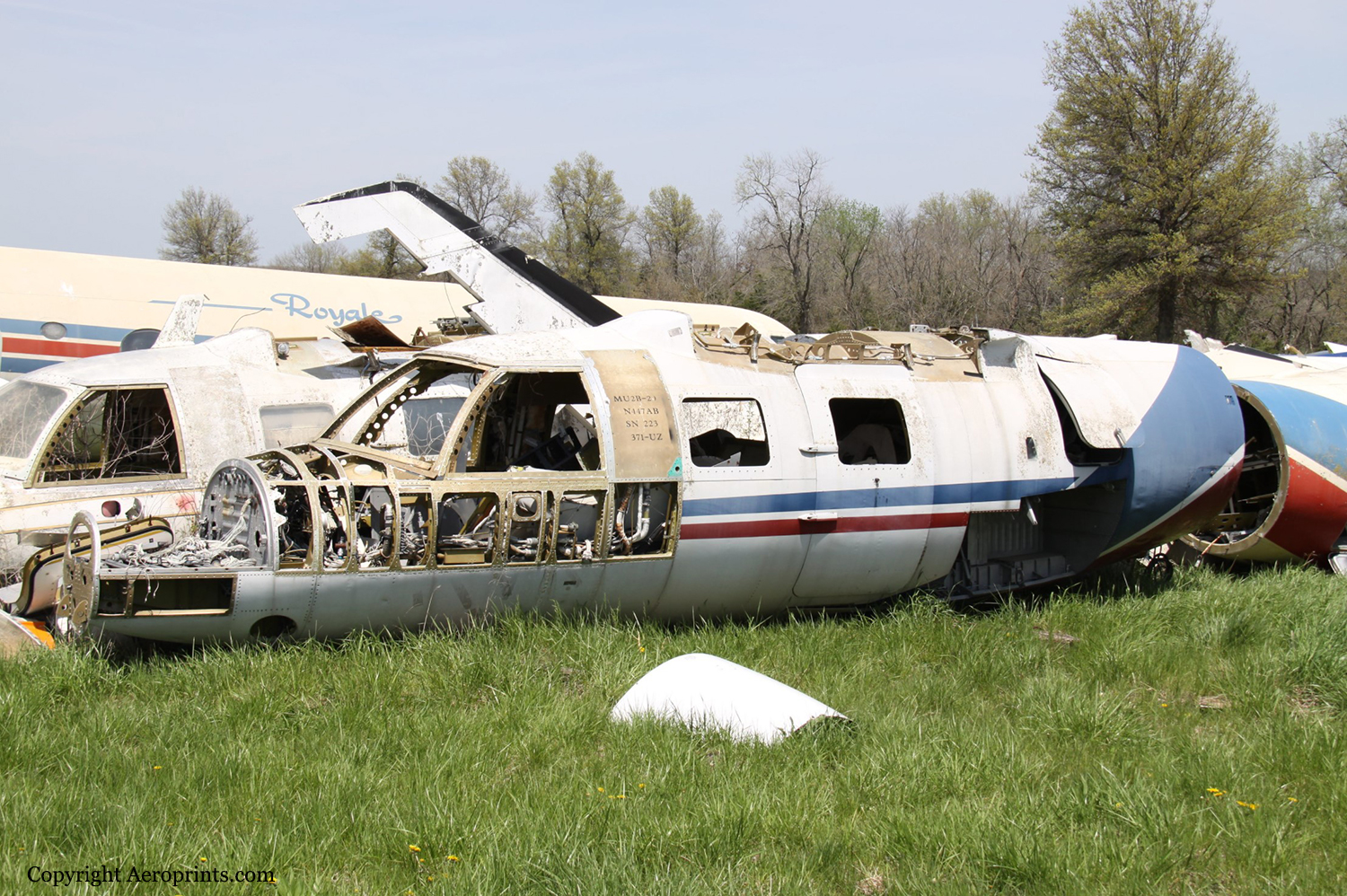
Crash of a Mitsubishi MU-2B-20 Marquise in Stuttgart

Date & Time: Feb 26, 1992
Type of aircraft:
Registration:
N447AB
Flight Type:
Survivors:
Yes
MSN:
223
YOM:
1972
Country:
Region:
Crew on board:
1
Crew fatalities:
Pax on board:
0
Pax fatalities:
Other fatalities:
Total fatalities:
0
Circumstances:
On approach to Stuttgart-Echterdingen Airport, the pilot apparently forgot to lower the landing gear. It is believed he tried to lower them just before touchdown but the aircraft landed on its belly (the undercarriage were partially extended) and slid for few dozen metres before coming to rest. The pilot was uninjured and the aircraft was damaged beyond repair.

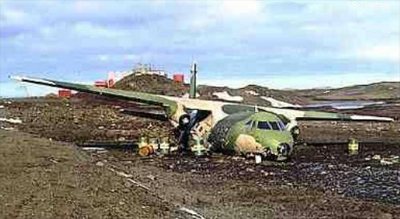
Crash of a Casa-Nurtanio CN235M-100 in Teniente Rodolfo Marsh

Date & Time: Feb 25, 1992
Operator:
Registration:
E-217
Flight Type:
Survivors:
Yes
Schedule:
Punta Arenas – Teniente Rodolfo Marsh
MSN:
C-021
YOM:
1989
Country:
Region:
Crew on board:
2
Crew fatalities:
Pax on board:
9
Pax fatalities:
Other fatalities:
Total fatalities:
0
Circumstances:
Landing at Teniente Rodolfo Marsh-Presidente Eduardo Frei Montalva Airport was completed on an icy and snowy runway. After touchdown, control was lost. The aircraft veered off runway, went down an embankment and came to rest. All 11 occupants were injured and the aircraft was destroyed.

Crash of an Antonov AN-24RV in Arequipa

Date & Time: Feb 22, 1992
Type of aircraft:
Operator:
Registration:
OB-1439
Survivors:
Yes
Schedule:
Puerto Maldonado – Juliaca – Arequipa
MSN:
2 73 078 04
YOM:
1972
Country:
Crew on board:
4
Crew fatalities:
Pax on board:
41
Pax fatalities:
Other fatalities:
Total fatalities:
0
Circumstances:
The aircraft landed too far down the runway at Arequipa-Alfredo Rodríguez Ballón Airport. Unable to stop within the remaining distance, it overran, rolled for about 160 metres then lost its undercarriage and came to rest, broken in two. All 45 occupants were rescued, among them 11 passengers were injured. The aircraft was written off.
Probable cause:
Wrong approach configuration on part of the crew who continued the landing above the glide, causing the aircraft to land too far down the runway. The crew failed to initiate a go-around procedure.

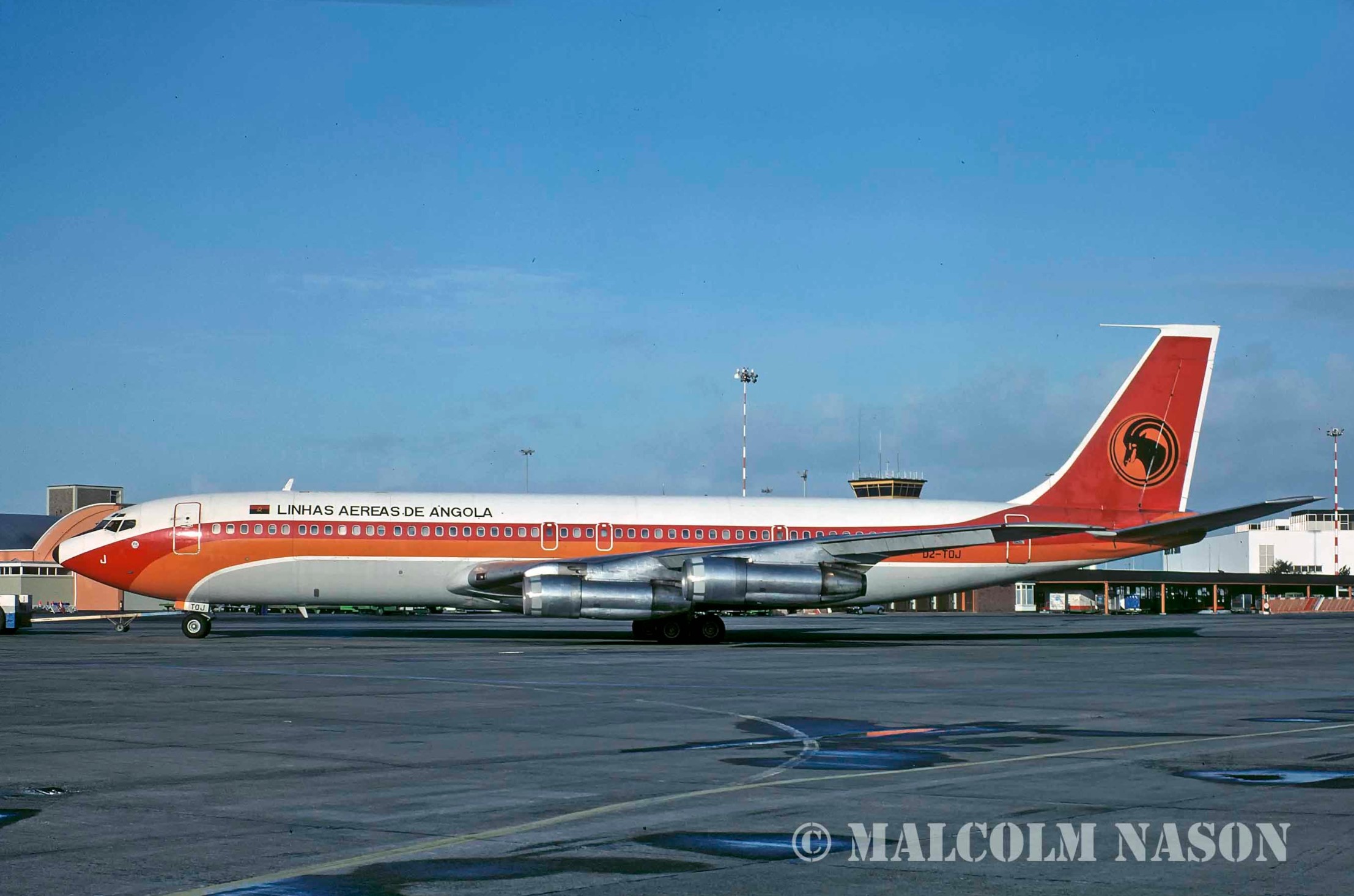
Crash of a Boeing 707-349C in Luanda

Date & Time: Feb 20, 1992
Type of aircraft:
Operator:
Registration:
D2-TOJ
Flight Phase:
Flight Type:
Survivors:
Yes
Schedule:
Luanda – Rio de Janeiro
MSN:
19355/553
YOM:
1966
Country:
Region:
Crew on board:
4
Crew fatalities:
Pax on board:
0
Pax fatalities:
Other fatalities:
Total fatalities:
0
Circumstances:
While taxiing at Luanda-4 de Fevereiro Airport, the nose gear collapsed. All four crew members evacuated uninjured while the aircraft was damaged beyond repair.