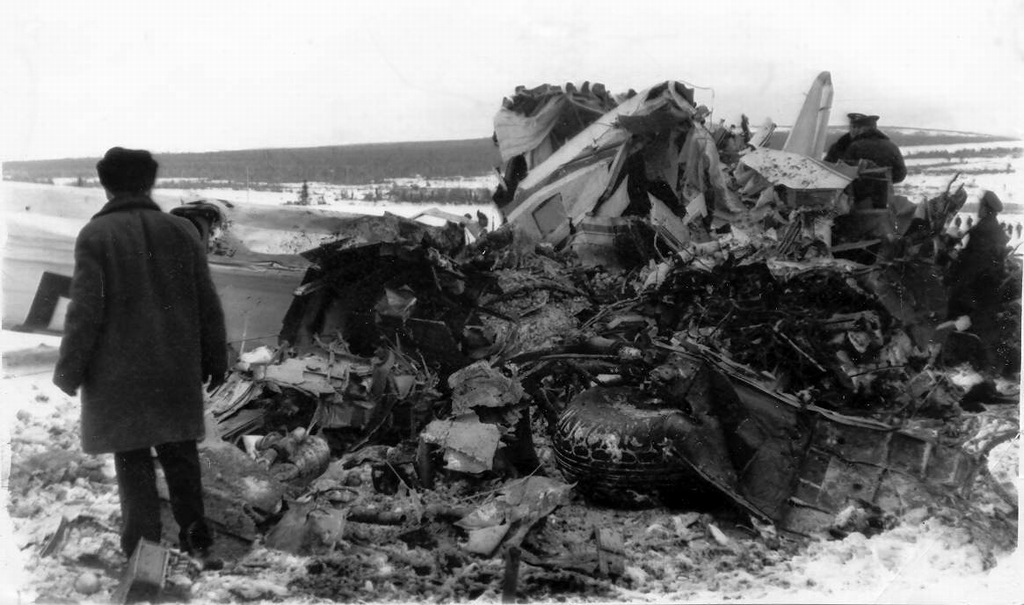
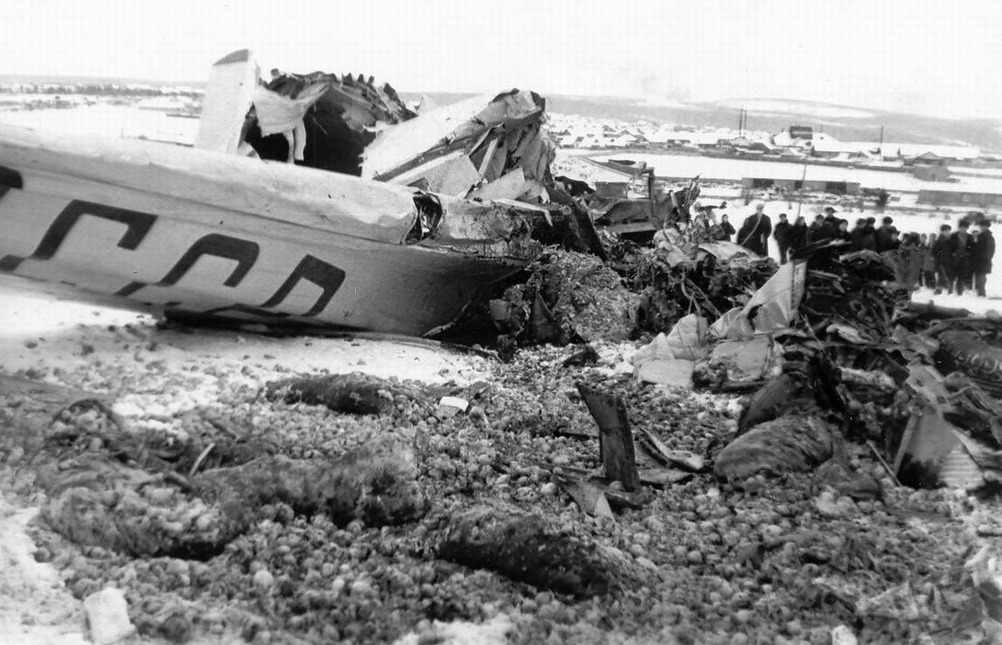
Crash of a Lisunov LI-2 in Aldan: 5 killed

Date & Time: Oct 12, 1967 at 1250 LT
Type of aircraft:
Operator:
Registration:
CCCP-16150
Flight Type:
Survivors:
No
Schedule:
Takhtamygda – Kyzyl-Syr
MSN:
37 03
YOM:
1948
Country:
Region:
Crew on board:
4
Crew fatalities:
Pax on board:
1
Pax fatalities:
Other fatalities:
Total fatalities:
5
Circumstances:
The crew was completing a cargo flight from Takhtamygda to Kyzyl-Syr with one passenger on board. While cruising in clouds, the left engine failed. The captain decided to divert to Aldan for an emergency landing. On approach, the crew was unable to lower the gear so the captain decided to make a go-around. Due to the presence of mountains all around the airport, the captain decided to make a sharp turn to the left. From a height of 15-20 meters, the airplane banked left then stalled and crashed in a snow covered field located near the airport. The aircraft was destroyed and all five occupants were killed.
Probable cause:
Failure of the left engine in flight for undetermined reason. The presence of icing conditions and the complexity of the approach at Aldan Airport due to mountains all around were considered as contributing factors.

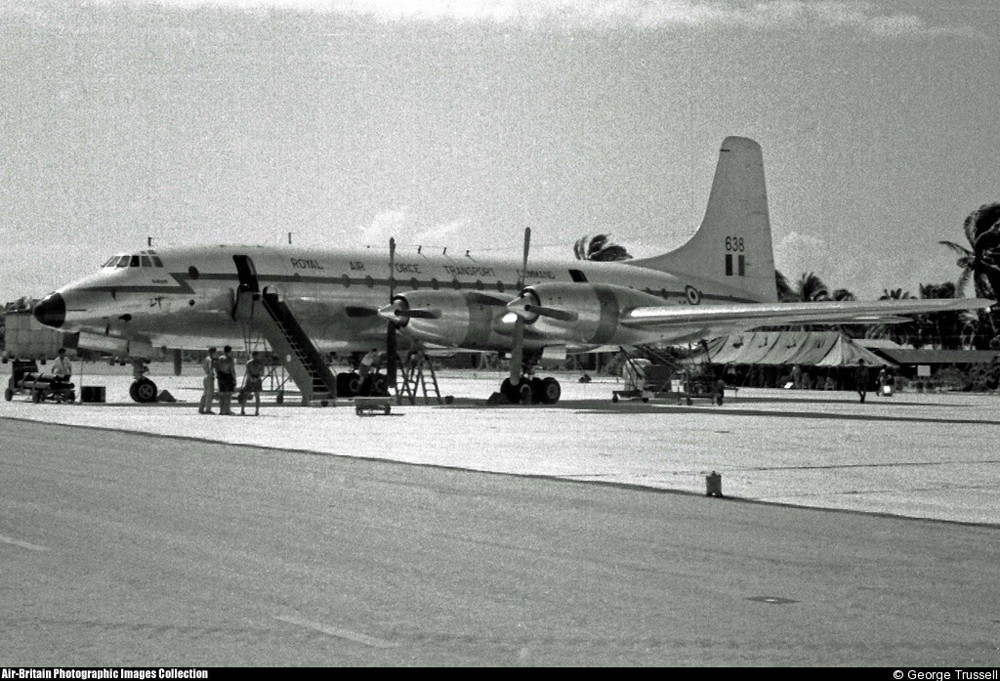
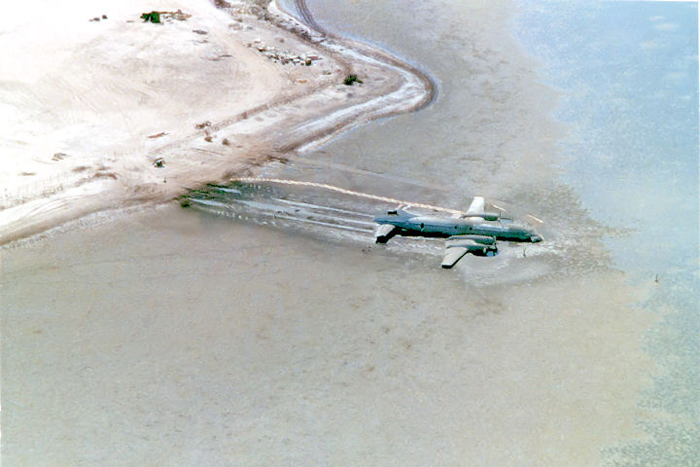
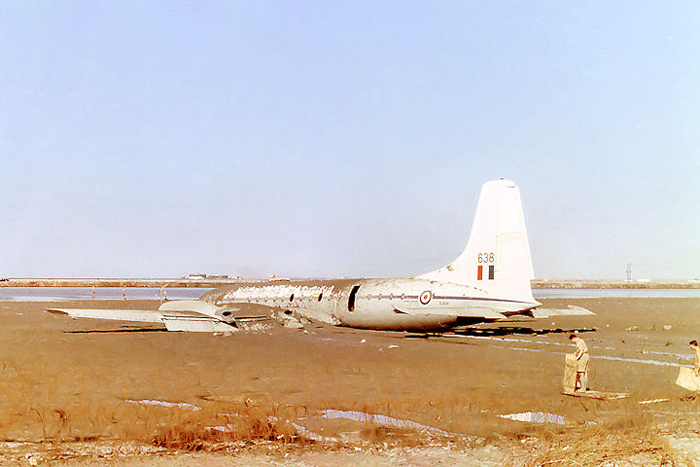
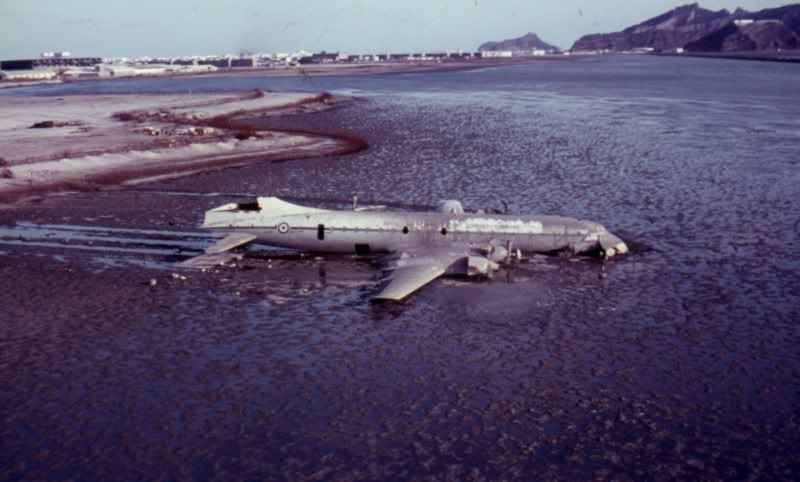
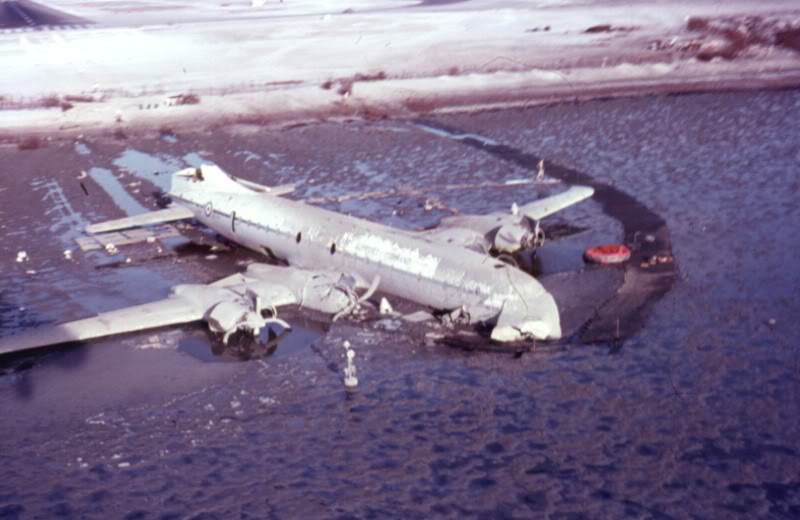
Crash of a Bristol 253 Britannia C.1 in Aden

Date & Time: Oct 12, 1967
Type of aircraft:
Operator:
Registration:
XL638
Flight Type:
Survivors:
Yes
Schedule:
London - Bahrain - Aden
MSN:
13400
YOM:
1959
Country:
Region:
Crew on board:
0
Crew fatalities:
Pax on board:
0
Pax fatalities:
Other fatalities:
Total fatalities:
0
Circumstances:
After touchdown at Aden-Khormaksar Airport, the four engine airplane encountered difficulties to stop within the remaining distance and overran. It lost its undercarriage and came to rest in shallow water. There were no casualties but the aircraft was written off.
Probable cause:
Failure of the reverse systems after touchdown for undetermined reason.

Crash of a Grumman E-1B Tracer near Đà Nẵng: 5 killed

Date & Time: Oct 8, 1967
Type of aircraft:
Operator:
Registration:
148132
Survivors:
No
Site:
Schedule:
Chu Lai – Đà Nẵng
MSN:
49
Flight number:
Sea Bat 700
Country:
Region:
Crew on board:
5
Crew fatalities:
Pax on board:
0
Pax fatalities:
Other fatalities:
Total fatalities:
5
Circumstances:
The crew was completing a flight from Chu Lai to Đà Nẵng on behalf of the contingent of USS Oriskany. While descending to the airport, the crew encountered poor weather conditions and was instructed to make a turn to the right to join the approach path when the airplane struck the slope of a mountain and crashed approximately 16 km from the airport. All five occupants were killed. At the time of the accident, the mountain was shrouded in clouds. The bodies were found in 1993.
Crew:
Ltjg Andrew Gilbert Zissu,
Ltjg Normal Lee Roggow,
Ltjg Donald Findling Wolfe,
ATC Roland Robert Pineau,
Seaman Raul Antonio Guerra.

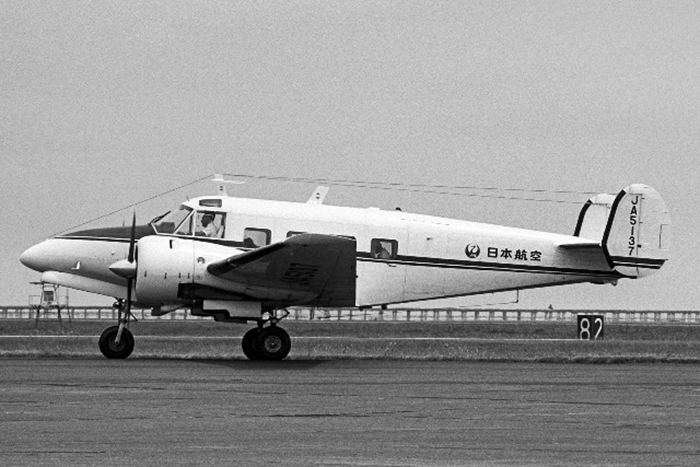
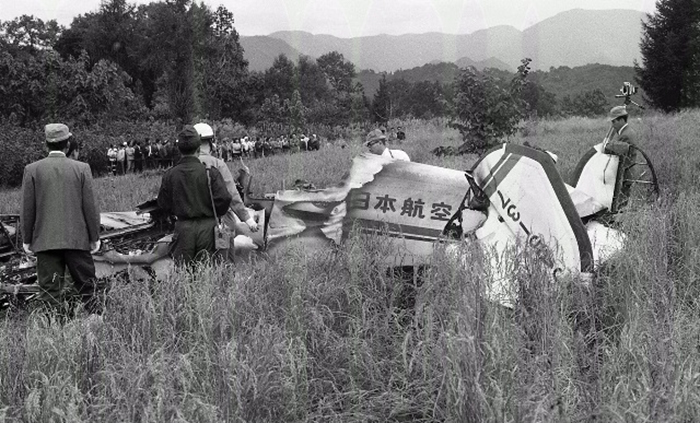
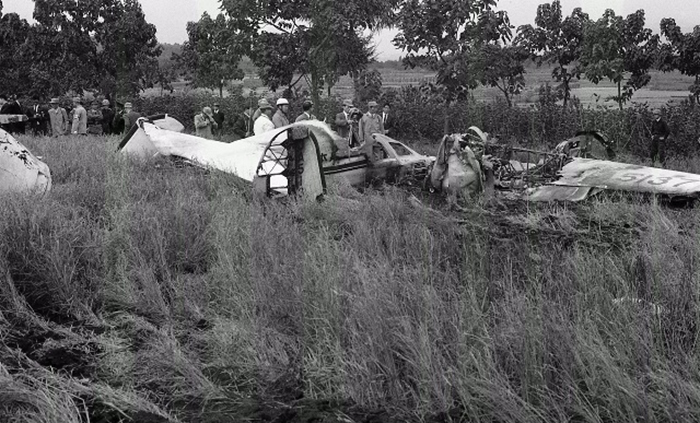
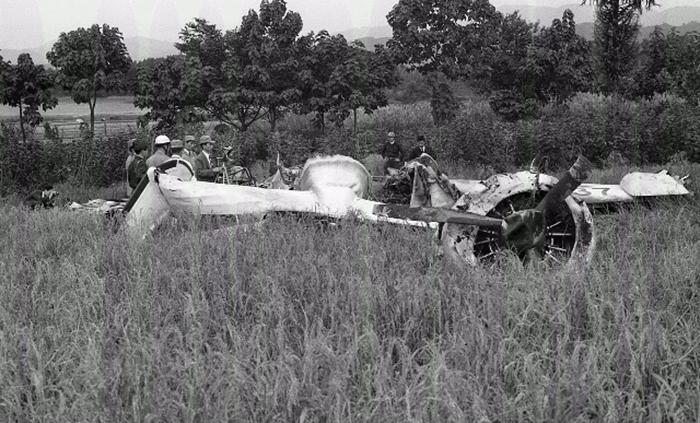
Crash of a Beechcraft H18 in Murayama

Date & Time: Oct 5, 1967 at 1115 LT
Type of aircraft:
Operator:
Registration:
JA5137
Flight Type:
Survivors:
Yes
Schedule:
Yamagata - Yamagata
MSN:
BA-745
YOM:
1967
Country:
Region:
Crew on board:
4
Crew fatalities:
Pax on board:
0
Pax fatalities:
Other fatalities:
Total fatalities:
0
Circumstances:
The crew (one instructor and three student pilots) was completing a local training flight at Yamagata Airport. While approaching the airfield from the north, the airplane suffered and engine failure. The instructor elected to make an emergency landing when the airplane crashed in flames in a field located in Murayama, about 11 km north of the airport. All four crew members were slightly injured while the aircraft was destroyed.
Probable cause:
Engine failure in flight.

Crash of a Dassault Falcon 20C in Goose Bay

Date & Time: Oct 1, 1967
Type of aircraft:
Registration:
HB-VAP
Survivors:
Yes
Schedule:
Geneva – Keflavik – Goose Bay
MSN:
37
YOM:
1966
Country:
Crew on board:
3
Crew fatalities:
Pax on board:
4
Pax fatalities:
Other fatalities:
Total fatalities:
0
Circumstances:
The aircraft was completing a transatlantic flight from Geneva to Goose Bay with an intermediate stop in Keflavik. On final approach to Goose Bay Airport, both engines failed simultaneously. The crew realized he could not reach the airport so the captain decided to attempt an emergency landing. The airplane belly landed, slid for several yards and came to rest 11 km short of runway. All seven occupants were rescued while the aircraft was damaged beyond repair.
Probable cause:
Double engine failure on approach caused by a fuel exhaustion.

Crash of a Rockwell Aero Commander 560E in Dallas: 7 killed

Date & Time: Sep 27, 1967 at 1536 LT
Operator:
Registration:
N3831C
Survivors:
No
Site:
MSN:
560-747
YOM:
1959
Crew on board:
1
Crew fatalities:
Pax on board:
6
Pax fatalities:
Other fatalities:
Total fatalities:
7
Captain / Total flying hours:
13247
Captain / Total hours on type:
2010.00
Circumstances:
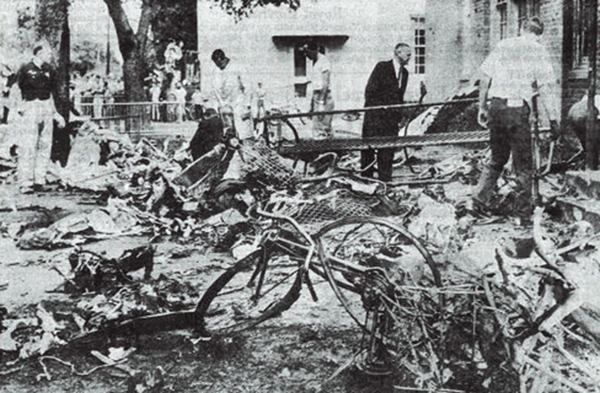
While on approach to Dallas-Love Field Airport, the left wing broke away and control was lost. The airplane entered a dive and crashed on the elementary school of Bradfield. All seven occupants on board the airplane were killed while no one on the ground was injured. The school was partially destroyed as well as several vehicles. The airplane was operated on behalf of LTV Electrosystems (Ling-Temco-Vought).
Probable cause:
Uncontrolled descent following the structural failure of the left wing due to fatigue fracture. Two overlapping rivet holes found in aft leg of the spar cap.
Final Report:

Crash of a Lockheed P-2H Neptune in Jacksonville Beach: 5 killed

Date & Time: Sep 27, 1967
Type of aircraft:
Operator:
Registration:
147946
Flight Type:
Survivors:
No
Schedule:
Jacksonville - Jacksonville
MSN:
726-7196
YOM:
1958
Crew on board:
5
Crew fatalities:
Pax on board:
0
Pax fatalities:
Other fatalities:
Total fatalities:
5
Circumstances:
The crew was completing a local training flight out from Jacksonville-Towers Field NAS. While approaching the airbase from the east, the airplane collided with a USN Vought RF-86G Crusader registered 146864 and carrying one pilot. Following the collision, both aircraft dove into the ground and crashed in Jacksonville Beach, some 17 miles east of the airfield. All six occupants on both aircraft were killed.

Crash of a Beechcraft U-21A Ute in Vũng Tàu: 1 killed

Date & Time: Sep 22, 1967
Type of aircraft:
Operator:
Flight Type:
Survivors:
Yes
Schedule:
Vũng Tàu - Vũng Tàu
Country:
Region:
Crew on board:
2
Crew fatalities:
Pax on board:
0
Pax fatalities:
Other fatalities:
Total fatalities:
1
Circumstances:
The crew was completing a local training (transition) mission at Vũng Tàu Airport. After touchdown, the crew tried to avoid trespassers when control was lost and the aircraft crashed. Maj Bryan M. Blackshear Jr. was killed while the second pilot was injured. They were practicing engine failure at the time of the accident.

Crash of a Vickers 808 Viscount in Bristol

Date & Time: Sep 21, 1967 at 0859 LT
Type of aircraft:
Operator:
Registration:
EI-AKK
Survivors:
Yes
Schedule:
Dublin - Bristol
MSN:
422
YOM:
1959
Region:
Crew on board:
4
Crew fatalities:
Pax on board:
17
Pax fatalities:
Other fatalities:
Total fatalities:
0
Captain / Total flying hours:
5005
Captain / Total hours on type:
1300.00
Copilot / Total flying hours:
2200
Copilot / Total hours on type:
592
Aircraft flight hours:
18375
Circumstances:
Before leaving Dublin no landing forecast for Lulsgate was available but the forecast conditions for Filton, 10 miles north of Lulsgate, were well above the company minima of 260 ft critical height and 800 rn RVR. About 25 minutes before commencing the approach to land and whilst the aircraft was on the airway near Strumble, the latest weather conditions for Lulsgate obtained by radio from air traffic control, showed that there was 3/8 cloud at 1 000 ft, visibility was 1 500 m with the sun tending to disperse cloud and mist. After leaving the airway, the aircraft was positioned by Lulsgate radar for an approach to runway 28 on a right-hand base leg. At 0752 hours GMT before the final approach was commenced, the latest weather conditions were passed by the Lulsgate rabar controller who was also the approach controller, these conditions showed a surface wind northerly 8 to 10 kt, QFE 979, QNH 1 001, visibility in mist 1 800 m. During the final turn on to the approach at 6 miles, the aircraft drifted to the left of the extended centre line which was regained closing from left to right during the final descent. At five miles from touchdown, still to the left of the centre line, a descent from 1 500 ft (QFE) was commenced at a rate of 300 ft per mile with advisory altitudes being passed every half mile. The air was calm and the commander was able to achieve a high degree of precision during the approach; heights were accurately flown during the descent and the aircraft's track, cow verging on the centre line, was steady, When the aircraft was between 3 and 34 miles from touchdown, the controller informed it that visibility had deteriorated to 1 200 m. At two miles, when steering 2950, the aircraft intercepted the approach centre line and its heading was corrected to 290°; at one and a half miles at 500 ft, a further heading correction was made on to 287°. A drift to the right, away from the centre line, became apparent when the aircraft was between 1 and 12 miles from touchdown and the controller gave further corrections to the left to 285° and 280°. At one mile from touchdown at 350 feet, a further left correction to 275° was given but the aircraft continued to track to the right of the centre line. At half a mile from touchdown, when the talk-down was complete, the controller informed the aircraft it was well to the right of the centre line and that it should overshoot if the runway was not in sight. Shortly afterwards the aircraft was seen, by a controller, heading towards the control tower before commencing its corrective turn to the left. The commander, who was at the controls of the aircraft, said it was possible to refer to the ground and natural horizon until passing through about 650 ft when a thin layer of cloud followed by misty conditions required the remainder of the approach to be made on instruments. Whilst descending through 300 ft, the commander asked the co-pilot if he could see anything but just as he replied in the negative the commander saw the approach lights ahead and to his left and he promptly commenced an 'St turn to line up with them. As he did so he called for 400 of flap and less power in order to reduce the airspeed from 130 kt to about 112 kt. During this phase, he lost contact with the lights "for some seconds" but he elected to continue the approach because the last reported visibility was 1 200 rn and he was confident the runway lights would shortly appear ahead. When they came into view the aircraft was over the left-hand side of the runway and not properly aligned with it; the commander said he attempted to turn on to the runway centre line as he flared out for the landing. During this manoeuvre, although he was not aware of it, the starboard wing tip and No. 4 propeller struck the runway; the aircraft then touched down on all its wheels with considerable port drift. The commander took overshoot action, applying full power, calling for 20° of flap and the undercarriage to be raised; the airspeed had, in the meanwhile, fallen below 100 kt. The commander realised that the aircraft was not accelerating normally and saw that it was headed towards buildings on the northern perimeter of the aerodrome; rather than risk flying into these obstructions, he flew the aircraft on to the ground with its undercarriagi retracting. The aircraft touched down starboard wing first, ground-looped tb the right as it slid along the remaining section of the adjacent runway, then crashed tail first through a fence. Ten of the occupants of the passenger cabin were injured, three of them seriously; fire did not break out; rescue and fire vehicles arrived promptly on the scene. The accident occurred at 0759 hours.
Probable cause:
The accident was caused by an attempt to align the aircraft with the runway at too low a height following the commander's incorrect decision to continue the approach when visual guidance became obscured below critical height. A crash landing became necessary during an attempted overshoot after the aircraft had touched the ground and sustained damage during a turn at a low height.
Final Report:

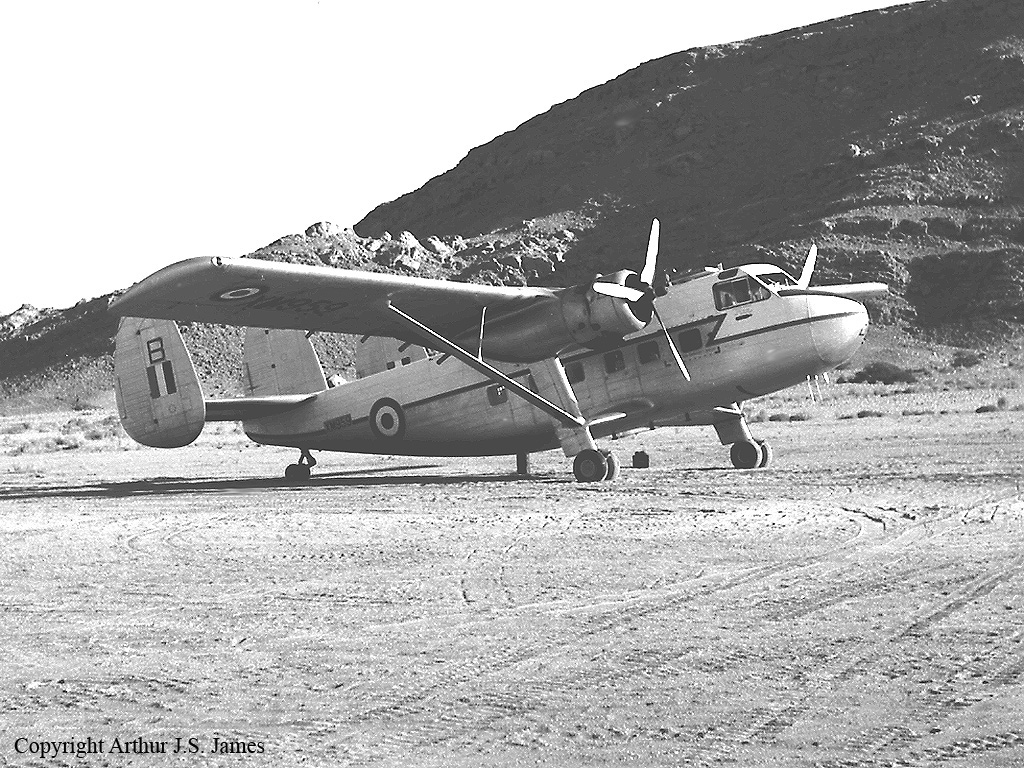
Crash of a Scottish Twin Pioneer in Muscat

Date & Time: Sep 19, 1967
Operator:
Registration:
XM959
Flight Type:
Survivors:
Yes
MSN:
555
YOM:
1958
Country:
Region:
Crew on board:
4
Crew fatalities:
Pax fatalities:
Other fatalities:
Total fatalities:
0
Circumstances:
The aircraft, based at RAF Sharjah, was landing on a salt/sand runway out on the muscat Oman border. Unfortunately the captain did not see the hole made by a Beverley and consequently the Twin finished up on its nose. There were no injurie but the aircraft was written off. Thanks to James Caister for his testimony.