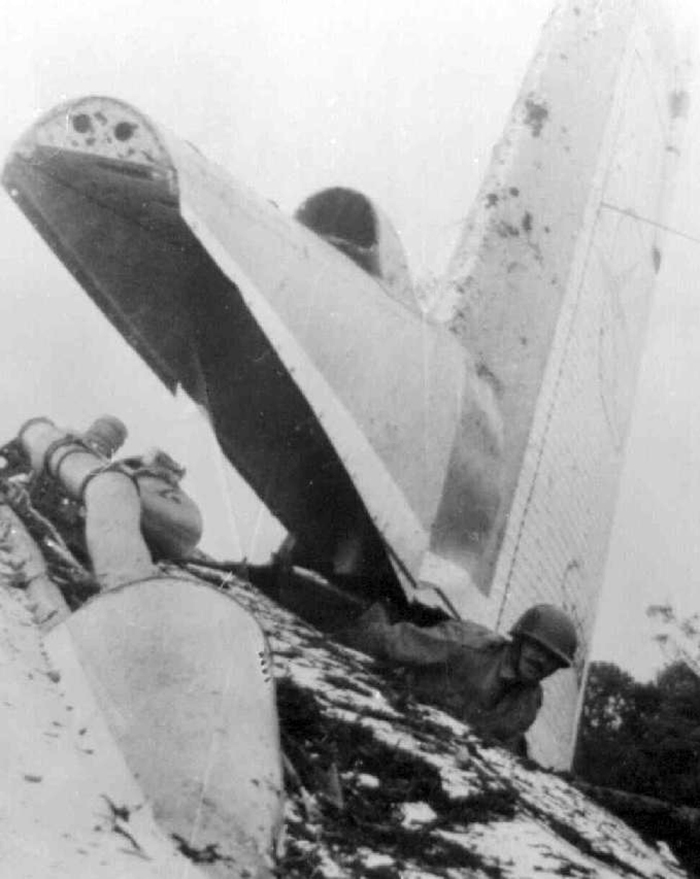
Crash of a Vickers 745D Viscount in Raleigh

Date & Time: Nov 28, 1967 at 2100 LT
Type of aircraft:
Operator:
Registration:
N7465
Survivors:
Yes
MSN:
231
YOM:
1957
Crew on board:
4
Crew fatalities:
Pax on board:
39
Pax fatalities:
Other fatalities:
Total fatalities:
0
Captain / Total flying hours:
8862
Captain / Total hours on type:
3982.00
Circumstances:
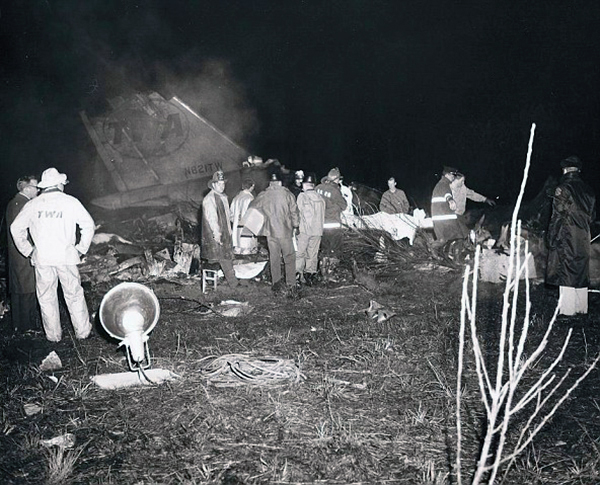
After touchdown at Raleigh-Durham Airport by night, the nosewheel collapsed. The airplane slid on the runway for several yards until it came to rest. All 43 occupants escaped uninjured while the aircraft was later considered as damaged beyond repair.
Probable cause:
Failure of the nosewheel steering system upon touchdown due to fatigue fracture. A valve body on the nosewheel steering jack twin valve failed, causing oscillations.
Final Report:

Crash of a Beechcraft C-45H Expeditor in Sanger: 3 killed

Date & Time: Nov 25, 1967 at 0405 LT
Type of aircraft:
Registration:
N9450Z
Flight Type:
Survivors:
No
MSN:
AF-247
YOM:
1952
Crew on board:
2
Crew fatalities:
Pax on board:
1
Pax fatalities:
Other fatalities:
Total fatalities:
3
Captain / Total flying hours:
2200
Captain / Total hours on type:
1400.00
Circumstances:
On a night approach to Sanger Airport, the copilot informed ground about an engine failure. The crew was unable to maintain a safe altitude when the airplane stalled and crashed few miles short of runway. All three occupants were killed. At the time of the accident, the airplane was approximately 827 lbs above gross weight.
Probable cause:
Powerplant failure for undetermined reason. Inadequate preflight preparation on part of the flying crew and improperly loaded aircraft (weight and/or CofG).
Final Report:

Crash of a Beechcraft Queen Air A80 in Concan

Date & Time: Nov 22, 1967 at 1700 LT
Type of aircraft:
Operator:
Registration:
N899Q
Flight Type:
Survivors:
Yes
MSN:
LD-46
YOM:
1962
Location:
Crew on board:
1
Crew fatalities:
Pax on board:
4
Pax fatalities:
Other fatalities:
Total fatalities:
0
Captain / Total flying hours:
3050
Captain / Total hours on type:
380.00
Circumstances:
On final approach to Concan-Angermiller Airport, the twin engine aircraft struck power cables, stalled and crashed in flames in an open field short of runway. The aircraft was destroyed and all five occupants were injured.
Probable cause:
The pilot failed to see and avoid unmarked TV cable.
Final Report:

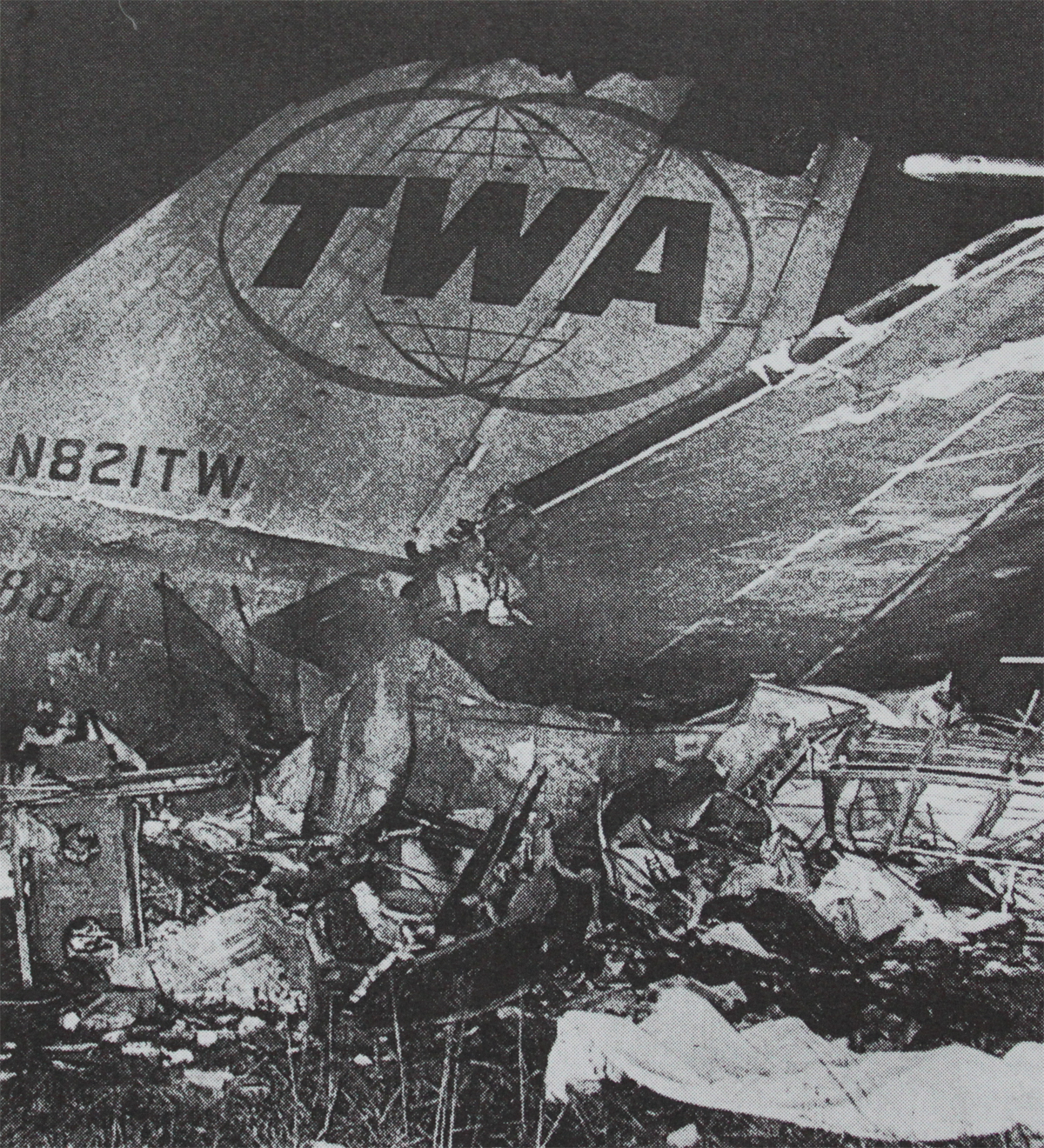
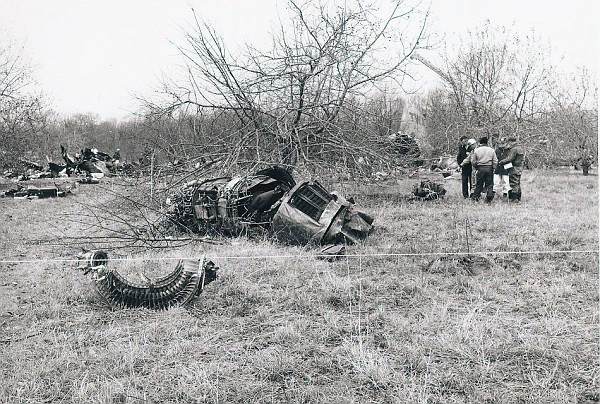
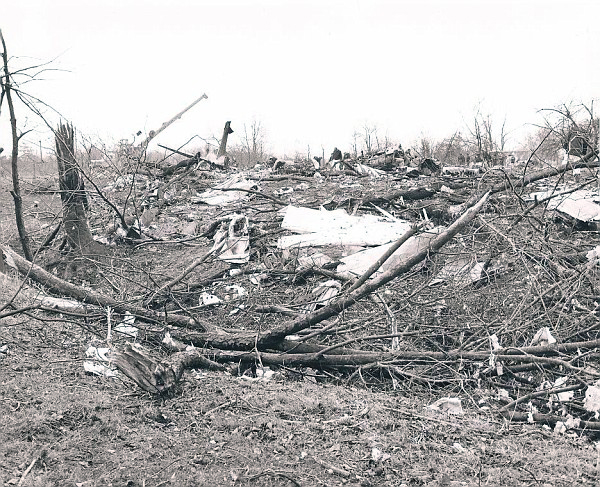
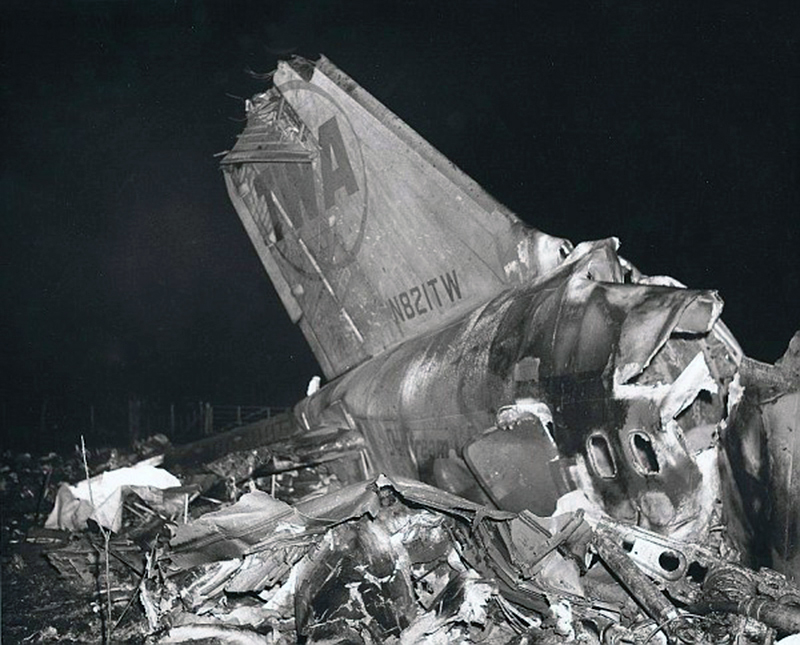
Crash of a Convair CV-880-22-1 in Cincinnati: 70 killed

Date & Time: Nov 20, 1967 at 2057 LT
Type of aircraft:
Operator:
Registration:
N821TW
Survivors:
Yes
Schedule:
Los Angeles - Cincinnati - Pittsburgh - Boston
MSN:
22-00-27
YOM:
1961
Flight number:
TW128
Crew on board:
7
Crew fatalities:
Pax on board:
75
Pax fatalities:
Other fatalities:
Total fatalities:
70
Captain / Total flying hours:
12895
Captain / Total hours on type:
1389.00
Copilot / Total flying hours:
2647
Copilot / Total hours on type:
447
Aircraft flight hours:
18850
Circumstances:
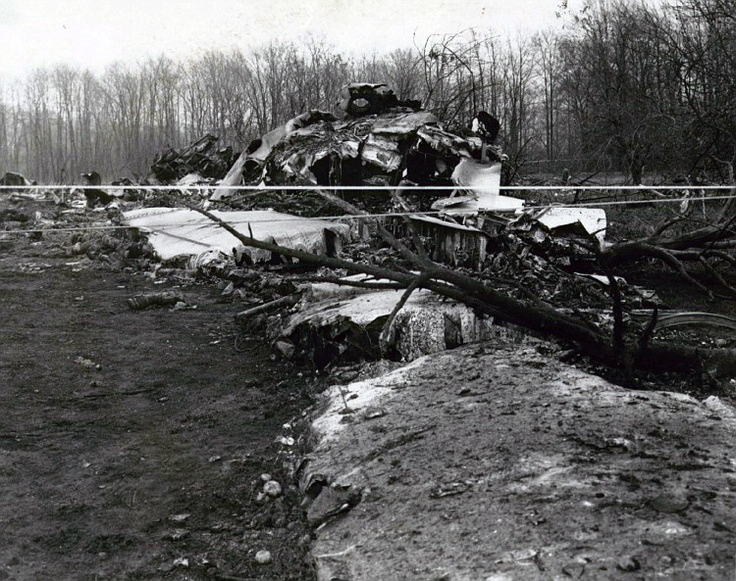
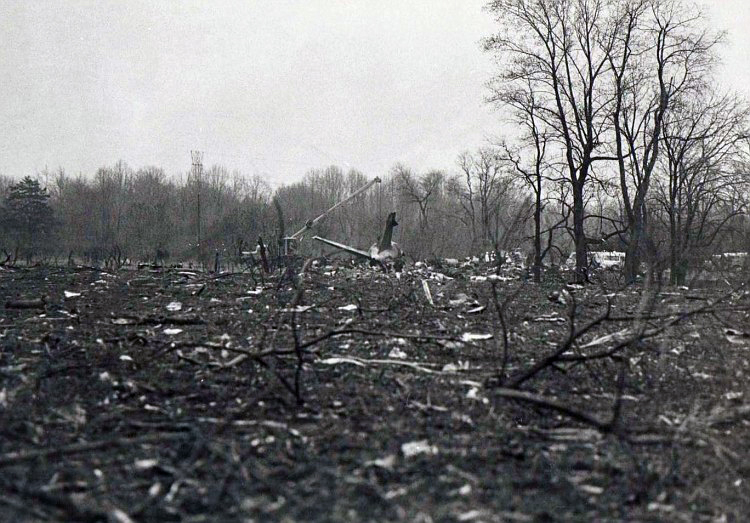
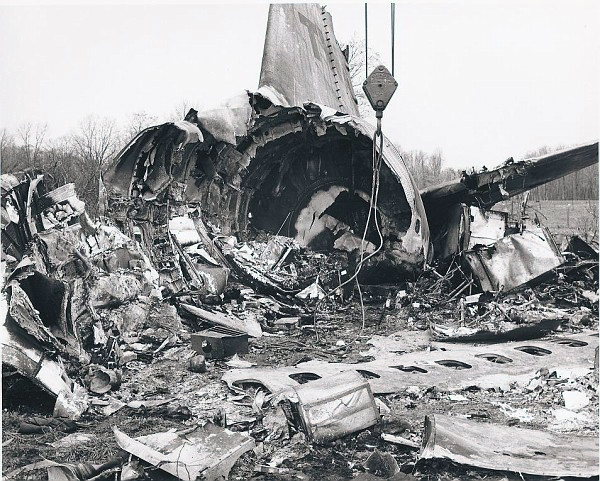
Flight 128 was a scheduled domestic flight from Los Angeles International Airport, California, to Boston, Massachusetts, with intermediate stops at Cincinnati, Ohio and Pittsburgh, Pennsylvania. The departure from Los Angeles was delayed due to an equipment change but the aircraft was airworthy at the time of departure. The only carry- over discrepancy was an inoperative generator which had no bearing on this accident. The flight took off from Los Angeles at 1737 hours Eastern Standard Time. The descent into the Cincinnati area from cruising altitude was delayed due to conflicting traffic and was initiated closer to the destination than normal. It required the crew to conduct the descent with a higher than normal rate toward the initial approach fix. The crew discussed the technique they were going to use to increase the rate of descent, and evidence revealed that they were relaxed, unworried and operating within the established operating limits of the aircraft. As the flight reported leaving 15 500 ft remarks were made in the cockpit about the rapidity of the descent and the hope, apparently with reference to the underlying cloud conditions, that it would be a thin layer. The crew checked the anti-icing equipment and conversations after that time indicated that they were not aware of any discrepancies regarding that system. Control of the flight was normal until the flight was turned over to the approach controller who failed to provide the crew with the current altimeter setting of 30.07 in Hg instead of 30.06 previously given to the crew. However, shortly after the crew intercepted a transmission to another aircraft containing the current altimeter setting of 30.07 they set and cross-checked that setting on their altimeters. Throughout the descent, the co-pilot called out the appropriate warnings to the pilot-in-command as the aircraft approached assigned altitudes and apparently performed all of his assigned duties without prompting by the pilot-in-command. Crew coordination was very good during that portion of the flight. The weather conditions in the Cincinnati area were such that the crew should have established visual contact with the ground by the time they reached 3 000 to 4 000 ft. As the flight approached the final fix, approximately 7 minutes before the accident, the crew was given the latest reported weather which indicated that the ceiling was approximately 1 000 ft and the visibility was 13 miles in snow and haze. Approximately 1 minute later they were reminded that the ILS glide slope was out of service, as well as the middle marker beacon and the approach lights. The crew acknowledged receipt of this information and planned their approach to the proper minimum altitude of 1 290 ft AMSL, 400 ft above the ground, to allow for these outages. From this point in the approach to the outer marker, the aircraft altitudes and headings were in general agreement with altitudes reported by the crew and the headings they were instructed to fly. Operation of the aircraft was normal and the proper configuration was established for the approach to the outer marker in accordance with the company's operating instructions. The crew reported over the outer marker at 2056 hours and were cleared to land on runway 18 and advised that the wind was 090°/8 kt and the RVR more than 6 000 ft (see Fig. 22-1). The co-pilot reported to the pilot-in-command that they were past the marker and that there was no glide slope. The pilot-in-command acknowledged this and stated ". . . We gotta go down to, ah, four hundred, that would be, ah." At this point, the co-pilot supplied the information "twelve ninety" and the pilot-in-command repeated "twelve ninety." The flight had arrived at the outer marker with the landing gear down, the flaps set at 40' down at an altitude of approximately 2 340 it and at an airspeed of approximately 200 kt. (The prescribed minimum altitude over the outer marker beacon, 4 miles from the threshold, was 1 973 ft AMSL). After the aircraft passed the outer marker, a rate of descent of 1 800 ft/min was established at an airspeed of about 190 kt. The rate of descent was greater than that recommended by the company for an instrument approach and remained nearly constant until approximately 20 sec before the first recorded sound of impact. At that time the rate increased to approximately 3 000 ft/min coincident with a request for 50° flaps, and a decrease in thrust, and then decreased to about 1 800 ft/min until about 5 sec before the initial contact. Prior to initial contact, the aircraft was rotated to a virtually level attitude, the rate of descent was decreasing, the airspeed was about 191 kt, and the indicated altitude was about 900 ft AMSL. The aircraft first struck small tree limbs at an elevation of approximately 875 ft AMSL, 9 357 it short of the approach end of runway 18 and 429 it right of the extended runway centre line. After several more impacts with trees and the ground, the aircraft came to rest approximately 6 878 it from the runway and 442 ft right of the extended runway centre line and burst into flames. A stewardess who survived the accident stated that the first noticeable impact felt like a hard landing. None of the survivors recalled any increase of engine power or felt any rotation of the aircraft. The accident occurred at 2057 hours during darkness in an area where snow was falling. Five crew members and 65 passengers were killed while 12 other occupants were seriously injured.
Probable cause:
The Board determined that the probable cause of this accident was an attempt by the crew to conduct a night, visual, no-glide-slope approach during deteriorating weather conditions without adequate altimeter cross reference. The approach was conducted using visual reference to partially lighted irregular terrain which may have been conducive to producing an illusionary sense of adequate terrain clearance.
Final Report:

Crash of a Lisunov LI-2 in Krasnoyarsk: 4 killed

Date & Time: Nov 19, 1967 at 1656 LT
Type of aircraft:
Operator:
Registration:
CCCP-04227
Flight Type:
Survivors:
No
Schedule:
Yeniseysk - Krasnoyarsk
MSN:
184 299 09
YOM:
1948
Country:
Region:
Crew on board:
4
Crew fatalities:
Pax on board:
0
Pax fatalities:
Other fatalities:
Total fatalities:
4
Aircraft flight hours:
19305
Aircraft flight cycles:
8764
Circumstances:
The crew completed a cargo flight from Krasnoyarsk to Yeniseysk and was now returning to Krasnoyarsk on a ferry flight. The approach to Krasnoyarsk Airport was started 20 minutes after sunset. In limited visibility, the crew failed to realize he was flying at an insufficient altitude. Some 55 meters before the middle marker, the airplane struck tree tops then sank and struck successively a telegraphic pole, a wooden fence and a hangar before crashing in flames 85 meters after the middle marker. Three crew members were killed while the radio navigator was seriously injured. Three days later, the only survivor died from his injuries.
Probable cause:
The exact cause of the accident could not be determined with certainty. However, it was reported the crew apparently started the descent prematurely for unknown reason.

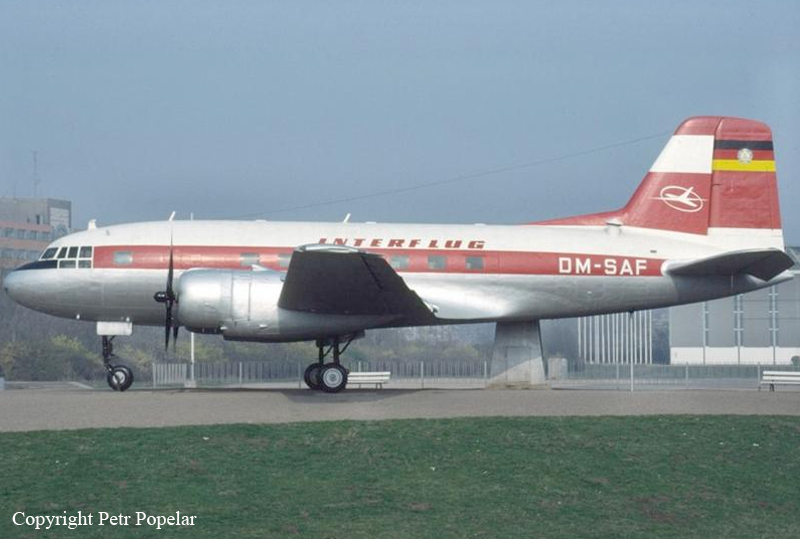
Crash of an Ilyushin II-14P in Leipzig

Date & Time: Nov 17, 1967
Type of aircraft:
Operator:
Registration:
DM-SAF
Survivors:
Yes
Schedule:
Moscow - Leipzig
MSN:
14 803 016
YOM:
1958
Location:
Country:
Region:
Crew on board:
0
Crew fatalities:
Pax on board:
0
Pax fatalities:
Other fatalities:
Total fatalities:
0
Circumstances:
While approaching Leipzig-Halle Airport on a flight from Moscow, the crew encountered technical problems and was forced to attempt an emergency landing. The aircraft came to rest in a field located few km from the airport and was damaged beyond repair. There were no casualties.

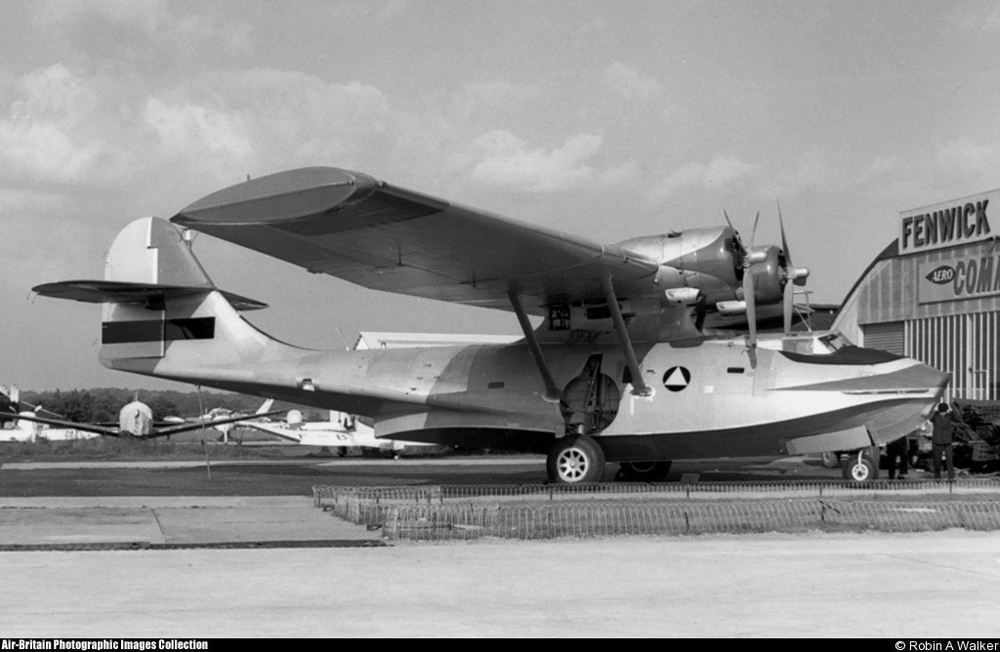
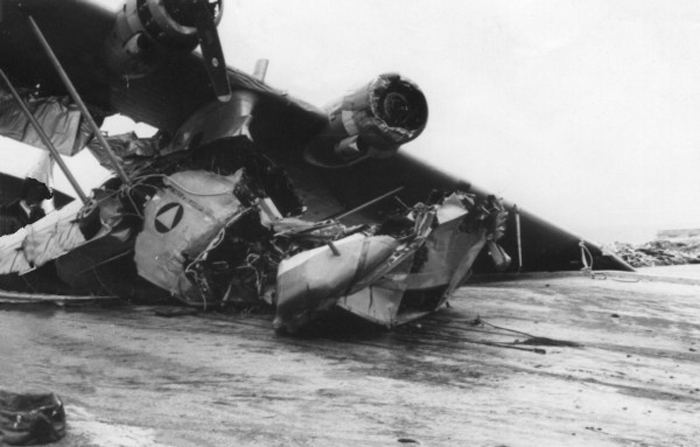
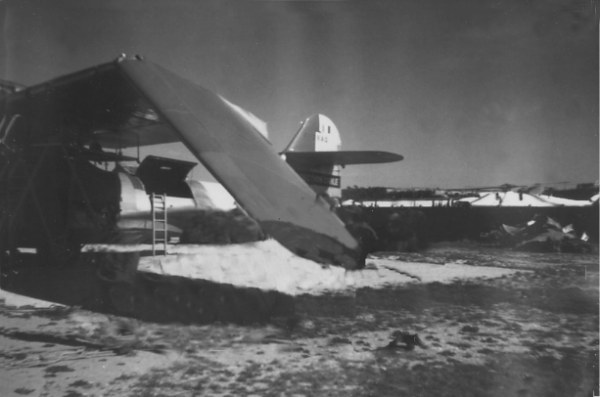
Crash of a Consolidated PBY-5A Catalina off Marseille: 1 killed

Date & Time: Nov 8, 1967
Type of aircraft:
Operator:
Registration:
F-ZBAQ
Flight Type:
Survivors:
Yes
Schedule:
Marseille - Marseille
MSN:
1684
YOM:
1944
Flight number:
Pélican Blanc
Country:
Region:
Crew on board:
4
Crew fatalities:
Pax on board:
0
Pax fatalities:
Other fatalities:
Total fatalities:
1
Circumstances:
The crew was completing a local training flight at Marseille-Marignane with scoping manoeuvres under call sign 'Pélican Blanc'. Upon landing, the airplane nosed down, plunged into the sea and partially sank. A crew member was killed while three others were rescued. The aircraft was damaged beyond repair.

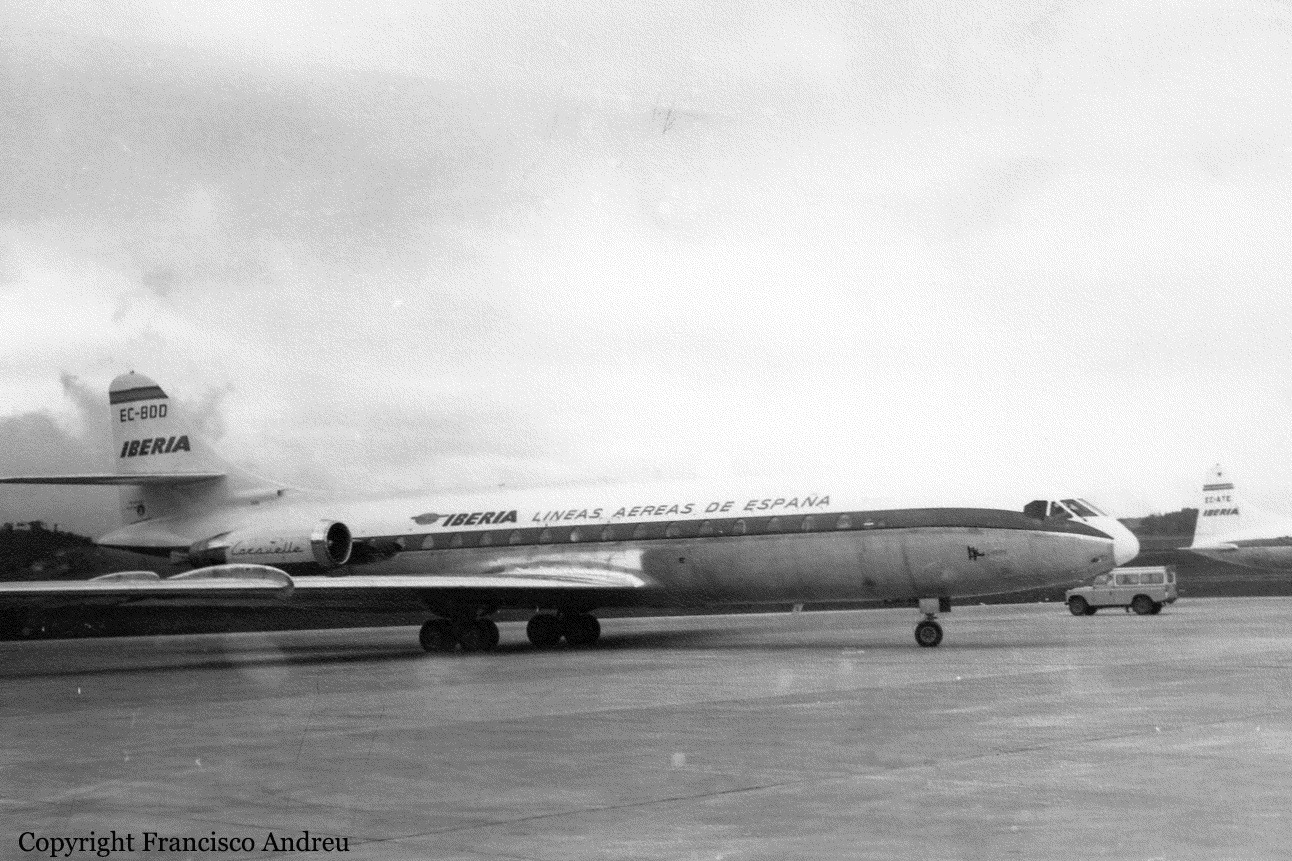
Crash of a Sud-Aviation SE-210 Caravelle 10R in Haslemere: 37 killed

Date & Time: Nov 4, 1967 at 2202 LT
Operator:
Registration:
EC-BDD
Survivors:
No
Schedule:
Málaga – London
MSN:
202
YOM:
1966
Flight number:
IB062
Region:
Crew on board:
7
Crew fatalities:
Pax on board:
30
Pax fatalities:
Other fatalities:
Total fatalities:
37
Circumstances:
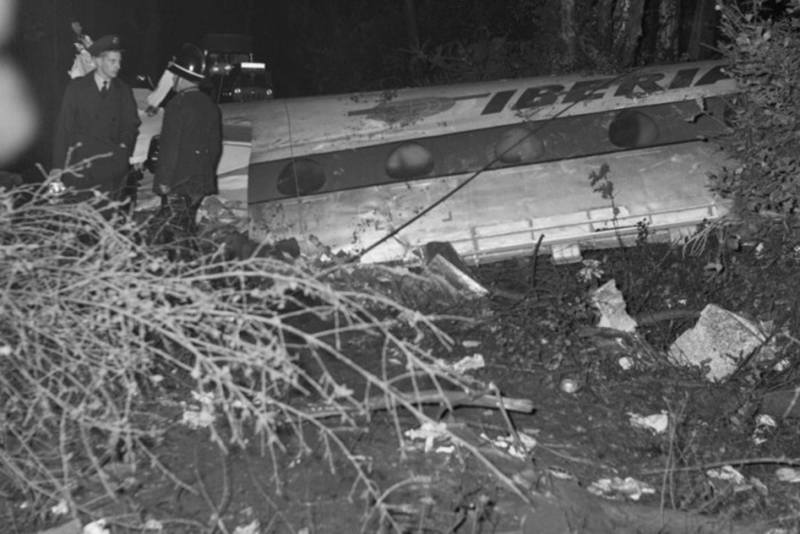
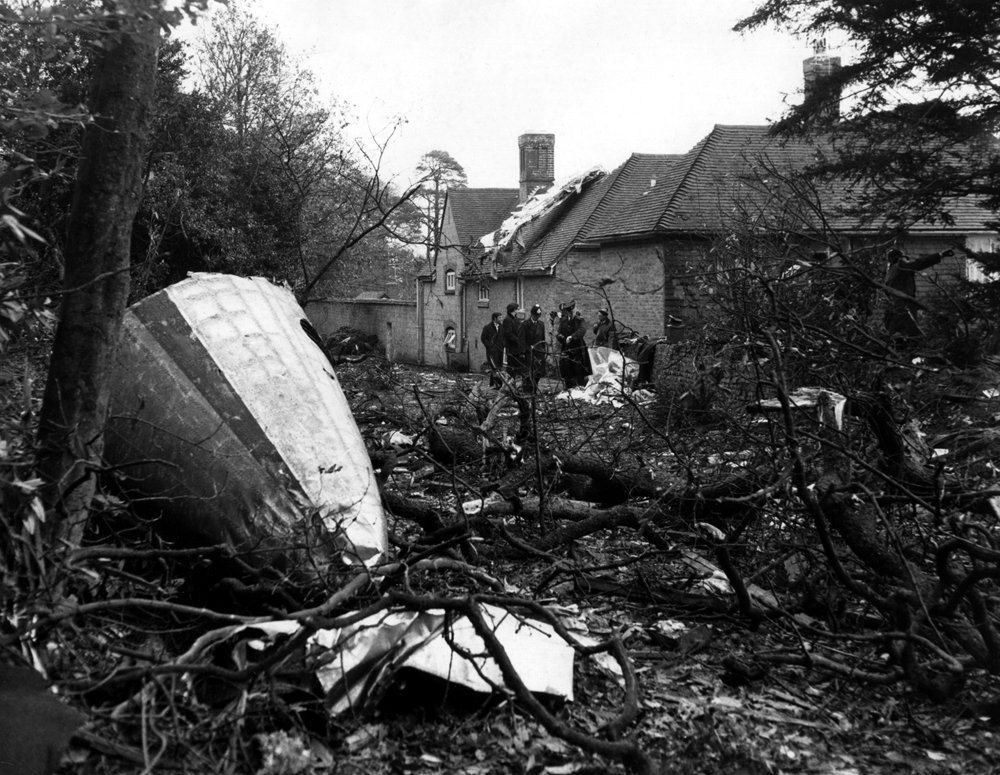
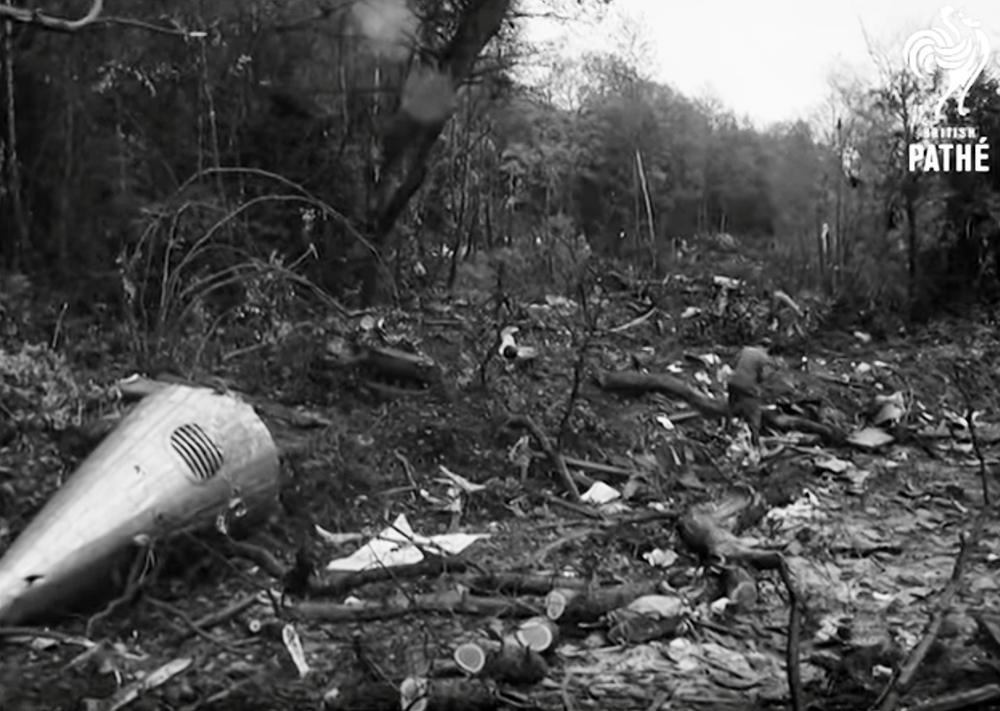
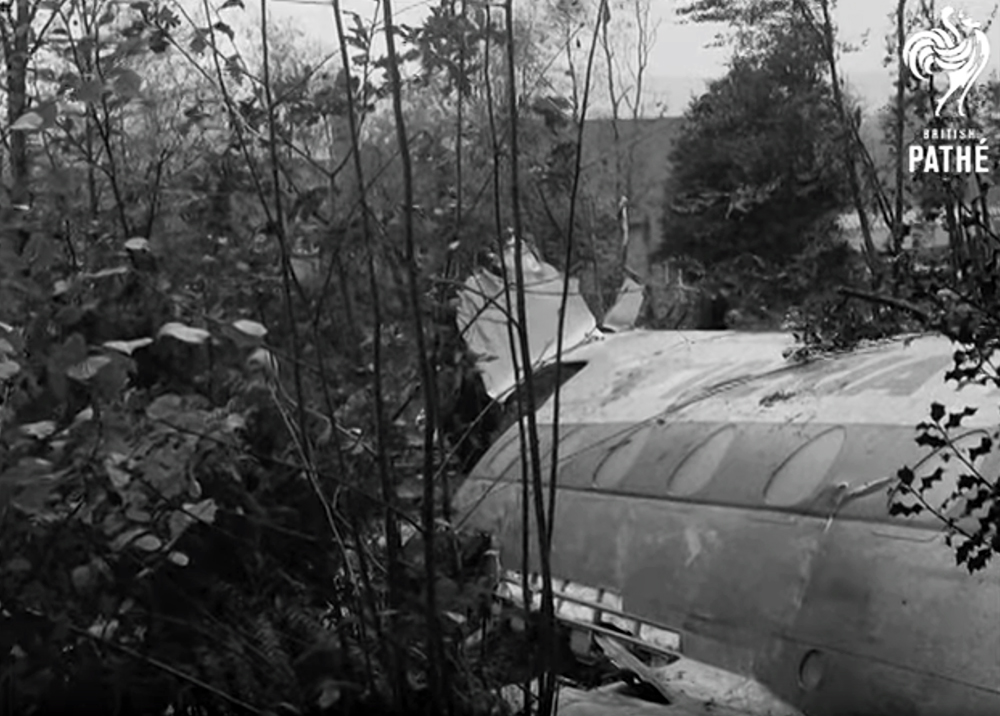
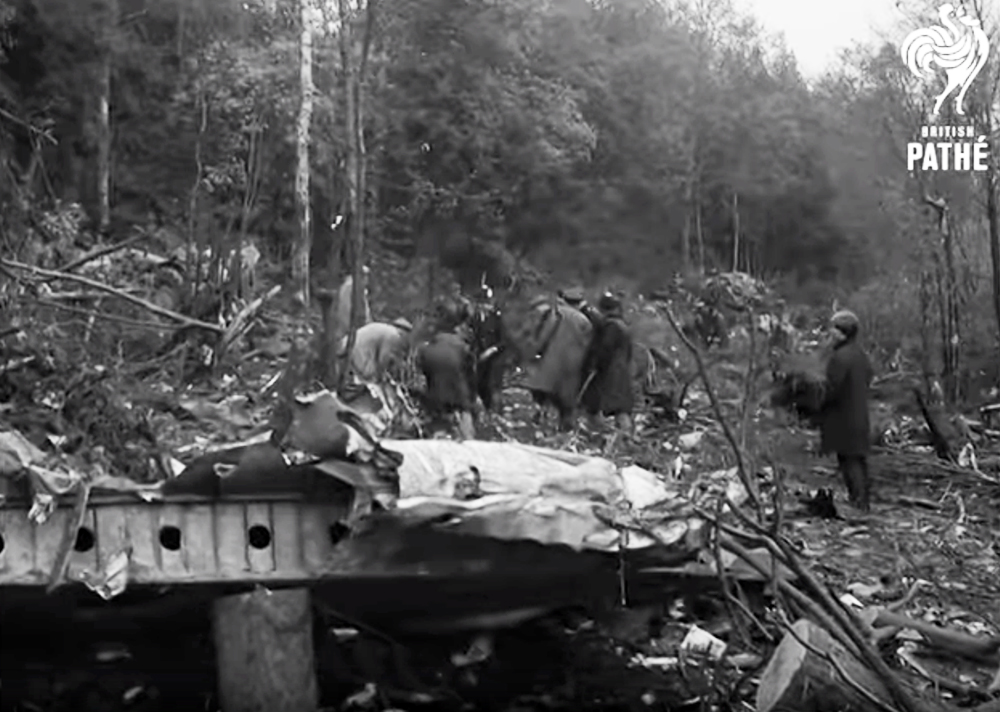
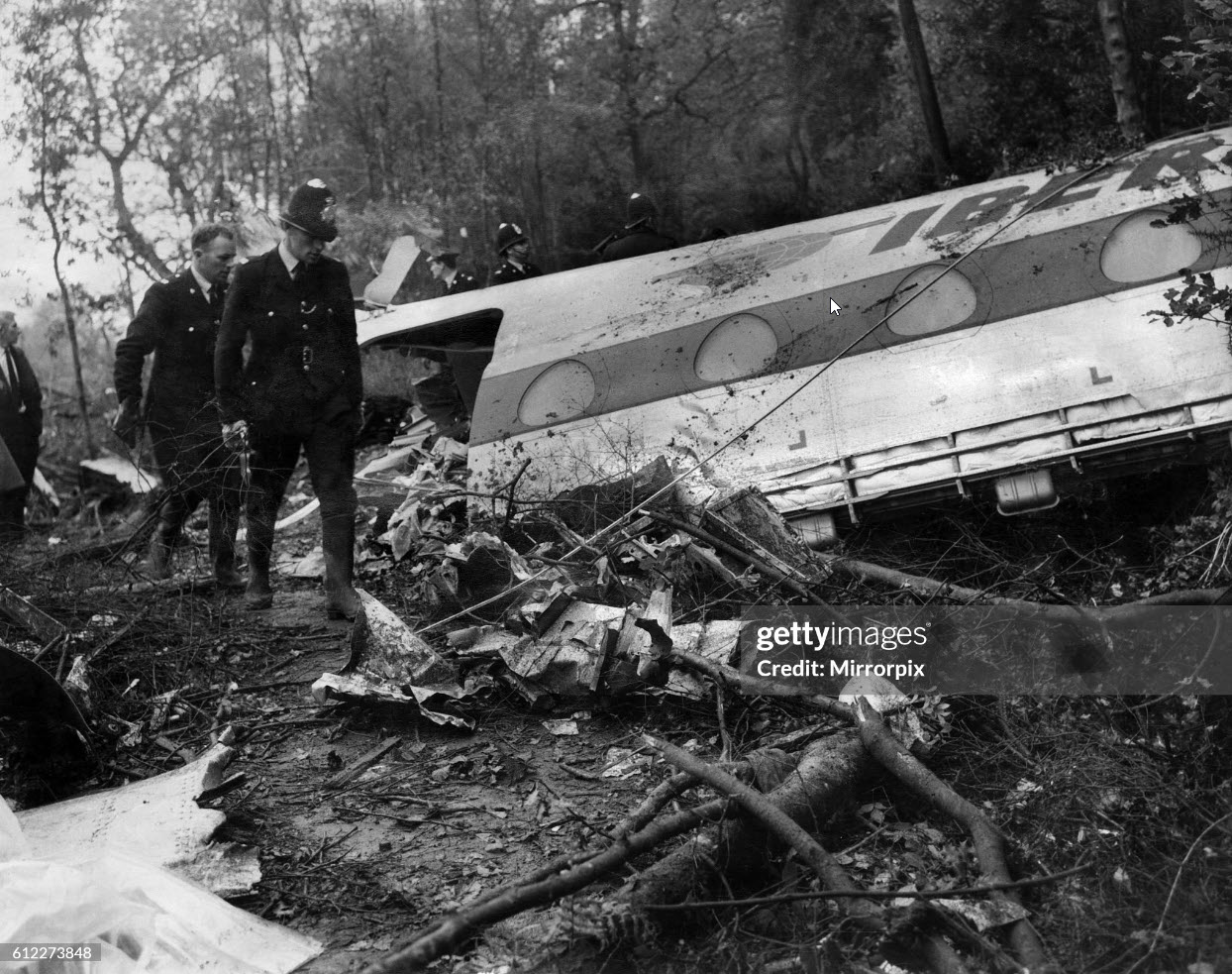
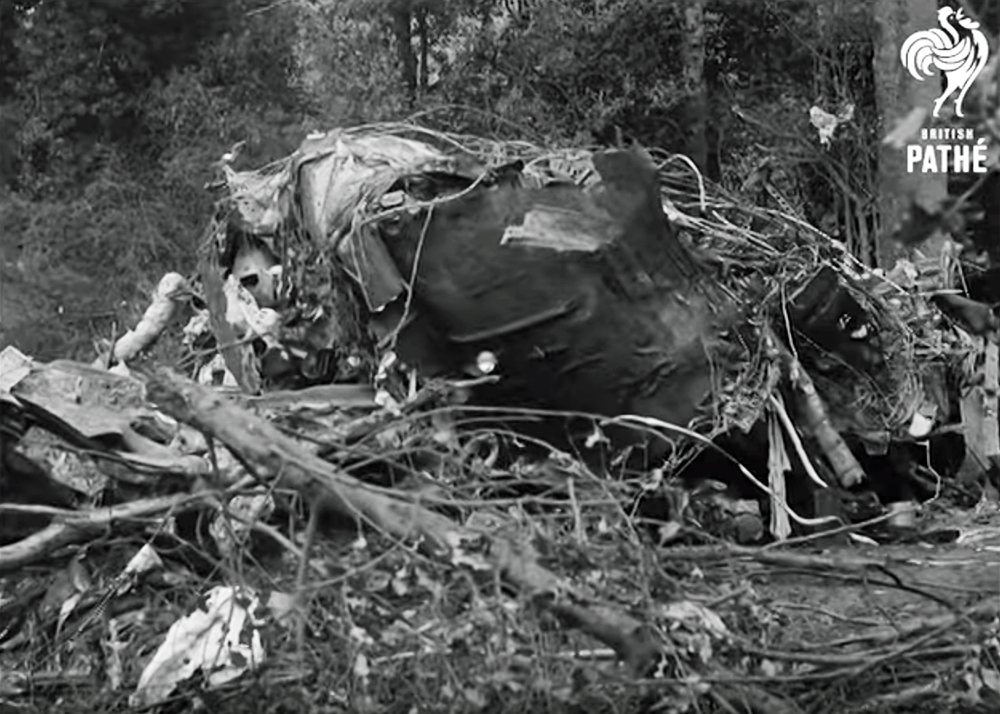
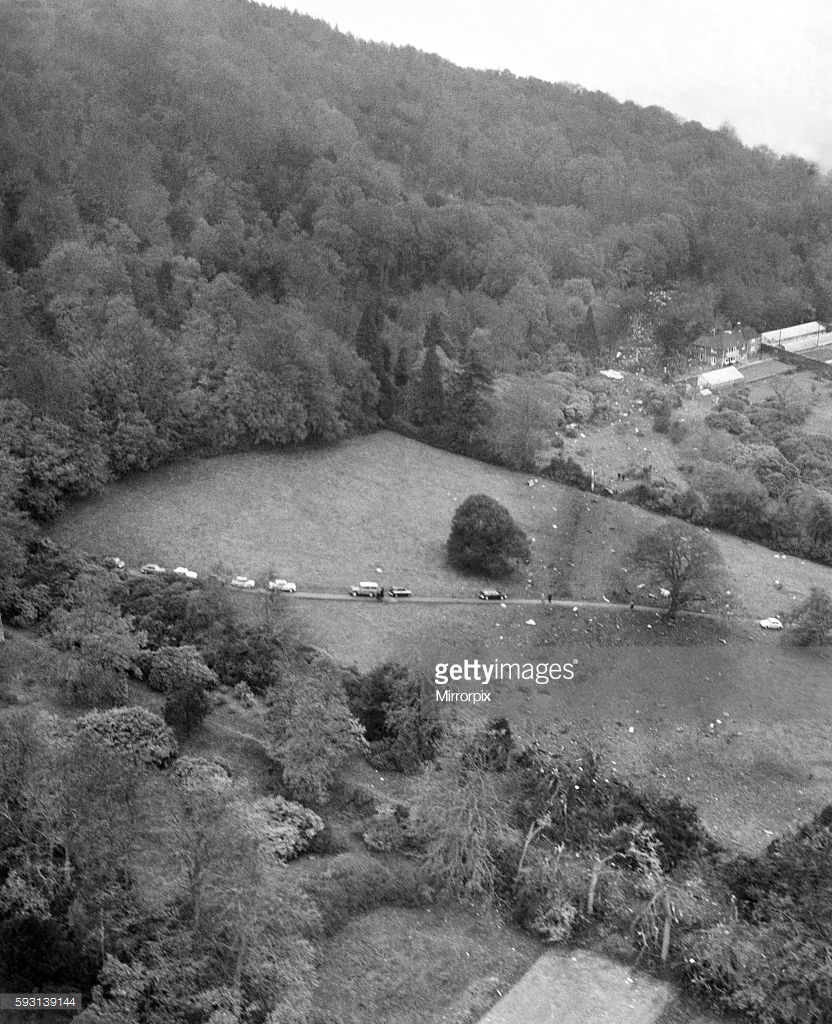
Iberia flight IB062 left Málaga, Spain, at 19:30 UTC on a flight to London-Heathrow Airport, United Kingdom. The weather at the time was slightly misty with intermittent drizzle but there was reasonable visibility. The aircraft was cleared to descend to FL210 after passing latitude 50 °N and was given a routing via Ibsley and Dunsfold. After passing conflicting traffic, the aircraft was recleared to FL110 and directed to turn right on to 060° for Dunsfold. Passing abeam Fawley the aircraft was further cleared to FL60 and, in acknowledging this instruction, the crew reported leaving FL145. Just under 4 minutes later the aircraft was cleared to proceed direct to Epsom on its own navigation. The flight crew acknowledgement this instruction. All the while the aircraft had been in a continuous descent, until it impacted trees on the southern slope of Blackdown Hill, approximately 48 km south-southwest of Heathrow Airport. The aircraft continued for hundreds of yards, passing across a meadow where it killed 65 grazing sheep. It then broke through a large hedge and parts of the aircraft fell off destroying a garage, and damaging parts of the roof of Upper Blackdown House as the aircraft disintegrated. None of the 37 occupants survived the crash.
Probable cause:
Accident investigators failed to find the reason for the continued descent. A possible misreading of the altimeters was examined in detail. The aircraft was fitted with three-pointer altimeters with warnings to indicate when the aircraft was below 10,000ft. The aircraft descended continuously at a steady rate over a period of 13 1/2 minute and the pointers would have been in continuous motion throughout, increasing the likelihood of misreading. The cross hatching in this type of altimeter first appears in a window in the 10,000ft disc at an indicated altitude of 26,666ft and the edge of the cross hatching would have been visible within 2 minutes of the aircraft beginning its descent. At 10,000 feet the cross hatching completely fills the window and it remains filled as long as the aircraft is below 10,000ft. Thus the cross hatching would have been visible to the crew for a period of about 9 1/2 minutes before the aircraft passed through FL60. According to the investigation report, it is not difficult to read an indication of 6,000ft as 16,000ft with this type of altimeter if particular note is not made of the position of the 10,000ft pointer. Evidence against the possibility of a simple misreading of this sort is the message from the aircraft to ATC reporting passing FL145. indicating that at this time the crew knew that they were below 16,000ft. This evidence indicates that down to this level there had been no misreading or misinterpretation but it does not dispose of the possibility that the crew subsequently suffered a mental loss of sequence and transposed themselves in time and space back to some altitude above 16,000ft. This has been known to, happen in the past, the investigators noted. Nevertheless, there is no evidence to show that it happened on this occasion. In conclusion, the accident was due to the aircraft having continued to descend through its assigned flight level down to the ground. No reason could be established for the continued descent.

Crash of a Cessna 421A Golden Eagle I in Findlay

Date & Time: Nov 3, 1967 at 2012 LT
Type of aircraft:
Operator:
Registration:
N4019L
Flight Type:
Survivors:
Yes
MSN:
421A-0019
YOM:
1967
Location:
Crew on board:
1
Crew fatalities:
Pax on board:
2
Pax fatalities:
Other fatalities:
Total fatalities:
0
Captain / Total flying hours:
21412
Captain / Total hours on type:
52.00
Circumstances:
The pilot was completing a local demonstration flight to potential customers. While on a night approach to Findley Airport, he failed to realize his altitude was insufficient when the airplane struck tree tops and crashed in a wooded area located few miles short of runway. The aircraft was destroyed and all three occupants were injured.
Probable cause:
Improper IFR operation on part of the pilot-in-command who misjudged altitude and misread instruments/altimeter settings.
Final Report:

Crash of a Handley Page HPR.7 Dart Herald 214 in Curitiba: 21 killed

Date & Time: Nov 3, 1967 at 1130 LT
Operator:
Registration:
PP-SDJ
Survivors:
Yes
Site:
Schedule:
São Paulo – Curitiba
MSN:
190
YOM:
1965
Country:
Crew on board:
5
Crew fatalities:
Pax on board:
20
Pax fatalities:
Other fatalities:
Total fatalities:
21
Captain / Total flying hours:
14104
Captain / Total hours on type:
2568.00
Copilot / Total flying hours:
5963
Copilot / Total hours on type:
2021
Aircraft flight hours:
3191
Circumstances:
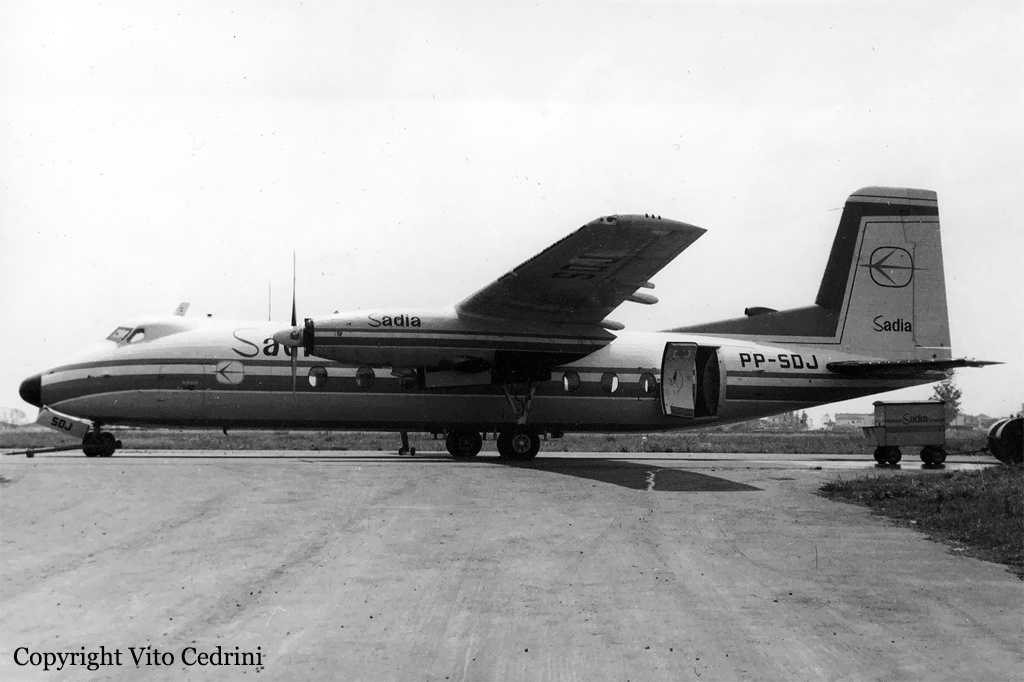
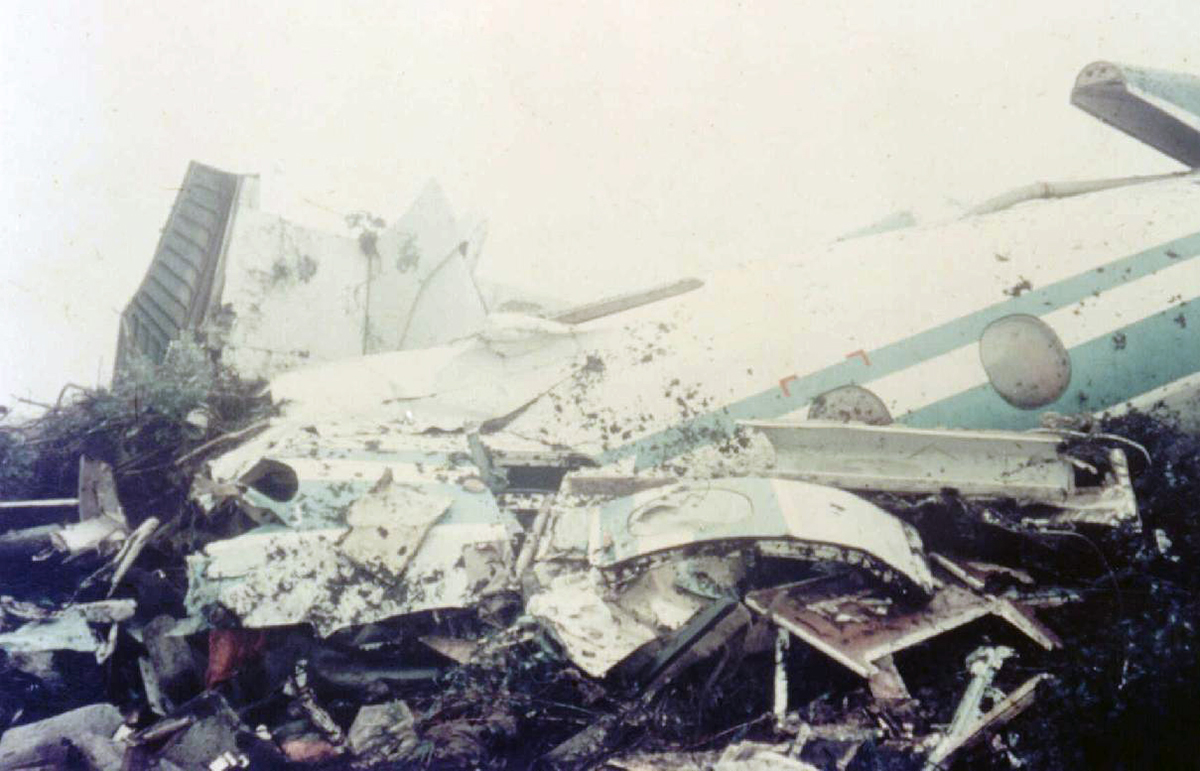
The aircraft, registration PP-SDJ, took off from São Paulo-Congonhas Airport, at 1015 hours Z, with Curitiba-Afonso Pena, Paraná, as its destination, carrying five crew members and twenty passengers. In accordance with its approved IFR flight plan, the aircraft was to fly Airway Green 3 at flight level 130, and at a speed of 300 km/h. The flight time on the São Paulo-Curitiba segment was estimated to be 1:00 hour. After the take-off from São Paulo the flight proceeded in accordance with the approved flight plan in visual meteorological conditions (VMC) as far as the vicinity of Paranagul. There the aircraft changed to instrument flight (IMC) in moderate turbulence. At that moment one of the ADF was set on the Paranagul marine NDB (NX-320 kc/s) and the other on the Paranagud NDB (PG-340 kc/s). Without a correct fix being obtained over Paranagua the position report was transmitted at 1117 hours Z to Curitiba Control and the aircraft changed heading, approaching Curitiba on a magnetic heading of 283°. The ADFs were then set respectively on the frequencies of the Curitiba NDB (CT-390 kc/s) and the Bacacheri NDB (BI-300 kc/s). The pilots found it necessary to change the ADF frequencies several times on the São Paulo-Curitiba segment and finally one ADF was set on the Curitiba NDB and the other on Broadcasting Station ZYM-5 (560 kc/s). In reply to the position report Curitiba Control cleared the aircraft to descend to flight level 70 and report when having the Bacacheri NDB at 30°: the aircraft flew in IMC conditions and moderate turbulence with its airborne radar and VOR switched off. At 1126 hours Z the pilot reported his position to Curitiba Control as having the Bacacheri NDB at 30° and he was instructed to proceed and hold above Curitiba NDB and descend to flight level 50. At 1128 hours Z the pilot reported over Curitiba NDB and initiated the downwind leg (IFR descent pattern phase for touchdown on Curitiba-Afonso Pena runway 15). After this radio message the aircraft left the magnetic heading 283° relating to the São Paulo-Curitiba segment to intercept the downwind leg on a heading of 359° in the descent pattern. Seventeen seconds later when the aircraft had executed approximately 45° of a turn to the right, it collided on a heading of 325° with a hill at an altitude of 4 635 ft. At the moment of impact the aircraft was executing a turn with slight bank to the right. Two crew members and two passengers survived while 21 other occupants were killed. The aircraft was destroyed.
Probable cause:
The accident was then consequence of pilot error through improper procedure in instrument flight. The following contributing factors were reported:
- Lack of a dynamic programme for aircraft accident prevention,
- Non-confirmation over Curitiba-Afonso Pena NDB,
- Inaccurate position relative to Curitiba-Bacacheri NDB,
- Failure to use VOR equipment,
- Failure to execute all the phases of the descent, with assumed interception of downwind leg without confirmation of position,
- Momentary radio-direction finding indication of inaccurate fix.
Final Report: