Crash of a Martin P5M-2 Marlin into the Atlantic Ocean: 10 killed

Date & Time: Nov 9, 1956 at 2150 LT
Type of aircraft:
Operator:
Registration:
127705
Flight Phase:
Survivors:
No
Schedule:
Hamilton - Hamilton
Country:
Region:
Crew on board:
10
Crew fatalities:
Pax on board:
0
Pax fatalities:
Other fatalities:
Total fatalities:
10
Circumstances:
The crew left Hamilton-Kindley Field Airport at 1827LT for a maritime patrol flight. En route, by night and poor weather conditions (heavy rain falls), the crew lost control of the airplane that crashed into the ocean not far from a Liberian freighter. All ten occupants were killed when the aircraft sank and was lost. It is believed that an engine failed and/or caught fire during climb.
Crew:
P3c Wendell Frederick Beverly,
P3c Billy Gene Comer,
P3c Jesse William Grable,
P3c Richard Woods Montgomery,
Lt Charles William Patterson,
P2c Lyle Freeman Quimby,
Lt Cyrus Eugene Reid Jr.,
Airman Bobbie Lee Sanders,
Cdr John Milton Sweeney,
P1c Robert Wayne Taylor.

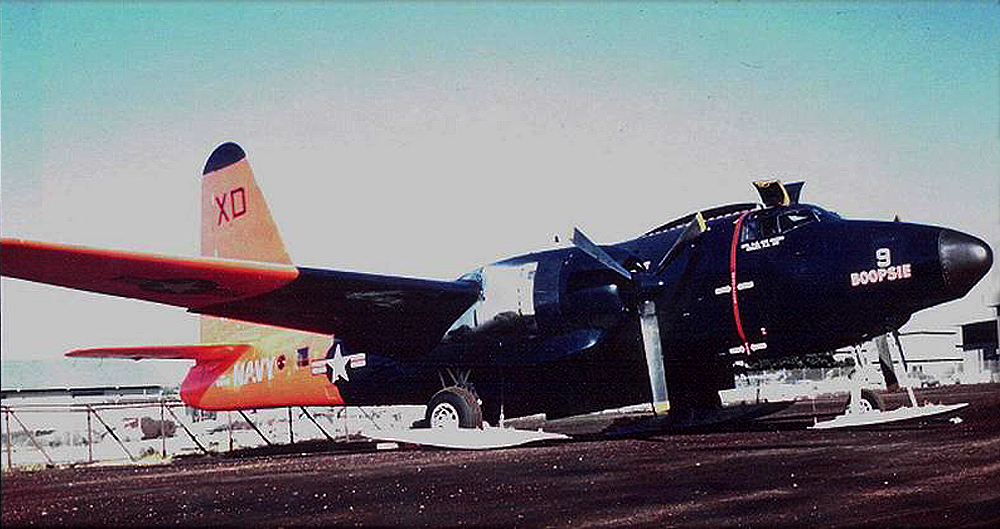
Crash of a Lockheed P2V-2N Neptune in McMurdo Sound: 4 killed

Date & Time: Oct 18, 1956
Type of aircraft:
Operator:
Registration:
122465
Flight Type:
Survivors:
Yes
Schedule:
Christchurch - McMurdo Sound
Country:
Region:
Crew on board:
8
Crew fatalities:
Pax on board:
0
Pax fatalities:
Other fatalities:
Total fatalities:
4
Circumstances:
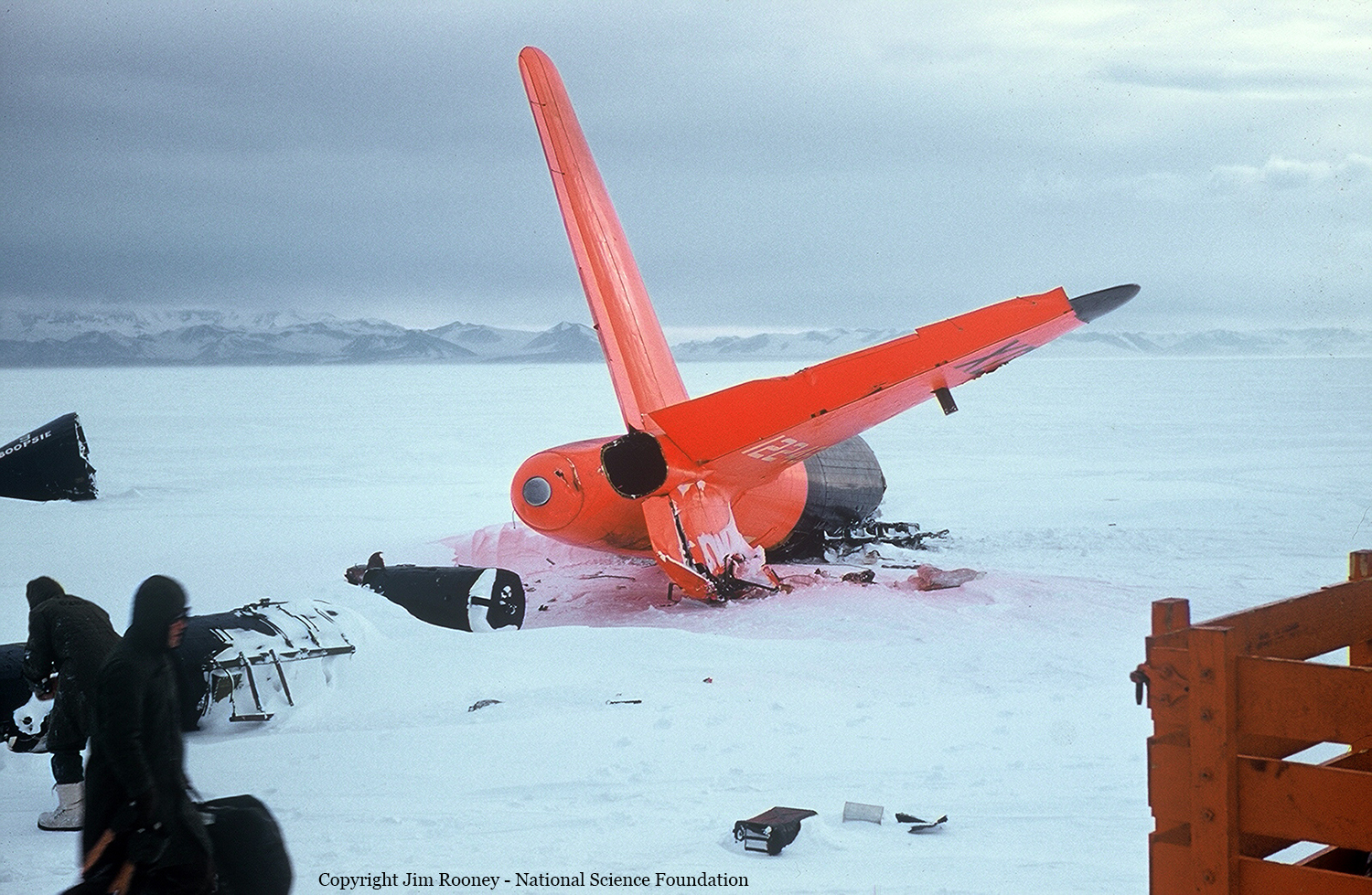
The aircraft left Christchurch to McMurdo along with other long range aircraft of VX-6. After passing the PSR (point of safe return), a severe storm enveloped the McMurdo area. Since they had insufficient fuel to return to Christchurch, the crew was committed to flying into the storm and landing at McMurdo. The pilot made a ground controlled approach from 12,000 feet to 300 feet and then elected to make a visual landing. With the landing gear down, the plane began to turn right, the nose of the plane fell, and the Neptune struck the snow on the nose and right wing. The Neptune was completely demolished. Four crew members were killed while four others were injured.
Source: Joe Baugher.

Crash of a Douglas R6D-1 into the Atlantic Ocean: 59 killed

Date & Time: Oct 10, 1956 at 2210 LT
Type of aircraft:
Operator:
Registration:
131588
Flight Phase:
Flight Type:
Survivors:
No
Schedule:
Lakenheath – Lajes – McGuire
MSN:
43691
YOM:
1953
Country:
Region:
Crew on board:
10
Crew fatalities:
Pax on board:
49
Pax fatalities:
Other fatalities:
Total fatalities:
59
Circumstances:
The crew was performing a flight from RAF Lakenheath to McGuire AFB with an intermediate stop at Lajes, Azores Islands. At 2055LT, while cruising at an altitude of 15,000 feet, the crew informed ATC about his position and everything was ok. More than hour later, at 2210LT, the aircraft went out of control and crashed into the Atlantic Ocean about 590 km southwest of Land's End, Cornwall, UK. The crew was unable to send any distress call. Few debris such as life vests and the nose wheel were found. All 59 occupants have been killed. It was reported that some debris recovered showed traces of fire, leaving open several assumptions.

Crash of a Lockheed WV-3 Super Constellation into the Pacific Ocean

Date & Time: Sep 17, 1956 at 2200 LT
Operator:
Registration:
137893
Flight Phase:
Survivors:
Yes
Schedule:
Andersen - Andersen
MSN:
4380
YOM:
1956
Country:
Region:
Crew on board:
18
Crew fatalities:
Pax on board:
0
Pax fatalities:
Other fatalities:
Total fatalities:
0
Aircraft flight hours:
723
Circumstances:
The Lockheed WV-3 Super Constellation, BuNo 137893, took off from Guam at 06:00 in the morning of September 1956 on a weather recon mission with an 18 man crew. The flight was normal for the first 14 hours or so. On the return leg, when the flight was 200 miles from Guam, when it lost engine #1 due to oil starvation. The engine was shut down and the propeller feathered. The pilot reported his position to Guam central and the radioman sent the position to the VW3 squadron duty office where it was tracked. The flight continued toward Guam at an altitude of 1200 feet. With 100 miles to go #4 engine experienced complete loss of power and was shut down. The propeller was feathered. However, the propeller never went to full feather and windmilled. There was a violent swerve to the right. Shortly after this, engines #2 and #3 started to lose power. At 80 miles from Guam and losing altitude at 500 to 700 feet per minute the captain decided to ditch the aircraft while he still had lateral control and issued the "Prepare to Ditch" command. Navigator Wanbaugh gave an updated position report to the pilot and radioman for the "May-Day" transmissions. A ditching was carried out. All 18 occupants climbed into two life rafts, already deployed, and pushed off at around 22:00. At about 03:20 on September 18th, the life rafts were sighted by a P2V Neptune aircraft flying search and rescue. The occupants were rescued by Coast Guard Cutter Buttonwood.
Source:
https://aviation-safety.net/database/record.php?id=19560917-1

Crash of a Consolidated PB4Y-2 Privateer off NAS Sand Point

Date & Time: Aug 26, 1956 at 0930 LT
Operator:

Registration:
59695
Flight Phase:
Flight Type:
Survivors:
Yes
Schedule:
Sand Point - Sand Point
MSN:
59695
YOM:
1943
Crew on board:
2
Crew fatalities:
Pax on board:
0
Pax fatalities:
Other fatalities:
Total fatalities:
0
Circumstances:
Lt. Thorson, pilot, and Lt. Shook, copilot, were scheduled for a local 2 ½ hour training flight in P4Y-2 registered 59695 at 0930LT. Due to marginal VFR conditions, they were briefed to conduct GCA runs and remain in the local pattern until the weather improved. The pilots completed the engine run-up and the take-off checklist (inadvertently missing the flaps). the tower informed the aircraft that the field was VFR and cleared the aircraft for take-off. The aircraft became airborne just prior to reaching the end of the runway in a near level attitude, no more than one to two feet in the air. As it passed the end of the runway and over the waters edge, a drop of about 10 feet, the loss of ground effect caused it to settle immediately. The aircraft settled to the water at full power about 300 feet from the end of the 5,000 foot runway. The aircraft planed on the main gear and belly and settled to a stop about 5,000 yards past the point of initial impact. An orderly ditching procedure followed. All personnel were out of the aircraft in approximately 45 seconds and in life rafts shortly thereafter. The aircraft sank in 175 feet of water in approximately 2 ½ minutes. The personnel were rescued by the NAS Seattle crash boat about 4 minutes later. Lt. Shook and one crewman received minor injuries while vacating the aircraft. During the run-out on the water, the bomb bay doors ripped open and one bomb bay tank was torn loose from the aircraft. All propeller blades were slightly bent from impact with the water. No other damage is believed to have occurred to the aircraft. Salvage operations commenced on August 28, 1956, and the aircraft was raised to the surface on August 31, 1956. However, a shackle pin to the hoisting sling broke while attempting to tow the aircraft ashore and the aircraft again sank to a depth of 210 feet. Lines had been secured to the two inboard engines and the engines broke off at the mounts when the sling shackle pin gave way. Further efforts to salvage the aircraft were abandoned as uneconomical.
Source:
http://www.memorieshop.com/Seattle/LakeWashington/PB4Y-2.html
Probable cause:
It was concluded that the primary cause of the accident was pilot error in attempting a no-flap take-off. It was also concluded that the pilot and copilot did not take corrective action soon enough during take-off to successfully abort the take-off.


Crash of a Douglas R5D-2 on Mt Sunol Ridge: 40 killed

Date & Time: Feb 17, 1956 at 1342 LT
Type of aircraft:
Operator:
Registration:
39116
Flight Type:
Survivors:
No
Site:
Schedule:
Camp Pendleton – El Toro – Alameda – Hickam
MSN:
18331
YOM:
1944
Crew on board:
5
Crew fatalities:
Pax on board:
35
Pax fatalities:
Other fatalities:
Total fatalities:
40
Circumstances:
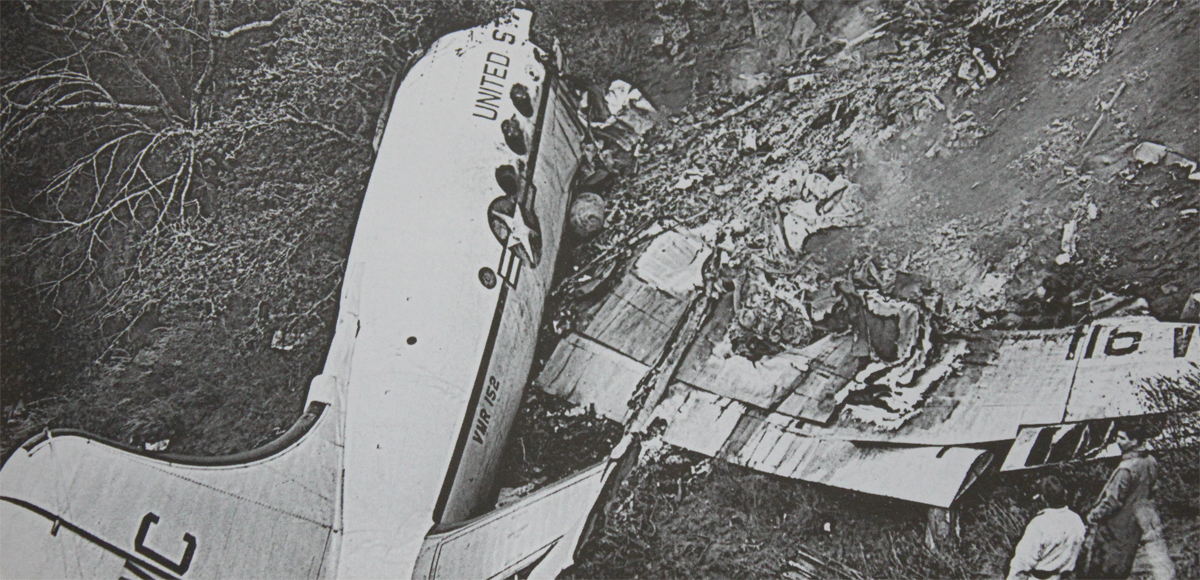
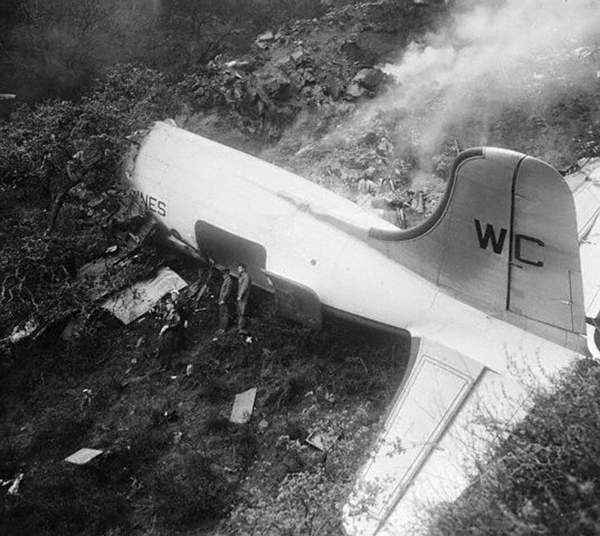
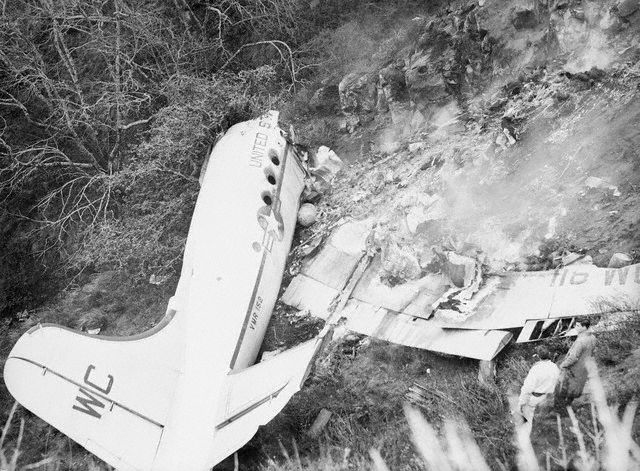
The aircraft departed El Toro Airbase at 1030LT Bound for Alameda NAS on behalf of the Marine Transport Squadron 152. On board were United States Marines from Camp Pendleton en route to Hickam Field, and five crew members. While approaching his destination, the captain was instructed to follow a 30 minutes holding circuit. At 1342LT, while descending at an altitude of 3,500 feet in marginal weather conditions, the pilot started the approach when the aircraft hit the slope of Mt Sunol Ridge located about 21 miles southeast of Alameda Airbase. The aircraft was destroyed upon impact and all 40 occupants have been killed. It was reported that the airplane hit the mountain about 200 feet below the summit.
Crew:
Maj Alexander Watson, pilot,
1st Lt Thomas E. Straughan, copilot,
M/Sgt Donald J. Down, navigator,
S/Sgt Terrell M. Young, flight engineer,
S/Sgt Harry E. Knight, radio operator.
Probable cause:
It was determined that the collision with the mountain was the consequence of several errors and omissions on part of the flying crew who neglected approach procedures and wrongly interpreted some signals transmitted by local beacons. This caused the crew to start the descent prematurely and the aircraft to drift off course by six miles to the northeast at the time of the accident. Low visibility due to clouds was considered as a contributing factor.

Crash of a Lockheed P2V-2 Neptune in Delta Amacuro

Date & Time: Feb 8, 1956
Type of aircraft:
Operator:
Registration:
122466
Flight Phase:
Flight Type:
Survivors:
Yes
Schedule:
Patuxent River - Little America
MSN:
126-1097
YOM:
1947
Country:
Crew on board:
8
Crew fatalities:
Pax on board:
0
Pax fatalities:
Other fatalities:
Total fatalities:
0
Circumstances:
The crew left Patuxent River NAS bound for Antarctica, taking part to a SAR mission after a US Navy UC-1 Otter was missing since February 3. While approaching the Venezuelan coast, the right engine failed. The captain elected to divert to Piarco Airport in Trinidad & Tobago when the left engine failed shortly later. While 15 miles off shore, he decided to reach the coast and eventually completed an emergency landing in a uninhabited area located in the north side of the State of Delta Amacuro. On touchdown, the aircraft struck trees, lost its both wings and came to rest, broken in two. All eight crew members were rescued and evacuated safely.
Probable cause:
Double engine failure in flight.

Crash of a Fairchild R4Q-2 Flying Boxcar off Miami: 2 killed

Date & Time: Feb 4, 1956
Operator:
Registration:
131703
Flight Phase:
Flight Type:
Survivors:
Yes
Schedule:
Miami - Miami
MSN:
10888
YOM:
1952
Location:
Crew on board:
4
Crew fatalities:
Pax on board:
0
Pax fatalities:
Other fatalities:
Total fatalities:
2
Circumstances:
The crew was engaged in a local training sortie from Miami-Opa Locka Airport. Shortly after takeoff, while climbing, the aircraft suffered engine problems. The crew contacted ATC and elected to ditch the aircraft off Miami. Two crew members were rescued while others drowned.
Probable cause:
Engine failure.

Crash of a De Havilland UC-1 in Antarctica

Date & Time: Feb 3, 1956
Type of aircraft:
Operator:
Registration:
144260
Flight Phase:
Flight Type:
Survivors:
Yes
Site:
Schedule:
Little America V - Mile 38
MSN:
62
YOM:
1954
Country:
Region:
Crew on board:
2
Crew fatalities:
Pax on board:
0
Pax fatalities:
Other fatalities:
Total fatalities:
0
Circumstances:
While on a supply mission from Little American V Station to Mile 38 Station, the crew encountered severe icing conditions. The aircraft crash landed on a snowed and icy hill. Unhurt, both pilot decided to return to their base located 110 miles away and walked for 40 miles before being rescued by the crew of an helicopter.

Crash of a De Havilland UC-1 Otter in Cape Bird

Date & Time: Dec 22, 1955
Type of aircraft:
Operator:
Registration:
142424
Flight Phase:
Flight Type:
Survivors:
Yes
MSN:
76
YOM:
1955
Country:
Region:
Crew on board:
0
Crew fatalities:
Pax on board:
0
Pax fatalities:
Other fatalities:
Total fatalities:
0
Circumstances:
The Otter was part of Operation Deep Freeze 1 in Antarctica. After takeoff the pilot reported that his controls were stuck. The aircraft descended again and struck the snow hard. Both main ski struts were forced into the fuselage as the airplane crash-landed. Salvageable parts were removed and the aircraft was left to float out on the sea ice.