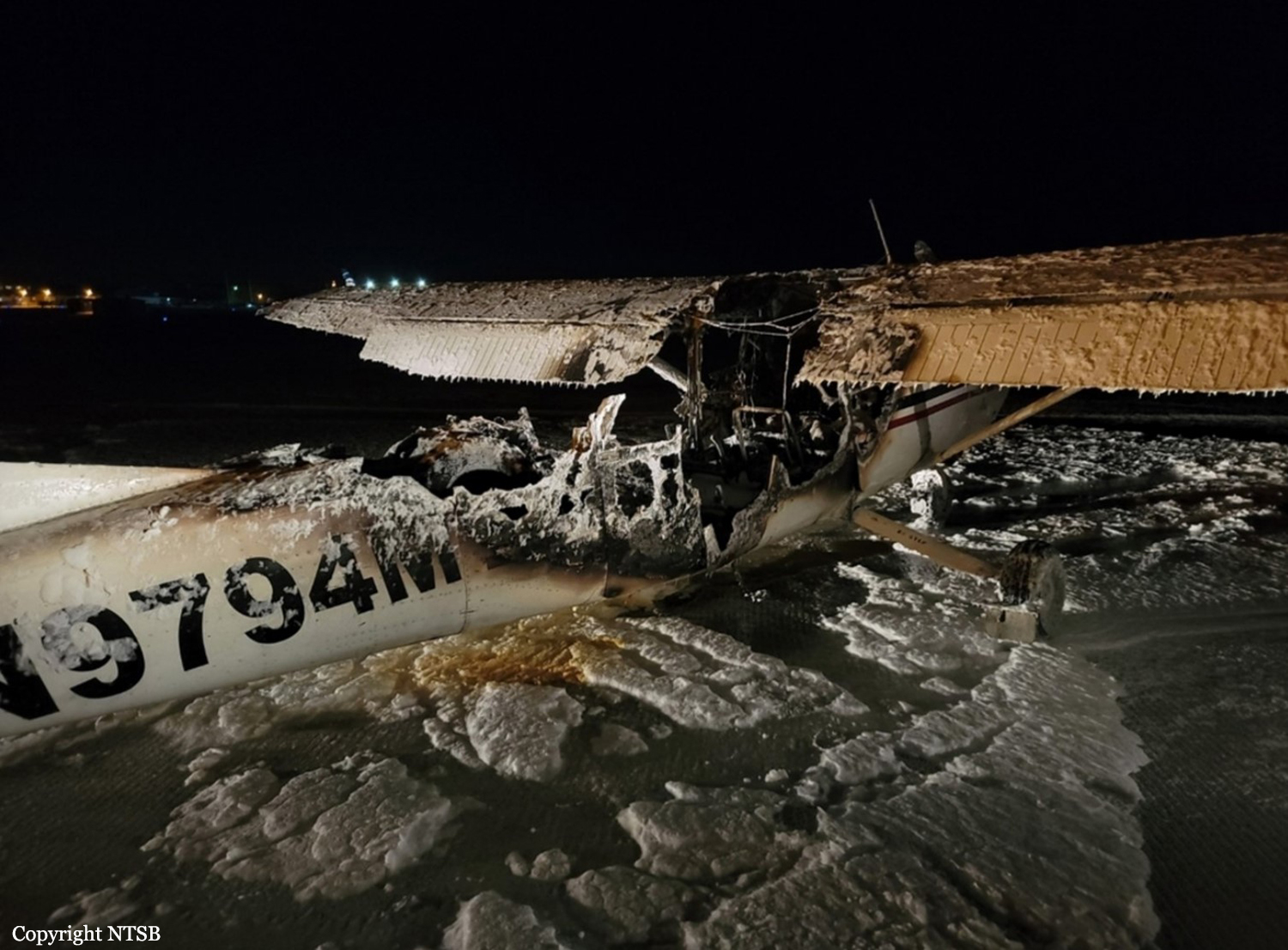
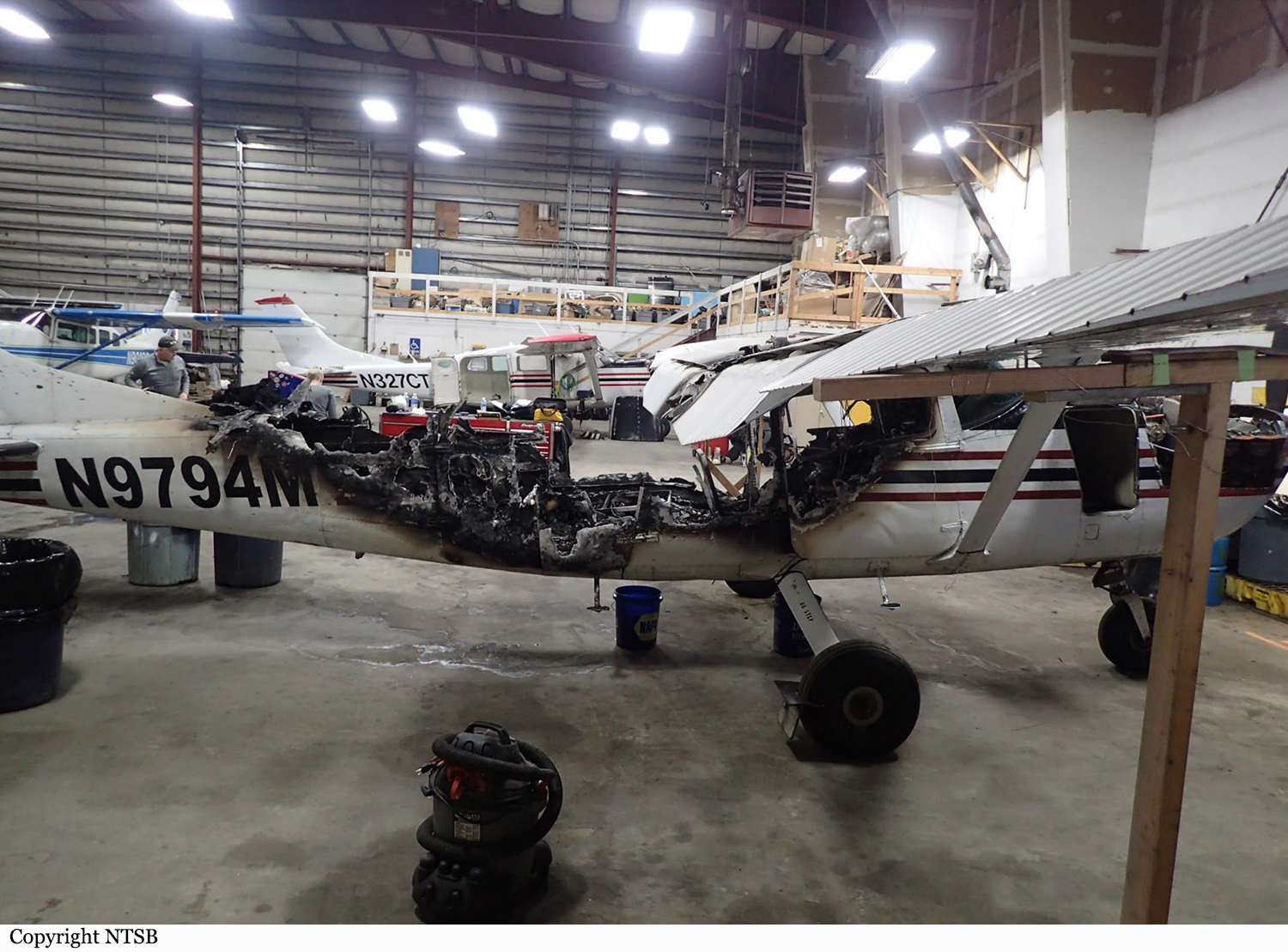
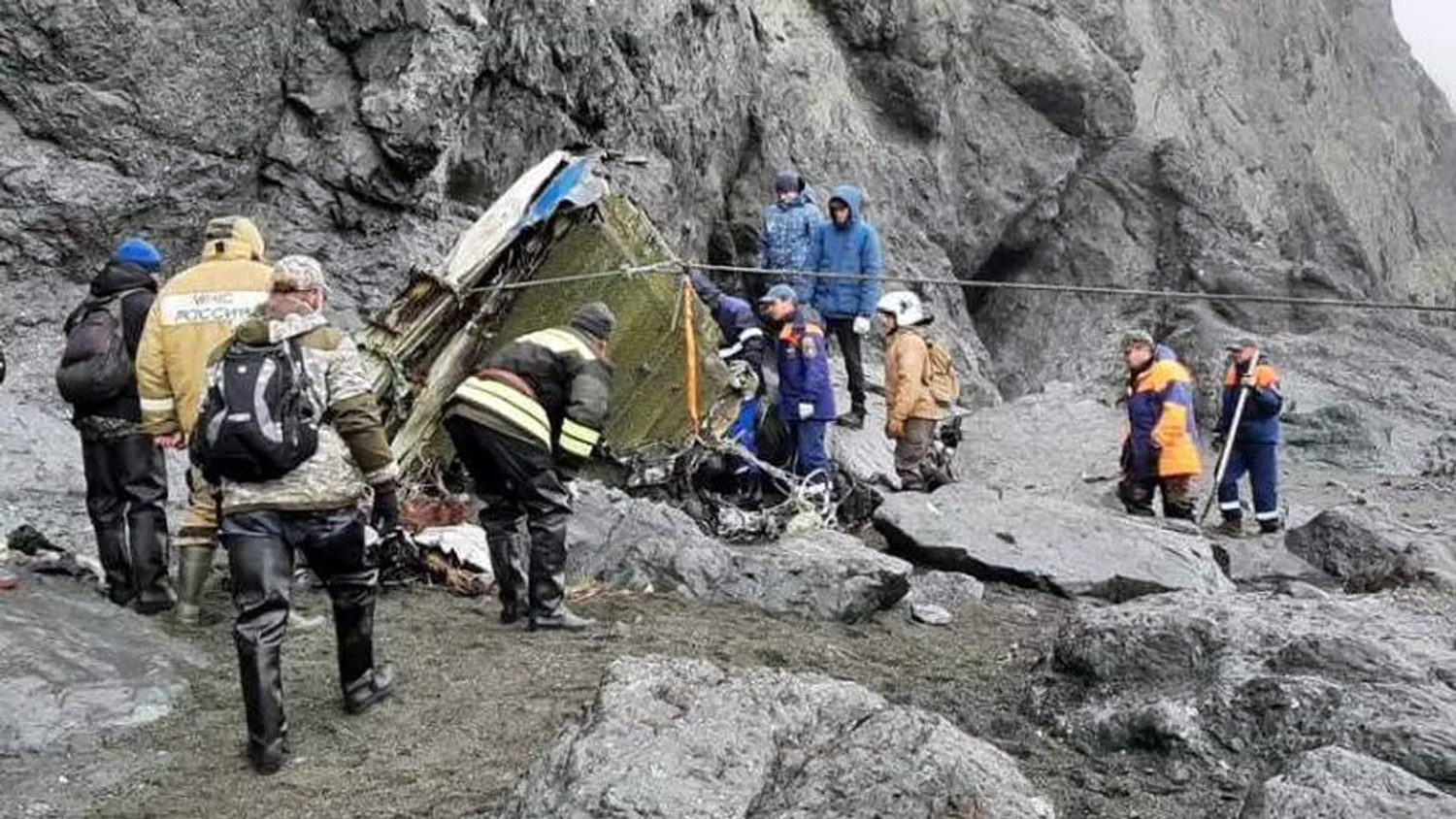
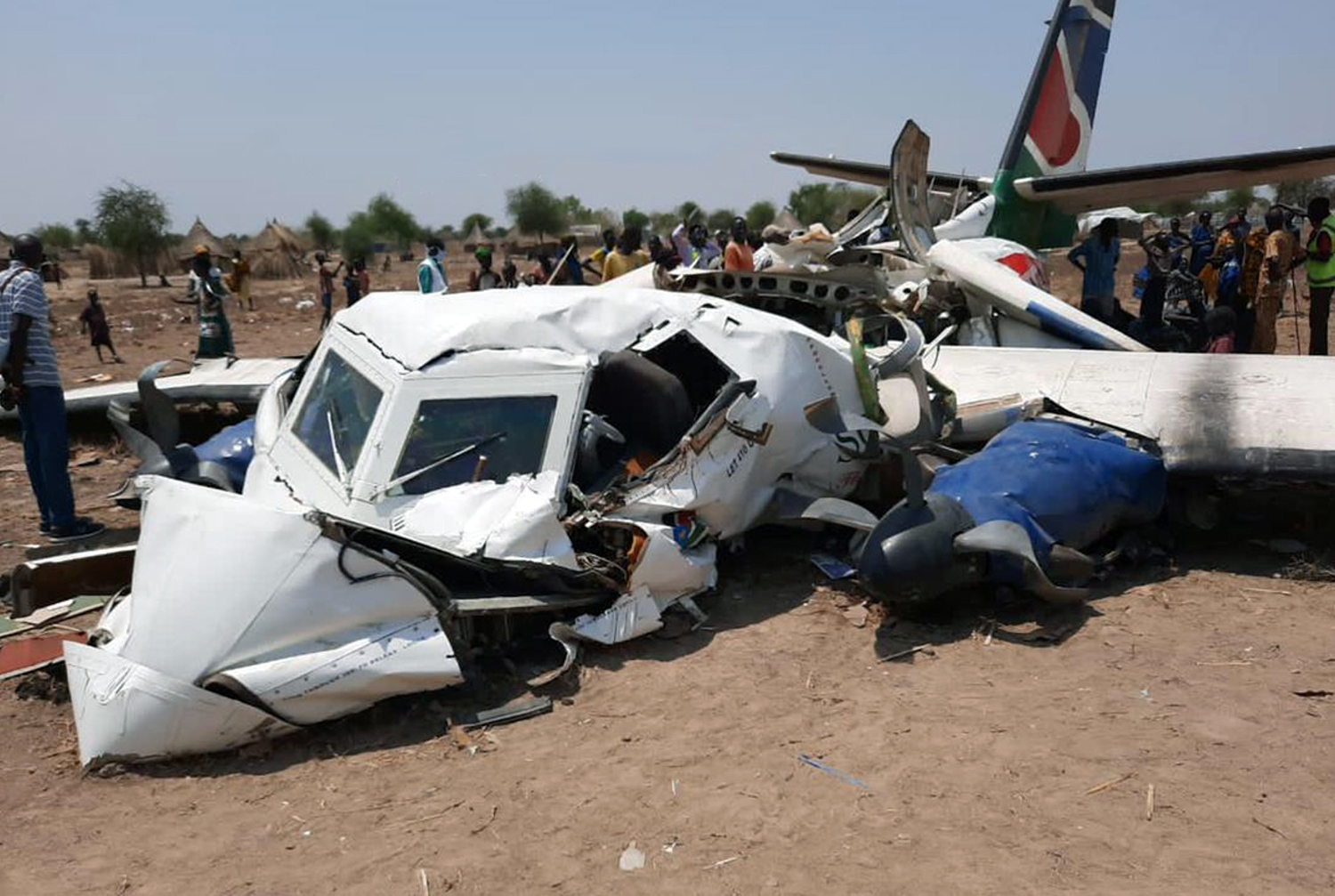
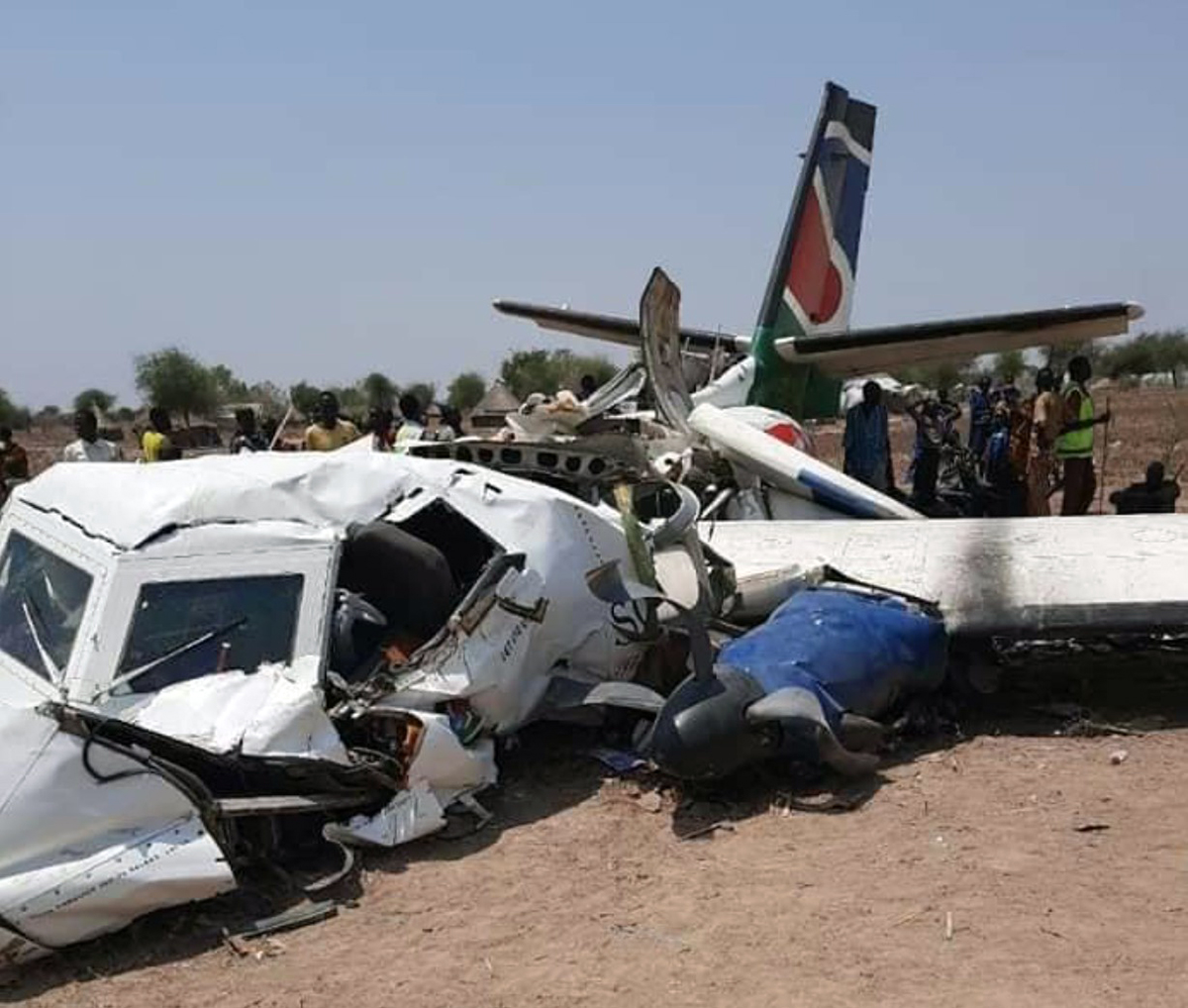
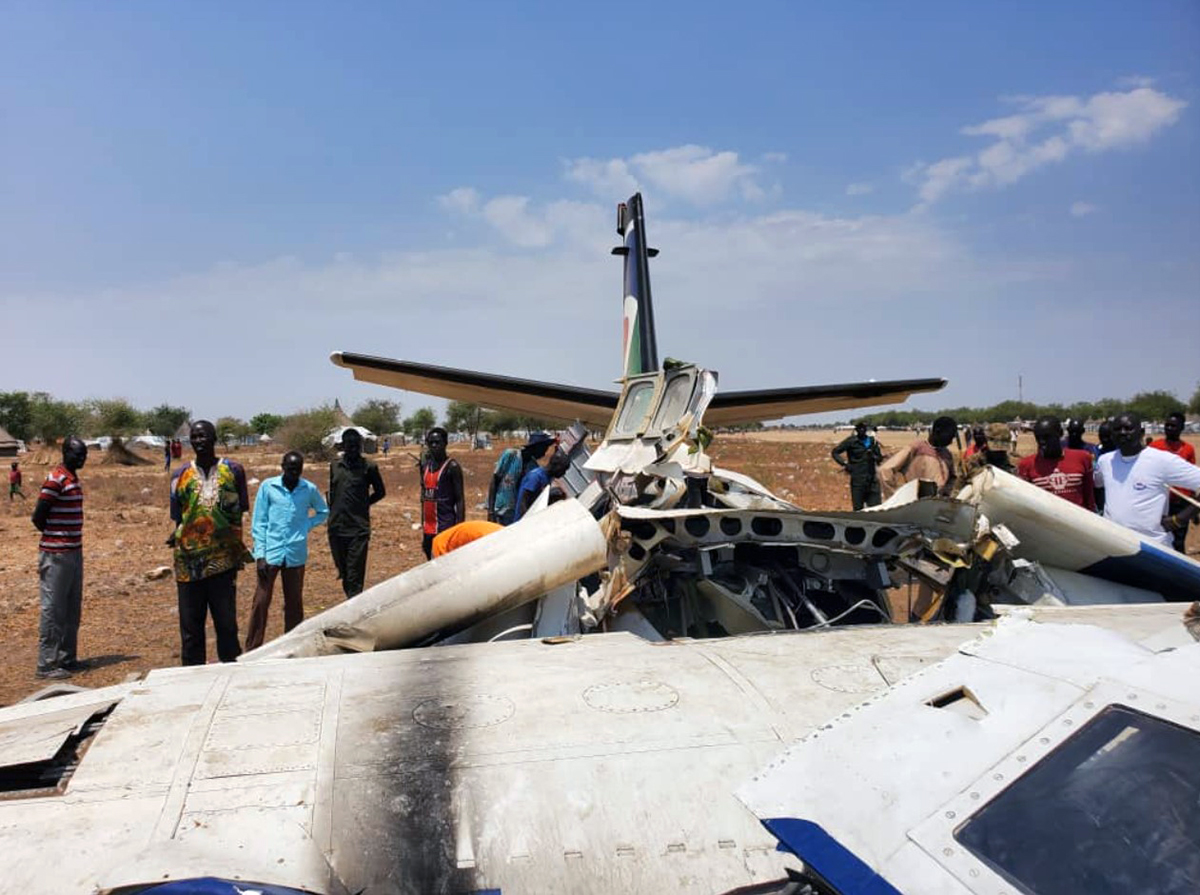
Crash of a Cessna 207 Stationair 8 in Bethel

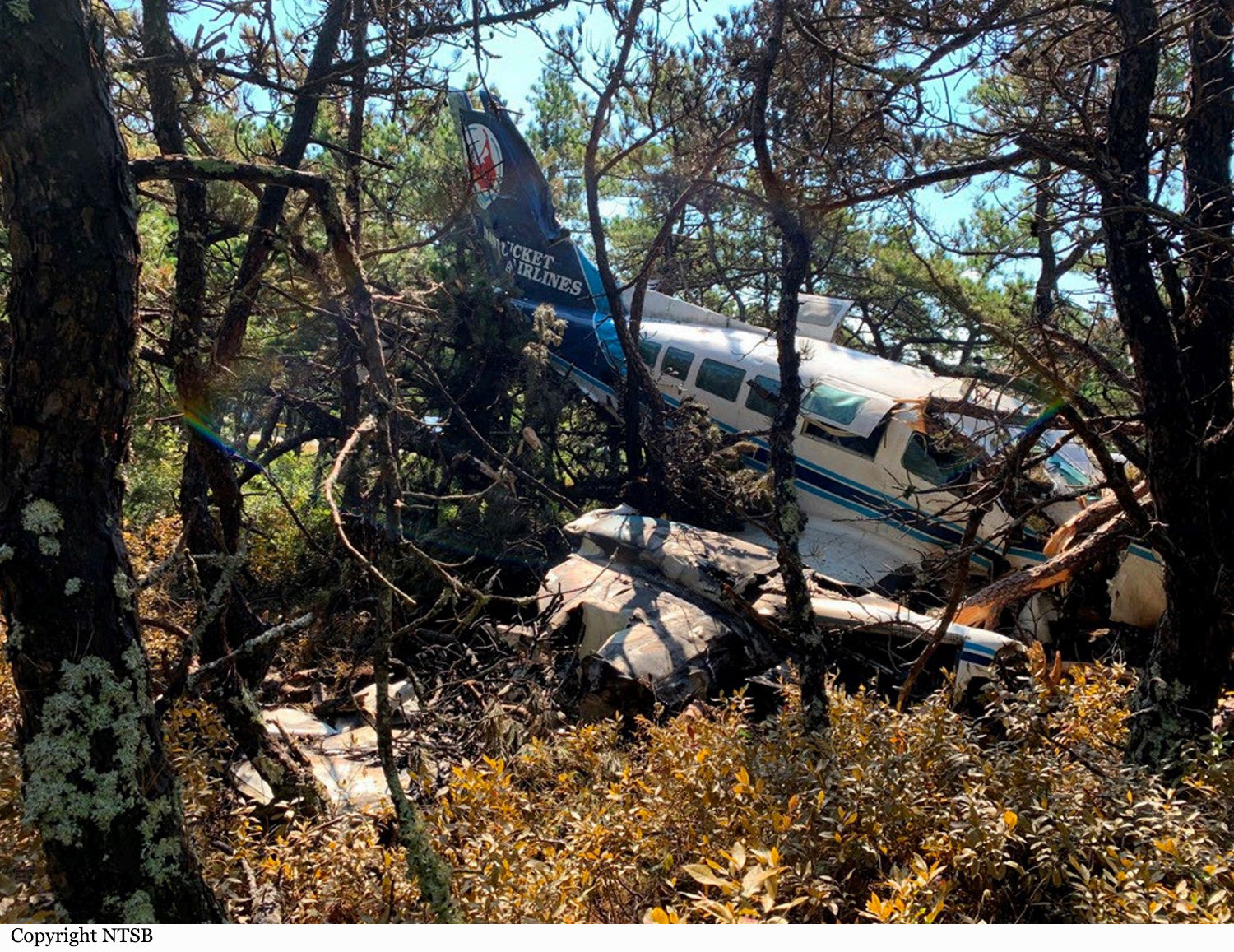
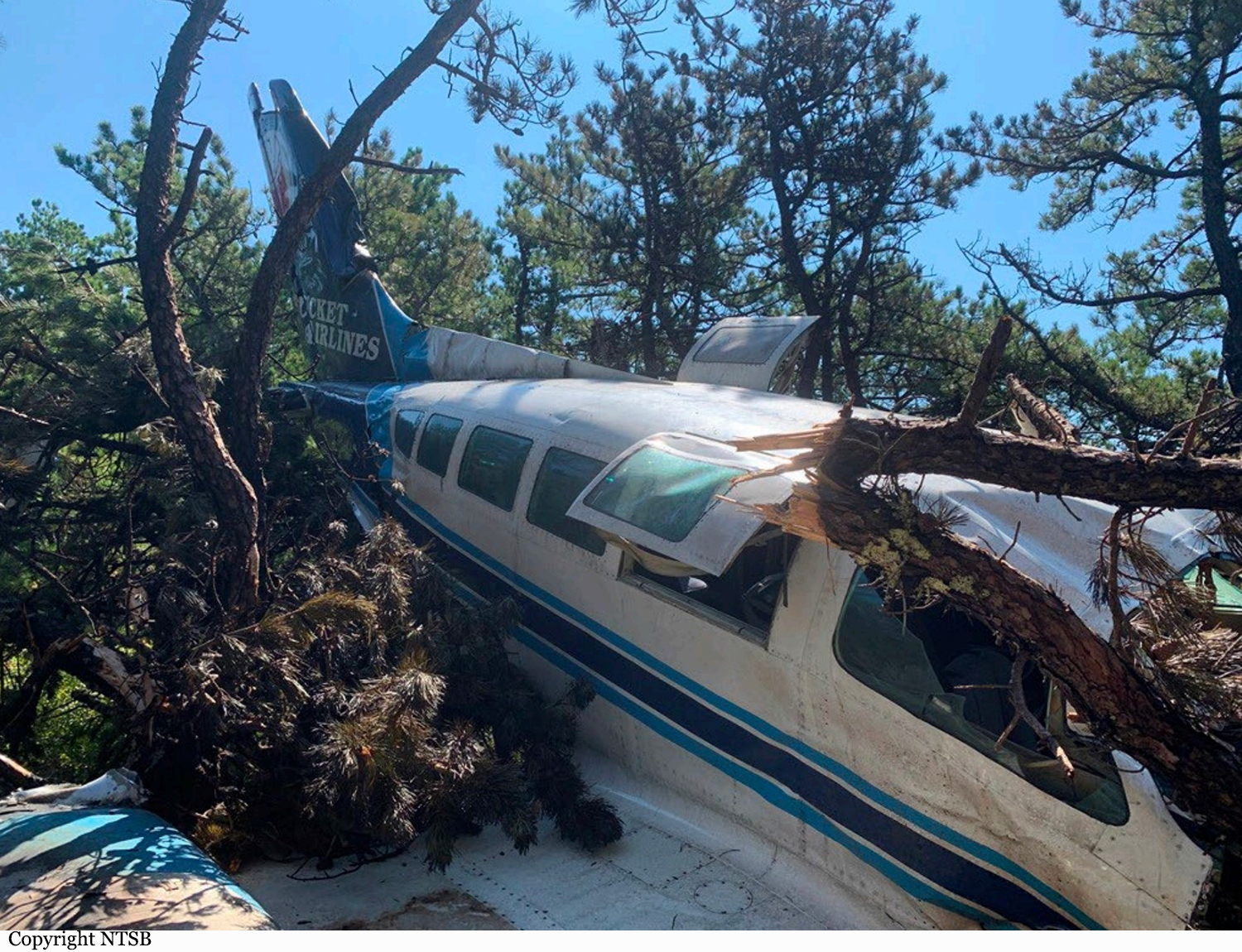
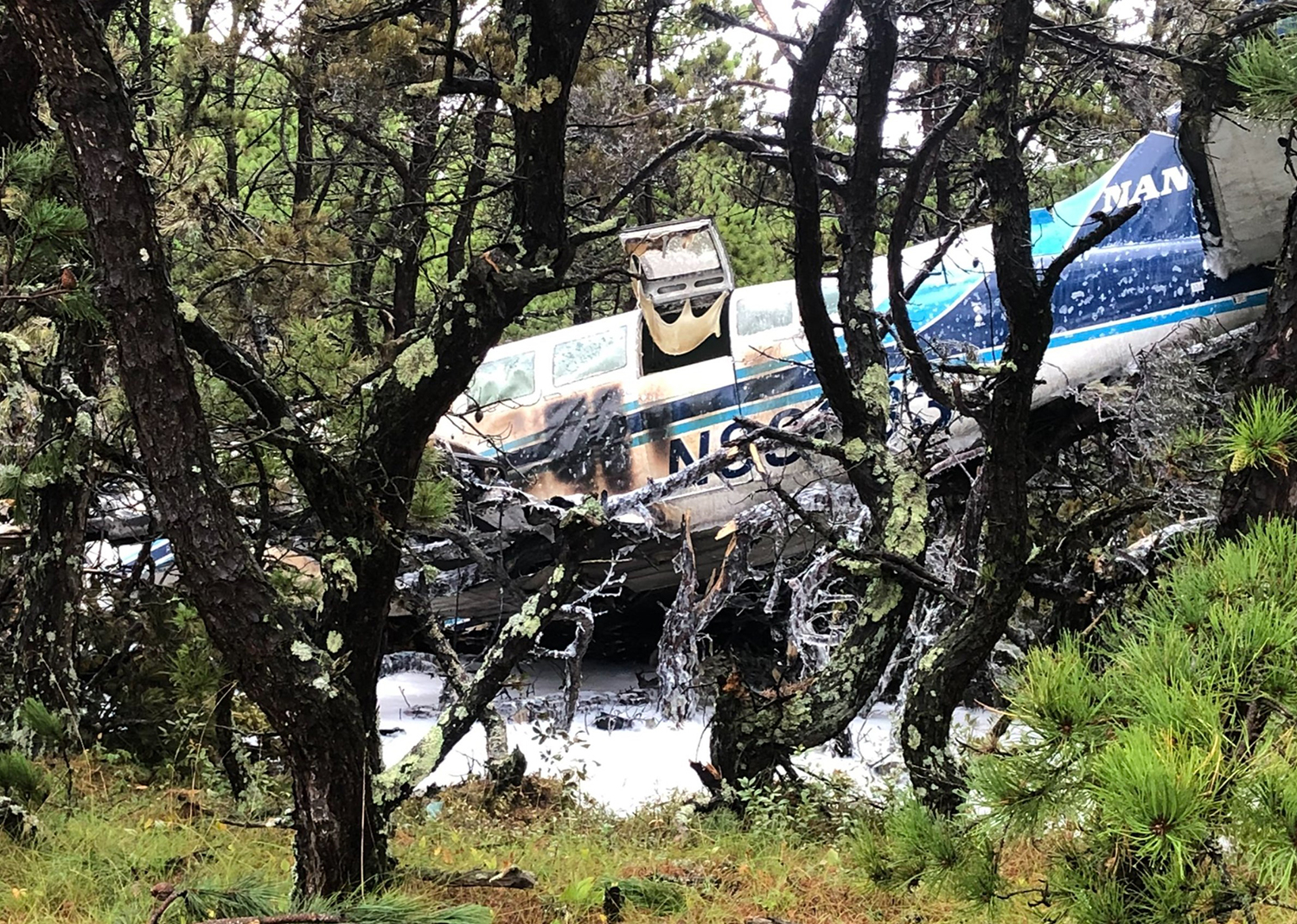
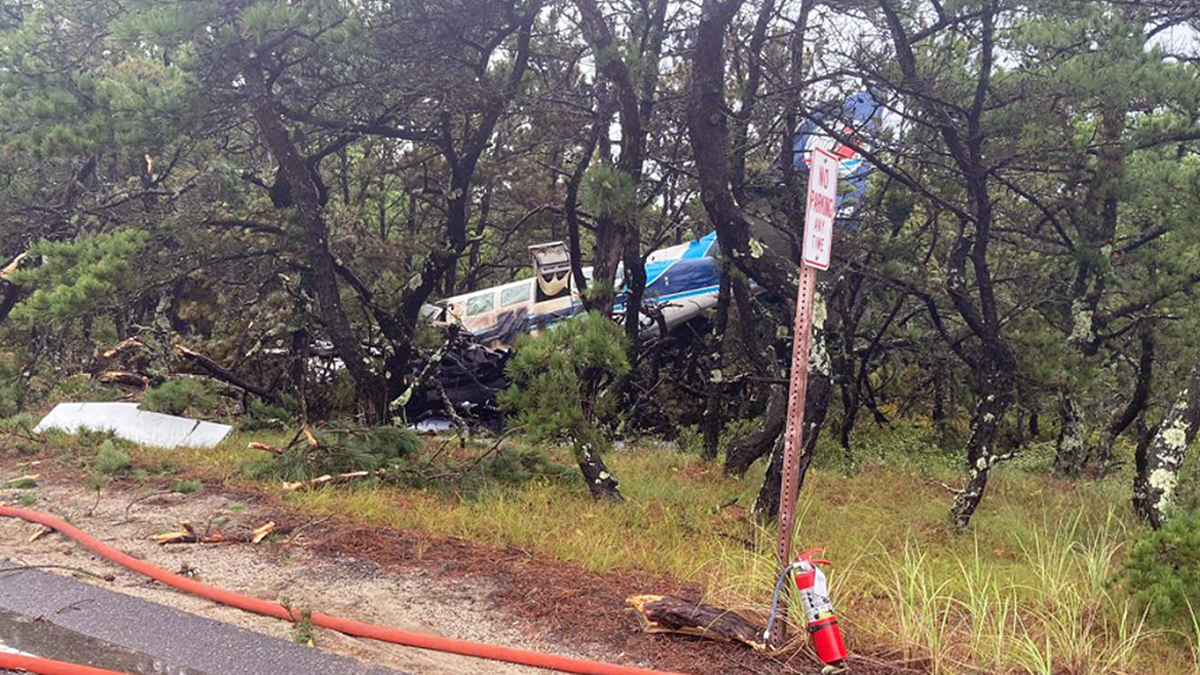
Date & Time: Nov 20, 2021 at 1755 LT
Operator:
Registration:
N9794M
Survivors:
Yes
Schedule:
Bethel – Kwethluk
MSN:
207-0730
YOM:
1981
Location:
Crew on board:
1
Crew fatalities:
Pax on board:
5
Pax fatalities:
Other fatalities:
Total fatalities:
0
Captain / Total flying hours:
1480
Captain / Total hours on type:
659.00
Aircraft flight hours:
15727
Circumstances:
The pilot was conducting a scheduled air taxi flight with five passengers onboard. Shortly after departure, the pilot began to smell an electrical burn odor, and he elected to return to the airport. About 1 minute later, the electrical burn smell intensified, which was followed by visible smoke in the cockpit, and the pilot declared an emergency to the tower. After landing and all the passengers had safely departed the airplane, heavy smoke filled the cockpit and passenger compartment, and the pilot saw a candle-like flame just behind the pilot and co-pilot seats, just beneath the floorboards of the airplane. Moments later, the airplane was engulfed in flames. Postaccident examination of the airframe revealed the origin of the fire to be centered behind the pilot’s row of seats, where a wire harness was found improperly installed on top of the aft fuel line from the left tank. Examination of the wire harness found a range of thermal and electrical damage consistent with chafing from the fuel line. It is likely that the installation of the wire harness permitted contact with the fuel line, which resulted in chafing, arcing, and the subsequent fire.
Probable cause:
The improper installation of an avionics wire harness over a fuel line, which resulted in chafing of the wire harness, arcing, and a subsequent fire.
Final Report:

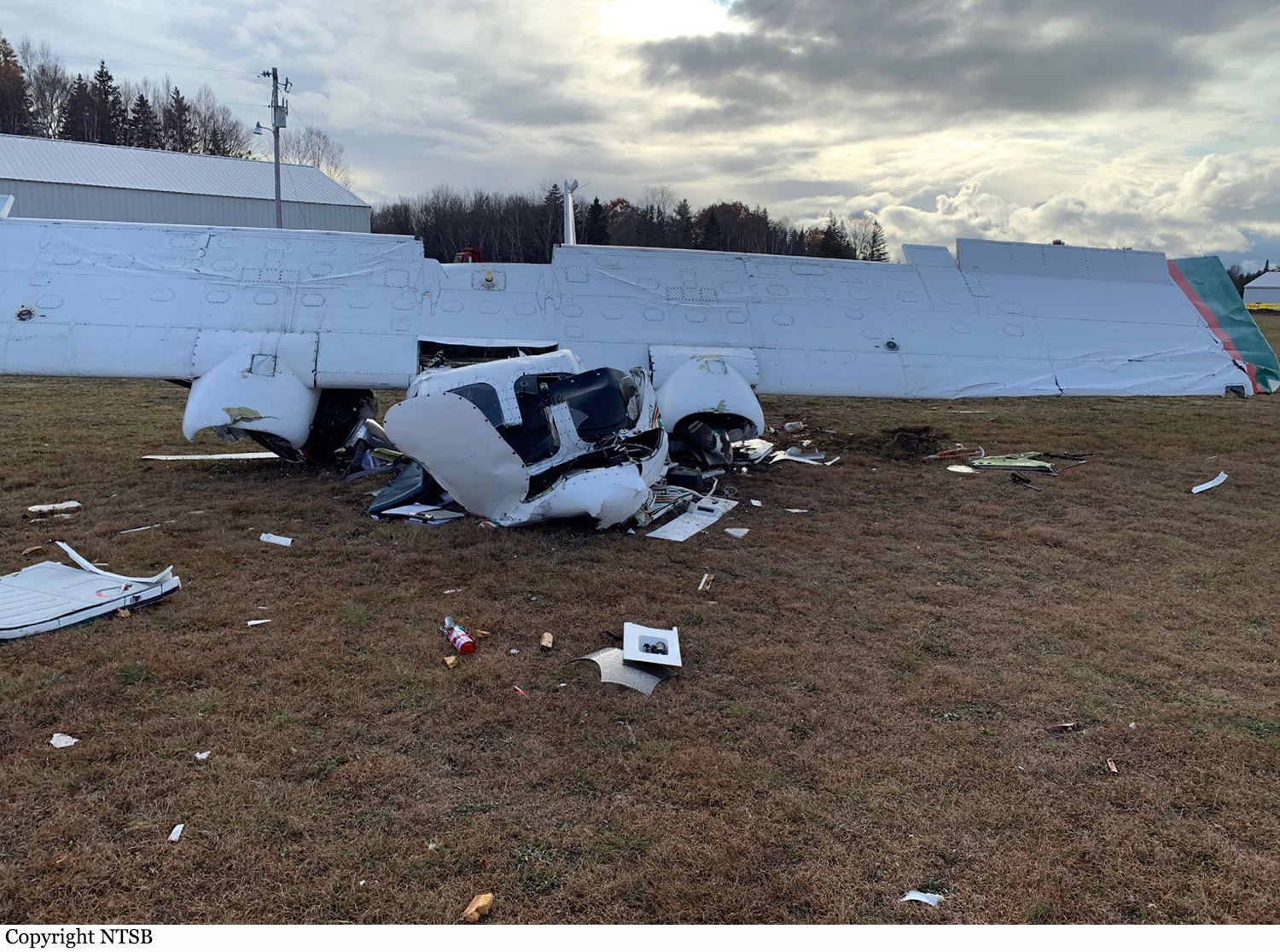
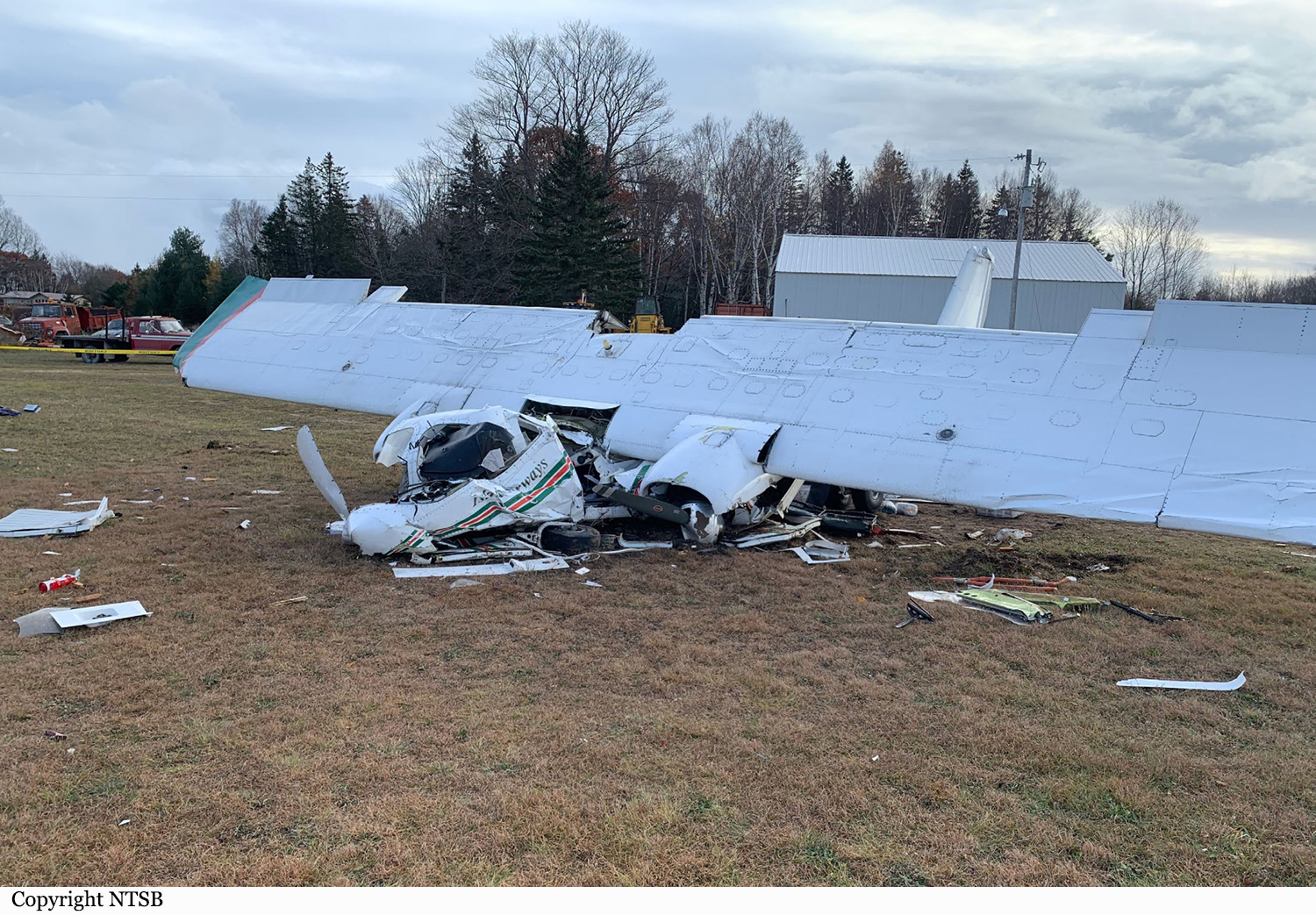
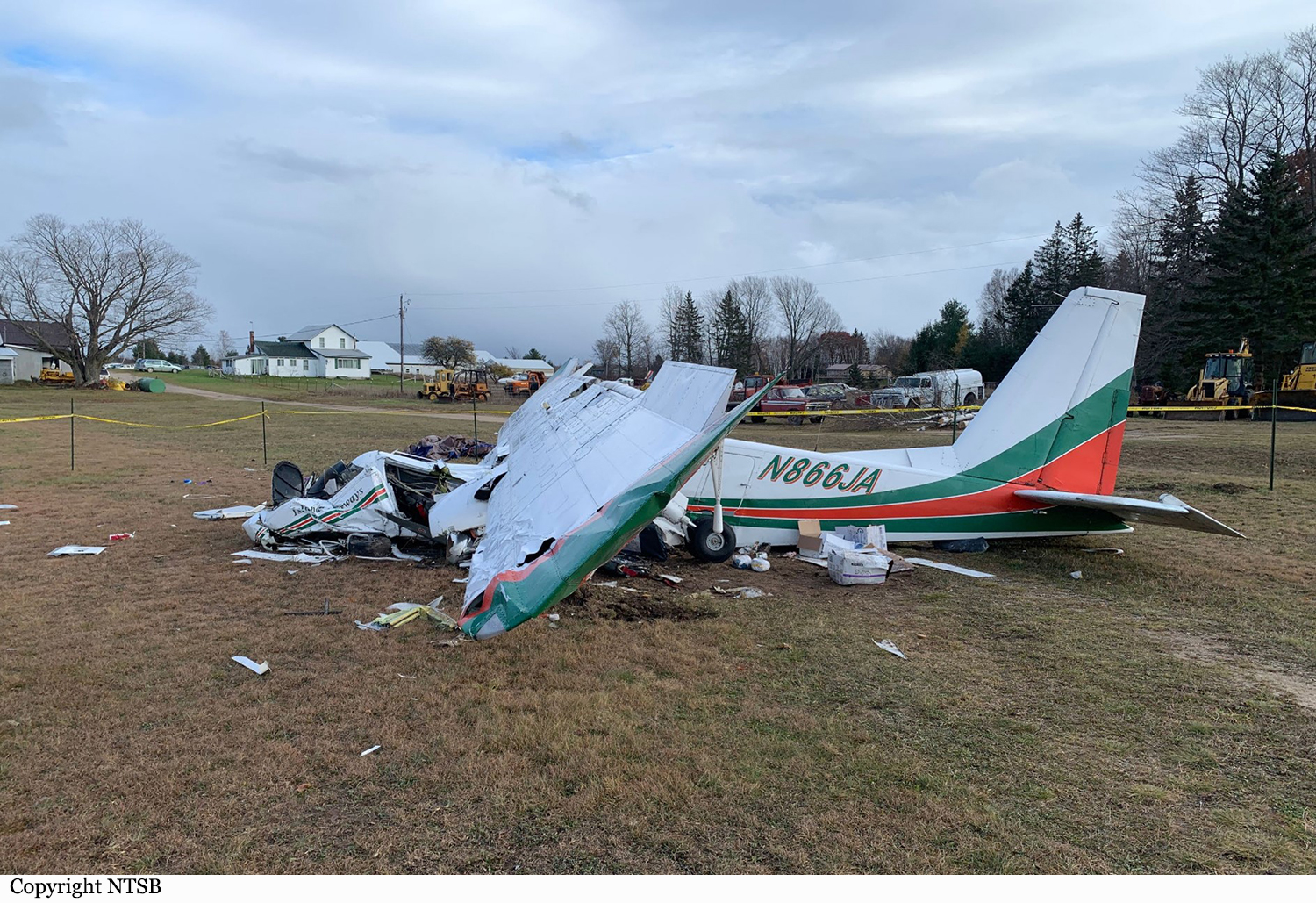
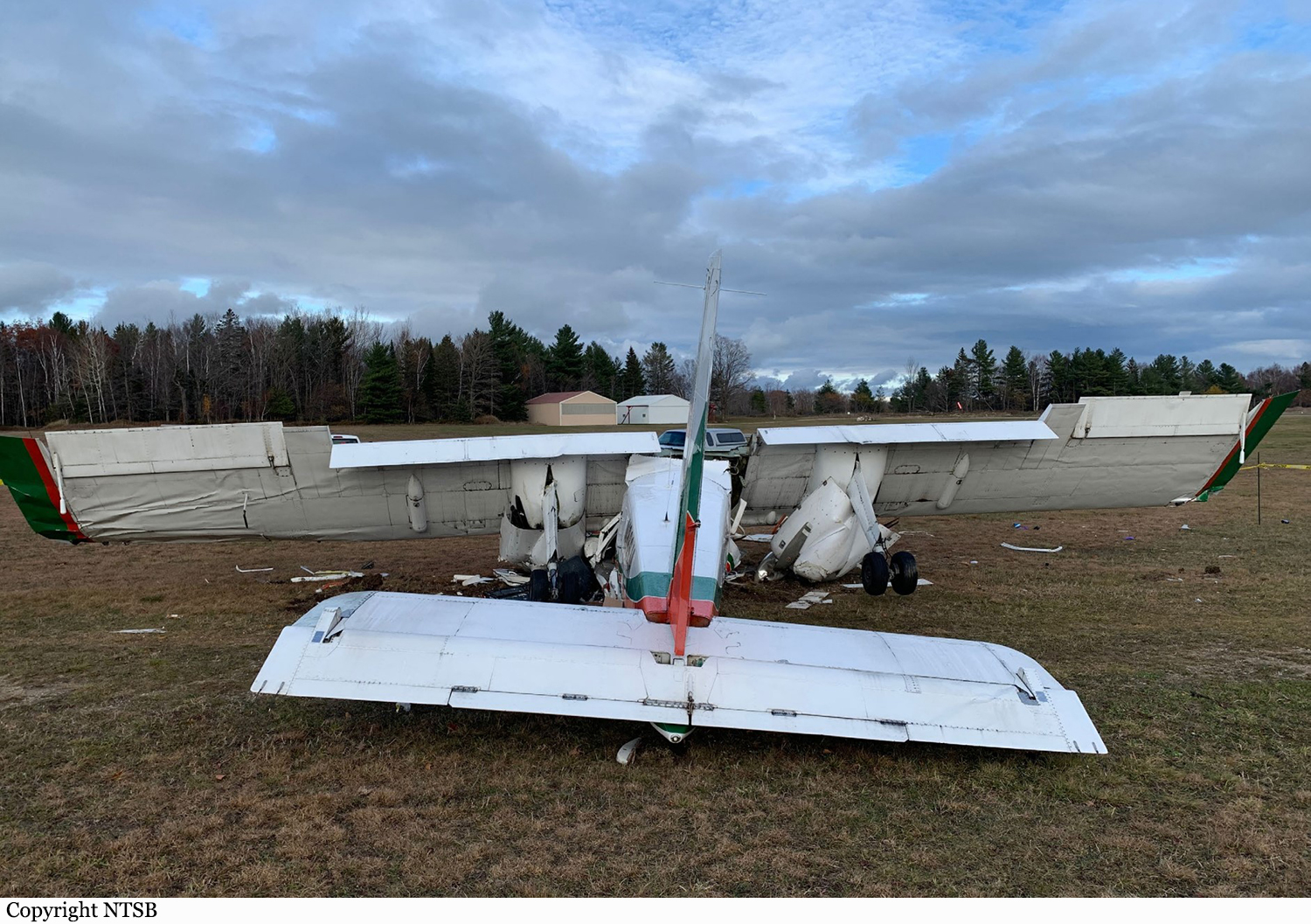
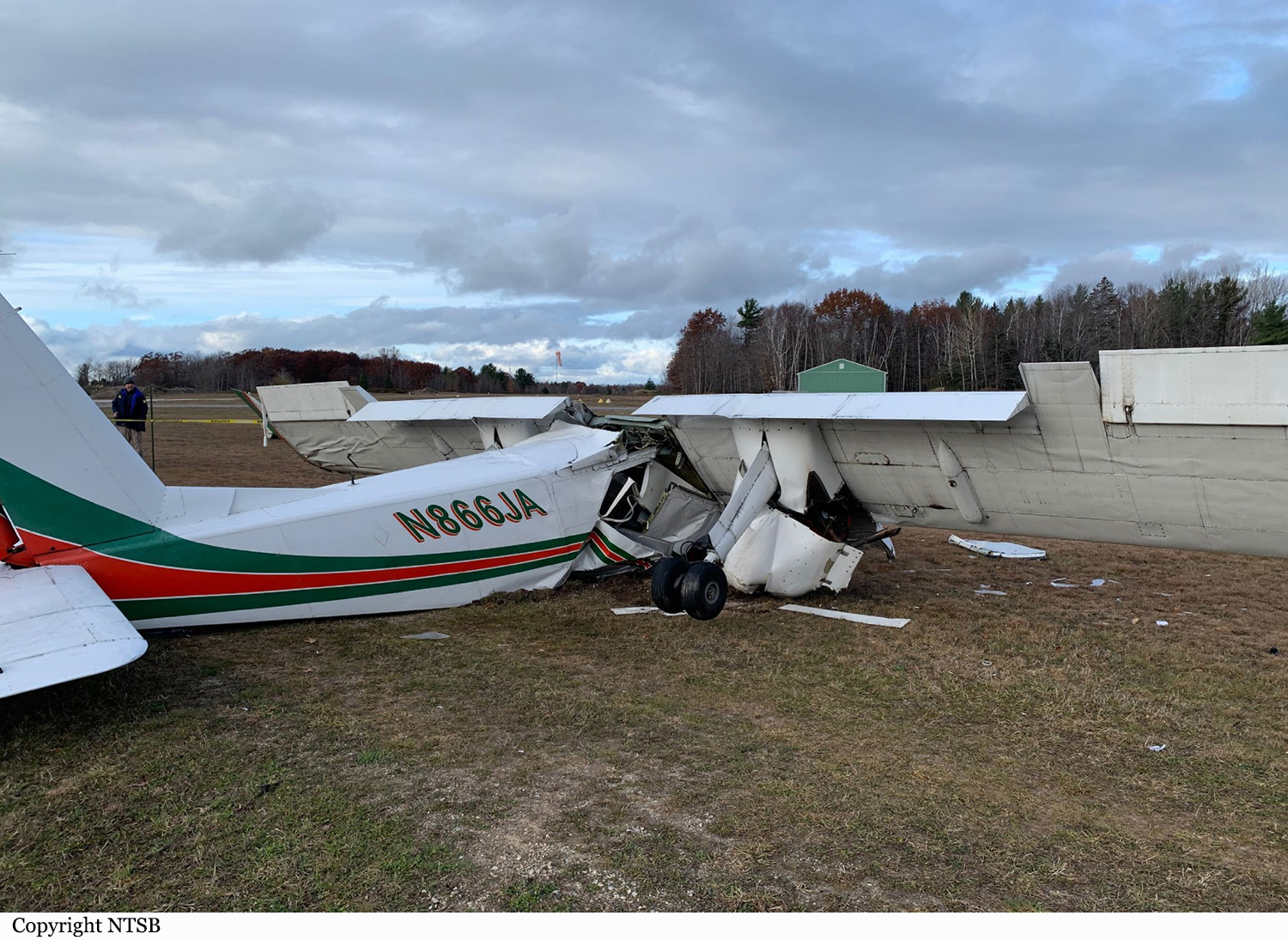
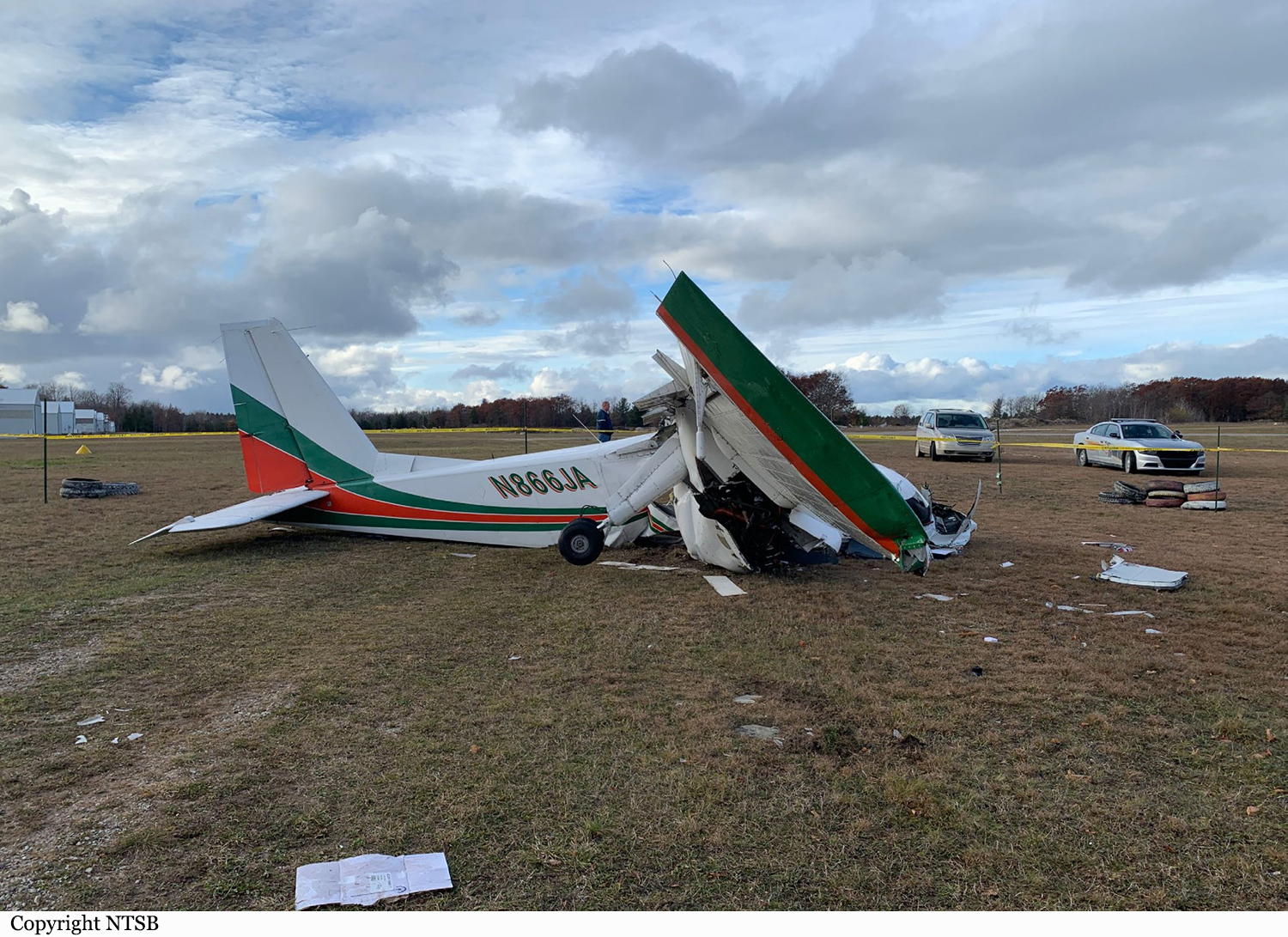
Crash of a Britten Norman BN-2A-6 Islander in Beaver Island: 4 killed

Date & Time: Nov 13, 2021 at 1349 LT
Type of aircraft:
Operator:
Registration:
N866JA
Survivors:
Yes
Schedule:
Charlevoix – Beaver Island
MSN:
185
YOM:
1970
Crew on board:
1
Crew fatalities:
Pax on board:
4
Pax fatalities:
Other fatalities:
Total fatalities:
4
Captain / Total flying hours:
2949
Captain / Total hours on type:
136.00
Aircraft flight hours:
20784
Circumstances:
A pilot-rated witness observed the airplane during the final approach to the destination airport and stated that the airplane was flying slowly, with a high pitch attitude, and was “wallowing” as if nobody was flying. The airplane stalled and impacted the ground about 300 ft from the runway. GPS and automatic dependent surveillance-broadcast (ADS-B) data captured the accident flight, but the ADS-B data ended about 0.24 miles before the accident. GPS data showed that the airplane’s speed was at or near the published stall speed for the airplane’s given loading condition. The airplane sustained substantial damage to the fuselage and both wings. Examination of the airplane verified flight and engine control continuity. No preimpact anomalies were found with respect to the airplane, engines, or systems. The pilot allowed the airspeed to decrease during the approach, increased pitch attitude, and exceeded critical angle of attack, which resulted in an aerodynamic stall and spin into terrain.
Probable cause:
The pilot's exceedance of the airplane's critical angle of attack during final approach, which resulted in an aerodynamic stall and loss of control at an altitude too low to recover.
Final Report:

Crash of a Britten Norman BN-2B-26 Islander in Montserrat

Date & Time: Sep 29, 2021 at 1733 LT
Type of aircraft:
Operator:
Registration:
J8-VBI
Survivors:
Yes
Schedule:
Saint John’s – Montserrat
MSN:
2025
YOM:
1981
Flight number:
SVD207
Country:
Crew on board:
1
Crew fatalities:
Pax on board:
6
Pax fatalities:
Other fatalities:
Total fatalities:
0
Captain / Total flying hours:
2650
Captain / Total hours on type:
712.00
Circumstances:
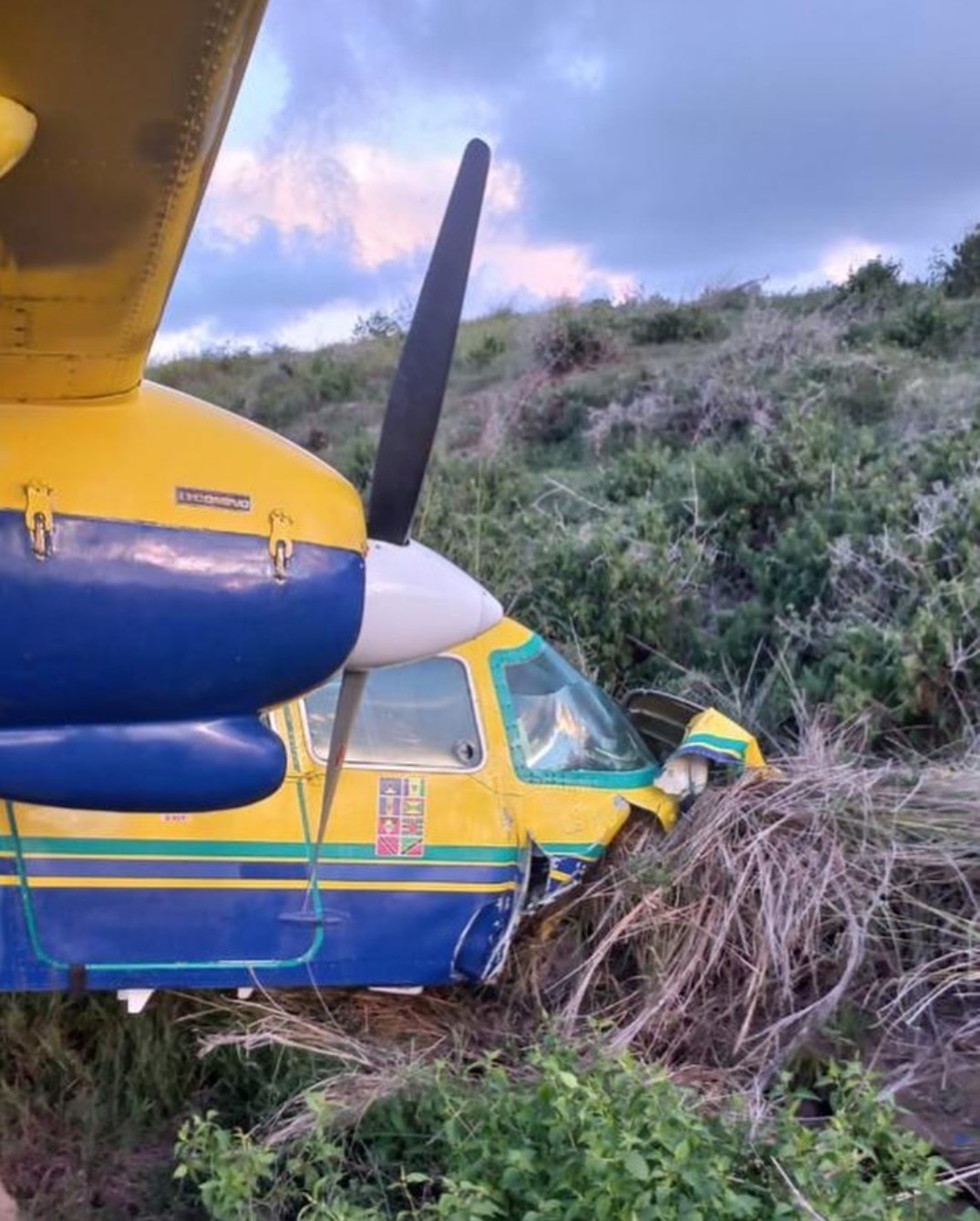
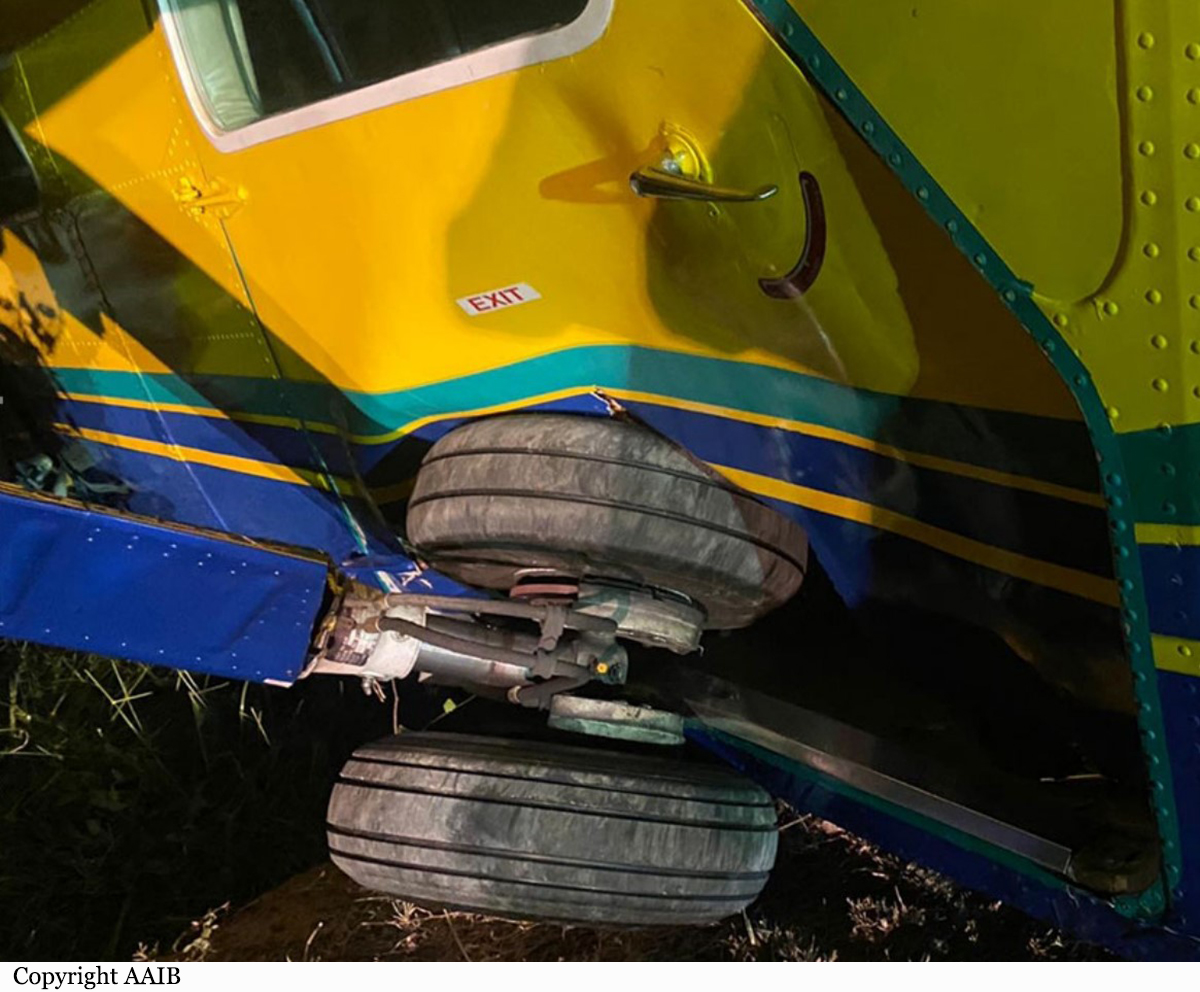
After an uneventful return flight to Barbuda, the aircraft departed Antigua at 2114 hrs (1714 hrs local) for John A Osborne Airport, Montserrat, with the pilot and six passengers on board. The aircraft cruised at 2,000 ft enroute and the pilot recalled there were good visual meteorological conditions throughout the 19 minute flight. On arriving at Montserrat there were no other aircraft operating in the vicinity of the airport and the pilot positioned the aircraft visually on a downwind leg for Runway 10. The pilot reported he commenced the approach, flying an approach speed of 65 kt, reducing to 60 kt as the aircraft touched down. The runway surface was dry and the pilot described the landing as “smooth”. After the main landing gear touched down, but prior to the nosewheel contacting the runway, the pilot applied the brakes. He reported that the left brake felt “spongy” and did not seem to act, but that the right brake felt normal. The pilot was unable to maintain directional control of the aircraft which veered to the right two seconds after touchdown, departing the runway a further three seconds later. The aircraft continued across the adjacent grassed area before impacting an embankment close to the runway. After the aircraft had come to a stop, the pilot shut down the engines using the normal shut down procedure. The left main gear had collapsed and rendered the left cabin exit unusable. The pilot evacuated through the flight deck door which was on the left of the aircraft. The six passengers were able to evacuate through the right cabin exit. The airport fire service then arrived at the aircraft, less than one minute after the accident.
Probable cause:
On landing at John A. Osborne Airport, Montserrat, the pilot was unable to maintain directional control of the aircraft, later reporting the left brake felt “spongy”. The aircraft veered off the right side of the runway and came to rest in an adjacent drainage ditch. An inspection of the aircraft’s braking system revealed a slight brake fluid leak from one of the pistons in the left outboard brake calliper. This would have prevented full brake pressure being achieved on the left brakes, resulting in an asymmetric braking effect. Difficulty in maintaining directional control was compounded by the use of an incorrect braking technique on landing. The investigation identified shortcomings with the operator’s manuals, procedures and regulatory oversight.
Final Report:

Crash of a Let L-410UVP-E20 in Kazashinskoye: 4 killed

Date & Time: Sep 12, 2021 at 2251 LT
Type of aircraft:
Operator:
Registration:
RA-67042
Survivors:
Yes
Schedule:
Irkutsk – Kazashinskoye
MSN:
14 29 16
YOM:
2014
Flight number:
SL51
Country:
Region:
Crew on board:
2
Crew fatalities:
Pax on board:
14
Pax fatalities:
Other fatalities:
Total fatalities:
4
Captain / Total flying hours:
5623
Captain / Total hours on type:
4625.00
Copilot / Total flying hours:
1385
Copilot / Total hours on type:
693
Aircraft flight hours:
5481
Aircraft flight cycles:
3632
Circumstances:
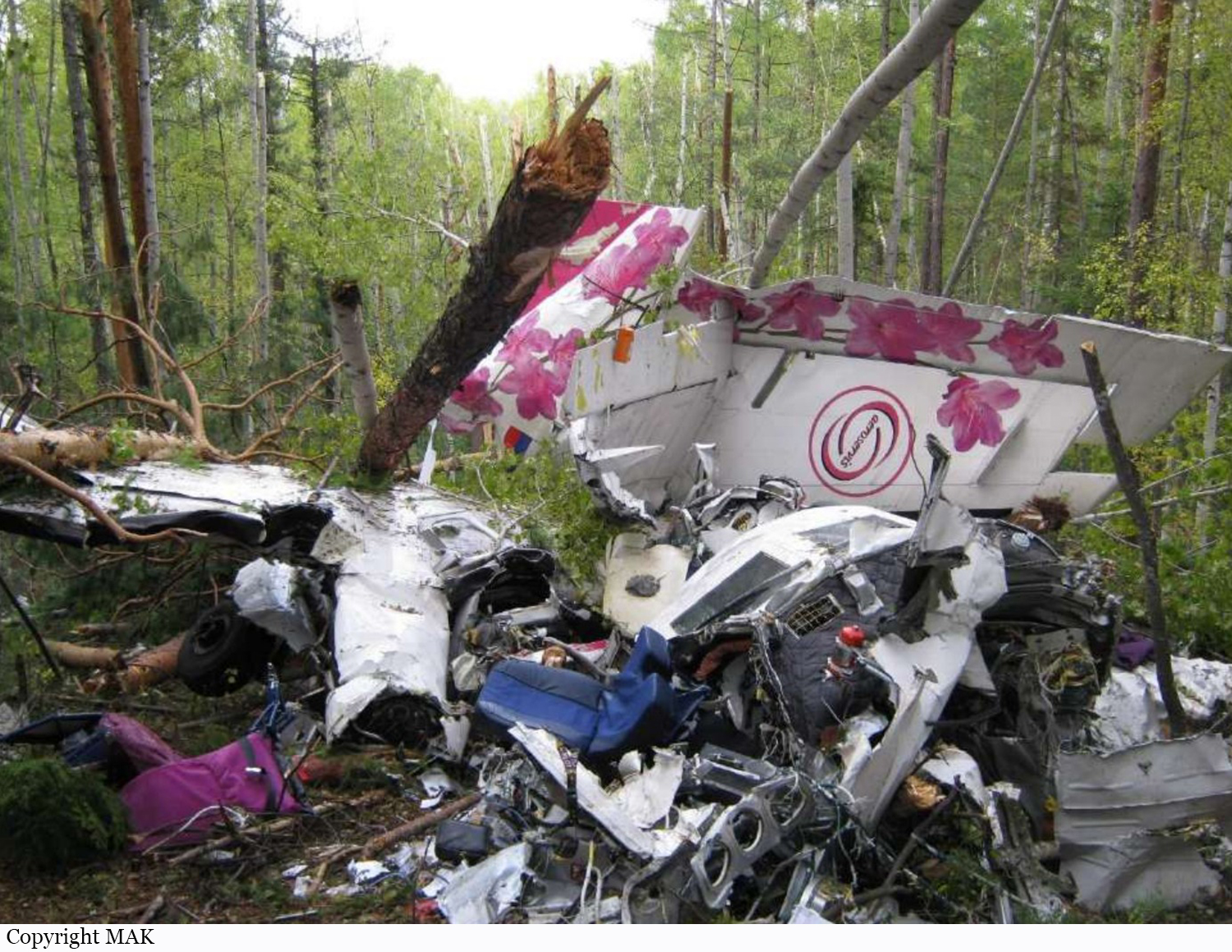
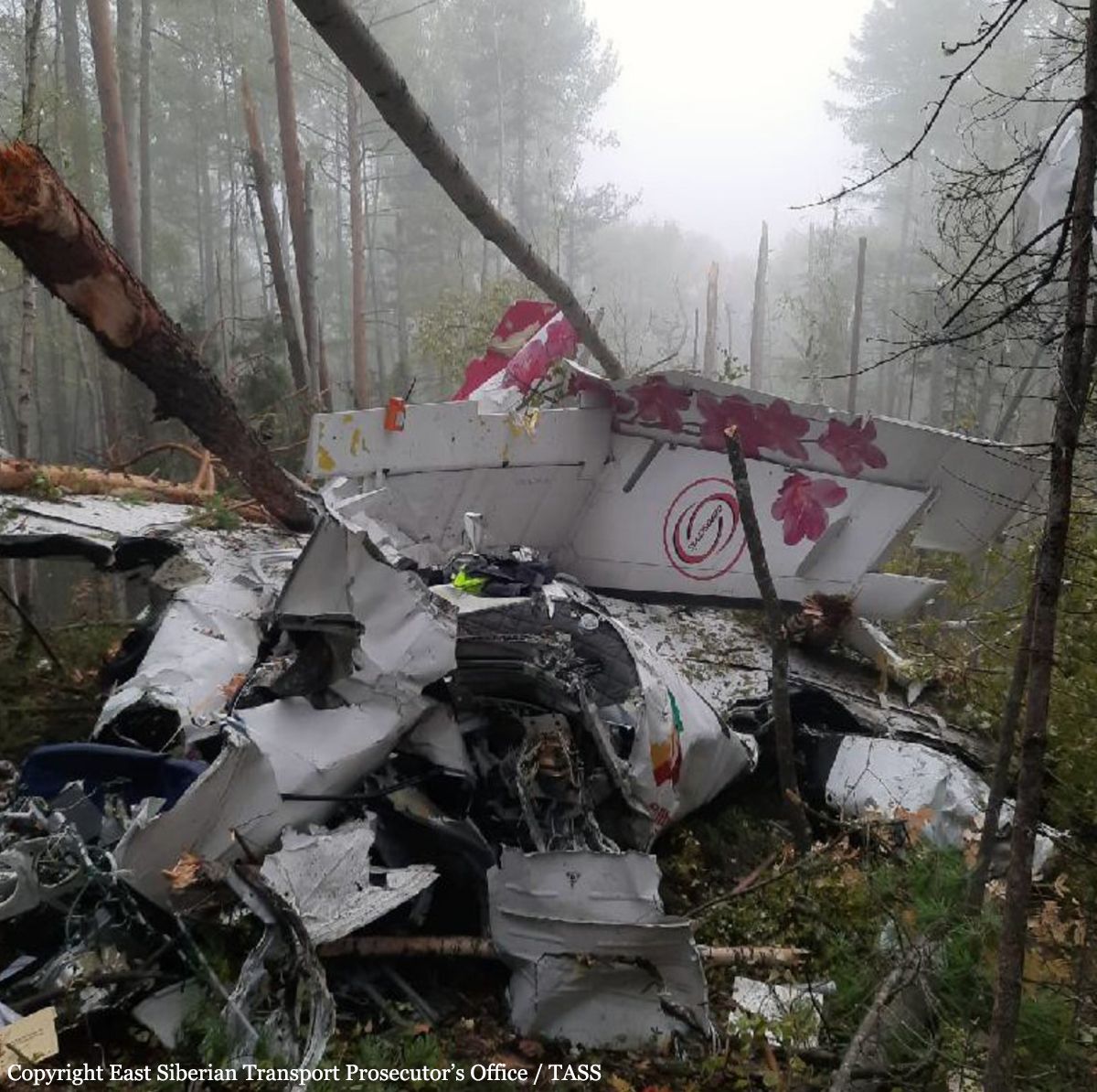
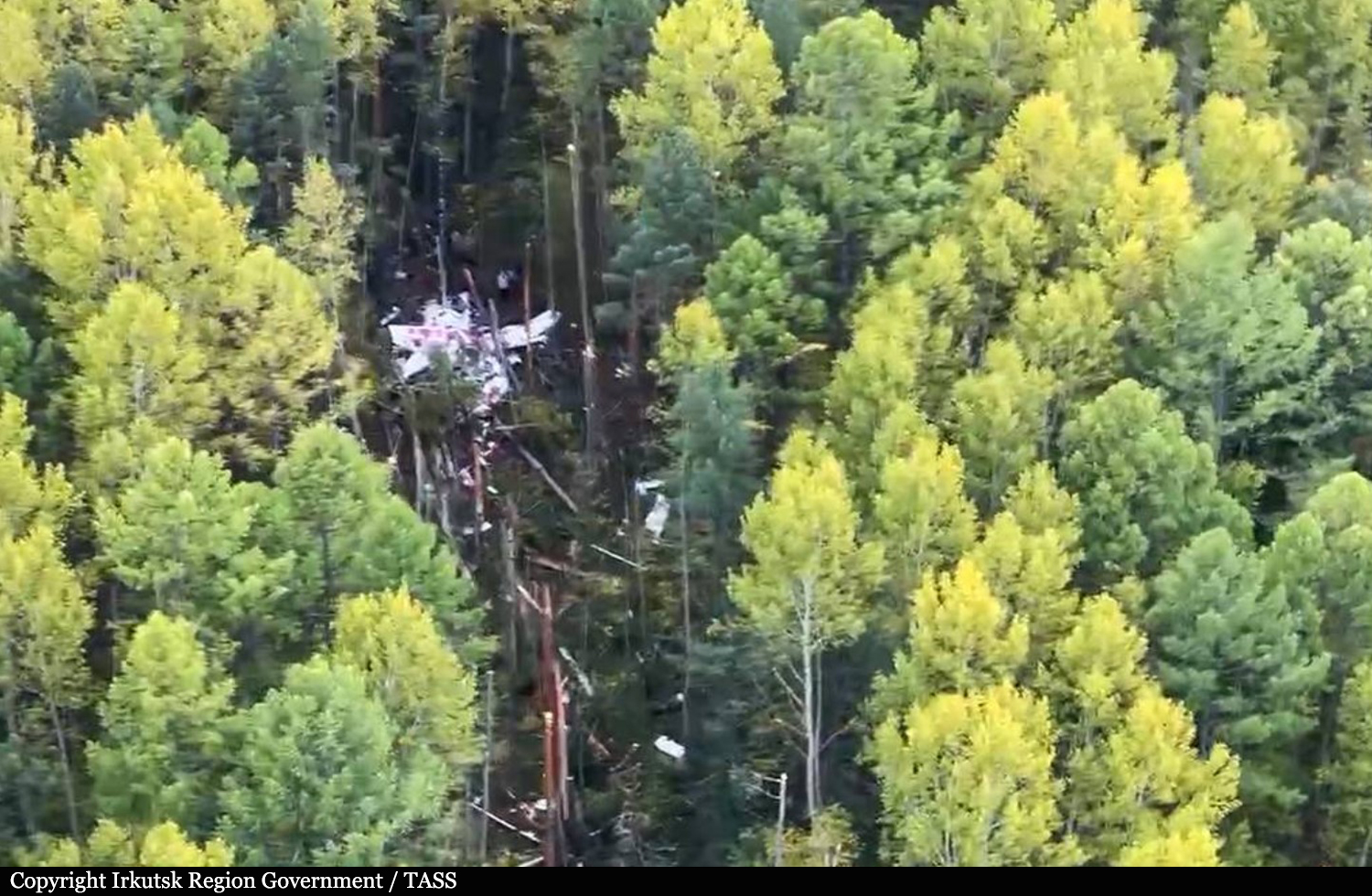
The twin engine airplane was supposed to depart Irkust at 1435LT but the flight had been delayed for several hours. On approach to Kazashinskoye Airport, the crew encountered poor visibility due to the night and fog. On final approach to runway 04, at an altitude of 130 metres, the crew initiated a go-around procedure as he was unable to establish a visual contact with the ground. Few minutes later, during a second attempt to land, the crew descended to the height of 10 metres when he initiated a second go-around procedure, again for the same reason. The airplane climbed to an altitude of 400 metres then the crew made a 180 turn in an attempt to land on runway 22. In below minima weather conditions, the airplane deviated 1,100 metres to the right of the runway 22 extended path, descended into trees and crashed in a wooded area located about 3 km from the airport. Three passengers and a pilot were killed while 12 others occupants were injured. The aircraft was totally destroyed by impact forces.
Probable cause:
The accident was the consequence of the crew's non-compliance with the rules for visual flights at night, which was expressed in making an approach to land with visibility below the established minimum values, leading to a collision with natural obstacles and resulting in a controlled flight into terrain (CFIT).
The following contributing factors were identified:
- The discrepancy between the coordinates of the runway thresholds at Kazachinskoe in the GPS receivers of the aircraft commander and the co-pilot and their actual values, which led to an incorrect calculation for landing ;
- The failure of the aircraft commander to make a timely decision to divert to an alternate airport despite having information about the meteorological conditions not meeting the established minimum values. The individual psychological characteristics of the aircraft commander allowed him to make leadership decisions, but in the case of their erroneousness, he did not possess the ability to correct them and was inclined to unjustifiably risky, dangerous decisions ;
- The crew's use of the autopilot in the final stage of flight, which did not comply with the Flight Operations Manual. The autopilot modes selected significantly reduced the crew's situational awareness. In fact, the descent was carried out significantly to the right of the extended runway centerline over an area that lacked light landmarks ;
- The lack of proper interaction within the crew and insufficient monitoring of flight parameters.
Final Report:

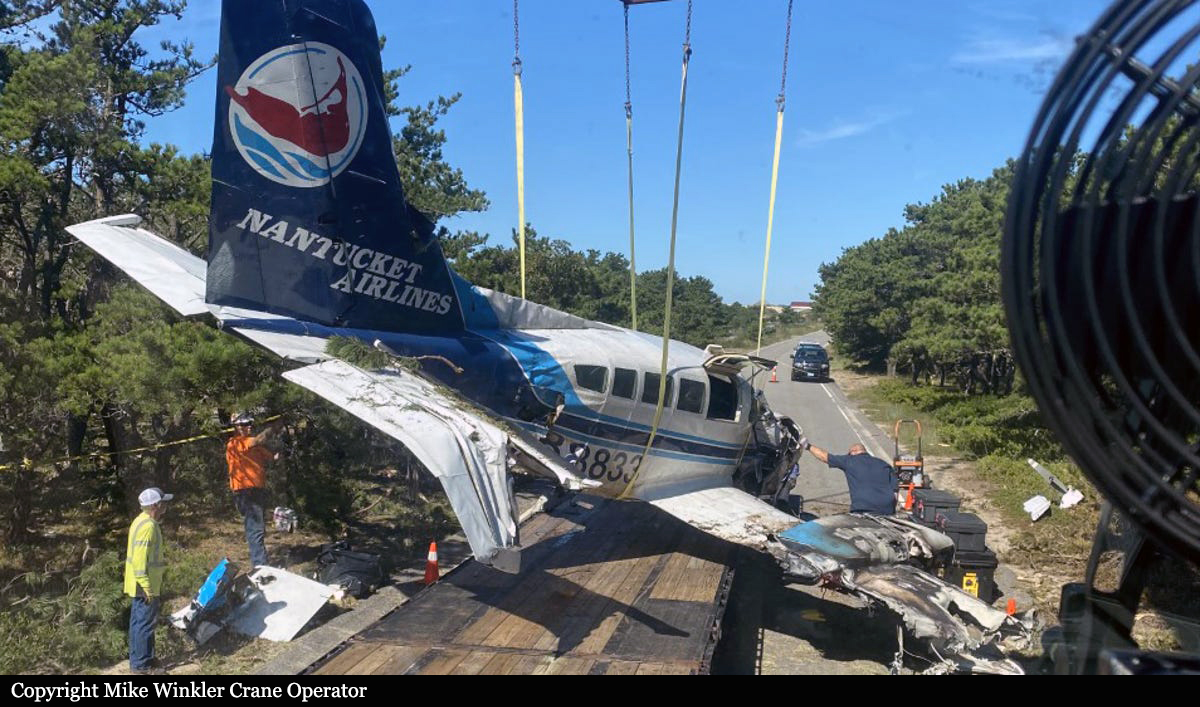
Crash of a Cessna 402C in Provincetown

Date & Time: Sep 9, 2021 at 1600 LT
Type of aircraft:
Operator:
Registration:
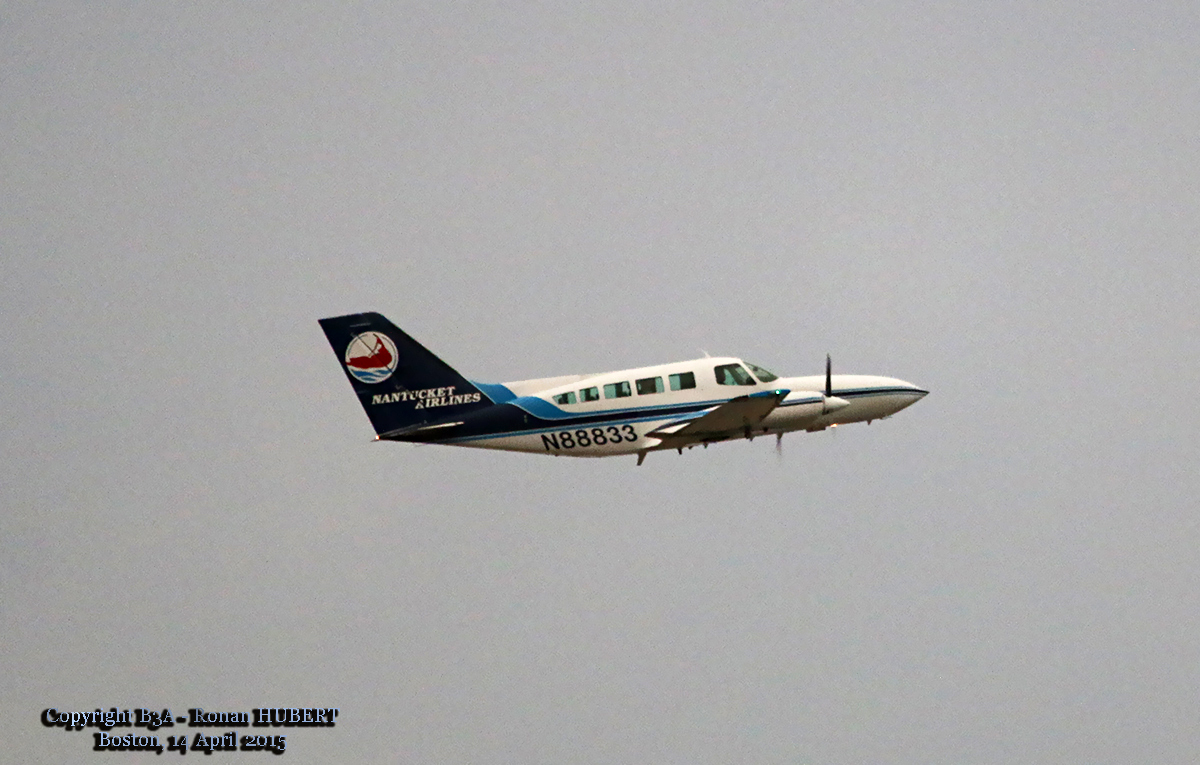
N88833
Survivors:
Yes
Schedule:
Boston – Provincetown
MSN:
402C-0265
YOM:
1979
Flight number:
9K2072
Crew on board:
1
Crew fatalities:
Pax on board:
6
Pax fatalities:
Other fatalities:
Total fatalities:
0
Captain / Total flying hours:
17617
Captain / Total hours on type:
10000.00
Aircraft flight hours:
36722
Circumstances:
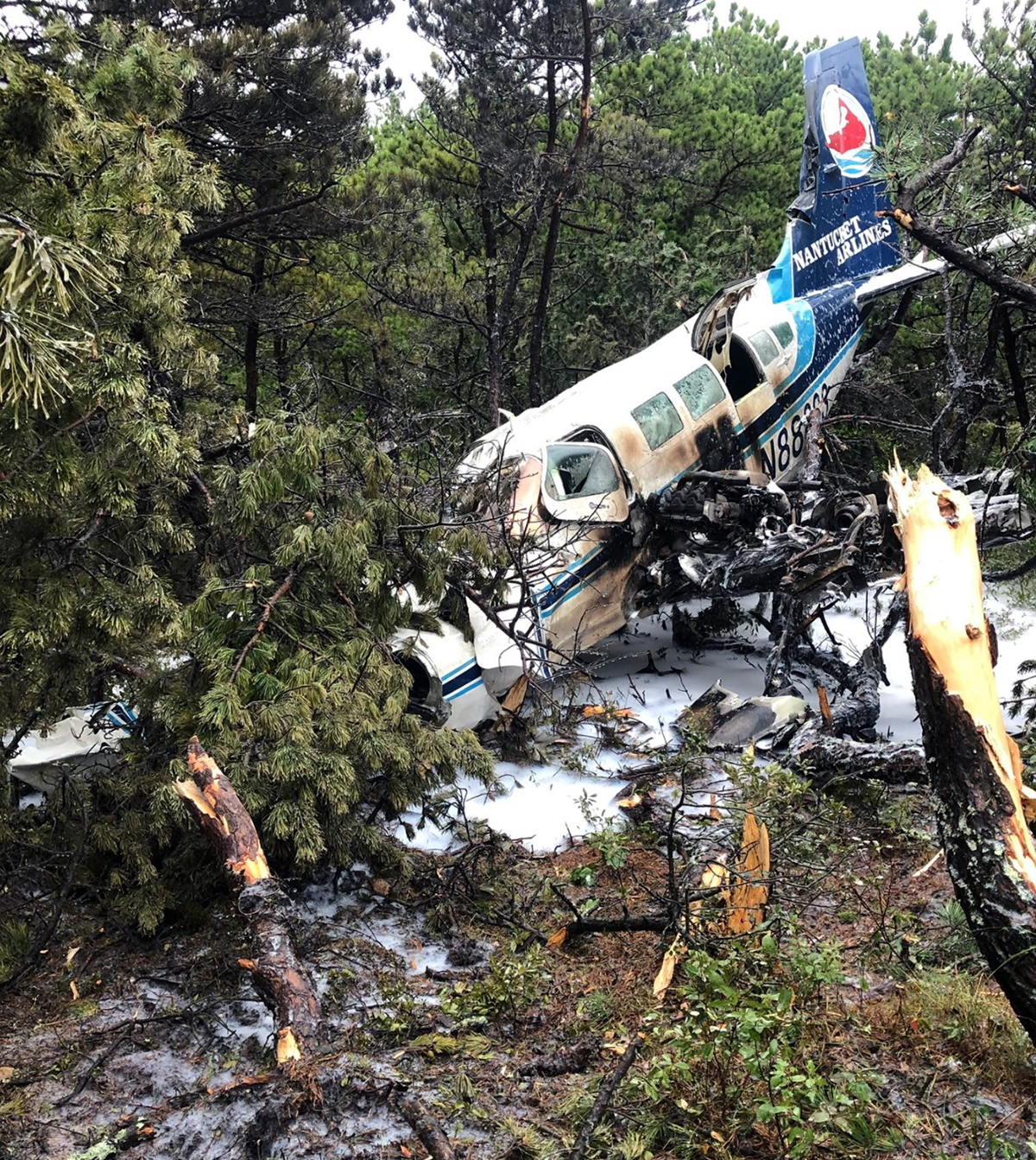
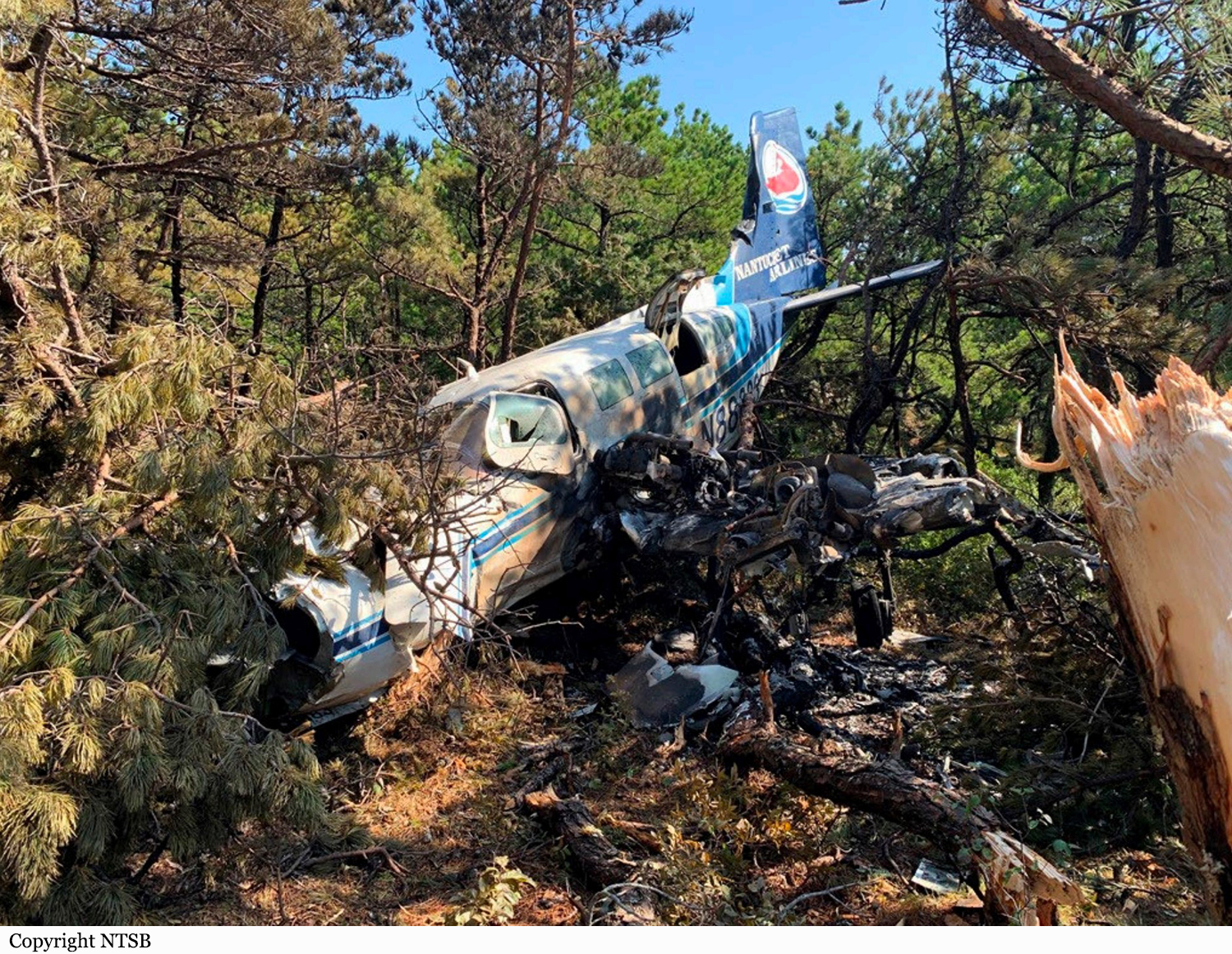
The pilot was transporting six passengers on a scheduled revenue flight in instrument meteorological conditions. The pilot familiarized himself with the weather conditions before departure and surmised that he would be executing the instrument landing system (ILS) instrument approach for the landing runway at the destination airport. The operator prohibited approaches to runways less than 4,000 ft long if the tailwind component was 5 knots or more. The landing runway was 498 ft shorter than the operator-specified length. The pilot said he obtained the automated weather observing system (AWOS) data at least twice during the flight since he was required to obtain it before starting the instrument approach and then once again before he crossed the approach’s final-approach-fix (FAF). Though the pilot could not recall when he checked the AWOS, he said the conditions were within the airplane and company performance limits and he continued with the approach. A review of the wind data at the time he accepted the approach revealed the tailwind component was within limitations. As the airplane approached the FAF, wind speed increased, and the tailwind component ranged between 1 and 7 knots. Since the exact time the pilot checked the AWOS is unknown, it is possible that he obtained an observation when the tailwind component was within operator limits; however, between the time that the airplane crossed over the FAF and the time it landed, the tailwind component increased above 5 knots. The pilot said the approach was normal until he encountered a strong downdraft when the airplane was about 50 to 100 ft above the ground. He said that the approach became unstabilized and that he immediately executed a go-around; the airplane touched down briefly before becoming airborne again. The pilot said he was unable to establish a positive rate of climb and the airplane impacted trees off the end of the runway. The accident was captured on three airport surveillance cameras. A study of the video data revealed the airplane made a normal landing and touched down about 500 ft from the beginning of the runway. It was raining heavily at the time. The airplane rolled down the runway for about 21 seconds, and then took off again. The airplane entered a shallow climb, collided with trees, and caught on fire. All seven occupants were seriously injured and the airplane was destroyed.
Probable cause:
The pilot’s delayed decision to perform an aborted landing late in the landing roll with insufficient runway remaining. Contributing to the accident was the pilot’s failure to execute a go-around once the approach became unstabilized, per the operator’s procedures.
Final Report:

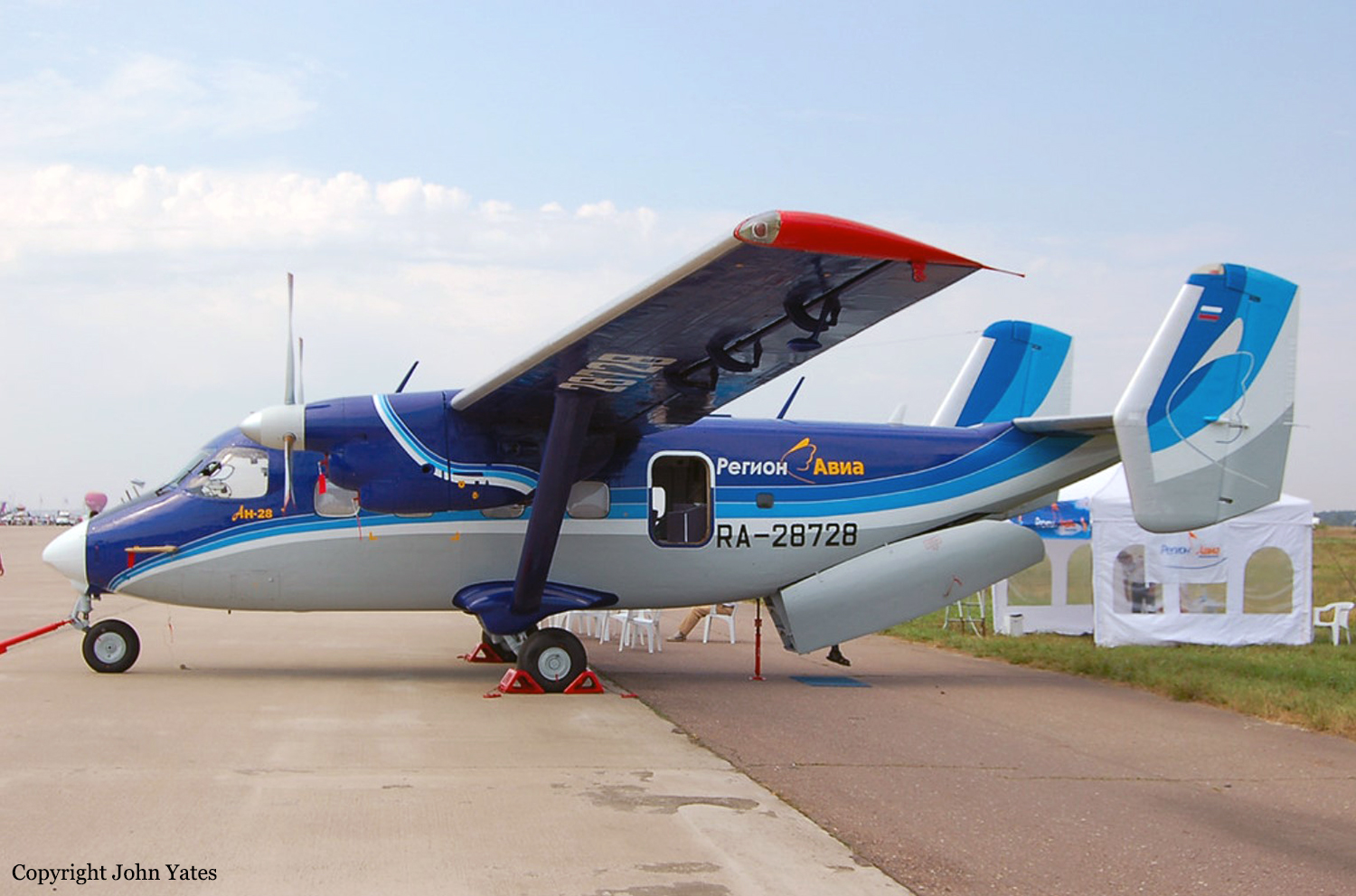
Crash of a PZL-Mielec AN-28 near Kedrovy

Date & Time: Jul 16, 2021 at 1611 LT
Type of aircraft:
Operator:
Registration:
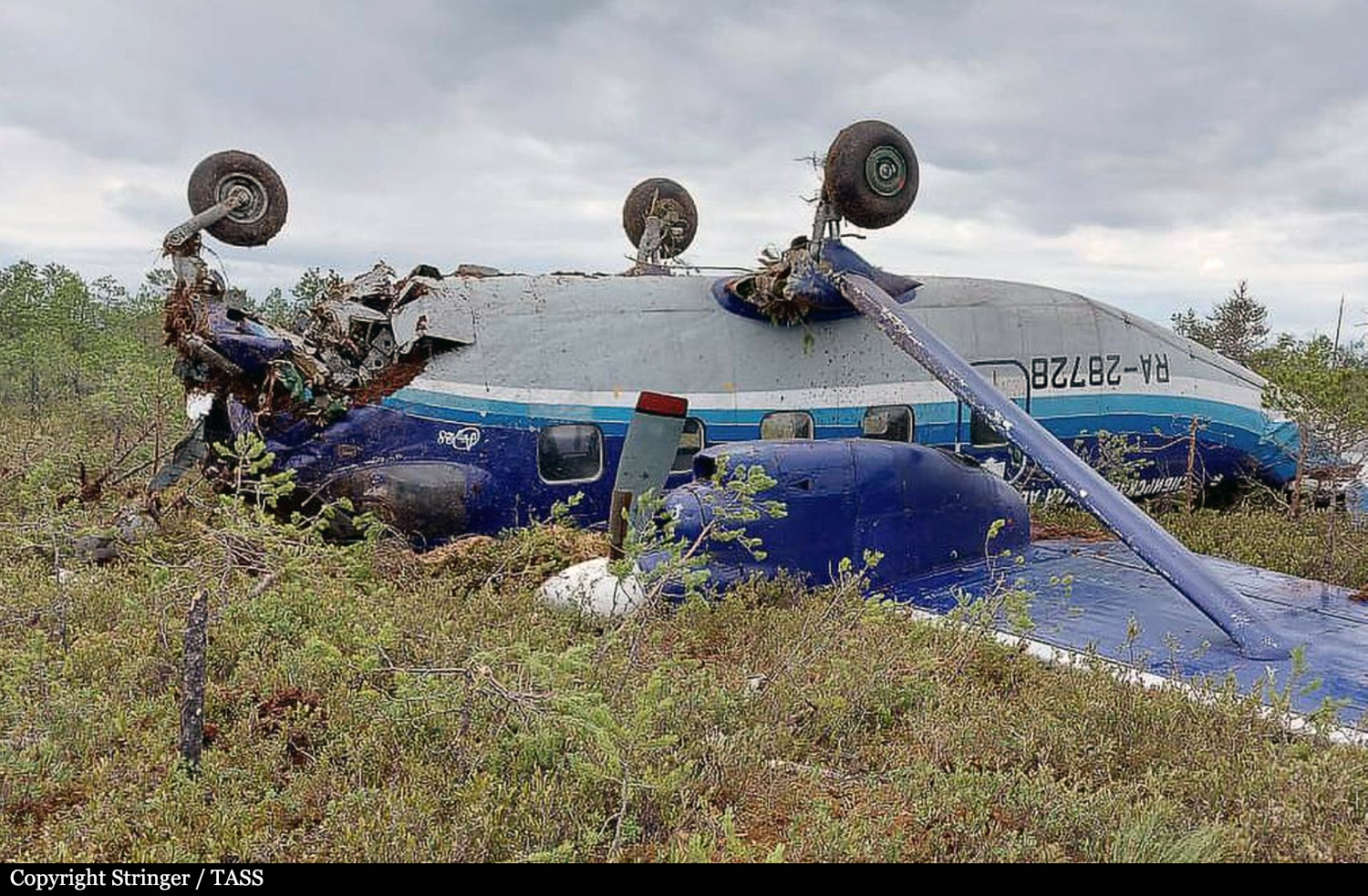
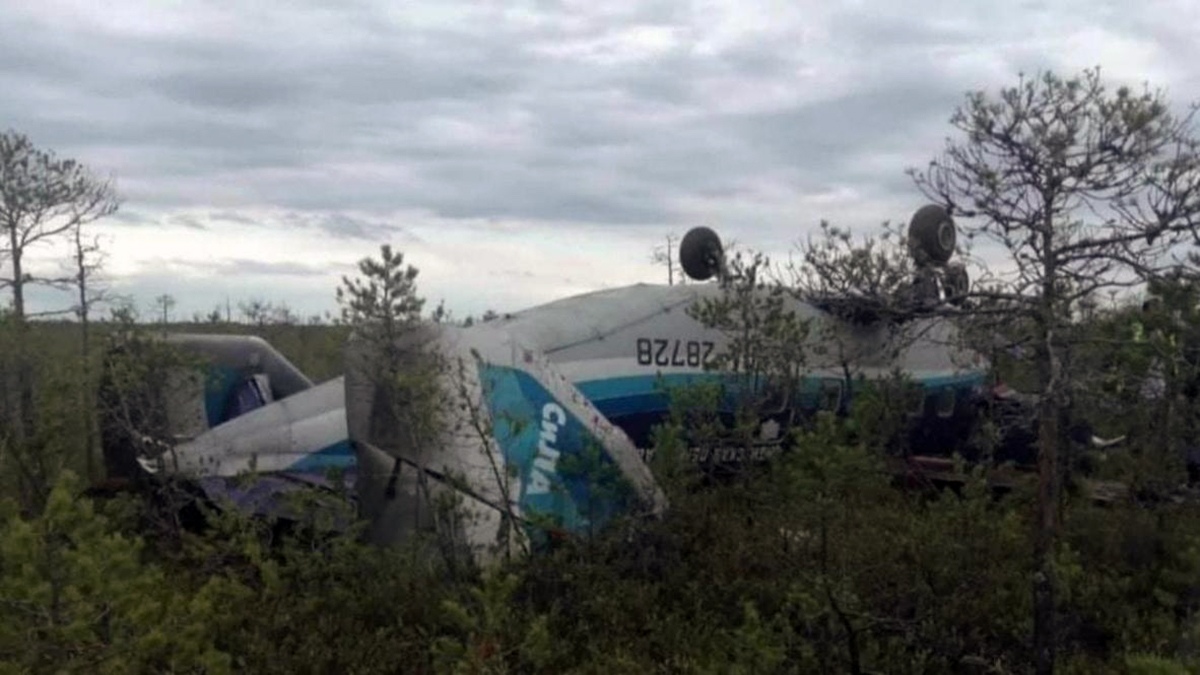
RA-28728
Flight Phase:
Survivors:
Yes
Schedule:
Kedrovy - Tomsk
MSN:
1AJ007-13
YOM:
1989
Flight number:
SL42
Country:
Region:
Crew on board:
4
Crew fatalities:
Pax on board:
15
Pax fatalities:
Other fatalities:
Total fatalities:
0
Captain / Total flying hours:
7906
Captain / Total hours on type:
3970.00
Copilot / Total flying hours:
181
Copilot / Total hours on type:
26
Aircraft flight hours:
8698
Aircraft flight cycles:
5921
Circumstances:
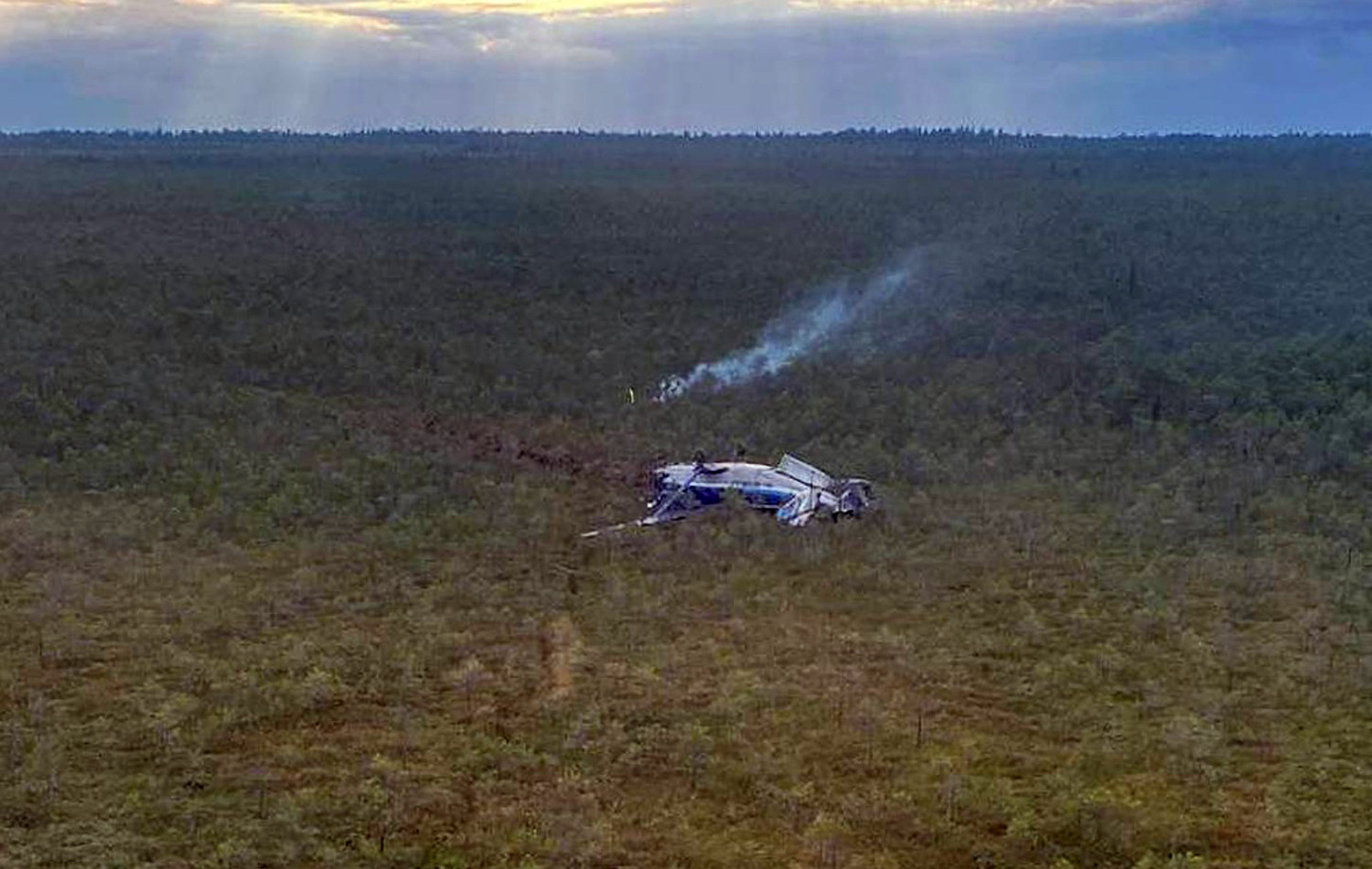
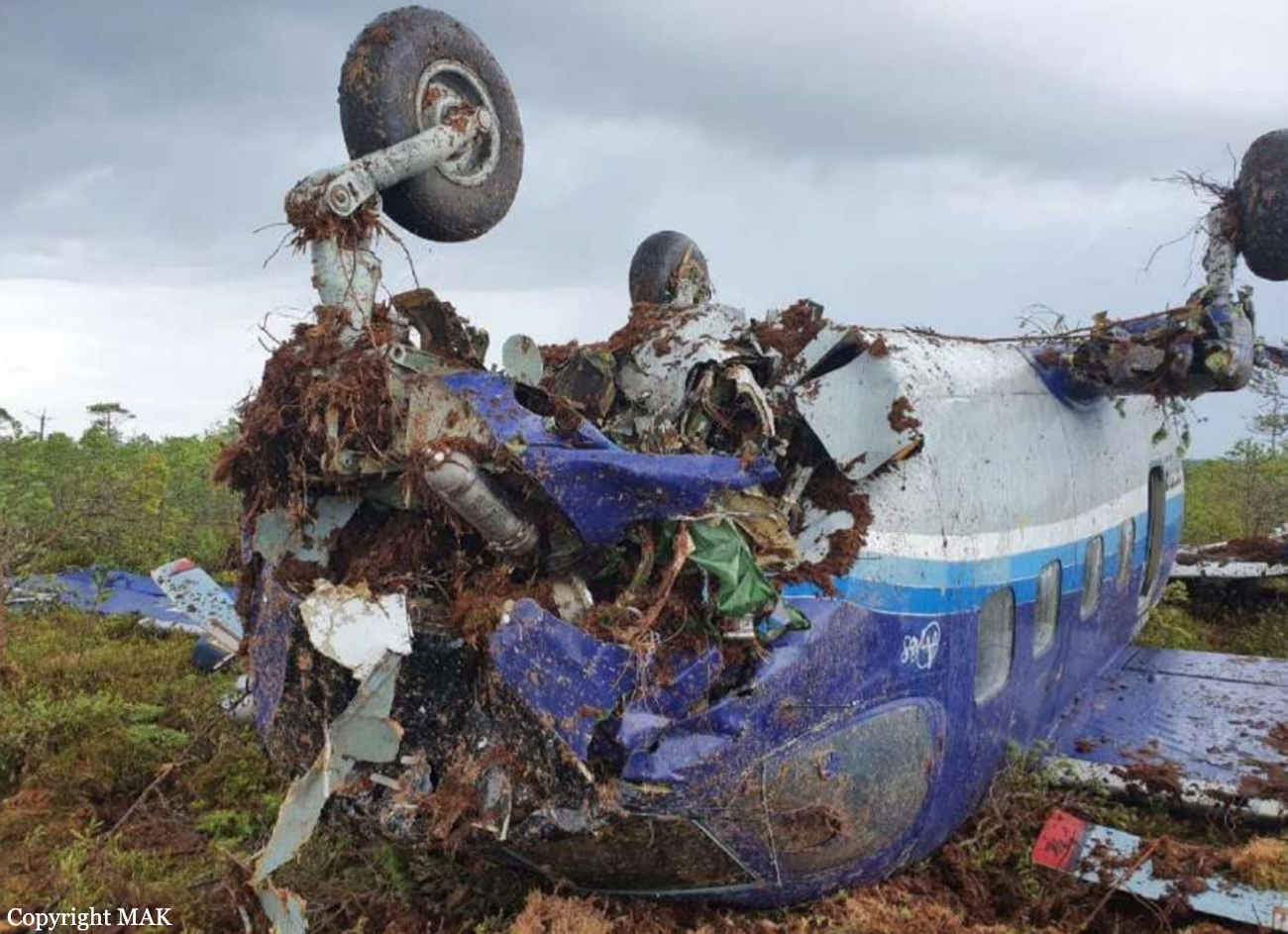
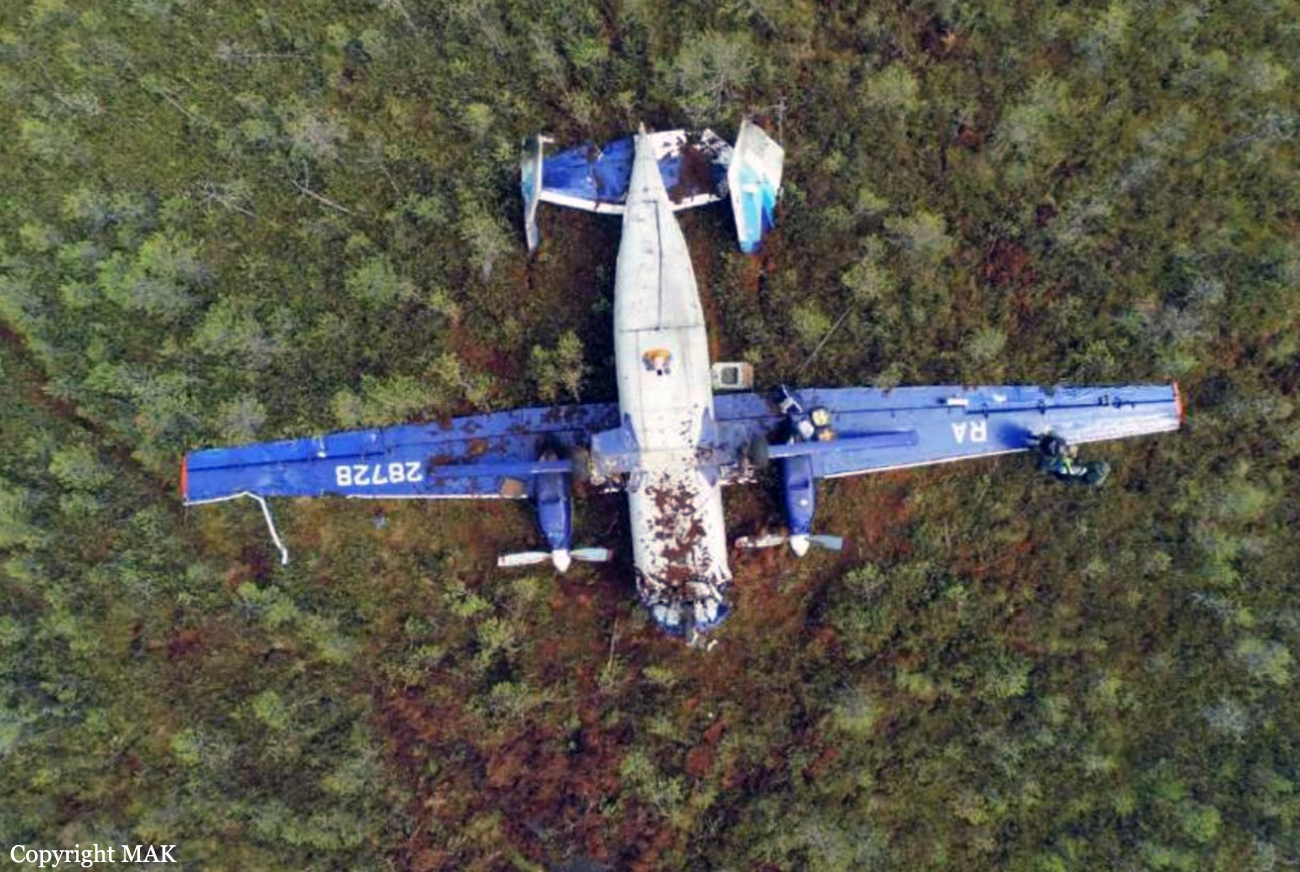
En route from Kedrovy to Tomsk, while cruising at an altitude of 12,000 feet in icing conditions, both engines failed simultaneously. The crew tried to restart both engines, without success. In such conditions, the crew reduced his altitude and attempted an emergency landing in the taiga. Upon impact, the flipped over and came to rest upside down. The wreckage was found around 1430LT some 52 km southeast of Kedrovy. All 17 occupants were found alive, among them few were injured. The captain broke one of his leg. The aircraft was damaged beyond repair.
Probable cause:
The accident of the An-28 aircraft, registration RA-28728, occurred during a forced landing on an improvised landing site due to the simultaneous shutdown of both engines while in flight. The need for this landing was triggered by the engines' spontaneous shutdown. The shutdown occurred while the aircraft was flying in icing conditions with the Pitot-Static System (POSS) turned off due to ice ingestion into its air intake.
The aviation incident was most likely influenced by the following factors:
- The crew's failure to follow the Aircraft Flight Manual (AFM) procedures for manually activating the POSS when meteorological conditions favored icing;
- Violation of the crew's duty and rest time regulations, which could have led to the accumulation of operational fatigue and contributed to missing the operation to activate the POSS;
- The crew's failure to make the decision to cease further performance of their duties due to the accumulation of operational fatigue in the absence of the airline's established procedures for exercising this crew right, which does not comply with the provisions of the Russian Ministry of Transport Order No. 139 dated November 21, 2005, "On Approval of the Regulation on Features of the Work and Rest Time Regime for Crew Members of Civil Aviation Aircraft in the Russian Federation";
- Increased hypoxia stress when flying at altitudes exceeding 3000 meters without the additional use of oxygen, which is a violation of the regulations of FAP-128, AFM, and the airline's internal regulations, and could have exacerbated the negative effects of operational fatigue;
- A malfunction in the ice detection sensor DSL-40T, which prevented the issuance of ice detection alerts and the automatic activation of the POSS.
Final Report:

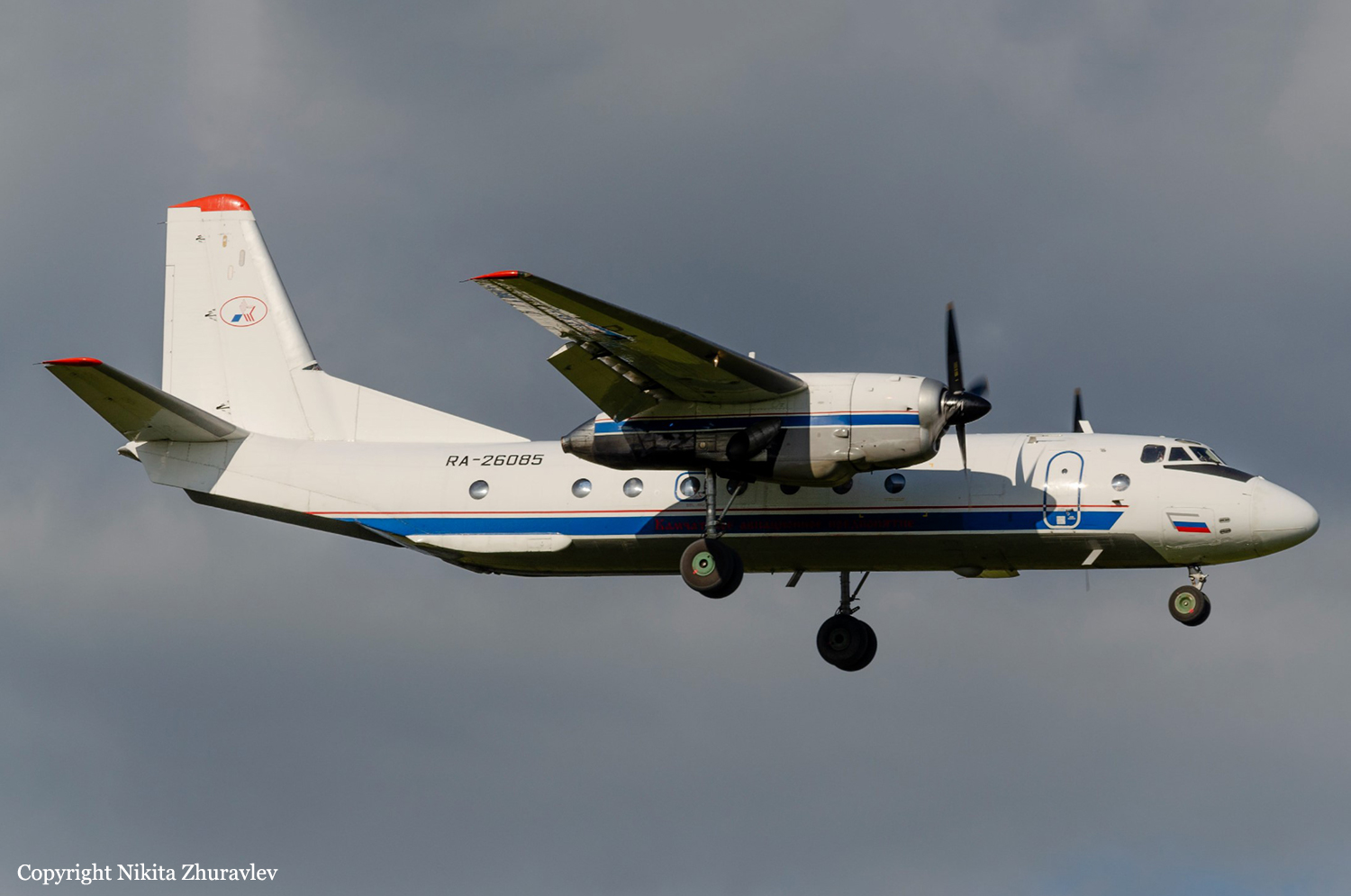
Crash of an Antonov AN-26B-100 in Palana: 28 killed

Date & Time: Jul 6, 2021 at 1450 LT
Type of aircraft:
Operator:
Registration:
RA-26085
Survivors:
No
Schedule:
Petropavlovsk-Kamchatsky – Palana
MSN:
123 10
YOM:
1982
Flight number:
PTK251
Country:
Region:
Crew on board:
6
Crew fatalities:
Pax on board:
22
Pax fatalities:
Other fatalities:
Total fatalities:
28
Captain / Total flying hours:
3340
Captain / Total hours on type:
2885.00
Copilot / Total flying hours:
1253
Copilot / Total hours on type:
1091
Aircraft flight hours:
21492
Aircraft flight cycles:
10498
Circumstances:
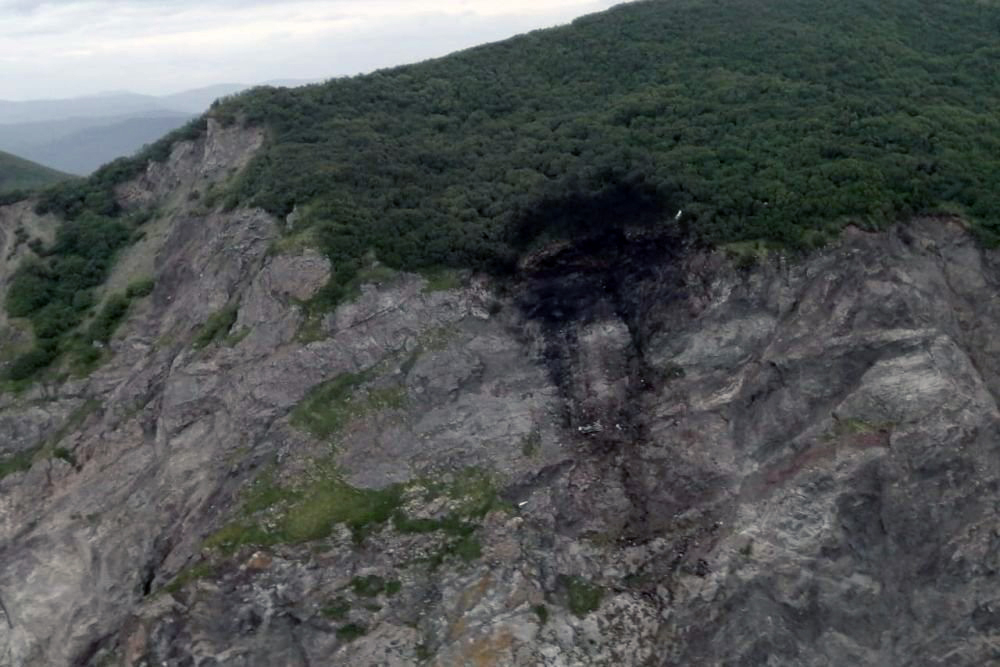
The aircraft departed Petropavlovsk-Kamchatsky Airport at 1257LT on a schedule service (flight PTK251) to Palana, carrying 22 passengers and a crew of six, among them Olga Mokhiriova, chief of the municipality of Palana. At 1439LT, the crew contacted Palana ATC and was cleared to start the descent. While completing an NDB approach to runway 29, the crew encountered marginal weather conditions with fog and ceiling at 300 metres. Too low, the aircraft impacted terrain about 4 km northwest of the airport. The wreckage was found in the evening on the top of a rocky wall. The aircraft disintegrated on impact and debris fall down on the sea bank. All 28 occupants were killed.
Probable cause:
The cause of the An-26B-100 RA-26085 aircraft crash was the crew's violation of the established instrument approach procedure to Palana aerodrome, which was manifested in flying with significant deviation from the set route and descent well below the established minimum descent height (MDH) under weather conditions that excluded stable visual contact with ground landmarks, leading to the collision of the aircraft with a coastal cliff in controlled flight, its destruction, and the death of the crew and passengers.
The following contributing factors were identified:
- The crew's failure to execute a missed approach with the acquisition of the established minimum safety altitude (MSA) when information about the bearing indicated a significant deviation of the aircraft from the established approach procedure;
- The absence in the Palana aerodrome dispatcher's work technology of actions in the presence of information about the bearing indicating a significant deviation of the aircraft from the established approach scheme, as well as the dispatcher's passivity when such information was available;
- The lack of warning signals from the early ground proximity warning system under conditions that should have triggered it. It is not possible to determine the reason for the absence of the warning signals;
- The overestimation of the barometric altimeter readings in the final phase of the flight due to the specific airflow around the steep coastline creating a low-pressure zone and the overestimation of the variometer readings, the cause of which cannot be determined.
Final Report:

Crash of a Let L-410UVP-E in Pieri: 10 killed

Date & Time: Mar 2, 2021 at 1705 LT
Type of aircraft:
Operator:
Registration:
HK-4274
Flight Phase:
Survivors:
No
Schedule:
Juba - Pieri - Yuai - Juba
Country:
Region:
Crew on board:
2
Crew fatalities:
Pax on board:
8
Pax fatalities:
Other fatalities:
Total fatalities:
10
Circumstances:
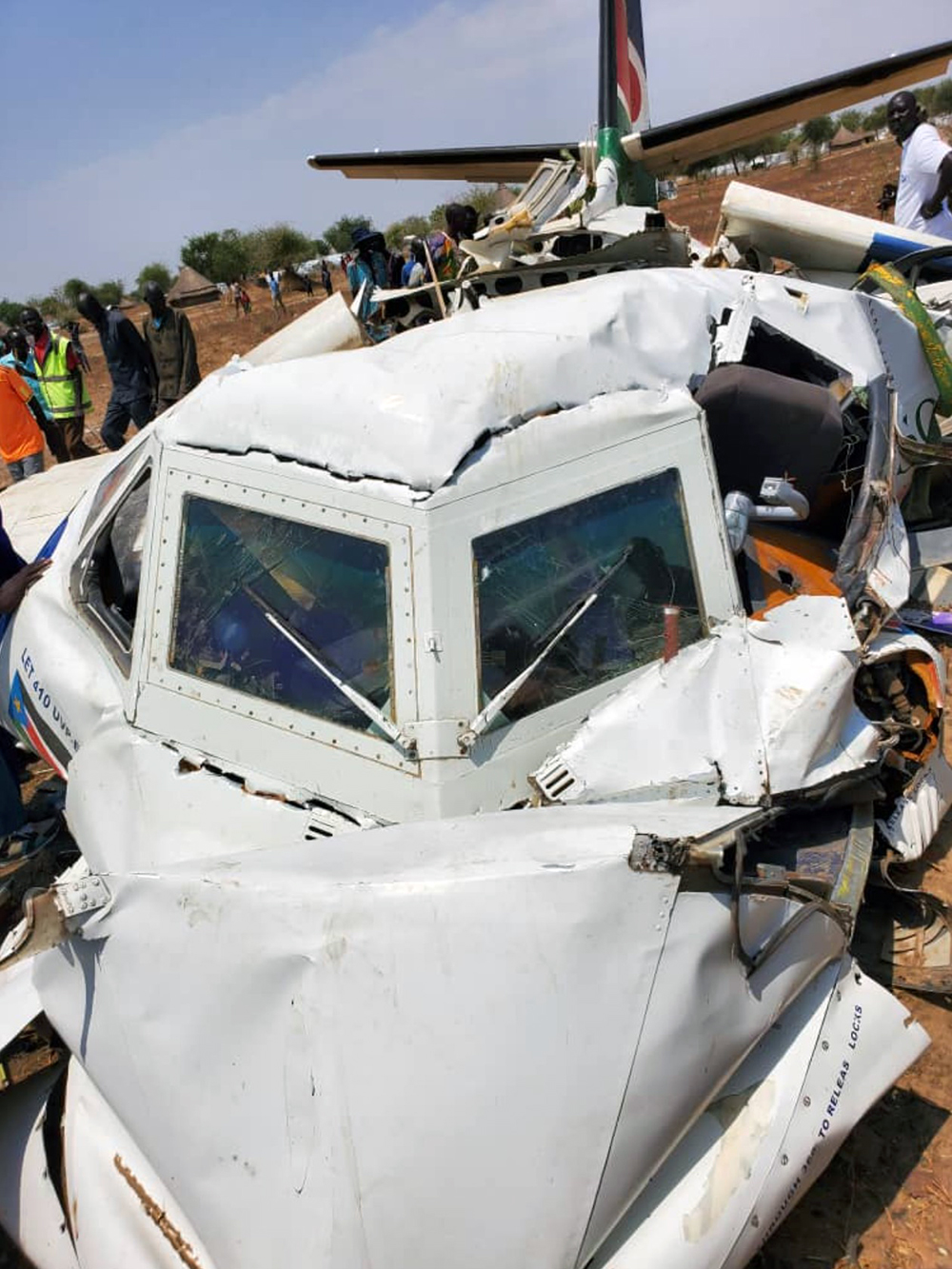
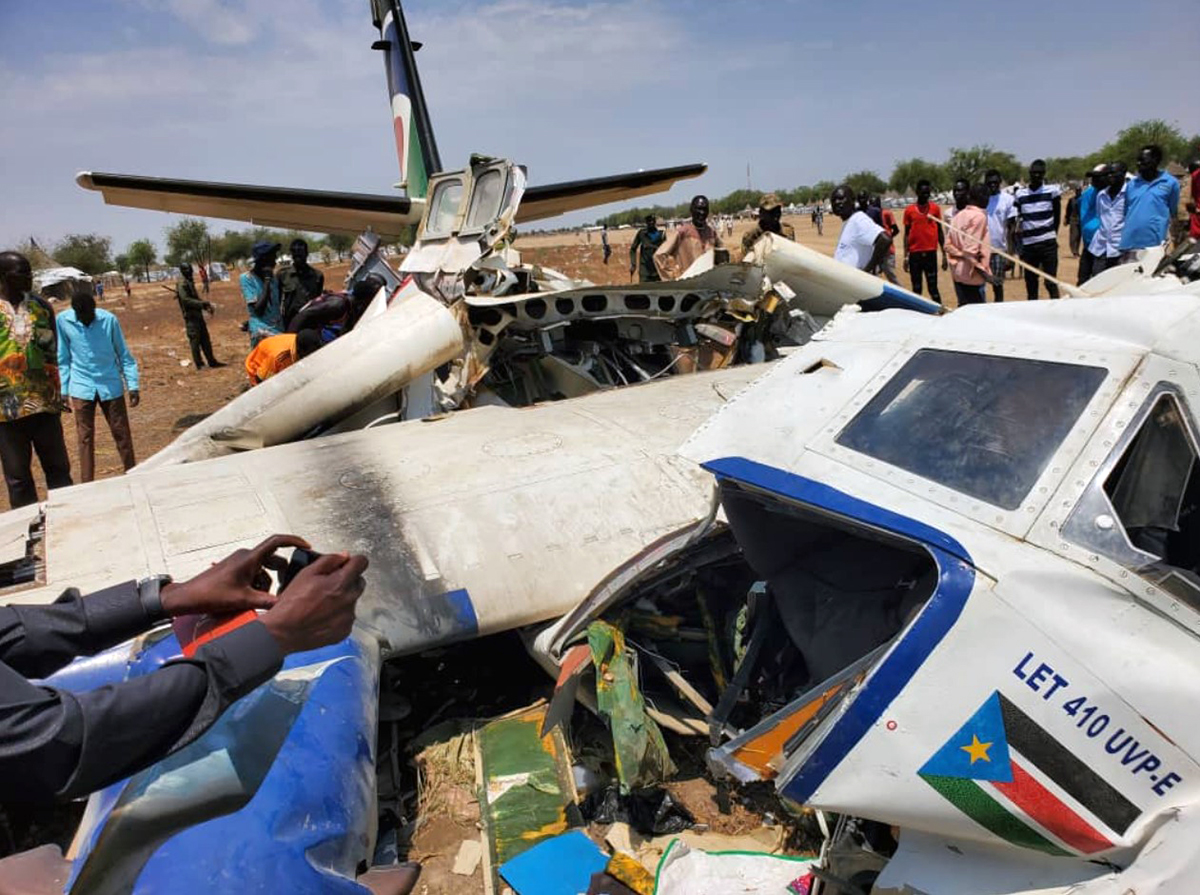
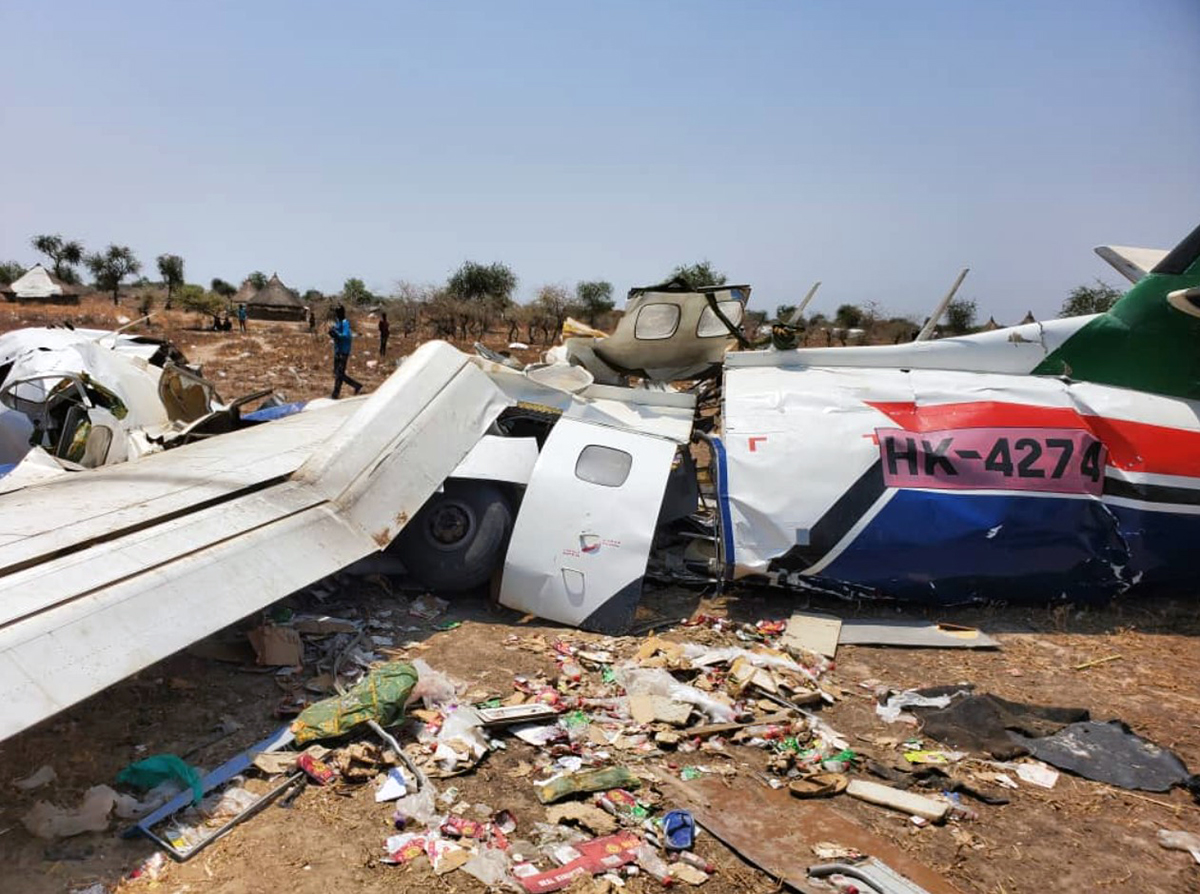
Coming from Juba, the twin engine airplane departed Pieri Airstrip on a short flight to Yuai (about 22 km southwest from Pieri) before returning to Juba, carrying eight passengers and two pilots. Shortly after takeoff, the aircraft stalled and crashed in an open field. The aircraft was totally destroyed by impact forces but there was no fire. All 10 occupants were killed.

Crash of a Boeing 737-524 off Jakarta: 62 killed

Date & Time: Jan 9, 2021 at 1440 LT
Type of aircraft:
Operator:
Registration:
PK-CLC
Flight Phase:
Survivors:
No
Schedule:
Jakarta - Pontianak
MSN:
27323/2616
YOM:
1994
Flight number:
SJY182
Country:
Region:
Crew on board:
6
Crew fatalities:
Pax on board:
56
Pax fatalities:
Other fatalities:
Total fatalities:
62
Captain / Total flying hours:
17904
Captain / Total hours on type:
9023.00
Copilot / Total flying hours:
5107
Copilot / Total hours on type:
4957
Aircraft flight hours:
62983
Aircraft flight cycles:
40383
Circumstances:
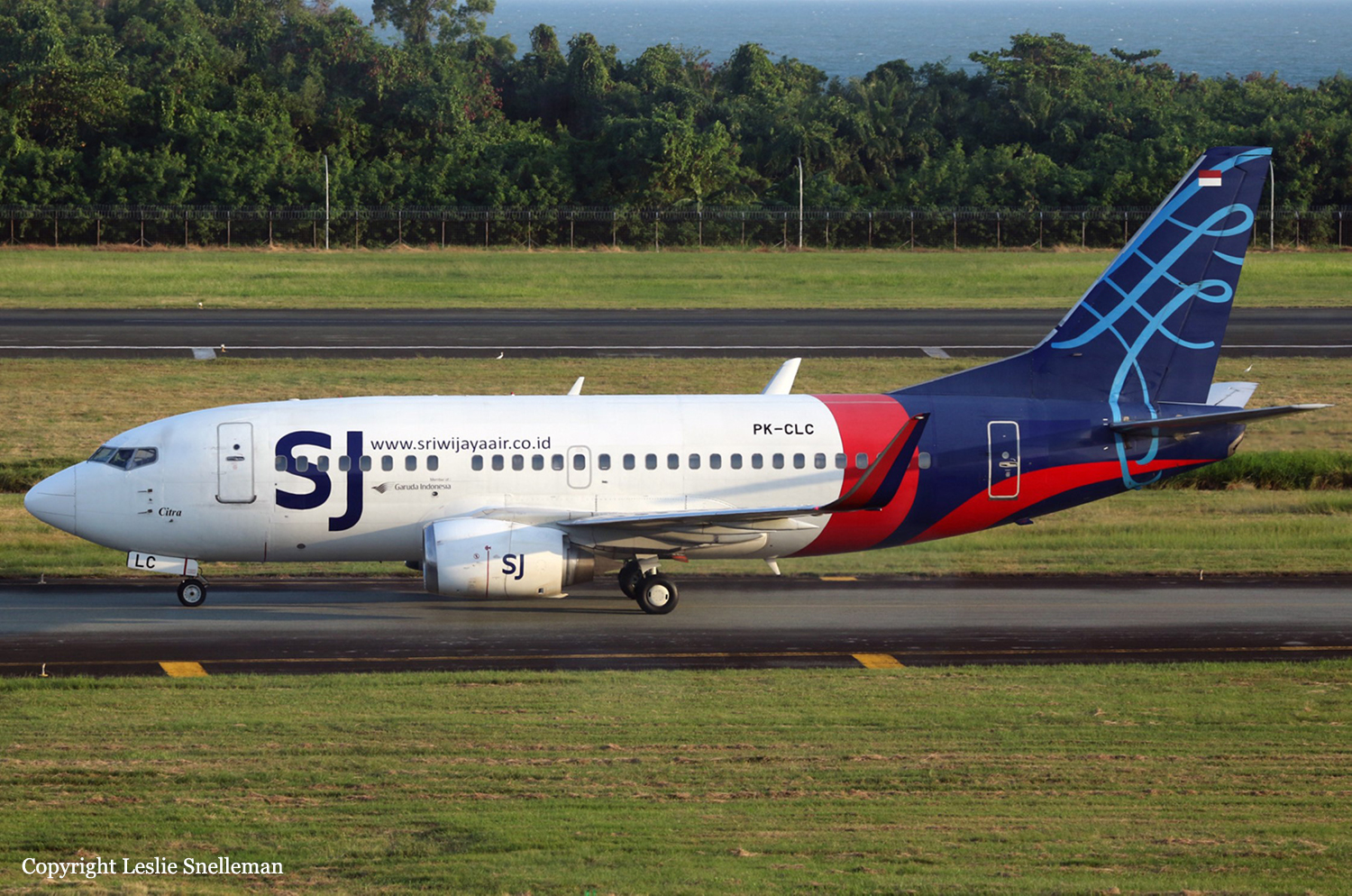
On 9 January 2021, a Boeing 737-500 aircraft, registration PK-CLC, was being operated by PT. Sriwijaya Air on a scheduled passenger flight from Soekarno-Hatta International Airport (WIII), Jakarta to Supadio International Airport (WIOO), Pontianak . The flight number was SJY182. According to the flight plan filed, the fuel endurance was 3 hours 50 minutes. At 0736 UTC (1436 LT) in daylight conditions, Flight SJY182 departed from Runway 25R of Jakarta. There were two pilots, four flight attendants, and 56 passengers onboard the aircraft. At 14:36:46 LT, the SJY182 pilot contacted the Terminal East (TE) controller and was instructed “SJY182 identified on departure, via SID (Standard Instrument Departure) unrestricted climb level 290”. The instruction was read back by the pilot. At 14:36:51 LT, the Flight Data Recorder (FDR) data recorded that the Autopilot (AP) system engaged at altitude of 1,980 feet. At 14:38:42 LT, the FDR data recorded that as the aircraft climbed past 8,150 feet, the thrust lever of the left engine started reducing, while the thrust lever position of the right engine remained. The FDR data also recorded the left engine N1 was decreasing whereas the right engine N1 remained. At 14:38:51 LT, the SJY182 pilot requested to the TE controller for a heading change to 075° to avoid weather conditions and the TE controller approved the request. At 14:39:01 LT, the TE controller instructed SJY182 pilot to stop their climb at 11,000 feet to avoid conflict with another aircraft with the same destination that was departing from Runway 25L. The instruction was read back by the SJY182 pilot. At 14:39:47 LT, the FDR data recorded the aircraft’s altitude was about 10,600 feet with a heading of 046° and continuously decreasing (i.e., the aircraft was turning to the left). The thrust lever of the left engine continued decreasing. The thrust lever of the right engine remained. At 14:39:54 LT, the TE controller instructed SJY182 to climb to an altitude of 13,000 feet, and the instruction was read back by an SJY182 pilot at 14:39:59 LT. This was the last known recorded radio transmission by the flight. At 14:40:05 LT, the FDR data recorded the aircraft altitude was about 10,900 feet, which was the highest altitude recorded in the FDR before the aircraft started its descent. The AP system then disengaged at that point with a heading of 016°, the pitch angle was about 4.5° nose up, and the aircraft rolled to the left to more than 45°. The thrust lever position of the left engine continued decreasing while the right engine thrust lever remained. At 14:40:10 LT, the FDR data recorded the autothrottle (A/T) system disengaged and the pitch angle was more than 10° nose down. About 20 seconds later the FDR stopped recording. The last aircraft coordinate recorded was 5°57'56.21" S 106°34'24.86" E. At 14:40:37 LT, the TE controller called SJY182 to request for the aircraft heading but did not receive any response from the pilot. At 14:40:48 LT, the radar target of the aircraft disappeared from the TE controller radar screen. At 14:40:46 LT, the TE controller again called SJY182 but did not receive any response from the pilot. The TE controller then put a measurement vector on the last known position of SJY182 and advised the supervisor of the disappearance of SJY182. The supervisor then reported the occurrence to the operation manager. The TE controller repeatedly called SJY182 several times and also asked other aircraft that flew near the last known location of SJY182 to call the SJY182. The TE controller then activated the emergency frequency of 121.5 MHz and called SJY182 on that frequency. All efforts were unsuccessful to get any responses from the SJY182 pilot. About 1455 LT, the operation manager reported the occurrence to the Indonesian Search and Rescue Agency (Badan Nasional Pencarian dan Pertolongan/BNPP). At 1542 LT, the Air Traffic Services (ATS) provider declared the uncertainty phase (INCERFA) of the SJY182. The distress phase of SJY182 (DETRESFA) was subsequently declared at 1643 LT.
Probable cause:
The following contributing factors were identified:
• The corrective maintenance processes of the A/T problem were unable to identify the friction or binding within the mechanical system of the thrust lever and resulted in the prolonged and unresolved of the A/T problem.
• The right thrust lever did not reduce when required by the A/P to obtain selected rate of climb and aircraft speed due to the friction or binding within the mechanical system, as a result, the left thrust lever compensated by moving further backward which resulted in thrust asymmetry.
• The delayed CTSM activation to disengage the A/T system during the thrust asymmetry event due to the undervalued spoiler angle position input resulted in greater power asymmetry.
• The automation complacency and confirmation bias might have led to a decrease in active monitoring which resulted in the thrust lever asymmetry and deviation of the flight path were not being monitored.
• The aircraft rolled to the left instead of to the right as intended while the control wheel deflected to the right and inadequate monitoring of the EADI might have created assumption that the aircraft was rolling excessively to the right which resulted in an action that was contrary in restoring the aircraft to safe flight parameters.
• The absence of the guidance of the national standard for the UPRT, may have contributed to the training program not being adequately implemented to ensure that pilots have enough knowledge to prevent and recover of an upset condition effectively and timely.
Final Report:

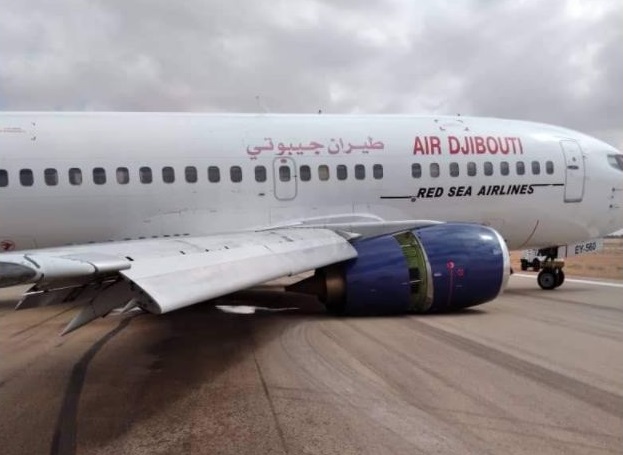
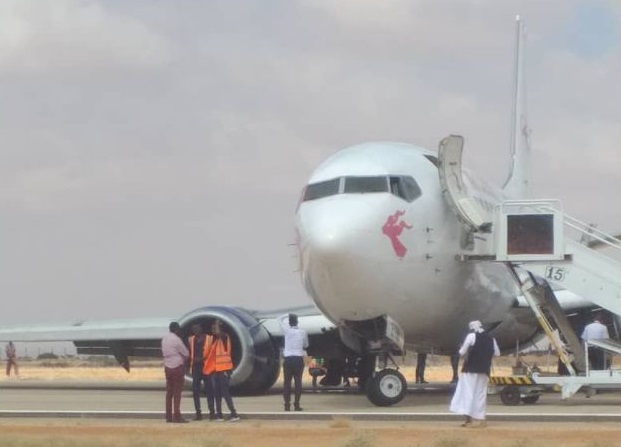
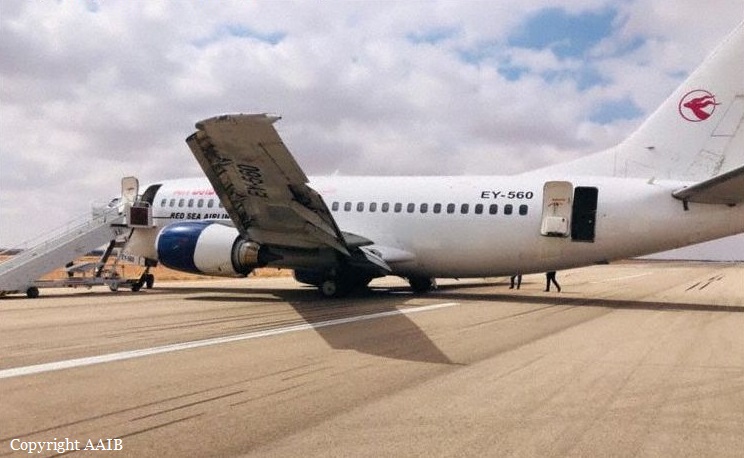
Crash of a Boeing 737-529 in Garowe

Date & Time: Dec 2, 2020 at 0925 LT
Type of aircraft:
Operator:
Registration:
EY-560
Survivors:
Yes
Schedule:
Djibouti – Hargeisa – Garowe – Mogadishu
MSN:
26538/2298
YOM:
1992
Flight number:
IV206
Country:
Region:
Crew on board:
8
Crew fatalities:
Pax on board:
31
Pax fatalities:
Other fatalities:
Total fatalities:
0
Captain / Total flying hours:
6050
Captain / Total hours on type:
5170.00
Copilot / Total flying hours:
900
Circumstances:
The airplane departed Djibouti on a regular schedule service to Mogadishu with intermediate stops in Hargeisa and Garowe. There were 31 passengers and 8 crew members on board. On short final approach to Garowe Airport Runway 06, the airplane lost height and impacted the ground just prior to the runway threshold (concrete), causing the right main gear to collapse. The airplane slid on the runway until it turned to the right and came to rest on the runway with the right engine cowling contacting the runway surface. All 39 occupants evacuated safely and the aircraft was damaged beyond repair.
Probable cause:
The factor contributing to the accident is weather condition. Windshear is considered as the major cause of the accident. The root cause of the accident is a loss of control of the aircraft caused by windshear.
Final Report: