Crash of an IAI 1125 Astra SP in Chicago

Date & Time: Aug 21, 2023 at 1315 LT
Type of aircraft:
Operator:
Registration:
N39TT
Flight Type:
Survivors:
Yes
Schedule:
Chicago-Midway - Chicago-Palwaukee
MSN:
053
YOM:
1991
Crew on board:
2
Crew fatalities:
Pax on board:
0
Pax fatalities:
Other fatalities:
Total fatalities:
0
Captain / Total flying hours:
7500
Captain / Total hours on type:
2000.00
Copilot / Total flying hours:
8500
Copilot / Total hours on type:
2300
Aircraft flight hours:
8307
Circumstances:
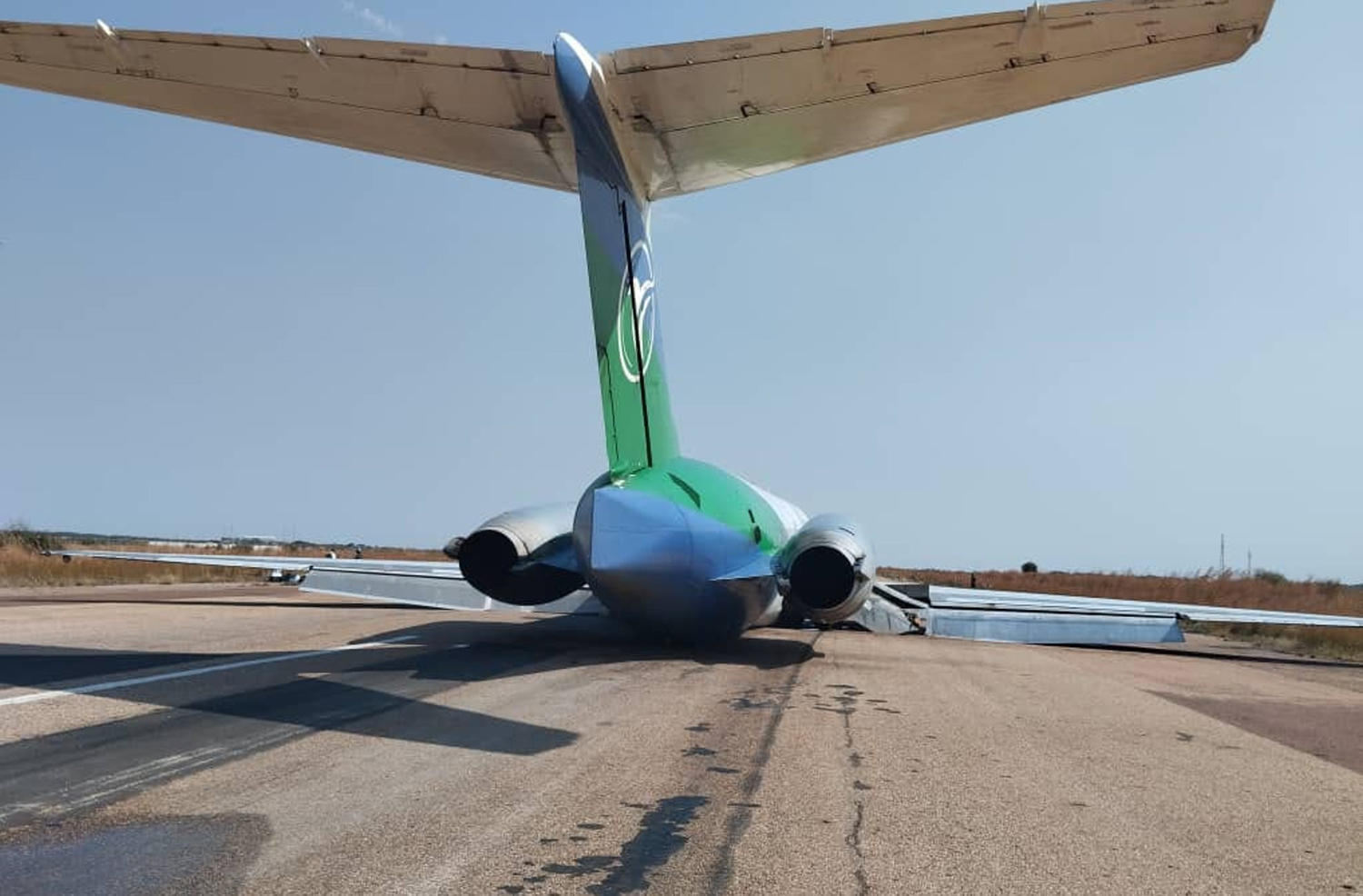
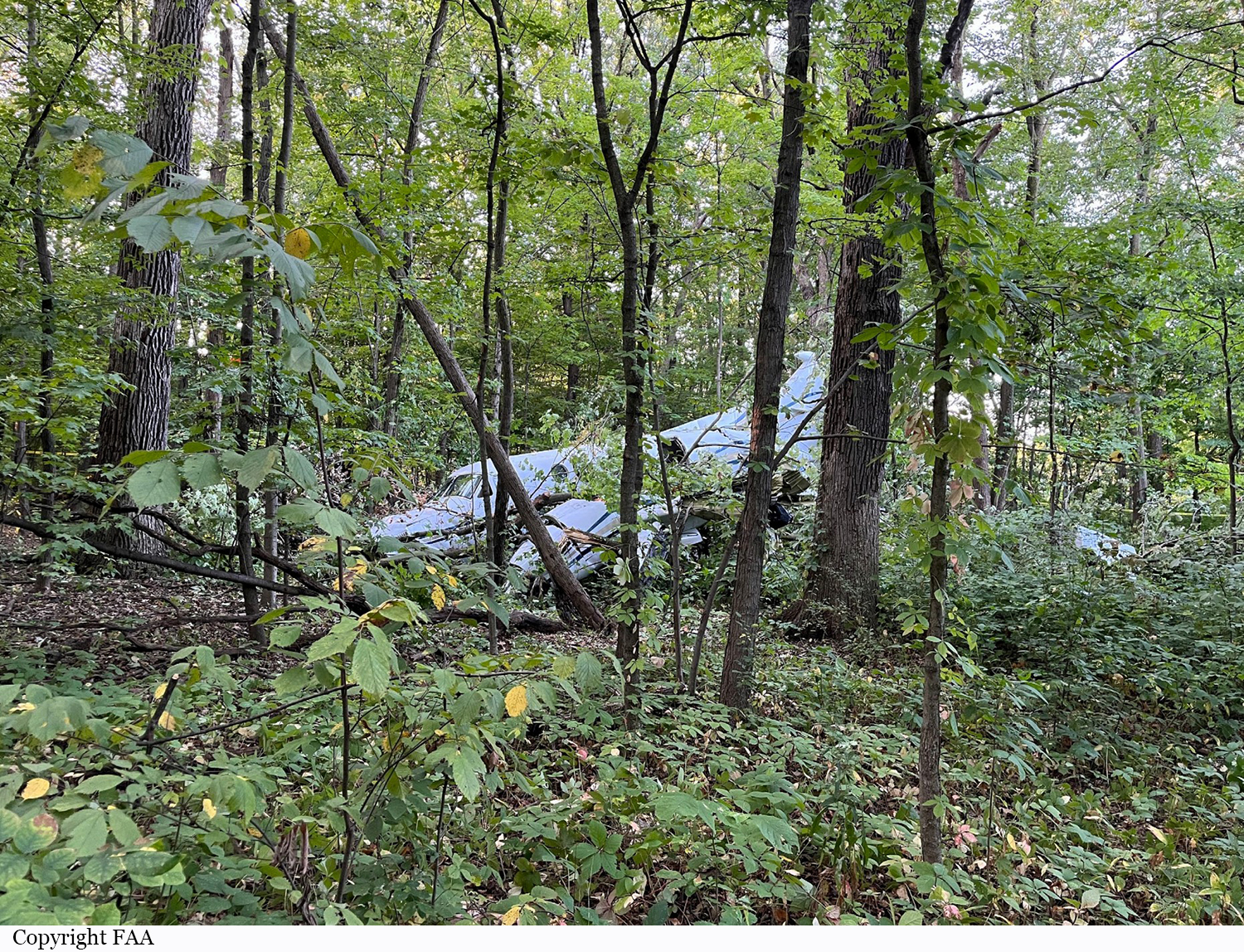
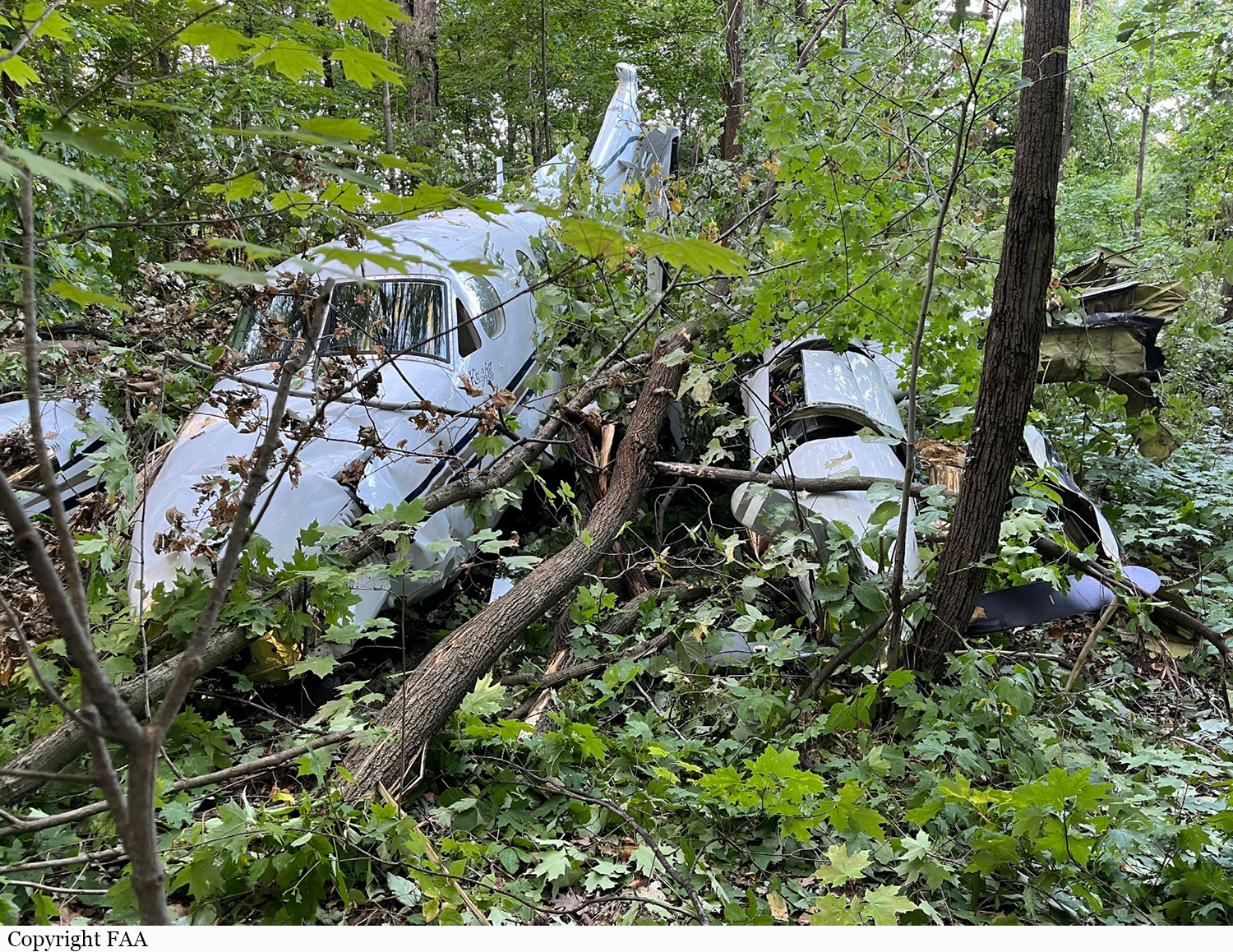
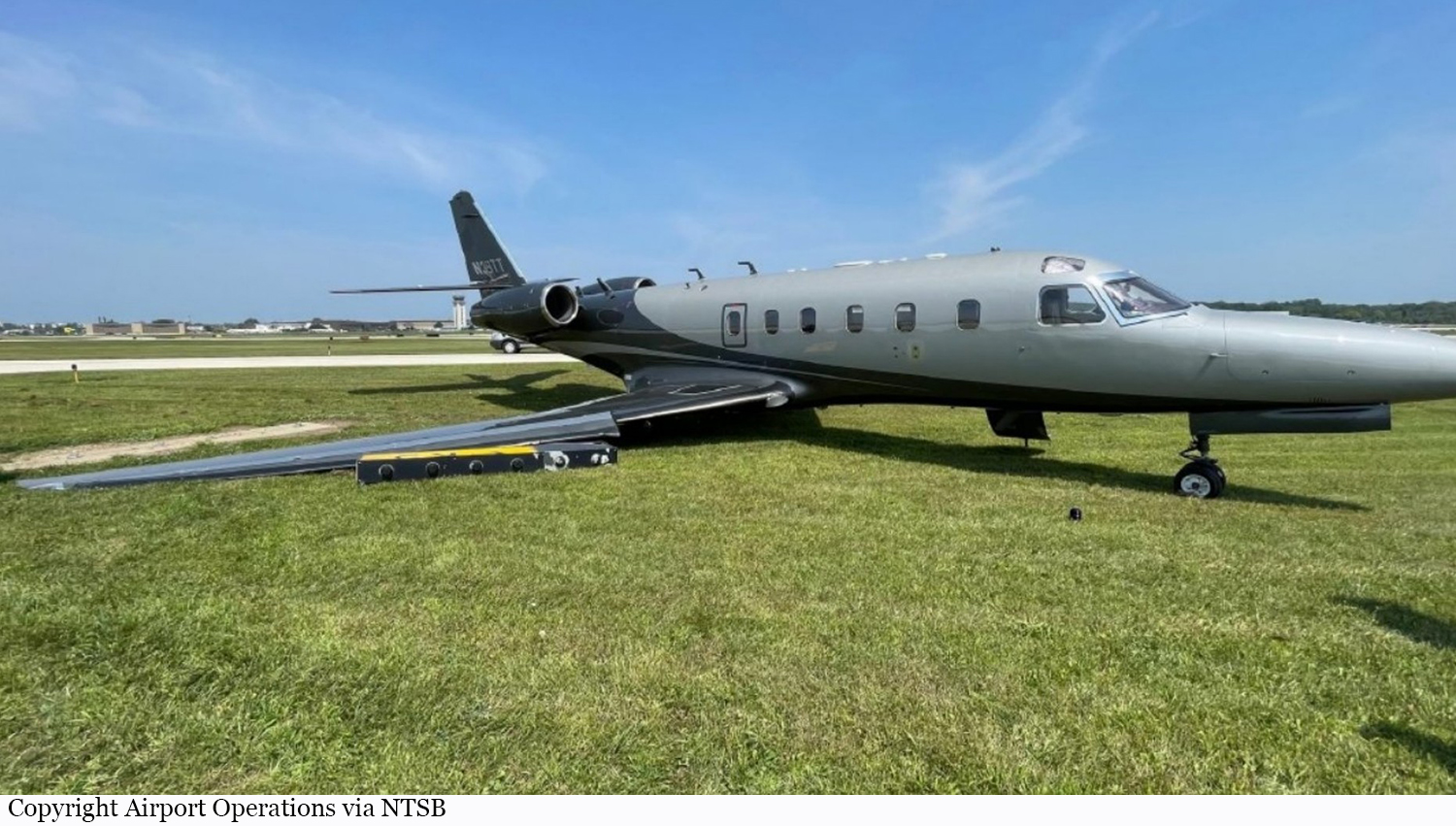
According to the flight crew, the airplane touched down within the touchdown zone. The pilot reported that he applied the brakes and deployed the thrust reversers (TRs), but the brakes “were not grabbing.” The pilot released and reapplied brake pressure with no effect and advised the co-pilot he had no brakes. The co-pilot applied his brakes with no effect. The pilot selected the emergency brake handle and applied emergency braking. The emergency braking produced some slowing, and with the airplane’s nose wheel tiller, the pilot attempted a left turn to exit the runway onto a 45° taxiway, which he thought provided additional stopping distance; however, the airplane slid off the taxiway and into the adjacent grass. The right main landing gear collapsed, and the air plane came to rest upright, resulting in substantial damage to the right wing spar. Examination and testing of the airplane systems did not reveal any evidence of preimpact mechanical malfunctions with the wheel brakes or any other systems. Video evidence and recorded airplane data revealed the TRs were not deployed during the landing sequence. The cockpit voice recorder was overwritten during postaccident maintenance actions, and the accident flight communications were not available. Landing simulations based on available data were consistent with reduced deceleration during the landing roll; however, the simulations could not determine if the airbrakes were stowed or extended during the landing, and the airplane was not equipped with a flight data recorder, which could have captured airbrake deployment and position. Landing performance calculations showed that, without ground airbrakes, the landing ground roll distance exceeded the runway available from the airplane’s touchdown point. Tire skid marks indicated that heavy wheel braking occurred on the runway and taxiway surfaces. Based on the available information, the reason for the flight crew’s reported loss of braking effectiveness during landing could not be determined.
Probable cause:
A loss of braking effectiveness during landing for reasons that could not be determined, which resulted in a runway excursion.
Final Report:

Crash of a De Havilland DHC-2 Beaver in Gold River

Date & Time: Jul 28, 2023 at 1720 LT
Type of aircraft:
Operator:
Registration:
C-FZVP
Flight Type:
Survivors:
Yes
Schedule:
Louie Bay - Gold River
MSN:
1033
YOM:
1957
Country:
Crew on board:
1
Crew fatalities:
Pax on board:
0
Pax fatalities:
Other fatalities:
Total fatalities:
0
Captain / Total flying hours:
10000
Circumstances:
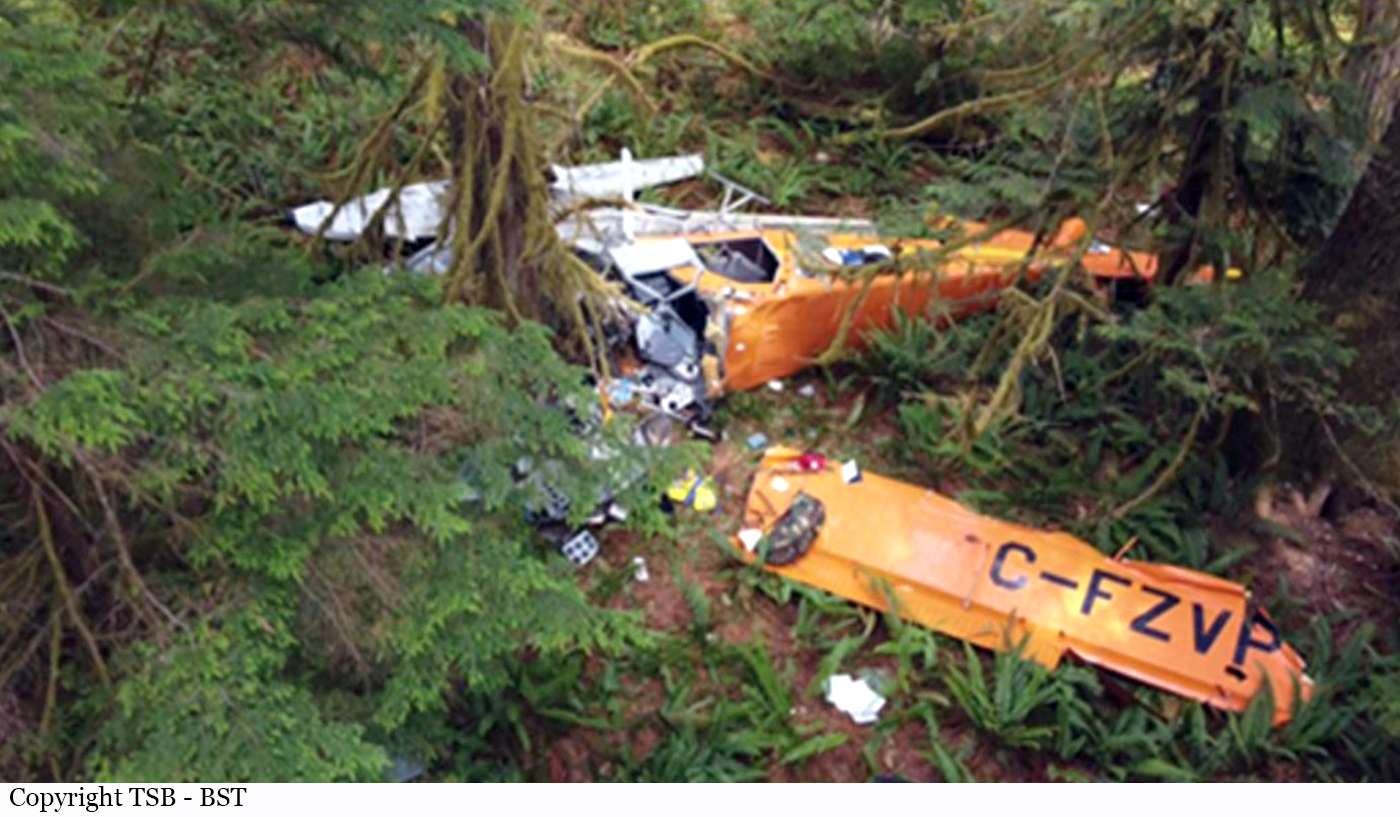
The single engine airplane was conducting a visual flight rules repositioning flight from Louie Bay on Nootka Island, British Columbia (BC), to Gold River Water Aerodrome (CAU6), BC, with only the pilot on board. On arrival at CAU6, the pilot noted a rough sea state in the company’s primary landing area and elected to land in the secondary area, a tree-lined river to the east of the base. The aircraft was observed overflying the company dock to the north and then turning right, aligning with the southwest direction of the river. When descending on the alignment turn to final approach, the aircraft experienced an uncommanded yaw and roll. It
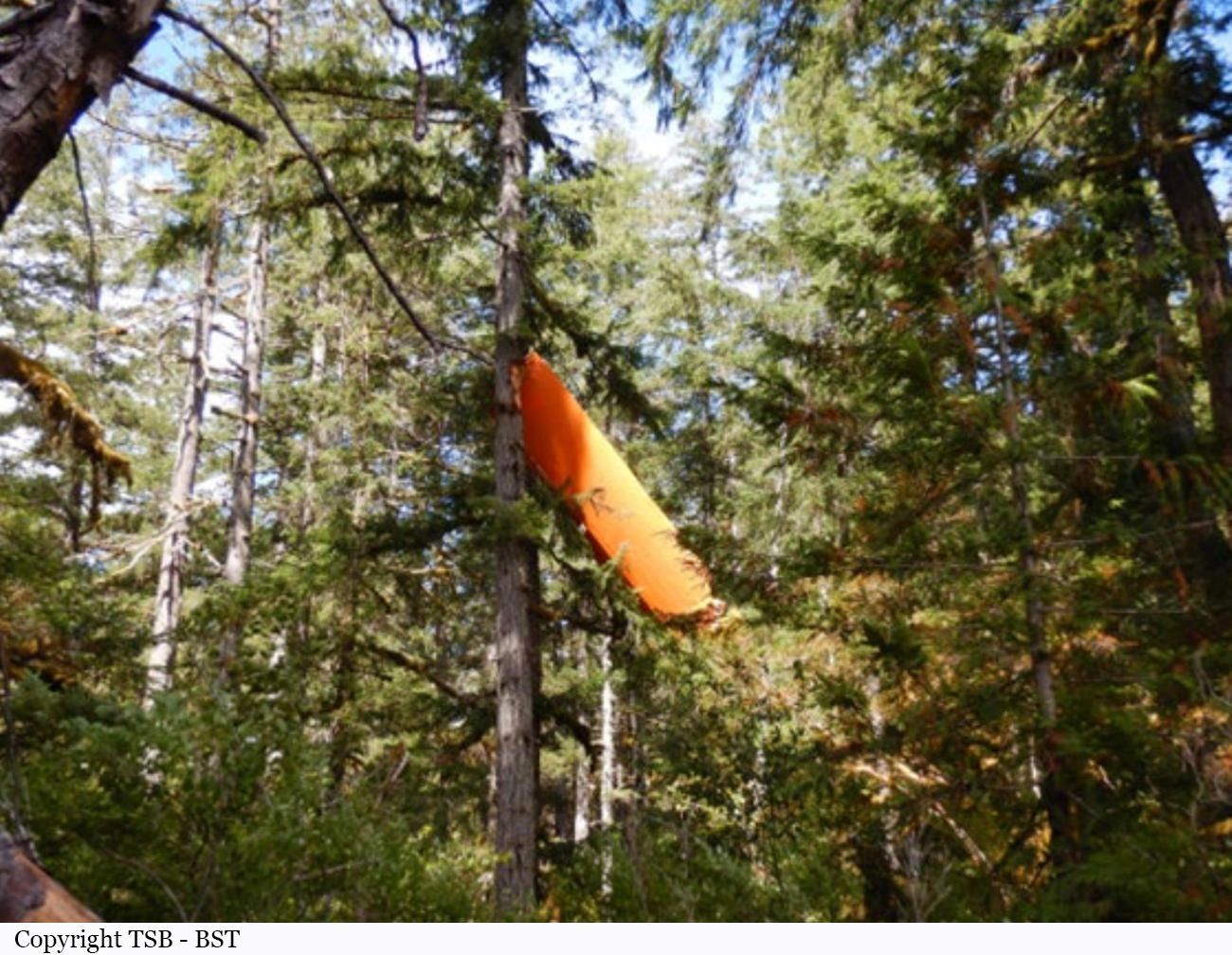
abruptly turned further right, heading west, and continued to descend toward the trees. It was reported that opposite aileron input, to try and arrest the uncommanded yaw and roll, increased the roll rate. At approximately 1720, the aircraft struck the forested area on the west side of the river, coming to rest approximately 75 feet from the river. There was no post-impact fire. The pilot received serious injuries, was extracted by local firefighting personnel, and attended to by local paramedics. He was then airlifted to hospital by a search and rescue helicopter.
Probable cause:
While on the right turn to final, the aircraft experienced an uncommanded yaw and roll. The application of aileron in the opposite direction made the condition worse. This is consistent with an aerodynamic stall.
Final Report:

Crash of a Cessna 208B Grand Caravan in Kampala

Date & Time: May 12, 2023 at 1219 LT
Type of aircraft:
Operator:
Registration:
5X-RBR
Flight Type:
Survivors:
Yes
Schedule:
Kampala - Mweya
MSN:
208B-1291
YOM:
2007
Country:
Region:
Crew on board:
2
Crew fatalities:
Pax on board:
0
Pax fatalities:
Other fatalities:
Total fatalities:
0
Circumstances:
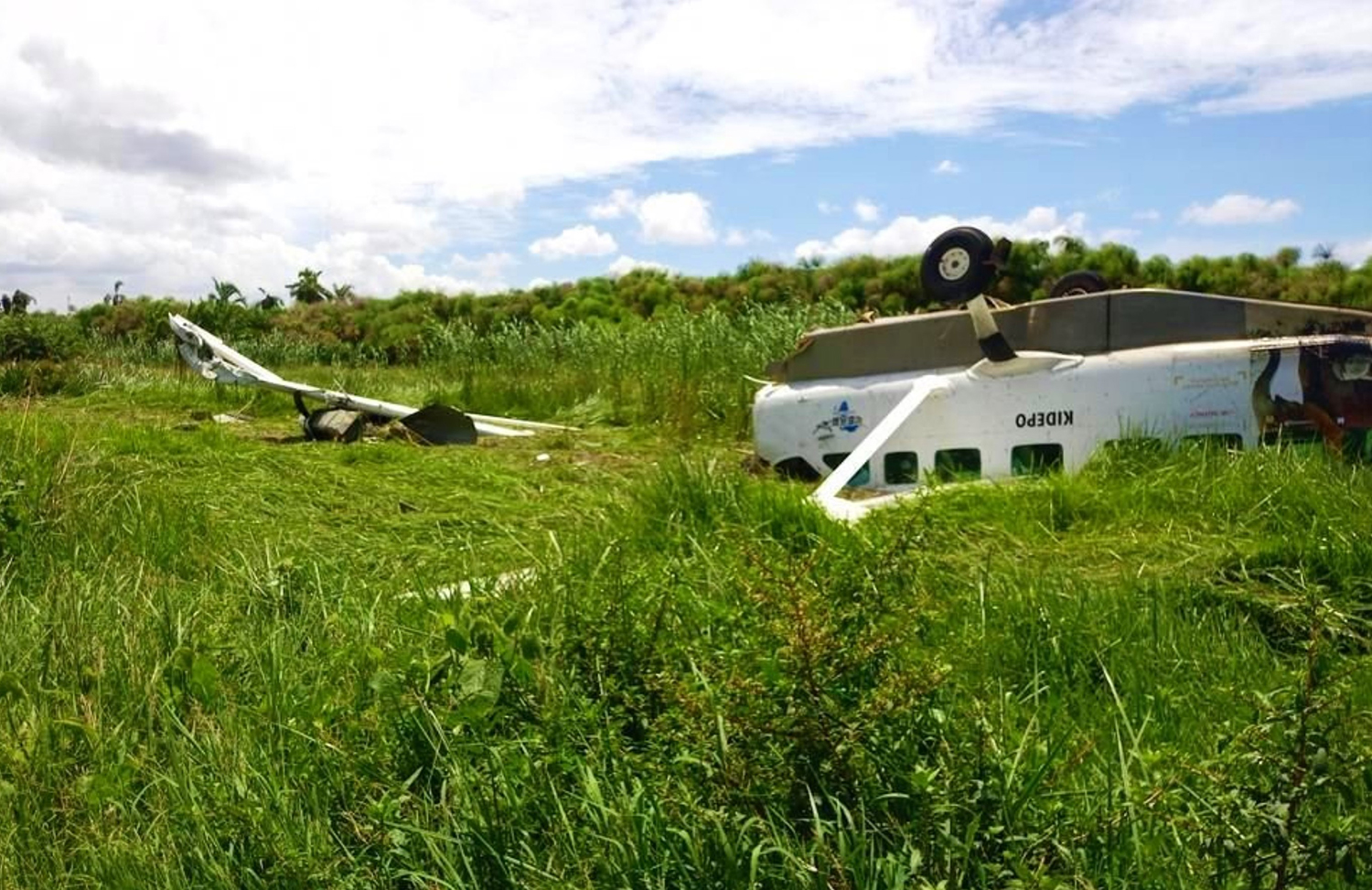
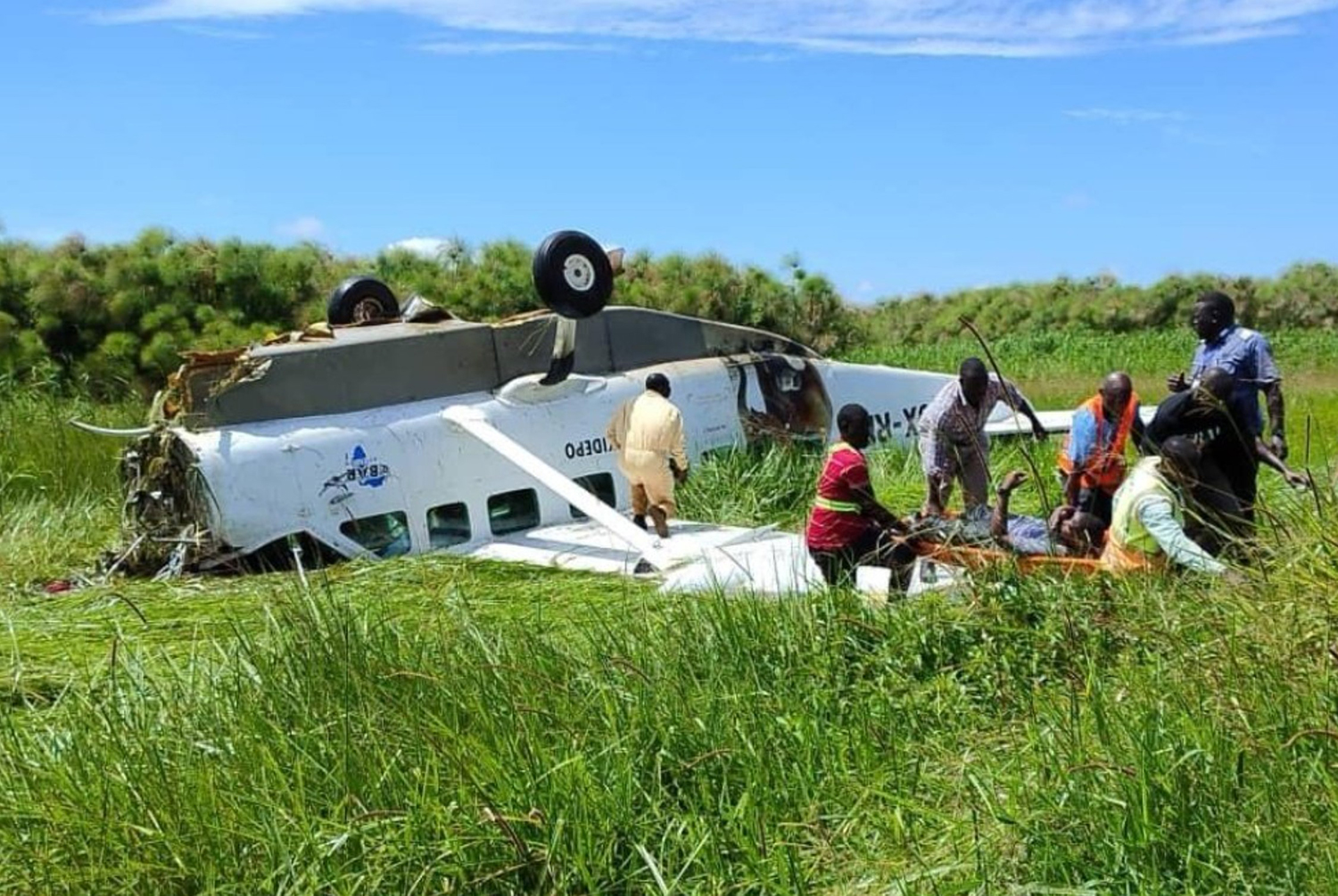
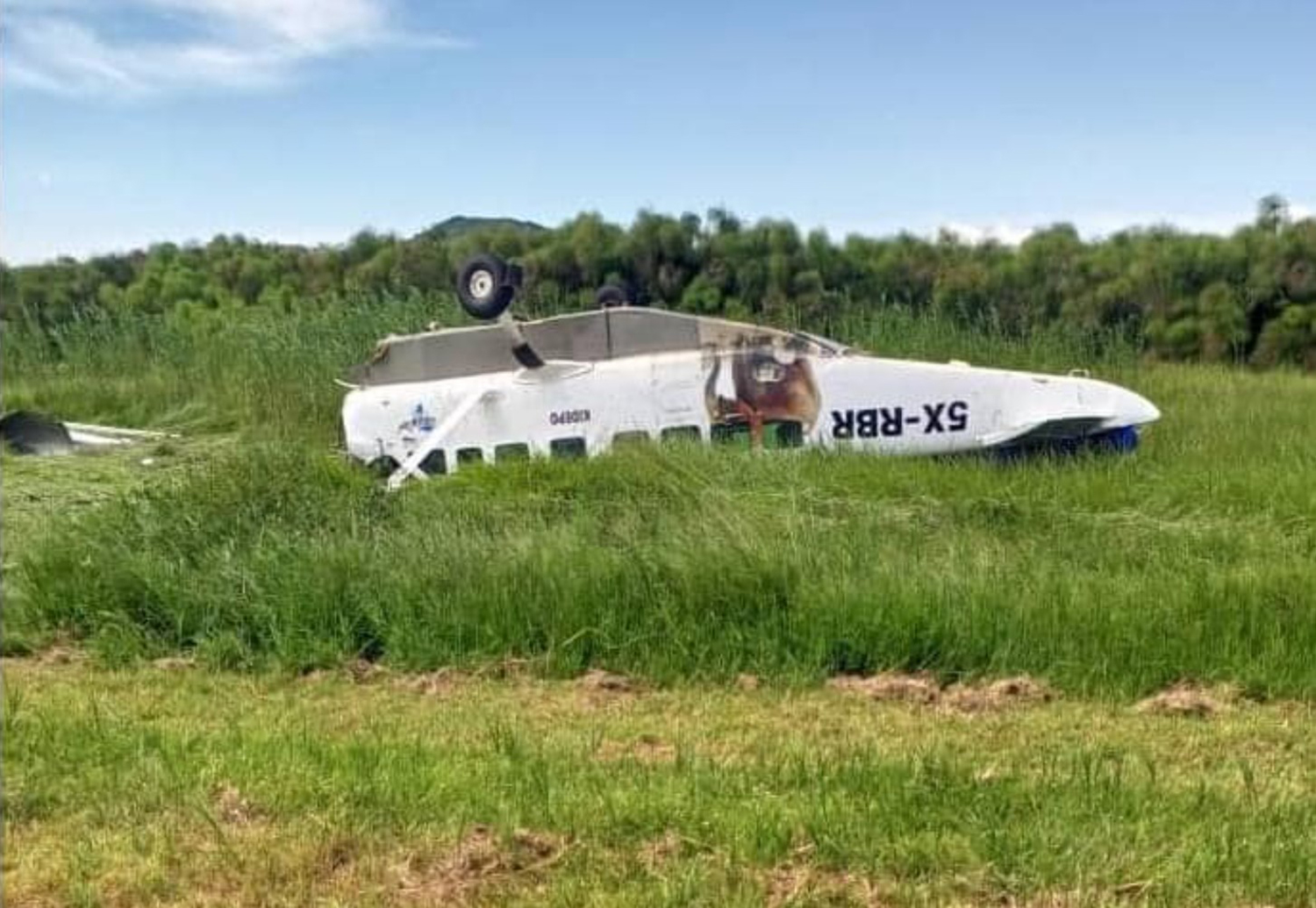
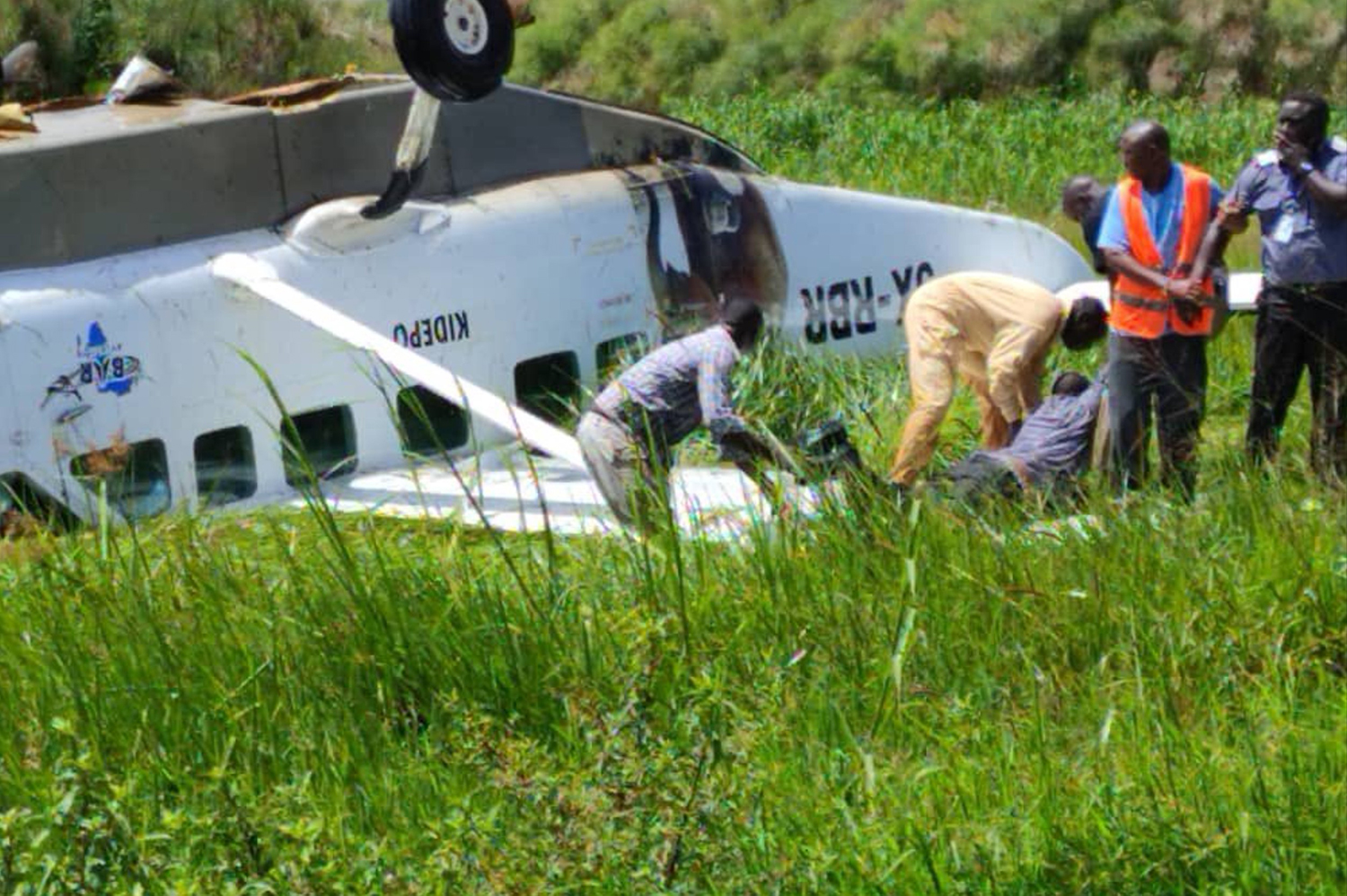
Shortly after takeoff from Kampala-Kajjansi Airport, the crew encountered technical issues and elected to return for an emergency landing. Upon touchdown, the single engine airplane went out of control, lost its left wing and engine before coming to rest upside down in a grassy area. Both pilots were rescued, the copilot was slightly injured and the captain was seriously injured. The crew departed Kajjansi Airfield on a positioning flight to Mweya to pick up passengers to Entebbe.

Crash of a Pilatus PC-12/47E in Whitehorse

Date & Time: Apr 17, 2023 at 1138 LT
Type of aircraft:
Operator:
Registration:
C-GMPX
Flight Type:
Survivors:
Yes
Schedule:
Whitehorse – Yellowknife
MSN:
1017
YOM:
2008
Country:
Crew on board:
1
Crew fatalities:
Pax on board:
0
Pax fatalities:
Other fatalities:
Total fatalities:
0
Captain / Total flying hours:
8700
Captain / Total hours on type:
3000.00
Aircraft flight hours:
11908
Circumstances:
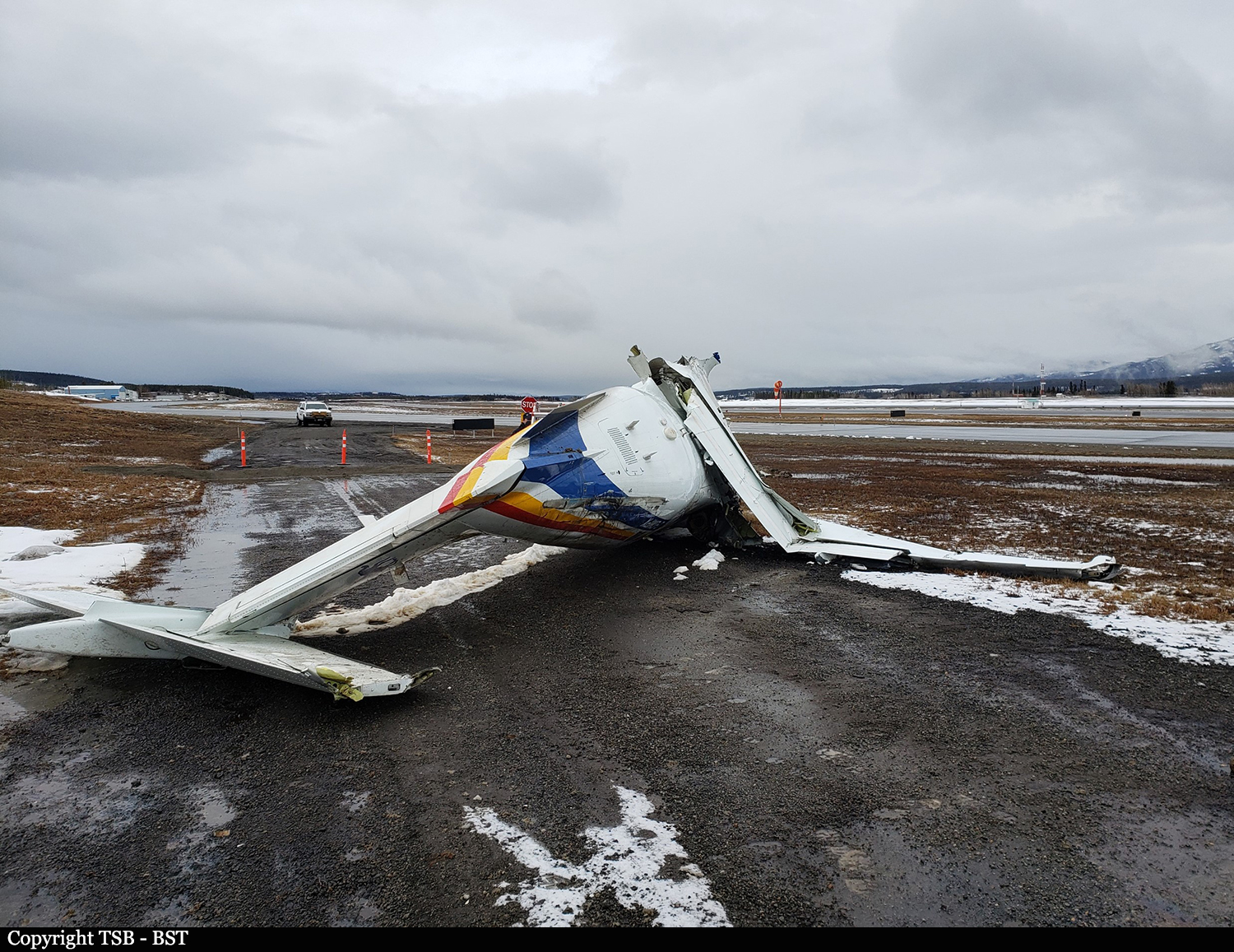
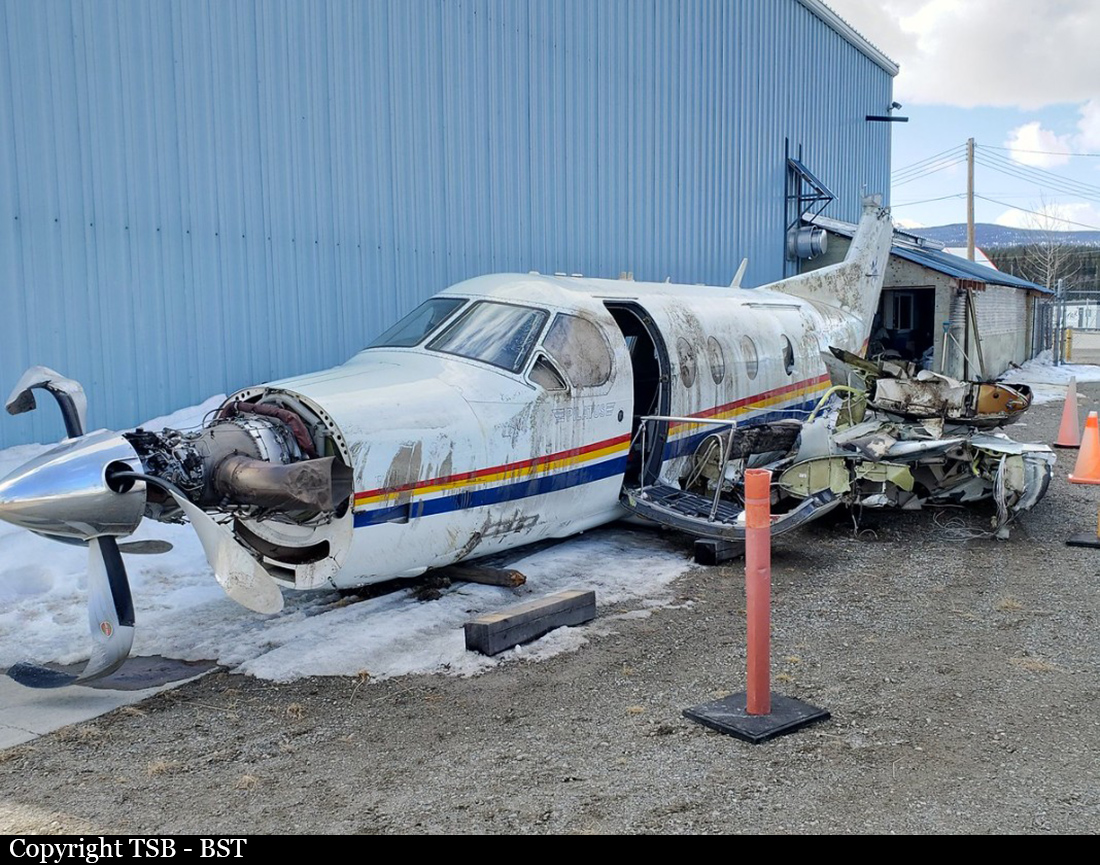
At 1134 Mountain Standard Time on 17 April 2023, the Government of Canada, Royal Canadian Mounted Police Pilatus Aircraft Ltd. PC-12/47E (registration C-GMPX, serial number 1017) departed Whitehorse/Erik Nielsen International Airport (CYXY), Yukon, on an instrument flight rules flight to Yellowknife Airport (CYZF), Northwest Territories. The pilot was the sole occupant. Shortly after the aircraft lifted off from Runway 32L, its stall warning system activated, triggering an aural “STALL” warning and the activation of the stick shaker. The pilot informed the tower controller of the intention to return for landing. At 1138, while the pilot was visually manoeuvring to land on Runway 32L, the aircraft impacted the terrain approximately 520 feet west-southwest of the centre of the displaced threshold, in a right-wing-low attitude. The aircraft subsequently hit a pile of millings with its left wing, rolled onto its left side, and slid approximately 130 feet before coming to rest on an airport service road. The pilot, who was seriously injured, exited the aircraft through the emergency exit with assistance from aircraft rescue and firefighting personnel, who arrived within minutes of the accident. An emergency locator transmitter signal was received by the search and rescue satellite system. The aircraft was destroyed; there was no post-impact fire.
Probable cause:
Findings as to causes and contributing factors. These are conditions, acts or safety deficiencies that were found to have caused or contributed to this occurrence.
1. During the final moments of the flight, the aircraft’s right turn in excess of 45° of bank, while it was operating at a low height above the ground and just above the calculated stall speed, likely resulted in the aircraft entering an aerodynamic stall, with insufficient height to recover before impacting the terrain.
2. The stainless steel belt in the left AOA transmitter experienced a fatigue crack likely attributed to the wet-etch design process. Owing to the fact that the belt is an on condition component, the fatigue cracking went undetected until the belt failed at, or just before, takeoff on the occurrence flight, causing the AOA transmitter to transmit a false stall signal when the aircraft became airborne.
3. While attempting to align the aircraft for landing, the pilot experienced attentional narrowing due to an intense stress reaction in response to a surprise event. As a result, the pilot's attention was focused outside the aircraft, and the pilot unknowingly placed the aircraft in a flight regime that likely resulted in an aerodynamic stall at a very low height above ground.
4. The Royal Canadian Mounted Police's training for stall warning system malfunctions on the PC-12 focused solely on an inadvertent pusher activation. As a result, the occurrence pilot did not fully understand the symptoms of a false stall warning or the options available to mitigate the risks associated with this emergency.
5. The PC-12 pilot operating handbook provided limited guidance with regard to the potential use of the AURAL WARN INHIBIT switch during emergency situations. As a result, the occurrence pilot was unaware that this switch could be used during highworkload situations to quickly eliminate the false aural stall warning that was a distraction for the duration of the flight.
Final Report:


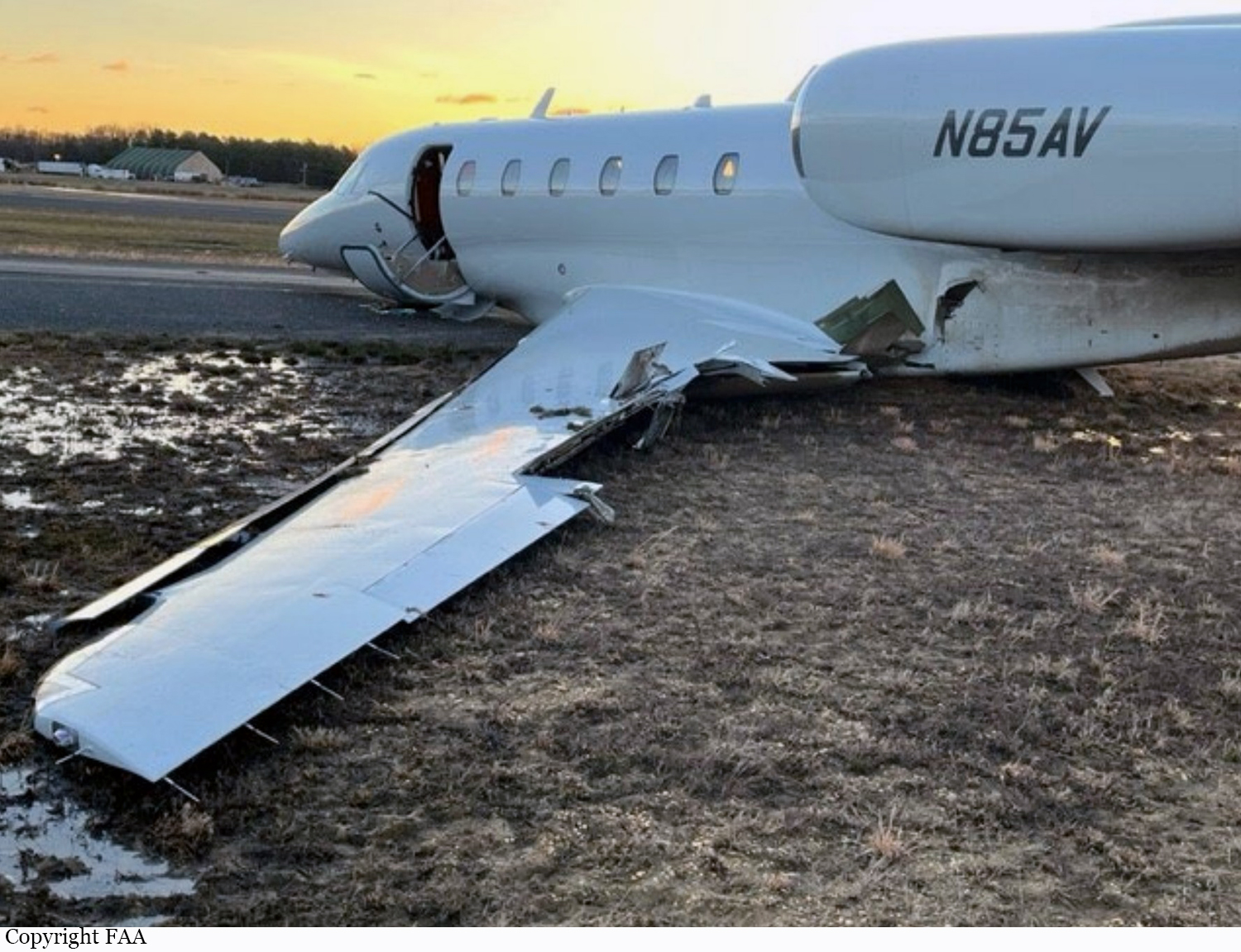
Crash of a Cessna 750 Citation X in Monmouth

Date & Time: Apr 1, 2023 at 1937 LT
Type of aircraft:
Operator:
Registration:
N85AV
Flight Type:
Survivors:
Yes
Schedule:
Nashville - Monmouth
MSN:
750-0085
YOM:
1999
Crew on board:
2
Crew fatalities:
Pax on board:
0
Pax fatalities:
Other fatalities:
Total fatalities:
0
Captain / Total flying hours:
12865
Captain / Total hours on type:
264.00
Copilot / Total flying hours:
1450
Copilot / Total hours on type:
330
Aircraft flight hours:
12272
Circumstances:
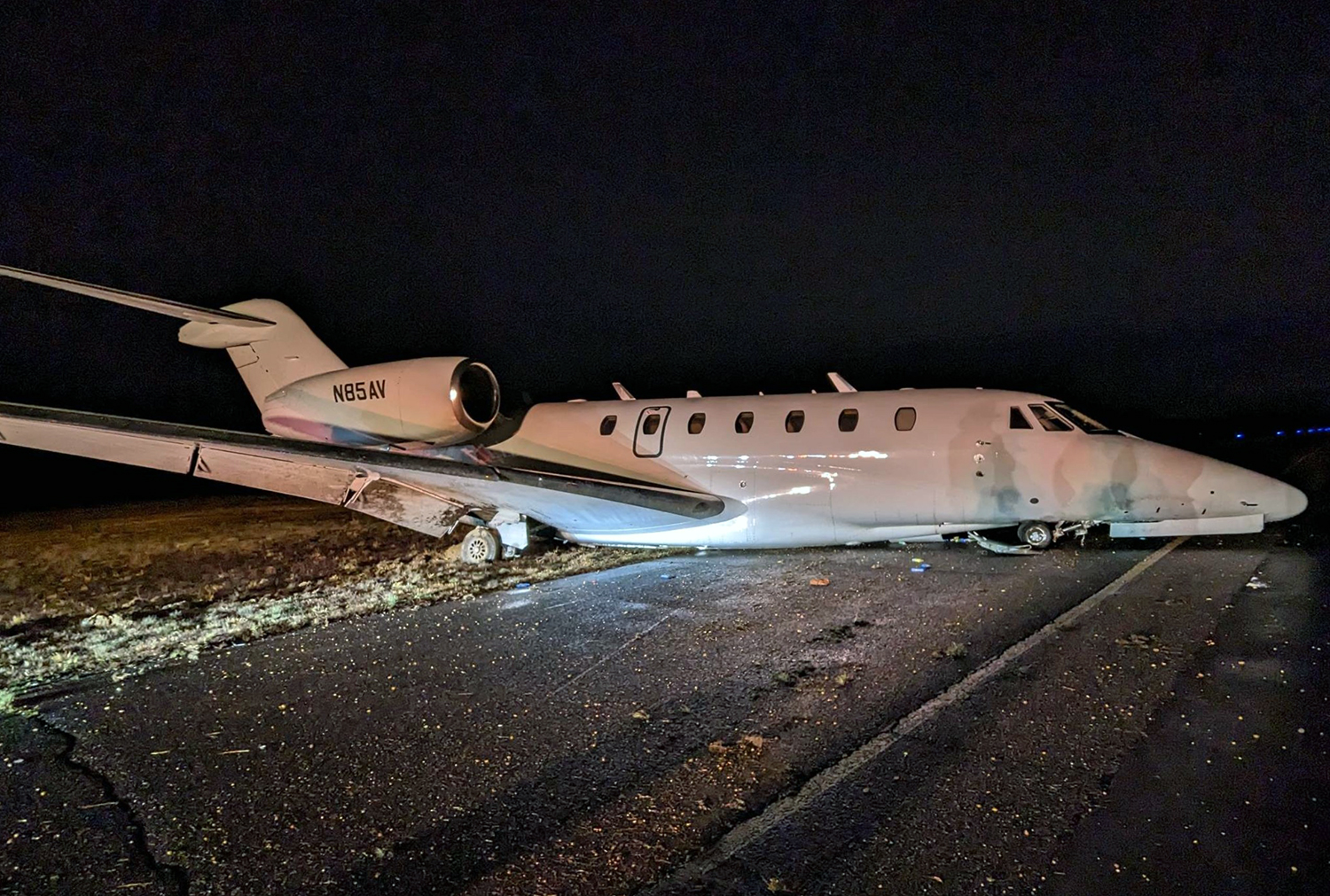
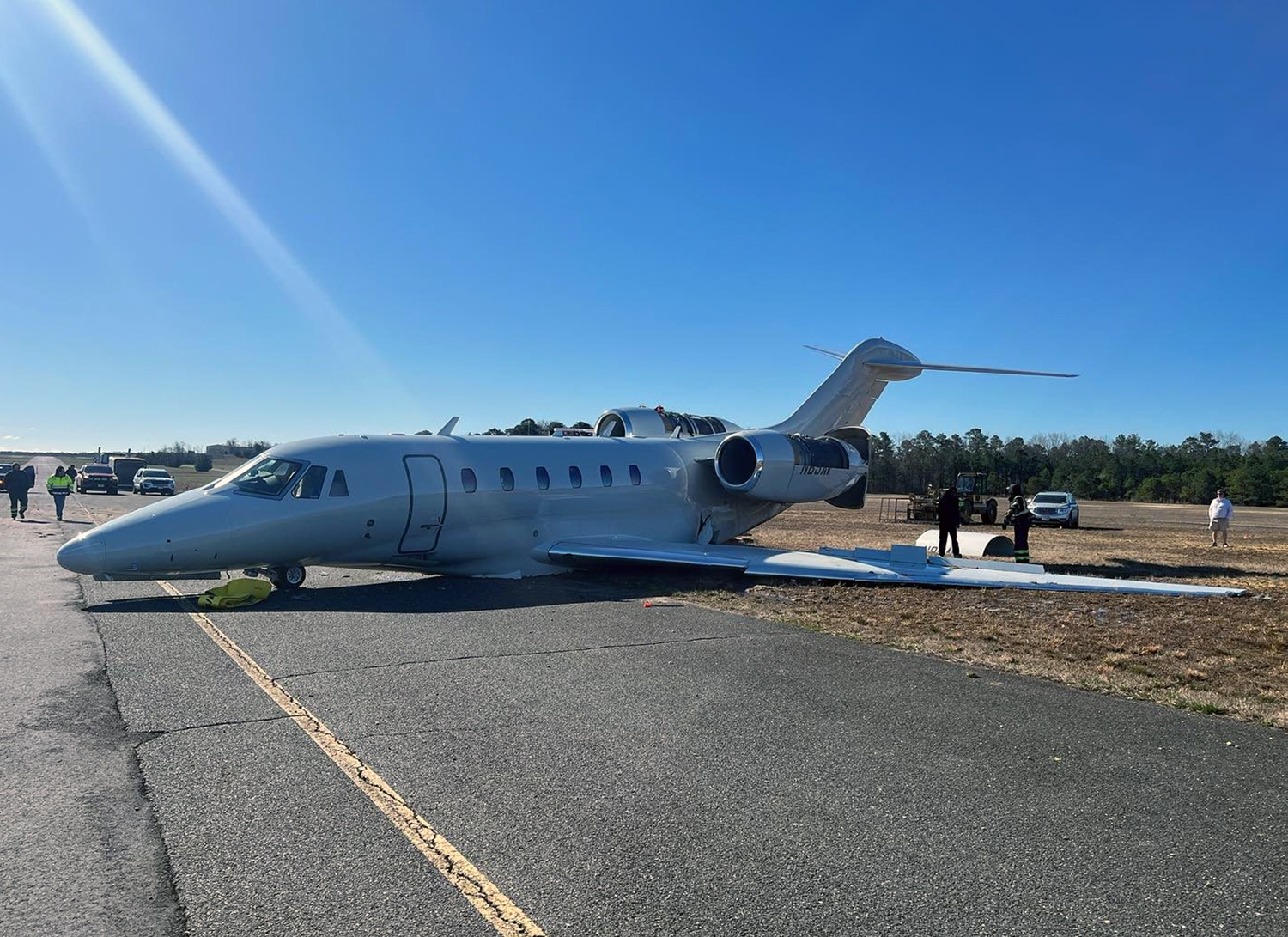
The flight crew of the business jet reported that after touching down on runway centerline the airplane was struck by a gust of wind from the right. They were able to keep the airplane on the runway centerline but were subsequently struck by another more powerful gust, which pushed the airplane off the left side of the runway. The runway excursion resulted in substantial damage to the fuselage and left wing. A posaccident review of weather radar data showed that a severe thunderstorm (for which a tornado warning had been issued) was present to the west of the airport and was rapidly moving east. There was a convective SIGMET valid for the airport at the time of the accident. The pilot-in-command reported checking relevant weather information before the flight, that the airplane was equipped with an operational onboard weather radar system, and that there were no preaccident mechanical malfunctions or failures with the airplane that would have precluded normal operation.
Probable cause:
The pilots’ loss of directional control while landing in gusting wind conditions which resulted in a runway excursion. Also contributing was the flight crew’s decision to land at an airport where there was a rapidly approaching severe thunderstorm.
Final Report:

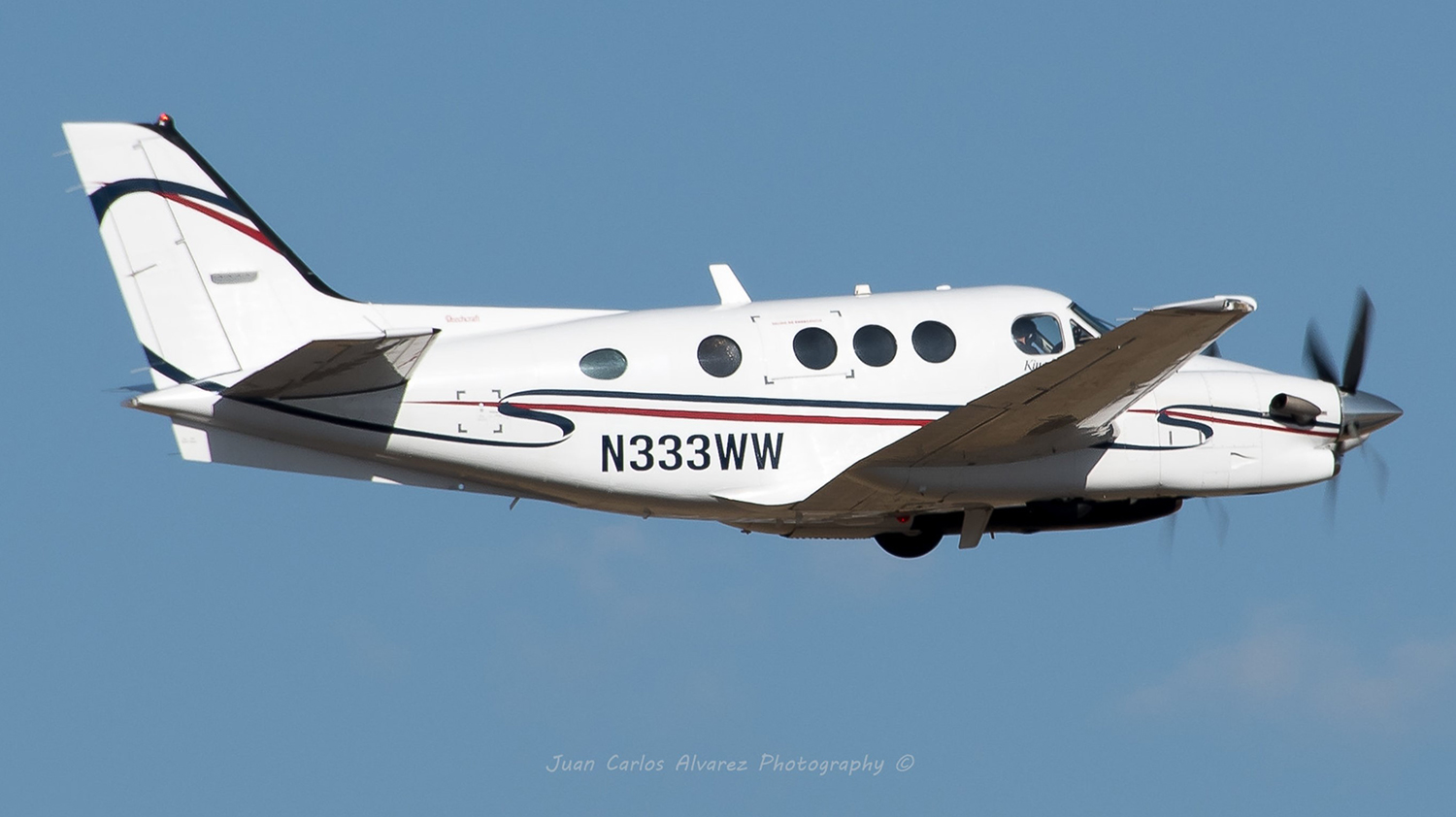
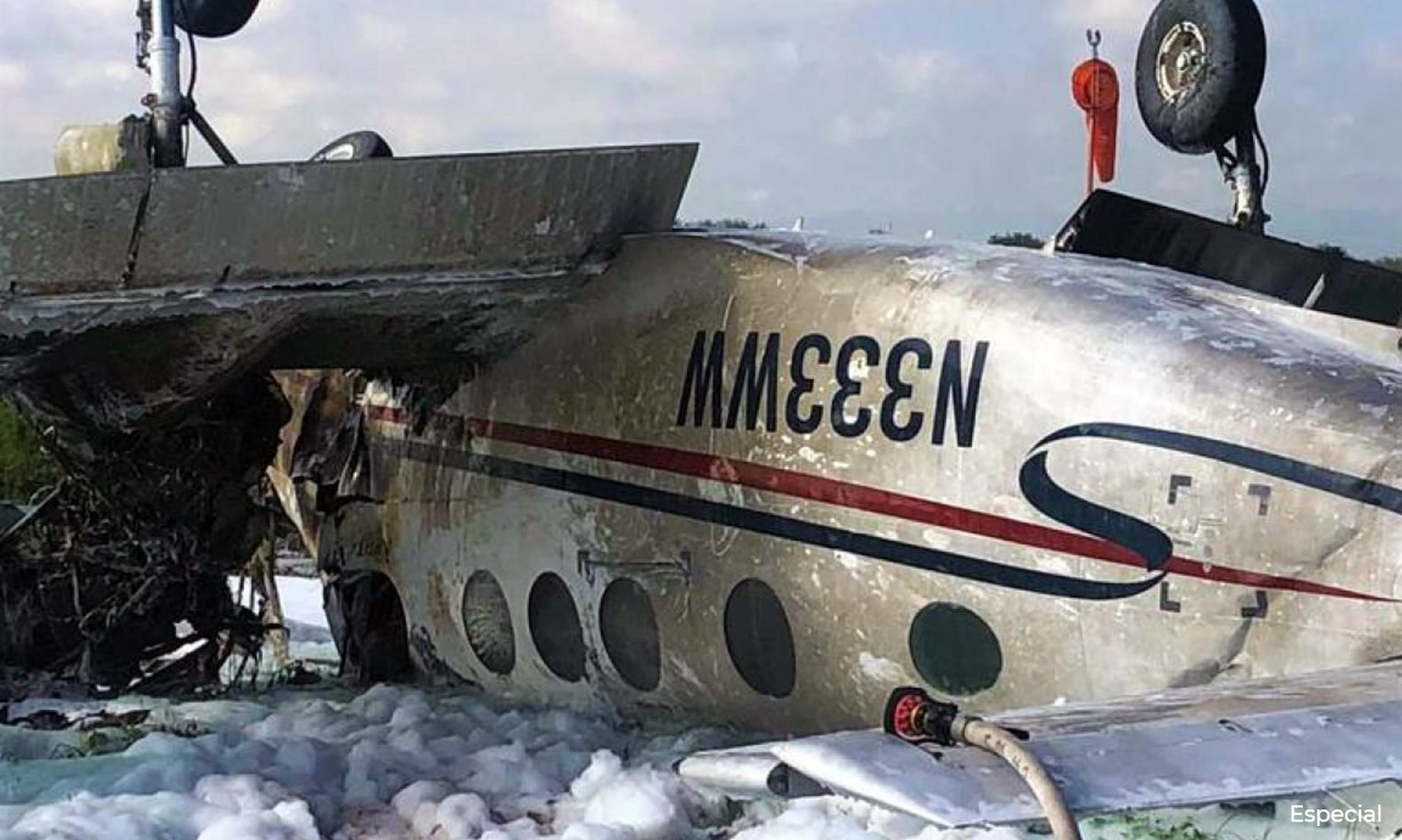
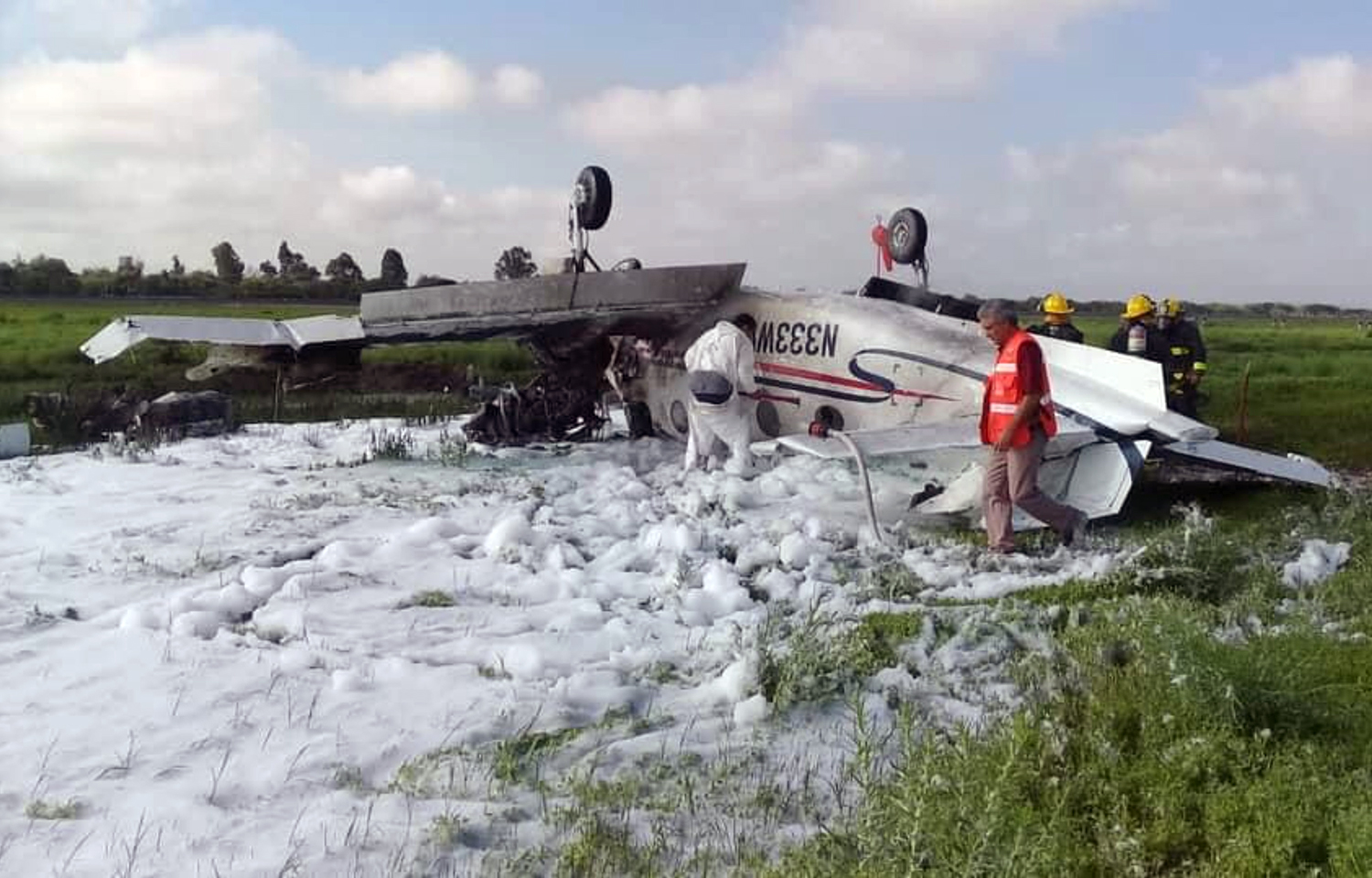
Crash of a Beechcraft C90A King Air in Durango: 1 killed

Date & Time: Jul 18, 2021 at 0935 LT
Type of aircraft:
Operator:
Registration:
N333WW
Flight Type:
Survivors:
Yes
Schedule:
San Luis Potosí – Durango
MSN:
LJ-1741
YOM:
2005
Location:
Country:
Crew on board:
2
Crew fatalities:
Pax on board:
0
Pax fatalities:
Other fatalities:
Total fatalities:
1
Captain / Total flying hours:
4947
Aircraft flight hours:
3099
Circumstances:
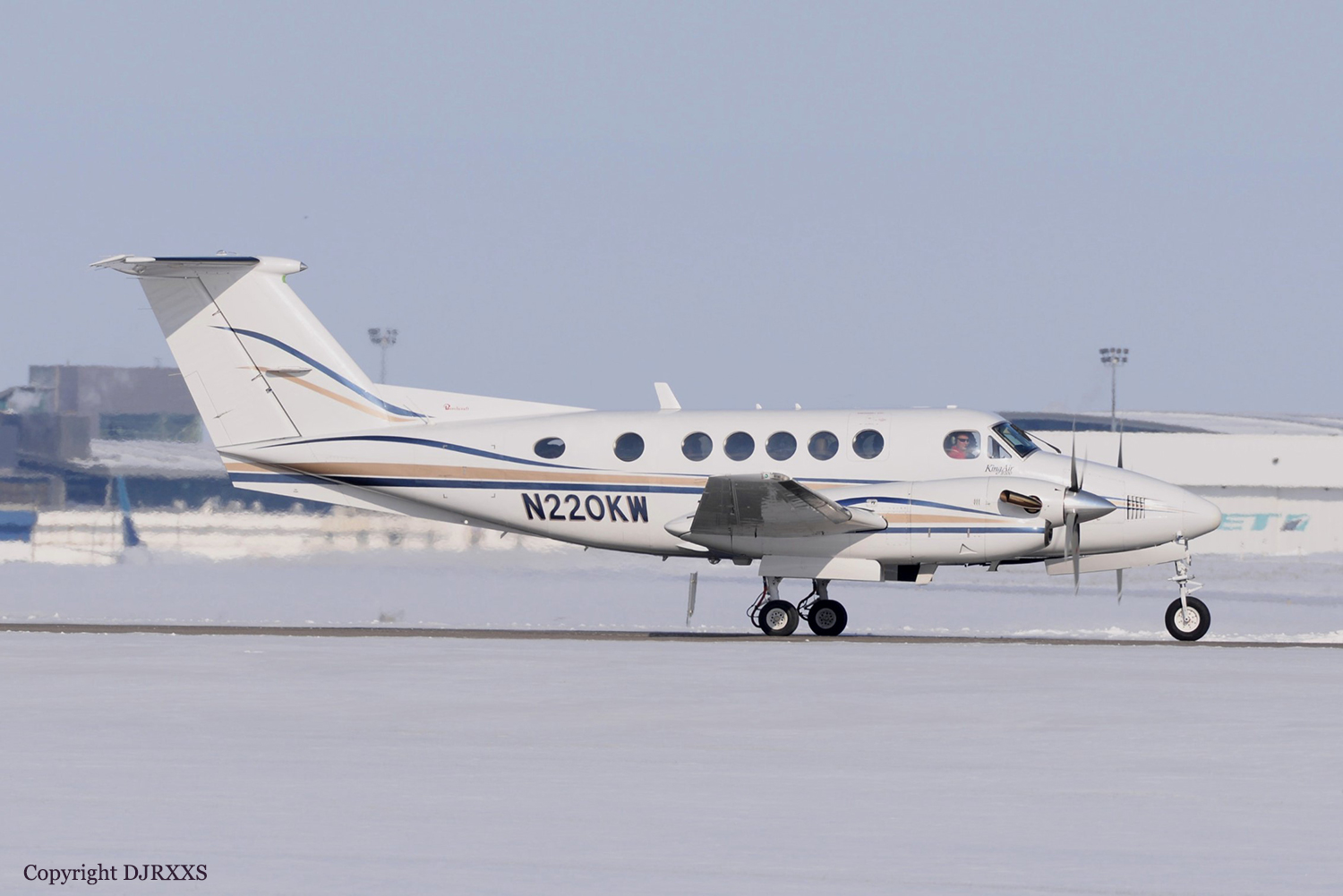
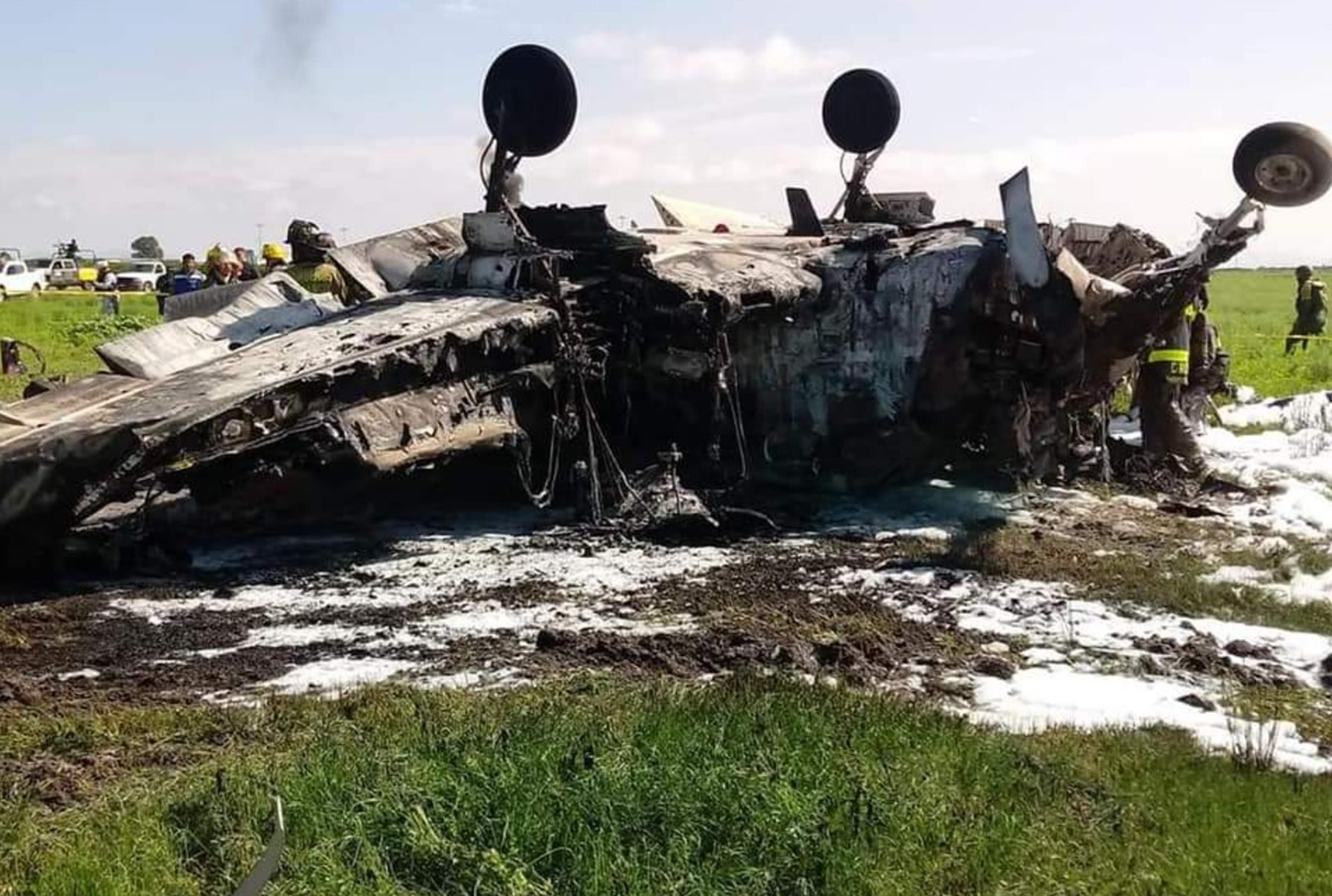
On final approach to Durango-Guadalupe Victoria Airport following an uneventful flight from San Luis Potosí, the twin engine airplane was unstable. The crew decided to make a sudden descent below the minimum descent altitude without visual contact with the runway, resulting in an initial impact with the runway surface and subsequently with an open drainage ditch located between runway 03/21 and taxiway 'A'. The airplane came to rest upside and burst into flames. One pilot was seriously injured and the second occupant was killed.
Probable cause:
Poor management by the flight crew: of the approach and multiple deviations from operational procedures, due to a lack of training, which placed the aircraft in an unsafe situation and resulted in an unstabilised approach. They decided to make a sudden descent below the minimum descent altitude without visual contact with the runway, resulting in an initial impact with the runway surface and subsequently with an open drainage channel between runway 03/21 and taxiway "A," which stopped the movement.
The following contributing factors were identified:
- Lack of training and operational supervision of the flight crew,
- Lack of a formal operational safety program,
- Abrupt changes in the attitude and heading of the aircraft,
- Poor management of cockpit resources,
- Inadequate decision-making by not performing a missed approach,
- Presence of an drainage ditch located between runway 03/21 and taxiway 'A',
- Lack of supervision by the Federal Civil Aviation Agency of the flight operations of aircraft with foreign registration.
Final Report:

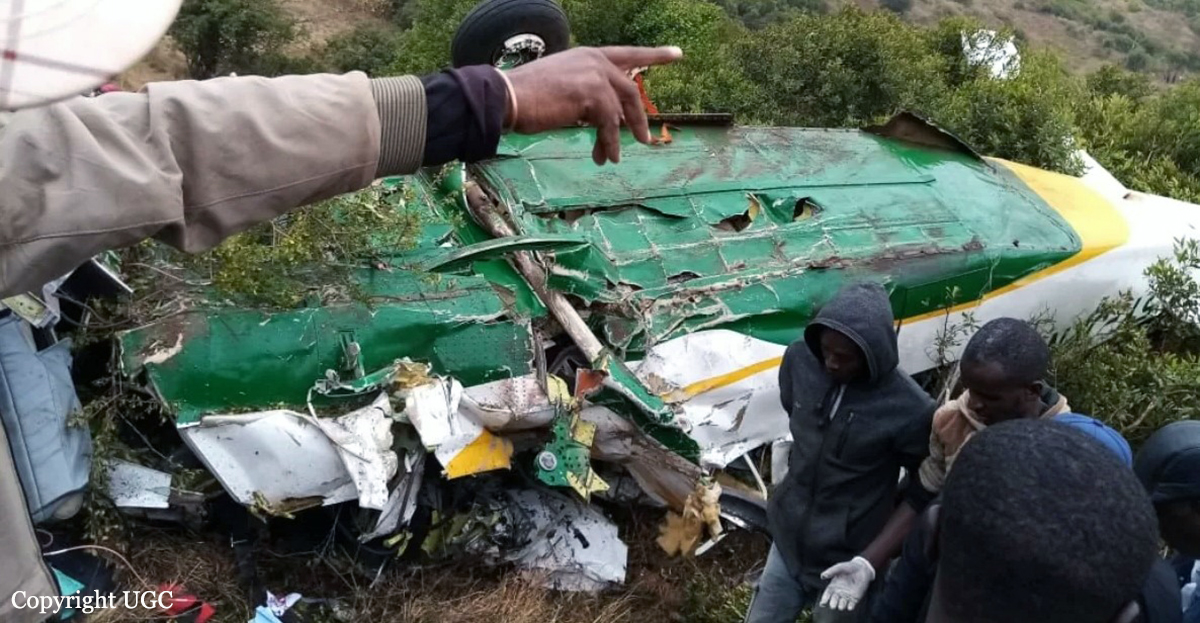
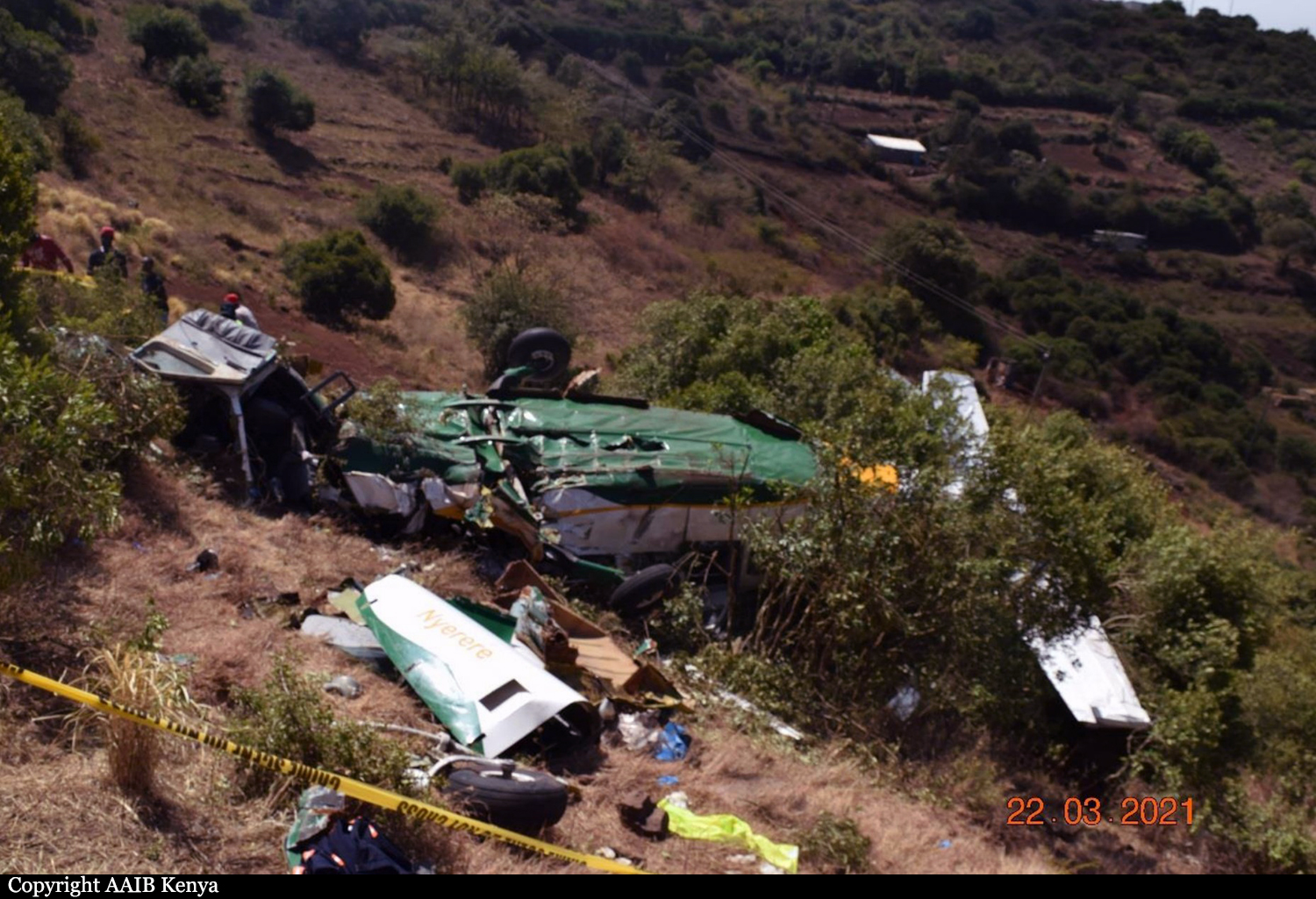
Crash of a Cessna 208B Grand Caravan in Marsabit: 2 killed

Date & Time: Mar 20, 2021 at 1000 LT
Type of aircraft:
Operator:
Registration:
5Y-JKN
Flight Type:
Survivors:
No
Site:
Schedule:
Nairobi – Marsabit
MSN:
208B-0688
YOM:
1998
Country:
Region:
Crew on board:
2
Crew fatalities:
Pax on board:
0
Pax fatalities:
Other fatalities:
Total fatalities:
2
Captain / Total flying hours:
4235
Captain / Total hours on type:
2329.00
Copilot / Total flying hours:
344
Copilot / Total hours on type:
104
Aircraft flight hours:
16343
Circumstances:
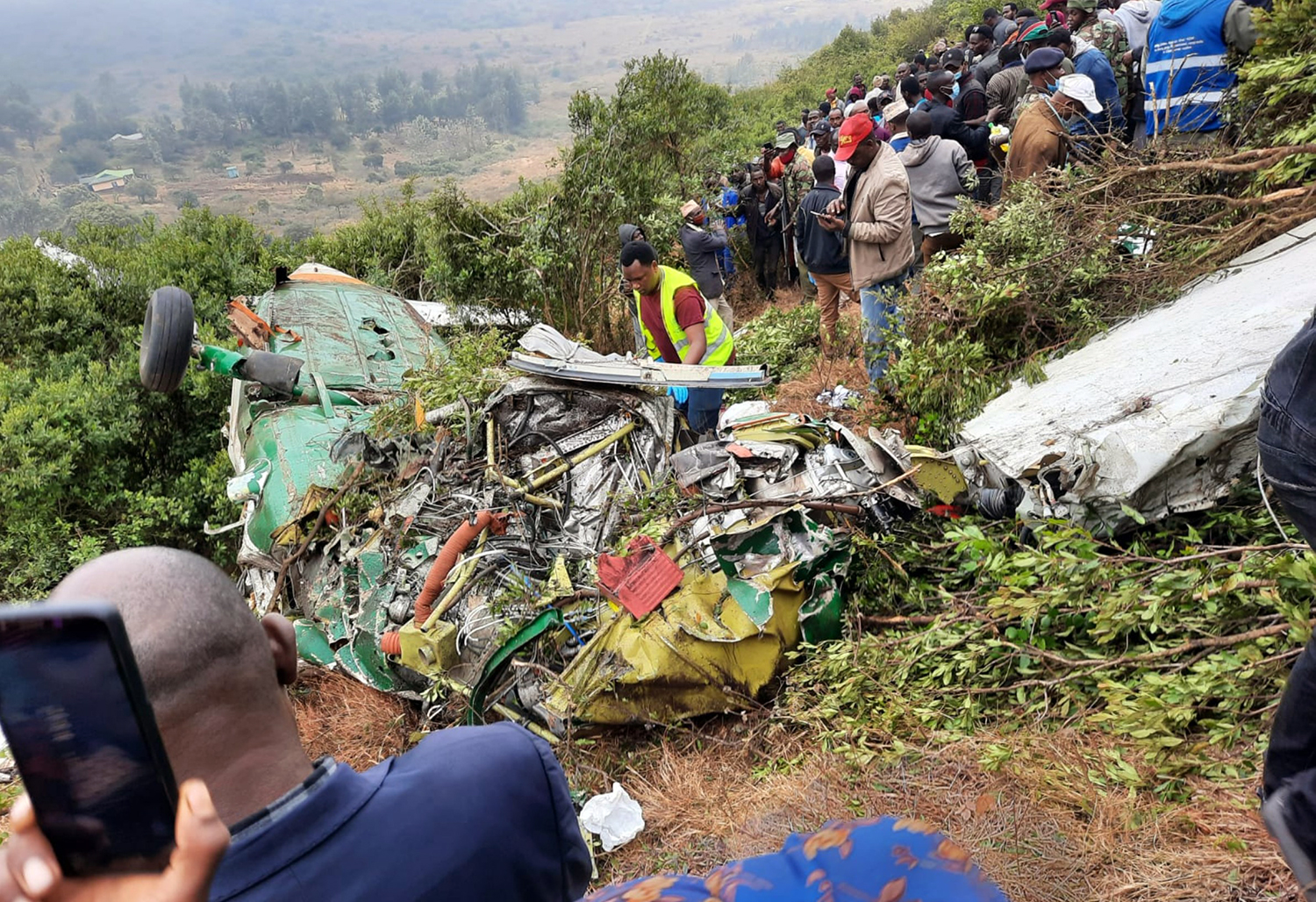
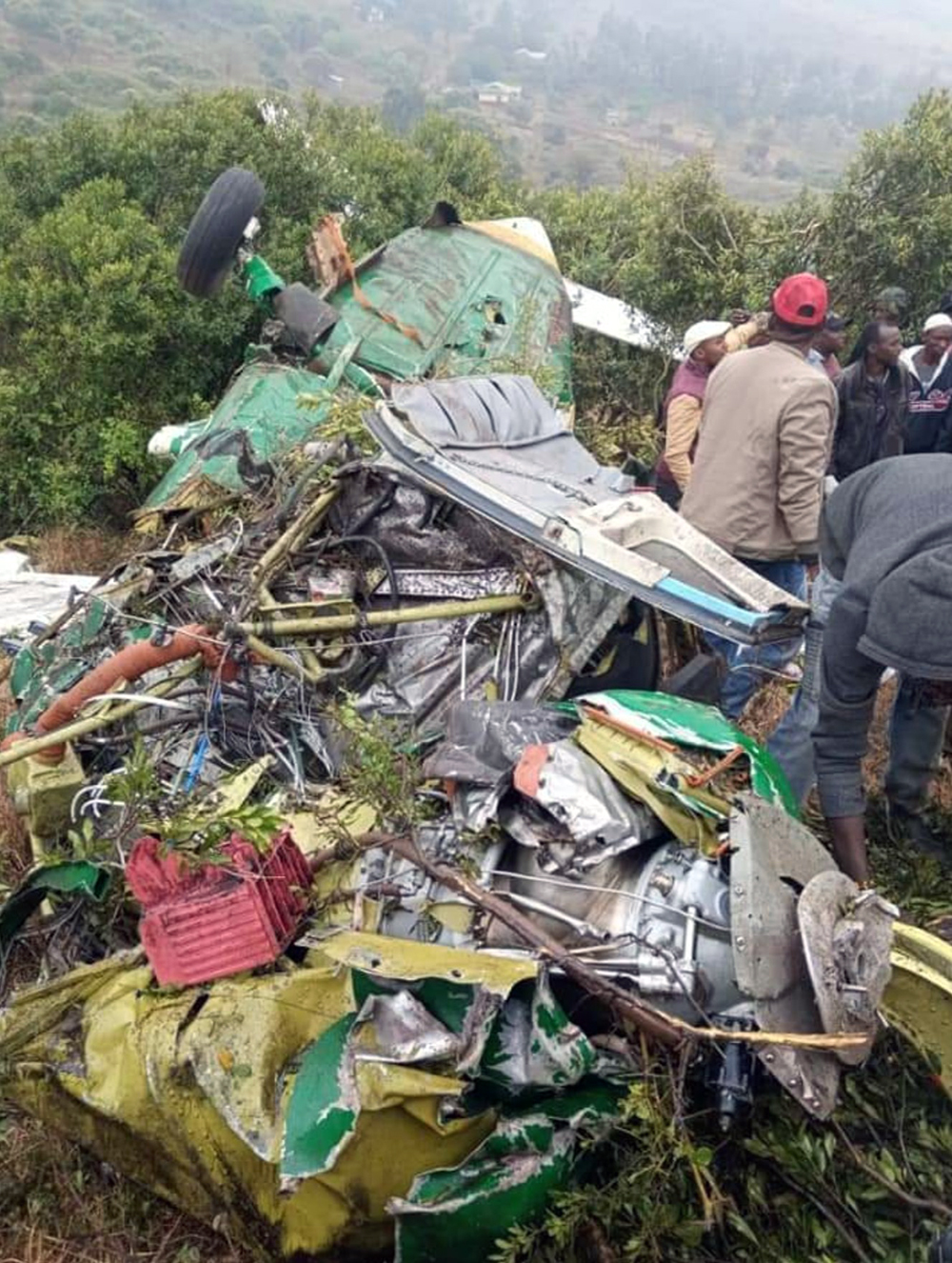
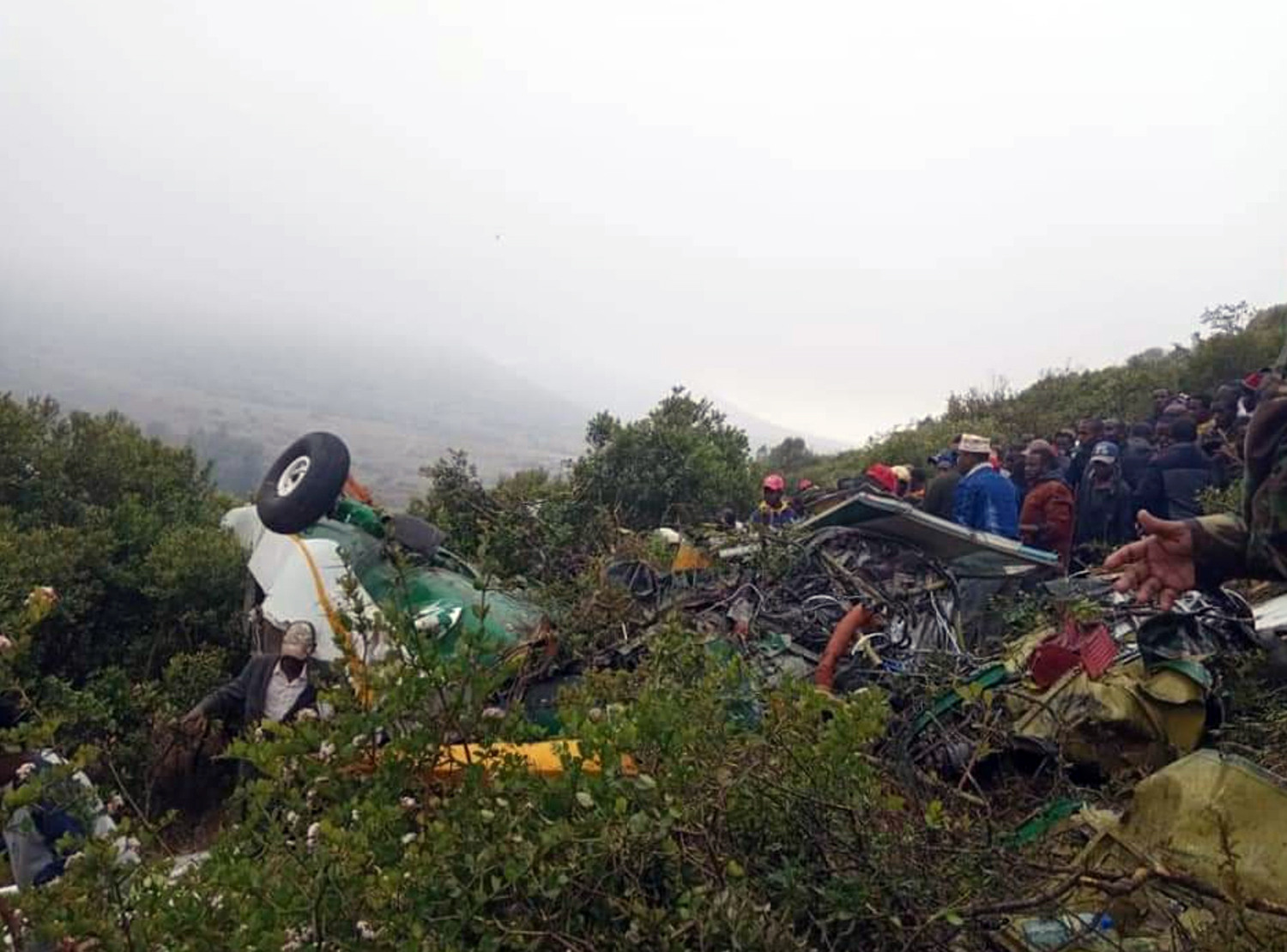
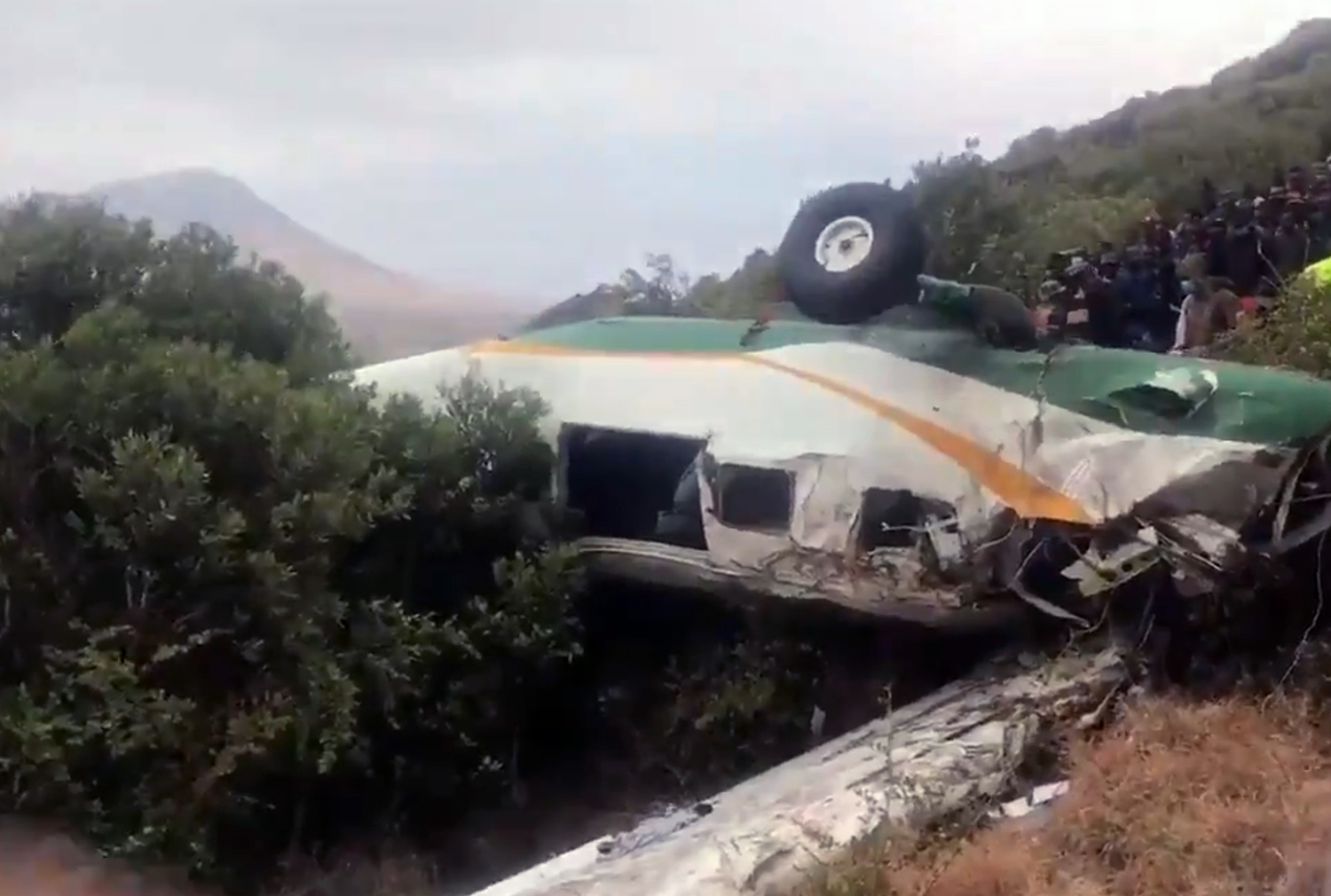
The report describes the accident to C208B type of aircraft, registration 5Y-JKN with two crew on onboard that occurred on Marsabit Hill on 20th March 2021 in which the aircraft crashed killing two crew onboard. The aircraft with 2200lbs fuel onboard was chartered to ferry Marsabit County Officials to a peace keeping mission at Illeret 156 nautical miles North West of Marsabit town. Preliminary information revealed that the aircraft departed Wilson Airport at 08.20am (0520Z) and arrived within the vicinity of Marsabit town at around 10.00a.m (0700Z). It collided with Kofia Mbaya Hill - Marsabit terrain while attempting to approach Marsabit airstrip. The aircraft first impacted the terrain with its nose-wheel and the main landing gears leaving parts of the fuselage and iron box with its content kept in the lower baggage compartment on the sport. It then ballooned and missed a house before it flipped upside down and impacted the ground and came to rest facing opposite direction. It left a trail of aircraft parts along its path before it came to rest. The nosewheel and its assembly separated and fell off and was found next to the house 110m from its first point of impact. There was no fire after impact but all the occupants received fatal injuries.
Probable cause:
The probable cause of the accident was a continued descend into terrain without forward visibility in thick fog.
The following contributing factors were identified:
- Location of the airstrip which is surrounded by high hills,
- Inadequate flight planning and crew resource management.
Final Report:

Crash of a Beechcraft 200 Super King Air in Rockford: 1 killed

Date & Time: Aug 20, 2020 at 1542 LT
Operator:
Registration:
N198DM
Flight Phase:
Flight Type:
Survivors:
No
Schedule:
Rockford - DuPage
MSN:
BB-1198
YOM:
1984
Crew on board:
1
Crew fatalities:
Pax on board:
0
Pax fatalities:
Other fatalities:
Total fatalities:
1
Captain / Total flying hours:
3650
Aircraft flight hours:
8018
Circumstances:
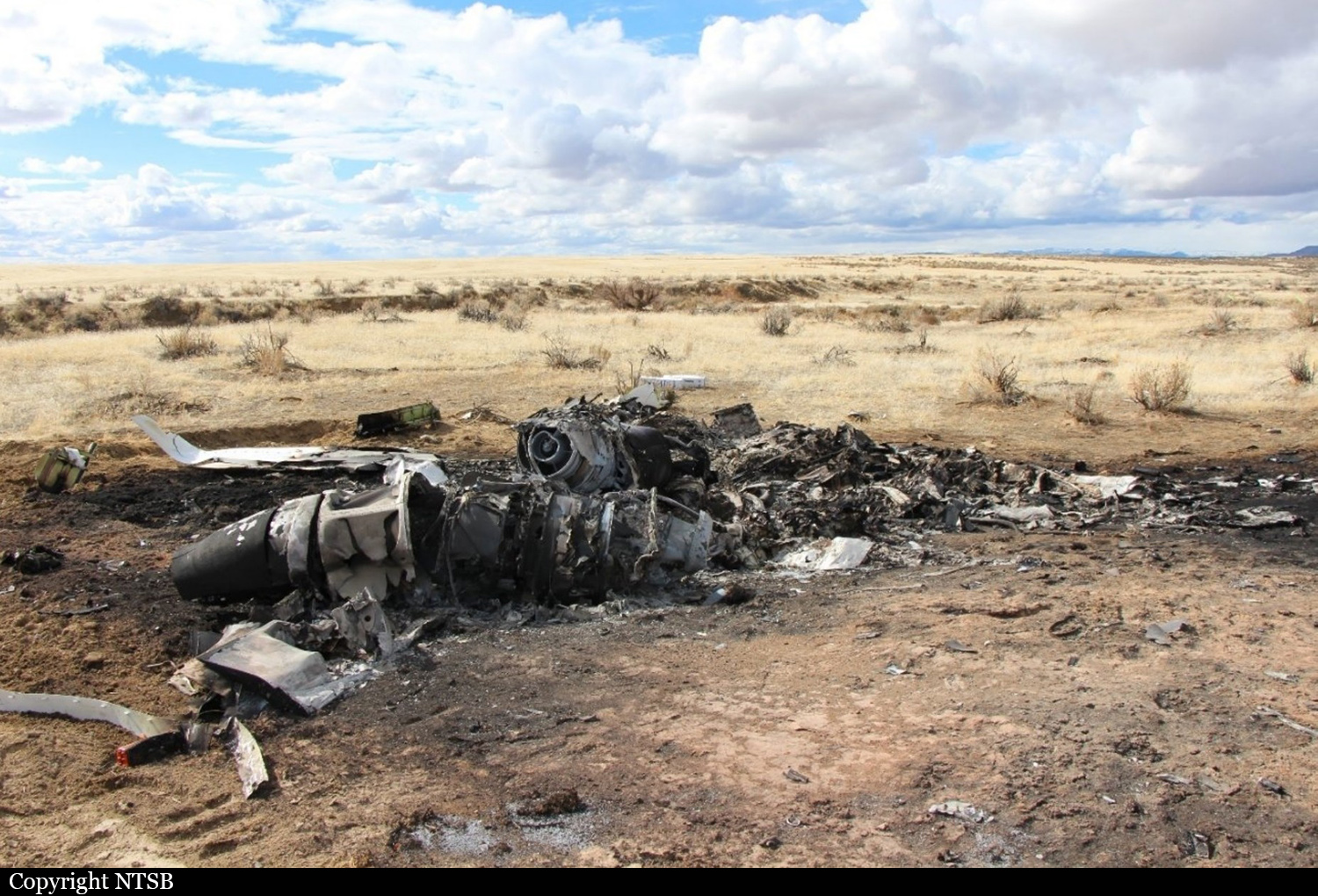
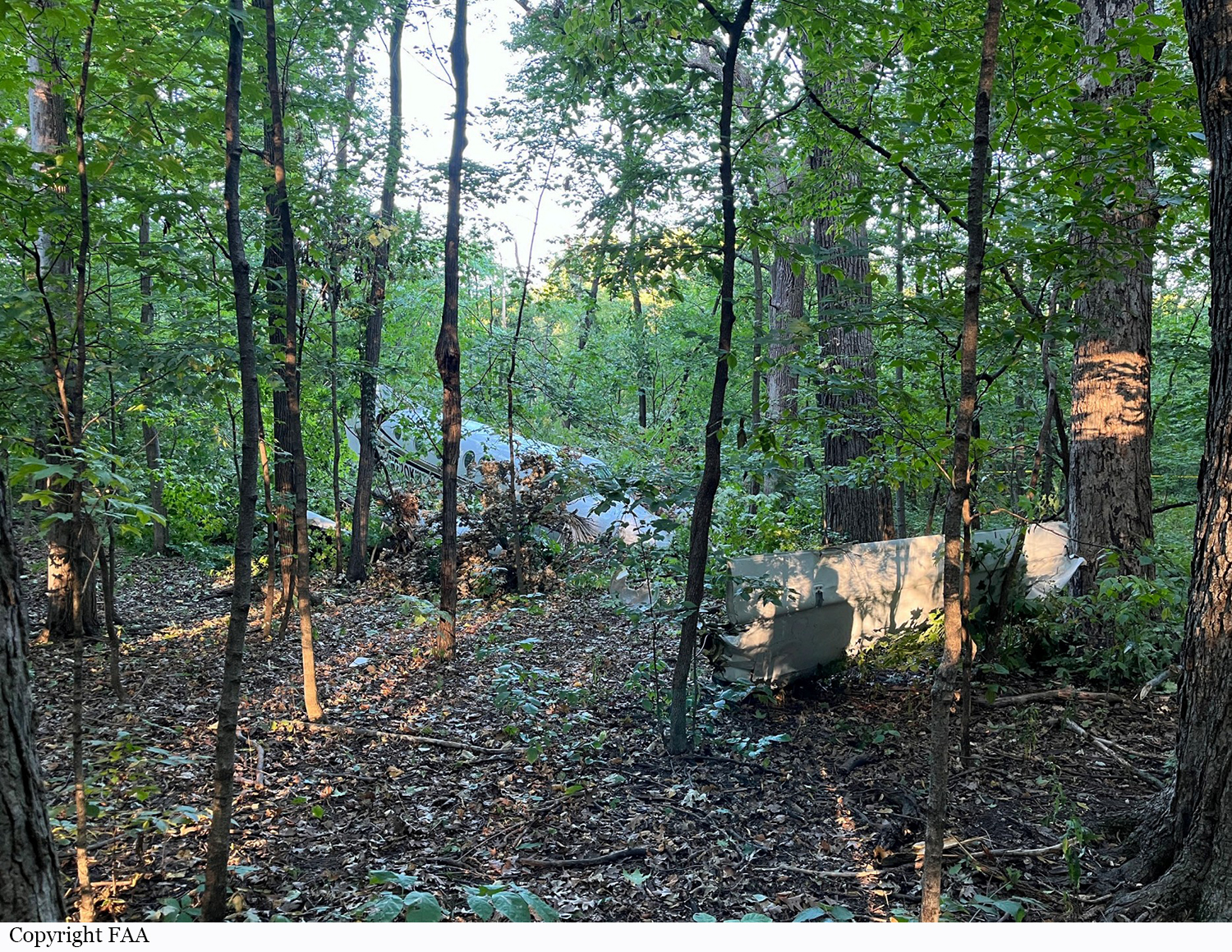
On August 20, 2020, about 1542 central daylight time, a Beech B200 airplane (marketed as a King Air 200), N198DM, was destroyed when it was involved in an accident near Rockford, Illinois. The private pilot was fatally injured. The airplane was operated as a Title 14 Code of Federal Regulations (CFR) Part 91 positioning flight. The purpose of the flight was to relocate the airplane to the pilot's home base at the DuPage Airport (DPA), West Chicago, Illinois. The airplane had been at Chronos Aviation, LLC (a 14 CFR Part 145 repair station), at the Rockford International Airport (RFD), Rockford, Illinois, for maintenance work. Multiple airport-based cameras recorded the accident sequence. The videos showed the airplane taking off from runway 19. Shortly after liftoff, the airplane started turning left, and the airplane developed a large left bank angle as it was turning. The airplane departed the runway to the left and impacted the ground. During the impact sequence, an explosion occurred, and there was a postimpact fire. A video study estimated the airplane’s maximum groundspeed during the takeoff as 105.5 knots (kts). Data recovered from an Appareo Stratus device onboard the airplane showed that about 1538, the airplane began taxing to runway 19. At 1540:34, the airplane crossed the hold short line for runway 19. At 1541:19, the airplane began a takeoff roll on runway 19. At 1541:42, the airplane began to depart the runway centerline to the left of the runway. Subsequent tracklog points showed the airplane gaining some altitude, and the tracklog terminated adjacent to a taxiway in a grassy area. The Appareo Stratus data showed the airplane began to increase groundspeed on a true heading of roughly 185° about 1541. Airplane pitch began to increase at 1541:41 as the groundspeed reached about 104 kts. The groundspeed increased to 107 kts within the next 2 seconds, and the pitch angle reached around 4° nose-up at this time. In the next few seconds, pitch lowered to around 0° as the groundspeed decayed to around 98 kts. The pitch then became 15° nose-up as the groundspeed continued to decay to about 95 kts. A right roll occurred of about 13° and changed to a rapidly increasing left roll over the next 5 seconds. The left roll reached a maximum of about 86° left as the pitch angle increasingly became negative (the airplane nosed down). The pitch angle reached a maximum nose down condition of -73°. The data became invalid after 1541:53.4. An airplane performance study based on the Appareo Stratus data showed that during the takeoff from runway 19, the airplane accelerated to a groundspeed of 98 kts and an airspeed of 105 kts before rotating and lifting off. The airplane pitched up, climbed, and gained height above the ground. Then, 4 seconds after rotation, the airplane began descending and slowing, consistent with a loss of power. A nose-left sideslip, a left side force, and a left roll were recorded, consistent with the loss or reduction in thrust of the left engine. The sideslip was reduced, likely due to opposite rudder input, and the airplane briefly rolled right. The airplane pitched up and was able to begin climbing again; however, it continued to lose speed. The sideslip then reversed, and the airplane rolled left again and impacted the ground. One witness reported that he observed the accident sequence. He did not hear any abnormal engine noises, nor did he see any smoke or flames emit from the airplane before impact. The airplane came to rest on a flat grass field to the east of runway 19 on airport property. The airplane sustained fire damage and was fragmented from impacting terrain.
Probable cause:
The pilot’s failure to maintain airplane control following a reduction of thrust in the left engine during takeoff. The reason for the reduction in thrust could not be determined based on the available evidence.
Final Report:

Crash of a Pilatus PC-12/47 in Mesquite

Date & Time: Apr 23, 2020 at 1600 LT
Type of aircraft:
Operator:
Registration:
N477SS
Flight Type:
Survivors:
Yes
Schedule:
Dallas – Muscle Shoals
MSN:
813
YOM:
2007
Crew on board:
1
Crew fatalities:
Pax on board:
0
Pax fatalities:
Other fatalities:
Total fatalities:
0
Captain / Total flying hours:
2283
Captain / Total hours on type:
1137.00
Aircraft flight hours:
7018
Circumstances:
Shortly after takeoff the pilot reported to the air traffic controller that he was losing engine power. The pilot then said he was going to divert to a nearby airport and accepted headings to the airport. The pilot then reported the loss of engine power had stabilized, so he wanted to return to his departure airfield. A few moments later the pilot reported that he was losing engine power again and he needed to go back to his diversion airport. The controller reported that another airport was at the pilot’s 11 o’clock position and about 3 miles. The pilot elected to divert to that airport. The airplane was at 4,500 ft and too close to the airport, so the pilot flew a 360° turn to set up for a left base. During the turn outbound, the engine lost all power, and the pilot was not able to reach the runway. The airplane impacted a field, short of the airport. The airplane’s wings separated in the accident and a small postcrash fire developed. A review of the airplane’s maintenance records revealed maintenance was performed on the day of the accident flight to correct reported difficulty moving the Power Control Lever (PCL) into reverse position. The control cables were inspected from the pilot’s control quadrant to the engine, engine controls, and propeller governor. A static rigging check of the PCL was performed with no anomalies noted. Severe binding was observed on the beta control cable (propeller reversing cable). The cable assembly was removed from the engine, cleaned, reinstalled, and rigged in accordance with manufacturer guidance. During a post-accident examination of the engine and propeller assembly, the beta control cable was found mis-rigged and the propeller blades were found in the feathered position. The beta valve plunger was extended beyond the chamfer face of the propeller governor, consistent with a position that would shut off oil flow from the governor oil pump to the constant speed unit (CSU). A wire could be inserted through both the forward and aft beta control cable clevis inspection holes that function as check points for proper thread engagement. The forward beta control cable clevis adjustment nut was rotated full aft. The swaging ball end on the forward end of the beta control cable was not properly secured between the clevis rod end and the push-pull control terminal and was free to rotate within the assembly. Before takeoff, the beta valve was in an operational position that allowed oil flow to the CSU, resulting in normal propeller control. Vibration due to engine operation and beta valve return spring force most likely caused the improperly secured swaging ball to rotate (i.e. “unthread”) forward on the beta control cable. The resulting lengthening of the reversing cable assembly allowed the beta valve to stroke forward and shut off oil flow to the propeller CSU. Without propeller servo oil flow to maintain propeller control, the propeller faded to the high pitch/feather position due to normal leakage in the transfer bearing. The reported loss of power is consistent with a loss of thrust due to the beta control cable being mis-rigged during the most recent maintenance work.
Probable cause:
The loss of engine power due to a mis-rigged beta control cable (propeller reversing cable), which resulted in a loss of thrust inflight.
Final Report:
Crash of a Beechcraft C90GT King Air near Caieiras: 1 killed

Date & Time: Dec 2, 2019 at 0602 LT
Type of aircraft:
Registration:
PP-BSS
Flight Phase:
Flight Type:
Survivors:
No
Site:
Schedule:
Jundiaí – Campo de Marte
MSN:
LJ-1839
YOM:
2008
Country:
Crew on board:
1
Crew fatalities:
Pax on board:
0
Pax fatalities:
Other fatalities:
Total fatalities:
1
Captain / Total flying hours:
6000
Captain / Total hours on type:
211.00
Circumstances:
The pilot departed Jundiaí-Comandante Rolim Adolfo Amaro Airport at 0550LT on a short transfer flight to Campo de Marte, São Paulo. While descending to Campo de Marte Airport, he encountered poor weather conditions and was instructed by ATC to return to Jundiaí. Few minutes later, while flying in limited visibility, the twin engine airplane impacted trees and crashed in a wooded area located in Mt Cantareira, near Caieiras. The aircraft was destroyed by impact forces and a post crash fire and the pilot, sole on board, was killed.
Probable cause:
The accident was the consequence of the combination of the following factors:
- Attention – undetermined.
It is likely that the pilot has experienced a lowering of his attention in relation to the available information and the stimuli of that operational context in face of the adverse conditions faced.
- Attitude – a contributor.
It was concluded that there was no reaction to the warnings of proximity to the ground (Caution Terrain) and evasive action to avoid collision (Pull Up), a fact that revealed difficulties in thinking and acting in the face of an imminent collision condition, in which the aircraft was found.
- Adverse meteorological conditions – a contributor.
The clouds height and visibility conditions did not allow the flight to be conducted, up to SBMT, under VFR rules.
- Piloting judgment – a contributor.
The attempt to continue with the visual flight, without the minimum conditions for such, revealed an inadequate assessment, by the pilot, of parameters related to the operation of the aircraft, even though he was qualified to operate it.
- Perception – a contributor
The ability to recognize and project hazards related to continuing flight under visual rules, in marginal ceiling conditions and forward visibility, was impaired, resulting in reduced pilot situational awareness, probable geographic disorientation, and the phenomenon known as " tunnel vision''.
- Decision-making process – a contributor.
The impairment of the pilot's perception in relation to the risks related to the continuation of the flight in marginal safety conditions negatively affected his ability to perceive, analyze, choose alternatives and act appropriately due to inadequate judgments and the apparent fixation on keeping the flight under visual rules, which also contributed to this occurrence.
Final Report: