




Date & Time:
Apr 17, 2023 at 1138 LT
Type of aircraft:
Pilatus PC-12
Operator:

Registration:
C-GMPX
Flight Phase:
Landing (descent or approach)
Flight Type:
Positioning
Survivors:
Yes
Schedule:
Whitehorse – Yellowknife
MSN:
1017
YOM:
2008
Country:
Canada
Region:
North America
Crew on board:
1
Crew fatalities:
0
Pax on board:
0
Pax fatalities:
0
Other fatalities:
0
Total fatalities:
0
Captain / Total hours on type:
3000
Aircraft flight hours:
11908
Circumstances:
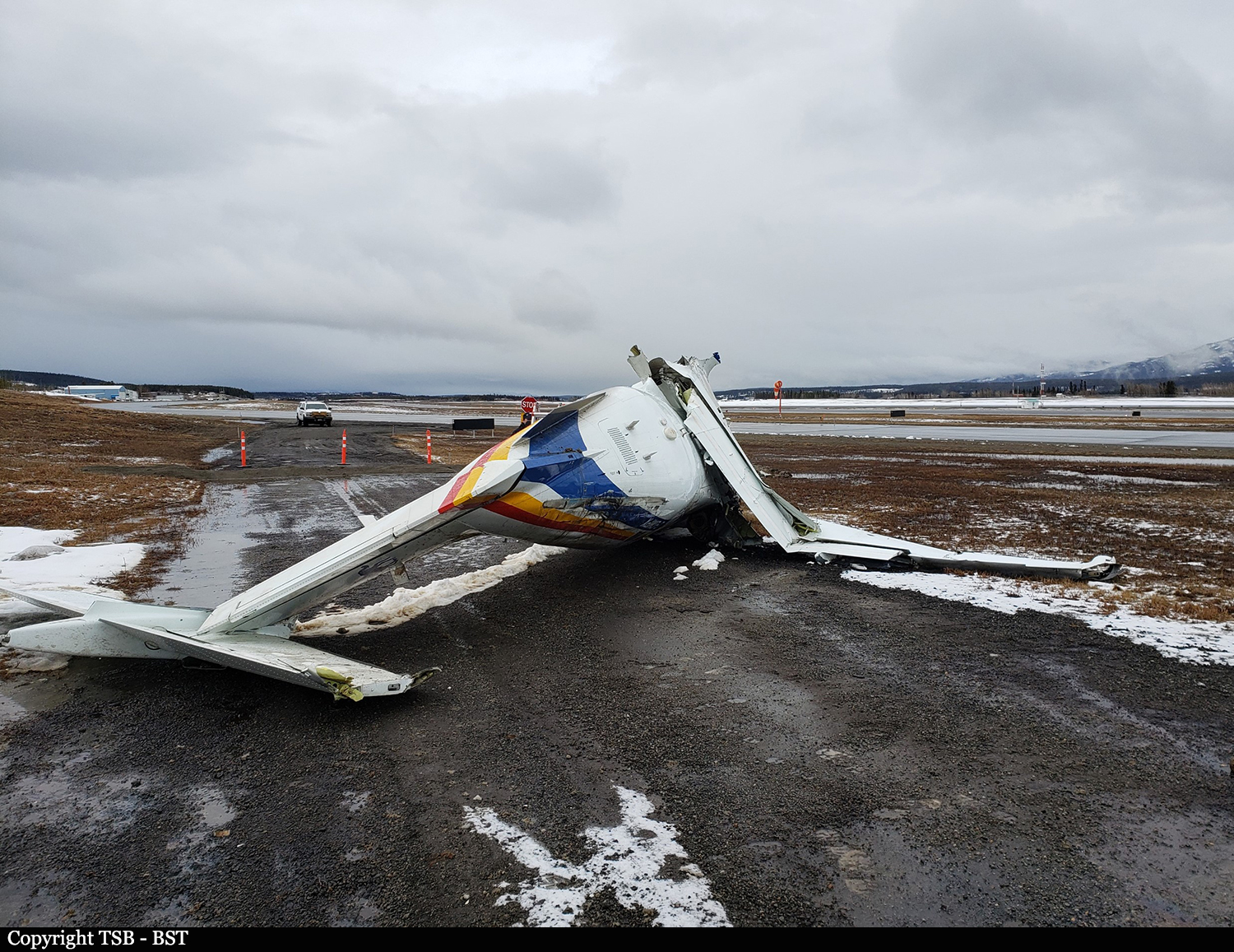
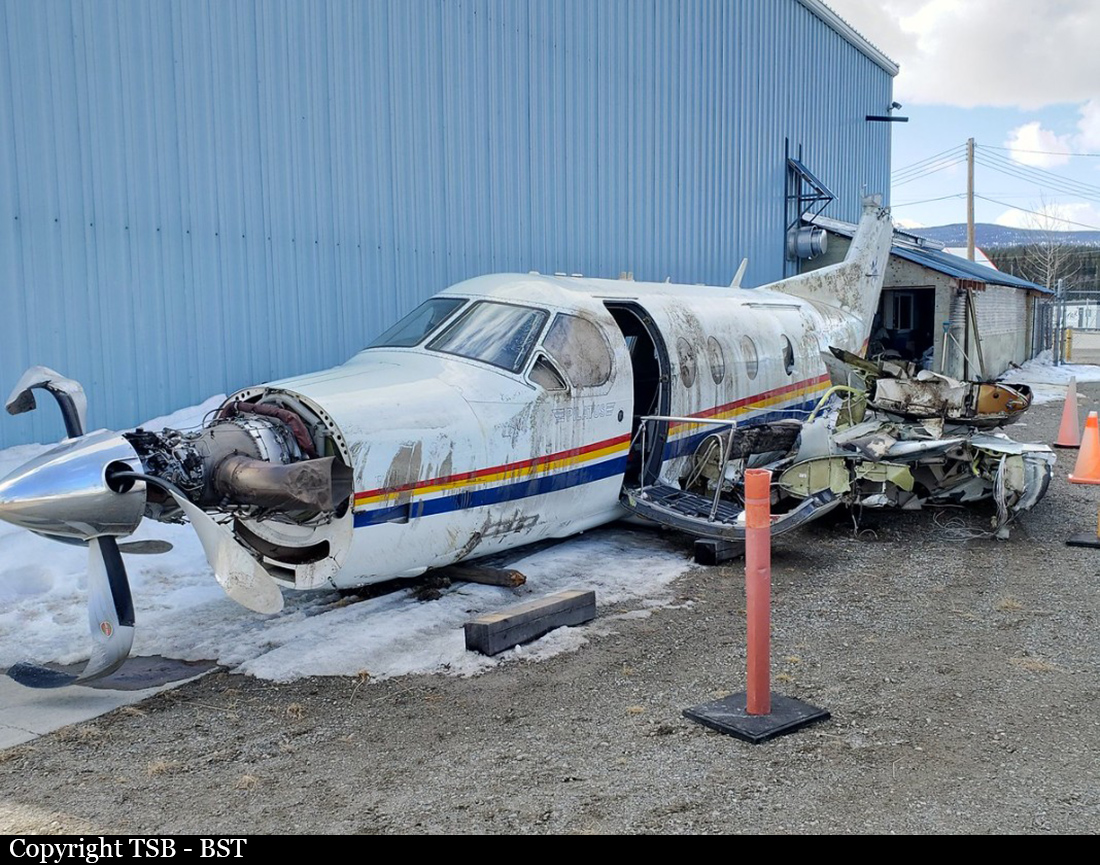
At 1134 Mountain Standard Time on 17 April 2023, the Government of Canada, Royal Canadian Mounted Police Pilatus Aircraft Ltd. PC-12/47E (registration C-GMPX, serial number 1017) departed Whitehorse/Erik Nielsen International Airport (CYXY), Yukon, on an instrument flight rules flight to Yellowknife Airport (CYZF), Northwest Territories. The pilot was the sole occupant. Shortly after the aircraft lifted off from Runway 32L, its stall warning system activated, triggering an aural “STALL” warning and the activation of the stick shaker. The pilot informed the tower controller of the intention to return for landing. At 1138, while the pilot was visually manoeuvring to land on Runway 32L, the aircraft impacted the terrain approximately 520 feet west-southwest of the centre of the displaced threshold, in a right-wing-low attitude. The aircraft subsequently hit a pile of millings with its left wing, rolled onto its left side, and slid approximately 130 feet before coming to rest on an airport service road. The pilot, who was seriously injured, exited the aircraft through the emergency exit with assistance from aircraft rescue and firefighting personnel, who arrived within minutes of the accident. An emergency locator transmitter signal was received by the search and rescue satellite system. The aircraft was destroyed; there was no post-impact fire.
Probable cause:
Findings as to causes and contributing factors. These are conditions, acts or safety deficiencies that were found to have caused or contributed to this occurrence.
1. During the final moments of the flight, the aircraft’s right turn in excess of 45° of bank, while it was operating at a low height above the ground and just above the calculated stall speed, likely resulted in the aircraft entering an aerodynamic stall, with insufficient height to recover before impacting the terrain.
2. The stainless steel belt in the left AOA transmitter experienced a fatigue crack likely attributed to the wet-etch design process. Owing to the fact that the belt is an on condition component, the fatigue cracking went undetected until the belt failed at, or just before, takeoff on the occurrence flight, causing the AOA transmitter to transmit a false stall signal when the aircraft became airborne.
3. While attempting to align the aircraft for landing, the pilot experienced attentional narrowing due to an intense stress reaction in response to a surprise event. As a result, the pilot's attention was focused outside the aircraft, and the pilot unknowingly placed the aircraft in a flight regime that likely resulted in an aerodynamic stall at a very low height above ground.
4. The Royal Canadian Mounted Police's training for stall warning system malfunctions on the PC-12 focused solely on an inadvertent pusher activation. As a result, the occurrence pilot did not fully understand the symptoms of a false stall warning or the options available to mitigate the risks associated with this emergency.
5. The PC-12 pilot operating handbook provided limited guidance with regard to the potential use of the AURAL WARN INHIBIT switch during emergency situations. As a result, the occurrence pilot was unaware that this switch could be used during highworkload situations to quickly eliminate the false aural stall warning that was a distraction for the duration of the flight.
1. During the final moments of the flight, the aircraft’s right turn in excess of 45° of bank, while it was operating at a low height above the ground and just above the calculated stall speed, likely resulted in the aircraft entering an aerodynamic stall, with insufficient height to recover before impacting the terrain.
2. The stainless steel belt in the left AOA transmitter experienced a fatigue crack likely attributed to the wet-etch design process. Owing to the fact that the belt is an on condition component, the fatigue cracking went undetected until the belt failed at, or just before, takeoff on the occurrence flight, causing the AOA transmitter to transmit a false stall signal when the aircraft became airborne.
3. While attempting to align the aircraft for landing, the pilot experienced attentional narrowing due to an intense stress reaction in response to a surprise event. As a result, the pilot's attention was focused outside the aircraft, and the pilot unknowingly placed the aircraft in a flight regime that likely resulted in an aerodynamic stall at a very low height above ground.
4. The Royal Canadian Mounted Police's training for stall warning system malfunctions on the PC-12 focused solely on an inadvertent pusher activation. As a result, the occurrence pilot did not fully understand the symptoms of a false stall warning or the options available to mitigate the risks associated with this emergency.
5. The PC-12 pilot operating handbook provided limited guidance with regard to the potential use of the AURAL WARN INHIBIT switch during emergency situations. As a result, the occurrence pilot was unaware that this switch could be used during highworkload situations to quickly eliminate the false aural stall warning that was a distraction for the duration of the flight.
Final Report:
C-GMPX.pdf2.37 MB

