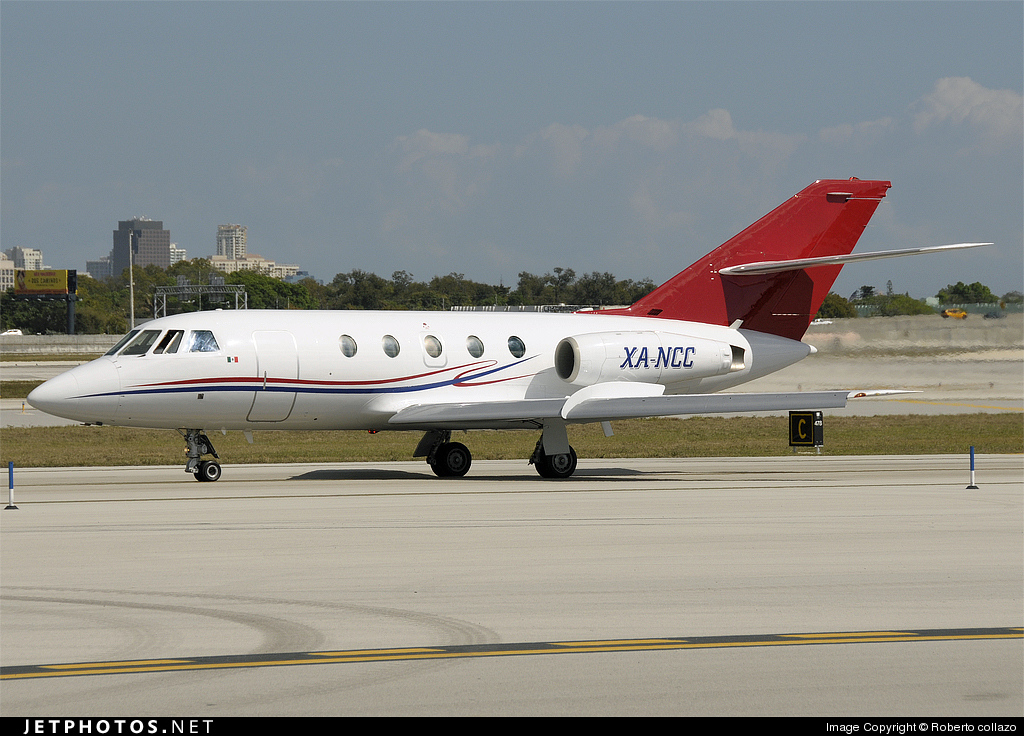
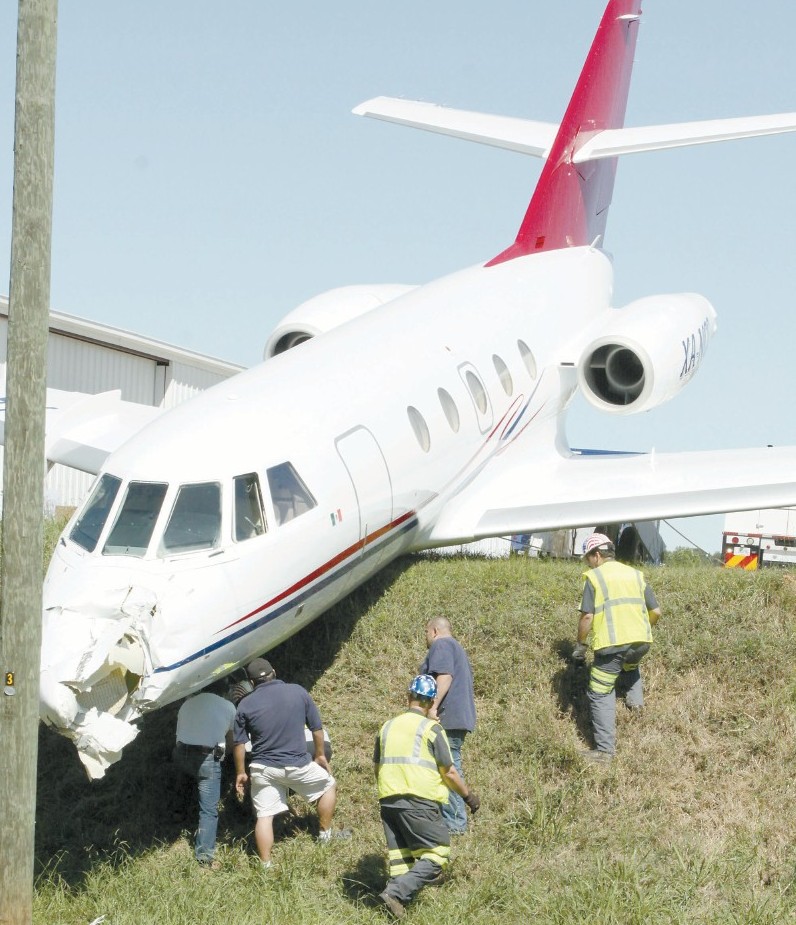
Ground accident of a Dassault Falcon 20F in Newnan

Date & Time: Oct 3, 2011
Type of aircraft:
Registration:
XA-NCC
Flight Phase:
Flight Type:
Survivors:
Yes
MSN:
264
YOM:
1972
Crew on board:
1
Crew fatalities:
Pax on board:
0
Pax fatalities:
Other fatalities:
Total fatalities:
0
Circumstances:
A technician was in charge to ferry the airplane to a hangar for a maintenance control. While taxiing, the Falcon went out of control, rolled down an embankment and collided with a utility pole. The nose was severely damaged and the aircraft was damaged beyond repair. According to the technician, who escaped uninjured, the brakes failed while taxiing.
Probable cause:
No investigation was conducted by the NTSB.

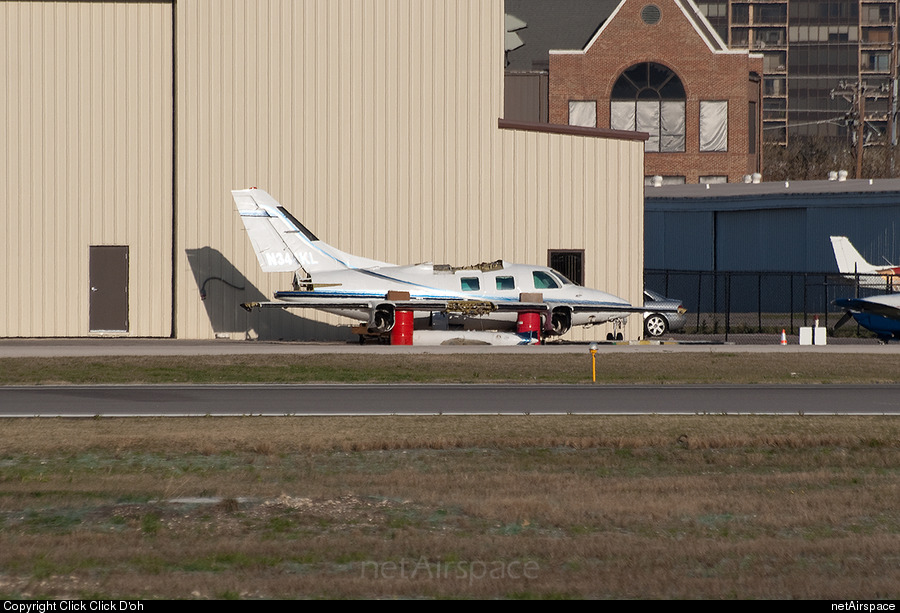
Crash of a Mitsubishi MU-2B-25 Marquise in Cobb County

Date & Time: Sep 28, 2011 at 1715 LT
Type of aircraft:
Registration:
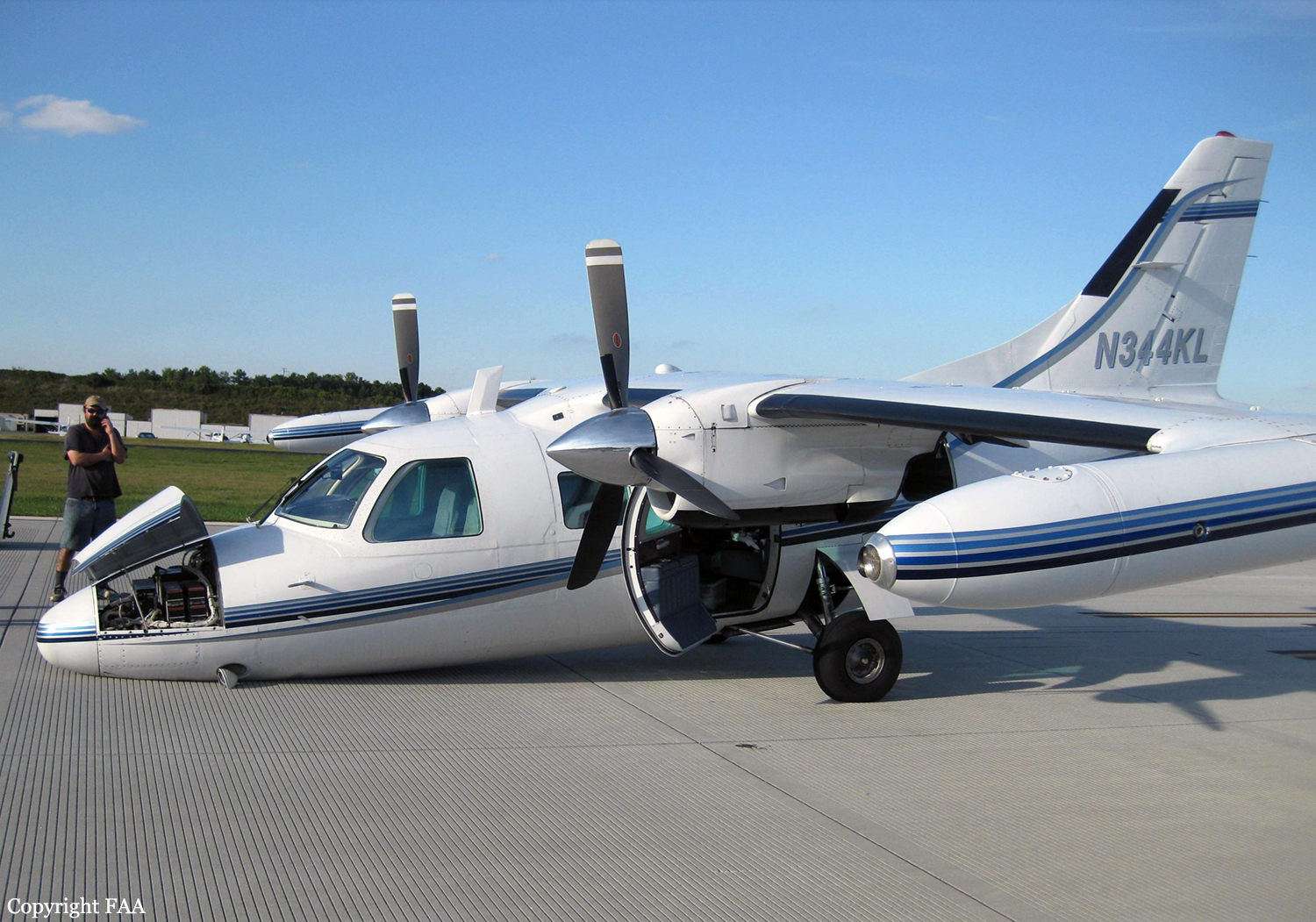
N344KL
Survivors:
Yes
Schedule:
Huntsville - Cobb County
MSN:
257
YOM:
1973
Crew on board:
1
Crew fatalities:
Pax on board:
2
Pax fatalities:
Other fatalities:
Total fatalities:
0
Captain / Total flying hours:
11100
Captain / Total hours on type:
1500.00
Aircraft flight hours:
6196
Circumstances:
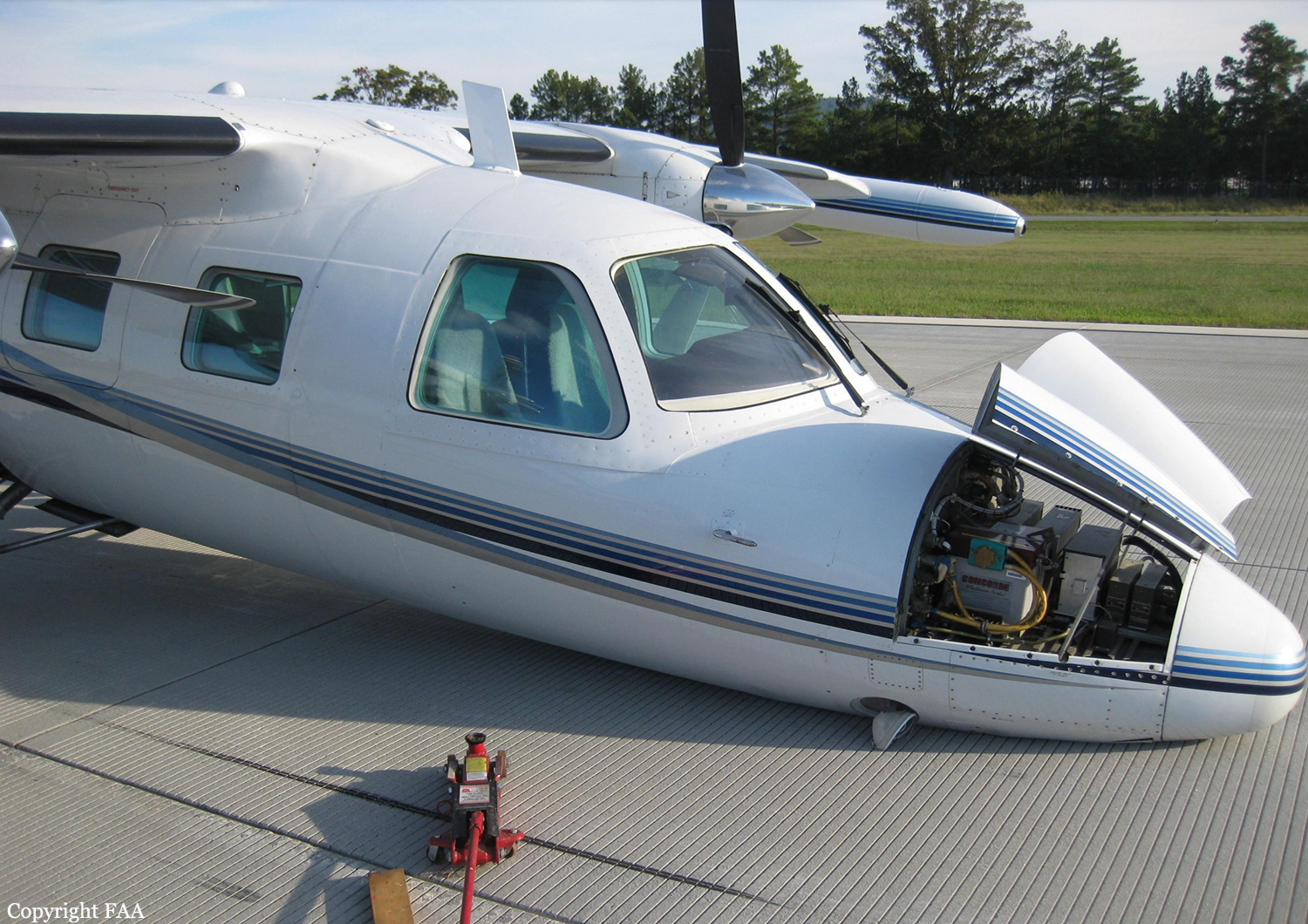
The pilot stated that after landing, the nose landing gear collapsed. Examination of the airplane nose strut down-lock installation revealed that the strut on the right side of the nose landing gear trunnion was installed incorrectly; the strut installed on the right was a left-sided strut. Incorrect installation of the strut could result in the bearing pulling loose from the pin on the right side of the trunnion, which could allow the nose landing gear to collapse. A review of maintenance records revealed recent maintenance activity on the nose gear involving the strut. The design of the strut is common for the left and right. Both struts have the same base part number, and a distinguishing numerical suffix is added for left side and right side strut determination. If correctly installed, the numbers should be oriented facing outboard. The original MU-2 Maintenance Manual did not address the installation or correct orientation of the strut. The manufacturer issued MU-2 Service Bulletin (SB) No. 200B, dated June 24, 1994, to address the orientation and adjustment. Service Bulletin 200B states on page 8 of 10 that the “Part Number may be visible in this (the) area from the out board sides (Inked P/N may be faded out).”
Probable cause:
The improper installation of the nose landing gear strut and subsequent collapse of the nose landing gear during landing.
Final Report:

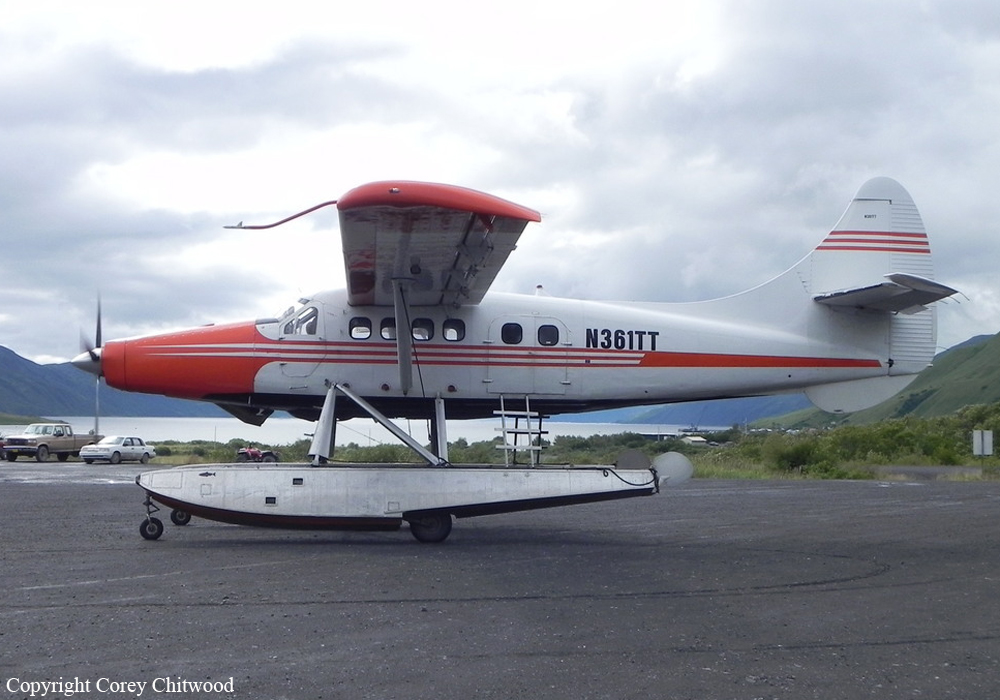
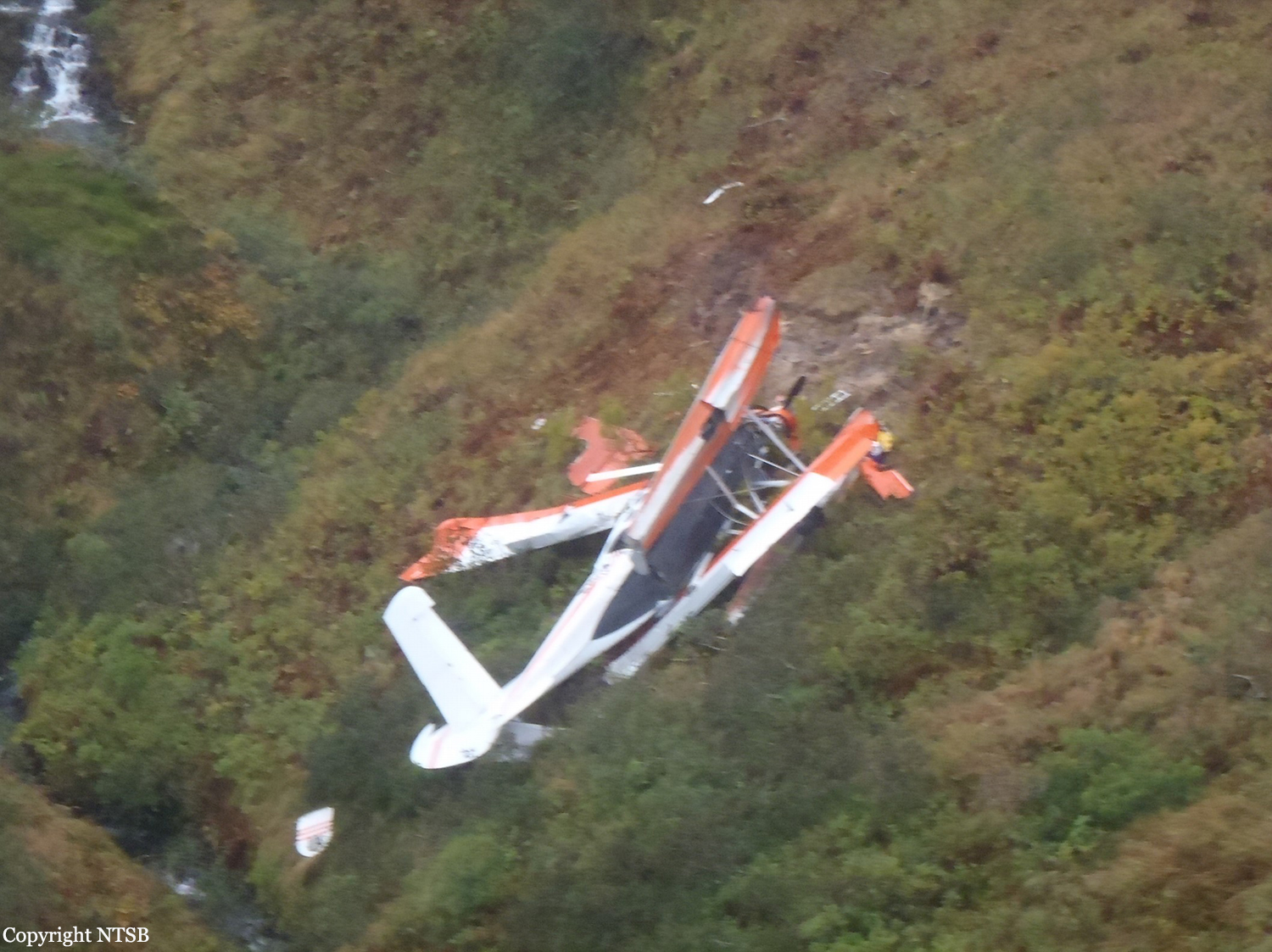
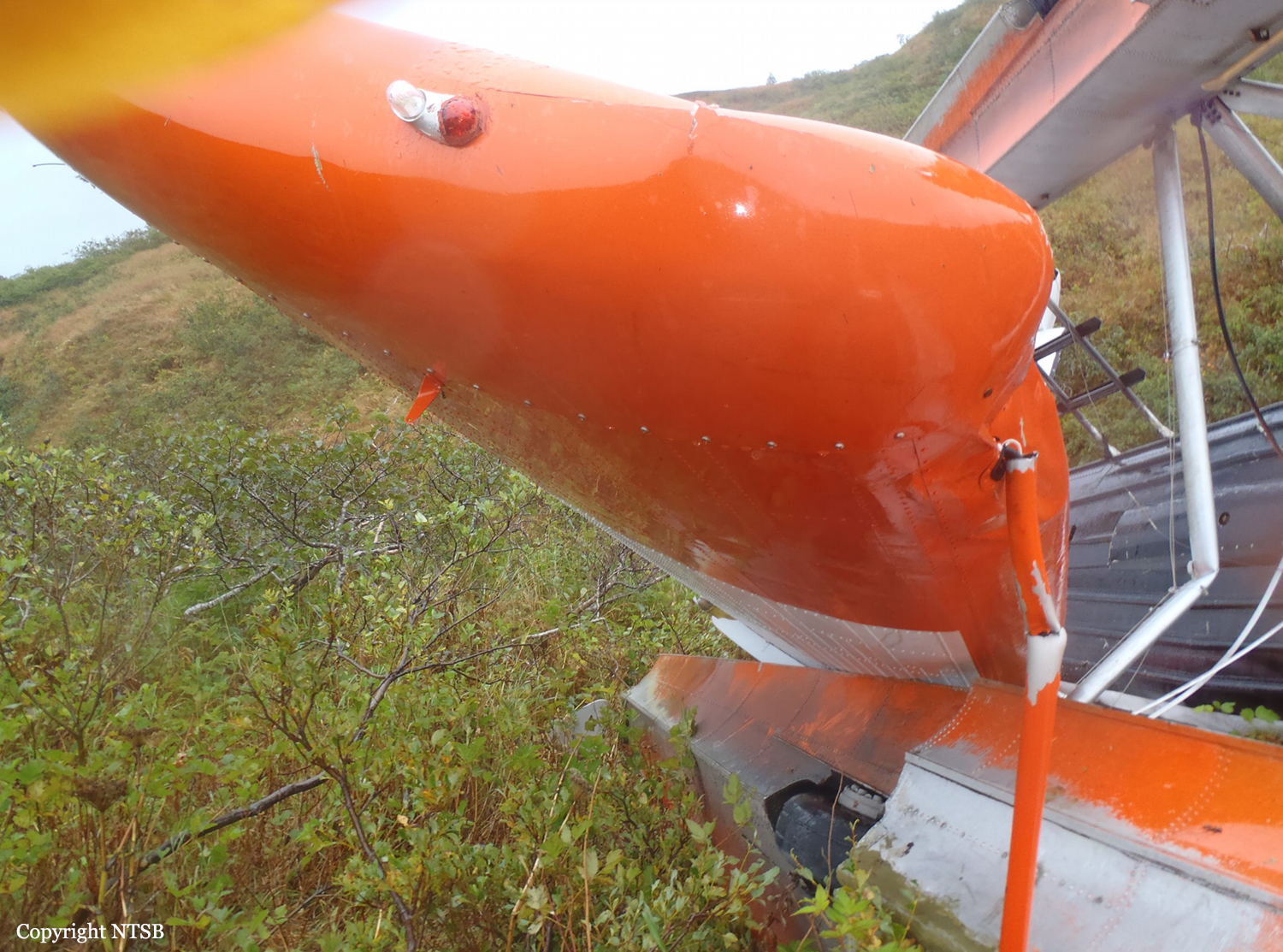
Crash of a De Havilland DHC-3T Turbo Otter near Kodiak: 1 killed

Date & Time: Sep 23, 2011 at 1930 LT
Type of aircraft:
Operator:
Registration:
N361TT
Flight Phase:
Survivors:
Yes
Site:
Schedule:
Old Harbor - Kodiak
MSN:
361
YOM:
1960
Location:
Crew on board:
1
Crew fatalities:
Pax on board:
2
Pax fatalities:
Other fatalities:
Total fatalities:
1
Captain / Total flying hours:
3000
Captain / Total hours on type:
280.00
Aircraft flight hours:
14634
Circumstances:
According to a passenger who was seated in the front, right seat, as the flight progressed toward the destination, the pilot decided to make an unscheduled landing at a lake that was surrounded by rising terrain. The passenger said that after making an easterly approach to the lake, before touching down, the pilot initiated a go-around. The passenger said they flew low over the surface of the lake toward a “V” shaped notch formed by a creek with hills on either side at the east end of the lake. He said that while flying through the notch, he thought the left wing of the airplane had hit the hillside. He said the pilot reacted by pulling back hard on the control yoke and rolling the airplane to the right. The airplane entered a steep climb, it began to shake, and stall warning horn sounded. The airplane then rolled left into a steep descent and impacted the ground in a nose-down attitude. The airplane’s left wing had impacted a tree on the creek bank prior to the crash. A postaccident examination of the airframe and engine revealed no evidence of mechanical malfunctions or failures that would have precluded normal operation. Toxicological tests detected the pilot’s recent use of over-the-counter medications used for relief of cold and flu symptoms. Two of these medications are sedating. The use of these sedating medications on the day of the accident or the underlying illness may have affected the pilot’s performance. Given the lack of mechanical deficiencies with the airplane, and the passenger's account of the accident, it is likely the pilot failed to maintain adequate clearance with a tree while performing a low altitude maneuver following a go-around.
Probable cause:
The pilot’s failure to maintain clearance from a tree during a low altitude maneuver and his failure to maintain control of the airplane. Contributing to the accident was the pilot’s use of over-the-counter sedating medications.
Final Report:

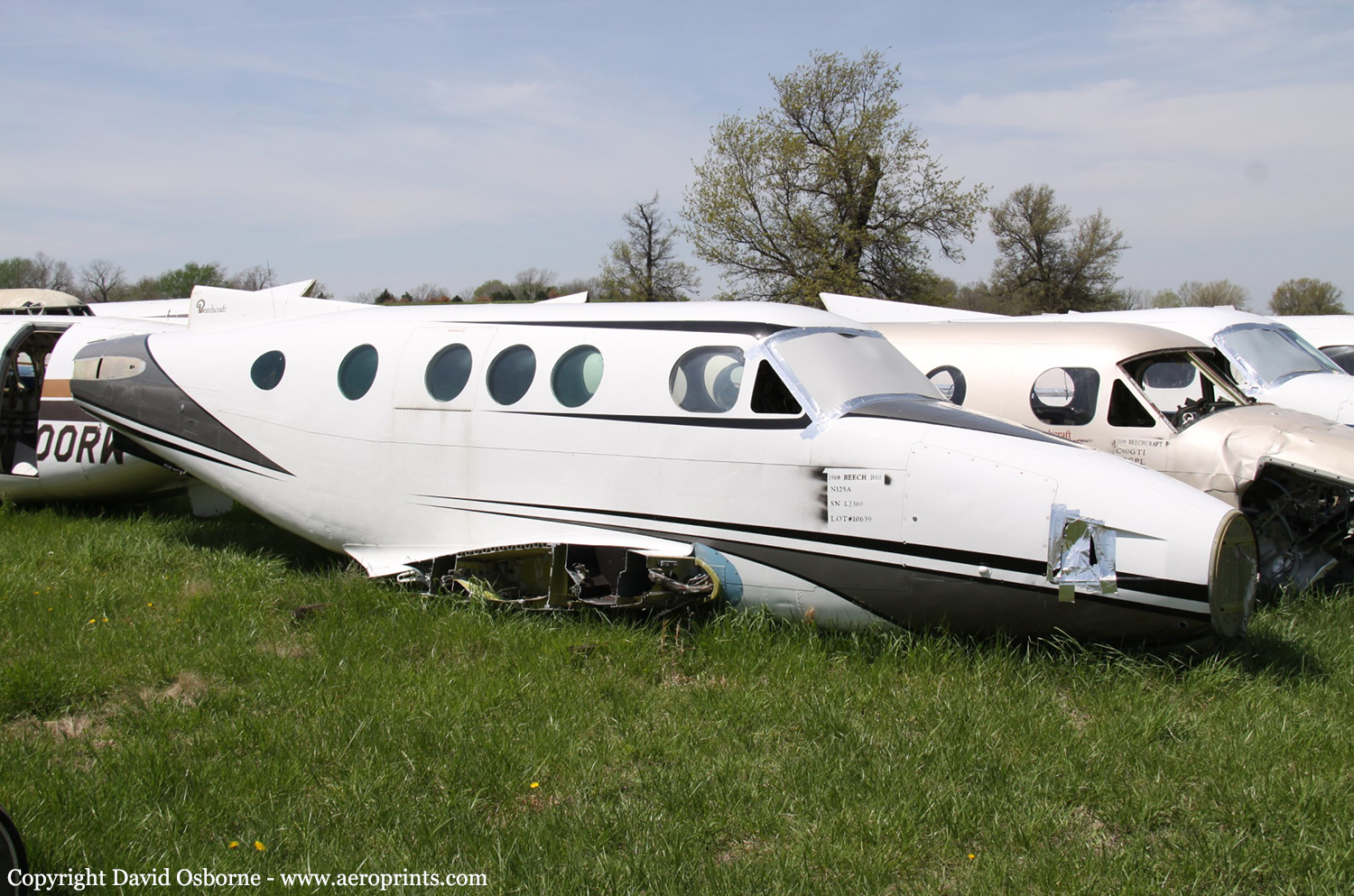
Crash of a Beechcraft B90 King Air in Hillsboro

Date & Time: Sep 17, 2011 at 1145 LT
Type of aircraft:
Registration:
N125A
Survivors:
Yes
Schedule:
Hillsboro - Hillsboro
MSN:
LJ-360
YOM:
1968
Location:
Crew on board:
1
Crew fatalities:
Pax on board:
0
Pax fatalities:
Other fatalities:
Total fatalities:
0
Captain / Total flying hours:
1900
Captain / Total hours on type:
200.00
Aircraft flight hours:
9254
Circumstances:
While landing, the airplane touched down short of the runway, the left main landing gear impacted the edge of the runway and collapsed, and the airplane departed the edge of the runway into a culvert. The airplane’s left wing sustained substantial damage.
Probable cause:
The pilot's failure to obtain a proper touchdown point, which resulted in a runway undershoot.
Final Report:

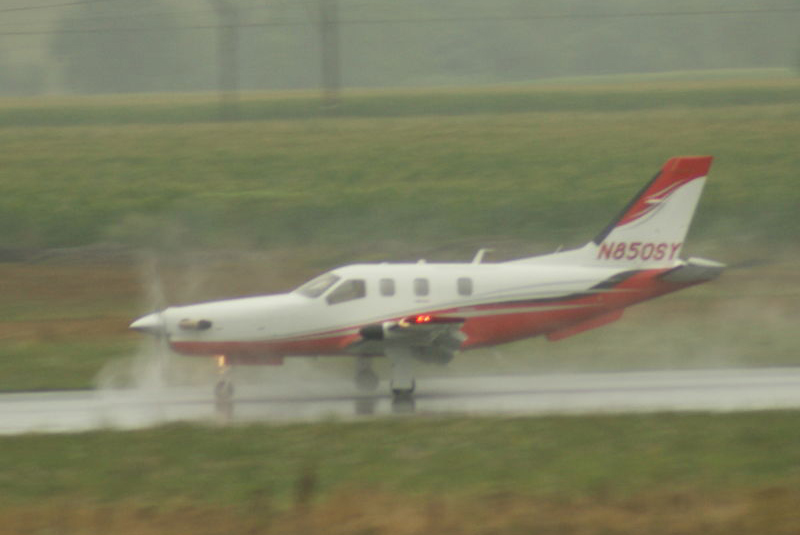
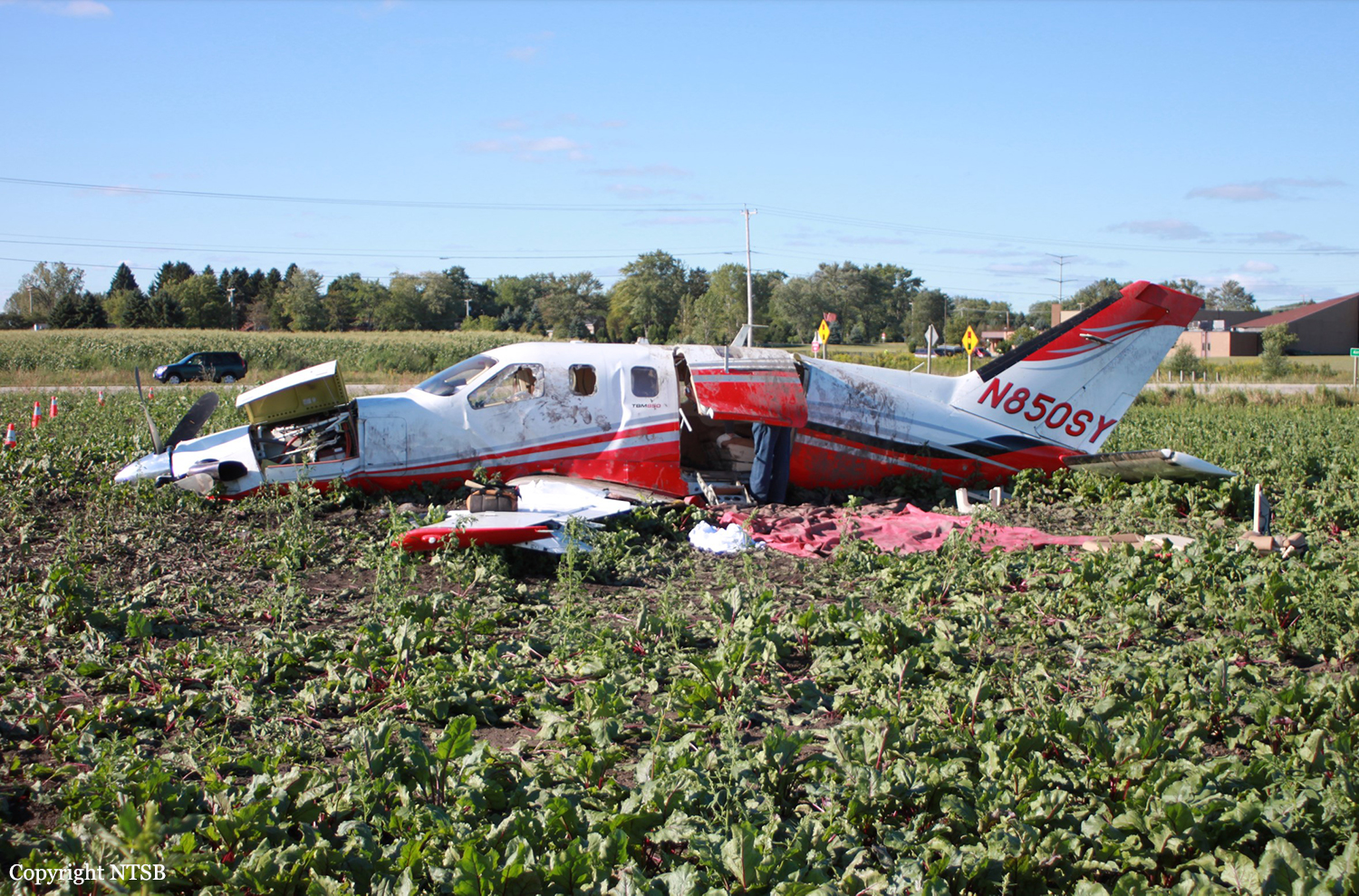
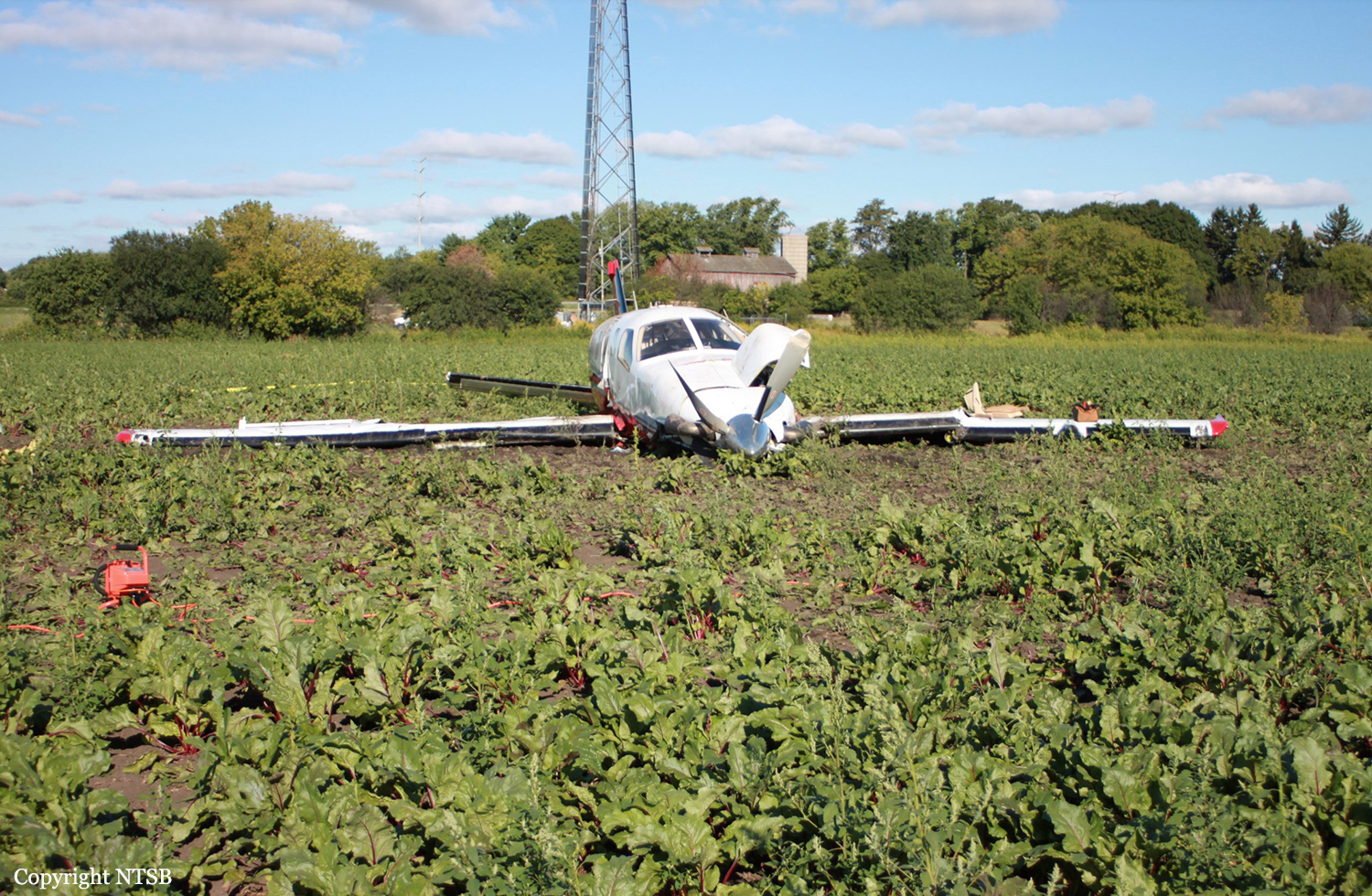
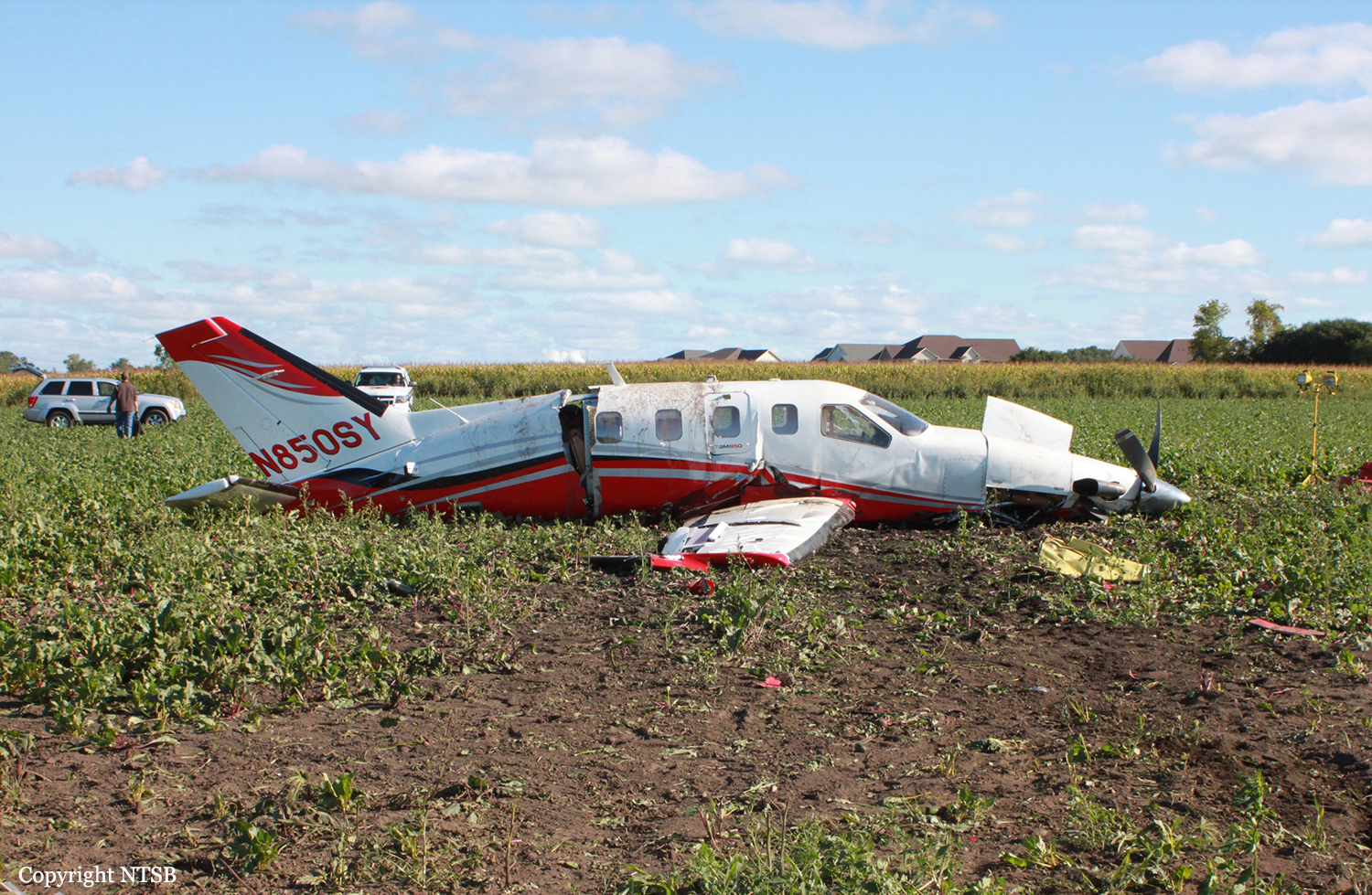
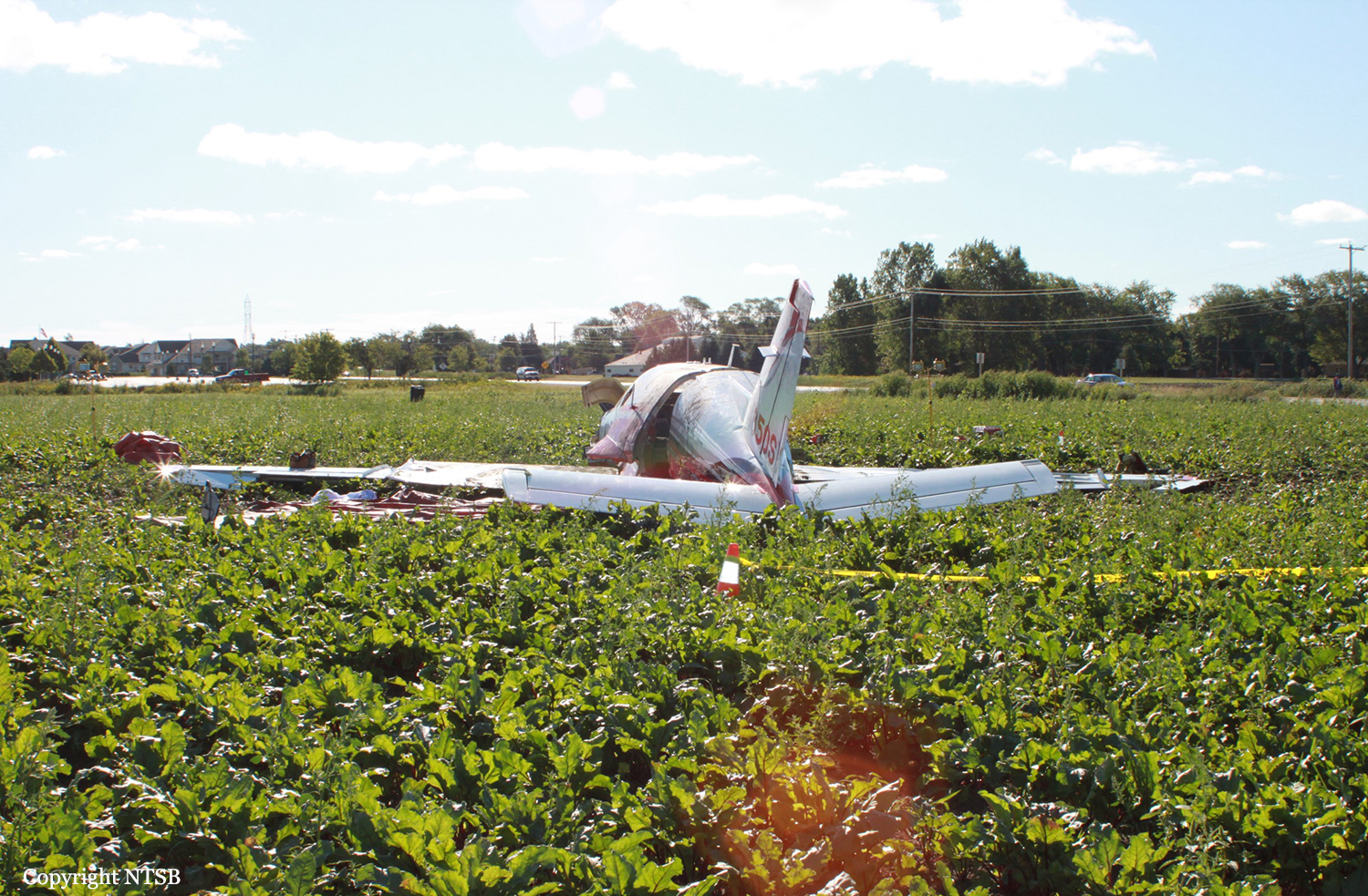
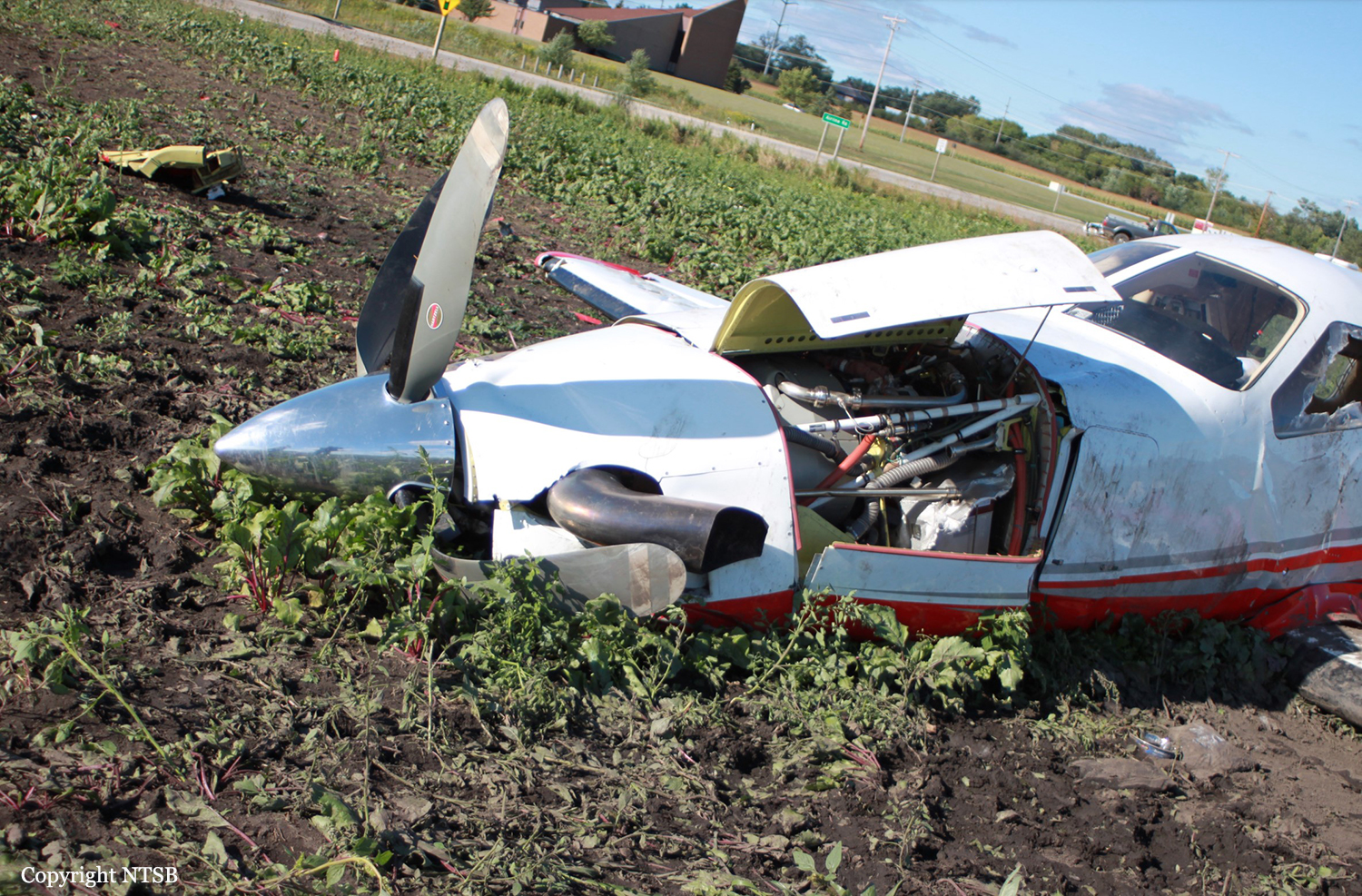
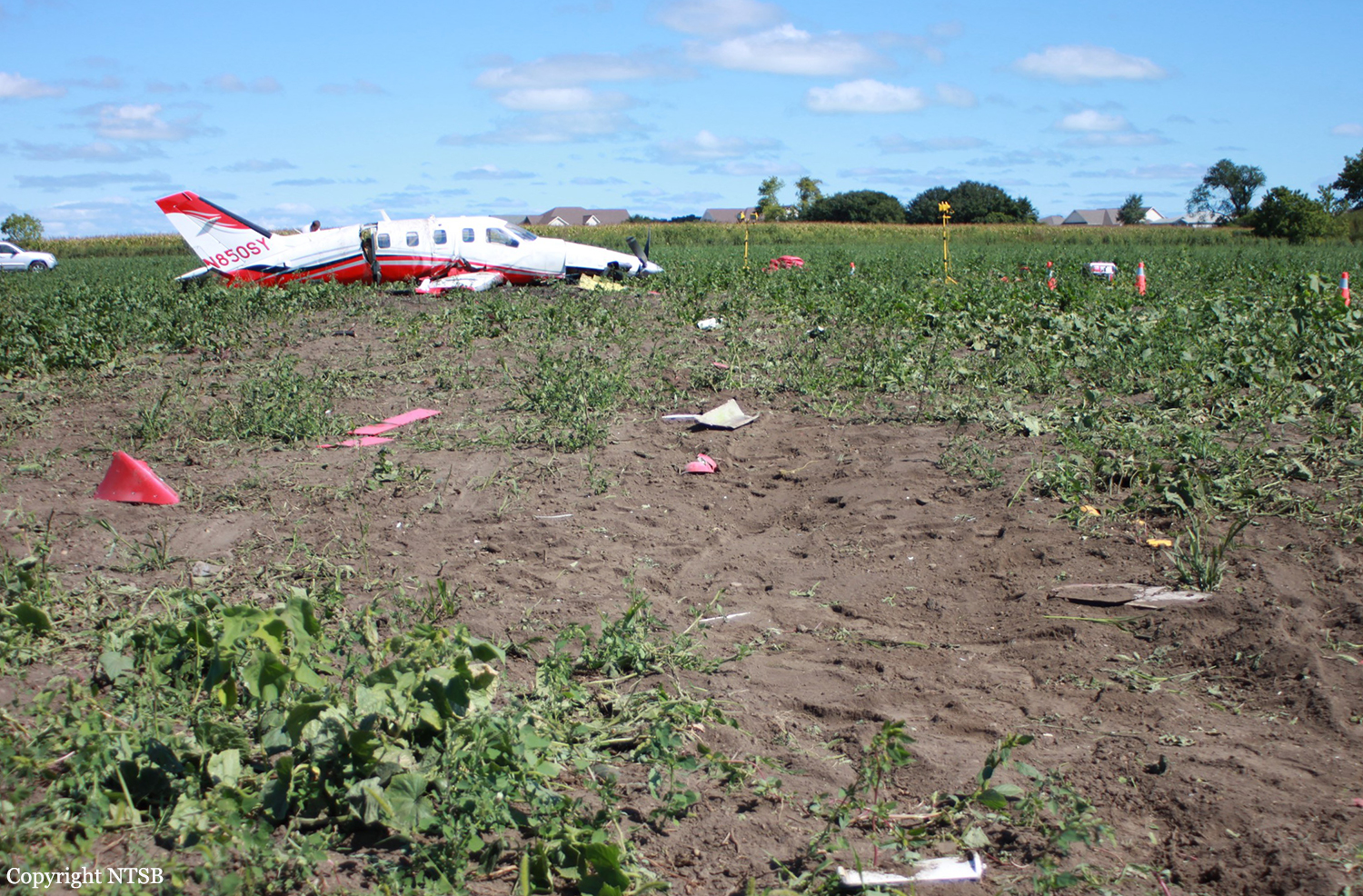
Crash of a Socata TBM-850 in Racine: 1 killed

Date & Time: Sep 5, 2011 at 1833 LT
Type of aircraft:
Operator:
Registration:
N850SY
Flight Type:
Survivors:
No
Schedule:
Mosinee – Waukegan
MSN:
546
YOM:
2010
Crew on board:
1
Crew fatalities:
Pax on board:
0
Pax fatalities:
Other fatalities:
Total fatalities:
1
Captain / Total flying hours:
2075
Captain / Total hours on type:
165.00
Aircraft flight hours:
217
Circumstances:
During cruise flight, the pilot reported to an air traffic controller that the airplane was having engine fuel pressure problems. The controller advised the pilot of available airports for landing if necessary and asked the pilot's intentions. The pilot chose to continue the flight. GPS data recorded by an onboard avionics system indicated that the engine had momentarily lost total power about 20 seconds before the pilot reported a problem to the controller. About 7 minutes later, when the airplane was about 7,000 feet above ground level, the engine lost total power again, and power was not restored for the remainder of the flight. The pilot attempted to glide to an airport about 10 miles away, but the airplane crashed in a field about 3 miles from the airport. GPS data showed a loss of fuel pressure before each of the engine power losses and prolonged lateral g forces consistent with a side-slip flight condition. The rudder trim tab was found displaced to the left about 3/8 inch. Flight testing and recorded flight data revealed that the rudder trim tab displacement was consistent with that required to achieve no side slip during a typical climb segment. The GPS and flight data indicated that the lateral g-forces increased as the airplane leveled off and accelerated, indicating that the automatic rudder trim feature of the yaw damper system was either not engaged or not operating. The recorded data indicated autopilot system engagement, which should have automatically engaged the yaw damper system. However, the data indicated the yaw damper was not engaged; the yaw damper could have subsequently been turned off by several means not recorded by the avionics system. Testing of the manual electric rudder (yaw) trim system revealed no anomalies, indicating that the pilot would have still been able to trim the airplane using the manual system. It is likely that the pilot's failure to properly trim the airplane's rudder led to a prolonged uncoordinated flight condition. Although the fuel tank system is designed to prevent unporting of the fuel lines during momentary periods of uncoordinated flight, it is not intended to do so for extended periods of uncoordinated flight. Therefore, the fuel tank feed line likely unported during the prolonged uncoordinated flight, which resulted in the subsequent loss of fuel pressure and engine power. The propeller and propeller controls were not in the feathered position, thus the windmilling propeller would have increased the airplane's descent rate during the glide portion of the flight. The glide airspeed used by the pilot was 20 knots below the airspeed recommended by the Pilot's Operating Handbook (POH), and the reduced airspeed also would have increased the airplane's descent rate during the glide. The flight and GPS data indicated that the airplane had a gliding range of about 16 nautical miles from the altitude where the final loss of engine power occurred; however, the glide performance was dependent on several factors, including feathering the propeller and maintaining the proper airspeed, neither of which the pilot did. Although the POH did not contain maximum range glide performance data with a windmilling propeller, based on the available information, it is likely that the airplane could have glided to the alternate airport about 10 miles away if the pilot had followed the proper procedures.
Probable cause:
The pilot's failure to properly trim the airplane's rudder during cruise flight, which resulted in a prolonged uncoordinated flight condition, unporting of the fuel tank feed line, and subsequent fuel starvation and engine power loss. Contributing to the accident was the pilot's failure to feather the engine's propeller and maintain a proper glide airspeed following the loss of engine power.
Final Report:

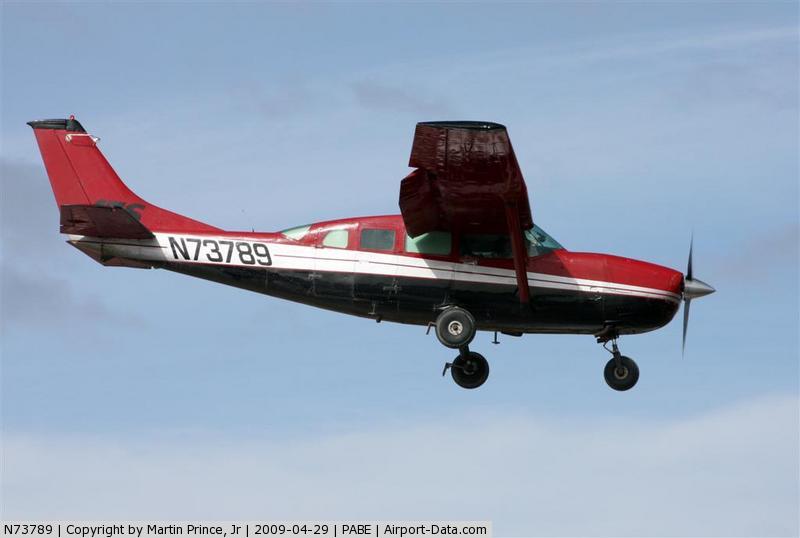
Crash of a Cessna T207A Turbo Stationair 8 in Nightmute

Date & Time: Sep 2, 2011 at 1335 LT
Operator:
Registration:
N73789
Flight Phase:
Flight Type:
Survivors:
Yes
Schedule:
Tununak - Bethel
MSN:
207-0629
YOM:
1981
Crew on board:
1
Crew fatalities:
Pax on board:
0
Pax fatalities:
Other fatalities:
Total fatalities:
0
Captain / Total flying hours:
1670
Captain / Total hours on type:
216.00
Aircraft flight hours:
19562
Circumstances:
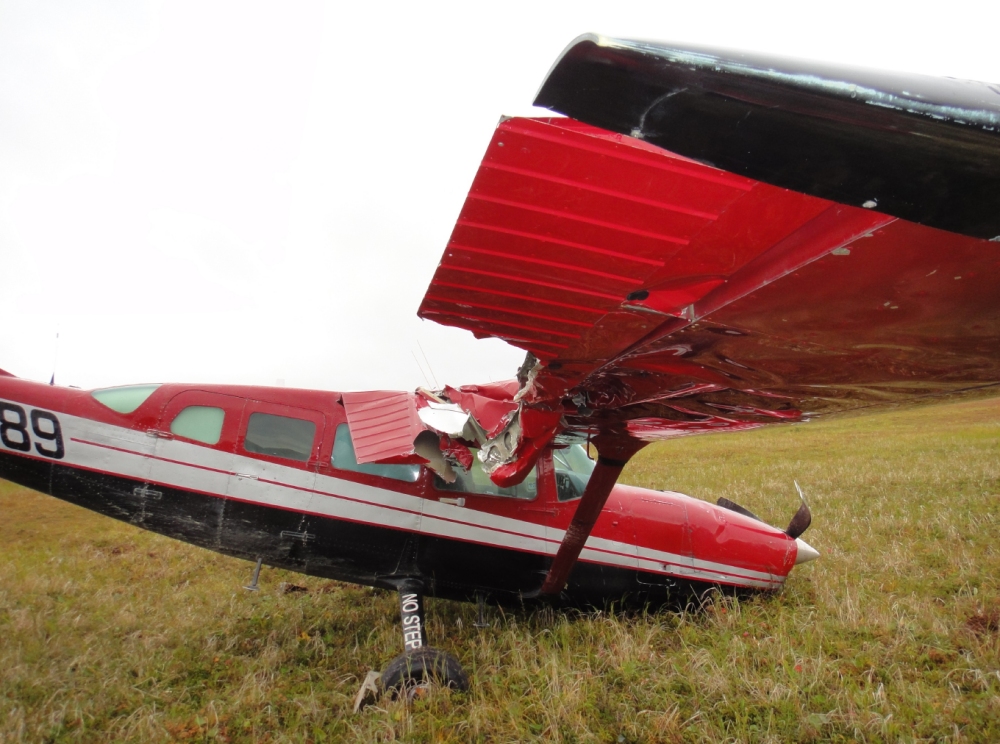
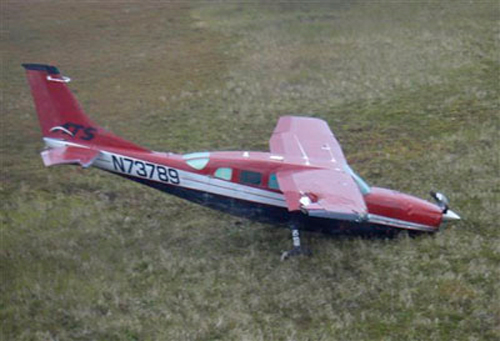
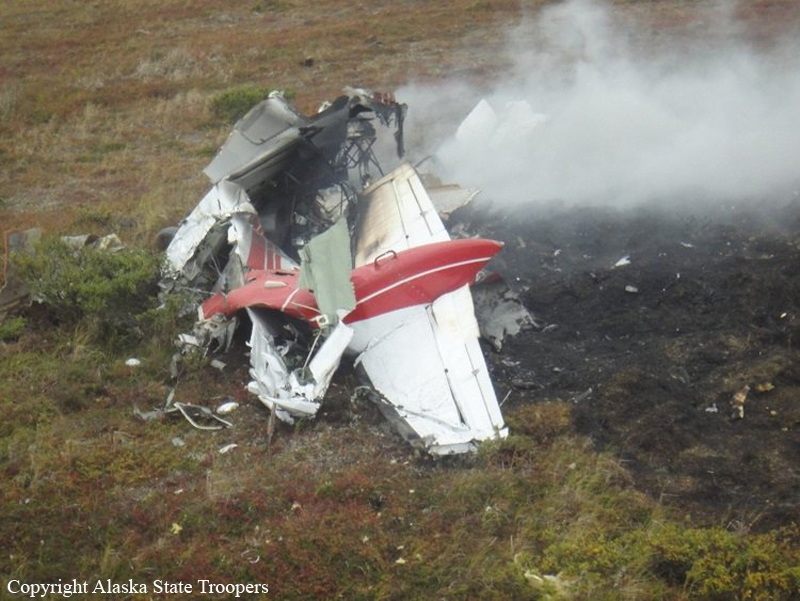
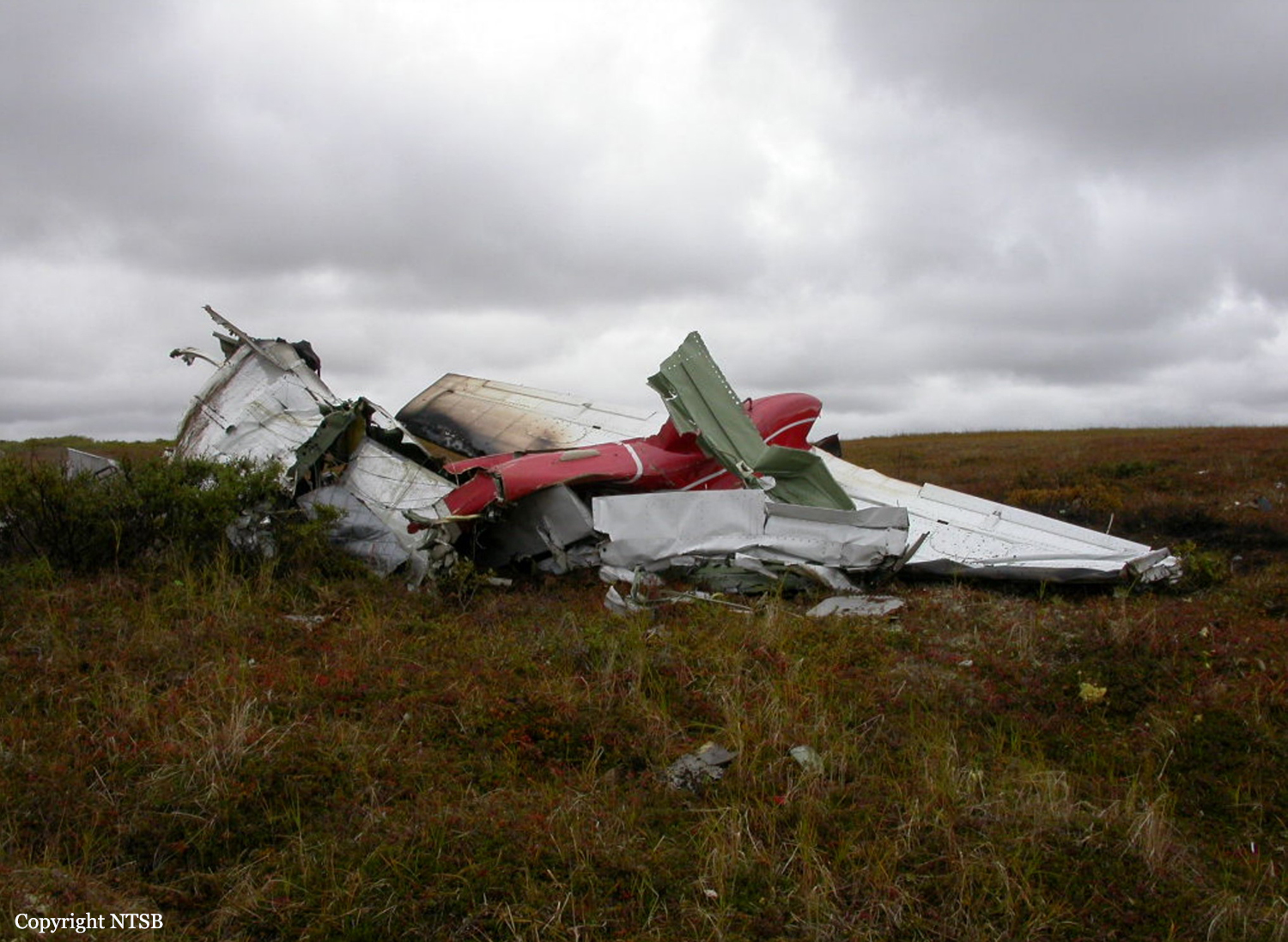
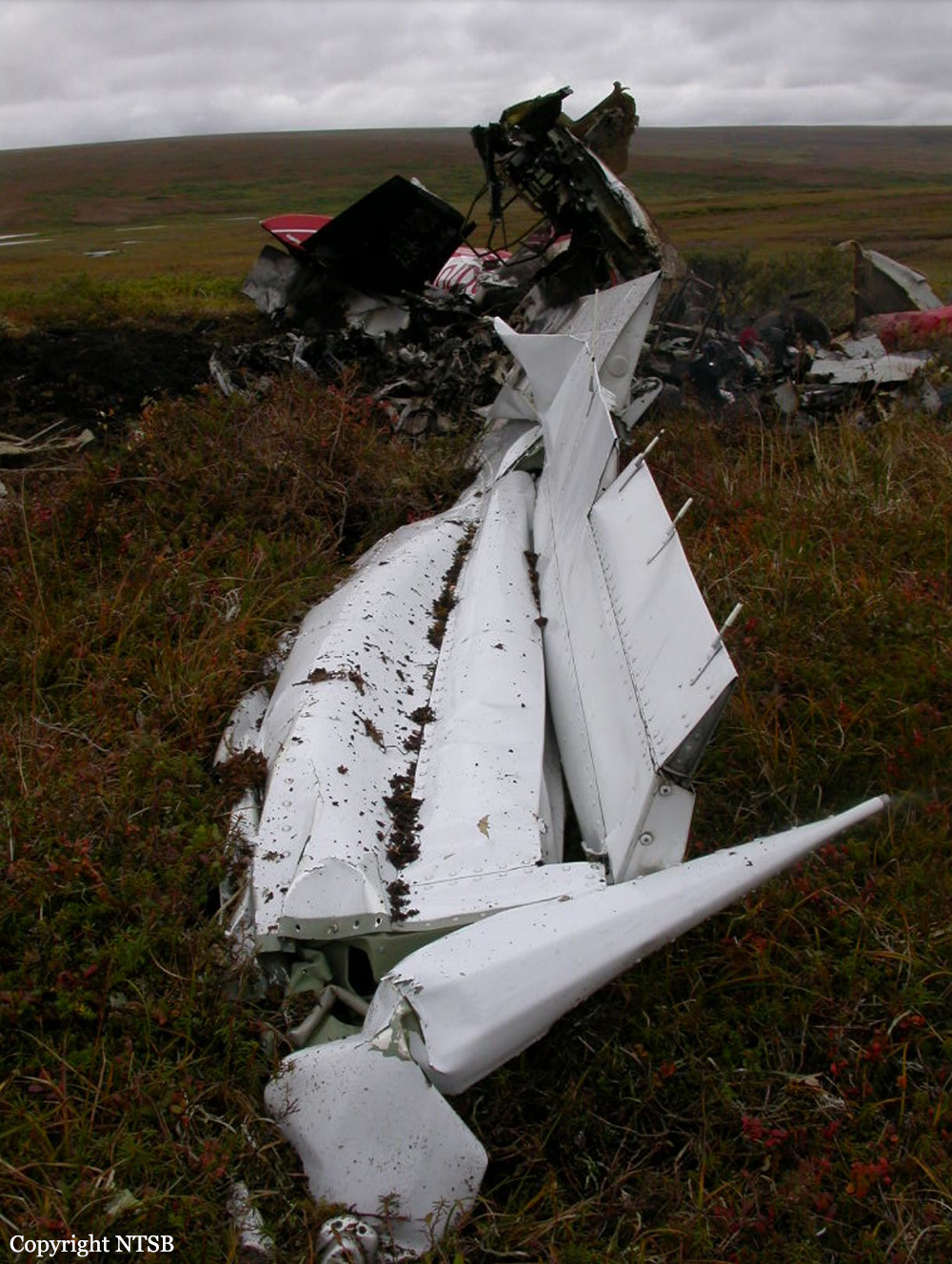
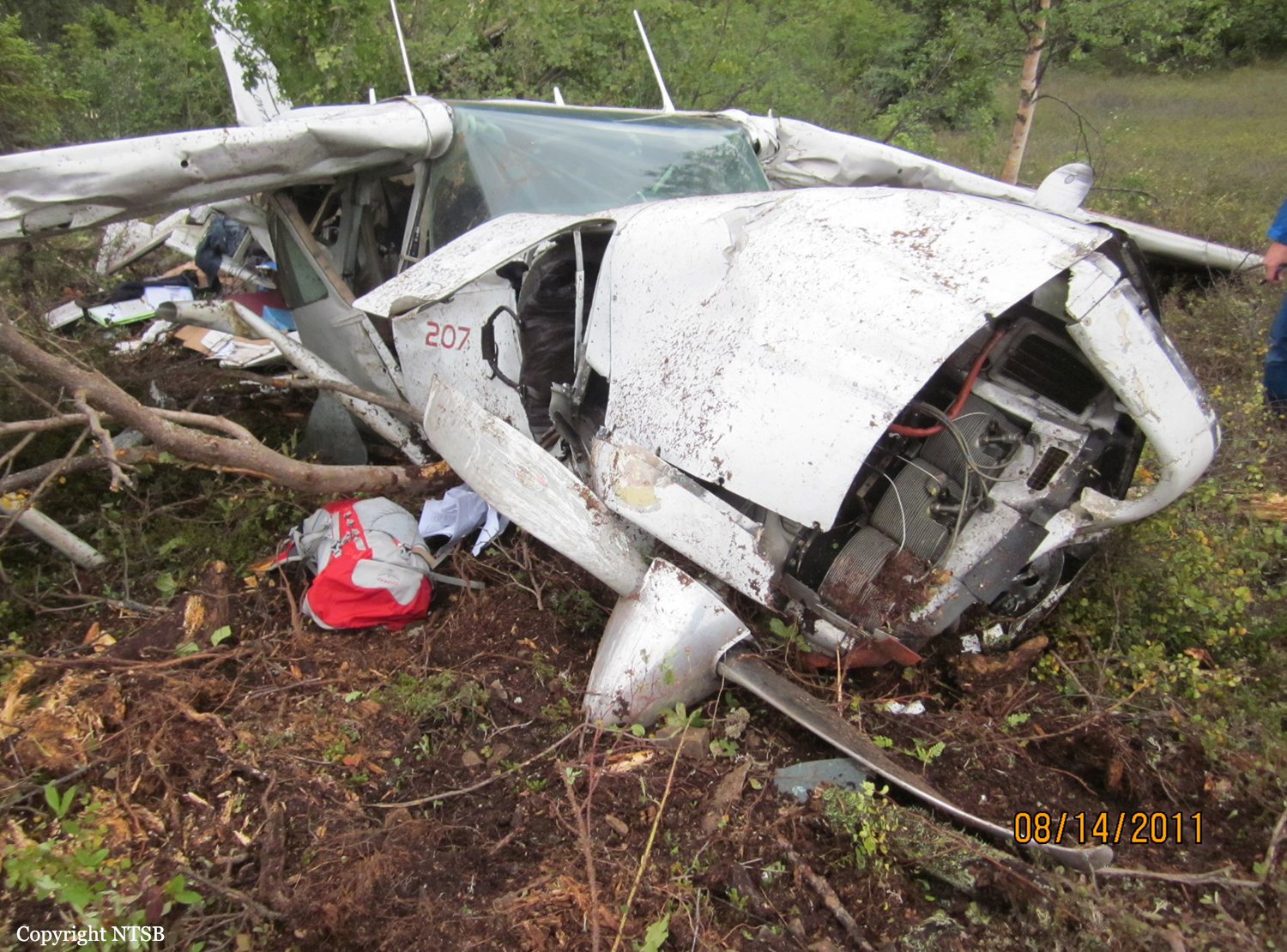
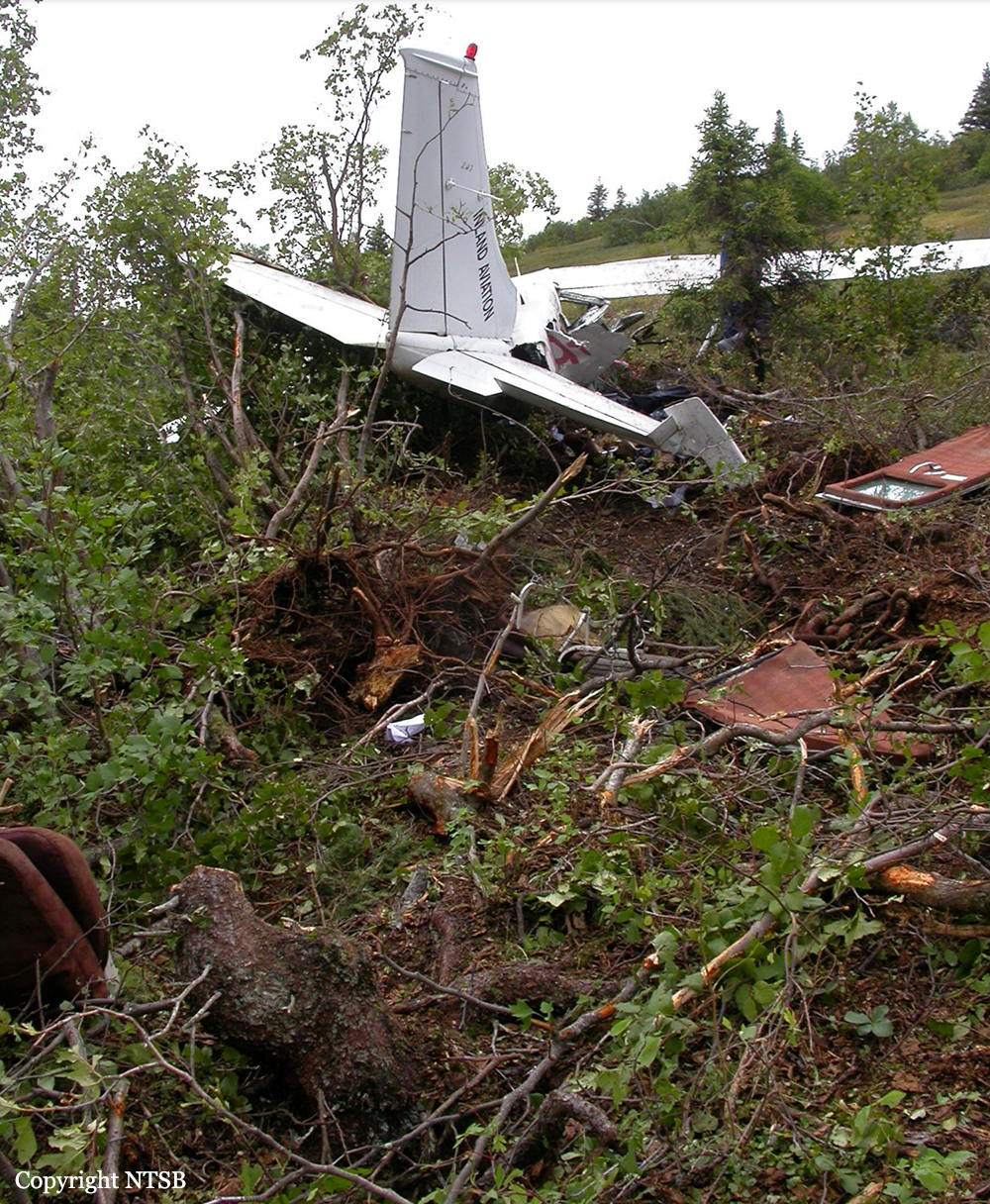
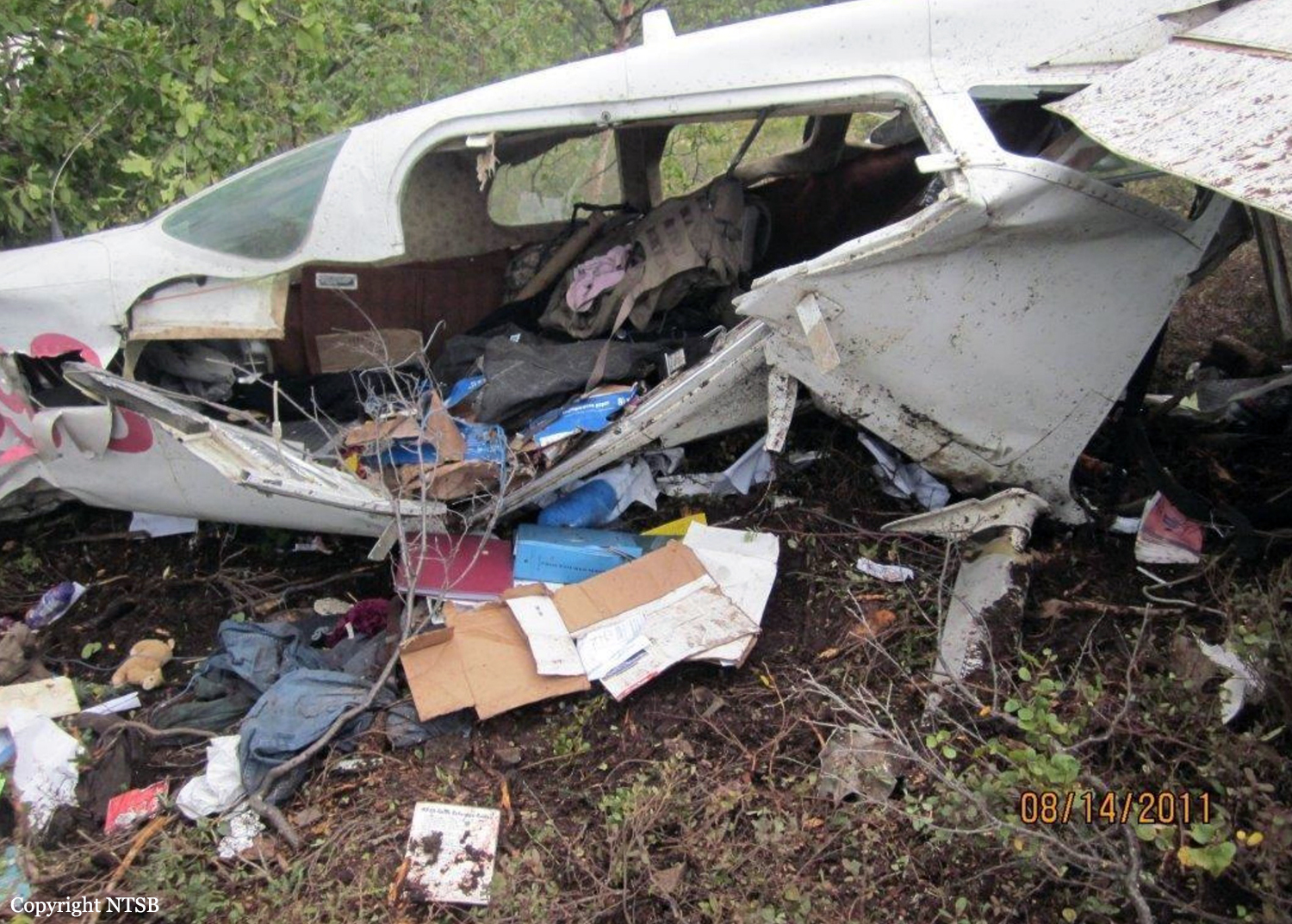
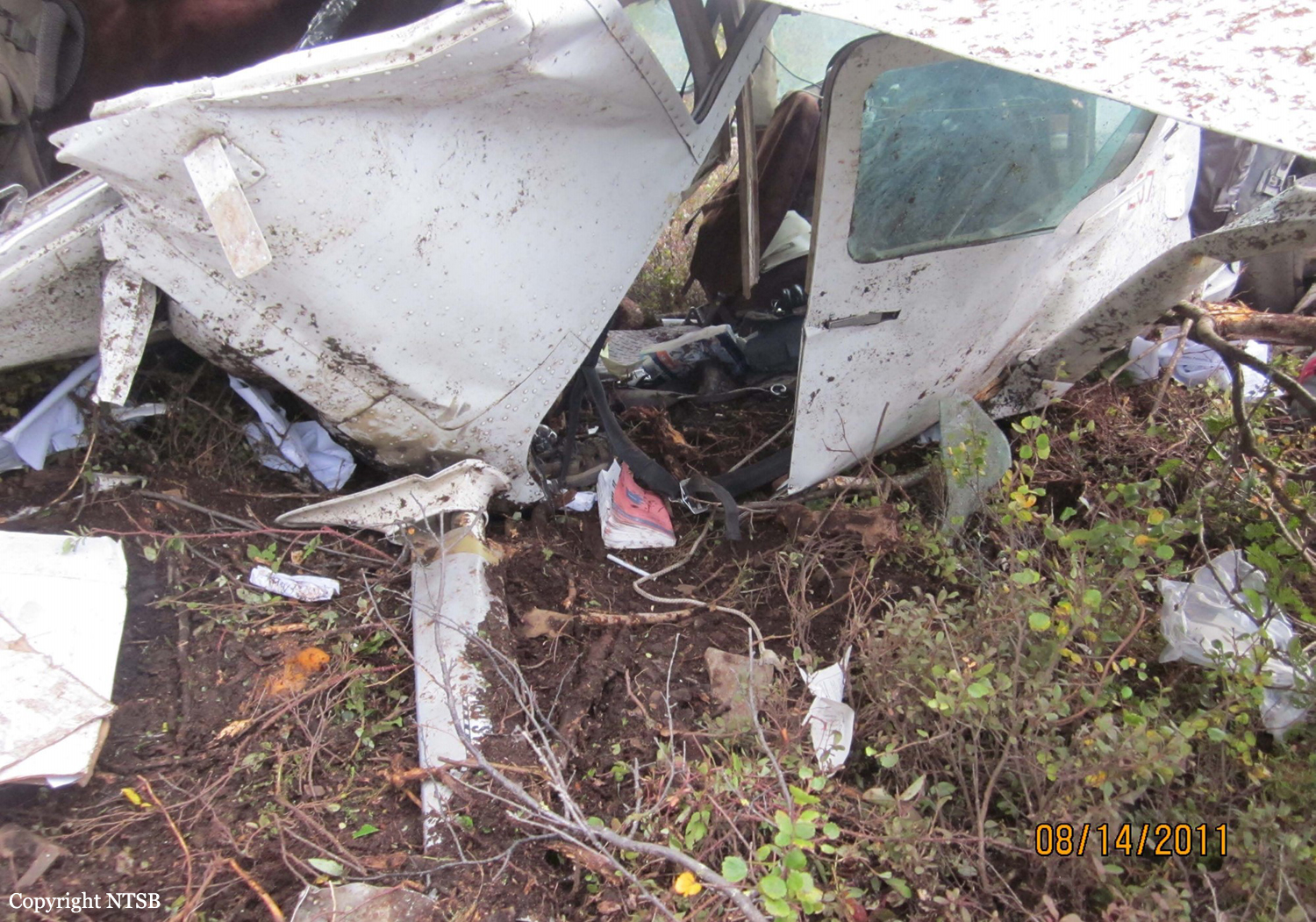
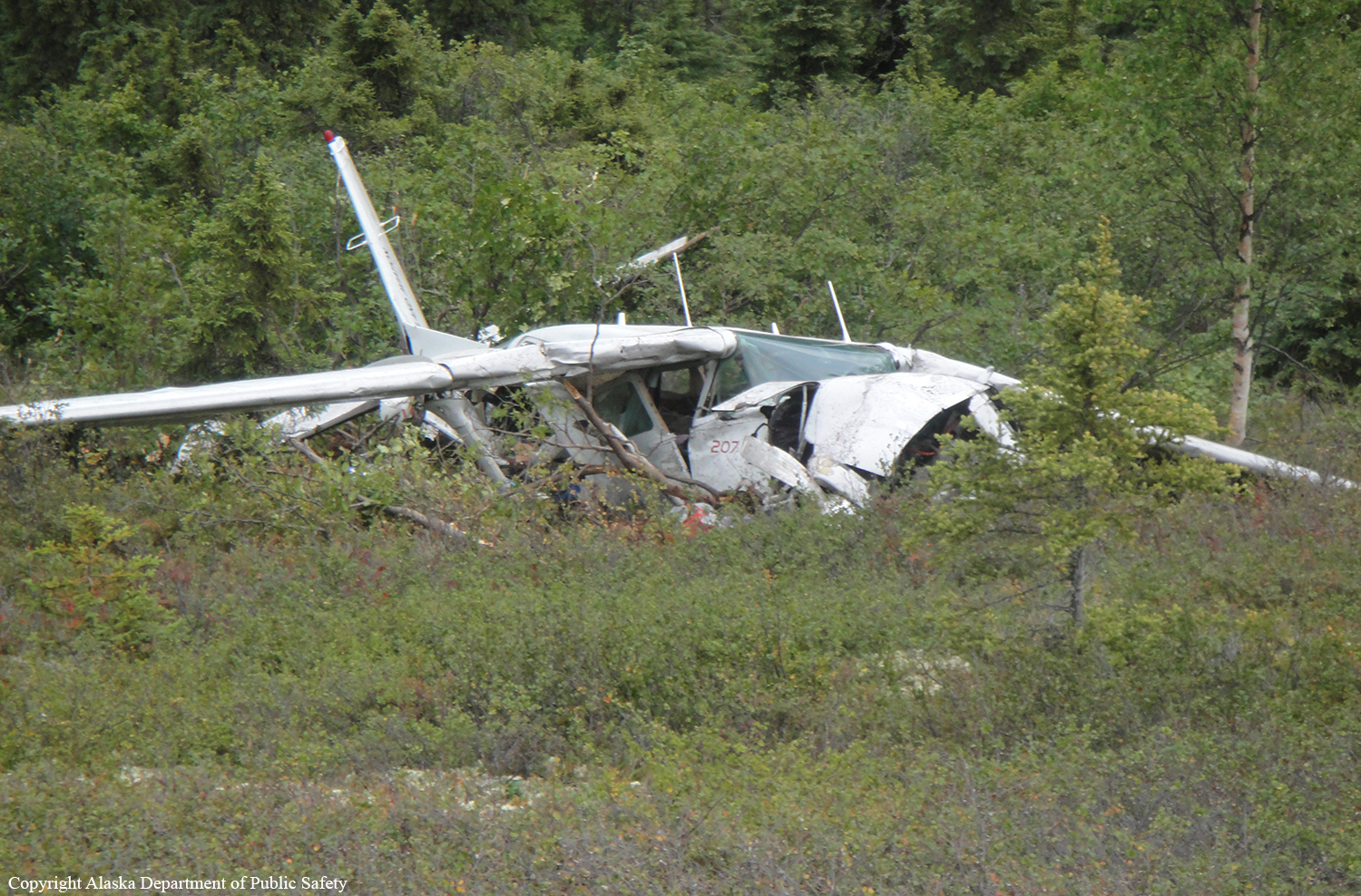
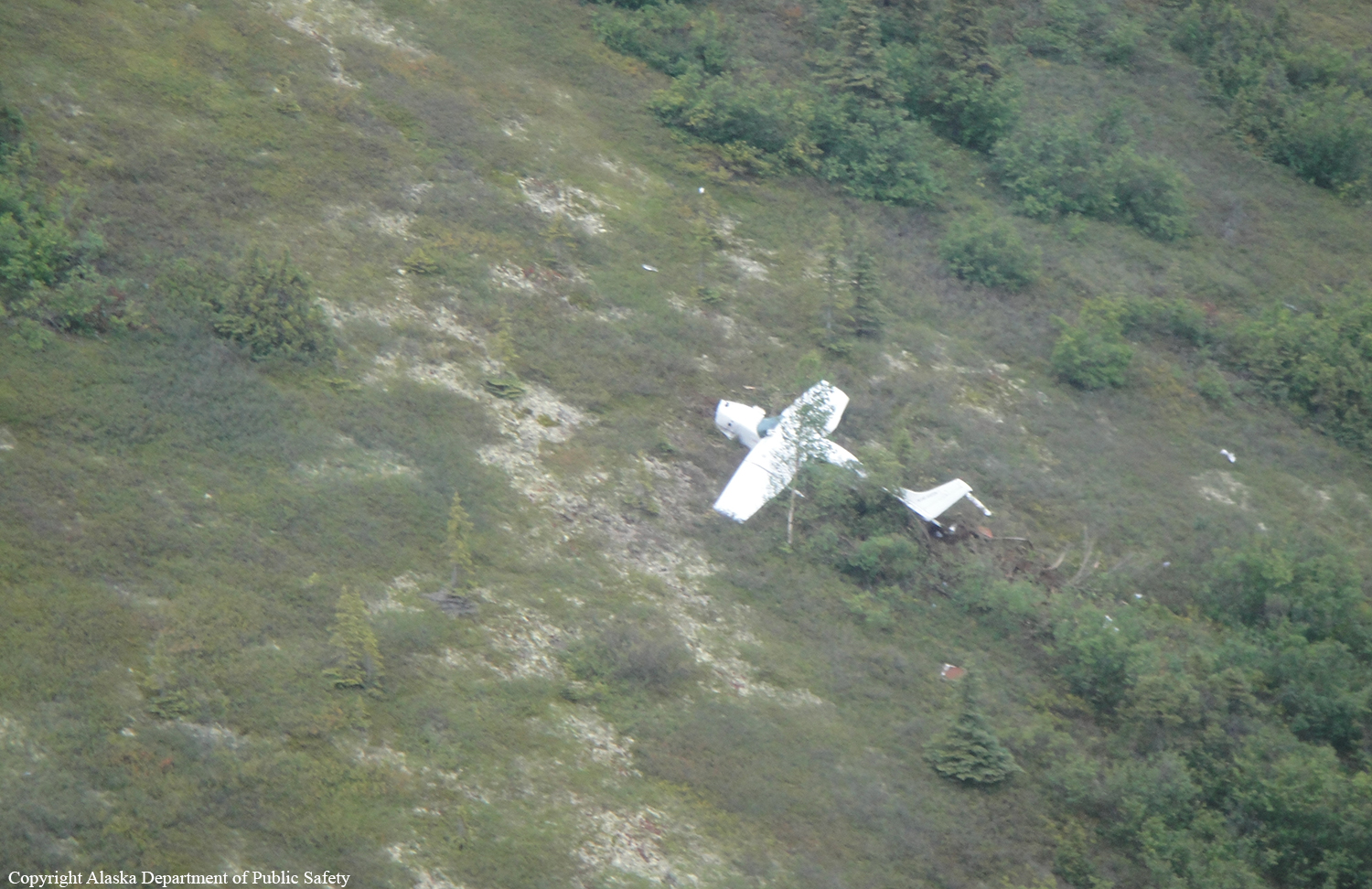
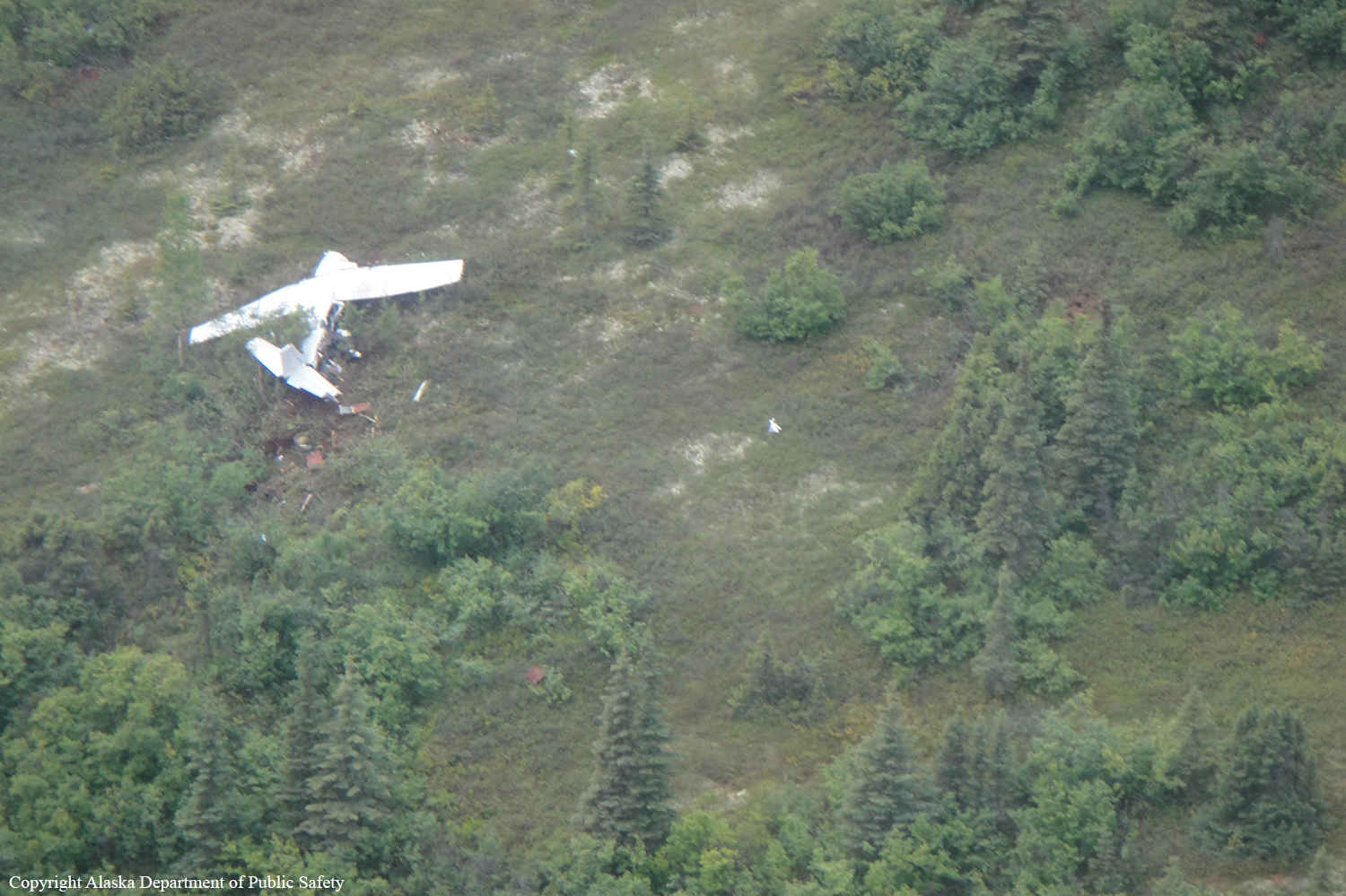
On September 2, 2011, about 1335 Alaska daylight time, a Cessna 208B airplane, N207DR, and a Cessna 207 airplane, N73789, collided in midair about 9 miles north of Nightmute, Alaska. Both airplanes were being operated as charter flights under the provisions of 14 Code of Federal Regulations (CFR) Part 135 in visual meteorological conditions when the accident occurred. The Cessna 208B was operated by Grant Aviation Inc., Anchorage, Alaska, and the Cessna 207 was operated by Ryan Air, Anchorage, Alaska. Visual flight rules (VFR) company flight following procedures were in effect for each flight. The sole occupant of the Cessna 208B, an airline transport pilot, sustained fatal injuries. The sole occupant of the Cessna 207, a commercial pilot, was uninjured. The Cessna 208B was destroyed, and the Cessna 207 sustained substantial damage. After the collision, the Cessna 208B descended uncontrolled and impacted tundra-covered terrain, and a postcrash fire consumed most of the wreckage. The Cessna 207’s right wing was damaged during the collision and the subsequent forced landing on tundra-covered terrain. Both airplanes were based at the Bethel Airport, Bethel, Alaska, and were returning to Bethel at the time of the collision. The Cessna 208B departed from the Toksook Bay Airport, Toksook Bay, Alaska, about 1325, and the Cessna 207 departed from the Tununak Airport, Tununak, Alaska. During separate telephone conversations with the National Transportation Safety Board (NTSB) investigator-in-charge on September 2, the chief pilot for Ryan Air, as well as the director of operations for Grant Aviation, independently reported that both pilots had a close personal relationship. During an initial interview with the NTSB IIC on September 3, in Bethel, the pilot of the Cessna 207 reported that both airplanes departed from the neighboring Alaskan villages about the same time and that both airplanes were en route to Bethel along similar flight routes. She said that, just after takeoff from Tununak, she talked with the pilot of the Cessna 208B on a prearranged, discreet radio frequency, and the two agreed to meet up in-flight for the flight back to Bethel. She said that, while her airplane was in level cruise flight at 1,200 feet above mean sea level (msl), the pilot of the Cessna 208B flew his airplane along the left side of her airplane, and they continued to talk via radio. She said that the pilot of the Cessna 208B then unexpectedly and unannounced climbed his airplane above and over the top of her airplane. She said that she immediately told the pilot of the Cessna 208B that she could not see him and that she was concerned about where he was. She said that the Cessna 208B pilot then said, in part: "Whatever you do, don't pitch up." The next thing she recalled was moments later seeing the wings and cockpit of the descending Cessna 208B pass by the right the side of her airplane, which was instantaneously followed by an impact with her airplane’s right wing. The Cessna 207 pilot reported that, after the impact, while she struggled to maintain control of her airplane, she saw the Cessna 208B pass underneath her airplane from right-to-left, and it began a gradual descent, which steepened as the airplane continued to the left and away from her airplane. She said that she told the pilot of the Cessna 208B that she thought she was going to crash.She said that the pilot of the Cessna 208B simply stated, “Me too.” She said that she watched as the Cessna 208B continued to descend, and then it entered a steep, vertical, nose-down descent before it collided with the tundra-covered terrain below. She said that a postcrash fire started instantaneously upon impact. Unable to maintain level cruise flight and with limited roll control, the Cessna 207 pilot selected an area of rolling, tundra-covered terrain as a forced landing site. During touchdown, the airplane’s nosewheel collapsed, and the airplane nosed down. The Cessna 207’s forced landing site was about 2 miles east of the Cessna 208B’s accident site.
Final Report:

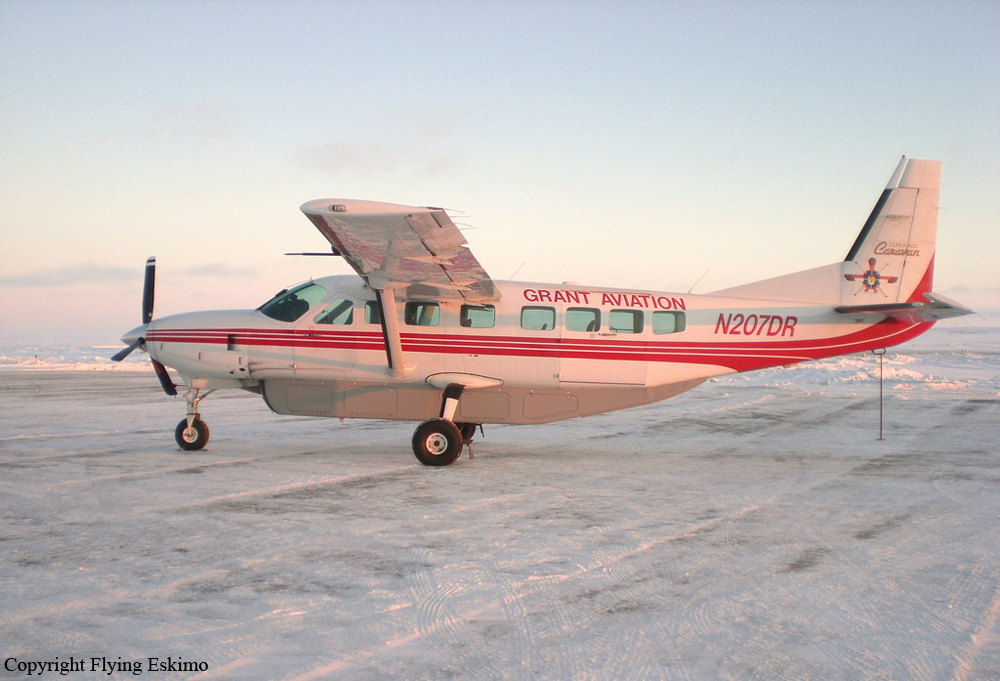
Crash of a Cessna 208B Grand Caravan near Nightmute: 1 killed

Date & Time: Sep 2, 2011 at 1335 LT
Type of aircraft:
Operator:
Registration:
N207DR
Flight Phase:
Flight Type:
Survivors:
No
Schedule:
Toksook Bay - Bethel
MSN:
208B-0859
YOM:
2000
Crew on board:
1
Crew fatalities:
Pax on board:
0
Pax fatalities:
Other fatalities:
Total fatalities:
1
Captain / Total flying hours:
3719
Captain / Total hours on type:
875.00
Aircraft flight hours:
8483
Circumstances:
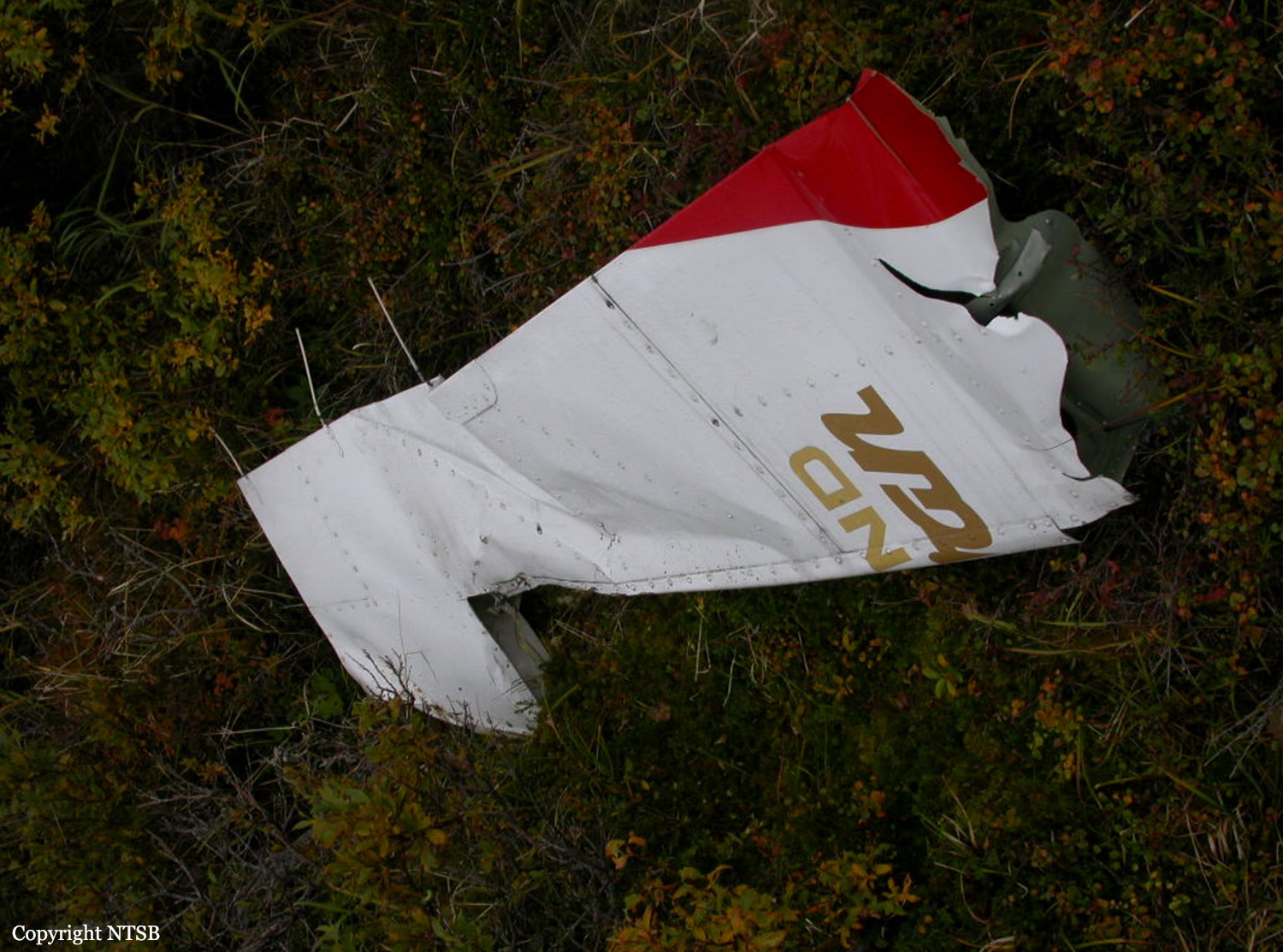
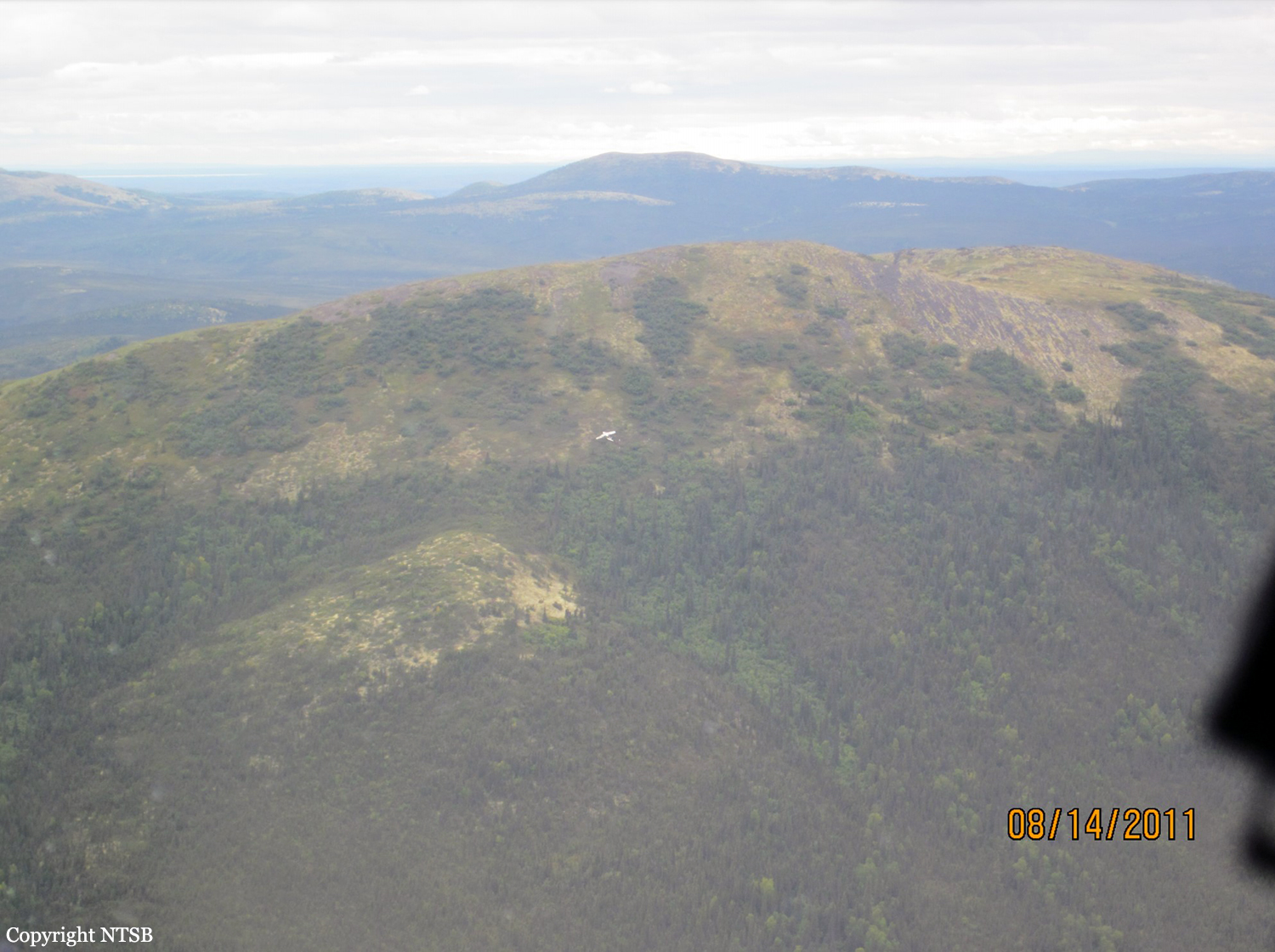
A Cessna 208B and a Cessna 207 collided in flight in daylight visual meteorological conditions. The Cessna 208B and the Cessna 207 were both traveling in an easterly direction. According to the Cessna 207 pilot, the airplanes departed from two neighboring remote Alaskan villages about the same time, and both airplanes were flying along similar flight routes. While en route, the Cessna 207 pilot talked with the Cessna 208B pilot on a prearranged, discreet radio frequency, and the two agreed to meet up in flight for the return to their home airport. The Cessna 207 pilot said that the pilot of the Cessna 208B flew his airplane along the left side of her airplane while she was in level cruise flight at 1,200 feet mean sea level and that they continued to talk via the radio. Then, unexpectedly and unannounced, the pilot of the Cessna 208B maneuvered his airplane above and over the top of her airplane. She said that she immediately told the Cessna 208B pilot that she could not see him and that she was concerned about where he was. She said that the Cessna 208B pilot then said, in part: "Whatever you do, don't pitch up." The next thing she recalled was seeing the wings and cockpit of the descending Cessna 208B pass by the right side of her airplane, which was instantly followed by an impact with her airplane's right wing. She said that after the collision, the Cessna 208B passed underneath her airplane from right-to-left before beginning a gradual descent that steepened as the airplane continued to the left. It then entered a steep, vertical, nose-down descent before colliding with the tundra-covered terrain below followed by a postcrash fire. Unable to maintain level cruise flight, the Cessna 207 pilot selected an area of rolling, tundra-covered terrain as a forced landing site. An examination of both airplanes revealed impact signatures consistent with the Cessna 208B's vertical stabilizer impacting the Cessna 207's right wing. A portion of crushed and distorted wreckage, identified as part of the Cessna 208B's vertical stabilizer assembly, was found embedded in the Cessna 207's right wing. The Cessna 208B's severed vertical stabilizer and rudder were found about 1,000 feet west of the Cessna 208B's crash site.
Probable cause:
The pilot's failure to maintain adequate clearance while performing an unexpected and unannounced abrupt maneuver, resulting in a midair collision between the two airplanes.
Final Report:

Crash of a Cessna 207 Skywagon near McGrath: 2 killed

Date & Time: Aug 13, 2011 at 1940 LT
Operator:
Registration:
N91099
Flight Phase:
Survivors:
Yes
Site:
Schedule:
McGrath - Anvik - Aniak
MSN:
207-0073
YOM:
1969
Location:
Crew on board:
1
Crew fatalities:
Pax on board:
5
Pax fatalities:
Other fatalities:
Total fatalities:
2
Captain / Total flying hours:
25000
Captain / Total hours on type:
10000.00
Aircraft flight hours:
31618
Circumstances:
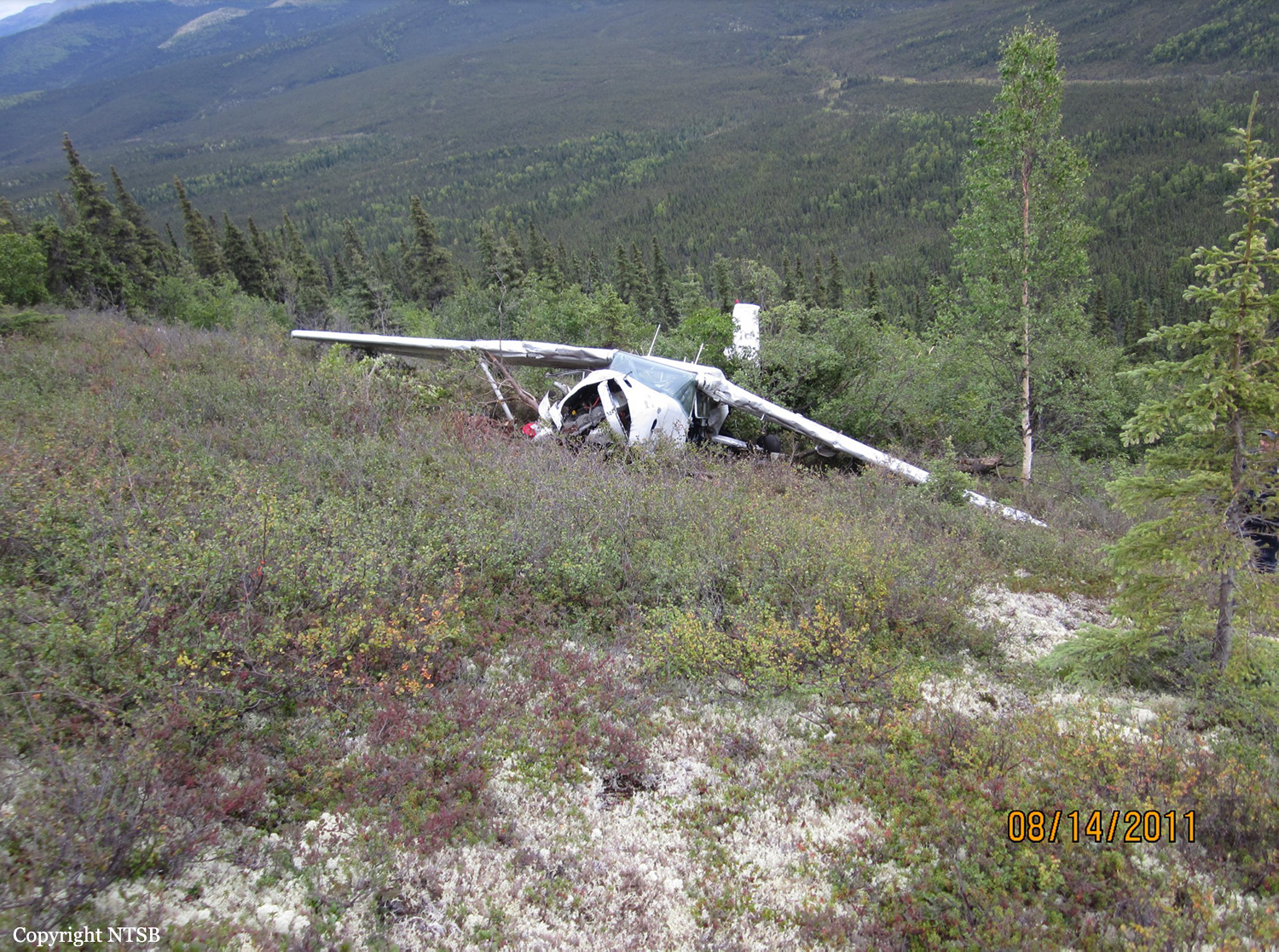
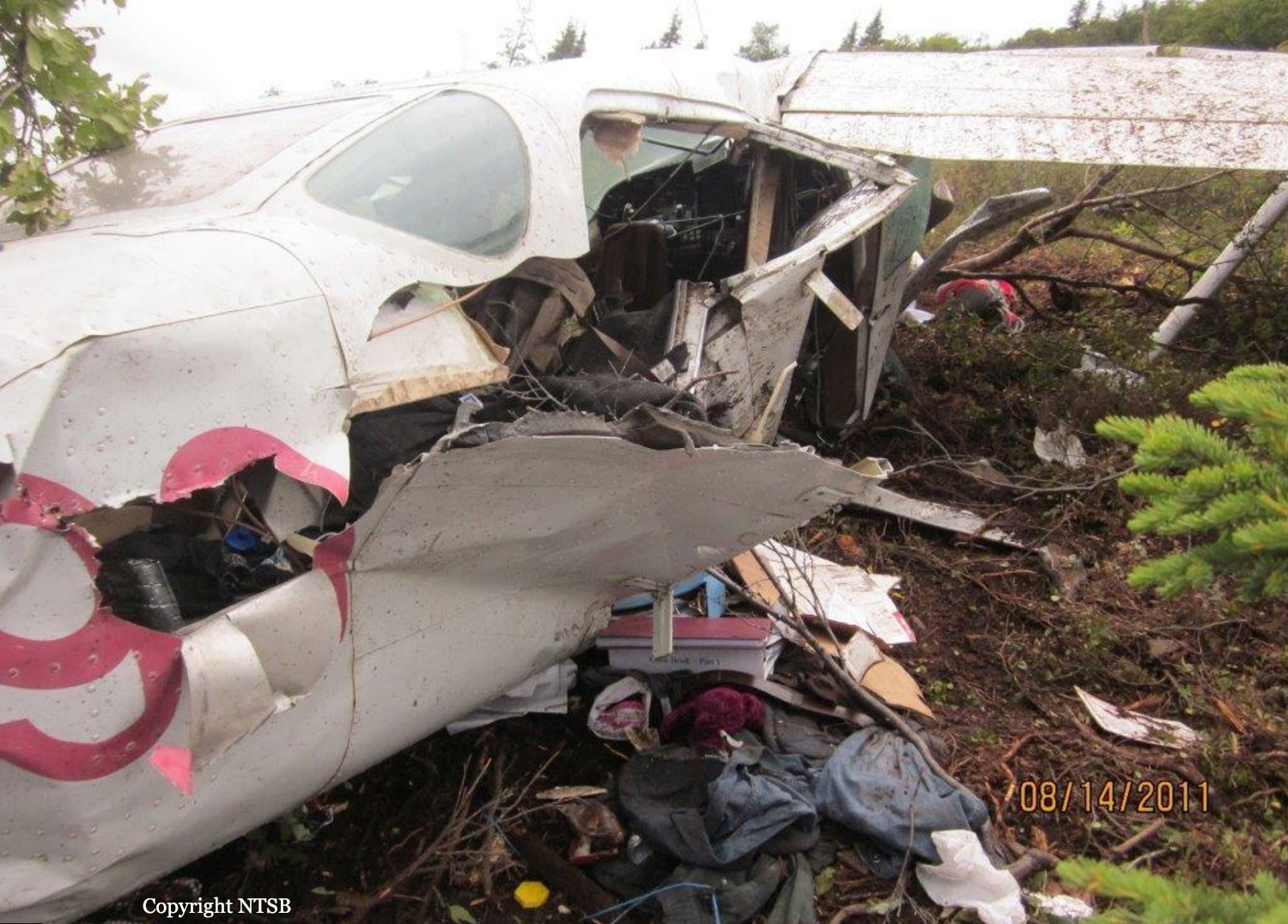
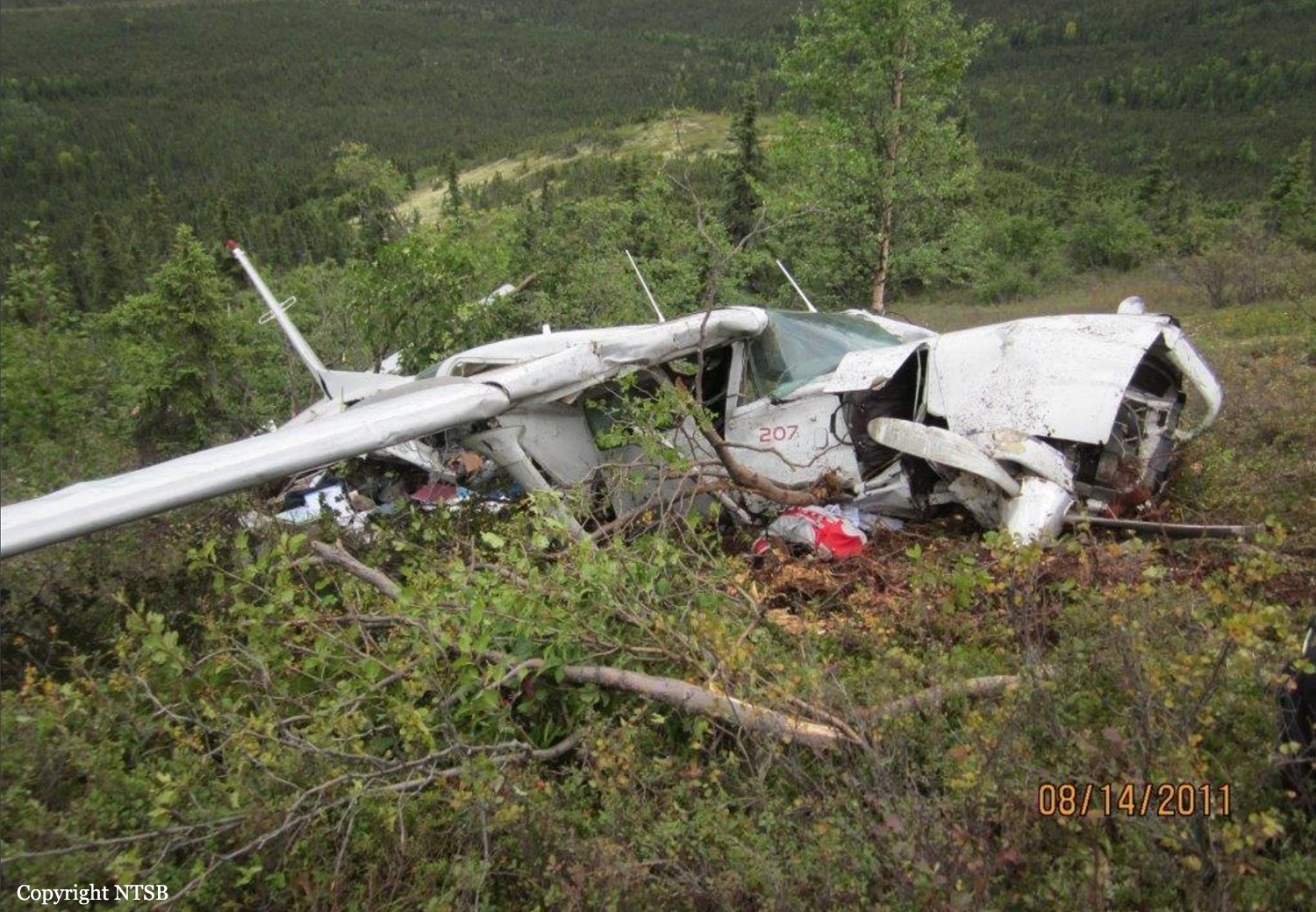
The commercial pilot departed with five passengers on an on-demand air taxi flight between two remote Alaskan villages separated by mountainous terrain. When the airplane did not reach its destination, the operator reported the airplane overdue. After an extensive search, the airplane's wreckage was discovered in an area of steep, tree-covered terrain, about 1,720 feet msl, along the pilot's anticipated flight path. The flight was conducted under visual flight rules, but weather conditions in the area were reported as low ceilings and reduced visibility due to rain, fog, and mist. There is no record that the pilot obtained a weather briefing before departing. According to a passenger who was seated in the front, right seat, next to the pilot, about 20 minutes after departure, as the flight progressed into mountainous terrain, low clouds, rain and fog restricted the visibility. At one point, the pilot told the passenger, in part: "This is getting pretty bad." The pilot then descended and flew the airplane very close to the ground, then climbed the airplane, and then descended again. Moments later, the airplane entered "whiteout conditions," according to the passenger. The next thing the passenger recalled was looking out the front windscreen and, just before impact, seeing the mountainside suddenly appear out of the fog. A postaccident examination did not reveal any evidence of a mechanical malfunction. A weather study identified instrument meteorological conditions in the area at the time of the accident. Given the lack of mechanical deficiencies with the airplane and the passenger's account of the accident, it is likely that the pilot flew into instrument meteorological conditions while en route to his destination, and subsequently collided with mountainous terrain.
Probable cause:
The pilot's decision to continue visual flight rules flight into instrument meteorological conditions, which resulted in an in-flight collision with mountainous terrain.
Final Report:

Crash of a Piper PA-46-350P Malibu Mirage in Rantoul: 3 killed

Date & Time: Jul 24, 2011 at 0920 LT
Operator:
Registration:
N46TW
Flight Phase:
Flight Type:
Survivors:
No
Schedule:
Rantoul – Sarasota
MSN:
46-22071
YOM:
1989
Crew on board:
1
Crew fatalities:
Pax on board:
2
Pax fatalities:
Other fatalities:
Total fatalities:
3
Captain / Total flying hours:
1850
Aircraft flight hours:
2560
Circumstances:
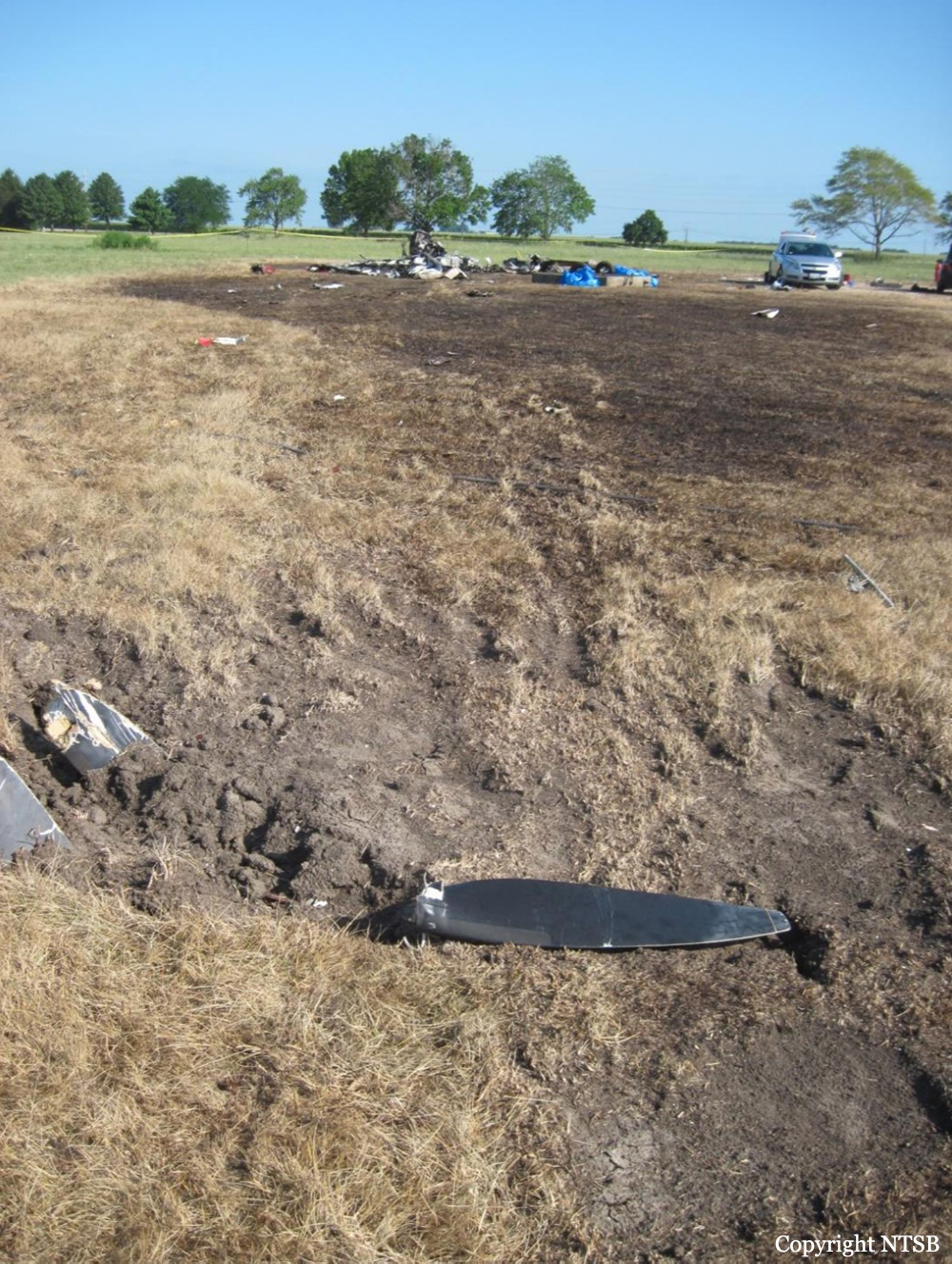
On July 24, 2011, about 0920 central daylight time, a Piper PA-46-350P, N46TW, owned and operated by a private pilot, sustained substantial damage when it impacted powerlines and terrain during takeoff from runway 27 at the Rantoul National Aviation Center Airport-Frank Elliott Field (TIP), near Rantoul, Illinois. A post impact ground fire occurred. The personal flight was operating under 14 Code of Federal Regulations Part 91. Visual meteorological conditions prevailed at the time of the accident. An instrument flight rules (IFR) flight plan was on file. The pilot and two passengers sustained fatal injuries. The flight was originating from TIP at the time of the accident and was destined for Sarasota/Bradenton International Airport (SRQ), near Sarasota, Florida. A witness, who worked at the fixed base operator, stated that the pilot performed the preflight inspection of the airplane in a hangar. An estimated 80 pounds. of luggage was loaded behind the airplane's rear seat. The witness said that the pilot's wife told the pilot that she had to use the restroom. The pilot reportedly replied to her to "hurry because a storm front was coming." The witness said that the engine start was normal and that both passengers were sitting in the rear forward-facing seats when the airplane taxied out. A witness at the airport, who was a commercial pilot, reported that he observed the airplane takeoff from runway 27 and then it started to turn to the south. He indicated that the landing gear was up when the airplane was about 500 feet above the ground. The witness stated that a weather front was arriving at the airport and that the strong winds from the northwest appeared to "push the tail of the plane up and the nose down." The airplane descended and impacted powerlines and terrain where the airplane subsequently caught on fire. The witness indicated that the airplane's engine was producing power until impact.
Probable cause:
The pilot did not maintain airplane control during takeoff with approaching thunderstorms. Contributing to the accident was the pilot's decision to depart into adverse weather conditions.
Final Report:

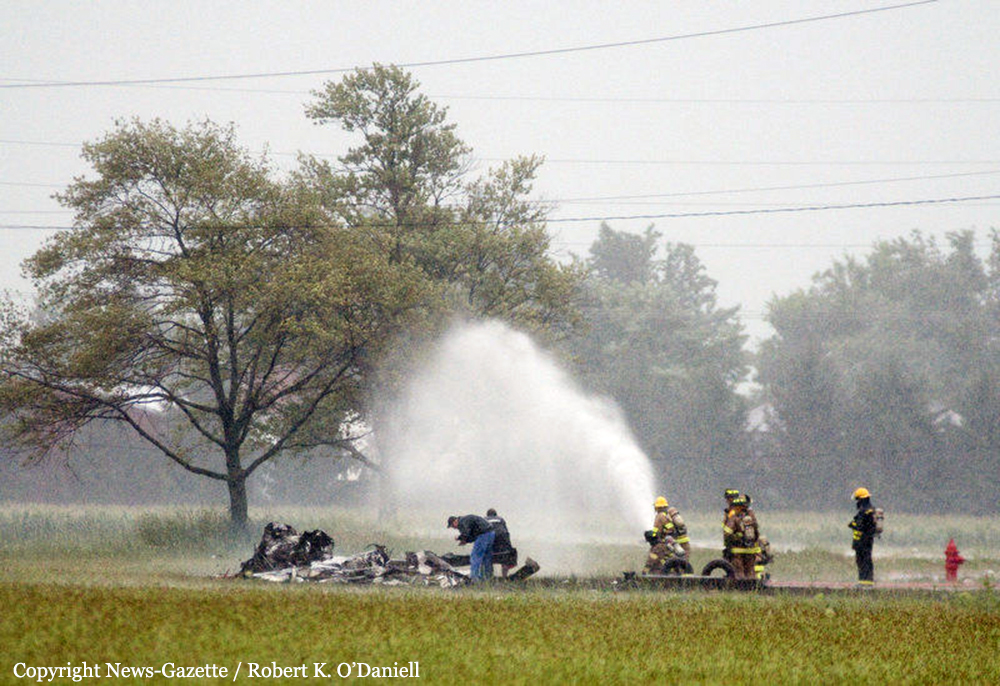
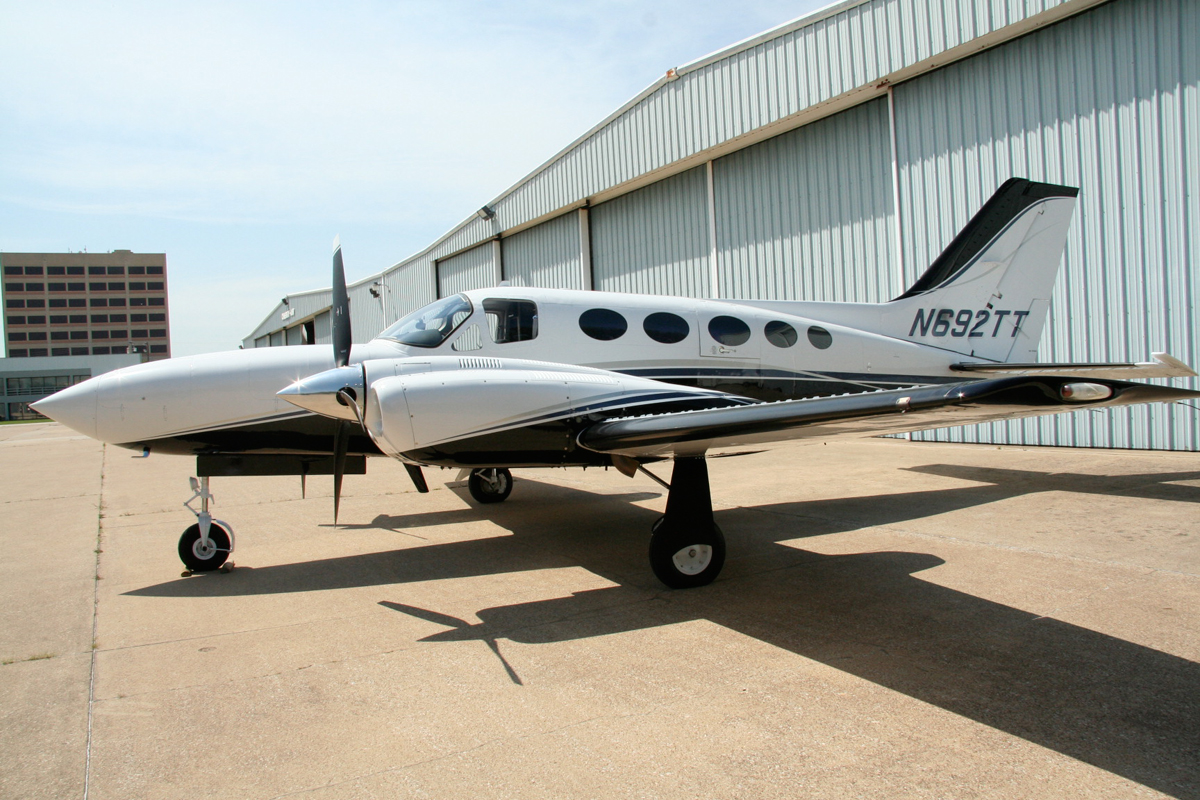
Crash of a Cessna 421C Golden Eagle III in Demopolis: 7 killed

Date & Time: Jul 9, 2011 at 1740 LT
Registration:
N692TT
Flight Type:
Survivors:
No
Schedule:
Creve Cœur – Destin
MSN:
421C-0616
YOM:
1979
Crew on board:
1
Crew fatalities:
Pax on board:
6
Pax fatalities:
Other fatalities:
Total fatalities:
7
Captain / Total flying hours:
1000
Captain / Total hours on type:
340.00
Aircraft flight hours:
7800
Circumstances:
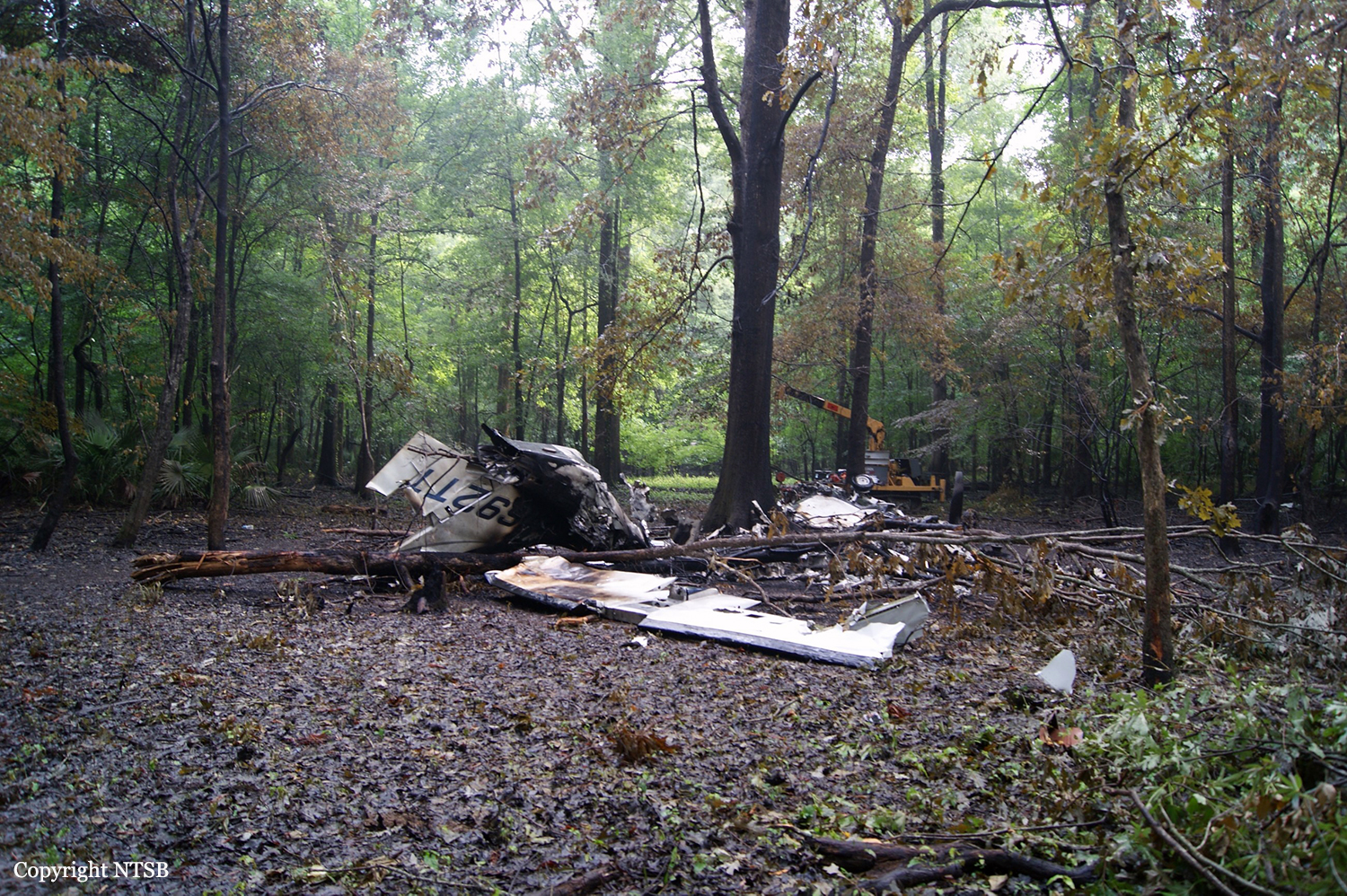
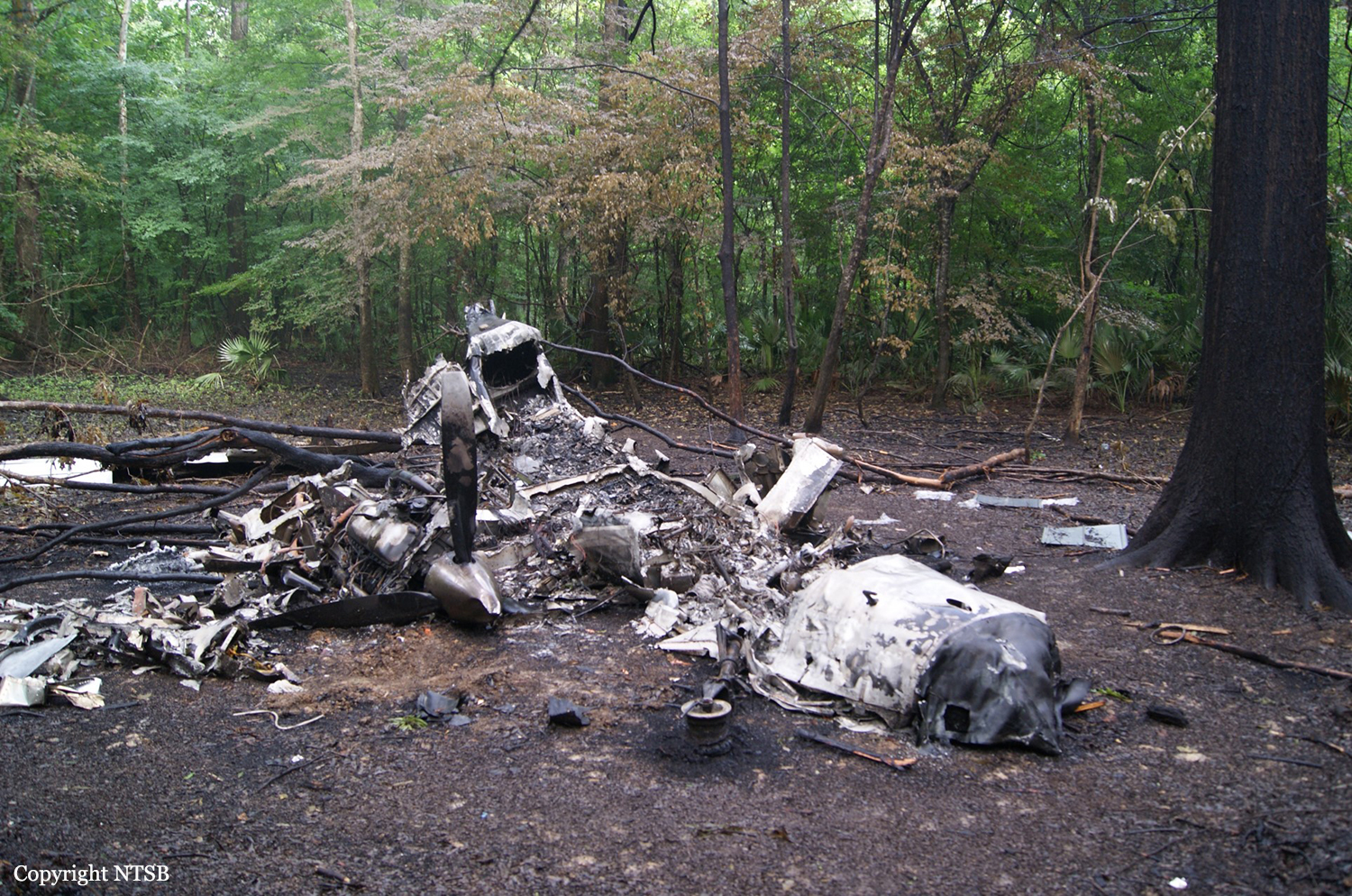
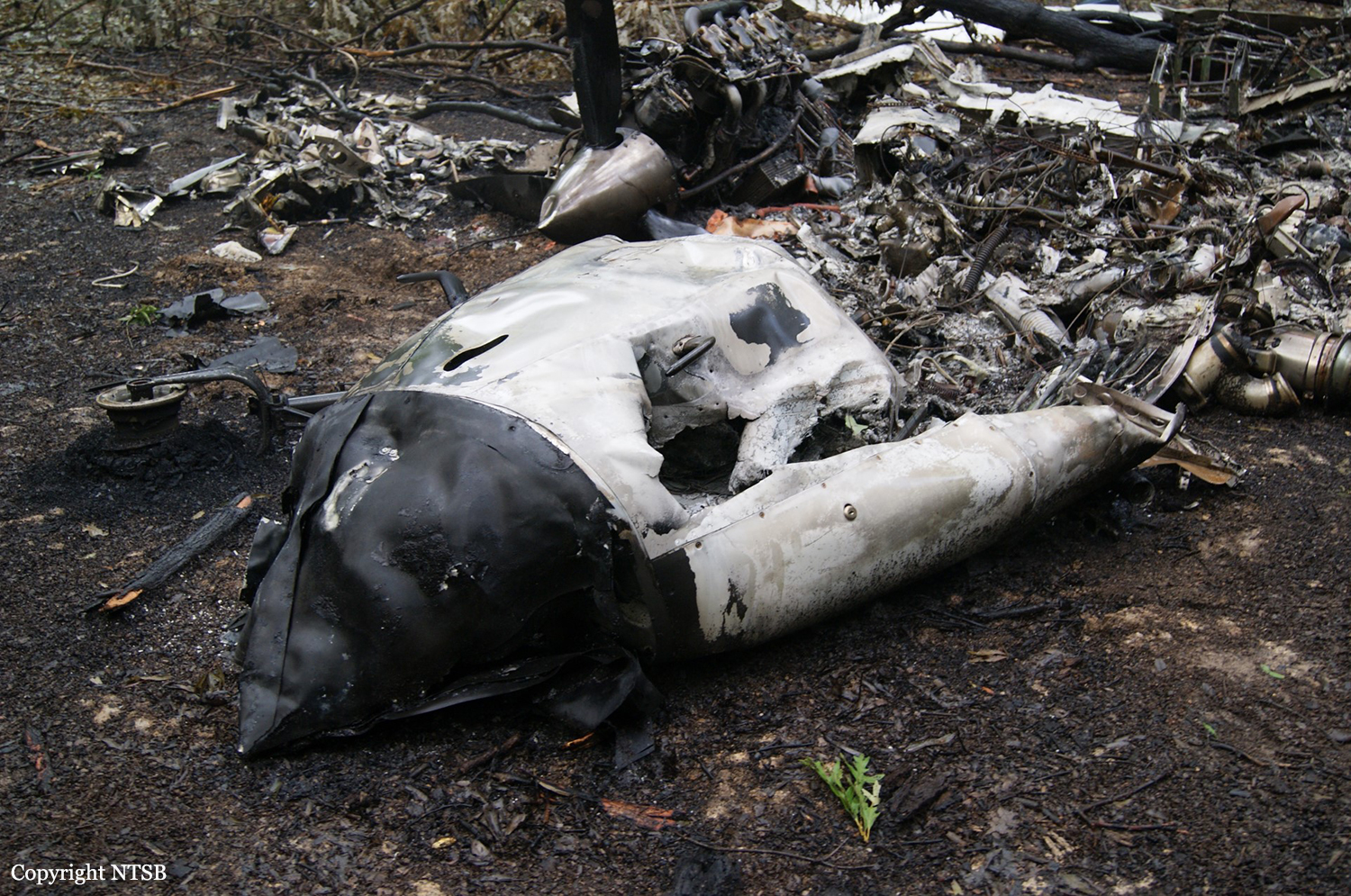
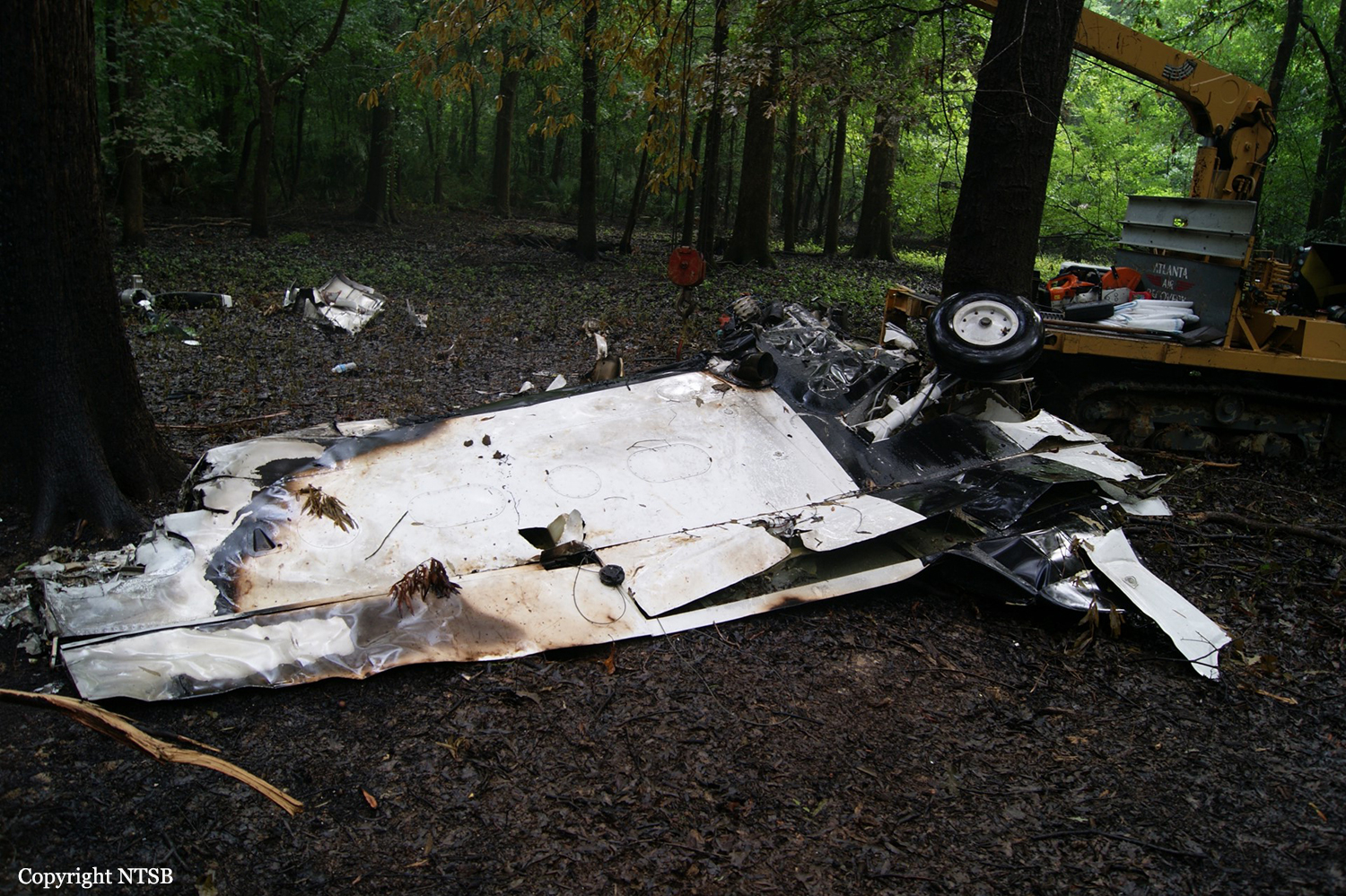
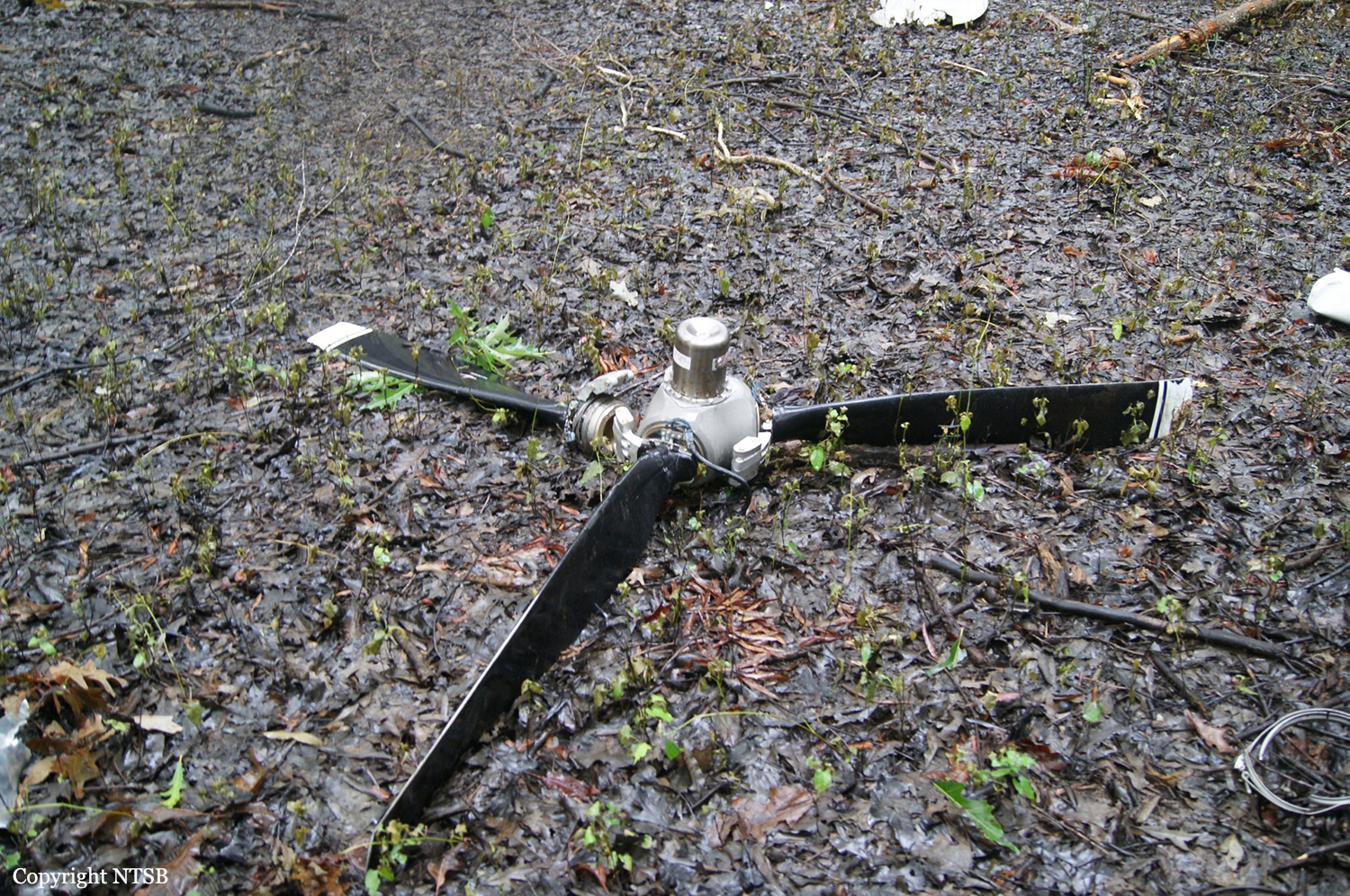
The multi-engine airplane was in cruise flight at flight level 210 when the pilot declared an emergency due to a rough-running right engine and diverted to a non-towered airport about 10 miles from the airplane’s position. About 4 minutes later, the pilot reported that he had shut down the right engine. The pilot orbited around the diversion airport during the descent and reported to an air traffic controller that he did not believe he would require any assistance after landing. The airplane initially approached the airport while descending through about 17,000 feet mean sea level (msl) and circled above the airport before entering a left traffic pattern approach for runway 22. About 7,000 feet msl, the airplane was about 2.5 miles northeast of the airport. The airplane descended through 2,300 feet msl when it was abeam the runway threshold on the downwind leg of the traffic pattern. According to the airplane information manual, procedures for landing with an inoperative engine call for “excessive altitude;” however, the airplane's last radar return showed the airplane at an altitude of 700 feet msl (about 600 feet above ground level) and about 3 miles from the approach end of the runway. The airplane was configured for a single-engine landing and was likely on or turning to the final approach course when it rolled and impacted trees. The airplane came to rest in a wooded area about 0.8 miles north of the runway threshold, inverted, in a flat attitude with no longitudinal deformation. A majority of the airplane, including the cockpit, main cabin, and left wing, were consumed by a postcrash fire. Search operations located the airplane about 6 hours after its expected arrival time. Due to the severity of the postcrash fire, occupant survivability after the impact could not be determined. Examination of the airframe, the left engine, and both propellers did not reveal any preaccident mechanical malfunctions or failures that would have precluded normal operation. The investigation revealed that the right engine failed when the camshaft stopped rotating after the camshaft gear experienced a fatigue fracture on one of its gear teeth. The remaining gear teeth were fractured in overstress and/or were crushed due to interference contact with the crankshaft gear. Spalling observed on an intact gear tooth suggested abnormal loading of the camshaft gear; however, the origin of the abnormal loading could not be determined.
Probable cause:
The pilot's failure to maintain airplane control during a single-engine approach and his failure to fly an appropriate traffic pattern for a single-engine landing. Contributing to the accident was a total loss of engine power on the right engine due to a fatigue failure of the right engine cam gear.
Final Report: