Crash of a Douglas C-124C Globemaster II in Charleston: 3 killed

Date & Time: Oct 3, 1956 at 0721 LT
Operator:

Registration:
53-0033
Flight Type:
Survivors:
Yes
Schedule:
Lajes – Hamilton – Charleston
MSN:
44328
YOM:
1953
Crew on board:
9
Crew fatalities:
Pax on board:
1
Pax fatalities:
Other fatalities:
Total fatalities:
3
Circumstances:
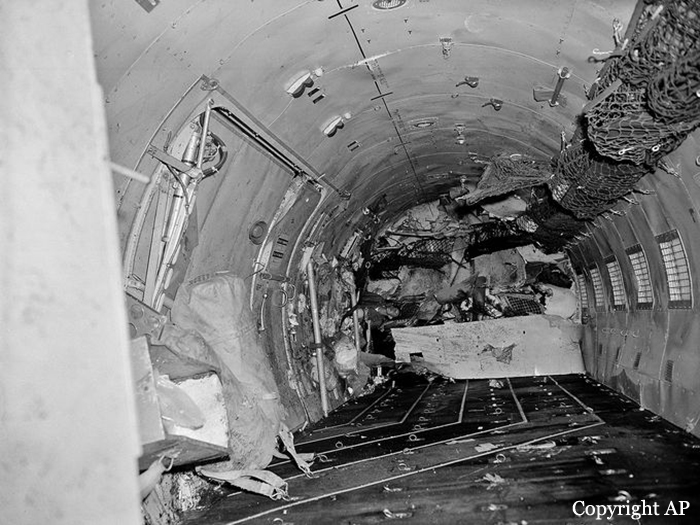
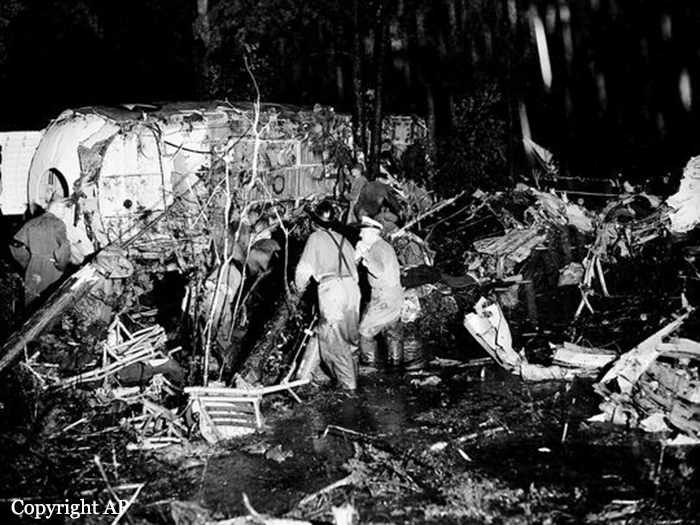
The Douglas C-124 transport plane departed Lajes AFB, Azores on a flight across the Atlantic Ocean to Bermuda-Kindley Field (NWU). The airplane remained on the ground at Bermuda for two hours. It took off again at 01:50 EST, bound for Charleston AFB, SC (CHS). Over the Azalea intersection the pilot checked and was advised that Charleston weather had deteriorated rapidly, presently 15,000 ft broken, visibility 1/4 mile with ground fog. The captain decided enter a holding pattern over Charleston to wait for the sun to burn off the fog. At approximately 06:30 visibility had slightly increased to 1/2 mile in ground fog. Five minutes later a Delta Air Lines flight landed following an ILS approach. The captain decided to carry out a GCA approach and was cleared for this at 06:35. The descent and final approach were normal until just prior to or reaching GCA minimums. At this time the aircraft got too low and clipped the tops of trees that stood about 68 feet above the ground. This caused a fast torque drop and subsequent loss of the no. 3 engine. The co-pilot then declared an emergency. The propeller of engine no.3 was feathered, the flaps were retracted, and an attempt as made to raise the landing gear. Indications were that the right main gear did not retract, and there was damage to the underside of the aircraft. Prior to the emergency the navigator had been asleep (the crew had been on duty for nearly 20 hours). Thus, he had not been monitoring the approach with radar. Also, he made no attempt to assist with dead reckoning, or in any other way to prevent the pilot from becoming lost. At 06:48, the crew became uncertain of their position. They flew for the next 33 minutes in the vicinity of Charleston AFB, at an altitude of only 800 to 1000 feet, because the aircraft would climb no higher even with max power. The aircraft was lost from GCA search radar, apparently due to the low altitude. The passenger and two crew members were killed while seven other occupants were injured.
Probable cause:
The primary cause of this accident was due to Operator Error in that the pilot descended below minimums in such a manner that the aircraft struck trees, and subsequently became doubtful of his position to the point of being lost due to failure to use all approach and navigational aids which further compounded his emergency. Although it is primarily the responsibility of the aircraft commander for the safe conduce of flight, it is also the duty and responsibility of the co-pilot to advise the pilot in sufficient time, prior to reaching minimums or a dangerous condition to allow him to check the rate of descent so as not to descend below minimums or hit the ground or obstructions. The pilot failed to adequately brief the flight crew for the type of approach to be made and missed approach procedures for that particular approach.
Crash of a Douglas VC-47A on Mt Yale: 12 killed

Date & Time: Sep 24, 1956
Operator:
Registration:
43-48146
Flight Phase:
Flight Type:
Survivors:
No
Site:
Schedule:
Ent - Hamilton
MSN:
13962/25407
YOM:
1944
Crew on board:
2
Crew fatalities:
Pax on board:
10
Pax fatalities:
Other fatalities:
Total fatalities:
12
Circumstances:
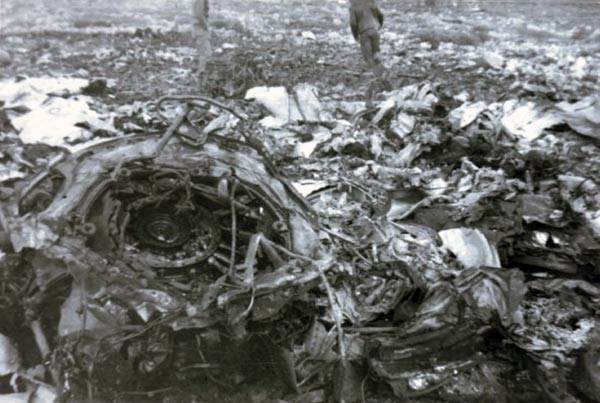
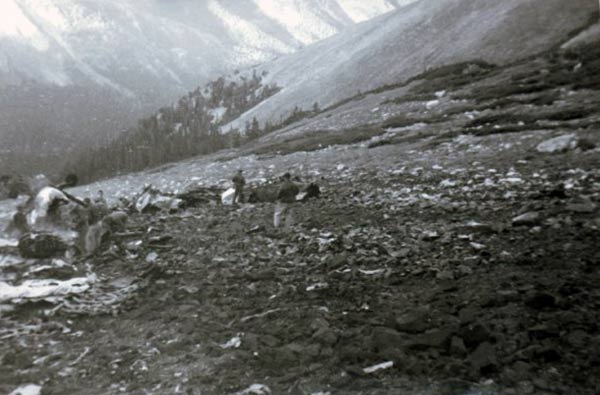
The aircraft departed Ent AFB in Colorado Springs and continued to the west. After passing over Buena Vista, the airplane hit the north face of Mt Yale (4,328 meters high) and disintegrated on impact, killing all 12 occupants.
Crew:
Col Charles Arthur Miller, pilot,
Cpt James Joseph Richardson, copilot.
Passengers:
Col Frederick W. Ledeboer,
S/Sgt William E. MacKenzie Jr.,
Oscar M. Rupert (civilian),
A1c William R. Carpenter,
Sgt Phillip Lenz,
M/Sgt Helen M. Schuyler,
Cpt David C. Jacobs,
1st Lt David W. Gill,
Sp3 William L. Simpson,
Pvt William R. Rooney.
Probable cause:
It is believed that the accident was the consequence of a controlled flight into terrain.

Crash of a Boeing B-52B-35-BO Stratofortress near Madera: 5 killed

Date & Time: Sep 17, 1956
Type of aircraft:
Operator:
Registration:
53-0393
Flight Phase:
Flight Type:
Survivors:
Yes
MSN:
16873
YOM:
1953
Crew on board:
7
Crew fatalities:
Pax on board:
0
Pax fatalities:
Other fatalities:
Total fatalities:
5
Circumstances:
En route, the aircraft caught fire, apparently on a wing. The crew elected to return to his base but control was lost. Two crew members were able to bail out and were later recovered while all five other occupants were killed when the airplane crashed along Highway 99, about 9 miles southeast of Madera.

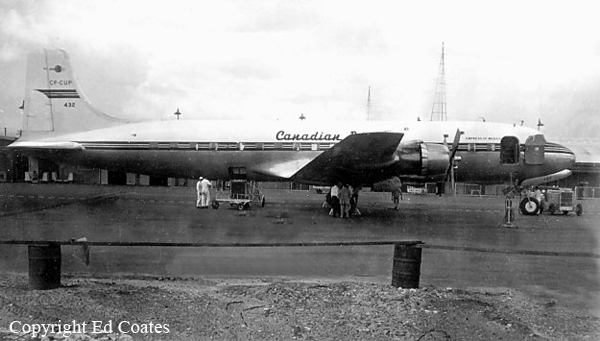
Crash of a Douglas DC-6B in Cold Bay: 15 killed

Date & Time: Aug 29, 1956 at 2045 LT
Type of aircraft:
Operator:
Registration:
CF-CUP
Survivors:
Yes
Schedule:
Vancouver – Cold Bay – Tokyo – Hong Kong
MSN:
43843
YOM:
1953
Flight number:
CP307
Crew on board:
8
Crew fatalities:
Pax on board:
14
Pax fatalities:
Other fatalities:
Total fatalities:
15
Captain / Total flying hours:
9522
Captain / Total hours on type:
2906.00
Copilot / Total flying hours:
12782
Copilot / Total hours on type:
465
Aircraft flight hours:
10513
Circumstances:
Flight 307 departed Vancouver, British Columbia at 1347 Bering standard time en route to Hong Kong, China, with a refueling stop at Cold Bay, Alaska and an intermediate stop at Tokyo, Japan, carrying a crew of 8 and 14 passengers. At 2011 the flight reported 100 miles out, estimating Cold Bay at 2036. It reported being over the Cold Bay range station outbound on a standard instrument approach at 2035, and at 2042 as completing a procedure turn and proceeding inbound. This was the last transmission from the flight. At 2045 the aircraft was observed to descend from the overcast north of the airport for a landing on runway 14 and cross the field at low altitude to the intersection of the two runways. At this point a shallow left turn was started and the aircraft went out of sight southeast of the airport. Shortly afterwards a fire was observed and it was ascertained that the aircraft had crashed. Eleven passengers and 4 crew members were fatally injured. The aircraft was destroyed by impact forces and a post crash fire.
Probable cause:
The probable cause of this accident was the full retraction of the wing flaps at low altitude during a circling approach without necessary corrective action being taken by the crew. Considering that very little altitude was gained after the application of power it is probable that a circling approach had been decided upon when the left turn from runway 14 was made. Since the wing flaps during the circling approach would be extended 20 degrees, and since they were found in the fully retracted position, it is believed that they were retracted shortly before impact. Fully retracted wing flaps at this time would explain the feeling of experienced by the off-duty flight crew member.
Final Report:

Crash of a Consolidated PB4Y-2 Privateer off NAS Sand Point

Date & Time: Aug 26, 1956 at 0930 LT
Operator:
Registration:
59695
Flight Phase:
Flight Type:
Survivors:
Yes
Schedule:
Sand Point - Sand Point
MSN:
59695
YOM:
1943
Crew on board:
2
Crew fatalities:
Pax on board:
0
Pax fatalities:
Other fatalities:
Total fatalities:
0
Circumstances:
Lt. Thorson, pilot, and Lt. Shook, copilot, were scheduled for a local 2 ½ hour training flight in P4Y-2 registered 59695 at 0930LT. Due to marginal VFR conditions, they were briefed to conduct GCA runs and remain in the local pattern until the weather improved. The pilots completed the engine run-up and the take-off checklist (inadvertently missing the flaps). the tower informed the aircraft that the field was VFR and cleared the aircraft for take-off. The aircraft became airborne just prior to reaching the end of the runway in a near level attitude, no more than one to two feet in the air. As it passed the end of the runway and over the waters edge, a drop of about 10 feet, the loss of ground effect caused it to settle immediately. The aircraft settled to the water at full power about 300 feet from the end of the 5,000 foot runway. The aircraft planed on the main gear and belly and settled to a stop about 5,000 yards past the point of initial impact. An orderly ditching procedure followed. All personnel were out of the aircraft in approximately 45 seconds and in life rafts shortly thereafter. The aircraft sank in 175 feet of water in approximately 2 ½ minutes. The personnel were rescued by the NAS Seattle crash boat about 4 minutes later. Lt. Shook and one crewman received minor injuries while vacating the aircraft. During the run-out on the water, the bomb bay doors ripped open and one bomb bay tank was torn loose from the aircraft. All propeller blades were slightly bent from impact with the water. No other damage is believed to have occurred to the aircraft. Salvage operations commenced on August 28, 1956, and the aircraft was raised to the surface on August 31, 1956. However, a shackle pin to the hoisting sling broke while attempting to tow the aircraft ashore and the aircraft again sank to a depth of 210 feet. Lines had been secured to the two inboard engines and the engines broke off at the mounts when the sling shackle pin gave way. Further efforts to salvage the aircraft were abandoned as uneconomical.
Source:
http://www.memorieshop.com/Seattle/LakeWashington/PB4Y-2.html
Probable cause:
It was concluded that the primary cause of the accident was pilot error in attempting a no-flap take-off. It was also concluded that the pilot and copilot did not take corrective action soon enough during take-off to successfully abort the take-off.

Crash of a Douglas C-124C Globemaster II in Palm Beach: 3 killed

Date & Time: Aug 21, 1956
Operator:
Registration:
52-1005
Flight Phase:
Flight Type:
Survivors:
Yes
Schedule:
Palm Beach - Palm Beach
MSN:
43914
YOM:
1952
Crew on board:
6
Crew fatalities:
Pax on board:
0
Pax fatalities:
Other fatalities:
Total fatalities:
3
Circumstances:
The crew was completing touch-and-goes at Palm Beach Airport. After takeoff, while climbing, a technical issue occurred on the engine number two that lost a propeller blade which penetrated the fuselage, cutting several control cables. Engines number three and four stopped immediately, causing the aircraft to bank right and to crash in a tree nursery. Three crew members were killed while three others were injured. The aircraft was destroyed.
Probable cause:
Loss of a propeller blade on engine number two.

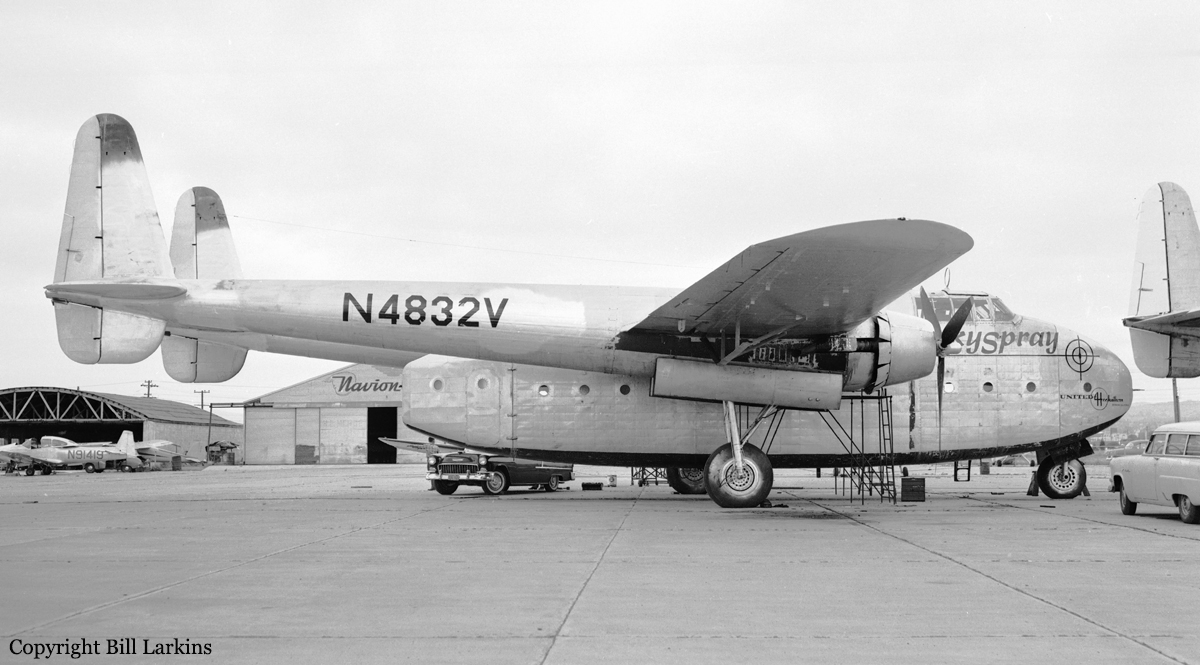
Crash of a Fairchild C-82A-20-FA Packet in Boca Raton: 5 killed

Date & Time: Aug 8, 1956 at 0505 LT
Type of aircraft:
Operator:
Registration:
N4832V
Survivors:
No
Schedule:
Miami - Boca Raton
MSN:
10070
YOM:
1944
Crew on board:
5
Crew fatalities:
Pax on board:
0
Pax fatalities:
Other fatalities:
Total fatalities:
5
Captain / Total flying hours:
4976
Captain / Total hours on type:
186.00
Copilot / Total flying hours:
3179
Copilot / Total hours on type:
170
Aircraft flight hours:
1016
Circumstances:
N4832V departed Masters Field, Miami, Florida, for Boca Raton Airport at 0448, August 8, 1956. Aboard the aircraft were Pilot Charles W. Day, Copilot Rae F. Howry, and three company insecticide-mixer personnel. The purpose of the direct 36-mile flight was the movement of the aircraft, crew and mixer personnel to the Boca Raton Airport from which the spraying operation was to be conducted. The takeoff of N4832V was followed immediately by another company operated C-82, N4829V and the two aircraft proceeded at an altitude of approximately 500 feet. N4829V flew to the left, slightly above and to the rear of N4832V until reaching Boca Raton. Both aircraft arrived over the city of Boca Raton shortly after 0500 and proceeded north and west the mile or so to the airport. Dawn was breaking and the runways, although unlighted, were plainly visible. N4832V made a eight turn for approach to runway 04. After passing over more than one-third of the length of the 5,000-foot runway a go-around was initiated. The aircraft then Immediately went into a climbing left turn. During this turn the aircraft stalled and crashed, killing all five occupants.
Probable cause:
The Board determines that the probable cause of this accident ins loss of power on the left engine and the drag-induced effect of the unfeathered left propeller, resulting in loss of directional control daring an attempted go-around. The following findings were reported:
- During approach to the airport serious malfunctioning of the left engine occurred,
- An improperly planned final approach resulted in runway misalignment and necessitated a go-around,
- During the attempted go-around the left engine rear master rod bearing failed resulting in loss of power on the left engine,
- The propeller was not feathered for single-engine operation,
- The lack of left engine power at low at low airspeed, and the drag resulting from the unfeathered left propeller resulted in loss of directional control,
- During the resulting left turn the aircraft was stalled and entered an "over-the-top" spin.
Final Report:

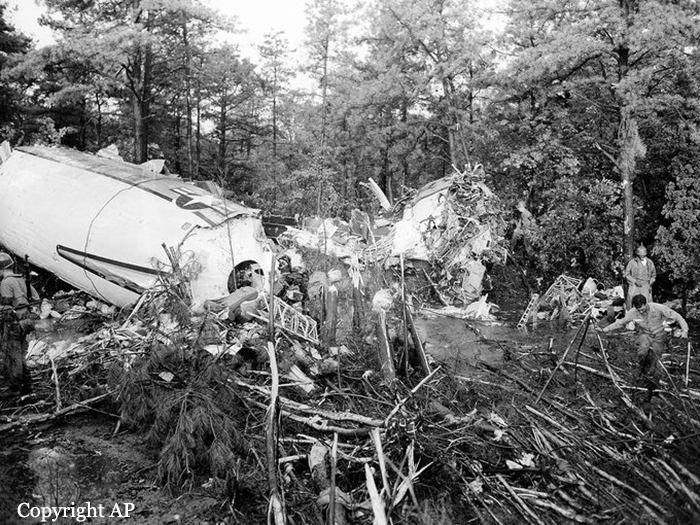
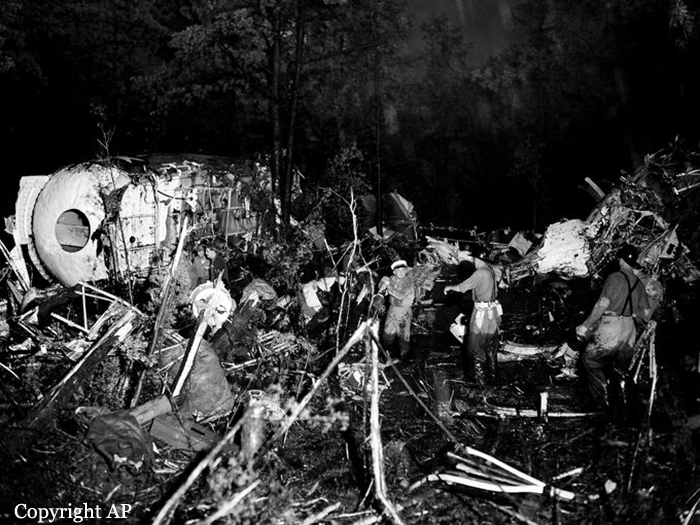
Crash of a Douglas C-118A Liftmaster at McGuire AFB: 46 killed

Date & Time: Jul 13, 1956 at 1537 LT
Type of aircraft:
Operator:
Registration:
53-3301
Flight Phase:
Flight Type:
Survivors:
Yes
Schedule:
McGuire – Stephenville – Lakenheath
MSN:
44672
YOM:
1955
Flight number:
A441/13
Crew on board:
10
Crew fatalities:
Pax on board:
56
Pax fatalities:
Other fatalities:
Total fatalities:
46
Captain / Total flying hours:
4183
Captain / Total hours on type:
1137.00
Copilot / Total flying hours:
1454
Copilot / Total hours on type:
642
Circumstances:
The Liftmaster was engaged in a transatlantic flight from McGuire (Fort Dix) Airbase to Lakenheath, UK, with an intermediate stop at Stephenville. Less than two minutes after takeoff from McGuire AFB runway 24, while climbing, the four engine aircraft encountered poor weather conditions, stalled and crashed in a dense wooded area located 1,4 mile from the airfield. Eight crew members and 38 passengers, among them civilians, were killed while 20 other occupants were injured.
Probable cause:
It was reported that weather conditions were poor at the time of the accident with thunderstorm activity around the McGuire Airbase, a horizontal visibility of 1,500 meters, clouds from 600 to 1,800 feet and wind gusting up to 30 knots with turbulences. The assumption that the aircraft encountered strong downdraft caused by a micro-burst was not ruled out.

Crash of a De Havilland DH.104 Dove in Moses Point: 1 killed

Date & Time: Jul 2, 1956
Type of aircraft:
Operator:
Registration:
N26W
Flight Phase:
Survivors:
No
MSN:
04352
YOM:
1952
Crew on board:
1
Crew fatalities:
Pax on board:
0
Pax fatalities:
Other fatalities:
Total fatalities:
1
Circumstances:
Crashed in unknown circumstances, killing the pilot, sole occupant.

Crash of a Douglas DC-7 in the Grand Canyon: 58 killed

Date & Time: Jun 30, 1956 at 1032 LT
Type of aircraft:
Operator:
Registration:
N6324C
Flight Phase:
Survivors:
No
Site:
Schedule:
Los Angeles – Chicago – New York
MSN:
44288
YOM:
1955
Flight number:
UA718
Crew on board:
5
Crew fatalities:
Pax on board:
53
Pax fatalities:
Other fatalities:
Total fatalities:
58
Captain / Total flying hours:
16492
Captain / Total hours on type:
1238.00
Copilot / Total flying hours:
4540
Copilot / Total hours on type:
230
Aircraft flight hours:
5115
Circumstances:
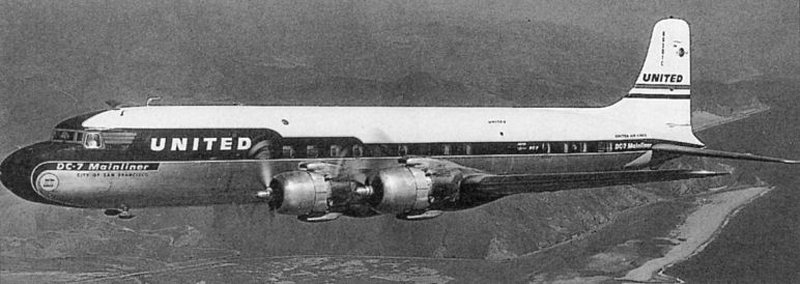
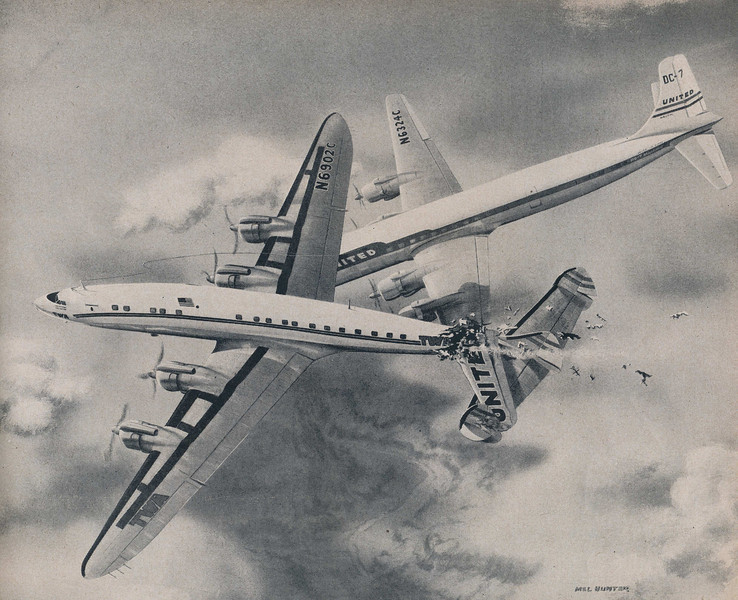
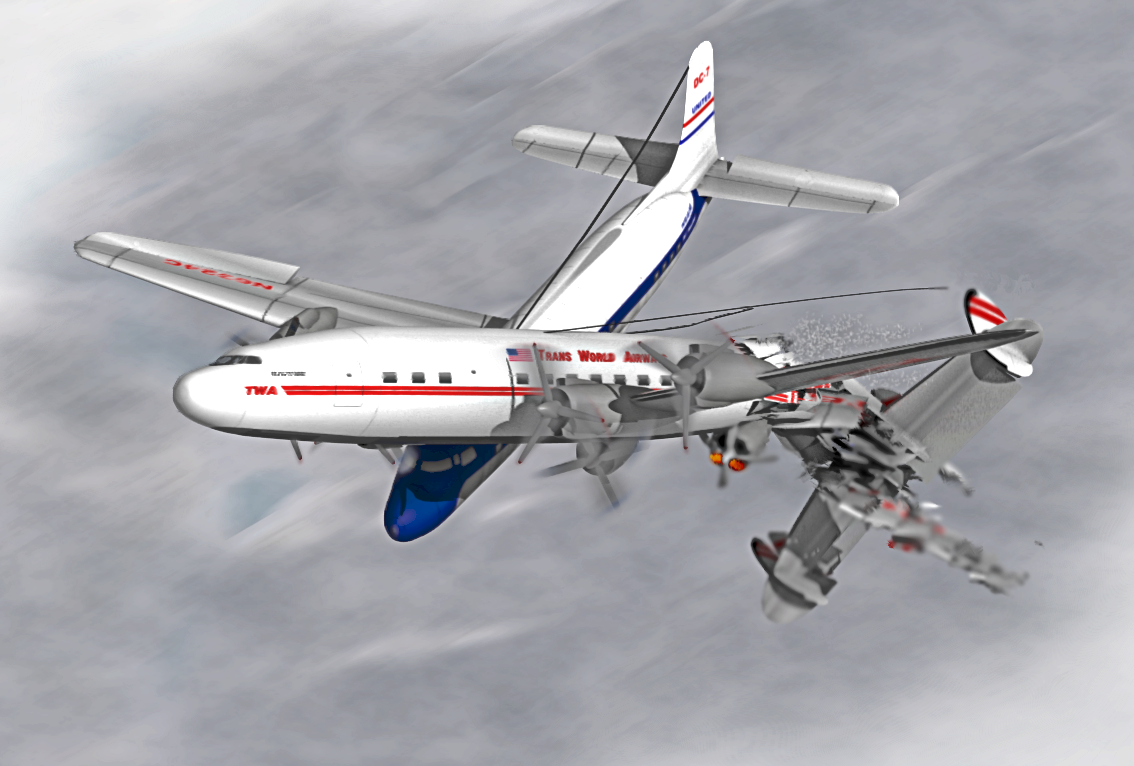
United Air Lines Flight 718 was regularly scheduled from Los Angeles to Chicago, Illinois. On June 30, 1956, it took off from runway 25L (left) of the Los Angeles International Airport at 0904 (three minutes after TWA 2). Flight 718 was on an IFR flight plan to Chicago via Green Airway 5 Palm Springs inter-section, direct Needles, direct Painted Desert, direct Durango, direct Pueblo, direct St. Joseph. Victor Airway 116 Joliet, Victor Airway 84 Chicago Midway Airport. The flight plan proposed a .JPG"> airspeed of 288 knots., a cruising altitude of 21,000 feet, and a departure time of 0845. The flight crew consisted of Captain Robert F. Shirley, First Officer Robert W. Harms, Flight Engineer Gerard Flore, and Stewardesses Nancy L. Kemnitz and Margaret A. Shoudt. Flight preparations and dispatch of United 718 were routine and the aircraft departed with 3,850 gallons of fuel. The company load manifest showed the gross weight of the aircraft at takeoff to be 105,835 pounds, which was less than the maximum allowable of 114,060 pounds; the latter weight was restricted from a maximum of 122,200 pounds for the aircraft because of a landing limitation at Chicago. The load was properly distributed with respect to the center of gravity limitations of the aircraft. After takeoff the flight contacted the Los Angeles tower radar controller, who vectored it through the overcast over the same departure course as TWA 2. United 718 reported "on top" and changed to Los Angeles Center frequency for its en route clearance. This corresponded to the flight plan as filed; however, the controller specified that the climb to assigned altitude be in VER conditions. Flight 718 made position reports to Aeronautical Radio, Inc., which serves under contract as United company radio. It reported passing over Riverside and later over Palm Springs intersection. The latter report indicated that United 718 was still climbing to 21,000 and estimated it would reach Needles at 1000 and the Painted Desert at 1034. At approximately 0958 United 718 made a position report to the CAA communications station located at Needles. This report stated that the flight was over Needles at 0958, at 21,000 feet, and estimated the Painted Desert at 1031, with Durango next. At 1031 an unidentified radio transmission was heard by Aeronautical Radio communicators at Salt Lake City and San Francisco. They were not able to understand the message when it was received but it was later determined by playing back the recorded transmission that the message was from United 718. Context was interpreted as: "Salt Lake, United 718 . . . ah . . . we're going in."
Probable cause:
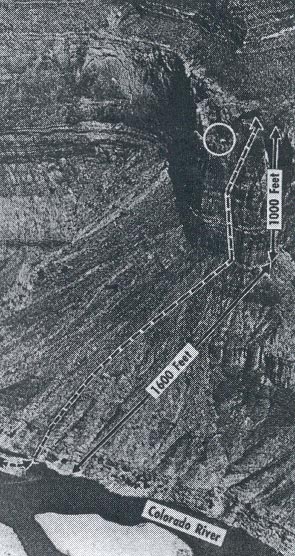
The Board determines that the probable cause of this mid-air collision was that the pilots did not see each other in time to avoid the collision. It is not possible to determine why the pilots did not see each other, but the evidence suggests that it resulted from any one or a combination of the following factors: Intervening clouds reducing time for visual separation, visual limitations due to cockpit visibility, and preoccupation with normal cockpit duties, preoccupation with matters unrelated to cockpit duties such as attempting to provide the passengers with a more scenic view of the Grand Canyon area, physiological limits to human vision reducing the time opportunity to see and avoid the other aircraft, or insufficiency of en route air traffic advisory information due to inadequacy of facilities and lack of personnel in air traffic control. The following findings were reported:
- Approaching Daggett, TWA 2 requested its company radio to obtain 21,000 feet as an assigned altitude, or 1,000 on top,
- Company radio requested 21,000 feet IFR from ARTC. This vas denied by ARTC. Request was then made for 1,000 on top. This was approved and clearance issued. The flight climbed to and proceeded at 21,000 feet,
- As an explanation for the denial of 21,000 feet, TWA 2 was furnished pertinent information on UA718,
- The last position report by each flight indicated it was at that time at 21,000, estimating the Painted Desert line of position at 1031,
- The Salt Lake controller possessed both position reports at approximately 1013, at which time both flights were in uncontrolled airspace,
- Traffic control services are not provided in the uncontrolled airspace and according to existing Air Traffic Control policies and procedures the Salt Lake controller was not required to issue traffic information; none was issued voluntarily,
- A general overcast with some breaks existed at 15,000 feet in the Grand Canyon area,
- Several cumulus buildups extending above flight level existed; one was nearly over Grand Canyon Village and others were north and northeast in the area of the collision,
- The collision occurred at approximately 1031 in visual flight rule weather conditions at about 21,000 feet,
- The collision in space was above a position a short distance west of the TWA wreckage area, 17 miles west of or approximately 3-1/2 minutes' flying time from the Painted Desert line of position,
- Under visual flight rule weather conditions it is the pilot's responsibility to maintain separation from other aircraft,
- At impact the aircraft relative to each other converged at an angle of about 25 degrees with the DC-7 to the right of the L-1049. The DC-7 was rolled about 20 degrees right wing down and pitched about 10 degrees nose down relative to the L-1049,
- There was no evidence found to indicate that malfunction or failure of the aircraft or their components was a factor in the accident.
Final Report: