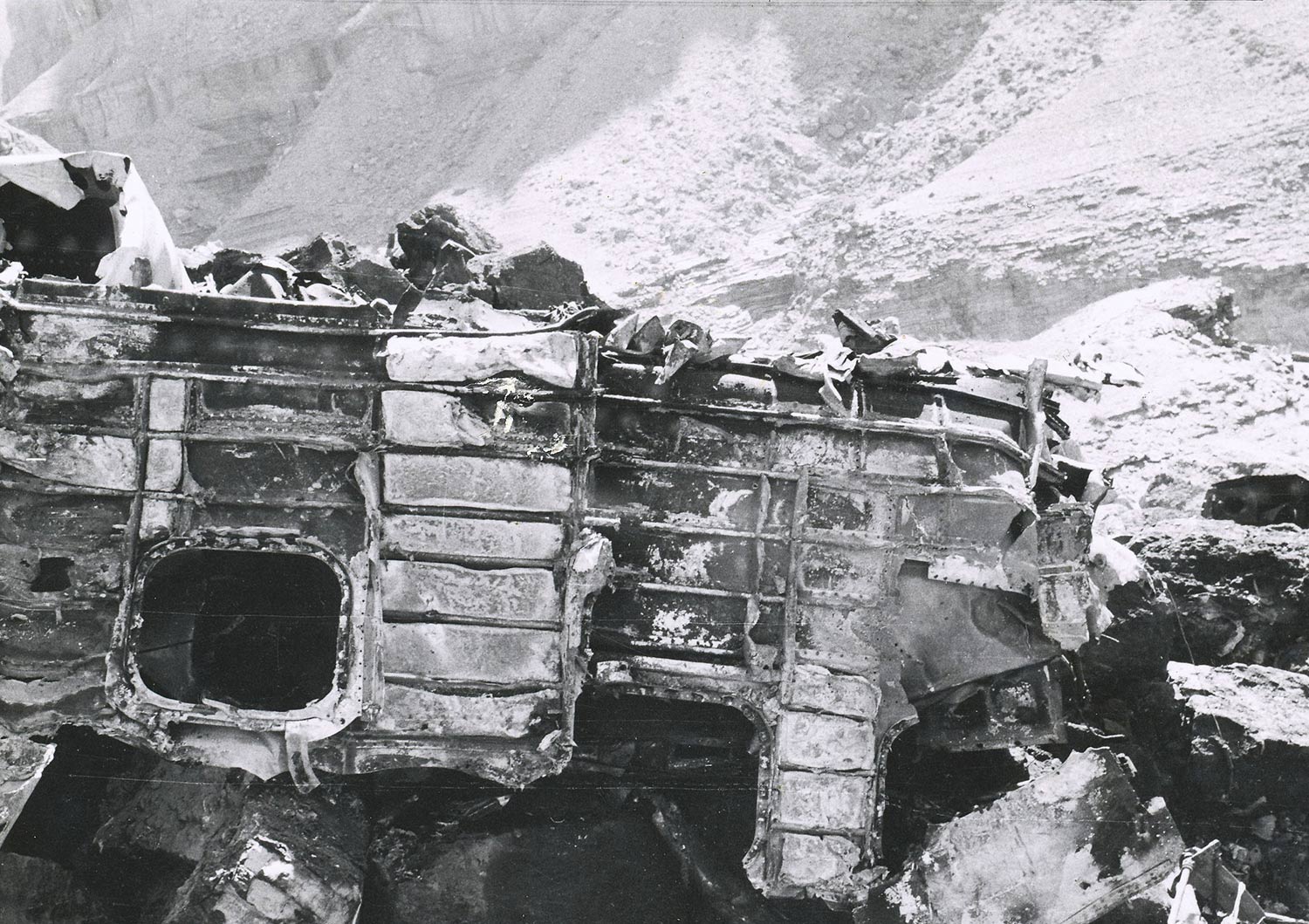
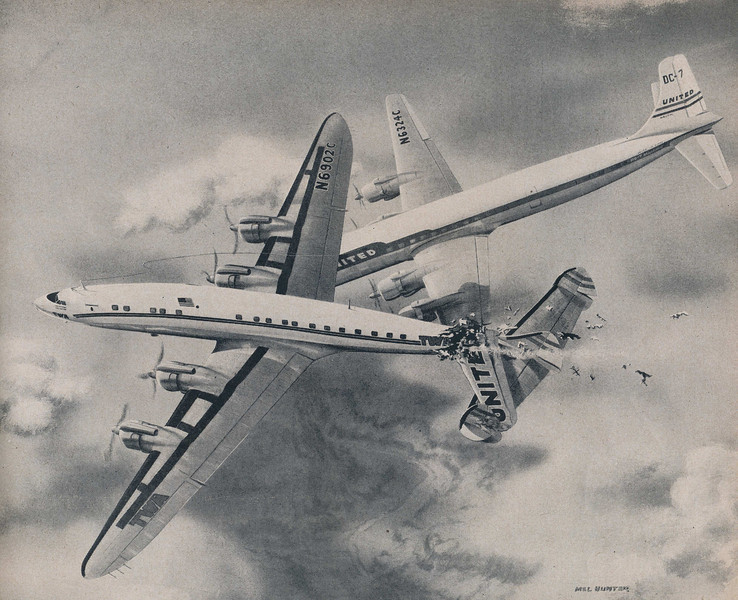
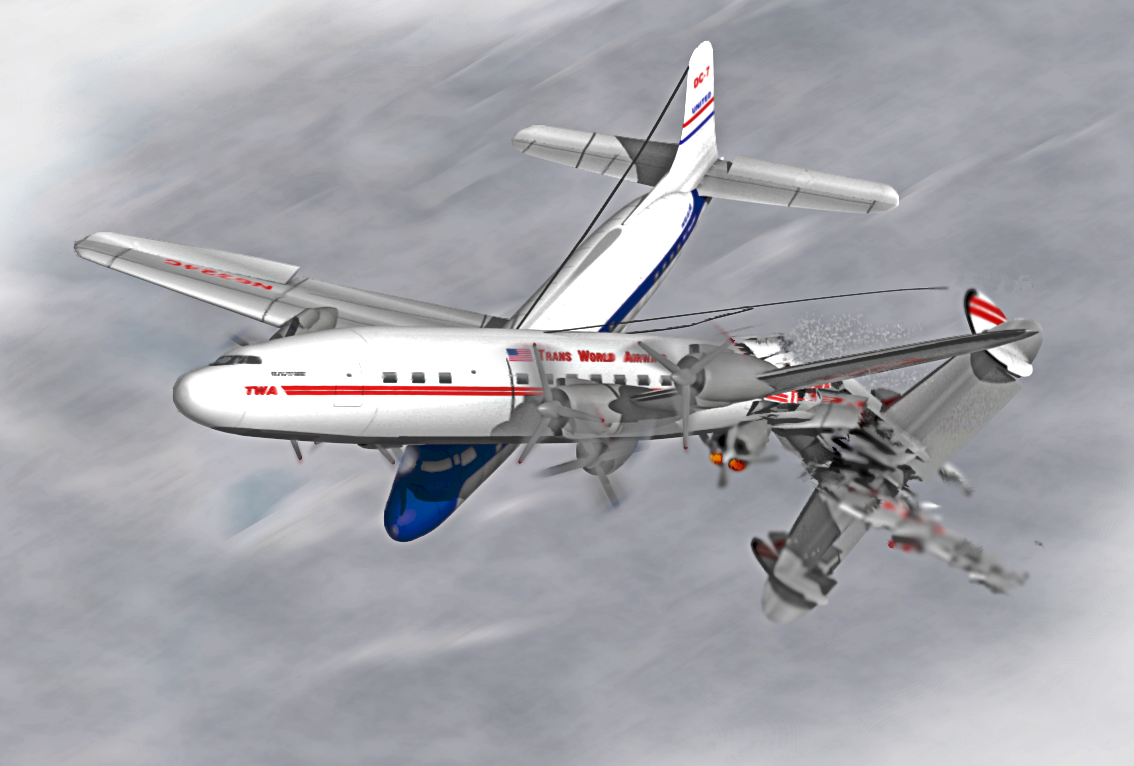
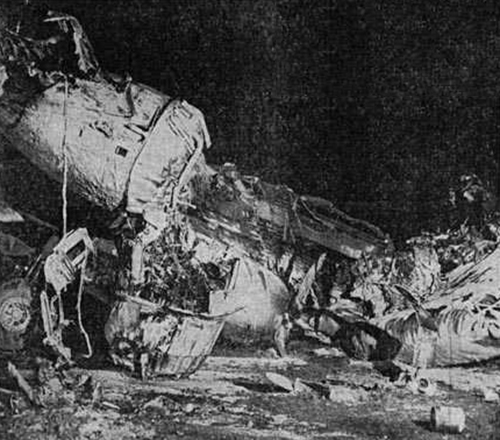
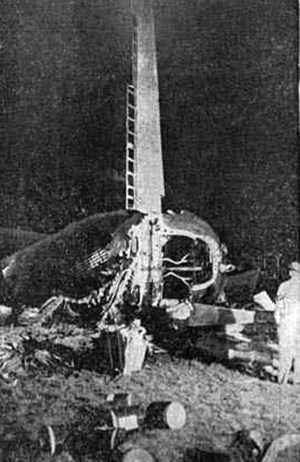
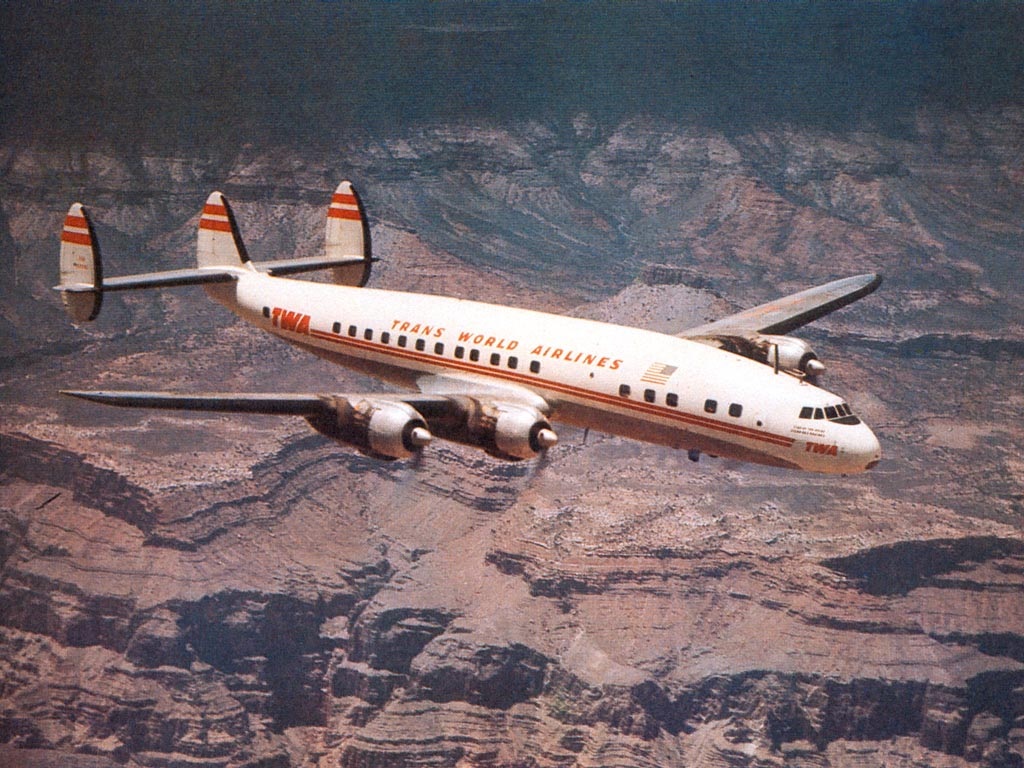
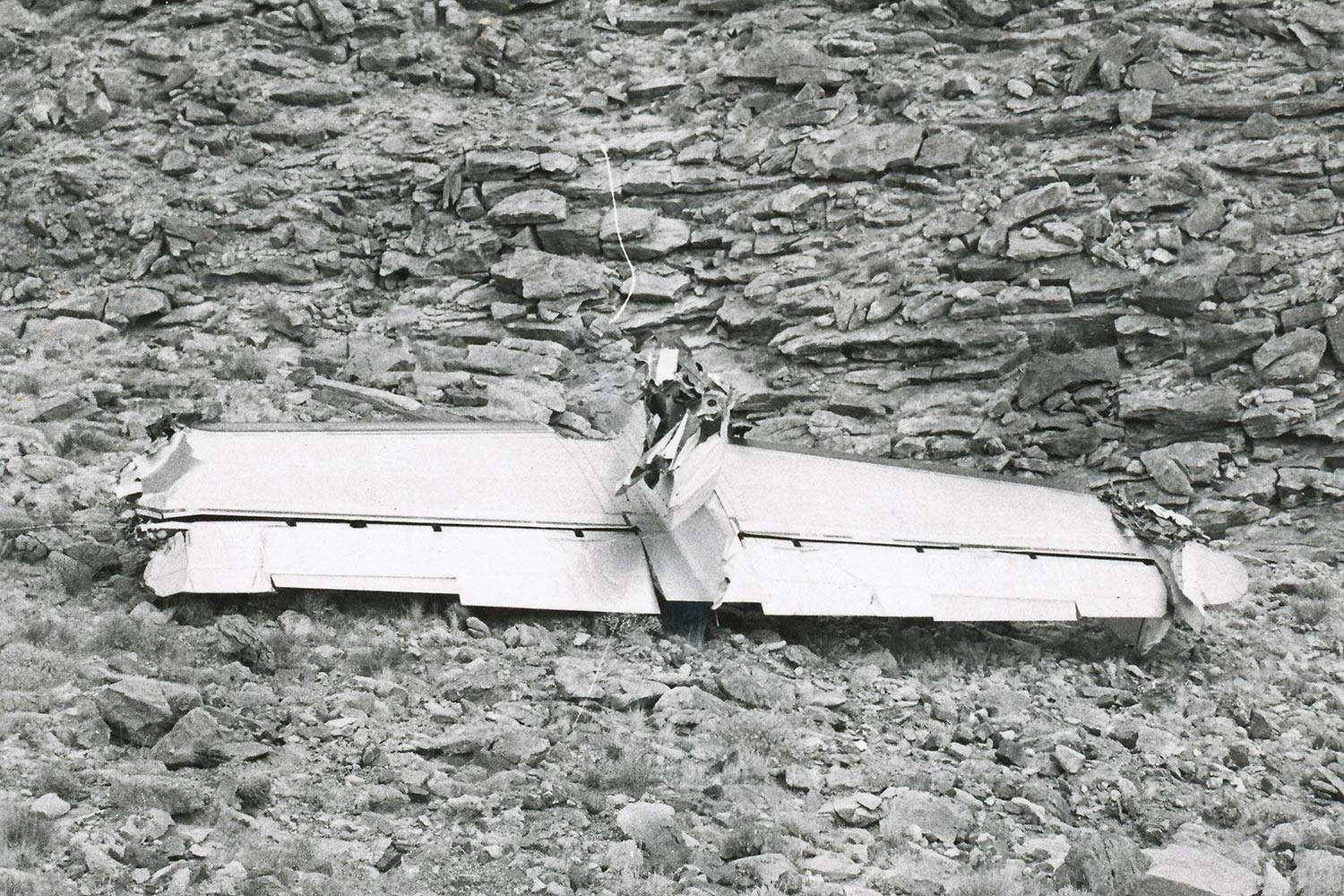
Crash of a Lockheed L-1049 Super Constellation in the Grand Canyon: 70 killed

Date & Time: Jun 30, 1956 at 1031 LT
Operator:

Registration:
N6902C
Flight Phase:
Survivors:
No
Site:
Schedule:
Los Angeles – Kansas City – Washington DC
MSN:
4016
YOM:
1952
Flight number:
TW002
Crew on board:
6
Crew fatalities:
Pax on board:
64
Pax fatalities:
Other fatalities:
Total fatalities:
70
Captain / Total flying hours:
14922
Captain / Total hours on type:
7208.00
Copilot / Total flying hours:
6976
Copilot / Total hours on type:
825
Aircraft flight hours:
10519
Circumstances:
On June 30, 1956, at 0901, Trans World Airlines Flight 2, a regularly scheduled passenger service, took off from runway 25 of the Los Angeles Inter-national Airport. Flight 2 was on an instrument flight rules (IFR) flight plan from Los Angeles, California, to Kansas City, Missouri, via Green Airway 5, Amber Airway 2, Daggett direct Trinidad, direct Dodge City, Victor Airway 10 Kansas City. The flight plan also proposed a cruising altitude of 19,000 feet, a .JPG"> airspeed of 270 knots, and a departure time of 0830. The Trans World flight crew consisted of Captain Jack S. Gandy, Copilot James H. Ritner, Flight Engineer Forrest D. Breyfogle, night Engineer Harry H. Allen (aboard as an additional crew member), and Hostesses Tracine E. Armbruster and Beth E. Davis. Preparations for Flight 2 were routine except that departure was delayed a few minutes by minor maintenance on the aircraft. The flight was dispatched with 3,300 gallons of fuel and the load manifest showed the gross weight of the aircraft at takeoff was 108,115 pounds, well, under the maximum allowable of 113,200 pounds. The load was properly distributed with respect to center of gravity limitations of the aircraft. As requested. the flight, after takeoff, contacted the Los Angeles tower radar departure controller, and was vectored through an overcast which existed in the Los Angeles area. After reporting "on top" (2,400 feet) the flight switched to Los Angeles Air Route Traffic Control Center (referred to as Los Angeles Center) frequency, 118.9 mcs., for its en route clearance. This clearance specified the routing as filed in the flight plan, however, the controller specified that the flight climb to 19,000 feet in VFR conditions. Immediately thereafter TWA 2 asked for a routing change to Daggett via Victor Airway 210. This was approved in a routine manner. At 0921, through company radio communications, Flight 2 reported that it was approaching Daggett and requested a change in flight plan altitude assignment from 19,000 to 21,000 feet. ARTC (Los Angeles Center) advised they were unable to approve the requested altitude because of traffic (United Air Lines Flight 718). Flight 2 requested a clearance of 1,000 feet on top. Ascertaining from the radio operator that the flight was then at least 1,000 on top, ARTC cleared the flight. At 0959 Trans World 2 reported its position through company radio at Las Vegas. It reported that it had passed Lake Mohave at 0955, was 1,000 on top at 21,000 feet, and estimated it would reach the 321-degree radial of the Winslow omni range station (Painted Desert) at 1031 with Farmington next. This was the last radio communication with the flight.
Probable cause:
The Board determines that the probable cause of this mid-air collision was that the pilots did not see each other in time to avoid the collision. It is not possible to determine why the pilots did not see each other, but the evidence suggests that it resulted from any one or a combination of the following factors: Intervening clouds reducing time for visual separation, visual limitations due to cockpit visibility, and preoccupation with normal cockpit duties, preoccupation with matters unrelated to cockpit duties such as attempting to provide the passengers with a more scenic view of the Grand Canyon area, physiological limits to human vision reducing the time opportunity to see and avoid the other aircraft, or insufficiency of en route air traffic advisory information due to inadequacy of facilities and lack of personnel in air traffic control. The following findings were reported:
- Approaching Daggett, TWA 2 requested its company radio to obtain 21,000 feet as an assigned altitude, or 1,000 on top,
- Company radio requested 21,000 feet IFR from ARTC. This vas denied by ARTC. Request was then made for 1,000 on top. This was approved and clearance issued. The flight climbed to and proceeded at 21,000 feet,
- As an explanation for the denial of 21,000 feet, TWA 2 was furnished pertinent information on UA718,
- The last position report by each flight indicated it was at that time at 21,000, estimating the Painted Desert line of position at 1031,
- The Salt Lake controller possessed both position reports at approximately 1013, at which time both flights were in uncontrolled airspace,
- Traffic control services are not provided in the uncontrolled airspace and according to existing Air Traffic Control policies and procedures the Salt Lake controller was not required to issue traffic information; none was issued voluntarily,
- A general overcast with some breaks existed at 15,000 feet in the Grand Canyon area,
- Several cumulus buildups extending above flight level existed; one was nearly over Grand Canyon Village and others were north and northeast in the area of the collision,
- The collision occurred at approximately 1031 in visual flight rule weather conditions at about 21,000 feet,
- The collision in space was above a position a short distance west of the TWA wreckage area, 17 miles west of or approximately 3-1/2 minutes' flying time from the Painted Desert line of position,
- Under visual flight rule weather conditions it is the pilot's responsibility to maintain separation from other aircraft,
- At impact the aircraft relative to each other converged at an angle of about 25 degrees with the DC-7 to the right of the L-1049. The DC-7 was rolled about 20 degrees right wing down and pitched about 10 degrees nose down relative to the L-1049,
- There was no evidence found to indicate that malfunction or failure of the aircraft or their components was a factor in the accident.
Final Report:
Crash of a Boeing KC-97G-26-BO Stratotanker near Walker AFB: 11 killed

Date & Time: Jun 26, 1956
Type of aircraft:
Operator:
Registration:
52-2700
Flight Phase:
Flight Type:
Survivors:
No
Site:
MSN:
16731
YOM:
1952
Crew on board:
11
Crew fatalities:
Pax on board:
0
Pax fatalities:
Other fatalities:
Total fatalities:
11
Circumstances:
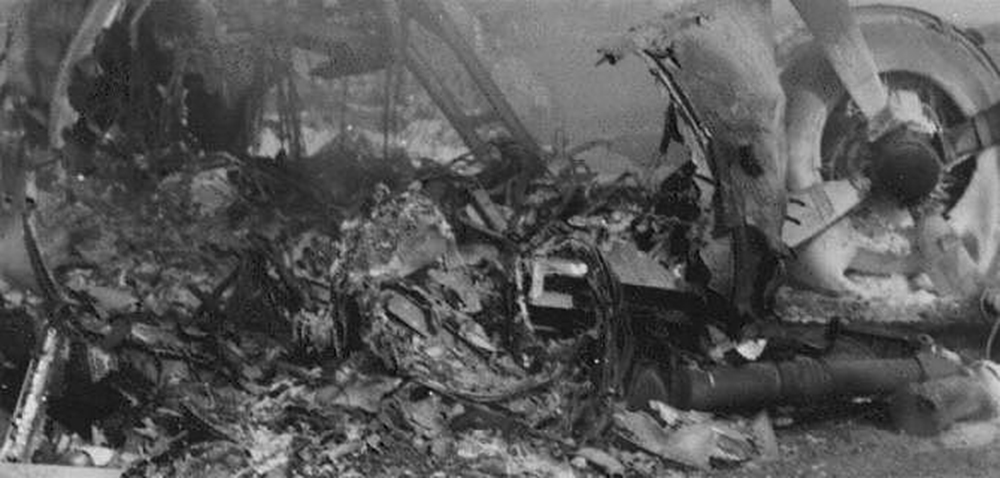
Few minutes after takeoff from Walker AFB, while climbing by night, a propeller blade detached from the engine number two, penetrated the fuselage and pierced a fuel tank. The aircraft caught fire, exploded and crashed in a desert area located 8 miles south of the airbase. All 11 crew members were killed.
Probable cause:
Loss of a propeller blade during initial climb.

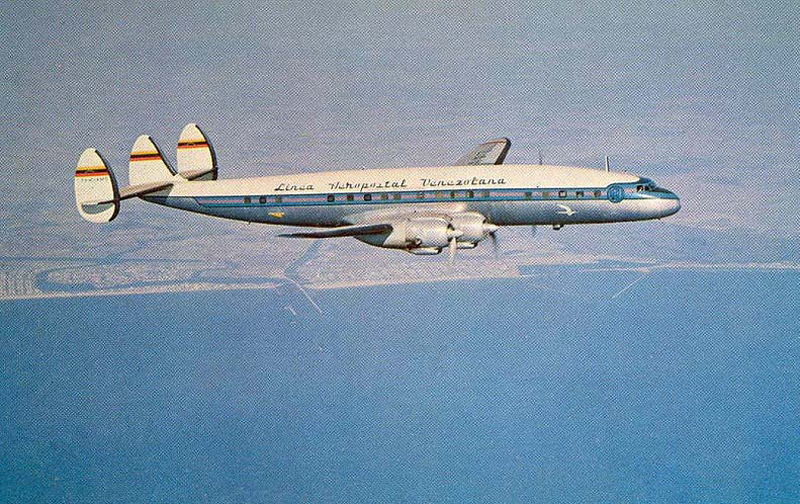
Crash of a Lockheed L-1049E-55 Super Constellation off New York: 74 killed

Date & Time: Jun 20, 1956 at 0132 LT
Operator:
Registration:
YV-C-AMS
Flight Phase:
Survivors:
No
Schedule:
New York – Caracas
MSN:
4561
YOM:
1954
Flight number:
LV253
Crew on board:
10
Crew fatalities:
Pax on board:
64
Pax fatalities:
Other fatalities:
Total fatalities:
74
Circumstances:
The four engine christened 'Rafael Urdaneta' departed New York-Idlewild Airport at 2306LT and proceeded to the south. One hour and twenty minutes later, while flying along the US coast, the crew contacted ground and received the permission to return to New York following the failure of the number two engine. The crew was unable to feather the propeller and the aircraft suffered severe vibrations. Ten minutes later, while the crew was trying to dump the fuel, a fire erupted. The aircraft went out of control, dove into the sea and crashed about 40 miles southeast of New York. The airplane disintegrated on impact and all 74 occupants were killed.
Probable cause:
Although the accident was observed by witnesses, its cause cannot be determined with absolute certainty. However, it would be logical to assume that the vibration which resulted from the loss of control of propeller no.2 caused one of the inside wing attachments to loosen or break at some point between the fuel tank and the dump chute at the symmetrical point of vibration (behind engine no.3).
Final Report:
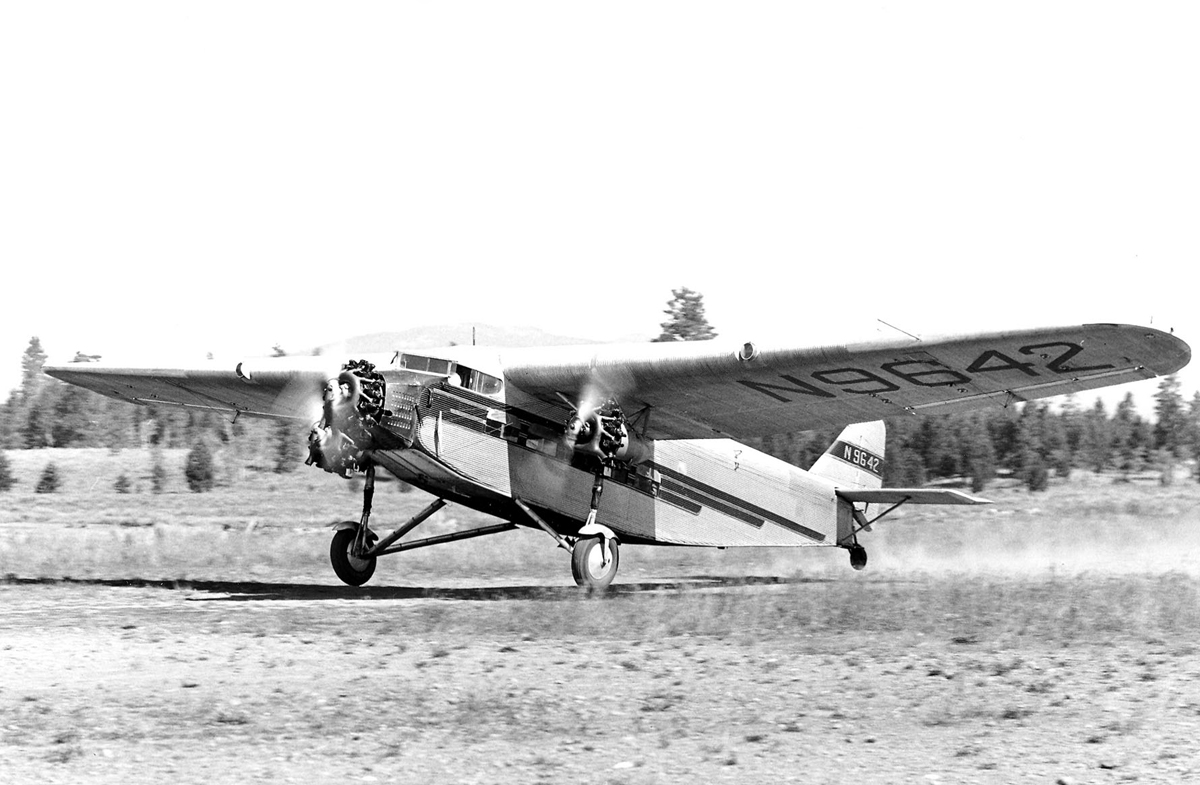
Crash of a Ford 4 in Townsend

Date & Time: Jun 19, 1956
Type of aircraft:
Operator:
Registration:
N9642
Flight Phase:
Survivors:
Yes
Schedule:
Townsend - Townsend
MSN:
4-AT-058
YOM:
1929
Crew on board:
2
Crew fatalities:
Pax on board:
0
Pax fatalities:
Other fatalities:
Total fatalities:
0
Circumstances:
The crew was performing a crop spraying mission at Townsend, Montana. While flying at low height, the left engine lost power and eventually detached. The crew elected to make an emergency landing but the aircraft crashed. Both occupants were slightly injured while the airplane was written off.
Probable cause:
Loss of power on left engine which detached in flight.

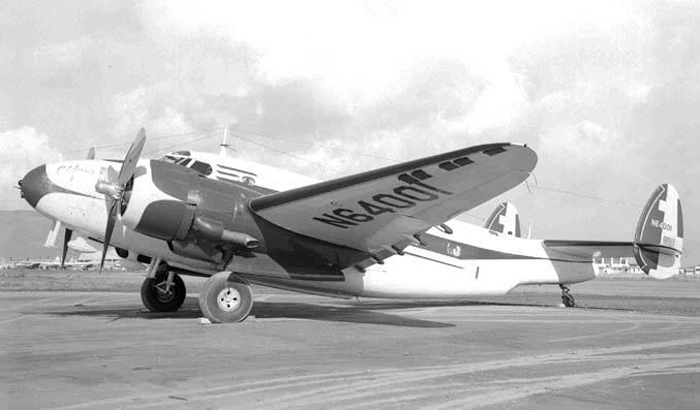
Crash of a Lockheed PV-1 Ventura in Jeffersonville: 8 killed

Date & Time: May 15, 1956 at 1038 LT
Type of aircraft:
Operator:
Registration:
N64001
Flight Type:
Survivors:
No
Schedule:
Chicago – Louisville
MSN:
5326
YOM:
1943
Crew on board:
2
Crew fatalities:
Pax on board:
6
Pax fatalities:
Other fatalities:
Total fatalities:
8
Captain / Total flying hours:
17600
Captain / Total hours on type:
9.00
Copilot / Total flying hours:
2297
Copilot / Total hours on type:
29
Aircraft flight hours:
3109
Circumstances:
The flight was for the purpose of transporting six Crane officials from Chicago, Illinois, to Louisville, Kentucky, to attend a business convention. Departure was from O'Hare-Chicago International Airport on a VFR flight plan (changed en route to IFR) with the Crane Company's Chief Pilot Randolph A. Mulherin in command, and Robert H. Robinette, also a Crane pilot, as copilot. Gross weight upon departure was estimated to be 27,360 pounds; the maximum permissible takeoff weight was 31,000 pounds. Shortly after takeoff the pilot gave a routine report to Chicago radio of his time off as 0908 and his estimated elapsed flight time as one hour and 20 minutes. He did not request weather information at that time. Other radio contacts followed as the flight progressed, the final one being at 1034 over the Jeffersonville intersection. An approach was then started from that point to the Standiford Airport, 6-9/10 miles distant. During this approach the aircraft struck trees and crashed at a point one-half mile north of the Jeffersonville intersection. The airplane was destroyed and all eight occupants have been killed.
Probable cause:
The Board determines that the probable cause of this accident was a critical loss of altitude, due to a complete power loss from the left engine and the drag of its windmilling propeller. The following findings were reported:
- Pilot Mulherin was relatively inexperienced with the subject model aircraft,
- The left engine suddenly lost all power because of a disconnected carburetor control,
- The left propeller was found not feathered,
- Examination of the right engine revealed no significant defect,
- Altitude could not be maintained and the aircraft struck high trees and then plunged steeply to the ground.
Final Report:

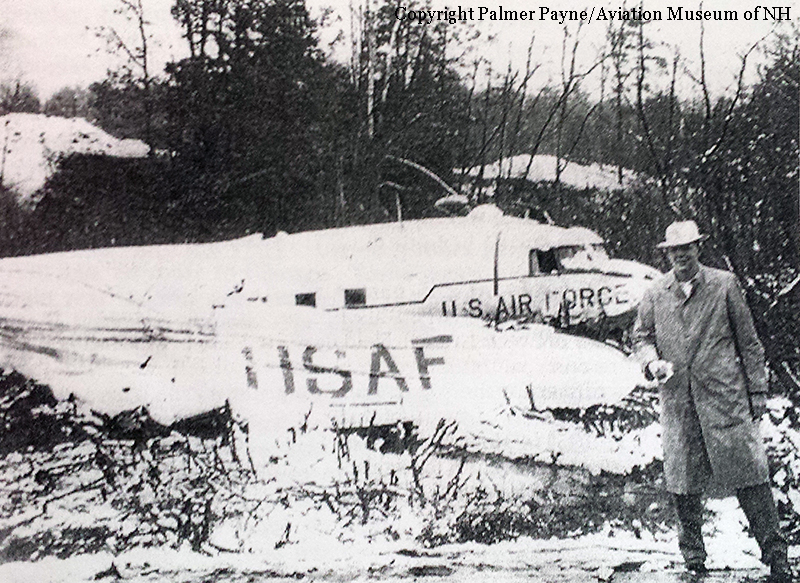
Crash of a Douglas C-47B-16-DK in Grenier Field AFB

Date & Time: Apr 24, 1956
Operator:
Registration:
43-49408
Flight Phase:
Flight Type:
Survivors:
Yes
MSN:
15224/26669
YOM:
0
Crew on board:
0
Crew fatalities:
Pax on board:
0
Pax fatalities:
Other fatalities:
Total fatalities:
0
Circumstances:
During a late-spring snowstorm, the aircraft crashed into a swamp located at the north end of Perimeter Road at Grenier Field AFB, Manchester, after striking the corner of the fire station hangar. The aircraft broke in two while the right wing was sheared off. All occupants, local dignitaries, were injured.

Crash of a Rockwell Aero Commander 520 near Skilak Lake: 6 killed

Date & Time: Apr 9, 1956 at 1000 LT
Operator:
Registration:
N5386N
Flight Phase:
Survivors:
No
Site:
Schedule:
Anchorage – Seward
MSN:
520-7
YOM:
1952
Flight number:
CDV006
Crew on board:
1
Crew fatalities:
Pax on board:
5
Pax fatalities:
Other fatalities:
Total fatalities:
6
Captain / Total flying hours:
7000
Aircraft flight hours:
1136
Circumstances:
The aircraft departed Anchorage international Airport at 0905LT (scheduled time of departure 0845), destination Seward. The flight plan filed with the company by Pilot John Arthur Waide contained the following: Anchorage to Seward VFR via Skilak Lake, airspeed 145 knots, estimated time en route 45 minutes. All fuel tanks were full and the fuel on board was sufficient for six hours. The estimated time for arrival at Seward was 0950. Witnesses saw the airplane flying southeast toward Seward, heard it circle Upper Russian Lake and saw it pass them again flying west-northwest at 0951. At 1255 Flight 6 was still unreported and search and rescue procedures were initiated. On April 10, 1956, at approximately 1400, the wreckage was reported on the south slope of an unnamed mountain east of Skilak Lake at an elevation of approximately 3,000 feet MSL, near latitude 60 degree 24 'N, longitude 150 degree 03'W. The aircraft was destroyed and all six occupants have been killed.
Probable cause:
The Board determines that the probable cause of this accident was the pilot's action in continuing flight during instrument weather conditions on a planned VFR flight through a mountain pass, and striking a mountainside while attempting to climb out. The following findings were reported:
- The gross weight at the time of takeoff exceeded the allowable gross. The weight was properly distributed. The overload was not a factor in the accident,
- At the time of takeoff the weather observations and forecast indicated that VFR flight over the route involved would be extremely marginal. These forecasts were available to the dispatcher and the pilot,
- The dispatching of the flight was at the discretion of the pilot in command. The assistance of the dispatcher in planning the flight was solely advisory in nature,
- Pilot Waide partially traversed a route segment through mountain passes in which conditions of ceiling and visibility were below VFR minimums, and were deteriorating,
- In attempting return through a pass after reversing his course, he lost visual contact and attempted to climb above the terrain,
- During the climb through the clouds the aircraft struck a mountain slope.
Final Report:

Crash of a Douglas C-124C Globemaster II at Travis AFB: 3 killed

Date & Time: Apr 7, 1956
Operator:
Registration:
52-1078
Flight Phase:
Flight Type:
Survivors:
Yes
Schedule:
Travis - Travis
MSN:
43987
YOM:
1952
Crew on board:
7
Crew fatalities:
Pax on board:
0
Pax fatalities:
Other fatalities:
Total fatalities:
3
Circumstances:
The crew was conducting a post-maintenance test flight. Shortly after takeoff from Travis AFB, while climbing to a height of 100 feet, the aircraft banked left, stalled and crashed in flames. Three crew members were killed while four others were injured. The aircraft was destroyed.
Crew:
1st Lt James Lyman Hayter,
2nd Lt Richard C. Nelson,
2nd Lt Garth L. Tingey,
M/Sgt Russell M. Hobart,
M/Sgt Harold E. Roache, †
M/Sgt Arthur G. Bird, †
S/Sgt Amos H. Kolb. †
Probable cause:
Ailerons and elevators control cables have been changed by mechanics based at Travis AFB and the crew was engaged in a post-maintenance check flight. It is believed that control was lost during initial climb because these cables were incorrectly installed, not adhering to the manufacturer procedures.

Crash of a Boeing B-29 Superfortress near Randolph AFB: 1 killed

Date & Time: Apr 3, 1956 at 1512 LT
Type of aircraft:
Operator:
Flight Phase:
Flight Type:
Survivors:
Yes
Schedule:
Randolph - Randolph
Crew on board:
6
Crew fatalities:
Pax on board:
0
Pax fatalities:
Other fatalities:
Total fatalities:
1
Circumstances:
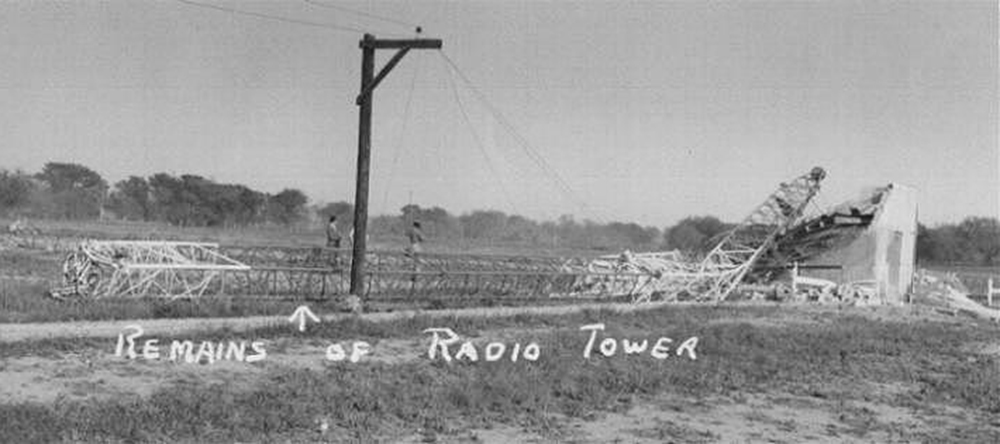
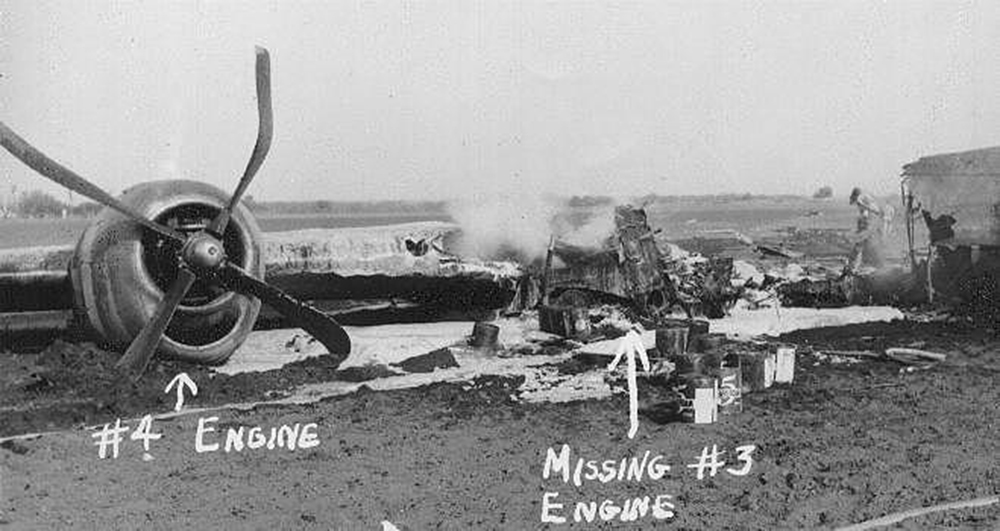
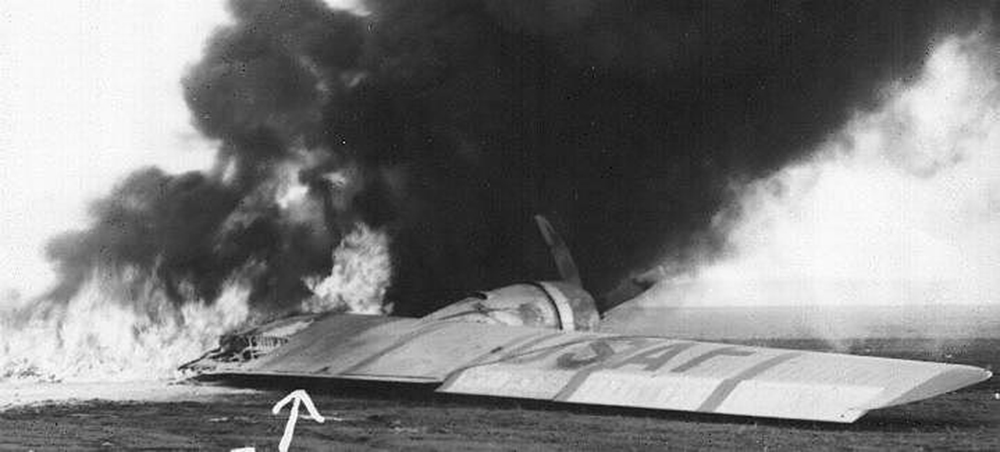
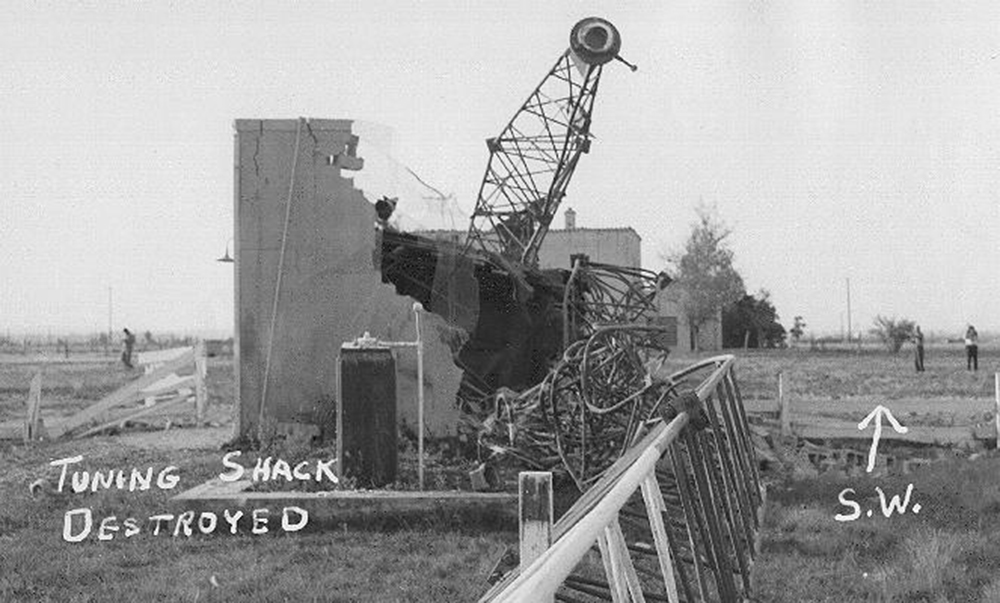
The crew was completing a local training flight at Randolph AFB. While flying at low height at a speed of 140 mph, the aircraft struck a 160-foot high telecommunications tower and crashed in a field, bursting into flames. The wreckage was found in Selma, north of the airbase. A crew member was killed while five others escaped uninjured.
Crew:
1st Lt L. R. Hildebrand +5.

Crash of a Boeing 377 Stratocruiser 10-30 off Seattle: 5 killed

Date & Time: Apr 2, 1956 at 0810 LT
Type of aircraft:
Operator:
Registration:
N74608
Flight Phase:
Survivors:
Yes
Schedule:
Seattle – Portland – Chicago – New York
MSN:
15954
YOM:
1949
Flight number:
NW002
Crew on board:
6
Crew fatalities:
Pax on board:
32
Pax fatalities:
Other fatalities:
Total fatalities:
5
Captain / Total flying hours:
14030
Captain / Total hours on type:
1557.00
Copilot / Total flying hours:
7297
Copilot / Total hours on type:
1143
Aircraft flight hours:
18489
Circumstances:
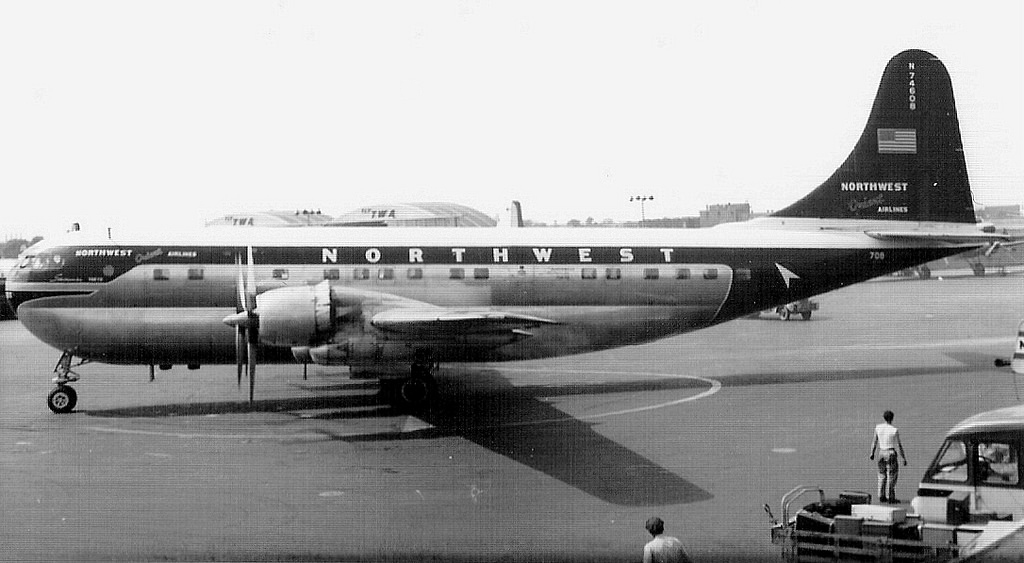
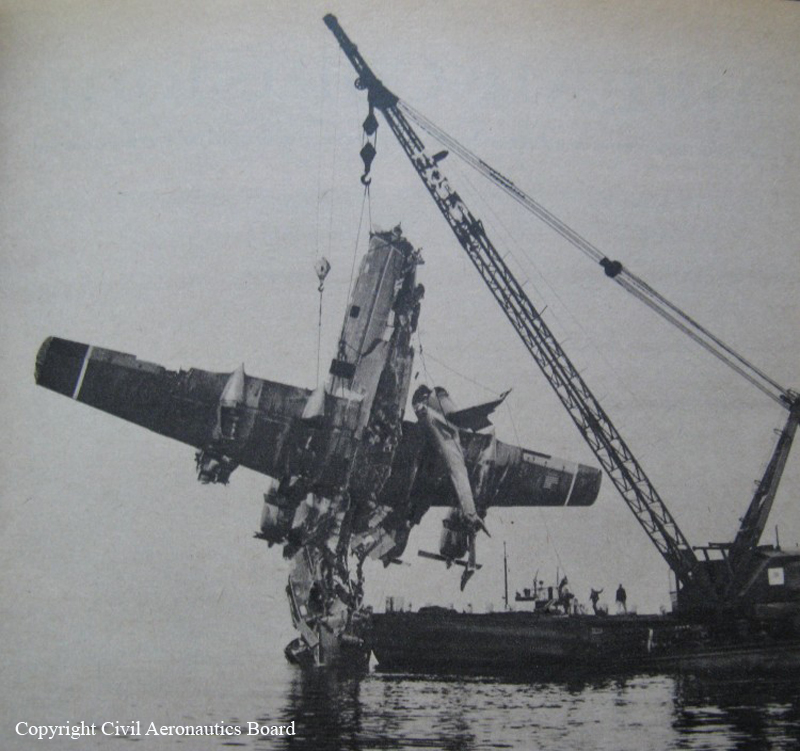
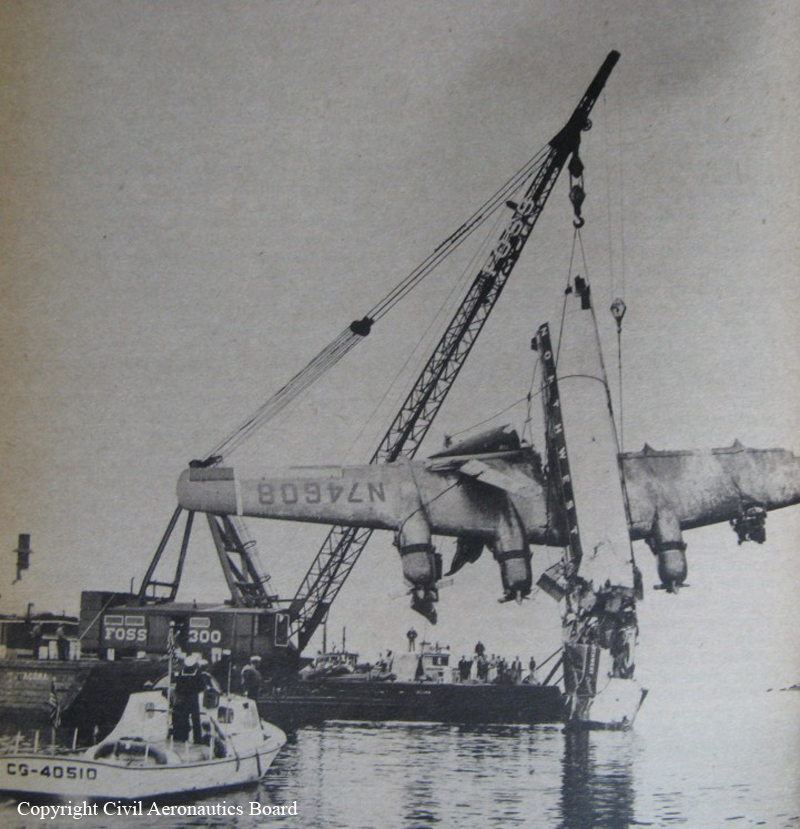
Flight 2 was scheduled daily between Seattle, Washington. and New York, New York, with intermediate stops at Portland, Oregon, and Chicago., Illinois. It departed Seattle-Tacoma Airport at 0806 on an IFR flight plan to Portland, Oregon, via Victor Airway 23 to cruise at 6,000 feet. There were 32 passengers arid a crew of six consisting of Captain Robert Reeve Heard, First Officer Gene Paul Johnson, Flight Engineer Carl Vernon Thomsen, Flight Service Attendant David V. Razey, Senior Stewardess Elinor A. Whitacre. and Junior Stewardess Dorothy L. Oetting. Takeoff was made on runway 20 and the flight climbed to an altitude of 1,000 to 1,200 feet. At this time power reduced and the wing flaps which had been set at the normal 25-degree takeoff position, were retracted at an airspeed of 145 knots. Immediately the crew became aware of severe buffeting and a strong tendency of the aircraft to roll to the left. Because the buffeting began almost immediately after the flaps ware retracted, the captain believed that it was due to a split-flap condition, i. e., the wing flaps on one side of the aircraft being retracted while the flaps on the other side remained partially or fully down. Power was reduced momentarily in an attempt to alleviate the buffeting but this was not effective and maximum continuous power was again restored. After being cleared by the Seattle tower for return the captain decided not to turn the aircraft because of control difficulty and advised that he would proceed to McChord Air Force Base at Tacoma. Thereafter, the captain testified the trouble became worse and the aircraft continued to lose altitude. The captain elected to ditch and did so at approximately 0810. Touchdown was on smooth water at an airspeed of approximately 120 knots and there was no abrupt deceleration. Passengers and crew members, except the captain and first officer, left the aircraft through the main cabin door and emergency exits. The captain and first officer, after a passenger count, left the aircraft through cockpit windows and swam to the left and right wings, respectively. The aircraft sank in approximately 15 minutes and by that time all persons on the wings had been supplied with buoyant cushions from the cabin seats. Those who survived were rescued by surface craft from the 42-degree F. water within 30 to 35 minutes from the time of ditching.
Probable cause:
The Board determines that the probable cause of the accident Was the incorrect analysis of control difficulty which occurred on retraction of the wing flaps as a result of the flight engineer's failure to close the engine cowl flaps - the analysis having been made under conditions of great urgency and within an extremely short period of time available for decision. The following findings were reported:
- Two minutes after takeoff an emergency was declared because of severe buffeting and control difficulty,
- The flight engineer did not close the cowl flaps to takeoff position,
- The cause of the buffeting and control difficulty was not determined by the flight crew and the captain made a decision to ditch the aircraft in Puget Sound,
- The ditching was made under favorable circumstances. The aircraft sank in about 15 minutes and all survivors were rescued from the water shortly thereafter,
- The aircraft was recovered from aver 400 feet of water and examination disclosed that all engine cowl flaps were approximately full-open,
- The buffeting and control difficulty was caused by the improper setting of the engine cowl flaps,
- There was no failure or malfunction of the aircraft, the powerplants, or control systems prior to the ditching.
Final Report: