Crash of a Cessna 500 Citation in Proserpine: 2 killed

Date & Time: Feb 20, 1984 at 2016 LT
Type of aircraft:
Operator:
Registration:
VH-FSA
Flight Type:
Survivors:
No
Schedule:
Cairns – Townsville – Proserpine – Brisbane
MSN:
500-0237
YOM:
1974
Country:
Region:
Crew on board:
2
Crew fatalities:
Pax on board:
0
Pax fatalities:
Other fatalities:
Total fatalities:
2
Circumstances:
The aircraft was engaged on a night freighter service from Cairns (CNS) to Brisbane (BNE) with intermediate stops at Townsville (TSV) and Proserpine (PPP). The flight departed Cairns at 18:47 hours. After arriving at Townsville the aircraft was refuelled and additional freight loaded before departing for Proserpine at 19:47 hours. The aircraft was cleared to track direct to Proserpine on climb to FL250. At 20:08 hours the pilot reported that the aircraft had left FL250 on descent into Proserpine and requested a clearance to track to intercept the 310 omni radial inbound for a DME Arrival. This request was approved and a short time later the aircraft reported established on the radial. At 20:16 hours, in answer to a question from Townsville Control, the aircraft reported at 2600 feet and was instructed to call Townsville Flight Service Unit. The aircraft complied with this instruction, and after the initial contact no further transmissions were received from the aircraft. The wreckage was located approximately 4 kilometres north-west of the threshold of runway 11 and in line with that runway. The aircraft had been destroyed by impact forces and the ensuing fire. A witness, who lived near the final approach path of the aircraft, reported that she observed the aircraft when it was on final approach. Analysis of her observations indicated that when she sighted the aircraft it was at a lower height than normal for the type of approach that the pilot reported would be flown. At the time of the sighting she did not notice anything unusual about the operation of the aircraft. Other persons at the Proserpine Aerodrome at the time of the accident reported rainstorms and strong winds in the vicinity.
Probable cause:
An inspection of the aircraft and its systems did not reveal any defect that could have contributed to the accident. Despite the extensive investigation, no evidence could be found to indicate why the aircraft was below the normal glide path during the approach.


Crash of a Rockwell Aero Commander 685 near Ben Lomond: 1 killed

Date & Time: Jan 20, 1984 at 0825 LT
Operator:
Registration:
VH-MML
Flight Phase:
Flight Type:
Survivors:
No
Site:
Schedule:
Armidale – Glen Innes
MSN:
685-12054
YOM:
1973
Country:
Region:
Crew on board:
1
Crew fatalities:
Pax on board:
0
Pax fatalities:
Other fatalities:
Total fatalities:
1
Circumstances:
During the flight the pilot reported that he would descend to cruise at 500 feet above ground level. Witnesses saw an aircraft at low level on the expected track, and others heard aircraft noise and then the sound of an impact. Weather conditions were overcast with low cloud covering the hills. The wreckage was found at an elevation of about 4,300 feet above mean sea level. The aircraft had apparently struck the ground while in a steep nosedown attitude and rotating to the right. A fire had broken out and engulfed the wreckage. The pilot, sole on board, was killed.
Probable cause:
Investigation did not reveal any defect or malfunction of the aircraft which might have contributed to the development of the accident. Both engines were operating at high power settings and the gear and flaps were up. The aircraft had been operating under the Instrument Flight Rules when the pilot reported his intention to descend. Conditions at the destination were suitable for visual flight, and the reason the pilot elected to proceed at a low height above the ground was not determined. It was likely that while cruising below the cloud, the pilot was suddenly confronted by localised adverse weather conditions in the vicinity of the accident site. The maintenance of control of the aircraft under these conditions should have presented little problem to the pilot, who was suitably qualified to operate in instrument conditions. In these circumstances, the precise sequence of events leading to the evident loss of control of the aircraft could not be established.
Final Report:

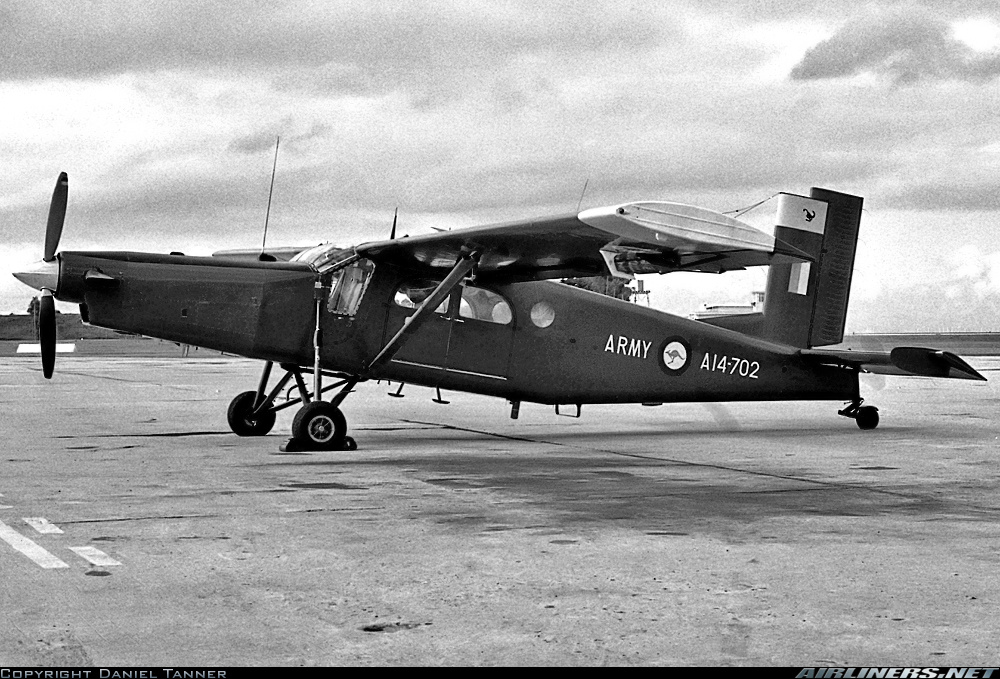
Crash of a Pilatus PC-6/B1-H2 Turbo Porter in Point Cook: 1 killed

Date & Time: Dec 7, 1983
Operator:
Registration:
A14-702
Flight Phase:
Flight Type:
Survivors:
No
MSN:
725
YOM:
1969
Country:
Region:
Crew on board:
1
Crew fatalities:
Pax on board:
0
Pax fatalities:
Other fatalities:
Total fatalities:
1
Aircraft flight hours:
7267
Circumstances:
The pilot, sole on board, was completing a demo flight at RAAF Point Cook. While making a low pass, he lost control of the aircraft that stalled and crashed, bursting into flames. The pilot was killed.

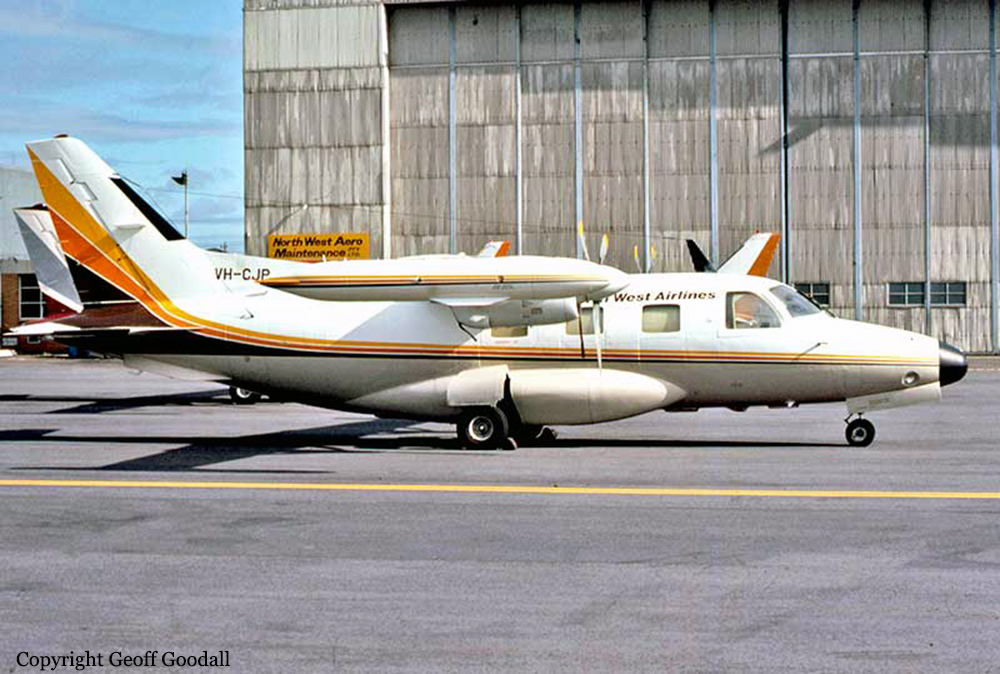
Crash of a Mitsubishi MU-2B-30 Marquise in Cairns

Date & Time: Nov 15, 1983 at 0625 LT
Type of aircraft:
Registration:
VH-CJP
Flight Type:
Survivors:
Yes
Schedule:
Townsville – Cairns
MSN:
505
YOM:
1970
Country:
Region:
Crew on board:
2
Crew fatalities:
Pax on board:
0
Pax fatalities:
Other fatalities:
Total fatalities:
0
Circumstances:
The aircraft was established on final by the pilot under check. A 5 knot downwind component prevailed. The flare was commenced higher than is normal and the airspeed decreased below the optimum. The pilot did not react to prompting by the the check-pilot but, at about 20 feet, retarded the throttles. The aircraft struck the runway heavily in a left wing low attitude and the left main and nose landing gear was torn off. Command responsibility for the flight was not discussed and the check-pilot was under the misapprehension that his role was only that of safety pilot. Due to flight rescheduling, the pilot under check slept for only two and a half hours prior to commencing duty. The autopilot was unserviceable and the pilot under check flew the aircraft by hand for most of the four flight legs. During the last leg the check-pilot twice simulated an engine failure. The second failure was simulated on final approach at about 7 DME. Power was reinstated shortly afterwards and the approach continued normally until close to the threshold. At this time the pilot under check had been on duty for five and a half hours and the check-pilot for over twelve hours. Overseas research has shown that subtle errors in visual perception may be induced by an event which causes stress, and that this condition may persist for several minutes after the event. Fatigue may aggravate the problem. The errors in perception are the result of changes in focal length of the lens of the eye caused by the physiological effects of the stress resulting from the event. The experimental research and information from accident data has provided evidence that the effect of the changes in focal length may cause a pilot on final approach to perceive a runway to be on a higher plane than it actually is. In this case, with the particular combination of factors prevailing at the time, it is possible that the imposition of a simulated engine failure on approach within a few minutes prior to the final landing of a long and fatiguing night's operations caused a stress reaction in the pilot under check. The level of stress induced in this fatigued pilot may have been sufficient to cause the kind of perceptual error described above. The runway would thus appear to the pilot slightly higher than it actually was. His judgement of flare height, being based on this false perception, would therefore be incorrect.
Probable cause:
Schedule changed; auto-pilot unserviceable; both pilots fatigued; command responsibility unresolved; pilot under check misjudged flare; check-pilot did not take over in time to recover control. Possible Factor Visual perception errors resulting from stress induced by the pilot's reaction to the simulated engine failure.
Final Report:

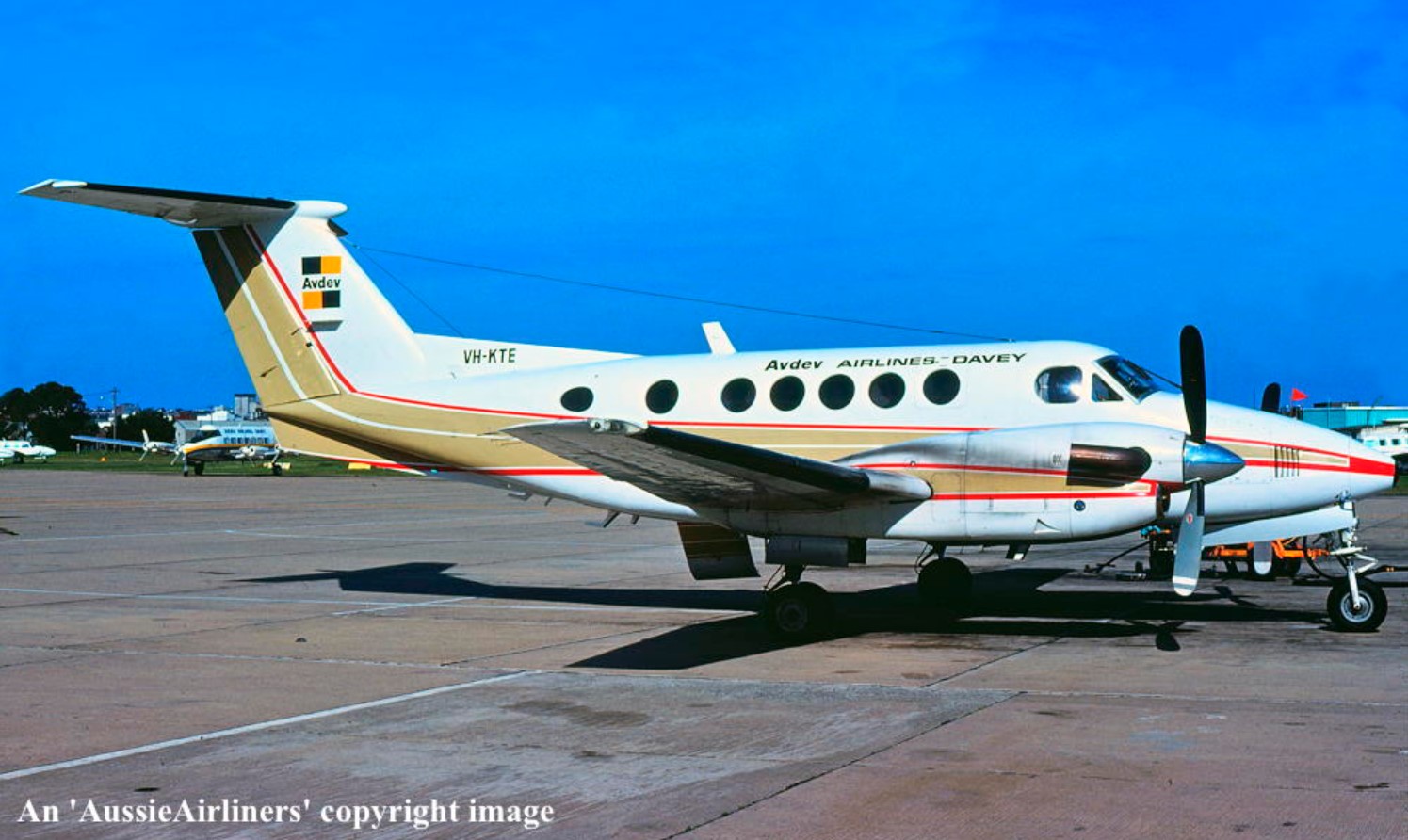
Crash of a Beechcraft 200 Super King Air in Adavale: 12 killed

Date & Time: Aug 28, 1983 at 2145 LT
Registration:
VH-KTE
Flight Phase:
Survivors:
No
Schedule:
Windorah - Toowoomba
MSN:
BB-320
YOM:
1978
Country:
Region:
Crew on board:
1
Crew fatalities:
Pax on board:
11
Pax fatalities:
Other fatalities:
Total fatalities:
12
Captain / Total flying hours:
4203
Captain / Total hours on type:
203.00
Aircraft flight hours:
7206
Circumstances:
While cruising at an altitude of 27,000 feet in good weather conditions and just passing over the city of Adavale, the twin engine aircraft went out of control and entered a dive. It descended for about 7,000 feet when excessive g loads caused both wings and the fuselage to breakup. The wreckage was found about 3,5 km south of Adavale and all 12 occupants were killed.
Probable cause:
There is insufficient evidence to determine the circumstances and factors which led to the inflight breakup of the aircraft.
Final Report:

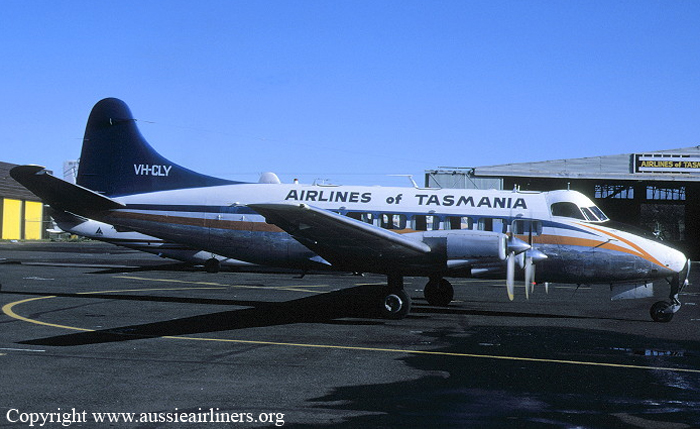
Crash of a De Havilland DH.114 Heron 2D in Launceston

Date & Time: Aug 4, 1983
Type of aircraft:
Operator:
Registration:
VH-CLY
Survivors:
Yes
Schedule:
Hobart - Launceston
MSN:
14122
YOM:
1957
Country:
Region:
Crew on board:
2
Crew fatalities:
Pax on board:
5
Pax fatalities:
Other fatalities:
Total fatalities:
0
Circumstances:
On final approach to Launceston Airport, the aircraft was misaligned and the crew decided to initiate a go-around procedure. Gear were retracted and flaps were partially raised when the airplane lost height and struck fences. It crash landed and came to rest on the runway. All seven occupants escaped with minor injuries and the aircraft was damaged beyond repair.

Crash of a Rockwell Aero Commander 685 in the Bass Strait: 2 killed

Date & Time: Jul 17, 1983 at 1505 LT
Operator:
Registration:
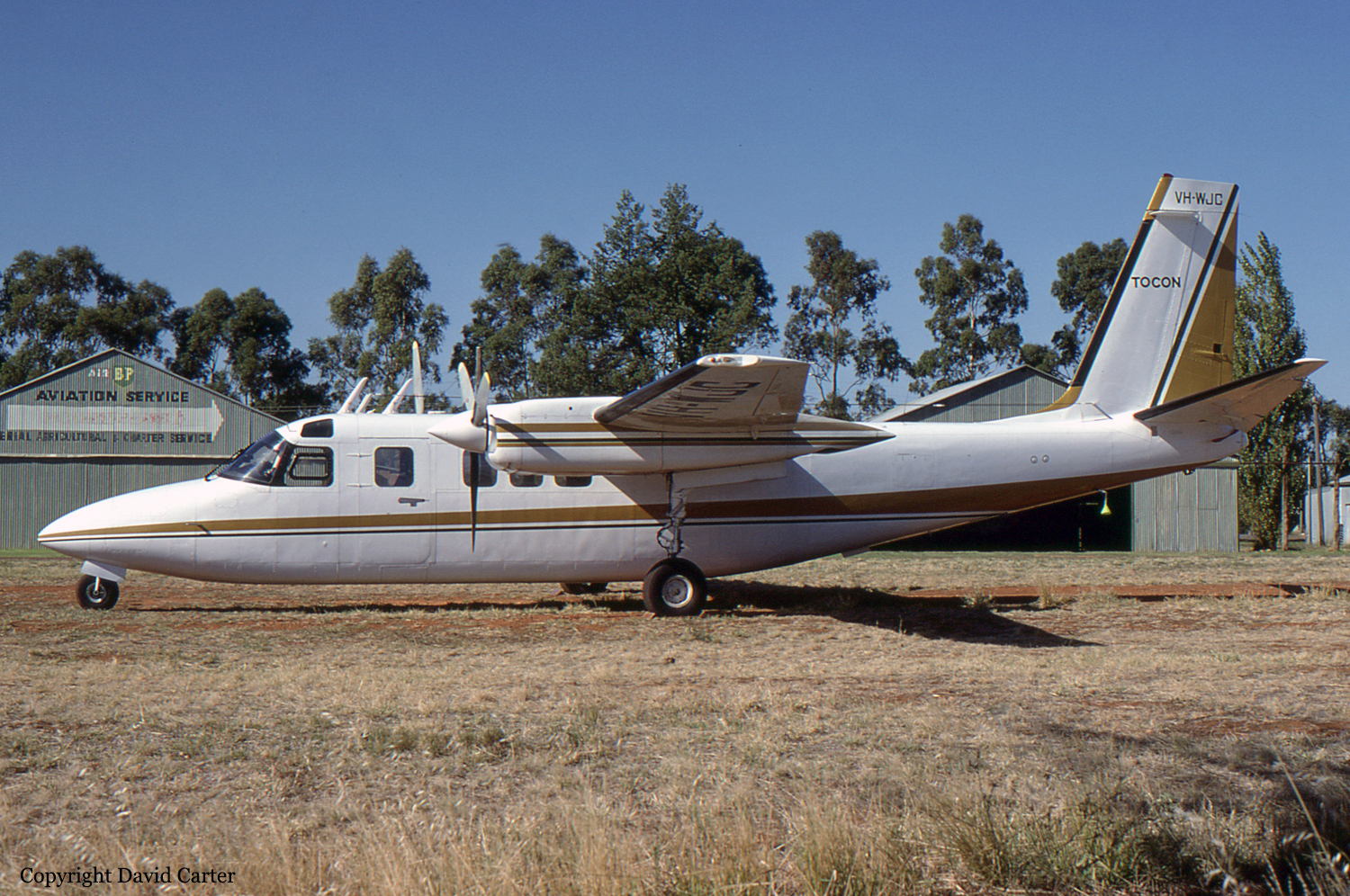
VH-WJC
Flight Phase:
Flight Type:
Survivors:
No
Schedule:
Hobart - Melbourne
MSN:
685-12005
YOM:
1972
Country:
Region:
Crew on board:
2
Crew fatalities:
Pax on board:
0
Pax fatalities:
Other fatalities:
Total fatalities:
2
Circumstances:
On 17 July 1983 the pilot of Rockwell (Aero Commander) 685 aircraft VH-WJC submitted a flight plan to the Hobart Briefing Office for a private category flight from Hobart to Moorabbin, tracking via Launceston and Wonthaggi. The plan indicated that the flight would be conducted under the Instrument Flight Rules (IFR) at Flight Level 120 (12 000 feet altitude on standard atmospheric pressure of 1013.2 millibars), with two persons on board. The flight plan showed that the aircraft had a fuel endurance of 220 minutes, and carried an Emergency Locator Beacon (ELB) and life jackets. There was no indication that a life raft was carried. The aircraft departed Hobart at 1352 hours and, thereafter, the pilot made the appropriate radio reports to Hobart Tower, Launceston Control and Launceston Tower. The flight apparently progressed normally until 1452 hours when the pilot advised Launceston Control, "Er Whiskey Juliet Charlie we seem to have been in trouble with er fuel here the red er warning light comes on and the gauge is down . . .".At 1454 hours the pilot transmitted a Mayday call, indicating that he was descending from Flight Level 120 on track to Bass (a position reporting point), present position was 85 nautical miles (nm) from Launceston and he would be making a controlled ditching. Launceston Control immediately initiated the Distress phase of the Search and Rescue procedures and advised the Melbourne Operational Control Centre (OCC). Further communications between the aircraft and Launceston Control indicated that the aircraft was continuing descent on track towards Wonthaggi. The last position report from the pilot, at 1500 hours, was 94 nm from Wonthaggi. The last recorded transmission from the aircraft was at 1501 hours when the pilot confirmed that there were two persons on board. There were no indications at any time from the pilot that the fuel supply had been exhausted or that either engine had failed. It was estimated that the aircraft ditched at about 1505 hours, at an approximate position of 81 nm from Wonthaggi on the planned track. No trace of the aircraft nor both occupants was found.
Probable cause:
Due to lack of evidences, the exact cause of the accident could not be determined.
Final Report:

Crash of a Piper PA-31-350 Navajo Chieftain in Moomba: 1 killed

Date & Time: Jun 15, 1983 at 1140 LT
Operator:
Registration:
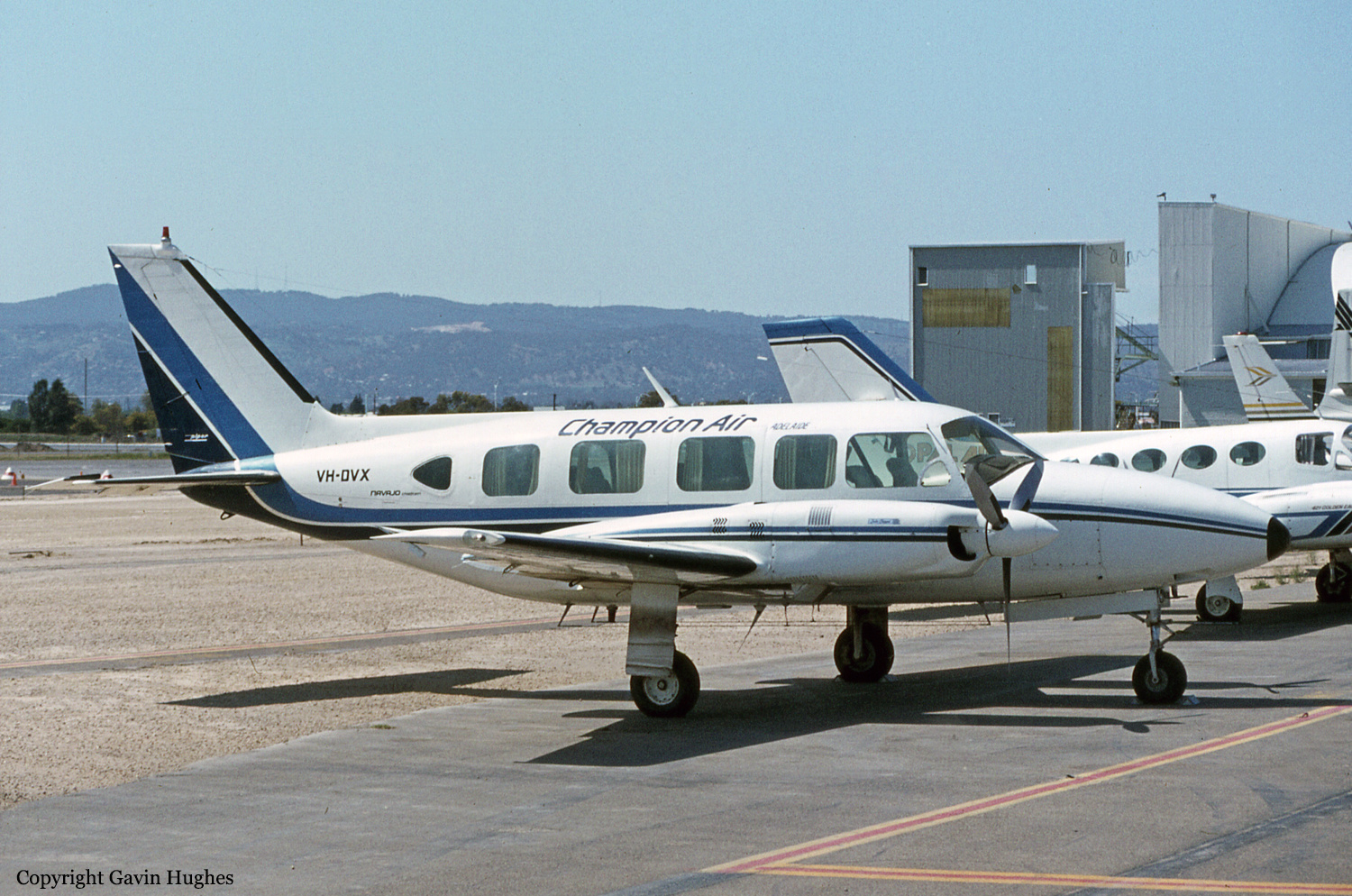
VH-DVX
Flight Phase:
Survivors:
Yes
Schedule:
Adelaide – Moomba – Dullingari
MSN:
31-7405425
YOM:
1974
Country:
Region:
Crew on board:
1
Crew fatalities:
Pax on board:
3
Pax fatalities:
Other fatalities:
Total fatalities:
1
Circumstances:
The aircraft was engaged on a charter flight from Adelaide to Moomba and Dullingari. The flight from Adelaide to Moomba was without incident and after landing the pilot parked the aircraft adjacent to the refuelling cabinets. He then assisted the passengers from the aircraft and removed baggage from the nose locker. During this period a conversation took place between the pilot and the aircraft refueller. The exact content of that conversation could not positively be determined but it appears that the pilot did not specify the type of fuel to be placed in the aircraft, only which tanks were to be fuelled. As the refueller was fuelling the aircraft, the pilot accompanied his passengers to the airport terminal. When the fuelling was completed the pilot returned, with his passengers, to the aircraft. He signed the fuel release note which showed that 263 litres of Jet A-1 (Aviation turbine fuel) had been supplied, then completed a check of the aircraft's fuel tanks to ensure no water was present in the fuel. The pilot reported that the fuel sample taken was free of water and appeared to him to be the normal fuel used by the PA-31 aircraft, AVGAS (Aviation Gasoline). The pilot and the passengers then boarded the aircraft, the engines were started and the aircraft taxied for a DEPARTURE on runway 12. During the taxiing phase the pilot completed the pre-take-off checks, these including a check that the temperatures and pressure relevant to the operation of the engine were within limits. The pilot subsequently advised that the take-off was normal and after the landing gear was raised, engine power was reduced to the standard settings for the climb. However, at about 500 feet above ground level the pilot sensed a loss of performance and noted that the indicated airspeed was 115 knots, 5 knots lower than normal. He then noticed a further decay in airspeed, accompanied by the onset of engine surging and rough running. He was unable to diagnose the cause of the loss of performance and commenced a turn back towards the aerodrome. Shortly after entering the turn the right hand engine began to misfire and feathering action was initiated for the propeller. At about this time the indicated airspeed had reduced to 85 knots, the aircraft had developed a high rate of sink and the pilot realised that impact with the ground was imminent. The aircraft initially struck the ground with the right wing, then the nose section before the fuselage made heavy contact in a flat attitude, sliding about 45 metres before coming to rest. The aircraft caught fire during the impact sequence and was completely burnt out. The pilot and two of the passengers escaped from the wreckage but attempts to assist the third passenger were thwarted by the fire.
Probable cause:
The investigation established that JET-A1 fuel had been added to the fuel tanks of VH-DVX, and of the total fuel in the tank approximately 68 percent was JET-A1 fuel. The type of engine fitted to VH-DVX is not compatible with the use of JET-A1 fuel.
Final Report:

Crash of a Mitsubishi MU-2B-60 Marquise in Bargo: 1 killed

Date & Time: May 24, 1983 at 0433 LT
Type of aircraft:
Operator:
Registration:
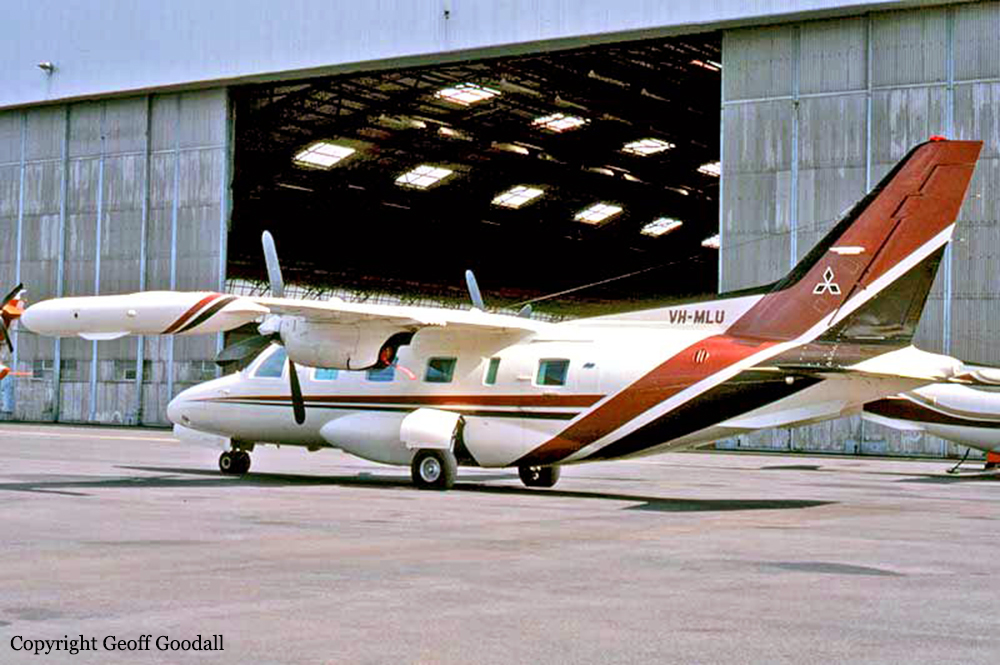
VH-MLU
Flight Phase:
Flight Type:
Survivors:
No
Schedule:
Sydney - Melbourne
MSN:
1527
YOM:
1981
Country:
Region:
Crew on board:
1
Crew fatalities:
Pax on board:
0
Pax fatalities:
Other fatalities:
Total fatalities:
1
Circumstances:
The aircraft was cleared via a Standard Instrument DEPARTURE with an unrestricted climb to Flight Level (FL) 220. The aircraft climbed on track at an average rate of 1300 ft/min until FL130. The rate of climb then reduced to 350 ft/min until FL140, when the rate of climb increased to 1800 ft/min. At FL160 the aircraft entered a near vertical descent and radar contact was lost one minute later at 3100 feet. The aircraft impacted the ground in a near vertical attitude. The pilot, sole on board, was killed.
Probable cause:
Despite an extensive investigation, the reason for the loss of control leading to this accident could not be determined. There have been several other reported occurrences involving sudden loss of control in this aircraft type and the United States Federal Aviation Administration has conducted a certification review of the type. The results of that review do not appear to indicate any factors relevant to this particular accident.
Final Report:

Crash of a Cessna 402 near Nagoorin: 1 killed

Date & Time: Feb 21, 1983 at 0405 LT
Type of aircraft:
Operator:
Registration:
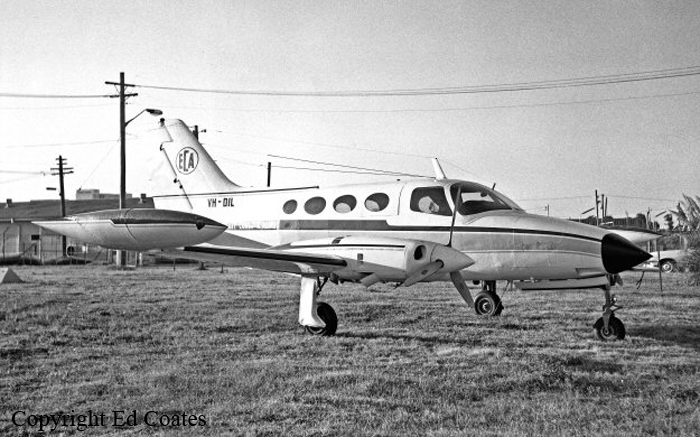
VH-DIL
Flight Phase:
Flight Type:
Survivors:
No
Schedule:
Brisbane – Gladstone – Rockhampton
MSN:
402-0142
YOM:
1967
Country:
Region:
Crew on board:
1
Crew fatalities:
Pax on board:
0
Pax fatalities:
Other fatalities:
Total fatalities:
1
Circumstances:
The aircraft was engaged in operating a night freight flight from Brisbane to Gladstone and Rockhampton. The pilot departed Rockhampton as a passenger in another company aircraft at about 2100 hours the night before the accident and was flown to Caloundra. He then flew VH-DIL to Brisbane and after arriving submitted a flight plan for the return flight to Rockhampton giving an estimated time of DEPARTURE Brisbane of 0230 hours. Before DEPARTURE, however, the pilot was required to await the arrival of another aircraft so that freight could be transhipped to his aircraft. DEPARTURE from Brisbane was made at 0301 hours and at 0400 hours the pilot reported the aircraft's position over Gayndah, the pilot was instructed to call on another radio frequency at 0410 hours. No further transmissions were heard from the aircraft. The wreckage was located two days later in mountainous terrain. The aircraft had impacted the ground in a near vertical attitude. Subsequent investigation did not reveal any fault with the aircraft or its systems that could have contributed to the accident. The day before the accident the pilot rose at about 0730 hours after spending the previous night and day at a friends property near Rockhampton. He spent the day at leisure at the property before returning to Rockhampton in the afternoon. After dining at his parents home he proceeded to the airport for the flight to Caloundra. Before departing Brisbane to return to Rockhampton the only sleep the pilot would have had was about an hour on the flight to Caloundra and possibly another short period at Brisbane Airport while waiting for his aircraft to be loaded.
Probable cause:
The cause of the in-flight loss of control of the aircraft could not be determined. The pilot had had inadequate rest prior to undertaking the flight.
Final Report: