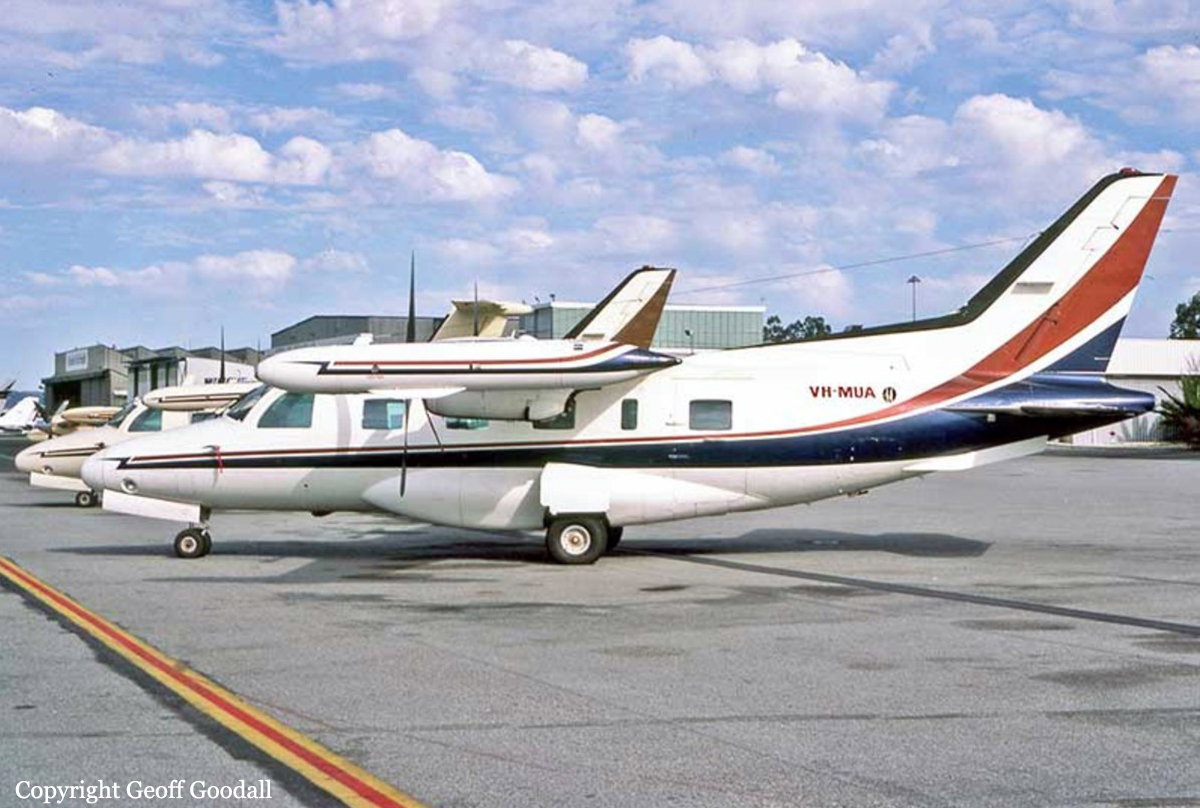
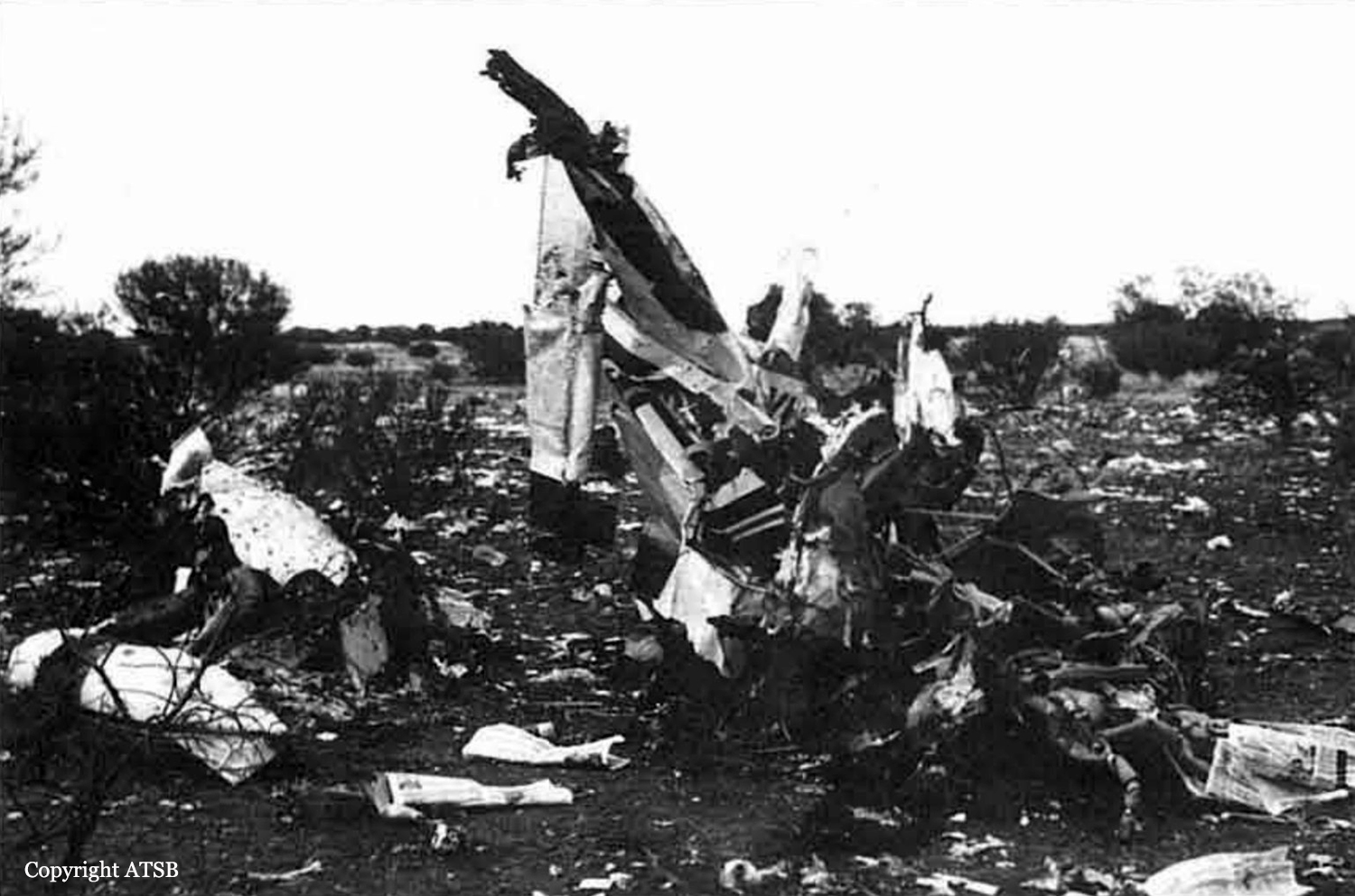
Crash of a Mitsubishi MU-2B-60 Marquise near Meekatharra: 2 killed

Date & Time: Jan 26, 1990 at 0105 LT
Type of aircraft:
Registration:
VH-MUA
Flight Phase:
Survivors:
No
Schedule:
Perth - Port Hedland
MSN:
746
YOM:
1979
Country:
Region:
Crew on board:
1
Crew fatalities:
Pax on board:
1
Pax fatalities:
Other fatalities:
Total fatalities:
2
Captain / Total flying hours:
11030
Captain / Total hours on type:
51.00
Aircraft flight hours:
1902
Circumstances:
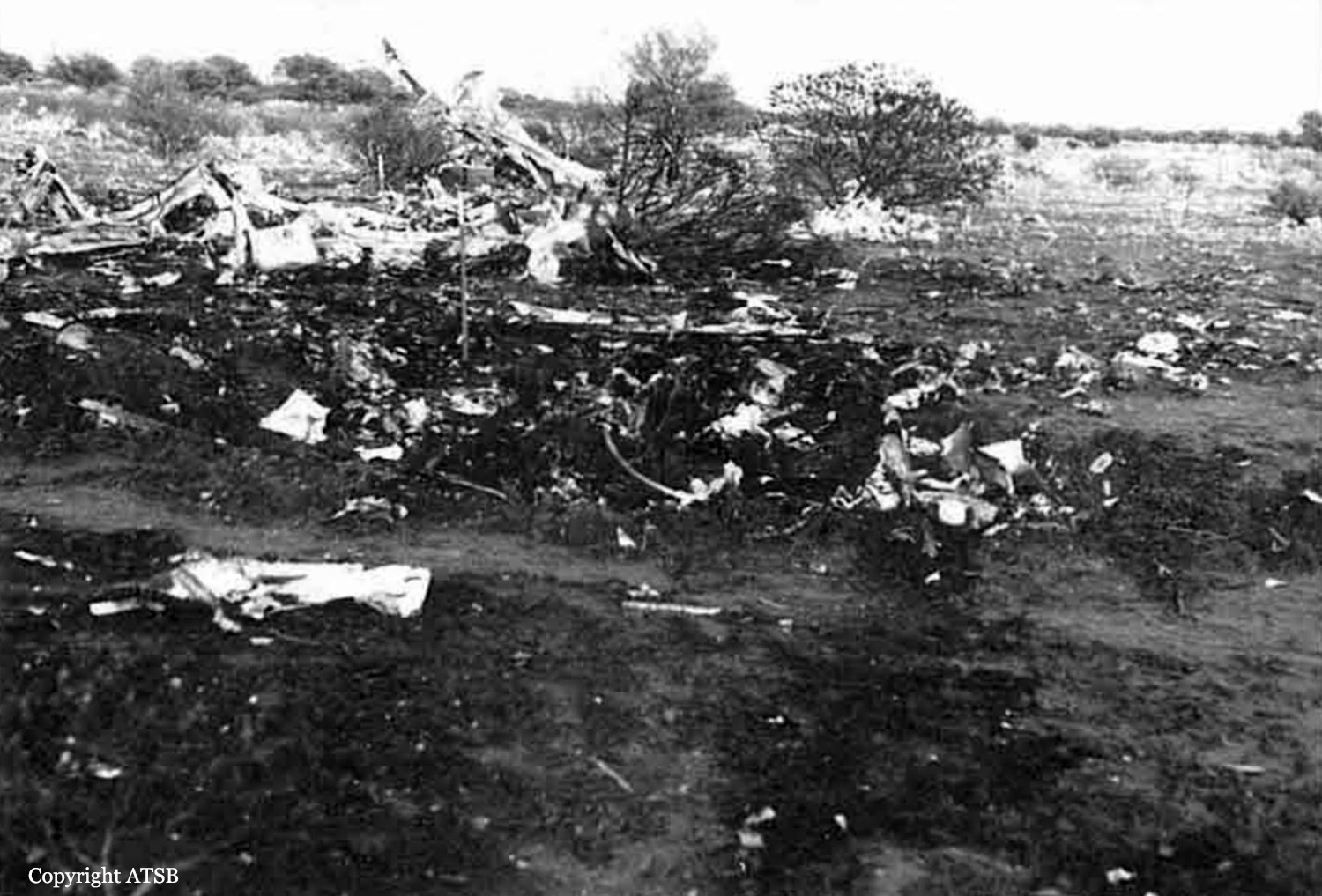
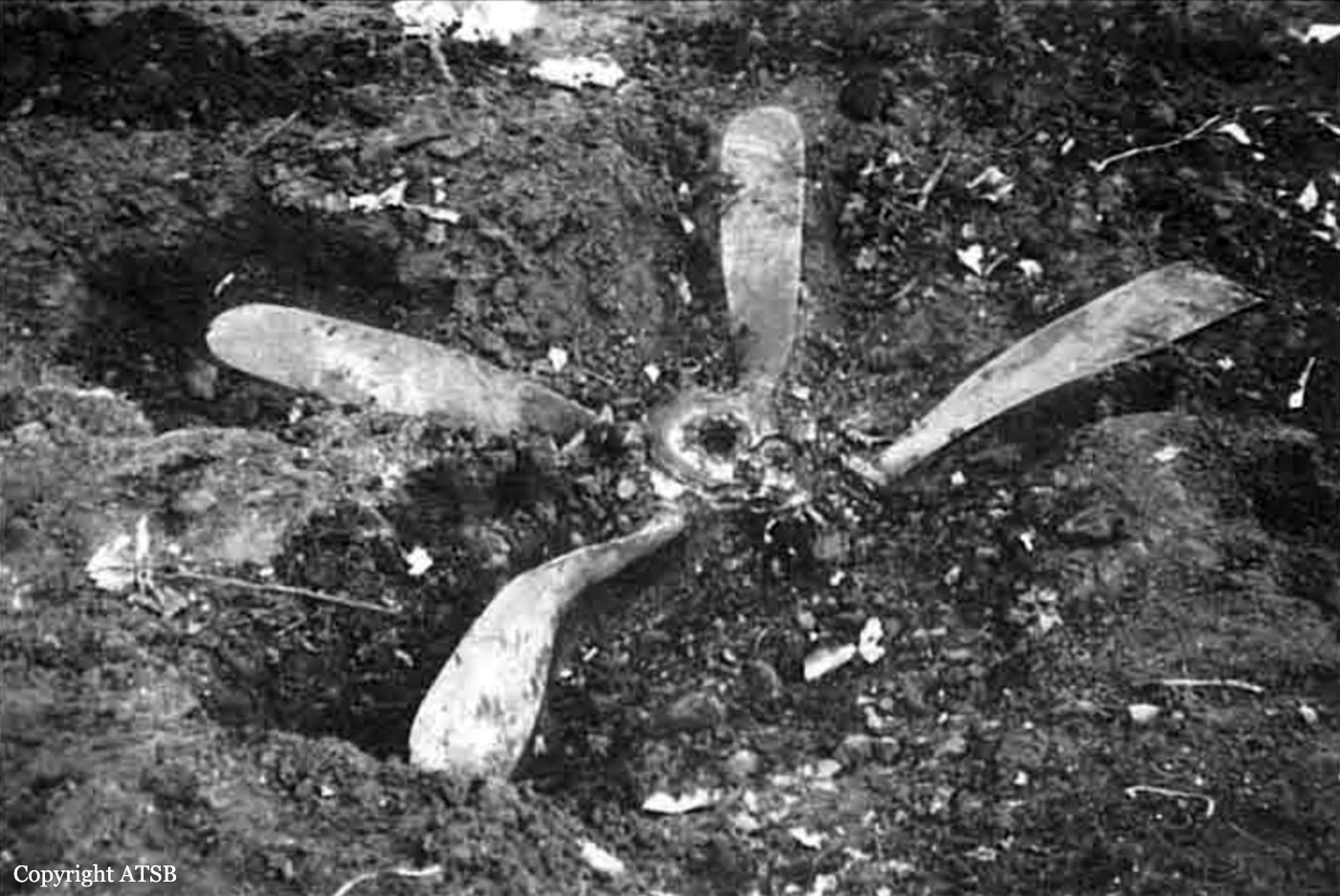
The aircraft had been chartered for a flight from Perth to Port Hedland. The pilot arrived at the aircraft at 2210 hours on 25 January, and after a short inspection of the aircraft, attended the CAA flight planning office for air traffic control and meteorology briefing. The briefing included information about a tropical cyclone off the NW coast of Australia and its potential effects on the proposed flight. After the flight plan was submitted, the pilot returned to the aircraft at 2315 hours as the loading was being completed, and conducted a preflight inspection of the aircraft and its load. The aircraft departed Perth at 2339 and commenced a climb towards Ballidu, the first turning point, over which it passed at 0003 hours. Subsequently, the aircraft passed over Mt Singleton at 0020, Mt Magnet at 0040 and Meekatharra at 0102 hours. After Ballidu, the aircraft climbed from FL170 to FL190 and climbed further to FL210 after Mt Magnet. While over Meekatharra, the passenger (also a licenced pilot) gave the position report. One minute later, the pilot radioed that the aircraft was out of control and descending. He called again 30 seconds later and advised that the aircraft was in ice and spinning down through 8,000 feet. No further communications were received from the aircraft. Both occupants were killed.
Probable cause:
The following findings were reported:
- The pilot did not have recent experience in high-performance, high-altitude aircraft except for the 51.7 hours gained in the MU-2.
- The pilot did not possess some of the experience levels and recency requirements placed on MU-2 pilots immediately after the accident by the CAA.
- The pilot did not take sufficient account of the operational characteristics of this aircraft type.
- The pilot's situational awareness was probably impaired during the flight, because of the combination of pre-existing cumulative fatigue, and insufficient sleep in the previous 42 hours.
- The meteorological conditions were conducive to the formation of airframe icing on an aircraft flying in cloud along the flight planned route.
- It is probable that control was lost as the aircraft banked to the left over Meekatharra, to change track towards Port Hedland.
- The pilot reported that the aircraft was in ice during his last radio transmission.
- The pilot was unable to recover from the spin before the aircraft hit the ground.
Final Report:
Crash of a Fletcher FU24-950 in Frogmore: 1 killed

Date & Time: Nov 29, 1989 at 1150 LT
Type of aircraft:
Operator:
Registration:
VH-HTB
Flight Phase:
Survivors:
No
Schedule:
Frogmore - Frogmore
MSN:
174
YOM:
1971
Country:
Region:
Crew on board:
1
Crew fatalities:
Pax on board:
0
Pax fatalities:
Other fatalities:
Total fatalities:
1
Circumstances:
The aircraft was engaged in superphosphate spreading operations. An aerial survey of the property had been conducted by the pilot in company with the property owner. Power poles in the valley ahead and to the left of the airstrip were marked. When operations started the wind was a light north-easterly and ambient temperature was 16° Celsius. By the time the aircraft had refuelled and was ready for the thirty-sixth flight of the day, the ambient temperature had increased to 28° Celsius and the wind direction had changed to a south-westerly. Shortly after takeoff, the aircraft was observed to sink after overflying the high-voltage power lines between the marked poles. On the next flight the aircraft was observed to make a tight left turn and fly down the valley adjacent to the left marked powerpole. On the next and final flight, the aircraft was apparently attempting to follow the track of the previous flight. While crossing the power lines south-west of the marked power pole, the aircraft's landing gear and left wing tip struck the powerlines. With the broken powerline jammed behind the left aileron washout plate, the aircraft impacted the ground 100 metres beyond the powerpole. Ground impact forces destroyed the aircraft and reduced the cockpit area to non-survivable dimensions.
Probable cause:
On-site examination of the aircraft and subsequent laboratory examination and testing of components did not reveal any pre-existing mechanical defects or abnormalities which could be considered as factors in, or contributory to, this accident. Powerline impact marks on the aircraft were consistent with the aircraft being in a left banked attitude when it struck the wire. The investigation revealed that the loader driver's truck bucket load gauge had no conversion/calibration chart, and that the aircraft was being operated in excess of the maximum allowable weight for takeoff. It is considered probable that the pilot had elected to fly down the valley, (thus taking advantage of the downslope), to compensate for a degradation of aircraft performance whilst operating overweight in the changed ambient conditions. The absence of a superphosphate trail before wire impact indicates that the pilot did not dump any of the load and was either unaware
of, or had forgotten about, the existence of powerlines to the south-west of the marked powerpole.
The following factors were considered relevant to the development of the accident:
1. The aircraft was being operated in an overweight configuration for takeoff.
2. The pilot did not adjust the takeoff weight of the aircraft to give an acceptable climb performance.
3. The pilot was unaware of, or had forgotten about, the powerlines to the south-west of the marked pole; or,
4. the pilot misjudged the clearance between the powerlines and the aircraft whilst trying to overfly them.
Final Report:

Crash of a Rockwell 500U Shrike Commander on Mt Barren Jack: 2 killed

Date & Time: Nov 18, 1989 at 1241 LT
Operator:
Registration:
VH-BMR
Flight Phase:
Survivors:
No
Site:
Schedule:
Canberra – Dalby
MSN:
500-1754-45
YOM:
1968
Country:
Region:
Crew on board:
2
Crew fatalities:
Pax on board:
0
Pax fatalities:
Other fatalities:
Total fatalities:
2
Circumstances:
When the survey aircraft failed to arrive at the destination, and on expiry of the SAR time, a search was commenced. Wreckage of the aircraft was subsequently found on the eastern slope of Mt Barren Jack, to the north west of the mouth of Carrolls Creek, and on the planned track for the survey operation. Observers at the Burrinjuck reservoir near the mouth of Carrolls Creek described the weather in the accident area at the time as black clouds spilling over and obscuring the mountain tops. The aircraft collided with trees on the side of the mountain, while banked steeply to the right and in a tail low attitude. The pilot was thrown from the aircraft during the impact sequence. Medical opinion held that there was no evidence of body trauma consistent with the seat belt being fastened at the time of impact. The flight was completed on behalf of the Bureau of Mineral Resources (BMR) and both occupants were killed.
Probable cause:
Because of the destruction of the aircraft by the ensuing fire the status of the seat belt assemblies were unable to be determined. The investigation revealed that both engines were operating at high power at the time of impact. No malfunction or defect could be found with the aircraft which could have contributed to the accident. The survey task required the pilot to adhere strictly to a particular track and the target height for the flight was 500 feet above ground level while maintaining visual contact with the ground at all times. The pilot was suitably qualified to act as pilot in command of survey operations down to a height of 200 feet above ground level. The investigation concluded that the aircraft was being operated at a height substantially lower that 500 feet above ground level prior to the accident. Impact marks, wreckage and mechanical evidence suggest that the aircraft impacted terrain at a time when the pilot was attempting to carry out an evasive manoeuvre to remain clear of terrain. The reason why the aircraft was being operated at such a height and why the pilot delayed turning away from the steeply rising terrain could not be determined.
The following factors were reported:
- The pilot continued the flight into adverse weather conditions.
- The pilot flew the aircraft towards steeply rising terrain at a height substantially lower that 500 feet above ground level.
Final Report:

Crash of a Cessna 414A Chancellor near Wonthaggi

Date & Time: Oct 27, 1989 at 0833 LT
Type of aircraft:
Operator:
Registration:
VH-SDV
Flight Phase:
Flight Type:
Survivors:
Yes
Schedule:
Melbourne – Port Welshpool
MSN:
414A-0261
YOM:
1979
Country:
Region:
Crew on board:
1
Crew fatalities:
Pax on board:
6
Pax fatalities:
Other fatalities:
Total fatalities:
0
Circumstances:
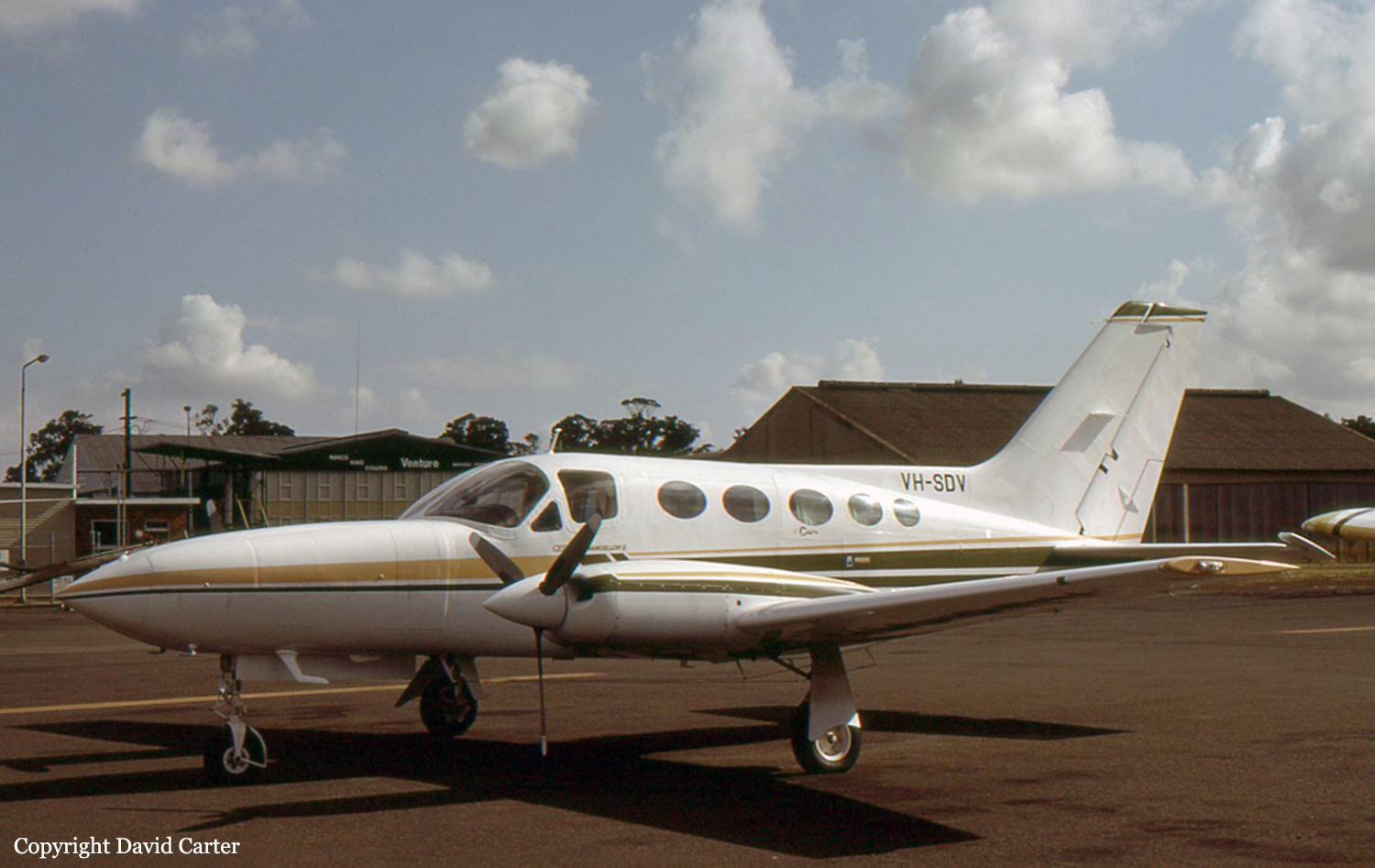
The pilot reported that whilst enroute from Essendon to Wonthaggi he descended to the lowest safe altitude of 3600 feet above sea level, lowered the landing gear, reduced power and airspeed to counter the effect of turbulence and entered a holding pattern to the south south west of the Wonthaggi navigation aid. During the holding pattern the aircraft descended until it collided with trees that were 865 feet above sea level. The weather at the time included gale force winds, rain and low cloud. There were no thunderstorms or microbursts in the area, however, other aircraft reported a very low cloud base and severe turbulence. A few minutes prior to the accident ground witnesses, south south west of the accident site, reported an aircraft matching the description of VH-SDV, flying below a low, misty, ragged cloud base. There was no record of another aircraft in the area at the time. Information was available which indicated that the aircraft had descended below 3600 feet during the approach to Wonthaggi. The passengers reported that the pilot gave no indication of any problem or danger. Until the impact, they believed the aircraft was descending normally for a landing at Port Welshpool.
Probable cause:
No aircraft defects were found which may have been factors in the accident. The investigation indicates that the pilot attempted to fly under the low cloud base, in order to reach the Port Welshpool destination where weather conditions were earlier reported to have been partially sunny. Port Welshpool is not serviced by an approved navigation aid. The pilot attempted to descend below the cloud base, hoping to achieve visual flight conditions to continue to his destination.
Final Report:

Crash of a De Havilland DHC-2 Beaver in Orroroo: 1 killed

Date & Time: Sep 20, 1989 at 1222 LT
Type of aircraft:
Operator:
Registration:
VH-IDD
Flight Phase:
Survivors:
No
Schedule:
Orroroo - Orroroo
MSN:
1532
YOM:
1963
Country:
Region:
Crew on board:
1
Crew fatalities:
Pax on board:
0
Pax fatalities:
Other fatalities:
Total fatalities:
1
Circumstances:
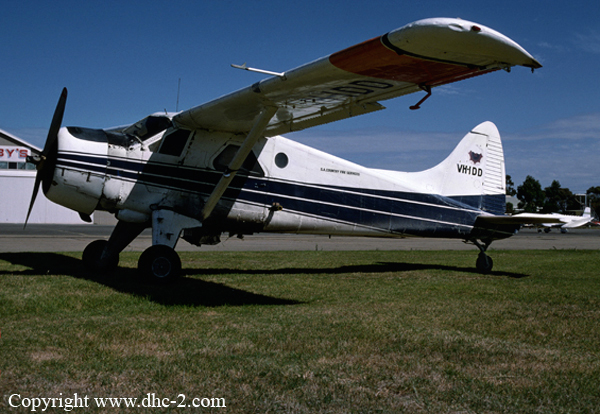
The aircraft had been delayed in servicing and repair and had only been released six weeks prior to the accident. This delay had caused the operator/pilot to fall behind in his commitments and, according to some witnesses, caused him to worry about the situation. On the day of the accident, the pilot had just completed spraying a 243 hectare paddock and had landed to reload. After take-off for the new task, the pilot was seen to make an aerial inspection of the paddock before entering the first swath run. At the end of this run, the aircraft collided with a Single Wire Earth Return (SWER) powerline and crashed. It was later shown that the aircraft was in a bank to the right of about 18 degrees. The SWER line ran across one end of the paddock at an angle and on the crop side of a windmill just inside the fence which bordered the road. The line contacted the right maingear and outboard sprayboom attachment struts on the right wing. The wire broke after impact but the aircraft hit the ground heavily on the right main gear. The gear detached from the aircraft, the propeller struck the ground and the aircraft slewed around as it came to rest after some 27 metres of ground travel. The front half of the aircraft was destroyed by fire which broke out almost immediately the aircraft stopped. The pilot, sole on board, was killed.
Probable cause:
Two main hypothesis were proposed. One was that the pilot was distracted from a less than demanding task by business worries. The other was that the pilot had perceived that the SWER line was on the right of the windmill and outside the fence and therefore did not present an obstacle to his procedure turn. Neither hypothesis could be substantiated. An additional concern was the fact that the pilot had died from impact injuries in an accident that, prima facie, was survivable. Concern focused on whether the pilot had secured his harness properly and/or whether the inertia reel had failed. Detailed engineering inspection of the inertia reel by the Bureau and the manufacturer could not positively determine the mode of operation of the inertia reel. However, the post mortem report showed that the nature of injuries to the pilot, while sufficient to cause death prior to the fire, were such as to indicate that the inertia reel had probably not failed. The pilot did not see the powerline in time to avoid a collision.
Final Report:

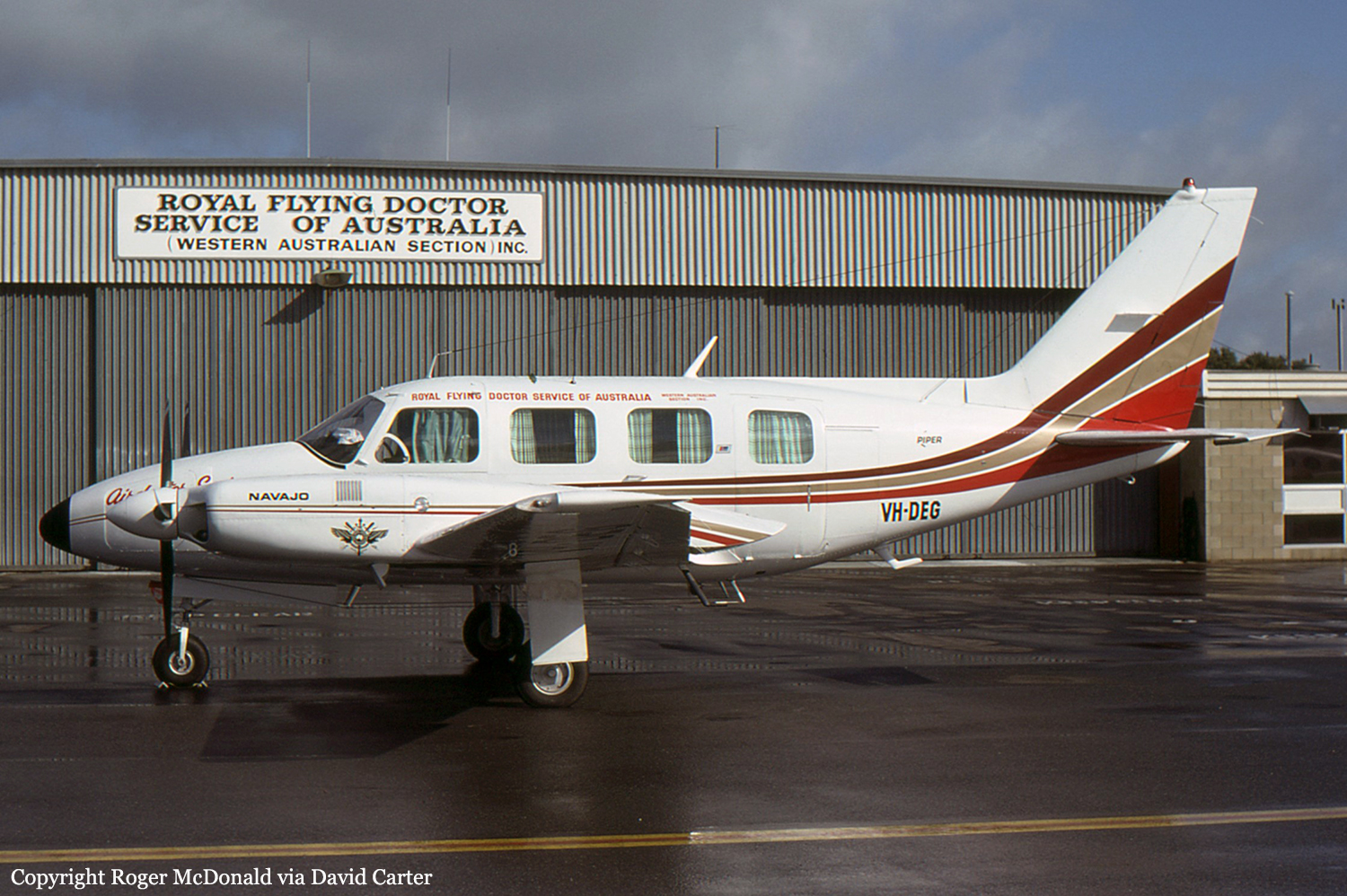
Crash of a Piper PA-31-310 Navajo in Carnarvon

Date & Time: Aug 18, 1989 at 1856 LT
Type of aircraft:
Operator:
Registration:
VH-DEG
Flight Type:
Survivors:
Yes
Schedule:
Geraldton – Carnarvon
MSN:
31-7812098
YOM:
1978
Country:
Region:
Crew on board:
1
Crew fatalities:
Pax on board:
1
Pax fatalities:
Other fatalities:
Total fatalities:
0
Circumstances:
At approximately 1809, (23 minutes before last light) during final approach to landing at Carnarvon, the pilot noticed that the landing gear had not extended correctly. The aircraft remained in the circuit area whilst the pilot attempted to lower the landing gear using both manual and emergency methods. He also sought assistance from the company's, Perth based, duty pilot and Carnarvon based engineers. After exhausting all possible methods of lowering the gear the pilot decided to land with the landing gear and flaps retracted. The pilot rejected a landing on the sealed runways because he was apprehensive that it would cause unnecessary damage to the aircraft and could result in a fire. He considered landing in a riverbed (rejected by the Senior Operational Controller), alongside one of the sealed runways (the surface was unsuitable) and on one of the dirt strips. The pilot was offered a flare path on dirt runway 27 however, he declined and indicated that he would try to land using the available light. At 1856 (last light was at 1832) the pilot attempted a landing on runway 27. On late final approach the aircraft collided with a one and a half metre high levy bank, 270 metres short and 115 metres to the right of the threshold. The pilot was trapped in the wreckage for some time after the aircraft came to a stop. While the passenger was slightly injured, the pilot was seriously wounded.
Probable cause:
The landing gear problem arose when the left main landing gear would not lower. Examination of the aircraft revealed that both hinges fitted to the inboard landing gear door had fractured. The forward hinge had fractured as a result of fatigue and the rear hinge as a result of overload. The fatigue crack initiation had occurred at a sharp edged, prominent forging flash on the inner radius of the hinge and had grown over approximately 4000 load cycles. A similar fatigue problem had been identified on an earlier version of the hinge (part number 46653-00), however, regular inspections for fatigue cracking were discontinued when hinges with part number 47529-32 (as fitted to VH-DEG) were introduced in 1980. Similar fatigue cracking was found in the forward door hinge of another PA31 during the investigation. The fractured hinges jammed the left main landing gear mechanism and neither the normal or emergency extension systems could extend the gear. The pilot was apprehensive about wheels up landings. Much of his decision making was aimed at reducing the risk of fire and minimising the damage the aircraft would sustain during the landing. eg. Selection of a dirt runway instead of the sealed strip, landing with flaps retracted etc. During the pilot's attempts to rectify the landing gear problem, and up until the time of his touchdown, he was subjected to considerable radio transmission traffic involving questions, directions and suggestions which distracted him from his primary tasks. The pilot indicated on at least two occasions that he was ready to land, however, each time advice and questions from the ground personnel involved overrode his intentions. When the pilot was asked if he wanted a flare path on runway 27 there was still some natural light available and he was intending to land. However, by the time he was able to make his final approach it was dark and he was unable to see the ground. Studies have shown that aircrew subjected to high levels of stress can suffer skill fatigue and cognitive task saturation, which in turn can lead to a breakdown in the decision making process. It was apparent from the pilot's radio transmissions and the quality of the decisions made in the latter part of the flight that his information processing and decision making abilities had been degraded by the stress of continuous radio transmissions and continuous, and sometimes conflicting, instructions. As a result, what should have been a relatively simple wheels up landing in daylight was turned into an extremely difficult wheels up landing at night. With the landing gear retracted the aircraft's taxi and landing lights were not available to the pilot.
The following factors were considered relevant to the development of the accident:
1. Manufacturing defect. A forging flash created a stress concentration which led to fatigue cracking.
2. Inadequate inspection procedures. Previous inspection procedures introduced to disclose similar cracking were withdrawn on the introduction of later part numbered hinges.
3. Apprehension of the pilot. The pilot was apprehensive about apparently significant dangers of landing an aircraft, wheels up, on a sealed runway.
4. Inordinate interference in aircraft operations by ground based advisors. The ground advisors input overrode the pilot's decision on a number of occasions with the result that a simple exercise became very complicated.
5. Cognitive task saturation and skill fatigue. The amount of information, advice and suggestions being passed via the radio communications system overloaded the pilot decision making abilities.
6. Improper in-flight decisions. As a result of task saturation the final decision made by the pilot to attempt a night landing on an unlighted strip was incorrect.
7. The pilot did not see and therefore was unable to avoid the levy bank.
Final Report:

Crash of a Beechcraft 65-B80 Queen Air in Tolmie: 1 killed

Date & Time: Jul 6, 1989 at 0341 LT
Type of aircraft:
Operator:
Registration:
VH-XAE
Flight Phase:
Flight Type:
Survivors:
No
Schedule:
Sydney - Melbourne
MSN:
LD-305
YOM:
1966
Location:
Country:
Region:
Crew on board:
1
Crew fatalities:
Pax on board:
0
Pax fatalities:
Other fatalities:
Total fatalities:
1
Circumstances:
At 0341 hours EST on 6 July 1989, Beechcraft 80 Queen Air aircraft registered VH-XAE collided with high voltage power lines and descended rapidly, contacting the ground three kilometres north-east of Tolmie. The pilot, who was the only occupant, received fatal injuries. There was no fire. The aircraft was on a flight from Sydney to Melbourne cruising at 8000 feet. Persons in the accident area heard an aircraft flying very low over their houses, then observed a flash of light and heard the sound of ground impact. A ground search was commenced but due to falling snow and very poor visibility the wreckage was not found until about 0745 hours in daylight. The elevation of the ground at the accident site was approximately 2,700 feet above sea level.
Probable cause:
The exact cause of the accident could not be determined.
Final Report:

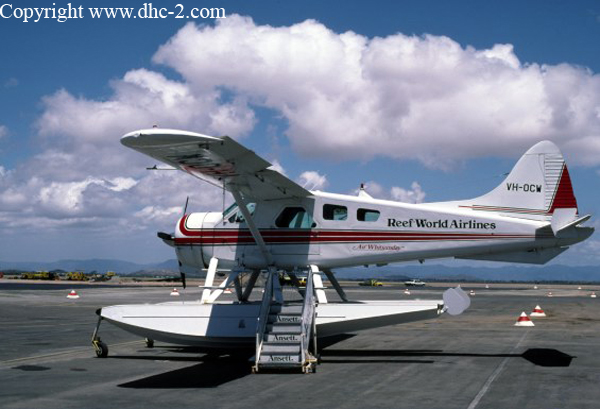
Crash of a De Havilland DHC-2 Beaver off Cape Richards

Date & Time: Jul 5, 1989 at 1645 LT
Type of aircraft:
Registration:
VH-OCW
Flight Phase:
Survivors:
Yes
Schedule:
Cap Richards-Townsville
MSN:
436
YOM:
1953
Country:
Region:
Crew on board:
1
Crew fatalities:
Pax on board:
6
Pax fatalities:
Other fatalities:
Total fatalities:
0
Circumstances:
The aircraft was scheduled to conduct three round trips between Townsville and Cape Richards, with a stop at Orpheus Island on some legs, during the day. The pilot involved in the accident flew the first and third trips and another pilot flew the second. After the first trip the pilot reported that he pumped the floats out and considered that the quantity of water removed was normal. On the third trip he picked up a "standby" passenger at Orpheus Island. On arrival at Cape Richards the scheduled six passengers were loaded. A witness employed by the resort to handle the aircraft and passengers on the island reported that the floats appeared to be sitting in the water such that the water was above the normal water line on the floats. Examination of the aircraft loading indicated that the aircraft was overweight and the centre of gravity was just inside the rear limit. The pilot reported taxiing at 1613 hours with eight persons on board. At 1624 hours he reported that he was returning to unload one passenger. In that time two takeoff attempts into the north-east were made. The wind in the bay where the attempts were made was a light northerly. The pilot again reported taxiing at 1634 hours with seven persons on board. A further two takeoff attempts were made. On the final attempt the pilot did not taxi as far into the bay as on previous occasions. The takeoff was continued well out beyond the shelter of the island into an area where the wind was easterly at about 10 knots, and the swell was 1 to 1.5 metres. The pilot reported that the aircraft had attained an indicated airspeed of 55 knots, and he intended to fly it off the water at 57 knots. The right float had lifted from the water and it hit a wave which pushed the right wing up. The pilot was unable to lift the left wing which hit the water, causing the aircraft to cart-wheel.
Probable cause:
The following factors were considered relevant to the development of the accident:
1. The pilot selected the incorrect takeoff direction for the wind conditions prevailing.
2. The pilot continued the takeoff into an area of unsuitable swell. This accident was not the subject of an on-scene investigation.
Final Report:

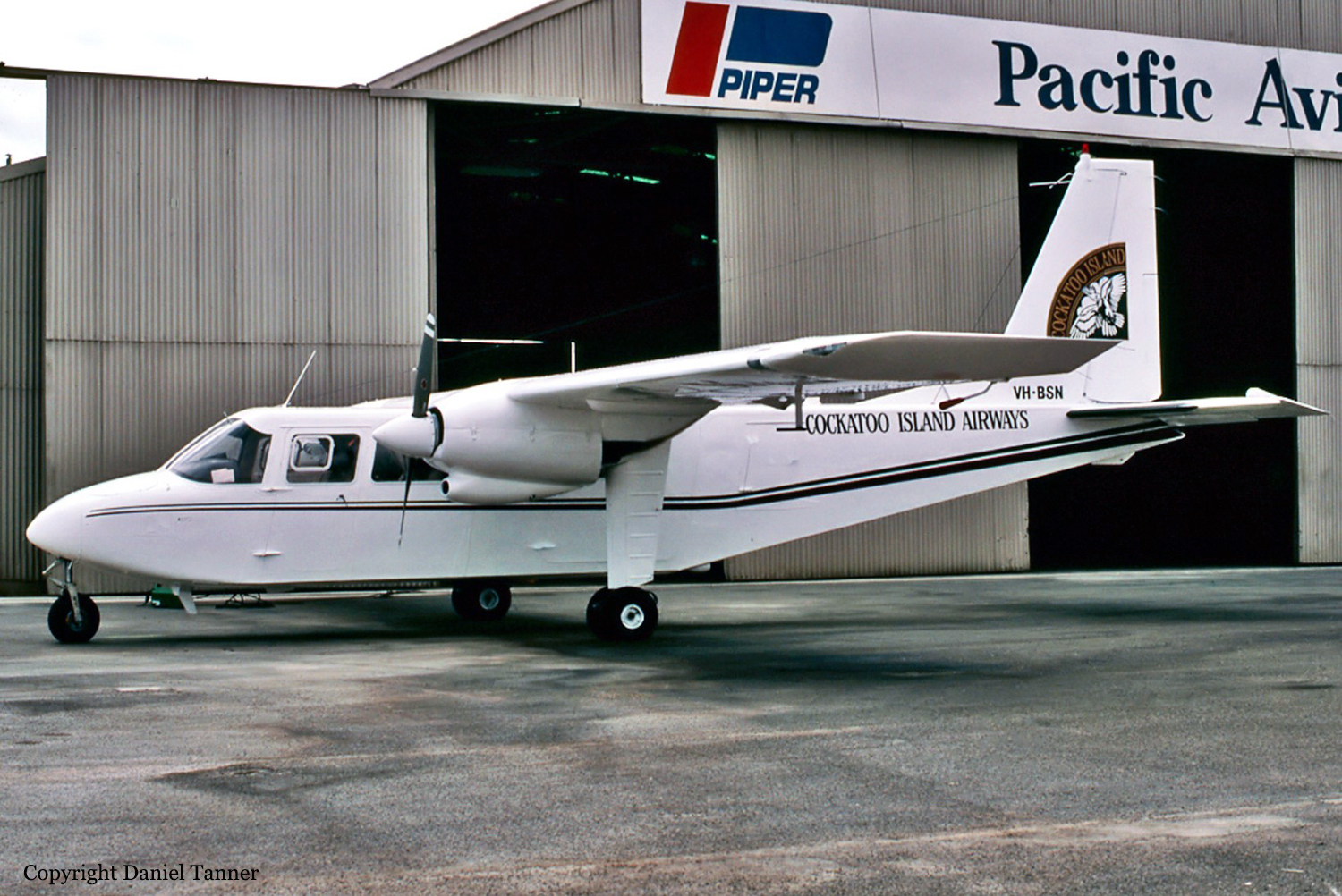
Crash of a Britten-Norman BN-2A-26 Islander off Derby

Date & Time: May 22, 1989 at 1350 LT
Type of aircraft:
Registration:
VH-BSN
Flight Phase:
Survivors:
Yes
Schedule:
Cockatoo Island - Derby
MSN:
3005
YOM:
1982
Country:
Region:
Crew on board:
1
Crew fatalities:
Pax on board:
2
Pax fatalities:
Other fatalities:
Total fatalities:
0
Circumstances:
The pilot had planned the direct track for the flight from Cockatoo Island to Derby at 5,500 feet above sea level. When the pilot gave his DEPARTURE call he amended his cruising level to below 5,000 feet. No further calls were received from the aircraft. The Cockatoo Island workboat was 56 kilometres north-north-west of Derby, and approximately 20 kilometres west of the direct track between Cockatoo Island and Derby. The crew of the boat observed an aircraft approaching at very low level. The aircraft passed over the boat approximately 5-7 metres above the deck, and entered a right hand turn. During the turn the right wing tip struck the water causing the aircraft to cartwheel and crash about 400 metres from the boat. The fuselage broke open on impact and the occupants were subsequently rescued by the crew of the boat.
Probable cause:
The pilot declined to provide any information which might have clarified the circumstances of the accident, however, available information indicates that he carried out an unauthorized low pass over the boat. During the turn following the low pass, he misjudged the aircraft's height and the right wing tip struck the water.
The following factors were considered relevant to the development of the accident:
- The pilot was neither trained nor authorized to conduct operations at low level,
- The pilot exercised poor judgement by operating at an unnecessarily low height,
- The pilot misjudged his height above the water.
Final Report:

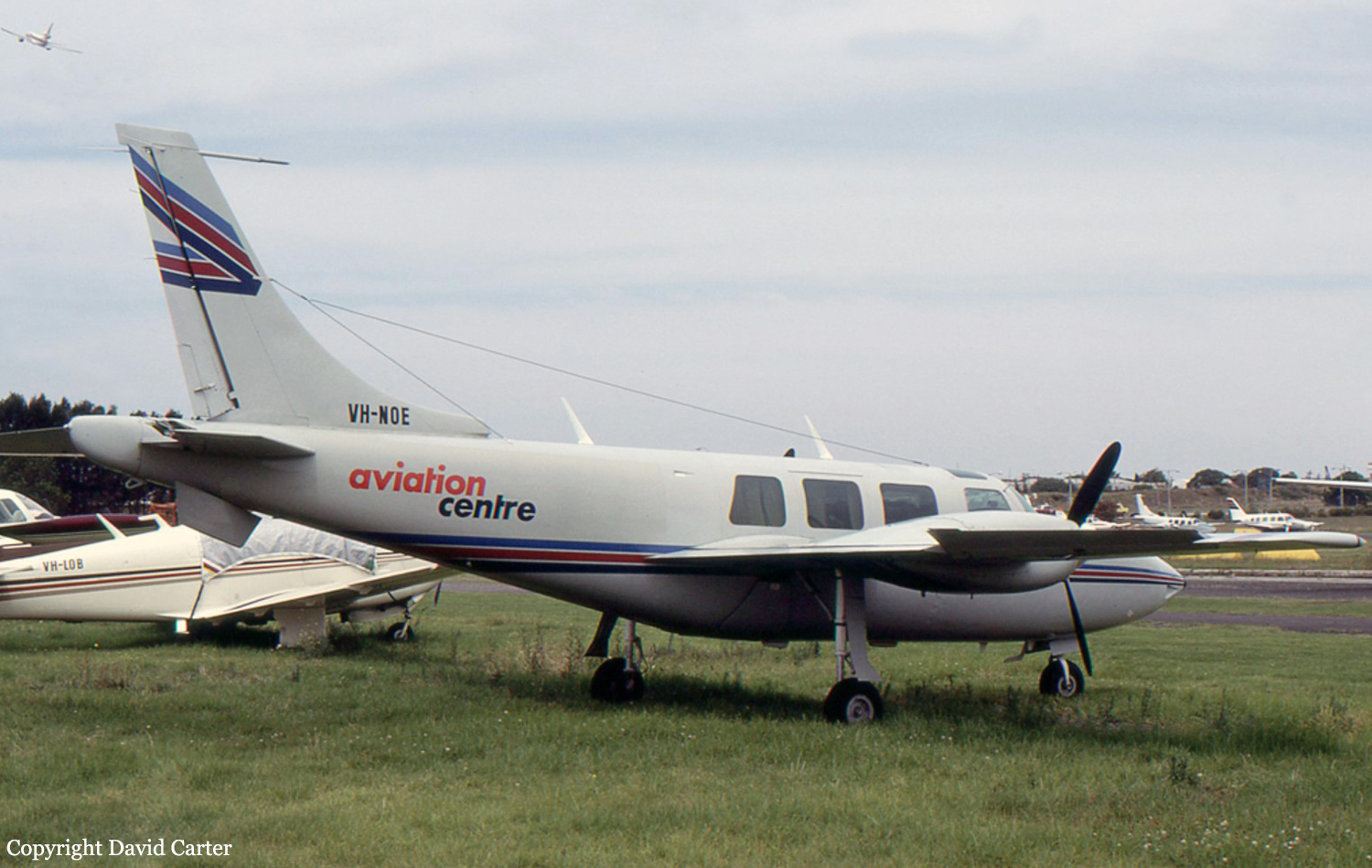
Crash of a Piper PA-61 Aerostar (Ted Smith 601) off Wollongong: 1 killed

Date & Time: Apr 2, 1989 at 1030 LT
Operator:
Registration:
VH-NOE
Flight Type:
Survivors:
No
Schedule:
Sydney - Wollongong
MSN:
61-0849-8162154
YOM:
1981
Country:
Region:
Crew on board:
1
Crew fatalities:
Pax on board:
0
Pax fatalities:
Other fatalities:
Total fatalities:
1
Circumstances:
The pilot was to conduct a charter with passengers from Sydney to Wollongong, Nowra, Canberra and return to Sydney, departing Sydney at about 10.00am. Earlier that morning he positioned the aircraft at Sydney and had it refuelled. When the passengers arrived he explained that the weather in the various destinations was very poor and that there was a possibility they may not be able to land. However, he was prepared to give it a try. As the passengers were pressed for time, they could not afford to take a chance with the weather and so they decided to drive. They told the pilot that if he could land at Wollongong later that day they would continue the flight with him. However, they impressed on him that there was no pressure for him to depart immediately as they would not be in Wollongong for several hours. After driving for a short time, the passengers decided that the weather did not appear as if it would improve, and believed that it would be better to complete the journey by car. They contacted the charter company by phone to cancel the charter, but the pilot had already departed. The flight to Wollongong appears to have proceeded normally where the pilot reported commencing an NDB approach, and would call again at a specified time. This was the last message received from the pilot. Witnesses on the ground at Wollongong, and on a yacht 20 nautical miles to the east of Wollongong reported hearing an aircraft flying at approximately 1000 to 2000 feet in the low cloud and rain. There were no other known aircraft in the area. Later that day a helicopter discovered wreckage debris in the sea, which was confirmed as being from the aircraft. The search was discontinued due to very poor weather and visibility, and cancelled two weeks later when further efforts failed to locate any trace of the aircraft.
Probable cause:
The reason why the aircraft flew into the sea could not be determined.
Final Report: