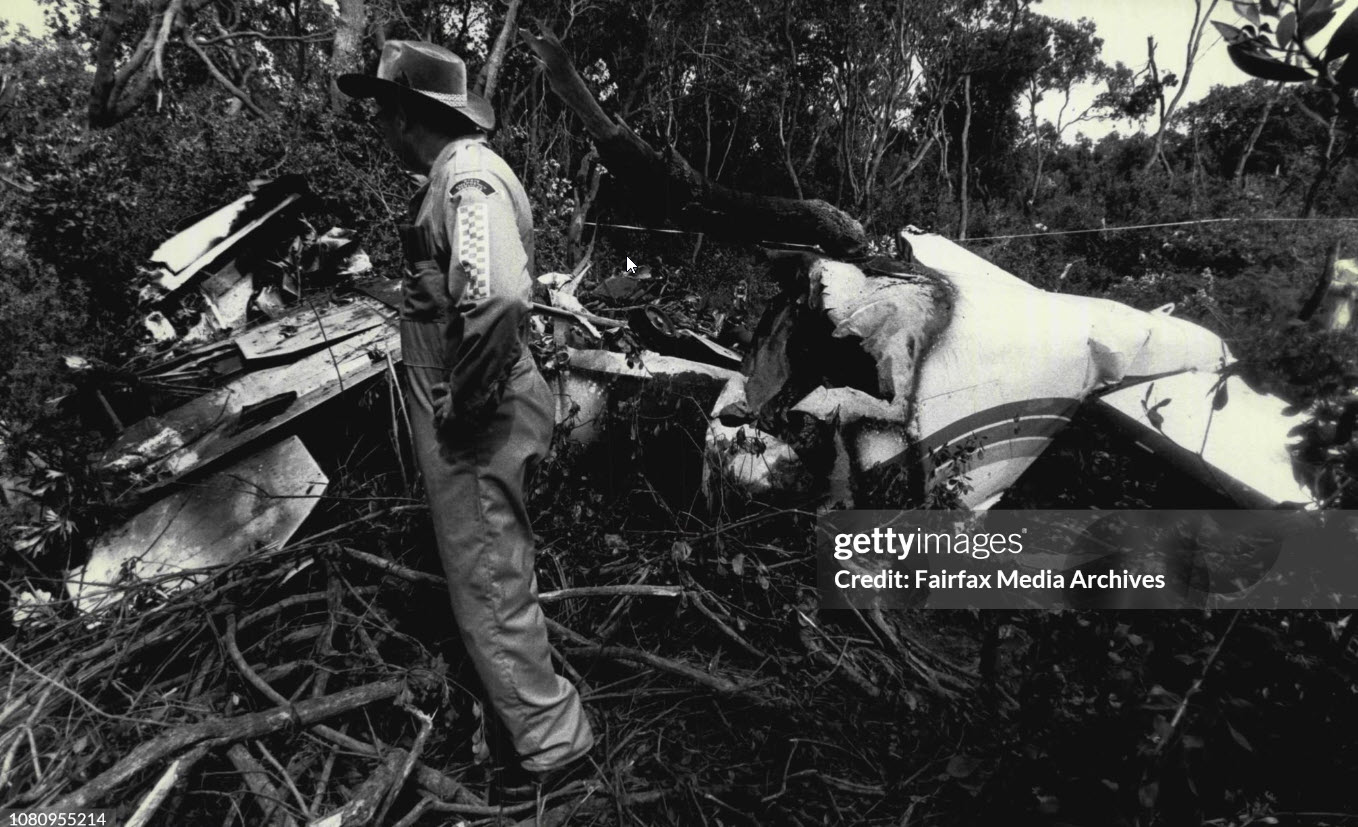
Crash of a Mitsubishi MU-2B-60 Marquise in Sturt Meadows Station: 10 killed

Date & Time: Dec 16, 1988 at 1015 LT
Type of aircraft:
Registration:
VH-BBA
Flight Phase:
Survivors:
No
Schedule:
Perth – Bellevue Mine – Kalgoorlie – Leinster – Nevoria Mine
MSN:
782
YOM:
1980
Country:
Region:
Crew on board:
1
Crew fatalities:
Pax on board:
9
Pax fatalities:
Other fatalities:
Total fatalities:
20
Captain / Total flying hours:
6249
Captain / Total hours on type:
134.00
Aircraft flight hours:
2827
Circumstances:
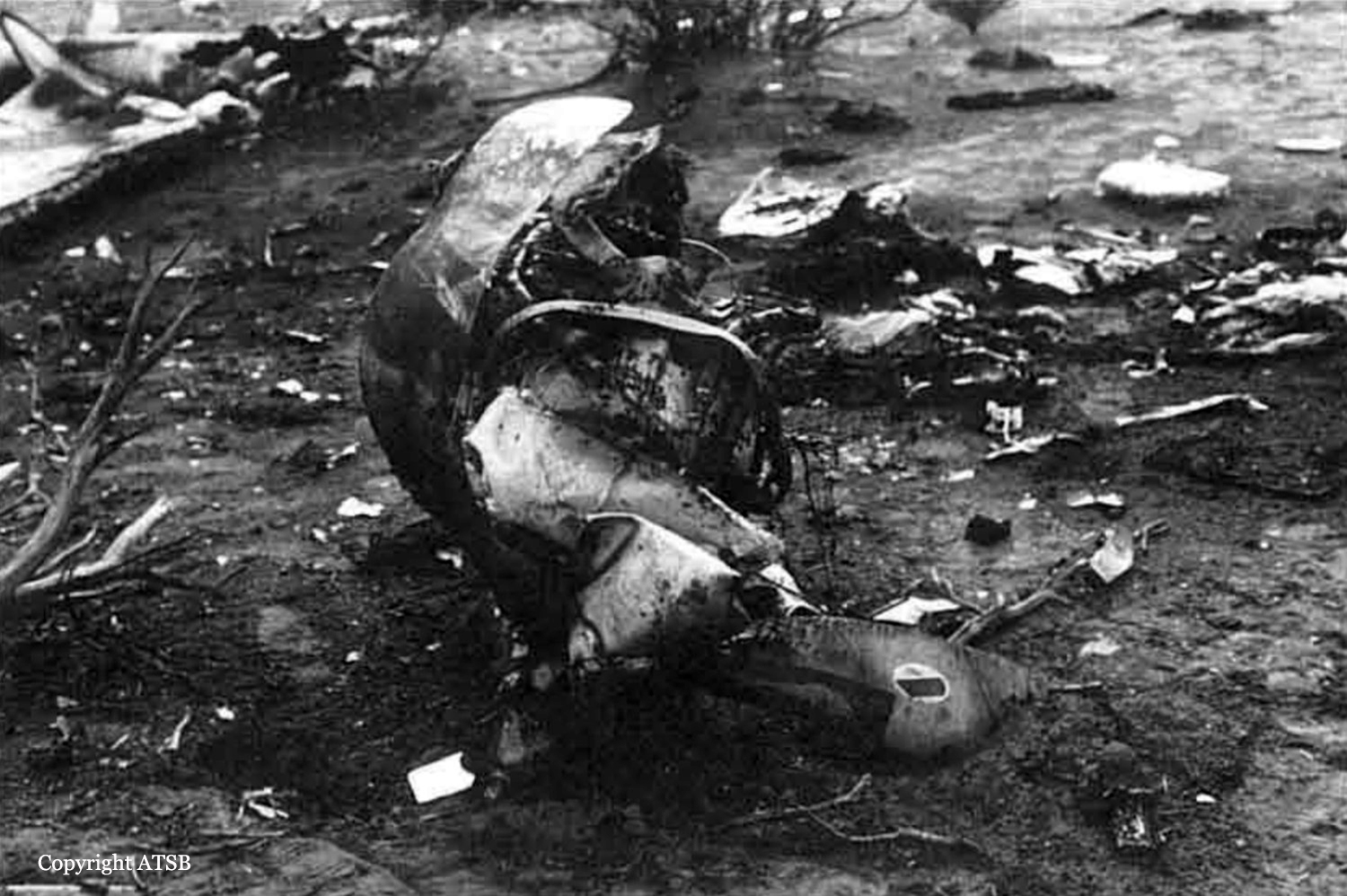
The aircraft had been chartered for a return flight from Perth to Bellevue Mine, Kalgoorlie and Nevoria Mine. The aircraft departed Perth on 15 December and arrived at Bellevue Mine after an uneventful flight. The following morning the pilot telephoned Kalgoorlie Flight Service Unit (FSU) and obtained brief details of expected winds for the flight to Kalgoorlie, as well as a forecast of the weather for the aircraft's arrival. He then submitted details of the flight to the flight service officer (FSO), at the same time commenting that there was some adverse weather in the Bellevue Mine area. The flight plan indicated that the pilot intended to climb to flight level (FL) 195 after take-off, with a time interval of 27 min to pass Leonora and a further 22 min to reach Kalgoorlie. The flight plan was amended after take-off to include a brief stop at Leinster. At 0940 hours the aircraft departed for Leinster, 5 km from Bellevue Mine. (This short flight was conducted to pick up passenger baggage.) At 0957 hours the pilot reported to the Kalgoorlie FSU that the aircraft had departed Leinster at 0955 hours and was climbing to FL 195. At 1008 hours he requested traffic information for a climb to FL 210 and, after being advised that there was no traffic, replied that he was climbing to that level. He also remarked that there were some big clouds in the area. No further communications were received from the aircraft. At approximately 1015 hours the aircraft crashed on Sturt Meadows Station. The crash site was approximately 1200 ft above sea level. All 10 occupants were killed.
Probable cause:
It is probable that the pilot did not have an adequate understanding of the operations of the MU-2B-60 aircraft at high altitude. The meteorological conditions were conducive to the formation of ice on aircraft flying in cloud above the freezing level. It is probable that loss of control occurred above the freezing level on climb to an amended altitude of FL 210.
Final Report:

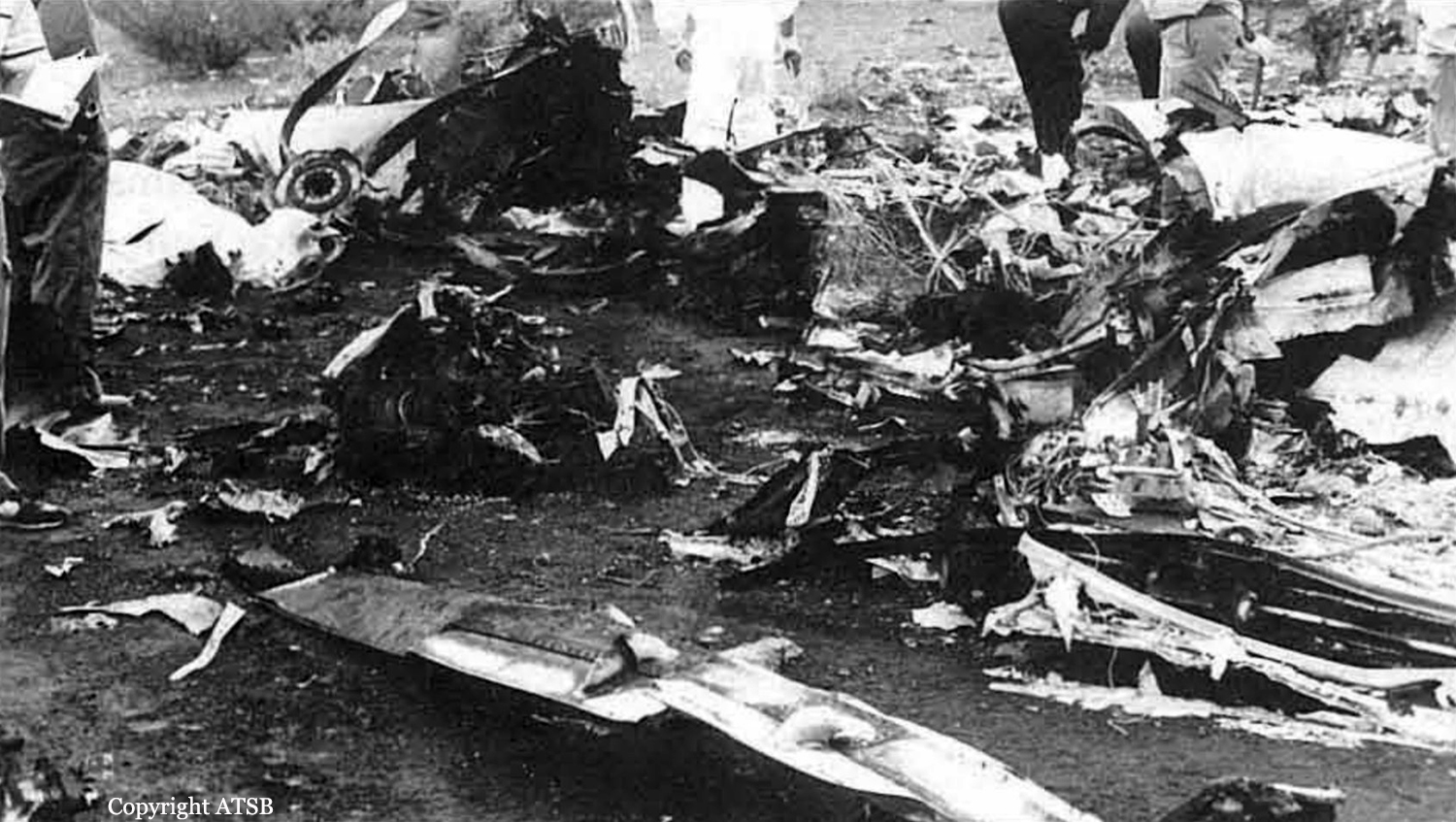
Crash of a De Havilland DHC-2 Beaver in Lake Monduran: 3 killed

Date & Time: Dec 5, 1988 at 1200 LT
Type of aircraft:
Operator:
Registration:
VH-BSL
Flight Phase:
Flight Type:
Survivors:
No
Schedule:
Bundaberg - Bundaberg
MSN:
1618
YOM:
1966
Country:
Region:
Crew on board:
2
Crew fatalities:
Pax on board:
1
Pax fatalities:
Other fatalities:
Total fatalities:
3
Circumstances:
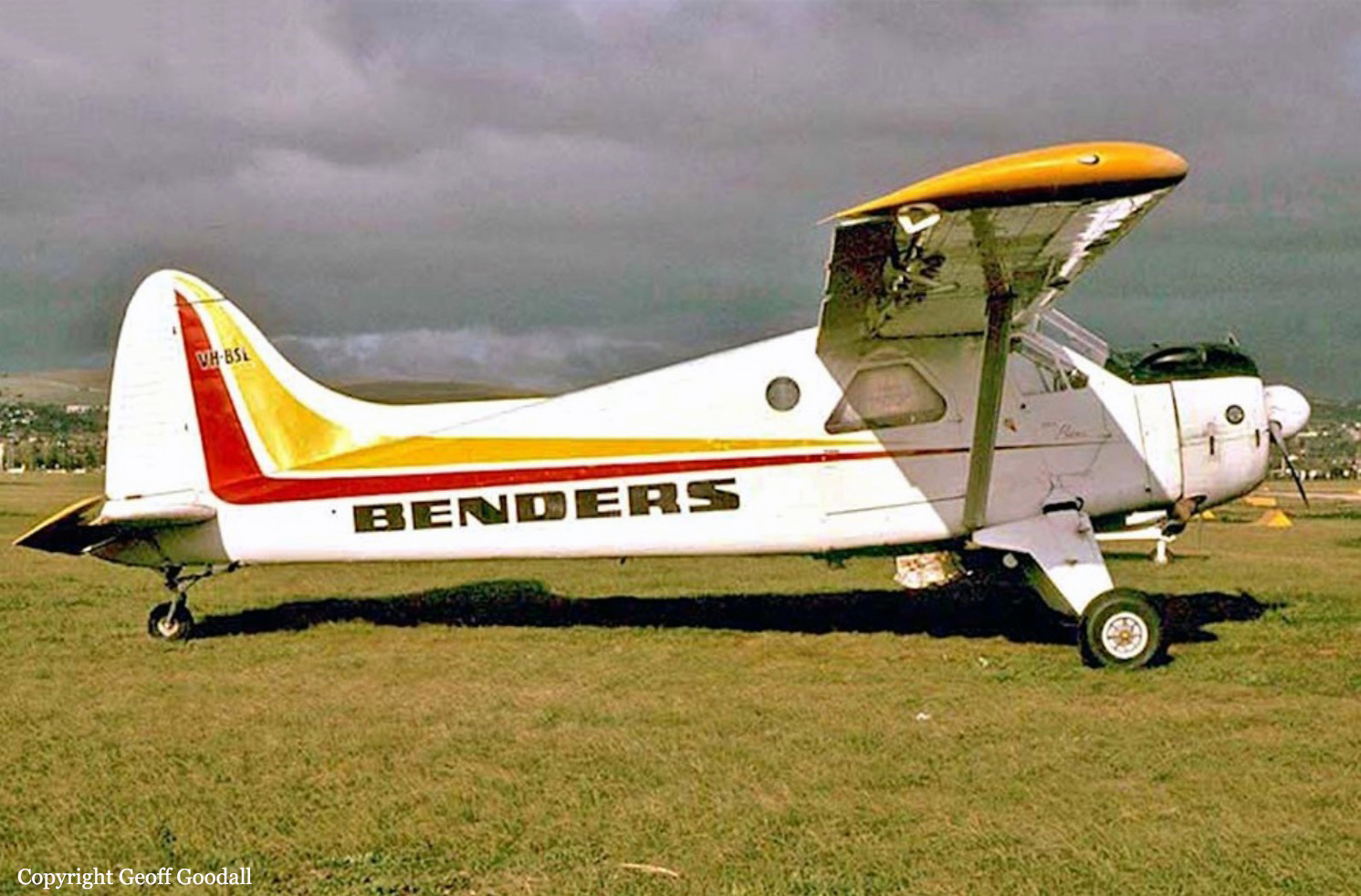
The aircraft reported departing Bundaberg for Monduran Dam on a no SAR flight at 1135 hrs EST with three persons on board and an endurance of 270 minutes. The purpose of the flight was to complete the endorsement of the pilot under check and to assess the suitability of an area of water on the coast to where the passenger, who was the regular pilot of the aircraft, was to fly the aircraft the following day. The pilot in command had flown 27 hours in the previous three months, of which 9 were on type. The pilot under check had flown only one hour in the last three months. This flight had been in VH-BSL. At approximately 1200 hrs, the aircraft was observed in the Lake Monduran area. It flew two left hand circuits, landing into wind towards the dam wall each time. After the second takeoff, it turned left and was seen heading north from the lake. Nothing further was heard or seen of the aircraft. Following an extensive search, the wreckage was located six days later lying inverted in 15 metres of water approximately 2 km WNW of the dam wall in the area of the junction of the main east-west channel and a northsouth channel of the lake. Both floats had separated from the aircraft and the right float was severely torn for about half its length. There was substantial water impact damage to the windshield frame/cockpit roof area and to the upper leading edge surfaces of both wings.
Probable cause:
No fault was found with the aircraft or its systems which might have contributed to the accident. It could not be determined who was manipulating the controls of the aircraft at the time of the accident. Evidence was obtained that it was the habit of the check pilot to have pilots undergoing endorsement or check to fly two circuits landing into wind and then to carry out crosswind landings. The check pilot and the pilot under check had previously operated at the dam and alighted on to both the east/west and the north/south channels. Having been observed to fly two into wind circuits and then head north and not be sighted again, it is possible that the aircraft then commenced crosswind operations onto the north/south arm of the lake, landing in a southerly direction with a crosswind from the left. Information from the Bureau of Meteorology indicated that the surface wind in the area at the time of the accident was 090` magnetic at 15 knots. This information was confirmed by witnesses at the dam wall who observed white caps on the surface of the dam. The north/south channel of the lake was bounded on its east side by steep hills rising to 70 metres above water level. The effect of this high ground was to partially blanket the north/south channel from the easterly wind. The position of the wreckage was in the area where the wind shadow effect would have ended and where the wind would have blown at full strength along the main east/west channel of the lake. The crosswind limitation for the aircraft as stated in the flight manual was 8.7 knots. Commenting in early 1988 on an enquiry regarding the raising of this limit, the aircraft manufacturer emphasised the 8.7 knot limit and advised that any test work to raise the limit should proceed cautiously starting at or below the current (8.7 knot) limit. If the aircraft was conducting crosswind operations in the north/south channel, and suddenly encountered a 15 knot crosswind on exiting the wind shadow area, the control difficulties confronting the pilot could have been significant. The aircraft wreckage was intact except for the floats which had been torn off by water impact forces. The right float was severely damaged while the left was intact. The forward tip of the right float had been severed by the propeller. The remaining forward section had then been forced upwards and outboard and had broken off. This weakened the float support structure, causing it to fail, and allowing the remaining section of the right float to strike the right side of the fuselage just aft of the cabin. Damage of this type an magnitude was most probably caused by the nose of the right float digging into the surface of the lake at relatively high speed. For this to occur, the aircraft was banked to the right at float impact - a possible consequence of encountering a strong crosswind from the left. There was no evidence that the aircraft had hit a submerged object. The factors associated with the development of this accident could not be determined.
Final Report:

Crash of a Piper PA-31-310 Navajo off Stanwell Park: 3 killed

Date & Time: Nov 1, 1988 at 1740 LT
Type of aircraft:
Registration:
VH-DAP
Flight Phase:
Flight Type:
Survivors:
No
Schedule:
Nowra - Nowra
MSN:
31-364
YOM:
1968
Country:
Region:
Crew on board:
3
Crew fatalities:
Pax on board:
0
Pax fatalities:
Other fatalities:
Total fatalities:
3
Circumstances:
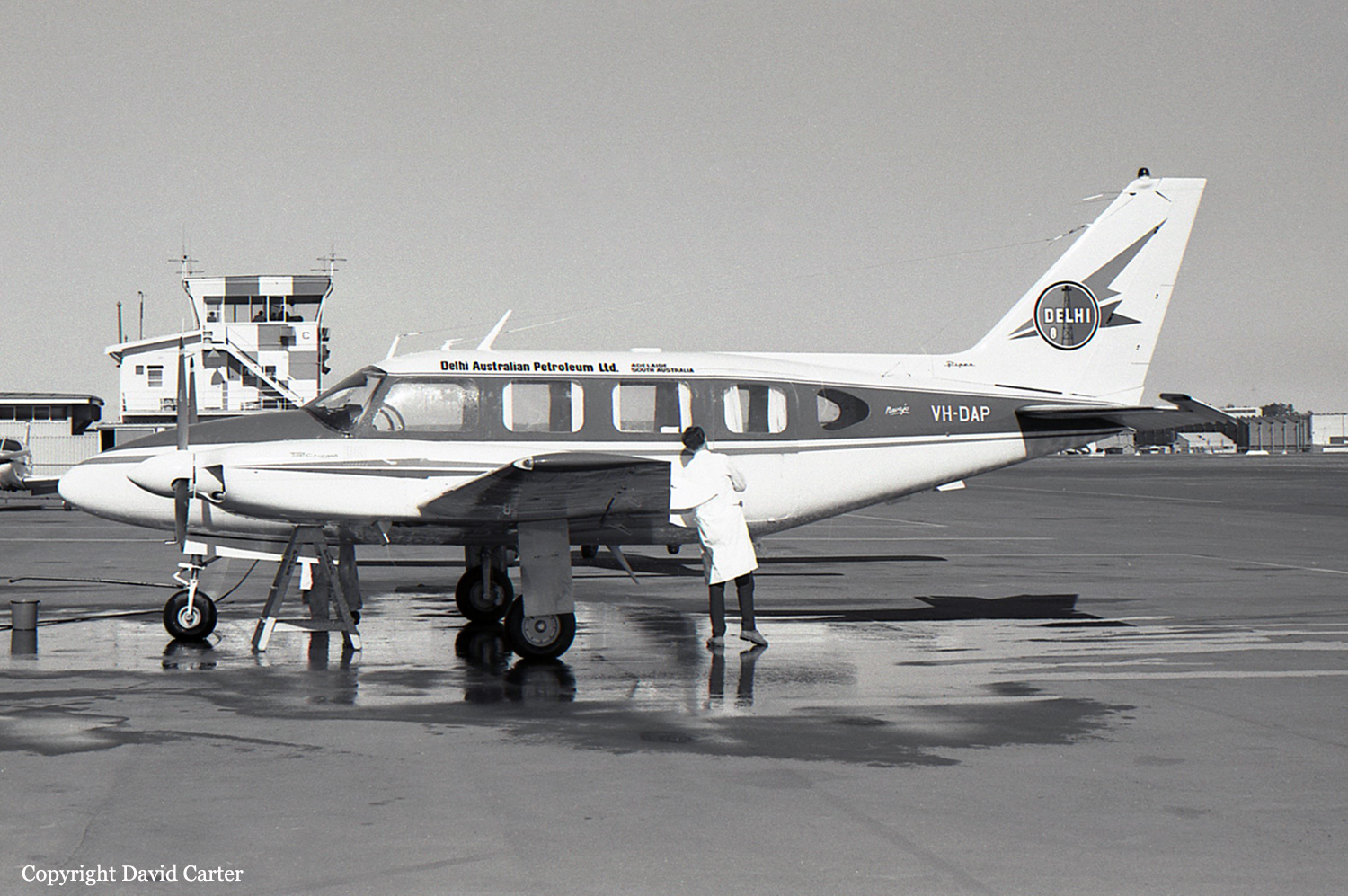
The aircraft had been modified by the installation of an air driven winch for the purpose of towing gunnery targets and was operating in conjunction with a warship for scheduled sea/air gunnery practise. Weather conditions in the area were reported as overcast at 4000 feet, wind 060 degrees / 15-20 knots and visibility of 15-20 kilometres. At about 1717 hours the aircraft was instructed to commence carrying out gunnery tracking runs at an altitude of 1000 feet with the sleeve target not deployed. Between 1720 and 1735 hours the aircraft carried out two such runs from the west and east. The aircraft then tracked to the south, away from the ship, to a distance of about 10 kilometres. At about 1738 the aircraft was instructed to turn inbound for a run from astern. At about 1739 hours the pilot reported engine problems and about one minute later advised "I've got problems, Mayday, I'm going in". Crewmen stationed near the stern of the ship, reported seeing the aircraft dive into the sea. The warship was immediately turned back towards the crash position. Other warships and aircraft were also ordered to the crash position. The only wreckage sighted was at the crash datum and was believed to have been a section of wing. This wreckage was located about two metres below the surface and sank before it could be recovered. The approximate depth of water at the crash position is 450 fathoms. No trace of the aircraft or its occupants has been discovered to date.
Probable cause:
The subsequent investigation established that the flight crew were properly qualified to conduct the flight, and that the aircraft was appropriately certified and maintained. The flight was conducted in accordance with the conditions of the operating contract. At the time of the occurrence the aircraft had not deployed the sleeve target and no firing was being carried out. No evidence was found to suggest an in-flight structural failure or fire. The installation of the target towing equipment was not considered to have been a factor in the development of the accident. There was a loss of control of the aircraft following an apparent engine malfunction. The precise reasons for the accident have not been established.
The following factors were considered relevant to the development of the accident:
1. Apparent engine failure or malfunction.
2. Control of the aircraft was lost for reasons which have not been determined.
Final Report:

Crash of a De Havilland DHC-2 Beaver in Nandawar: 1 killed

Date & Time: Oct 31, 1988 at 0824 LT
Type of aircraft:
Registration:
VH-AAK
Flight Phase:
Survivors:
No
Schedule:
Nandawar - Nandawar
MSN:
137
YOM:
1951
Country:
Region:
Crew on board:
1
Crew fatalities:
Pax on board:
0
Pax fatalities:
Other fatalities:
Total fatalities:
1
Circumstances:
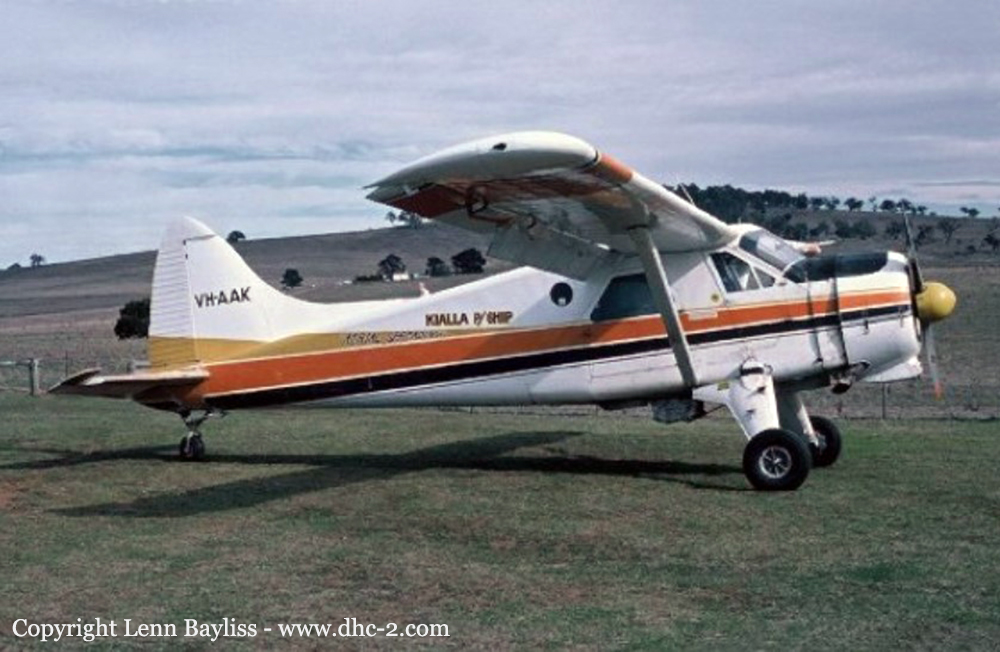
The pilot had been conducting superphosphate spreading operations in the area two days prior to the accident and had completed approximately 60 trips during that operation. On the morning of the accident, he had just completed the sixth load when the outboard section of the right wing struck powerlines. The right wing was torn from its attachment points and separated from the aircraft. The aircraft then impacted the ground in a steep nose down attitude and came to rest 169 metres from the powerlines.
Probable cause:
A detailed examination of the aircraft and its systems failed to reveal any defect which could have contributed to the accident. The engine was operating at high power at the time of the impact. It is probable that the pilot forgot about the presence of the powerlines. It was noted that the pilot was not wearing a shoulder harness and that an unapproved modification had been made to the lap harness. The toggle fitted to the lap harness was a type approved for 9 to 12g applications only and therefore was not suitable for agricultural operations, which require equipment capable of withstanding 25g loads.
The following factor was considered relevant to the development of the accident:
1. The pilot did not see or avoid the powerline.
Final Report:

Crash of a Partenavia P.68B Victor in Kolane

Date & Time: Oct 14, 1988 at 1845 LT
Type of aircraft:
Operator:
Registration:
VH-PFQ
Flight Type:
Survivors:
Yes
Schedule:
Kolane - Taroom - Kolane
MSN:
95
YOM:
1977
Country:
Region:
Crew on board:
1
Crew fatalities:
Pax on board:
0
Pax fatalities:
Other fatalities:
Total fatalities:
0
Circumstances:
The Taroom aerodrome had recently been equipped with a pilot activated lighting (PAL) system which was due to be commissioned on the evening of 15 October 1988. The pilot, who is a local Council member had flown from his property "Kolane" to Taroom late in the afternoon, to check that the PAL system was functional. He had intended to fly to Taroom the following evening to activate the lights for the official opening celebration, which was planned to be held at the aerodrome. After checking that the system was working the pilot decided to take the opportunity to practice some night circuits and landings before returning to his property. Before departing Taroom he arranged to have two vehicles positioned at his property landing area to illuminate the strip which is 850 metres long, aligned 235/055 degrees magnetic, and 1000 feet above sea level. He apparently intended to check the suitability of the strip for a night landing on his return. The aircraft was observed to fly over the strip in a north-easterly direction and then make a left turn. The aircraft was then seen to descend and the sound of impact was heard by the occupant of a vehicle near the strip. The aircraft had impacted the ground whilst in a descending left turn at a ground speed of approximately 125 knots. Initial impact was in a clearing near trees. The aircraft slid 91 metres before the left wing struck a large tree and was torn off. The aircraft slid another 45 metres before coming to rest and catching fire. The pilot was thrown from the aircraft while still strapped to his seat and was able to move himself away from the immediate vicinity of the fire before help arrived.
Probable cause:
The pilot has no recollection of events immediately prior to the accident. There is no indication that the aircraft was not functioning normally at the time of the accident. The weather was fine, there was a light northerly breeze, and there was no moonlight. Indications are that the pilot may have become disorientated whilst attempting to carry out a visual circuit when there was no visual horizon. The landing area did not meet the requirements for night operations published in the Visual Flight Guide.
The following factor was considered relevant to the development of the accident:
The pilot was attempting to carry out a night visual circuit when there was no visual horizon.
Final Report:

Crash of a Fletcher FU-24-950 near Werris Creek: 1 killed

Date & Time: Jul 19, 1988 at 1045 LT
Type of aircraft:
Operator:
Registration:
VH-HPP
Flight Phase:
Survivors:
No
Schedule:
Werris Creek - Werris Creek
MSN:
162
YOM:
1970
Country:
Region:
Crew on board:
1
Crew fatalities:
Pax on board:
0
Pax fatalities:
Other fatalities:
Total fatalities:
1
Circumstances:
The pilot was conducting superphosphate spreading operations in fine and clear weather conditions. The paddock being treated sloped uphill, and there were heavily timbered peaks beyond the paddock. The pilot had spread the paddock the previous day under similar conditions. On this occasion the aircraft was apparently performing normally as the first swath run was completed, but the aircraft did not appear to gain any appreciable height as it approached the hills. It was then seen to adopt a steep nose-up attitude and commence a wingover type manoeuvre. During this manoeuvre the aircraft struck trees and then impacted the ground. A fierce fire broke out and engulfed the wreckage. The pilot, sole on board, was killed.
Probable cause:
Although the investigation was hampered by the extensive fire damage, no defect or malfunction was discovered which might have contributed to the accident. The reason the pilot, who had extensive agricultural experience, chose to conduct swath runs towards steeply rising ground was not determined. The wind direction had changed since the previous day, and the aircraft was likely to have been affected by downdrafts on the lee side of the hills. When the pilot realised the aircraft was not performing as expected, he evidently attempted to dump the remaining load and reverse the direction. However, there was insufficient aircraft performance available to successfully complete this manoeuvre.
Significant Factors:
The following factors were considered to be relevant to the development of the accident:
1. The pilot elected to conduct spreading runs towards steeply rising ground, when safer alternatives were available.
2. It was likely that downdraft conditions existed on the lee side of the hills.
3. The pilot evidently misjudged the climb performance of the aircraft.
4. The pilot delayed attempting a reversal of direction beyond the point where such a manoeuvre could be safely accomplished.
Final Report:

Crash of a Rockwell Grand Commander 680E in King Island

Date & Time: Jul 14, 1988 at 2017 LT
Operator:
Registration:
VH-CAY
Flight Type:
Survivors:
Yes
Schedule:
Melbourne – King Island
MSN:
680-0855-76
YOM:
1959
Country:
Region:
Crew on board:
1
Crew fatalities:
Pax on board:
1
Pax fatalities:
Other fatalities:
Total fatalities:
0
Circumstances:
The King Island aerodrome weather was forecast to include temporary periods of moderate to heavy rain showers, six eighths of cloud cover base 800 feet and visibility reduced to 3000 metres. The forecast surface wind was 340 degrees at 20-30 knots. The pilot's qualifications required a minimum visibility of 5000 metres for operation at night in Visual Meteorological Conditions, (NGT VMC). It was planned that another pilot, qualified for Instrument Flight Rules (IFR) operations, would act as pilot in command, but he became unavailable. The flight plan submitted by the pilot indicated he would be operating under the IFR category and when queried on taxiing he confirmed that this was so. Shortly after DEPARTURE, the pilot requested a weather report from an IFR pilot who had just landed at King Island. This gave a cloud base of 2000 feet, heavy rain showers and visibility of 2000 metres. Flares had been laid to allow the other pilot to use Runway 35 because of the strong northerly wind. The pilot of VH-CAY activated the electric lighting for Runway 28. He reported that the weather was satisfactory enroute and he could see lights ahead on the island. On crossing the coast flight conditions became rough in moderate to severe turbulence. The pilot advised he arrived over the aerodrome at 1500 feet above mean sea level and observed the lighted wind sock was horizontal, with the direction fluctuating rapidly between north and west. He turned to the south and broadcast his intention to land on Runway 28. Neither the pilot nor the passenger had any further recall of the events leading to the accident. VH-CAY was heard passing over the aerodrome and the engine sound was very loud, suggesting to the listener that the aircraft was low. It had been raining continuously for more than an hour, sometimes very heavily, and it was still raining at the time. The aircraft was subsequently seen flying at a very low height some six kilometres south of the aerodrome, tracking approximately north. It was raining very heavily in that area and the wind was very strong. Soon afterwards there was a sound of impact and a flash of light. The aircraft had struck the tops of trees 30 feet high, then descended to the ground. After the aircraft came to rest it was destroyed by a fire. Both occupants were seriously injured.
Probable cause:
Examination of the wreckage was severely hampered by the extreme fire damage sustained, but no evidence was found of any defects that might have contributed to the accident. The aircraft had evidently been under control at the time it collided with the trees. A post analysis of the conditions by the Bureau of Meteorology indicated the possible presence of strong up and down drafts, horizontal wind shear, turbulence, and estimated visibility as 2-3000 metres in rain. The evidence suggested that the pilot may have been lower than he believed as the aircraft overflew the
aerodrome. Having passed overhead, there there would have been few external visual references under the existing conditions to alert him that the aircraft was inadvertently being descended into the ground.
Significant Factors:
The following factors were considered relevant to the development of the accident:
1. The pilot attempted to conduct an operation for which he was not qualified.
2. Severe weather conditions in the destination aerodrome area with strong winds, turbulence, heavy rain and poor visibility.
3. The pilot continued flight into adverse weather conditions.
4. The pilot may have misread his altimeter and been lower than intended.
5. The pilot may have unintentionally descended the aircraft into the ground in conditions of poor visibility.
Final Report:

Crash of a Rockwell Shrike Commander 500S in Mount Garnet

Date & Time: May 20, 1988 at 1750 LT
Operator:
Registration:
VH-SDI
Survivors:
Yes
Schedule:
Kidston – Cairns
MSN:
500-3188
YOM:
1974
Country:
Region:
Crew on board:
1
Crew fatalities:
Pax on board:
2
Pax fatalities:
Other fatalities:
Total fatalities:
0
Circumstances:
The pilot was temporarily replacing the pilot who normally flew the aircraft. After arriving at Kidston he checked the fuel quantity gauge and decided that there was sufficient fuel on board for the return flight. As the aircraft approached top of climb, the pilot found that the fuel gauge indicated a lower fuel quantity than he had expected. He re-checked the indicated quantity after the aircraft was established in cruise and decided that sufficient fuel still remained to complete the planned flight. Shortly after passing Mt Garnet both engine fuel flow gauges began to fluctuate and the engines began to surge. The pilot immediately turned the aircraft towards the Mt Garnet strip, but shortly afterwards both engines failed. The pilot attempted to glide the aircraft to the strip, but it collided with trees and came to rest about one kilometre from the runway 27 threshold. All three occupants escaped with minor injuries and the aircraft was damaged beyond repair.
Probable cause:
Both engines had failed due to fuel exhaustion. The pilot normally flew a different type of aircraft, this aircraft only being used by the company to supplement its services. For company aircraft normal route fuel requirements are specified. As a result, there was little need for him to make significant fuel calculations. On this occasion, the pilot found he had little time between his arrival at Cairns and the scheduled DEPARTURE of his next flight. He ordered that only 80 litres of fuel be added to the aircraft tanks. The calculated fuel burn for the proposed return flight to Kidston was approximately 240 litres. However, on DEPARTURE from Cairns it was estimated that only about 220 litres of fuel was in the aircraft tanks. Refuelling facilities were available at Kidston but no fuel was added to the aircraft tanks.
The following factors were considered relevant to the development of the accident:
1. The aircraft design is such that the fuel quantity can only be determined by the gauge, unless the tanks are full.
2. The preflight preparation, in relation to fuel requirements, carried out by the pilot was inadequate.
3. The pilot lacked recent experience at more complex fuel calculations.
Final Report:

Crash of a Piper PA-31-350 Navajo Chieftain off Coffs Harbour: 3 killed

Date & Time: Apr 7, 1988 at 2113 LT
Operator:
Registration:
VH-AOX
Survivors:
Yes
Schedule:
Brisbane – Coolangatta – Coffs Harbour – Port Macquarie
MSN:
31-7552013
YOM:
1975
Country:
Region:
Crew on board:
1
Crew fatalities:
Pax on board:
6
Pax fatalities:
Other fatalities:
Total fatalities:
3
Circumstances:
The aircraft was operating a scheduled service from Brisbane to Port Macquarie with planned intermediate stops at Coolangatta and Coffs Harbour. Weather conditions over the route were influenced by a widespread unstable airmass. The terminal forecast for Coffs Harbour indicated a surface wind of 360/15, visibility in excess of 10 km, 5 octas stratus at 1000 ft, 5 octas cumulus at 2000 ft. Thunderstorms, associated with visibility reduced to 2000 metres were also forecast for periods of up to 30 minutes. The actual weather conditions at Coffs Harbour were generally consistent with the terminal forecast. Runway 03 was in use throughout the evening. Coffs Harbour airport was equipped with NDB, VOR and domestic DME radio navigation aids. A VOR/DME procedure was published for runway 03 approaches. For aircraft not equipped with DME, a VOR or NDB approach was available using common tracking and minimum altitude criteria. Runway 03 was also equipped with a 6 stage T-VASIS and 3 stage runway lighting. All facilities were reported as functioning normally, with the exception of the VOR which was experiencing intermittent power failures due to the effects of heavy rain. The VOR was able to be reset manually from the Coffs Harbour control tower. Although the tower was scheduled to be unmanned before the arrival of VH-HOX, the duty air traffic controller elected to man the tower until the aircraft had landed. The controller also called out a technician to attend to the VOR. The aircraft was equipped with dual ILS/VOR and ADF receivers, plus International DME. Domestic DME equipment was not fitted to the aircraft, although required by ANO 20.8. After descending in the VOR/NDB holding pattern, the aircraft was cleared for an instrument approach. The pilot had been told of the intermittent operation of the VOR and had said he would revert to the NDB. At that time the weather conditions were fluctuating about the circling minima of 950 feet (QNH) and five km visibility. The controller advised the aircraft of a heavy shower to the south of the field. The aircraft subsequently completed the approach and the pilot reported "visual". The controller said he saw the lights of the aircraft in a position consistent with a right downwind leg for a landing on runway 03. The aircraft was then cleared to land. Shortly after, the controller saw the lights of the aircraft disappear briefly, consistent with the aircraft passing through a localised area of rain/cloud. The lights then reappeared briefly, as though the aircraft was turning onto finals, before disappearing. This was immediately followed by short series of "clicks" on the tower frequency. The aircraft was called immediately but failed to respond to any calls. The accident site was located about 1070 metres short of the landing threshold, and about 750 metres to the right of the extended runway centreline. The aircraft was found to have initially struck a nine metre high tree in a nose low attitude, steeply banked to the right, on a track of 050 degrees. After striking the tree with the outboard section of the right wing, the aircraft struck other trees before hitting the ground and overturning. A fire broke out shortly after the aircraft came to rest. As a result of his remaining on duty, the controller was able to provide immediate notification of the accident to the emergency services. This action facilitated the rescue of survivors.
Probable cause:
A subsequent examination of the aircraft structure, systems and components, found no evidence of any pre-existing defect or malfunction which could have contributed to the accident. The pilot was properly licenced and qualified to conduct the flight. Evidence was provided to show that the pilot had probably flown a total of 930 hours in the previous 365 days, thereby exceeding the ANO 48 limitation of 900 hours. Other breaches of Flight and Duty Limitations were found to have occurred during the previous 12 months, however, during the three months prior to the accident no significant breaches of ANO 48 were found which could have contributed to the accident. Specialist medical advice considered the 30 hour exceedence of the 900 hour limitation was not significant in this accident. Other specialist advice was obtained concerning the possibility of the aircraft being affected by low level windshear or a microburst during the final stage of the night circling approach. It was considered this was not a factor in the accident. Considerable evidence was presented during a subsequent Coroners' Inquest concerning allegations of irregular operating practices by the operator over a period of several years prior to the accident. Much of this evidence was only provided after the granting to witnesses of immunity from prosecution. Despite this, no new evidence was presented which related to the accident flight. The investigation concluded that, on the evidence available, the aircraft was turning onto a short right base leg when it entered a localised area of rain and low cloud. The pilot was required to look out of the right cockpit window to enable him to maintain visual reference with the approach end of the runway. It is considered probable that the pilot briefly diverted his attention from the flight instruments while attempting to maintain that visual reference as the aircraft passed through an area of reduced visibility. During that period the aircraft continued to roll to the right, resulting in an inadvertent loss of height. The pilot was unable to effect a recovery before the aircraft struck trees.
The following factors were considered relevant to the development of the accident:
1. Low cloudbase, with localised rain squalls and reduced visibility.
2. Low level, right hand, night circling approach.
3. Pilot lost visual reference at a critical stage of the approach.
4. Pilot did not initiate missed approach.
5. Pilot probably diverted attention from the flight instruments.
Final Report:

Crash of a Piper PA-60 Aerostar (Ted Smith 600) near Cassilis: 2 killed

Date & Time: Dec 22, 1987 at 1620 LT
Operator:
Registration:
VH-IGV
Flight Phase:
Flight Type:
Survivors:
No
Schedule:
Bankstown – Coolah
MSN:
60-0054-123
YOM:
1971
Country:
Region:
Crew on board:
1
Crew fatalities:
Pax on board:
1
Pax fatalities:
Other fatalities:
Total fatalities:
2
Circumstances:
The pilot was conducting a freight charter flight, and witness evidence confirmed that on DEPARTURE he was occupying the left-hand seat. The pilot was accompanied by a friend who was also a commercial pilot, but not endorsed on this type of aircraft. Approximately 18 minutes prior to the estimated time of arrival at the destination, the pilot reported leaving the cruising altitude of 6500 feet on descent. Several minutes after the descent report had been made, a witness about 50 kilometres from the destination reported seeing the aircraft pull-up into a very steep climb from an extremely low height with its wings level, and then become inverted. It then entered what was described by the witness as a spin or spiral dive, before impacting the ground in a near vertical descent. The pilot was found in the right-hand seat, and the passenger had been thrown clear of the wreckage. It was established that neither seat belt had been fastened at the time of the impact. Although it could not be determined which pilot was flying the aircraft at the time of the pull-up, medical evidence suggested that the pilot occupying the right-hand seat position was handling the controls at the time of ground impact. The weather at the time of the accident was fine and clear, with 10-15 knot winds.
Probable cause:
A thorough examination of the aircraft wreckage did not reveal any malfunction or mechanical failure which may have caused a sudden and severe loss of control. Investigation showed that at the
moment of impact the aircraft was in a near vertical descent, without any rotation about the vertical axis, and the wings were in a stalled condition. No reason was found which could have explained either the low flying, or the steep pull-up. During the investigation it was established that with this aircraft type, a considerable degree of sustained elevator force would need to be applied by a pilot in order to achieve the type of flight path reported by the witness. It is considered that such a control input would need to be deliberately executed.
Significant Factors:
It was considered that the following factors were relevant to the development of the accident:
1. The pilot, or passenger, performed what was apparently a deliberate steep pull-up from low-level. The reason for the pull-up was not established.
2. Loss of control occurred as a consequence of the aircraft becoming stalled.
3. There was insufficient height for the pilot to effect recovery following the loss of control.
Final Report: