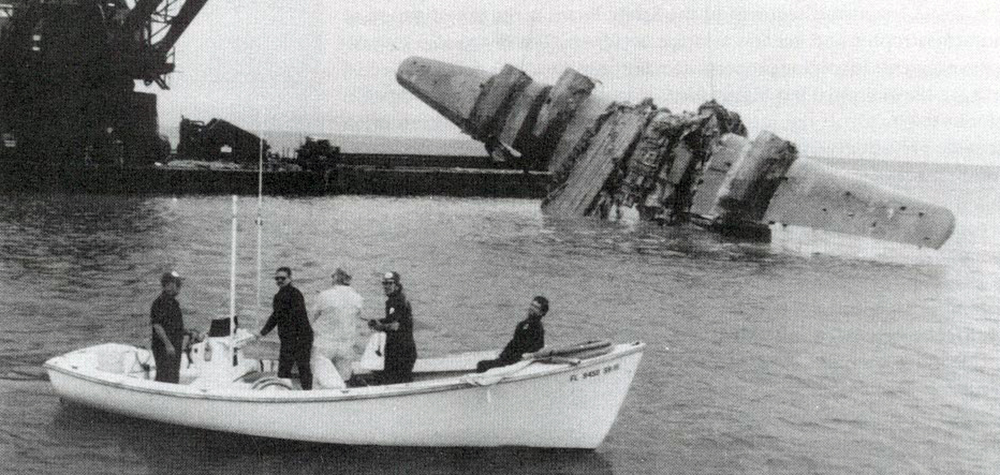
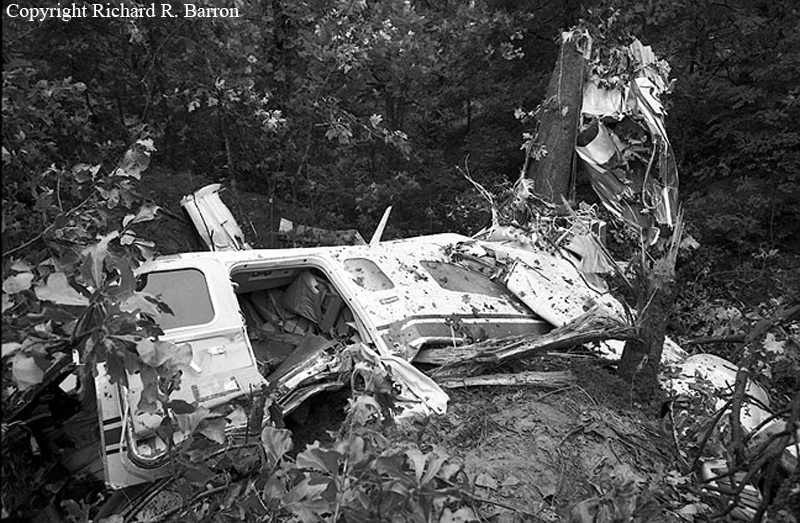
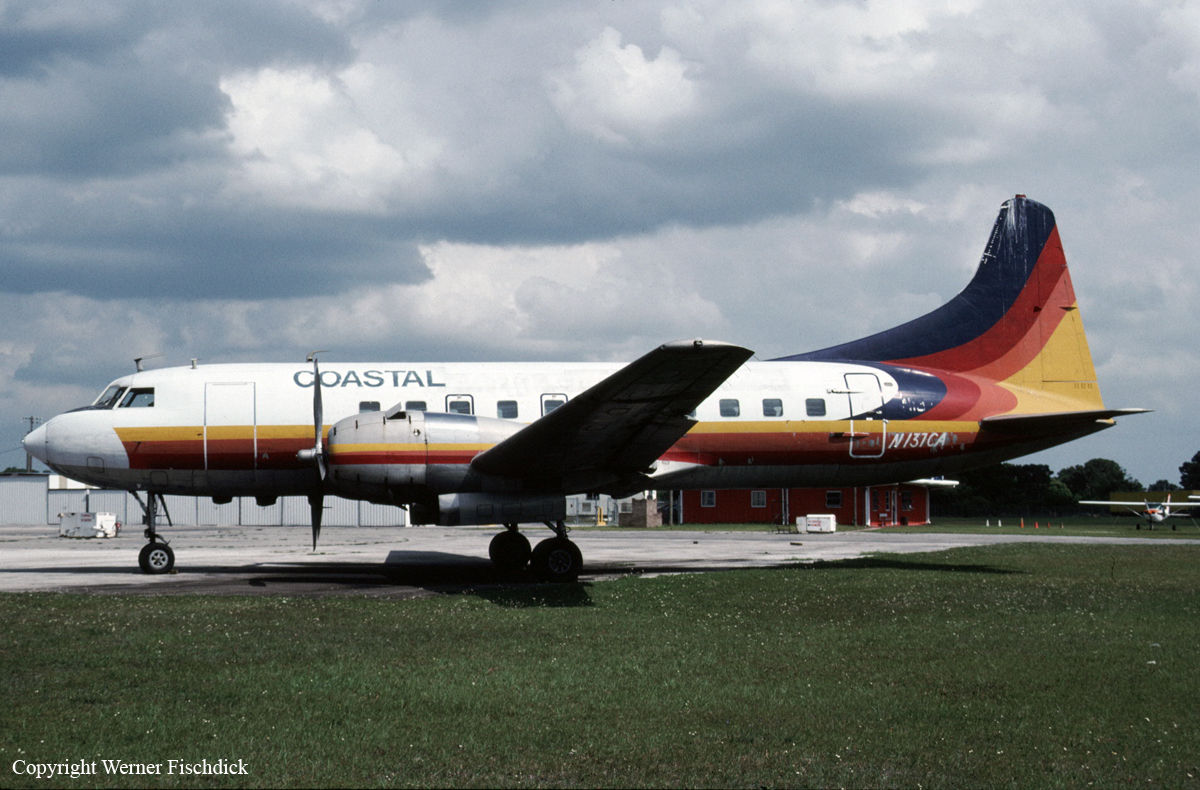
Crash of a Convair CV-440 Metropolitan in Cap Haïtien

Date & Time: Mar 18, 1995 at 1321 LT
Registration:
N137CA
Survivors:
Yes
Schedule:
Fort Lauderdale - Cap Haïtien
MSN:
317
YOM:
1956
Country:
Crew on board:
2
Crew fatalities:
Pax on board:
29
Pax fatalities:
Other fatalities:
Total fatalities:
0
Circumstances:
Leased from Winemiller Aviation, the aircraft was completing a charter flight from Fort Lauderdale to Cap Haïtien on behalf of the Metro Nord Travel Club. On approach to Cap Haïtien, flaps and undercarriage were selected down when the hydraulic pressure dropped. The crew continued the approach and the emergency air brake was armed. Upon touchdown, both tyres on the left main gear burst after the brakes locked. The aircraft veered off runway to the left and eventually collided with a parked UH-60 helicopter. All 31 occupants were evacuated safely and the aircraft was damaged beyond repair.
Probable cause:
It was determined that both tyres on the left main gear burst after the brakes locked due to a reported malfunction of the air brake system.

Crash of a Beechcraft G18S in Fort Lauderdale

Date & Time: Feb 16, 1994 at 0921 LT
Type of aircraft:
Registration:
N49K
Flight Type:
Survivors:
Yes
Schedule:
Fort Lauderdale - Freeport
MSN:
BA-519
YOM:
1960
Crew on board:
1
Crew fatalities:
Pax on board:
0
Pax fatalities:
Other fatalities:
Total fatalities:
0
Captain / Total flying hours:
8700
Captain / Total hours on type:
5000.00
Aircraft flight hours:
12099
Circumstances:
The pilot stated the left engine backfired and began to run rough shortly after takeoff. The engine was shut down and the propeller was feathered. He decided to return and land on the departure runway. Witnesses observed the aircraft on the downwind leg at 800 to 1,000 feet with the landing gear extended. As the aircraft turned to base leg it yawed sharply to the left and the left wing dropped. The aircraft descended rapidly. The pilot stated that as he turned from base to final leg at 75 to 100 feet the aircraft was buffeting and beginning to stall. He realized he would not make the runway and crash landed in a vacant lot. Examination of the left engine after the accident revealed no evidence to indicate precrash failure or malfunction of the engine.
Probable cause:
The pilot-in-command's improper approach planning and premature extension of the landing gear, resulting in the flight being unable to maintain sufficient altitude and airspeed to reach the runway. The loss of engine power on one engine was a factor.
Final Report:

Crash of a Cessna 402C near Andytown

Date & Time: Aug 25, 1993 at 0855 LT
Type of aircraft:
Operator:
Registration:
N206RH
Flight Phase:
Survivors:
Yes
Schedule:
Sarasota - Fort Lauderdale
MSN:
402C-0206
YOM:
1979
Crew on board:
1
Crew fatalities:
Pax on board:
4
Pax fatalities:
Other fatalities:
Total fatalities:
0
Captain / Total flying hours:
3000
Captain / Total hours on type:
2400.00
Aircraft flight hours:
12918
Circumstances:
The pilot was deviating around weather during descent when he noted the fuel flow and manifold pressure on the left engine oscillating. Because the propeller was still turning he elected not to feather the left propeller. The airplane would not maintain altitude so he lowered the landing gear and ditched the airplane in a swamp. Examination of the left fuel tank revealed the fuel float valve actuators and float arms excessively worn. This condition would allow unmetered air into the fuel lines. Also noted was the condition of one of the left fuel valves that could jam open allowing the fuel pickup to unport and induce excessive air into the fuel lines.
Probable cause:
The failure of the pilot to feather the propeller when the engine lost power, and his failure to follow the emergency procedure checklist. Contributing to the accident was the inadequate design of the fuel tank float valves which allowed for excessive wear and subsequent induction of unmetered air into the fuel lines.
Final Report:

Crash of a Piper PA-31-350 Navajo Chieftain in South Bimini

Date & Time: Jan 2, 1993 at 0945 LT
Registration:
N4107V
Flight Type:
Survivors:
Yes
Schedule:
Fort Lauderdale - South Bimini
MSN:
31-8253010
YOM:
1982
Country:
Crew on board:
1
Crew fatalities:
Pax on board:
0
Pax fatalities:
Other fatalities:
Total fatalities:
0
Circumstances:
Crashed in unknown circumstances upon landing at South Bimini Airport. The pilot, sole on board, was uninjured.

Crash of a Douglas DC-7CF off Fort Lauderdale

Date & Time: Nov 6, 1992 at 0225 LT
Type of aircraft:
Operator:
Registration:
HI-619SP
Flight Phase:
Flight Type:
Survivors:
Yes
Schedule:
Fort Lauderdale - Santo Domingo
MSN:
45158
YOM:
1956
Crew on board:
3
Crew fatalities:
Pax on board:
2
Pax fatalities:
Other fatalities:
Total fatalities:
0
Circumstances:
The crew reported over radio that the #4 engine failed shortly after takeoff, and they were attempting to dump fuel when the #2 engine overheated. They then intentionally ditched the airplane. The wreckage was recovered about 2 weeks afterward, and the airplane was about 50% corroded away. Due to massive salt water corrosion, no preimpact failure/malfunction of the #4 engine could be identified. No record of airplane/operator being granted cfr part 129 certificate authority. No substantiation of the times in service for the airplane, engines, propellers, and time change components or airworthiness directives could be determined.
Probable cause:
Failure of the #4 engine for an undetermined reasons(s), and the inability of the airplane to remain airborne due to the over gross weight takeoff performed by the pilot. Factors which contributed to the accident were: the questionable airworthiness of the airplane and engines due to the lack of records, and the failure of the federal aviation administration to adequately surveil the operator.
Final Report:

Crash of a Rockwell Grand Commander 690B in Konawa: 1 killed

Date & Time: Jun 25, 1992 at 0833 LT
Registration:
N690JC
Flight Phase:
Flight Type:
Survivors:
No
Schedule:
Norman - Fort Lauderdale
MSN:
690-11479
YOM:
1978
Location:
Crew on board:
1
Crew fatalities:
Pax on board:
0
Pax fatalities:
Other fatalities:
Total fatalities:
1
Captain / Total flying hours:
8857
Captain / Total hours on type:
98.00
Aircraft flight hours:
3355
Circumstances:
As the airplane was deviating around low intensity weather returns, and passing through 20,500 feet during climb out, it departed controlled flight and entered a right spiral. Descent rates exceeded 16,600 fpm during the descent from 18,300 feet to 3,900 feet and then slowed. Witnesses stated they saw the airplane descend from the clouds in a right flap spin. The empennage had separated from the airplane in pieces. Pieces of the wreckage were found up to 1.5 mile from the primary impact point. Both wings remained attached. The right engine was flamed out, and the propeller was feathered at impact. No mechanical reason for the flameout could be determined. At no time did the pilot indicate he was having difficulties. The NTSB weather study indicated that moderate turbulence was present in the area. The pilot's toxicology tests found 0.151 ug/ml of chlorpheniramine in the blood; normal therapeutic concentration is 0.01 to 0.04. Effects of overdosage include sedation, diminished mental alertness, and cardiovascular collapse to stimulation. The pilot, sole on board, was killed.
Probable cause:
The pilot's failure to maintain control of the airplane which resulted in an inadvertent spiral and subsequent rapid descent. The design stress limits of the airframe were exceeded resulting in an overload failure of the empennage. Factors related to the accident were: turbulence and the pilot's physical impairment due to drugs.
Final Report:

Crash of a Cessna 402B off The Bahamas

Date & Time: Jun 13, 1992 at 1115 LT
Type of aircraft:
Operator:
Registration:
N402PB
Flight Phase:
Flight Type:
Survivors:
Yes
Schedule:
Treasure Cay - Fort Lauderdale
MSN:
402B-0245
YOM:
1972
Country:
Crew on board:
1
Crew fatalities:
Pax on board:
1
Pax fatalities:
Other fatalities:
Total fatalities:
0
Captain / Total flying hours:
6574
Captain / Total hours on type:
231.00
Aircraft flight hours:
9097
Circumstances:
During cruise flight, the pilot reported that the right engine cowling partially separated and the left forward cylinder of that engine separated, followed by an engine compartment fire. He attempted to feather the propeller but was unable. He initiated a descent to extinguish the fire and was successful but after leveling off, was unable to maintain directional control. He ditched the airplane and both he and the passenger exited the aircraft. The pilot dragged the seriously injured passenger with him to a nearby island where they were rescued the following day. The aircraft was not recovered; therefore, no determination could be made as to the reason for the separation of the cylinder. Review of the aircraft logbook indicates that on 8/27/91, the n°5 cylinder of the right engine was removed and replaced. Also, the n°1 cylinder was removed and reinstalled following repair. There were no further entries in the aircraft logbook regarding cylinder removal or replacement to the right engine.
Probable cause:
For undetermined reason(s), the right engine failed and the right propeller would not feather.
Final Report:

Crash of a Cessna 402C in Clewiston: 2 killed

Date & Time: Jan 23, 1992 at 2022 LT
Type of aircraft:
Operator:
Registration:
N2714A
Flight Phase:
Survivors:
No
Schedule:
Fort Lauderdale - Sarasota
MSN:
402C-0209
YOM:
1980
Crew on board:
1
Crew fatalities:
Pax on board:
1
Pax fatalities:
Other fatalities:
Total fatalities:
2
Captain / Total flying hours:
5500
Captain / Total hours on type:
2250.00
Aircraft flight hours:
13708
Circumstances:
The scheduled passenger flight departed without a flight plan and was last heard from while descending in attempt to remain in VFR conditions. Witnesses on the ground stated that there was extremely heavy rain and thunderstorms at the time of the accident. The wreckage was located the next day and evidence indicated that the airplane hit the ground in a 50° nose down attitude at a high rate of speed. Both occupants were killed.
Probable cause:
Pilot-in-command's improper inflight decision to attempt to descend and remain in VFR conditions in an area of thunderstorms and heavy rain. Contributing to the accident was the pilot-in-command's loss of control in flight.
Final Report:

Crash of a Beechcraft 65-B80 Queen Air in Fort Lauderdale

Date & Time: May 25, 1991 at 1505 LT
Type of aircraft:
Registration:
N5128Y
Flight Phase:
Flight Type:
Survivors:
Yes
Schedule:
Fort Lauderdale - Titusville
MSN:
LD-405
YOM:
1968
Crew on board:
1
Crew fatalities:
Pax on board:
0
Pax fatalities:
Other fatalities:
Total fatalities:
0
Captain / Total flying hours:
1927
Captain / Total hours on type:
140.00
Circumstances:
The pilot stated that while in level flight the left engine failed and he observed a fire warning light and shut the engine down, the right engine then began to run rough and lose power. He then restarted the left engine but neither developed enough power to sustain flight. He executed a forced landing on a highway and struck a vehicle and a fire erupted. Examination of the left engine revealed a cross threaded fuel nozzle fitting and soot patterns aft of it. No cause for the right engine failure was found. No evidence of an annual inspection was found.
Probable cause:
The improper maintenance work by an unknown person who cross threaded a fuel nozzle injector fitting which allowed fuel to leak on the exhaust system initiating a fire. No reason for the right engine not to develop full power was found.
Final Report:

Crash of a Rockwell Aero Commander 720 in Alcoa: 2 killed

Date & Time: Dec 9, 1988 at 0600 LT
Operator:
Registration:
N120G
Flight Type:
Survivors:
No
Schedule:
Fort Lauderdale – Alcoa
MSN:
720-630-3
YOM:
1958
Location:
Crew on board:
1
Crew fatalities:
Pax on board:
1
Pax fatalities:
Other fatalities:
Total fatalities:
2
Captain / Total flying hours:
4103
Circumstances:
After encountering icing conditions in flight and experiencing problems maintaining altitudes and headings, the pilot elected to divert from his planned destination of Dayton, OH to Knoxville, TN. While on final approach after descending 1,300 feet below minimum procedure turn altitude followed by being told the aircraft was well above the glideslope, ATC instructed the pilot to maintain 3,000 feet. Shortly thereafter, ATC reported the mode C indicated 1,900. The pilot responded with 'engine quit'. The aircraft crashed in a pasture about 1 mile from the airport. The investigation revealed that the aircraft was not equipped to operate in icing conditions. The evidence indicated that the flaps and landing gear were extended. Approximately 40 lbs of cocaine were found onboard the aircraft. The tox report for the pilot disclosed .05 mg/l benzoylecognite (cocaine metabolite) in his blood. The pilot had received a weather briefing which included a freezing level at 7,000 feet and filed a flight plan requesting a cruising altitude of 14,000 feet. Both occupants were killed.
Probable cause:
Occurrence #1: loss of engine power (total) - nonmechanical
Phase of operation: approach - iaf to faf/outer marker (ifr)
Findings
1. (f) weather condition - icing conditions
2. (f) weather evaluation - poor - pilot in command
3. 1 engine
4. (c) induction air control/system - ice
5. (c) in-flight planning/decision - poor - pilot in command
6. (f) impairment (drugs) - pilot in command
----------
Occurrence #2: loss of control - in flight
Phase of operation: missed approach (ifr)
Findings
7. (c) emergency procedure - improper - pilot in command
8. (f) gear retraction - not performed - pilot in command
9. (f) raising of flaps - not performed - pilot in command
----------
Occurrence #3: in flight collision with terrain/water
Phase of operation: descent - uncontrolled
Final Report: