Crash of a Beechcraft 350 Super King Air in Punto Fijo

Date & Time: Jul 24, 2004
Operator:
Registration:
YV-910CP
Flight Type:
Survivors:
Yes
Schedule:
La Carlota - Calabozo - Punto Fijo
MSN:
FL-206
YOM:
1998
Country:
Crew on board:
2
Crew fatalities:
Pax on board:
2
Pax fatalities:
Other fatalities:
Total fatalities:
0
Circumstances:
The twin engine aircraft completed a charter flight from La Carlota to Calabozo with four passengers and two pilots. At Calabozo Airport, the four passengers brandished guns and took over the airplane on an illegal flight to Punto Fijo. Upon arrival, the aircraft crashed under unknown circumstances. There were no casualties and the aircraft was destroyed.

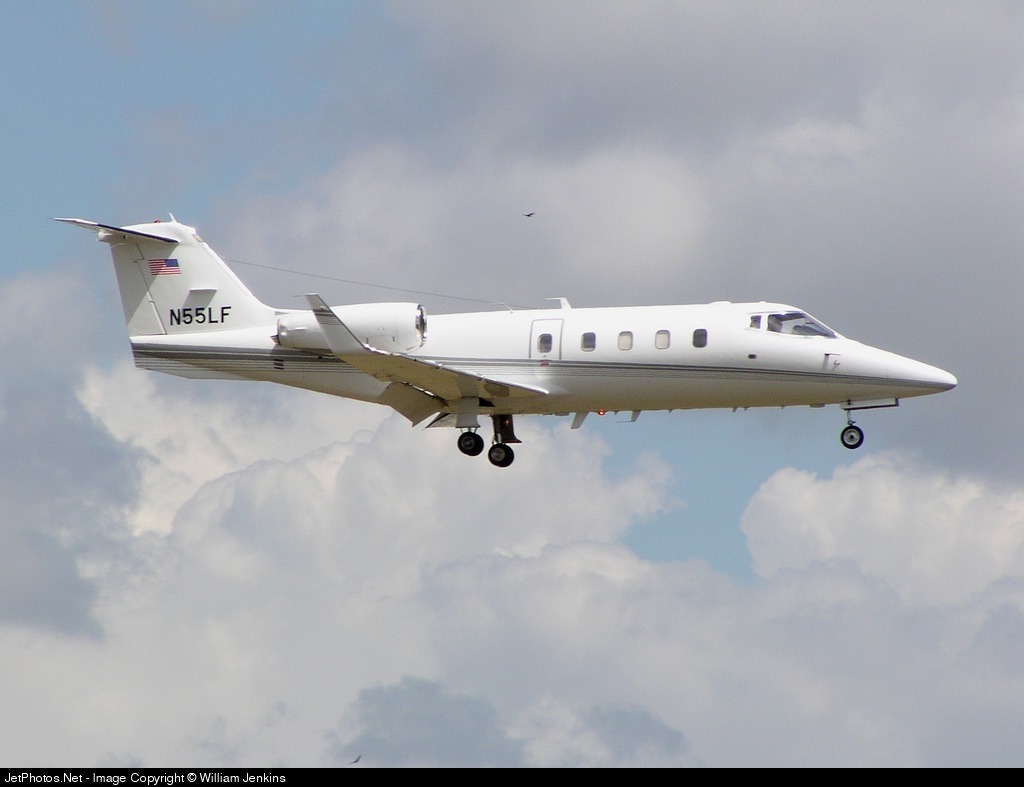
Crash of a Learjet 55 Longhorn in Fort Lauderdale

Date & Time: Jul 19, 2004 at 1137 LT
Type of aircraft:
Operator:
Registration:
N55LF
Flight Type:
Survivors:
Yes
Schedule:
Fort Lauderdale - Fort Lauderdale
MSN:
55-112
YOM:
1984
Crew on board:
2
Crew fatalities:
Pax on board:
0
Pax fatalities:
Other fatalities:
Total fatalities:
0
Captain / Total flying hours:
7595
Captain / Total hours on type:
1994.00
Copilot / Total flying hours:
412
Copilot / Total hours on type:
10
Aircraft flight hours:
6318
Circumstances:
The flight was a VFR positioning flight from FLL to FXE. Transcripts of the cockpit voice recorder (CVR) showed that while waiting for takeoff from FLL the flightcrew heard the local controller reported to a Delta Airlines flight that was on a seven mile final approach to land on runway 27R that the winds were 250 degrees at 19 knots, gusting to 50 knots. The Delta Airlines flight crew then informed the controller they were making a missed approach. At 1130:05 the captain asks the first officer if "can you see the end of the weather? If we make a hard right turn, can we stay clear of it?" The first officer responded "I believe so." At 1130:06 the local controller reported "wind shear alert. The centerfield wind 230 at 22. Runway 27R departure 25 knot loss one mile departure." The captain stated to the first officer "sweet." At 1132:11 the captain transmitted to the local controller "tower, any chance of Hop-a-Jet 55 getting out of here?" The local controller responded wind 230 at 17, right turn direct FXE approved, runway 27R cleared for takeoff. The captain responded "cleared to go, right turn out." At 1133:10 the captain asks for gear up. At 1133:15 the local controller responded to a Southwest Airlines Flight waiting for takeoff "no, don't look like anyone's gonna go." "The uh, weather is due west moving rapidly to the north. It looks like a few minutes, and you all be in the clear straight out." At 1133:17, the captain stated to the first officer "oh #. Think this was a bad idea." The first officer responded "no airport in sight." At 1133:43 the sound similar to precipitation hitting the windshield is recorded. At 1133:46 the FLL local controller instructs the flight crew to contact FXE Tower. At 1133:54 the CVR records the FXE local controller transmitting "wind 200, variable 250 at 15, altimeter 29.99. Heavy cell of weather to the west moving eastbound. Low level wind shear possible. At 1134:16, the FXE local controller transmits "attention all aircraft, low level wind shear advisories are in effect. Use caution. Wind 240 at 10." At 1134:51, the first officer transmitted to the FXE local controller that the flight was over the shoreline inbound full stop. At 1135:02, the FXE local controller transmitted "Hop-a-Jet 55, Executive tower, wind 210 variable 250 at 35, 35 knots and gusting. Winds are uh, heavy on the field. Low level wind shear advisories are in effect. Heavy rains from the west, eastbound and would you like to proceed inbound and land Executive? Say intentions." The first officer responded "that's affirmative." The local controller responded, "Hop-a-Jet 55 straight in runway three one if able. The winds 230 gusts, correction, winds 230 variable 210 at 25." At 1135:48, the local controller transmitted, "Hop-a-Jet 55, wind 230 variable 300 at 25 gusts 35. Altimeter 30.00. Runways are wet. Traffic is exiting the runway prior to your arrival, a Dutchess. Caution standing water on runways. Low level wind shear advisories in effect, Runway 31. Cleared to land." The first officer responded "cleared to land, Hop-a-Jet 55." At 1136:35, the local controller transmitted "wind 230 at 25, gusts 35." At 1136:58, the CVR records the sound similar to precipitation on the windshield. At 1137:17, the CVR records a sound similar to the aircraft touching down on the runway. At 1137:19, the sound of a repetitive tone similar to the thrust reverser warning starts and continues to the end of the recording. At 1137:23 a loud unidentified roaring sound starts and lasts 8 seconds. At 1137:30, loud rumbling noises similar to the aircraft departing the runway start. At 1137:36, a continuous tone similar to landing gear warning signal sounds and continues to the end of the recording. The rumbling noises stop. At 1137:39 the captain states the thrust reversers didn't stow and at 1138:36, the captain states "I went around and the # TRs stayed. The CVR recording ended. The 1132, Goes-12 infrared image depicts a rapidly developing cumulonimbus cloud between and over the FLL and FXE airports. The top of the cloud over FXE was in the range of 22,000 feet. The top of the cloud southwest of FXE was in the 39,000 feet range. The 1145, Goes-12 infrared image depicts a developing cumulonimbus cloud over FXE with the cloud top in the 42,000 feet range. Data was obtained from the Melbourne, Florida Doppler Weather Radar System, located 118 miles north-northwest of the accident site. The data showed that at FXE, between 1130 and 1145, a VIP Level 1 to 2 echo evolved into a VIP Level 5 "intense" echo at 1135 and a VIP Level 6 "extreme" echo by 1145.
Probable cause:
The flight crew's decision to continue the approach into known area of potentially severe weather (Thunderstorm), which resulted in the flight encountering a 30 knot crosswind, heavy rain, low-level wind shear, and hydroplaning on a ungrooved contaminated runway.
Final Report:

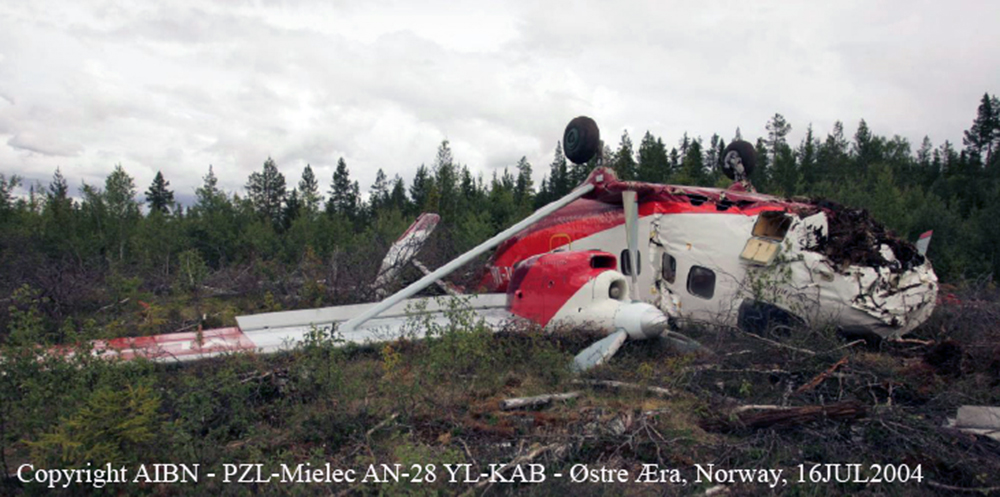
Crash of a PZL-Mielec AN-28 in Østre Æra

Date & Time: Jul 16, 2004 at 1324 LT
Type of aircraft:
Registration:
YL-KAB
Survivors:
Yes
Schedule:
Østre Æra - Østre Æra
MSN:
1AJ009-15
YOM:
1991
Country:
Region:
Crew on board:
2
Crew fatalities:
Pax on board:
0
Pax fatalities:
Other fatalities:
Total fatalities:
0
Captain / Total flying hours:
14000
Captain / Total hours on type:
400.00
Copilot / Total flying hours:
18000
Copilot / Total hours on type:
1000
Circumstances:
Two aircraft of type AN-28, operated by Rigas Aeroklubs Latvia, were dropping parachutists at the National Parachute Sport Centre, Østre Æra airstrip in Østerdalen. The company had had a great deal of experience with this type of operations, and had been carrying out parachute drops in Norway each summer for the last 9 years. They had brought their own licensed aircraft technicians with them to Østre Æra. On Friday morning, 16 July 2004, the weather conditions were good when the flights started. The crew of YL-KAB, which comprised two experienced pilots, were rested after a normal night's sleep. They first performed six routine drop flights. After stopping to fill up with fuel, normal preparations were made for the next flight with 20 parachutists who were to jump in two groups of 10. The seventh departure was carried out at time 1305. The Commander asked for and was given clearance by the air traffic control service to climb to flight level FL150 (15,000 ft equivalent to approx. 4,500 metres). The parachutists were then dropped from that altitude. The first drop of 10 parachutists was made on a southerly course above the airstrip, and the aircraft continued on that course for a short time before turning through 180° and getting ready for the next drop at the same location on a northerly course. A large cumulonimbus cloud (CB), with precipitation, had approached the airfield from the north at this time. To reach the drop zone above the runway, the aircraft had to fly close to this cloud. The aircraft was not equipped with weather radar. The last parachutists to leave the aircraft were in a tandem jump that was being filmed on video. The film showed that the parachutists became covered in a layer of white ice within 2-3 seconds of leaving the aircraft. The ice on the parachutists only thawed once they had descended to lower altitudes where the air temperature was above zero. Once the parachutists had jumped, the aircraft was positioned close to the CB cloud at a low cruising speed. They were exposed to moderate turbulence from the cloud. The Commander, who was the PF (pilot flying), started a sudden 90° turn to the left while also reducing engine power to flight idle in order to avoid the CB cloud and return to Østre Æra to land. At this point, the First Officer who was PNF (pilot not flying) observed that ice had formed on the front windshield, and he chose to switch on the anti-icing system. He did this without informing the PF. A few seconds later both engines stopped, and both propellers automatically adopted the feathered position. The pilots had not noticed any technical problems with the aircraft engines before they failed. During the descent, the PNF, on the PF's orders, carried out a series of start-up attempts with reference to the checklist/procedure they had available in the cockpit. The engines would not start and the PF made a decision and prepared to carry out an emergency landing at Østre Æra without engines. The runway at Østre Æra is 600 m long and 10 m wide. The surrounding area is covered by dense coniferous forest and they had no alternative landing areas within reach. Because they were without engine power, there was no hydraulic power to operate the aircraft's flaps. This meant that the speed of the aircraft had to be kept relatively high, approx. 160-180 km/h. The final approach was further complicated because the PF had to avoid the last 10 parachutists who were still in the air and who were steering towards a landing area just beside the airstrip. The PF first positioned the aircraft on downwind on a southerly course west of the airfield, in order then to make a left turn to final on runway 01. The landing took place around halfway down the runway, at a faster speed than normal - according to the Commander's explanation approximately 160-170 km/h. The PF braked using the wheel brakes, but when he realized that he would not be able to stop on the length of runway remaining, he ceased braking. He knew that the terrain directly on the extension to the runway was rough, and chose to use the aircraft's remaining speed to lift it off the ground and to alter course a little to the right. The aircraft passed over the approx. 2.5 m high embankment in the transition between the runway level and the higher marshy plateau surrounding the northern runway area, see Figure 1. The aircraft ran approx. 230 m in ground effect before landing on its heels in the flat marshy area north of the airfield. After around 60 m of roll-out, the nose wheel and the aircraft's nose struck a ditch and the aircraft turned over lengthways. It came to rest upside down with its nose section pointing towards the landing strip.
Probable cause:
The experienced Commander assessed the distance to the cumulonimbus cloud as sufficient to allow the drop to be carried out, and expected that they would then rapidly make their way out of the exposed area. It appeared, however, that problems arose when the aircraft was exposed to turbulence and icing from the cloud. The AIBN believes the limits of the engines' operational range were exceeded since the anti-icing system was switched on while the power output from the engines was low, in combination with low airspeed, turbulence and sudden manoeuvring. At that, both engines stopped, and the propellers were automatically feathered. The AIBN believes the engines would not restart because the Feathering Levers were not moved from the forward to the rear position and forward again, as is required after automatic feathering. The manufacturer has pointed out that, according to the procedures, the crew should have refrained from restart attempts and prioritized preparing for the emergency landing. AIBN acknowledges this view, taken into consideration that the crew had not received necessary training and that no suitable checklists existed. On the other hand, it is the AIBN’s opinion that this strategy may appear too passive in a real emergency. If the flight is over rugged mountain terrain or over water, an emergency landing may have fatal outcome. Provided there is sufficient time, and that crew cooperation is organised in such a way that it does not jeopardise the conduct of safe flight, a successful restart may prevent an accident. The AIBN cannot rule out the possibility that the crew's ability to make a correct assessment of the situation was reduced due to oxygen deficiency. Low oxygen-saturation in the brain would first lead to generally reduced mental capacity. In particular, this applies to the capacity to do several things simultaneously and the ability to remember. These are factors that are crucial when a pilot in a stressful situation has to choose the best solution to a problem, and the negative effects will appear more rapidly the older a person is. The fact that the First Officer switched on the anti-icing system without asking the Commander first, indicates that crew collaboration was not functioning at its best. The AIBN believes that the crew, after having entered this difficult situation, carried out a satisfactory emergency landing under very demanding conditions. The fact of the parachutists being within the approach sector made the scenario more complex, and a landing ahead of the threshold had to be avoided. With the flaps non-functional, it is understandable that the speed was high and the touchdown point not optimal. The fact that the Commander got the aircraft into the air again and landed on the higher marshy plateau, was probably crucial to the outcome. Continued braking would have resulted in the aircraft running into the earth embankment at relatively high residual speed, and it is doubtful whether the crew would have survived. A safety recommendation is being put forward in connection with this. Even if allowances are made for parachuting being a special type of operation that often takes place under the direction of a club, the AIBN believes that this investigation has uncovered several issues that cannot be considered to be satisfactory when compared to the safety standard on which they ought to be based. A user-friendly checklist system in the cockpit which is used during normal operations, in emergency situations and during flight training would increase the probability of the aircraft being operated in accordance with the manufacturer's recommendations. It is of great importance that pilots are sufficiently trained and experienced to carry out appropriate emergency procedures. It is assumed, however, that the new regulation concerning civil parachute jumping will contribute to increased levels of safety, and the AIBN sees no need to recommend any further measures.
Final Report:

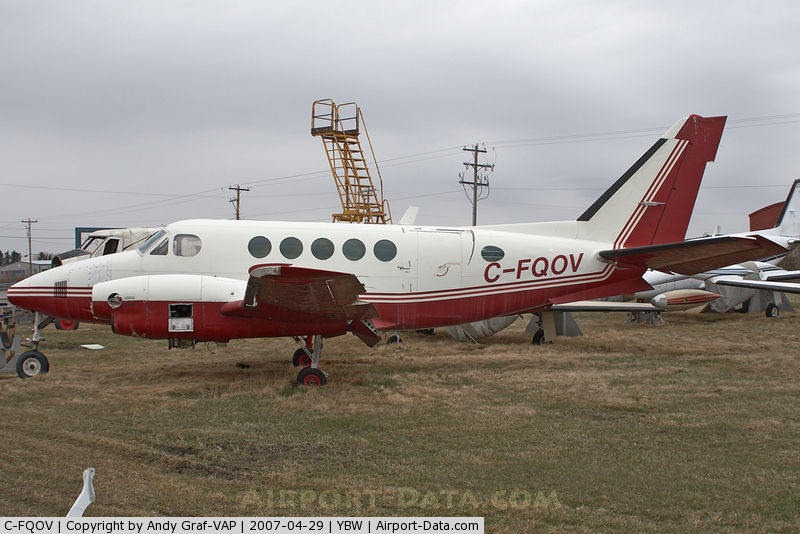
Crash of a Beechcraft A100 King Air in Fort Vermilion

Date & Time: Jul 13, 2004 at 0001 LT
Type of aircraft:
Registration:
C-FQOV
Flight Type:
Survivors:
Yes
Schedule:
Grande Prairie – Fort Vermilion
MSN:
B-38
YOM:
1970
Flight number:
LRA913M
Country:
Crew on board:
2
Crew fatalities:
Pax on board:
3
Pax fatalities:
Other fatalities:
Total fatalities:
0
Circumstances:
Crew twin engine aircraft was performing an ambulance flight from Grande Prairie to his base in Fort Vermilion with one patient, one doctor, one accompanist and two pilots on board. On final approach, the aircraft was too high and eventually landed hard. Upon touchdown, the right main gear collapsed and the aircraft veered off runway to the right and and came to rest. All five occupants escaped uninjured while the aircraft was damaged beyond repair.
Probable cause:

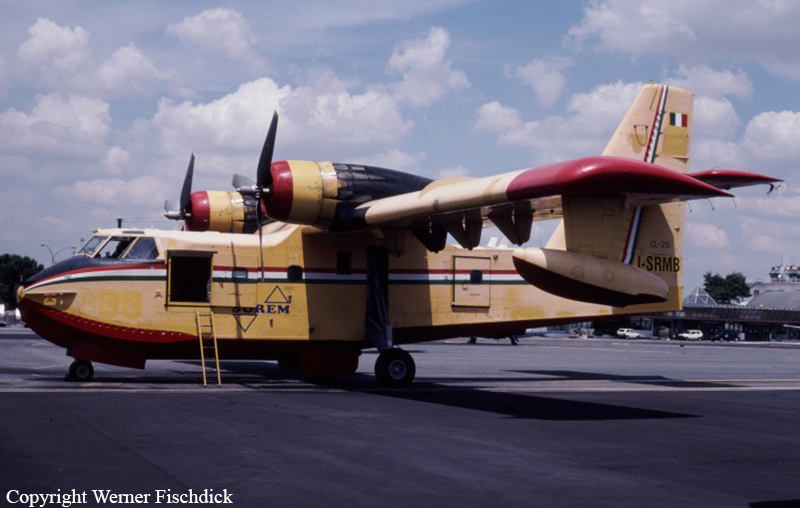
Crash of a Canadair CL-215-1A10 off Chamadouro

Date & Time: Jul 9, 2004 at 1840 LT
Type of aircraft:
Operator:
Registration:
I-SRMB
Flight Phase:
Flight Type:
Survivors:
Yes
Schedule:
Seia - Seia
MSN:
1012
YOM:
1979
Flight number:
Tanker A2
Country:
Region:
Crew on board:
2
Crew fatalities:
Pax on board:
0
Pax fatalities:
Other fatalities:
Total fatalities:
0
Captain / Total flying hours:
8972
Captain / Total hours on type:
750.00
Copilot / Total flying hours:
3495
Copilot / Total hours on type:
16
Circumstances:
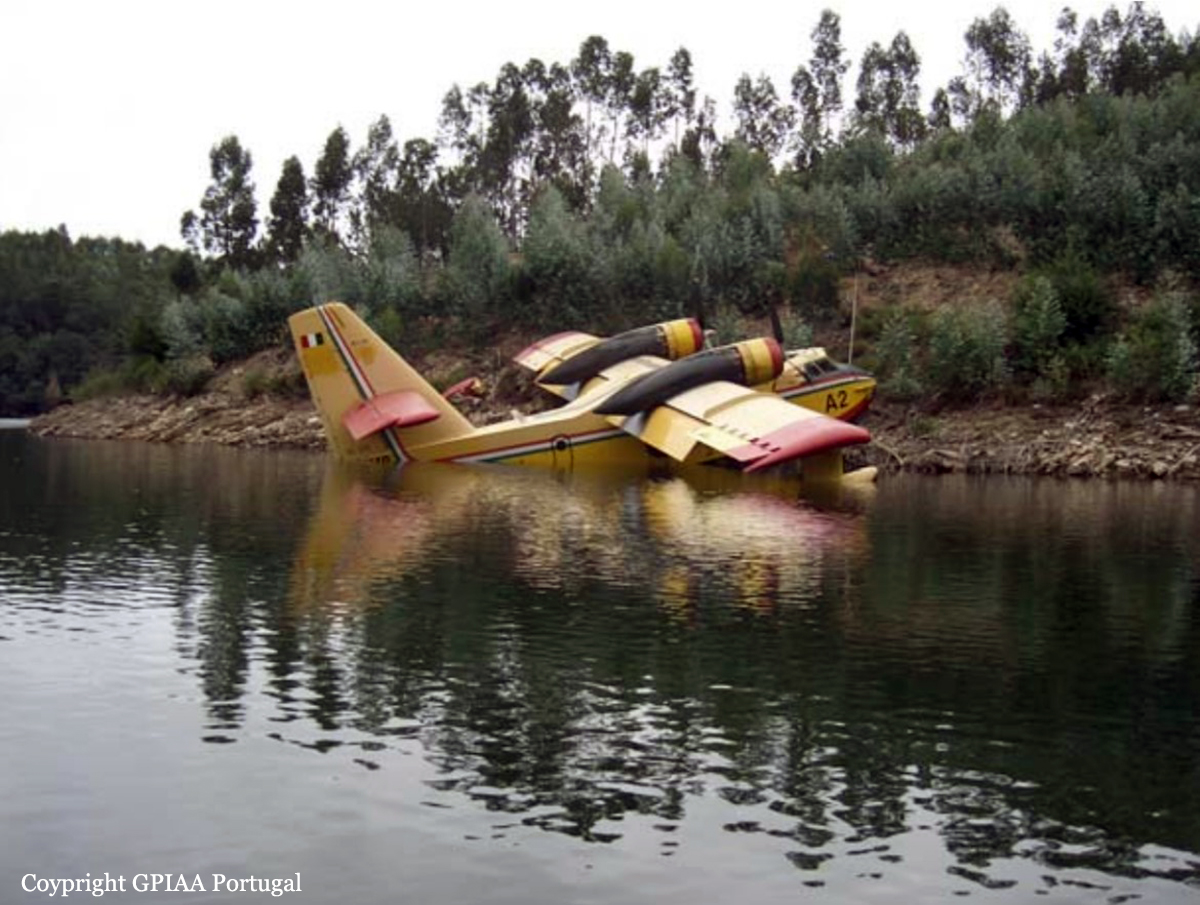
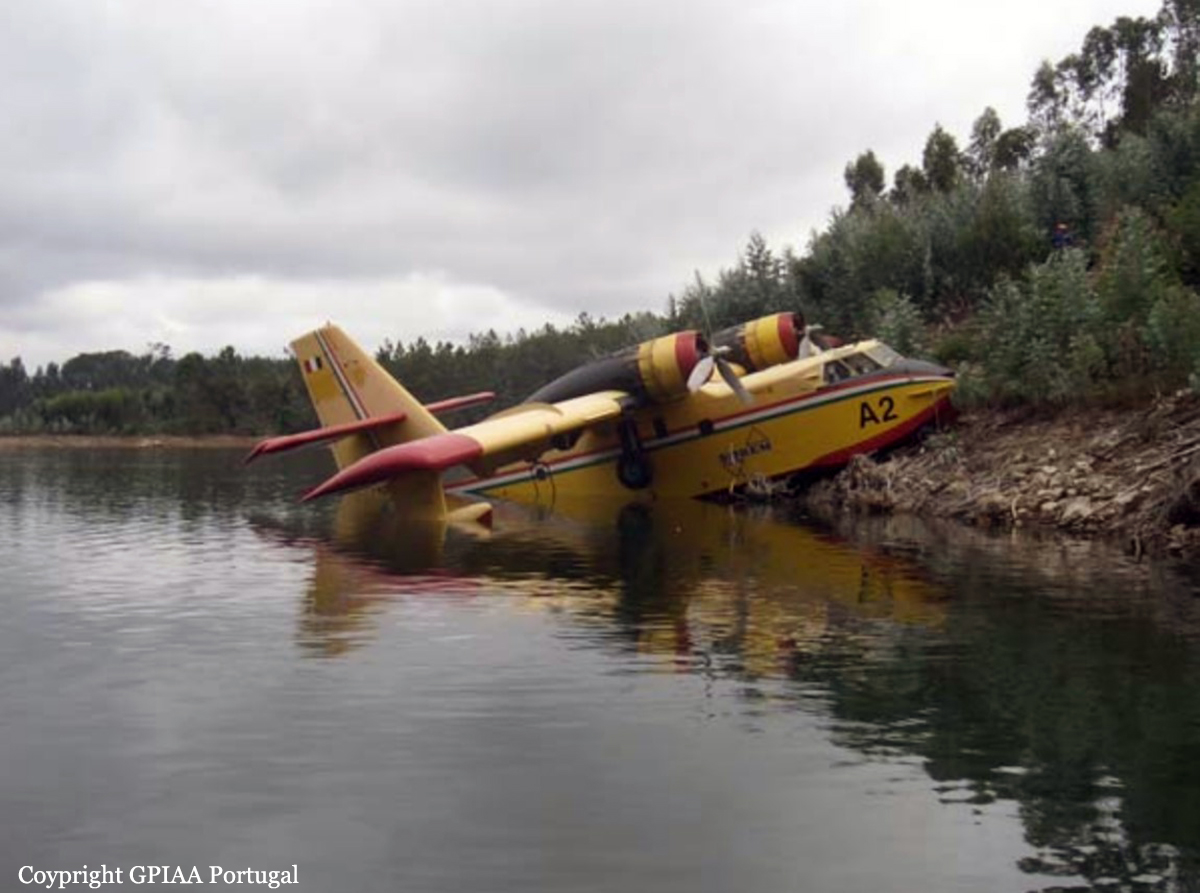
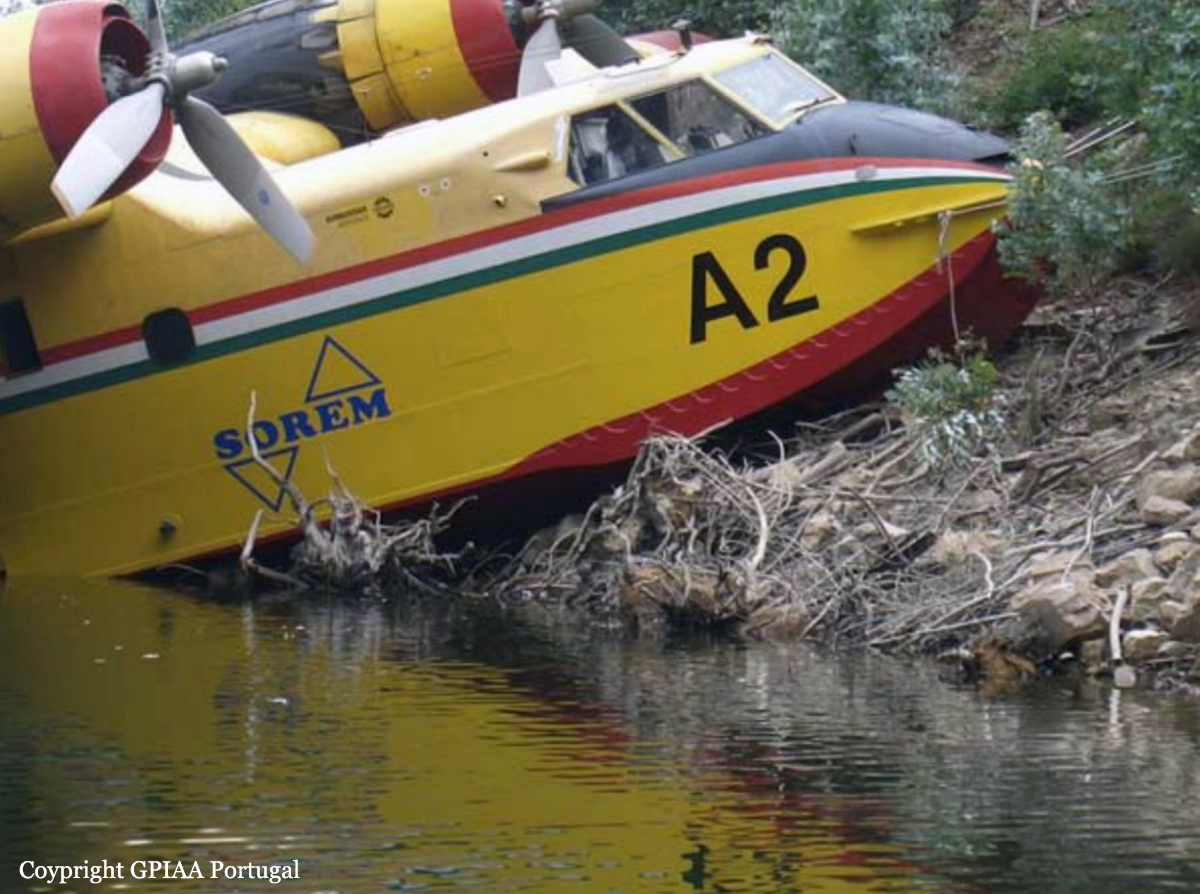
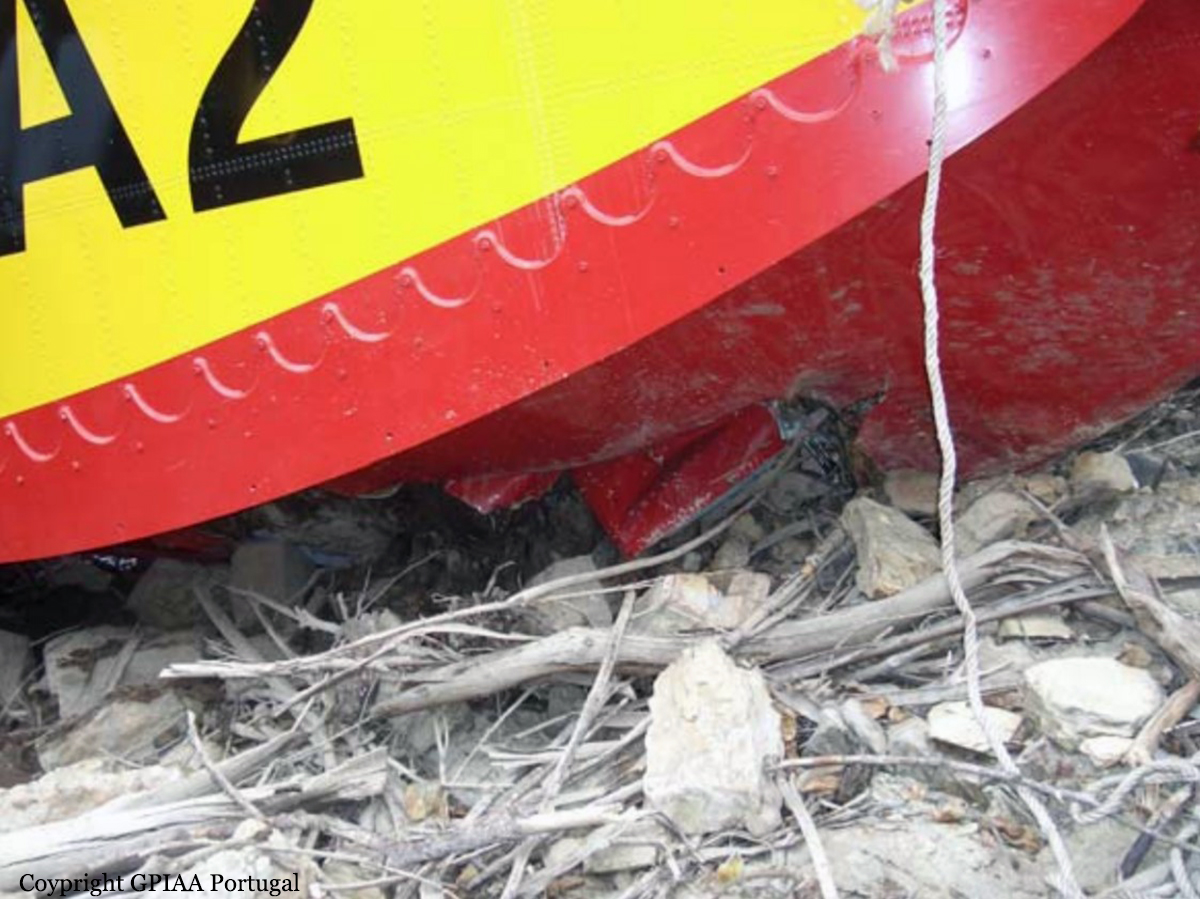
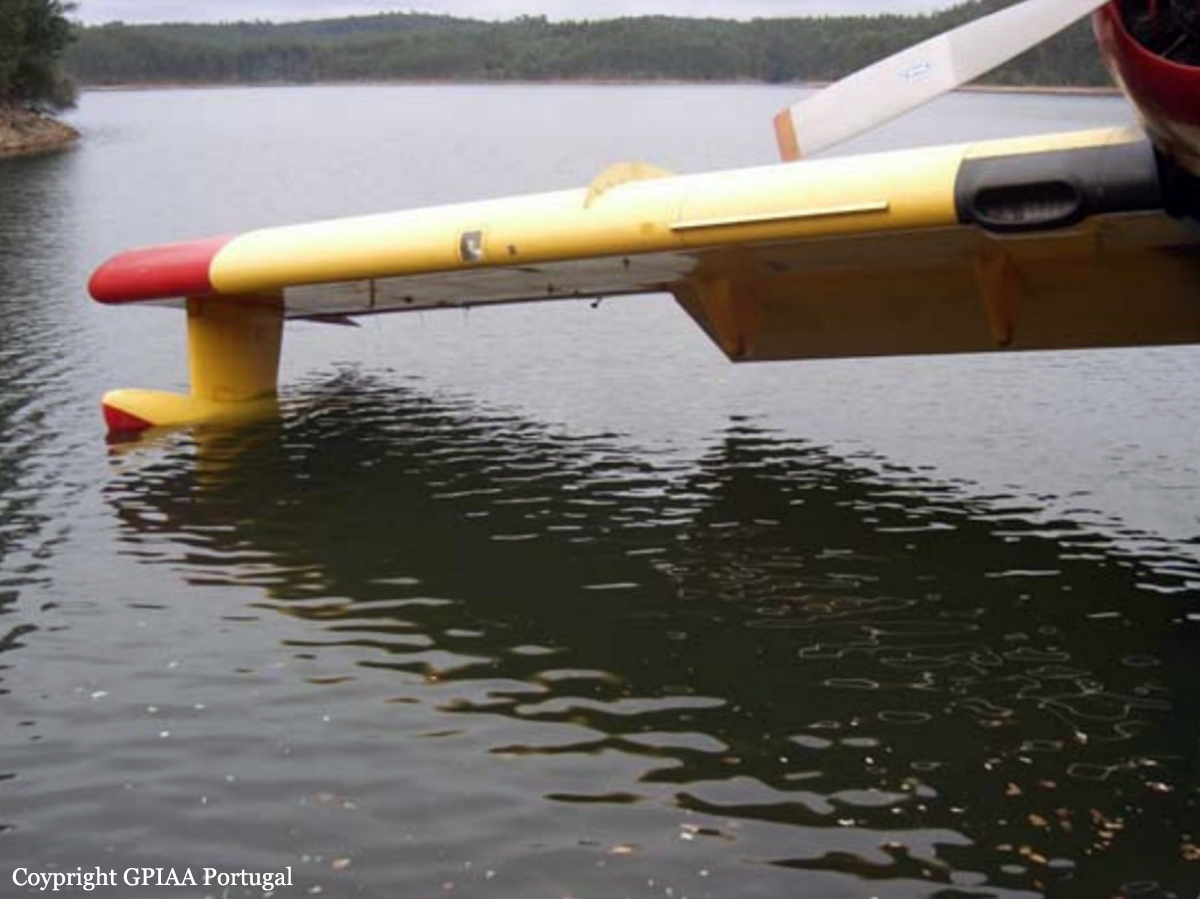
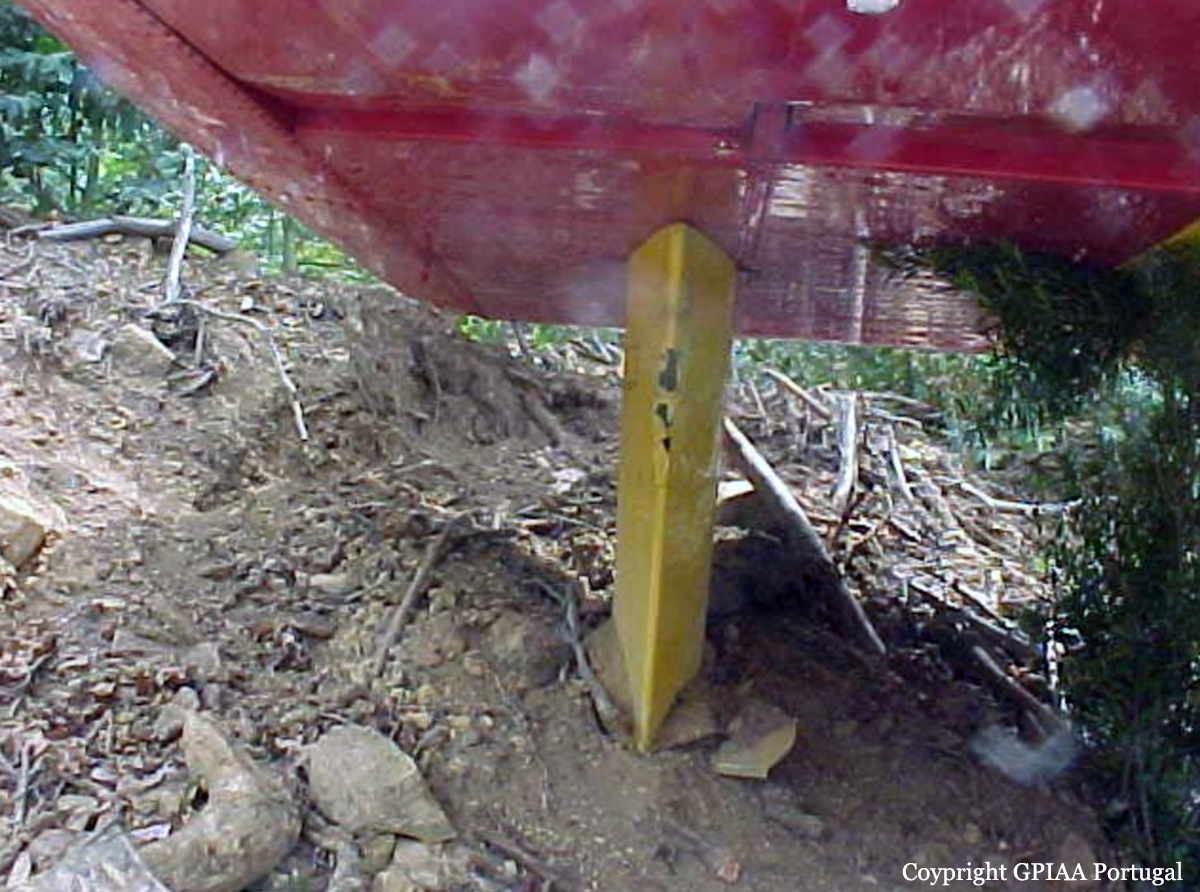
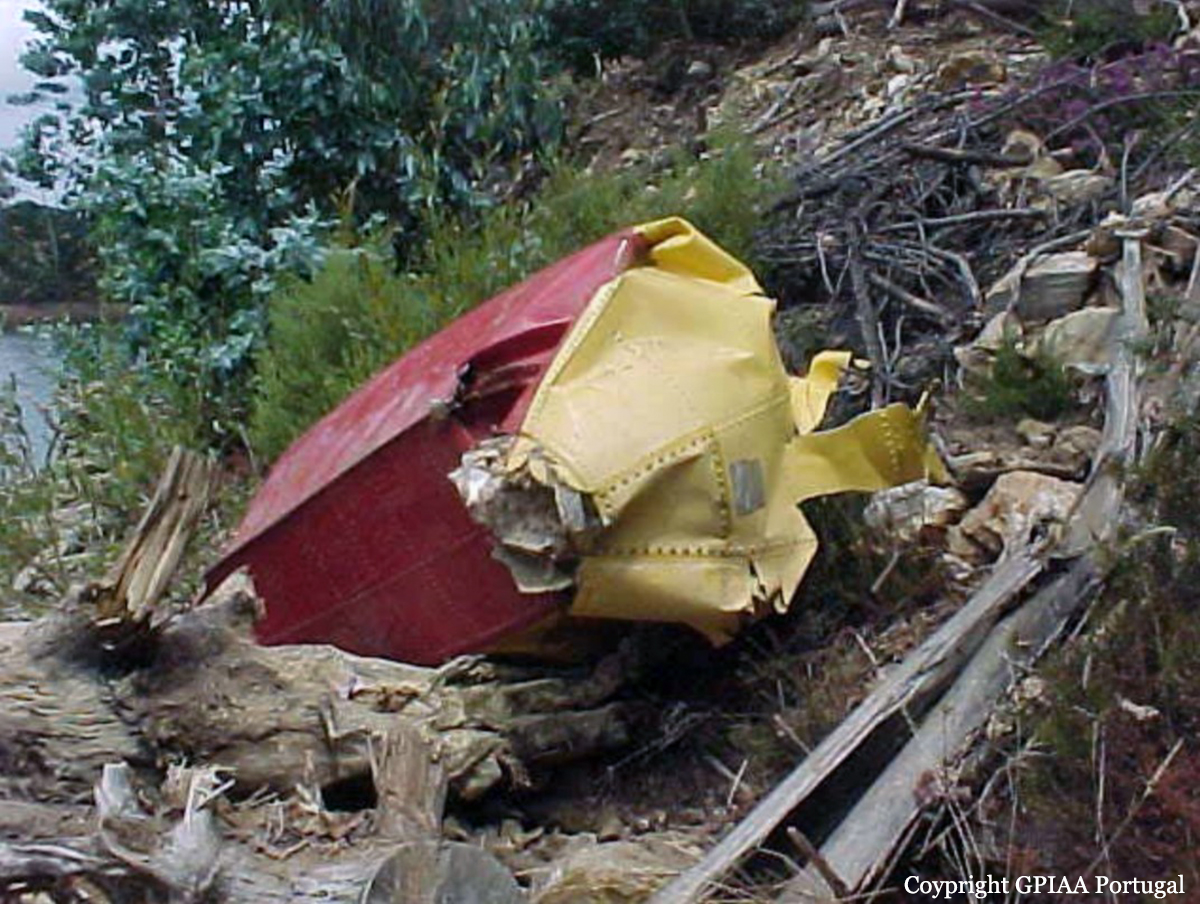
Owned by SOREM, the aircraft was dispatched in Portugal and leased to OMNI - Aviação e Tecnologia for fire fighting missions. Following a scooping mission in the Aguíeira Reservoir off Chamadouro, the crew increased engine power and started a takeoff procedure when control was lost. The takeoff was abandoned but the aircraft collided with the shore and came to rest. Both pilots escaped uninjured and the aircraft was damaged beyond repair.
Probable cause:
Loss of directional control of the aircraft during takeoff and the track during deceleration (after the abortion decision) in order to avoid collision with the bank, was considered as the primary cause of the accident. The following contributing factors were identified:
- Poor Crew Resource Management,
- Lack of crew communication,
- The orographic conditions were substantially different from those where the crew received their training and developed their operational activities.
Final Report:

Crash of a Piper PA-31P Pressurized Navajo in Albacete

Date & Time: Jul 4, 2004 at 1855 LT
Type of aircraft:
Registration:
EC-CTG
Flight Type:
Survivors:
Yes
Schedule:
Biscarosse – Alicante
MSN:
31P-7530017
YOM:
1975
Country:
Region:
Crew on board:
1
Crew fatalities:
Pax on board:
5
Pax fatalities:
Other fatalities:
Total fatalities:
0
Captain / Total flying hours:
2700
Captain / Total hours on type:
300.00
Aircraft flight hours:
2490
Circumstances:
The twin engine aircraft departed Biscarosse Airport, Landes, at 1629LT, on a private flight to Alicante, carrying five passengers and one pilot. At 1840LT, while descending to Alicante, the pilot contacted ATC and reported a low fuel situation. After being vectored to Albacete-Los Llanos AFB, he modified his route and started the descent for an approach to runway 09. Four minutes later, at an altitude of 3,000 feet and a distance of 8 NM, he declared an emergency following an engine failure. Two minutes later, the aircraft crashed near Chinchilla, about 10 km southeast of the airport. All six occupants were rescued and the aircraft was damaged beyond repair.
Probable cause:
Failure of both engines in flight due to fuel exhaustion. This situation was probably the consequence of an incorrect fuel consumption calculation prior to departure, combined with a possible over-consumption in flight.
Final Report:

Crash of a Beechcraft 200 Super King Air in São Sebastião: 2 killed

Date & Time: Jun 28, 2004 at 1710 LT
Registration:
ZS-NRW
Flight Phase:
Flight Type:
Survivors:
No
Schedule:
São Sebastião - Vilanculos
MSN:
BB-201
YOM:
1977
Country:
Region:
Crew on board:
2
Crew fatalities:
Pax on board:
0
Pax fatalities:
Other fatalities:
Total fatalities:
2
Captain / Total flying hours:
5800
Captain / Total hours on type:
2080.00
Copilot / Total flying hours:
1203
Copilot / Total hours on type:
1
Circumstances:
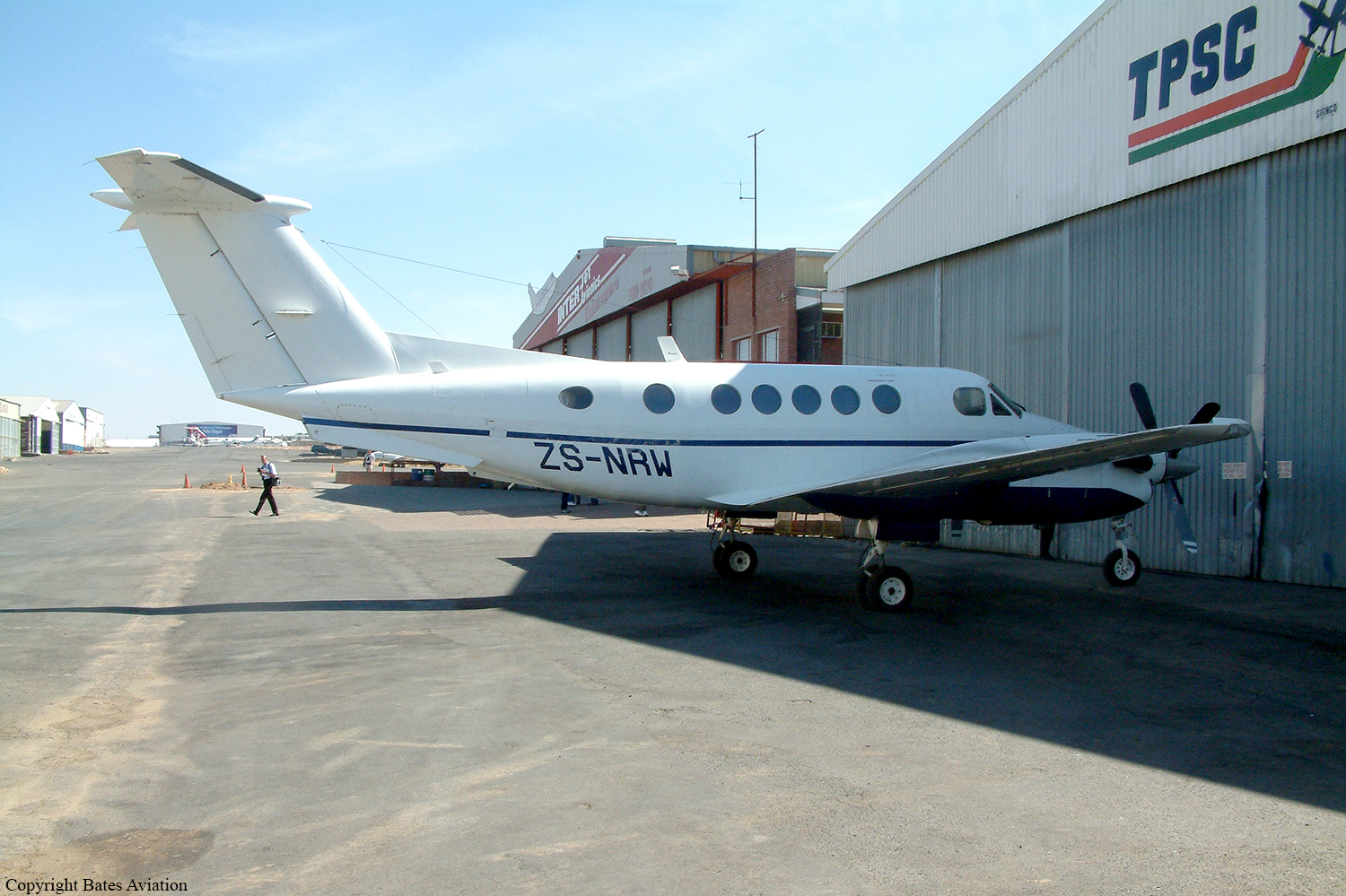
The aircraft was refuelled to capacity at Polokwane Airport, South Africa on 28 June 2004 with 1750 litres of Jet A1 fuel where after it flew to São Sebastião, near Vilanculos, Mozambique. Later the day on 28 June 2004 the crew attempted to take off on a non-scheduled flight from Sao Sebastiao (near Vilanculos) to Vilanculos Airport (VNX). The purpose of the fight was to airlift an injured man to a hospital at an unknown destination. The crew did not use the full runway length available but attempted the takeoff run with only 870ft (265 m) of runway available. The aircraft failed to become airborne and overran the runway, colliding with a sandbank, the perimeter fence and trees and erupted in fire. Calculations, using the takeoff performance graphs in the POH (Pilot Operating Handbook), showed that the aircraft would have required a ground roll distance of 2000 ft (610 m) with 40° flap and 2100 ft (640 m) with no flap selected.
Final Report:

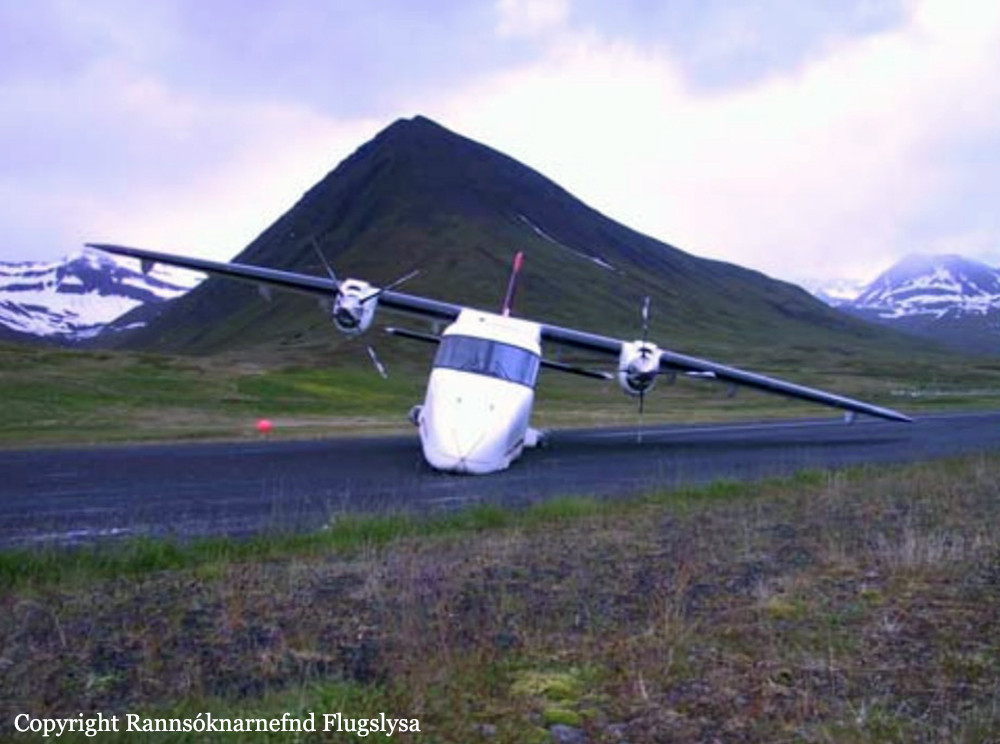
Crash of a Dornier DO228-201 in Siglufjörður

Date & Time: Jun 23, 2004 at 1941 LT
Type of aircraft:
Operator:
Registration:
TF-ELH
Flight Type:
Survivors:
Yes
Schedule:
Sauðárkrókur - Siglufjörður
MSN:
8070
YOM:
1985
Country:
Region:
Crew on board:
2
Crew fatalities:
Pax on board:
0
Pax fatalities:
Other fatalities:
Total fatalities:
0
Captain / Total flying hours:
8400
Captain / Total hours on type:
2345.00
Copilot / Total flying hours:
1117
Copilot / Total hours on type:
253
Circumstances:
Following an uneventful passenger flight from Reykjavik to Sauðárkrókur, the crew decided to fly to Siglufjörður Airport to perform a competence control flight for this airfield. On approach in good weather conditions (visibility over 10 km with clouds at 1,500 feet), the captain disconnected the GPWS system to avoid repetitive alarms. After landing on runway 07, he attended to perform a touch-and-go so he increased engine power and took off. During initial climb, the landing gears were raised and the crew made a right hand turn circuit at an altitude of 500 feet. Following a second approach to runway 07, the aircraft landed on its belly and slid for 280 metres before coming to rest. Both pilots evacuated safely while the aircraft was damaged beyond repair.
Probable cause:
Belly landing after the crew failed to follow the approach checklist and failed to lower the landing gear for a second touch-and-go manoeuvre. The following contributing factors were identified:
- The crew failed to check that the three green lights were ON,
- The aircraft was unstable on final approach,
- The captain took over control without knowing how to proceed for the approach,
- The presence of birds in the vicinity of the runway disturbed the crew,
- The landing gear alert system was not properly set,
- The right hand circuit was completed at a low altitude of 500 feet.
Final Report:

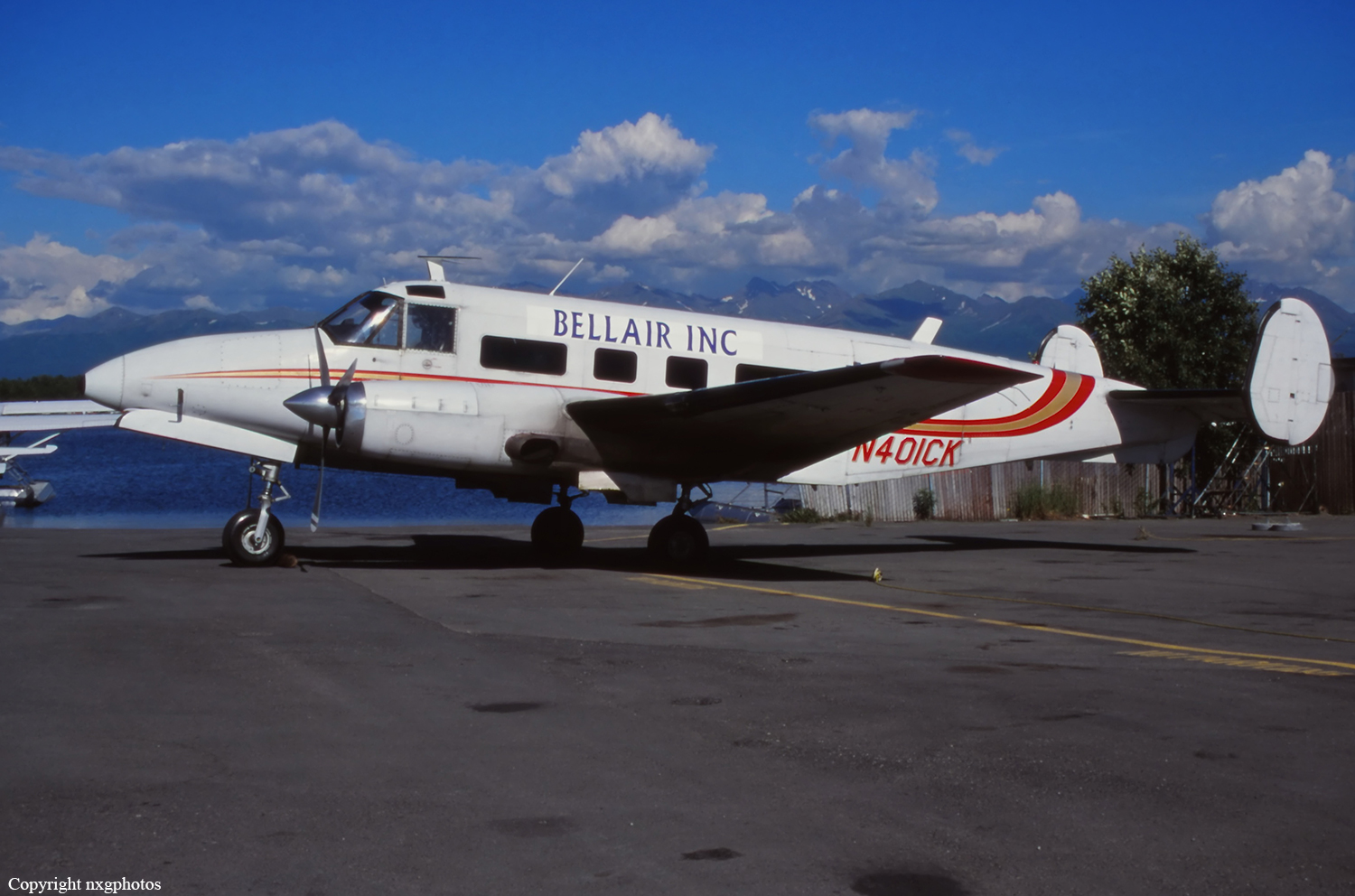
Crash of a Beechcraft C-45H Expeditor in Kodiak: 1 killed

Date & Time: Jun 14, 2004 at 1137 LT
Type of aircraft:
Operator:
Registration:
N401CK
Flight Type:
Survivors:
No
Schedule:
Anchorage – Kodiak
MSN:
AF-60
YOM:
1952
Location:
Crew on board:
1
Crew fatalities:
Pax on board:
0
Pax fatalities:
Other fatalities:
Total fatalities:
1
Captain / Total flying hours:
18600
Circumstances:
The solo airline transport pilot departed on a commercial cargo flight in a twin-engine, turboprop airplane. As the flight approached the destination airport, visibility decreased below the 2 mile minimum required for the initiation of the approach. The pilot entered a holding pattern, and waited for the weather to improve. After holding for about 45 minutes, the ceiling and visibility had improved, and the flight was cleared for the ILS 25 instrument approach. After the pilot's initial contact with ATCT personnel, no further radio communications were received. When the flight did not reach the destination airport, it was reported overdue. A search in the area of an ELT signal located the accident airplane on a hilly, tree-covered island. A witness located to the north of the airport reported seeing a twin-engine turboprop airplane flying very low over the water, headed in an easterly direction, away from the airport. The witness added that the weather at the time consisted of very low clouds, fog, and rain, with zero-zero visibility. A local resident also stated that the weather conditions were often much lower over the water adjacent to the approach end of the airport than at the airport itself. The missed approach procedure for the ILS 25 approach is a climbing left turn to the south. About one minute after the accident, a special weather observation was reporting, in part: Wind, 060 degrees (true) at 11 knots; visibility, 2 statute miles in light rain and mist; clouds and sky condition, 500 feet broken, 900 feet broken, 1,500 feet overcast; temperature, 46 degrees F; dew point, 44 degrees F. According to FAA records, the company was not authorized to conduct single pilot IFR operations in the accident airplane, and that the accident pilot was the operator's chief pilot. Toxicology tests revealed cocaethylene and chlorpheniramine in the pilot's blood and urine.
Probable cause:
The pilot's failure to follow proper IFR procedures by not adhering to the published missed approach procedures, which resulted in an in-flight collision with tree-covered terrain. Factors contributing to the accident were a low ceiling, fog, rain, and the insufficient operating standards of company management by allowing unauthorized single pilot instrument flight operations. Additional factors were the pilot's impairment from cocaine, alcohol, and over the counter cold medication, and the FAA's inadequate medical certification of the pilot and follow-up of his known substance abuse problems.
Final Report:

Crash of a Beechcraft 200 Super King Air near Rupert: 2 killed

Date & Time: Jun 13, 2004 at 0830 LT
Operator:
Registration:
N200BE
Flight Type:
Survivors:
No
Site:
Schedule:
Summerville – Lewisburg – Charlotte
MSN:
BB-832
YOM:
1981
Crew on board:
2
Crew fatalities:
Pax on board:
0
Pax fatalities:
Other fatalities:
Total fatalities:
2
Captain / Total flying hours:
10400
Captain / Total hours on type:
1500.00
Copilot / Total flying hours:
2910
Copilot / Total hours on type:
400
Aircraft flight hours:
9449
Circumstances:
An IFR flight plan and slot reservation were filed for the planned flight over mountainous terrain. The flightcrew intended to reposition to an airport about 30 miles southeast of the departure airport, pick up passengers, and then complete a revenue flight to another airport. The airplane departed VFR, and the flightcrew never activated the flight plan. A debris path was located, consistent with straight and level flight, near the peak of a mountain at 3,475 feet msl. Examination of the wreckage did not reveal any pre-impact mechanical malfunctions. Instrument meteorological conditions prevailed near the accident site, about the time of the accident. Further investigation revealed the aircraft operator was involved in two prior weather related accidents, both of which resulted in fatalities. A third accident went unreported, and the weather at the time of that accident was unknown. Over a period of 14 years, the same FAA principal operations inspector was assigned to the operator during all four accidents; however, no actions were ever initiated as a result of any of the accidents.
Probable cause:
The pilot-in-command's improper decision to continue VFR flight into IMC conditions, which resulted in controlled flight into terrain. Factors were the FAA Principle Operations Inspector's inadequate surveillance of the operator, and a low ceiling.
Final Report: