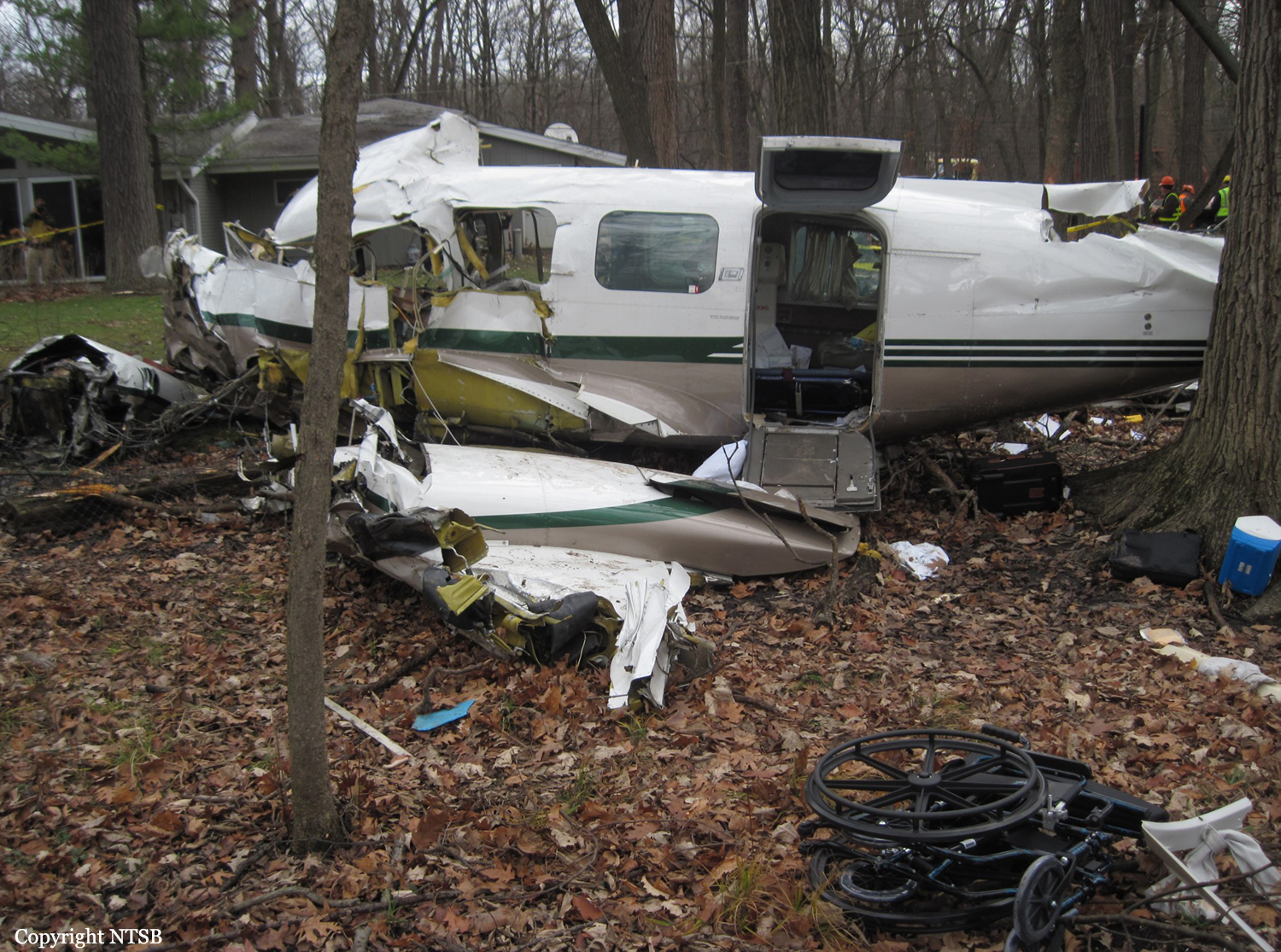
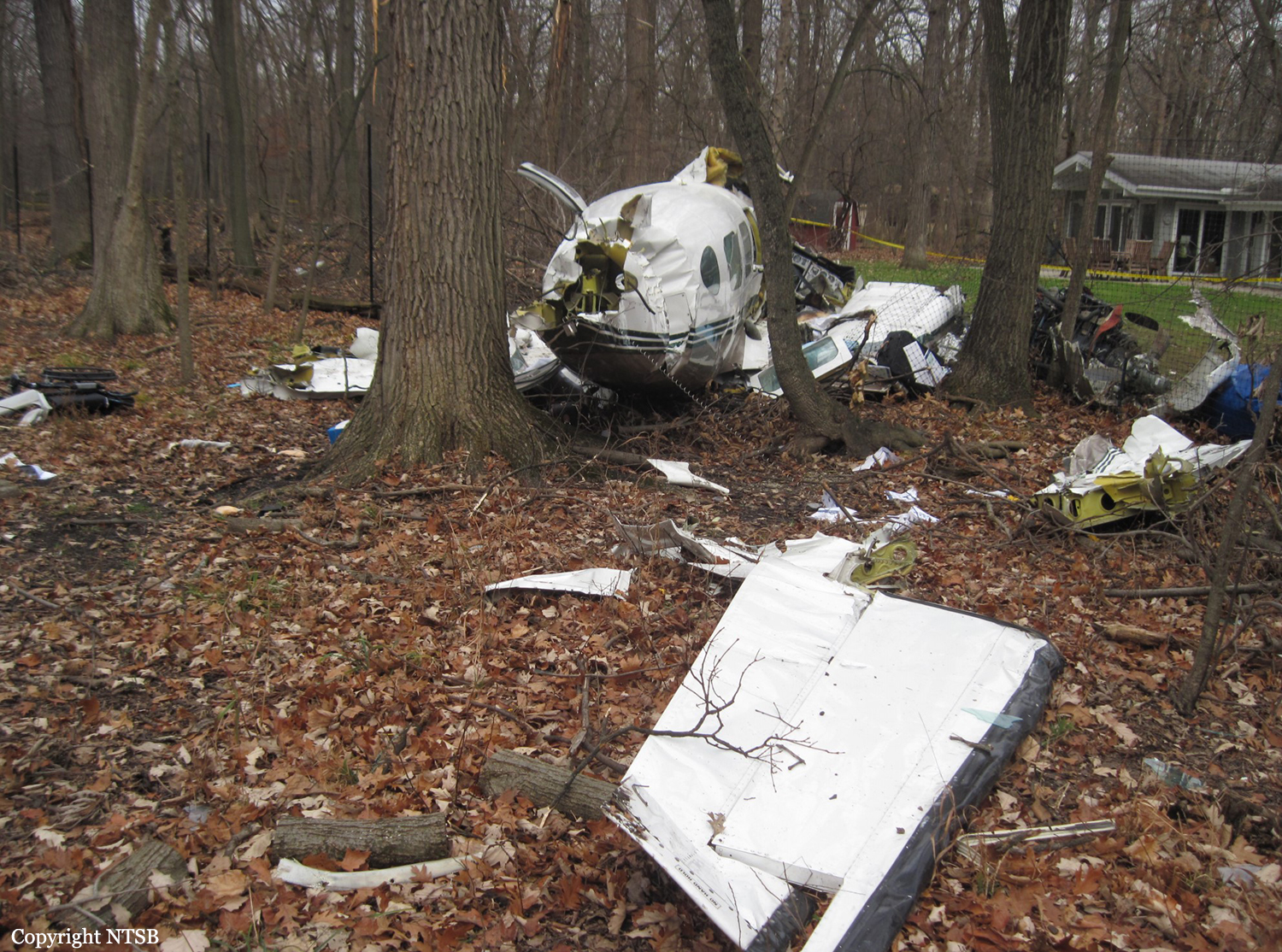
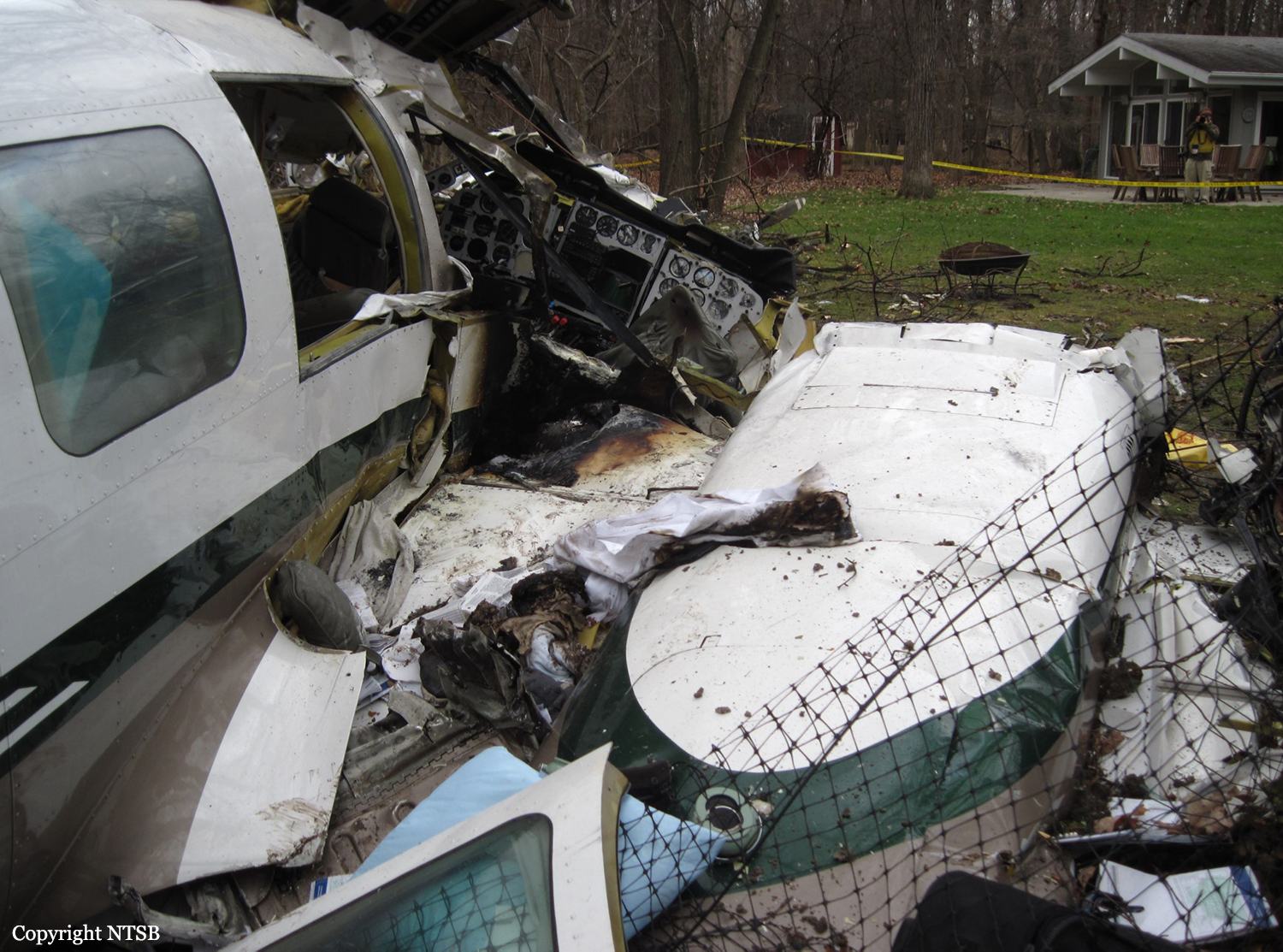
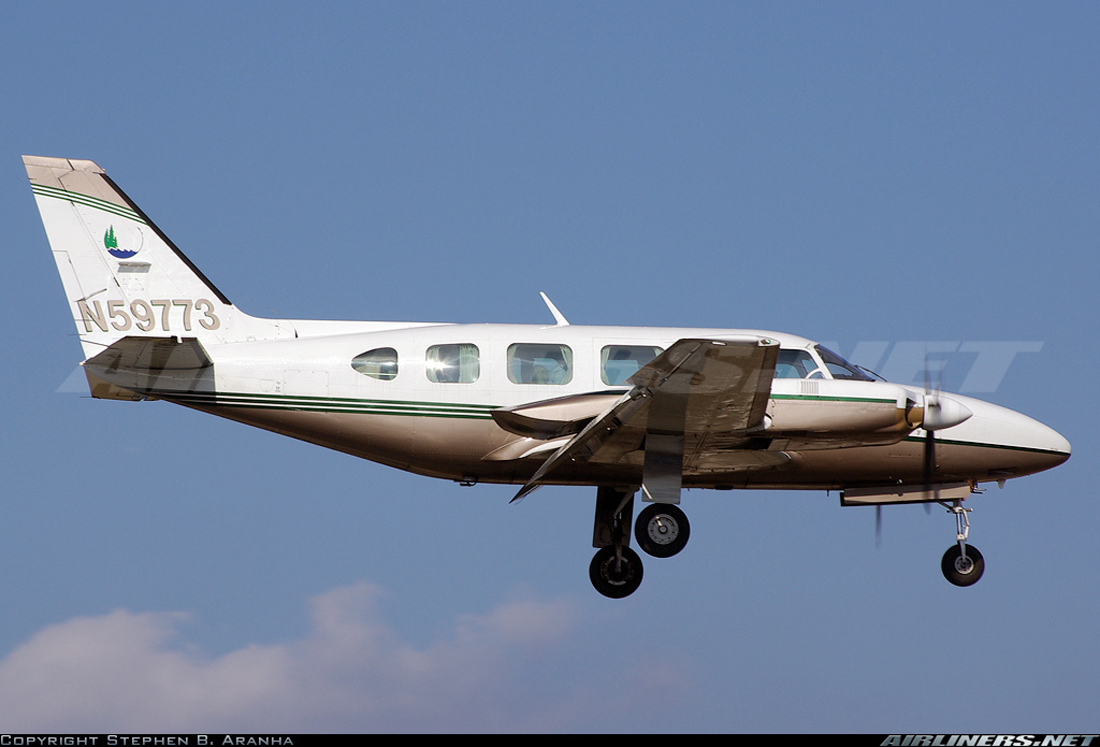
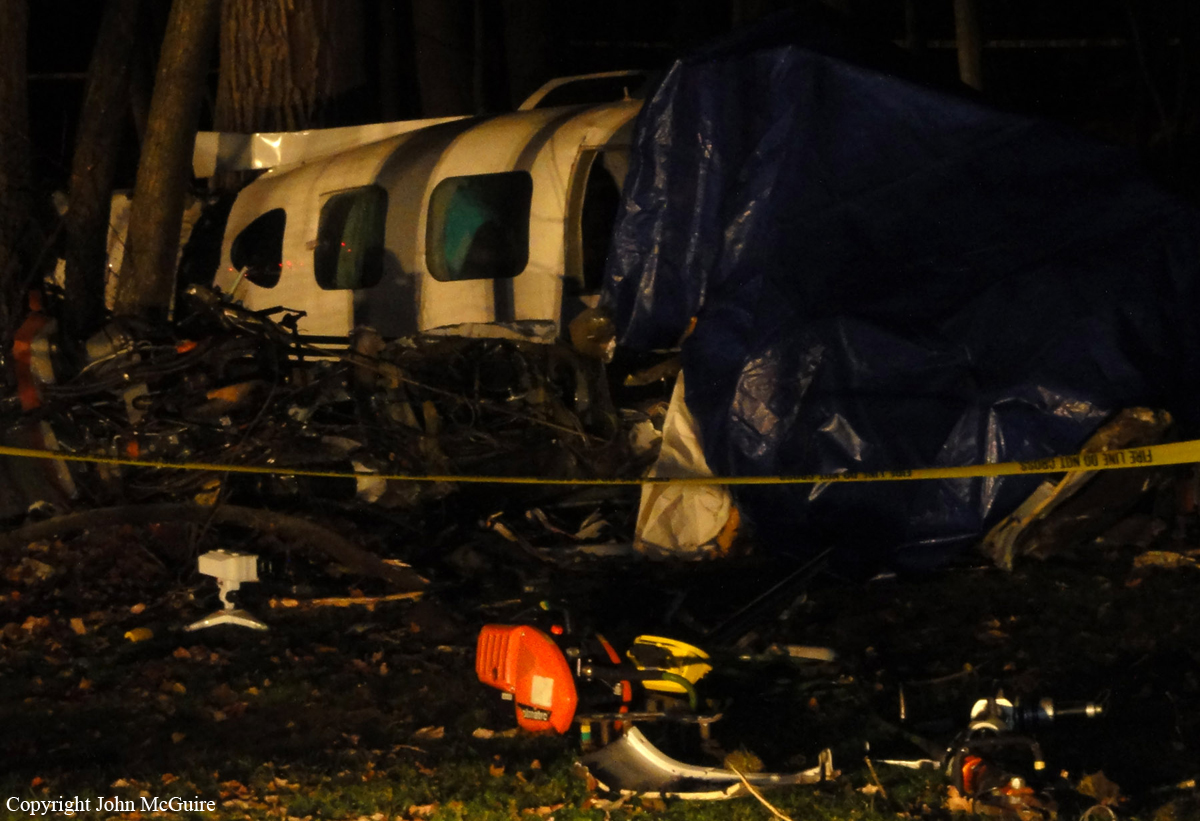
Crash of a Piper PA-31-350 Navajo Chieftain in Palwaukee: 3 killed

Date & Time: Nov 28, 2011 at 2250 LT
Registration:
N59773
Flight Type:
Survivors:
Yes
Schedule:
Jesup - Chicago
MSN:
31-7652044
YOM:
1976
Crew on board:
2
Crew fatalities:
Pax on board:
3
Pax fatalities:
Other fatalities:
Total fatalities:
3
Captain / Total flying hours:
6607
Captain / Total hours on type:
120.00
Copilot / Total flying hours:
314
Aircraft flight hours:
17630
Circumstances:
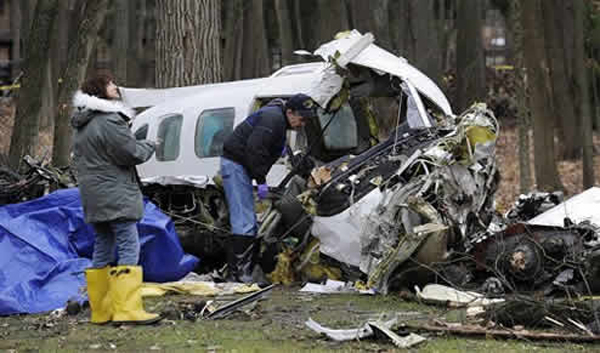
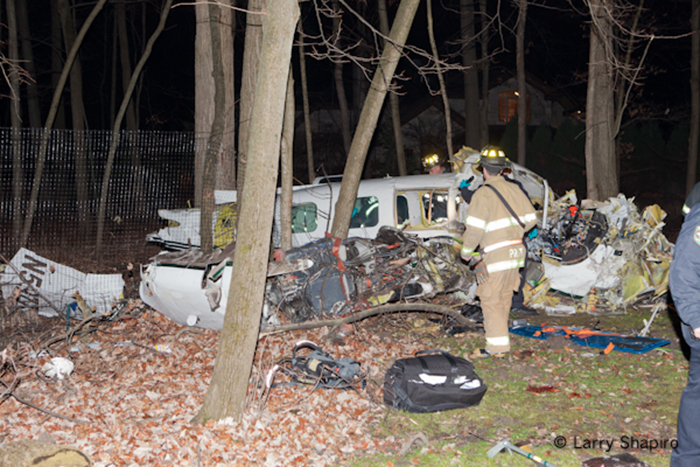
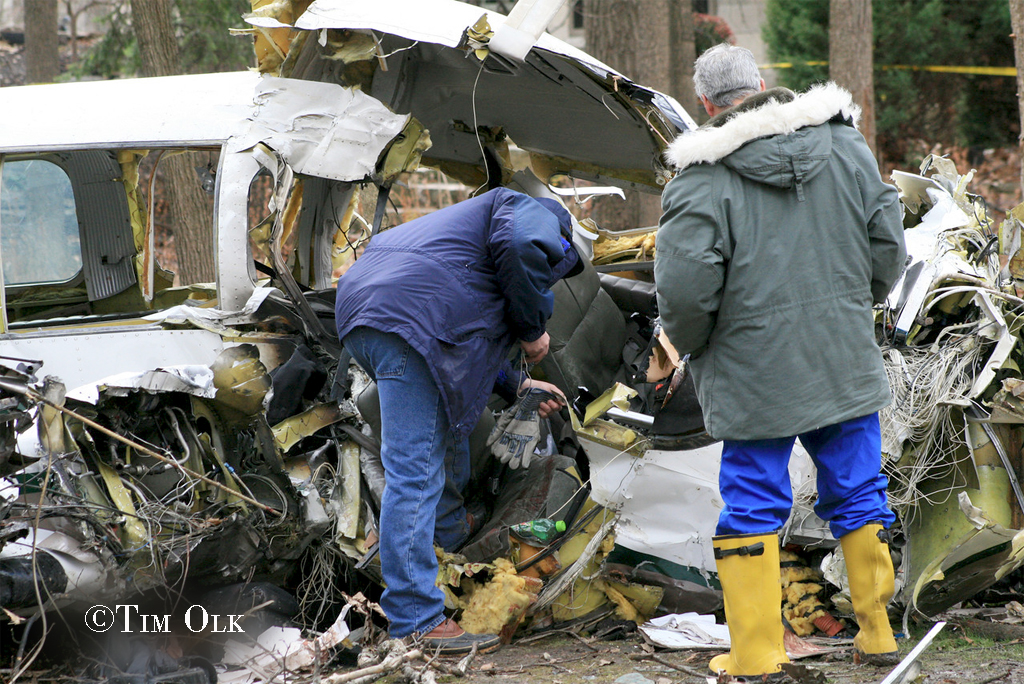
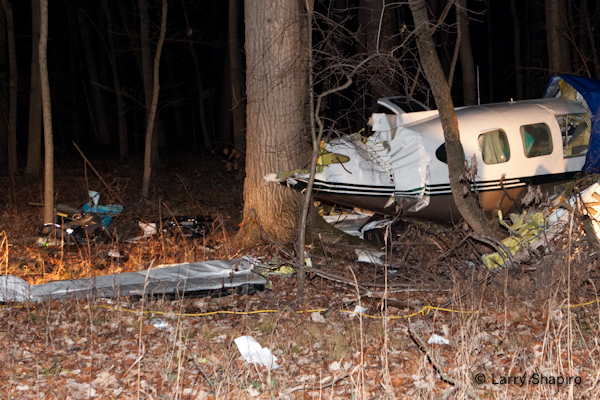
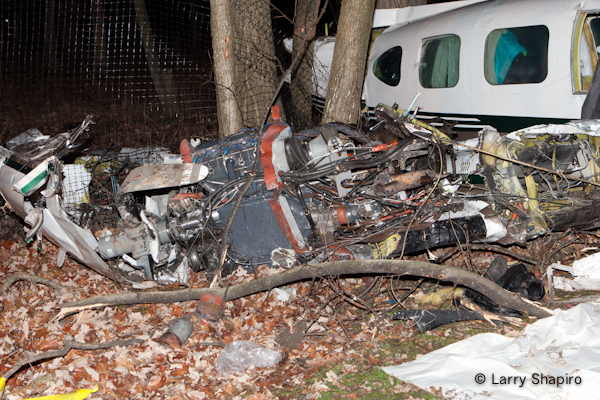
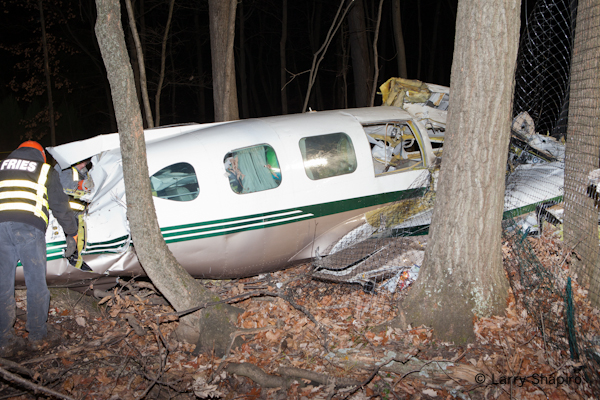
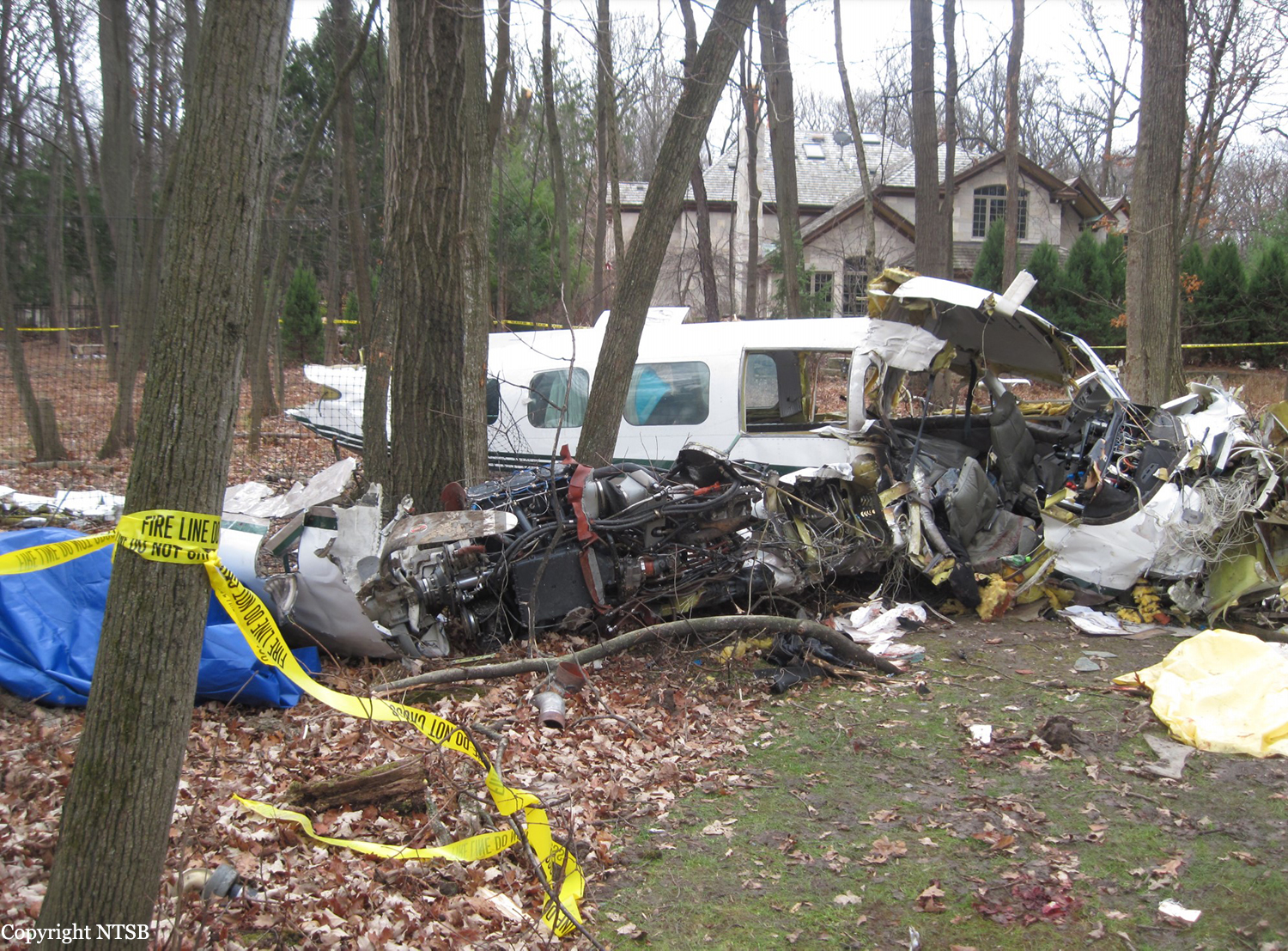
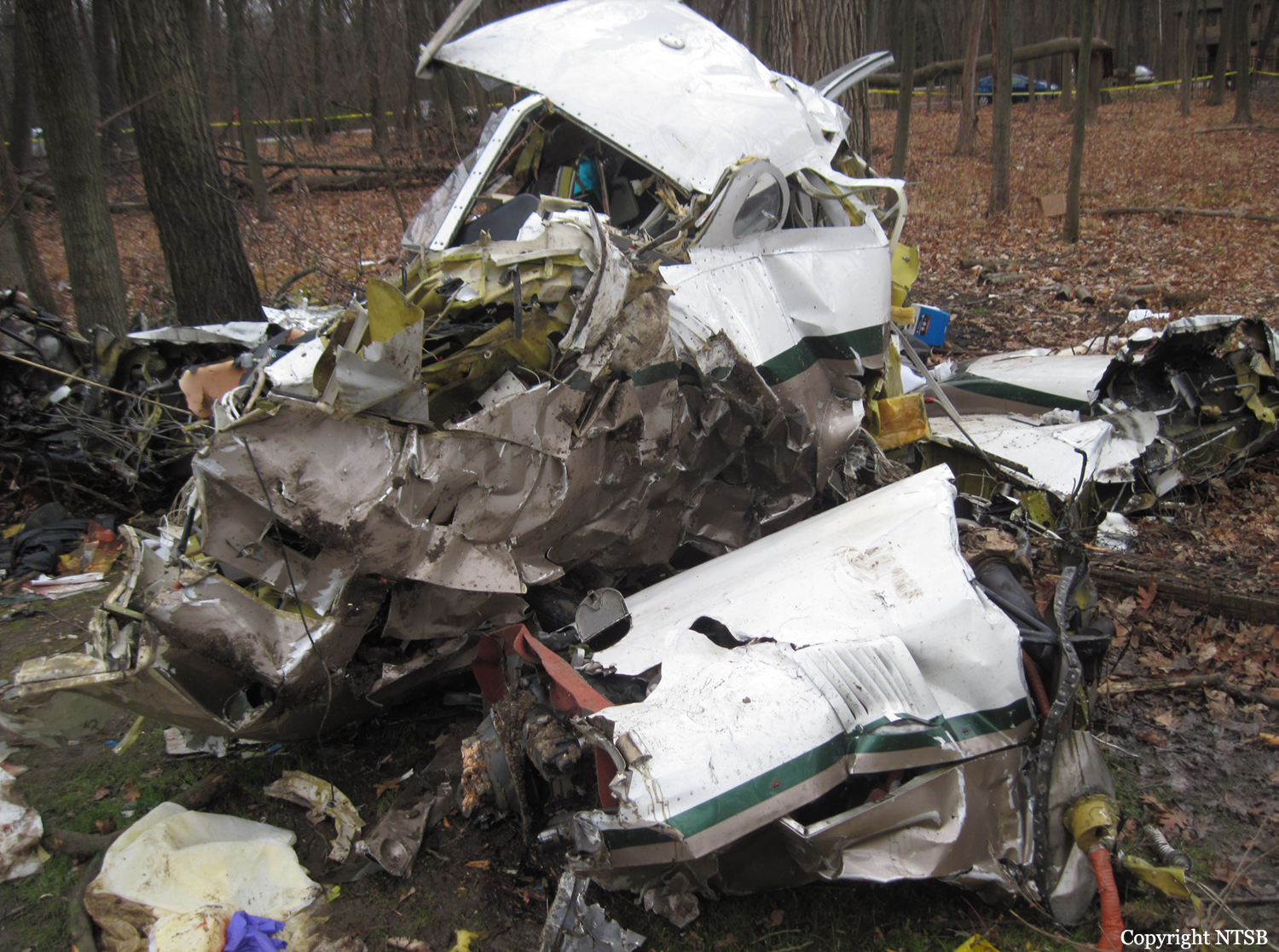
The airplane was dispatched on an emergency medical services flight. While being vectored for an instrument approach, the pilot declared an emergency and reported that the airplane was out of fuel. He said the airplane lost engine power and that he was heading toward the destination airport. The airplane descended through clouds and impacted trees and terrain short of its destination. No preimpact anomalies were found during a postaccident examination. The postaccident examination revealed about 1.5 ounces of a liquid consistent with avgas within the airplane fuel system. Based on the three previous flight legs and refueling receipts, postaccident calculations indicated that the airplane was consuming fuel at a higher rate than referenced in the airplane flight manual. Based on this consumption rate, the airplane did not have enough fuel to reach the destination airport; however, a 20-knot tailwind was predicted, so it is likely that the pilot was relying on this to help the airplane reach the airport. Regardless, he would have been flying with less than the 45-minute fuel reserve that is required for an instrument flight rules flight. The pilot failed to recognize and compensate for the airplane’s high fuel consumption rate during the accident flight. It is likely that had the pilot monitored the gauges and the consumption rate for the flight he would have determined that he did not have adequate fuel to complete the flight. Toxicology tests showed the pilot had tetrahydrocannabinol and tetrahydrocannabinol carboxylic acid (marijuana) in his system; however, the level of impairment could not be determined based on the information available. However, marijuana use can impair the ability to concentrate and maintain vigilance and can distort the perception of time and distance. As a professional pilot, the use of marijuana prior to the flight raises questions about the pilot’s decision-making. The investigation also identified several issues that were not causal to the accident but nevertheless raised concerns about the company’s operational control of the flight. The operator had instituted a fuel log, but it was not regularly monitored. The recovered load manifest showed the pilot had been on duty for more than 15 hours, which exceeded the maximum of 14 hours for a regularly assigned duty period per 14 Code of Federal Regulations Part 135. The operator stated that it was aware of the pilot’s two driving while under the influence of alcohol convictions, but the operator did not request a background report on the pilot before he was hired. Further, the operator did not list the pilot-rated passenger as a member of the flight crew, yet he had flown previous positioning legs on the dispatched EMS mission as the pilot-in-command.
Probable cause:
The pilot's inadequate preflight planning and in-flight decision-making, which resulted in a loss of engine power due to fuel exhaustion during approach. Contributing to the accident was the pilot's decision to operate an airplane after using illicit drugs.
Final Report:
Crash of a Piper PA-31-350 Navajo Chieftain near Zaraza

Date & Time: Jun 16, 2011 at 0950 LT
Operator:
Registration:
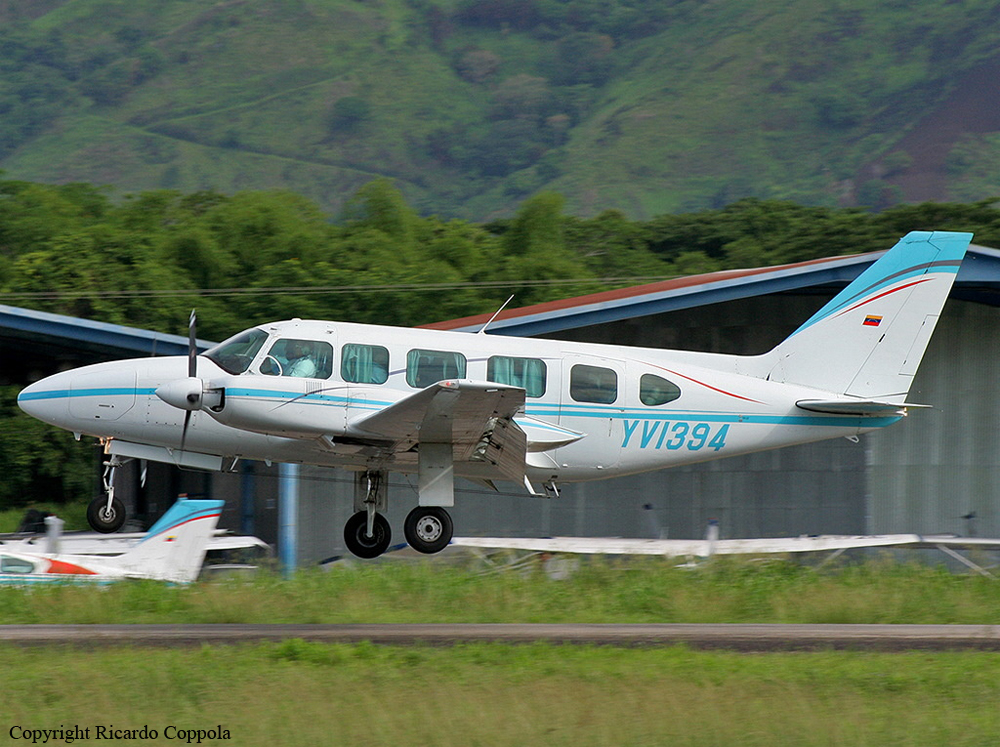
YV1394
Flight Phase:
Flight Type:
Survivors:
Yes
Schedule:
Maracay - Puerto Ordaz
MSN:
31-7405135
YOM:
1974
Location:
Country:
Crew on board:
1
Crew fatalities:
Pax on board:
1
Pax fatalities:
Other fatalities:
Total fatalities:
0
Circumstances:
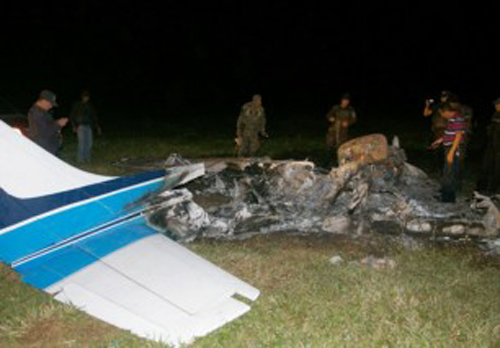
The twin engine aircraft departed Maracay on a cargo flight to Puerto Ordaz, carrying one pilot, one passenger and some bank documents. While in cruising altitude, the pilot informed ATC about smoke in the cockpit and elected to divert to the nearest airport. Eventually, he attempted an emergency landing in an open field located some 20 km east from Zaraza. After touchdown, the aircraft rolled for few dozen metres before coming to rest, bursting into flames. While both occupants escaped uninjured, the aircraft was totally destroyed by fire.
Probable cause:
During a flight of transport of values, in the phase of cruise, a smoke emergency appeared in the cockpit, that when not being able to be controlled, derived in a landing of emergency by precaution in a nonprepared field, which resulted without apparent damages to the aircraft, triggering later a fire and the almost total destruction of the same, due, very probably, to an electrical failure that originated the fire.

Crash of a Piper PA-31-350 Navajo Chieftain in Richmond

Date & Time: Apr 11, 2011 at 2127 LT
Operator:
Registration:
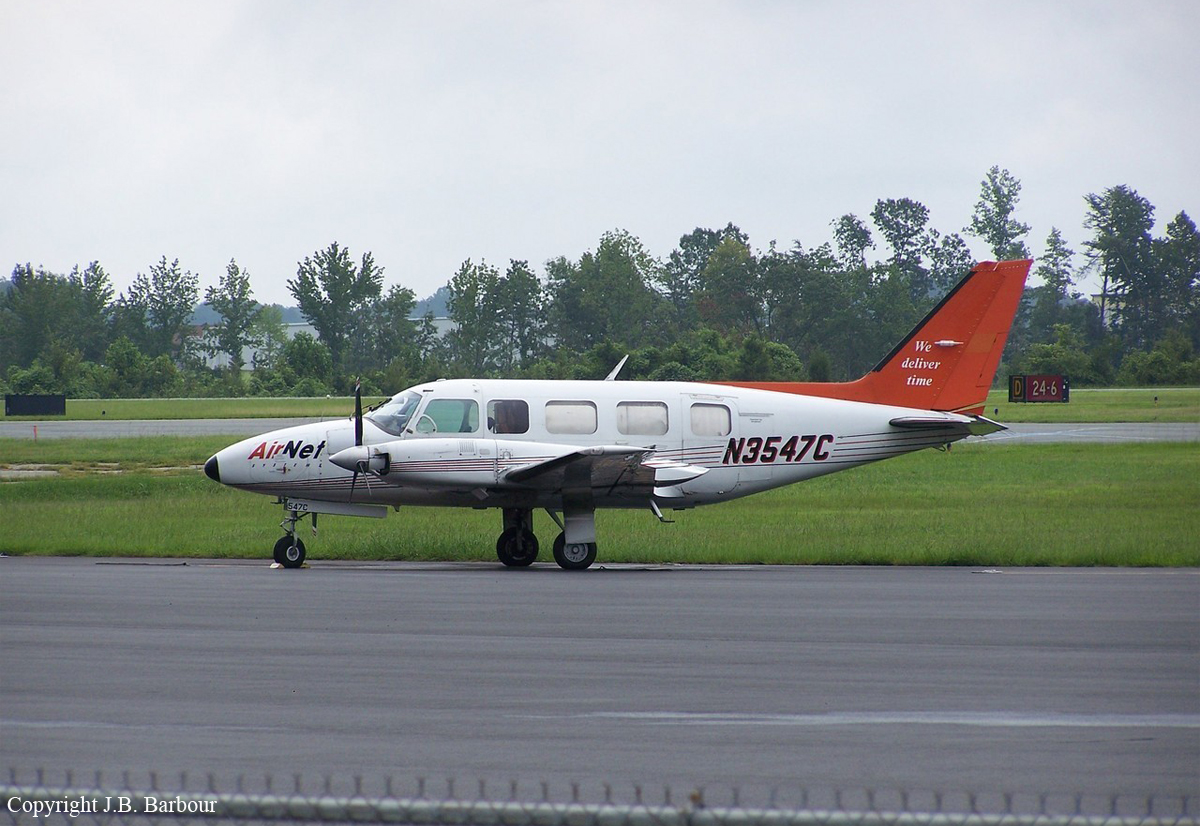
N3547C
Flight Phase:
Flight Type:
Survivors:
Yes
Schedule:
Richmond - Charlotte
MSN:
31-8052018
YOM:
1980
Flight number:
SKQ601
Crew on board:
1
Crew fatalities:
Pax on board:
0
Pax fatalities:
Other fatalities:
Total fatalities:
0
Captain / Total flying hours:
1948
Captain / Total hours on type:
31.00
Aircraft flight hours:
17265
Circumstances:
The twin-engine airplane was scheduled for a routine night cargo flight. Witnesses and radar data described the airplane accelerating down the runway to a maximum ground speed of 97 knots, then entering an aggressive climb before leveling and pitching down. The airplane subsequently impacted a parallel taxiway with its landing gear retracted. Slash marks observed on the taxiway pavement, as well as rotation signatures observed on the remaining propeller blades, indicated that both engines were operating at impact. Additionally, postaccident examination of the wreckage revealed no evidence of any preimpact mechanical failures or malfunctions of the airframe or either engine. The as-found position of the cargo placed the airplane within the normal weight and balance envelope, with no evidence of a cargo-shift having occurred, and the as-found position of the elevator trim jackscrew was consistent with a neutral pitch trim setting. According to the airframe manufacturer's prescribed takeoff procedure, the pilot was to accelerate the airplane to an airspeed of 85 knots, increase the pitch to a climb angle that would allow the airplane to accelerate past 96 knots, and retract the landing gear before accelerating past 128 knots. Given the loading and environmental conditions that existed on the night of the accident, the airplane's calculated climb performance should have been 1,800 feet per minute. Applying the prevailing wind conditions about time of the accident to the airplane's radar-observed ground speed during the takeoff revealed a maximum estimated airspeed of 111 knots, and the airplane's maximum calculated climb rate briefly exceeded 3,000 feet per minute. The airplane then leveled for a brief time, decelerated, and began descending, a profile that suggested that the airplane likely entered an aerodynamic stall during the initial climb.
Probable cause:
The pilot’s failure to maintain adequate airspeed during the initial climb, which resulted in an aerodynamic stall and subsequent impact with the ground.
Final Report:

Crash of a Piper PA-31-350 Navajo Chieftain off Aguadilla

Date & Time: Oct 27, 2010 at 1740 LT
Operator:
Registration:
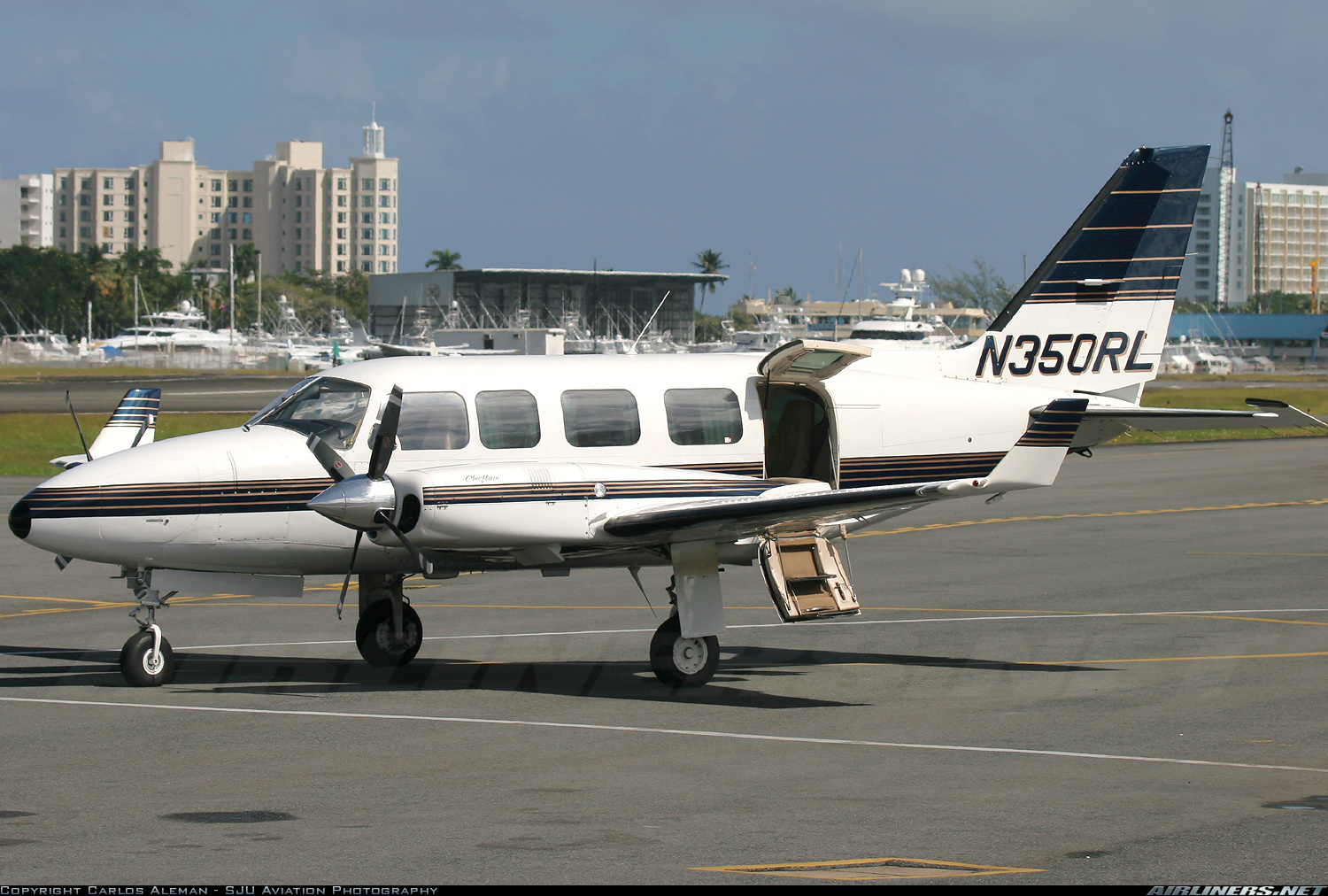
N350RL
Flight Phase:
Flight Type:
Survivors:
Yes
Schedule:
Punta Cana - San Juan
MSN:
31-8252049
YOM:
1982
Country:
Crew on board:
1
Crew fatalities:
Pax on board:
0
Pax fatalities:
Other fatalities:
Total fatalities:
0
Captain / Total flying hours:
1902
Captain / Total hours on type:
38.00
Aircraft flight hours:
4736
Circumstances:
The pilot stated he experienced a high temperature in the right engine and a partial loss of engine rpm while at 9,000 feet mean sea level in cruise flight. He requested and received clearance from air traffic control to descend and divert to another airport. He leveled the airplane at 2,500 feet and both engines were operating; however, the right engine experienced a loss of rpm which made it difficult to maintain altitude. The pilot reduced power in both engines, turned the fuel boost pump on, opened the cowl flaps and the engine continued to run with a low rpm. The pilot elected to ditch the airplane in the ocean, instead of landing as soon as practical at the nearest suitable airport, as instructed in the Pilot's Operating Handbook (POH). Additionally, he shut down the right engine before performing the troubleshooting items listed in the POH. He attributed his decision to ditch the airplane to poor single-engine performance and windy conditions. The wind at the destination airport was from 060 degrees at 6 knots and runway 8 was in use at the time of the accident. The airplane was not recovered.
Probable cause:
The pilot's improper decision to ditch the airplane after a reported partial loss of engine power and overheat on one engine for undetermined reasons.
Final Report:
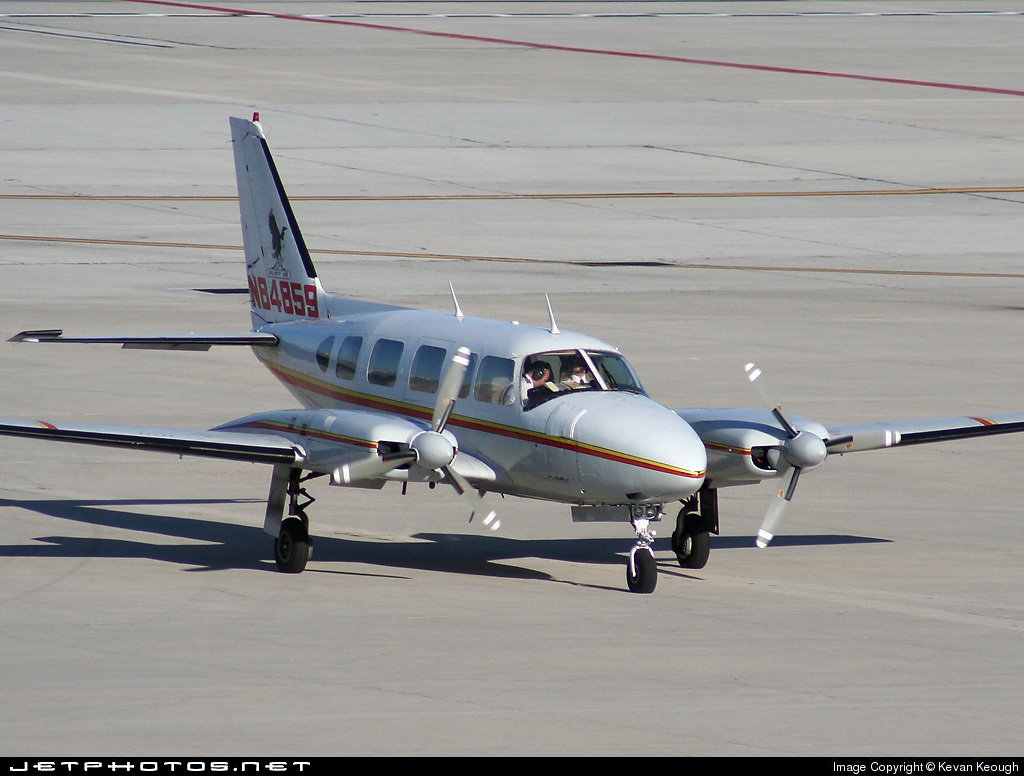
Crash of a Piper PA-31-350 Navajo Chieftain in South Bimini

Date & Time: Sep 19, 2010 at 1440 LT
Operator:
Registration:
N84859
Survivors:
Yes
Schedule:
South Bimini - Fort Lauderdale
MSN:
31-7305043
YOM:
1973
Country:
Crew on board:
1
Crew fatalities:
Pax on board:
6
Pax fatalities:
Other fatalities:
Total fatalities:
0
Circumstances:
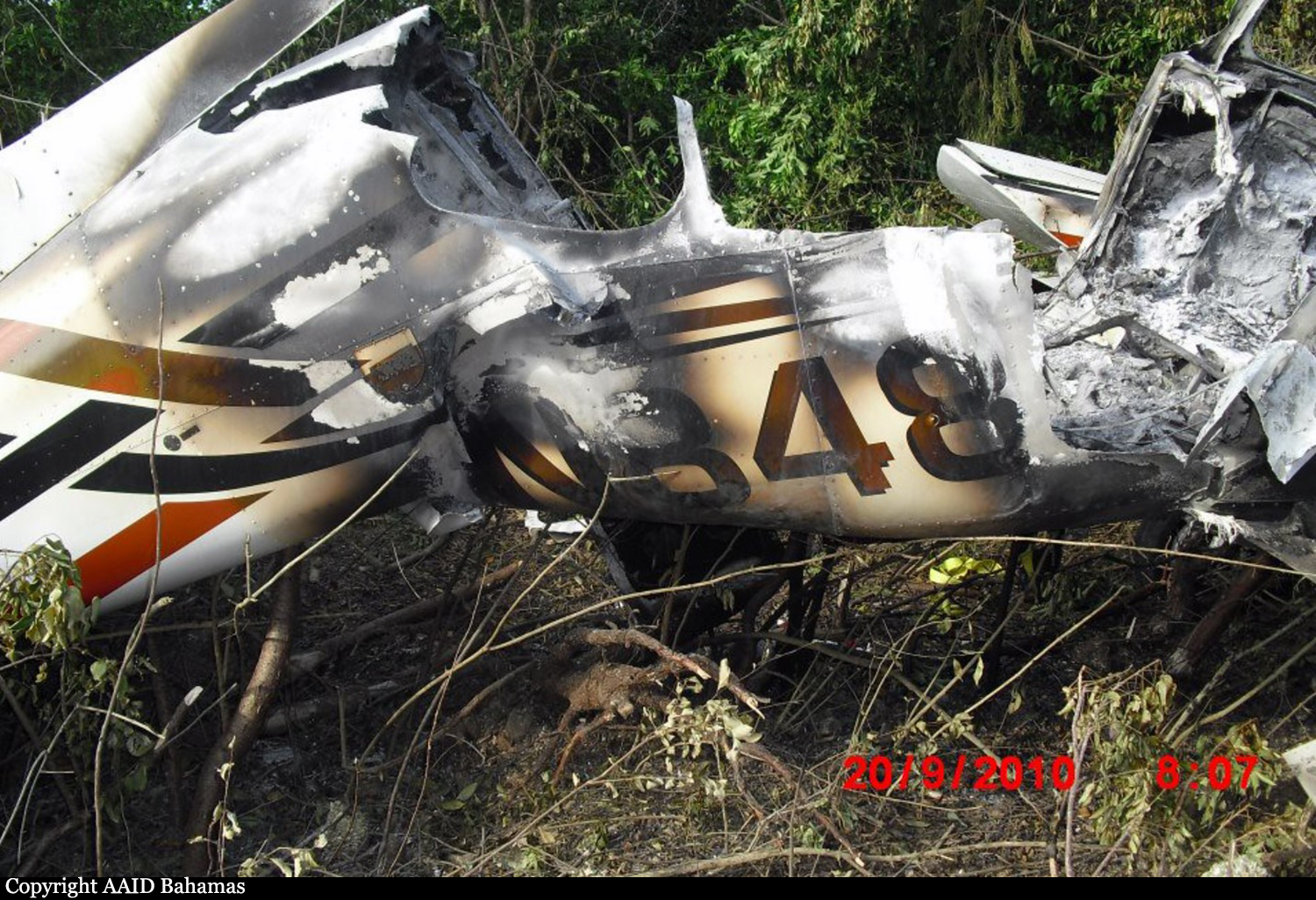
On September 19, 2010, at 1440 eastern daylight time, a Piper PA31-350, N84859, registered to Spirit Air Inc, and operated by Pioneer Air Service was on initial climb out when the lower half of the main cabin door came open. The pilot reversed his course and returned to the departure airport, landing on runway 27. The right main landing gear tire blew out on the landing roll. The airplane went off the right side of the runway, struck a tree, caught fire and came to a complete stop. Visual meteorological conditions prevailed and an instrument flight plan was filed. The commercial pilot and five passengers were not injured and the airplane received substantial damage. The flight originated from Bimini Airport, South Bimini Island, Bahamas, at 1435, and was operated in accordance with 14 Code of Federal Regulations Part 135.

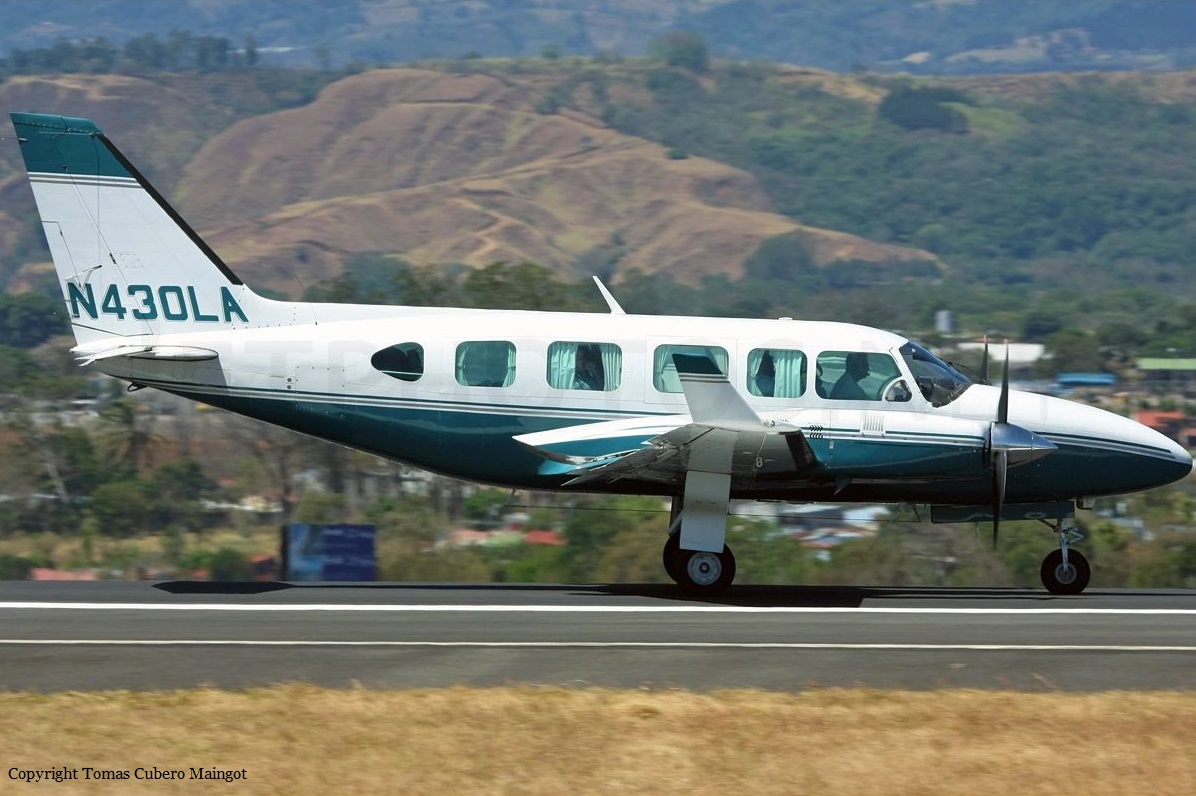
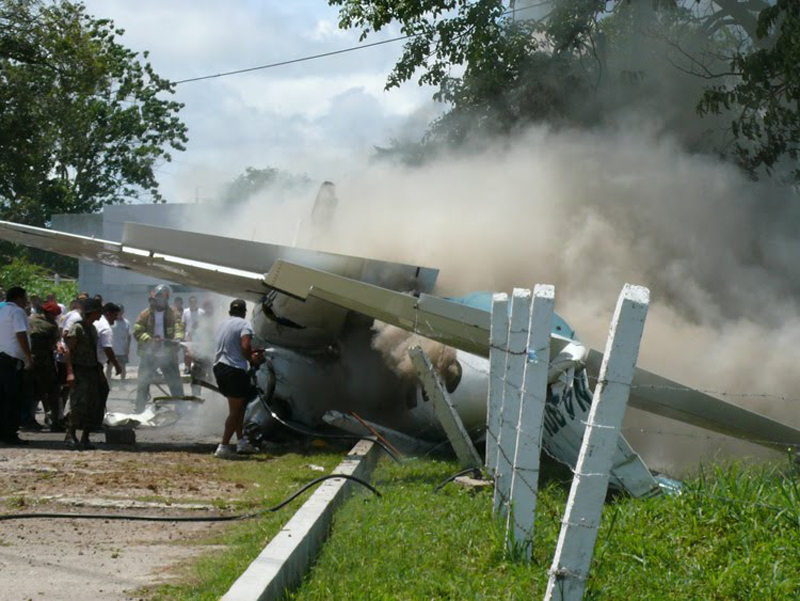
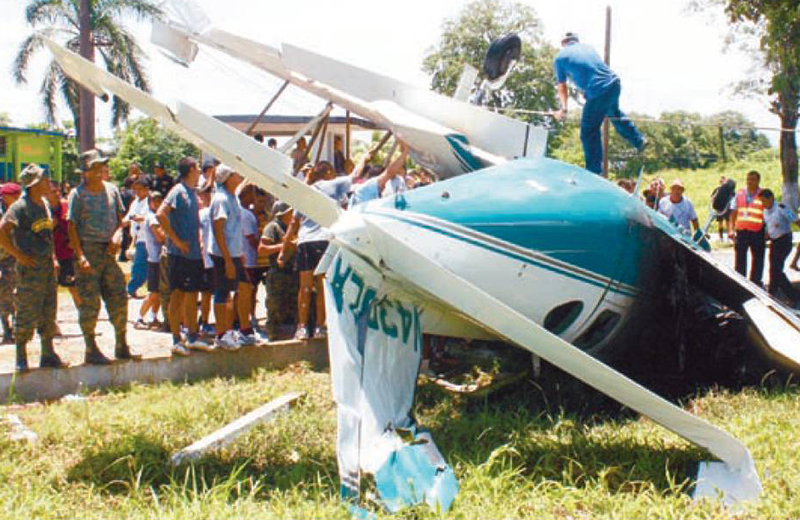
Crash of a Piper PA-31-350 Navajo Chieftain in Puerto Barrios: 2 killed

Date & Time: Jun 23, 2010 at 1050 LT
Registration:
N430LA
Flight Phase:
Flight Type:
Survivors:
No
Schedule:
Guatemala City – Rio Dulce
MSN:
31-7405446
YOM:
1974
Country:
Crew on board:
2
Crew fatalities:
Pax on board:
0
Pax fatalities:
Other fatalities:
Total fatalities:
2
Circumstances:
The twin engine departed Guatemala City-La Aurora Airport at 0930LT on a flight to Rio Dulce with two pilots on board. En roue, the crew contacted ATC, modified his flight plan and was cleared to continue direct to Puerto Barrios. Following few touch-and-go manoeuvres at Puerto Barrios Airport, the crew completed a new approach and landing on runway 12. The pilot-in-command increased engine power and took off when he lost control of the airplane that crashed on a road, coming to rest upside down. The aircraft was destroyed and both occupants were killed.
Probable cause:
Loss of control following an unstabilized approach. The failure of the crew to initiate a go-around procedure was considered as a contributing factor.
Final Report:

Crash of a Piper PA-31-350 Navajo Chieftain near Cartwright: 2 killed

Date & Time: May 26, 2010 at 0930 LT
Operator:
Registration:
C-FZSD
Flight Phase:
Survivors:
No
Site:
Schedule:
Goose Bay - Cartwright - Black Tickle - Goose Bay
MSN:
31-7405233
YOM:
1974
Country:
Crew on board:
1
Crew fatalities:
Pax on board:
1
Pax fatalities:
Other fatalities:
Total fatalities:
2
Captain / Total flying hours:
9000
Circumstances:
Aircraft departed on a round trip flight from Goose Bay to Cartwright and Black Tickle before returning to Goose Bay, Newfoundland and Labrador. The pilot was to deliver freight to Cartwright as well as a passenger and some freight to Black Tickle. At approximately 0905, the pilot made a radio broadcast advising that the aircraft was 60 nautical miles west of Cartwright. No further radio broadcasts were received. The aircraft did not arrive at destination and, at 1010, was reported as missing. The search for the aircraft was hampered by poor weather. On 28 May 2010, at about 2200, the aircraft wreckage was located on a plateau in the Mealy Mountains. Both occupants of the aircraft were fatally injured. The aircraft was destroyed by impact forces and a post-crash fire. There was no emergency locator transmitter on board and, as such, no signal was received.
Probable cause:
Findings as to Causes and Contributing Factors:
1. The pilot conducted a visual flight rules (VFR) flight into deteriorating weather in a mountainous region.
2. The pilot lost visual reference with the ground and the aircraft struck the rising terrain in level, controlled flight.
Findings as to Risk:
1. When an aircraft is not equipped with a functioning emergency locator transmitter (ELT), the ability to locate the aircraft in a timely manner is hindered.
2. Not applying current altimeter settings along a flight route, particularly from an area of high to low pressure, may result in reduced obstacle clearance.
3. Without a requirement for terrain awareness warning systems, there will be a continued risk of accidents of this type.
Final Report:
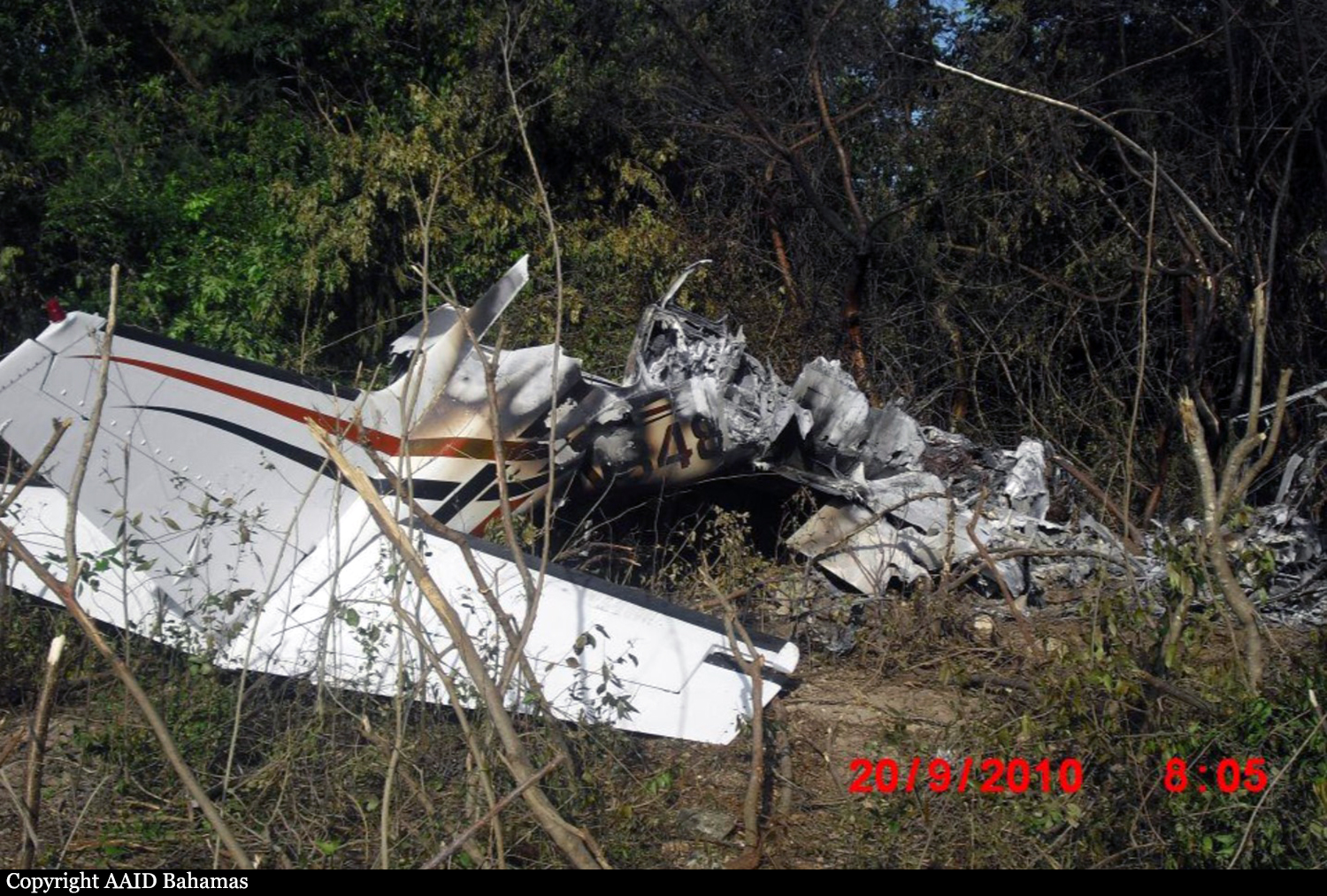
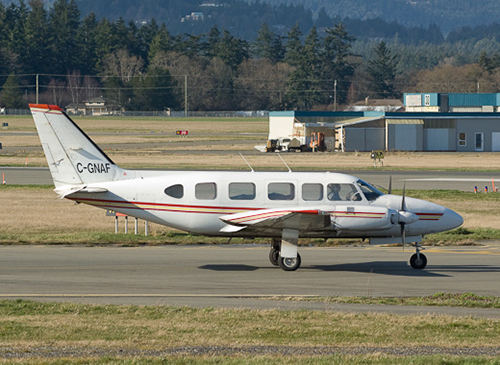
Crash of a Piper PA-31-350 Navajo Chieftain in Vancouver: 2 killed

Date & Time: Jul 9, 2009 at 2208 LT
Operator:
Registration:
C-GNAF
Flight Type:
Survivors:
No
Schedule:
Vancouver – Nanaimo – Victoria – Vancouver
MSN:
31-8052130
YOM:
1980
Flight number:
APEX511
Country:
Crew on board:
2
Crew fatalities:
Pax on board:
0
Pax fatalities:
Other fatalities:
Total fatalities:
2
Captain / Total flying hours:
2300
Copilot / Total flying hours:
400
Circumstances:
The Canadian Air Charters Piper PA-31-350 Chieftain (registration C-GNAF, serial number 31-8052130) was operating under visual flight rules as APEX 511 on the final leg of a multi-leg cargo flight from Vancouver to Nanaimo and Victoria, British Columbia, with a return to Vancouver. The weather was visual meteorological conditions and the last 9 minutes of the flight took place during official darkness. The flight was third for landing and turned onto the final approach course 1.5 nautical miles behind and 700 feet below the flight path of a heavier Airbus A321, approaching Runway 26 Right at the Vancouver International Airport. At 2208, Pacific Daylight Time, the target for APEX 511 disappeared from tower radar. The aircraft impacted the ground in an industrial area of Richmond, British Columbia, 3 nautical miles short of the runway. There was a post-impact explosion and fire. The 2 crew members on board were fatally injured. There was property damage, but no injuries on the ground. The onboard emergency locator transmitter was destroyed in the accident and no signal was detected.
Probable cause:
Findings as to Causes and Contributing Factors:
1. APEX 511 turned onto the final approach course within the wake turbulence area behind and below the heavier aircraft and encountered its wake, resulting in an upset and loss of control at an altitude that precluded recovery.
2. The proximity of the faster trailing traffic limited the space available for APEX 511 to join the final approach course, requiring APEX 511 not to lag too far behind the preceding aircraft.
Findings as to Risk:
1. The current wake turbulence separation standards may be inadequate. As air traffic volume continues to grow, there is a risk that wake turbulence encounters will increase.
2. Visual separation may not be an adequate defence to ensure that appropriate spacing for wake turbulence can be established or maintained, particularly in darkness.
3. Neither the pilots nor Canadian Air Charters (CAC) were required by regulation to account for employee duty time acquired at other non-aviation related places of employment. As a result, there was increased risk that pilots were operating while fatigued.
4. Not maintaining engine accessories in accordance with manufacturers’ recommendations can lead to failure of systems critical to safety.
Other Finding:
1. APEX 511 was not equipped with any type of cockpit recording devices, nor was it required to be. As a result, the level of collaboration and decision making discussion between the 2 pilots remains unknown.
Final Report: