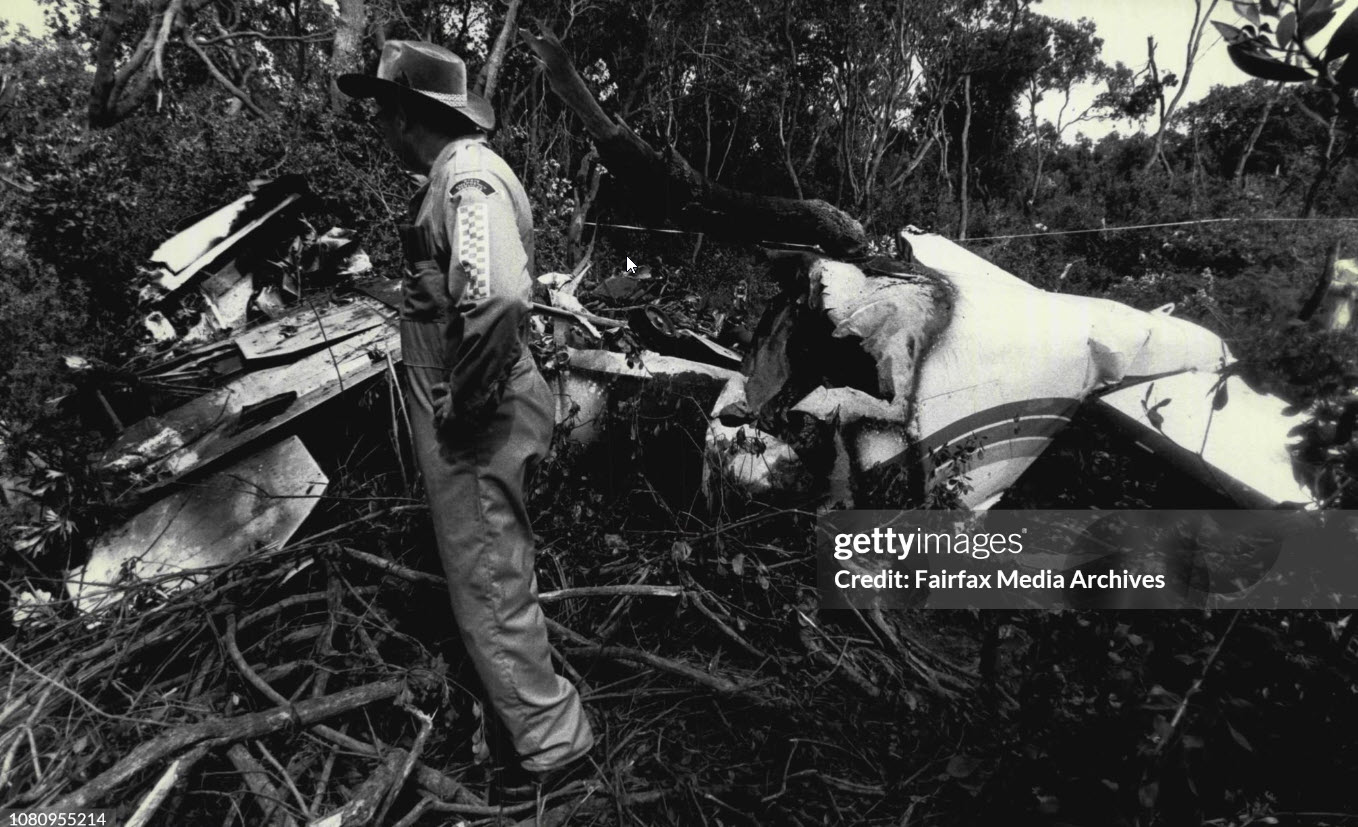
Crash of a Piper PA-31-350 Navajo Chieftain near Cairo: 6 killed

Date & Time: Dec 15, 1989 at 1738 LT
Operator:
Registration:
N45CH
Flight Phase:
Survivors:
No
Site:
Schedule:
Glens Falls - Montgomery
MSN:
31-7852002
YOM:
1978
Location:
Crew on board:
1
Crew fatalities:
Pax on board:
5
Pax fatalities:
Other fatalities:
Total fatalities:
6
Captain / Total flying hours:
3500
Captain / Total hours on type:
100.00
Aircraft flight hours:
2500
Circumstances:
During a preflight weather briefing, the instrument rated pilot was told by the AFSS specialist that marginal VFR and IFR conditions would prevail along the route of flight. The pilot did not file a flight plan. The airplane was last depicted on radar at 2,500 feet msl and heading towards high terrain. A NY state trooper leaving his office about the time the accident occurred stated snow was falling very hard and visibility was low. The state trooper's office was about 5 miles from the crash site. The airplane hit a 3,400 foot mountain at an elevation of 2,500 feet. The airplane was missing 4 days and was found by the crew of a NY state police helicopter. All six occupants were killed.
Probable cause:
The pilot's decision to fly into the known adverse weather and his failure to select an altitude that would provide terrain clearance. Factors were: the adverse weather and the pilot's disregard for the forecasted conditions.
Final Report:

Crash of a Piper PA-31-350 Navajo Chieftain in Ontario: 1 killed

Date & Time: Sep 15, 1989 at 0652 LT
Operator:
Registration:
N70PE
Flight Phase:
Flight Type:
Survivors:
No
Schedule:
Ontario - Santa Barbara
MSN:
31-8052137
YOM:
1980
Crew on board:
1
Crew fatalities:
Pax on board:
0
Pax fatalities:
Other fatalities:
Total fatalities:
1
Captain / Total flying hours:
1916
Aircraft flight hours:
3118
Circumstances:
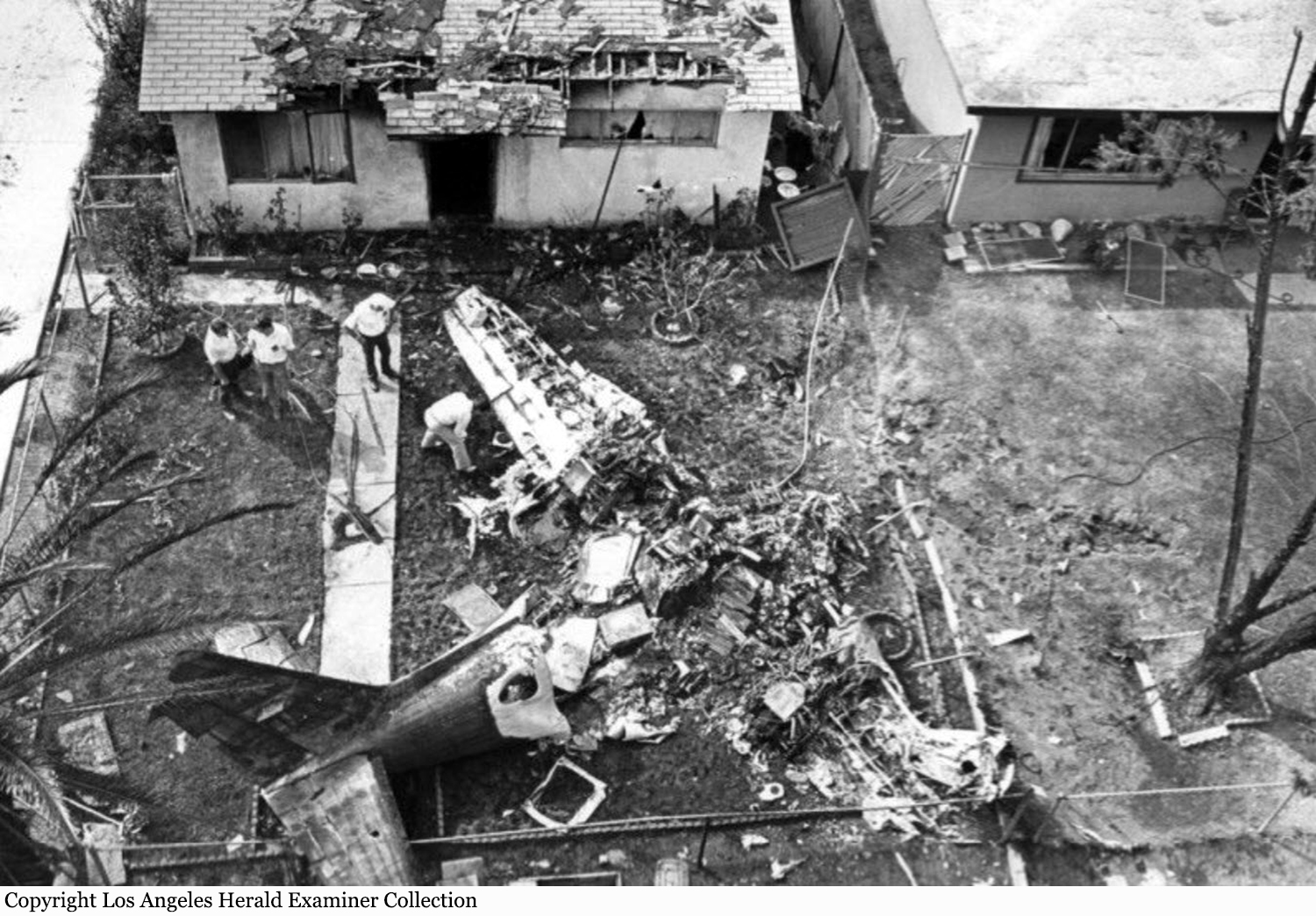
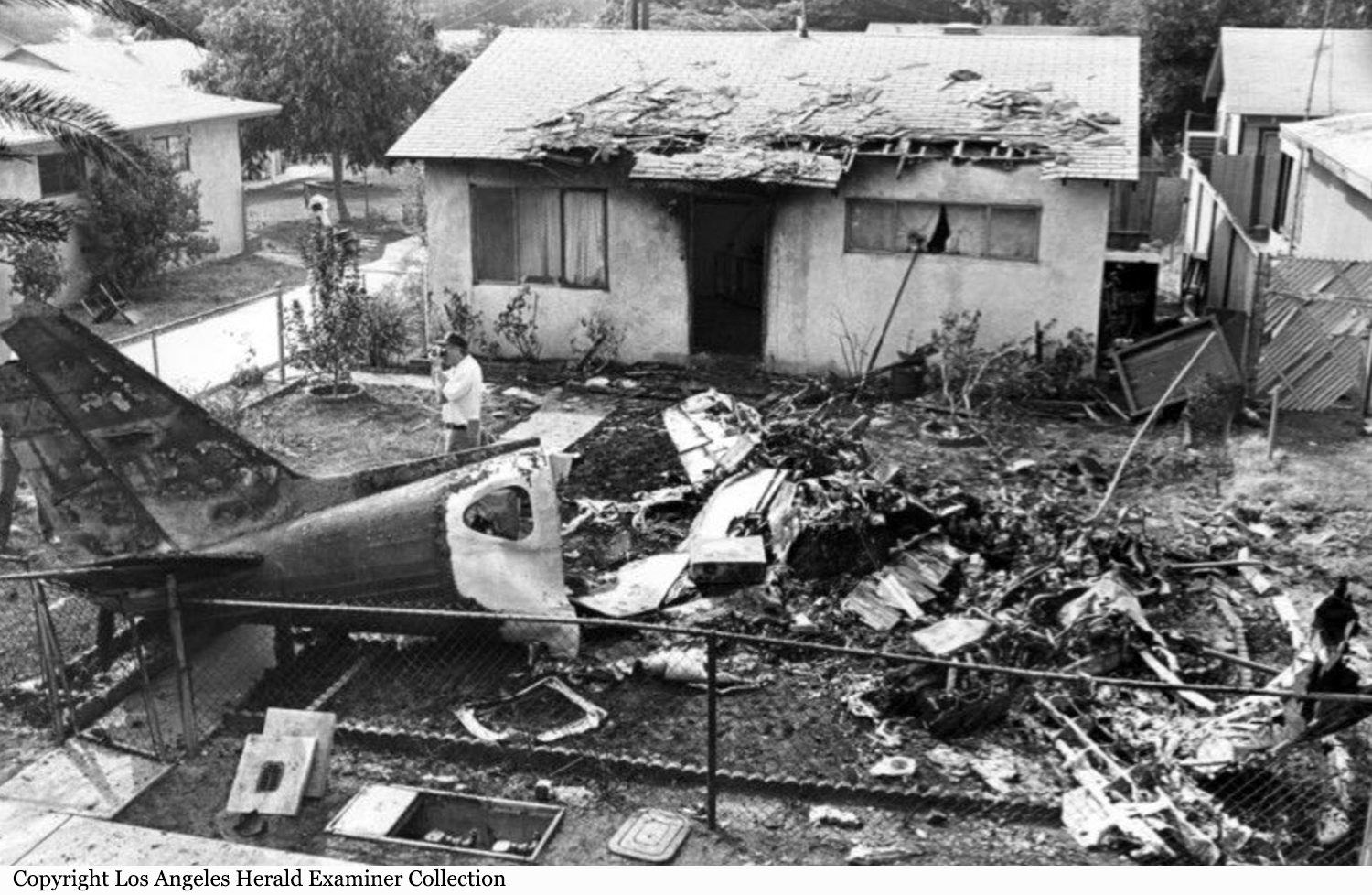
The propeller separated from the right engine during the initial climb. Examination of the wreckage revealed the propeller hub fracture resulted in one of the three propeller blades detaching from the hub. The rest of the propeller hub then separated striking the right front of the fuselage. Oil was spread across the aircraft nose and windshield. The fuselage right side damage increased aerodynamic drag. Witnesses reported the engine cowling was torn. The aircraft entered a right turn and dive. It impacted the ground in a near inverted attitude. Metallurgical examination of the failed prop hub revealed metal fatigue emanating from the threaded hole for the grease fitting. The threads had been deformed by shot peening, resulting in increased stress concentrations at the threads. The pilot, sole on board, was killed.
Probable cause:
Failure of the right propeller hub due to metal fatigue which resulted in catastrophic separation of the propeller. Contributing to the accident was damage done to the aircraft airframe in flight by the separating propeller making the aircraft uncontrollable.
Final Report:

Crash of a Piper PA-31-350 Navajo Chieftain in Lynchburg: 5 killed

Date & Time: Aug 28, 1989 at 0045 LT
Registration:
N234J
Survivors:
No
Schedule:
Salisbury - Lynchburg
MSN:
31-7952021
YOM:
1979
Crew on board:
2
Crew fatalities:
Pax on board:
3
Pax fatalities:
Other fatalities:
Total fatalities:
5
Captain / Total flying hours:
1345
Captain / Total hours on type:
190.00
Circumstances:
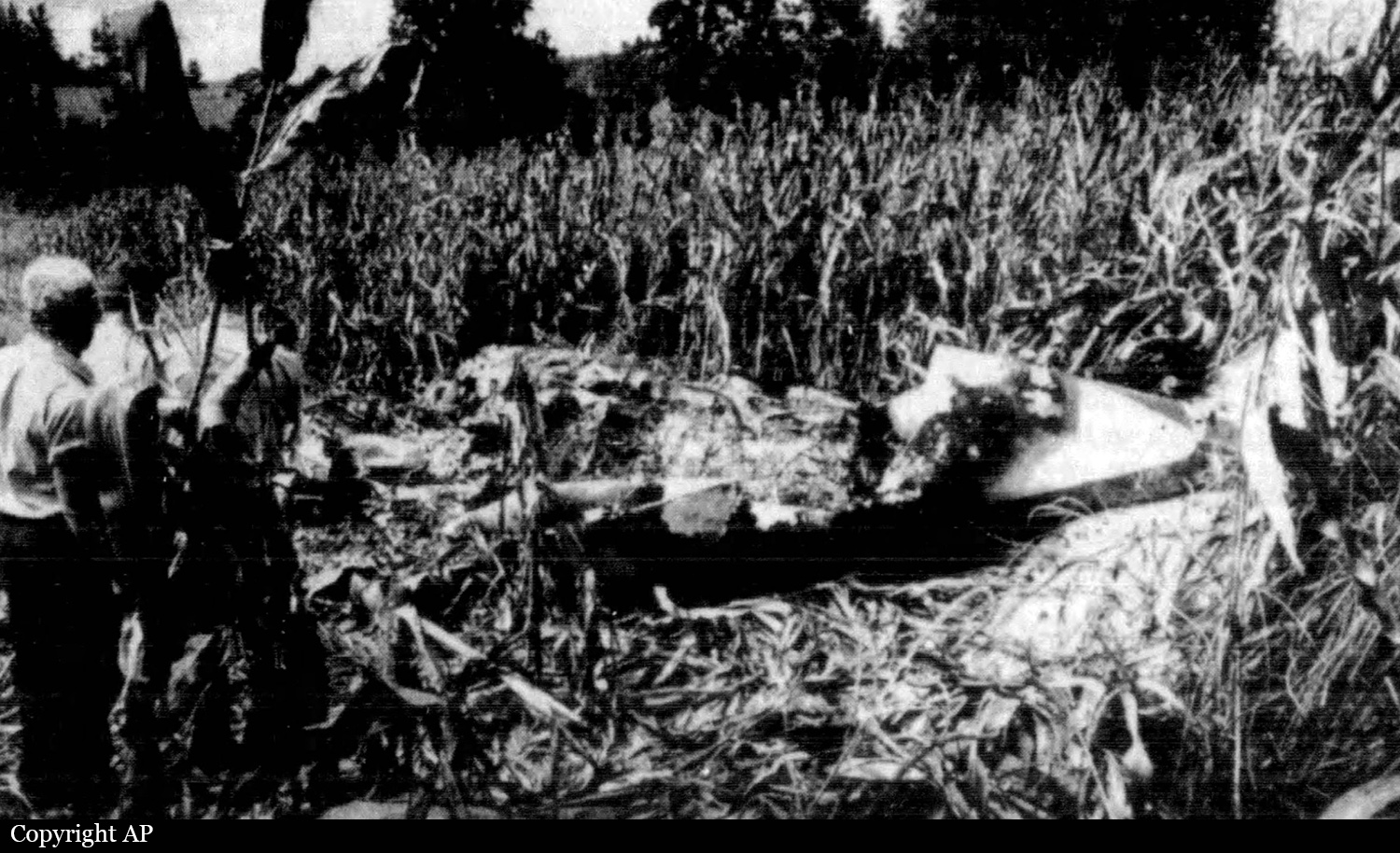
The pilot unsuccessfully tried twice to land on runway 03. He did a visual approach and then an ILS approach. The pilot and witnesses reported foggy conditions at the airport. The pilot flew the ILS approach as a third attempt to land when the crash occurred. Radar data showed the aircraft descended to 1,100 feet msl on the approach, about 1/2 mile from the runway. The published decision height was 1,118 feet. The radar data indicated the aircraft passed east of the runway threshold at an altitude of 1,000 feet msl. The next and last radar data shows the aircraft about 2,300 feet beyond and 400 feet east of the runway. The investigation revealed the aircraft struck trees east of the runway and then crashed in a cornfield. An examination did not disclose evidence of a malfunction. The landing gear was retracted and the flaps were extended 10°. All five occupants were killed.
Probable cause:
Pilot's failure to maintain clearance from obstructions because of improper ifr operation. Contributing to the accident was descent below decision height, delay in initiating the missed approach, and fog conditions.
Final Report:

Crash of a Piper PA-31-350 Navajo Chieftain off Pelée Island: 3 killed

Date & Time: Jun 24, 1989 at 2300 LT
Registration:
C-GSWC
Flight Phase:
Flight Type:
Survivors:
Yes
Schedule:
Pelée Island - Windsor
MSN:
31-7305067
YOM:
1973
Country:
Crew on board:
2
Crew fatalities:
Pax on board:
3
Pax fatalities:
Other fatalities:
Total fatalities:
3
Circumstances:
The twin engine aircraft was dispatched at Pelée Airport to evacuate to Windsor a patient. On board were one patient, his spouse, one ambulance officer and two pilots. Shortly after a night takeoff from runway 28, while climbing, the aircraft went out of control and crashed in Lake Erie. The copilot and the patient survived while three other occupants were killed.

Crash of a Piper PA-31-350 Navajo Chieftain in the Pacific Ocean

Date & Time: Feb 14, 1989 at 1200 LT
Registration:
N41169
Flight Phase:
Flight Type:
Survivors:
Yes
Schedule:
Pago Pago - Norfolk Island
MSN:
31-8452009
YOM:
1984
Country:
Region:
Crew on board:
1
Crew fatalities:
Pax on board:
0
Pax fatalities:
Other fatalities:
Total fatalities:
0
Captain / Total flying hours:
9000
Captain / Total hours on type:
300.00
Circumstances:
During cruise flight, the right engine suddenly lost oil pressure. The pilot could see that oil was coming out of the engine area. The pilot shut the engine down. Due to high gross weight, the airplane was unable to maintain altitude on the remaining engine. The airplane was ditched in the ocean and not recovered. The pilot was rescued a day later.
Probable cause:
Loss of oil pressure due to unknown circumstances. Contributing to the cause of the accident was the overweight condition of the airplane necessitated by overwater fuel requirements.
Occurrence #1: loss of engine power (total) - mech failure/malf
Phase of operation: cruise - normal
Findings
1. (c) fluid, oil - no pressure
2. 1 engine
----------
Occurrence #2: forced landing
Phase of operation: descent - emergency
Findings
3. (c) aircraft performance, engine out capability - exceeded
----------
Occurrence #3: ditching
Phase of operation: landing - flare/touchdown
Findings
4. Terrain condition - water, rough
Final Report:

Crash of a Piper PA-31-350 Navajo Chieftain on Mt Manunggal: 2 killed

Date & Time: Dec 23, 1988 at 0455 LT
Operator:
Registration:
RP-C2662
Flight Type:
Survivors:
No
Site:
Schedule:
Manila - Mactan
MSN:
31-7405186
YOM:
1974
Country:
Region:
Crew on board:
2
Crew fatalities:
Pax on board:
0
Pax fatalities:
Other fatalities:
Total fatalities:
2
Circumstances:
The twin engine aircraft was approaching Mactan Airport by night and marginal weather conditions when it struck the slope of Mt Manunggal located about 24 km northwest of the airport. The aircraft disintegrated on impact and both pilots were killed.
Probable cause:
Controlled flight into terrain.

Crash of a Piper PA-31-350 Navajo Chieftain in Hayward

Date & Time: Apr 27, 1988 at 0014 LT
Registration:
N3588Y
Flight Type:
Survivors:
Yes
Schedule:
Upland - Hayward
MSN:
31-8052129
YOM:
1980
Crew on board:
1
Crew fatalities:
Pax on board:
0
Pax fatalities:
Other fatalities:
Total fatalities:
0
Captain / Total flying hours:
5557
Captain / Total hours on type:
30.00
Aircraft flight hours:
3355
Circumstances:
Upon arriving at his destination the pilot began a visual, night descent to his destination airport. As the aircraft descended the pilot reduced the airspeed and deployed flaps. As the aircraft neared the airport the pilot increased the flap angle and adjusted the propellers to the landing rpm and the airspeed decreased. The pilot stated that at this time he heard a noise that sounded like a flutter which he thought was emanating from the right engine. Full throttle was applied, but the airspeed continued to decrease and the pilot elected to land on a freeway. The aircraft collided with a motor vehicle on touchdown and slid to a stop. Post crash exam revealed the rpm control levers and bellranks to be in the high rpm settings. The left prop was found in the feathered position.
Probable cause:
Pilot's failure to detect an uncommanded propeller feathering procedures established in the pilot's operating handbook.
Findings:
Occurrence #1: loss of engine power (partial) - mech failure/malf
Phase of operation: approach - vfr pattern - base leg/base to final
Findings
1. (c) propeller system/accessories, feathering system - failure, partial
2. (c) emergency procedure - not followed - pilot in command
3. (f) visual/aural perception - pilot in command
----------
Occurrence #2: forced landing
Phase of operation: approach - vfr pattern - final approach
----------
Occurrence #3: in flight collision with object
Phase of operation: landing - flare/touchdown
Findings
4. (f) object - vehicle
5. (f) light condition - dark night
6. (f) terrain condition - roadway/highway
Final Report:

Crash of a Piper PA-31-350 Navajo Chieftain off Coffs Harbour: 3 killed

Date & Time: Apr 7, 1988 at 2113 LT
Operator:

Registration:
VH-AOX
Survivors:
Yes
Schedule:
Brisbane – Coolangatta – Coffs Harbour – Port Macquarie
MSN:
31-7552013
YOM:
1975
Country:
Region:
Crew on board:
1
Crew fatalities:
Pax on board:
6
Pax fatalities:
Other fatalities:
Total fatalities:
3
Circumstances:
The aircraft was operating a scheduled service from Brisbane to Port Macquarie with planned intermediate stops at Coolangatta and Coffs Harbour. Weather conditions over the route were influenced by a widespread unstable airmass. The terminal forecast for Coffs Harbour indicated a surface wind of 360/15, visibility in excess of 10 km, 5 octas stratus at 1000 ft, 5 octas cumulus at 2000 ft. Thunderstorms, associated with visibility reduced to 2000 metres were also forecast for periods of up to 30 minutes. The actual weather conditions at Coffs Harbour were generally consistent with the terminal forecast. Runway 03 was in use throughout the evening. Coffs Harbour airport was equipped with NDB, VOR and domestic DME radio navigation aids. A VOR/DME procedure was published for runway 03 approaches. For aircraft not equipped with DME, a VOR or NDB approach was available using common tracking and minimum altitude criteria. Runway 03 was also equipped with a 6 stage T-VASIS and 3 stage runway lighting. All facilities were reported as functioning normally, with the exception of the VOR which was experiencing intermittent power failures due to the effects of heavy rain. The VOR was able to be reset manually from the Coffs Harbour control tower. Although the tower was scheduled to be unmanned before the arrival of VH-HOX, the duty air traffic controller elected to man the tower until the aircraft had landed. The controller also called out a technician to attend to the VOR. The aircraft was equipped with dual ILS/VOR and ADF receivers, plus International DME. Domestic DME equipment was not fitted to the aircraft, although required by ANO 20.8. After descending in the VOR/NDB holding pattern, the aircraft was cleared for an instrument approach. The pilot had been told of the intermittent operation of the VOR and had said he would revert to the NDB. At that time the weather conditions were fluctuating about the circling minima of 950 feet (QNH) and five km visibility. The controller advised the aircraft of a heavy shower to the south of the field. The aircraft subsequently completed the approach and the pilot reported "visual". The controller said he saw the lights of the aircraft in a position consistent with a right downwind leg for a landing on runway 03. The aircraft was then cleared to land. Shortly after, the controller saw the lights of the aircraft disappear briefly, consistent with the aircraft passing through a localised area of rain/cloud. The lights then reappeared briefly, as though the aircraft was turning onto finals, before disappearing. This was immediately followed by short series of "clicks" on the tower frequency. The aircraft was called immediately but failed to respond to any calls. The accident site was located about 1070 metres short of the landing threshold, and about 750 metres to the right of the extended runway centreline. The aircraft was found to have initially struck a nine metre high tree in a nose low attitude, steeply banked to the right, on a track of 050 degrees. After striking the tree with the outboard section of the right wing, the aircraft struck other trees before hitting the ground and overturning. A fire broke out shortly after the aircraft came to rest. As a result of his remaining on duty, the controller was able to provide immediate notification of the accident to the emergency services. This action facilitated the rescue of survivors.
Probable cause:
A subsequent examination of the aircraft structure, systems and components, found no evidence of any pre-existing defect or malfunction which could have contributed to the accident. The pilot was properly licenced and qualified to conduct the flight. Evidence was provided to show that the pilot had probably flown a total of 930 hours in the previous 365 days, thereby exceeding the ANO 48 limitation of 900 hours. Other breaches of Flight and Duty Limitations were found to have occurred during the previous 12 months, however, during the three months prior to the accident no significant breaches of ANO 48 were found which could have contributed to the accident. Specialist medical advice considered the 30 hour exceedence of the 900 hour limitation was not significant in this accident. Other specialist advice was obtained concerning the possibility of the aircraft being affected by low level windshear or a microburst during the final stage of the night circling approach. It was considered this was not a factor in the accident. Considerable evidence was presented during a subsequent Coroners' Inquest concerning allegations of irregular operating practices by the operator over a period of several years prior to the accident. Much of this evidence was only provided after the granting to witnesses of immunity from prosecution. Despite this, no new evidence was presented which related to the accident flight. The investigation concluded that, on the evidence available, the aircraft was turning onto a short right base leg when it entered a localised area of rain and low cloud. The pilot was required to look out of the right cockpit window to enable him to maintain visual reference with the approach end of the runway. It is considered probable that the pilot briefly diverted his attention from the flight instruments while attempting to maintain that visual reference as the aircraft passed through an area of reduced visibility. During that period the aircraft continued to roll to the right, resulting in an inadvertent loss of height. The pilot was unable to effect a recovery before the aircraft struck trees.
The following factors were considered relevant to the development of the accident:
1. Low cloudbase, with localised rain squalls and reduced visibility.
2. Low level, right hand, night circling approach.
3. Pilot lost visual reference at a critical stage of the approach.
4. Pilot did not initiate missed approach.
5. Pilot probably diverted attention from the flight instruments.
Final Report:
Crash of a Piper PA-31-350 Navajo Chieftain off Molokai: 8 killed

Date & Time: Dec 23, 1987 at 1853 LT
Operator:
Registration:
N712AN
Flight Phase:
Survivors:
No
Site:
Schedule:
Honolulu – Molokai
MSN:
31-7652151
YOM:
1976
Flight number:
PV082
Location:
Crew on board:
1
Crew fatalities:
Pax on board:
7
Pax fatalities:
Other fatalities:
Total fatalities:
8
Captain / Total flying hours:
2987
Captain / Total hours on type:
617.00
Aircraft flight hours:
6516
Circumstances:
The flight was to be flown across a 22 mile channel between islands on an overcast night with no moon and no ground reference lights. The aircraft disappeared from radar and, after extensive searches, could not be found. A three dimensional flight track was reconstructed using recorded radar data. The data indicated that in the last 60 seconds the aircraft slowed from 170 to 95 knots, gained 500 feet in altitude, and turned left 190° before abruptly disappearing from radar. Flight tests indicated that the movements of the aircraft in the last 60 seconds of the flight were consistent with a loss of the left engine, without compensation by the pilot. The operator's training program did not provide for night or instrument flight conditions. The last documented instrument time for the pilot was 15 months prior during a checkride. The pilot flew sporadic night flights. The pilot had previously flown during the day and was on his thirteenth hour of duty. The wreckage and all eight occupants were never found. However it is believed it crashed about 13 miles northwest of Maunaloa, on Molokai Island.
Probable cause:
Occurrence #1: loss of engine power
Phase of operation: cruise - normal
Findings
1. (f) 1 engine - undetermined
----------
Occurrence #2: loss of control - in flight
Phase of operation: cruise - normal
Findings
2. (f) light condition - dark night
3. (c) aircraft control - not maintained - pilot in command
4. (f) spatial disorientation - pilot in command
5. (c) airspeed (vmc) - not maintained - pilot in command
6. (f) fatigue (flight and ground schedule) - pilot in command
7. (f) lack of recent instrument time - pilot in command
8. (f) inadequate training - company/operator management
9. (c) stall/spin - inadvertent - pilot in command
----------
Occurrence #3: in flight collision with terrain/water
Phase of operation: descent - uncontrolled
Final Report:

Crash of a Piper PA-31-350 Navajo Chieftain in Kenai: 6 killed

Date & Time: Dec 23, 1987 at 0611 LT
Operator:
Registration:
N496SC
Flight Phase:
Survivors:
Yes
Schedule:
Kenai - Anchorage
MSN:
31-7752077
YOM:
1977
Flight number:
XE2001
Location:
Crew on board:
1
Crew fatalities:
Pax on board:
7
Pax fatalities:
Other fatalities:
Total fatalities:
6
Captain / Total flying hours:
14500
Circumstances:
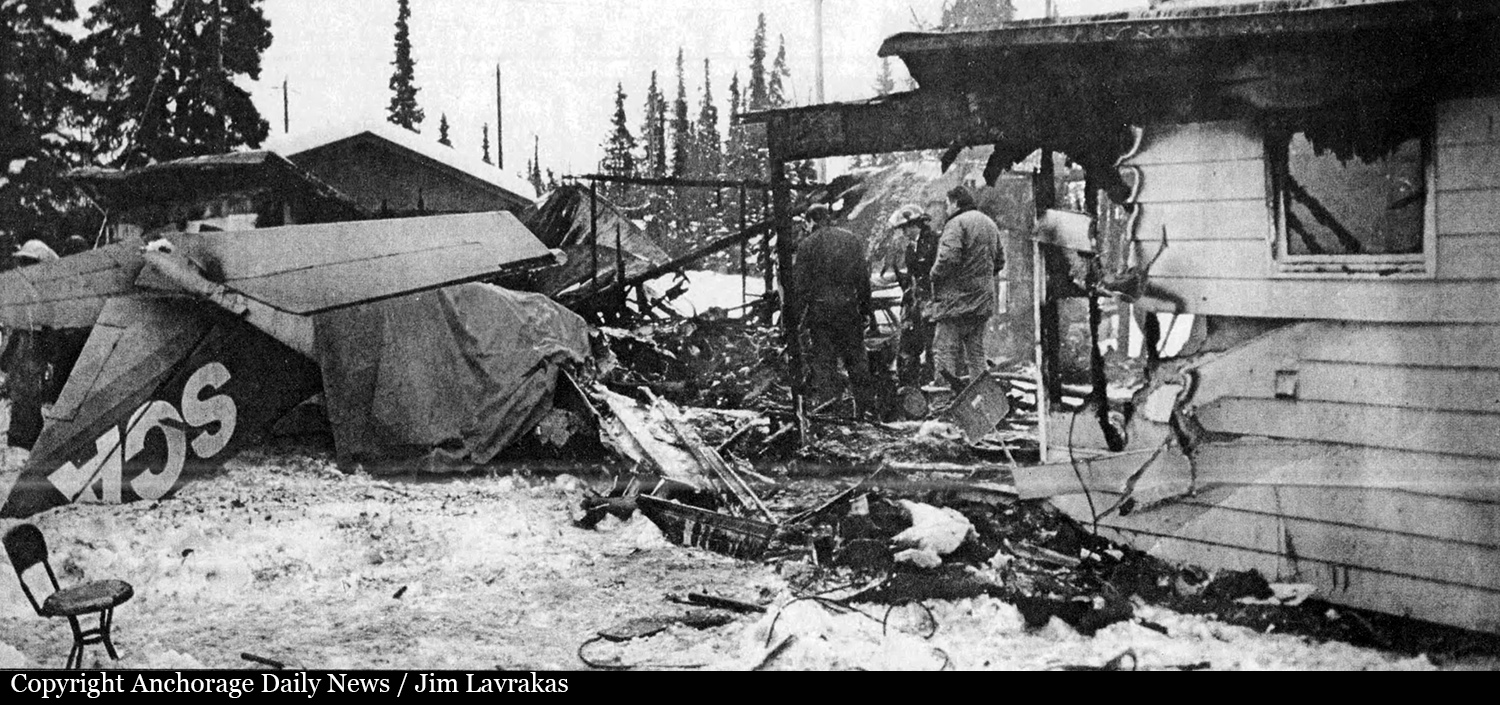
The pilot had just departed the runway when he reported to the flight service station that he had engine problems. The aircraft was observed by witnesses to be about 300 feet on a descending downwind. The pilot stated that he was circling for runway 01. Surviving passengers described the engines as running rough and uneven. The investigation revealed that the aircraft's weight was more than the pilot had calculated and the CofG was 3.4 inches further aft than was calculated. However, the weight and CofG were within limits. Examination of the engine disclosed that the right engine had an extensive cylinder head crack, a partially disconnected intake pipe, and was capable of producing 55% of rated power. The left engine had seven severely worn cam lobes. The rudder trim was deflected full left at impact. The evidence indicated that the pilot had retarded the throttle for the left engine and was using only the right engine to sustain flight. Exam of company checklist usage revealed several different improper versions. The pilot and five passengers were killed. Two others passengers and two people on the ground were injured.
Probable cause:
Occurrence #1: loss of engine power (partial) - mech failure/malf
Phase of operation: takeoff - initial climb
Findings
1. 1 engine - failure, partial
2. (c) engine assembly, cylinder - failure,total
3. (c) engine assembly, cylinder - fatigue
4. (f) induction air control, intake manifold - separation
----------
Occurrence #2: loss of engine power
Phase of operation: maneuvering
Findings
5. (f) 1 engine - failure, partial
6. (f) engine assembly, camshaft - worn
7. (f) maintenance, 100-hour inspection - inadequate - company maintenance personnel
8. (c) emergency procedure - improper - pilot in command
9. (c) throttle/power control - improper use of - pilot in command
----------
Occurrence #3: forced landing
Phase of operation: descent - emergency
----------
Occurrence #4: in flight collision with terrain/water
Phase of operation: descent - emergency
Findings
10. (f) trim setting - improper - pilot in command
11. Lowering of flaps - performed
12. Object - tree(s)
13. Object - residence
Final Report: