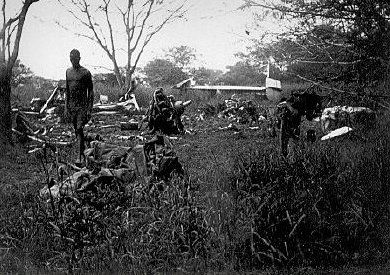
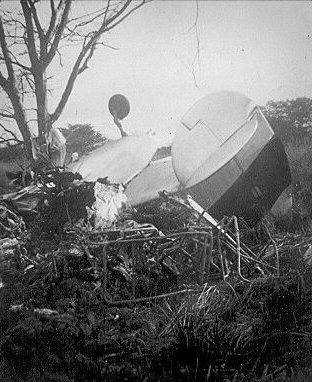
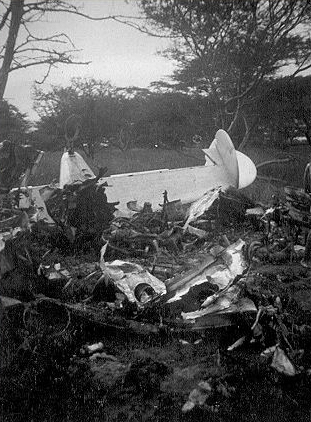
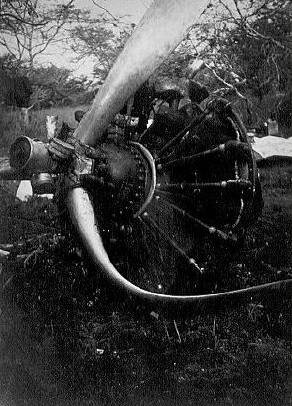
Crash of a Lockheed B14-S Super Electra in La Libertad: 21 killed

Date & Time: Apr 22, 1946
Type of aircraft:
Operator:
Registration:
AN-ACC
Flight Phase:
Survivors:
No
Schedule:
La Libertad – Managua
MSN:
1401
YOM:
1937
Country:
Crew on board:
3
Crew fatalities:
Pax on board:
18
Pax fatalities:
Other fatalities:
Total fatalities:
21
Circumstances:
Crashed shortly after takeoff from La Libertad for unknown reason, killing all 21 occupants.


Crash of a Lockheed 14-H2 Super Electra in Barcelona: 14 killed

Date & Time: Jul 25, 1944
Type of aircraft:
Operator:
Registration:
YV-ADI
Survivors:
No
MSN:
1509
YOM:
1939
Country:
Crew on board:
2
Crew fatalities:
Pax on board:
12
Pax fatalities:
Other fatalities:
Total fatalities:
14
Circumstances:
On final approach to Barcelona Airport, the twin engine aircraft for unknown reason. All 14 occupants were killed.

Crash of a Lockheed 14H-2 Super Electra in Quelimane: 13 killed

Date & Time: Feb 23, 1944
Type of aircraft:
Operator:
Registration:
CR-AAV
Flight Phase:
Survivors:
No
Schedule:
Lisbon - Quelimane - Lourenço Marques
MSN:
1507
YOM:
1940
Country:
Region:
Crew on board:
4
Crew fatalities:
Pax on board:
9
Pax fatalities:
Other fatalities:
Total fatalities:
13
Circumstances:
Shortly after takeoff, while climbing, aircraft went out of control and crashed in a prairie. The airplane christened 'Limpopo' was destroyed and all 13 occupants were killed. Pilot was Francisco Pinto Teixeira.

Crash of a Lockheed 14-WF62 Super Electra in Alice Springs

Date & Time: Feb 13, 1944
Type of aircraft:
Operator:
Registration:
VH-CXI
Flight Phase:
Flight Type:
Survivors:
Yes
Schedule:
Alice Springs - Adelaide
MSN:
1414
YOM:
0
Country:
Region:
Crew on board:
3
Crew fatalities:
Pax on board:
10
Pax fatalities:
Other fatalities:
Total fatalities:
0
Circumstances:
The aircraft was performing a flight on behalf of the Royal Australian Air Force with a crew of three en ten passengers on board. During the takeoff run, thw twin engine aircraft skidded on runway when the left main gear collapsed. Aircraft banked left, causing the left propeller to hit the ground and to be sheared off, hitting the nose of the airplane. While all 13 occupants were slightly injured, the aircraft was considered as damaged beyond repair.
Crew:
Captain John Robins, pilot,
Sergeant Ken Bird, copilot,
Sergeant Phoenix, radio operator.

Crash of a Lockheed 14-H Super Electra in Bom Jesus da Lapa: 1 killed

Date & Time: Feb 13, 1943
Type of aircraft:
Operator:
Registration:
PP-AVA
Flight Phase:
Survivors:
Yes
MSN:
1405
YOM:
1937
Country:
Crew on board:
2
Crew fatalities:
Pax on board:
0
Pax fatalities:
Other fatalities:
Total fatalities:
1
Circumstances:
Crashed in unknown circumstances in Bom Jesus da Lapa. A crew was killed and a second was injured.

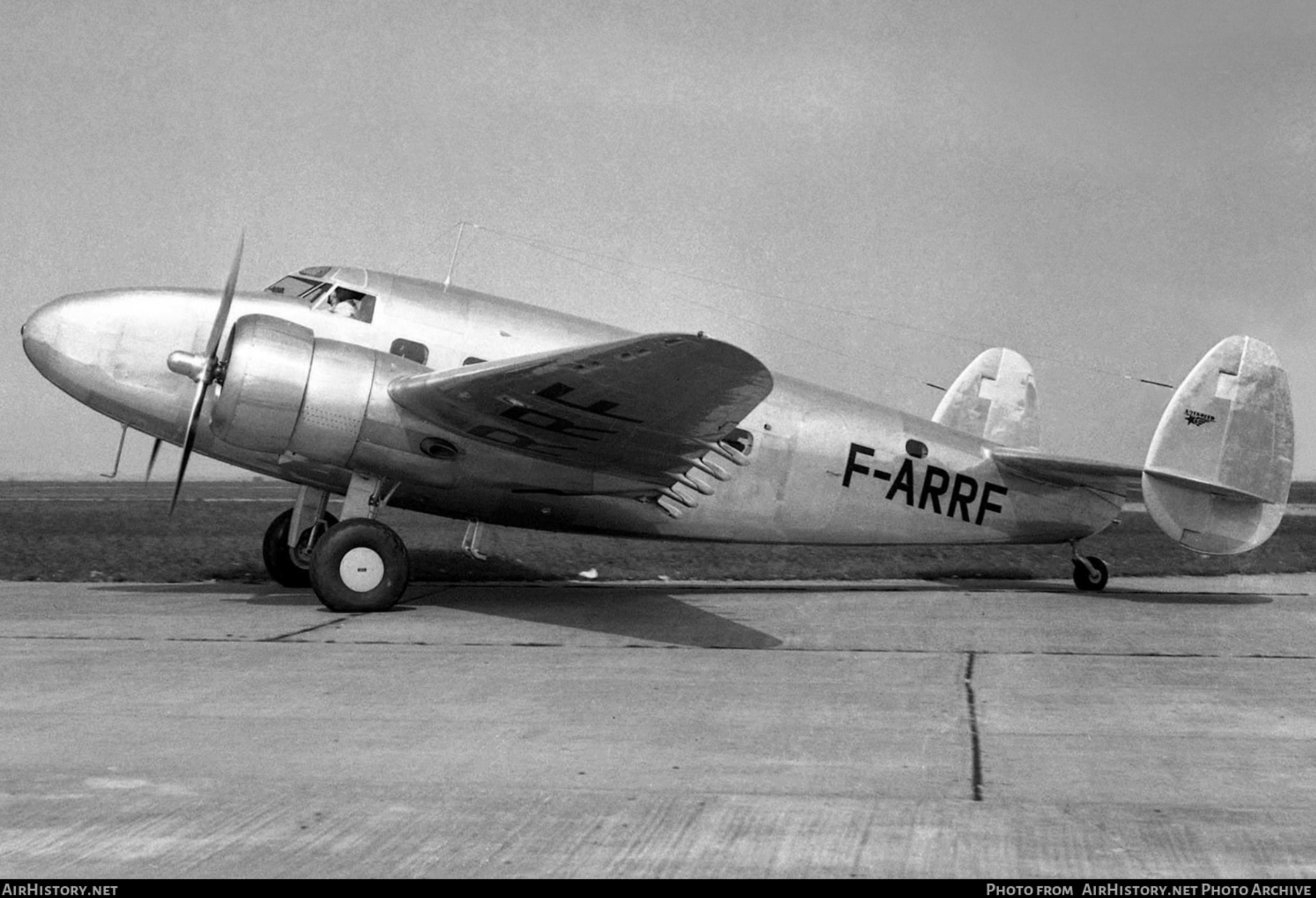
Crash of a Lockheed 14-H2 Super Electra in Aguelhok: 3 killed

Date & Time: Jan 13, 1943
Type of aircraft:
Operator:
Registration:
F-ARRF
Flight Phase:
Flight Type:
Survivors:
No
Site:
Schedule:
Dakar – Gao – Algiers
MSN:
1506
YOM:
1939
Location:
Country:
Region:
Crew on board:
3
Crew fatalities:
Pax on board:
0
Pax fatalities:
Other fatalities:
Total fatalities:
3
Circumstances:
The crew departed Dakar on a cargo flight to Algiers with an intermediate stop in Gao, Mali. On the leg from Gao to Algiers, an engine failed. The pilot lost control of the airplane that crashed in a desert area in Aguelhok. All three crew members were killed.
Crew:
Marc Cariou, pilot,
Joseph Lefèvre, flight engineer,
Léopold Gimié, radio navigator.
Probable cause:
Engine failure in flight.

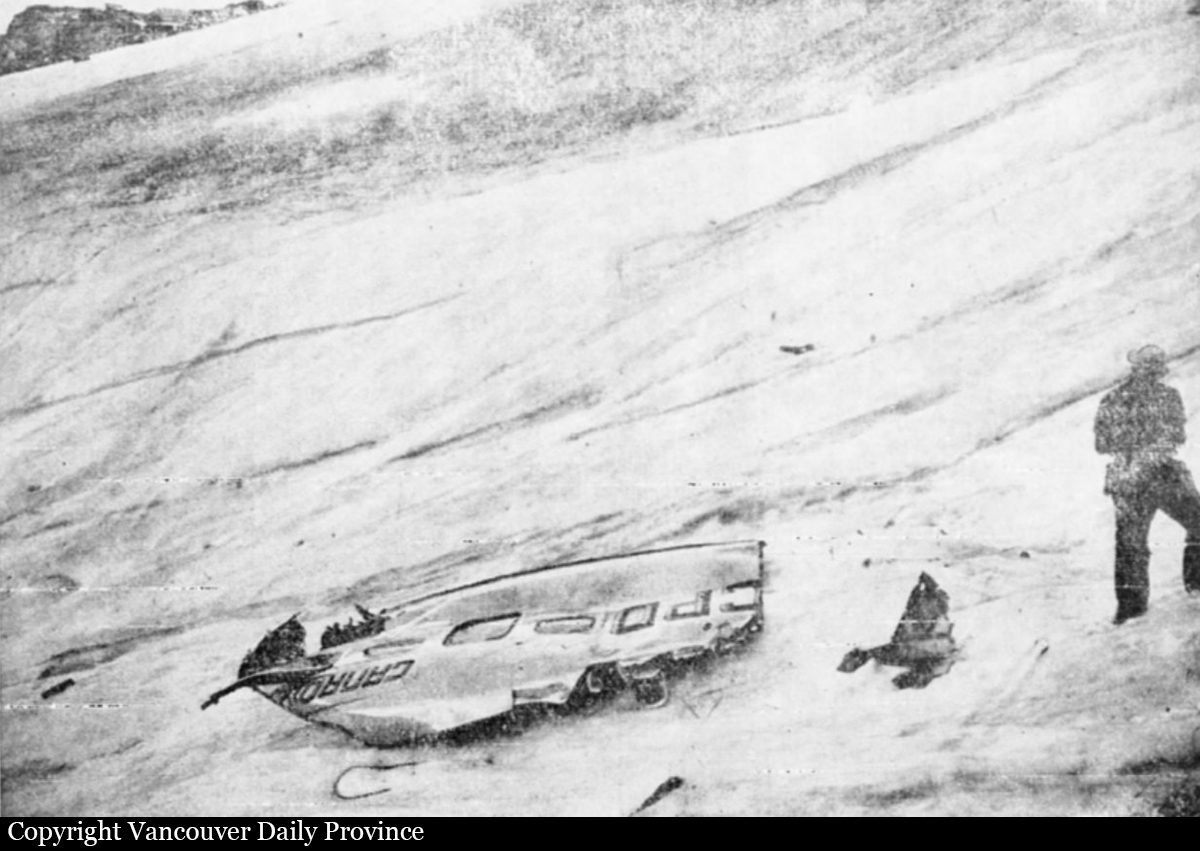
Crash of a Lockheed 14-H2 Super Electra on Mt William Night: 13 killed

Date & Time: Dec 20, 1942 at 1815 LT
Type of aircraft:
Operator:
Registration:
CF-CPD
Flight Phase:
Survivors:
No
Site:
Schedule:
Whitehorse - Prince George – Vancouver
MSN:
1504
YOM:
1939
Country:
Crew on board:
3
Crew fatalities:
Pax on board:
10
Pax fatalities:
Other fatalities:
Total fatalities:
13
Circumstances:
The airplane departed Prince George Airport at 1600LT on a flight to Vancouver with an ETA at 1800LT. The flight originated from Whitehorse and on board were 10 passengers and a crew of three. At 1805LT, the copilot had a radio communication with ATC to obtain the last weather report for Vancouver, this was the last radio transmission recorded with the crew. Few minutes later, while cruising at an altitude of 7,000 feet in limited visibility (night and marginal weather conditions), the airplane impacted the slope of Mt William Night located near the Fraser Valley, in the region of Chilliwack. As the airplane failed to arrive at destination, SAR operations were initiated but eventually suspended few days later due to poor weather conditions. The wreckage was spotted by a plane crew on 9 August 1943. The airplane disintegrated on impact and debris were scattered on a wide area. All 13 occupants were killed.
Crew:
Ernest W. Kubicek, pilot,
William G. Holland, copilot,
Edna Young, stewardess.
Passengers:
Reginald H. Battye,
James J. Coyle,
Laetitia A. Herron,
Robert W. Kehr,
William N. Scharfe,
Rudolph A. Schroeder,
Arthur L. Smith,
Hugh Stewart,
Winowna M. Stouse,
Bernard J. Stouse.
Probable cause:
At the time of the accident, the airplane was off course by more than 120 km, most probably due to a general failure of the electric system. Analysis revealed that the crew did not follow the prescribed track after passing the city of Squamish. Due to poor visibility, night, bad weather conditions and the failure of the headlights, pilots were unaware of their real position and were unable to see and avoid the mountain against which the airplane crashed. Consequently, the accident is the result of a controlled flight into terrain.

Crash of a Lockheed L-14-WF62 Super Electra in Rockhampton

Date & Time: Oct 7, 1942 at 0900 LT
Type of aircraft:
Operator:
Registration:
VH-CXK
Flight Type:
Survivors:
Yes
Schedule:
Brisbane - Rockhampton - Townsville
MSN:
1443
YOM:
1938
Country:
Region:
Crew on board:
4
Crew fatalities:
Pax on board:
6
Pax fatalities:
Other fatalities:
Total fatalities:
0
Circumstances:
The twin engine airplane departed Brisbane-Archerfield Airport at 0610LT on a flight to Townsville with an intermediate stop in Rockhampton. On board were six passengers (RAAF officers) and four crew members. Upon landing at Rockhampton Airfield, the undercarriage collapsed. The airplane slid for few dozen metres then came to rest, bursting into flames. All 10 occupants evacuated the cabin but suffered serious burns. The airplane was totally destroyed by fire. This airplane was later designated as C-111 and re-registered 44-83235.
Crew:
1st Lt James O. Cobb, pilot +3.
Probable cause:
Undercarriage collapsed on landing, probably due to sabotage.

Crash of a Lockheed 14-WF62 Super Electra in Port of Spain: 13 killed

Date & Time: Aug 22, 1942 at 1300 LT
Type of aircraft:
Operator:
Registration:
PJ-AIP
Flight Phase:
Survivors:
No
Schedule:
Willemstad – Port of Spain – Paramaribo
MSN:
1410
YOM:
1938
Crew on board:
3
Crew fatalities:
Pax on board:
10
Pax fatalities:
Other fatalities:
Total fatalities:
13
Circumstances:
Ten minutes after takeoff from Port of Spain-Piarco Airport, while climbing in marginal weather conditions, the twin engine airplane went out of control and crashed in a wooded area located few km from the airport. The airplane named 'Parkiet' was destroyed upon impact and all 13 occupants were killed.
Crew:
P. Badings, pilot,
N. H. de Bruyn, flight engineer,
C. van Oyen, radio operator.
Passengers:
A. C. Alwart,
P. van Eeten,
O. Elmont,
K. Hakhof,
H. Kinds,
P. M. Mosterdijk,
G. E. van Notten,
W. A. Verboog,
L. A. Vijzelman,
M. Waaldijk.
Probable cause:
The exact cause of the accident could not be determined. Nevertheless, the weather conditions were marginal with storm activity and turbulence at the time of the accident.

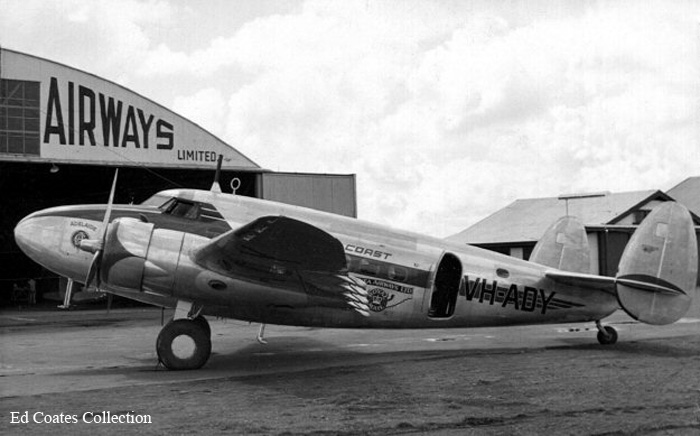
Crash of a Lockheed 14-WF62 Super Electra near Pine Creek: 12 killed

Date & Time: Apr 21, 1942 at 2130 LT
Type of aircraft:
Operator:
Registration:
VH-ADY
Flight Phase:
Survivors:
No
Site:
Schedule:
Brisbane – Alice Springs – Daly Waters – Batchelor – Darwin
MSN:
1498
YOM:
1939
Country:
Region:
Crew on board:
2
Crew fatalities:
Pax on board:
10
Pax fatalities:
Other fatalities:
Total fatalities:
12
Circumstances:
On the last leg to Darwin, the crew lost his orientation while cruising in rain falls and night. Due to poor visibility, the crew was unable to locate the airport of Darwin and continued over the sea. Few minutes later, pilots realized they were flying over the sea and returned to the continent but could not see the city of Darwin nor its airport. The crew informed ATC he was low of fuel and wanted to land shortly when the twin engine airplane impacted the slope of a mountain located near Annaburroo Station, in the region of Pine Creek. SAR operations were initiated but eventually suspended as no trace of the aircraft nor the occupants was found. The burnt wreckage and all 12 dead bodies were found on June 30, 1942, in an isolated area. The occupants were two pilots and 10 US soldiers. The aircraft was built in May 1939 and delivered to Guinea Airways on June 9, 1940.
Crew:
F/Lt Duncan Gordon Cameron, pilot,
F/O William Thomas Gray, pilot.
Passengers:
Pvt William V. Bedford,
Cpl Anthony A. Gattamelata,
Pvt Robert W. George,
Pvt Nick Hinich,
Cpl Ray E. Love,
Pvt John J. Faris,
Pvt Walter M. Feret,
Pvt Richard D. Schmidt,
Pvt Burford H. Willard,
Pvt Wyatt H. Wyley.
Probable cause:
Controlled flight into terrain after the crew lost his orientation due to the failure of both radio compass while flying at night and in poor weather conditions (rain falls). Due to low visibility, the crew was unable to establish his real position and to locate the Darwin's Airfield.