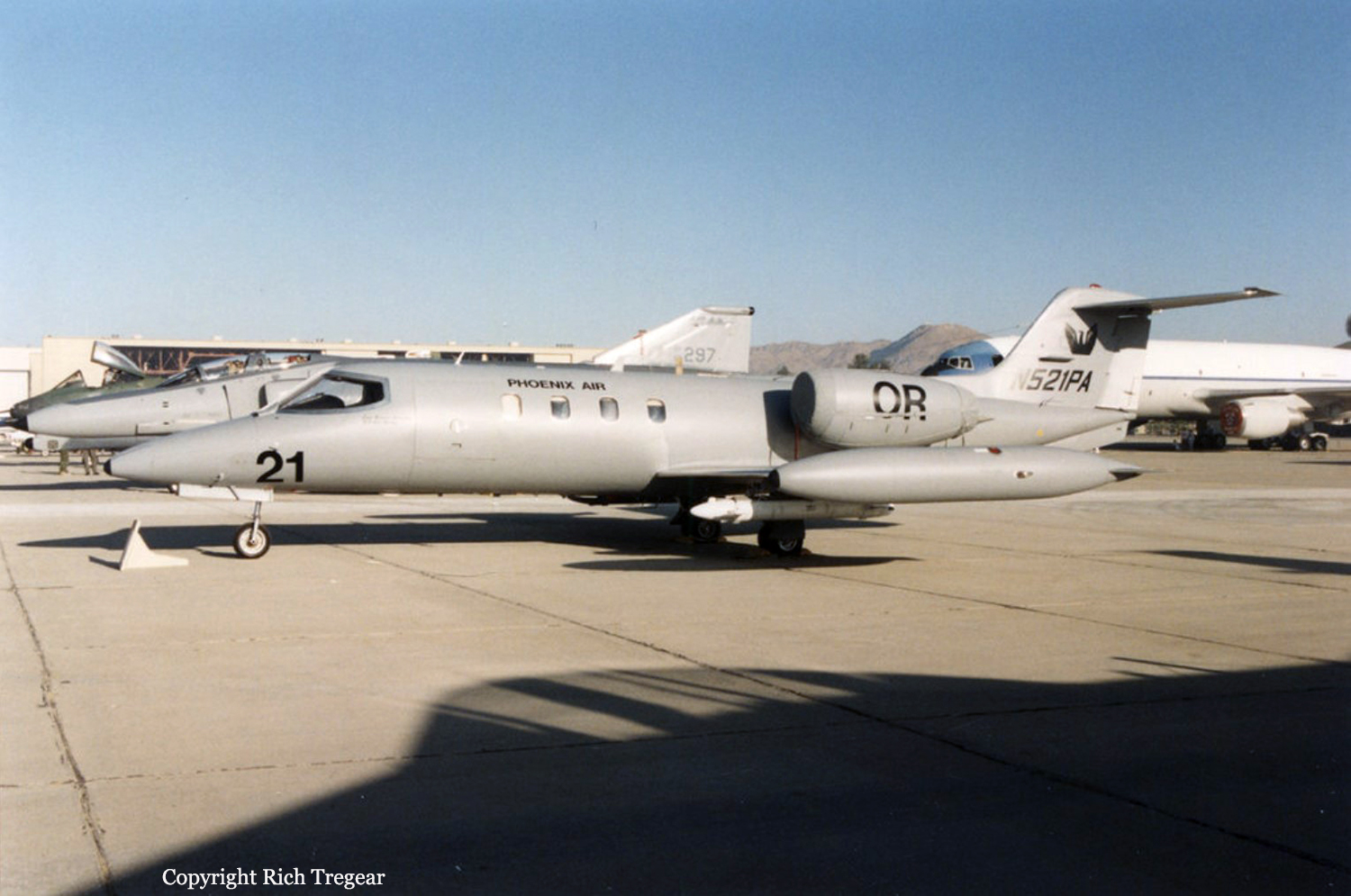
Crash of a Learjet 35A in Fresno: 4 killed

Date & Time: Dec 14, 1994 at 1146 LT
Type of aircraft:
Operator:
Registration:
N521PA
Flight Type:
Survivors:
No
Schedule:
Fresno - Fresno
MSN:
35-239
YOM:
1979
Crew on board:
2
Crew fatalities:
Pax on board:
0
Pax fatalities:
Other fatalities:
Total fatalities:
4
Captain / Total flying hours:
7109
Captain / Total hours on type:
2747.00
Aircraft flight hours:
6673
Aircraft flight cycles:
5254
Circumstances:
At about 1146 pst, Learjet 35A, N521PA, operating as a public use aircraft, crashed in Fresno, CA. Operating with call sign Dart 21, the flightcrew had declared an emergency inbound to Fresno Air Terminal due to engine fire indications. They flew the airplane toward a right base for their requested runway, but the airplane continued past the airport. The flightcrew was heard on tower frequency attempting to diagnose the emergency conditions and control the airplane until it crashed, with landing gear down, on an avenue in fresno. Both pilots were fatally injured. Twenty-one persons on the ground were injured, and 12 apartment units in 2 buildings were destroyed or substantially damaged by impact or fire. Investigation revealed that special mission wiring was not installed properly, leading to a lack of overload current protection. The in-flight fire most likely originated with a short of the special mission power supply wires in an area unprotected by current limiters. The fire resulted in false engine fire warning indications to the pilots that led them to a shutdown of the left engine. An intense fire burned through the aft engine support beam, damaging the airplane structure and systems in the aft fuselage and may have precluded a successful emergency landing.
Probable cause:
The accident was the consequence of the following factors:
- Improperly installed electrical wiring for special mission operations that led to an in-flight fire that caused airplane systems and structural damage and subsequent airplane control difficulties,
- Improper maintenance and inspection procedures followed by the operator,
- Inadequate oversight and approval of the maintenance and inspection practice by the operator in the installation of the special mission systems.
Final Report:
Crash of a Learjet 35A off Taitung: 4 killed

Date & Time: Sep 17, 1994
Type of aircraft:
Registration:
B-98181
Flight Phase:
Flight Type:
Survivors:
No
MSN:
35-675
YOM:
1992
Country:
Region:
Crew on board:
4
Crew fatalities:
Pax on board:
0
Pax fatalities:
Other fatalities:
Total fatalities:
4
Circumstances:
The aircraft was engaged in a military exercise jointly with the Taiwan Navy, carrying four crew members. While cruising over the Taiwan Strait and towing a target, the aircraft was mistakenly shot down by a surface-to-air missile fired from a Taiwan Navy frigate. The aircraft exploded and its debris were found off Taitung. All four crew members were killed.
Probable cause:
Mistakenly shot down by a surface-to-air missile during a military exercise.

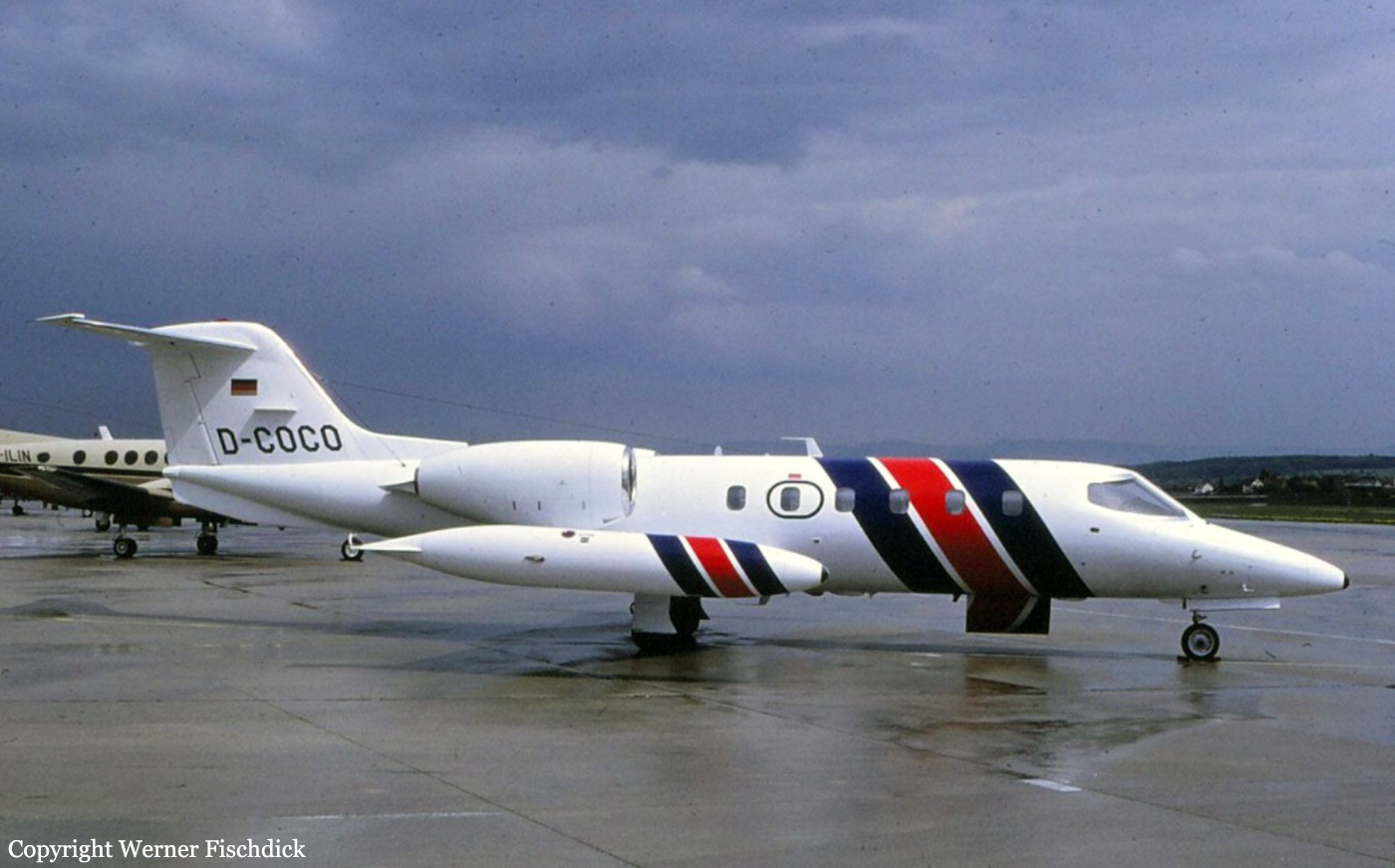
Crash of a Learjet 35A in Cologne: 4 killed

Date & Time: Jun 7, 1993 at 1310 LT
Type of aircraft:
Operator:
Registration:
D-COCO
Flight Phase:
Flight Type:
Survivors:
No
Schedule:
Cologne - Nuremberg
MSN:
35-466
YOM:
1982
Country:
Region:
Crew on board:
2
Crew fatalities:
Pax on board:
2
Pax fatalities:
Other fatalities:
Total fatalities:
4
Circumstances:
The crew departed Cologne-Bonn Airport on a training flight (check flight) to Nuremberg. During the takeoff roll, at or near V2 speed, the aircraft deviated to the left and veered off runway. It rolled beside the runway for about 600 metres then returned on the runway. It took off but overturned and crashed upside down, bursting into flames. All four occupants were killed.
Probable cause:
The exact cause of the accident could not be determined. Technical analysis did not reveal any mechanical failure on both engines. It is believed that the crew probably attempted to simulate the failure of the left engine at V1 speed and the copilot started the rotation shortly later at Vr speed. The aircraft went out of control.

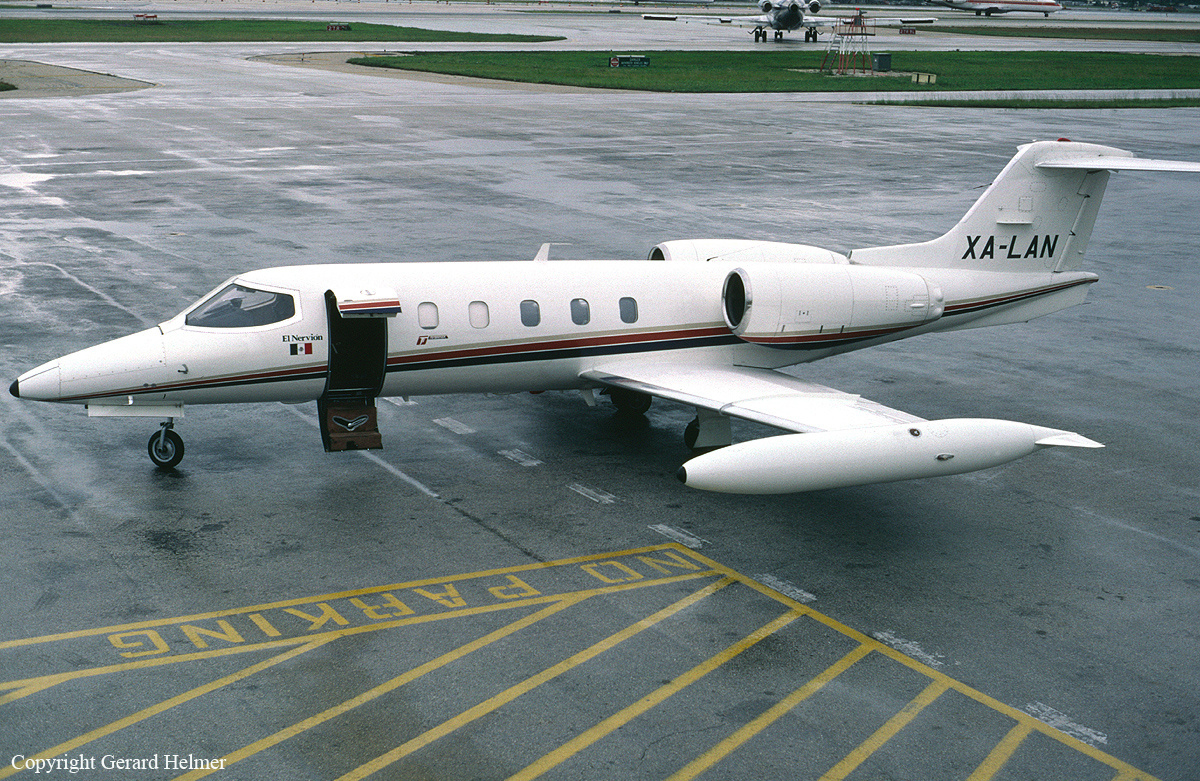
Crash of a Learjet 35 in Hermosillo: 9 killed

Date & Time: Jan 8, 1993 at 0846 LT
Type of aircraft:
Registration:
XA-LAN
Survivors:
No
Site:
Schedule:
Mexico City - Hermosillo
MSN:
35-267
YOM:
1979
Country:
Crew on board:
2
Crew fatalities:
Pax on board:
7
Pax fatalities:
Other fatalities:
Total fatalities:
9
Captain / Total flying hours:
15339
Copilot / Total flying hours:
1780
Aircraft flight hours:
6771
Circumstances:
Following an uneventful flight from Mexico City, the crew was cleared for an approach to Hermosillo-General Ignacio Pesqueira Garcia Airport runway 23. During the descent, the crew was alerted by ATC about poor weather conditions and limited visibility. On final, at an altitude of 1,800 feet, the aircraft struck the slope of Mt El Bachoco located 10,4 km short of runway 23. The aircraft was destroyed and all nine occupants were killed.
Probable cause:
Controlled flight into terrain after the crew failed to maintain the minimum prescribed altitude of 2,800 feet on approach. The lack of visibility due to poor weather conditions was considered as a contributing factor.
Final Report:

Crash of a Learjet 35A in Cumuatillo: 2 killed

Date & Time: May 2, 1992
Type of aircraft:
Registration:
PT-OEF
Flight Type:
Survivors:
No
Schedule:
Cali - Cumuatillo
MSN:
35-102
YOM:
1972
Country:
Crew on board:
2
Crew fatalities:
Pax on board:
0
Pax fatalities:
Other fatalities:
Total fatalities:
2
Circumstances:
The crew attempted a night landing at Cumuatillo-Pajacuarán Airport that was not equipped with any facilities, tower or lighting systems. The aircraft approached in a wrong position relating to the runway direction and struck the ground near the runway threshold in a near perpendicular heading. It went out of control, crashed and came to rest near a road, broken in several pieces. Both pilots were killed. A load of cocaine was found among the debris.
Probable cause:
The crew was completing an illegal flight from Cali, Colombia, carrying a load of cocaine, and attempted to land by night on an airport that was not suitable for such aircraft and operations. No flight plan was filed and the crew entered illegally the Mexican airspace.

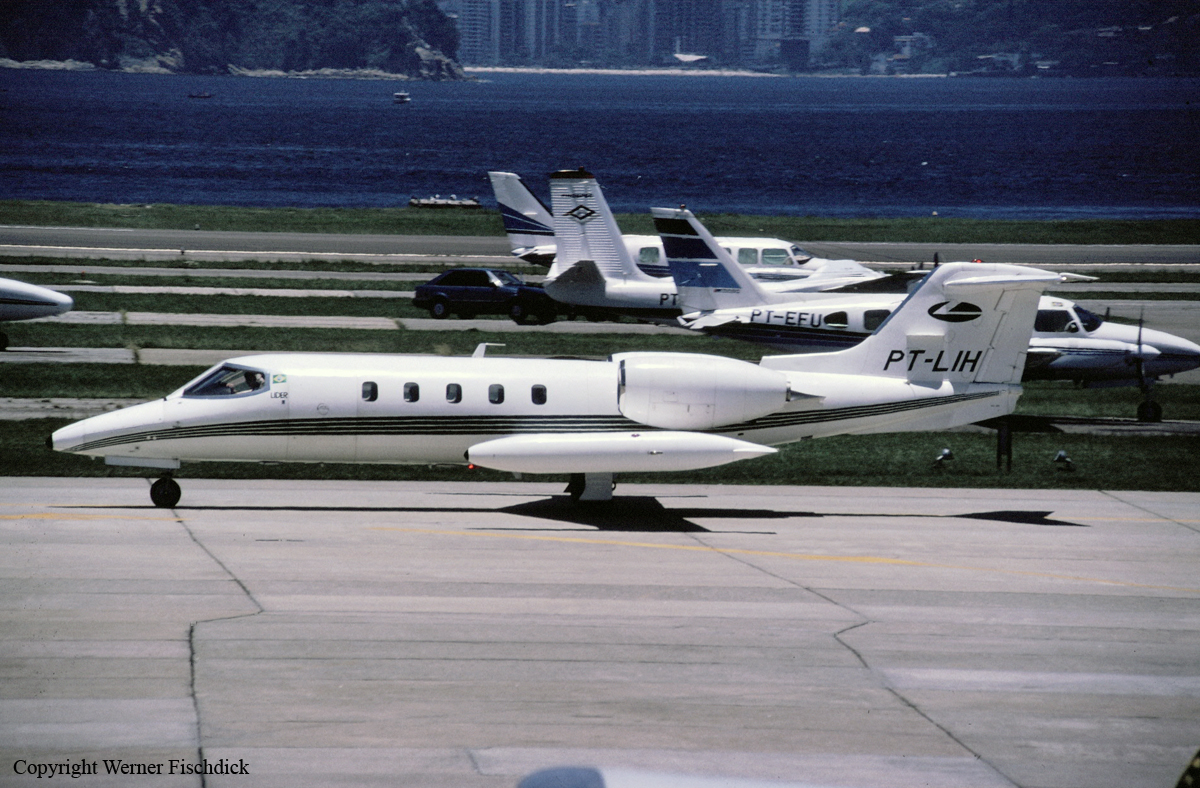
Crash of a Learjet 35A in Uberlândia

Date & Time: Mar 15, 1991 at 2107 LT
Type of aircraft:
Operator:
Registration:
PT-LIH
Flight Type:
Survivors:
Yes
Schedule:
São Paulo – Uberlândia
MSN:
35-433
YOM:
1981
Country:
Crew on board:
2
Crew fatalities:
Pax on board:
2
Pax fatalities:
Other fatalities:
Total fatalities:
0
Captain / Total flying hours:
3850
Captain / Total hours on type:
550.00
Copilot / Total flying hours:
15175
Copilot / Total hours on type:
525
Circumstances:
The aircraft departed São Paulo-Congonhas Airport on an ambulance flight to Uberlândia, carrying two doctors and two pilots who should pick-up a patient. The copilot was pilot flying. This was his first flight on a Learjet without an instructor. This was against regulations since the copilot was not fully qualified yet and the captain was not qualified to act as an instructor. Upon arrival at Uberlândia, weather conditions were poor with a low ceiling at 100 meters (clouds 8/8), fog and an horizontal visibility less than 200 meters (below minimums weather conditions). The crew abandoned the approach and initiated a go-around procedure. Few minutes later, a second approach was also abandoned. Rather than diverting to the alternate airport, the crew attempted a third approach when the aircraft struck the ground and crashed short of runway threshold. All four occupants were seriously injured and the aircraft was destroyed.
Probable cause:
The accident was the consequence of the combination of the following factors:
- Poor flight preparation and planning,
- Poor approach planning,
- Wrong approach configuration,
- Poor crew coordination,
- Lack of visibility due to the night associated to below minimums weather conditions,
- The crew failed to initiate a go-around and to divert to the alternate airport,
- Poor crew resources management,
- Non observation of operational procedures,
- Lack of supervision on part of the captain,
- Poor operational organization on part of the operator.
Final Report:

Crash of a Learjet 35A in Aspen: 3 killed

Date & Time: Feb 13, 1991 at 1741 LT
Type of aircraft:
Operator:
Registration:
N535PC
Survivors:
No
Schedule:
Las Vegas - Aspen
MSN:
35-291
YOM:
1980
Crew on board:
2
Crew fatalities:
Pax on board:
1
Pax fatalities:
Other fatalities:
Total fatalities:
3
Captain / Total flying hours:
10530
Captain / Total hours on type:
3700.00
Circumstances:
The flight crew reported to the tower controller that they were over the airport and requested a right downwind circling approach to runway 15. The tower controller and other witnesses observed the airplane in a steep right bank on base leg. The airplane overshot the extended runway centerline. The tower controller observed the airplane entering a steeper right bank to correct back to the runway centerline. The controller stated that he observed the airplane "flutter" and then crash right-wing first, about one mile north of the runway threshold. Other witnesses reported a variety of indications consistent with a loss of control. The last recorded transmission was "Oh no you're (stall…)." The ( ) indicates that the word was questionable text. Both engines were producing about 1,700 pounds of thrust (2,561 pounds available). A snow squall had just passed over the airport and was obscuring mountains to the east. The terrain was snow covered. The accident occurred about eight minutes before official sunset. The approach procedure is not authorized at night or for category D airplanes. Minimums for the approach were three miles visibility with an MDA of 10,840 feet. Airport elevation is 7,815 feet. Both pilots were rated in the airplane. It could not be determined which pilot was at the controls at the time of the accident.
Probable cause:
The flight crew's failure to maintain airspeed and control of the airplane while maneuvering to land. Contributing factors were the flight crew's execution of an unstabilized approach and the surrounding snow-covered mountainous terrain.
Final Report:

Crash of a Learjet 35 in McClellan-Palomar

Date & Time: Apr 2, 1990 at 1245 LT
Type of aircraft:
Operator:
Registration:
N51FN
Flight Phase:
Flight Type:
Survivors:
Yes
Schedule:
McClellan-Palomar - McClellan-Palomar
MSN:
35-059
YOM:
1976
Crew on board:
2
Crew fatalities:
Pax on board:
0
Pax fatalities:
Other fatalities:
Total fatalities:
0
Circumstances:
During the takeoff roll on runway 24 at McClellan-Palomar Airport, one of the engine failed between V1 and VR. After both wings struck the runway surface, the crew lost control of the airplane that crash near the runway end. Both pilots were slightly injured and the aircraft was written off.
Probable cause:
Engine failure during takeoff roll for unknown reasons.
Final Report:

Crash of a Learjet 35A in Morristown: 1 killed

Date & Time: Jul 26, 1988 at 0740 LT
Type of aircraft:
Operator:
Registration:
N442NE
Flight Type:
Survivors:
Yes
Schedule:
Allentown - Morristown
MSN:
35-442
YOM:
1981
Crew on board:
2
Crew fatalities:
Pax on board:
0
Pax fatalities:
Other fatalities:
Total fatalities:
1
Captain / Total flying hours:
4810
Captain / Total hours on type:
2100.00
Aircraft flight hours:
4274
Circumstances:
The crew was positioning the aircraft in preparation for a revenue flight and executing a non-directional beacon (NDB) approach to runway 05. The captain reported that the copilot was flying the aircraft. However, the captain stated that he took control of the aircraft during the approach and made some control corrections before returning control of the aircraft to the copilot. Radar data indicated that aircraft control was erratic throughout the approach and that the airspeed and descent rates were high (3,000 fpm sink rate) shortly before the accident. The aircraft struck a fence short of the runway and impacted the ground. The captain said he realized the aircraft was drifting left of course but did not correct it. He said he told the copilot to add power twice during the approach. The copilot's training history indicated difficulty in control, scan of instruments, and with instrument procedures. Company management described the captain as passive and the copilot as aggressive. Supervision of training and operations by management and surveillance of the company by the FAA was considered inadequate by NTSB.
Probable cause:
Occurrence #1: loss of control - in flight
Phase of operation: approach - faf/outer marker to threshold (ifr)
Findings
1. (c) flight controls - improper use of - copilot/second pilot
2. Overconfidence in personal ability - copilot/second pilot
3. (f) inadequate recurrent training - copilot/second pilot
4. (f) inadequate surveillance of operation - faa (organization)
5. (f) airspeed - improper - copilot/second pilot
6. (f) proper descent rate - exceeded - copilot/second pilot
7. (c) supervision - inadequate - pilot in command
8. (f) interpersonal relations - pilot in command
9. Insufficient standards/requirements,airman - company/operator mgmt
----------
Occurrence #2: in flight collision with terrain/water
Phase of operation: approach - faf/outer marker to threshold (ifr)
Final Report:

Crash of a Learjet 35A in Teterboro: 4 killed

Date & Time: May 24, 1988 at 0316 LT
Type of aircraft:
Registration:
N500RW
Flight Phase:
Flight Type:
Survivors:
No
Schedule:
Teterboro - Morristown
MSN:
35-148
YOM:
1978
Crew on board:
2
Crew fatalities:
Pax on board:
2
Pax fatalities:
Other fatalities:
Total fatalities:
4
Captain / Total flying hours:
8910
Captain / Total hours on type:
759.00
Aircraft flight hours:
4735
Circumstances:
Witnesses reported a normal takeoff. Radar indicated the aircraft turned right as cleared and began cruise at 1900 feet, heading northwest at 235 knots. 65 seconds after calling clear of the control zone the aircraft's radar track ended. The aircraft was fragmented by the impact with all flight control surfaces and aircraft extremities found at the impact site. Pitch trim was found in the normal cruise setting with gear, flaps, and spoilers in the retracted position. Examination of the engines indicated operation at impact. Aircraft struck the terrain in approx 80° nose down, wings level attitude and heading opposite to the previous direction of flight. In flight simulator tests, with the aircraft initially in level flight at 1,900 feet and then rolled inverted and the pitch control moved aft, the aircraft attitude was similar to the attitude at impact. There were two unauthorized passengers on board, one was the copilot's wife. The impact point was in a very small region of uncontrolled airspace very near the copilot's and relative's homes. The copilot was new to jet operations. The aircraft departed with several discrepancies uncleared. All four occupants were killed.
Probable cause:
Occurrence #1: in flight collision with terrain/water
Phase of operation: maneuvering
Findings
1. (f) light condition - dark night
2. (c) maneuver - attempted - pilot in command
3. (c) judgment - poor - pilot in command
4. (c) altitude - misjudged - pilot in command
5. (f) lack of total experience in type operation - pilot in command
6. (f) lack of total experience in type operation - copilot/second pilot
7. Operation with known deficiencies in equipment - attempted - company maintenance personnel
Final Report: