Crash of a Learjet 35A in Avon Park

Date & Time: Jul 15, 1997 at 1953 LT
Type of aircraft:
Registration:
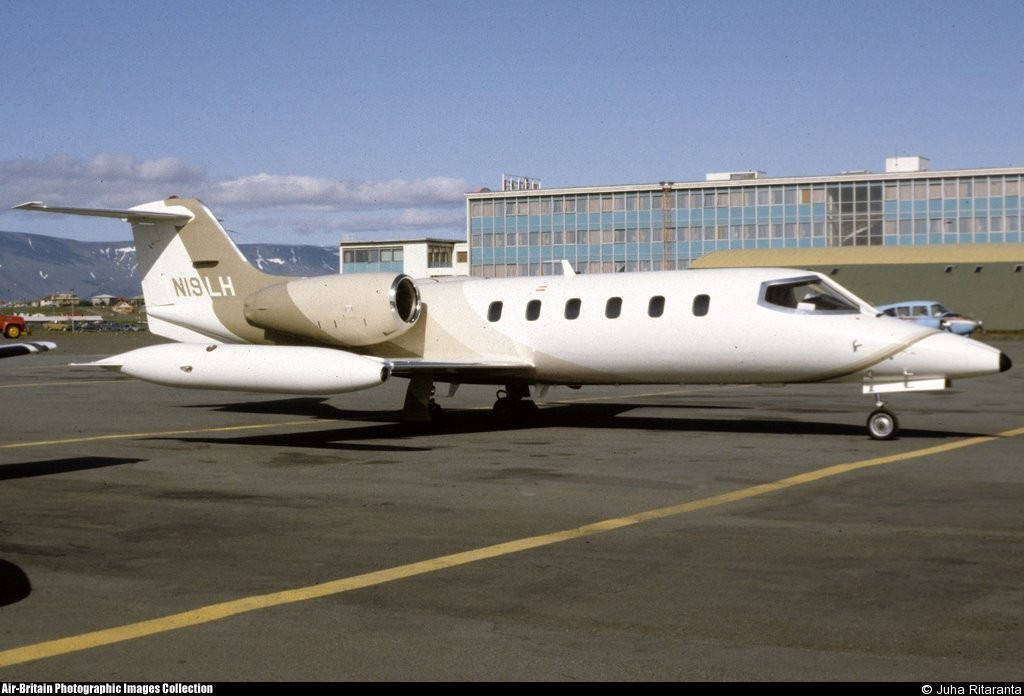
N19LH
Flight Type:
Survivors:
Yes
Schedule:
Fort Lauderdale - Avon Park
MSN:
35-279
YOM:
1980
Crew on board:
2
Crew fatalities:
Pax on board:
0
Pax fatalities:
Other fatalities:
Total fatalities:
0
Captain / Total flying hours:
20076
Captain / Total hours on type:
1500.00
Aircraft flight hours:
13726
Circumstances:
Witnesses near the airport saw the flight approach on a left base to runway 4, touchdown on the runway, and takeoff again. One witness, a pilot, said the airplane turned onto final to the 'south' (right) of the runway centerline.' The airplane made a 'sharp' turn to the left to realign with the runway center, slightly overshot the runway to the left, turned to the right 'sharply,' and touched down on the runway. The witness further stated, '...by the time the pilot was on the runway he had wasted approximately 1,200 to 1,500 feet of runway 4, they hit reverse thrusters [sic] and were on full bore till they crossed runway 27 and 9.' The witness saw heat come out of both engine thrust reversers, the nose gear touched down and then came up again. He then saw the airplane come off the ground about 30 to 40 feet, wobble left and right at a 'slow airspeed,' crossover a highway at a low altitude, right wing low, strike some wires, go into a field, and catch fire. The pilot said, when he touched down on the runway, the airplane seemed to 'lurch' to the side. He said at this point his airspeed was 126 knots. He elected to abort the landing, and applied full power. He said the engines would not develop thrust and he elected to land in a field less than 1/4 mile in front of him. Examination of the left thrust reverser revealed that the translator was in the deployed position, with the blocker doors fully open. Both the left and right pneumatic latches were found in the unlocked position. Examination of the right thrust reverser revealed that the translator was in the deployed position, with the blocker doors fully closed. The left pneumatic latch was found in the locked position. The right pneumatic latch was found in the unlocked position. The inboard sequence latches were found about 2 inches forward of full aft travel. The thrust reverser switch was found in the 'NORMAL' position. According to Gates Lear Jet Airworthiness Directive (AD) 79-08-01, '...to preclude inadvertent thrust reverser deployment and possible loss of aircraft control....,' the following limitations apply to all gates Lear Jet Model 35, 36, 35A, 36A, aircraft equipped with Aeronca Thrust reversers. According to the AD, Section I-LIMITATION; '....Thrust Reversers must not be operated prior to takeoff...Thrust Reversers must not be used for touch and go landings...After Thrust Reversers have been deployed, a visual check of proper door stowing must be made prior to takeoff...Operational Procedures in this Thrust Reverser Supplement are mandatory.' According to Lear Jet and FlightSafety International, the procedures that are taught to Lear Jet pilots in the use of thrust reverse and spoilers during landings are; '...pilots [are] to use thrust reverse only on full stop Lear Jet landings. Pilot are trained not to deploy spoilers or thrust reverse during touch and go's or during balked landings.' The pilot-in-command of N19LH at the time of the accident, told the NTSB investigator-in-charge (IIC) that he was 'aware' of the limitations on the Aeronca Thrust Reverser and he knew that once the Thrust Reverser was deployed that he was 'committed' to land. The pilot told the IIC that he knew of the limitations and that he was committed to land.
Probable cause:
A loss of engine power as a result of the thrust reversers being deployed and subsequent inflight collision was wires. Factors in this accident were the pilot's disregard for procedures, and the improper use of the thrust reversers.
Final Report:
Crash of a Learjet 35A in Great Falls

Date & Time: May 16, 1997 at 1314 LT
Type of aircraft:
Registration:
N1AH
Flight Phase:
Flight Type:
Survivors:
Yes
Schedule:
Great Falls - Dallas
MSN:
35-398
YOM:
1981
Crew on board:
2
Crew fatalities:
Pax on board:
0
Pax fatalities:
Other fatalities:
Total fatalities:
0
Captain / Total flying hours:
8700
Captain / Total hours on type:
2000.00
Aircraft flight hours:
8019
Circumstances:
The captain reported: 'Shortly after V1...there was a loss of power to the left engine....' (FAR Part 1 defines V1 as takeoff decision speed.) However, the first officer, who was the pilot flying, stated the captain retarded power on the left engine as a training exercise. The first officer stated there was no preflight discussion of emergency procedure practice. The airplane became airborne about 3,500 feet down the runway; the crew subsequently lost control of the aircraft, and it crashed to the left of the runway, and a fire erupted. The crew escaped with minor injuries. A teardown of the left engine was performed under FAA supervision at the engine manufacturer's facilities; the engine manufacturer reported that damage found during the teardown 'was indicative of engine rotation and operation at the time of impact....' Both airspeed indicator bugs were found set 9 to 11 knots below the V1 speed on the takeoff and landing data (TOLD) card. No evidence of an aircraft or engine malfunction, to include inflight fire, was found at the accident site.
Probable cause:
The captain's inadequate preflight planning/preparation, and the subsequent improper response to a simulated loss of engine power, resulting in liftoff at an airspeed below that for which sustained flight was possible.
Final Report:

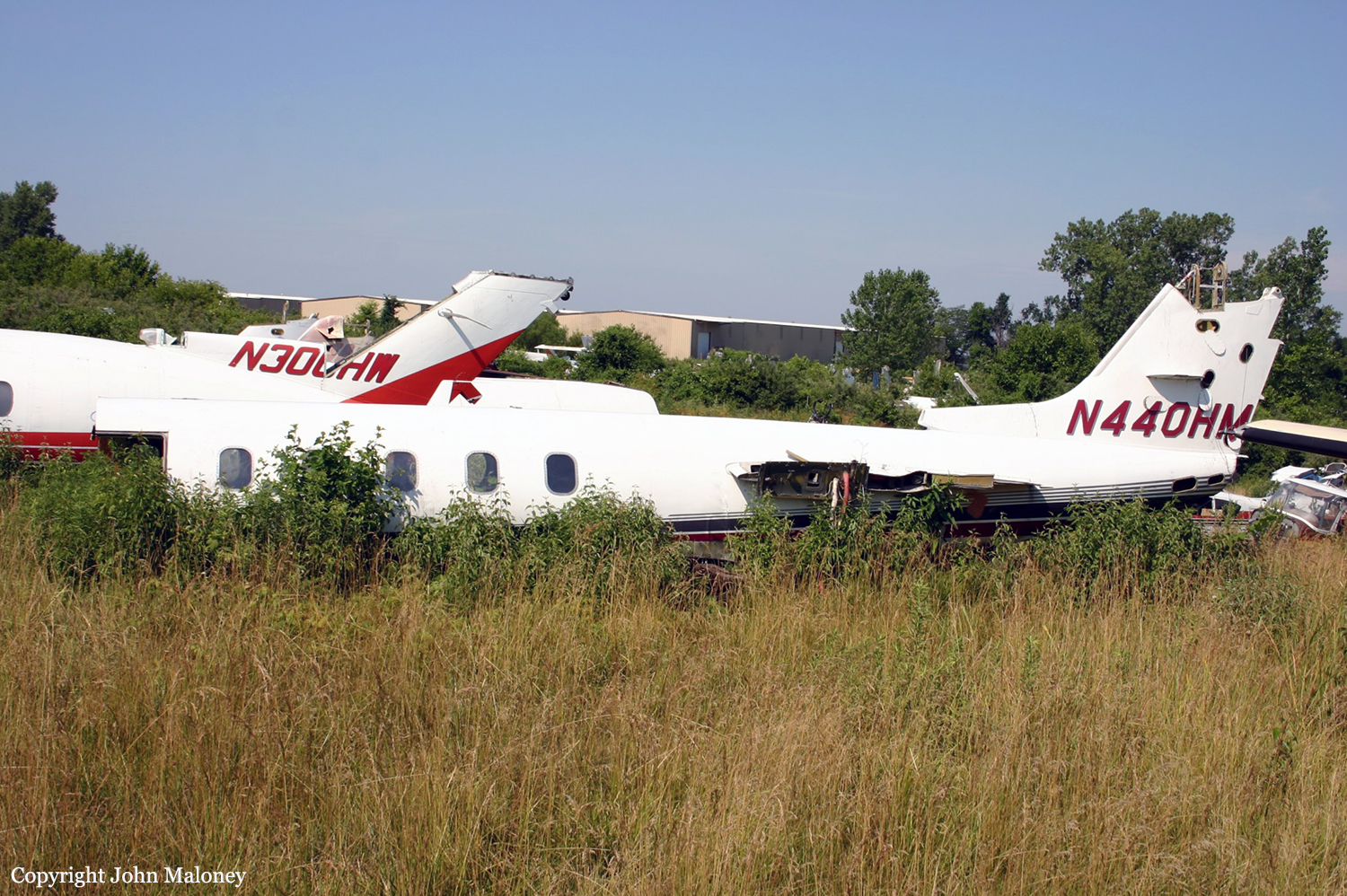
Crash of a Learjet 35A in Greenville

Date & Time: Feb 27, 1997 at 1015 LT
Type of aircraft:
Operator:
Registration:
N440HM
Flight Type:
Survivors:
Yes
Schedule:
Atlanta - Greenville
MSN:
35-294
YOM:
1980
Flight number:
GRA440
Crew on board:
2
Crew fatalities:
Pax on board:
0
Pax fatalities:
Other fatalities:
Total fatalities:
0
Captain / Total flying hours:
5293
Captain / Total hours on type:
202.00
Circumstances:
The pilot-in-command stated he was cleared for an ILS approach. He had to use spoilers to intercept the glideslope. The landing was extended at the outer marker as the airspeed was slowed through 200 knots. As the airspeed decreased the spoilers were retracted and the flaps were extended to 20-degrees. The airplane was drifting to the right and flaps were lowered to 40-degrees as the drift was corrected. The airplane floated and touched down long. The spoilers, and brakes were applied as well as full reverse. There was no braking due to hydroplaning. Examination of the crash site revealed the airplane went off the end of the runway, skidded through 200 feet of sod, vaulted off a 25 foot embankment, skidded across a road, and collided with a ditch.
Probable cause:
The pilot-in-command's failure to achieve the proper touchdown point on a known wet runway, resulting in a subsequent overrun and on ground collision with a ditch.
Final Report:

Crash of a Learjet 35A in Lebanon: 2 killed

Date & Time: Dec 24, 1996 at 1005 LT
Type of aircraft:
Registration:
N388LS
Flight Type:
Survivors:
No
Site:
Schedule:
Bridgeport - Lebanon
MSN:
35-388
YOM:
1981
Crew on board:
2
Crew fatalities:
Pax on board:
0
Pax fatalities:
Other fatalities:
Total fatalities:
2
Captain / Total flying hours:
4250
Captain / Total hours on type:
1000.00
Aircraft flight hours:
6897
Circumstances:
The first officer was in the left seat, flying the airplane, and the captain was in the right seat, for the positioning flight. Approaching the destination, the crew briefed, then attempted an ILS RWY 18 approach. The captain reported not receiving the localizer, when, in fact, the airplane was actually about 5 nautical miles to the left of it. Winds at the airport, about that time, were from 190 degrees true, at 5 knots; however, area winds at 6,000 feet were from 220 degrees, in excess of 40 knots. The crew executed a missed approach, but did not follow the missed approach procedures. The captain later requested, and received clearance for, the VOR RWY 25 approach. The captain partially briefed the approach to the first officer as the airplane neared the VOR, then subsequently "talked through" remaining phases of the approach as they occurred. The outbound course for the VOR RWY 25 approach was 066 degrees, and the minimum altitude outbound was 4,300 feet. After passing the VOR, the captain directed the first officer to maintain 4,700 feet. The airplane's last radar contact occurred as the airplane was proceeding outbound, 7 nautical miles northeast of the VOR, at 4,800 feet. As the airplane approached the course reversal portion of the procedure turn, the captain initially directed the first officer to turn the airplane in the wrong direction. When the proper heading was finally given, the airplane had been outbound for about 2 minutes. During the outbound portion of the course reversal, the captain told the first officer to descend the airplane to 2,900 feet, although the procedure called for the airplane to maintain a minimum of 4,300 feet until joining the inbound course to the VOR. During the inbound portion of the course reversal, the captain amended the altitude to 3,000 feet. As the airplane neared the inbound course to the VOR, the captain called out the outer marker. The first officer agreed, and the captain stated that they could descend to 2,300 feet. The first officer then noted that the VOR indications were fluctuating. The captain pointed out the VOR's continued reception, and the first officer noted, "but it's all over the place." Shortly thereafter, the first officer stated that he was descending the airplane to 2,300 feet. Three seconds later, the airplane impacted trees, then terrain. The wreckage was located at the 2,300-foot level, on rising mountainous terrain, 061 degrees magnetic, 12.5 nautical miles from the VOR. It was also 10.3 nautical miles prior to where a descent to 2,300 feet was authorized. There was no evidence that the crew used available DME information. There was also no evidence of pre-impact mechanical malfunction.
Probable cause:
The captain's failure to maintain situational awareness, which resulted in the airplane being outside the confines of the instrument approach; and the crew's misinterpretation of a stepdown fix passage, which resulted in an early descent into rising terrain. Factors included the captain's misreading of the instrument approach procedure, the crew's rushed and incomplete instrument approach briefing, their failure to use additional, available navigational aids, and their failure to account for the winds at altitude.
Final Report:

Crash of a Learjet 35A in Tepic: 2 killed

Date & Time: Jun 22, 1995 at 2330 LT
Type of aircraft:
Registration:
XA-SWF
Survivors:
Yes
Schedule:
Ciudad Obregón - Toluca
MSN:
35-391
YOM:
1981
Location:
Country:
Crew on board:
2
Crew fatalities:
Pax on board:
4
Pax fatalities:
Other fatalities:
Total fatalities:
2
Captain / Total flying hours:
11408
Circumstances:
The aircraft departed Ciudad Obregón Airport at 2001LT on a charter flight to Toluca, carrying four passengers and two pilots. For unknown reasons, the crew cancelled the flight plan and returned to Ciudad Obregón. A second takeoff was recorded at 2118LT and en route, the crew cancelled again the flight plan as he wanted to divert to Tepic, then Guadalajara and later Puerto Vallarta. After ATC informed the crew that Guadalajara Airport was closed to traffic, the crew finally decided to fly to Tepic. But this airport was also closed to traffic. On final approach to Tepic Airport, the crew failed to realize his altitude was insufficient when the aircraft struck the ground and crashed 8,3 km short of runway 02. At the time of the accident, the airport was closed and the approach light system was off. One of the passenger was the drug lord Héctor Luis Palma Salazar who was later arrested.
Probable cause:
The crew attempted to land by night on an airport that was closed to traffic (opening time 0600-1800LT) and continued the approach below the minimum safe altitude until the aircraft impacted terrain.
Final Report:

Crash of a Learjet 35 in Magdalena de Kino

Date & Time: Jun 12, 1995 at 1040 LT
Type of aircraft:
Registration:
XA-SVX
Survivors:
Yes
Schedule:
Veracruz - Nogales
MSN:
35-012
YOM:
1975
Country:
Crew on board:
2
Crew fatalities:
Pax on board:
2
Pax fatalities:
Other fatalities:
Total fatalities:
0
Circumstances:
En route from Veracruz to Nogales, while 112 km from the destination, the crew declared an emergency following a fire in the left engine and was cleared to divert to Magdalena de Kino Airport. The aircraft landed too far down the runway which is 1,386 metres long. Unable to stop within the remaining distance, the aircraft overran and came to rest few dozen metres further, bursting into flames. All four occupants escaped uninjured while the aircraft was destroyed by fire.
Probable cause:
It was determined that the fire in the left engine was the consequence of a hydraulic leak. Aircraft performances were reduced and the crew was unable to complete a safe landing.

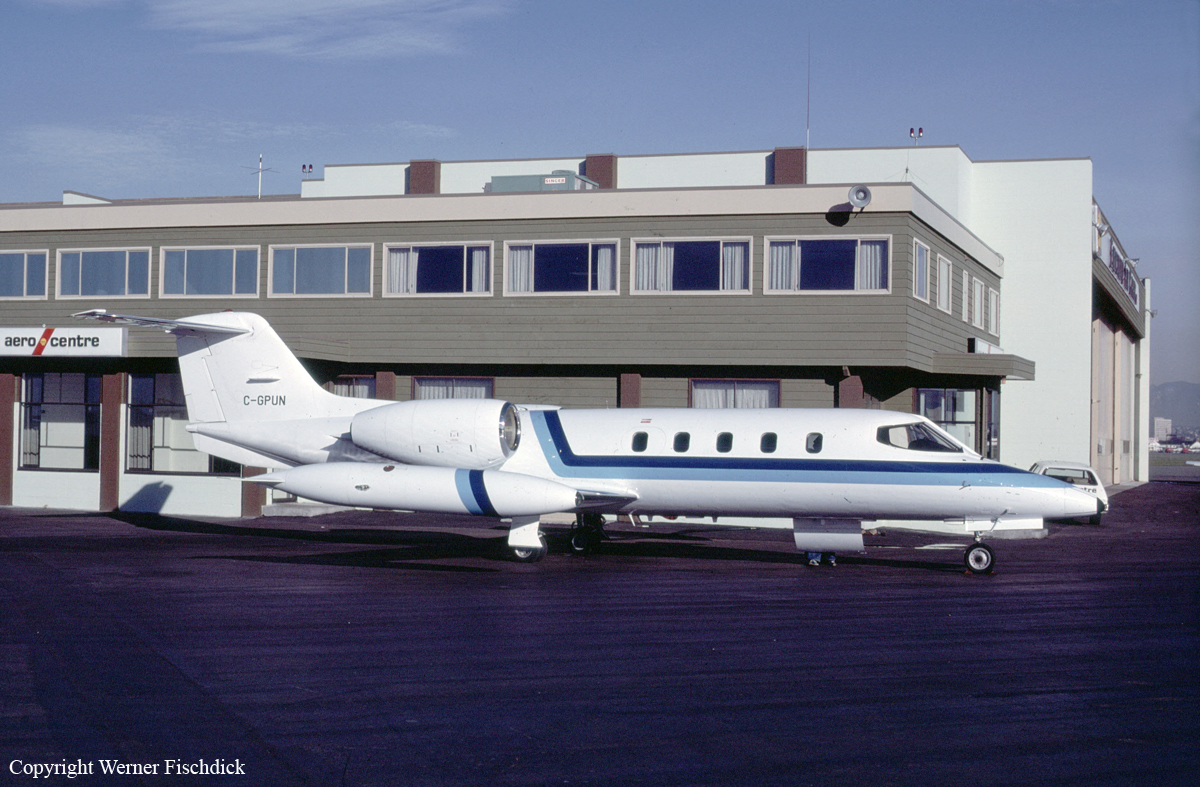
Crash of a Learjet 35 off Masset: 5 killed

Date & Time: Jan 11, 1995 at 0149 LT
Type of aircraft:
Operator:
Registration:
C-GPUN
Flight Type:
Survivors:
No
Schedule:
Vancouver - Masset
MSN:
35-058
YOM:
1976
Country:
Crew on board:
2
Crew fatalities:
Pax on board:
3
Pax fatalities:
Other fatalities:
Total fatalities:
5
Captain / Total flying hours:
4550
Captain / Total hours on type:
2550.00
Copilot / Total flying hours:
2880
Copilot / Total hours on type:
61
Aircraft flight hours:
11676
Circumstances:
On 11 January 1995, at 0035 Pacific standard time (PST), the twin-engine Learjet 35 departed Vancouver International Airport, British Columbia, on a night, instrument flight rules (IFR), medical evacuation (MEDEVAC) flight to the Masset aerodrome, on the northern end of the Queen Charlotte Islands. On board the Learjet were a flight crew of two pilots, and a medical team consisting of two attendants and a doctor. Their mission was to evacuate a patient from Masset and deliver her to Prince Rupert for treatment; the aircraft was then to return to Vancouver. The flight-planned route was at flight level (FL) 390, direct to Sandspit then direct to Masset. Following routine communications with Air Traffic Services (ATS), at about 0144, the aircraft reported "outbound" from the Masset non-directional beacon (NDB) on the published NDB "A" instrument approach procedure to runway 12. Air Traffic Control (ATC) radar, situated near Sandspit, tracked the aircraft as it flew the approach. Radar data shows that the aircraft began a descent about 10 seconds after it had completed the procedure turn and was established on the final inbound approach track. Forty-three seconds later, at a point 8.8 nautical miles (nm) from the threshold of runway 12 and on the final, inbound track, the aircraft disappeared from radar. Department of National Defence (DND) Search and Rescue (SAR) aircraft began searching the area shortly after the aircraft was declared missing, and were later assisted by other private and military aircraft and vessels. On the second day of the search, flotsam from the aircraft was found in the area. Extensive underwater searching using sonar and underwater cameras found the aircraft wreckage on 31 January 1995, in 260 feet of water, near the last known position. The aircraft had been destroyed. The bodies of two occupants were found several days after the accident, but the other three occupants have not been found and are presumed to have been fatally injured. The accident occurred at latitude 54/08NN and longitude 131/58NW, at about 0149 PST, during the hours of darkness in unknown weather conditions.
Probable cause:
The crew most likely conducted the instrument approach with reference to an unintentionally mis-set altimeter of 30.17 in. Hg, and unknowingly flew the aircraft into the water. The circumstances leading to the incorrect altimeter setting could not be determined, nor was it determined why the crew did not detect the mis-set altimeter.
Final Report:

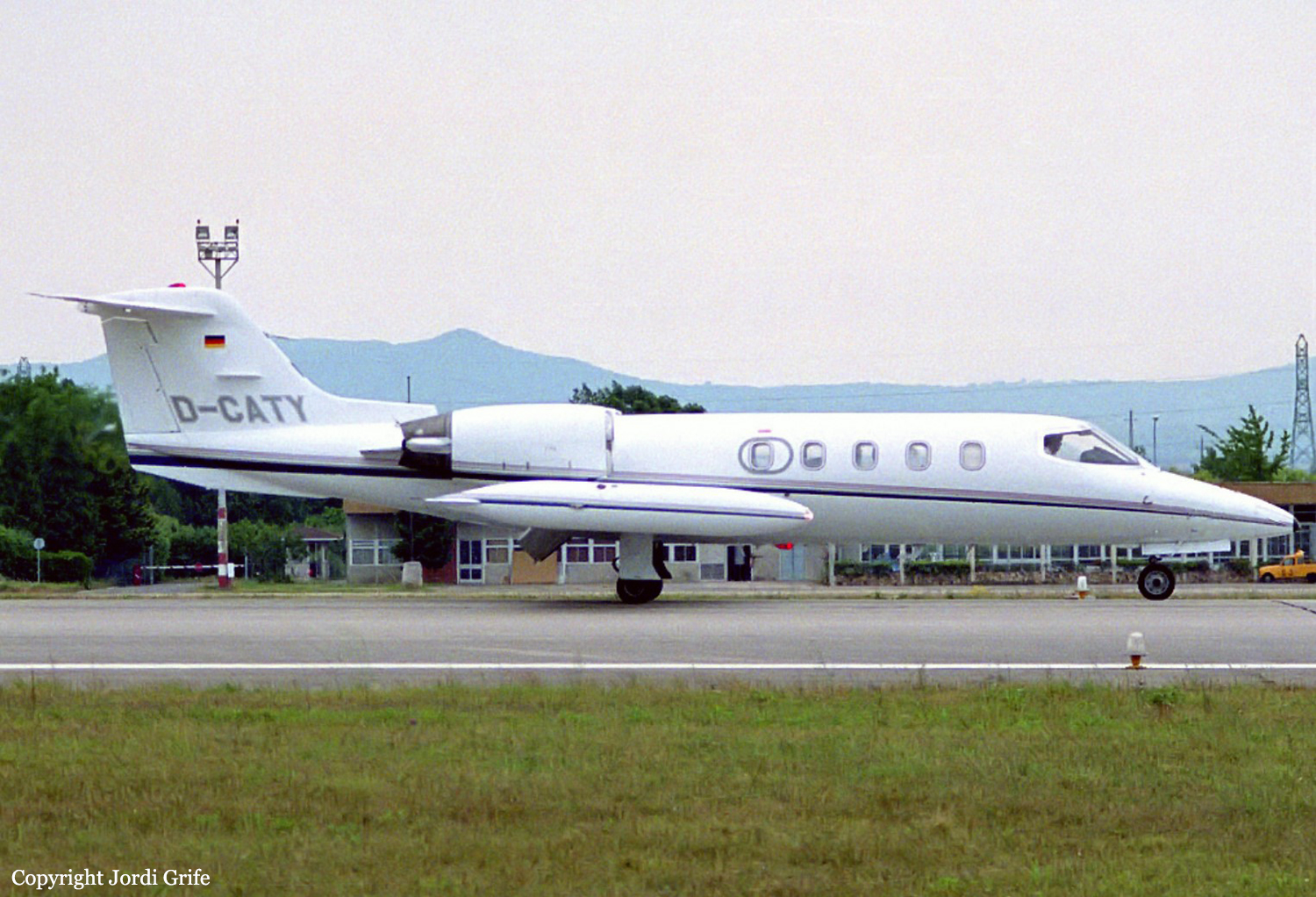
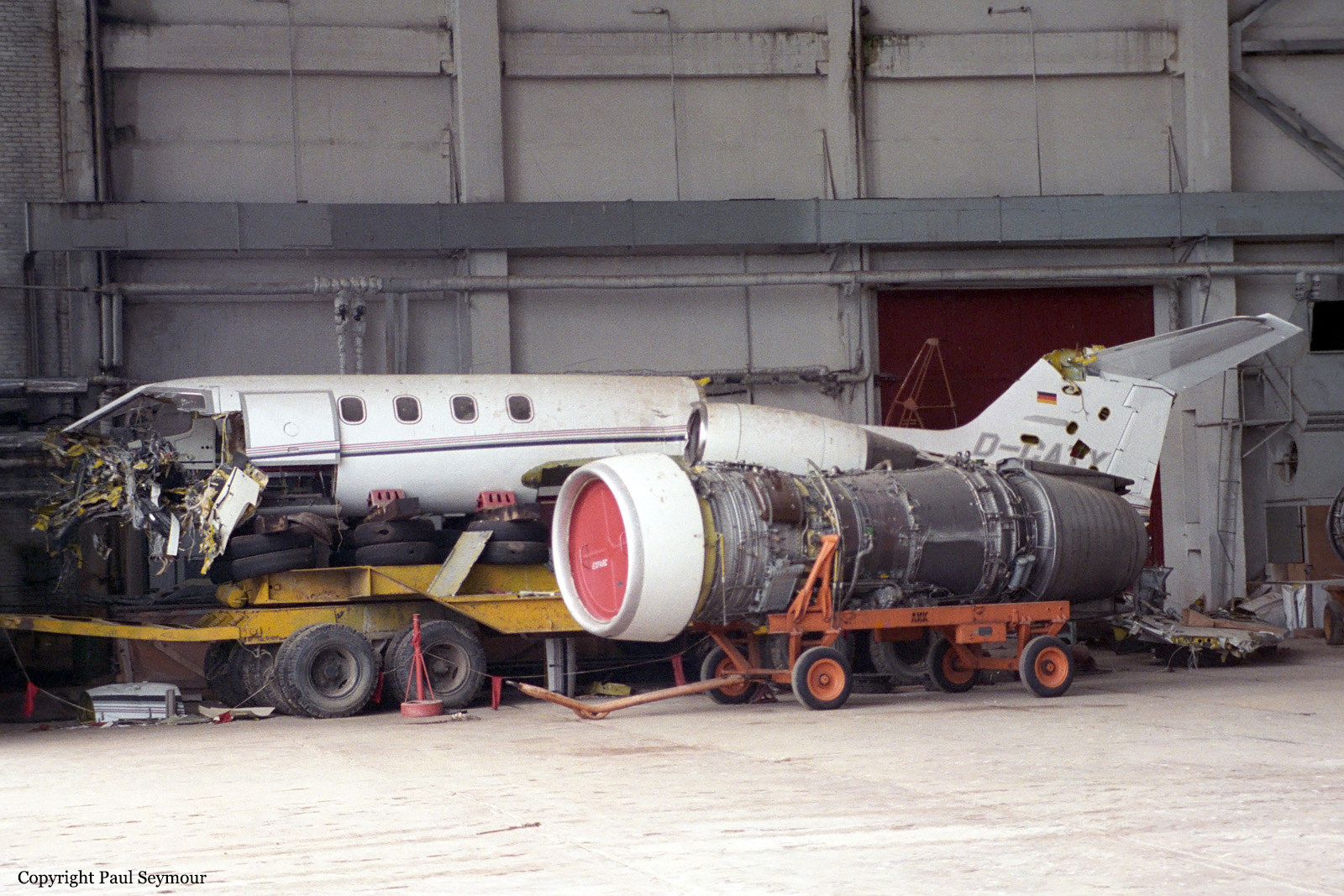
Crash of a Learjet 35A in Moscow: 1 killed

Date & Time: Dec 14, 1994 at 2359 LT
Type of aircraft:
Operator:
Registration:
D-CATY
Flight Phase:
Survivors:
Yes
Schedule:
Munich - Moscow - Magnitogorsk
MSN:
35A-114
YOM:
1977
Country:
Region:
Crew on board:
3
Crew fatalities:
Pax on board:
4
Pax fatalities:
Other fatalities:
Total fatalities:
1
Circumstances:
The twin engine aircraft was engaged in a charter flight from Munich to Magnitogorsk and back, with an intermediate stop in Moscow to pick up a Russian navigator. Shortly after takeoff, at a height of about 15 metres, the aircraft banked left and impacted the ground some 30 metres to the left of the runway. Out of control, it rolled for about 325 metres before coming to rest. A pilot was killed while six other occupants were seriously injured.